
Search Results: "sten"

26 January 2008

Amaya Rodrigo: H ctor's Birth Day

Today is H ctor s birthday. We celebrated with his family and a couple of close friends. He cooked a wonderful meal for us (he is a great cook) and we had a very nice afternoon, despite having a flu (again!) and a very runny nose. I am at this very moment preparing a sponsored upload for Carlos, one of the close friends who attended. He will become an excellent Debian contributor some day.

I got H ctor a couple of cookbooks for his birthday, but much to my surprise I received a brand new server from him (late Xmas present, but I am to blame for the delay). I can now get rid of this damn noisy and slow thing that sits under my desk, aka nima. This has been a faithful server for many years and I think it deserves to be donated to the local hacklab, as I believe it can still be of use.

I hope I can put all this CPU power to good use in my Debian QA work (which I am slowly coming back to).

H ctor has been my best friend for almost 10 years. We also are co-workers at soitu.es now. He was the one who made me believe that I could contribute to Debian and that I should apply to become a Developer (although Santiago Vila was actually the first one to spot me). He was the one I run to when I felt like dying shit after my divorce . He is still the one I run to most of the time when I need support or advice, and he has this wonderful way of making me feel safe in this scary world. Even though we naturally don t agree on a lot of stuff, he does his best to respect my eccentricities, and I always carefully listen to what he has to say. I am very lucky to be his friend. May this friendship last many, many more years. H ctor, keep rocking!

24 January 2008

Biella Coleman: Spread the beef

Anyone who knows me, even remotely, knows that I have a huge beef with the American health insurance industry, which was greatly magnified after my own unpleasant run-ins with them over the course of the last two years. But of course while the insurance industry is certainly a ruthless predator and thus deserving much of the blame, they are not the sole culprit in sustaining what is a lousy health care system for Americans. A key player, I think, are American doctors, and I would now like to spread that beef patty of disgust to them, especially since they are now the one’s giving me problems dealing with the final portion of BCBS bill. The story is indicative of lager issues and problems that center on the problematic silence “spoken” by doctors. To make a long story short, BCBS of NJ was not ponying up some serious cash (at least for me) for 2 mole surgeries because they were claiming it was pre-existing condition. After having the public relations director email me (thanks to that post) and a lot of research and letters etc, it was more or less resolved. Soon after they overturned the pre-existing “bs” (and I am not talking blue shield here), they promptly started to pay all sorts of bills (and I even got money back from doctors I had paid). But there is one pesky $1600 bill that lingers like a bad smell and the question is why? I am not entirely sure but my interactions with my ex-dermatologists, Affilated Dermatology in NJ, I think reveal some important lessons as to why and how the medical establishment are complicit. Basically, BCBS is telling me that it looks like they have been double billed because the cost is exactly the same for two procedures that are also exactly the same. I explained that I had did indeed have two surgeries on my scalp (they were really close to each other) and they let me know that the provider needs to call back and send information that clearly shows there were two surgeries. This actually seems somewhat legitimate and potential mistake (and it is not like medical billing is known for their lack of mistakes and integrity either). So I call Affiliated Dermatology and while I would say they have been patient, in so far as patiently waiting for my money, they have been completely unhelpful in any meaningful sense to help me getting this resolved. Now, given how difficult it is to deal with the health insurance industry, I understand they can’t provide fine-tuned, fine-grained personal attention. The health insurance industry engages in some real hefty politics of foot dragging and well, there are so many foot soldiers at doctor’s offices to keep up with the web of knots that the health insurance constantly entangles us in. With that caveat in place, they can however do two things: 1. Inform you that you can contact the Department of Housing and Insurance and start some sort of formal complain process. 2. Give you some small clue as to whether the doctor has sent any of the additional requested information (they are usually mum, or enigmatic, or totally confusing with regards to that) so you know what the heck is going on. So a few days ago when I was speaking with health insurance person at the dermatology office, she claimed there was nothing else she could do about this last bill. Every time she calls BCBS, she claims that they claim it is a problem with being a pre-existing condition, and I was like “how can that be when that has been cleared and every other bill, and there were many, has been paid?” And then she also said that there has never been this confusion before where 2 surgeries look like one, blah blah and blah (and in retrospect, I forgot to tell her that my double surgery, according to the doc, was in fact highly unusual, because they would usually do them on two separate days because they were so close to each other. They made an exception because I was literally on my way to Canada and begged them to do so but anyway). Ok, so there I was bickering with this woman and feeling stuck between a rock and a hard place. Finally I let her know, point blank, that they have been remarkably patient with the billing but totally unhelpful in, well, helping me out. I let her know that they should let people like me know, for example, that they can file a formal complaint against the health insurance company and this would at least get the ball rolling. I then let her know that I had no other option but to file another complaint with the Dept of Banking and Insurance and they would just have to wait for that, at which point, she all of a sudden became more helpful. She suggested that we can do a three way call to resolve this. Well there you go. Why did it take a heated 15 minute conversation topped with a threat to get what I think actually makes perfect sense? Get the 3 parties involved on the phone with each other so as to all get on the same damn page about what needs to be done (not sure if BCBS will agree to this… at which point I will pester the public relations director again and in the end, I think this was resolved because he was sick of my emails). Now, why why why why why why are doctors and their staff so unhelpful? I think that main answer is they are overwhelmed and don’t have the staff to deal with the enormous amount of foot dragging and coy tactics deployed by the health insurance. That said, there are 2 things worth mentioning that I think don’t paint a very flattering picture of many American doctors. If you pay attention to your medical bills (and you always should), it is immediately evident that the doctors and hospitals get paid LESS, sometimes a lot less, if the health insurance company foots the bill because of the pre-arranged negotiated rate. So there is an actual incentive on that side of things to get paid via the consumer as opposed to the health insurance company. Now. I am sure that there are health care economic studies and reports justifying this strangeness but that does not make it right either. There is a clear incentive in place to get your green dollars, as opposed to those of the insurance company. Second and this is a much bigger issue, is that I think that for any meaningful change to happen, we need the active support of a large percentage of the medical community, especially doctors. If they are mum, or actively opposed to health care reform (as was the case when the AMA helped derail the Clinton effort at instituting universal health care in the 1990s), well then it becomes all that much harder for the general populace and the politicians to initiate real change. Doctors are the ones, after all, with the moral weight and capacity to make claims that can STICK. If they are saying this system negatively impacts how we care for the ill, it is a system that is is immoral, well, one should listen to them as they are the ones, after all, who dedicated their LIFE to healing the ill, right? Yes? No? Maybe? So their silence is nothing short of grave. The good news is that it seems like more doctors are on board than ever before clamoring for change in the right direction, but we need a lot more to come aboard… A number of years ago, I wanted to write a controversial and critical article that claimed hackers are more ethical than doctors. I thought it would be fun to claim that those who are usually seen as ethical (doctors) are less so than those that are usually portrayed as bad-as* unethical tricksters. Some people were offended by this because doctors deal with the great burden of life, death, sickness, and thus suffering while geeks and hackers are “just” geeking out on their computers. True. But at least a cadre of hackers have sustained a social realm and a real ethics–free software–in order to guarantee their own autonomy and also create the conditions for what is right for software. Doctors, on the other hand, do not carry the torch of ethics as they should. While individually I am sure they deal with a oodles of difficult ethical choices and decisions, it is about time they they turn as a collective to the larger structural conditions that seriously cause a lot of harm to millions of Americans, especially the droves of uninsured. They have the moral weight to do something about it and it is about time they carry their weight in this battle and take some burden of suffering off others.

22 January 2008

Robert Collins: 22 Jan 2008

I send mail from my laptop by a local smarthost-with-auth install of exim4. Recently I got motivated to setup smtp submission port for this, as I got tired of borked hotel wifi intercepting smtp, and was behind a firewall that allowed no smtp out... It was pretty simple - on my mail server, enable listening on port 587 by putting: 'daemon_smtp_ports = smtp : 587' in before the local_interfaces line. And on my laptop, edit the 'remote_smtp_smarthost' stanza to add 'port = 587'. Yay to less mail headaches.

19 January 2008

Biella Coleman: Classic in Internet Studies

One might think that it is too early to declare the existence of a “classic” work on the Internet given how the Internet as a widely accessible communications networks is barely out of its pre-teen years, But if there is one book that I would say is a classic, it’s Julian Dibbell’s My Tiny Life. There were plans underway to release it under a libre license but after I ran into Julian at the AAAs in November, I got the scoop that things had come to a screeching halt. So a few days ago I was surprised to find in my inbox, this nicely crafted announcement that My Tiny Life is more or less (more more than less) free as a free bird. This is good news and his story about the trials and tribulations of getting My Tiny Life out of the noose of copyright, is an interesting one, involving among other things, outsourced Indian Labor. Who knew. And while I am on the topic, I meant to write about who, among the many authors I assigned this last fall, took the cake among students as their favorite book/article. Somewhat, unsurprisingly, Dibbell’s more recent Play Money was the champion. Most of the comments were relayed in class but here is one of the more amusing comments indicating the love:
Reading Julian Dibbell s Real Money, Or How I quit My Day Job and Made Millions Trading Virtual Loot was exceedingly more interesting than I expected.
And then just yesterday, another student wrote me an email telling me he read and re-read the book over his holiday break and wants to get Dibbell inivited to NYU to speak (which would be great, though I admittedly have no idea how to make that happen given my recent arrival here). But clearly, there is another classic in the making. Thankfully students liked many other readings and I think there were two other clear winners: Carl Elliot’s Better than Well , Michael Warner’s The Trouble with Normal. and Michael Sandel’s The Case against Perfection. This is of course no surprise to me as I picked these books because I knew they would teach themselves.

Christian Perrier: How many known human languages are there?

Tricky question, isn't it? Indeed, according to the ISO 639-3 standard which finally became an official ISO standard in 2007, there are 7696 different languages, including extinct, ancient, historic, and constructed languages. Of course, this may become a very debated discussion about what constitues a "language". Let's give the guidelines used by SIL International, who was designated by ISO as the official maintenance agency for ISo-639: There is no one definition of "language" that is agreed upon by all and appropriate for all purposes. As a result, there can be disagreement, even among speakers or linguistic experts, as to whether two varieties represent dialects of a single language or two distinct languages. For this part of ISO 639, judgments regarding when two varieties are considered to be the same or different languages are based on a number of factors, including linguistic similarity, intelligibility, a common literature, the views of speakers concerning the relationship between language and identity, and other factors. The following basic criteria are followed: So, we (iso-codes package maintainers) now have to update that part of our package and buy a big bunch of aspirin to people who will work on translating this. Moreover, contrary to all other such standards (3166 for country names, old 639-2 for languages, 15924 for language script names), there is no bloody official *French* version, so even the French translator has to work. Gues who this was until now? :-) To end this blog entry, let's ask a funny question to the readers (no, comments not allowed on my blog, I'm lazy, so answers by mail or in your blogs): what is the country in the world which as the highest number of languages listed in ISO 639-3?

17 January 2008

Michal Čihař: Toshiba ACPI keys, HAL and friends

Long time ago I used FnFX to handle events from ACPI keys on my Toshiba notebook. However when reinstalling notebook because of disk crash, I thought there must be a cleaner way to handle these and I found patch for acpid which added handling of these special events. However I really didn't like patching acpid on every update and there didn't seem to be chance to merge it upstream, so I started to look for better solution. After another amount of googling, I found that HAL already has some support for Toshiba hotkeys. Unfortunately it is now disabled in Debian because most key did not emit anything using HAL. Okay, let's fix the HAL, maybe it will get later enabled. Converting FnFX keymap to C code was quite easy and I made a patch for HAL to add support for all keys. Hopefully it get merged soon and I can then file bug on Debian package to reenable Toshiba support in HAL. Meanwhile I'd like to find some generic way of configuring what happens on these events. For now I hacked simple Python script which listens to DBUS events and invokes appropriate commands for keys, but I hope that some such tool already exists and I just missed it. If you know something, please let me know at michal@cihar.com.

Steve Kemp: I hear it every day

It bothers me that my Tor usage is less than I'd like because it is just so fiddly. When it comes to privacy I want to keep things simple, I want to use tor, but I dont want to use it for things that aren't sane. In practise that means I want to use tor for a small amount of browsing: To do that I have to install privoxy, and use that with a configuration file like this:
# don't forward by default.
forward-socks4   /    .
# don't forward by default, even more so for HTTPS
forward-socks4   :443 .
# but we do want tor on these three sites:
forward-socks4   a.com/       127.0.0.1:9050 .
forward-socks4   b.com/       127.0.0.1:9050 .
forward-socks4   c.com/       127.0.0.1:9050 .
I'm using absolutely nothing else in my Privoxy configuration, so it seems like overkill. I'd love to hear about a simple rule-based proxy-chaining tool - if there is one out there then I'd love to know about it lazyweb. If not it shouldn't be too hard to write one with the Net::Proxy & Net::Socks module(s).
<global>
  listen 1234
  no-proxy
</global>
<sites>  
  hostname one.com
  port != 443
  proxy socks localhost 8050
</sites>
<sites>  
  hostname two.com
  port != 443
  proxy socks localhost 8050
</sites>
<sites>
  hostname foo.com
  port = 80
  proxy localhost 8000
</sites>

Ingo Juergensmann: SA Basics

As there are some threads on the lists of enhancing Debian from time to time in various aspects and the upcoming DPL election period in some weeks, I found some memorable quotes in the book I'm reading at the moment:

Note: SA = System Administrator

The number-one attitude problem among SAs is a blatant disrespect for the people whom they are hired to serve. It is surprising how often we remind SAs that their users are not "lusers" or "pests with requests." They are the reasons why SAs have jobs. SAs are there to serve but, more important, to advocate for these people. [...]
We advocate that SAs stop using the termin users and replace it with the term customers. This becomes a reminder that SAs are in a service industry, supporting the needs of these people instead of "pests" who make request all day.

(From: The Practice of Network and System Administration, Limoncelli, Hogan, Chalup, Second Edition, page 756)


Communication:

  • I will communicate with management, users, and colleagues about computer matters of mutual interest.

  • I will strive to listen to and understand the needs of all parties.


(From: The System Administrator's Code of Ethics in The Practice of Network and System Administration, Limoncelli, Hogan, Chalup, Second Edition, page 325)

SAs do many tasks, but often, customers see only the parts that involve responding to their requests, not all the back-office work, and shouldn't have to see it. Therefore, how well you respond to customer requests is critical to maintaining an organizations reputation.

(From: The Practice of Network and System Administration, Limoncelli, Hogan, Chalup, Second Edition, page 364)

I don't know whether someone read this book as well lately or received another a proper christmas gift, but apparently someone found the time, finally, to fix the access to incoming.d.o for m68k buildds.

Thanks for giving access back! Yay! :-)


16 January 2008

Sylvain Le Gall: OCamlMeeting in Paris

Since 3 weeks, half of my worktime (but i don't have worked that much, due to another real life occupation) has been dedicated to setting up a meeting for the OCaml community in Paris. This is the first public meeting about OCaml in France. It will be located at ENST (Telecom Paris) on January, the 26th 2008. This should be an occasion for the european OCaml community to meet in the real life and to discuss the hottest current topics of OCaml. I hope that this meeting will help people to begin creating a more consistent community around OCaml. In fact, the community already exists -- but it will be a time to meet several members that has never meet before... More information and subscribtion

Erinn Clark: don't you wish your internets were free like me?

When you quote Voltaire in a discussion about censorship, the likelihood that people will listen to you approaches zero while the likelihood that people will roll their eyes approaches infinity.

15 January 2008

Michal &#268;iha&#345;: Gammu test version 1.17.91

New Gammu testing version is out. Besides fixing there is important feature for people finding proper flags for not supported phones - you can do it now without recompiling Gammu! Full list of changes: You can download from usual place: http://cihar.com/gammu/.

Aigars Mahinovs: Freedom of information production and distribution

Bernhard It is possible that you are not alone but nether are defenders of freedom if information production and distribution and in particular of freedom of speech. Trying to restrict what words people can or can not use (by labeling them sexist, racist or obscene) is the bread and butter of modern day media censorship. It is censorship and not “just political correctness”. While I would not want people trying to limit contributions to Debian only to “smart and educated white people” (racism) or “logically thinking males” (sexism), going the other way and excluding people from Debian because their remarks or way of thinking might offend someone is just offensive to me. That is against the spirit of information freedom that free software is built upon. To summarize: no one should have the power to say what you can or can not say. You personally do not have to listen to what people say if you do not like what they are saying - there are technological measures that allow you to filter people out at your end. But denying them the right to speak (or segregating them to non-Debian communication channels) is clear and simple censorship that goes against the very principles of free software.
I do not agree with what you have to say, but I’ll defend to the death your right to say it.
— Voltaire

Adeodato Sim : Juno, Juno, Juno

Juno was totally worth my time, I gave it 5/5 stars. When having a prospective look at it, it didn’t seem I would enjoy it much, but I decided to trust Movielens on this one, and that payed off. Long story short, Juno is a sixteen year old girl that gets pregnant, and then a very appealing movie happens. Then a slightly questionable (rushed?) end comes, but I enjoyed that part the most. I liked the general tone of the movie, and the two youngsters were adorable. The soundtrack was awesome as well. I loved the song on the opening titles, All I want is you by Barry Louis Polisar (listen here), and the one in the last scene, Anyone else but you from The Moldy Peaches, but performed by the actors themselves. Update (2008-01-16): Mention track titles in the last paragraph. Update 2 (2008-01-16): After listening to the soundtrack today, I can’t but highlight Kimya Dawson’s songs, particularly: Tire Swing, Loose Lips, and Tree Hugger.

14 January 2008

Roland Mas: GForge security patch, and a new feed

First, and most important: while researching a functional bug for a client, I found a rather important security problem in GForge. All versions (starting from 3.1) are vulnerable to an SQL injection problem due to missing input sanitisation. Debian packages have already been fixed and released, and the patches have been committed to the upstream Subversion repository, so non-Debian users are encouraged to grab the patches from there. For instance, the patches for the 4.5.* branch can be obtained from the ViewVC page. For reference, the CVE ID for this problem is CVE-2008-0173. Secondly, there's a new "gforge" tag on this blog, to filter posts that relate to GForge. I mainly created it in response to the existence of a feed aggregator focusing on forges and variants, but you can also subscribe to it directly if you only want to hear about Gforge and not about my other Free Software activities. I'll also use it to announce security patches like this one.

13 January 2008

Andrew Pollock: [debian] Adding domain-search (option 119) support to DHCP

I've been a bit behind with the ISC DHCP v3 package of late. I've had a package of 3.1.0 for a few months, but I'm becoming more and more reluctant to make uploads of this package without giving it some rudimentary testing. Real life has been demanding of late, so I haven't had a chance to do that testing. Nothing's gone wrong with the package to date, I just feel negligent not giving it some basic testing before throwing it out there. So I chucked a spare QFE card in my workstation brutus, put unstable on the second hard drive, installed Debian unstable on the spare 10G partition of Sarah's old PowerBook, and lashed the two together with a bit of CAT-5, and voila, instant DHCP client/server testbed. So now that I'd verified that version 3.1.0 wasn't blatantly broken, I could have a fiddle with the new support for option 119 (domain-search) that has people at work very excited. I spent a bit of time off on a wild goose chase trying to figure out how to configure the DHCP server for this new option before I realised it was as simple as option domain-search "foo bar baz"; and then made the necessary tweaks to dhclient-script. I'm figuring that since one of the blokes who wrote the RFC works at Apple, and since Leopard supports option 119, the way they're doing it in Leopard must be approximately correct, so I've altered the behaviour of the DHCP client accordingly. All of this assumes you're not using resolvconf. Prior to 3.1.0, if you had the domain-name option set, the /etc/resolv.conf created by dhclient-script would set the search directive to the domain name. With 3.1.0, I've decided to make this set the domain option instead. The resolver behaviour remains the same, as best as I can determine. With 3.1.0, if the domain-search option is set, then the search directive is set to this. If the domain-name option is set, this is prepended to the list of domains in the domain-search option. This is consistent with what MacOS X 10.5 (Leopard) does. I'm not sure what Windows does (nor what version started honouring the domain-search DHCP option)), and since it doesn't have an /etc/resolv.conf equivalent, it's a bit hard to test. I'm going to hazard a guess and hope that since the other bloke who wrote the RFC works for Microsoft, that maybe, just maybe, Windows and MacOS X at least behave the same way. Currently, if resolvconf is in use, you get the old behaviour whereby the search directive is populated with the contents of the domain-name option, and the domain-search option is ignored completely. I've filed #460609 with a patch to fix this. Interestingly, resolvconf itself internally collapses the domain and search directives into the search directive of the /etc/resolv.conf it generates, so I can't quite get the same /etc/resolv.conf generated as would be generated without resolvconf being used. No big deal, the behaviour should be the same. The domain directive is largely unnecessary as I understand it. I have unearthed what I consider to be a bug with the domain-search option handling code in the client. It seems to be largely benign, apart from causing the client to emit some errors when it's obtaining a lease that contains the domain-search option, and possibly not splitting the domains in the domain-search option correctly. There's also another (I think unrelated) warning that gets emitted as well. I'm waiting to hear back from upstream about both. I'm not going to package the recently released 4.0 DHCP until I've figured out a transition plan to go from the old DHCP v2 packages to the v3 ones.

Gregor Herrmann: felicidad

after neglecting her for over four months I took "felicidad" (my western guitar) out of her case tonight. at the beginning of today's date she was quite "desafinado" but after a few minutes of tuning we started to have a nice session.

& it's amazing that my fingers (although they have lost the thick skin on the fingertips) still remember more or less what to do with the strings.

Biella Coleman: On Losing a Mother, on Losing Memories

For the last four years, I have left my life and home to return to my mother’s far more precarious and fragile life in Puerto Rico. I do so to visit. But I also do so to give her caretaker, Milagro, a much needed break. I returned on December 18th and found my mother nearly in the same state as she was in October. Far worse than a year ago, but she still struck me as my mother, if nothing else because she knew I was her daughter. Over the course of a week, all of that changed. After a series of howling fits, by the end of my first week there, she no longer knew she was my mother. While I knew this would eventually happen, I was still caught off guard. You see, prior to my arrival, and since my last visit in late October, she asked me on the phone, and my sister and Milagro in PR, *nearly everyday,* when I was coming back. So even though she asked when her daughter, who she knew lived and worked in the city of New York, was coming back over and over again for 8 weeks, this seemingly hard-wired thought quickly vaporized thanks to what is a disease of the brain, but what strikes experientially as a cruel disease of the soul and personality. So while 2007 was overall a pretty good year, it is also the year when in certain respects my mother died, at least for me in so far she has morphed into someone remarkably different from the person I once knew. Now she only remembers small scraps of her life. She knows she is from Russia, she knows that she lives in the Casa de Vera (which she thinks is her bed), she knows she loves the dog, she knows that she had parents (and she would like to return to them but does not know where they are), she knows she has a good friend who is a painter (I think she had a massive crush on him if she still remembers him and not me ;-) but otherwise, everything is so twisted, so jumbled or so gone, it is beyond stunning. She certainly knew I was around and helping for she got upset when she knew I was leaving, often bursting in tears, asking me to take her to New York. But she just knew me as Gabriella from Nueva York who brought her novio bueno to PR and not as anyone else. It is certainly not easy to see this, to experience it day in and out but it is what it is and there is no running from it. Logistically it is also beyond hard to take care of my mom. To get her to eat, to calm down after one of her morning fits (she always, always, always had a raging fit in the morning, the afternoon and evenings being far more calm periods), to convince her to wear her dentures (which is the only remedy to stop her from spitting all over the place), to dress her, to deal with her in the middle of the night, often twice, are all extraordinarily challenging. Very quickly, your waking hours fill up with seemingly endless tasks and this I guess is, in some respects, a hidden blessing; there is just a lot less time to ruminate over how all of this, frankly, sucks. It is only later, late at night, early in the morning, or on the plane ride home where the darkness of her life would set deeply into my own. It may be obvious why this state and experience is tough but there are two parts that I find particularly rough. If my mother’s state is one of near total chaos and entropy, there is one thing that is utterly clear. She knows she is suffering and she wants out. On particularly bad days, she would mutter or sometimes yell loudly that she wants to die and would ask for the medicine that would accomplish this. She would even sometimes call me mala for not giving her this medicine. It is certainly not the case that everyone with Alzheimers goes through what my mother does. Apparently, some experience the illness quietly and peacefully. This is so not the case for my mother, who lived a particularly hard yet vibrant life. Donning a difficult personality, she lived lived as fully as she could and it is clear that as life leaves her, she would rather not be around to experience what is a cruel exorcism of self. Thankfully, she is not constantly or not even mostly in a suicidal state. I think she at times forgets how lousy she feels and rather enjoys the rather limited life she has. And at this point, I just hope that she continues to have calm or even happy moments. The second surprise concerns my own memories. My mother has had this rare form of Alzheimers, Posterior Cortical Atrophy, for at least 6, possible 7 years now, though we only received the official diagnosis 2003, which is the year when when I first started to write the occasional post about my experiences with her. In 2003 and 2004, she was pretty functionally in tact and it has only been the last 2.5 years when the persistent decline has set in, whittling her capacities and memories to what seems to be a bare minimum. But because her presence and reality is nothing short of totally enveloping and drowning, I am starting to lose my own memory of my mother prior to her illness. If Alzheimers robs people of their memories, I have come to realize, that if you are not careful, it is a thief that can also rob your own memories. I think it is for this reason that I have become so attached to my mother’s stuff her furniture, her paintings some of which I have taken back with me. They are material vehicles that transport me back to the past when my mother was in a different state and place. Now it is clear that if the challenge is to deal with the emotional toll this illness causes, it as much summoning the will and performing the labor to retain and recall my older memories of her.

11 January 2008

Felipe Augusto van de Wiel: 11 Jan 2008

Bits from the Debian i18n meeting (Extremadura 2007)
From December 12th to December 15th, Junta de Extremadura hosted another one of the Debian Meetings; five i18n guys shared ideas, food, buses and fun with the Debian KDE maintainers. We would like to thank Extremadura for hosting us during the Hispalinux Meeting 2007, the event was held at Universad de Derecho (Law University) in Caceres, Spain.

These are the minutes, results and notes from our work, it is a brief description but hopefully complete of what we have done and what is still missing/pending.

Thanks to Cesar (cek) we had the chance to work on churro (i18n.debian.net) locally; the server is still running a 2.4 kernel because of some "tick" problems with 2.6 series, the last one tried was 2.6.21 and we should try newer ones, in order to support upgrades and not get stuck with 2.4, we hope Cesar will find time to test new Debian kernels.

First, let me introduce everybody to the services, robots and resources being hosted by i18n.d.n:

  • MoinMoin wiki for local and simple reference documentation, it contains all the links to the below resources. (http://i18n.debian.net/wiki/)
  • Pootle experimental server
  • dl10n scripts, aka dl10n robots (codename Lion), these scripts are responsible for the status of pseudo URLs used by some translation teams, by the Project Smith and by the NMU Priority List for i18n NMU Campaign
  • Synchronization of the i18n material used by the Debian website to generate translation statistics about PO and PO-debconf
  • Generation of Compendium PO files per-language
  • Different types of statistics
  • Other non user-visible services like a full source mirror for stable, testing, unstable and experimental, used by the scripts and robots.
  • DDTP, Debian Descriptions Translation Project
  • DDTSS, The Debian Distributed Translation Server Satellite, a web front-end for DDTP, now integrated to DDTP to use the Database back-end instead of the e-mail interface.


And, at some point, we found important to state clear the acronyms and names used in related DDTP projects/tools:
  • DDTS, Debian Description Translation Server, this is the main "back-end" used in DDTP, it tends to be the interface between translator tools (present and future ones) and the database;
  • ddt.cgi is a CGI interface that is able to provide info for specific packages or translations, including diffs, related packages and active/inactive descriptions.
  • DDTC which is the old (and still functional) command line client for DDTP.


We took the chance to organize a few things on churro, old accounts were cleaned out and removed, we moved from /org to /srv and got more GBs of space to the "playground". Old files were also removed and some are schedule to deletion on early 2008. With the reallocation of /org we also find some more space to /home and /var, we reorganize some of the links on the web space (specially to remove services from people's accounts), and we changed the mirror script to also synchronize the Packages and Contents files.

Grisu and Martijn worked mainly on DDTP and DDTSS integration. DDTSS now provides statistics for stable, testing and unstable, we are also working with Debian Med to provide support and infrastructure to a specific audience, like packages related to Medicine. The conversion to talk directly with DDTP/DDTS database also provided:

  • Fetching new translations is almost instantaneous and marks translation as requested (avoiding duplicated works via the e-mail interface).
  • After sufficient reviews occurred, the upload is instant
  • Committed DDTS / DDTSS / DDTP website generation into SVN
    • Added READMEs for the above directories


DDTSS now announces the user using authentication because of its integration with the Database backend used by DDTP. Quick trivia: DDTP is now a compound of 25 languages occupying 18 GBytes.

A few days before the meeting we had the offer to use "AUTOBYHAND" to upload a package with the Translation-* files. The package is now called 'ddtp-translations' and we worked during the meeting to create scripts to build the package and to test it on the archive side. This approach allow Debian i18n Team to upload new translations and remove old ones (or inactive ones) without bother FTP Master Team. Special thanks to Anthony Town, he has been working with us to prove tips, fixes and info on how to produce the package and the scripts. The code is available in the debian-l10n SVN under pkg-ddtp-translations:
http://svn.debian.org/viewsvn/debian-l10n/pkg-ddtp-translations

In our case, "BYHAND" processing consists of a simple tarball of the main,contrib,non-free /i18n/Translation-*, we decide to work on a set of scripts to make it easier to create new packages (ddtp-translations) in a consistent way and keeping debian/changelog up-to-date. We also made some suggestions to the script what will run on the archive side to check the tarball structure, base on the examples of debian-maintainers and debtags (tags-override).

One of our initial targets for the meeting with regards to Pootle and Debian was to try big PO files per language, fortunately, Nicolas and Friedel were able to increase Pootle performance enough to get a few languages from DDTP loaded in Pootle. Using the upstream Pootle-diet branch, which uses a database back-end for the generation of statistics, the time to browse the DDTP POs of a language (~20.000 files) went down to a dozen of seconds.

Speaking about Pootle, Friedel gave us a good picture of what is coming next in terms of Pootle's development. There are improvements planned in the areas of permissions and rights delegation, as well as file management (for projects and templates). Improved management of terminology projects is also planned.

Improvements in the QA capabilities of the translate toolkit and Pootle are planned to help with the "false positives" of the pofilter checks. Better reuse of existing translations will become possible by using better translation memory techniques. There is also work planned on formats and converters involving, for example, XLIFF, TMX, TRADOS and WordFast.

Another pending task for quite a while was the CVS migration to SVN, it is now done, with a new layout. Commits to the CVS were disabled and every single script or resource depending on CVS should be changed to use SVN. For now, we are publishing (via HTTP) the status files generated by the pseudo-urls robots until we can fix the scripts to re-enable the commit of the files. You can find them here: http://i18n.debian.net/debian-l10n/status/

We are pretty happy with the changes and results of the work during those days, but we still have some items pending on our TODO list:

  • More advertisement and usage information about PO Compendiums
    There are two use cases are identified:
    • Filling new PO files.
    • QA work to find inconsistent translations.
    Maybe Eddy would love to do that? :-)
  • Extend the duration of the statistics history. (Nekral)
  • Debian packages of the services running on churro
    • DDTP (Grisu)
    • DDTSS (Martijn)
    • dl10n (Nekral)
  • DDTP: add some scripts to handle packages with version in the description (e.g. kernel and kernel modules) (Martijn)
  • DDTP: Standard generation of the translation tarballs (faw)
  • DDTP: document the bracketed stats on the main page (faw)
  • DDTC: should be updated to match the current features. Documentation to ease integration with procmail. (Nekral - low priority)
  • Implement mail service for translation teams with their own robots (e.g. Dutch) (faw)
  • Collect data from http://www.debian.org/devel/website/stats/ (Nekral)
  • http://www.debian.org/intl/l10n/po/,
    http://www.debian.org/intl/l10n/po-debconf/
    are built based on the churro material. It would make more sense to build these statistics on churro (Nekral)
    • We could "fork" the page and add some fancy new features on these pages (Nekral)
    • Add information from the coordination page to indicate that a translation is ongoing. (Nekral)
  • Pootle: missing review indication. Hard with PO back-end. (Friedel)


There are a couple more reports to be sent but they are more focused on i18n specific questions, tools and plans for 2008. So, probably those will be sent only to debian-i18n mail list. If you are interested, please, stay tuned. :-)
Posted on d-d-a: http://lists.debian.org/debian-devel-announce/2008/01/msg00002.html
And a big thanks to Nicolas François (aka nekral), he helped me a lot making notes, preparing the text and reviewing it; and was patient enough to wait for the report while I was solving some personal problems.

Matthew Garrett: The weather

Friday's predominant weather is forecast to be heavy rain
Saturday's predominant weather is forecast to be sunny
Sunday's predominant weather is forecast to be light rain
Monday's predominant weather is forecast to be heavy showers
Tuesday's predominant weather is forecast to be heavy rain

Oh well. In a fortnight I'll be heading to Linux.conf.au to discuss why suspend to disk doesn't work, can't be made to work in its current form and that everyone who thinks it currently does is under some form of mass delusion. Friday, 11:30. Be there or be listening to one of the other fine presentations that day. If it rains there, I may be upset.

10 January 2008

Christine Spang: MIT Athena: Not Dead Yet

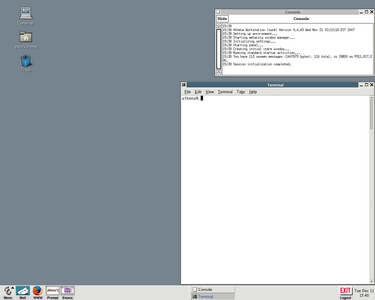
(Disclaimer: I work for MIT Information Services & Technology blah blah blah I am a student blah blah these are only my words and do not represent the opinion(s) of my employer.) Way back in the day in 1983, MIT started something it called Project Athena, which had the goal of investigating how computers could be used to enhance education at MIT. This project became the origin of such pieces of software as the X Window System and Kerberos, as well as a campus-wide network of workstations all running similar software. In 1991, Project Athena ended, but the Athena system continued on, taken over by MIT Information Systems. It’s 2008, and Athena still exists at MIT—walk into a computing cluster, and chances are all the machines will be running Athena software. (Unless that particular cluster has been taken over be Athena’s evil sibling, often referenced as “WinAthena”, which often seems to be maintained by no one, and whose existence is sometimes denied by those who maintain and support Real Athena. Not many machines have suffered this agonizing fate, luckily.) Unfortunately, as the years have progressed recently, fewer and fewer resources have been put into the development of Athena. In many ways it is no longer on the cutting edge of things as it has been in the past, though it is certainly still useful. Some students these days, however, even think of Athena as only “their MIT email” or maybe use it occasionally to print something in a cluster on the way to class. I’ve seen people grow frustrated and storm out of a cluster due to things like instructions for using a flash drive that involve more steps than just plugging it in. While on the one hand it’s easy to laugh at people for a lack of patience or being open to a computing system that is not either Windows or Mac and perhaps a bit more complicated on the surface, on the other hand, some of these things really should just work by now, and on other UNIX-based systems they do—but Athena has lagged behind. When you log into an Athena workstation for the first time, you are confronted with what looks like this: Clean MIT Athena login That’s GNOME 2.8, and it looks kind of like the GNOME 2.8 default but uglier. When you look under the hood, there are pieces of the system that obviously originated in a time where nothing better existed and so something new had to be created—the “xlogin” login system doesn’t support PAM, and the login path involves a hairy maze of scripts that perform various tasks. Under the hood, the base OS is currently RHEL 4 or Solaris 10. I still can’t remember what the right options are to feed RPM whenever I need some information that I think I should be able to get from it. These things were once necessary but today just look crufty. Some people have tossed around the idea that everyone has a laptop these days and thus clusters are uselessly expensive, but it’s been met with a lot of resistance. I’m all for progress, but I use clusters all the time! They’re one thing that makes it an easy choice for me to have a really portable laptop, because when I really need computing power or screen space on campus away from my room, there is always a cluster nearby. They’re also nice isolated places that can be associated with “work mode”, which is good for productivity. Beyond all this, Athena provides a common platform that all technical classes can depend on, from providing standard and specialized academic software to standing as a baseline of “make sure your code works on this before handing it in because that is how it will be graded”. At any rate, things are finally happening on this front. Athena can’t stay RHEL 4 forever—while AFS allows non-system software to be easily updated for all machines without requiring any OS release, hardware moves on and compatibility is lost, and the rest of the world is coming up with new awesome things that Athena machines are missing out on. A student group that I am vaguely involved with, SIPB, took the early initiative with this and created DebAthena, which takes stock Debian and Ubuntu and allows it to closely resemble an Athena environment. We even run a campus Linux dialup using the packages. (I won’t claim to have done much work on DebAthena myself because, well, I didn’t.) Amazingly, the Athena release team has decided to work with the SIPB on the next release of Athena. So, what I really just wasted over 600 words prepping for is to say that Athena 10 will be based on Ubuntu. This is only relatively new news, but I am lame about finishing blog posts. There are a variety of reasons why Ubuntu was chosen over Debian. Some of them are lame and some of them are not. Even so, I am excited about this prospect—and it should be possible to peripherally support Debian in such a way that was not possible with Athena 9.4. I really like Athena. Even coming to MIT with a background in Linux there has been a steep learning curve, though, and I think that things could be better. Lots of people here have their first encounter with a ‘nix system in the form of Athena, and we should strive to make that experience as good as possible. I’m kind of skeptical on the expected release date of this upcoming summer, but as long as it happens soon it will be a big step forward. In some ways it’s kind of sad that I’m excited about a big part of a research institution catching up with others—but inertia is a strong force, and dealing with thousands of workstations is no trivial task. I kind of long for the exciting days of creating new big pieces of free software like X. I bet I imagine those days as being better than they actually were.

Next.

Previous.




