Search Results: "az"

10 November 2010

Lior Kaplan: Linus fixes a sound bug ?

Well, kinda. Just follow the comments on this bug report regarding a sound problem in Fedora 14. A user reported about not being able to get mp3 play smoothly and a few other confirmed the issue with Fedora 14. Tests pointed at the kernel or sound driver. A user (Michael Young) and the Linus him self proved this wrong. and Michael found out it caused by a feature in glibc. From there Linus provided a work around till the glibc guys will fix the issue (and as for now they claim it s not a bug). I m sure the user who opened the bug reported didn t expect this whole chain of events it s quite amazing.
Filed under: Fedora

9 November 2010

Petter Reinholdtsen: Debian in 3D

3D printing is just great. I just came across this Debian logo in 3D linked in from the thingiverse blog.

John Goerzen: A Scary Day, and A Walking Miracle

I had been planning to write today about my great uncle Milt Goerzen. Milt passed away last Thursday after a long struggle with dementia, and his funeral was this morning. I was there, and was inspired by a few things I heard. But that will have to wait, because today brought one of those few moments in life that s a sense of an impending possible great loss. I can remember two others: one was when Terah passed out, and the other was when we heard that our place was on fire and our house had burned down (it turned out the house hadn t, but much of the rest had). I got a call during Milt s funeral. I didn t answer because I was, well, at a funeral, and the phone was on vibrate. When I had the chance to check the voicemail, it went something like this: I think we have an emergency with Jacob. He got run over by a tractor. He says he s OK, but I m taking him to the doctor right now. I tried to return the call, but cell phone reception wasn t cooperating. The most I got was he s OK . It s hard to describe how a moment like that feels. My mind jumped to telling Jacob I love you , and how lately when he hears that, he will snuggle in for a big hug, and say, Dad, I love you toooooooooo! On the one hand, I heard the he s OK part, and on the other hand I couldn t forget the tractor running over him part, and my mind leapt at the worst. It turns out that, while I was at the funeral, Jacob had been standing on his usual spot on the tractor, sort of to the side of the driver. He was enjoying himself like usual. The tractor hit a large hole that wasn t really visible. The combination of the jolt and the dip the tractor took towards Jacob s side knocked him off and he went directly under the big rear wheel before the tractor could be brought to a stop. I caught up with him and his grandpa after he had seen the doctor and just as he was being admitted to the hospital. He saw me and crawled over, making his sort of sad and scared sound he sometimes doesn t want to verbalize things when he s in that mood. I held him close and he seemed to appreciate it. He had to have blood drawn, and he was scared of that. I remembered his inquisitive mind, and reminded him how much he liked watching the tube fill up with blood last time he had a blood test (which he calls a blood shot ). That wasn t helping, until the actual blood test started. He cried when the needle went in, but then calmed down as the nurse, getting into the act, pointed out that there was blood filling up the tube. Hmmm! said Jacob. Then she gave him a band-aid. It has an airplane, said the nurse. Um-hmm! said Jacob. I pointed out that it looked like the airplane we were on when we flew home from New York. Jacob got a big smile and said, Yes, it IS that one! He got a sticker there too. Then it was off for an x-ray to check for broken bones and a CT scan to check for internal injuries the tractor had gone right over his abdomen. He had to get an IV at the CT scan, which he certainly didn t like. After it happened, however, he found it very interesting especially when the nurses explained that they would give him a drink through the hose attached to his hand. After that, we went to his room, with orders for him not to eat or drink anything until it was clear he didn t have digestive problems. While we waited at various steps along the way, Jacob wanted to sit on my lap and watch train videos on YouTube on my phone. He loves train videos, and brought my phone s battery nearly to depletion through the course of the afternoon. Jacob eventually seemed to get back to a bit of his usual self. At one point, while Terah had made a run home to pack an overnight bag and grandpa ran some errands of his own, Jacob wanted to leave the room. He had gone exploring in the hospital with me before: when Oliver was born, and when Terah had her thyroid surgery. So this was something he just associated with the hospital. That and lemonade, which is free any time of the day or night in the cafeteria. So we went exploring, even ventured outside into a courtyard for a bit. He was walking fast and seemed good. We had several visitors: grandparents and his aunt and uncle. Jacob got a stuffed rabbit and a colorful bug box with windows (for putting bugs inside for observation). Eventually the doctor came by and gave us the results: the x-rays showed no problems. The labs showed some elevated liver enzymes, which he expected, but no serious trouble. The CT showed contusions on his lung and bruising on his heart which would heal completely in time. He allowed Jacob to have a liquid supper (so I quickly got him the lemonade he had been wanting while the nurses got him some Jello). The doctor examined Jacob, pushing at various places, asking Does it hurt here? No. Does it hurt here? No. Here? No. Are you hungry? Yes. Does it hurt here? No. He gave me a look that said: really? It doesn t hurt ANYWHERE? What could I do but shrug my shoulders? Jacob has some abrasions on his face, arms, and back, which will probably eventually hurt (and sure enough, about 10 minutes later he started getting a little pain when he tried to move, which the doctor checked out) Then the doctor said, I hope you know you have a walking miracle today. This is just amazing. You have some thanking to whatever guardian angels you like tonight all I can say about this is that the Lord must have had some other plan for him. There s no way he could have survived that. Jacob s doctor is one that we really respect: he s scientific in his analysis, cites studies as a matter of routine, doesn t prescribe antibiotics for things that he knows they have a small chance of helping, is common-sense about not over-treating things and yet always engaged in an emergency. That little speech from him was something I d never expected to hear from him. He went on to add that I always visit my sickest patients first. You were my last visit this evening, so that should tell you something. Any other kid as healthy as he is, I might discharge already but I m just not justified doing that with a boy that s, well, been driven over by a tractor this morning. He also wanted to monitor Jacob s progress throughout the coming day, especially his digestive system. They wanted to measure his urine output, which he, predictably, found to be very interesting. Terah said I think it is about 150 ml. Jacob said, No mom, it is closer to the two hundred line. Me: Since when does Jacob know about the number 200? Terah: I don t know . he s 4, where would he have gotten it? Between that, and using every opportunity to tell people that there were not one but TWO red light switches in the x-ray room, Jacob s definitely himself in some ways already. So, that feeling of some impeding great loss is gone, replaced by being more than a bit overwhelmed by how fortunate we were today. We also appreciate all the help we ve had with Jacob and Oliver today.

7 November 2010

Adnan Hodzic: Ubuntu Developer Summit (UDS-N) Debianized Summary

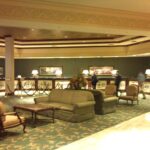
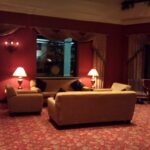
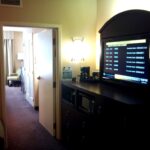
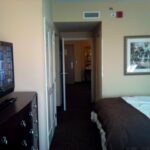
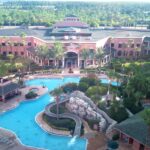
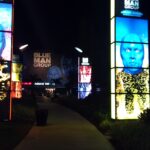
Last week I was on my first Ubuntu Developer Summit (UDS-N), I wanted to attended this summit for couple of reasons: 1. Developer, I m part of Debian Java, working on Eclipse IDE, and as you re developing Debian, you re automatically developing Ubuntu, no? Nerd 2. DebConf11 main organizer, I really wanted to see how it s all done on corporate level, for instance we re going with hotels instead of student dorms and so on. 3. Migration to Linux infrastructure, make contacts and have some talks on this topic, because after DebConf11 in Bosnia a lot of institution will most probably open doors to open solutions such as Linux. I went to this summit without any expectations or plans, just said I ll play it by ear. This years UDS was held in Orlando, Florida before Orlando I was planning to stay in NYC for couple of days, therefor my whole plan was to get to NYC, then Orlando then head back home Smile I Heart NYC I spent couple of days here with my cousins and friends, as always NYC never fails to surprise me, and I ll always stop by even if it s only for couple of days Wink I wanted to meet up with couple of Debian people as well, but unfortunately my schedule was too tight so Caribe Royale, Orlando Please note that this whole trip was crazy (in a good way) starting from Sarajevo; on my flight from NYC to Orlando I see a guy that s sitting in front of me is wearing Canonical Landscape tshirt, I approach him and it turns he was Jamu Kakar working on Landscape. Since my luggage was late we had conversations from Debian over Ubuntu to Java to everything pretty much. While we were still at the airport, we bump into two more people going to UDS. As we got to hotel, same moment we walked out of cab there he was Jorge Castro, was he there just to smoke a cigarette or whatever doesn t even matter, what matters is that even before walking into hotel building I knew where reception, my tower and bar was, everything I needed to know at that moment High Five! Hotel where everything was held was Caribe Royale and even though I looked at their website I thought there was no way it s all going to be that nice, to my delight it was exact replica. Place is All-Suite Hotel and Convention Center , which meant that both accomodation, venue and everything else was in one place which is Yes 15 minutes later after I checked in, I was at a bar talking to Jim Baker about Java, Jython and Python, exact things I wanted to talk about at that given moment. What I said in these last couple of paragraphs sounds pretty cool eh? Well to me this whole UDS was just like this, everybody was so accessible and open for discussion, from Jono Bacon walking around offering candy to UDS reception staff Michelle, Marianna and others who were always there whether you had a complaint, problem or a praise. I really should stop mentioning names, because I ll forget somebody, and since it s just not fair because I had a feeling everybody was just there for you, whatever it was you needed. Ubuntu Developer Summit (UDS-N) Ubuntu, Debian, DebConf, differences? Even though I said I ll play it by ear, from very beginning I thought I d be complete outsider, being part of Debian and all. Quite contrary, I was everything but outsider, and even more there was plenty of Debian people there, including current DPL Stefano Zacchiroli, Colin Watson, Riku Voipio just to name few. There was also a Debian Healt Check plenary. But overall, there are differences between DebConf and UDS. One of the things is that you can attend UDS remotely I m not sure how much is this doable on DebConf, but then again vast differences are that UDS is filled with BOF s (as we would call it in Debian) meetings of different teams, I attended a lot of these, and most of them end with some kind of conclusion. While each day there was (only?) an hour of lectures on various topics, which on DebConf we would characterize maybe even as speed talks . However, everything was high paced, and it all ended up on You think that s a problem? How do you think we could solve it? . I had a feeling even if I didn t say something out loud that someone would hear me and approach me to discuss it. Everything was straight forward, all in goal to resolve certain issue or a problem, which I absolutely loved. Clap Fun It wasn t all work, even though Orlando doesn t seem to be my kind of city from what I saw, it s way too magical for my taste Party There was a lot of places where you could go to enjoy yourself. Good people at Canonical even offered me free ticket to Disney World, there was a lot of destinations to visit and transpiration was also organized by Canonical. Unfortunately I missed the notorious UDS party on Friday because I had to head home early, but possibly I ll make it next year Razz Even though, hotel was that great and to be honest you didn t have to leave to look for party. My favorite was Universal City Walk, one night I decided to go to see Blue Man Group, best part of it was that I got pulled up on stage by one of the members and was part of one of the acts! ROTFL This is definitely something everyone should see during his life, one moment you re laughing like a lunatic, while other moment you re just having goose bumps from the performance itself. Amazing stuff. After all I wrote here along with the pictures, is there even anything else I need to say? Smile I believe that even if I didn t play it by ear, this whole trip would exceed all my expectations in every possible sense. Because that s really what happened, those three reasons I was going to UDS for? Far more happened than that. All I can say in the end is that I ll move closer to having a part in Ubuntu development, and yea, I ll try to be regular on UDS from now on Smile See you in Budapest? If all these photos weren t enough, you can find official group photo as well as personal set of photos can be found on: UDS-N photos by 2010 Sean Sosik-Hamor

5 November 2010

Vincent Sanders: Keeping kindling dry

I, along with a great number of people I know, now posses a 3rd generation Kindle. It seems Amazon have found a feature set and price point which makes this device a winning solution.

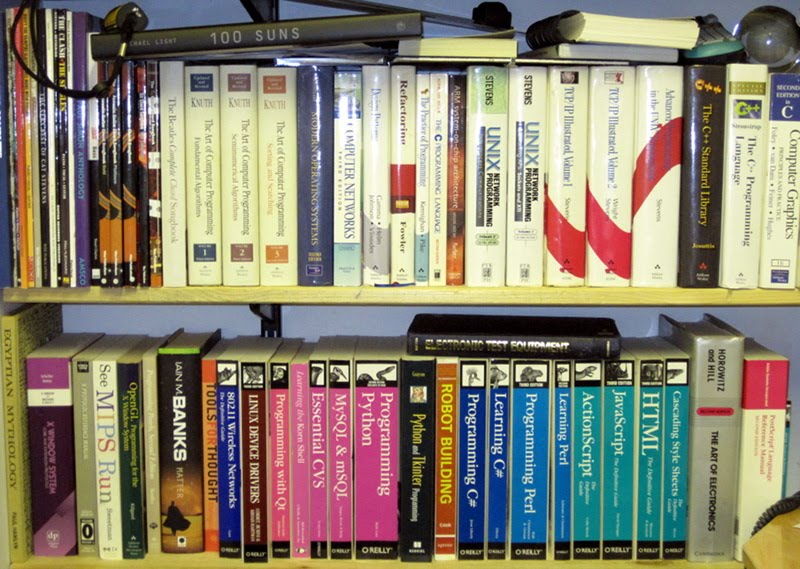
My bookshelf complete with covered kindle
I did look at a huge number of alternatives like the Sony PRS600 and others but they were all more expensive than the 110 for the Kindle and did not have enough features to make a compelling argument for spending more.

Yes it has DRM. Yes it "only" supports PDF, MOBI and mp3. Yes it will not win any style or usability awards. But I went into this eyes open the device is "good enough".

The device lets me read books from a reasonable display. The integration with amazon.com is so seamless it poses a serious danger to my bank account. I should expand on that last point :-) Amazon have got the whole spending money for a book thing executed so well that you do not think twice about a couple of pounds here and there, this soon adds up. I have set myself a rigid budget.

My main complaints are really just niggles:

  • Another different USB connector! Wahh, I thought everyone had agreed on mini USB? seems that I now have to have yet another lead for micro USB

  • The commercial book selection is a bit limited and missing a surprising number of popular titles. Some of this appears to be the publishers and authors simply clinging to their old business model. I fear some of them might not survive and early indications are they are behaving like the music industry did...Guys you are selling an infinite good a scarcity model is going to fail!

  • The price of some of the books is absurd...they are asking hardback prices for the electronic edition! Seriously? how on earth can that possibly be justified? I can see that a hardback book with its print run could cost 5 per physical item (going from hulu print on demand prices as a worst case) plus shipping and stocking fees. So how can you possibly justify charging the same price for a pile of bits where none of that applies? Also the pile of bits cannot be lent or sold, not impressed.

  • eBook formatting is generally dreadful. I do not know who is mastering these books but they need to do a better job. If they tried to pull this in the physical editions they would get a seriously large number of returns.

  • I still have to pay for whispernet delivery fees even though, because its the wi-fi model, I am providing the bandwidth myself. I can see that differentiating between 3G and wi-fi delivery is a bit hard for them though.
However my one and only real complaint with the offering as a whole is the astronomical asking price for the leather cover. The cover is currently 25% of the price of the kindle itself! ( 30 cover 110 kindle) which is just silly. It is a pretty nice cover and the clever clip attachment means it does offer an integrated solution to protecting your kindle, but not 30 nice.

Kindle in a sock cover
So my lovely wife (her kindle was bought with the cover) made me a sock for mine. This is great for casual round the house usage to stop me scuffing the screen but was a bit lightweight for protecting the kindle when out and about.

One day last week I had an idea. I would make my own protective cover by crafting something I had wanted to do for ages. And the (unoriginal I am sure) project of a hollowed out book for housing my kindle was implemented.


My hollowed out book kindle cover
A quick Google later and I had a set of plausible instructions to follow. I used possibly the most out of date book ever (published 1981) on electronic test equipment, partly because it was a ex library sell off book which cost 10pence back in 1995 but mainly because it was the right size to just enclose the kindle without adding to much size.

I learnt a couple of things doing this:
  • Do not let your pva (white) glue mix get too runny, you want it fluid enough to be easily absorbed but not watery - this is important because otherwise the paper absorbs too much water and crinkles
  • Do not use a book where the binding has gone bad already and select a "clean" book. The spine of this book was yellowed and cracking before I started. This means the book spine simply cracks open at the hollowed out bit and it is very obvious.
  • Work out where the "solid" part at the back is going to be and treat that separately so you get a nice solid base at the back of the hole. In mine its not all stuck together and is a bit wavy. Do be sure you left enough depth for the kindle though.
  • Take your time and be careful with the glue, it is amazing how obvious even a simple splash of glue in the wrong place is. Use a small brush for this a paint brush is fast but sloppy.
  • Measure carefully and cut only a few pages at a time, it takes a bit longer but looks much better. Also I did not drill the corners of my hole which means they are a little scruffy.
  • Use the sharpest thinnest knife you can, this really helps. I started with a small stanley knife but switching to my hobby scalpel gave much better results.
  • If you have some, use woodworking clamps to clamp a bit of timber (I had some offcuts of shelving) around the book to compress it while the glue dries. Do not clamp the spine if you can avoid it. This method ensures:
    1. Heavy things do not fall off the book while it dries.
    2. An even strong pressure is applied.
    3. The book does not warp or bend while the glue dries
All in all I kinda like the results and I think I will try again with a more modern book where the spine is not so broken to begin with.

Christian Perrier: Russian debconf translations complete in testing

The Russian l10n team is the first team to reach one of our translators' Grails: all debconf templates translations are now fully translated in Russian, in testing. Russian is the first language to reach this ever (I formerly announced 100% completion for a few languages, but that was in unstable: we never tracked testing up to now). It means that, in theory, on can do a full installation of all packages in squeeze (in case some crazy folks want to do this!) and always be prompted in Russian. French and German are lagging very close to this, the only missing bit being the udev package, which had two consecutive urgent uploads that couldn't include a full translation coordination. For these, we're indeed waiting for another udev upload, but I already nagged Marco about this..:-) Portuguese should make it, though I still have to track 7 packages for it. Swedish is only missing 2 packages. I'm less sure that Czech and Spanish (the other two teams working hard on 100% completion) will make it.

3 November 2010

Andrew McMillan: Something a little different

During my recent trip to Massachusetts for CalConnect XIX I passed back via New York, surfing a few nights on the couch at the Washington Cube Garden1. This was just enough time for my new Davis VantagePro2 to arrive by UPS ground (phew!) causing me much consternation, as the box was about twice as wide as I expected it to be. On opening it I discovered that the reason for the size was the physical dimensions of the rain gauge, leading me to realise that I had actually bought exactly what I wanted: a high quality weather station. Also leading me to wonder how the hell I was going to get it halfway around the world with me the next day. Unfortunately that extra wide carrying case was in no way going to fit inside my suitcase. Fortunately it came with a handle. And those wonderful people at Air New Zealand gave me a Koru Gold upgrade for a 50th birthday present, so it was time to put it to the test... Travelling on the subway out to JFK was it's own little adventure, but I made it out to terminal 5 and wandered around a bit before concluding I needed to be in terminal 7. Once I was in the right place I found the fancy people's check in counter and the nice lady there was only too happy for me to carry it to New Zealand, though she did aver that perhaps the security scanners would be dubious. Not a hitch there though: I guess they're used to letting everything through that's not specifically denied, so weather stations are fine because nobody would be silly enough to even think of doing that... Being Koru Gold really helped at this point though, because it enabled me to queue jump use the priority boarding line when getting onto the plane, and every airline in the US seems to have gone all-out for this "checked baggage costs more" approach, so the planes all fly with empty baggage holds and totally overstuffed overhead lockers. If this progresses I shouldn't wonder that the planes will get so top-heavy they roll over, but through the miracles of priority boarding I was able to commandeer all the locker space I needed before anyone else had even made it past row 40. I confess that I was a little worried that it wouldn't be quite such plain sailing getting through LAX. I mean we all know what reputation this delightful little exit port has. In the event it was totally anitclimactic. If it has a handle on it, and it's about the same size and shape as a largish carryon then it's fine. There have been no recorded stabbings with wind vanes anyway - at least on aeroplanes - so clearly they are perfectly safe. Finally back in my country of birth, thinking I was home free, I breathed a sigh of relief transferred my bags and nipped off to the Koru lounge for a much needed shower and change of clothes after I snuck the station through another scanner. By now the handle had broken, so it was looking decidedly more 'box' like and less 'carryon' like, and when I eventually rolled up at the gate with my boarding pass the attendant made a valiant attempt to relieve me of it, but she was too slow and I danced around her and swanned up the gangway to take my seat. I was slow, this time, having missed the first boarding call, and all overhead lockers were crammed full. There was no seat in front of me to put the weather station under. Fortunately a nearby cupboard proved fit for purpose and it was secreted there and we were underway. At this point the guy two seats over said "didn't I see that weather station in New York?". Of course being bright yellow does make it a little conspicuous I guess, and I'm not renowned for my own inconspicuousness myself. So that's how I got my new weather station home, and you can see right away that doing things the easy way would never even occur to me. Possibly this is why I run Linux: there just isn't enough challenge when you run a different operating system. On Windows someone has always written a program for your new weather station, and a Mac user wouldn't be seen dead with it because it's black and beige and comes in a bright yellow box! So now I had to find some code to write. I looked around and very rapidly discovered that some software called vproweather was available, which would happily talk to my weather station and download the data from it, write web pages, stuff it into a MySQL database and so forth. All, obviously, far too easy, so I thought aha! I could convert that to PostgreSQL, and then I would be happy and relax with the thought of a job well done. So I downloaded the code in question an impressive several hundred kb of C code, cranked open a text editor and started to crawl through it and see where I could add the magic pixie dust to make it work with PostgreSQL. But it was not to be. My eyes glazed over or scales fell from them or something, and I realised that this particular edifice was beyond my help. Back to square one. I downloaded the Vantage Serial Protocol docs from the Davis Instruments website did some quick googling and decided I should write a module to talk this protocol. And I should write it in Perl (it was a Thursday, and Perl always seems more sensible on a Thursday, and not because of Douglas Adams, either). I beavered away into the night. Rain threatened, so I raced outside and installed the new weather station on the roof in the hopes that it's magnificent rain collector would collect. I raced back inside and was able to count the first (and so far, only) tip of the bucket. And so I now release upon the world Davis::VantagePro my first perl module. Well, the first one I care to share with the world, anyway. I have stressed it with very little testing, lumbered it with no planning or design whatsoever and so I feel it only fair that I should cast it upon the world with very little thought for it's survival or existential goals.

1 I seem to recall one night we came up with some fantastic names for Micah & Biella's Washington Square apartment, but I couldn't remember any of the good ones and had to slap a new one on there. I should also mention my stay at the Acetarium in Boston, which was a fabulous few days, but it would pad this blog post needlessly, and I've already done that.

2 November 2010

Tollef Fog Heen: Temperature logging with 1-wire

Last night, I finally got my temperature sensors going, including a nice and shiny munin plugin giving me pretty graphs. So far, I only have a sensor in the loft, but I'll spend some days putting sensors in the rest of the house as well. Robert McQueen asked me on twitter how this all was set up, so I figured I'd blog about it. The sensors I'm using are the DS18B20 ones from Dallas Semiconductor. You can probably buy them from your local electronics supplier, but mine charges around 75 NOK a piece, so I just bought some off Ebay. It takes a bit longer, but I paid about 1/10th the price. For logging, I'm using my NAS, which is just a machine running Debian, an USB to serial adapter and an serial-to-1-wire adapter. Thanks a lot to Martin Bergek for the writeup and the ELFA part numbers for diodes. Since I'm lazy, I ended up just writing a plugin for munin. It uses owfs, which I downloaded from mentors.debian.net. I also offered sponsorship for it, assuming a few small issues are cleaned up, so hopefully you can install using just Debian in the near future. owfs is fairly easy to work with, and the plugin uses the aliased names if you provide aliases, so you can know what the temperature in a given location is, rather than having to remember 64 bit serial numbers.

1 November 2010

Raphaël Hertzog: 5 free software to support with Flattr

Flattr FOSS LogoIt s already the fourth issue of Flattr FOSS: it means 20 different projects using Flattr that I presented you. Here are the 5 suggestions for November:
  1. Redshift is a small utility that adjusts the color temperature of your screen to make it less aggressive on your eyes, in particular during evening/nights. It uses the time of the day and the geographic location to know whether it s night or day. I discovered it this summer and I liked it, although I m not running it permanently.
  2. Noscript is a Firefox plugin to control what sites can execute javascript, flash and other plugins. All those are creating supplementary security risks and you browse safer if you allow only some sites to run them. This is the number one entry on Flattr in the opensource category, it recently took the place of dpkg.
  3. phyMyAdmin is a web interface to manage MySQL databases. If you have such a database on a web-hosting service, you have likely already seen it in action. It s an award-winning software with a 12 year history, it s not so common for PHP applications. :-)
  4. Chromium maintenance in Debian. Chromium is a rapidly-evolving & complex software and Giuseppe Iuculano has been tirelessly working on packaging it. Almost alone within Debian. He deserves kudos for his work even though he reused work made by Fabien Tassin on the Ubuntu package.
  5. Dulwich is a pure-Python implementation of the Git file formats and protocols. It s an important building block for interoperability between Bazaar and Git: bzr-git (a Bazaar plugin providing Git integration) is notably using it. Given the large usage of bzr in Ubuntu and the popularity of Git world-wide, it s important to have such gateways.
This article is part of the Flattr FOSS project.
Update: mentioned the work of Fabien Tassin on the chromium package within Ubuntu.

Flattr this Share/Bookmark 6 comments Support my work

29 October 2010

Raphaël Hertzog: Nice OpenOffice.org template for Debian presentations

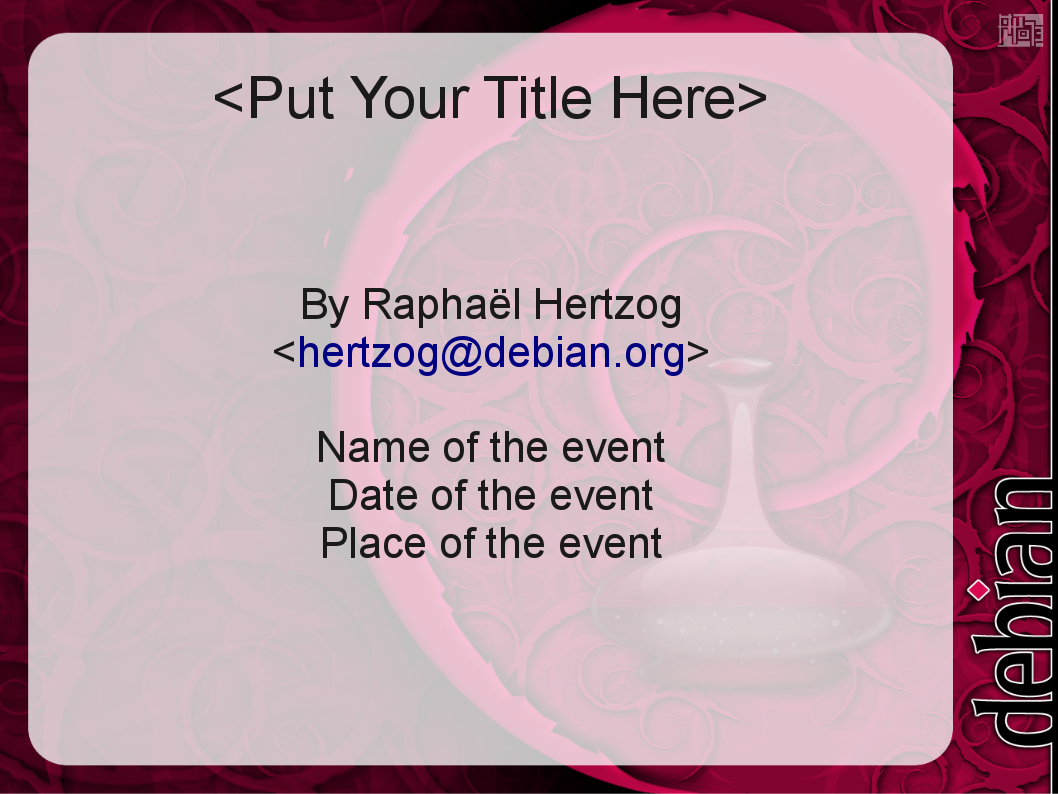
OpenOffice.org Impress Template for Debian Presentations While preparing for the upcoming mini-debconf Paris, I noticed that we don t have any good presentation template for OpenOffice.org Impress. I spent a few hours browsing Debian presentations put online by many speakers and was unable to find one that would suit me. This situation was clearly unacceptable and I decided to spend a few hours to fix this. I selected a very nice wallpaper created by Alexis Younes, used The Gimp to add a translucent white box so that the text can still be read, and combined all this in a OpenOffice.org Impress template. Click here to download the template. You can also get the Gimp XCF file for the background image. By the way, the same wallpaper has been used by Sam Hocevar to create nice-looking Debian business cards. PS: I contacted Alexis Younes by mail and he agreed to put the wallpapers under GPL-2+. It has been clarified on his webpage.
Follow me on Identi.ca, Twitter and Facebook.

Flattr this Share/Bookmark 6 comments Support my work

28 October 2010

Dirk Eddelbuettel: Google Tech Talk on Integrating R and C++: video and slides

Last Friday, Romain and I were guests of the R intergrouplet (what an adorable name!) at Google's headquarter in Mountain View. This arose out of discussions following useR! 2010 where we met Google's Murray Stokely. There appears to be ever increasing use of R at Google, and so it was a great opportunity to give a Google Tech Talk about R and C++ integration --- centered around our Rcpp, RInside and RProtoBuf packages which facilitate interoperability between R and C++. A video recording of our ninety-minute talk is already available via the YouTube channel for Google Tech Talks. The (large) pdf with slides (which Romain had already posted on slideshare) is also available from my presentations page. The remainder of the weekend was nice too (with the notably exception of the extremly sucky weather). We got to to spend some time at the Google Summer of Code Mentor Summit which is always a fun event and a great way to meet other open source folks in person. And we also took one afternoon off to spend some with John Chambers discussing further work involving Rcpp and the new ReferenceClasses that appeared in the just-released R version 2.12.0. This should be a nice avenue to further integrate R and C++ in the near future.

26 October 2010

David Welton: Kindle?

I'm thinking about getting a Kindle, and I thought I'd write down some thoughts, even if they're a bit jumbled, and invite commentary. Good: One thing I really like, living here in Italy, is that I would be able to get English language books instantaniously, and not pay shipping or import duties on them. Whatever disadvantages there may be, that is a huge advantage. Closely tied to that: if we ever move back to the US, shipping all our books will be very expensive. Having some of them in an electronic format would lighten that load considerably. It's fairly cheap. At $180, it's not something I'd want to treat carelessly, but it's significantly less expensive than various existing tables. Long battery life means it's not something you have to worry much about. E-ink looks like it's easier on the eyes than LCD screens. I'm not sure, but also its slow update speed might be a "feature not a bug" in the sense that you're not so easily distracted by the internet being just one click away. Bad: I love having real, physical books in my house. I grew up in a house full of books, and I want the same thing for my daughter. I like being able ot look through them, pick one up, and read about something. Real books are very convenient, as long as you're not lugging around hundreds of them. I like not having to worry too much about dropping them, about getting a bit of water on one or that sort of thing. You can cart them around in a backpack with little worry, take them to the beach, and so on. As far as I can tell, Knuth's books are not available for, nor would appear like they do on paper. That's the golden standard for me: once "The Art of Computer Programming" looks good on an e-reader, it will be really and truly ready. We're not there yet. It's not general purpose. Like I said above, maybe this is good for reading, but there are also times when it'd be nice to have a general purpose device, with email, maps, applications, and so on. A while back, Amazon announced some sort of beta program for a kindle SDK. I haven't heard much of anything since. So it looks like it's not really possible to code for it, which is a bit disappointing. I like to have that option available, even if I don't always exercise it. Unknown: The pricing: sometimes Kindle versions are cheaper (especially, in my case, considering shipping, and, potentially, import duties), but sometimes they aren't, which seems a bit unfair, given that you cannot sell the book if you don't like it. I'm not sure how it would work out for me in the aggregate. Digital Rights Management, or DRM, means you can't, say, sell someone a "used" ebook. This is, in some ways, understandeable, because it's not like an e-book degrades with time as a physical one might. Were it possible to sell on your old books, that might radically change the market. I could see that having both good consequences (cheaper books), but also negative ones for authors (less money). I suppose this topic merits a post or two, or even an entire book of its own, because it's a complicated subject without, in my opinion, "easy" answers. Suffice it to say, though, that there are some drawbacks, but I suppose it's also nice that Amazon "knows" which books I have, so even if I switch to a different reader, I still have my books. And it's good that authors can get paid to work on a book. Not having actually bought it yet, I have no idea how it actually 'feels' to read a book with one. I love curling up with a good book, something I certainly can't do with my laptop. The Kindle looks light and small enough that it could work, but maybe it's just too high tech and sleek to provide that same comfortable coziness. Or maybe I'm just a luddite where books are concerned?
Do you have one? Do you use it? For all kinds of books or just certain kinds (technical books, cheap 'fun' reads, whatever...)? What's the experience like?

25 October 2010

Bastian Venthur: Google Summer of Code 2010 Mentor Summit Report

As requested by our beloved leader, here s my report on this year s Google Summer of Code 2010 Mentor Summit. The summit took place in Google s HQ in Mountain View, California and was what they call an unconference . In the beginning of the unconference the attendees had 10 minutes to write down proposals for a session and put them on a huge white board. After that, every attendee voted for the sessions in which he was interested by putting a small sticker on the proposal. This way we could evaluate the interest on a specific topic and schedule the sessions to the differently sized rooms according to their interest. Neat trick! The the rest of the summit was basically like a conference: we had 11 tracks filled with 5-6 sessions per day, which ran from 10:00 to 17:30. Google provided shuttle buses from our wonderful hotel to the googleplex in the morning and back to the hotel in the evening. The hotel was very nice, it was equipped a swimming pool and a hot tub (both outside), which was extensively used in the morning and of course during the night. Speaking of the night, Google sponsored Thai food in the first night and ye olde Pizza and Beer in the second. Some of the attendees brought their keyboard, guitar, bass and electric clarinet, and where playing some sweet ass Jazz and Pop (on special request ). The sessions itself where not quite what I expected. I expected some proper talks about specific topics, but it was more like and open discussion round where everyone was invited to participate. For some topics it worked pretty well, for others not. It was still totally worth coming, since you meet a lot of like minded people and there is plenty stuff to talk about. Of course I was very exited to see the googleplex. And the rumors are true: the googleplex seems to be a very nice place to work. They provide free breakfast, lunch and dinner for their employees. They have micro kitchens everywhere where you can grab free snacks and beverages. There are lot s of toys lying around, they have bicycles everywhere on the campus which you can just grab to move from one building to another. There is a dinosaur on the yard, a spaceship over the stairwell and lots of other things (testing on the toilet, anyone?), and we have probably only seen a small fraction, since we were not allowed to leave the restricted areas for the unconference. Despite the horrible yet lag (leaving Germany on Friday morning and leaving San Francisco on Sunday night), I m glad I was able to attend to the summit and can only recommend aspiring mentors and students to participate to the next summer of code!

Jonathan Wiltshire: Facebook groups: a gift to framers

I didn t quite believe what I was seeing until I searched and found several other people noticing the same behaviour. For background, Facebook recently introduced the concept of groups not in the sense we ve been used to, but more like lists. Groups are supposed to be to lists what databases are to bits of paper. You can add friends to groups to organise them, send them group emails, run a collective mailing list, and so on. Except that in practice, this is another really good way of exploiting lazy users. See, there are some things to know about groups: The second point may be wrong it s very unclear exactly what permission is afforded to a group member and when or where information about the group membership is published. Since my day job is in private education, this immediately makes me think of two terrifying scenarios:
  1. A student inadvertently gets added to a large group and nobody notices because there is so much other traffic. Whatever my other privacy settings, anything I or anyone else posted to the group is now visible to him this is the same as the previous group arrangement. The difference is that he can now go on and add anyone else Mark Zuckerberg himself even without any kind of checks by the group administrator. A membership system like this quickly spirals out of control.
  2. Somebody with a grudge maybe I took too long fixing their PC adds me to a group with, shall we say, inappropriate or unsavoury content while I m away on holiday and tips off the child protection officer. Better yet, he first sends an email to all staff expressing horror and asking them to verify this in case it s his computer lying. Now there are multiple witnesses to the fact that I was a member of this group, and I return from the sea side to find a P45 on the door mat.
Unlike free software, I can t fix this. Fortunately, I have: enabled every email notification under the sun; few and trustworthy friends; according to my profile, no interests or contact details whatsoever; and no care for groups. I m happy with my lists, thanks all the same.
Comments flattr this!

Gunnar Wolf: Biking without a set destination: Bas lica de Guadalupe

Sunday. A good day to take some time to myself, and get some much needed excercise. And the pseudo-meditation that comes with it: That's one of the factors I love the most about cycling. It's possibly my favorite way of just idling, of allowing for the time to pass without me noticing, just watching the movie of life, watching the world go around me with very little effort. I just love cycling. I have posted here several mentions of the Ciclot n: Every month, the last Sunday, our city government closes a ~32Km circuit to make it for cycling (and skating, and walking, and jogging, and other human-powered locomotion) use. Whenever I am in the city and have the possibility, I do the Ciclot n. Two months ago, I even did it twice in a row, for a total of almost 70Km. But this Sunday was not the last Sunday of the month! So, why am I writing this? Well, because when I left home today at ~10AM, I thought it was. Only when I reached Circuito Interior and had a this is full of cars moment, I remembered October has 31 days. And next Sunday I'll very probably be in Oaxaca city (for the Hackmitin 04h4ck4 2010). And I didn't want to miss the fun of a nice Sunday ride! I don't care if streets are closed just for bikes I am used to riding in traffic. Of course, this meant I would not take the central lanes in Circuito Interior on the way back, taking the ~10 bridges (which are quite tiring, to be honest!). It also meant I was free to make my own route. So, I thought, a nice small ~20-30Km ride will do. I'll just get to Eje 2 Sur or so, and back by another route (i.e. Plutarco E. Calles or so). But as I got closer to Reforma, I realized that every Sunday (independent of a Ciclot n), Reforma is closed for the "Paseos Dominicales" - Shorter than a Ciclot n, but still a nice way to share the streets with other cyclists. So I headed for Reforma. Part of Reforma (from the ngel roundabout westward) was closed due to a precisely cyclist race. But from there eastwards we had the street for us. Good, lets head downtown. The surprise came when I saw that it was not only towards downtown, but passing Av. Ju rez, Reforma continued to be closed just for cyclist use northwards. Great! Lets see how far does it go. The first surprise there: A couple of days ago, it was the "Noche de los Alebrijes". The alebrijes are a beautiful and very elaborated Mexican typical handicraft, depicting psychodelic dragons or dragonic representations of animals. Of course, alebrijes are usually ~30cm long... But here we had huge ones! And verrrry elaborated! How much so? You tell me. And as I started off... A nice thing about cycling is that you get to meditate. My body continued cycling, taking care not to run over the kids that are not so proficient, stoping at each red light... At some point, my mind entered back the body, and I realized we were passing by Tlatelolco (ok, to be honest, the picture was taken when crossing southwards, on my way back), about to cross Circuito Interior on the North, in that symbolically very strange place where Paseo de la Reforma (a long, beautiful avenue named after the war that marked the complete separation between church and Mexican state, in 1860) becomes two streets... Calzada de los Misterios and Calzada de Guadalupe. And, yes, it is among the greatest peregrination routes in the world. On December 12, the Holiday of the Guadalupe Virgin, up to 7 million people go visit her temple. And also around here, when my mind was busy inside my body, I noticed a pair from the Un paseo a ciegas (roughly translated, a blind ride) program was riding just by me. I knew about this program, but had never seen them before So I took the opportunity to get to know this program. Basically: Two people ride a tandem bike. The one in front, as always, drives and steers. The one in the back is a blind person, who gets the amazing sensation of freedom and enjoyment that only a bike gives you. Un paseo a ciegas is held every Sunday at 9AM except for the last Sunday every month. And I definitively want to be part of it! They told me the program has been adopted as well in Puebla, and if I recall correctly, it will soon be started in Quer taro and Guadalajara. Anyway, by then I realized the ride was probably going to reach the Bas lica, a very impressive church I had just visited for the first time ever a couple of weeks ago. And yes we went all the way up Guadalupe until the place where the street gets impossible to bike on, then left along a small street, and back to the South by Misterios. Then, all the way along Reforma again, saying goodbye to Cuitlahuac, Jos de San Mart n, Sim n Bol var, El Caballito, Cristobal Col n, Cuauhtemoc, La Palmera, El ngel... And back home. Of course, not without the sight of some bizarre signs we enjoy so much to find, point at and laugh. Have I ever told you, my nameless reader, that I love this city? I love getting surprised with so many great things. I love the distances I can safely ride on my bike without ever being far from a bike repair shop (which are only needed when they are far away). I love being surrounded by people breathing their freedom to take the streets. I love the safety of our wide, long streets (and no, I'm not joking here Mexico City is among the safest places for cyclists I have been to). I love its weather, that allows me to go out and enjoy the street at any time of year. And I love biking in it, one of the best ways to get to know so many bits of the city I would have never ventured into otherwise.

Jaldhar Vyas: So You Think You Can Dance...ON MY GRAVE? (4DRL Challenge Day 1)

Kanzepharaz of the one thousand and eight spires. Kanzepharaz capital of the Empire of K'thorv and since the succesful end to the war that led to the annihilation of the Pleiadic Oligarchy in K'threl, the richest and most splendid city in the Middle World. Kanzepheraz whose real estate prices have soared e'en beyond the calculation of the rainbow abacus of Thobis Himself. Anathomelis, a princeling of the Imperial Clan needs a location for his new and expanded orgy dome. Yet the only available and affordable on a seventh rank civil allowance place left in the city of one thousand and eight spires is the tomb of Pharaz the First and Subsequent, lich-emperor of the Jerelite dynasty and his eldritch retainers. Before the construction-serfs can move in, the tomb must be cleared of its unshriven and non-rent-paying denizens. As His Principalities' chief swordbearer it has fallen to you to make the tomb of Pharaz safe for gentrification. Treasures and honors await you if you succeed. Aeons of torment in the Planes of Unlife await you if you fail. WILL YOU RISE TO THE CHALLENGE? rec.games.roguelike.development is having another challenge, this time to complete a roguelike game in four days. My previous attempt to write one in seven days was a failure but as I can build upon my previous work, I think I can make it this time. This time I did not waste lots of time thinking of a name. S.Y.T.Y.C.D...OMG? and The Real Housewives of Mordor were the only ones under serious consideration. With that crucial task out of the way, I spent the morning ripping code out of A.L.F. wherever possible. In the afternoon, I looked into dungeon generation. My previous experiments with this sort of thing were pretty convoluted but now I think I have a simpler algorithm which still provides a random yet plausible-looking map. It basically goes like this:
  1. Divide the map into a grid of sectors.As the S.Y.T.Y.C.D...OMG? map is 60 80, my sectors are 20 16 giving 3 5 grid.
  2. Mark each space on the map as impassable.
  3. In each sector, pick a random square as its "center" not too near the edge of the sector.
  4. Join each pair of centers first W -> E and then N -> S. with passable spaces. These will be the corridors and doing it this way ensures all sectors will be connected. Last time, my mistake was making rooms first and then corridors which is much more complicated to get right.
  5. For each sector, there is a 2/3 chance it contains a room. If there is, randomly a number of spaces to each side of the center square. These will be the dimensions of the room. Make all the spaces in the resulting rectangle passable.
  6. Randomly take a quarter chunk out of some rooms making them "L" shaped for a bit of variety. (at some point I can add round, polygonal or other shapes.)
  7. Create "walls" by making all the outer boundary spaces of the room impassable again. This also ensures rooms do not touch or overlap.
  8. If a wall meets a corridor, turn it into a "door." Doors don't do anything yet but eventually will be locked, trapped etc.
  9. Finally, place monsters, treasure, and items in the room.

24 October 2010

Gregor Herrmann: RC bugs 2010/41 - 2010/42

it seems I was a bit busy & lazy in the last two weeks. luckily diocles & evgeni were more active than me kudos!

here are my small contributions:

22 October 2010

Julian Andres Klode: FAIL: Arch Linux switch python executable to Python 3

Today, I got an email from an user of one of my Python scripts asking why the script t does not work on Arch Linux anymore. As it turns out, the Arch Linux team decided to switch /usr/bin/python to Python 3.0 and use python2 for Python 2.X versions. By doing this, they decided to make their distribution incompatible to almost any Python script in the world. Arch Linux s decision to diverge from the rest of the world that uses python for Python 2.X and python3 for Python 3.X is stupid. And doing this without updating reverse dependencies beforehand and thus breaking packages in their own distribution is insane. In the end this means that if you use Arch Linux, you should consider switching to a distribution that does things the right way: Debian. You can also switch to Ubuntu, that s normally just a bit less right (= faster). But using a distribution that does those crazy things in such an irresponsible way is really insane. Really, how can they be so stupid in the Arch world?
Filed under: Python

19 October 2010

Steve Langasek: Upgrading a ThinkPad BIOS

Buying a ThinkPad? Don't buy one with this wireless chipset. "ThinkPad wireless" is apparently code for "poorly supported RealTek chip". If you do end up with one of these chips (perhaps you failed to notice the addition of a new option on the website before the time you spec'ed out your new laptop and the time you ordered it; perhaps you assumed it was iwlagn by default; who can say?), you may be treated to such issues as a lack of rfkill interface support, a driver that needs to be hard reset about once an hour to continue to be able to see APs, a kernel panic if you try to run powertop... or maybe a mysterious bug that prevents the wireless card from transmitting packets to a VoIP server, with 100% reliability. And after you wear yourself out from laughing at the Lenovo sales rep's suggestion that you could pay a 15% restocking fee and reorder another laptop that costs $40 more to get the Intel Centrino option when that same Centrino card can be found on-line for $40 by itself, you might decide to order an Intel Centrino Ultimate-N 6300 from a third party, the same card that's advertised on Lenovo's website as an option for the X201, and install it yourself. And that's when the fun would start. Did you know that it's common practice for laptop OEMs to hard-code a whitelist of authorized wifi (and 3G) cards in the BIOS, and refuse to boot with an unrecognized card - nominally to ensure no one can combine a wireless adapter with their hardware antennas to create a transmission device that violates FCC regulations? And that these same OEMs may have different PCI subsystem IDs for the cards they ship than are used for the ones you can buy retail from third parties? I did not know that. Apparently some people knew that because they had tried this before, but I missed that memo, having never before needed to combine a laptop and a wifi card from different vendors. Here, gentle reader, is a memo. You're welcome. Hacking the ThinkPad BIOS So although this feature was news to me, it was not news to the Internet at large. A quick search on the BIOS error message quickly turned up a relevant description of the problem, as well as pointers to some options for fixing (in the veterinary sense) the whitelist checking in the ThinkPad BIOS. It's great to be part of such a large community of ThinkPad-using Free Software hackers looking out for each other (and not taking "no" for an answer from their BIOS)! But wait, none of the methods described on that page for modifying your BIOS (or bypassing the check by moving the card to a different slot, or taping over one of the pins, or...) work on the X201! As Matthew summarized it, things are more difficult for "anything with three digits or starting with a six". Fortunately, another hint from Matthew took me to the website of a guy who's been providing fixes for this BIOS issue for the past couple of years. Hmm, but the X201 is a bleeding-edge new model and isn't on his list of models that he's patched the BIOS for. Well, fortunately there's a step-by-step howto here that I can follow here to do it myself... grab the latest BIOS image from the vendor's website; decompress the image with phcomp.exe (oh Wine, you pair well with more than cheese); unpack the individual BIOS modules with phnxsplit; run phnxpatch to apply the binary patches, finding that the only one that applies is "wwan1a" when the issue is not with a WWAN card at all, so hand-hack the whitelist in the binary instead; use the fi.exe and fp.exe tools to add the necessary header back onto the BIOS module (after deciphering the example batch script accompanying the BIOS update and translating it into a reusable script in a real scripting language); use phnxmod to inject the newly-packaged BIOS module into the original image; call phnxcksm to update the BIOS's internal checksum; ... Uh? Phnxcksum fails, saying that there's no extended checksum field. Just how deep is this rabbit hole? How much was that restocking fee again, and how much is my time worth? But no; now it's a matter of principle. Besides, I'd rather spend my time fighting with a BIOS than having to reinstall the OS on another new machine. Which is to say that I'd rather beg the local reverse engineering experts for their time fighting with a BIOS. So now we have a BIOS image whose code we're confident has been correctly patched to bypass the whitelist, but we can't find the checksum field that our patching tools expect. Maybe we can flash this to the BIOS as is? No such luck; sure enough, we get a checksum error. Ah, but WinPhlash gives us a logfile, and shows that the failure is a per-module checksum mismatch. So where is that checksum? Oh, there it is; it's the byte labeled "data_checksum" in the module header description in phnxsplit.h, which phnxmod doesn't copy when it splices an updated module into the BIOS image. Well, could it really be as easy as updating a single byte? Yes, the BIOS utility takes it and flashes it without complaint... and the system boots afterwards! Thanks to Paul and Matthew for their great work documenting this problem in general; Zender, for tools that provide a 99% solution; and Kees and Jesse for a dazzling display of impromptu reverse-engineering. Now, to figure out how to get these tools packaged and into Debian and Ubuntu. Posted from my Centrino-wireless-using Lenovo X201 laptop.

Torsten Landschoff: Fun with my Sony PRS-600 eBook reader

I finally bought myself an eBook reader. To be precise, I got the Sony PRS-600 Reader Touch Edition. Two reasons: First of all, the display is only really great with a powerful light source. The reflection is a bit of a nuisance but I can live with it. What I don t like is the PDF support of the device. Viewing a normal page, the font faces are so tiny that it is not readable in any way. The zoom feature works around that, but you can t switch pages from there. Instead you have to unzoom, go to the next page and zoom again. Crappy! There is also the reflow option, which does not mix with source code figures in my books. I am glad that most of my electronic books are from The Pragmatic Bookshelf, which means that I can download them in Epub as well, all without DRM. Thanks, guys! For the PDFs I would like to carry, I googled a while and stumbled across this blog post. The example to work with source documents worked fine for The Little Book of Semaphores at least. But even with BRISS I did not (yet) manage to crop books I bought from APress. Most likely I will try doing it via a bit of python scripting and the poppler bindings for python. I also bought my first DRM content: Star Trek Vanguard: Harbinger. I really enjoyed the book, but the download was a PITA. After buying, you only get a link to a ASCM file, which is not useful by itself. One needs Adobe Digital Editions to download it. So I installed it into a virtual machine which has XP installed. After that, I was able to read it on the PC, which wasn t the goal of the exercise. To put it on the reader, one needs to authorize it from the same Windows software and upload the file. All that stuff took almost an hour and of course the digital edition of the book is more expensive than getting it from amazon germany. But at least I did not have to wait for delivery. Having finished the book I wanted to buy the second part, but of course it is only available for canadian residents on ebooks.com. I researched a number of ebook sites which mostly sell it only in the US. Funny enough, the first hits when searching where pirated versions of the book in full text. Why do they make it so hard to get stuff legally? *sigh*

Next.

Previous.