Search Results: "ag"

14 January 2023

Dirk Eddelbuettel: RApiDatetime 0.0.8 on CRAN: Maintenance

A new release of our RApiDatetime package is now on CRAN. RApiDatetime provides a number of entry points for C-level functions of the R API for Date and Datetime calculations. The functions asPOSIXlt and asPOSIXct convert between long and compact datetime representation, formatPOSIXlt and Rstrptime convert to and from character strings, and POSIXlt2D and D2POSIXlt convert between Date and POSIXlt datetime. Lastly, asDatePOSIXct converts to a date type. All these functions are rather useful, but were not previously exported by R for C-level use by other packages. Which this package aims to change. This release accomodates a CRAN request (as one does) to change (one single) instance of sprintf() to snprintf(). No more, no less.

Changes in RApiDatetime version 0.0.8 (2023-01-14)
  • Update one use of sprint to snprintf
  • Minor edits to DESCRIPTION

Courtesy of my CRANberries, there is are comparisons to the previous release. More information is on the rapidatetime page. For questions or comments please use the issue tracker off the GitHub repo.

This post by Dirk Eddelbuettel originated on his Thinking inside the box blog. Please report excessive re-aggregation in third-party for-profit settings.

Kentaro Hayashi: bibata cursor theme is available on Debian (unstable)

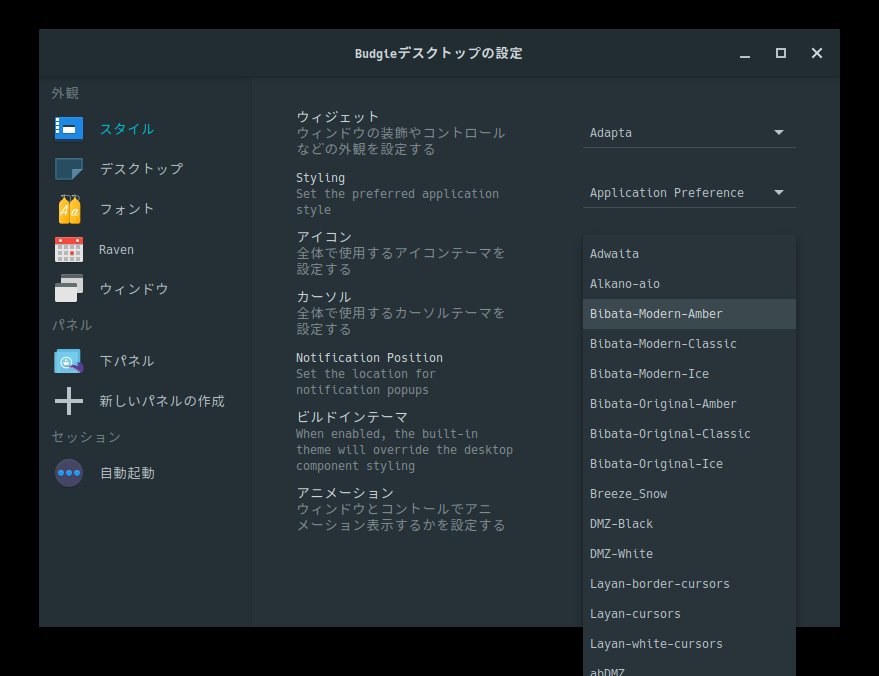
Recently bibata cursor theme is available on Debian (unstable) github.com You can install via sudo apt install -y bibata-cursor-theme. After you installed its theme, you can configure the cursor theme via desktop configuration. (budgie desktop screenshot)
Set bibata-cursor-theme
In bibata-cursor-theme, you can choose the following cursor themes:

Ian Jackson: SGO (and my) VPN and network access tools - in bookworm

Recently, we managed to get secnet and hippotat into Debian. They are on track to go into Debian bookworm. This completes in Debian the set of VPN/networking tools I (and other Greenend) folks have been using for many years. The Sinister Greenend Organisation s suite of network access tools consists mainly of: secnet secnet is our very mature VPN system. Its basic protocol idea is similar to that in Wireguard, but it s much older. Differences from Wireguard include: secnet was originally written by Stephen Early, starting in 1996 or so. I inherited it some years ago and have been maintaining it since. It s mostly written in C. Hippotat Hippotat is best described by copying the intro from the docs:
Hippotat is a system to allow you to use your normal VPN, ssh, and other applications, even in broken network environments that are only ever tested with web stuff . Packets are parcelled up into HTTP POST requests, resembling form submissions (or JavaScript XMLHttpRequest traffic), and the returned packets arrive via the HTTP response bodies.
It doesn t rely on TLS tunnelling so can work even if the local network is trying to intercept TLS. I recently rewrote Hippotat in Rust. userv ipif userv ipif is one of the userv utilities. It allows safe delegation of network routing to unprivileged users. The delegation is of a specific address range, so different ranges can be delegated to different users, and the authorised user cannot interfere with other traffic. This is used in the default configuration of hippotat packages, so that an ordinary user can start up the hippotat client as needed. On chiark userv-ipif is used to delegate networking to users, including administrators of allied VPN realms. So chiark actually runs at least 4 VPN-ish systems in production: secnet, hippotat, Mark Wooding s Tripe, and still a few links managed by the now-superseded udptunnel system. userv userv ipif is a userv service. That is, it is a facility which uses userv to bridge a privilege boundary. userv is perhaps my most under-appreciated program. userv can be used to straightforwardly bridge (local) privilege boundaries on Unix systems. So for example it can: userv services can be defined by the called user, not only by the system administrator. This allows a user to reconfigure or divert a system-provided default implementation, and even allows users to define and implement ad-hoc services of their own. (Although, the system administrator can override user config.) Acknowledgements Thanks for the help I had in this effort. In particular, thanks to Sean Whitton for encouragement, and the ftpmaster review; and to the Debian Rust Team for their help navigating the complexities of handling Rust packages within the Debian Rust Team workflow.

comment count unavailable comments

Matt Brown: Rebooting...

Hi! After nearly 7 years of dormancy, I m rebooting this website and have a goal to write regularly on a variety of topics going forward. More on that and my goals in a coming post For now, this is just a placeholder note to help double-check that everything on the new site is working as expected and the letters are flowing through the pipes in the right places.

Technical Details I ve migrated the site from Wordpress, to a fully static configuration using Hugo and TailwindCSS for help with styling. For now hosting is still on a Linode VM in Fremont, CA, but my plan is to move to a more specialized static hosting service with better CDN reach in the very near future. If you want to inspect the innards further, it s all at https://github.com/mattbnz/web-matt.

Still on the TODO list
  • Improve the hosting situation as noted above.
  • Integrate Bert Hubert s nice audience minutes analytics script.
  • Write up (or find) LinkedIn/Twitter/Mastodon integration scripts to automatically post updates when a new piece of writing appears on the site, to build/notify followers and improve the social reach. Ideally, the script would then also update the page here with links to the thread(s), so that readers can easily join/follow any resulting conversation on the platform of their choice. I m not planning to add any direct comment or feedback functinoality on the site itself.
  • Add a newsletter/subscription option for folks who don t use RSS and would prefer updates via email rather than a social feed.

13 January 2023

Dirk Eddelbuettel: RcppGSL 0.3.13 on CRAN: Mandated Update

A new release 0.3.13 of RcppGSL is now on CRAN. The RcppGSL package provides an interface from R to the GNU GSL by relying on the Rcpp package. This release contains one change (made at the request of a CRAN email in light of possible future changes for C standard C17 and then C23) and removes a compiler-check from configure.ac. It is both a fair point as our src/Makevars does not actually set a compiler yet also a little marginal? The NEWS entry follows:

Changes in version 0.3.13 (2023-01-12)
  • Remove 'AC_PROG_CC' from 'configure.ac' per CRAN wish

Courtesy of CRANberries, a summary of changes in the most recent release is also available. More information is on the RcppGSL page. Questions, comments etc should go to the issue tickets at the GitHub repo. If you like this or other open-source work I do, you can now sponsor me at GitHub.

This post by Dirk Eddelbuettel originated on his Thinking inside the box blog. Please report excessive re-aggregation in third-party for-profit settings.

Reproducible Builds (diffoscope): diffoscope 232 released

The diffoscope maintainers are pleased to announce the release of diffoscope version 232. This version includes the following changes:
[ Chris Lamb ]
* Allow ICC tests to (temporarily) fail.
* Update debian/tests/control after the addition of PyPDF 3 support.
[ FC Stegerman ]
* Update regular expression for Android .APK files.
[ Sam James ]
* Support PyPDF version 3.
You find out more by visiting the project homepage.

12 January 2023

Dirk Eddelbuettel: RDieHarder 0.2.5 on CRAN: Mandated Update

An new version 0.2.5 of the random-number generator tester RDieHarder (based on the DieHarder suite developed / maintained by Robert Brown with contributions by David Bauer and myself along with other contributors) is now on CRAN. This release contains one change (made at the request of a CRAN email in light of possible future changes for C standard C17 and then C23) and removes a compiler-check from configure.ac. It is both a fair point as our src/Makevars does not actually set a compiler yet also a little marginal? Thanks to CRANberries, you can also look at the most recent diff. If you like this or other open-source work I do, you can now sponsor me at GitHub.

This post by Dirk Eddelbuettel originated on his Thinking inside the box blog. Please report excessive re-aggregation in third-party for-profit settings.

Jonathan McDowell: Building a read-only Debian root setup: Part 1

I mentioned in the post about upgrading my home internet that part of the work I did was creating a read-only Debian root with a squashfs image. This post covers the details of how I boot with that image; a later post will cover how I build the squashfs image. First, David Reader kindly pointed me at his rodebian setup, which was helpful in making me think about the whole problem but ultimately not the direction I went. Primarily because on the old router (an RB3011) I am space constrained, with only 120M of usable flash, and so ideally I wanted as much as possible of the system in a well compressed filesystem. squashfs seemed like the best option for that, and ultimately I ended up with a 39M image. I ve then used overlayfs to mount a tmpfs, so I get what looks like a writeable system without having to do too many tweaks to the actual install. On the plus side I can then see exactly what is getting written where and decide whether I need to update something in the squashfs. I don t boot with an initrd - for initial testing I booted directly off a USB stick. I ve actually ended up continuing to do this in production, because I ve had no pressing reason to move it all to booting off internal flash (I ve ended up with a Sandisk SDCZ430-032G-G46 which is tiny). However nothing I m going to describe is dependent on that - this would work perfectly well for a initial UBIFS rootfs on internal NAND. So the basic overview is I boot off a minimal rootfs, mount a squashfs, create an appropriate tmpfs, mount an overlayfs that combines the two, then pivotroot into the overlayfs and exec its init so it becomes the rootfs. For the minimal rootfs I started with busybox, in particular I used the armhf busybox-static package from Debian. My RB5009 is an ARM64, but I wanted to be able to test on the RB3011 as well, which is ARMv7. Picking an armhf binary for the minimal rootfs lets me use the same image for both. Using the static build helps reduce the number of pieces involved in putting it all together. The busybox binary goes in /bin. I was able to cheat and chroot into the empty rootfs and call busybox --install -s to create symlinks for all the tools it provides, but I could have done this manually. There s only a handful that are actually needed, but it s amazing how much is crammed into a 1.2M binary. /sbin/init is a shell script:
Contents
#!/bin/ash
# Make sure we have a sane date
if [ -e /data/saved-date ]; then
        CURRENT_DATE=$(date -Iseconds)
        if [ "$ CURRENT_DATE:0:4 " -lt "2022" -o \
                        "$ CURRENT_DATE:0:4 " -gt "2030" ]; then
                echo Setting initial date
                date -s "$(cat /data/saved-date)"
        fi
fi
# Work out what platform we're on
ARCH=$(uname -m)
if [ "$ ARCH " == "aarch64" ]; then
        ARCH=arm64
else
        ARCH=armhf
fi
# Mount a tmpfs to store the changes
mount -t tmpfs root-rw /mnt/overlay/rw
# Make the directories we need in the tmpfs
mkdir /mnt/overlay/rw/upper
mkdir /mnt/overlay/rw/work
# Mount the squashfs and build an overlay root filesystem of it + the tmpfs
mount -t squashfs -o loop /data/router.$ ARCH .squashfs /mnt/overlay/lower
mount -t overlay \
        -o lowerdir=/mnt/overlay/lower,upperdir=/mnt/overlay/rw/upper,workdir=/mnt/overlay/rw/work \
        overlayfs-root /mnt/root
# Build the directories we need within the new root
mkdir /mnt/root/mnt/flash
mkdir /mnt/root/mnt/overlay
mkdir /mnt/root/mnt/overlay/lower
mkdir /mnt/root/mnt/overlay/rw
# Copy any stored state
if [ -e /data/state.$ ARCH .tar ]; then
        echo Restoring stored state
        cd /mnt/root
        tar xf /data/state.$ ARCH .tar
fi
cd /mnt/root
pivot_root . mnt/flash
echo Switching into root filesystem
exec chroot . sh -c "$(cat <<END
mount --move /mnt/flash/mnt/overlay/lower /mnt/overlay/lower
mount --move /mnt/flash/mnt/overlay/rw /mnt/overlay/rw
exec /sbin/init
END
)"
Most of what the script is doing is sorting out the squashfs + tmpfs backed overlayfs that becomes the full root filesystems, but there are a few other bits to note. First, we pick up a saved date from /data/saved-date - the router has no RTC and while it ll sort itself out with NTP once it gets networking up it s useful to make sure we don t end up comically far in the past or future. Second, the script looks at what architecture we re running and picks up an appropriate squashfs image from /data based on that. This let me use the same USB stick for testing on both the RB3011 and the RB5011. Finally we allow for a /data/state.$ ARCH .tar file to let us pick up changes to the rootfs at boot time - this prevents having to rebuild the squashfs image every time there s a persistent change. The other piece that doesn t show up in the script is that the kernel and its modules are all installed into this initial rootfs (and then symlinked from the squashfs). This lets me build a mostly modular kernel, as long as all the necessary drivers to mount the USB stick are built in. Once the system is fully booted the initial rootfs is available at /mnt/flash, by default mounted read-only (to avoid inadvertent writes), but able to be remounted to update the squashfs image, install a new kernel, or update the state tarball. /mnt/overlay/rw/upper/ is where updates to the overlayfs are written, which provides an easy way to see what files are changing, initially to determine what might need tweaked in the squashfs creation process and subsequently to be able to see what needs updated in the state tarball.

Dirk Eddelbuettel: linl 0.0.5 on CRAN: Extended Background Support

A new release of our linl package for writing LaTeX letters with (R)markdown is now on CRAN. linl makes it easy to write letters in markdown, with some extra bells and whistles thanks to some cleverness chiefly by Aaron. This version add extended header and footer placement support thanks to an included copy of wallpaper.sty as added in a nice PR by I aki. As the previous release was well over three years ago, we also enhanced continuous integration in the process. The repository README.md shows some screenshots of input and output files. The NEWS entry follows:

Changes in linl version 0.0.5 (2023-01-11)
  • Several updates to continuous integration and testing
  • Enhanced placment functionality for images in header and footer via wallpaper.sty and new x and y offset variable (I aki Ucar in #30)

Courtesy of CRANberries, there is a comparison to the previous release. More information is on the linl page. For questions or comments use the issue tracker off the GitHub repo. If you like this or other open-source work I do, you can now sponsor me at GitHub.

This post by Dirk Eddelbuettel originated on his Thinking inside the box blog. Please report excessive re-aggregation in third-party for-profit settings.

11 January 2023

Dirk Eddelbuettel: qlcal 0.0.4 on CRAN: Extended and Updated

The fourth release of the still new-ish qlcal package arrivied at CRAN just now. qlcal is based on the calendaring subset of QuantLib. It is provided (for the R package) as a set of included files, so the package is self-contained and does not depend on an external QuantLib library (which can be demanding to build). qlcal covers over sixty country / market calendars and can compute holiday lists, its complement (i.e. business day lists) and much more. This release generalizes the advanceDate() function (similar to what advanceUnits() already had), and updates several calendars along with the upcoming QuantLib 1.29 release. This includes updates for the UK and Australia related to changes in the monarchy, an update for South Africa and the additional of 2023 holidays for China.

Changes in version 0.0.4 (2023-01-11)
  • The advanceDate function can now selects a business day convention, a time unit and an end-of-month convention
  • Calendars routines for Australia, China, South Africa, UK, US have been updated to current versions from QuantLib 1.29.

Courtesy of my CRANberries, there is a diffstat report for this release. See the project page and package documentation for more details, and more examples. If you like this or other open-source work I do, you can now sponsor me at GitHub.

This post by Dirk Eddelbuettel originated on his Thinking inside the box blog. Please report excessive re-aggregation in third-party for-profit settings.

Junichi Uekawa: Reading through intrusive-collections.

Reading through intrusive-collections. My eyes are not quite used to reading macro packages and they don't quite make sense to me yet. Error messages look strange too.

10 January 2023

Daniel Lange: Happy tenth birthday, dear Thunar bug

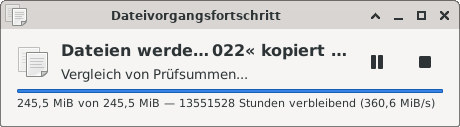
Thunar, the Xfce4 file manager, has a bug that it underflows the time remaining for a file copy since ten years now (bugzilla, gitlab). Happy birthday!

Dirk Eddelbuettel: RcppTOML 0.2.0: TOML 1.0.0 rewrite with toml++

A few years since the last release in late 2020, the RcppTOML package is now back with a new and shiny CRAN release 0.2.0. It is now based on the wonderful toml++ C++17 library by Mark Gillard and gets us (at long last!) full TOML v1.0.0 compliance for use with R. TOML is a file format that is most suitable for configurations, as it is meant to be edited by humans but read by computers. It emphasizes strong readability for humans while at the same time supporting strong typing as well as immediate and clear error reports. On small typos you get parse errors, rather than silently corrupted garbage. Much preferable to any and all of XML, JSON or YAML though sadly these may be too ubiquitous now. TOML is frequently being used with the projects such as the Hugo static blog compiler, or the Cargo system of Crates (aka packages ) for the Rust language. This package is a rewrite of the internals interfacing the library, and updates the package to using toml++ and C++17. The R interface is unchanged, and a full run of reverse dependencies passed. This involved finding one sole test failure which turned to have been driven by a non-conforming TOML input file which Jianfeng Li kindly fixed at the source making his (extensive) set of tests in package configr pass too. The actual rewrite was mostly done in a one-off repo RcppTomlPlusPlus which can now be considered frozen. The short summary of changes follows.

Changes in version 0.2.0 (2023-01-10)
  • Rewritten in C++17 using toml++ for TOML v1.0.0 compliance
  • Unchanged interface from R, unchanged (and expanded tests)
  • Several small continuous integration upgrades since last release

Courtesy of my CRANberries, there is a diffstat report for this release. More information is on the RcppTOML page page. Please use the GitHub issue tracker for issues and bugreports. If you like this or other open-source work I do, you can sponsor me at GitHub.

This post by Dirk Eddelbuettel originated on his Thinking inside the box blog. Please report excessive re-aggregation in third-party for-profit settings.

Matthew Garrett: Integrating Linux with Okta Device Trust

I've written about bearer tokens and how much pain they cause me before, but sadly wishing for a better world doesn't make it happen so I'm making do with what's available. Okta has a feature called Device Trust which allows to you configure access control policies that prevent people obtaining tokens unless they're using a trusted device. This doesn't actually bind the tokens to the hardware in any way, so if a device is compromised or if a user is untrustworthy this doesn't prevent the token ending up on an unmonitored system with no security policies. But it's an incremental improvement, other than the fact that for desktop it's only supported on Windows and MacOS, which really doesn't line up well with my interests.

Obviously there's nothing fundamentally magic about these platforms, so it seemed fairly likely that it would be possible to make this work elsewhere. I spent a while staring at the implementation using Charles Proxy and the Chrome developer tools network tab and had worked out a lot, and then Okta published a paper describing a lot of what I'd just laboriously figured out. But it did also help clear up some points of confusion and clarified some design choices. I'm not going to give a full description of the details (with luck there'll be code shared for that before too long), but here's an outline of how all of this works. Also, to be clear, I'm only going to talk about the desktop support here - mobile is a bunch of related but distinct things that I haven't looked at in detail yet.

Okta's Device Trust (as officially supported) relies on Okta Verify, a local agent. When initially installed, Verify authenticates as the user, obtains a token with a scope that allows it to manage devices, and then registers the user's computer as an additional MFA factor. This involves it generating a JWT that embeds a number of custom claims about the device and its state, including things like the serial number. This JWT is signed with a locally generated (and hardware-backed, using a TPM or Secure Enclave) key, which allows Okta to determine that any future updates from a device claiming the same identity are genuinely from the same device (you could construct an update with a spoofed serial number, but you can't copy the key out of a TPM so you can't sign it appropriately). This is sufficient to get a device registered with Okta, at which point it can be used with Fastpass, Okta's hardware-backed MFA mechanism.

As outlined in the aforementioned deep dive paper, Fastpass is implemented via multiple mechanisms. I'm going to focus on the loopback one, since it's the one that has the strongest security properties. In this mode, Verify listens on one of a list of 10 or so ports on localhost. When you hit the Okta signin widget, choosing Fastpass triggers the widget into hitting each of these ports in turn until it finds one that speaks Fastpass and then submits a challenge to it (along with the URL that's making the request). Verify then constructs a response that includes the challenge and signs it with the hardware-backed key, along with information about whether this was done automatically or whether it included forcing the user to prove their presence. Verify then submits this back to Okta, and if that checks out Okta completes the authentication.

Doing this via loopback from the browser has a bunch of nice properties, primarily around the browser providing information about which site triggered the request. This means the Verify agent can make a decision about whether to submit something there (ie, if a fake login widget requests your creds, the agent will ignore it), and also allows the issued token to be cross-checked against the site that requested it (eg, if g1thub.com requests a token that's valid for github.com, that's a red flag). It's not quite at the same level as a hardware WebAuthn token, but it has many of the anti-phishing properties.

But none of this actually validates the device identity! The entire registration process is up to the client, and clients are in a position to lie. Someone could simply reimplement Verify to lie about, say, a device serial number when registering, and there'd be no proof to the contrary. Thankfully there's another level to this to provide stronger assurances. Okta allows you to provide a CA root[1]. When Okta issues a Fastpass challenge to a device the challenge includes a list of the trusted CAs. If a client has a certificate that chains back to that, it can embed an additional JWT in the auth JWT, this one containing the certificate and signed with the certificate's private key. This binds the CA-issued identity to the Fastpass validation, and causes the device to start appearing as "Managed" in the Okta device management UI. At that point you can configure policy to restrict various apps to managed devices, ensuring that users are only able to get tokens if they're using a device you've previously issued a certificate to.

I've managed to get Linux tooling working with this, though there's still a few drawbacks. The main issue is that the API only allows you to register devices that declare themselves as Windows or MacOS, followed by the login system sniffing browser user agent and only offering Fastpass if you're on one of the officially supported platforms. This can be worked around with an extension that spoofs user agent specifically on the login page, but that's still going to result in devices being logged as a non-Linux OS which makes interpreting the logs more difficult. There's also no ability to choose which bits of device state you log: there's a couple of existing integrations, and otherwise a fixed set of parameters that are reported. It'd be lovely to be able to log arbitrary material and make policy decisions based on that.

This also doesn't help with ChromeOS. There's no real way to automatically launch something that's bound to localhost (you could probably make this work using Crostini but there's no way to launch a Crostini app at login), and access to hardware-backed keys is kind of a complicated topic in ChromeOS for privacy reasons. I haven't tried this yet, but I think using an enterprise force-installed extension and the chrome.enterprise.platformKeys API to obtain a device identity cert and then intercepting requests to the appropriate port range on localhost ought to be enough to do that? But I've literally never written any Javascript so I don't know. Okta supports falling back from the loopback protocol to calling a custom URI scheme, but once you allow that you're also losing a bunch of the phishing protection, so I'd prefer not to take that approach.

Like I said, none of this prevents exfiltration of bearer tokens once they've been issued, and there's still a lot of ecosystem work to do there. But ensuring that tokens can't be issued to unmanaged machines in the first place is still a step forwards, and with luck we'll be able to make use of this on Linux systems without relying on proprietary client-side tooling.

(Time taken to code this implementation: about two days, and under 1000 lines of new code. Time taken to figure out what the fuck to write: rather a lot longer)

[1] There's also support for having Okta issue certificates, but then you're kind of back to the "How do I know this is my device" situation

comment count unavailable comments

9 January 2023

Junichi Uekawa: Uploaded Debian packages, since a long time.

Uploaded Debian packages, since a long time. enumn and remain are rust packages, and needed for crosvm. Working slowly through the dependency chain.

Russ Allbery: Review: Black Stars

Review: Black Stars, edited by Nisi Shawl & Latoya Peterson
Publisher: Amazon Original Stories
Copyright: August 2021
ISBN: 1-5420-3272-5
ISBN: 1-5420-3270-9
ISBN: 1-5420-3271-7
ISBN: 1-5420-3273-3
ISBN: 1-5420-3268-7
ISBN: 1-5420-3269-5
Format: Kindle
Pages: 168
This is a bit of an odd duck from a metadata standpoint. Black Stars is a series of short stories (maybe one creeps into novelette range) published by Amazon for Kindle and audiobook. Each one can be purchased separately (or "borrowed" with Amazon Prime), and they have separate ISBNs, so my normal practice would be to give each its own review. They're much too short for that, though, so I'm reviewing the whole group as an anthology. The cover in the sidebar is for the first story of the series. The other covers have similar designs. I think the one for "We Travel the Spaceways" was my favorite. Each story is by a Black author and most of them are science fiction. ("The Black Pages" is fantasy.) I would classify them as afrofuturism, although I don't have a firm grasp on its definition. This anthology included several authors I've been meaning to read and was conveniently available, so I gave it a try, even though I'm not much of a short fiction reader. That will be apparent in the forthcoming grumbling. "The Visit" by Chimamanda Ngozi Adichie: This is a me problem rather than a story problem, and I suspect it's partly because the story is not for me, but I am very done with gender-swapped sexism. I get the point of telling stories of our own society with enough alienation to force the reader to approach them from a fresh angle, but the problem with a story where women are sexist and condescending to men is that you're still reading a story of condescending sexism. That's particularly true when the analogies to our world are more obvious than the internal logic of the story world, as they are here. "The Visit" tells the story of a reunion between two college friends, one of whom is now a stay-at-home husband and the other of whom has stayed single. There's not much story beyond that, just obvious political metaphor (the Male Masturbatory Act to ensure no potential child is wasted, blatant harrassment of the two men by female cops) and depressing character studies. Everyone in this story is an ass except maybe Obinna's single friend Eze, which means there's nothing to focus on except the sexism. The writing is competent and effective, but I didn't care in the slightest about any of these people or anything that was happening in their awful, dreary world. (4) "The Black Pages" by Nnedi Okorafor: Issaka has been living in Chicago, but the story opens with him returning to Timbouctou where he grew up. His parents know he's coming for a visit, but he's a week early as a surprise. Unfortunately, he's arriving at the same time as an al-Qaeda attack on the library. They set it on fire, but most of the books they were trying to destroy were already saved by his father and are now in Issaka's childhood bedroom. Unbeknownst to al-Qaeda, one of the books they did burn was imprisoning a djinn. A djinn who is now free and resident in Issaka's iPad. This was a great first chapter of a novel. The combination of a modern setting and a djinn trapped in books with an instant affinity with technology was great. Issaka is an interesting character who is well-placed to introduce the reader to the setting, and I was fully invested in Issaka and Faro negotiating their relationship. Then the story just stopped. I didn't understand the ending, which was probably me being dim, but the real problem was that I was not at all ready for an ending. I would read the novel this was setting up, though. (6) "2043... (A Merman I Should Turn to Be)" by Nisi Shawl: This is another story that felt like the setup for a novel, although not as good of a novel. The premise is that the United States has developed biological engineering that allows humans to live underwater for extended periods (although they still have to surface occasionally for air, like whales). The use to which that technology is being put is a rerun of Liberia with less colonialism: Blacks are given the option to be modified into merpeople and live under the sea off the US coast as a solution. White supremacists are not happy, of course, and try to stop them from claiming their patch of ocean floor. This was fine, as far as it went, but I wasn't fond of the lead character and there wasn't much plot. There was some sort of semi-secret plan that the protagonist stumbles across and that never made much sense to me. The best parts of the story were the underwater setting and the semi-realistic details about the merman transformation. (6) "These Alien Skies" by C.T. Rwizi: In the far future, humans are expanding across the galaxy via automatically-constructed wormhole gates. Msizi's job is to be the first ship through a new wormhole to survey the system previously reached only by the AI construction ship. The wormhole is not supposed to explode shortly after he goes through, leaving him stranded in an alien system with only his companion Tariro, who is not who she seems to be. This was a classic SF plot, but I still hadn't guessed where it was going, or the relevance of some undiscussed bits of Tariro's past. Once the plot happens, it's a bit predictable, but I enjoyed it despite the depressed protagonist. (6) "Clap Back" by Nalo Hopkinson: Apart from "The Visit," this was the most directly political of the stories. It opens with Wenda, a protest artist, whose final class project uses nanotech to put racist tchotchkes to an unexpected use. This is intercut with news clippings about a (white and much richer) designer who has found a way to embed memories into clothing and is using this to spread quotes of rather pointed "forgiveness" from a Malawi quilt. This was one of the few entries in this anthology that fit the short story shape for me. Wenda's project and Burri's clothing interact fifty years later in a surprising way. This was the second-best story of the group. (7) "We Travel the Spaceways" by Victor LaValle: Grimace (so named because he wears a huge purple coat) is a homeless man in New York who talks to cans. Most of his life is about finding food, but the cans occasionally give him missions and provide minor assistance. Apart from his cans, he's very much alone, but when he comforts a woman in McDonalds (after getting caught thinking about stealing her cheeseburger), he hopes he may have found a partner. If, that is, she still likes him when she discovers the nature of the cans' missions. This was the best-written story of the six. Grimace is the first-person narrator, and LaValle's handling of characterization and voice is excellent. Grimace makes perfect sense from inside his head, but the reader can also see how unsettling he is to those around him. This could have been a disturbing, realistic story about a schitzophrenic man. As one may have guessed from the theme of the anthology, that's not what it is. I admired the craft of this story, but I found Grimace's missions too horrific to truly like it. There is an in-story justification for them; suffice it to say that I didn't find it believable. An expansion with considerably more detail and history might have bridged that gap, but alas, short fiction. (6) Rating: 6 out of 10

Gunnar Wolf: Back to Xochicalco

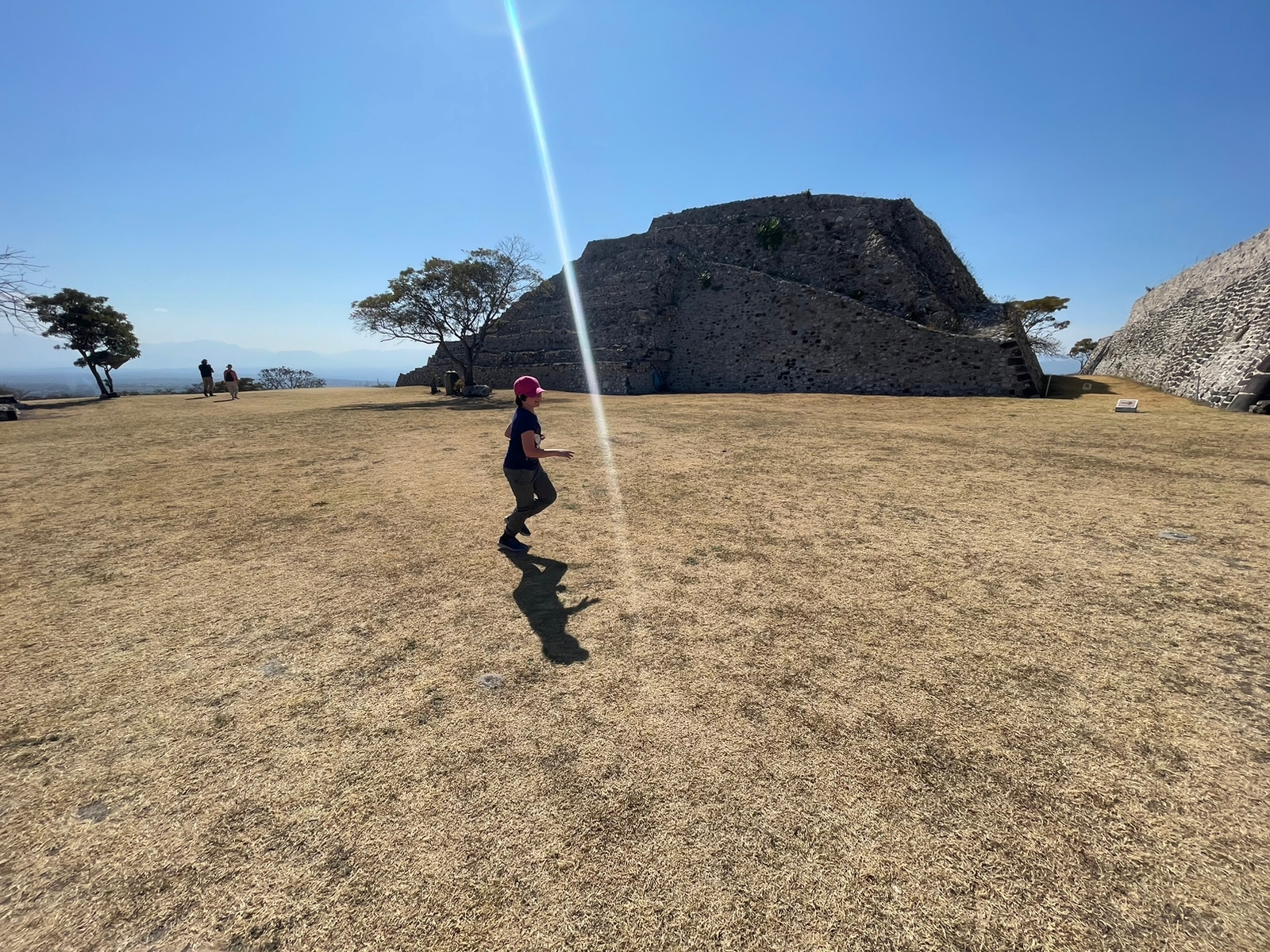
In Mexico, we have the great luck to live among vestiges of long-gone cultures, some that were conquered and in some way got adapted and survived into our modern, mostly-West-Europan-derived society, and some that thrived but disappeared many more centuries ago. And although not everybody feels the same way, in my family we have always enjoyed visiting archaeological sites when I was a child and today. Some of the regulars that follow this blog (or its syndicators) will remember Xochicalco, as it was the destination we chose for the daytrip back in the day, in DebConf6 (May 2006). This weekend, my mother suggested us to go there, as being Winter, the weather is quite pleasant we were at about 25 C, and by the hottest months of the year it can easily reach 10 more; the place lacks shadows, like most archaeological sites, and it does get quite tiring nevertheless! Xochicalco is quite unique among our archaeological sites, as it was built as a conference city: people came from cultures spanning all of Mesoamerica to debate and homogeneize the calendars used in the region. The first photo I shared here is by the Quetzalc atl temple, where each of the four sides shows people from different cultures (the styles in which they are depicted follow their local self-representations), encodes equivalent dates in the different calendaric systems, and are located along representationsof the God of knowledge, the feathered serpent, Quetzalc atl. It was a very nice day out. And, of course, it brought back memories of my favorite conference visiting the site of a very important conference

8 January 2023

Dirk Eddelbuettel: spdl 0.0.4 on CRAN: Adding Stopwatch

Another quick update to the still new-ish package spdl is now om CRAN, and in Debian. The key focus of spdl is a offering the same interface from both R and C++ for logging by relying on spdlog via my RcppSpdlog package. This release add support for the stopwatch() facility. One can now instantiate such an object, and referencing it in a log message shows the elapsed time. No more, no less, and it works the same way in R and C++. The short NEWS entry follows.

Changes in spdl version 0.0.4 (2023-01-08)
  • Add support for stopwatch

Courtesy of my CRANberries, there is also a diffstat report. More detailed information is on the spdl page. If you like this or other open-source work I do, you can sponsor me at GitHub.

This post by Dirk Eddelbuettel originated on his Thinking inside the box blog. Please report excessive re-aggregation in third-party for-profit settings.

Anuradha Weeraman: Parallelizing and running distributed builds with distcc

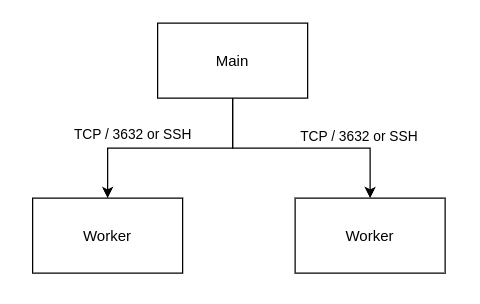
Parallelizing the compilation of a large codebase is a breeze with distcc, which allows you to spread the load across multiple nodes and speed up the compilation time.Here s a sample network topology for a distributed build:
Install distcc on the three Debian/Ubuntu-based nodes:
# apt install distcc
Edit /etc/default/distcc and set:
STARTDISTCC="true"

# Customize for your environment
ALLOWEDNETS="192.168.2.0/24"

# Specify your network device
LISTENER="192.168.2.146"
Additionally, the JOBS and NICE variables can be tweaked to suit the compute power that you have available.Start distcc:
# systemctl start distcc
Do the same all the nodes, and if you have a firewall enabled with ufw, you will need to open up the port 3632 to the master node.
# ufw allow 3632/tcp
Additionally, if you d like to use ssh over untrusted networks so code and communication with the worker nodes happen over a secure channel, ensure that SSH is running and is opened up to the master node in the same manner as above with the key of the master node in ~/.ssh/authorized_keys of the worker nodes. Opening port 3632 in this manner is a security hole, so take precautions over untrusted networks.Back in the master node, setup a DISTCC_HOSTS environment variable that lists the worker nodes, including the master node. Note the order of the hosts, as it is important. The first host will be more heavily used, and distcc has no way of knowing the capacity and capability of the hosts, so specify the most powerful host first.
export DISTCC_HOSTS='localhost 192.168.2.107 192.168.2.91'
At this point, you re ready to compile.Go to your codebase, in this case we use the Linux kernel source code for the purpose of example.
$ make tinyconfig
$ time make -j$(nproc) CC=distcc bzImage
On another terminal, you can monitor the status of the distributed compilation with distmoncc-text or tools such as top or bpytop.Network throughput and latency will be a big factor in how much distcc will help speed up your build process. Using ssh may additionally introduce overhead, so play with the variables to see how much distcc can help speed up or optimize the build for your specific scenario. You may want to additionally consider ccache to speed up the build process.There are some aspects of the build process that are not effectively parallizable in this manner, such as the final linking step of the executable, for which you will not see any performance improvement with distcc.Give distcc a spin, and put any spare compute you have lying around in your home lab to good use.

Scarlett Gately Moore: Debian: Coming soon! MycroftAI! KDE snaps update.

I am excited to announce that I have joined the MycroftAI team in Salsa and working hard to get this packaged up and released in Debian. You can track our progress here: https://salsa.debian.org/mycroftai-team Snaps are on temporary hold while we get everything switched over to core22. This includes the neon-extension, that requires merges and store requests to be honored. Hopefully folks are returning from holidays and things will start moving again. Thank you for your patience! I am still seeking work if you or anyone you know is willing to give me a chance to shine, you won t regret it, life has leveled out and I am ready to make great things happen! I admit the interviewing process is much more difficult than in years past, any advice here is also appreciated. Thank you for stopping by.

Next.

Previous.