Search Results: "xam"

28 January 2014

Dirk Eddelbuettel: RQuantLib 0.3.11

A new minor / maintenance release RQuantLib 0.3.11 is now on CRAN and in Debian. Like the RcppClassic upload two days ago and the RcppZiggurat and RcppEigen uploads yesterday, this release was motivated at least in part by an upcoming Rcpp release about which I should have more to day soon. A few things got polished and updated, and we added a plugin which should make use via Rcpp Attribute easier. RQuantLib combines (some of) the quantitative analytics of QuantLib with the R statistical computing environment and language. Thanks to CRANberries, there is also a diff to the previous release 0.3.10. Full changelog details, examples and more details about this package are at my RQuantLib page.

This post by Dirk Eddelbuettel originated on his Thinking inside the box blog. Please report excessive re-aggregation in third-party for-profit settings.

27 January 2014

Kees Cook: -fstack-protector-strong

There will be a new option in gcc 4.9 named -fstack-protector-strong , which offers an improved version of -fstack-protector without going all the way to -fstack-protector-all . The stack protector feature itself adds a known canary to the stack during function preamble, and checks it when the function returns. If it changed, there was a stack overflow, and the program aborts. This is fine, but figuring out when to include it is the reason behind the various options. Since traditionally stack overflows happen with string-based manipulations, the default (-fstack-protector), only includes the canary code when a function defines an 8 (--param=ssp-buffer-size=N, N=8 by default) or more byte local character array. This means just a few functions get the checking, but they re probably the most likely to need it, so it s an okay balance. Various distributions ended up lowering their default --param=ssp-buffer-size option down to 4, since there were still cases of functions that should have been protected but the conservative gcc upstream default of 8 wasn t covering them. However, even with the increased function coverage, there are rare cases when a stack overflow happens on other kinds of stack variables. To handle this more paranoid concern, -fstack-protector-all was defined to add the canary to all functions. This results in substantial use of stack space for saving the canary on deep stack users, and measurable (though surprisingly still relatively low) performance hit due to all the saving/checking. For a long time, Chrome OS used this, since we re paranoid. :) In the interest of gaining back some of the lost performance and not hitting our Chrome OS build images with such a giant stack-protector hammer, Han Shen from the Chrome OS compiler team created the new option -fstack-protector-strong, which enables the canary in many more conditions: This meant we were covering all the more paranoid conditions that might lead to a stack overflow. Chrome OS has been using this option instead of -fstack-protector-all for about 10 months now. As a quick demonstration of the options, you can see this example program under various conditions. It tries to show off an example of shoving serialized data into a non-character variable, like might happen in some network address manipulations or streaming data parsing. Since I m using memcpy here for clarity, the builds will need to turn off FORTIFY_SOURCE, which would also notice the overflow.
#include <stdio.h>
#include <stdlib.h>
#include <string.h>
struct no_chars  
    unsigned int len;
    unsigned int data;
 ;
int main(int argc, char * argv[])
 
    struct no_chars info =    ;
    if (argc < 3)  
        fprintf(stderr, "Usage: %s LENGTH DATA...\n", argv[0]);
        return 1;
     
    info.len = atoi(argv[1]);
    memcpy(&info.data, argv[2], info.len);
    return 0;
 
Built with everything disabled, this faults trying to return to an invalid VMA: Built with FORTIFY_SOURCE enabled, we see the expected catch of the overflow in memcpy: So, we ll leave FORTIFY_SOURCE disabled for our comparisons. With pre-4.9 gcc, we can see that -fstack-protector does not get triggered to protect this function: However, using -fstack-protector-all does trigger the protection, as expected: And finally, using the gcc snapshot of 4.9, here is -fstack-protector-strong doing its job: For Linux 3.14, I ve added support for -fstack-protector-strong via the new CONFIG_CC_STACKPROTECTOR_STRONG option. The old CONFIG_CC_STACKPROTECTOR will be available as CONFIG_CC_STACKPROTECTOR_REGULAR. When comparing the results on builds via size and objdump -d analysis, here s what I found with gcc 4.9: A normal x86_64 defconfig build, without stack protector had a kernel text size of 11430641 bytes with 36110 function bodies. Adding CONFIG_CC_STACKPROTECTOR_REGULAR increased the kernel text size to 11468490 (a +0.33% change), with 1015 of 36110 functions stack-protected (2.81%). Using CONFIG_CC_STACKPROTECTOR_STRONG increased the kernel text size to 11692790 (+2.24%), with 7401 of 36110 functions stack-protected (20.5%). And 20% is a far-cry from 100% if support for -fstack-protector-all was added back to the kernel. The next bit of work will be figuring out the best way to detect the version of gcc in use when doing Debian package builds, and using -fstack-protector-strong instead of -fstack-protector. For Ubuntu, it s much simpler because it ll just be the compiler default.

2014, Kees Cook. This work is licensed under a Creative Commons Attribution-ShareAlike 3.0 License.
Creative Commons License

Daniel Pocock: A quick look at ENUM mapping telephone numbers to DNS

With my talk about Lumicall at FOSDEM coming this Sunday, I'm going to have a quick look at some of the technologies used in Lumicall over this week. The first is ENUM Introduction to ENUM ENUM, as defined by the IETF, is a convenient and powerful way to map telephone numbers to the latest communications technologies such as SIP, XMPP (Jabber) and web sites. ENUM resolution operates much like reverse DNS lookup:
  • Take the number you want to call and normalize it into E.164 format - in other words, by removing any leading zero and punctuation and adding the country code. For example, for a British number "020 7123 4567", the country code is 44 and so the normalized form of the number is +442071234567
  • Remove the leading plus symbol, reverse the digits and insert a dot between each digit. For our sample number +442071234567, it becomes 7.6.5.4.3.2.1.7.0.2.4.4
  • Choose the ENUM suffix. The official ENUM tree defined by the IETF uses the e164.arpa ENUM suffix. There are several third-party suffixes as well, such as e164.org and for the sip5060.net service, use the suffix e164-addr.sip5060.net. For our example, the full string, with suffix, is 7.6.5.4.3.2.1.7.0.2.4.4.e164.arpa
  • Perform a DNS lookup, typically looking for NAPTR records
Here is an example using dig. The subject number we are looking up is 01865 332244 from the Nominet contact page:
$ dig -t naptr 4.4.2.2.3.3.5.6.8.1.4.4.e164.arpa ; > DiG 9.8.4-rpz2+rl005.12-P1 > -t naptr 4.4.2.2.3.3.5.6.8.1.4.4.e164.arpa
;; global options: +cmd
;; Got answer:
;; ->>HEADER ;; flags: qr rd ra; QUERY: 1, ANSWER: 2, AUTHORITY: 3, ADDITIONAL: 4 ;; QUESTION SECTION:
;4.4.2.2.3.3.5.6.8.1.4.4.e164.arpa. IN NAPTR ;; ANSWER SECTION:
4.4.2.2.3.3.5.6.8.1.4.4.e164.arpa. 86400 IN NAPTR 100 20 "u" "E2U+pstn:tel" "!^(.*)$!tel:\\1!" .
4.4.2.2.3.3.5.6.8.1.4.4.e164.arpa. 86400 IN NAPTR 100 10 "u" "E2U+sip" "!^\\+441865332(.*)$!sip:\\1@nominet.org.uk!" . Ready to use today dlz-ldap-enum is a plugin for bind9 nameservers that can read telephone numbers from LDAP and make them available in real time for DNS lookup Most SIP proxies and related products like Asterisk also support ENUM lookups during the process of routing a call. ENUM dialing from Lumicall When dialing any number from your address book on Android, Lumicall can perform an ENUM lookup against the public ENUM tree and any private ENUM trees you configure. This blog is based on a page I published at sip5060.net

24 January 2014

Erich Schubert: Definition of Data Science

Everything is "big data" now, and everything is "data science". Because these terms lack a proper, falsifiable definition.
A number of attempts to define them exist, but they usually only consist of a number of "nice to haves" strung together. For Big Data, it's the 3+ V's, and for Data Science, this diagram on Wikipedia is a typical example.
This is not surprising: effectively these term are all marketing, not scientific attempts at definiting a research domain.
Actually, my favorite definition is this, except that it should maybe read pink pony in the middle, instead of unicorn.
Data science has been called "the sexiest job" so often, this has recently led to an integer overflow.
The problem with these definitions is that they are open-ended. They name some examples (like "volume") but they essentially leave it open to call anything "big data" or "data science" that you would like to. This is, of course, a marketers dream buzzword. There is nothing saying that "picking my nose" is not big data science.

If we ever want to get to a usable definition and get rid of all the hype, we should consider a more precise definition; even when this means making it more exclusive (funnily enough, some people already called above open-ended definitions "elitist" ...).
Big data:
  • Must involve distributed computation on multiple servers
  • Must intermix computation and data management
  • Must advance over the state-of-the-art of relational databases, data warehousing and cloud computing in 2005
  • Must enable results that were unavailable with earlier approaches, or that would take substantially longer (runtime or latency)
  • Must be disruptively more data-driven
Data science:
  • Must incorporate domain knowledge (e.g. business, geology, etc.).
  • Must take computational aspects into account (scalability etc.).
  • Must involve scientific techniques such as hypothesis testing and result validation.
  • Results must be falsifiable.
  • Should involve more mathematics and statistics than earlier approaches.
  • Should involve more data management than earlier approaches (indexing, sketching&hashing etc.).
  • Should involve machine learning, AI or knowledge discovery algorithms.
  • Should involve visualization and rapid prototyping for software development.
  • Must satisfy at least one of these shoulds in a disruptive level.
But this is all far from a proper definition. Partially because these fields are so much in flux; but largely because they're just too ill-defined.
There is a lot of overlap, that we should try to flesh out. For example, data science is not just statistics. Because it is much more concerned with how data is organized and how the computations can be made efficiently. Yet often, statistics is much better at integrating domain knowledge. People coming from computation, on the other hand, usually care too little about the domain knowledge and falsifiability of their results - they're happy if they can compute anything.
Last but not least, nobody will be in favor of such a rigid definition and requirements. Because most likely, you will have to strip that "data scientist" label off your business card - and why bite the hand that feeds? Most of what I do certainly would not qualify as data science or big data anymore with an "elitist" definition. While this doesn't lessen my scientific results, it makes them less marketable.
Essentially, this is like a global "gentlemans agreement". Buzz these words while they last, then move on to the next similar "trending topic".

Maybe we should just leave these terms to the marketing folks, and let them bubble them till it bursts. Instead, we should just stick to the established and better defined terms...
Thank you.
Of course, sometimes you will have to play Buzzword Bingo. Nobody is going to stop you. But I will understand that you are doing "playing buzzword bingo", unless you get more precise.
Once you then have results that are so massively better, and really disrupted science, then you can still call it "data science" later on.
You have been seeing, I've been picking on the word "disruptive" a lot. As long as you are doing "business as usual", and focusing on off-the-shelf solution, it will not be disruptive. And it then won't be big data science, or a big data approach that yields major gains. It will be just "business as usual" with different labels, and return results as usual.
Let's face it. We don't just want big data or data science. What everybody is looking for is disruptive results, which will require a radical approach, not a slight modification involving slightly more computers of what you have been doing all along.

23 January 2014

Gunnar Wolf: Ligatured iceweasel

Ligatured iceweasel
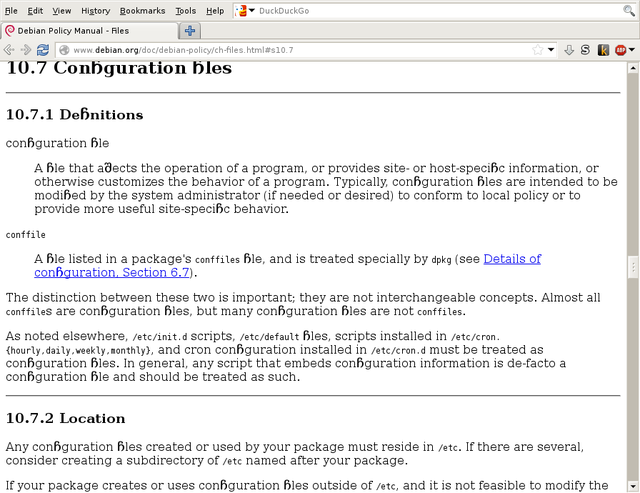
I am not (yet?) reporting this as a bug as this happened with a several days old session open, and just while I was upgrading my Sid system, after a long time without doing so (probably since before the vacations started... In December 2013). But I cannot avoid sharing this interesting screenshot. Of course, this does not happen in other browsers. And AFAICT it only happens while reading the Debian Policy (either online or locally, even recoding it to UTF-8). Funniest thing, the Debian policy specifies no Javascript, no stylesheets at all... (Hey, and FWIW... Why is the online copy of the Debian policy still in iso-8859-1 It's not 1995 anymore...) [update] Of course, it's the default font, not only the Debian policy. Just as an example, the following text:
  1. <html><body><p>Ufffiii flat different!</p></body></html>
Yields the following output: [update 2] And, of course, after finishing the update process... I got a new version of Iceweasel. Restarted it, and everything is back to normal :-

22 January 2014

Erich Schubert: The init wars

The init wars have recently caught a lot of media attention (e.g. heise, prolinux, phoronix). However, one detail that is often overlooked: Debian is debating over the default, while all of them are already supported to a large extend, actually. Most likely, at least two of them will be made mandatory to support IMHO.
The discussion seems to be quite heated, with lots of people trying to evangelize for their preferred system. This actually only highlights that we need to support more than one, as Debian has always been about choice. This may mean some extra work for the debian-installer developers, because choosing the init system at install time (instead of switching later) will be much easier. More often than not, when switching from one init system to another you will have to perform a hard reset.
If you want to learn about the options, please go to the formal discussion page, which does a good job at presenting the positions in a neutral way.
Here is my subjective view of the init systems:
  • SysV init is the current default, and thus deserves to be mentioned first. It is slow, because it is based on a huge series of shell scripts. It can often be fragile, but at the same time it is very transparent. For a UNIX system administrator, SysV init is probably the preferred choice. You only reboot your servers every year anyway.
  • upstart seems to be a typical Canonical project. It solves a great deal of problems, but apparently isn't good enough at it for everybody, and they fail at including anyone in their efforts. Other examples of these fails include Unity and Mir, where they also announced the project as-is, instead of trying to get other supporters on board early (AFAICT). The key problem to widespread upstart acceptance seems to be the Canonical Contributor License Agreement that many would-be contributors are unwilling to accept. The only alternative would be to fork upstart completely, to make it independent of Canonical. (Note that upstart nevertheless is GPL, which is why it can be used by Debian just fine. The CLA only makes getting patches and enhancements included in the official version hard.)
  • systemd is the rising star in the init world. It probably has the best set of features, and it has started to incorporate/replace a number of existing projects such as ConsoleKit. I.e. it not only manages services, but also user sessions. It can be loosely tied to the GNOME project which has started to rely on it more and more (much to the unhappyness of Canonical, who used to be a key player for GNOME; note that officially, GNOME chose to not depend on systemd, yet I see this as the only reliable combination to get a complete GNOME system running, and since "systemd can eventually replace gnome-session" I foresee this tie to become closer). As the main drawback, systemd as is will (apparently) only work with the Linux kernel, whereas Debian has to also support kFreeBSD, NetBSD, Hurd and the OpenSolaris kernels (some aren't officially supported by Debian, but by separate projects).
So my take: I believe the only reasonable default is systemd. It has the most active development community and widest set of features. But as it cannot support all architectures, we need mandatory support for an alternative init system, probably SysV. Getting both working reliably will be a pain, in particular since more and more projects (e.g. GNOME) tie themselves closely to systemd, and would then become Linux-only or require major patches.
I have tried only systemd on a number of machines, and unfortunately I cannot report it as "prime time ready" yet. You do have the occasional upgrade problems and incompatibilities, as it is quite invasive. From screensavers activating during movies to double suspends, to being unable to shutdown my system when logged in (systemd would treat the login manager as separate session, and not being the sole user it would not allow me to shut down), I have seen quite a lot of annoyances happen. This is an obvious consequence of the active development on systemd. This means that we should make the decision early, because we will need a lot of time to resolve all these bugs for the release.
There are more disruptions coming on the way. Nobody seems to have talked about kDBUS yet, the integration of an IPC mechanism like DBUS into the Linux kernel. It IMHO has a good chance of making it into the Linux kernel rather soon, and I wouldn't be surprised if it became mandatory for systemd soon after. Which then implies that only a recent kernel (say, mid-2014) version might be fully supported by systemd soon.
I would also like to see less GNOME influence in systemd. I have pretty much given up on the GNOME community, which is moving into a UI direction that I hate: they seem to only care about tablet and mobile phones for dumb users, and slowly turn GNOME into an android UI; selling black background as major UI improvements. I feel that the key GNOME development community does not care about developers and desktop users like me anymore (but dream of being the next Android), and therefore I have abandoned GNOME and switched to XFCE.
I don't give upstart much of a chance. Of course there are some Debian developers already involved in its development (employed by Canonical), so this will cause some frustration. But so far, upstart is largely an Ubuntu-only solution. And just like Mir, I don't see much future in it; instead I foresee Ubuntu going systemd within a few years, because it will want to get all the latest GNOME features. Ubuntu relies on GNOME, and apparently GNOME already has chosen systemd over upstart (even though this is "officially" denied).
Sticking with SysV is obviously the easiest choice, but it does not make a lot of sense to me technically. It's okay for servers, but more and more desktop applications will start to rely on systemd. For legacy reasons, I would however like to retain good SysV support for at least 5-10 more years.

But what is the real problem? After all, this is a long overdue decision.
  • There is too much advocacy and evangelism, from either side. The CTTE isn't really left alone to do a technical decision, but instead the main factors have become of political nature, unfortunately. You have all kinds of companies (such as Spotify) weigh in on the debate, too.
  • The tone has become quite aggressive and emotional, unfortunately. I can already foresee some comments on this blog post "you are a liar, because GNOME is now spelled Gnome!!1!".
  • Media attention. This upcoming decision has been picked up by various Linux media already, increasing the pressure on everybody.
  • Last but not least, the impact will be major. Debian is one of the largest distributions, last but not least used by Ubuntu and Steam, amongst others. Debian preferring one over the other will be a slap in somebodys face, unfortunately.
So how to solve it? Let the CTTE do their discussions, and stop flooding them with mails trying to influence them. There has been so much influencing going on, it may even backfire. I'm confident they will find a reasonable decision, or they'll decide to poll all the DDs. If you want to influence the outcome provide patches to anything that doesn't yet fully support your init system of choice! I'm sure there are hundreds of packages which do neither have upstart nor systemd support yet (as is, I currently have 27 init.d scripts launched by systemd, for example). IMHO, nothing is more convincing than have things just work, and of course, contributing code. We are in open source development, and the one thing that gets you sympathy in the community is to contribute code to someone elses project. For example, contribute full integrated power-management support into XFCE, if you include power management functionality.
As is, I have apparently 7 packages installed with upstart support, and 25 with systemd support. So either, everybody is crazy about systemd, or they have the better record of getting their scripts accepted upstream. (Note that this straw poll is biased - with systemd, the benefits of not using "legacy" init.d script may just be larger).

Gunnar Wolf: Finally: A student once again

Formally, today is my first day as a student on a formal, scholarized institution Basically for the first time in almost twenty years! Yes, those that know me know that I aspire to live the life of academia. I have worked at public universities for almost all of my adult life (between 1997 and 1999 I worked at a local ISP and at a private school), and have had a minor academic position ( T cnico Acad mico ) for almost ten years. And not having a proper degree limited me from pursuing anything further. Then, in early 2010 I presented the written exam. By late 2010, the corresponding oral exam. That allowed me to get my formal diploma in December 2010. By the end of 2011, I requested to be a teacher in the Engineering Faculty of UNAM, and started teaching Operating Systems a year ago, in January 2012. So, a good advance in the last few years... But I know that if I just sit here, I won't be able to advance my position towards really entering the Sacred Halls of Academia. And there are some rituals I have to comply with. One of those rituals is... Devoting some long time to studying under the formal structures. Ok, so I'm finally a postgraduate student I have enrolled in Especialidad en Seguridad Inform tica y Tecnolog as de la Informaci n, a short (one year) postgraduate program in ESIME Culhuac n, of Instituto Polit cnico Nacional (a small campus of Mexico's second-largest university). Some friends have asked me, why am I starting with a Specialization and not a Masters degree. Some simple reasons: Just as when I went to Tijuana in 2010 to do my written exam, once I got and started with the paperwork, I didn't want to let it go If I postpone it, I will probably lose the push to do it by May-July, when the Masters admission process starts. Also, this specialization can be linked with the masters degree on the same topic given at the same campus. This program is one year long, and the masters two But having them both takes 2.5 years. So, not such a bad deal after all. And finally, because, after such a long time without being scholarized, I fear not having an easy time getting to grips with the discipline. I can commit to overworking myself for a year If it's too much for me, I'll just stay with that degree and give up. I expect to like it and continue... But it's also a safe bet :-) Now, there has to be a downside to picking up this path: Of course, my free time will be harshly reduced. I have reduced my Debian involvement in the last year, as I devoted a huge chunk of my time to teaching and book-writing... This year... We shall see what happens. I can for now only confirm what I have said publicly but inside our team only: I have requested to my peers and to our DPL to step down as a DebConf chair. I love organizing DebConf, but I don't want to be formally committed to a position I just cannot fulfill as I did when I started with it. As for package maintenance, by far most of my packges are team maintained, and those that are not are relatively easy to keep track of. And of course, I'll keep an eye on my keyring-maint duties as well Will even try to link that work with what I do at school! Anyway, lets see what comes now!

20 January 2014

Enrico Zini: terminal-emulators

Quest for a terminal emulator The requirements I need a terminal emulator. This is a checklist of the features that I need: My experience is that getting all of this to work is not being as easy as it seems, so I'm creating this page to track progress. gnome-terminal I've been happily using this for years, and it did everything I needed, until some months ago it started to open new tabs in the terminal's working directory instead of the last tab's working directory. This is a big point of frustration for me. It also started opening https urls with Firefox, although the preferred browser was Chromium. There seemed to be no way to control it: I looked for firefox or iceweasel in all gconf and dconf settings and found nothing. The browser issue was fixed by accident when I used Xfce4's settings application to change the browser from Chromium to Firefox and then back to Chromium. update, thanks to Mathieu Parent, Josh Triplett, Peter De Wachter, Julien Cristau, and Charles Plessy: It is also possible to restore the "new tab opened inside the same directory of the last tab I was in" behaviour, by enabling "run command as a login shell" so that /etc/profile.d/vte.sh is run (thanks Mathieu Parent for the link). That in turn spawned extra cleanup work in my .bashrc/.bash_profile/.profile setup, which has been randomly evolving since even before my first Debian "buzz" system. I found that it was setting PROMPT_COMMAND to something else to set the terminal title, conflicting with what vte.sh wants to do. With regards to loading /etc/profile.d/vte.sh by default, Peter De Watcher sent pointers to relevant bugs: here, here, and here. An alternative strategy is to work using the prompt rather than PROMPT_COMMAND; an example is in Josh Triplett's .bashrc from git://joshtriplett.org/git/home. Josh Triplett also said:
To fix the browser launched for URLs, you either need to use a desktop environment following GNOME's mechanism for setting the default browser, or edit ~/.local/share/applications/mimeapps.list and make sure x-scheme-handler/http, x-scheme-handler/https, and x-scheme-handler/ftp are set to your preferred browser's desktop file basename under [Added Associations].
All my issues with gnome-terminal are now gone and I'm only too happy to go back to it. rxvt-unicode-256color urxvt took some work. This is where I got with configuration:
URxvt.font: xft:Monospace-10:antialias=true
URxvt.foreground: #aaaaaa
URxvt.background: black
URxvt.scrollBar_right: true
URxvt.cursorBlink: true
URxvt.perl-ext-common: default,matcher,tabbedex
URxvt.url-launcher: /usr/bin/x-www-browser
URxvt.matcher.button: 1
URxvt.perl-lib: /home/enrico/.urxvt/perl
URxvt.color0: black
URxvt.color1: #aa0000
URxvt.color2: #00aa00umask
URxvt.color3: #aa5500
URxvt.color4: #0000aa
URxvt.color5: #aa00aa
URxvt.color6: #00aaaa
URxvt.color7: #aaaaaa
URxvt.color8: #555555
URxvt.color9: #ff5555
URxvt.color10: #55ff55
URxvt.color11: #ffff55
URxvt.color12: #5555ff
URxvt.color13: #ff55ff
URxvt.color14: #55ffff
URxvt.color15: #ffffff
I got all of the tab behaviour that I need by "customizing" the tab script (yuck github :( ). Missing sakura Configuration is in .config/sakura/sakura.conf and these bits help:
colorset1_fore=rgb(170,170,170)
colorset1_back=rgb(0,0,0)
colorset1_opacity=99
colorset2_fore=rgb(0,0,0)
colorset2_back=rgb(254,254,254)
colorset2_opacity=99
font=Monospace 10
show_always_first_tab=No
scrollbar=false
fullscreen_key=F11
palette=linux
Missing lxterminal Configuration is in .config/lxterminal/lxterminal.conf and this is relevant to me:
[general]
fontname=DejaVu Sans Mono 10
fgcolor=#aaaaaaaaaaaa
disallowbold=false
cursorblinks=true
tabpos=top
hidescrollbar=false
hidemenubar=true
hideclosebutton=true
disablef10=true
disablealt=true
Also, to open a url directly you control+click it. Missing terminator Configuration is in .config/terminator/config and this is relevant to me:
[global_config]
  use_custom_url_handler = True
  custom_url_handler = x-www-browser
  inactive_color_offset = 1.0
[keybindings]
  close_term = None
  close_window = None
  copy = None
  cycle_next = None
  cycle_prev = None
  go_down = None
  go_next = None
  go_prev = None
  go_up = None
  group_all = None
  group_tab = None
  hide_window = None
  move_tab_left = None
  move_tab_right = None
  new_tab = None
  new_terminator = None
  new_window = None
  next_tab = None
  paste = None
  prev_tab = None
  reset_clear = None
  reset = None
  resize_down = None
  resize_left = None
  resize_right = None
  resize_up = None
  rotate_ccw = None
  rotate_cw = None
  scaled_zoom = None
  search = None
  split_horiz = None
  split_vert = None
  switch_to_tab_1 = <Alt>F1
  switch_to_tab_2 = <Alt>F2
  switch_to_tab_3 = <Alt>F3
  switch_to_tab_4 = <Alt>F4
  switch_to_tab_5 = <Alt>F5
  switch_to_tab_6 = <Alt>F6
  switch_to_tab_7 = <Alt>F7
  switch_to_tab_8 = <Alt>F8
  switch_to_tab_9 = <Alt>F9
  switch_to_tab_10 = <Alt>F10
  toggle_scrollbar = None
  toggle_zoom = None
  ungroup_all = None
  ungroup_tab = None
[profiles]
  <span class="createlink">default</span>
    palette = "#000000:#aa0000:#00aa00:#aa5500:#0000aa:#aa00aa:#00aaaa:#aaaaaa:#555555:#ff5555:#55ff55:#ffff55:#5555ff:#ff55ff:#55ffff:#ffffff"
    copy_on_selection = True
    icon_bell = False
    background_image = None
    show_titlebar = False
Missing update: Richard Hartmann pointed out that terminator's upstream maintainer now changed after the old one didn't have time any more, and it should have a release with a ton of improvements anytime soon. xfce4-terminal Configuration is in .config/xfce4/terminal, and this is relevant to me: terminalrc:
[Configuration]
FontName=Monospace 10
MiscAlwaysShowTabs=FALSE
MiscBell=FALSE
MiscBordersDefault=TRUE
MiscCursorBlinks=FALSE
MiscCursorShape=TERMINAL_CURSOR_SHAPE_BLOCK
MiscDefaultGeometry=80x24
MiscInheritGeometry=FALSE
MiscMenubarDefault=FALSE
MiscMouseAutohide=FALSE
MiscToolbarDefault=FALSE
MiscConfirmClose=TRUE
MiscCycleTabs=TRUE
MiscTabCloseButtons=TRUE
MiscTabCloseMiddleClick=TRUE
MiscTabPosition=GTK_POS_TOP
MiscHighlightUrls=TRUE
ShortcutsNoMenukey=TRUE
ShortcutsNoMnemonics=TRUE
ColorForeground=#aaaaaaaaaaaa
accels.scm:
(gtk_accel_path "<Actions>/terminal-window/goto-tab-1" "<Alt>F1")
(gtk_accel_path "<Actions>/terminal-window/goto-tab-2" "<Alt>F2")
(gtk_accel_path "<Actions>/terminal-window/goto-tab-3" "<Alt>F3")
(gtk_accel_path "<Actions>/terminal-window/goto-tab-4" "<Alt>F4")
(gtk_accel_path "<Actions>/terminal-window/goto-tab-5" "<Alt>F5")
(gtk_accel_path "<Actions>/terminal-window/goto-tab-6" "<Alt>F6")
(gtk_accel_path "<Actions>/terminal-window/goto-tab-7" "<Alt>F7")
(gtk_accel_path "<Actions>/terminal-window/goto-tab-8" "<Alt>F8")
(gtk_accel_path "<Actions>/terminal-window/goto-tab-9" "<Alt>F9")
(gtk_accel_path "<Actions>/terminal-window/goto-tab-10" "<Alt>F10")
(gtk_accel_path "<Actions>/terminal-window/goto-tab-11" "<Alt>F11")
(gtk_accel_path "<Actions>/terminal-window/goto-tab-12" "<Alt>F12")
update: Yves-Alexis Perez points out that to disable the F1 for help in the terminal, you need to remove the accelerator. I tried this and this and didn't have success, but I confess I did not dig too much into it. Although xfce4-terminal -e does not work as I expect, xfce4-terminal registers a wrapper for x-terminal-emulator that does the right thing with respect to -e (also thanks Yves-Alexis Perez). Missing roxterm Configuration is in .config/roxterm.sourceforge.net/ split in several files corresponding to profiles. This is a reasonable starting point for me: Profiles/Default:
[roxterm profile]
colour_scheme=Default
disable_menu_access=1
disable_menu_shortcuts=1
disable_tab_menu_shortcuts=0
tab_close_btn=0
hide_menubar=1
always_show_tabs=0
Colours/Default:
[roxterm colour scheme]
0=#000000000000
1=#aaaa00000000
2=#0000aaaa0000
3=#aaaa55550000
4=#00000000aaaa
5=#aaaa0000aaaa
6=#0000aaaaaaaa
7=#aaaaaaaaaaaa
8=#555555555555
9=#ffff55555555
10=#5555ffff5555
11=#ffffffff5555
12=#55555555ffff
13=#ffff5555ffff
14=#5555ffffffff
15=#ffffffffffff
palette_size=16
foreground=#aaaaaaaaaaaa
background=#000000000000
cursor=#cccccccccccc
bold=
dim=
Shortcuts/Default:
[roxterm shortcuts scheme]
File/New Window=
File/New Tab=
File/Close Window=
File/Close Tab=
Tabs/Previous Tab=
Tabs/Next Tab=
Edit/Copy=
Edit/Paste=
View/Zoom In=<Control>plus
View/Zoom Out=<Control>minus
View/Normal Size=<Control>0
View/Full Screen=F11
View/Scroll Up One Line=
View/Scroll Down One Line=
Help/Help=
Edit/Copy & Paste=
Search/Find...=
Search/Find Next=
Search/Find Previous=
File/New Window With Profile/Default=
File/New Tab With Profile/Default=
Tabs/Select_Tab_0=<Alt>F1
Tabs/Select_Tab_1=<Alt>F2
Tabs/Select_Tab_2=<Alt>F3
Tabs/Select_Tab_3=<Alt>F4
Tabs/Select_Tab_4=<Alt>F5
Tabs/Select_Tab_5=<Alt>F6
Tabs/Select_Tab_6=<Alt>F7
Tabs/Select_Tab_7=<Alt>F8
Tabs/Select_Tab_8=<Alt>F9
Tabs/Select_Tab_9=<Alt>F9
Tabs/Select_Tab_10=<Alt>F10
Tabs/Select_Tab_11=<Alt>F11
Tabs/Select_Tab_12=<Alt>F12
Global:
[roxterm options]
edit_shortcuts=0
prefer_dark_theme=1
colour_scheme=Default
warn_close=1
Missing Nothing of my initial requirements seems to be missing, really, so I'm sticking to it for a while to see what happens. The first itch to scratch is that when the menubar is hidden, the popup menu becomes the entire menubar contents, which does not fit the general use case to have a contextual menu with the most common shortcuts. I'll just declare it useless and get myself used to some new hotkey for starting a new terminal. update: after fixing my issues with gnome-terminal I've switched back to gnome-terminal: its interface feels less clunky as I'm already used to it. Other references Guillem Jover made a similar analysis in 2009, it can be found here. Thomas Koch mentioned that termit should be able to do all I need, and is scriptable in Lua. I like the sound of that, and it's definitely one I should look next time I find myself shopping for terminal emulators.

Dirk Eddelbuettel: RProtoBuf 0.4.0: A whole lot of goodies and Windoze support

A new major release 0.4.0 of RProtoBuf, is now on CRAN. RProtoBuf provides GNU R bindings for the Google Protocol Buffers ("Protobuf") data encoding library used and released by Google, and deployed as a language and operating-system agnostic protocol by numerous projects. With this release, we are welcoming Jeroen Ooms to the team. Jeroen had already worked on some RProtoBuf extensions in the context of his OpenCPU project; we have now integrated those Protocol Buffers functions. And Jeroen pushed all the right buttons to finally get RProtoBuf built on everybody's least-favourite operating system by provding a static library for use by win-builder and CRAN. Murray once again did a lot of work on internals. His use of the LLVM tool llvm-format was particular helpful to make our coding style a little more consistent. The complete NEWS file entry for this release follows:
Changes in RProtoBuf version 0.4.0 (2014-01-14)
  • Changes to support CRAN builds for MS Windows.
  • Added functions serialize_pb, unserialize_pb, and can_serialize_pb plus documentation from Jeroen Ooms RProtoBufUtils package.
  • New dir inst/python with some Python examples.
  • Added Jeroen Ooms as author.
  • Vignettes have been converted to the R 3.0.0 or later use of external vignette builders, no longer need a Makefile
  • Added missing methods to dollar completion list for Message, Descriptor, EnumValueDescriptor, and FileDescriptor classes.
  • Add missing export for .DollarNames EnumValueDescriptor to allow completion on that class.
  • Add more than 15 additional pages to the main Intro vignette documenting better all of the S4 classes implemented by RProtoBuf, updating the type mapping tables to take into account 64-bit support, and documenting advanced features such as Extensions.
  • Added better error checking in EnumDescriptors to catch the case when wrong types are provided.
  • Updated the FileDescriptor name() method to accept a boolean for full paths just like the generic name() method.
  • Correct a bug that incorrectly dispatched as.character() when as.list() was called on Descriptor objects.
  • Update FileDescriptor $ dispatch to work properly for the names of fields defined in the FileDescriptor, instead of just returning NULL even for types returned by $ completion.
  • Added a reservation for extension fields in the example tutorial.Person schema.
  • Support setting int32 fields with character representations and raise an R-level stop() error if the provided string can not be parsed as a 32-bit integer, rather than crashing the R instance.
  • Update the project TODO file.
  • Add better documentation and tests for all of the above.
  • Corrected the handling of uint32 and fixed32 types in protocol buffers to ensure that they work with numbers as large as 2^32 - 1, which is larger than an integer can hold in R since R does not have an unsigned integer class. These values are stored as doubles internally now to avoid losing precision.
  • Added unit tests to verify behavior of RProtoBuf with extreme values for uint32 types.
  • Removed old exception handling code and instead rely on the more modern Rcpp::stop method maintained in Rcpp.
  • Add better error messages when setting a repeated field of messages to inform the user which element index was of the wrong type and what the expected type was.
  • Add an optional 'partial' argument to readASCII allowing uninitialized message fragments to be read in.
  • (internal) Added const qualifiers in more places throughout the C++ code for type safety.
  • (internal) Standardize coding conventions of the C++ files and run them through clang-format for consistency. A STYLE file has been submitted to R-Forge with details about the coding standards and how they are enforced with Emacs and clang-format.
  • Applied changes suggested by Kevin Ushey to the S4 class handling to support both the currently released Rcpp as well as the currently pending next version.
CRANberries also provides a diff to the previous release 0.3.2. More information is at the RProtoBuf page which has a draft package vignette, a 'quick' overview vignette and a unit test summary vignette. Questions, comments etc should go to the rprotobuf mailing list off the RProtoBuf page at R-Forge.

This post by Dirk Eddelbuettel originated on his Thinking inside the box blog. Please report excessive re-aggregation in third-party for-profit settings.

19 January 2014

Daniel Pocock: Debian solving Drupal's third-party library challenge

The tremendously successful Drupal community observes stringent requirements about many things, in particular, licensing and the prohibition of bundling third-party JavaScript. While these policies may seem onerous at first glance, it turns out there is another project with a written guarantee to provide third-party code in a form that meets the expectations of Drupal and does so in a way that completely automates all that tedious effort into one-click oblivion. I'm talking about the Debian GNU/Linux operating system. Drupal's libraries module The libraries module for Drupal appeared as an initial attempt to help track third-party JavaScript. The module has been available in Debian for almost a year and has recently been provided in the wheezy-backports distribution for people running the stable version of Debian. The library provides a standard way for other modules to reference third-party JavaScript but it still leaves the web master with some manual work to go out and download all the necessary JavaScript and copy it into the right place. This is where Debian comes to the rescue. Using the module in practice I've recently uploaded JSCommunicator to Debian and wanted to provide a convenient way for people to get it in Drupal. Therefore, in addition to providing the JSCommunicator packages, I created an extra package, drupal7-mod-jscommunicator. JSCommunicator itself depends on other JavaScript, specifically, the JsSIP library. I repeated the same process for JsSIP. This gives us the following collection of four related packages:
Third-party library Library itself Drupal module, packaged
JSCommunicator libjs-jscommunicator drupal7-mod-jscommunicator
JsSIP libjs-jssip drupal7-mod-jssip
If you explore the package details in Debian's package catalog you will notice that each package depends on the other packages it requires. Debian's package management utility, apt-get, can transitively resolve all the relationships between this set of packages. In fact, on a newly built server, you can simply run the command:
apt-get install drupal7-mod-jscommunicator
and the apt-get utility will install Apache, MySQL, Drupal itself, the libraries module, all the related JavaScript libraries and the final Drupal module of JSCommunicator itself. It really is that easy. Here is an example of the output displayed by the command on a freshly built server:
# apt-get -d install drupal7-mod-jscommunicator
Reading package lists... Done
Building dependency tree       
Reading state information... Done
The following extra packages will be installed:
  apache2 apache2-bin apache2-data curl dbconfig-common drupal7
  drupal7-mod-jssip drupal7-mod-libraries fontconfig-config fonts-dejavu-core
  javascript-common libaio1 libapache2-mod-php5 libapr1 libaprutil1
  libaprutil1-dbd-sqlite3 libaprutil1-ldap libarchive-extract-perl libc6
  libcurl3 libdbd-mysql-perl libdbi-perl libedit2 libfontconfig1 libgcrypt11
  libgd3 libhtml-template-perl libjbig0 libjpeg8 libjs-jssip libjson-c2
  liblocale-gettext-perl liblog-message-simple-perl liblua5.1-0
  libmodule-pluggable-perl libmysqlclient18 libonig2 libperl4-corelibs-perl
  libpng12-0 libpod-latex-perl libqdbm14 librtmp0 libssh2-1 libterm-ui-perl
  libtext-charwidth-perl libtext-iconv-perl libtext-soundex-perl libtiff5
  libuuid-perl libvpx1 libxml2 libxpm4 locales mysql-client mysql-client-5.5
  mysql-common mysql-server mysql-server-5.5 mysql-server-core-5.5 perl
  perl-base perl-modules php5 php5-cli php5-common php5-gd php5-json
  php5-mysql php5-readline ssl-cert wwwconfig-common
Suggested packages:
  apache2-doc apache2-suexec-pristine apache2-suexec-custom apache2-utils
  php-pear glibc-doc libclone-perl libmldbm-perl libnet-daemon-perl
  libplrpc-perl libsql-statement-perl rng-tools libgd-tools
  libipc-sharedcache-perl libterm-readkey-perl tinyca perl-doc
  libterm-readline-gnu-perl libterm-readline-perl-perl make libb-lint-perl
  libcpanplus-dist-build-perl libcpanplus-perl libfile-checktree-perl
  liblog-message-perl libobject-accessor-perl php5-user-cache
  openssl-blacklist postgresql-client
The following NEW packages will be installed:
  apache2 apache2-bin apache2-data curl dbconfig-common drupal7
  drupal7-mod-jscommunicator drupal7-mod-jssip drupal7-mod-libraries
  fontconfig-config fonts-dejavu-core javascript-common libaio1
  libapache2-mod-php5 libapr1 libaprutil1 libaprutil1-dbd-sqlite3
  libaprutil1-ldap libarchive-extract-perl libcurl3 libdbd-mysql-perl
  libdbi-perl libfontconfig1 libgd3 libhtml-template-perl libjbig0 libjpeg8
  libjs-jssip libjson-c2 liblog-message-simple-perl liblua5.1-0
  libmodule-pluggable-perl libmysqlclient18 libonig2 libperl4-corelibs-perl
  libpng12-0 libpod-latex-perl libqdbm14 librtmp0 libssh2-1 libterm-ui-perl
  libtext-soundex-perl libtiff5 libvpx1 libxpm4 mysql-client mysql-client-5.5
  mysql-common mysql-server mysql-server-5.5 mysql-server-core-5.5 php5
  php5-cli php5-common php5-gd php5-json php5-mysql php5-readline ssl-cert
  wwwconfig-common
The following packages will be upgraded:
  libc6 libedit2 libgcrypt11 liblocale-gettext-perl libtext-charwidth-perl
  libtext-iconv-perl libuuid-perl libxml2 locales perl perl-base perl-modules
12 upgraded, 60 newly installed, 0 to remove and 222 not upgraded.
Need to get 37.2 MB of archives.
After this operation, 152 MB of additional disk space will be used.
Do you want to continue [Y/n]? 
Libraries API in Drupal 8 Contrary to an earlier version of this blog, the libraries module is not joining the core in Drupal 8 however its use has been strongly encouraged for any new modules submitted through the Drupal community approval process. This means there will be further opportunity for Drupal users to consolidate on their use of Debian to completely automate the management of all third-party libraries and modules throughout their Drupal system(s).

18 January 2014

Jonathan McDowell: Fixing my parents' ADSL

I was back at my parents' over Christmas, like usual. Before I got back my Dad had mentioned they'd been having ADSL stability issues. Previously I'd noticed some issues with keeping a connection up for more than a couple of days, but it had got so bad he was noticing problems during the day. The eventual resolution isn't going to surprise anyone who's dealt with these things before, but I went through a number of steps to try and improve things. Firstly, I arranged for a new router to be delivered before I got back. My old Netgear DG834G was still in use and while it didn't seem to have been the problem I'd been meaning to get something with 802.11n instead of the 802.11g it supports for a while. I ended up with a TP-Link TD-W8980, which has dual band wifi, ADSL2+, GigE switch and looked to have some basic OpenWRT support in case I want to play with that in the future. Switching over was relatively simple and as part of that procedure I also switched the ADSL microfilter in use (I've seen these fail before with no apparent cause). Once the new router was up I looked at trying to get some line statistics from it. Unfortunately although it supports SNMP I found it didn't provide the ADSL MIB, meaning I ended up doing some web scraping to get the upstream/downstream sync rates/SNR/attenuation details. Examination of these over the first day indicated an excessive amount of noise on the line. The ISP offer the ability in their web interface to change the target SNR for the line. I increased this from 6db to 9db in the hope of some extra stability. This resulted in a 2Mb/s drop in the sync speed for the line, but as this brought it down to 18Mb/s I wasn't too worried about that. Watching the stats for a further few days indicated that there were still regular periods of excessive noise, so I removed the faceplate from the NTE5 master BT socket, removing all extensions from the line. This resulted in regaining the 2Mb/s that had been lost from increasing the SNR target, and after watching the line for a few days confirmed that it had significantly decreased the noise levels. It turned out that the old external ringer that was already present on the line when my parents' moved in was still connected, although it had stopped working some time previously. Also there was an unused and much spliced extension in place. Removed both of these and replacing the NTE5 faceplate led to a line that was still stable. At the time of writing the connection has been up since before the new year, significantly longer than it had managed for some time. As I said at the start I doubt this comes as a surprise to anyone who's dealt with this sort of line issue before. It wasn't particularly surprising to me (other than the level of the noise present), but I went through each of the steps to try and be sure that I had isolated the root cause and could be sure things were actually better. It turned out that doing the screen scraping and graphing the results was a good way to verify this. Observe: adsl-noise.png The blue/red lines indicate the SNR for the upstream and downstream links - the initial lower area is when this was set to a 6db target, then later is a 9db target. Green are the forward error correction errors divided by 100 (to make everything fit better on the same graph). These are correctable, but still indicate issues. Yellow are CRC errors, indicating something that actually caused a problem. They can be clearly seen to correlate with the FEC errors, which makes sense. Notice the huge difference removing the extensions makes to both of these numbers. Also notice just how clear graphing the data makes things - it was easy to show my parents' the graph and indicate how things had been improved and should thus be better.

17 January 2014

Chris Lamb: Captain Phillips: Pontius Pirate

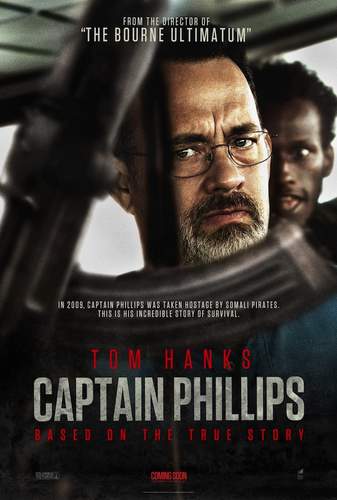
https://chris-lamb.co.uk/wp-content/2014/phillips_b.jpg Somalia's chief exports appear to be morally-ambiguous Salon articles about piracy and sophomoric evidence against libertarianism. However, it is the former topic that Captain Phillips concerns itself with, inspired by the hijacking of the Maersk Alabama container ship in 2009. What is truth? In the end, Captain Phillips does not rise above Pontius Pilate in providing an answer, but it certainly tries using more refined instruments than irony or leaden sarcasm. This motif pervades the film. Obviously, it is based on a "true story" and brings aboard that baggage, but it also permeates the plot in a much deeper sense. For example, Phillips and the US Navy lie almost compulsively to the pirates, whilst the pirates only really lie once (where they put Phillips in greater danger). Notice further that Phillips only starts to tell the truth when he thinks all hope is lost. These telling observations become even more fascinating when you realise that they must be based on the testimony of the, well, liars. Clearly, deception is a weapon to be monopolised and there are few limits on what good guys can or should lie about if they believe they can save lives.

https://chris-lamb.co.uk/wp-content/2014/phillips_c.jpg

Even Phillip's nickname ("Irish") is a falsehood he straight-up admits he is an American citizen.

Futhermore, there is an utterly disarming epilogue where Phillips is being treated for shock by clinical efficient medical staff. Not only will this scuttle any "blanket around the shoulders" clich but is probably a highly accurate portrayal of what actually happens post-trauma. This echoes the kind of truth Werner Herzog aims for in his filmmaking as well his guilt-inducing duality between uncomfortable lingering and compulsive viewing. Lastly, a starter for a meta-discussion: can a film based on real-world events even be "spoilered"? Hearing headlines on the radio before you read your newspaper hardly robs you of a literary journey... Captain Phillips does have some quotidian problems. Firstly, the only tool for ratcheting up tension is for the Somalians to launch verbal broadsides at the Americans, with each compromise somehow escalating the situation. This technique is effective but well before the climatic rescue scene where it is really needed it has been subject to the most extreme diminishing returns. (I cannot be the first to notice the "Africans festooned with guns shouting incomphensively" trope I hope it is based on a Babel-esque mechanism of disorientation from miscommunication rather than anything more unsavoury.)
https://chris-lamb.co.uk/wp-content/2014/phillips_a.jpg

The racist idea that Africans prefer an AK-47 rotated about the Z-axis is socially constructed.

Secondly, the US Navy acts like a teacher with an Ofsted inspector observing quietly from the corner of the classroom; far too well-behaved it suspends belief, with no post-kill gloating or even the tiniest of post-arrest congratulations. Whilst nobody wants to see the Navy overreact badly to other military branches getting all the glory, nobody wants to see a suspiciously bland recruitment vehicle either. Paradoxically, this hermetic treatment made me unduly fascinated by them as if they were part of some military "uncanny valley". Two quick observations:
https://chris-lamb.co.uk/wp-content/2014/phillips_d.jpg

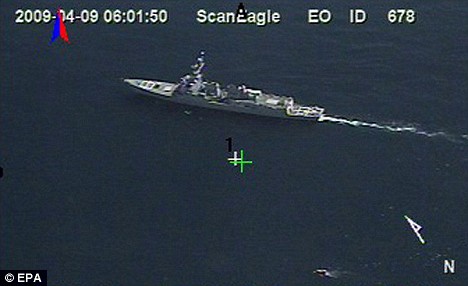
The drone footage: I'd love to write an essay about how Call of Duty might have influenced (or even be) cinema.

Finally, despite the title, the film is actually about two captains; the skillful liar Phillips and ... well, that's the real problem. Whilst Captain Muse is certainly no caricatured Hook, we are offered little depth beyond a "You're not just a fisherman" faux-revelation that leads nowhere. I was left inventing reasons for his akrasia so that he made any sense whatsoever. One could charitably argue that the film attempts to stay objective on Muse, but the inability for the film to take any obvious ethical stance actually seems to confuse and then compromise the narrative. What deeper truth is actually being revealed? Is this film or documentary? Worse still, the moral vacuum is invariably filled by the viewer's existing political outlook: are Somali pirates victims of circumstance who are forced into (alas, regrettable) swashbuckling adventures to pacify plank-threatening warlords? Or are they violent and dangerous criminals who habour an irrational resentment against the West, flimsily represented by material goods in shipping containers? Your improvised answer to this Rorschach test will always sit more haphazardly in the film than any pre-constructed treatment ever could. 6/10

Chris Lamb: Review: Captain Phillips (2013)

https://chris-lamb.co.uk/wp-content/2014/phillips_b.jpg Somalia's chief exports appear to be morally-ambiguous Salon articles about piracy and sophomoric evidence against libertarianism. However, it is the former topic that Captain Phillips concerns itself with, inspired by the hijacking of the Maersk Alabama container ship in 2009. What is truth? In the end, Captain Phillips does not rise above Pontius Pilate in providing an answer, but it certainly tries using more refined instruments than irony or leaden sarcasm. This motif pervades the film. Obviously, it is based on a "true story" and brings aboard all that well-travelled baggage, but it also permeates the plot in a much deeper sense. For example, Phillips and the US Navy lie almost compulsively to the pirates, whilst the pirates only really lie once where they put Phillips in greater danger. Notice further that Phillips only starts to tell the truth when he thinks all hope is lost. These telling observations become even more fascinating when you realise that they must be based on the testimony of the, well, liars. Clearly, deception is a weapon to be monopolised and there are few limits on what good guys can or should lie about if they believe they can save lives.

https://chris-lamb.co.uk/wp-content/2014/phillips_c.jpg

Even Phillip's nickname ("Irish") is a falsehood he straight-up admits he is an American citizen.

Lastly, there is an utterly disarming epilogue where Phillips is being treated for shock by clinical efficient medical staff. Not only will it scuttle any "blanket around the shoulders" clich but is probably a highly accurate portrayal of what actually happens post-trauma. This echoes the kind of truth Werner Herzog often aims for in his filmmaking as well his guilt-inducing duality between uncomfortable lingering and compulsive viewing. Another angle worthy of discussion: can a film based on real-world events even be "spoilered"? Hearing headlines on the before you read the newspaper hardly robs you of a literary journey... Captain Phillips does have some quotidian problems. Firstly, the only tool for ratcheting up tension is for the Somalians to launch verbal broadsides at the Americans, with each compromise somehow escalating the situation further. This technique is genuinely effective but well before the climatic rescue scene where it is really needed it has been subject to the most extreme diminishing returns. (I cannot be the first to notice the "Africans festooned with guns shouting incomphensively" trope I hope it is based on a Babel-esque mechanism of disorientation and miscommunication rather than anything, frankly, unsavoury.)
https://chris-lamb.co.uk/wp-content/2014/phillips_a.jpg

The racist idea that Africans prefer a AK-47 rotated about the Z-axis is socially constructed.

Secondly, the US Navy acts like a teacher with an Ofsted inspector observing quietly from the corner of the classroom; far too well-behaved it suspends belief, with no post-kill gloating or even the tiniest of post-arrest congratulations. Whilst nobody wants to see the Navy overreact badly to other military branches getting all the glory, nobody wants to see a suspiciously bland recruitment vehicle either. Paradoxically, this hermetic treatment made me unduly fascinated by them, as if they were part of some military "uncanny valley". Two quick observations:
https://chris-lamb.co.uk/wp-content/2014/phillips_d.jpg

The drone footage: I'd love to read (or write) an essay about how Call of Duty might have influenced cinema.

Finally, despite the title, the film is actually about two captains; the skillful liar Phillips and ... well, that's the real problem. Whilst Captain Muse is certainly no caricatured Hook, we are offered little depth beyond a "You're not just a fisherman" faux-revelation that leads nowhere. I was left inventing reasons for his akrasia so that he made any sense whatsoever. One could charitably argue that the film attempts to stay objective on Muse, but the inability for the film to take any obvious ethical stance actually seems to confuse and then compromise the narrative. What deeper truth is actually being revealed? Is this film or documentary? Worse still, the moral vacuum is invariably filled by the viewer's existing political outlook: are Somali pirates victims of circumstance who are forced into (alas, regrettable) swashbuckling adventures to pacify plank-threatening warlords? Or are they violent and dangerous criminals who habour an irrational resentment against the West, flimsily represented by material goods in shipping containers? Your improvised answer to this Rorschach test will always sit more haphazardly in the film than any pre-constructed treatment ever could. 6/10

Lucas Nussbaum: RSS feed available in the Debian Maintainer Dashboard

One of my pet projects in Debian is the Debian Maintainer Dashboard. Built on top of UDD, DMD provides a maintainer-centric view to answer the I have a few hours for Debian, what should I do now? question (see example). Christophe Siraut did a lot of great work recently on DMD, rewriting much of the internals. As a result, he also added a RSS feed feature: you can now get notified of new TODO list items by subscribing to that feed. If you have suggestions or comments, please use the debian-qa@ list (see this thread). Thanks, Christophe!

16 January 2014

Iustin Pop: What's in a community?

I haven't been doing Debian work for a while now, due to various reasons. However, I try to keep reading (but not posting to) the mailing list, such as to keep in touch (in a virtual way). What surprises me is how the community evolves: in some ways not at all (was there an init-system flamewar this week already or not?), in some ways a lot (mailing list bans!). Since I don't post to the mailing lists, consider this post as my +1 towards the listmaster's work: yes, we should limit the damage that abusive people do to the project. I'm surprised at how some people call list bans as censorship (it's not, IMHO), and how they treat abuse as something light. Another thing that surprises me is how abuse and arrogance go hand in hand. In the explanations for bans, I've seen not just one example where the abusive person is not only, well, abusive, but also considers themselves superior (morally, technically, etc.). If you're already so much superior, why hit on people? If you already know so much, why the personal attacks? And no, being immature is not the whole or even the only explanation This page has a nice collection of quotes around the same motive: how you treat other people, especially people whom you regard less knowledgeable than you, tells a lot about your character. One quote is nice in how succinct and how applicable it is to the kind of abuse I've seen:
To insult or to abuse those who cannot resist, or dare not resent the injury, is a sure mark of cowardice, [ ].
From 1852 September 30, Farmer s Cabinet, Courtesy to Inferiors, Page 1, Column 2, Volume 51, Number 8, Amherst, New Hampshire. The rest of the quote also contains a somewhat sexist remark, so I've left that part out (but I'm surprised they still talked about swords in the 1850s). And yes, I hope that this spring I'll be able to get back to my Debian work.

15 January 2014

Sylvestre Ledru: Some thoughts concerning LLVM & Clang and their evolutions: Release of LLVM & Clang 3.4

We just released LLVM & Clang 3.4 (already available in Debian Jessie and Ubuntu Trusty). The clang new release introduces some more warning and error detections. The point of the blog post is not to detail the changes (LLVM / Clang) but more to take a step back on the LLVM and Clang toolchains, usages and dissemination. For the last couple years, I have been presenting our work on the Debian side to make Clang part of the Debian infrastructure. I add the chance to speak at many events (Debconf 12 & 13, FOSDEM 2013, Linux Plumbers 2013, Distro recipes, etc). I even had Linus Torvalds attending to one of these talks (and proposing new approach). I had many feedback from the Debian/Ubuntu communities but also from other communities.
More and more projects are using Clang as part of their workflows, in term of development, production and QA. For example, some of them are running continuous integration using clang instead of gcc, others are running scan-build (Wireshark or LLVM itself) or Address Sanitizer (asan) (Firefox for example), etc.
More and more actors are moving from gcc to clang for their developments (Sony with their PS4, Chrome under Mac OS X, Apple, the Linux Kernel with the LLVMLinux project, FreeBSD, etc).
I stopped counting the number of times when people answered me "Yeh, I am now using Clang" when I said I am involved upstream. In parallel, more and more projects are using LLVM as a backend or computing engine and, in the meantime, getting more and more attraction (not because they are based on LLVM but just because they are great projects). For example, Mesa (llvmpipe), Julia, Rust, Emscripten or Native Client (NaCL) are excellent examples of this. The two last are excellent proofs that LLVM based technologies have an impact which goes further than geek-tools and will be used on a daily basis by millions of users. I also saw an interesting and growing number of new projects using libclang and libTooling. My feeling is that the lack of plugin capabilities in gcc for a long time and, now, its current complexity limited the innovation in term of compilation capabilities, analysis and fun tools. The features and the quality of this library are enabling new developments and I am sure we will see more and more excellent tools based on this library during 2014.
For example, the LLVM toolchain ships Clang modernize and clang format and some cool projects like include-what-you-use, DXR, OCLint or creduce are emerging. Thanks to this great competition, gcc is also improving (ASAN, JIT, better warnings, etc), remaining still relevant as before. No doubt that 2014 will be a great year for compilers.

Jan Wagner: Bye bye Nagios-Plugins

Last night it seems the so called 'Nagios Plugins' project was cut off. The story started a decade ago when development of the plugins compatible with Nagios was taken over by an independend group of developers. Some time later, the domain of the 'Nagios Plugins' project was handed over to 'Nagios Enterprises, LLC.' due trademark reasons. To get an idea about that, I suggest to read on the 'Nagios Trademark Truth' and 'Nagios Trademark Triumph Provides Promise To Open Source Developers, Shows Power of Community'. In the latter Mr. Galstad is cited with "This violation took more than four years and thousands in legal fees before it was finally resolved. My hope is that this can serve as an example to Open Source developers worldwide that they can overcome infringements and protect their brands if they are persistent and engage their respective communities.". Yesterday in the evening the project members recognised that the DNS of nagios-plugins.org was moved to a different location. Now there seems to be a hosted (some may call that 'hijacked' or 'pirated') 'mirror' of the old site. Anyhow ... the content is already different from the original one or maybe changed even more in the future. From my point of view this can serve as an example to Open Source developers worldwide that they can be obstructed by (trademark holding) companies even if those companies profit from the work of them. So please don't use downloads from there, even the release tarballs maybe modified. The news all about that: 'Nagios Plugins are dead, we now have Monitoring Plugins in place!" Be sure you download your tarballs from https://www.monitoring-plugins.org/download.html and verify your checksums! You can follow the Monitoring Plugins Development Team also via Twitter.

14 January 2014

Carl Chenet: My Debian contributions in January 2014

Follow me on Identi.ca or Twitter One of my resolutions for 2014 is to keep trying harder to talk about my Debian contributions. So here it is, on a monthly basis this time I hope, quite short this month because I m leaving for holidays at the end of the week and I think I won t have time to contribute more this month. Debian packages Below are some packages I updated recently: 1. Brebis, the fully automated backup checker I successively packaged Brebis, the fully automated backup checker, versions 0.6 to 0.9 (the latter is today in Debian Sid and Jessie) since my last Debian activities blog posts (in french).
brebis-brown-big-logo

Anisette, the mascot of the Brebis Project

2. Pycallgraph, a Python library that creates call graphs for Python programs Pycallgraph is one of the first Debian packages I have been maintaining. So when I noticed it was upgraded after so much time I was really eager to package the new version 1.0.1. Now available in Debian Sid! Just belown an example of the generated graph for the application Belier, a sysadmin tool. pycallgraph 3. Belier, the SSH connection generation tool Nothing really new for Belier, the SSH connection generation tool but I updated the package in order to update the configuration of the Debian package and get rid of some warning messages. Kind of maintenance job I kept avoiding and avoiding, until now. Bug report I d like to take a few seconds to talk about an interesting bug report about the need for a nagios3-dev package I created asking for a new nagios3-dev or nagios3-headers package to offer a simple access to the headers of Nagios for the developers of Nagios external modules. In Nagios, some headers are generated after the ./configure, meaning it may be platform dependent. I (and not only me, the same request was active already by someone other Nagios module developers) thought it was simple to ask the Nagios3 Debian package maintainer to offer these files in a dedicated package. It seems until now people just add the missing files in tarball of their app or in their Debian packages, even if these Nagios headers are not really part of this application. In my opinion, that s why Build-Depends packages are for, don t you think? nagios It seems it is not so simple. I could not understand why it was more important to prevent Debian users who need these files to access these files in a convenient way than letting them to put theses files in there own source tarball/repository. The maintainer told me it could break things. Sure. But we all know an external module of any app often relies on a really specific version of this app. That s nothing new, thats how external modules work. That s not every apps in the world which could provide a stable API to ease the development of external modules. But at least they give access to their dev files or headers when they are FOSS. But feel free to explain to me. After all, the bug reports are still not tagged as "won t fix" ;) Your turn now :) I d be delighted to have your opinions in the comments of this blog post.

Daniel Leidert: Debian Sid and GNOME 3 - Restoring automount function of USB devices

I recently found, that the automount feature of my recent Debian Sid / GNOME 3 system didn't work anymore. For example: I plugged in an USB stick. Nothing happened, although dmesg clearly showed, that the system recognized it. After manually mounting and unmounting the device, nautilus automatically offered to automount it. But I always had to manually mount and unmount it first. Seems the culprit was a pmount installation. JFTR: In some cases also usbmount might cause trouble.

Daniel Pocock: PostFinance gives back my money

14 days with no response to written requests for a refund of the error. After a few hours of objective scrutiny on this blog, however, the money was put back: Thanks to all those who provided comments, especially Philipp Kern who found the paper form that reveals how bad the online standing order form really is, it is quite possible that was a factor in convincing PostFinance to take some responsibility. It is also possible that the contact center staff were not even aware of the way the standing order form is viewed by the customer, they may have been looking at some alternative form that had been generated by regurgitating the user input. These are just some examples of the problems that occur (and require thorough and professional analysis) when business processes go online and nobody has a paper trail to prove what they really meant.

Next.

Previous.