Here s my (seventeenth) monthly update about the activities I ve done in the F/L/OSS world.
Debian
This was my 26th month of active contributing to Debian.
I became a DM in late March 2019 and a DD on Christmas 19! \o/
This month was a nice mix of amusement, excitement, nervousness, and craziness. More on it below.
Anyway, whilst I was super-insanely busy this month, I still did some Debian stuff here and there. Here are the following things I worked on:
Sponsored ruby-rspec-stubbed-env for C dric Boutillier, heh :P
Interesting Bits!
Last month, I wrote:
Besides, there s something more that is in the pipelines. Can t talk about it now, shh. But
hopefully very sooooooon!
And now I can talk about it! So here it is..
I ve joined Canonical as a SDE to work on Ubuntu, full time!!! \o/
Fully remote + dream job/work + most of the work is in the open-source domain + the beessstttt co-workers one could ever ask for!
It s been an amazing time so far and I ll talk more about it later this month.
But for now, here s our team monitor selfie (with Rick missing because of his secret plan ! ) We ll soon e-meet them in a more detailed manner in the next blog post, that is, later this month!
In another exciting news, I got 2 more CVEs assigned!!! \o/
No, it is not something that I found, it was discovered by Tavis Ormandy. I just assigned
them a CVE ID, CVE-2021-26937
for screen and CVE-2021-27135 for xterm.
This is my 2nd and 3rd, so I am (still) very excited about this! ^_^
Debian (E)LTS
Debian Long Term Support (LTS) is a project to extend the lifetime of all Debian stable releases to (at least) 5 years. Debian LTS is not handled by the Debian security team, but by a separate group of volunteers and companies interested in making it a success.
And Debian Extended LTS (ELTS) is its sister project, extending support to the Jessie release (+2 years after LTS support).
This was my sixteenth month as a Debian LTS and seventh month as a Debian ELTS paid contributor.
I was assigned 60.00 hours for LTS and 60.00 hours for ELTS and worked on the following things:
(however, I had overworked for 9 hours for both, LTS and ELTS, last month so I had to work for 51 hours for both this month!)
Ash is an Aurora Company indenture working as a salvage pilot in the
wreckage of the Battle of Tribulation. She's been on the crew of the
Twenty-Five and indentured to Aurora for about a year. Before
that, she was an indenture in the mines of Bittersweet, where her fianc
died in an attack from the alien Vai and where she contracted the
celestium poisoning that's slowly killing her. Her only hope for
treatment is to work off her indenture and become a corporate citizen, a
hope that is doomed if Aurora discovers her illness. Oh, and she's in
love with the citizen captain of the Twenty-Five, a relationship
that's a bad idea for multiple reasons and which the captain has already
cut off.
This is the hopeful, optimistic part of the book, before things start
getting grim.
The setting of Architects of Memory is a horrifying future of
corporate slavery and caste systems that has run head-long into aliens.
The Vai released mysterious and beautiful weapons that kill humans
horribly and were wreaking havoc on the corporate ships, but then the Vai
retreated in the midst of their victory. The Twenty-Five is
salvaging useful equipment and undetonated Vai ordnance off the dead hulk
of the Aurora ship London when corporate tells them that the
London may be hiding a more potent secret: a captured Vai weapon
that may be the reason the Vai fled.
I was tempted into reading this because the plot is full of elements I
usually like: a tight-knit spaceship crew, alien first contact full of
mysterious discoveries, corporate skulduggery, and anti-corporate
protagonists. However, I like those plot elements when they support a
story about overthrowing oppression and improving the universe. This
book, instead, is one escalating nightmare after another.
Ash starts the book sick but functional and spends much of the book
developing multiple forms of brain damage. She's not alone; the same fate
awaits several other likable characters. The secret weapon has horrible
effects while also being something more terrible than a weapon. The
corporations have an iron and apparently inescapable grip on humanity,
with no sign of even the possibility of rebellion, and force indentures to
cooperate with their slavery in ways that even the protagonists can't
shake. And I haven't even mentioned the organ harvesting and medical
experiments. The plot is a spiral between humans doing awful things to
aliens and then doing even more awful things to other humans.
I don't want to spoil the ending, but I will say that it was far less
emotionally satisfying than I needed. I'm not sure this was intentional;
there are some indications that Osborne meant for it to be partly
cathartic for the characters. But not only didn't it work for me at all,
it emphasized my feelings about the hopelessness and futility of the
setting. If a book is going to put me through that amount of character
pain and fear, I need a correspondingly significant triumph at the end.
If that doesn't bother you as much as it does me, this book does have
merits. The descriptions of salvage on a disabled starship are vivid and
memorable and a nice change of pace from the normal military or scientific
space stories. Salvage involves being careful, methodical, and precise in
the face of tense situations; combined with the eerie feeling of
battlefield remnants, it's an evocative scene. The Vai devices are
satisfyingly alien, hitting a good balance between sinister and exotically
beautiful. The Vai themselves, once we finally learn something about
them, are even better: a truly alien form of life at the very edge of
mutual understanding. There was the right amount of inter-corporate
skulduggery, with enough factions for some tense complexity and
double-crossing, but not so many that I lost track. And there is some
enjoyably tense drama near the climax.
Unfortunately, the unremitting horrors were too much for me. They're also
too much for the characters, who oscillate between desperate action and
psychological meltdowns that become more frequent and more urgently
described as one gets farther into the book. Osborne starts the book with
the characters already so miserable that this constant raising of the
stakes became overwrought and exhausting for me. By the end of the book,
the descriptions of the mental state of the characters felt like an
endless, incoherent scream of pain. Combine that with a lot of body
horror, physical and mental illness, carefully-described war crimes, and
gruesome death, and I hit mental overload.
This is not the type of science fiction novel (thankfully getting rarer)
in which the author thinks any of these things are okay. Osborne is
clearly on the side of her characters and considers the events of this
story as horrible as I do. I think her goal was to tell a story about
ethics and courage in the face of atrocities and overwhelming odds, and
maybe another reader would find that. For me, it was lost in the
darkness.
Architects of Memory reaches a definite conclusion but doesn't
resolve some major plot elements. It's followed by Engines of
Oblivion, which might, based on the back-cover text, be more optimistic?
I don't think I have it in me to find out, though.
Rating: 4 out of 10
In January was assigned 7 hours of work by Freexian's Debian LTS
initiative and carried over 8.5 hours from earlier months. However,
I only used 0.25 hours of these to write December's report. In
Feburary I was assigned another 16 hours to work, and have worked
19 hours. I will carry over the remaining hours to March.
I uploaded a Linux 4.19 package update based on the recent security
update for Debian 10 "buster", and issued
DLA-2557-1
for this. I spent most of my time working on an update for Linux
4.9. However, some of the recent security fixes are not yet in a
fully working state, so I have not been able to upload an update
yet.
rejected
mat2 (website),
higan (running proprietary game),
tor (logo),
firewalld (daemon),
monodevelop (macOS),
spyder/din/isomaster (Windows),
kmplayer (web browser?),
vim-athena (terminal instead of GUI),
apt-offline (GUI instead of CLI)
approved deletion (despite bogus reason) of
telegram-desktop (private data),
pfm (spam reason but manual page),
rejected deletion of
kcharselect (not a support site),
kdenlive/auto-multiple-choice (screenshots are versioned),
minetest/jwm/knavalbattle (nonsense),
k3b (non-English),
jack-keyboard/hashcat/knavalbattle (spam)
Administration
Debian:
fix permissions for XMPP anti-spam git
Debian wiki:
workaround moin bug with deleting deprecated pages,
unblock IP addresses,
approve accounts
Communication
Respond to queries from Debian users and contributors on the mailing lists and IRC
Sponsors
The purple-discord/harmony/librecaptcha/libemail-outlook-message-perl work was sponsored by my employer.
All other work was done on a volunteer basis.
I've been running the Openbox window
manager since 2005. That's longer then I've
lived in any one apartment in my entire life!
However, over the years I've been bracing for a change.
It seems clear the Wayland is the future, although when that future is supposed
to begin is much more hazy.
Really, I've felt a bit like a ping pong ball, from panicking over whether
Xorg is
abandoned (with a follow up from a X server maintainer)
to anxiously wondering if literally everything will break the moment I switch
to
Wayland.
In fact, I started this blog post over a year ago when I first decided to
switch from the Openbox to Sway.
This is my third major attempt to make the change and I think it will finally
stick this time.
In retrospect, it would have been more sensible to first switch from openbox to
i3 (which is a huge transition) and then from i3 to sway,
but I decided to dive into the deep end with both changes.
So... I'm on debian bullseye so I installed sway and friends (from sid).
Then I copied /etc/sway/config to ~/.config/sway/config.
I start openbox after logging in with exec startx so after rebooting, I ran
exec sway and to my astonishment sway started. Hooray!
However, I found that ssh-agent wasn't running so I couldn't ssh into
any servers. That's kinda a problem.
Launching ssh-agent under openbox was buried deep in
/etc/X11/Xsession.d/90x11-common_ssh-agent and clearly was not going to
happen via wayland.
Since programs using ssh-agent depend on the environment variables
SSH_AUTH_SOCK and SSH_AGENT_PID being globally available I thought I could
simply run $(eval ssh-agent) via my tty terminal before running exec sway.
And, that would have worked. Except... I like to add my keys via ssh-add -c
so that everytime my key is being used I get a ssh-askpass prompt to confirm
the use.
It seems that since ssh-add is started before a window manager is running, it
can't run the prompt.
Ok, we can fix this. After searching the web, I came upon a solution of running
ssh-agent via systemctl --user:
# This service myst be started manually after sway
# starts.
[Unit]
Description=OpenSSH private key agent
IgnoreOnIsolate=true
[Service]
Type=forking
Environment=SSH_AUTH_SOCK=%t/ssh-agent.socket
ExecStart=/usr/bin/ssh-agent -a $SSH_AUTH_SOCK
Then, in my ~/.bashrc file I have:
if [ -n WAYLAND_DISPLAY ]; then
  export SSH_AUTH_SOCK=/run/user/1000/ssh-agent.socket
fi
I think $SSH_AGENT_PID is only used by ssh-agent to kill itself. Now that
is running via systemd - killing it should be do-able without a global
environment variable.
Done? Hardly.
I've been using impass (nee assword) happily for years but alas it is
tightly integrated with xdo and xclip.
So... I've switched to keepassxc which works out of the box with wayland.
My next challenge was the status bar. Farewell faithful
tint2. One of the reasons I failed on my
first two attempts to switch to Sway was the difficulty of getting the swaybar
to work how I wanted, particularly with nm-applet. Two things allowed me to move forward:
waybar was added to Debian.
Thank you Debian waybar maintainers!
I gave up on having nm-applet work the way I'm used to working and resigned
myself to using nmtui. Sigh.
Next up: the waybar clock module doesn't work, but that is easy enough to work
around.
Replacing my uses of xclip with
wl-clipboard was a little tedious
but really not that difficult.
Getting my screen shot and screen recorder functionality was a bit harder. I
did a lot of searching before I finally found and compiled both swappy, screen
shot and
wf-recorder.
In the course of all my adventures, I came across the following helpful tips:
Speaking of screen sharing - when using Firefox, I can only share Xwayland screens. Firefox is running under wayland so I can't share it. Chromium is running under xwayland, so I have to use Chromium when screen sharing.
Wait, scratch that about screen sharing in Firefox. I've installed xdg-desktop-portal-wlr, added export XDG_CURRENT_DESKTOP=sway and export XDG_SESSION_TYPE=wayland to my .bashrc, and after hours of frustration, realize that I needed to configured firejail to allow it so that I can share my entire screen in Firefox. It doesn't yet support sharing a specific window, so I still have to keep chromium around for that (and Chromium can only share xwayland windows). Sigh. Oh, one more thing about Firefox: the option to choose what to share doesn't have "Entire Screen" as an option, you are just supposed to know that you should choose "Use operating system settings".
I still am getting weekly crashes. Some of them I've fixed by switching to wayland friendly versions (e.g. Libre Office and Gimp) but others I haven't yet tracked down.
My keyboard does not have an altgr key, so even though I have selected the "English (US) - English (intl., with AltGr dead keys)" I can't get accent marks. I went down a rabbit hole of trying to re-map the Alt key to the right of my space bar but it all seemed too complicated. So - I found a way easier approach. In my ~/.config/sway/config file I have: bindsym Mod4+e exec wtype " ". I have repeated that line for the main accent marks I need.
Due to a Firefox Bug, when I share my desktop or mic or camera, the sharing indicator expands like a normal tiling window instead of remaining a tiny little box on each desktop reminding me that I'm sharing something. I'd prefer to have it be a tiny little box, but since I can't figure that out, I've disabled it by typing about:config in the Firefox location window, searching for privacy.webrtc.legacyGlobalIndicator and setting it to False. The reddit thread also suggested finding privacy.webrtc.hideGlobalIndicator and setting it to True, but that setting doesn't seem to be available and setting the first one alone seems to do the trick.
Oh, one more environment variable to set: GDK_BACKEND=wayland,x11. First I just set it to wayland to get gtk3 apps to use wayland (like gajim). But that broke electron apps (like signal) which notice that variable but don't have a way to display via wayland (at least not yet). Setting it to "wayland,x11" shows the priority. Thank you ubuntu community.
I've also finally consolidated where my environment variables go. I've added them all to ~/.config/sway/env. That seems like an official sway place to put them, but sway doesn't pay any attention to them. So I start sway via my own bash script which sources that file via [ -f "$HOME/.config/sway/env" ] && . "$HOME/.config/sway/env" before exec'ing sway.
Here is my monthly update covering what I have been doing in the free software world during February 2021 (previous month):
Reviewed and merged a number of contribution from Peter Law to my django-cache-toolbox library for Django-based web applications, including: support always fetching some relations when loading a model (#27), allow use of custom auth.User model. (#29), avoid some more database calls (#30), wrap some collections in tuples for compatibility (#32) and cope with only some of our related models actually being loaded (#33).
As part of my role of being the assistant Secretary of the Open Source Initiative and a board director of Software in the Public Interest, I attended their respective monthly meetings and participated in various licensing and other discussions occurring on the internet, as well as the usual internal discussions, etc.
Opened a pull request to fix the relative target of manpage links in Roger Wesson's mocassin library. [...]
Reproducible Builds
The motivation behind the Reproducible Builds effort is to ensure no flaws have been introduced during compilation process by promising identical results are always generated from a given source, therefore allowing multiple third-parties to come to a consensus on whether a build was compromised.
The project is proud to be a member project of the Software Freedom Conservancy. Conservancy acts as a corporate umbrella allowing projects to operate as non-profit initiatives without managing their own corporate structure. If you like the work of the Conservancy or the Reproducible Builds project, please consider becoming an official supporter.
This month, I:
Filed an upstream pull request to fix relative symlink targets of manpage links in mocassin. [...]
Submitted a patch to fix reproducibility-related toolchain issue in kjs: Please make the opcodes.h file reproducible. (#983046)
Categorised a large number of packages and issues in the Reproducible Builds notes.git repository as well as wrote a script to automatically-classify a number of issues [...].
6.0.10-4 New upstream release, fixing cluster access to unaligned memory on ARM architectures with hard alignment requirements (such as armhf and arm64). (#982504)
6.0.11-1 New upstream release, incorporating security fixes. (#983446)
6.2~rc3-1 New upstream release candidate.
6.2.0-1 New upstream stable release, incorporating security fixes. (#983446)
Frontdesk duties, responding to user/developer questions, reviewing others' packages, participating in mailing list discussions, and attending our monthly development meeting. etc.
Updated the lts-cve-triage.py tool to configure Python paths early due to transitive imports in an included library. [...]
Issued DLA 2555-1 for netty as it was discovered that there was an insecure temporary file issue that could have lead to disclosure of arbitrary local files.
Issued DLA 2562-1 to address a remote code execution vulnerability in mumble, a VoIP client commonly used for group chats. The exploit could have been been triggered by a maliciously crafted URL on the server list.
Issued DLA 2563-1, DLA 2565-1 and ELA-366-1 for openssl to prevent an issue where "Digital EnVeloPe" EVP-related calls could cause applications to behave incorrectly or even crash (CVE-2021-23840) and address to an issue in the X.509 certificate parsing caused by the lack of error handling while ingesting the 'issuer' field.
Issued DLA 2568-1 and ELA-369-1 as it was discovered that there was a buffer overflow attack in the bind9 DNS server, caused by an issue in the GSSAPI ("Generic Security Services") security policy negotiation.
I just resurrected and cleaned up an old tool I had lying around. It's now nice
and usable by others. This tool loads terrain data, and renders it from the
ground, simulating what a human or a camera would see. This is useful for
armchair exploring or for identifying peaks. This was relatively novel when I
wrote it >10 years ago, but there are a number of similar tools in existence
now. This implementation is still useful in that it's freely licensed and
contains APIs, so fancier processing can be performed on its output.
Sources and (barely-complete-enough) documentation live here:
https://github.com/dkogan/horizonator
KDE Impressions
These days, I often hear a lot about Wayland. And how much of effort is being put into it; not just by the Embedded world but also the usual Desktop systems, namely KDE and GNOME.
In recent past, I switched back to KDE and have been (very) happy about the switch. Even though the KDE 4 (and initial KDE 5) debacle had burnt many, coming back to a usable KDE desktop is always a delight. It makes me feel home with the elegance, while at the same time the flexibility, it provides. It feels so nice to draft this blog article from Kwrite + VI Input Mode
Thanks to the great work of the Debian KDE Team, but Norbert Preining in particular, who has helped bring very up-to-date KDE packages into Debian. Right now, I m on a Plamsa 5.21.1 desktop, which is recent by all standards.
Wayland
Almost all the places in the Linux world these days are busy with integrating Wayland as the primary display service. Not sure what the current status on the GNOME side is but I definitely keep trying KDE + Wayland with every release.
I keep trying with every release because it still is not prime for daily use. And it makes me get back to X11, no matter how dated some may call. Fact is, X11 still shines to me as an end-user.
Glitches with Wayland still are (Based on this week s test on Plasma 5.21.1):
Horrible performance compared to X11
Very crashy, especially when hotplugging secondary display. Plasma would just crash. X11 is very resilient to such things, part of the reason I can think is the age of the codebase.
Many many applications still need to be fixed for Wayland. Or Wayland needs to accomodate them in some way. XWayland does not really feel like the answer.
And while KDE keeps insisting users to switch to Wayland, as that s where all the new enhancements and fixes are put in, someone like me still needs to stick to X11 for the time being. So to get my shiny new LG 27" 4K Monitor (3840x2160 60.00*+) to work without too much glitch, I had to live with an alias:
$ alias   grep xrandr
alias rrs_xrandr_lg='xrandr --output DP-1 --mode 3840x2160 --scale .75x.75'
18:31
Plasma 5.21
On the brighter side, the Plasma 5.21.1 release brings some nice enhancements in other areas.
The new Plasma theme, Breeze Twilight, is a good blend of Light + Dark.
I also appreciate the work put in by Michail Vourlakos. The KDE project is lucky to have a developer/designer like him. His vision and work into the KDE desktop is well beyond a writing by me.
$ usystemctl status plasma-plasmashell.service
plasma-plasmashell.service - KDE Plasma Workspace
Loaded: loaded (/usr/lib/systemd/user/plasma-plasmashell.service; enabled; vendor preset: enabled)
Active: active (running) since Fri 2021-02-26 18:34:23 IST; 13s ago
Main PID: 501806(plasmashell)
Tasks: 21(limit: 18821)
Memory: 759.8M
CPU: 13.706s
CGroup: /user.slice/user-1000.slice/user@1000.service/session.slice/plasma-plasmashell.service
501806 /usr/bin/plasmashell --no-respawn
Feb 26 18:35:00 priyasi plasmashell[501806]: qml: recreating buttons
Feb 26 18:35:21 priyasi plasmashell[501806]: qml: recreating buttons
Feb 26 18:35:49 priyasi plasmashell[501806]: qml: recreating buttons
Feb 26 18:35:57 priyasi plasmashell[501806]: qml: recreating buttons
18:36
OBS - Open Build Service
I should also thank the OpenSUSE folks for the OBS work. It has enabled the close equivalent (or better, in my experience) of PPAs for Debian. And that is what has enabled developers like Norbert to easily and quickly be able to deliver the entire KDE suite.
OBS - Some detail
Christian asked for some more details on the OBS side of things, of my view. I m updating this article with it because the comment system may not always be reliable and I hate losing content.
Having been using OBS myself, and also others in the Debian community who are making use of it, I surely think we as project should consider making use of OBS.
Given that OBS is Free Software, it is a perfect fit for Debian. Gitlab is another example of what we ve made available in Debian.
OBS is divided into multiple parts
OBS Server
OBS DoD service
OBS Publisher
OBS Workers
OBS Warden
OBS Rep Server
For every Debian release I care about, I add an OBS project per release. So I have OBS projects for: Sid, Bullseye, Buster, Jessie.
Now, say you have a package, foo . You prep your package and enable all the releases that you want to build the package for. So the same package gets built, in separate clean environments, for every release I mentioned as an example above. You don t have to manually trigger the build for every release/every architcture. You should add the release (as projects) in OBS, set their supported architectures, and then add those enabled release projets as bits to your package.
Every build involves:
Creating a new chroot for each build
Building the package
Builds can be scattered across multiple hosts, known as workers in OBS terminology. Your workers are independent machine entities, supporting different architectures. The machines can be Bare-Metal ones, VMs, even containers. So this allows for very nice scale-in and scale-out. There may be auto-scaling too but that is something worth investigating.
Think of things like cross architecture builds. Let s assume the cloud vendors decide to donate resources to the Debian project. We could enable OBS worker instances on the respective clouds (different architectures) and plug them into the master OBS instance that Debian hosts. Fully distributed. Similarly, big hardware vendors willing to donate compute resources could house them in their premises and Debian could just easily establish a connection to them. All of this just a TCP connection away.
So when I look at the features of OBS, from the point of view of Debian, I like it more. Extensibility won t be an issue. Supporting a new Debian release would just be a matter of bootstrapping the Debian release as a project in OBS, and then all done. The single effort of setting of the target release project is a one time job, and then all can leverage it.
The PPA was a long craved feature missing in Debian, in my opinion. OBS allows to not just fulfil that gap but also extend it in a very easy way.
Andrew Lee had put in a nice video presentation about the same @ Debconf 20
It's been quite a long time since I last posted anything on this blog and I
can say that one of the reasons for that I don't feel comfortable using
ikiwiki anymore.
I am actively looking for alternatives to ikiwiki that allow me, mainly,
to write blog posts with the following characteristics (not necessarily in
order of importance):
Write in a lightweight markup language (e.g., markdown), with some
features, like creating tables, having footnotes etc. I may be open to
using something else (like restructured text or, perhaps, asciidoc, about
which I know next to nothing), if necessary.
Store what I do in a git repository, to be future-proof.
Create a static site from a version of what I wrote in the lightweight
markup language, which is especially useful for hosting the site with,
say, GitHub pages, until I find where I can host my site. (My old email
and account of more than 25 years is being closed and I will be
"homeless", which is unfortunate).
Use mathematics, extensively, mostly copying and pasting from LaTeX
documents.
This, is one major pain point with ikiwiki. Apparently almost nobody
cares about supporting MathJax/KaTex out-of-the-box. To add insult
to injury, the templates are very general to the point of being very hard
to read (read: feature bloat) and it doesn't help that my editor (emacs)
doesn't know (at least in its current configuration) how to display its
structure.
I have tried to use hugo (which we happily have packaged in Debian), but
configuring it is totally crazy: first, you have to decide on a theme and,
then, (almost?) everything that you do is tied to that theme. This is
(almost) the opposite to the philosophy of LaTeX: first, write your text
and, only then, worry about the style/looks. Separation of content and
form doesn't seem to be the priority, from a few days looking a it.1
I have more to say about hugo and I failed, but I would still like to give
it a try, if I don't find anything else that has the features that I'm
looking for.
Enable syntax-highlighting for code samples. I like to post my
discoveries regarding programs and programming languages and, of course,
having readable code in my blog would be a very good thing.2
Be packaged in Debian. We all love the convenience that this brings,
of course.
Connected to the fact that I only can have static sites (no CGI, no forms,
nothing else), I am, at this time, using Disqus to host the comments of
my blog. I am also thinking of alternatives to this, like sending people to
Twitter (or mastodon or email) or some site similar to Disqus, but with more
of a Free Software inclination.
Anyway, I am almost ready for any kind of transition, since I have already
converted most posts (of course, not yet this one ) with some Python
scripts to a format that I feel is a bit more format-agnostic than what
ikiwiki uses.
That's not to mention the myriad of hugo themes and theme authors that
try to bribe you into using their hosted solutions (despite branding
everything as "open source! OMG!"), like "wowchemy" you will have a
hard time untangling the instructions of their so bloated themes to be
usable on your local computer; so much so to the point that you give up
with their convoluted configuration (which, potentially, doesn't
"transfer" to other themes, if you are worried about possibly changing
themes in the future).
I like the style of fenced blocks that GitHub used, where you prefix
the code with the name of the language to give a hint of how to
highlight the code snipped.
I've thought about adding these for a while, but had no specific need for them.
Finally, somebody asked for it, and I wrote the code. Now that I can, I will
probably use these all the time. The new capability can override the usual
numerical tic labels on the x axis, and instead use text from a column in the
data stream.
The most obvious use case is labelled bar graphs:
But the usage is completely generic. All --xticlabels does, is to accept a
data column as labels for the x-axis tics. Everything else that's supported by
feedgnuplot and gnuplot works as before. For instance, I can give a domain,
and use a style that takes y values and a color:
This is gnuplot's "row stacking". It also supports "column stacking", which
effectively transposes the data, and it's not obvious to me that makes sense in
the context of feedgnuplot. Similarly, it can label y and/or z axes; I
can't think of a specific use case, so I don't have a realistic usage in mind,
and I don't support that yet. If anybody can think of a use case, email me.
Notes and limitations:
Since with --domain you can pass in both an x value and a tic label, it
is possible to give it conflicting tic labels for the same x value.
gnuplot itself has this problem too, and it just takes the last label it has
for a given x. This is probably good-enough.
feedgnuplot uses whitespace-separated columns with no escape mechanism, so
the field labels cannot have whitespace in it. Fixing this is probably not
worth the effort.
These tic labels do not count towards the tuplesize
I really need to add a similar feature to gnuplotlib. This will happen when
I need it or when somebody asks for it, whichever comes first.
This fills in a sorely needed missing part of the documentation: the main
feedgnuplot website now has a page containing examples and corresponding
graphical output. This serves as a tutorial and a gallery demonstrating some
usages. It's somewhat incomplete, since it can't show streaming plots, or
real-world interfacing with stuff that produces data: some of those usages
remain the the README. It's a million times better than what I had before
though, which was nothing.
Internally this is done just like the gnuplotlib guide: the thing is an
org-mode document with org-babel snippets that are evaluated by emacs to make
the images. There's some fancy emacs lisp to tie it all together. Works great!
As I ve been thinking and writing about privacy and decentralization lately, I had a conversation with a colleague this week, and he commented about how loss of privacy is related to loss of agency: that is, loss of our ability to make our own choices, pursue our own interests, and be master of our own attention.
In terms of telecommunications, we have never really been free, though in terms of Internet and its predecessors, there have been times where we had a lot more choice. Many are too young to remember this, and for others, that era is a distant memory.
The irony is that our present moment is one of enormous consolidation of power, and yet also one of a proliferation of technologies that let us wrest back some of that power. In this post, I hope to enlighten or remind us of some of the choices we have lost and also talk about the ways in which we can choose to regain them, already, right now.
I will talk about the possibilities, the big dreams that are possible now, and then go into more detail about the solutions.
The Problems & Possibilities
The limitations of online
We make the assumption that we must be online to exchange data. This is reinforced by many modern protocols; Twitter clients, for instance, don t tend to let you make posts by relaying them through disconnected devices.
What would it be like if you could fully participate in global communities without a constant Internet connection? If you could share photos with your friends, read the news, read your email, etc. even if you don t have a connection at present? Even if the device you use to do that never has a connection, but can route messages via other devices that do?
Would it surprise you to learn that this was once the case? Back in the days of UUCP, much email and Usenet news a global discussion forum that didn t require an Internet connection was relayed via occasional calls over phone lines. This technology remains with us, and has even improved.
Sadly, many modern protocols make no effort in this regard. Some email clients will let you compose messages offline to send when you get online later, but the assumption always is that you will be connected to an IP network again soon.
NNCP, on the other hand, lets you relay messages over TCP, a radio, a satellite, or a USB stick. Email and Usenet, since they were designed in an era where store-and-forward was valued, can actually still be used in an entirely offline fashion (without ever touching an IP-based network). All it takes is for someone to care to make it happen. You can even still do it over UUCP if you like.
The physical and data link layers
Many of us just accept that we communicate in a few ways: Wifi for short distances, and then cable modems or DSL for our local Internet connection, and then many people are fuzzy about what happens after that. Or, alternatively, we have 4G phones that are the local Internet connection, and the same fuzzy things happen after.
Think about this for a moment. Which of these do you control in any way? Sometimes just wifi, sometimes maybe you have choices of local Internet providers. After that, your traffic is handled by enormous infrastructure companies.
There is choice here.
People in ham radio have been communicating digitally over long distances without the support of the traditional Internet for decades, but the technology to do this is now more accessible to anyone. Long-distance radio has had tremendous innovation in the last decade; cheap radios can now communicate over several miles/km without any other infrastructure at all. We all carry around radios (Wifi and Bluetooth) in our pockets that don t have to be used as mere access points to the Internet or as drivers of headphones, but can also form their own networks directly (Briar).
Meshtastic is an example; it s an instant messenger that can form a mesh over many miles/km and requires no IP infrastructure at all. Briar is similar. XBee radios form a mesh in hardware, allowing peers to reach each other (also over many miles/km) with a serial or framed protocol.
Loss of peer-to-peer
Back in the late 90s, I worked at a university. I had a 386 on my desk for a workstation not a powerful computer even then. But I put the boa webserver on it and could just serve pages on the Internet. I didn t have to get permission. Didn t have to pay a hosting provider. I could just DO it.
And of course that is because the university had no firewall and no NAT. Every PC at the university was a full participant on the Internet as much as the servers at Microsoft or DEC. All I needed was a DNS entry. I could run my own SMTP server if I wanted, run a web or Gopher server, and that was that.
There are many reasons why this changed. Nowadays most residential ISPs will block SMTP for their customers, and if they didn t, others would; large email providers have decided not to federate with IPs in residential address spaces. Most people have difficulty even getting a static IP address in the first place. Many are behind firewalls, NATs, or both, meaning that incoming connections of any kind are problematic.
Do you see what that means? It has weakened the whole point of the Internet being a network of peers. While IP still acts that way, as a practical matter, there are clients that are prevented from being servers by administrative policy they have no control over.
Imagine if you, a person with an Internet connection to your laptop or phone, could just decide to host a website, or a forum on it. For moderate levels of load, they are certainly capable of this. The only thing in the way is the network management policies you can t control.
Elaborate technologies exist to try to bridge this divide, and some, like Tor or cjdns, can work quite well. More on this below.
Expense of running something popular
Related to the loss of peer-to-peer infrastructure is the very high cost of hosting something popular. Do you want to share videos with lots of people? That almost certainly is going to require expensive equipment and bandwidth.
There is a reason that there are only a small handful of popular video streaming sites online. It requires a ton of money to host videos at scale.
What if it didn t? What if you could achieve economies of scale so much that you, an individual, could compete with the likes of YouTube? You wouldn t necessarily have to run ads to support the service. You wouldn t have to have billions of dollars or billions of viewers just to make it work.
This technology exists right now. Of course many of you are aware of how Bittorrent leverages the swarm for files. But projects like IPFS, Dat, and Peertube have taken this many steps further to integrate it into a global ecosystem. And, at least in the case of Peertube, this is a thing that works right now in any browser already!
Application-level walled gardens
I was recently startled at how much excitement there was when Github introduced dark mode . Yes, Github now offers two colors on its interface. Already back in the 80s and 90s, many DOS programs had more options than that.
Git is a decentralized protocol, but Github has managed to make it centralized.
Email is a decentralized protocol pick your own provider, and they all communicate but Facebook and Twitter aren t. You can t just pick your provider for Facebook. It s Facebook or nothing.
There is a profit motive in locking others out; these networks want to keep you using their platforms because their real customers are advertisers, and they want to keep showing you ads.
Is it possible to have a world where you get to pick your own app for sharing photos, and it works even if your parents use a different one? Yes, yes it is.
Mastodon and the Fediverse are fantastic examples for social media. Pixelfed is specifically designed for photos, Mastodon for short-form communication, there s Pleroma for more long-form communication, and they all work together. You can use Mastodon to read Pleroma content or look at Pixelfed photos, and there are many (free) providers of each.
Freedom from manipulation
I recently wrote about the dangers of the attention economy, so I won t go into a lot of detail here. Fundamentally, you are not the customer of Facebook or Google; advertisers are. They optimize their site to keep you on it as much as possible so that they can show you as many ads as possible which makes them as much money as possible. Ads, of course, are fundamentally seeking to manipulate your behavior ( buy this product ).
By lowering the cost of running services, we can give a huge boost to hobbyists and nonprofits that want to do so without an ultimate profit motive. For-profit companies benefit also, with a dramatically reduced cost structure that frees them to pursue their mission instead of so many ads.
Freedom from snooping (privacy and anonymity)
These days, it s not just government snooping that people think about. It s data stolen by malware, spies at corporations (whether human or algorithmic), and even things like basic privacy of one s own security footage. Here the picture is improving; encryption in transit, at least at a basic level, has become much more common with TLS being a standard these days. Sadly, end-to-end encryption (E2EE) is not nearly as much, perhaps because corporations have a profit motive to have access to your plaintext and metadata.
Closely related to privacy is anonymity: that is, being able to do things in an anonymous fashion. The two are not necessarily equal: you could send an encrypted message but reveal who the correspondents are, as with email; or, you could send a plaintext message over a Tor exit node that hides who the correspondents are. It is sometimes difficult to achieve both.
Nevertheless, numerous answers exist here that tackle one or both problems, from the Signal messenger to Tor.
Solutions That Exist Today
Let s dive in to some of the things that exist today.
One concept you ll see in many of these is integrated encryption with public keys used for addressing. In other words, your public key is akin to an IP address (and in some cases, is literally your IP address.)
Data link and networking technologies (some including P2P)
Starting with the low-power and long-distance technologies, I ve written quite a bit about LoRA, which are low-power long-distance radios. They can easily achieve several miles/km while still using much less than 1W of power. LoRA is a common building block of mesh off-the-grid messenger systems such as meshtastic, which forms an ad-hoc mesh of LoRA devices with days-long battery life and miles-long communication abilities. LoRA trades speed for bandwidth; in its longest-distance modes, it may operate at 300bps or less. That is not a typo. Some LoRAWAN devices have battery life measured in years (usually one-way sensors and such). Also, the Pine64 folks are working to integrate LoRA on nearly all their product line, which includes single-board computers, phones, and laptops.
Similar to LoRA is XBee SX from Digi. While not quite as long-distance as LoRA, it does still do quite a bit with low power and also goes many miles. XBee modules have automatic mesh routing in firmware, and can be used in either frame mode or serial cable emulation mode in which they act as if they re a serial cable. Unlike plain LoRA, XBee radios do hardware retransmit. They also run faster, at up to about 150Kbps though that is still a lot slower than wifi.
I ve written about secure mesh messengers recently. One of them, Briar, particularly stands out in that it is able to form an ad-hoc mesh using phone s Bluetooth radios. It can also route messages over the public Internet, which it does exclusively using Tor.
I ve also written a lot about NNCP, the sort of modernized UUCP. NNCP is completely different than the others here in that it is a store-and-forward network sort of a modern UUCP. NNCP has easy built-in support for routing packets using USB drives, clean serial interfaces, TCP, basically anything you can pipe to, even broadcast satellite and such. And you don t even have to pick one; you can use all of the above: Internet when it s available, USB sticks or portable hard drives when not, etc. It uses Tor-line onion routing with E2EE. You re not going to run TCP over NNCP, but files (including videos), backups, email, even remote execution are all possible. It is the most Unixy of the modern delay-tolerant networks and makes an excellent choice for a number of use cases where store-and-forward and extreme flexibility in transportation make a lot of sense.
Moving now into the range of speeds and technologies we re more used to, there is a lot of material out there on building mesh networks on Wifi or Wifi-adjacent technology. Amateur radio operators have been active in this area for years, and even if you aren t a licensed ham and don t necessarily flash amateur radio firmware onto your access points, a lot of the ideas and concepts they cover could be of interest. For instance, the Amateur Radio Emergency Data Network covers both permanent and ad-hoc meshs, and this AREDN video covers device selection for AREDN which also happens to be devices that would be useful for quite a few other mesh or long-distance point-to-point setups.
Once you have a physical link of some sort, cjdns and the Hyperboria network have the goals of literally replacing the Internet but are fully functional immediately. cjdns assigns each node an IPv6 address based on its public key. The network uses DHT for routing between nodes. It can run directly atop Ethernet (and Wifi) as its own native protocol, without an IP stack underneath. It can also run as a layer atop the current Internet. And it can optionally be configured to let nodes find an exit node to reach the current public Internet, which they can do opportunistically if given permission. All traffic is E2EE. One can run an isolated network, or join the global Hyperboria network. The idea is that local meshes could be formed, and then geographically distant meshes can be linked together by simply using the current public Internet as a dumb transport. This, actually, strongly resembles the early days of Internet buildout under NSFNet. The Torento Mesh is a prominent user of cjdns, and they publish quite a bit of information online. cjdns as a standalone identity is in decline, but forms the basis of the pkt network, which is designed to foster an explosion in WISPs.
Similar in concept to cjdns is Yggdrasil, which uses a different routing algorithm. It is now more active than cjdns and has active participants and developers.
Althea is a startup in this space, hoping to encourage communities to build meshes whose purpose is to provide various routes to access to the traditional Internet, including digital currency micropayments. This story documents how one rural community is using it.
Tor is a somewhat interesting case. While it doesn t provide kernel-level routing, it does provide a SOCKS5 proxy. Traditionally, Tor is used to achieve anonymity while browsing the public Internet via an exit node. However, you can stay entirely in-network by using onion services (basically ports that are open to Tor). All Tor traffic is onion-routed so that the originating IP cannot be discovered. Data within Tor is E2EE, though if you are using an exit node to the public Internet, that of course can t apply there.
GNUnet is a large suite of tools for P2P communication. It includes file downloading, Tor-like IP over the network, a DNS replacement, and facilitates quite a few of the goals discussed here. (Added in a 2021-02-22 update)
P2P Infrastructure
While some of the technologies above, such as cjdns, explicitly facitilitate peer-to-peer communication, there are some other application-level technologies to look at.
IPFS has been having a lot of buzz lately, since the Brave browser integrated support. IPFS headlines as powers the distributed web , but it is actually more than that; various other apps layer atop it. The core idea is that content you request gets reshared by your node for some period of time, somewhat akin to Bittorrent. IPFS runs atop the regular Internet and is typically accessed through an app.
The Dat Protocol is somewhat similar in concept to IPFS, though the approach is somewhat different; it emphasizes efficient distribution of updates at the expense of requiring a git-like history.
IPFS itself is based on libp2p, which is designed to be a generic infrastructure for adding P2P capabilities to your own code. It is probably fair to say libp2p is still quite complex compared to ordinary TCP, and the language support is in its infancy, but nevertheless it is quite an exciting development to watch.
Of course almost all of us are familiar with Bittorrent, the software that first popularized the idea of a distributed mesh sharing knowledge about which chunks of a dataset they have in order to maximize the efficiency of distributing the whole thing. Bittorrent is still in wide use (and, despite its reputation, that wide use includes legitimate users such as archive.org and Debian).
I recently wrote about building a delay-tolerant offline-capable mesh with Syncthing. Syncthing, on its surface, is something like an open source Dropbox. But look into a bit and you realize it s fully P2P, serverless, can support various network topologies including intermittent connectivity between network parts, and such. My article dives into that in more detail. If your needs are mostly related to files, Syncthing can make a fine mesh infrastructure that is auto-healing and is equally at home on the public Internet, a local wifi access point with no Internet at all, a private mesh like cjdns, etc.
Also showing some promise is Secure Scuttlebutt (SSB). Its most well-known application is a social network, but in my opinion some of the other applications atop SSB are more interesting. SSB is designed to be offline-friendly, can do things like automatically exchange data with peers on the same Wifi (eg, a coffee shop), etc., though it is an append-only log that can be unwieldy on mobile sometimes.
Instant Messengers and Chat
I won t go into a lot of detail here since I recently wrote a roundup of secure mesh messengers and also a followup article about Signal and some hidden drawbacks of P2P. Please refer to those articles for some interesting things that are happening in this space.
Matrix is a distributed IM platform similar in concept to Slack or IRC, but globally distributed in a mesh. It supports optional E2EE.
Social Media
I wrote recently about how to join the Fediverse, which covered joining Mastodon, a federeated, decentralized social network. Mastodon is the largest of these, with several million users, and is something of a much nicer version of Twitter.
Mastodon is also part of what is known as the Fediverse , which are applications that are loosely joined together by their support of the ActivityPub protocol. Other popular Fediverse applications include Pixelfed (similar to Instagram) and Peertube for sharing video. Peertube is particularly interesting in that it supports Webtorrent for efficiently distributing popular videos. Webtorrent is akin to Bittorrent running efficiently inside your browser.
Concluding Remarks
Part of my goal with this is encouraging people to dream big, to ask questions like:
What could you do if offline were easy?
What is possible if you have freedom in the physical and data link layers? Dream big.
We re so used to thinking that it s quite difficult for two devices on the Internet to talk to each other. What would be possible if this were actually quite easy?
The assumption that costs rise dramatically as popularity increases is also baked into our thought processes. What if that weren t the case could you take on Youtube from your garage? Would lowering barriers to entry lower the ad economy and let nonprofits have more equal footing with large corporations?
We have so many walled gardens, from Github to Facebook, that we almost forget it doesn t have to be that way.
So having asked these questions, my secondary point is to suggest that these aren t pie-in-the-sky notions. These possibilites are with us right now.
You ll notice from this list that virtually every one of these technologies is ad-free at its heart (though some would be capable of serving ads). They give you back your attention. Many preserve privacy, anonymity, or both. Many dramatically improve your freedom of association and communication. Technologies like IPFS and Bittorrent ease the burden of running something popular.
Some are quite easy to use (Mastodon or Peertube) while others are much more complex (libp2p or the lower-level mesh network systems).
Clearly there is still room for improvement in many areas.
But my fundamental point is this: good technology is here, right now. Technical people can vote with their feet and wallets and start using it. Early adopters will help guide the way for the next set of improvements. Join us!
Fergus Ferguson is a repo man, or professional finder as he'd prefer. He
locates things taken by people who don't own them and returns them to
their owners. In this case, the thing in question is a sentient starship,
and the person who stole it is Arum Gilger, a warlord in a wired-together
agglomeration of space habitats and mined-out asteroids named Cernekan.
Cernee, as the locals call it, is in the backwaters of human space near
the Gap between the spiral arms of the galaxy.
One of Fergus's first encounters in Cernee is with an old lichen farmer
named Mattie Vahn who happens to take the same cable car between stations
that he does. Bad luck for Fergus, since that's also why Gilger's men
first disable and then blow up the cable car, leaving Mattie dead and
Fergus using the auto-return feature of Mattie's crates to escape to the
Vahns' home station. The Vahns are not a power in Cernee, not exactly,
but they do have some important alliances and provide an inroads for
Fergus to get the lay of the land and map out a plan to recover the
Venetia's Sword.
This is a great hook. I would happily read a whole series about an
interstellar repo man, particularly one like Fergus who only works for the
good guys and recovers things from petty warlords. Fergus is a
thoughtful, creative loner whose style is improvised plans, unexpected
tactics, and thinking on his feet rather than either bluster or force
(although there is a fair bit of death in this book, some of which is
gruesome). About two-thirds of the book is in roughly that expected
shape. Fergus makes some local contacts, maps out the political terrain,
and maneuvers himself towards his target through a well-crafted slum of
wired-together habitats and working-class miners. Also, full points for
the creative security system on the starship that tries to solve a nearly
impossible problem (a backdoor supplementing pre-shared keys with a
cultural authentication scheme that can't be vulnerable to brute force or
database searches).
Halfway through, though, Palmer throws a curve ball at the reader that
involves the unexplained alien presence that's been lurking around the
system. That part of the plot shifts focus somewhat abruptly from the
local power struggle Fergus has been navigating to something far more
intrusive and personal. Fergus has to both reckon with a drastic change
in his life and deal with memories of his early life on an Earth drowning
in climate change, his abusive childhood, and his time spent in the
Martian resistance.
This is also a fine topic for an SF novel, but I think Finder
suffered a bit from falling between two stools. The fun competence drama
of the lone repossession agent striking back against petty tyrants by
taking away their toys is derailed by the sudden burst of introspection
and emotional processing, but the processing is not deep or complex enough
to carry the story on its own. Fergus had an awful and emotionally
alienated childhood followed by some nasty trauma, to which he has
responded by carefully never getting close to anyone so that he never
hurts anyone who relies on him. And yet, he's a fundamentally decent
person and makes friends despite himself, and from there you can probably
write the rest of the arc yourself. There's nothing wrong with this as
the emotional substrate of a book that's primarily focused on an action
plot, but the screeching change of focus threw me off.
The good news is that the end of the book returns to the bits that I liked
about the first half. The mixed news is that I thought the political
situation in Cernee resolved much too easily and much too
straightforwardly. I would have preferred the twisty alliances to stay
twisty, rather than collapse messily into a far simpler moral duality. I
will also speak on behalf of all the sentient starship lovers out there
and complain that the Venetia's Sword was woefully underused. It
had better show up in a future volume!
This unsteadiness and a few missed opportunities make Finder a good
book rather than a great one, but I was still happily entertained and
willing to write that off as first-novel unevenness. There are a lot of
background elements left unresolved for a future volume, but Finder
comes to a satisfying conclusion. Recommended if you're looking for an
undemanding space action story with a quick pace and decent, if not very
deep, characters.
Followed by Driving the Deep.
Rating: 7 out of 10
I have written my first Rust crate: kmedoids.
Python users can use the wrapper package kmedoids.
It implements k-medoids clustering, and includes our new FasterPAM algorithm that drastically
reduces the computational overhead. As long as you can afford to compute the distance matrix of your data set,
clustering it with k-medoids is now feasible even for large k. (If your data is continuous and you
are interested in minimizing squared errors, k-means surely remains the better choice!)
My take on Rust so far:
Pedantic. Which is good if you want quality code. Which is bad if you want others to contribute.
Run time was very fast, I liked that. The pedanticness gives the compiler additional information to optimize better, of course.
Tooling is okay, but can be improved. Compilers give good error messages, but the color scheme assumes a black background terminal.
I d prefer to have it properly integrated in my OS, rather than having yet-another-package-manager in the form of rustup. This is the road to madness that everything now brings its own package manager, this should be part of the operating system.
The python module generation with PyO3 is crazy shit, but cool to have.
I like the exception handling and optionals so far. And with Rust you know that it will be optimize out very well. With Java you know pretty well that it wont when you d most need it
It is a pity that there seems to be a secret Rust convention to never documentation internal functions or code, only APIs. Java overdid it the other direction with the convention of documenting stupid getters and setters, but there ought to be a middle ground.
They overdid it with making everything as few characters as possible. Code does not get better if its shorter. I have never been a fan of omitting return statements (just 6 chars)! But Rust is not the worst here because at least it has strong typing. Implicit returns are error-prone.
A simple for i in 0..n already causes a clippy warning; the clippy rule clearly is overshooting its own description. It fails to detect if the index i is actually needed. So the alternative would be a for (i, item) in list.iter().enumerate() . And apparently there is some weird reason why iterators are even faster than a range for loop?!?
My first interactions with the Rust community were not particularly welcoming.
Will I use it more?
I don t know. Probably if I need extreme performance, but I likely would not
want to do everything my self in a pedantic language. So community is key, and
I do not see Rust shine there.
Linux draws a distinction between code running in kernel (kernel space) and applications running in userland (user space). This is enforced at the hardware level - in x86-speak[1], kernel space code runs in ring 0 and user space code runs in ring 3[2]. If you're running in ring 3 and you attempt to touch memory that's only accessible in ring 0, the hardware will raise a fault. No matter how privileged your ring 3 code, you don't get to touch ring 0.
Kind of. In theory. Traditionally this wasn't well enforced. At the most basic level, since root can load kernel modules, you could just build a kernel module that performed any kernel modifications you wanted and then have root load it. Technically user space code wasn't modifying kernel space code, but the difference was pretty semantic rather than useful. But it got worse - root could also map memory ranges belonging to PCI devices[3], and if the device could perform DMA you could just ask the device to overwrite bits of the kernel[4]. Or root could modify special CPU registers ("Model Specific Registers", or MSRs) that alter CPU behaviour via the /dev/msr interface, and compromise the kernel boundary that way.
It turns out that there were a number of ways root was effectively equivalent to ring 0, and the boundary was more about reliability (ie, a process running as root that ends up misbehaving should still only be able to crash itself rather than taking down the kernel with it) than security. After all, if you were root you could just replace the on-disk kernel with a backdoored one and reboot. Going deeper, you could replace the bootloader with one that automatically injected backdoors into a legitimate kernel image. We didn't have any way to prevent this sort of thing, so attempting to harden the root/kernel boundary wasn't especially interesting.
In 2012 Microsoft started requiring vendors ship systems with UEFI Secure Boot, a firmware feature that allowed[5] systems to refuse to boot anything without an appropriate signature. This not only enabled the creation of a system that drew a strong boundary between root and kernel, it arguably required one - what's the point of restricting what the firmware will stick in ring 0 if root can just throw more code in there afterwards? What ended up as the Lockdown Linux Security Module provides the tooling for this, blocking userspace interfaces that can be used to modify the kernel and enforcing that any modules have a trusted signature.
But that comes at something of a cost. Most of the features that Lockdown blocks are fairly niche, so the direct impact of having it enabled is small. Except that it also blocks hibernation[6], and it turns out some people were using that. The obvious question is "what does hibernation have to do with keeping root out of kernel space", and the answer is a little convoluted and is tied into how Linux implements hibernation. Basically, Linux saves system state into the swap partition and modifies the header to indicate that there's a hibernation image there instead of swap. On the next boot, the kernel sees the header indicating that it's a hibernation image, copies the contents of the swap partition back into RAM, and then jumps back into the old kernel code. What ensures that the hibernation image was actually written out by the kernel? Absolutely nothing, which means a motivated attacker with root access could turn off swap, write a hibernation image to the swap partition themselves, and then reboot. The kernel would happily resume into the attacker's image, giving the attacker control over what gets copied back into kernel space.
This is annoying, because normally when we think about attacks on swap we mitigate it by requiring an encrypted swap partition. But in this case, our attacker is root, and so already has access to the plaintext version of the swap partition. Disk encryption doesn't save us here. We need some way to verify that the hibernation image was written out by the kernel, not by root. And thankfully we have some tools for that.
Trusted Platform Modules (TPMs) are cryptographic coprocessors[7] capable of doing things like generating encryption keys and then encrypting things with them. You can ask a TPM to encrypt something with a key that's tied to that specific TPM - the OS has no access to the decryption key, and nor does any other TPM. So we can have the kernel generate an encryption key, encrypt part of the hibernation image with it, and then have the TPM encrypt it. We store the encrypted copy of the key in the hibernation image as well. On resume, the kernel reads the encrypted copy of the key, passes it to the TPM, gets the decrypted copy back and is able to verify the hibernation image.
That's great! Except root can do exactly the same thing. This tells us the hibernation image was generated on this machine, but doesn't tell us that it was done by the kernel. We need some way to be able to differentiate between keys that were generated in kernel and ones that were generated in userland. TPMs have the concept of "localities" (effectively privilege levels) that would be perfect for this. Userland is only able to access locality 0, so the kernel could simply use locality 1 to encrypt the key. Unfortunately, despite trying pretty hard, I've been unable to get localities to work. The motherboard chipset on my test machines simply doesn't forward any accesses to the TPM unless they're for locality 0. I needed another approach.
TPMs have a set of Platform Configuration Registers (PCRs), intended for keeping a record of system state. The OS isn't able to modify the PCRs directly. Instead, the OS provides a cryptographic hash of some material to the TPM. The TPM takes the existing PCR value, appends the new hash to that, and then stores the hash of the combination in the PCR - a process called "extension". This means that the new value of the TPM depends not only on the value of the new data, it depends on the previous value of the PCR - and, in turn, that previous value depended on its previous value, and so on. The only way to get to a specific PCR value is to either (a) break the hash algorithm, or (b) perform exactly the same sequence of writes. On system reset the PCRs go back to a known value, and the entire process starts again.
Some PCRs are different. PCR 23, for example, can be reset back to its original value without resetting the system. We can make use of that. The first thing we need to do is to prevent userland from being able to reset or extend PCR 23 itself. All TPM accesses go through the kernel, so this is a simple matter of parsing the write before it's sent to the TPM and returning an error if it's a sensitive command that would touch PCR 23. We now know that any change in PCR 23's state will be restricted to the kernel.
When we encrypt material with the TPM, we can ask it to record the PCR state. This is given back to us as metadata accompanying the encrypted secret. Along with the metadata is an additional signature created by the TPM, which can be used to prove that the metadata is both legitimate and associated with this specific encrypted data. In our case, that means we know what the value of PCR 23 was when we encrypted the key. That means that if we simply extend PCR 23 with a known value in-kernel before encrypting our key, we can look at the value of PCR 23 in the metadata. If it matches, the key was encrypted by the kernel - userland can create its own key, but it has no way to extend PCR 23 to the appropriate value first. We now know that the key was generated by the kernel.
But what if the attacker is able to gain access to the encrypted key? Let's say a kernel bug is hit that prevents hibernation from resuming, and you boot back up without wiping the hibernation image. Root can then read the key from the partition, ask the TPM to decrypt it, and then use that to create a new hibernation image. We probably want to prevent that as well. Fortunately, when you ask the TPM to encrypt something, you can ask that the TPM only decrypt it if the PCRs have specific values. "Sealing" material to the TPM in this way allows you to block decryption if the system isn't in the desired state. So, we define a policy that says that PCR 23 must have the same value at resume as it did on hibernation. On resume, the kernel resets PCR 23, extends it to the same value it did during hibernation, and then attempts to decrypt the key. Afterwards, it resets PCR 23 back to the initial value. Even if an attacker gains access to the encrypted copy of the key, the TPM will refuse to decrypt it.
And that's what this patchset implements. There's one fairly significant flaw at the moment, which is simply that an attacker can just reboot into an older kernel that doesn't implement the PCR 23 blocking and set up state by hand. Fortunately, this can be avoided using another aspect of the boot process. When you boot something via UEFI Secure Boot, the signing key used to verify the booted code is measured into PCR 7 by the system firmware. In the Linux world, the Shim bootloader then measures any additional keys that are used. By either using a new key to tag kernels that have support for the PCR 23 restrictions, or by embedding some additional metadata in the kernel that indicates the presence of this feature and measuring that, we can have a PCR 7 value that verifies that the PCR 23 restrictions are present. We then seal the key to PCR 7 as well as PCR 23, and if an attacker boots into a kernel that doesn't have this feature the PCR 7 value will be different and the TPM will refuse to decrypt the secret.
While there's a whole bunch of complexity here, the process should be entirely transparent to the user. The current implementation requires a TPM 2, and I'm not certain whether TPM 1.2 provides all the features necessary to do this properly - if so, extending it shouldn't be hard, but also all systems shipped in the past few years should have a TPM 2, so that's going to depend on whether there's sufficient interest to justify the work. And we're also at the early days of review, so there's always the risk that I've missed something obvious and there are terrible holes in this. And, well, given that it took almost 8 years to get the Lockdown patchset into mainline, let's not assume that I'm good at landing security code.
[1] Other architectures use different terminology here, such as "supervisor" and "user" mode, but it's broadly equivalent [2] In theory rings 1 and 2 would allow you to run drivers with privileges somewhere between full kernel access and userland applications, but in reality we just don't talk about them in polite company [3] This is how graphics worked in Linux before kernel modesetting turned up. XFree86 would just map your GPU's registers into userland and poke them directly. This was not a huge win for stability [4] IOMMUs can help you here, by restricting the memory PCI devices can DMA to or from. The kernel then gets to allocate ranges for device buffers and configure the IOMMU such that the device can't DMA to anything else. Except that region of memory may still contain sensitive material such as function pointers, and attacks like this can still cause you problems as a result. [5] This describes why I'm using "allowed" rather than "required" here [6] Saving the system state to disk and powering down the platform entirely - significantly slower than suspending the system while keeping state in RAM, but also resilient against the system losing power. [7] With some handwaving around "coprocessor". TPMs can't be part of the OS or the system firmware, but they don't technically need to be an independent component. Intel have a TPM implementation that runs on the Management Engine, a separate processor built into the motherboard chipset. AMD have one that runs on the Platform Security Processor, a small ARM core built into their CPU. Various ARM implementations run a TPM in Trustzone, a special CPU mode that (in theory) is able to access resources that are entirely blocked off from anything running in the OS, kernel or otherwise.
The Fated Sky is a sequel to The
Calculating Stars, but you could start with this book if you wanted to.
It would be obvious you'd missed a previous book in the series, and some
of the relationships would begin in medias res, but the story is
sufficiently self-contained that one could puzzle through.
Mild spoilers follow for The Calculating Stars, although only to
the extent of confirming that book didn't take an unexpected turn, and
nothing that wouldn't already be spoiled if you had read the short story
"The
Lady Astronaut of Mars" that kicked this series off. (The short story
takes place well after all of the books.) Also some minor spoilers for
the first section of the book, since I have to talk about its outcome in
broad strokes in order to describe the primary shape of the novel.
In the aftermath of worsening weather conditions caused by the Meteor,
humans have established a permanent base on the Moon and are preparing a
mission to Mars. Elma is not involved in the latter at the start of the
book; she's working as a shuttle pilot on the Moon, rotating periodically
back to Earth. But the political situation on Earth is becoming more
tense as the refugee crisis escalates and the weather worsens, and the
Mars mission is in danger of having its funding pulled in favor of other
priorities. Elma's success in public outreach for the space program as
the Lady Astronaut, enhanced by her navigation of a hostage situation when
an Earth re-entry goes off course and is met by armed terrorists, may be
the political edge supporters of the mission need.
The first part of this book is the hostage situation and other ground-side
politics, but the meat of this story is the tense drama of experimental,
pre-computer space flight. For those who aren't familiar with the
previous book, this series is an alternate history in which a huge
meteorite hit the Atlantic seaboard in 1952, potentially setting off
runaway global warming and accelerating the space program by more than a
decade. The Calculating Stars was primarily about the politics
surrounding the space program. In The Fated Sky, we see far more
of the technical details: the triumphs, the planning, and the accidents
and other emergencies that each could be fatal in an experimental
spaceship headed towards Mars. If what you were missing from the first
book was more technological challenge and realistic detail, The
Fated Sky delivers. It's edge-of-your-seat suspenseful and almost
impossible to put down.
I have more complicated feelings about the secondary plot. In The
Calculating Stars, the heart of the book was an incredibly well-told
story of Elma learning to deal with her social anxiety. That's still a
theme here but a lesser one; Elma has better coping mechanisms now. What
The Fated Sky tackles instead is pervasive sexism and racism, and
how Elma navigates that (not always well) as a white Jewish woman.
The centrality of sexism is about the same in both books. Elma's public
outreach is tied closely to her gender and starts as a sort of publicity
stunt. The space program remains incredibly sexist in The Fated
Stars, something that Elma has to cope with but can't truly fix. If you
found the sexism in the first book irritating, you're likely to feel the
same about this installment.
Racism is more central this time, though. In The Calculating
Stars, Elma was able to help make things somewhat better for Black
colleagues. She has a much different experience in The Fated
Stars: she ends up in a privileged position that hurts her non-white
colleagues, including one of her best friends. The merits of taking a
stand on principle are ambiguous, and she chooses not to. When she later
tries to help Black astronauts, she does so in a way that's focused on her
perceptions rather than theirs and is therefore more irritating than
helpful. The opportunities she gets, in large part because she's seen as
white, unfairly hurt other people, and she has to sit with that. It's a
thoughtful and uncomfortable look at how difficult it is for a white
person to live with discomfort they can't fix and to not make it worse by
trying to wave it away or point out their own problems.
That was the positive side of this plot, although I'm still a bit wary and
would like to read a review by a Black reviewer to see how well this plot
works from their perspective. There are some other choices that I thought
landed oddly. One is that the most racist crew member, the one who sparks
the most direct conflict with the Black members of the international crew,
is a white man from South Africa, which I thought let the United States
off the hook too much and externalized the racism a bit too neatly.
Another is that the three ships of the expedition are the Ni a,
the Pinta, and the Santa Maria, and no one in the book
comments on this. Given the thoughtful racial themes of the book, I can't
imagine this is an accident, and it is in character for United States of
this novel to pick those names, but it was an odd intrusion of an
unremarked colonial symbol. This may be part of Kowal's attempt to show
that Elma is embedded in a racist and sexist world, has limited room to
maneuver, and can't solve most of the problems, which is certainly a theme
of the series. But it left me unsettled on whether this book was up to
fully handling the fraught themes Kowal is invoking.
The other part of the book I found a bit frustrating is that it never
seriously engaged with the political argument against Mars colonization,
instead treating most of the opponents of space travel as either deluded
conspiracy believers or cynical villains. Science fiction is still
arguing with William
Proxmire even though he's been dead for fifteen years and out of office
for thirty. The strong argument against a Mars colony in Elma's world is
not funding priorities; it's that even if it's successful, only a tiny
fraction of well-connected elites will escape the planet to Mars. This
argument is made in the book and Elma dismisses it as a risk she's trying
to prevent, but it is correct. There is no conceivable
technological future that leads to evacuating the Earth to Mars, but
The Fated Sky declines to grapple with the implications of that
fact.
There's more that I haven't remarked on, including an ongoing excellent
portrayal of the complicated and loving relationship between Elma and her
husband, and a surprising development in her antagonistic semi-friendship
with the sexist test pilot who becomes the mission captain. I liked how
Kowal balanced technical problems with social problems on the long Mars
flight; both are serious concerns and they interact with each other in
complicated ways.
The details of the perils and joys of manned space flight are excellent,
at least so far as I can tell without having done the research that Kowal
did. If you want a fictionalized Apollo 13 with higher stakes and
less ground support, look no further; this is engrossing stuff. The
interpersonal politics and sociology were also fascinating and gripping,
but unsettling, in both good ways and bad. I like the challenge that
Kowal presents to a white reader, although I'm not sure she was completely
in control of it.
Cautiously recommended, although be aware that you'll need to grapple with
a sexist and racist society while reading it. Also a content note for
somewhat graphic gastrointestinal problems.
Followed by The Relentless Moon.
Rating: 8 out of 10
APT 2.2.0 marks the freeze of the 2.1 development series and the start of the 2.2 stable series.
Let s have a look at what changed compared to 2.2. Many of you who run Debian testing or unstable,
or Ubuntu groovy or hirsute will already have seen most of those changes.
New features
Various patterns related to dependencies, such as ?depends are now available (2.1.16)
The Protected field is now supported.
It replaces the previous Important field and is like Essential,
but only for installed packages
(some minor more differences maybe in terms of ordering the installs).
The update command has gained an --error-on=any option that makes it error out on any failure,
not just what it considers persistent ons.
The rred method can now be used as a standalone program to merge pdiff files
APT now implements phased updates.
Phasing is used in Ubuntu to slow down and control the roll out of updates in the -updates pocket,
but has previously only been available to desktop users using update-manager.
Other behavioral changes
The kernel autoremoval helper code has been rewritten from shell in C++ and now runs at run-time,
rather than at kernel install time,
in order to correctly protect the kernel that is running now,
rather than the kernel that was running when we were installing the newest one.
It also now protects only up to 3 kernels, instead of up to 4, as was originally intended,
and was the case before 1.1 series.
This avoids /boot partitions from running out of space, especially on Ubuntu which has boot
partitions sized for the original spec.
Performance improvements
The cache is now hashed using XXH3 instead of Adler32 (or CRC32c on SSE4.2 platforms)
The hash table size has been increased
Bug fixes
* wildcards work normally again (since 2.1.0)
The cache file now includes all translation files in /var/lib/apt/lists,
so multi-user systems with different locales correctly show translated descriptions now.
URLs are no longer dequoted on redirects only to be requoted again,
fixing some redirects where servers did not expect different quoting.
Immediate configuration is now best-effort, and failure is no longer fatal.
various changes to solver marking leading to different/better results in some cases (since 2.1.0)
The lower level I/O bits of the HTTP method have been rewritten to hopefully improve stability
The HTTP method no longer infinitely retries downloads on some connection errors
The pkgnames command no longer accidentally includes source packages
Various fixes from fuzzing efforts by David
Security fixes
Out-of-bound reads in ar and tar implementations (CVE-2020-3810, 2.1.2)
Integer overflows in ar and tar (CVE-2020-27350, 2.1.13)
(all of which have been backported to all stable series,
back all the way to 1.0.9.8.* series in jessie eLTS)
Incompatibilities
N/A - there were no breaking changes in apt 2.2 that we are aware of.
Deprecations
apt-key(1) is scheduled to be removed for Q2/2022, and several new warnings have been added.
apt-key was made obsolete in version 0.7.25.1, released in January 2010, by
/etc/apt/trusted.gpg.d becoming a supported place to drop additional keyring files,
and was since then only intended for deleting keys in the legacy trusted.gpg keyring.
Please manage files in trusted.gpg.d yourself;
or place them in a different location such as
/etc/apt/keyrings (or make up your own, there s no standard location)
or /usr/share/keyrings,
and use signed-by in the sources.list.d files.
The legacy trusted.gpg keyring still works, but will also stop working eventually.
Please make sure you have all your keys in trusted.gpg.d.
Warnings might be added in the upcoming months when a signature could not be verified using just trusted.gpg.d.
Future versions of APT might switch away from GPG.
As a reminder, regular expressions and wildcards other than * inside package names are deprecated (since 2.0).
They are not available anymore in apt(8), and will be removed for safety reasons in apt-get in a later release.
I ve mentioned in the past my twisted EE network setup from when I moved in to my current house. The 4GEE WiFi Mini (also known as the EE Osprey 2 Mini or the EE40VB, and actually a rebadged Alcatel Y853VB) has been sitting unused since then, so I figured I d see about trying to get a shell on it.
TL;DR: Of course it s running Linux, there s a couple of test points internally which bring out the serial console, but after finding those and logging in I discovered it s running ADB on port 5555 quite happily available without authentication both via wifi and the USB port. So if you have physical or local network access, instant root shell. Well done, folks. And then I bricked it before I could do anything more interesting.
There s a lack of information about this device out there - most of the links I can find are around removing the SIM lock - so I thought I d document the pieces I found just in case anyone else is trying to figure it out. It s based around a Qualcomm MDM9607 SoC, paired with 64M RAM and 256M NAND flash. Wifi is via an RTL8192ES. Kernel is 3.18.20. Busybox is v1.23.1. It s running dnsmasq but I didn t grab the version. Of course there s no source or offer of source provided.
Taking it apart is fairly easy. There s a single screw to remove, just beside the SIM slot. The coloured rim can then be carefully pried away from the back, revealing the battery. There are then 4 screws in the corners which need removed in order to be able to lift out the actual PCB and gain access to the serial console test points.
My mistake was going poking around trying to figure out where the updates are downloaded from - I know I m running a slightly older release than what s current, and the device can do an automatic download + update. Top tip; don t run Jrdrecovery. It ll error on finding /cache/update.zip and wipe the main partition anyway. That ll leave you in a boot loop where the device boots the recovery partition which tries to install /cache/update.zip which of course still doesn t exist.
So. Where next? First, I need to get the device into a state where I can actually do something other than watch it boot into recovery, fail to flash and reboot. Best guess at present is to try and get it to enter the Qualcomm EDL (Emergency Download) mode. That might be possible with a custom USB cable that grounds D+ on boot. Alternatively I need to probe some of the other test points on the PCB and see if grounding any of those helps enter EDL mode. I then need a suitable firehose OEM-signed programmer image. And then I need to actually get hold of a proper EE40VB firmware image, either via one of the OTA update files or possibly via an Alcatel ADSU image (though no idea how to get hold of one, other than by posting to a random GSM device forum and hoping for the kindness of strangers). More updates if/when I make progress
Qualcomm bootloader log
Format: Log Type - Time(microsec) - Message - Optional Info
Log Type: B - Since Boot(Power On Reset),  D - Delta,  S - Statistic
S - QC_IMAGE_VERSION_STRING=BOOT.BF.3.1.2-00053
S - IMAGE_VARIANT_STRING=LAATANAZA
S - OEM_IMAGE_VERSION_STRING=linux3
S - Boot Config, 0x000002e1
B -    105194 - SBL1, Start
D -     61885 - QSEE Image Loaded, Delta - (451964 Bytes)
D -     30286 - RPM Image Loaded, Delta - (151152 Bytes)
B -    459330 - Roger:boot_jrd_oem_main
B -    461526 - Welcome to key_check_poweron!!!
B -    466436 - REG0x00, rc=47
B -    469120 - REG0x01, rc=1f
B -    472018 - REG0x02, rc=1c
B -    474885 - REG0x03, rc=47
B -    477782 - REG0x04, rc=b2
B -    480558 - REG0x05, rc=
B -    483272 - REG0x06, rc=9e
B -    486139 - REG0x07, rc=
B -    488854 - REG0x08, rc=a4
B -    491721 - REG0x09, rc=80
B -    494130 - bq24295_probe: vflt/vsys/vprechg=0mV/0mV/0mV, tprechg/tfastchg=0Min/0Min, [0C, 0C]
B -    511546 - come to calculate vol and temperature!!
B -    511637 - ##############battery_core_convert_vntc: NTC_voltage=1785690
B -    517280 - battery_core_convert_vntc: <-44C, 1785690uV>, present=0
B -    529358 - bq24295_set_current_limit: setting=0mA, mode=-1, input/fastchg/prechg/termchg=-1mA/0mA/0mA/0mA
B -    534360 - bq24295_set_charge_current, rc=0,reg_val=0,i=0
B -    539636 - bq24295_enable_charge: setting=0, chg_enable=-1, otg_enable=0
B -    546072 - bq24295_enable_charging: enable_charging=0
B -    552172 - bq24295_set_current_limit: setting=0mA, mode=-1, input/fastchg/prechg/termchg=-1mA/0mA/0mA/0mA
B -    561566 - bq24295_set_charge_current, rc=0,reg_val=0,i=0
B -    567056 - bq24295_enable_charge: setting=0, chg_enable=0, otg_enable=0
B -    579286 - come to calculate vol and temperature!!
B -    579378 - ##############battery_core_convert_vntc: NTC_voltage=1785777
B -    585539 - battery_core_convert_vntc: <-44C, 1785777uV>, present=0
B -    597617 - charge_main: battery is plugout!!
B -    597678 - Welcome to pca955x_probe!!!
B -    601063 - pca955x_probe: PCA955X probed successfully!
D -     27511 - APPSBL Image Loaded, Delta - (179348 Bytes)
B -    633271 - QSEE Execution, Start
D -       213 - QSEE Execution, Delta
B -    638944 - >>>>>>>>>>>>>>>>>>>>>>>>>>>>>>>>>Start writting JRD RECOVERY BOOT
B -    650107 - >>>>>>>>>>>>>>>>>>>>>>>>>>>>>>>>>Start writting  RECOVERY BOOT
B -    653218 - >>>>>>>>>>>>>>>>>>>>>>>>>>>>>>>>>read_buf[0] == 0
B -    659044 - SBL1, End
D -    556137 - SBL1, Delta
S - Throughput, 2000 KB/s  (782884 Bytes,  278155 us)
S - DDR Frequency, 240 MHz
littlekernel aboot log
Android Bootloader - UART_DM Initialized!!!
[0] welcome to lk
[0] SCM call: 0x2000601 failed with :fffffffc
[0] Failed to initialize SCM
[10] platform_init()
[10] target_init()
[10] smem ptable found: ver: 4 len: 17
[10] ERROR: No devinfo partition found
[10] Neither 'config' nor 'frp' partition found
[30] voltage of NTC  is 1789872!
[30] voltage of BAT  is 3179553!
[30] usb present is 1!
[30] Loading (boot) image (4171776): start
[530] Loading (boot) image (4171776): done
[540] DTB Total entry: 25, DTB version: 3
[540] Using DTB entry 0x00000129/00010000/0x00000008/0 for device 0x00000129/00010000/0x00010008/0
[560] JRD_CHG_OFF_FEATURE!
[560] come to jrd_target_pause_for_battery_charge!
[570] power_on_status.hard_reset = 0x0
[570] power_on_status.smpl = 0x0
[570] power_on_status.rtc = 0x0
[580] power_on_status.dc_chg = 0x0
[580] power_on_status.usb_chg = 0x0
[580] power_on_status.pon1 = 0x1
[590] power_on_status.cblpwr = 0x0
[590] power_on_status.kpdpwr = 0x0
[590] power_on_status.bugflag = 0x0
[590] cmdline: noinitrd  rw console=ttyHSL0,115200,n8 androidboot.hardware=qcom ehci-hcd.park=3 msm_rtb.filter=0x37 lpm_levels.sleep_disabled=1  earlycon=msm_hsl_uart,0x78b3000  androidboot.serialno=7e6ba58c androidboot.baseband=msm rootfstype=ubifs rootflags=b
[620] Updating device tree: start
[720] Updating device tree: done
[720] booting linux @ 0x80008000, ramdisk @ 0x80008000 (0), tags/device tree @ 0x81e00000
Linux kernel console boot log
[    0.000000] Booting Linux on physical CPU 0x0
[    0.000000] Linux version 3.18.20 (linux3@linux3) (gcc version 4.9.2 (GCC) ) #1 PREEMPT Thu Aug 10 11:57:07 CST 2017
[    0.000000] CPU: ARMv7 Processor [410fc075] revision 5 (ARMv7), cr=10c53c7d
[    0.000000] CPU: PIPT / VIPT nonaliasing data cache, VIPT aliasing instruction cache
[    0.000000] Machine model: Qualcomm Technologies, Inc. MDM 9607 MTP
[    0.000000] Early serial console at I/O port 0x0 (options '')
[    0.000000] bootconsole [uart0] enabled
[    0.000000] Reserved memory: reserved region for node 'modem_adsp_region@0': base 0x82a00000, size 56 MiB
[    0.000000] Reserved memory: reserved region for node 'external_image_region@0': base 0x87c00000, size 4 MiB
[    0.000000] Removed memory: created DMA memory pool at 0x82a00000, size 56 MiB
[    0.000000] Reserved memory: initialized node modem_adsp_region@0, compatible id removed-dma-pool
[    0.000000] Removed memory: created DMA memory pool at 0x87c00000, size 4 MiB
[    0.000000] Reserved memory: initialized node external_image_region@0, compatible id removed-dma-pool
[    0.000000] cma: Reserved 4 MiB at 0x87800000
[    0.000000] Memory policy: Data cache writeback
[    0.000000] CPU: All CPU(s) started in SVC mode.
[    0.000000] Built 1 zonelists in Zone order, mobility grouping on.  Total pages: 17152
[    0.000000] Kernel command line: noinitrd  rw console=ttyHSL0,115200,n8 androidboot.hardware=qcom ehci-hcd.park=3 msm_rtb.filter=0x37 lpm_levels.sleep_disabled=1  earlycon=msm_hsl_uart,0x78b3000  androidboot.serialno=7e6ba58c androidboot.baseband=msm rootfstype=ubifs rootflags=bulk_read root=ubi0:rootfs ubi.mtd=16
[    0.000000] PID hash table entries: 512 (order: -1, 2048 bytes)
[    0.000000] Dentry cache hash table entries: 16384 (order: 4, 65536 bytes)
[    0.000000] Inode-cache hash table entries: 8192 (order: 3, 32768 bytes)
[    0.000000] Memory: 54792K/69632K available (5830K kernel code, 399K rwdata, 2228K rodata, 276K init, 830K bss, 14840K reserved)
[    0.000000] Virtual kernel memory layout:
[    0.000000]     vector  : 0xffff0000 - 0xffff1000   (   4 kB)
[    0.000000]     fixmap  : 0xffc00000 - 0xfff00000   (3072 kB)
[    0.000000]     vmalloc : 0xc8800000 - 0xff000000   ( 872 MB)
[    0.000000]     lowmem  : 0xc0000000 - 0xc8000000   ( 128 MB)
[    0.000000]     modules : 0xbf000000 - 0xc0000000   (  16 MB)
[    0.000000]       .text : 0xc0008000 - 0xc07e6c38   (8060 kB)
[    0.000000]       .init : 0xc07e7000 - 0xc082c000   ( 276 kB)
[    0.000000]       .data : 0xc082c000 - 0xc088fdc0   ( 400 kB)
[    0.000000]        .bss : 0xc088fe84 - 0xc095f798   ( 831 kB)
[    0.000000] SLUB: HWalign=64, Order=0-3, MinObjects=0, CPUs=1, Nodes=1
[    0.000000] Preemptible hierarchical RCU implementation.
[    0.000000] NR_IRQS:16 nr_irqs:16 16
[    0.000000] GIC CPU mask not found - kernel will fail to boot.
[    0.000000] GIC CPU mask not found - kernel will fail to boot.
[    0.000000] mpm_init_irq_domain(): Cannot find irq controller for qcom,gpio-parent
[    0.000000] MPM 1 irq mapping errored -517
[    0.000000] Architected mmio timer(s) running at 19.20MHz (virt).
[    0.000011] sched_clock: 56 bits at 19MHz, resolution 52ns, wraps every 3579139424256ns
[    0.007975] Switching to timer-based delay loop, resolution 52ns
[    0.013969] Switched to clocksource arch_mem_counter
[    0.019687] Console: colour dummy device 80x30
[    0.023344] Calibrating delay loop (skipped), value calculated using timer frequency.. 38.40 BogoMIPS (lpj=192000)
[    0.033666] pid_max: default: 32768 minimum: 301
[    0.038411] Mount-cache hash table entries: 1024 (order: 0, 4096 bytes)
[    0.044902] Mountpoint-cache hash table entries: 1024 (order: 0, 4096 bytes)
[    0.052445] CPU: Testing write buffer coherency: ok
[    0.057057] Setting up static identity map for 0x8058aac8 - 0x8058ab20
[    0.064242]
[    0.064242] **********************************************************
[    0.071251] **   NOTICE NOTICE NOTICE NOTICE NOTICE NOTICE NOTICE   **
[    0.077817] **                                                      **
[    0.084302] ** trace_printk() being used. Allocating extra memory.  **
[    0.090781] **                                                      **
[    0.097320] ** This means that this is a DEBUG kernel and it is     **
[    0.103802] ** unsafe for produciton use.                           **
[    0.110339] **                                                      **
[    0.116850] ** If you see this message and you are not debugging    **
[    0.123333] ** the kernel, report this immediately to your vendor!  **
[    0.129870] **                                                      **
[    0.136380] **   NOTICE NOTICE NOTICE NOTICE NOTICE NOTICE NOTICE   **
[    0.142865] **********************************************************
[    0.150225] MSM Memory Dump base table set up
[    0.153739] MSM Memory Dump apps data table set up
[    0.168125] VFP support v0.3: implementor 41 architecture 2 part 30 variant 7 rev 5
[    0.176332] pinctrl core: initialized pinctrl subsystem
[    0.180930] regulator-dummy: no parameters
[    0.215338] NET: Registered protocol family 16
[    0.220475] DMA: preallocated 256 KiB pool for atomic coherent allocations
[    0.284034] cpuidle: using governor ladder
[    0.314026] cpuidle: using governor menu
[    0.344024] cpuidle: using governor qcom
[    0.355452] msm_watchdog b017000.qcom,wdt: wdog absent resource not present
[    0.361656] msm_watchdog b017000.qcom,wdt: MSM Watchdog Initialized
[    0.371373] irq: no irq domain found for /soc/pinctrl@1000000 !
[    0.381268] spmi_pmic_arb 200f000.qcom,spmi: PMIC Arb Version-2 0x20010000
[    0.389733] platform 4080000.qcom,mss: assigned reserved memory node modem_adsp_region@0
[    0.397409] mem_acc_corner: 0 <--> 0 mV
[    0.401937] hw-breakpoint: found 5 (+1 reserved) breakpoint and 4 watchpoint registers.
[    0.408966] hw-breakpoint: maximum watchpoint size is 8 bytes.
[    0.416287] __of_mpm_init(): MPM driver mapping exists
[    0.420940] msm_rpm_glink_dt_parse: qcom,rpm-glink compatible not matches
[    0.427235] msm_rpm_dev_probe: APSS-RPM communication over SMD
[    0.432977] smd_open() before smd_init()
[    0.437544] msm_mpm_dev_probe(): Cannot get clk resource for XO: -517
[    0.445730] smd_channel_probe_now: allocation table not initialized
[    0.453100] mdm9607_s1: 1050 <--> 1350 mV at 1225 mV normal idle
[    0.458566] spm_regulator_probe: name=mdm9607_s1, range=LV, voltage=1225000 uV, mode=AUTO, step rate=4800 uV/us
[    0.468817] cpr_efuse_init: apc_corner: efuse_addr = 0x000a4000 (len=0x1000)
[    0.475353] cpr_read_fuse_revision: apc_corner: fuse revision = 2
[    0.481345] cpr_parse_speed_bin_fuse: apc_corner: [row: 37]: 0x79e8bd327e6ba58c, speed_bits = 4
[    0.490124] cpr_pvs_init: apc_corner: pvs voltage: [1050000 1100000 1275000] uV
[    0.497342] cpr_pvs_init: apc_corner: ceiling voltage: [1050000 1225000 1350000] uV
[    0.504979] cpr_pvs_init: apc_corner: floor voltage: [1050000 1050000 1150000] uV
[    0.513125] i2c-msm-v2 78b8000.i2c: probing driver i2c-msm-v2
[    0.518335] i2c-msm-v2 78b8000.i2c: error on clk_get(core_clk):-517
[    0.524478] i2c-msm-v2 78b8000.i2c: error probe() failed with err:-517
[    0.531111] i2c-msm-v2 78b7000.i2c: probing driver i2c-msm-v2
[    0.536788] i2c-msm-v2 78b7000.i2c: error on clk_get(core_clk):-517
[    0.542886] i2c-msm-v2 78b7000.i2c: error probe() failed with err:-517
[    0.549618] i2c-msm-v2 78b9000.i2c: probing driver i2c-msm-v2
[    0.555202] i2c-msm-v2 78b9000.i2c: error on clk_get(core_clk):-517
[    0.561374] i2c-msm-v2 78b9000.i2c: error probe() failed with err:-517
[    0.570613] msm-thermal soc:qcom,msm-thermal: msm_thermal:Failed reading node=/soc/qcom,msm-thermal, key=qcom,core-limit-temp. err=-22. KTM continues
[    0.583049] msm-thermal soc:qcom,msm-thermal: probe_therm_reset:Failed reading node=/soc/qcom,msm-thermal, key=qcom,therm-reset-temp err=-22. KTM continues
[    0.596926] msm_thermal:msm_thermal_dev_probe Failed reading node=/soc/qcom,msm-thermal, key=qcom,online-hotplug-core. err:-517
[    0.609370] sps:sps is ready.
[    0.613137] msm_rpm_glink_dt_parse: qcom,rpm-glink compatible not matches
[    0.619020] msm_rpm_dev_probe: APSS-RPM communication over SMD
[    0.625773] mdm9607_s2: 750 <--> 1275 mV at 750 mV normal idle
[    0.631584] mdm9607_s3_level: 0 <--> 0 mV at 0 mV normal idle
[    0.637085] mdm9607_s3_level_ao: 0 <--> 0 mV at 0 mV normal idle
[    0.643092] mdm9607_s3_floor_level: 0 <--> 0 mV at 0 mV normal idle
[    0.649512] mdm9607_s3_level_so: 0 <--> 0 mV at 0 mV normal idle
[    0.655750] mdm9607_s4: 1800 <--> 1950 mV at 1800 mV normal idle
[    0.661791] mdm9607_l1: 1250 mV normal idle
[    0.666090] mdm9607_l2: 1800 mV normal idle
[    0.670276] mdm9607_l3: 1800 mV normal idle
[    0.674541] mdm9607_l4: 3075 mV normal idle
[    0.678743] mdm9607_l5: 1700 <--> 3050 mV at 1700 mV normal idle
[    0.684904] mdm9607_l6: 1700 <--> 3050 mV at 1700 mV normal idle
[    0.690892] mdm9607_l7: 1700 <--> 1900 mV at 1700 mV normal idle
[    0.697036] mdm9607_l8: 1800 mV normal idle
[    0.701238] mdm9607_l9: 1200 <--> 1250 mV at 1200 mV normal idle
[    0.707367] mdm9607_l10: 1050 mV normal idle
[    0.711662] mdm9607_l11: 1800 mV normal idle
[    0.716089] mdm9607_l12_level: 0 <--> 0 mV at 0 mV normal idle
[    0.721717] mdm9607_l12_level_ao: 0 <--> 0 mV at 0 mV normal idle
[    0.727946] mdm9607_l12_level_so: 0 <--> 0 mV at 0 mV normal idle
[    0.734099] mdm9607_l12_floor_lebel: 0 <--> 0 mV at 0 mV normal idle
[    0.740706] mdm9607_l13: 1800 <--> 2850 mV at 2850 mV normal idle
[    0.746883] mdm9607_l14: 2650 <--> 3000 mV at 2650 mV normal idle
[    0.752515] msm_mpm_dev_probe(): Cannot get clk resource for XO: -517
[    0.759036] cpr_efuse_init: apc_corner: efuse_addr = 0x000a4000 (len=0x1000)
[    0.765807] cpr_read_fuse_revision: apc_corner: fuse revision = 2
[    0.771809] cpr_parse_speed_bin_fuse: apc_corner: [row: 37]: 0x79e8bd327e6ba58c, speed_bits = 4
[    0.780586] cpr_pvs_init: apc_corner: pvs voltage: [1050000 1100000 1275000] uV
[    0.787808] cpr_pvs_init: apc_corner: ceiling voltage: [1050000 1225000 1350000] uV
[    0.795443] cpr_pvs_init: apc_corner: floor voltage: [1050000 1050000 1150000] uV
[    0.803094] cpr_init_cpr_parameters: apc_corner: up threshold = 2, down threshold = 3
[    0.810752] cpr_init_cpr_parameters: apc_corner: CPR is enabled by default.
[    0.817687] cpr_init_cpr_efuse: apc_corner: [row:65] = 0x15000277277383
[    0.824272] cpr_init_cpr_efuse: apc_corner: CPR disable fuse = 0
[    0.830225] cpr_init_cpr_efuse: apc_corner: Corner[1]: ro_sel = 0, target quot = 631
[    0.837976] cpr_init_cpr_efuse: apc_corner: Corner[2]: ro_sel = 0, target quot = 631
[    0.845703] cpr_init_cpr_efuse: apc_corner: Corner[3]: ro_sel = 0, target quot = 899
[    0.853592] cpr_config: apc_corner: Timer count: 0x17700 (for 5000 us)
[    0.860426] apc_corner: 0 <--> 0 mV
[    0.864044] i2c-msm-v2 78b8000.i2c: probing driver i2c-msm-v2
[    0.869261] i2c-msm-v2 78b8000.i2c: error on clk_get(core_clk):-517
[    0.875492] i2c-msm-v2 78b8000.i2c: error probe() failed with err:-517
[    0.882225] i2c-msm-v2 78b7000.i2c: probing driver i2c-msm-v2
[    0.887775] i2c-msm-v2 78b7000.i2c: error on clk_get(core_clk):-517
[    0.893941] i2c-msm-v2 78b7000.i2c: error probe() failed with err:-517
[    0.900719] i2c-msm-v2 78b9000.i2c: probing driver i2c-msm-v2
[    0.906256] i2c-msm-v2 78b9000.i2c: error on clk_get(core_clk):-517
[    0.912430] i2c-msm-v2 78b9000.i2c: error probe() failed with err:-517
[    0.919472] msm-thermal soc:qcom,msm-thermal: msm_thermal:Failed reading node=/soc/qcom,msm-thermal, key=qcom,core-limit-temp. err=-22. KTM continues
[    0.932372] msm-thermal soc:qcom,msm-thermal: probe_therm_reset:Failed reading node=/soc/qcom,msm-thermal,
key=qcom,therm-reset-temp err=-22. KTM continues
[    0.946361] msm_thermal:get_kernel_cluster_info CPU0 topology not initialized.
[    0.953824] cpu cpu0: dev_pm_opp_get_opp_count: device OPP not found (-19)
[    0.960300] msm_thermal:get_cpu_freq_plan_len Error reading CPU0 freq table len. error:-19
[    0.968533] msm_thermal:vdd_restriction_reg_init Defer vdd rstr freq init.
[    0.975846] cpu cpu0: dev_pm_opp_get_opp_count: device OPP not found (-19)
[    0.982219] msm_thermal:get_cpu_freq_plan_len Error reading CPU0 freq table len. error:-19
[    0.991378] cpu cpu0: dev_pm_opp_get_opp_count: device OPP not found (-19)
[    0.997544] msm_thermal:get_cpu_freq_plan_len Error reading CPU0 freq table len. error:-19
[    1.013642] qcom,gcc-mdm9607 1800000.qcom,gcc: Registered GCC clocks
[    1.019451] clock-a7 b010008.qcom,clock-a7: Speed bin: 4 PVS Version: 0
[    1.025693] a7ssmux: set OPP pair(400000000 Hz: 1 uV) on cpu0
[    1.031314] a7ssmux: set OPP pair(1305600000 Hz: 7 uV) on cpu0
[    1.038805] i2c-msm-v2 78b8000.i2c: probing driver i2c-msm-v2
[    1.043587] AXI: msm_bus_scale_register_client(): msm_bus_scale_register_client: Bus driver not ready.
[    1.052935] i2c-msm-v2 78b8000.i2c: msm_bus_scale_register_client(mstr-id:86):0 (not a problem)
[    1.062006] irq: no irq domain found for /soc/wcd9xxx-irq !
[    1.069884] i2c-msm-v2 78b7000.i2c: probing driver i2c-msm-v2
[    1.074814] AXI: msm_bus_scale_register_client(): msm_bus_scale_register_client: Bus driver not ready.
[    1.083716] i2c-msm-v2 78b7000.i2c: msm_bus_scale_register_client(mstr-id:86):0 (not a problem)
[    1.093850] i2c-msm-v2 78b9000.i2c: probing driver i2c-msm-v2
[    1.098889] AXI: msm_bus_scale_register_client(): msm_bus_scale_register_client: Bus driver not ready.
[    1.107779] i2c-msm-v2 78b9000.i2c: msm_bus_scale_register_client(mstr-id:86):0 (not a problem)
[    1.167871] KPI: Bootloader start count = 24097
[    1.171364] KPI: Bootloader end count = 48481
[    1.175855] KPI: Bootloader display count = 3884474147
[    1.180825] KPI: Bootloader load kernel count = 16420
[    1.185905] KPI: Kernel MPM timestamp = 105728
[    1.190286] KPI: Kernel MPM Clock frequency = 32768
[    1.195209] socinfo_print: v0.10, id=297, ver=1.0, raw_id=72, raw_ver=0, hw_plat=8, hw_plat_ver=65536
[    1.195209]  accessory_chip=0, hw_plat_subtype=0, pmic_model=65539, pmic_die_revision=131074 foundry_id=0 serial_number=2120983948
[    1.216731] sdcard_ext_vreg: no parameters
[    1.220555] rome_vreg: no parameters
[    1.224133] emac_lan_vreg: no parameters
[    1.228177] usbcore: registered new interface driver usbfs
[    1.233156] usbcore: registered new interface driver hub
[    1.238578] usbcore: registered new device driver usb
[    1.244507] cpufreq: driver msm up and running
[    1.248425] ION heap system created
[    1.251895] msm_bus_fabric_init_driver
[    1.262563] qcom,qpnp-power-on qpnp-power-on-c7303800: PMIC@SID0 Power-on reason: Triggered from PON1 (secondary PMIC) and 'cold' boot
[    1.273747] qcom,qpnp-power-on qpnp-power-on-c7303800: PMIC@SID0: Power-off reason: Triggered from UVLO (Under Voltage Lock Out)
[    1.285430] input: qpnp_pon as /devices/virtual/input/input0
[    1.291246] PMIC@SID0: PM8019 v2.2 options: 3, 2, 2, 2
[    1.296706] Advanced Linux Sound Architecture Driver Initialized.
[    1.302493] Add group failed
[    1.305291] cfg80211: Calling CRDA to update world regulatory domain
[    1.311216] cfg80211: World regulatory domain updated:
[    1.317109] Switched to clocksource arch_mem_counter
[    1.334091] cfg80211:  DFS Master region: unset
[    1.337418] cfg80211:   (start_freq - end_freq @ bandwidth), (max_antenna_gain, max_eirp), (dfs_cac_time)
[    1.354087] cfg80211:   (2402000 KHz - 2472000 KHz @ 40000 KHz), (N/A, 2000 mBm), (N/A)
[    1.361055] cfg80211:   (2457000 KHz - 2482000 KHz @ 40000 KHz), (N/A, 2000 mBm), (N/A)
[    1.370545] NET: Registered protocol family 2
[    1.374082] cfg80211:   (2474000 KHz - 2494000 KHz @ 20000 KHz), (N/A, 2000 mBm), (N/A)
[    1.381851] cfg80211:   (5170000 KHz - 5250000 KHz @ 80000 KHz), (N/A, 2000 mBm), (N/A)
[    1.389876] cfg80211:   (5250000 KHz - 5330000 KHz @ 80000 KHz), (N/A, 2000 mBm), (N/A)
[    1.397857] cfg80211:   (5490000 KHz - 5710000 KHz @ 80000 KHz), (N/A, 2000 mBm), (N/A)
[    1.405841] cfg80211:   (5735000 KHz - 5835000 KHz @ 80000 KHz), (N/A, 2000 mBm), (N/A)
[    1.413795] cfg80211:   (57240000 KHz - 63720000 KHz @ 2160000 KHz), (N/A, 0 mBm), (N/A)
[    1.422355] TCP established hash table entries: 1024 (order: 0, 4096 bytes)
[    1.428921] TCP bind hash table entries: 1024 (order: 0, 4096 bytes)
[    1.435192] TCP: Hash tables configured (established 1024 bind 1024)
[    1.441528] TCP: reno registered
[    1.444738] UDP hash table entries: 256 (order: 0, 4096 bytes)
[    1.450521] UDP-Lite hash table entries: 256 (order: 0, 4096 bytes)
[    1.456950] NET: Registered protocol family 1
[    1.462779] futex hash table entries: 256 (order: -1, 3072 bytes)
[    1.474555] msgmni has been set to 115
[    1.478551] Block layer SCSI generic (bsg) driver version 0.4 loaded (major 251)
[    1.485041] io scheduler noop registered
[    1.488818] io scheduler deadline registered
[    1.493200] io scheduler cfq registered (default)
[    1.502142] msm_rpm_log_probe: OK
[    1.506717] msm_serial_hs module loaded
[    1.509803] msm_serial_hsl_probe: detected port #0 (ttyHSL0)
[    1.515324] AXI: get_pdata(): Error: Client name not found
[    1.520626] AXI: msm_bus_cl_get_pdata(): client has to provide missing entry for successful registration
[    1.530171] msm_serial_hsl_probe: Bus scaling is disabled                      [    1.074814] AXI: msm_bus_scale_register_client(): msm_bus_scale_register_client: Bus driver not ready.
[    1.083716] i2c-msm-v2 78b7000.i2c: msm_bus_scale_register_client(mstr-id:86):0 (not a problem)
[    1.093850] i2c-msm-v2 78b9000.i2c: probing driver i2c-msm-v2
[    1.098889] AXI: msm_bus_scale_register_client(): msm_bus_scale_register_client: Bus driver not ready.
[    1.107779] i2c-msm-v2 78b9000.i2c: msm_bus_scale_register_client(mstr-id:86):0 (not a problem)
[    1.167871] KPI: Bootloader start count = 24097
[    1.171364] KPI: Bootloader end count = 48481
[    1.175855] KPI: Bootloader display count = 3884474147
[    1.180825] KPI: Bootloader load kernel count = 16420
[    1.185905] KPI: Kernel MPM timestamp = 105728
[    1.190286] KPI: Kernel MPM Clock frequency = 32768
[    1.195209] socinfo_print: v0.10, id=297, ver=1.0, raw_id=72, raw_ver=0, hw_plat=8, hw_plat_ver=65536
[    1.195209]  accessory_chip=0, hw_plat_subtype=0, pmic_model=65539, pmic_die_revision=131074 foundry_id=0 serial_number=2120983948
[    1.216731] sdcard_ext_vreg: no parameters
[    1.220555] rome_vreg: no parameters
[    1.224133] emac_lan_vreg: no parameters
[    1.228177] usbcore: registered new interface driver usbfs
[    1.233156] usbcore: registered new interface driver hub
[    1.238578] usbcore: registered new device driver usb
[    1.244507] cpufreq: driver msm up and running
[    1.248425] ION heap system created
[    1.251895] msm_bus_fabric_init_driver
[    1.262563] qcom,qpnp-power-on qpnp-power-on-c7303800: PMIC@SID0 Power-on reason: Triggered from PON1 (secondary PMIC) and 'cold' boot
[    1.273747] qcom,qpnp-power-on qpnp-power-on-c7303800: PMIC@SID0: Power-off reason: Triggered from UVLO (Under Voltage Lock Out)
[    1.285430] input: qpnp_pon as /devices/virtual/input/input0
[    1.291246] PMIC@SID0: PM8019 v2.2 options: 3, 2, 2, 2
[    1.296706] Advanced Linux Sound Architecture Driver Initialized.
[    1.302493] Add group failed
[    1.305291] cfg80211: Calling CRDA to update world regulatory domain
[    1.311216] cfg80211: World regulatory domain updated:
[    1.317109] Switched to clocksource arch_mem_counter
[    1.334091] cfg80211:  DFS Master region: unset
[    1.337418] cfg80211:   (start_freq - end_freq @ bandwidth), (max_antenna_gain, max_eirp), (dfs_cac_time)
[    1.354087] cfg80211:   (2402000 KHz - 2472000 KHz @ 40000 KHz), (N/A, 2000 mBm), (N/A)
[    1.361055] cfg80211:   (2457000 KHz - 2482000 KHz @ 40000 KHz), (N/A, 2000 mBm), (N/A)
[    1.370545] NET: Registered protocol family 2
[    1.374082] cfg80211:   (2474000 KHz - 2494000 KHz @ 20000 KHz), (N/A, 2000 mBm), (N/A)
[    1.381851] cfg80211:   (5170000 KHz - 5250000 KHz @ 80000 KHz), (N/A, 2000 mBm), (N/A)
[    1.389876] cfg80211:   (5250000 KHz - 5330000 KHz @ 80000 KHz), (N/A, 2000 mBm), (N/A)
[    1.397857] cfg80211:   (5490000 KHz - 5710000 KHz @ 80000 KHz), (N/A, 2000 mBm), (N/A)
[    1.405841] cfg80211:   (5735000 KHz - 5835000 KHz @ 80000 KHz), (N/A, 2000 mBm), (N/A)
[    1.413795] cfg80211:   (57240000 KHz - 63720000 KHz @ 2160000 KHz), (N/A, 0 mBm), (N/A)
[    1.422355] TCP established hash table entries: 1024 (order: 0, 4096 bytes)
[    1.428921] TCP bind hash table entries: 1024 (order: 0, 4096 bytes)
[    1.435192] TCP: Hash tables configured (established 1024 bind 1024)
[    1.441528] TCP: reno registered
[    1.444738] UDP hash table entries: 256 (order: 0, 4096 bytes)
[    1.450521] UDP-Lite hash table entries: 256 (order: 0, 4096 bytes)
[    1.456950] NET: Registered protocol family 1
[    1.462779] futex hash table entries: 256 (order: -1, 3072 bytes)
[    1.474555] msgmni has been set to 115
[    1.478551] Block layer SCSI generic (bsg) driver version 0.4 loaded (major 251)
[    1.485041] io scheduler noop registered
[    1.488818] io scheduler deadline registered
[    1.493200] io scheduler cfq registered (default)
[    1.502142] msm_rpm_log_probe: OK
[    1.506717] msm_serial_hs module loaded
[    1.509803] msm_serial_hsl_probe: detected port #0 (ttyHSL0)
[    1.515324] AXI: get_pdata(): Error: Client name not found
[    1.520626] AXI: msm_bus_cl_get_pdata(): client has to provide missing entry for successful registration
[    1.530171] msm_serial_hsl_probe: Bus scaling is disabled
[    1.535696] 78b3000.serial: ttyHSL0 at MMIO 0x78b3000 (irq = 153, base_baud = 460800 [    1.544155] msm_hsl_console_setup: console setup on port #0
[    1.548727] console [ttyHSL0] enabled
[    1.548727] console [ttyHSL0] enabled
[    1.556014] bootconsole [uart0] disabled
[    1.556014] bootconsole [uart0] disabled
[    1.564212] msm_serial_hsl_init: driver initialized
[    1.578450] brd: module loaded
[    1.582920] loop: module loaded
[    1.589183] sps: BAM device 0x07984000 is not registered yet.
[    1.594234] sps:BAM 0x07984000 is registered.
[    1.598072] msm_nand_bam_init: msm_nand_bam_init: BAM device registered: bam_handle 0xc69f6400
[    1.607103] sps:BAM 0x07984000 (va:0xc89a0000) enabled: ver:0x18, number of pipes:7
[    1.616588] msm_nand_parse_smem_ptable: Parsing partition table info from SMEM
[    1.622805] msm_nand_parse_smem_ptable: SMEM partition table found: ver: 4 len: 17
[    1.630391] msm_nand_version_check: nand_major:1, nand_minor:5, qpic_major:1, qpic_minor:5
[    1.638642] msm_nand_scan: NAND Id: 0x1590aa98 Buswidth: 8Bits Density: 256 MByte
[    1.646069] msm_nand_scan: pagesize: 2048 Erasesize: 131072 oobsize: 128 (in Bytes)
[    1.653676] msm_nand_scan: BCH ECC: 8 Bit
[    1.657710] msm_nand_scan: CFG0: 0x290408c0,           CFG1: 0x0804715c
[    1.657710]             RAWCFG0: 0x2b8400c0,        RAWCFG1: 0x0005055d
[    1.657710]           ECCBUFCFG: 0x00000203,      ECCBCHCFG: 0x42040d10
[    1.657710]           RAWECCCFG: 0x42000d11, BAD BLOCK BYTE: 0x000001c5
[    1.684101] Creating 17 MTD partitions on "7980000.nand":
[    1.689447] 0x000000000000-0x000000140000 : "sbl"
[    1.694867] 0x000000140000-0x000000280000 : "mibib"
[    1.699560] 0x000000280000-0x000000e80000 : "efs2"
[    1.704408] 0x000000e80000-0x000000f40000 : "tz"
[    1.708934] 0x000000f40000-0x000000fa0000 : "rpm"
[    1.713625] 0x000000fa0000-0x000001000000 : "aboot"
[    1.718582] 0x000001000000-0x0000017e0000 : "boot"
[    1.723281] 0x0000017e0000-0x000002820000 : "scrub"
[    1.728174] 0x000002820000-0x000005020000 : "modem"
[    1.732968] 0x000005020000-0x000005420000 : "rfbackup"
[    1.738156] 0x000005420000-0x000005820000 : "oem"
[    1.742770] 0x000005820000-0x000005f00000 : "recovery"
[    1.747972] 0x000005f00000-0x000009100000 : "cache"
[    1.752787] 0x000009100000-0x000009a40000 : "recoveryfs"
[    1.758389] 0x000009a40000-0x00000aa40000 : "cdrom"
[    1.762967] 0x00000aa40000-0x00000ba40000 : "jrdresource"
[    1.768407] 0x00000ba40000-0x000010000000 : "system"
[    1.773239] msm_nand_probe: NANDc phys addr 0x7980000, BAM phys addr 0x7984000, BAM IRQ 164
[    1.781074] msm_nand_probe: Allocated DMA buffer at virt_addr 0xc7840000, phys_addr 0x87840000
[    1.791872] PPP generic driver version 2.4.2
[    1.801126] cnss_sdio 87a00000.qcom,cnss-sdio: CNSS SDIO Driver registered
[    1.807554] msm_otg 78d9000.usb: msm_otg probe
[    1.813333] msm_otg 78d9000.usb: OTG regs = c88f8000
[    1.820702] gbridge_init: gbridge_init successs.
[    1.826344] msm_otg 78d9000.usb: phy_reset: success
[    1.830294] qcom,qpnp-rtc qpnp-rtc-c7307000: rtc core: registered qpnp_rtc as rtc0
[    1.838474] i2c /dev entries driver
[    1.842459] unable to find DT imem DLOAD mode node
[    1.846588] unable to find DT imem EDLOAD mode node
[    1.851332] unable to find DT imem dload-type node
[    1.856921] bq24295-charger 4-006b: bq24295 probe enter
[    1.861161] qcom,iterm-ma = 128
[    1.864476] bq24295_otg_vreg: no parameters
[    1.868502] charger_core_register: Charger Core Version 5.0.0(Built at 20151202-21:36)!
[    1.877007] i2c-msm-v2 78b8000.i2c: msm_bus_scale_register_client(mstr-id:86):0x3 (ok)
[    1.885559] bq24295-charger 4-006b: bq24295_set_bhot_mode 3
[    1.890150] bq24295-charger 4-006b: power_good is 1,vbus_stat is 2
[    1.896588] bq24295-charger 4-006b: bq24295_set_thermal_threshold 100
[    1.902952] bq24295-charger 4-006b: bq24295_set_sys_min 3700
[    1.908639] bq24295-charger 4-006b: bq24295_set_max_target_voltage 4150
[    1.915223] bq24295-charger 4-006b: bq24295_set_recharge_threshold 300
[    1.922119] bq24295-charger 4-006b: bq24295_set_terminal_current_limit iterm_disabled=0, iterm_ma=128
[    1.930917] bq24295-charger 4-006b: bq24295_set_precharge_current_limit bdi->prech_cur=128
[    1.940038] bq24295-charger 4-006b: bq24295_set_safty_timer 0
[    1.945088] bq24295-charger 4-006b: bq24295_set_input_voltage_limit 4520
[    1.972949] sdhci: Secure Digital Host Controller Interface driver
[    1.978151] sdhci: Copyright(c) Pierre Ossman
[    1.982441] sdhci-pltfm: SDHCI platform and OF driver helper
[    1.989092] sdhci_msm 7824900.sdhci: sdhci_msm_probe: ICE device is not enabled
[    1.995473] sdhci_msm 7824900.sdhci: No vreg data found for vdd
[    2.001530] sdhci_msm 7824900.sdhci: sdhci_msm_pm_qos_parse_irq: error -22 reading irq cpu
[    2.009809] sdhci_msm 7824900.sdhci: sdhci_msm_pm_qos_parse: PM QoS voting for IRQ will be disabled
[    2.018600] sdhci_msm 7824900.sdhci: sdhci_msm_pm_qos_parse: PM QoS voting for cpu group will be disabled
[    2.030541] sdhci_msm 7824900.sdhci: sdhci_msm_probe: sdiowakeup_irq = 353
[    2.036867] sdhci_msm 7824900.sdhci: No vmmc regulator found
[    2.042027] sdhci_msm 7824900.sdhci: No vqmmc regulator found
[    2.048266] mmc0: SDHCI controller on 7824900.sdhci [7824900.sdhci] using 32-bit ADMA in legacy mode
[    2.080401] Welcome to pca955x_probe!!
[    2.084362] leds-pca955x 3-0020: leds-pca955x: Using pca9555 16-bit LED driver at slave address 0x20
[    2.095400] sdhci_msm 7824900.sdhci: card claims to support voltages below defined range
[    2.103125] i2c-msm-v2 78b7000.i2c: msm_bus_scale_register_client(mstr-id:86):0x5 (ok)
[    2.114183] msm_otg 78d9000.usb: Avail curr from USB = 1500
[    2.120251] come to USB_SDP_CHARGER!
[    2.123215] Welcome to sn3199_probe!
[    2.126718] leds-sn3199 5-0064: leds-sn3199: Using sn3199 9-bit LED driver at slave address 0x64
[    2.136511] sn3199->led_en_gpio=21
[    2.139143] i2c-msm-v2 78b9000.i2c: msm_bus_scale_register_client(mstr-id:86):0x6 (ok)
[    2.150207] usbcore: registered new interface driver usbhid
[    2.154864] usbhid: USB HID core driver
[    2.159825] sps:BAM 0x078c4000 is registered.
[    2.163573] bimc-bwmon 408000.qcom,cpu-bwmon: BW HWmon governor registered.
[    2.171080] devfreq soc:qcom,cpubw: Couldn't update frequency transition information.
[    2.178513] coresight-fuse a601c.fuse: QPDI fuse not specified
[    2.184242] coresight-fuse a601c.fuse: Fuse initialized
[    2.192407] coresight-csr 6001000.csr: CSR initialized
[    2.197263] coresight-tmc 6026000.tmc: Byte Counter feature enabled
[    2.203204] sps:BAM 0x06084000 is registered.
[    2.207301] coresight-tmc 6026000.tmc: TMC initialized
[    2.212681] coresight-tmc 6025000.tmc: TMC initialized
[    2.220071] nidnt boot config: 0
[    2.224563] mmc0: new ultra high speed SDR50 SDIO card at address 0001
[    2.231120] coresight-tpiu 6020000.tpiu: NIDnT on SDCARD only mode
[    2.236440] coresight-tpiu 6020000.tpiu: TPIU initialized
[    2.242808] coresight-replicator 6024000.replicator: REPLICATOR initialized
[    2.249372] coresight-stm 6002000.stm: STM initialized
[    2.255034] coresight-hwevent 606c000.hwevent: Hardware Event driver initialized
[    2.262312] Netfilter messages via NETLINK v0.30.
[    2.266306] nf_conntrack version 0.5.0 (920 buckets, 3680 max)
[    2.272312] ctnetlink v0.93: registering with nfnetlink.
[    2.277565] ip_set: protocol 6
[    2.280568] ip_tables: (C) 2000-2006 Netfilter Core Team
[    2.285723] arp_tables: (C) 2002 David S. Miller
[    2.290146] TCP: cubic registered
[    2.293915] NET: Registered protocol family 10
[    2.298740] ip6_tables: (C) 2000-2006 Netfilter Core Team
[    2.303407] sit: IPv6 over IPv4 tunneling driver
[    2.308481] NET: Registered protocol family 17
[    2.312340] bridge: automatic filtering via arp/ip/ip6tables has been deprecated. Update your scripts to load br_netfilter if you need this.
[    2.325094] Bridge firewalling registered
[    2.328930] Ebtables v2.0 registered
[    2.333260] NET: Registered protocol family 27
[    2.341362] battery_core_register: Battery Core Version 5.0.0(Built at 20151202-21:36)!
[    2.348466] pmu_battery_probe: vbat_channel=21, tbat_channel=17
[    2.420236] ubi0: attaching mtd16
[    2.723941] ubi0: scanning is finished
[    2.732997] ubi0: attached mtd16 (name "system", size 69 MiB)
[    2.737783] ubi0: PEB size: 131072 bytes (128 KiB), LEB size: 126976 bytes
[    2.744601] ubi0: min./max. I/O unit sizes: 2048/2048, sub-page size 2048
[    2.751333] ubi0: VID header offset: 2048 (aligned 2048), data offset: 4096
[    2.758540] ubi0: good PEBs: 556, bad PEBs: 2, corrupted PEBs: 0
[    2.764305] ubi0: user volume: 3, internal volumes: 1, max. volumes count: 128
[    2.771476] ubi0: max/mean erase counter: 192/64, WL threshold: 4096, image sequence number: 35657280
[    2.780708] ubi0: available PEBs: 0, total reserved PEBs: 556, PEBs reserved for bad PEB handling: 38
[    2.789921] ubi0: background thread "ubi_bgt0d" started, PID 96
[    2.796395] android_bind cdev: 0xC6583E80, name: ci13xxx_msm
[    2.801508] file system registered
[    2.804974] mbim_init: initialize 1 instances
[    2.809228] mbim_init: Initialized 1 ports
[    2.815074] rndis_qc_init: initialize rndis QC instance
[    2.819713] jrd device_desc.bcdDevice: [0x0242]
[    2.823779] android_bind scheduled usb start work: name: ci13xxx_msm
[    2.830230] android_usb gadget: android_usb ready
[    2.834845] msm_hsusb msm_hsusb: [ci13xxx_start] hw_ep_max = 32
[    2.840741] msm_hsusb msm_hsusb: CI13XXX_CONTROLLER_RESET_EVENT received
[    2.847433] msm_hsusb msm_hsusb: CI13XXX_CONTROLLER_UDC_STARTED_EVENT received
[    2.855851] input: gpio-keys as /devices/soc:gpio_keys/input/input1
[    2.861452] qcom,qpnp-rtc qpnp-rtc-c7307000: setting system clock to 1970-01-01 06:36:41 UTC (23801)
[    2.870315] open file error /usb_conf/usb_config.ini
[    2.876412] jrd_usb_start_work open file erro /usb_conf/usb_config.ini, retry_count:0
[    2.884324] parse_legacy_cluster_params(): Ignoring cluster params
[    2.889468] ------------[ cut here ]------------
[    2.894186] WARNING: CPU: 0 PID: 1 at /home/linux3/jrd/yanping.an/ee40/0810/MDM9607.LE.1.0-00130/apps_proc/oe-core/build/tmp-glibc/work-shared/mdm9607/kernel-source/drivers/cpuidle/lpm-levels-of.c:739 parse_cluster+0xb50/0xcb4()
[    2.914366] Modules linked in:
[    2.917339] CPU: 0 PID: 1 Comm: swapper Not tainted 3.18.20 #1
[    2.923171] [<c00132ac>] (unwind_backtrace) from [<c0011460>] (show_stack+0x10/0x14)
[    2.931092] [<c0011460>] (show_stack) from [<c001c6ac>] (warn_slowpath_common+0x68/0x88)
[    2.939175] [<c001c6ac>] (warn_slowpath_common) from [<c001c75c>] (warn_slowpath_null+0x18/0x20)
[    2.947895] [<c001c75c>] (warn_slowpath_null) from [<c034e180>] (parse_cluster+0xb50/0xcb4)
[    2.956189] [<c034e180>] (parse_cluster) from [<c034b6b4>] (lpm_probe+0xc/0x1d4)
[    2.963527] [<c034b6b4>] (lpm_probe) from [<c024857c>] (platform_drv_probe+0x30/0x7c)
[    2.971380] [<c024857c>] (platform_drv_probe) from [<c0246d54>] (driver_probe_device+0xb8/0x1e8)
[    2.980118] [<c0246d54>] (driver_probe_device) from [<c0246f30>] (__driver_attach+0x68/0x8c)
[    2.988467] [<c0246f30>] (__driver_attach) from [<c02455d0>] (bus_for_each_dev+0x6c/0x90)
[    2.996626] [<c02455d0>] (bus_for_each_dev) from [<c02465a4>] (bus_add_driver+0xe0/0x1c8)
[    3.004786] [<c02465a4>] (bus_add_driver) from [<c02477bc>] (driver_register+0x9c/0xe0)
[    3.012739] [<c02477bc>] (driver_register) from [<c080c3d8>] (lpm_levels_module_init+0x14/0x38)
[    3.021459] [<c080c3d8>] (lpm_levels_module_init) from [<c0008980>] (do_one_initcall+0xf8/0x1a0)
[    3.030217] [<c0008980>] (do_one_initcall) from [<c07e7d4c>] (kernel_init_freeable+0xf0/0x1b0)
[    3.038818] [<c07e7d4c>] (kernel_init_freeable) from [<c0582d48>] (kernel_init+0x8/0xe4)
[    3.046888] [<c0582d48>] (kernel_init) from [<c000dda0>] (ret_from_fork+0x14/0x34)
[    3.054432] ---[ end trace e9ec50b1ec4c8f73 ]---
[    3.059012] ------------[ cut here ]------------
[    3.063604] WARNING: CPU: 0 PID: 1 at /home/linux3/jrd/yanping.an/ee40/0810/MDM9607.LE.1.0-00130/apps_proc/oe-core/build/tmp-glibc/work-shared/mdm9607/kernel-source/drivers/cpuidle/lpm-levels-of.c:739 parse_cluster+0xb50/0xcb4()
[    3.083858] Modules linked in:
[    3.086870] CPU: 0 PID: 1 Comm: swapper Tainted: G        W      3.18.20 #1
[    3.093814] [<c00132ac>] (unwind_backtrace) from [<c0011460>] (show_stack+0x10/0x14)
[    3.101575] [<c0011460>] (show_stack) from [<c001c6ac>] (warn_slowpath_common+0x68/0x88)
[    3.109641] [<c001c6ac>] (warn_slowpath_common) from [<c001c75c>] (warn_slowpath_null+0x18/0x20)
[    3.118412] [<c001c75c>] (warn_slowpath_null) from [<c034e180>] (parse_cluster+0xb50/0xcb4)
[    3.126745] [<c034e180>] (parse_cluster) from [<c034b6b4>] (lpm_probe+0xc/0x1d4)
[    3.134126] [<c034b6b4>] (lpm_probe) from [<c024857c>] (platform_drv_probe+0x30/0x7c)
[    3.141906] [<c024857c>] (platform_drv_probe) from [<c0246d54>] (driver_probe_device+0xb8/0x1e8)
[    3.150702] [<c0246d54>] (driver_probe_device) from [<c0246f30>] (__driver_attach+0x68/0x8c)
[    3.159120] [<c0246f30>] (__driver_attach) from [<c02455d0>] (bus_for_each_dev+0x6c/0x90)
[    3.167285] [<c02455d0>] (bus_for_each_dev) from [<c02465a4>] (bus_add_driver+0xe0/0x1c8)
[    3.175444] [<c02465a4>] (bus_add_driver) from [<c02477bc>] (driver_register+0x9c/0xe0)
[    3.183398] [<c02477bc>] (driver_register) from [<c080c3d8>] (lpm_levels_module_init+0x14/0x38)
[    3.192107] [<c080c3d8>] (lpm_levels_module_init) from [<c0008980>] (do_one_initcall+0xf8/0x1a0)
[    3.200877] [<c0008980>] (do_one_initcall) from [<c07e7d4c>] (kernel_init_freeable+0xf0/0x1b0)
[    3.209475] [<c07e7d4c>] (kernel_init_freeable) from [<c0582d48>] (kernel_init+0x8/0xe4)
[    3.217542] [<c0582d48>] (kernel_init) from [<c000dda0>] (ret_from_fork+0x14/0x34)
[    3.225090] ---[ end trace e9ec50b1ec4c8f74 ]---
[    3.229667] /soc/qcom,lpm-levels/qcom,pm-cluster@0: No CPU phandle, assuming single cluster
[    3.239954] qcom,cc-debug-mdm9607 1800000.qcom,debug: Registered Debug Mux successfully
[    3.247619] emac_lan_vreg: disabling
[    3.250507] mem_acc_corner: disabling
[    3.254196] clock_late_init: Removing enables held for handed-off clocks
[    3.262690] ALSA device list:
[    3.264732]   No soundcard [    3.274083] UBIFS (ubi0:0): background thread "ubifs_bgt0_0" started, PID 102
[    3.305224] UBIFS (ubi0:0): recovery needed
[    3.466156] UBIFS (ubi0:0): recovery completed
[    3.469627] UBIFS (ubi0:0): UBIFS: mounted UBI device 0, volume 0, name "rootfs"
[    3.476987] UBIFS (ubi0:0): LEB size: 126976 bytes (124 KiB), min./max. I/O unit sizes: 2048 bytes/2048 bytes
[    3.486876] UBIFS (ubi0:0): FS size: 45838336 bytes (43 MiB, 361 LEBs), journal size 9023488 bytes (8 MiB, 72 LEBs)
[    3.497417] UBIFS (ubi0:0): reserved for root: 0 bytes (0 KiB)
[    3.503078] UBIFS (ubi0:0): media format: w4/r0 (latest is w4/r0), UUID 4DBB2F12-34EB-43B6-839B-3BA930765BAE, small LPT model
[    3.515582] VFS: Mounted root (ubifs filesystem) on device 0:12.
[    3.520940] Freeing unused kernel memory: 276K (c07e7000 - c082c000)
INIT: version 2.88 booting
Review: Solutions and Other Problems, by Allie Brosh
Publisher:
Gallery Books
Copyright:
September 2020
ISBN:
1-9821-5694-5
Format:
Hardcover
Pages:
519
Solutions and Other Problems is the long-awaited second volume of
Allie Brosh's work, after the amazing Hyperbole and a Half. The first collection was a mix of original
material and pieces that first appeared on
her blog. This is all new
work, although one of the chapters is now on her blog as a teaser.
As with all of Brosh's previous work, Solutions and Other Problems
is mostly drawings (in her highly original, deceptively simple style) with
a bit of prose in between. It's a similar mix of childhood stories,
off-beat interpretations of day-to-day life, and deeper and more personal
topics. But this is not the same type of book as Hyperbole and a
Half, in a way that is hard to capture in a review.
When this book was postponed and then temporarily withdrawn, I suspected
that something had happened to Brosh. I was hoping that it was just the
chaos of her first book publication, but, sadly, no. We find out about
some of what happened in Solutions and Other Problems, in varying
amounts of detail, and it's heart-wrenching. That by itself gives the
book a more somber tone.
But, beyond that, I think Solutions and Other Problems represents a
shift in mood and intention. The closest I can come to it is to say that
Hyperbole and a Half felt like Brosh using her own experiences as a
way to tell funny stories, and this book feels like Brosh using funny
stories to talk about her experiences. There are still childhood hijinks
and animal stories mixed in, but even those felt more earnest, more sad,
and less assured or conclusive. This is in no way a flaw, to be clear;
just be aware that if you were expecting more work exactly like
Hyperbole and a Half, this volume is more challenging and a bit
more unsettling.
This does not mean Brosh's trademark humor is gone. Chapter seventeen,
"Loving-Kindness Exercise," is one of the funniest things I've ever read.
"Neighbor Kid" captures my typical experience of interacting with children
remarkably well. And there are, of course, more stories about
not-very-bright pets, including a memorable chapter ("The Kangaroo Pig
Gets Drunk") on just how baffling our lives must be to the animals around
us. But this book is more serious, even when there's humor and absurdity
layered on top, and anxiety felt like a constant companion.
As with her previous book, many of the chapters are stories from Brosh's
childhood. I have to admit this is not my favorite part of Brosh's work,
and the stories in this book in particular felt a bit less funny and
somewhat more uncomfortable and unsettling. This may be a very individual
reaction; you can judge your own in advance by reading "Richard," the
second chapter of the book, which Brosh
posted
to her blog. I think it's roughly typical of the childhood stories here.
The capstone of Hyperbole and a Half was Brosh's fantastic two-part
piece on depression, which succeeded in being hilarious and deeply
insightful at the same time. I think the capstone of Solutions and
Other Problems is the last chapter, "Friend," which is about being
friends with yourself. For me, it was a good encapsulation of both the
merits of this book and the difference in tone. It's less able to find
obvious humor in a psychological struggle, but it's just as empathetic and
insightful. The ending is more ambiguous and more conditional; the tone
is more wistful. It felt more personal and more raw, and therefore a bit
less generalized. Her piece on depression made me want to share it with
everyone I knew; this piece made me want to give Brosh a virtual hug and
tell her I'm glad she's alive and exists in the world. That about sums up
my reaction to this book.
I bought Solutions and Other Problems in hardcover because I think
this sort of graphic work benefits from high-quality printing, and I was
very happy with that decision. Gallery Books used heavy, glossy paper and
very clear printing. More of the text is outside of the graphic panels
than I remember from the previous book. I appreciated that; I thought it
made the stories much easier to read. My one quibble is that Brosh does
use fairly small lettering in some of the panels and the color choices and
the scrawl she uses for stylistic reasons sometimes made that text
difficult for me to read. In those few places, I would have appreciated
the magnifying capabilities of reading on a tablet.
I don't think this is as good as Hyperbole and a Half, but it is
still very good and very worth reading. It's harder reading, though, and
you'll need to brace yourself more than you did before. If you're new to
Brosh, start with Hyperbole and a Half, or with the blog, but if
you liked those, read this too.
Rating: 8 out of 10
When I started my Master's degree in January 2018, I was confident I would be
done in a year and half. After all, I only had one year of classes and I
figured 6 months to write a thesis would be plenty.
Three years later, I'm finally done: the final version of my thesis was
accepted on January 22nd 2021.
My thesis, entitled What are the incentive structures of Free Software? An
economic analysis of Free Software's specific development model, can be found
here1. If you care about such things, both the data and the final
document can be built from source with the code in this git repository.
Results and analysis
My thesis is divided in four main sections:
an introduction to FOSS
a chapter discussing the incentive structures of Free Software (and arguing
the so called Tragedy of the Commons isn't inevitable)
a chapter trying to use empirical data to validate the theories presented in
the previous chapter
an annex on the various FOSS business models
If you're reading this blog post, chances are you'll find both section 1 and 4
a tad boring, as you might already be familiar with these concepts.
Incentives
So, why do people contribute to Free Software? Unsurprisingly, it's
complicated. Many economists have studied this topic, but for some reason, most
research happened in the early 2000s.
Although papers don't all agree with each other and most importantly, about the
variables' importance, the main incentives2 can be summarized by:
expectation of monetary gain
writing FOSS as a hobby (that includes scratching your own itch )
liking the FOSS community and feeling a sense of belonging
altruism (writing FOSS for Good )
Giving weights to these variables is not an easy thing: the FOSS ecosystem is
highly heterogeneous and thus, people tend to write FOSS for different reasons.
Moreover, incentives tend to shift with time as the ecosystem does. People
writing Free Software in the 1990s probably did it for different reasons than
people in 2021.
These four variables can also be divided in two general categories: extrinsic
and intrinsic incentives. Monetary gain expectancy is an extrinsic incentive
(its value is delayed and mediated), whereas the three other ones are intrinsic
(they have an immediate value by themselves).
Empirical analysis
Theory is nice, but it's even better when you can back it up with data. Sadly,
most of the papers on the economic incentives of FOSS are either purely
theoretical, or use sample sizes so small they could as well be.
Using the data from the StackOverflow 2018 survey, I thus
tried to see if I could somehow confirm my previous assumptions.
With 129 questions and more than 100 000 respondents (which after statistical
processing yields between 28 000 and 39 000 observations per variable of
interest), the StackOverflow 2018 survey is a very large dataset compared to
what economists are used to work with.
Sadly, it wasn't entirely enough to come up with hard answers. There is a
strong and significant correlation between writing Free Software and having a
higher salary, but endogeneity problems3 made it hard to give a
reliable estimate of how much money this would represent. Same goes for writing
code has a hobby: it seems there is a strong and significant correlation, but
the exact numbers I came up with cannot really be trusted.
The results on community as an incentive to writing FOSS were the ones that
surprised me the most. Although I expected the relation to be quite strong, the
coefficients predicted were in fact quite small. I theorise this is partly due
to only 8% of the respondents declaring they didn't feel like they belonged in
the IT community. With such a high level of adherence, the margin for
improvement has to be smaller.
As for altruism, I wasn't able get any meaningful results. In my opinion this
is mostly due to the fact there was no explicit survey question on this topic
and I tried to make up for it by cobbling data together.
Kinda anti-climatic, isn't it? I would've loved to come up with decisive
conclusions on this topic, but if there's one thing I learned while writing
this thesis, it is I don't know much after all.
Note that the thesis is written in French.
Of course, life is complex and so are people's motivations. One
could come up with dozen more reasons why people contribute to Free Software.
The "fun" of theoretical modelisation is trying to make complex things
somewhat simpler.
I'll spare you the details, but this means there is no way to
know if this correlation is the result of a causal link between the two
variables. There are ways to deal with this problem (using an instrumental
variables model is a very popular one), but again, the survey didn't
provide the proper instruments to do so. For example, it could very well be
the correlation is due to omitted variables. If you are interested in this
topic (and can read French), I talk about this issue in section 3.2.8.
It is one thing to acquire and process data, but the data themselves are most often useless without the context, the conditions in which the experiments were made. These additional informations can be called meta-data. In a previous post, we have already described how one can set meta-data to data that are already loaded, and how one can make use of them.
QSoas is already able to figure out some meta-data in the case of electrochemical data, most notably in the case of files acquired by GPES, ECLab or CHI potentiostats. However, only a small number of constructors are supported as of now[1], and there are a number of experimental details that the software is never going to be able to figure out for you, such as the pH, the sample, what you were doing...
The new version of QSoas provides a means to permanently store meta-data for experimental data files:
QSoas> record-meta pH 7 file.dat
This command uses record-meta to permanently store the information pH = 7 for the file file.dat. Any time QSoas loads the file again, either today or in one year, the meta-data will contain the value 7 for the field pH. Behind the scenes, QSoas creates a single small file, file.dat.qsm, in which the meta-data are stored (in the form of a JSON dictionnary).
You can set the same meta-data to many files in one go, using wildcards (see load for more information). For instance, to set the pH=7 meta-data to all the .dat files in the current directory, you can use:
QSoas> record-meta pH 7 *.dat
You can only set one meta-data for each call to record-meta, but you can use it as many times as you like.
Finally, you can use the /for-which option to load or browse to select only the files which have the meta you need:
QSoas> browse /for-which=$meta.pH<=7
This command browses the files in the current directory, showing only the ones that have a pH meta-data which is 7 or below.
[1] I'm always ready to implement the parsing of other file formats that could be useful for you. If you need parsing of special files, please contact me, sending the given files and the meta-data you'd expect to find in those.
About QSoas
QSoas is a powerful open source data analysis program that focuses on flexibility and powerful fitting capacities. It is released under the GNU General Public License. It is described in Fourmond, Anal. Chem., 2016, 88 (10), pp 5050 5052. Current version is 3.0. You can download its source code there (or clone from the GitHub repository) and compile it yourself, or buy precompiled versions for MacOS and Windows there.


 In January was assigned 7 hours of work by Freexian's Debian LTS
initiative and carried over 8.5 hours from earlier months. However,
I only used 0.25 hours of these to write December's report. In
Feburary I was assigned another 16 hours to work, and have worked
19 hours. I will carry over the remaining hours to March.
I uploaded a Linux 4.19 package update based on the recent security
update for Debian 10 "buster", and issued
 Here is my monthly update covering what I have been doing in the free software world during February 2021 (



 It's been quite a long time since I last posted anything on this blog and I
can say that one of the reasons for that I don't feel comfortable using


 I have written my first Rust crate:
 Linux draws a distinction between code running in kernel (kernel space) and applications running in userland (user space). This is enforced at the hardware level - in x86-speak[1], kernel space code runs in ring 0 and user space code runs in ring 3[2]. If you're running in ring 3 and you attempt to touch memory that's only accessible in ring 0, the hardware will raise a fault. No matter how privileged your ring 3 code, you don't get to touch ring 0.
 I ve mentioned in the past my
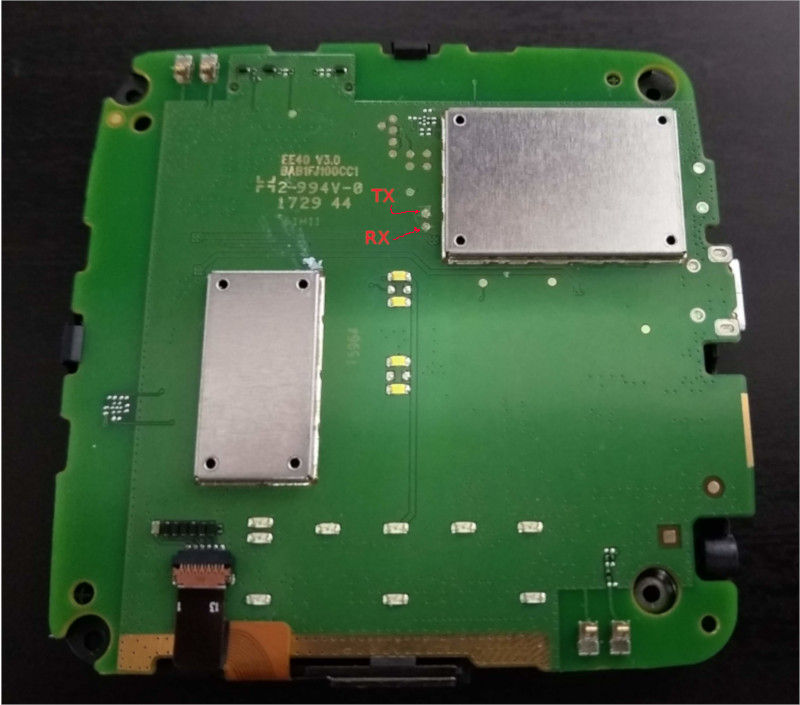 My mistake was going poking around trying to figure out where the updates are downloaded from - I know I m running a slightly older release than what s current, and the device can do an automatic download + update. Top tip; don t run
 When I started my Master's degree in January 2018, I was confident I would be
done in a year and half. After all, I only had one year of classes and I
figured 6 months to write a thesis would be plenty.
Three years later, I'm finally done: the final version of my thesis was
accepted on January 22nd 2021.
My thesis, entitled What are the incentive structures of Free Software? An
economic analysis of Free Software's specific development model, can be