Search Results: "ina"

19 October 2020

Antoine Beaupr : SSH 2FA with Google Authenticator and Yubikey

About a lifetime ago (5 years), I wrote a tutorial on how to configure my Yubikey for OpenPGP signing, SSH authentication and SSH 2FA. In there, I used the libpam-oath PAM plugin for authentication, but it turns out that had too many problems: users couldn't edit their own 2FA tokens and I had to patch it to avoid forcing 2FA on all users. The latter was merged in the Debian package, but never upstream, and the former was never fixed at all. So I started looking at alternatives and found the Google Authenticator libpam plugin. A priori, it's designed to work with phones and the Google Authenticator app, but there's no reason why it shouldn't work with hardware tokens like the Yubikey. Both use the standard HOTP protocol so it should "just work". After some fiddling, it turns out I was right and you can authenticate with a Yubikey over SSH. Here's that procedure so you don't have to second-guess it yourself.

Installation On Debian, the PAM module is shipped in the google-authenticator source package:
apt install libpam-google-authenticator
Then you need to add the module in your PAM stack somewhere. Since I only use it for SSH, I added this line on top of /etc/pam.d/sshd:
auth required pam_google_authenticator.so nullok
I also used no_increment_hotp debug while debugging to avoid having to renew the token all the time and have more information about failures in the logs. Then reload ssh (not sure that's actually necessary):
service ssh reload

Creating or replacing tokens To create a new key, run this command on the server:
google-authenticator -c
This will prompt you for a bunch of questions. To get them all right, I prefer to just call the right ones on the commandline directly:
google-authenticator --counter-based --qr-mode=NONE --rate-limit=1 --rate-time=30 --emergency-codes=1 --window-size=3
Those are actually the defaults, if my memory serves me right, except for the --qr-mode and --emergency-codes (which can't be disabled so I only print one). I disable the QR code display because I won't be using the codes on my phone, but you would obviously keep it if you want to use the app.

Converting to a Yubikey-compatible secret Unfortunately, the encoding (base32) produced by the google-authenticator command is not compatible with the token expected by the ykpersonalize command used to configure the Yubikey (base16 AKA "hexadecimal", with a fixed 20 bytes length). So you need a way to convert between the two. I wrote a program called oath-convert which basically does this:
read base32
add padding
convert to hex
print
Or, in Python:
def convert_b32_b16(data_b32):
    remainder = len(data_b32) % 8
    if remainder > 0:
        # XXX: assume 6 chars are missing, the actual padding may vary:
        # https://tools.ietf.org/html/rfc3548#section-5
        data_b32 += "======"
    data_b16 = base64.b32decode(data_b32)
    if len(data_b16) < 20:
        # pad to 20 bytes
        data_b16 += b"\x00" * (20 - len(data_b16))
    return binascii.hexlify(data_b16).decode("ascii")
Note that the code assumes a certain token length and will not work correctly for other sizes. To use the program, simply call it with:
head -1 .google_authenticator   oath-convert
Then you paste the output in the prompt:
$ ykpersonalize -1 -o oath-hotp -o append-cr -a
Firmware version 3.4.3 Touch level 1541 Program sequence 2
 HMAC key, 20 bytes (40 characters hex) : [SECRET GOES HERE]
Configuration data to be written to key configuration 1:
fixed: m:
uid: n/a
key: h:[SECRET REDACTED]
acc_code: h:000000000000
OATH IMF: h:0
ticket_flags: APPEND_CR OATH_HOTP
config_flags: 
extended_flags: 
Commit? (y/n) [n]: y
Note that you must NOT pass the -o oath-hotp8 parameter to the ykpersonalize commandline, which we used to do in the Yubikey howto. That is because Google Authenticator tokens are shorter: it's less secure, but it's an acceptable tradeoff considering the plugin is actually maintained. There's actually a feature request to support 8-digit codes so that limitation might eventually be fixed as well. Thanks to the Google Authenticator people and Yubikey people for their support in establishing this procedure.

Russell Coker: Video Decoding

I ve had a saga of getting 4K monitors to work well. My latest issue has been video playing, the dreaded mplayer error about the system being too slow. My previous post about 4K was about using DisplayPort to get more than 30Hz scan rate at 4K [1]. I now have a nice 60Hz scan rate which makes WW2 documentaries display nicely among other things. But when running a 4K monitor on a 3.3GHz i5-2500 quad-core CPU I can t get a FullHD video to display properly. Part of the process of decoding the video and scaling it to 4K resolution is too slow, so action scenes in movies lag. When running a 2560*1440 monitor on a 2.4GHz E5-2440 hex-core CPU with the mplayer option -lavdopts threads=3 everything is great (but it fails if mplayer is run with no parameters). In doing tests with apparent performance it seemed that the E5-2440 CPU gains more from the threaded mplayer code than the i5-2500, maybe the E5-2440 is more designed for server use (it s in a Dell PowerEdge T320 while the i5-2500 is in a random white-box system) or maybe it s just because it s newer. I haven t tested whether the i5-2500 system could perform adequately at 2560*1440 resolution. The E5-2440 system has an ATI HD 6570 video card which is old, slow, and only does PCIe 2.1 which gives 5GT/s or 8GB/s. The i5-2500 system has a newer ATI video card that is capable of PCIe 3.0, but lspci -vv as root says LnkCap: Port #0, Speed 8GT/s, Width x16 and LnkSta: Speed 5GT/s (downgraded), Width x16 (ok) . So for reasons unknown to me the system with a faster PCIe 3.0 video card is being downgraded to PCIe 2.1 speed. A quick check of the web site for my local computer store shows that all ATI video cards costing less than $300 have PCI3 3.0 interfaces and the sole ATI card with PCIe 4.0 (which gives double the PCIe speed if the motherboard supports it) costs almost $500. I m not inclined to spend $500 on a new video card and then a greater amount of money on a motherboard supporting PCIe 4.0 and CPU and RAM to go in it. According to my calculations 3840*2160 resolution at 24bpp (probably 32bpp data transfers) at 30 frames/sec means 3840*2160*4*30/1024/1024=950MB/s. PCIe 2.1 can do 8GB/s so that probably isn t a significant problem. I d been planning on buying a new video card for the E5-2440 system, but due to some combination of having a better CPU and lower screen resolution it is working well for video playing so I can save my money. As an aside the T320 is a server class system that had been running for years in a corporate DC. When I replaced the high speed SAS disks with SSDs SATA disks it became quiet enough for a home workstation. It works very well at that task but the BIOS is quite determined to keep the motherboard video running due to the remote console support. So swapping monitors around was more pain than I felt like going through, I just got it working and left it. I ordered a special GPU power cable but found that the older video card that doesn t need an extra power cable performs adequately before the cable arrived. Here is a table comparing the systems.
2560*1440 works well 3840*2160 goes slow
System Dell PowerEdge T320 White Box PC from rubbish
CPU 2.4GHz E5-2440 3.3GHz i5-2500
Video Card ATI Radeon HD 6570 ATI Radeon R7 260X
PCIe Speed PCIe 2.1 8GB/s PCIe 3.0 downgraded to PCIe 2.1 8GB/s
Conclusion The ATI Radeon HD 6570 video card is one that I had previously tested and found inadequate for 4K support, I can t remember if it didn t work at that resolution or didn t support more than 30Hz scan rate. If the 2560*1440 monitor dies then it wouldn t make sense to buy anything less than a 4K monitor to replace it which means that I d need to get a new video card to match. But for the moment 2560*1440 is working well enough so I won t upgrade it any time soon. I ve already got the special power cable (specified as being for a Dell PowerEdge R610 for anyone else who wants to buy one) so it will be easy to install a powerful video card in a hurry.

Louis-Philippe V ronneau: Musings on long-term software support and economic incentives

Although I still read a lot, during my college sophomore years my reading habits shifted from novels to more academic works. Indeed, reading dry textbooks and economic papers for classes often kept me from reading anything else substantial. Nowadays, I tend to binge read novels: I won't touch a book for months on end, and suddenly, I'll read 10 novels back to back1. At the start of a novel binge, I always follow the same ritual: I take out my e-reader from its storage box, marvel at the fact the battery is still pretty full, turn on the WiFi and check if there are OS updates. And I have to admit, Kobo Inc. (now Rakuten Kobo) has done a stellar job of keeping my e-reader up to date. I've owned this model (a Kobo Aura 1st generation) for 7 years now and I'm still running the latest version of Kobo's Linux-based OS. Having recently had trouble updating my Nexus 5 (also manufactured 7 years ago) to Android 102, I asked myself:
Why is my e-reader still getting regular OS updates, while Google stopped issuing security patches for my smartphone four years ago?
To try to answer this, let us turn to economic incentives theory. Although not the be-all and end-all some think it is3, incentives theory is not a bad tool to analyse this particular problem. Executives at Google most likely followed a very business-centric logic when they decided to drop support for the Nexus 5. Likewise, Rakuten Kobo's decision to continue updating older devices certainly had very little to do with ethics or loyalty to their user base. So, what are the incentives that keep Kobo updating devices and why are they different than smartphone manufacturers'? A portrait of the current long-term software support offerings for smartphones and e-readers Before delving deeper in economic theory, let's talk data. I'll be focusing on 2 brands of e-readers, Amazon's Kindle and Rakuten's Kobo. Although the e-reader market is highly segmented and differs a lot based on geography, Amazon was in 2015 the clear worldwide leader with 53% of the worldwide e-reader sales, followed by Rakuten Kobo at 13%4. On the smartphone side, I'll be differentiating between Apple's iPhones and Android devices, taking Google as the barometer for that ecosystem. As mentioned below, Google is sadly the leader in long-term Android software support. Rakuten Kobo According to their website and to this Wikipedia table, the only e-readers Kobo has deprecated are the original Kobo eReader and the Kobo WiFi N289, both released in 2010. This makes their oldest still supported device the Kobo Touch, released in 2011. In my book, that's a pretty good track record. Long-term software support does not seem to be advertised or to be a clear selling point in their marketing. Amazon According to their website, Amazon has dropped support for all 8 devices produced before the Kindle Paperwhite 2nd generation, first sold in 2013. To put things in perspective, the first Kindle came out in 2007, 3 years before Kobo started selling devices. Like Rakuten Kobo, Amazon does not make promises of long-term software support as part of their marketing. Apple Apple has a very clear software support policy for all their devices:
Owners of iPhone, iPad, iPod or Mac products may obtain a service and parts from Apple or Apple service providers for five years after the product is no longer sold or longer, where required by law.
This means in the worst-case scenario of buying an iPhone model just as it is discontinued, one would get a minimum of 5 years of software support. Android Google's policy for their Android devices is to provide software support for 3 years after the launch date. If you buy a Pixel device just before the new one launches, you could theoretically only get 2 years of support. In 2018, Google decided OEMs would have to provide security updates for at least 2 years after launch, threatening not to license Google Apps and the Play Store if they didn't comply. A question of cost structure From the previous section, we can conclude that in general, e-readers seem to be supported longer than smartphones, and that Apple does a better job than Android OEMs, providing support for about twice as long. Even Fairphone, who's entire business is to build phones designed to last and to be repaired was not able to keep the Fairphone 1 (2013) updated for more than a couple years and seems to be struggling to keep the Fairphone 2 (2015) running an up to date version of Android. Anyone who has ever worked in IT will tell you: maintaining software over time is hard work and hard work by specialised workers is expensive. Most commercial electronic devices are sold and developed by for-profit enterprises and software support all comes down to a question of cost structure. If companies like Google or Fairphone are to be expected to provide long-term support for the devices they manufacture, they have to be able to fund their work somehow. In a perfect world, people would be paying for the cost of said long-term support, as it would likely be cheaper then buying new devices every few years and would certainly be better for the planet. Problem is, manufacturers aren't making them pay for it. Economists call this type of problem externalities: things that should be part of the cost of a good, but aren't for one a reason or another. A classic example of an externality is pollution. Clearly pollution is bad and leads to horrendous consequences, like climate change. Sane people agree we should drastically cut our greenhouse gas emissions, and yet, we aren't. Neo-classical economic theory argues the way to fix externalities like pollution is to internalise these costs, in other words, to make people pay for the "real price" of the goods they buy. In the case of climate change and pollution, neo-classical economic theory is plain wrong (spoiler alert: it often is), but this is where band-aids like the carbon tax comes from. Still, coming back to long-term software support, let's see what would happen if we were to try to internalise software maintenance costs. We can do this multiple ways. 1 - Include the price of software maintenance in the cost of the device This is the choice Fairphone makes. This might somewhat work out for them since they are a very small company, but it cannot scale for the following reasons:
  1. This strategy relies on you giving your money to an enterprise now, and trusting them to "Do the right thing" years later. As the years go by, they will eventually look at their books, see how much ongoing maintenance is costing them, drop support for the device, apologise and move on. That is to say, enterprises have a clear economic incentive to promise long-term support and not deliver. One could argue a company's reputation would suffer from this kind of behaviour. Maybe sometime it does, but most often people forget. Political promises are a great example of this.
  2. Enterprises go bankrupt all the time. Even if company X promises 15 years of software support for their devices, if they cease to exist, your device will stop getting updates. The internet is full of stories of IoT devices getting bricked when the parent company goes bankrupt and their servers disappear. This is related to point number 1: to some degree, you have a disincentive to pay for long-term support in advance, as the future is uncertain and there are chances you won't get the support you paid for.
  3. Selling your devices at a higher price to cover maintenance costs does not necessarily mean you will make more money overall raising more money to fund maintenance costs being the goal here. To a certain point, smartphone models are substitute goods and prices higher than market prices will tend to drive consumers to buy cheaper ones. There is thus a disincentive to include the price of software maintenance in the cost of the device.
  4. People tend to be bad at rationalising the total cost of ownership over a long period of time. Economists call this phenomenon hyperbolic discounting. In our case, it means people are far more likely to buy a 500$ phone each 3 years than a 1000$ phone each 10 years. Again, this means OEMs have a clear disincentive to include the price of long-term software maintenance in their devices.
Clearly, life is more complex than how I portrayed it: enterprises are not perfect rational agents, altruism exists, not all enterprises aim solely for profit maximisation, etc. Still, in a capitalist economy, enterprises wanting to charge for software maintenance upfront have to overcome these hurdles one way or another if they want to avoid failing. 2 - The subscription model Another way companies can try to internalise support costs is to rely on a subscription-based revenue model. This has multiple advantages over the previous option, mainly:
  1. It does not affect the initial purchase price of the device, making it easier to sell them at a competitive price.
  2. It provides a stable source of income, something that is very valuable to enterprises, as it reduces overall risks. This in return creates an incentive to continue providing software support as long as people are paying.
If this model is so interesting from an economic incentives point of view, why isn't any smartphone manufacturer offering that kind of program? The answer is, they are, but not explicitly5. Apple and Google can fund part of their smartphone software support via the 30% cut they take out of their respective app stores. A report from Sensor Tower shows that in 2019, Apple made an estimated US$ 16 billion from the App Store, while Google raked in US$ 9 billion from the Google Play Store. Although the Fortune 500 ranking tells us this respectively is "only" 5.6% and 6.5% of their gross annual revenue for 2019, the profit margins in this category are certainly higher than any of their other products. This means Google and Apple have an important incentive to keep your device updated for some time: if your device works well and is updated, you are more likely to keep buying apps from their store. When software support for a device stops, there is a risk paying customers will buy a competitor device and leave their ecosystem. This also explains why OEMs who don't own app stores tend not to provide software support for very long periods of time. Most of them only make money when you buy a new phone. Providing long-term software support thus becomes a disincentive, as it directly reduces their sale revenues. Same goes for Kindles and Kobos: the longer your device works, the more money they make with their electronic book stores. In my opinion, it's likely Amazon and Rakuten Kobo produce quarterly cost-benefit reports to decide when to drop support for older devices, based on ongoing support costs and the recurring revenues these devices bring in. Rakuten Kobo is also in a more precarious situation than Amazon is: considering Amazon's very important market share, if your device stops getting new updates, there is a greater chance people will replace their old Kobo with a Kindle. Again, they have an important economic incentive to keep devices running as long as they are profitable. Can Free Software fix this? Yes and no. Free Software certainly isn't a magic wand one can wave to make everything better, but does provide major advantages in terms of security, user freedom and sometimes costs. The last piece of the puzzle explaining why Rakuten Kobo's software support is better than Google's is technological choices. Smartphones are incredibly complex devices and have become the main computing platform of many. Similar to the web, there is a race for features and complexity that tends to create bloat and make older devices slow and painful to use. On the other hand, e-readers are simpler devices built for a single task: display electronic books. Control over the platform is also a key aspect of the cost structure of providing software updates. Whereas Apple controls both the software and hardware side of iPhones, Android is a sad mess of drivers and SoCs, all providing different levels of support over time6. If you take a look at the platforms the Kindle and Kobo are built on, you'll quickly see they both use Freescale I.MX SoCs. These processors are well known for their excellent upstream support in the Linux kernel and their relative longevity, chips being produced for either 10 or 15 years. This in turn makes updates much easier and less expensive to provide. So clearly, open architectures, free drivers and open hardware helps tremendously, but aren't enough on their own. One of the lessons we must learn from the (amazing) LineageOS project is how lack of funding hurts everyone. If there is no one to do the volunteer work required to maintain a version of LOS for your device, it won't be supported. Worse, when purchasing a new device, users cannot know in advance how many years of LOS support they will get. This makes buying new devices a frustrating hit-and-miss experience. If you are lucky, you will get many years of support. Otherwise, you risk your device becoming an expensive insecure paperweight. So how do we fix this? Anyone with a brain understands throwing away perfectly good devices each 2 years is not sustainable. Government regulations enforcing a minimum support life would be a step in the right direction, but at the end of the day, Capitalism is to blame. Like the aforementioned carbon tax, band-aid solutions can make things somewhat better, but won't fix our current economic system's underlying problems. For now though, I'll leave fixing the problem of Capitalism to someone else.

  1. My most recent novel binge has been focused on re-reading the Dune franchise. I first read the 6 novels written by Frank Herbert when I was 13 years old and only had vague and pleasant memories of his work. Great stuff.
  2. I'm back on LineageOS! Nice folks released an unofficial LOS 17.1 port for the Nexus 5 last January and have kept it updated since then. If you are to use it, I would also recommend updating TWRP to this version specifically patched for the Nexus 5.
  3. Very few serious economists actually believe neo-classical rational agent theory is a satisfactory explanation of human behavior. In my opinion, it's merely a (mostly flawed) lens to try to interpret certain behaviors, a tool amongst others that needs to be used carefully, preferably as part of a pluralism of approaches.
  4. Good data on the e-reader market is hard to come by and is mainly produced by specialised market research companies selling their findings at very high prices. Those particular statistics come from a MarketWatch analysis.
  5. If they were to tell people: You need to pay us 5$/month if you want to receive software updates, I'm sure most people would not pay. Would you?
  6. Coming back to Fairphones, if they had so much problems providing an Android 9 build for the Fairphone 2, it's because Qualcomm never provided Android 7+ support for the Snapdragon 801 SoC it uses.

18 October 2020

Antoine Beaupr : CDPATH replacements

after reading this post I figured I might as well bite the bullet and improve on my CDPATH-related setup, especially because it does not work with Emacs. so i looked around for autojump-related alternatives that do.

What I use now I currently have this in my .shenv (sourced by .bashrc):
export CDPATH=".:~:~/src:~/dist:~/wikis:~/go/src:~/src/tor"
This allows me to quickly jump into projects from my home dir, or the "source code" (~/src), "work" (src/tor), or wiki checkouts (~/wikis) directories. It works well from the shell, but unfortunately it's very static: if I want a new directory, I need to edit my config file, restart shells, etc. It also doesn't work from my text editor.

Shell jumpers Those are commandline tools that can be used from a shell, generally with built-in shell integration so that a shell alias will find the right directory magically, usually by keeping track of the directories visited with cd. Some of those may or may not have integration in Emacs.

autojump

fasd

z

fzf

Emacs plugins not integrated with the shell Those projects can be used to track files inside a project or find files around directories, but do not offer the equivalent functionality in the shell.

projectile

elpy
  • home page
  • elpy has a notion of projects, so, by default, will find files in the current "project" with C-c C-f which is useful

bookmarks.el
  • built-in
  • home page
  • "Bookmarks record locations so you can return to them later"

recentf
  • built-in
  • home page
  • "builds a list of recently opened files. This list is is automatically saved across sessions on exiting Emacs - you can then access this list through a command or the menu"

references https://www.emacswiki.org/emacs/LocateFilesAnywhere

17 October 2020

Dirk Eddelbuettel: digest 0.6.26: Blake3 and Tuning

And a new version of digest is now on CRAN will go to Debian shortly. digest creates hash digests of arbitrary R objects (using the md5, sha-1, sha-256, sha-512, crc32, xxhash32, xxhash64, murmur32, spookyhash, and blake3 algorithms) permitting easy comparison of R language objects. It is a fairly widely-used package (currently listed at 896k monthly downloads, 279 direct reverse dependencies and 8057 indirect reverse dependencies, or just under half of CRAN) as many tasks may involve caching of objects for which it provides convenient general-purpose hash key generation. This release brings two nice contributed updates. Dirk Schumacher added support for blake3 (though we could probably push this a little harder for performance, help welcome). Winston Chang benchmarked and tuned some of the key base R parts of the package. Last but not least I flipped the vignette to the lovely minidown, updated the Travis CI setup using bspm (as previously blogged about in r4 #30), and added a package website using Matertial for MkDocs. My CRANberries provides the usual summary of changes to the previous version. For questions or comments use the issue tracker off the GitHub repo. If you like this or other open-source work I do, you can now sponsor me at GitHub. For the first year, GitHub will match your contributions.

This post by Dirk Eddelbuettel originated on his Thinking inside the box blog. Please report excessive re-aggregation in third-party for-profit settings.

15 October 2020

Rapha&#235;l Hertzog: Freexian s report about Debian Long Term Support, September 2020

A Debian LTS logo Like each month, here comes a report about the work of paid contributors to Debian LTS. Individual reports In September, 208.25 work hours have been dispatched among 13 paid contributors. Their reports are available: Evolution of the situation September was a regular LTS month with an IRC meeting. The security tracker currently lists 45 packages with a known CVE and the dla-needed.txt file has 48 packages needing an update. Thanks to our sponsors Sponsors that joined recently are in bold.

No comment Liked this article? Click here. My blog is Flattr-enabled.

Dirk Eddelbuettel: dang 0.0.12: Two new functions

A new release of the dang package is now on CRAN, roughly one year after the last release. The dang package regroups a few functions of mine that had no other home as for example lsos() from a StackOverflow question from 2009 (!!) is one, this overbought/oversold price band plotter from an older blog post is another. More recently added were helpers for data.table to xts conversion and a git repo root finder. This release adds two functions. One was mentioned just days ago in a tweet by Nathan and is a reworked version of something Colin tweeted about a few weeks ago: a little data wrangling off the kewl rtweet to find maximally spammy accounts per search topic. In other words those who include more than N hashtags for given search term. The other is something I, if memory serves, picked up a while back on one of the lists: a base R function to identify non-ASCII characters in a file. It is a C function that is not directly exported by and hence no accessible, so we put it here (with credits, of course). I mentioned it yesterday when announcing tidyCpp as I this C function was the starting point for the new tidyCpp wrapper around some C API of R functions. The (very short) NEWS entry follows.

Changes in version 0.0.12 (2020-10-14)
  • New functions muteTweets and checkPackageAsciiCode.
  • Updated CI setup.

Courtesy of CRANberries, there is a comparison to the previous release. For questions or comments use the issue tracker off the GitHub repo. If you like this or other open-source work I do, you can now sponsor me at GitHub. For the first year, GitHub will match your contributions.

This post by Dirk Eddelbuettel originated on his Thinking inside the box blog. Please report excessive re-aggregation in third-party for-profit settings.

14 October 2020

Michael Stapelberg: distri: a Linux distribution to research fast package management

Over the last year or so I have worked on a research linux distribution in my spare time. It s not a distribution for researchers (like Scientific Linux), but my personal playground project to research linux distribution development, i.e. try out fresh ideas. This article focuses on the package format and its advantages, but there is more to distri, which I will cover in upcoming blog posts.

Motivation I was a Debian Developer for the 7 years from 2012 to 2019, but using the distribution often left me frustrated, ultimately resulting in me winding down my Debian work. Frequently, I was noticing a large gap between the actual speed of an operation (e.g. doing an update) and the possible speed based on back of the envelope calculations. I wrote more about this in my blog post Package managers are slow . To me, this observation means that either there is potential to optimize the package manager itself (e.g. apt), or what the system does is just too complex. While I remember seeing some low-hanging fruit , through my work on distri, I wanted to explore whether all the complexity we currently have in Linux distributions such as Debian or Fedora is inherent to the problem space. I have completed enough of the experiment to conclude that the complexity is not inherent: I can build a Linux distribution for general-enough purposes which is much less complex than existing ones. Those were low-hanging fruit from a user perspective. I m not saying that fixing them is easy in the technical sense; I know too little about apt s code base to make such a statement.

Key idea: packages are images, not archives One key idea is to switch from using archives to using images for package contents. Common package managers such as dpkg(1) use tar(1) archives with various compression algorithms. distri uses SquashFS images, a comparatively simple file system image format that I happen to be familiar with from my work on the gokrazy Raspberry Pi 3 Go platform. This idea is not novel: AppImage and snappy also use images, but only for individual, self-contained applications. distri however uses images for distribution packages with dependencies. In particular, there is no duplication of shared libraries in distri. A nice side effect of using read-only image files is that applications are immutable and can hence not be broken by accidental (or malicious!) modification.

Key idea: separate hierarchies Package contents are made available under a fully-qualified path. E.g., all files provided by package zsh-amd64-5.6.2-3 are available under /ro/zsh-amd64-5.6.2-3. The mountpoint /ro stands for read-only, which is short yet descriptive. Perhaps surprisingly, building software with custom prefix values of e.g. /ro/zsh-amd64-5.6.2-3 is widely supported, thanks to:
  1. Linux distributions, which build software with prefix set to /usr, whereas FreeBSD (and the autotools default), which build with prefix set to /usr/local.
  2. Enthusiast users in corporate or research environments, who install software into their home directories.
Because using a custom prefix is a common scenario, upstream awareness for prefix-correctness is generally high, and the rarely required patch will be quickly accepted.

Key idea: exchange directories Software packages often exchange data by placing or locating files in well-known directories. Here are just a few examples:
  • gcc(1) locates the libusb(3) headers via /usr/include
  • man(1) locates the nginx(1) manpage via /usr/share/man.
  • zsh(1) locates executable programs via PATH components such as /bin
In distri, these locations are called exchange directories and are provided via FUSE in /ro. Exchange directories come in two different flavors:
  1. global. The exchange directory, e.g. /ro/share, provides the union of the share sub directory of all packages in the package store.
    Global exchange directories are largely used for compatibility, see below.
  2. per-package. Useful for tight coupling: e.g. irssi(1) does not provide any ABI guarantees, so plugins such as irssi-robustirc can declare that they want e.g. /ro/irssi-amd64-1.1.1-1/out/lib/irssi/modules to be a per-package exchange directory and contain files from their lib/irssi/modules.

Search paths sometimes need to be fixed Programs which use exchange directories sometimes use search paths to access multiple exchange directories. In fact, the examples above were taken from gcc(1) s INCLUDEPATH, man(1) s MANPATH and zsh(1) s PATH. These are prominent ones, but more examples are easy to find: zsh(1) loads completion functions from its FPATH. Some search path values are derived from --datadir=/ro/share and require no further attention, but others might derive from e.g. --prefix=/ro/zsh-amd64-5.6.2-3/out and need to be pointed to an exchange directory via a specific command line flag.

FHS compatibility Global exchange directories are used to make distri provide enough of the Filesystem Hierarchy Standard (FHS) that third-party software largely just works. This includes a C development environment. I successfully ran a few programs from their binary packages such as Google Chrome, Spotify, or Microsoft s Visual Studio Code.

Fast package manager I previously wrote about how Linux distribution package managers are too slow. distri s package manager is extremely fast. Its main bottleneck is typically the network link, even at high speed links (I tested with a 100 Gbps link). Its speed comes largely from an architecture which allows the package manager to do less work. Specifically:
  1. Package images can be added atomically to the package store, so we can safely skip fsync(2) . Corruption will be cleaned up automatically, and durability is not important: if an interactive installation is interrupted, the user can just repeat it, as it will be fresh on their mind.
  2. Because all packages are co-installable thanks to separate hierarchies, there are no conflicts at the package store level, and no dependency resolution (an optimization problem requiring SAT solving) is required at all.
    In exchange directories, we resolve conflicts by selecting the package with the highest monotonically increasing distri revision number.
  3. distri proves that we can build a useful Linux distribution entirely without hooks and triggers. Not having to serialize hook execution allows us to download packages into the package store with maximum concurrency.
  4. Because we are using images instead of archives, we do not need to unpack anything. This means installing a package is really just writing its package image and metadata to the package store. Sequential writes are typically the fastest kind of storage usage pattern.
Fast installation also make other use-cases more bearable, such as creating disk images, be it for testing them in qemu(1) , booting them on real hardware from a USB drive, or for cloud providers such as Google Cloud.

Fast package builder Contrary to how distribution package builders are usually implemented, the distri package builder does not actually install any packages into the build environment. Instead, distri makes available a filtered view of the package store (only declared dependencies are available) at /ro in the build environment. This means that even for large dependency trees, setting up a build environment happens in a fraction of a second! Such a low latency really makes a difference in how comfortable it is to iterate on distribution packages.

Package stores In distri, package images are installed from a remote package store into the local system package store /roimg, which backs the /ro mount. A package store is implemented as a directory of package images and their associated metadata files. You can easily make available a package store by using distri export. To provide a mirror for your local network, you can periodically distri update from the package store you want to mirror, and then distri export your local copy. Special tooling (e.g. debmirror in Debian) is not required because distri install is atomic (and update uses install). Producing derivatives is easy: just add your own packages to a copy of the package store. The package store is intentionally kept simple to manage and distribute. Its files could be exchanged via peer-to-peer file systems, or synchronized from an offline medium.

distri s first release distri works well enough to demonstrate the ideas explained above. I have branched this state into branch jackherer, distri s first release code name. This way, I can keep experimenting in the distri repository without breaking your installation. From the branch contents, our autobuilder creates:
  1. disk images, which
  2. a package repository. Installations can pick up new packages with distri update.
  3. documentation for the release.
The project website can be found at https://distr1.org. The website is just the README for now, but we can improve that later. The repository can be found at https://github.com/distr1/distri

Project outlook Right now, distri is mainly a vehicle for my spare-time Linux distribution research. I don t recommend anyone use distri for anything but research, and there are no medium-term plans of that changing. At the very least, please contact me before basing anything serious on distri so that we can talk about limitations and expectations. I expect the distri project to live for as long as I have blog posts to publish, and we ll see what happens afterwards. Note that this is a hobby for me: I will continue to explore, at my own pace, parts that I find interesting. My hope is that established distributions might get a useful idea or two from distri.

There s more to come: subscribe to the distri feed I don t want to make this post too long, but there is much more! Please subscribe to the following URL in your feed reader to get all posts about distri: https://michael.stapelberg.ch/posts/tags/distri/feed.xml Next in my queue are articles about hermetic packages and good package maintainer experience (including declarative packaging).

Feedback or questions? I d love to discuss these ideas in case you re interested! Please send feedback to the distri mailing list so that everyone can participate!

Thomas Goirand: The Gnocchi package in Debian

This is a follow-up from the blog post of Russel as seen here: https://etbe.coker.com.au/2020/10/13/first-try-gnocchi-statsd/. There s a bunch of things he wrote which I unfortunately must say is inaccurate, and sometimes even completely wrong. It is my point of view that none of the reported bugs are helpful for anyone that understand Gnocchi and how to set it up. It s however a terrible experience that Russell had, and I do understand why (and why it s not his fault). I m very much open on how to fix this on the packaging level, though some things aren t IMO fixable. Here s the details. 1/ The daemon startups First of all, the most surprising thing is when Russell claimed that there s no startup scripts for the Gnocchi daemons. In fact, they all come with both systemd and sysv-rc support: # ls /lib/systemd/system/gnocchi-api.service

/lib/systemd/system/gnocchi-api.service
# /etc/init.d/gnocchi-api
/etc/init.d/gnocchi-api Russell then tried to start gnocchi-api without the good options that are set in the Debian scripts, and not surprisingly, this failed. Russell attempted to do what was in the upstream doc, which isn t adapted to what we have in Debian (the upstream doc is probably completely outdated, as Gnocchi is unfortunately not very well maintained upstream). The bug #972087 is therefore, IMO not valid. 2/ The database setup By default for all things OpenStack in Debian, there are some debconf helpers using dbconfig-common to help users setup database for their services. This is clearly for beginners, but that doesn t prevent from attempting to understand what you re doing. That is, more specifically for Gnocchi, there are 2 databases: one for Gnocchi itself, and one for the indexer, which not necessarily is using the same backend. The Debian package already setups one database, but one has to do it manually for the indexer one. I m sorry this isn t well enough documented. Now, if some package are supporting sqlite as a backend (since most things in OpenStack are using SQLAlchemy), it looks like Gnocchi doesn t right now. This is IMO a bug upstream, rather than a bug in the package. However, I don t think the Debian packages are to be blame here, as they simply offer a unified interface, and it s up to the users to know what they are doing. SQLite is anyway not a production ready backend. I m not sure if I should close #971996 without any action, or just try to disable the SQLite backend option of this package because it may be confusing. 3/ The metrics UUID Russell then thinks the UUID should be set by default. This is probably right in a single server setup, however, this wouldn t work setting-up a cluster, which is probably what most Gnocchi users will do. In this type of environment, the metrics UUID must be the same on the 3 servers, and setting-up a random (and therefore different) UUID on the 3 servers wouldn t work. So I m also tempted to just close #972092 without any action on my side. 4/ The coordination URL Since Gnocchi is supposed to be setup with more than one server, as in OpenStack, having an HA setup is very common, then a backend for the coordination (ie: sharing the workload) must be set. This is done by setting an URL that tooz understand. The best coordinator being Zookeeper, something like this should be set by hand: coordination_url=zookeeper://192.168.101.2:2181/ Here again, I don t think the Debian package is to be blamed for not providing the automation. I would however accept contributions to fix this and provide the choice using debconf, however, users would still need to understand what s going on, and setup something like Zookeeper (or redis, memcache, or any other backend supported by tooz) to act as coordinator. 5/ The Debconf interface cannot replace a good documentation and there s not so much I can do at my package maintainer level for this. Russell, I m really sorry for the bad user experience you had with Gnocchi. Now that you know a little big more about it, maybe you can have another go? Sure, the OpenStack telemetry system isn t an easy to understand beast, but it s IMO worth trying. And the recent versions can scale horizontally

Fran ois Marier: Making an Apache website available as a Tor Onion Service

As part of the #MoreOnionsPorFavor campaign, I decided to follow brave.com's lead and make my homepage available as a Tor onion service.

Tor daemon setup I started by installing the Tor daemon locally:
apt install tor
and then setting the following in /etc/tor/torrc:
SocksPort 0
SocksPolicy reject *
HiddenServiceDir /var/lib/tor/hidden_service/
HiddenServicePort 80 [2600:3c04::f03c:91ff:fe8c:61ac]:80
HiddenServicePort 443 [2600:3c04::f03c:91ff:fe8c:61ac]:443
HiddenServiceVersion 3
HiddenServiceNonAnonymousMode 1
HiddenServiceSingleHopMode 1
in order to create a version 3 onion service without actually running a Tor relay. Note that since I am making a public website available over Tor, I do not need the location of the website to be hidden and so I used the same settings as Cloudflare in their public Tor proxy. Also, I explicitly used the external IPv6 address of my server in the configuration in order to prevent localhost bypasses. After restarting the Tor daemon to reload the configuration file:
systemctl restart tor.service
I looked for the address of my onion service:
$ cat /var/lib/tor/hidden_service/hostname 
ixrdj3iwwhkuau5tby5jh3a536a2rdhpbdbu6ldhng43r47kim7a3lid.onion

Apache configuration Next, I enabled a few required Apache modules:
a2enmod mpm_event
a2enmod http2
a2enmod headers
and configured my Apache vhosts in /etc/apache2/sites-enabled/www.conf:
<VirtualHost *:443>
    ServerName fmarier.org
    ServerAlias ixrdj3iwwhkuau5tby5jh3a536a2rdhpbdbu6ldhng43r47kim7a3lid.onion
    Protocols h2, http/1.1
    Header set Onion-Location "http://ixrdj3iwwhkuau5tby5jh3a536a2rdhpbdbu6ldhng43r47kim7a3lid.onion% REQUEST_URI s"
    Header set alt-svc 'h2="ixrdj3iwwhkuau5tby5jh3a536a2rdhpbdbu6ldhng43r47kim7a3lid.onion:443"; ma=315360000; persist=1'
    Header add Strict-Transport-Security: "max-age=63072000"
    Include /etc/fmarier-org/www-common.include
    SSLEngine On
    SSLCertificateFile /etc/letsencrypt/live/fmarier.org/fullchain.pem
    SSLCertificateKeyFile /etc/letsencrypt/live/fmarier.org/privkey.pem
</VirtualHost>
<VirtualHost *:80>
    ServerName fmarier.org
    Redirect permanent / https://fmarier.org/
</VirtualHost>
<VirtualHost *:80>
    ServerName ixrdj3iwwhkuau5tby5jh3a536a2rdhpbdbu6ldhng43r47kim7a3lid.onion
    Include /etc/fmarier-org/www-common.include
</VirtualHost>
Note that /etc/fmarier-org/www-common.include contains all of the configuration options that are common to both the HTTP and the HTTPS sites (e.g. document root, caching headers, aliases, etc.). Finally, I restarted Apache:
apache2ctl configtest
systemctl restart apache2.service

Testing In order to test that my website is correctly available at its .onion address, I opened the following URLs in a Brave Tor window: I also checked that the main URL (https://fmarier.org/) exposes a working Onion-Location header which triggers the display of a button in the URL bar (recently merged and available in Brave Nightly): Testing that the Alt-Svc is working required using the Tor Browser since that's not yet supported in Brave:
  1. Open https://fmarier.org.
  2. Wait 30 seconds.
  3. Reload the page.
On the server side, I saw the following:
2a0b:f4c2:2::1 - - [14/Oct/2020:02:42:20 +0000] "GET / HTTP/2.0" 200 2696 "-" "Mozilla/5.0 (Windows NT 10.0; rv:78.0) Gecko/20100101 Firefox/78.0"
2600:3c04::f03c:91ff:fe8c:61ac - - [14/Oct/2020:02:42:53 +0000] "GET / HTTP/2.0" 200 2696 "-" "Mozilla/5.0 (Windows NT 10.0; rv:78.0) Gecko/20100101 Firefox/78.0"
That first IP address is from a Tor exit node:
$ whois 2a0b:f4c2:2::1
...
inet6num:       2a0b:f4c2::/40
netname:        MK-TOR-EXIT
remarks:        -----------------------------------
remarks:        This network is used for Tor Exits.
remarks:        We do not have any logs at all.
remarks:        For more information please visit:
remarks:        https://www.torproject.org
which indicates that the first request was not using the .onion address. The second IP address is the one for my server:
$ dig +short -x 2600:3c04::f03c:91ff:fe8c:61ac
hafnarfjordur.fmarier.org.
which indicates that the second request to Apache came from the Tor relay running on my server, hence using the .onion address.

Dirk Eddelbuettel: tidyCpp 0.0.1: New package

A new package arrived on CRAN a few days ago. It offers a few headers files which wrap (parts) of the C API for R, but in a form that may be a little easier to use for C++ programmers. I have always liked how in Rcpp we offer good parts of the standalone R Math library in a namespace R::. While working recently with a particular C routine (for checking non-ASCII characters that will be part of the next version of the dang package which collecting various goodies in one place), I realized there may be value in collecting a few more such wrappers. So I started a few simple ones starting from simple examples. Currently we have five headers defines.h, globals.h, internals.h, math.h, and shield.h. The first four each correpond to an R header file of the same or similar name, and the last one brings a simple yet effective alternative to PROTECT and UNPROTECT from Rcpp (in a slightly simplified way). None of the headers are complete , for internals.h in particular a lot more could be added (as I noticed today when experimenting with another source file that may be converted). All of the headers can be accessed with a simple #include <tidyCpp> (which, following another C++ convention, does not have a .h or .hpp suffix). And a the package ships these headers, packages desiring to use them only need LinkingTo: tidyCpp. As usage examples, we (right now) have four files in the snippets/ directory of the package. Two of these, convolveExample.cpp and dimnamesExample.cpp both illustrate how one could change example code from Writing R Extensions. Then there are also a very simple defineExample.cpp and a shieldExample.cpp illustrating how much easier Shield() is compared to PROTECT and UNPROTECT. Finally, there is a nice vignette discussing the package motivation with two detailed side-by-side before and after examples that are the aforementioned convolution and dimnames examples. Over time, I expect to add more definitions and wrappers. Feedback would be welcome it seems to hit a nerve already as it currently has more stars than commits even though (prior to this post) I had yet to tweet or blog about it. Please post comments and suggestions at the GitHub repo. If you like this or other open-source work I do, you can now sponsor me at GitHub. For the first year, GitHub will match your contributions.

This post by Dirk Eddelbuettel originated on his Thinking inside the box blog. Please report excessive re-aggregation in third-party for-profit settings.

12 October 2020

Dirk Eddelbuettel: GitHub Streak: Round Seven

Six years ago I referenced the Seinfeld Streak used in an earlier post of regular updates to to the Rcpp Gallery:
This is sometimes called Jerry Seinfeld s secret to productivity: Just keep at it. Don t break the streak.
and then showed the first chart of GitHub streaking 366 days:
github activity october 2013 to october 2014
And five years ago a first follow-up appeared in this post about 731 days:
github activity october 2014 to october 2015
And four years ago we had a followup at 1096 days
github activity october 2015 to october 2016
And three years ago we had another one marking 1461 days
github activity october 2016 to october 2017
And two years ago another one for 1826 days
github activity october 2017 to october 2018
And last year another one bringing it to 2191 days
github activity october 2018 to october 2019
And as today is October 12, here is the newest one from 2019 to 2020 with a new total of 2557 days:
github activity october 2018 to october 2019
Again, special thanks go to Alessandro Pezz for the Chrome add-on GithubOriginalStreak.

This post by Dirk Eddelbuettel originated on his Thinking inside the box blog. Please report excessive re-aggregation in third-party for-profit settings.

Russell Coker: First Attempt at Gnocchi-Statsd

I ve been investigating the options for tracking system statistics to diagnose performance problems. The idea is to track all sorts of data about the system (network use, disk IO, CPU, etc) and look for correlations at times of performance problems. DataDog is pretty good for this but expensive, it s apparently based on or inspired by the Etsy Statsd. It s claimed that the gnocchi-statsd is the best implementation of the protoco used by the Etsy Statsd, so I decided to install that. I use Debian/Buster for this as that s what I m using for the hardware that runs KVM VMs. Here is what I did:
# it depends on a local MySQL database
apt -y install mariadb-server mariadb-client
# install the basic packages for gnocchi
apt -y install gnocchi-common python3-gnocchiclient gnocchi-statsd uuid
In the Debconf prompts I told it to setup a database and not to manage keystone_authtoken with debconf (because I m not doing a full OpenStack installation). This gave a non-working configuration as it didn t configure the MySQL database for the [indexer] section and the sqlite database that was configured didn t work for unknown reasons. I filed Debian bug #971996 about this [1]. To get this working you need to edit /etc/gnocchi/gnocchi.conf and change the url line in the [indexer] section to something like the following (where the password is taken from the [database] section).
url = mysql+pymysql://gnocchi-common:PASS@localhost:3306/gnocchidb
To get the statsd interface going you have to install the gnocchi-statsd package and edit /etc/gnocchi/gnocchi.conf to put a UUID in the resource_id field (the Debian package uuid is good for this). I filed Debian bug #972092 requesting that the UUID be set by default on install [2]. Here s an official page about how to operate Gnocchi [3]. The main thing I got from this was that the following commands need to be run from the command-line (I ran them as root in a VM for test purposes but would do so with minimum privs for a real deployment).
gnocchi-api
gnocchi-metricd
To communicate with Gnocchi you need the gnocchi-api program running, which uses the uwsgi program to provide the web interface by default. It seems that this was written for a version of uwsgi different than the one in Buster. I filed Debian bug #972087 with a patch to make it work with uwsgi [4]. Note that I didn t get to the stage of an end to end test, I just got it to basically run without error. After getting gnocchi-api running (in a terminal not as a daemon as Debian doesn t seem to have a service file for it), I ran the client program gnocchi and then gave it the status command which failed (presumably due to the metrics daemon not running), but at least indicated that the client and the API could communicate. Then I ran the gnocchi-metricd and got the following error:
2020-10-12 14:59:30,491 [9037] ERROR    gnocchi.cli.metricd: Unexpected error during processing job
Traceback (most recent call last):
  File "/usr/lib/python3/dist-packages/gnocchi/cli/metricd.py", line 87, in run
    self._run_job()
  File "/usr/lib/python3/dist-packages/gnocchi/cli/metricd.py", line 248, in _run_job
    self.coord.update_capabilities(self.GROUP_ID, self.store.statistics)
  File "/usr/lib/python3/dist-packages/tooz/coordination.py", line 592, in update_capabilities
    raise tooz.NotImplemented
tooz.NotImplemented
At this stage I ve had enough of gnocchi. I ll give the Etsy Statsd a go next. Update Thomas has responded to this post [5]. At this stage I m not really interested in giving Gnocchi another go. There s still the issue of the indexer database which should be different from the main database somehow and sqlite (the config file default) doesn t work. I expect that if I was to persist with Gnocchi I would encounter more poorly described error messages from the code which either don t have Google hits when I search for them or have Google hits to unanswered questions from 5+ years ago. The Gnocchi systemd config files are in different packages to the programs, this confused me and I thought that there weren t any systemd service files. I had expected that installing a package with a daemon binary would also get the systemd unit file to match. The cluster features of Gnocchi are probably really good if you need that sort of thing. But if you have a small instance (EG a single VM server) then it s not needed. Also one of the original design ideas of the Etsy Statsd was that UDP was used because data could just be dropped if there was a problem. I think for many situations the same concept could apply to the entire stats service. If the other statsd programs don t do what I need then I may give Gnocchi another go.

Markus Koschany: My Free Software Activities in September 2020

Welcome to gambaru.de. Here is my monthly report (+ the first week in October) that covers what I have been doing for Debian. If you re interested in Java, Games and LTS topics, this might be interesting for you. Debian Games

warzone2100
Debian Java
pdfsam
Misc Debian LTS This was my 55. month as a paid contributor and I have been paid to work 31,75 hours on Debian LTS, a project started by Rapha l Hertzog. In that time I did the following: ELTS Extended Long Term Support (ELTS) is a project led by Freexian to further extend the lifetime of Debian releases. It is not an official Debian project but all Debian users benefit from it without cost. The current ELTS release is Debian 8 Jessie . This was my 28. month and I have been paid to work 15 hours on ELTS. Thanks for reading and see you next time.

Russ Allbery: Review: Hand to Mouth

Review: Hand to Mouth, by Linda Tirado
Publisher: G.P. Putnam's Sons
Copyright: October 2014
ISBN: 0-698-17528-X
Format: Kindle
Pages: 194
The first time Linda Tirado came to the viral attention of the Internet was in 2013 when she responded to a forum question: "Why do poor people do things that seem so self-destructive?" Here are some excerpts from her virally popular five-page response, which is included in the first chapter:
I know how to cook. I had to take Home Ec. to graduate high school. Most people on my level didn't. Broccoli is intimidating. You have to have a working stove, and pots, and spices, and you'll have to do the dishes no matter how tired you are or they'll attract bugs. It is a huge new skill for a lot of people. That's not great, but it's true. And if you fuck it up, you could make your family sick. We have learned not to try too hard to be middle class. It never works out well and always makes you feel worse for having tried and failed yet again. Better not to try. It makes more sense to get food that you know will be palatable and cheap and that keeps well. Junk food is a pleasure that we are allowed to have; why would we give that up? We have very few of them.
and
I smoke. It's expensive. It's also the best option. You see, I am always, always exhausted. It's a stimulant. When I am too tired to walk one more step, I can smoke and go for another hour. When I am enraged and beaten down and incapable of accomplishing one more thing, I can smoke and I feel a little better, just for a minute. It is the only relaxation I am allowed. It is not a good decision, but it is the only one that I have access to. It is the only thing I have found that keeps me from collapsing or exploding.
This book is an expansion on that essay. It's an entry in a growing genre of examinations of what it means to be poor in the United States in the 21st century. Unlike most of those examinations, it isn't written by an outsider performing essentially anthropological field work. It's one of the rare books written by someone who is herself poor and had the combination of skill and viral fame required to get an opportunity to talk about it in her own words.
I haven't had it worse than anyone else, and actually, that's kind of the point. This is just what life is for roughly a third of the country. We all handle it in our own ways, but we all work in the same jobs, live in the same places, feel the same sense of never quite catching up. We're not any happier about the exploding welfare rolls than anyone else is, believe me. It's not like everyone grows up and dreams of working two essentially meaningless part-time jobs while collecting food stamps. It's just that there aren't many other options for a lot of people.
I didn't find this book back in 2014 when it was published. I found it in 2020 during Tirado's second round of Internet fame: when the police shot out her eye with "non-lethal" rounds while she was covering the George Floyd protests as a photojournalist. In characteristic fashion, she subsequently reached out to the other people who had been blinded by the police, used her temporary fame to organize crowdfunded support for others, and is planning on having "try again" tattooed over the scar. That will give you a feel for the style of this book. Tirado is blunt, opinionated, honest, and full speed ahead. It feels weird to call this book delightful since it's fundamentally about the degree to which the United States is failing a huge group of its citizens and making their lives miserable, but there is something so refreshing and clear-headed about Tirado's willingness to tell you the straight truth about her life. It's empathy delivered with the subtlety of a brick, but also with about as much self-pity as a brick. Tirado is not interested in making you feel sorry for her; she's interested in you paying attention.
I don't get much of my own time, and I am vicious about protecting it. For the most part, I am paid to pretend that I am inhuman, paid to cater to both the reasonable and unreasonable demands of the general public. So when I'm off work, feel free to go fuck yourself. The times that I am off work, awake, and not taking care of life's details are few and far between. It's the only time I have any autonomy. I do not choose to waste that precious time worrying about how you feel. Worrying about you is something they pay me for; I don't work for free.
If you've read other books on this topic (Emily Guendelsberger's On the Clock is still the best of those I've read), you probably won't get many new facts from Hand to Mouth. I think this book is less important for the policy specifics than it is for who is writing it (someone who is living that life and can be honest about it) and the depth of emotional specifics that Tirado brings to the description. If you have never been poor, you will learn the details of what life is like, but more significantly you'll get a feel for how Tirado feels about it, and while this is one individual perspective (as Tirado stresses, including the fact that, as a white person, there are other aspects of poverty she's not experienced), I think that perspective is incredibly valuable. That said, Hand to Mouth provides even more reinforcement of the importance of universal medical care, the absurdity of not including dental care in even some of the more progressive policy proposals, and the difficulties in the way of universal medical care even if we solve the basic coverage problem. Tirado has significant dental problems due to unrepaired damage from a car accident, and her account reinforces my belief that we woefully underestimate how important good dental care is to quality of life. But providing universal insurance or access is only the start of the problem.
There is a price point for good health in America, and I have rarely been able to meet it. I choose not to pursue treatment if it will cost me more than it will gain me, and my cost-benefit is done in more than dollars. I have to think of whether I can afford any potential treatment emotionally, financially, and timewise. I have to sort out whether I can afford to change my life enough to make any treatment worth it I've been told by more than one therapist that I'd be fine if I simply reduced the amount of stress in my life. It's true, albeit unhelpful. Doctors are fans of telling you to sleep and eat properly, as though that were a thing one can simply do.
That excerpt also illustrates one of the best qualities of this book. So much writing about "the poor" treats them as an abstract problem that the implicitly not-poor audience needs to solve, and this leads rather directly to the endless moralizing as "we" attempt to solve that problem by telling poor people what they need to do. Tirado is unremitting in fighting for her own agency. She has a shitty set of options, but within those options she makes her own decisions. She wants better options and more space in which to choose them, which I think is a much more productive way to frame the moral argument than the endless hand-wringing over how to help "those poor people." This is so much of why I support universal basic income. Just give people money. It's not all of the solution UBI doesn't solve the problem of universal medical care, and we desperately need to find a way to make work less awful but it's the most effective thing we can do immediately. Poor people are, if anything, much better at making consequential financial decisions than rich people because they have so much more practice. Bad decisions are less often due to bad decision-making than bad options and the balancing of objectives that those of us who are not poor don't understand. Hand to Mouth is short, clear, refreshing, bracing, and, as you might have noticed, very quotable. I think there are other books in this genre that offer more breadth or policy insight, but none that have the same feel of someone cutting through the bullshit of lazy beliefs and laying down some truth. If any of the above excerpts sound like the sort of book you would enjoy reading, pick this one up. Rating: 8 out of 10

9 October 2020

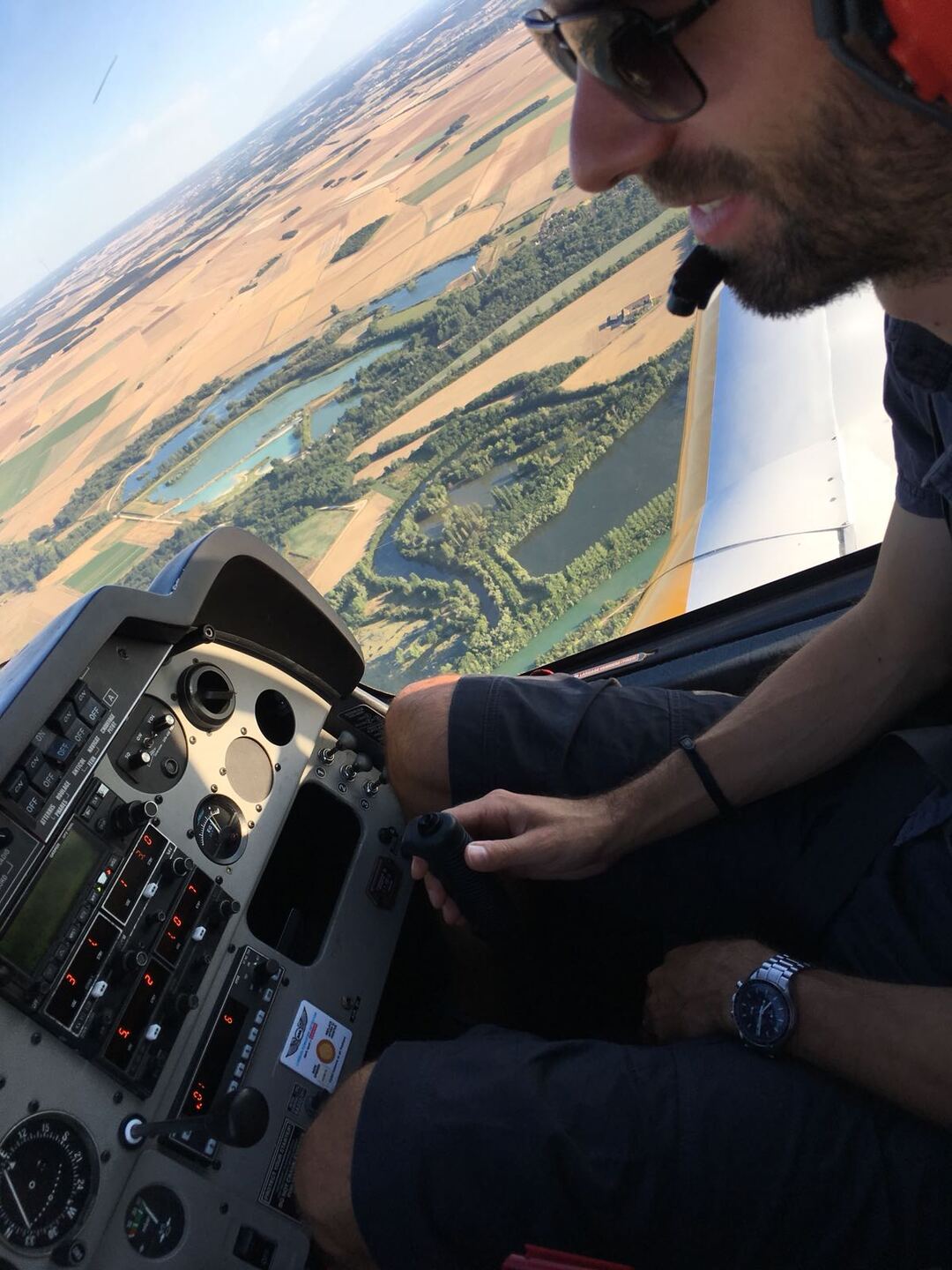
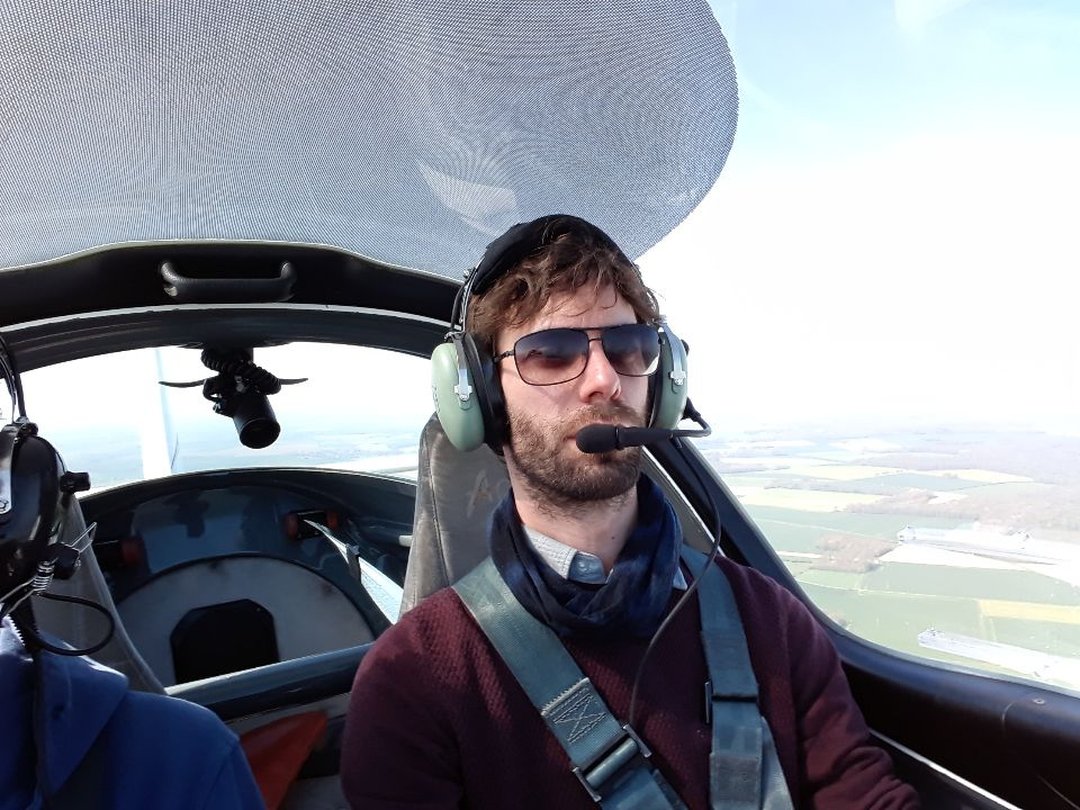
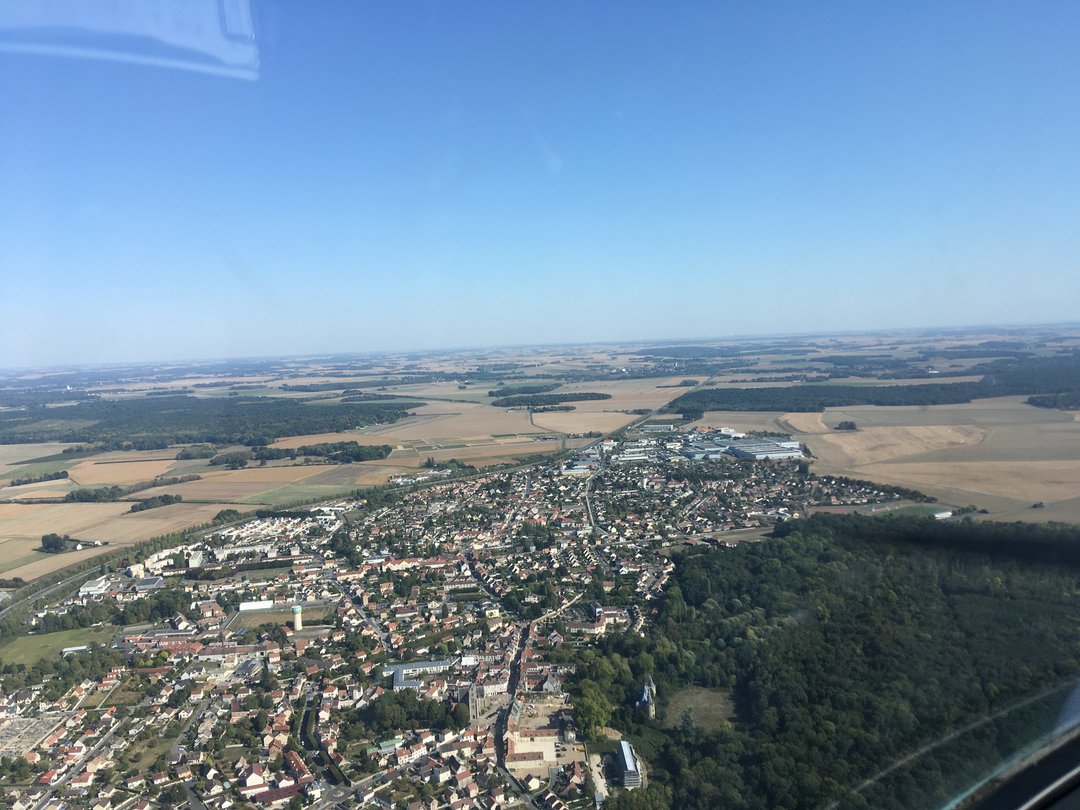
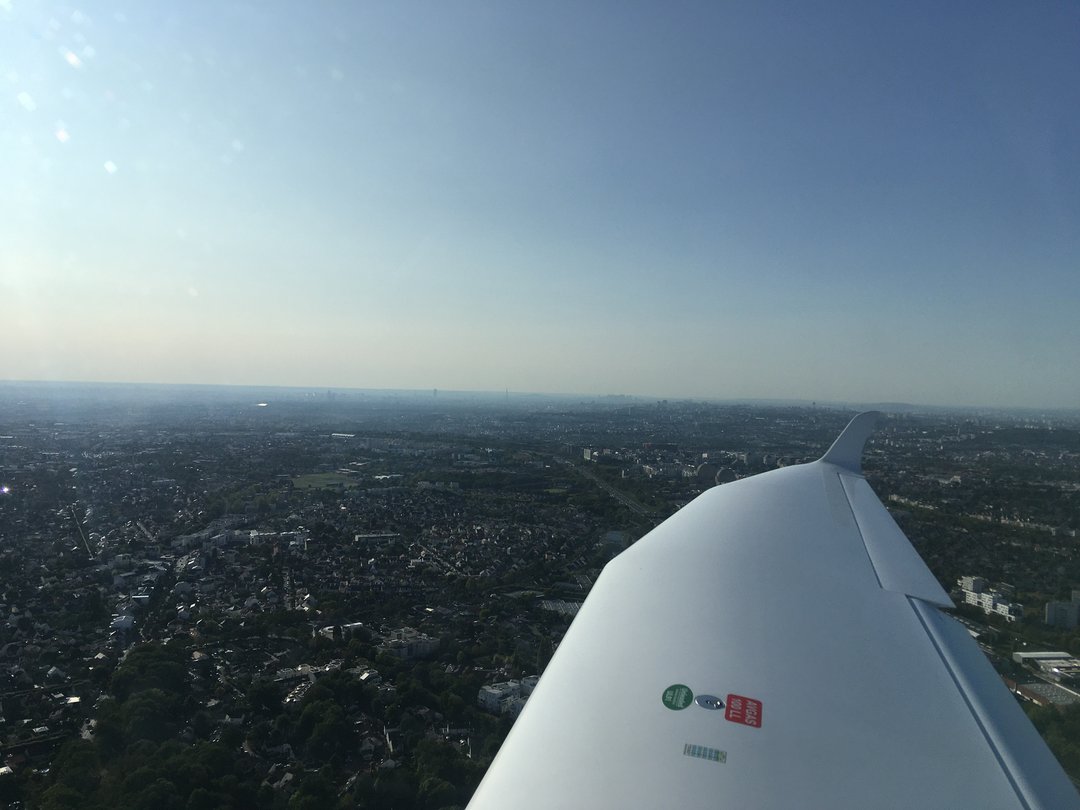
Yves-Alexis Perez: Airplane pilot

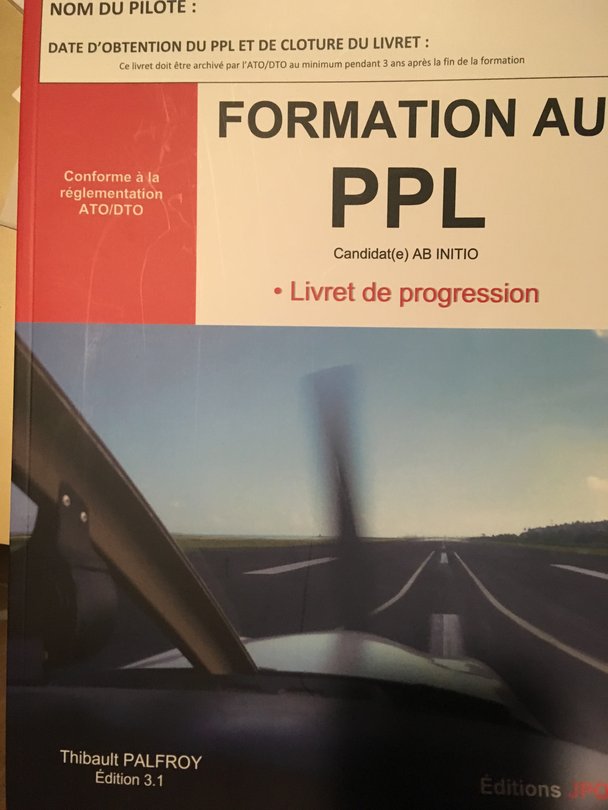
So, a bit more thank 18 months ago, I started a new adventure. After a few flights with a friend of mine in a Robin DR400 and Jodel aircrafts, I enlisted in a local flight club at the Lognes airfield (LFPL), and started a Pilot Private License training. A PPL is an international flight license for non commercial operations. Associated with a qualification like the SEP (Single Engine Piston), it enables you to fly basically anywhere in the world (or at least anywhere where French is spoken by the air traffic controllers) with passengers, under Visual Flight Rules (VFR).

A bit like with cars, training has two parts, theoretical and practical, both validated in a test. You don't have to pass the theoretical test before starting the practical training, and it's actually recommended to do both in parallel, especially since nowadays most of the theoretical training is done online (you still have to do 10h of in-person courses before taking the test).
So in March 2019 I started both trainings. Theoretical training is divided in various domains, like regulations, flight mechanics, meteorology, human factors etc. and you can obviously train in parallel. Practical is more sequential and starts with basic flight training (turns, climbs, descents), then take-off, then landing configuration, then landing itself. All of that obviously with a flight instructor sitting next to you (you're on the left seat but the FI is the pilot in command ). You then start doing circuit patterns, meaning you take off, do a circuit around the airfield, then land on the runway you just took off. Usually you actually don't do a complete landing but rather touch and go, and do it again in order to have more and more landing training.

Once you know how to take-off, do a pattern and land when everything is OK, you start practicing (still with your flight instructor aboard) various failures: especially engine failures at take off, but also flaps failure and stuff like that, all that while still doing patterns and practicing landings. At one point, the flight instructor deems you ready: he exits the plane, and you start your first solo flight: engine tests, take off, one pattern, landing.

For me practical training was done in an Aquila AT-01/A210, which is a small 2-seater. It's really light (it can actually be used as an ultralight), empty weight is a bit above 500kg and max weight is 750. It doesn't go really fast (it cruises at around 100 knots, 185 km/h) but it's nice to fly. As it's really lightweight the wind really shakes it though and it can be a bit hard to land because it really glides very well (with a lift-to-drag ratio at 14). I tried to fly a lot in the beginning, so the basic flight training was done in about 6 months and 23 flight hours. At that point my instructor stepped out of the plane and I did my first solo flight. Everything actually went just fine, because we did repeat a lot before that, so it wasn't even that scary. I guess I will remember my whole life, as people said, but it was pretty uneventful, although the controller did scold me a little because when taxiing back to the parking I misunderstood the instructions and didn't stop where asked (no runway incursion though).

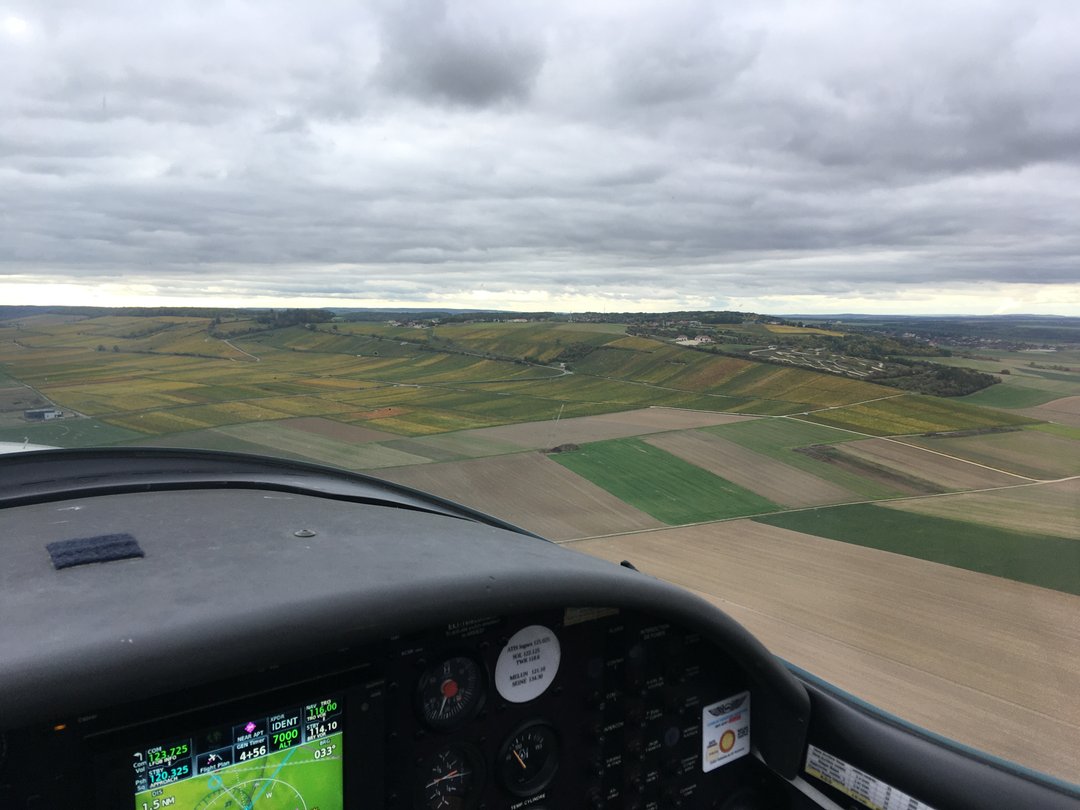
After the first solo flight, you keep practicing patterns and solo flights every once in a while, and start doing cross-country flights: you're not restricted to the local airfields (LFPL, LFAI, LFPK) but start planning trips to more remote airports, about 30-40 minutes away (for me it was Moret/LFPU, Troyes/LFQB, Pontoise/LFPT). Cross country flights requires you to plan the route (draw it on the map, and write a navigation log so you know what to do when in flight), but also check the weather, relevant information, especially NOTAMs - Notice To Air Men (I hope someone rename those Notice to Air Crews at one point), estimate the fuel needed etc. For me, flight preparation time was between once and twice the flight time. Early flight preparation is completed on the day by last-minute checks, especially for weather. During the briefing (with the flight instructor at first, but for the test with the flight examiner and later with yourself) you check in turn every bit of information to decide if you're GO or not for the flight. As a lot of things in aviation, safety is really paramount here.

Once you've practiced cross country flight a bit, you start learning what to do in case of failures during a non-local flights, for example an engine failure in a middle of nowhere, when you have to chose a proper field to land, or a radio failure. And again when you're ready for it (and in case of my local club, once you pass your theoretical exam) you go for cross-country solo flights (of the 10h of solo flight required for taking the test, 5h should be done in cross-country flights). I went again to Troyes (LFQB), then Dijon-Darois (LFGI) and did a three-legs flight to Chalons-Ecury (LFQK) and Pont sur Yonne (LFGO).

And just after that, when I was starting to feel ready for the test, COVID-19 lockdown happened, grounding everyone for a few months. Even after it was over, I felt a bit rusty and had to take some more training. I finally took the test in the beginning of summer, but the first attempt wasn't good enough: I was really stressed, and maybe not completely ready actually. So a bit more training during summer, and finally in September I took the final test part, which was successful this time.

After some paperwork, a new, shiny, Pilot Private License arrived at my door.

And now that I can fly basically when I want, the autumn is finally here with bad weather all day long, so actually planning real flights is a bit tricky. For now I'm still flying solo on familiar trips, but at some point I should be able to bring a passenger with me (on the Aquila) and at some point migrate to a four-seaters like the DR400, ubiquitous in France.

Jonathan Dowland: New Bike

I grew up riding bikes with my friends, but I didn't keep it up once I went to University. A couple of my friends persevered and are really good riders, even building careers on their love of riding. I bought a mountain bike in 2006 (a sort of "first pay cheque" treat after changing roles) but didn't really ride it all that often until this year. Once Lockdown began, I started going for early morning rides in order to get some fresh air and exercise. Once I'd got into doing that I decided it was finally time to buy a new bike. I knew I wanted something more like a "hybrid" than a mountain bike but apart from that I was clueless. I couldn't even name the top manufacturers. Ross Burton a friend from the Debian community suggested I take a look at Cotic, a small UK-based manufacturer based in the peak district. Specifically their Escapade gravel bike. (A gravel bike, it turns out, is kind-of like a hybrid.)
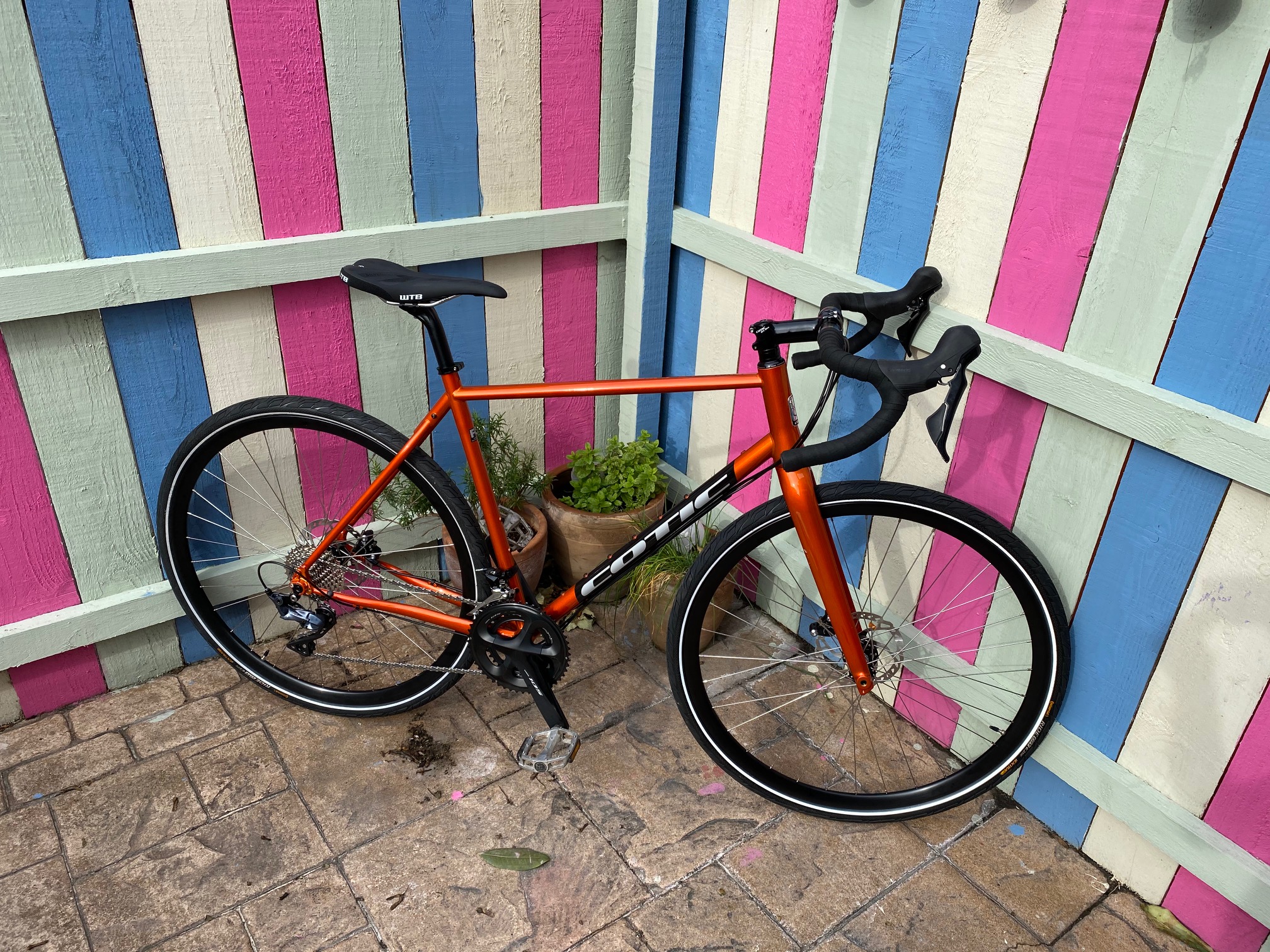
My new Cotic Escapade My new Cotic Escapade
I did some due diligence, looked at some other options, put together a spreadsheet etc but the Escapade was the clear winner. During the project I arranged to have a socially distant cup of tea with my childhood friend Dan, now a professional bike mechanic, who by coincidence arrived on his own Cotic Escapade. It definitely seemed to tick all the boxes. I just needed to agonise over the colour choices: Metallic Orange (a Cotic staple) or a Grey with some subtle purple undertones. I was leaning towards the Grey, but ended up plumping for the Orange. I could just cover it under Red Hat UK s cycle to work scheme. I m very pleased our HR dept is continuing to support the scheme, in these times when they also forbid me from travelling to the office. And so here we are. I m very pleased with it! Perhaps I'll write more about riding, or post some pictures, going forward.

8 October 2020

Dirk Eddelbuettel: RcppSimdJson 0.1.2: Upstream update

A new RcppSimdJson release arrived on CRAN yesterday bringing along the simdjson 0.5.0 release that happened a few weeks. RcppSimdJson wraps the fantastic and genuinely impressive simdjson library by Daniel Lemire and collaborators. Via very clever algorithmic engineering to obtain largely branch-free code, coupled with modern C++ and newer compiler instructions, it results in parsing gigabytes of JSON parsed per second which is quite mindboggling. The best-case performance is faster than CPU speed as use of parallel SIMD instructions and careful branch avoidance can lead to less than one cpu cycle per byte parsed; see the video of the talk by Daniel Lemire at QCon (also voted best talk). Beside the upstream update, not too much happened to our package itself since 0.1.1 though Brandon did help one user to seriously speed up his JSON processing. The (this time very short) NEWS entry follows.

Changes in version 0.1.2 (2020-10-07)
  • Upgraded to simdjson 0.5.0 (Dirk #49)

Courtesy of my CRANberries, there is also a diffstat report for this release. For questions, suggestions, or issues please use the issue tracker at the GitHub repo. If you like this or other open-source work I do, you can now sponsor me at GitHub. For the first year, GitHub will match your contributions.

This post by Dirk Eddelbuettel originated on his Thinking inside the box blog. Please report excessive re-aggregation in third-party for-profit settings.

Dirk Eddelbuettel: littler 0.3.12: Exciting updates

max-heap image The thirteenth release of littler as a CRAN package became available today (after a three day rest at CRAN for no real reason), following in the fourteen-ish year history as a package started by Jeff in 2006, and joined by me a few weeks later. littler is the first command-line interface for R as it predates Rscript. It allows for piping as well for shebang scripting via #!, uses command-line arguments more consistently and still starts faster. It also always loaded the methods package which Rscript only started to do in recent years. littler lives on Linux and Unix, has its difficulties on macOS due to yet-another-braindeadedness there (who ever thought case-insensitive filesystems as a default where a good idea?) and simply does not exist on Windows (yet the build system could be extended see RInside for an existence proof, and volunteers are welcome!). See the FAQ vignette on how to add it to your PATH. A few examples are highlighted at the Github repo, as well as in the examples vignette. This release brings five new example scripts and command wrappers: A number of commands were also extended or updated (see below for more). We have a new and very slick documentation website once again utilising Material for MkDocs. Last but not least the two included vignettes now use minidown and the fabulous water css theme which reduced the file sizes of the two vignettes from, respectively, 884kb and 873kb to 47kb and 15kb. Yes, that is correct. That alone brought the package file size down from 641kb to 116kb. Incredible. The NEWS file entry is below.

Changes in littler version 0.3.12 (2020-10-04)
  • Changes in examples
    • Updates to scripts tt.r, cos.r, cow.r, c4r.r, com.r
    • New script installDeps.r to install dependencies
    • Several updates tp script check.r
    • New script installBSPM.r and installRSPM.r for binary package installation (Dirk and I aki in #81)
    • New script cranIncoming.r to check in Incoming
    • New script urlUpdate.r validates URLs as R does
  • Changes in package
    • Travis CI now uses BSPM
    • A package documentation website was added
    • Vignettes now use minidown resulting in much reduced filesizes: from over 800kb to under 50kb (Dirk in #83)

My CRANberries provides a comparison to the previous release. Full details for the littler release are provided as usual at the ChangeLog page, and now also on the new package docs website. The code is available via the GitHub repo, from tarballs and now of course also from its CRAN page and via install.packages("littler"). Binary packages are available directly in Debian as well as soon via Ubuntu binaries at CRAN thanks to the tireless Michael Rutter. Comments and suggestions are welcome at the GitHub repo. If you like this or other open-source work I do, you can now sponsor me at GitHub. For the first year, GitHub will match your contributions.

This post by Dirk Eddelbuettel originated on his Thinking inside the box blog. Please report excessive re-aggregation in third-party for-profit settings.

6 October 2020

Iustin Pop: Late report for Nationalpark Bike Marathon 2020

I don t have to mention that 2020 is a special year, so all the normal race plan was out the window, and I was very happy and fortunate to be able to do even one race. And only delayed 3 weeks to write this race report :/ So, here s the story

Preparing for the race Because it was a special year, and everything was crazy, I actually managed to do more sports than usual, at least up to end of July. So my fitness, and even body weight, was relatively fine, so I subscribed to the mid-distance race (official numbers: 78km distance, 1570 meters altitude), and then off it went to a proper summer vacation in a hotel, even. And while I did do some bike rides during that vacation, from then on my training regime went just off? I did train, I did ride, I did get significant PRs, but it didn t click anymore. Plus, due to well, actually not sure what, work or coffee or something my sleep regime also got completely ruined On top of that, I didn t think about the fact that the race was going to be mid-September, and that high up in the mountains, the weather could have be bad enough (I mean, in 2018 the weather was really bad even in August ) such that I d need to seriously think about clothing.

Race week I arrive in Scuol two days before the race, very tired (I think I got only 6 hours of sleep the night before), and definitely not in a good shape. I was feeling bad enough that I was not quite sure I was going to race. At least weather was OK, such that normal summer clothing would suffice. But the race info was mentioning dangerous segments, to be very careful, etc. etc. so I was quite anxious. Note 1: my wife says, this was not the first time, and likely not the last time that two days before the race I feel like quitting. And as I m currently on-and-off reading the interesting The Brave Athlete: Calm the Fuck Down and Rise to the Occasion book (by Lesley Paterson and Simon Marshall; it s an interesting book, not sure if I recommend it or not), I am beginning to think that this is my reaction to races where I have overshot my usual distance. Or, in general, races where I fear the altitude gain. Not quite sure, but I think it is indeed the actual cause. So I spend Thursday evening feeling unwell, and thinking I ll see how Friday goes. Friday comes, and having slept reasonably well entire night, I pick up my race number, then I take another nap in the afternoon - in total, I ve slept around 13 hours that day. So I felt much better, and was looking forward to the race. Saturday morning comes, I manage to wake up early, and get ready in time; almost didn t panic at all that I m going to be late. Note 2: my wife also says that this is the usual way I behave. Hence, it must be most of it a mental issue, rather than real physical one

Race I reach the train station in time, I get on the train, and by the time the train reached Zernez, I fully calm down. There was am entire hour wait though before the race, and it was quite chilly. Of course I didn t bring anything beside what I was wearing, relying on temperature getting better later in the day. During the wait, there were two interesting things happening. First, we actually got there (in Zernez) before the first people from the long distance passed by, both men and women. Seeing them pass by was cool, thinking they already had ~1 200m altitude in just 30-ish kilometres. The second thing was, as this was the middle and not the shortest distance, the people in the group looked differently than in previous years. More precisely, they were looking very fit, and I was feeling fat. Well, I am overweight, so it was expected, but I was feeling it even more than usual. I think only one or two in ten people were looking as fit as me or less And of course, the pictures post-race show me even less fit-looking than I thought. Ah, self-deception is a sweet thing And yes, we all had to wear masks, up until the last minute. It was interesting, but not actually annoying - and small enough price for being able to race! Then the race starts, and as opposed to many other years, it starts slow. I didn t feel that rush of people starting fast, it was reasonable?

First part of the race (good) Thus started the first part of the race, on a new route that I was unfamiliar with. There was not too much climbing, to be honest, and there was some tricky single-trail through the woods, with lots of the roots. I actually had to get off the bike and push it, since it was too difficult to pedal uphill on that path. Other than that, I was managing so far to adjust my efforts well enough that my usual problems related to climbing (lower back pain) didn t yet appear, even as the overall climbed meters were increasing. I was quite happy at that, and had lots of reserves. To my (pleasant) surprise, two positive things happened:
  • I was never alone, a sign that I wasn t too far back.
  • I was passing/being passed by people, both on climbs but also on descents! It s rare, but I did overtake a few people on a difficult trail downhill.
With all the back and forth, a few people became familiar (or at least their kit), and it was fun seeing who is better uphill vs. downhill.

And second part (not so good) I finally get to (around) S-chanf, on a very nice but small descent, and on flat roads, and start the normal route for the short race. Something was off though - I knew from past years that these last ~47km have around 700-800m altitude, but I had already done around 1000m. So the promised 1571m were likely to be off, by at least 100-150m. I set myself a new target of 1700m, and adjust my efforts based on that. And then, like clockwork on the 3:00:00 mark, the route exited the forest, the sun got out of the clouds, and the temperature started to increase from 16-17 C to 26 +, with peaks of 31 C. I m not joking: at 2:58:43, temp was 16 , at 3:00:00, it was 18 , at 3:05:45, it was 26 . Heat and climbing are my two nemeses, and after having a pretty good race for the first 3 hours and almost exactly 1200m of climbing, I started feeling quite miserable. Well, it was not all bad. There were some nice stretches of flat, where I knew I can pedal strongly and keep up with other people, until my chain dropped, so I had to stop, re-set it, and lose 2 minutes. Sigh. But, at least, I was familiar with this race, or so I thought. I completely mis-remembered the last ~20km as a two-punch climb, Guarda and Ftan, whereas it is actually a three-punch one: Guarda, Ardez, and only then Ftan. Doesn t help that Ardez has the nice ruins that I was remembering and which threw me off. The saddest part of the day was here, on one of the last climbs - not sure if to Guarda or to Arddez, where a guy overtakes me, and tells me he s glad he finally caught up with me, he almost got me five or six times (!), but I always managed to break off. Always, until now. Now, this was sad (I was huffing and puffing like a steam locomotive now), but also positive, as I never had that before. One good, one bad? And of course, it was more than 1 700m altitude, it was 1 816m. And the descent to Scuol shorter and it didn t end as usual with the small but sharp climb which I just love, due to Covid changes. But, I finished, and without any actual issues, and no dangerous segments as far as I saw. I was anxious for no good reason

Conclusion (or confusion?) So this race was interesting: three hours (to the minute) in which I went 43.5km, climbed 1200m, felt great, and was able to push and push. And then the second part, only ~32km, climbed only 600m, but which felt quite miserable. I don t know if it was mainly heat, mainly my body giving up after that much climbing (or time?), or both. But it s clear that I can t reliably race for more than around these numbers: 3 hours, ~1000+m altitude, in >20 C temperature. One thing that I managed to achieve though: except due to the technically complex trail at the beginning where I pushed the bike, I did not ever stop and push the bike uphill because I was too tired. Instead, I managed (badly) to do the switch sitting/standing as much as I could motivate myself, and thus continue pushing uphill. This is an achievement for me, since mentally it s oh so easy to stop and push the bike, so I was quite glad. As to the race results, they were quite atrocious:
  • age category (men), 38 out of 52 finishers, 4h54m, with first finisher doing 3h09m, so 50% slower (!)
  • overall (men), 138 out of 173 finishers, with first finisher 2h53m.
These results clearly don t align with my feeling of a good first half of the race, so either it was purely subjective, or maybe in this special year, only really strong people registered for the race, or something else One positive aspect though, compared to most other years, was the consistency of my placement (age and overall):
  • Zuoz: 38 / 141
  • S-Chanf: 39 / 141
  • Zernez: 39 / 141
  • Guarda: 38 / 138
  • Ftan: 38 / 138
  • ( next - whatever this is): 38 / 138
  • Finish: 38 / 138
So despite all my ranting above, and all the stats I m pulling out of my own race, it looks like my position in the race was fully settled in the really first part, and I didn t gain nor lose practically anything afterwards. I did dip one place but then gained it back (on the climb to Guarda, even). The split times (per-segment rankings) are a bit more variable, and show that I was actually fast on the climbs but losing speed on the descents, which I really don t understand anymore:
  • Zernez-Zuoz (unclear type): 38 / 141
  • Zuoz-S-Chanf (unclear type): 40 / 141
  • S-Chanf-Zernez (mostly downhill): 39 / 143
  • Zernez-Guarda (mostly uphill): 37 / 136
  • Guarda-Ftan (mostly uphill): 37 / 131
  • Ftan-Scuol (mostly downhill): 43 / 156
The difference at the end is striking. I m visually matching the map positions to km and then use VeloViewer for computing the altitude gain, but Zernez to Guarda is 420m altitude, and Guarda to Ftan is 200m altitude gain, and yet on both, I was faster than my final place, and by quite a few places on overall, only to lose that on the descent (Ftan-Scuol), and by a large margin. So, amongst all the confusion here, I think the story overall is:
  • indeed I was quite fit for me, so the climbs were better than my place in the race (if that makes sense).
  • however, I m not actually good at climbing nor fit (watts/kg), so I m still way back in the pack (oops!).
  • and I do suck at descending, both me (skills) and possible my bike setup as well (too high tyre pressure, etc.) so I lose even more time here
As usual, the final take-away points are: lose the extra weight that is not needed, get better skills, get better core to be better at climbing. I ll finish here with one pic, taken in Guarda (4 hours into the race, more or less):
Climbing in Guarda Climbing in Guarda
Until next year!

Next.

Previous.