Search Results: "ean"

20 July 2016

Michal Čihař: New projects on Hosted Weblate

For almost two months I found very little time to process requests to host free software on Hosted Weblate. Today the queue has been emptied, what means that you can find many new translations there. To make it short, here is list of new projects: PS: If you didn't receive reply for your hosting request today, it was probably lost, so don't hesitate to ask again.

Filed under: Debian English Weblate 0 comments

Shirish Agarwal: Debconf 16 and My Experience with Debian

It has been often said that you should continually try new things in life so that a. Unlike the fish you do not mistake the pond to be the sea. b. You see other people, other types and ways of living and being which you normally won t in your day-to-day existence. With both of those as mantras I decided to take a leap into the unknown. I was unsure both about the visa process as well as the travel bit as I was traveling to an unknown place and although I had done some research about the place I was unsure about the authenticity of whatever is/was shared on the web. During the whole journey both to and fro, I couldn t sleep a wink. The Doha airport is huge. There are 5 Concourses, A, B , C, D, E and around 30+ gates in each Concourse. The ambition of the small state is something to be reckoned with. Almost 95% of the blue workers in the entire airport were of Asian sub-continent. While the Qatari Rial is 19 times stronger to us, the workers I suspect are worse-off than people doing similar things back home. Add to that the sharia law, even for all the money in the world, I wouldn t want to settle therein. Anyways, during the journey, a small surprise awaited me, Ritesh Raj Saraff, a DD was also traveling to Debconf. We bumped into each other while going to see the Doha City, courtesy Al-Hamad International Airport. I would probably share a bit more about Doha and my experiences with the city in upcoming posts. Cut to Cape Town, South Africa, we landed in the city half an hour after our scheduled time and then we sped along to University of Cape Town (UCT) which was to become our home for the next 13 odd days. The first few days were a whirlwind as there were new people to meet, old people whom I knew only as an e-mail id or an IRC nickname turned out to be real people and you have to try to articulate yourself in English, which is not a native language of mine. During Debcamp I was fortunate to be able visit some of the places and the wiki page had a lot of places which I knew I wouldn t be able to complete unless I had 15 days unlimited time and money to go around so didn t even try. I had gone with few goals in mind :- a. Do some documentation of the event In this I failed completely as just the walk from the venue to where the talks were energy-draining for me. Apart from that, you get swept in meeting new people and talking about one of million topics in Debian which interest you or the other person and while they are fulfilling, it is and was both physically and emotionally draining for me (in a good way). Bernelle (one of the organizers) had warned us of this phenomenon but you disregard it as you know you have a limited time-frame in which to meet and greet people and it is all a over-whelming experience. b. Another goal was to meet my Indian brethren who had left the country around 60~100 years mostly as slaves of East India company In this I was partially successful. I met a couple of beautiful ladies who had either a father or a mother who was Indian while the other was of African heritage. It seemed in them a yearning to know the culture but from what little they had, only Bollywood and Indian cuisine was what they could make of Indian culture. One of the girls, ummm women to be more truer, shared a somewhat grim tale. She had both an African boyfriend as well as Indian boyfriend in her life and in both cases, she was rejected by the boy s parents because she wasn t pure enough. This was deja vu all over again as the same thing can be seen here happening in casteism so there wasn t any advice I could give but just nod in empathy. What was sort of relevation was when their parents or grandparents came, the name and surnames were thrown off and the surname was just the place from where they belong. From the discussions it emerged that there were also lot of cases of forced conversions to Christianity during that era as well as temptations of a better life. As shared, this goal succeeded partially, as I was actually interested in their parents or grand-parents to know the events that shaped the Indian diaspora over there. While the children know only of today, yester-years could only be known by those people who made the unwilling perilous journey to Africa. I had also wanted to know more about Gandhiji s role in that era but alas, that part of history would have to wait for another day as I guess, both those goals would only have met had I visited Durban but that was not to be. I had applied for one talk My Experience with Debian and one workshop for Installation of Debian on systems. The My Experience with Debian was aimed at newbies and I had thought of using show-and-tell to share the differences between proprietary Operating Systems and a FOSS distribution such as Debian. I was going to take simple things such as changelogs, apt-listbugs, real-time knowledge of updates and upgrades as well as /etc/apt/sources.list to share both the versatility of the Debian desktop and real improvements than what proprietary Operating Systems had to offer. But I found myself engaging with Debian Developers (DD s) rather than the newbies so had to change the orientation and fundamentals of the talk on the fly. I knew or suspected rather that the old idea would not work as it would just be repeating to the choir. With that in the back of mind, and the idea that perhaps they would not be so aware of the politics and events which happened in India over the last couple of decades, I tried to share what little I was able to recollect what little I was able to remember about those times. Apart from that, I was also highly conscious that I had been given just the before lunch slot aka You are in the way of my lunch slot. So I knew I had to speak my piece as quickly as possible being as clear as can be. Later, I did get feedback that I was fast and seeing it through couple of times, do agree that I could have done a better job. What s done is done and the only thing I could do to salvage it a bit is to make a presentation which I am sharing as below. my_experience_with_debian Would be nice if somebody could come up with a lighter template for presentations. For reference the template I have taken it from is shared at https://wiki.debian.org/Presentations . Some pictures from the presentation. vlcsnap-00004 me_sharing my_experience_with_debian You can find the video at http://meetings-archive.debian.net/pub/debian-meetings/2016/debconf16/My_Experience_with_Debian.webm This is by no means the end of the Debconf16 experience, but actually the starting. I hope to share more of my thoughts, ideas and get as much feedback from all the wonderful people I met during Debconf.
Filed under: Miscellenous Tagged: #Debconf16, Doha, My talk, Qatar

Daniel Stender: Theano in Debian: maintenance, BLAS and CUDA

I'm glad to announce that we have the current release of Theano (0.8.2) in Debian unstable now, it's on its way into the testing branch and the Debian derivatives, heading for Debian 9. The Debian package is maintained in behalf of the Debian Science Team. We have a binary package with the modules in the Python 2.7 import path (python-theano), if you want or need to stick to that branch a little longer (as a matter of fact, in the current popcon stats it's the most installed package), and a package running on the default Python 3 version (python3-theano). The comprehensive documentation is available for offline usage in another binary package (theano-doc). Although Theano builds its extensions on run time and therefore all binary packages contain the same code, the source package generates arch specific packages1 for the reason that the exhaustive test suite could run over all the architectures to detect if there are problems somewhere (#824116). what's this? In a nutshell, Theano is a computer algebra system (CAS) and expression compiler, which is implemented in Python as a library. It is named after a Classical Greek female mathematician and it's developed at the LISA lab (located at MILA, the Montreal Institute for Learning Algorithms) at the Universit de Montr al. Theano tightly integrates multi-dimensional arrays (N-dimensional, ND-array) from NumPy (numpy.ndarray), which are broadly used in Scientific Python for the representation of numeric data. It features a declarative Python based language with symbolic operations for the functional definition of mathematical expressions, which allows to create functions that compute values for them. Internally the expressions are represented as directed graphs with nodes for variables and operations. The internal compiler then optimizes those graphs for stability and speed and then generates high-performance native machine code to evaluate resp. compute these mathematical expressions2. One of the main features of Theano is that it's capable to compute also on GPU processors (graphical processor unit), like on custom graphic cards (e.g. the developers are using a GeForce GTX Titan X for benchmarks). Today's GPUs became very powerful parallel floating point devices which can be employed also for scientific computations instead of 3D video games3. The acronym "GPGPU" (general purpose graphical processor unit) refers to special cards like NVIDIA's Tesla4, which could be used alike (more on that below). Thus, Theano is a high-performance number cruncher with an own computing engine which could be used for large-scale scientific computations. If you haven't came across Theano as a Pythonistic professional mathematician, it's also one of the most prevalent frameworks for implementing deep learning applications (training multi-layered, "deep" artificial neural networks, DNN) around5, and has been developed with a focus on machine learning from the ground up. There are several higher level user interfaces build in the top of Theano (for DNN, Keras, Lasagne, Blocks, and others, or for Python probalistic programming, PyMC3). I'll seek for some of them also becoming available in Debian, too. helper scripts Both binary packages ship three convenience scripts, theano-cache, theano-test, and theano-nose. Instead of them being copied into /usr/bin, which would result into a binaries-have-conflict violation, the scripts are to be found in /usr/share/python-theano (python3-theano respectively), so that both module packages of Theano can be installed at the same time. The scripts could be run directly from these folders, e.g. do $ python /usr/share/python-theano/theano-nose to achieve that. If you're going to heavy use them, you could add the directory of the flavour you prefer (Python 2 or Python 3) to the $PATH environment variable manually by either typing e.g. $ export PATH=/usr/share/python-theano:$PATH on the prompt, or save that line into ~/.bashrc. Manpages aren't available for these little helper scripts6, but you could always get info on what they do and which arguments they accept by invoking them with the -h (for theano-nose) resp. help flag (for theano-cache). running the tests On some occasions you might want to run the testsuite of the installed library, like to check over if everything runs fine on your GPU hardware. There are two different ways to run the tests (anyway you need to have python ,3 -nose installed). One is, you could launch the test suite by doing $ python -c 'import theano; theano.test() (or the same with python3 to test the other flavour), that's the same what the helper script theano-test does. However, by doing it that way some particular tests might fail by raising errors also for the group of known failures. Known failures are excluded from being errors if you run the tests by theano-nose, which is a wrapper around nosetests, so this might be always the better choice. You can run this convenience script with the option --theano on the installed library, or from the source package root, which you could pull by $ sudo apt-get source theano (there you have also the option to use bin/theano-nose). The script accept options for nosetests, so you might run it with -v to increase verbosity. For the tests the configuration switch config.device must be set to cpu. This will also include the GPU tests when a proper accessible device is detected, so that's a little misleading in the sense of it doesn't mean "run everything on the CPU". You're on the safe side if you run it always like this: $ THEANO_FLAGS=device=cpu theano-nose, if you've set config.device to gpu in your ~/.theanorc. Depending on the available hardware and the used BLAS implementation (see below) it could take quite a long time to run the whole test suite through, on the Core-i5 in my laptop that takes around an hour even excluded the GPU related tests (which perform pretty fast, though). Theano features a couple of switches to manipulate the default configuration for optimization and compilation. There is a rivalry between optimization and compilation costs against performance of the test suite, and it turned out the test suite performs a quicker with lesser graph optimization. There are two different switches available to control config.optimizer, the fast_run toggles maximal optimization, while fast_compile runs only a minimal set of graph optimization features. These settings are used by the general mode switches for config.mode, which is either FAST_RUN by default, or FAST_COMPILE. The default mode FAST_RUN (optimizer=fast_run, linker=cvm) needs around 72 minutes on my lower mid-level machine (on un-optimized BLAS). To set mode=FAST_COMPILE (optimizer=fast_compile, linker=py) brings some boost for the performance of the test suite because it runs the whole suite in 46 minutes. The downside of that is that C code compilation is disabled in this mode by using the linker py, and also the GPU related tests are not included. I've played around with using the optimizer fast_compile with some of the other linkers (c py and cvm, and their versions without garbage collection) as alternative to FAST_COMPILE with minimal optimization but also machine code compilation incl. GPU testing. But to my experience, fast_compile without another than the linker py results in some new errors and failures of some tests on amd64, and this might the case also on other architectures, too. By the way, another useful feature is DebugMode for config.mode, which verifies the correctness of all optimizations and compares the C to Python results. If you want to have detailed info on the configuration settings of Theano, do $ python -c 'import theano; print theano.config' less, and check out the chapter config in the library documentation in the documentation. cache maintenance Theano isn't a JIT (just-in-time) compiler like Numba, which generates native machine code in the memory and executes it immediately, but it saves the generated native machine code into compiledirs. The reason for doing it that way is quite practical like the docs explain, the persistent cache on disk makes it possible to avoid generating code for the same operation, and to avoid compiling again when different operations generate the same code. The compiledirs by default are located within $(HOME)/.theano/. After some time the folder becomes quite large, and might look something like this:
$ ls ~/.theano
compiledir_Linux-4.5--amd64-x86_64-with-debian-stretch-sid--2.7.11+-64
compiledir_Linux-4.5--amd64-x86_64-with-debian-stretch-sid--2.7.12-64
compiledir_Linux-4.5--amd64-x86_64-with-debian-stretch-sid--2.7.12rc1-64
compiledir_Linux-4.5--amd64-x86_64-with-debian-stretch-sid--3.5.1+-64
compiledir_Linux-4.5--amd64-x86_64-with-debian-stretch-sid--3.5.2-64
compiledir_Linux-4.5--amd64-x86_64-with-debian-stretch-sid--3.5.2rc1-64
If the used Python version changed like in this example you might to want to purge obsolete cache. For working with the cache resp. the compiledirs, the helper theano-cache comes in handy. If you invoke it without any arguments the current cache location is put out like ~/.theano/compiledir_Linux-4.5--amd64-x86_64-with-debian-stretch-sid--2.7.12-64 (the script is run from /usr/share/python-theano). So, the compiledirs for the old Python versions in this example (11+ and 12rc1) can be removed to free the space they occupy. All compiledirs resp. cache directories meaning the whole cache could be erased by $ theano-cache basecompiledir purge, the effect is the same as by performing $ rm -rf ~/.theano. You might want to do that e.g. if you're using different hardware, like when you got yourself another graphics card. Or habitual from time to time when the compiledirs fill up so much that it slows down processing with the harddisk being very busy all the time, if you don't have an SSD drive available. For example, the disk space of build chroots carrying (mainly) the tests completely compiled through on default Python 2 and Python 3 consumes around 1.3 GB (see here). BLAS implementations Theano needs a level 3 implementation of BLAS (Basic Linear Algebra Subprograms) for operations between vectors (one-dimensional mathematical objects) and matrices (two-dimensional objects) carried out on the CPU. NumPy is already build on BLAS and pulls the standard implementation (libblas3, soure package: lapack), but Theano links directly to it instead of using NumPy as intermediate layer to reduce the computational overhead. For this, Theano needs development headers and the binary packages pull libblas-dev by default, if any other development package of another BLAS implementation (like OpenBLAS or ATLAS) isn't already installed, or pulled with them (providing the virtual package libblas.so). The linker flags could be manipulated directly through the configuration switch config.blas.ldflags, which is by default set to -L/usr/lib -lblas -lblas. By the way, if you set it to an empty value, Theano falls back to using BLAS through NumPy, if you want to have that for some reason. On Debian, there is a very convenient way to switch between BLAS implementations by the alternatives mechanism. If you have several alternative implementations installed at the same time, you can switch from one to another easily by just doing:
$ sudo update-alternatives --config libblas.so
There are 3 choices for the alternative libblas.so (providing /usr/lib/libblas.so).
  Selection    Path                                  Priority   Status
------------------------------------------------------------
* 0            /usr/lib/openblas-base/libblas.so      40        auto mode
  1            /usr/lib/atlas-base/atlas/libblas.so   35        manual mode
  2            /usr/lib/libblas/libblas.so            10        manual mode
  3            /usr/lib/openblas-base/libblas.so      40        manual mode
Press <enter> to keep the current choice[*], or type selection number:
The implementations are performing differently on different hardware, so you might want to take the time to compare which one does it best on your processor (the other packages are libatlas-base-dev and libopenblas-dev), and choose that to optimize your system. If you want to squeeze out all which is in there for carrying out Theano's computations on the CPU, another option is to compile an optimized version of a BLAS library especially for your processor. I'm going to write another blog posting on this issue. The binary packages of Theano ship the script check_blas.py to check over how well a BLAS implementation performs with it, and if everything works right. That script is located in the misc subfolder of the library, you could locate it by doing $ dpkg -L python-theano grep check_blas (or for the package python3-theano accordingly), and run it with the Python interpreter. By default the scripts puts out a lot of info like a huge perfomance comparison reference table, the current setting of blas.ldflags, the compiledir, the setting of floatX, OS information, the GCC version, the current NumPy config towards BLAS, NumPy location and version, if Theano linked directly or has used the NumPy binding, and finally and most important, the execution time. If just the execution time for quick perfomance comparisons is needed this script could be invoked with -q. Theano on CUDA The function compiler of Theano works with alternative backends to carry out the computations, like the ones for graphics cards. Currently, there are two different backends for GPU processing available, one docks onto NVIDIA's CUDA (Compute Unified Device Architecture) technology7, and another one for libgpuarray, which is also developed by the Theano developers in parallel. The libgpuarray library is an interesting alternative for Theano, it's a GPU tensor (multi-dimensional mathematical object) array written in C with Python bindings based on Cython, which has the advantage of running also on OpenCL8. OpenCL, unlike CUDA9, is full free software, vendor neutral and overcomes the limitation of the CUDA toolkit being only available for amd64 and the ppc64el port (see here). I've opened an ITP on libgpuarray and we'll see if and how this works out. Another reason for it would be great to have it available is that it looks like CUDA currently runs into problems with GCC 610. More on that, soon. Here's a litle checklist for setting up your CUDA device so that you don't have to experience something like this:
$ THEANO_FLAGS=device=gpu,floatX=float32 python ./cat_dog_classifier.py 
WARNING (theano.sandbox.cuda): CUDA is installed, but device gpu is not available (error: Unable to get the number of gpus available: no CUDA-capable device is detected)
hardware check For running Theano on CUDA you need an NVIDIA graphics card which is capable of doing that. You can recheck if your device is supported by CUDA here. When the hardware isn't too old (CUDA support started with GeForce 8 and Quadro X series) or too strange I think it isn't working only in exceptional cases. You can check your model and if the device is present in the system on the bare hardware level by doing this:
$ lspci   grep -i nvidia
04:00.0 3D controller: NVIDIA Corporation GM108M [GeForce 940M] (rev a2)
If a line like this doesn't get returned, your device most probably is broken, or not properly connected (ouch). If rev ff appears at the end of the line that means the device is off meaning powered down. This might be happening if you have a laptop with Optimus graphics hardware, and the related drivers have switched off the unoccupied device to safe energy11. kernel module Running CUDA applications requires the proprietary NVIDIA driver kernel module to be loaded into the kernel and working. If you haven't already installed it for another purpose, the NVIDIA driver and the CUDA toolkit are both in the non-free section of the Debian archive, which is not enabled by default. To get non-free packages you have to add non-free (and it's better to do so, also contrib) to your package source in /etc/apt/sources.list, which might then look like this:
deb http://httpredir.debian.org/debian/ testing main contrib non-free
After doing that, perform $ apt-cache update to update the package lists, and there you go with the non-free packages. The headers of the running kernel are needed to compile modules, you can get them together with the NVIDIA kernel module package by running:
$ sudo apt-get install linux-headers-$(uname -r) nvidia-kernel-dkms build-essential
DKMS will then build the NVIDIA module for the kernel and does some other things on the system. When the installation has finished, it's generally advised to reboot the system completely. troubleshooting If you have problems with the CUDA device, it's advised to verify if the following things concerning the NVIDIA driver resp. kernel module are in order: blacklist nouveau Check if the default Nouveau kernel module driver (which blocks the NVIDIA module) for some reason still gets loaded by doing $ lsmod grep nouveau. If nothing gets returned, that's right. If it's still in the kernel, just add blacklist nouveau to /etc/modprobe.d/blacklist.conf, and update the booting ramdisk with sudo update-initramfs -u afterwards. Then reboot once more, this shouldn't be the case then anymore. rebuild kernel module To fix it when the module haven't been properly compiled for some reason you could trigger a rebuild of the NVIDIA kernel module with $ sudo dpkg-reconfigure nvidia-kernel-dkms. When you're about to send your hardware in to repair because everything looks all right but the device just isn't working, that really could help (own experience). After the rebuild of the module or modules (if you have a few kernel packages installed) has completed, you could recheck if the module really is available by running:
$ sudo modinfo nvidia-current
filename:       /lib/modules/4.4.0-1-amd64/updates/dkms/nvidia-current.ko
alias:          char-major-195-*
version:        352.79
supported:      external
license:        NVIDIA
alias:          pci:v000010DEd00000E00sv*sd*bc04sc80i00*
alias:          pci:v000010DEd*sv*sd*bc03sc02i00*
alias:          pci:v000010DEd*sv*sd*bc03sc00i00*
depends:        drm
vermagic:       4.4.0-1-amd64 SMP mod_unload modversions 
parm:           NVreg_Mobile:int
It should be something similiar to this when everything is all right. reload kernel module When there are problems with the GPU, maybe the kernel module isn't properly loaded. You could recheck if the module has been properly loaded by doing
$ lsmod   grep nvidia
nvidia_uvm             73728  0
nvidia               8540160  1 nvidia_uvm
drm                   356352  7 i915,drm_kms_helper,nvidia
The kernel module could be loaded resp. reloaded with $ sudo nvidia-modprobe (that tool is from the package nvidia-modprobe). unsupported graphics card Be sure that you graphics cards is supported by the current driver kernel module. If you have bought new hardware, that's quite possible to come out being a problem. You can get the version of the current NVIDIA driver with:
$ cat /proc/driver/nvidia/version 
NVRM version: NVIDIA UNIX x86_64 Kernel Module 352.79  Wed Jan 13 16:17:53 PST 2016
GCC version:  gcc version 5.3.1 20160528 (Debian 5.3.1-21)
Then, google the version number like nvidia 352.79, this should get you onto an official driver download page like this. There, check for what's to be found under "Supported Products". I you're stuck with that there are two options, to wait until the driver in Debian got updated, or replace it with the latest driver package from NVIDIA. That's possible to do, but something more for experienced users. occupied graphics card The CUDA driver cannot work while the graphical interface is busy like by processing the graphical display of your X.Org server. Which kernel driver actually is used to process the desktop could be examined by this command:12
$ grep '(II).*([0-9]):' /var/log/Xorg.0.log
[    37.700] (II) intel(0): Using Kernel Mode Setting driver: i915, version 1.6.0 20150522
[    37.700] (II) intel(0): SNA compiled: xserver-xorg-video-intel 2:2.99.917-2 (Vincent Cheng <vcheng@debian.org>)
 ... 
[    39.808] (II) intel(0): switch to mode 1920x1080@60.0 on eDP1 using pipe 0, position (0, 0), rotation normal, reflection none
[    39.810] (II) intel(0): Setting screen physical size to 508 x 285
[    67.576] (II) intel(0): EDID vendor "CMN", prod id 5941
[    67.576] (II) intel(0): Printing DDC gathered Modelines:
[    67.576] (II) intel(0): Modeline "1920x1080"x0.0  152.84  1920 1968 2000 2250  1080 1083 1088 1132 -hsync -vsync (67.9 kHz eP)
This example shows that the rendering of the desktop is performed by the graphical device of the Intel CPU, which is just like it's needed for running CUDA applications on your NVIDIA graphics card, if you don't have another one. nvidia-cuda-toolkit With the Debian package of the CUDA toolkit everything pretty much runs out of the box for Theano. Just install it with apt-get, and you're ready to go, the CUDA backend is the default one. Pycuda is also a suggested dependency of the binary packages, it could be pulled together with the CUDA toolkit. The up-to-date CUDA release 7.5 is of course available, with that you have Maxwell architecture support so that you can run Theano on e.g. a GeForce GTX Titan X with 6,2 TFLOPS on single precision13 at an affordable price. CUDA 814 is around the corner with support for the new Pascal architecture15. Like the GeForce GTX 1080 high-end gaming graphics card already has 8,23 TFLOPS16. When it comes to professional GPGPU hardware like the Tesla P100 there is much more computational power available, scalable by multiplication of cores resp. cards up to genuine little supercomputers which fit on a desk, like the DGX-117. Theano can use multiple GPUs for calculations to work with highly scaled hardware, I'll write another blog post on this issue. Theano on the GPU It's not difficult to run Theano on the GPU. Only single precision floating point numbers (float32) are supported on the GPU, but that is sufficient for deep learning applications. Theano uses double precision floats (float64) by default, so you have to set the configuration variable config.floatX to float32, like written on above, either with the THEANO_FLAGS environment variable or better in your .theanorc file, if you're going to use the GPU a lot. Switching to the GPU actually happens with the config.device configuration variable, which must be set to either gpu or gpu0, gpu1 etc., to choose a particular one if multiple devices are available. Here's is a little test script check1.py, it's taken from the docs and slightly altered. You can run that script either with python or python3 (there was a single test failure on the Python 3 package, so the Python 2 library might be a little more stable currently). For comparison, here's an example on how it perfoms on my hardware, one time on the CPU, one more time on the GPU:
$ THEANO_FLAGS=floatX=float32 python ./check1.py 
[Elemwise exp,no_inplace (<TensorType(float32, vector)>)]
Looping 1000 times took 4.481719 seconds
Result is [ 1.23178029  1.61879337  1.52278066 ...,  2.20771813  2.29967761
  1.62323284]
Used the cpu
$ THEANO_FLAGS=floatX=float32,device=gpu python ./check1.py 
Using gpu device 0: GeForce 940M (CNMeM is disabled, cuDNN not available)
[GpuElemwise exp,no_inplace (<CudaNdarrayType(float32, vector)>), HostFromGpu(GpuElemwise exp,no_inplace .0)]
Looping 1000 times took 1.164906 seconds
Result is [ 1.23178029  1.61879349  1.52278066 ...,  2.20771813  2.29967761
  1.62323296]
Used the gpu
If you got a result like this you're ready to go with Theano on Debian, training computer vision classifiers or whatever you want to do with it. I'll write more on for what Theano could be used, soon.

  1. Some ports are disabled because they are currently not supported by Theano. There are NotImplementedErrors and other errors in the tests on the numpy.ndarray object being not aligned. The developers commented on that, see here. And on some ports the build flags -m32 resp. -m64 of Theano aren't supported by g++, the build flags can't be manipulated easily.
  2. Theano Development Team: "Theano: a Python framework for fast computation of mathematical expressions"
  3. Marc Couture: "Today's high-powered GPUs: strong for graphics and for maths". In: RTC magazine June 2015, pp. 22 25
  4. Ogier Maitre: "Understanding NVIDIA GPGPU hardware". In: Tsutsui/Collet (eds.): Massively parallel evolutionary computation on GPGPUs. Berlin, Heidelberg: Springer 2013, pp. 15-34
  5. Geoffrey French: "Deep learing tutorial: advanved techniques". PyData London 2016 presentation
  6. Like the description of the Lintian tag binary-without-manpage says, that's not needed for them being in /usr/share.
  7. Tom. R. Halfhill: "Parallel processing with CUDA: Nvidia's high-performance computing platform uses massive multithreading". In: Microprocessor Report January 28, 2008
  8. Faber et.al: "Parallelwelten: GPU-Programmierung mit OpenCL". In: C't 26/2014, pp. 160-165
  9. For comparison, see: Valentine Sinitsyn: "Feel the taste of GPU programming". In: Linux Voice February 2015, pp. 106-109
  10. https://lists.debian.org/debian-devel/2016/07/msg00004.html
  11. If Optimus (hybrid) graphics hardware is present (like commonly today on PC laptops), Debian launches the X-server on the graphics processing unit of the CPU, which is ideal for CUDA. The problem with Optimus actually is the graphics processing on the dedicated GPU. If you are using Bumblebee, the Python interpreter which you want to run Theano on has be to be started with the launcher primusrun, because Bumblebee powers the GPU down with the tool bbswitch every time it isn't used, and I think also the kernel module of the driver is dynamically loaded.
  12. Thorsten Leemhuis: "Treiberreviere. Probleme mit Grafiktreibern f r Linux l sen": In: C't Nr.2/2013, pp. 156-161
  13. Martin Fischer: "4K-Rakete: Die schnellste Single-GPU-Grafikkarte der Welt". In C't 13/2015, pp. 60-61
  14. http://www.heise.de/developer/meldung/Nvidia-CUDA-8-bringt-Optimierungen-fuer-die-Pascal-Architektur-3164254.html
  15. Martin Fischer: "All In: Nvidia enth llt die GPU-Architektur 'Pascal'". In: C't 9/2016, pp. 30-31
  16. Martin Fischer: "Turbo-Pascal: High-End-Grafikkarte f r Spieler: GeForce GTX 1080". In: C't 13/2016, pp. 100-103
  17. http://www.golem.de/news/dgx-1-nvidias-supercomputerchen-mit-8x-tesla-p100-1604-120155.html

19 July 2016

Joey Hess: Re: Debugging over email

Lars wrote about the remote debugging problem.
I write free software and I have some users. My primary support channels are over email and IRC, which means I do not have direct access to the system where my software runs. When one of my users has a problem, we go through one or more cycles of them reporting what they see and me asking them for more information, or asking them to try this thing or that thing and report results. This can be quite frustrating. I want, nay, need to improve this.
This is also something I've thought about on and off, that affects me most every day. I've found that building the test suite into the program, such that users can run it at any time, is a great way to smoke out problems. If a user thinks they have problem A but the test suite explodes, or also turns up problems B C D, then I have much more than the user's problem report to go on. git annex test is a good example of this. Asking users to provide a recipe to reproduce the bug is very helpful; I do it in the git-annex bug report template, and while not all users do, and users often provide a reproducion recipe that doesn't quite work, it's great in triage to be able to try a set of steps without thinking much and see if you can reproduce the bug. So I tend to look at such bug reports first, and solve them more quickly, which tends towards a virtuous cycle. I've noticed that reams of debugging output, logs, test suite failures, etc can be useful once I'm well into tracking a problem down. But during triage, they make it harder to understand what the problem actually is. Information overload. Being able to reproduce the problem myself is far more valuable than this stuff. I've noticed that once I am in a position to run some commands in the environment that has the problem, it seems to be much easier to solve it than when I'm trying to get the user to debug it remotely. This must be partly psychological? Partly, I think that the feeling of being at a remove from the system, makes it harder to think of what to do. And then there are the times where the user pastes some output of running some commands and I mentally skip right over an important part of it. Because I didn't think to run one of the commands myself. I wonder if it would be helpful to have a kind of ssh equivilant, where all commands get vetted by the remote user before being run on their system. (And the user can also see command output before it gets sent back, to NACK sending of personal information.) So, it looks and feels a lot like you're in a mosh session to the user's computer (which need not have a public IP or have an open ssh port at all), although one with a lot of lag and where rm -rf / doesn't go through.

Lars Wirzenius: Debugging over email

I write free software and I have some users. My primary support channels are over email and IRC, which means I do not have direct access to the system where my software runs. When one of my users has a problem, we go through one or more cycles of them reporting what they see and me asking them for more information, or asking them to try this thing or that thing and report results. This can be quite frustrating. I want, nay, need to improve this. I've been thinking about this for a while, and talking with friends about it, and here's my current ideas. First idea: have a script that gathers as much information as possible, which the user can run. For example, log files, full configuration, full environment, etc. The user would then mail the output to me. The information will need to be anonymised suitably so that no actual secrets are leaked. This would be similar to Debian's package specific reportbug scripts. Second idea: make it less likely that the user needs help solving their issue, with better error messages. This would require error messages to have sufficient explanation that a user can solve their problem. That doesn't necessarily mean a lot of text, but also code that analyses the situation when the error happens to include things that are relevant for the problem resolving process, and giving error messages that are as specific as possible. Example: don't just fail saying "write error", but make the code find out why writing caused an error. Third idea: in addition to better error messages, might provide diagnostics tools as well. A friend suggested having a script that sets up a known good set of operations and verifies they work. This would establish a known-working baseline, or smoke test, so that we can rule things like "software isn't completely installed". Do you have ideas? Mail me (liw@liw.fi) or tell me on identi.ca (@liw) or Twitter (@larswirzenius).

18 July 2016

Reproducible builds folks: Preparing for the second release of reprotest

Author: ceridwen I now have working test environments set up for null (no container, build on the host system), schroot, and qemu. After fixing some bugs, null and qemu now pass all their tests! schroot still has a permission error related to disorderfs. Since the same code works for null and qemu and for schroot when disorderfs is disabled, it's something specific to disorderfs and/or its combination with schroot. The following is debug output that shows ls for the build directory on the testbed before and after the mock build, and stat for both the build directory and the mock build artifact itself. The first control run, without disorderfs, succeeds:
test.py: DBG: testbed command ['ls', '-l', '/tmp/autopkgtest.5oMipL/control/'], kind short, sout raw, serr raw, env []
total 20
drwxr-xr-x 2 user user 4096 Jul 15 23:43 __pycache__
-rwxr--r-- 1 user user 2340 Jun 28 18:43 mock_build.py
-rwxr--r-- 1 user user  175 Jun  3 15:42 mock_failure.py
-rw-r--r-- 1 user user  252 Jun 14 16:06 template.ini
-rwxr-xr-x 1 user user 1600 Jul 15 23:18 tests.py
test.py: DBG: testbed command exited with code 0
test.py: DBG: testbed command ['sh', '-ec', 'cd /tmp/autopkgtest.5oMipL/control/ ;\n python3 mock_build.py ;\n'], kind short, sout raw, serr pipe, env ['LANG=en_US.UTF-8', 'HOME=/nonexistent/first-build', 'VIRTUAL_ENV=~/code/reprotest/.tox/py35', 'PATH=~/code/reprotest/.tox/py35/bin:/usr/local/sbin:/usr/local/bin:/usr/sbin:/usr/bin:/sbin:/bin:/usr/games:/usr/local/games:/snap/bin', 'PYTHONHASHSEED=559200286', 'TZ=GMT+12']
test.py: DBG: testbed command exited with code 0
test.py: DBG: testbed command ['ls', '-l', '/tmp/autopkgtest.5oMipL/control/'], kind short, sout raw, serr raw, env []
total 20
drwxr-xr-x 2 user user 4096 Jul 15 23:43 __pycache__
-rw-r--r-- 1 root root    0 Jul 18 15:06 artifact
-rwxr--r-- 1 user user 2340 Jun 28 18:43 mock_build.py
-rwxr--r-- 1 user user  175 Jun  3 15:42 mock_failure.py
-rw-r--r-- 1 user user  252 Jun 14 16:06 template.ini
-rwxr-xr-x 1 user user 1600 Jul 15 23:18 tests.py
test.py: DBG: testbed command exited with code 0
test.py: DBG: testbed command ['stat', '/tmp/autopkgtest.5oMipL/control/'], kind short, sout raw, serr raw, env []
  File: '/tmp/autopkgtest.5oMipL/control/'
  Size: 4096        Blocks: 8          IO Block: 4096   directory
Device: 56h/86d Inode: 1351634     Links: 3
Access: (0755/drwxr-xr-x)  Uid: ( 1000/    user)   Gid: ( 1000/    user)
Access: 2016-07-18 15:06:31.105915342 -0400
Modify: 2016-07-18 15:06:31.089915352 -0400
Change: 2016-07-18 15:06:31.089915352 -0400
 Birth: -
test.py: DBG: testbed command exited with code 0
test.py: DBG: testbed command ['stat', '/tmp/autopkgtest.5oMipL/control/artifact'], kind short, sout raw, serr raw, env []
  File: '/tmp/autopkgtest.5oMipL/control/artifact'
  Size: 0           Blocks: 0          IO Block: 4096   regular empty file
Device: fc01h/64513d    Inode: 40767795    Links: 1
Access: (0644/-rw-r--r--)  Uid: (    0/    root)   Gid: (    0/    root)
Access: 2016-07-18 15:06:31.089915352 -0400
Modify: 2016-07-18 15:06:31.089915352 -0400
Change: 2016-07-18 15:06:31.089915352 -0400
 Birth: -
test.py: DBG: testbed command exited with code 0
test.py: DBG: sending command to testbed: copyup /tmp/autopkgtest.5oMipL/control/artifact /tmp/tmpw_mwks82/control_artifact
schroot: DBG: executing copyup /tmp/autopkgtest.5oMipL/control/artifact /tmp/tmpw_mwks82/control_artifact
schroot: DBG: copyup_shareddir: tb /tmp/autopkgtest.5oMipL/control/artifact host /tmp/tmpw_mwks82/control_artifact is_dir False downtmp_host /var/lib/schroot/mount/jessie-amd64-ac94881d-ae71-4f24-a004-1847889d5d52//tmp/autopkgtest.5oMipL
schroot: DBG: copyup_shareddir: tb(host) /var/lib/schroot/mount/jessie-amd64-ac94881d-ae71-4f24-a004-1847889d5d52/tmp/autopkgtest.5oMipL/control/artifact is not already at destination /tmp/tmpw_mwks82/control_artifact, copying
test.py: DBG: got reply from testbed: ok
That last bit indicates that copy command for the build artifact from the testbed to a temporary directory on the host succeeded. This is the debug output from the second run, with disorderfs enabled:
test.py: DBG: testbed command ['ls', '-l', '/tmp/autopkgtest.5oMipL/disorderfs/'], kind short, sout raw, serr raw, env []
total 20
drwxr-xr-x 2 user user 4096 Jul 15 23:43 __pycache__
-rwxr--r-- 1 user user 2340 Jun 28 18:43 mock_build.py
-rwxr--r-- 1 user user  175 Jun  3 15:42 mock_failure.py
-rw-r--r-- 1 user user  252 Jun 14 16:06 template.ini
-rwxr-xr-x 1 user user 1600 Jul 15 23:18 tests.py
test.py: DBG: testbed command exited with code 0
test.py: DBG: testbed command ['sh', '-ec', 'cd /tmp/autopkgtest.5oMipL/disorderfs/ ;\n umask 0002 ;\n linux64 --uname-2.6 python3 mock_build.py ;\n'], kind short, sout raw, serr pipe, env ['LC_ALL=fr_CH.UTF-8', 'CAPTURE_ENVIRONMENT=i_capture_the_environment', 'HOME=/nonexistent/second-build', 'VIRTUAL_ENV=~/code/reprotest/.tox/py35', 'PATH=~/code/reprotest/.tox/py35/bin:/usr/local/sbin:/usr/local/bin:/usr/sbin:/usr/bin:/sbin:/bin:/usr/games:/usr/local/games:/snap/bin/i_capture_the_path', 'LANG=fr_CH.UTF-8', 'PYTHONHASHSEED=559200286', 'TZ=GMT-14']
test.py: DBG: testbed command exited with code 0
test.py: DBG: testbed command ['ls', '-l', '/tmp/autopkgtest.5oMipL/disorderfs/'], kind short, sout raw, serr raw, env []
total 20
drwxr-xr-x 2 user user 4096 Jul 15 23:43 __pycache__
-rw-r--r-- 1 root root    0 Jul 18 15:06 artifact
-rwxr--r-- 1 user user 2340 Jun 28 18:43 mock_build.py
-rwxr--r-- 1 user user  175 Jun  3 15:42 mock_failure.py
-rw-r--r-- 1 user user  252 Jun 14 16:06 template.ini
-rwxr-xr-x 1 user user 1600 Jul 15 23:18 tests.py
test.py: DBG: testbed command exited with code 0
test.py: DBG: testbed command ['stat', '/tmp/autopkgtest.5oMipL/disorderfs/'], kind short, sout raw, serr raw, env []
  File: '/tmp/autopkgtest.5oMipL/disorderfs/'
  Size: 4096        Blocks: 8          IO Block: 4096   directory
Device: 58h/88d Inode: 1           Links: 3
Access: (0755/drwxr-xr-x)  Uid: ( 1000/    user)   Gid: ( 1000/    user)
Access: 2016-07-18 15:06:31.201915291 -0400
Modify: 2016-07-18 15:06:31.185915299 -0400
Change: 2016-07-18 15:06:31.185915299 -0400
 Birth: -
test.py: DBG: testbed command exited with code 0
test.py: DBG: testbed command ['stat', '/tmp/autopkgtest.5oMipL/disorderfs/artifact'], kind short, sout raw, serr raw, env []
  File: '/tmp/autopkgtest.5oMipL/disorderfs/artifact'
  Size: 0           Blocks: 0          IO Block: 4096   regular empty file
Device: 58h/88d Inode: 7           Links: 1
Access: (0644/-rw-r--r--)  Uid: (    0/    root)   Gid: (    0/    root)
Access: 2016-07-18 15:06:31.185915299 -0400
Modify: 2016-07-18 15:06:31.185915299 -0400
Change: 2016-07-18 15:06:31.185915299 -0400
 Birth: -
test.py: DBG: testbed command exited with code 0
test.py: DBG: sending command to testbed: copyup /tmp/autopkgtest.5oMipL/disorderfs/artifact /tmp/tmpw_mwks82/experiment_artifact
schroot: DBG: executing copyup /tmp/autopkgtest.5oMipL/disorderfs/artifact /tmp/tmpw_mwks82/experiment_artifact
schroot: DBG: copyup_shareddir: tb /tmp/autopkgtest.5oMipL/disorderfs/artifact host /tmp/tmpw_mwks82/experiment_artifact is_dir False downtmp_host /var/lib/schroot/mount/jessie-amd64-ac94881d-ae71-4f24-a004-1847889d5d52//tmp/autopkgtest.5oMipL
schroot: DBG: copyup_shareddir: tb(host) /var/lib/schroot/mount/jessie-amd64-ac94881d-ae71-4f24-a004-1847889d5d52/tmp/autopkgtest.5oMipL/disorderfs/artifact is not already at destination /tmp/tmpw_mwks82/experiment_artifact, copying
schroot: DBG: cleanup...
schroot: DBG: execute-timeout: schroot --run-session --quiet --directory=/ --chroot jessie-amd64-ac94881d-ae71-4f24-a004-1847889d5d52 --user=root -- rm -rf -- /tmp/autopkgtest.5oMipL
rm: cannot remove '/tmp/autopkgtest.5oMipL/disorderfs': Device or resource busy
schroot: DBG: execute-timeout: schroot --quiet --end-session --chroot jessie-amd64-ac94881d-ae71-4f24-a004-1847889d5d52
Unexpected error:
Traceback (most recent call last):
  File "~/code/reprotest/reprotest/lib/VirtSubproc.py", line 708, in mainloop
    command()
  File "~/code/reprotest/reprotest/lib/VirtSubproc.py", line 646, in command
    r = f(c, ce)
  File "~/code/reprotest/reprotest/lib/VirtSubproc.py", line 584, in cmd_copyup
    copyupdown(c, ce, True)
  File "~/code/reprotest/reprotest/lib/VirtSubproc.py", line 469, in copyupdown
    copyupdown_internal(ce[0], c[1:], upp)
  File "~/code/reprotest/reprotest/lib/VirtSubproc.py", line 494, in copyupdown_internal
    copyup_shareddir(sd[0], sd[1], dirsp, downtmp_host)
  File "~/code/reprotest/reprotest/lib/VirtSubproc.py", line 408, in copyup_shareddir
    shutil.copy(tb, host)
  File "/usr/lib/python3.5/shutil.py", line 235, in copy
    copyfile(src, dst, follow_symlinks=follow_symlinks)
  File "/usr/lib/python3.5/shutil.py", line 114, in copyfile
    with open(src, 'rb') as fsrc:
PermissionError: [Errno 13] Permission denied: '/var/lib/schroot/mount/jessie-amd64-ac94881d-ae71-4f24-a004-1847889d5d52/tmp/autopkgtest.5oMipL/disorderfs/artifact'
ls shows that the artifact is created in the right place. However, when reprotest tries to copy it from the testbed to the host, it gets a permission error. The traceback is coming from virt/schroot, and it's a Python open() call that's failing. Note that the permissions are wrong for the second run, but that's expected because my schroot is stable so the umask bug isn't fixed yet; and that the rm error from disorderfs not being unmounted early enough (see below). I expect to see the umask test fail, though, not a crash in every test where the build succeeds. After a great deal of effort, I isolated the bug that was causing the process to hang not to my code or autopkgtest's code, but to CPython and contextlib. It's supposed to be fixed in CPython 3.5.3, but for now I've worked around the problem by monkey-patching the patch provided in the latter issue onto contextlib. Here is my current to-do list: And here are the questions I'd like to resolve before the second release:

17 July 2016

Iustin Pop: Energy bar restored!

So, I've been sick. Quite sick, as for the past ~2 weeks I wasn't able to bike, run, work or do much beside watch movies, look at photos and play some light games (ARPGs rule in this case, all you need to do is keep the left mouse button pressed). It was supposed to be only a light viral infection, but it took longer to clear out than I expected, probably due to it happening right after my dental procedure (and possibly me wanting to restart exercise too soon, to fast). Not fun, it felt like the thing that refills your energy/mana bar in games broke. I simply didn't feel restored, despite sleeping a lot; 2-3 naps per day sound good as long as they are restorative, if they're not, sleeping is just a chore. The funny thing is that recovery happened so slow, that when I finally had energy it took me by surprise. It was like oh, wait, I can actually stand and walk without feeling dizzy! Wohoo! As such, yesterday was a glorious Saturday I was therefore able to walk a bit outside the house this weekend and feel like having a normal cold, not like being under a cursed: -4 vitality spell. I expect the final symptoms to clear out soon, and that I can very slowly start doing some light exercise again. Not tomorrow, though In the meantime, I'm sharing a picture from earlier this year that I found while looking through my stash. Was walking in the forest in Pontresina on a beatiful sunny day, when a sudden gust of wind caused a lot of the snow on the trees to fly around and make it look a bit magical (photo is unprocessed beside conversion from raw to jpeg, this is how it was straight out of the camera): Winter in the forest Why a winter photo? Because that's exactly how cold I felt the previous weekend: 30 C outside, but I was going to the doctor in jeans and hoodie and cap, shivering

16 July 2016

Paul Tagliamonte: The Open Source License API

Around a year ago, I started hacking together a machine readable version of the OSI approved licenses list, and casually picking parts up until it was ready to launch. A few weeks ago, we officially announced the osi license api, which is now live at api.opensource.org. I also took a whack at writing a few API bindings, in Python, Ruby, and using the models from the API implementation itself in Go. In the following few weeks, Clint wrote one in Haskell, Eriol wrote one in Rust, and Oliver wrote one in R. The data is sourced from a repo on GitHub, the licenses repo under OpenSourceOrg. Pull Requests against that repo are wildly encouraged! Additional data ideas, cleanup or more hand collected data would be wonderful! In the meantime, use-cases for using this API range from language package managers pulling OSI approval of a licence programatically to using a license identifier as defined in one dataset (SPDX, for exampele), and using that to find the identifer as it exists in another system (DEP5, Wikipedia, TL;DR Legal). Patches are hugly welcome, as are bug reports or ideas! I'd also love more API wrappers for other languages!

Rapha&#235;l Hertzog: Freexian s report about Debian Long Term Support, June 2016

A Debian LTS logoLike each month, here comes a report about the work of paid contributors to Debian LTS. Individual reports In June, 158.25 work hours have been dispatched among 11 paid contributors. Their reports are available: DebConf 16 Presentation If you want to know more about how the LTS project is organized, you can watch the presentation I gave during DebConf 16 in Cape Town. Evolution of the situation The number of sponsored hours increased a little bit at 135 hours per month thanks to 3 new sponsors (Laboratoire LEGI UMR 5519 / CNRS, Quarantainenet BV, GNI MEDIA). Our funding goal is getting closer but it s not there yet. The security tracker currently lists 40 packages with a known CVE and the dla-needed.txt file lists 38 packages awaiting an update. Thanks to our sponsors New sponsors are in bold.

15 July 2016

Lars Wirzenius: Two-factor auth for local logins in Debian using U2F keys

Warning: This blog post includes instructions for a procedure that can lead you to lock yourself out of your computer. Even if everything goes well, you'll be hunted by dragons. Keep backups, have a rescue system on a USB stick, and wear flameproof clothing. Also, have fun, and tell your loved ones you love them. I've recently gotten two U2F keys. U2F is a open standard for authentication using hardware tokens. It's probably mostly meant for website logins, but I wanted to have it for local logins on my laptop running Debian. (I also offer a line of stylish aluminium foil hats.) Having two-factor authentication (2FA) for local logins improves security if you need to log in (or unlock a screen lock) in a public or potentially hostile place, such as a cafe, a train, or a meeting room at a client. If they have video cameras, they can film you typing your password, and get the password that way. If you set up 2FA using a hardware token, your enemies will also need to lure you into a cave, where a dragon will use a precision flame to incinerate you in a way that leaves the U2F key intact, after which your enemies steal the key, log into your laptop and leak your cat GIF collection. Looking up information for how to set this up, I found a blog post by Sean Brewer, for Ubuntu 14.04. That got me started. Here's what I understand: Here are the detailed steps for Debian stretch, with minute differences from those for Ubuntu 14.04. If you follow these, and lock yourself out of your system, it wasn't my fault, you can't blame me, and look, squirrels! Also not my fault if you don't wear sufficient protection against dragons.
  1. Install pamu2fcfg and libpam-u2f.
  2. As your normal user, mkdir ~/.config/Yubico. The list of allowed U2F keys will be put there.
  3. Insert your U2F key and run pamu2fcfg -u$USER > ~/.config/Yubico/u2f_keys, and press the button on your U2F key when the key is blinking.
  4. Edit /etc/pam.d/common-auth and append the line auth required pam_u2f.so cue.
  5. Reboot (or at least log out and back in again).
  6. Log in, type in your password, and when prompted and the U2F key is blinking, press its button to complete the login.
pamu2fcfg reads the hardware token and writes out its identifying data in a form that the PAM module understands; see the pam-u2f documentation for details. The data can be stored in the user's home directory (my preference) or in /etc/u2f_mappings. Once this is set up, anything that uses PAM for local authentication (console login, GUI login, sudo, desktop screen lock) will need to use the U2F key as well. ssh logins won't. Next, add a second key to your u2f_keys. This is important, because if you lose your first key, or it's damaged, you'll otherwise have no way to log in.
  1. Insert your second U2F key and run pamu2fcfg -n > second, and press the second key's button when prompted.
  2. Edit ~/.config/Yubico/u2f_keys and append the output of second to the line with your username.
  3. Verify that you can log in using your second key as well as the first key. Note that you should have only one of the keys plugged in at the same time when logging in: the PAM module wants the first key it finds so you can't test both keys plugged in at once.
This is not too difficult, but rather fiddly, and it'd be nice if someone wrote at least a way to manage the list of U2F keys in a nicer way.

13 July 2016

Norbert Preining: Jonas Jonasson The Girl Who Saved the King of Sweden

Just finished my first book of Jonas Jonasson, a Swedish journalist and author. Most famous for his book The Hundred-Year-Old Man Who Climbed Out the Window and Disappeared, but author of two others. The one I read was The Girl Who Saved the King of Sweden, which strange enough became in German Die Analphabetin die rechnen konnte (The analphabet who could compute). Jonas Jonasson - Die Analphabetin, die rechnen konnte The story recounts the countless turns the life of Nombeko Mayeki, a black girl born in Soweto as latrine cleaner, who manages to save the Swedish king as well as most of the world from an atomic desaster by first getting driven over by a drunkard of South African nuclear bomb engineer, then meeting a clique of three Chinese sisters excelling in faking antiquities, and two Mossad agents. With the (unwilling) help of those agents she escapes to Sweden (including the atomic bomb) where she meets twins of a psychotic father who brought them up as one child so that the spare one can eradicate the Swedish monarchy. After many twists and setbacks, including several meetings with the Chinese premier Hu Jintao, she finally manages to get rid of the atomic bomb, get her undercover twin a real identity, and set up a proper life ah, and not to forget, save the King of Sweden! A fast paced, surprisingly funny and lovely story about how little things can change our lives completely.

12 July 2016

Dirk Eddelbuettel: RProtoBuf 0.4.4, and new JSS paper

A new release 0.4.4 of RProtoBuf is now on CRAN, and corresponds to the source archive for the Journal of Statistical Software paper about RProtoBuf as JSS vol71 issue 02. The paper is also included as a pre-print in the updated package. RProtoBuf provides R bindings for the Google Protocol Buffers ("Protobuf") data encoding library used and released by Google, and deployed as a language and operating-system agnostic protocol by numerous projects. This release brings small cleanups as well as build-system updates for the updated R 3.3.0 infrastructure based on g++ 4.9.*.
Changes in RProtoBuf version 0.4.4 (2016-07-10)
  • New vignette based on our brand-new JSS publication (v71 i02)
  • Some documentation enhancements were made, as well as other minor cleanups to file modes and operations
  • Unit-test vignette no longer writes to /tmp per CRAN request
  • The new Windows toolchain (based on g++ 4.9.*) is supported
CRANberries also provides a diff to the previous release. The RProtoBuf page has an older package vignette, a 'quick' overview vignette, a unit test summary vignette, and the pre-print for the JSS paper. Questions, comments etc should go to the GitHub issue tracker off the GitHub repo.

This post by Dirk Eddelbuettel originated on his Thinking inside the box blog. Please report excessive re-aggregation in third-party for-profit settings.

11 July 2016

Niels Thykier: mips64el added to Debian testing

Today, we have completed our first Britney run with mips64el enabled in testing. :) At the current time, the set of packages in mips64el are not very connected (and you probably cannot even install build-essential yet[1]). Hopefully this will change over the next few days. For now, Britney does not enforce installability of packages on mips64el in general, so do not expect the architecture to be stable at the moment. Cheat sheet for package maintainers: We will slowly remove these special cases for mips64el as it matures in testing. [1] Update on this: mips64el currently does not have a libc library yet, so build-essential is definitely not installable at the moment. It will hopefully migrate very soon.
Filed under: Debian, Release-Team

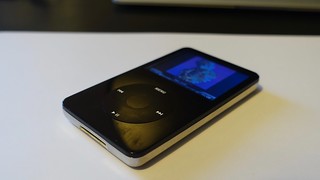
Jonathan Dowland: iPod

iPod iPod with rockbox
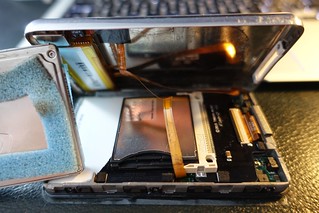
opened up open iPod with iFlash
It's been four years since I last wrote about music players. In the meantime of my Sansa Fuzes broke, and the third does not have great rockbox support. I've also been using a Sansa Clip+ (a leaving present from my last job, thanks again!) and a Sansa Clip Zip. Unfortunately Sandisk's newer Sansa devices (Sport, Jam - the only ones still in production) are not supported by Rockbox. The Clips have been very reliable and sturdy players, but I have missed the larger display of the Fuze. Since I've been exploring HD audio I've also been interested in something with an A/D converter that can handle it. I also still wish to carry my entire music library around with me, which limits my options. I decided to try an iPod. The older iPods had a Wolfson-manufacturered ADC which had a good reputation and supported (in headline terms at least) 24/48. The iPod colour (aka "4th gen") and subsequent models have a large colour display. The click-wheel interface is also very nice. Apple have now discontinued the "classic" iPod and their second hand value has greatly increased, but I managed to get an older 5th generation model ("video", with a base capacity of 30G) whilst trading in some unwanted DVDs. The case was scratched to heck but a replacement was readily and cheaply available from auction sites. Rockbox support in these iPods is pretty good, and you can mod the hardware to support CF or SD cards with kits such as the iFlash kits by Tarkan Akdam, which I picked up, along with a new 128G SD card. Unfortunately I have found writing to the iPod to be very poor with Rockbox, but it's fine for playback, and booting the iPod in OF or DFU mode is very easy and works reliably. Whilst Rockbox on the iPod works pretty well, installing it is far harder than on the Sandisk Sansa devices. The difficulty in my case is because rockbox requires a PC-formatted iPod to install, and I had a Mac-formatted one. I couldn't find a way to convert the iPod to PC format using a Mac. I tried doing so on a PC but for some reason the PC wasn't playing ball so I gave up after a few hours. In the end I assembled the filesystem by hand using dd(1) and dumps of partition tables from other people's iPods, via a Linux machine. This was enough to convince iTunes on Mac to restore it's hidden partition and boot software without reverting back to a Mac disklabel format.

10 July 2016

Ritesh Raj Sarraf: Leprosy in India

During my recent travel, I had quite a long layover at the Doha International Airport in Qatar. While killing time, I watched an interesting programme on the Al Jazeera network. The program aired on Al Jazeera is Lifelines. This special episode I watched, covered about "Leprosy in India". After having watched the entire programme, I felt the urge to blog about it. First of all, it was quite depressing to me, to know through the programme, that the Govt. of India had officially marked "Leprosy" eradicated from India in 2005. As per Wikipedia, "Globally in 2012, the number of chronic cases of leprosy was 189,000, down from some 5.2 million in the 1980s. The number of new cases was 230,000. Most new cases occur in 16 countries, with India accounting for more than half." Of the data presented on Lifelines, they just covered a couple of districts from 2 States (of the 28+ States) of India. So, with many states remaining, and unserveyed, and uncounted, we are far away from making such statements. Given that the Govt., on paper, has marked Leprosy eradicated; so does WHO. Which means that there is no more funding to help people suffering from the disease. And with no Govt. (or International) funding, it is a rather disappointing situation. I come from a small town on the Indo-Nepal intl. border, named Raxaul. And here, I grew up seeing many people who suffered from Leprosy. As a child, I never much understood the disease, because as is mentioned in the programme, I was told it was a communicable disease. Those suffering, were (and are) tagged as Untouchables (Hindi: ). Of my small town, there was and still is a sub-town, named Sunderpur. This town houses patients suffering from Leprosy, from around multiple districts closeby. I've never been there, but have been told that it is run by an NGO, and helps patients fight the disease. Lifelines also reported that fresh surveys done by the Lepra society, just a 3 day campaign, resulted in 3808 new cases of people suffering from Leprosy. That is a big number, given accessibility to small towns only happens once a week on market day. And in 3 days the team hardly covered a couple of district towns. My plea to the Media Houses of India. Please spend some time to look beyond the phony stuff that you mostly present. There are real issues that could be brought to a wider audience. As for the government, it is just depressing to know how rogue some/most of your statements are.

Categories:

Keywords:

Like:

Joey Hess: twenty years of free software -- part 12 propellor

Propellor is my second big Haskell program. I recently described the motivation for it like this, in a proposal for a Linux.Conf.Au talk:
The configuration of Linux hosts has become increasingly declarative, managed by tools like puppet and ansible, or by the composition of containers. But if a server is a collection of declarative properties, how do you make sure that changes to that configuration make sense? You can test them, but eventually it's 3 AM and you have an emergency fix that needs to go live immediately. Data types to the rescue! While data types are usually used to prevent eg, combining an Int and a Bool, they can be used at a much more abstract level, for example to prevent combining a property that needs a Debian system with a property that needs a Red Hat system. Propellor leverages Haskell's type system to prove the consistency of the properties it will apply to a host.
The real origin story though, is that I wanted to finally start using configuration management, but the tools for it all seemed very complicated and built on shaky foundations (like piles of yaml), and it seemed it would be easier to write my own than deal with that. Meanwhile, I had Haskell burning a hole in my pocket, ready to be used in a second large project after git-annex. Propellor has averaged around 2.5 contributions per month from users since it got started, but increasing numbers recently. That's despite having many fewer users than git-annex, which remember gets perhaps 1 patch per month. Of course, I've "cheated" by making sure that propellor's users know Haskell, or are willing to learn some. And, propellor is very compositional; adding a new property to it is not likely to be complicated by any of the existing code. So it's easy to extend, if you're able to use it. At this point propellor has a small community of regular contributors, and I spend some pleasant weekend afternoons reviewing and merging their work. Much of my best work on propellor has involved keeping the behavior of the program the same while making its types better, to prevent mistakes. Propellor's core data types have evolved much more than in any program I worked on before. That's exciting! Next: twenty years of free software -- part 13 past and future

Bits from Debian: New Debian Developers and Maintainers (May and June 2016)

The following contributors got their Debian Developer accounts in the last two months: The following contributors were added as Debian Maintainers in the last two months: Congratulations!

Craig Small: procps 3.3.12

The procps developers are happy to announce that version 3.3.12 of procps was released today. This version has a mixture of bug fixes and enhancements. This unfortunately means another API bump but we are hoping this will be fixed with the new library API coming soon. procps is developed on gitlab and the new version of procps can be found at https://gitlab.com/procps-ng/procps/tree/newlib procps 3.3.12 can be found at https://gitlab.com/procps-ng/procps/tags/v3.3.12 From the NEWS file, procps 3.1.12 has the following: We are hoping this will be the last one to use the old API and the new format API ( imaginatively called newlib ) will be used in subsequent releases. Feedback for this and any other version of procps can be sent to either the issue tracker or the development email list.

9 July 2016

Matthew Garrett: "I recieved a free or discounted product in return for an honest review"

My experiences with Amazon reviewing have been somewhat unusual. A review of a smart switch I wrote received enough attention that the vendor pulled the product from Amazon. At the time of writing, I'm ranked as around the 2750th best reviewer on Amazon despite having a total of 18 reviews. But the world of Amazon reviews is even stranger than that, and the past couple of weeks have given me some insight into it.

Amazon's success is fairly phenomenal. It's estimated that there's over 50 million people in the US paying $100 a year to get free shipping on Amazon purchases, and combined with Amazon's surprisingly customer friendly service there's a lot of people with a very strong preference for choosing Amazon rather than any other retailer. If you're not on Amazon, you're hurting your sales.

And if you're an established brand, this works pretty well. Some people will search for your product directly and buy it, leaving reviews. Well reviewed products appear higher up in search results, so people searching for an item type rather than a brand will still see your product appear early in the search results, in turn driving sales. Some proportion of those customers will leave reviews, which helps keep your product high up in the results. As long as your products aren't utterly dreadful, you'll probably maintain that position.

But if you're a brand nobody's ever heard of, things are more difficult. People are unlikely to search for your product directly, so you're relying on turning up in the results for more generic terms. But if you're selling a more generic kind of item (say, a Bluetooth smart bulb) then there's probably a number of other brands nobody's ever heard of selling almost identical objects. If there's no reason for anybody to choose your product then you're probably not going to get any reviews and you're not going to move up the search rankings. Even if your product is better than the competition, a small number of sales means a tiny number of reviews. By the time that number's large enough to matter, you're probably onto a new product cycle.

In summary: if nobody's ever heard of you, you need reviews but you're probably not getting any.

The old way of doing this was to send review samples to journalists, but nobody's going to run a comprehensive review of 3000 different USB cables and even if they did almost nobody would read it before making a decision on Amazon. You need Amazon reviews, but you're not getting any. The obvious solution is to send review samples to people who will leave Amazon reviews. This is where things start getting more dubious.

Amazon run a program called Vine which is intended to solve this problem. Send samples to Amazon and they'll distribute them to a subset of trusted reviewers. These reviewers write a review as normal, and Amazon tag the review with a "Vine Voice" badge which indicates to readers that the reviewer received the product for free. But participation in Vine is apparently expensive, and so there's a proliferation of sites like Snagshout or AMZ Review Trader that use a different model. There's no requirement that you be an existing trusted reviewer and the product probably isn't free. You sign up, choose a product, receive a discount code and buy it from Amazon. You then have a couple of weeks to leave a review, and if you fail to do so you'll lose access to the service. This is completely acceptable under Amazon's rules, which state "If you receive a free or discounted product in exchange for your review, you must clearly and conspicuously disclose that fact". So far, so reasonable.

In reality it's worse than that, with several opportunities to game the system. AMZ Review Trader makes it clear to sellers that they can choose reviewers based on past reviews, giving customers an incentive to leave good reviews in order to keep receiving discounted products. Some customers take full advantage of this, leaving a giant number of 5 star reviews for products they clearly haven't tested and then (presumably) reselling them. What's surprising is that this kind of cynicism works both ways. Some sellers provide two listings for the same product, the second being significantly more expensive than the first. They then offer an attractive discount for the more expensive listing in return for a review, taking it down to approximately the same price as the original item. Once the reviews are in, they can remove the first listing and drop the price of the second to the original price point.

The end result is a bunch of reviews that are nominally honest but are tied to perverse incentives. In effect, the overall star rating tells you almost nothing - you still need to actually read the reviews to gain any insight into whether the customer actually used the product. And when you do write an honest review that the seller doesn't like, they may engage in heavy handed tactics in an attempt to make the review go away.

It's hard to avoid the conclusion that Amazon's review model is broken, but it's not obvious how to fix it. When search ranking is tied to reviews, companies have a strong incentive to do whatever it takes to obtain positive reviews. What we're left with for now is having to laboriously click through a number of products to see whether their rankings come from thoughtful and detailed reviews or are just a mass of 5 star one liners.

comment count unavailable comments

Next.

Previous.