Search Results: "bab"

11 November 2012

Andrew Pollock: [life] If you love someone, set them free

I'm going to spare everyone all the gory details at this time, but I guess it's time to acknowledge the facts. Sarah has left me. This has all come to a head extremely quickly (for me), but Sarah has been sitting on a horrible pile of emotions for months, so it's probably been an eternity for her. I still love Sarah and I'm desperately trying to reconcile, but Sarah just wants to move on. Throw a child in the mix and the fact that we're married in Australia but most of our on-paper shared property is in California, and I just don't want to think about it. I ask that our mutual friends not take sides (which I realise is difficult) and to please give Sarah all the support you can. This can't have been an easy decision for her. Of course, I'll also take any support you want to send my way. I start my sabbatical from work on Thursday (I don't return to work until January), and my parents have a prearranged visit for pretty much all of December. I had all this planned before this came out of left field. I'd debated telling my parents not to come, so I could use the time off work to try and repair things, but Zoe needs time with her grandparents, and I can probably do with having them around.

9 November 2012

Gunnar Wolf: Road trip to ECSL 2012 in Guatemala

Encuentro Centroamericano de Software Libre! Guatemala! During a national (for us) holiday, so it's easy to go without missing too much work time! How would I miss the opportunity? Several years ago, I started playing with the idea of having a road trip Probably this was first prompted with the UK crew and the Three Intrepid Motorcycle Riders arriving by land to DebConf 9 I don't know. Fact is, I wanted to go to DebConf10 in New York by land, as well as to DebConf12 in Nicaragua. Mostly due to a lack of time, I didn't Although we did start making some longish trips. Of course, my desire to show Regina what Mexico is like also helped! So, up until a week ago, our (according to my standards) long distance driving experience included:
  • M xico Guanajuato Puerto Vallarta Guanajuato M xico, in early November 2011, for Festival de Software Libre and with Regina and our Blender friends Octavio and Claudia. Totalling almost 1900Km, mostly consisting of wide, toll highway.
  • M xico Xilitla San Luis Potos M xico, in April 2012, just for fun and for a nice short vacation, alone with Regina. Totalling almost 1200Km, but through Sierra Gorda de Quer taro, a very tough stretch of about 250Km which we did at about 50Km/h on average. Beautiful route for sure! We didn't originally intend to go through San Luis Potos , and it does not appear to make much sense, as it adds ~350Km to the total, but it was even quicker than going back by the same route and according to those who now, even faster than our planned route, via Tamazunchale and Ixmiquilpan!
  • M xico San Luis Potos Zacatecas Aguascalientes Guanajuato M xico, in May 2012, for Congreso Internacional de Software Libre, again with Octavio and Claudia. Totalling 1250Km, and following very good roads, although most of them were toll-free.
But there is always a certain halo over crossing a border, maybe more so in countries as large as Mexico. We convinced Pooka and Moni, and granted, with some aprehension, as we knew of some important security risks in the more rural areas we wanted to go through we decided to go to Guatemala. And, although we wanted to go with a bit more time, Real Life took its toll: We could not take more time than the intersection of what our respective jobs offered. So, here goes a short(?) recap of our six day long, 3200Km trip. Of course, we have a map detailing this. Mexico Veracruz I came to my office early on Wednesday (31-oct), and left with Regina around 10AM towards Veracruz. We agreed to meet there with Moni and Pooka, who would take the night bus, and continue together. Crossing Mexico City proved to be the longest obstacle We arrived to Veracruz already past 3PM, and spent a nice evening walking down the center and port of the city. Veracruz port can still be seen as part of central Mexico; I knew the road quite well. Veracruz San Andr s Tuxtla Catemaco San Cristobal de las Casas We met with our friends at the iconic Gran Caf de la Parroquia at 6:30AM. Had a nice breakfast with coffee, and by 7:30 we were heading south-west. The reason to have a road trip was to get to know the route, to enjoy the countryside So, given we "only" had to make 650Km this day, we took the non-toll road A narrow path stretching along the coastal plains of Veracruz, until Acayucan. Doing so, we also saved some money, as the equivalent toll road is around MX$300 (~US$25)! Veracruz is a hot state. We ended up all sweaty and tired by 19:00, when we reached San Cristobal. We had agreed not to drive at night, due to security issues, but fortunately there was quite a bit of traffic both ways between Tuxtla Guti rrez (Chiapas State capital, around 1hr from San Cristobal, where darkness got us) and our destination, so we carried on. Now, San Cristobal is a high city, almost as high as Mexico City (2100m), and being more humid, it was quite chilly. We went for a walk, and were convinced that at a later time, we had to stay for several days there. The city is beautiful, the region is breath-taking, there is a lot of great handicrafts as well, and it's overall very cheap. Really lovely place. San Cristobal de las Casas Cd. Cuauht moc La Mesilla Guatemala Once again, this day started early. We woke up ready to leave at 7AM, and not earlier because the hotel's parking didn't open earlier. After a very quick visit to San Cristobal downtown, to take some photos that were not right the night before, we took the road to Comit n, stopping just for some tamales de bola y chipil n for breakfast. Central Chiapas is almost continuously populated, differing from most of my experience in Mexico. It is all humid, and has some very beautiful landscapes. We passed Comit n, which is a much larger city than what we expected, went downhill after La Trinitaria, crossed a plain, and continued until hills started taking over again. We stopped in a very chaotic, dirty place: Just accross the border, where Ciudad Cuauht moc becomes La Mesilla. This border was basically what we expected: There is no half-official place to exchange money, so we had to buy quetzales from somebody who offered them on the street, at MX$2 per Q1 (where the real exchange should be around 1.50 to 1). While on the road, I was half-looking for exchange posts in Comit n and onwards, and found none (and being a festive day, they would probably be closed anyway). But we were expecting this, after all, and exchanged just the basic minimum: MX$600 (US$50, which by magic became Q300, US$40). The tramit consists of:
  • Spraying the car against diseases (which has a cost of Q18)
  • Each of us has to go through migration. Note, in case you cross this border: We didn't expressly cross Mexican migration, so officially there was no record of us going out. Be sure to go through migration to avoid problems at re-entry!
    Migration has no cost.
  • Customs. As we were entering by car, I had to purchase a permit for circulation. I don't remember the exact quote, but it was around Q150, and the permit is valid for 90 days.
  • That's it! Welcome to Guatemala!
La Mesilla is in Guatemala's Huehuetenango Department, and from all of the Departments we crossed until Guatemala city (Huehuetenango, Quetzaltenango, Totonicap n, Solol , Chimaltenango, Sacatep quez and Guatemala), this is the largest one. Huehuetenango is home to the Cuchumatanes mountain ridge. We found beautiful, really steep, really fertile mountains. It is plainly amazing: Mountains over 60 , and quite often full with agricultural use Even at their steepest points! The CA-1 highway is, in general, in very good shape. There are however many (many, many) speed bumps (or topes, in Mexican terminology. Or t mulos in Guatemalan), at least a couple at every village we crossed, not always painted. The road is narrow and quite winding; it follows river streams for most of the way. We feared it would be in much worse shape, from what we have heard, but during the whole way we found only three points where the road was unusable due to landslides and an alternative road was always in place when we needed it. After Totonicap n, the narrow road becomes a wide (four lane) highway. Don't let that fool you! It still goes through the center of every village along the road, so it's really not meant for speeding. Also, even though the pavement is in very good condition, it is really steep quite often. It is not the easiest road to drive, but it's (again) by far not as bad as we expected. We arrived to Guatemala City as dawn was falling, and got promptly lost. Guatemala has a very strange organization scheme: The city is divided in several zones, laid out in a swirl-like fashion. East-west roads are called Calle and North-south roads are called Avenida (except for zona 4, I think, where they are diagonal, and some are Rutas while the others are V as). I won't go into too much detail). Thing is, many people told us it's a foolproof design, and people from different countries understand the system perfectly. We didn't... At least not when we arrived. We got quite lost, and it took us around one hour to arrive to our hotel, at almost 19:00 Almost 12 hours since we left San Cristobal. Went for a quick dinner, and then waited for our friends to arrive after the first day of work of ECSL, which we missed completely. And, of course, we were quite tired, so we didn't stay up much longer. Antigua Guatemala On Saturday, ECSL's activities started after 14:00 so we almost-kidnapped Wences, the local organization lead, and took him to show us around Antigua Guatemala. Antigua was the capital of Guatemala until an earthquake destroyed it in the 1770s; the capital was moved to present-day Guatemala city, but Antigua was never completely abandoned. Today, it is a world heritage site, a beautiful city, where we could/should have stayed for several days. But we were there for the conference, so we were in Antigua just a couple of hours, and headed back to Guatemala. Word of caution: Going from Guatemala to Antigua, we went down via the steepest road I have ever driven. Again, a real four-lane highway... but quite scary! The main focus for this post is to give some roadtrip advice to potential readers... So, this time around, I won't give much detail regarding ECSL. It was quite interesting, we had some very good discussions... but it would take me too much space to talk about it! The road back: Guatemala Tec n Um n; Cd. Hidalgo Arriaga So, about the road back: Yes, we just spent three days getting to Guatemala City. We were there only for ~36 hours. And... We needed to be here by Tuesday morning no matter what. So, Sunday at noon we said goodbye to our good friends in ECSL and started the long way back. To get to know more of Guatemala, we went back by the CA-2 highway, which goes via the coastal plains Not close to the Pacific ocean, which we didn't get to see at all, but not through the mountains. To get to CA-2, we took CA-9 from Guatemala. If I am not mistaken, this is the only toll road in Guatemala (at least, the only we used, and we used some pretty good highways!) It is not expensive; I don't remember right now, but must have been around Q20 (US$3). Went South past Palin and until CA-2, just outside Escuintla city, and headed West. All of Escuintla and Suchitep quez it is again a four lane highway; somewhere in Retalhueu it becomes a two lane highway. We were strongly advised not to take this road at night because, as the population density is significantly lower than in CA-1, it can get lonely at times And there are several reports of robberies. We did feel the place much less populated, but saw nothing suspicious in any way. Something important: There are almost no speedbumps in CA-2! The terrain stayed quite flat and easy as we crossed Quetzaltenango, and only in San Marcos we found some interesting hills and a very strong rain that would intermitetntly accompany us for the rest of the ride. So, we finally arrived to the border city of Tec n Um n at around 16:30 Approximately four hours after leaving the capital. The Tec n Um n Cd. Hidalgo cities and border pass are completely different from the disorderly and dirty Cd. Cuauht moc La Mesilla ones. The city of Tec n Um n could be just a nice town anywhere in the country, it does not feel aggressive as most border cities I have seen in our continent. We stopped to eat at El pollo campero and headed to the border. In the Mexican side, we also saw a very well consolidated, big and ordered migration area. Migration officers were very kind and helpful As we left Cd. Cuauht moc, Regina didn't get a stamp of leaving Mexico, so technically she was ilegally out of the country (as she is not a national... They didn't care about the rest of us). The tramit to fix this was easy, simple, straightforward. We only paid for the fumigation again (MX$60, US$5), and were allowed to leave. Anyway, we crossed the border. There is a ~30Km narrow road between Cd. Hidalgo and Tapachula, but starting in Tapachula we went on Northwards via a very good, four lane and very straight highway. Even though we had agreed not to drive at night... Well, we were quite hurried and still too far from Mexico City, so we decided to push it for three more hours, following the coastline until the city of Arriaga, almost at the border between Chiapas and Oaxaca. Found a little hotel to sleep some hours and collapsed. Word of warning: This road (from Tapachula to Arriaga) is also known for its robberies. We saw only one suspicious thing: Two guys were pushing up their motorcycle, from which they had apparently fallen. We didn't stop, as they looked healthy and not much in need of help, but later on talked about this Even though this was at night, they were not moving as if they had just crashed; nothing was scratched, not the motorcycle and not their clothes. That might have been an attempt to mug us (or whoever stopped by). This highway is very lonely, and the two directions are separated by a wall of vegetation, so nobody would have probably seen us were we to stop for some minutes. Be aware if you use this road! The trip comes to an end: Arriaga Niltepec Istmo C rdoba M xico The next (last, finally!) day, we left at 6:30AM. After driving somewhat over one hour, we arrived to Niltepec, where a group of taxi drivers had the highway closed as a protest against their local government's tolerance of mototaxis. We evaluated going back to Arriaga and continue via the Tuxtla Guti rrez highway, but that would have been too long. We had a nice breakfast of tlayudas (which resulted in Pooka getting an alergic reaction shortly afterwards) and, talking with people here and there, were told about an alternative route by an agricultural road that surrounds the blockade. So, we took this road the best way we could, and after probably 1hr of driving at 20Km/h, finally came back to the main road. We planned on crossing the isthmus using the Acayucan-Juchit n road We were amazed at the La Ventosa ("the windy") area, where we crossed a huge eolic plant for electricity generation, so of course we got our good share of photos. From then onwards, not much more worth mention. Crossed the isthmus via a quite secondary road in not too good shape (although there is a lot of machinery, and the road will much likely improve in the next few months/years), then took the toll freeway along Veracruz until C rdoba. We stopped for a (delilcious and revigorizing!) cup of coffee in Hotel Zeballos, where Agust n de Iturbide signed with Viceroy Juan O'Donoj the treaties that granted Mexico the independence. Traveller, beware: When crossing between Puebla and Veracruz, there is a steep slope of almost 1000m where , you will almost always (except if it's close to noon) find very thick fog; taking the highway from C rdoba, this is in the region known as Cumbres de Maltrata. We had the usual fog, and just as we left it, a thin but constant rain that went on with us up until we got home. Crossed Puebla state with no further eventualities, and arrived to Pooka and Moni's house by 22:00. Less than one hour later, Regina and me arrived home as well. This was four days ago... and I have finally finished writing it all down ;-) Hope you find this useful, or if not, at least entertaining! If you read this post in my blog, you will find many pictures taken along the trip below (Well, if you are reading the right page, not in the general blog index...). If you are reading from a planet or other syndication service... Well, come to the blog! Dreamhost woes Oh, and... Yes, it sometimes happens: My blog is hosted at Dreamhost. This means that usually it works correctly... But sometimes, specially when many people request many nontrivial pages, it just gives an error. If you get an error, reload once or twice... Or until your patience manages ;-)

Joey Hess: git push over XMPP

Imagine if you could send git pushes to any of your friends on Google Talk or other Jabber (XMPP) servers. Even though you're in different places and your computers probably cannot talk to one-another directly, you can share a git repository, without relying on a git hosting provider such as GitHub.
To xmpp::joey@kitenet.net
  * [new branch]      master -> xmpp/master
That's what I've built over the past week. So far, it's only supported by the git-annex assistant, but it would not be very hard to make this into a separate git-remote-xmpp program, and a push listening daemon, that could be used with non-git-annex repisitories too. You can read about the details in my git-annex assistant dev blog:
  1. day 124 git push over xmpp groundwork
  2. day 125 xmpp push continues
  3. day 126 mr watson come here
And yes, I update that blog every single work day. If you're not getting enough blog updates from me, and are not scared by rather technical posts, you might want to subscribe to it. :)

Olivier Berger: Using a DreamPlug with Debian as an IPv4/IPv6 router for a home LAN behind a FreeBox

The goal of this article is to describe the setup I've made for my home LAN behind a FreeBox (French ISP Free.fr).

1 Principles
The FreeBox is configured :
  • in router mode (with a local IPv4 network on 192.168.0.x/24)
  • with IPv6 support activated (by convention, we'll use the 2a01:e35:1234:5678::/64 prefix below, to represent the IPv6 prefix provided by the FreeBox)
Behind the FreeBox, I have connected a DreamPlug computer (running Debian wheezy with a dual-boot setup as sold by NewIT) on its eth0 etherlink port. Behind the DreamPlug, I have connected a switch (to its eth1 ethernet port), on which the LAN's machines will be connected, on a dual IPv4/IPv6 network. The IPv4 will be on 192.168.4.0/24 (addresses for machines connected to the switch will be static) while the IPv6 will use the addresses auto-generated on the FreeBox's prefix. The DreamPlug will also provide a wifi network (in master mode, through its uap0 interface), only IPv4 on 192.168.3.0/24. On the DreamPlug, the outgoing IPv4 traffic will be masqueraded, while the IPv6 traffic will be bridged so that machines on the LAN can be reached from the Internet directly, passing through the eth0 eth1 bridge. The DreamPlug will also act as a filter/firewall to only allow selected traffic to reach the LAN machines (in particular for the IPv6, since the machines may be reached directly from the Internet otherwise).

1.1 Alternatives
There are a lot of howtos describing the setup of FreeBox + IPv6, but I couldn't find one that was exactly reflecting the kind of setup I have. Some dealt with a FreeBox setup in bridge mode (i.e. not the router mode), but in case the DreamPlug isn't so much reliable, or I've messed with the config, I'm tempted to keep the possibility to connect directly to the FreeBox. Others didn't use the same setup with a router distributing both wired and wifi networks. And note described exactly the setup for a DreamPlug running Debian wheezy and using ferm as a firewall. No, there's no NIH syndrom here ;)

2 DreamPlug router configuration

2.1 Interfaces configuration
The /etc/network/interfaces on the DreamPlug looks like the following (kudos to Dag Bertelsen's Setting up Dreamplug as a router with Shorewall firewall for the wifi configuration bits):
# Note: Order of the interfaces declarations matters

auto lo
iface lo inet loopback

auto uap0
iface uap0 inet static
post-up /usr/bin/uaputl sys_cfg_ssid dream-uAP-XXXX
# Modus WPA2
post-up /usr/bin/uaputl sys_cfg_protocol 32
# WLAN password
post-up /usr/bin/uaputl sys_cfg_wpa_passphrase "WHATEVER PASSWORD"
# Set the Cipher
post-up /usr/bin/uaputl sys_cfg_cipher 8 8
# automatic channel
post-up /usr/bin/uaputl sys_cfg_channel 0 1
post-up /usr/bin/uaputl bss_start
# we deliver addresses for the Wifi with DHCP
post-up /usr/sbin/service udhcpd start
address 192.168.3.1
netmask 255.255.255.0

# Only IP6 traffic passes through the router between the Freebox on eth0 and the LAN on eth1
auto br0
iface br0 inet manual
bridge_ports eth0 eth1
bridge_maxwait 0
pre-up ebtables -t broute -A BROUTING -p ! ipv6 -j DROP
down ebtables -t broute -F

# Connected to the FreeBox, with DHCP in IPv4, masquerading outgoing IPv4 traffic
auto eth0
iface eth0 inet dhcp
up iptables -t nat -A POSTROUTING -o eth0 -j MASQUERADE
down iptables -t nat -F
post-up sysctl -q -w net.ipv4.ip_forward=1
iface eth0 inet6 auto

# Connected to the LAN with a static IPv4 address
auto eth1
iface eth1 inet static
address 192.168.4.1
netmask 255.255.255.0

2.2 DHCP server configuration
The DHCP config for udhcpd is as such (in /etc/udhcpd.conf):
start 192.168.3.100
end 192.168.3.200
interface uap0
opt lease 86400
opt router 192.168.3.1
opt subnet 255.255.255.0
opt dns 192.168.3.1
opt domain localdomain
max_leases 101
lease_file /var/lib/udhcpd.leases
auto_time 5

2.3 Firewall configuration
The firewall I use is ferm. Here's the /etc/ferm/ferm.conf configuration (YMMV). Thanks to Ren Garcia's R gles de firewall pour un pont IPv6 for inspiration :
## Interfaces of the router

# Our LAN on a switch
@def $DEV_PRIVATE = eth1;

# The ISP router
@def $DEV_WORLD = eth0;

# Our Wifi LAN
@def $DEV_WIFI = uap0;


## IP networks of our LAN

# IPv4 (includes ethernet switch and wifi)
@def $NET_PRIVATE = 192.168.0.0/16;

# IPv6 (the prefix granted by the ISP)
@def $NET6_PRIVATE = 2a01:e35:1234:5678::/64;

# IPv6 Local link
@def $LINK6 = fe80::/10;

# Specific machines on the LAN
@def $MACHINE_MYDESKTOP = 2a01:0e35:1234:5678:1234:5678:9abc:def0;

# Special function to log dropped packets
@def &DROP() =
mod limit limit 1/second limit-burst 10 LOG log-prefix "$DOMAIN-$CHAIN: ";
DROP;


# IPv4 iptables rules
table filter
chain INPUT
policy DROP;

# connection tracking
mod state state INVALID DROP;
mod state state (ESTABLISHED RELATED) ACCEPT;

# allow local packet
interface lo ACCEPT;

# respond to ping
#proto icmp ACCEPT;
proto icmp icmp-type echo-request ACCEPT;

# allow IPsec
proto udp dport 500 ACCEPT;
proto (esp ah) ACCEPT;

# allow SSH connections from the private network and from some
# well-known internet hosts
#saddr ($NET_PRIVATE 123.45.67.89) proto tcp dport ssh ACCEPT;
saddr $NET_PRIVATE proto tcp dport ssh ACCEPT;

# we provide DNS and SMTP services for the internal net
interface $DEV_PRIVATE saddr $NET_PRIVATE
proto (udp tcp) dport domain ACCEPT;
proto tcp dport smtp ACCEPT;


interface $DEV_WIFI
# DHCP
proto udp dport 67:68 ACCEPT;
proto (udp tcp) dport domain ACCEPT;

proto udp dport netbios-dgm DROP;


# LOG all dropped packets
proto (udp tcp) &DROP();


# outgoing connections are not limited
chain OUTPUT policy ACCEPT;

chain FORWARD
policy DROP;

# connection tracking
mod state state INVALID DROP;
mod state state (ESTABLISHED RELATED) ACCEPT;

# connections from the internal net to the internet or to other
# internal nets are allowed
interface $DEV_PRIVATE ACCEPT;
interface $DEV_WIFI ACCEPT;

# LOG all dropped packets
proto (udp tcp) &DROP();


# IPv4 masquerade / NAT support

table nat
chain POSTROUTING
# masquerade private IP addresses
saddr $NET_PRIVATE outerface $DEV_WORLD MASQUERADE;


## IPv6:

domain ip6
table filter

chain INPUT
policy DROP;

# Internal traffic authorized
saddr $NET6_PRIVATE ACCEPT;
saddr $LINK6 ACCEPT;

# accept multicast
daddr ff00::/8 ACCEPT;

interface lo ACCEPT;

# For public traffic
# Only DNS resolution + NTP acceped for UDP
interface br0
proto udp

sport domain ACCEPT;

dport ntp ACCEPT;

&DROP();


# TCP on ports < 1024 forbidden except for SSH
proto tcp

dport ssh ACCEPT;

dport 0:1023 DROP;


# Accepted established traffic
mod state state INVALID DROP;
mod state state (ESTABLISHED RELATED) ACCEPT;

# incoming connections forbidden
proto tcp syn DROP;

# Accept ping
proto icmpv6 ACCEPT;


proto (udp tcp) &DROP();

chain FORWARD
policy DROP;

# All local traffic accepted
saddr $LINK6 ACCEPT;

# All ping accepted unless coming from internet
saddr ! $NET6_PRIVATE proto icmpv6 icmp-type echo-request DROP;
proto icmpv6 ACCEPT;

# Allow SSH to specific machines
proto tcp daddr $MACHINE_MYDESKTOP dport ssh ACCEPT;

# Accept established traffic
mod state state INVALID DROP;
mod state state (ESTABLISHED RELATED) ACCEPT;

# Accept outgoing traffic
saddr $NET6_PRIVATE ACCEPT;

# Accept local outgoing traffic
saddr ::1 ACCEPT;

proto (udp tcp) &DROP();


# ebtables
domain eb chain FORWARD
policy DROP;

# Only accept bridged traffic for IPv6
logical-in br0 logical-out br0
#ebtables -t broute -A BROUTING -p ! ipv6 -j DROP
proto IPv6 ACCEPT;


2.4 DNS config

The DreamPlug will run bind9 to cache the DNS for the wifi network (default config is OK out of the box).

3 Configuration for the LAN machines

3.1 Connection with Wifi
Machines connected with the WPA wifi network should get an IPv4 only address via DHCP on the 192.168.3.0/24 network. There's nothing to be configured specifically.

3.2 Ethernet connection on the switch
Machines connected via ethernet cables to the switch can run either with IPv4 config, in which case they should be configured statically for the 192.168.4.0/24 network, using the router on 192.168.4.1 as a gateway, or with IPv6 auto config. On wheezy, the /etc/network/interfaces will look like :
auto eth1
iface eth1 inet static
address 192.168.4.42
netmask 255.255.255.0
gateway 192.168.4.1
dns-nameservers 212.27.40.241 212.27.40.240

iface eth1 inet6 auto

4 To do list

The setup works fine, but there are a few things I'd like to improve :
  • running a regular Debian distro on the DreamPlug (the kernel used at the moment is patched for the wifi driver in master mode support), possibly using only Free Software.
  • using subnets for the IPv6 machines (but that seems not exactly obvious, requiring NDP proxying and stuff), so that the privacy is improved (the IPv6 auto generated global addresses depend on the MAC addresses hmmm probably not optimal).
  • adding more stuff to the DreamPlug router so that it becomes a full fledged FreedomBox.

5 References

Date: 2012-11-09 16:30:34 CET

7 November 2012

Russell Coker: Rape Apology and LCA 2011

After a lecture at LCA 2011 included some inappropriate slides there was a long discussion on several mailing lists about the issues related to this. In February 2011 I wrote a blog post debunking some of the bogus arguments in question [1]. Of course the matter didn t end there, at LCA 2012 I was drawn into a few debates IRL about the issues, as long as there are more than a few men who want such porny pictures used in LCA talks the issue can t be properly resolved. The most serious aspect of the discussion in question is that of rape apology, the bad ideas that were presented have a real impact on the way people behave, merely making public statements saying that something is OK is going to increase the incidence of it happening. The Geek Feminism Wiki has a good page summarising the issue [2]. The Finally Feminism 101 post about Rape Culture is also worth reading in this context [3]. Recently Valeria Aurora wrote a post for the Ada Initiaive blog about the rape apology issue and how the community needs to act to prevent such behavior [4]. This inspired Matthew Garrett to write about the issue and state the position that In the absence of an apology and explanation from Ted, I ll be interacting with him to the bare minimum that I m compelled to as a result of my job [5]. I agree with Matthew s article, everything he writes is logical and I believe that it is all for the benefit of the FOSS community as a whole. I think that most guys have quietly defriended guys who are rape-positive in the past (for example when I was 12 I refused to play D&D with boys who were raping NPCs). But blogging about it, explaining the problem, and giving the offender the possibility to reform is a good idea and it s something that should be done more often. Sam Varghese has written about the issue for ITWire [6]. He has taken the wrong approach to this, he specifically claims that Matthew Garrett has kicked off what could be a damaging episode . I think that Matthew s approach is necessary and the situation demands it. If Matthew had been on holidays and I had read the TAI post earlier then I would probably have written a blog post which Sam could have described in a similar manner. So I don t think that Matthew kicked anything off (I think that someone had to do it). I also don t think that this has to be damaging it depends on how everyone reacts. On her personal blog Valerie says When I first read Ts o s comments, I couldn t sleep for two nights. I wanted to throw up every time I thought about it. I was furious and frightened at the same time. Every time I think about this, even now, I literally have nightmares. I can t bear the thought of working with him even over email, much less attending the same conferences [7]. I don t think that any of us who are seriously involved in the FOSS community have a way of avoiding this issue, allowing Valerie and other women who have the same understanding of the situation to go through that without any support is not a neutral action. I think we need to consider whether someone who gives other delegates and speakers nightmares should be welcome to attend a conference. Valerie s post makes sense to me and I can understand why she doesn t want to associated with Ted, my understanding of the issue isn t important or even required, I merely note this because I m sure that there are lots of readers who will ignore anything that a woman might say. ITWire has a follow-up article with Ted s response, Ted fails to address all the issues and seems to think that the people who disagree with him merely don t appreciate his nuance [8]. The thing is that the issue of the incidence of rape was raised in discussion to consider the probability that rape survivors would have been in the audience for the Mark Pesce talk in question. None of Ted s claims indicate that rape could be rare enough that a crowd of 500+ random people could be expected not to have multiple rape survivors so his comments weren t even relevant to the discussion. Ted seems unwilling to try to understand the position of all the people who disagree with him.

Michal &#268;iha&#345;: RTL languages support

While working on tool for online translating, I should have probably expected this, but somehow it surprised me - Weblate should support RTL languages. This issue was brought to me today by Yaron Shahrabani (Hebrew translator of Wine) and I simply had to look at this quite unexplored area for me. Fortunately it seems to be pretty easy, just matter of adding few html attributes to right places. I've quickly adjusted the code (the hardest thing was to get list of RTL languages) and Weblate should now properly support RTL languages on both sides - as an user interface language and as a translated language. In case you understand any of Arabic, Farsi, Hebrew, Urdu or other RTL language, I'd really like to hear from you if Weblate shows them correctly.

Filed under: English Weblate 1 comments Flattr this!

5 November 2012

Joachim Breitner: Somewhere in Israel, someone printed 50 copies

Today, a small package was waiting for me at my door step, containing 52 printed and stapled copies of a paper that I wrote a while ago. To be more precise, two years ago, when I submitted the main results of my math Diploma Thesis to the Israel Journal of Mathematics. Next year at christmas eve, it was accepted and published online. And now, it seems, it finally went into print. So my paper now has page numbers and I have this pile of printouts that outnumbers the set of possibly interested readers by four dozens or more, and they would probably just download the online version instead of asking for this print out. This seems all very anachronistic to me.

4 November 2012

Wouter Verhelst: Why Windows is not ready for general usage

There's this new Windows thing that people keep talking about, and which attempts to replace Linux as the major operating system. I've given it a look, but there's a wide range of problems with using it: In short, while this Windows thing has some promise, the above list shows that there's clearly still quite some work to be done before anyone can even think about starting to use it seriously. Hopefully the Windows developers will understand that and work on the above list of serious issues; otherwise, I'm afraid Windows will not be used by many people. Update: before you go all berserk and start commenting on this list, please read my followup to this post, which explains the point I was trying to make.

2 November 2012

Neil Williams: Introducing pyBit - Buildd Integration Toolkit

pyBit - cross-platform package building using AMQP


Message queues provide a simple way to create a distributed, cross-platform buildd toolkit to build packages using a collection of buildds, direct from various VCS clients. pyBit is intended to support rapidly evolving software collections and can support multiple VCS frontends and multiple build backends. Cross building is expected to be supported for some backends. The initial backend uses dpkg for Debian with subversion providing the source and sbuild doing the actual build.

pyBit includes support for cancelling selected builds and using multiple buildd clients per architecture, per platform and per suite.

Hooks are available or in development for subversion and git, other VCS hooks can be added. A RESTful web API provides live build reports and can generate build jobs for specific packages using particular VCS branches on selected architectures to support re-building packages at any point in the development process. Build history is stored using postgresql.

Other buildd systems can rebuild long lists of packages or build lots of binary packages from relatively slow moving source packages. PyBit exists to handle much more rapid software development across a wide range of platforms, VCS inputs and architectures. Buildd clients which are under-used can be tasked with building multiple suites or adding cross-build support. Buildd clients which are over-utilised are easily identified and adding new machines to an existing architecture / platform / suite pool should be easy. Hook activation automatically cancels any ongoing build for the same architecture, platform and suite to avoid wasting time on an interim version.

The emphasis in pyBit is to have fast builds with redundant clients, reliable reporting using a flexible and intuitive frontend. To this end, there is no need for a source package to be uploaded. Depending on the VCS hook in use, builds can happen every time a particular file is changed (e.g. debian/changelog for a native Debian package) or at every push (for a distributed VCS) or whatever is appropriate for a particular software collection. Builds are checked for available build-dependencies and packages re-queued if the build-dependencies are not yet met.

In the longer term, it may well be possible to use more than one server / database combination to support more builds and more platforms.

So far, we've got to a working model and tagged 0.1.0 as the first downloadable release. There is a lot more to do, especially adding more documentation, more VCS hooks, support for more VCS methods on the buildd clients and more buildd client scripts for platforms other than Debian. (The git hook and git source client are expected to let pyBit be self-buildable but a certain amount of configuration will be required for the server and each client which makes it not-quite self-hosting.)

pyBit concentrates on preparing collections of binary packages which can be used to build others, rather than trying to rebuild everything every time - this allows more rapid upstream software development and encourages modular, re-usable software. pyBit will also support rebuilding specific versions, architectures, suites or platforms via the RESTful web API. Access to this frontend can be controlled through any of the standard methods.

Components are loosely coupled via JSON encoded messages sent using rabbitMQ and curl. A new client can be added at any time and it will simply pick up buildd jobs from the relevant queue.

Development has now moved to Github and if anyone wants to look at new clients and new hooks, just contact the team by email or via IRC (#pybit on irc.oftc.net). Current development is based on Debian Squeeze 6.0.6 with backports and also on Debian Wheezy - more testing is welcome. Patches are also very welcome, pyBit is licensed under GPL2+.

There is no intrinsic reason why pyBit could not support any buildd platform capable of taking source from a known location and building a set of binaries. Packages are added to the queues whenever the hook is activated, so adding new packages to the collection is simply a case of triggering the existing hook.

Another interesting challenge for pyBit would be to trigger a hook on a new source code repository and just let it work through every package until everything is built. That probably won't work with the current 0.1.0 code but if that is what you'd like to work on, join the team.

Michal &#268;iha&#345;: RSS feeds and feature freeze of Weblate 1.3

Yesterday I've completed last big feature I wanted to have for Weblate 1.3 - improved changes tracking and exporting this as RSS feed. You can find example of this feature on data exports page on demo server, it is also covered in the documentation. I think there is not much to describe here, these are simple RSS feeds which will contain all important things happening to translation. This being last major feature, we're now aiming at stabilization and bug fixes. I expect this phase will take two weeks where I plan to deploy new version to http://l10n.cihar.com/ (probably next week). If you can help with testing, you're welcome to help and report bugs.

Filed under: English Weblate 0 comments Flattr this!

1 November 2012

Antoine Beaupr : My short computing history

This is a long story. I wanted to document which tools I used on my desktop, but then realized it was difficult to do this without an historical context. This therefore, became a history of my computer usage and programming habits.

Before the desktop: vic 20 and apple My first contacts with computers were when my uncle showed me his Apple computers at his home. He was working at UQAM and had access to all sorts of crazy computers. My memory is vague, but I believe he showed me a turtle moving around the screen, which I suspect was Logo, and some rabbit game which I was quite fond of. Later, I hooked up with a Vic-20 (similar to a Commodore 64) and typed in my first programs. Back then, you would painstakingly transcribe the program from a book into the screen, type RUN at the end and really hope that you didn't make a typo. You could also read and write data off audio tape with an external tape drive, which was really amazing. To put things into perspective, the Vic-20 would plug into your television for a display, and the computer was "in the keyboard". Old school shit. The language was BASIC, which was awful. Later, we got luxurious and had the privilege of a Macintosh Plus computer. 3000$ plus the printer, that was quite something. Still, that modern system could run Word, had games, and a 9" black and white screen. But the best part, and where I really started to learn to program, is with Hypercard, the crazy software written by Bill Atkinson that became the inspiration for wikis, the Myst computer game and, to a certain extent, popularized the concept of hyperlinking, which is the basic principle of the World Wide Web.

The early years: afterstep and FreeBSD But my real computer life all started with FreeBSD 2.2.x (probably 2.2.5), around 1997, when I installed my first FLOSS operating system. This was just amazing: source code for everything, down to the compilers themselves, I was amazed, since I was coming from a Mac (still had that Mac Plus lying around) and Windows (95!) world. Back then, X11 (XFree86, it was called) was a fantasy. Something I would compile with the FreeBSD ports system and sometimes would be able to run. Window managers were some weird things I wasn't sure how to use, but I figured out twm (yuck!) but was still amazed. At the university, we had SGI workstations (remember the Indigo machines?) on which I started setting up the Afterstep window manager, which I used for a long time. The web browser was Netscape Communicator 4, and lo and behold, it also did email, although I mostly used Pine over a modem terminal to the university. Internet access at home was spotty and was dependent on students compiling discreetly copies of slirp which were allowing us, in a really clunky way, to run a PPP session over those terminal lines. That actually got my account suspended because I messed up my sendmail configuration and was sending emails that appeared to be coming as , which freaked out the sysadmins that be over there. The hardware was a Pentium 166Mhz with 32MB of ram and 20GB of disk space, which was a huge improvement over the 1MB of ram and 20MB of (external!) hard disk that the Mac Plus was proud of. By then, I started programming in more languages: I learned the basics of shell scripting, C programming and I had learned Pascal in a college class.

The real freedom: Debian and... enlightenment? I then switched to Debian, thanks to my friend scyrma, which showed me the power of dselect which, for a FreeBSD user, was really impressive. Imagine that: you could just install software and all dependencies without compiling anything! ;) I don't exactly remember when that was, but it was probably Woody. I probably still used afterstep, but at that time, changing window managers was like changing t-shirts and we would waste countless hours fiddling around with borders and background images and other silly things. I remember running Enlightenment and writing software for it, for example, but not much else. Back then, email was still over pine, but a new web browser was rearing its ugly head, Mozilla, and was quickly trimmed down to Phoenix, shortly lived as Mozilla Firebird, only to be finally renamed Mozilla Firefox, and was unleashed as a stable release to an unsuspecting Internet Explorer and Microsoft-dominated world. Throughout this chaos, I also used various Mozilla derivatives like Galeon since all of this was pretty unstable and heavy for my poor computers. This was probably around 2002 to 2005. By then, I had formal classes on programming languages, was forced to learn Java, discovered C++, and learned more C as the university assumed that you knew that language in the data structures and algorithm class, which some students really didn't find funny at all. I also learned some Prolog and Haskell back then. Through my experiences with free software, I discovered various eclectic programming languages like TCL, and kept an eye out for other languages like lisp (thanks to Emacs), Forth (thanks to the FreeBSD boot loader), HTML/CSS/Javascript (no thanks to the web). There are probably others I am forgetting here, voluntarily or not.

The years of the desktops: rox, sawfish and gnome Another stable increment on my desktop was the use of the sawfish window manager and the rox desktop, mostly because of the awesome Rox file manager that had no equal in the rest of the free software world. Gnome was an atrocity and KDE even more so: bloated and unstable. Eventually, however, KDE and Gnome not only matured, but simply took over the whole of the graphical environment psyche of the free world. People nowadays don't even know what a window manager is and assume that you now have a "desktop environment", which, for me, is a real desk with a bunch of papers, a radio transceiver and maybe a computer with a screen lying around. So I did use KDE, and then Gnome. I switched from KDE to Gnome because I felt that Gnome left me more space to run my own stuff without starting crazy daemons to preload everything. At this point, Firefox was the new thing and basically stable enough for daily use. This lasted until around 2009, I guess. On the programming side, I had picked up Perl because I had to learn it to work at Ericsson (don't ask) and learned PHP to pay my rent, which I consider one of the biggest professional mistakes I have made so far in that story. It is around that time that Koumbit was founded by me and other friends.

The tiles fall on the gnomes: awesome desktop and sysadmin programming At some point, friends (mostly comar and millette) introduced me to wmii as the best thing since sliced bread. I banged my head against it with great pains, but I really enjoyed the hands off approach to window management. Tiling window managers really got a hold on me there, and in fact we can say on the whole desktop, with recent Gnome 3 taking up some tiling concepts itself. I have since then switched to the Awesome Window Manager which is probably the worst name you can use for software (try googling for "Awesome crash" to get an idea). I have switched from Firefox to Chromium, after having repeated crashes from Firefox on a site that Chrome would load fine. I was expecting Chrome to crash only one tab, because of its design, and it turned out to not crash at all, and I have since given up on Firefox totally. I have also given up on desktop environments. While I have given them a chance in quick setups and still use them when forced to, I find them too bloated and single-minded for my needs. I want control over my desktop, and those tools work very hard to remove control and hide it behind user interfaces that treat me like a brain-dead dog. Finally, I have kept on programming in PHP for work, because that's what we do over there (unfortunately). Mostly because of Drupal and Aegir, in which I was and still am deeply involved. But I am quite fond of Python for my personnal project and still use shell scripting to get myself out of trouble or automate data processing from time to time. I have a rule though: once a program hits 100 lines of shell scripting, it needs to be rewritten, usually in Perl because the syntax is closer. During the years 2009 to 2012, I have started to work more and more on system administration however. In 2010, I became a Debian Developer and a lot of my work at Koumbit revolves around system administration, optimisation and maintenance. I work oncall and sometimes get called during the night to nurse servers (which is why I am up writing this right now).

The future of programming I have become seriously disgruntled with programming. I have seen the emergence of the web, where programmers felt it was relevant to rewrite 30 years of programs into the web framework (webmail? wtf?), and now we are seeing the same thing happen with mobile devices, the tracking devices they call phones and "pads", we should rather say. And again they are trying to make people pay for trivial software. I am tired of seeing our community reinvent the wheel every 10 years because of infatuated egos and marketing sprints. We are wasting great minds on this, a lot of energy and precious time. I would rather maintain 5 year old imperfect software than coordinate a 5 year project to rewrite that software into another imperfect software. That is what is happening right now, and it's going nowhere. So here's the current state of affairs, some perls, some tiles, but mostly system administration and less programming. Through all this time, the common pattern is that I have learned to solve problems and document my work, which are key concepts of the job of a system administrator, which is what I really am now. Somehow, that popped into my life like a natural fit. Maybe, one day, I will retire and become a shepherd in far away mountains, but I will always have in my mind the strong desire to fix shit up and make things right with the world. Maybe get involved in a project like Open Source Ecology and especially their Global Village Construction Set to make sure humankind survives all that stupidity.

30 October 2012

Tanguy Ortolo: Supporting GNU MediaGoblin

Gavroche, a purple goblin, holding a poster in his arms and giving it a hug You certainly know Picasa Albums Web and Flickr, two commercial picture hosting services. You probably know a few free software projects that allow people to keep control of their own pictures, such as Gallery, Piwigo, Zenphoto or PhotoShow. GNU MediaGoblin is a similar project, but with some interesting characteristics and features: If you find GNU MediaGoblin as promising as I do, please consider donating!

Wouter Verhelst: The fastest slug in the world (probably)

How fast do slugs travel? Empirical evidence tells me that's about 1 meter per hour1. But not this slug. IMAG0114 As I was driving home from $CUSTOMER, I noticed something on my car. At first I thought it was bird poop, but then bird poop doesn't move. As the animal crawled higher and higher next to my windshield (while I was driving down the highway), I thought it would soon be blown off; but no, it bravely held on. Since it was crawling against my driving direction, that meant it was hurling down the highway at about 119.999 kph. I'm not sure if slugs have emotions; but if they do, the poor animal must've been terribly scared. Since these weird 120kph winds kept blowing on this weird and not very sticky surface that is the rubber and the metal edge to the side of the winshield, the animal kept going until it found that the glass of the windshield itself is actually a very interesting place for it to settle. By that time I had reached a usable exit, so I went off. As I reduced the car's speed once off the highway, the animal had decided that it was fairly nice outside its house now, and was starting to move horizontally along my windshield. Not exactly what I wanted it to do. So I took the above picture with the wrong camera (I remembered a mere few minutes later that I had my DSLR in the back of my car), took it off, and released it into the nearby bushes. Of course, by that time I'd driven several dozens of kilometers away from wherever it was that I picked it up, so the animal will probably never get home again. But hey, I'm sure it'll love the new bushes. 1 Once, over half a lifetime ago, I noticed a slug sitting by the side of the road. Not having much else to do, I sat down and watched it. By the time it had moved some two meters, it had gotten dark and cold, and I went home. At that point, my parents told me they'd started to worry because I was two hours late from school. I could be slightly wrong about the numbers, though. It's been a long time.

29 October 2012

Matthew Garrett: Ted Ts'o is a rape apologist and why this matters

(This post contains some discussion of rape and sexual assault but does not go into any specifics)

There was a brief controversy at Linux.conf.au back in 2011. The final keynote speaker gave a compelling presentation on online privacy, including some slides containing sexualised imagery. This was against the terms of the conference policies, and resulted in an apology from the conference organisers and the speaker. The situation was unfortunate but well handled, and that should have been the end of it.

Afterwards, there was some pushback on the conference mailing list. Concerns were raised about the policy being overly restrictive and the potential for it to be used to stifle speech that influential groups disagreed with. I don't agree with these arguments, but discussion of why policies have been implemented is completely natural and provides an opportunity for a community to determine what its expected standards are.

And then Ted Ts'o effectively called rape victims liars[1]. At first I assumed that this was just some sort of horrific failure to understand the implications of what he was saying, so I emailed him to check. The reply I got drew a pretty clear distinction between the case of a drunk college student raping another drunk college student in their room and the case of knifepoint rape in a dark park. You know, the difference between accidental rape and rape rape. The difference between the one any of us might have done and the one that only bad people do. Legitimate rape and the "rape" that those feminists talk about. The distinction that lets rapists convince themselves that they didn't really rape anyone because they weren't holding a knife at the time.

Ted Ts'o argues that only a small percentage of rape really counts as what people think of as rape. Ted Ts'o is a rape apologist.

There's an ongoing scandal in the UK at the moment. A well known DJ, Jimmy Savile, died last year. He grew up in a working class family, but through hard work and natural talent was one of the most significant figures in promoting pop music in the UK in the 50s and 60s, and worked in various parts of the BBC for the best part of 30 years. He spent significant amounts of time raising money for charity, and it's estimated that he raised over 40 million for various causes. Since his death, around 300 people have accused him of sexually abusing them. The BBC is desperately trying to explain why it cancelled an expose shortly before it aired. Multiple people who worked there at the time claim that everyone knew he was involved in indecent activities, but saying anything would risk both their career and the charities that depended on his fundraising. Nobody said anything, and he was allegedly free to continue his abuse.

Ted Ts'o is a significant figure in the Linux kernel community. He has expressed abhorrent beliefs that damage that community. Condemnation was limited to a mailing list with limited readership, meaning, effectively, that nobody said anything. Last week the Ada Initiative published a blog post pointing out the damage that did, and I realised that my effective silence was not only helping to alienate 50% of the population from involving themselves with Linux, it was also implicitly supporting my community leadership. I was giving the impression that I was basically fine with our community leaders telling people that it wasn't really rape if you were both drunk enough. I was increasing the chances of members of our community being sexually assaulted. Silence is endorsement. Saying nothing is not ok.

In the absence of an apology and explanation from Ted, I'll be interacting with him to the bare minimum that I'm compelled to as a result of my job. I won't be attending any Linux Foundation events he's involved in organising. If I'm running any events, I won't be inviting him. At a time when we're finally making progress in making our community more open and supportive, we don't need leaders who undermine that work. Support organisations who encourage that progress, not the people who help drag us back.

Footnotes

[1]The original archive has vanished. I've put up a copy of the relevant thread here. Throughout, Ted states that he's actually arguing against the idea that women need to be frightened of sexual assault, and not against the definition of rape. Except saying things like This one does a pretty good job of taking apart the Koss / Ms. Magazine study, which is the source for the "1 in 4" number. For example, it points out that over half of those cases were ones where undergraduates were plied with alcohol, and did not otherwise involve using physical force or other forms of coercion is difficult to read in any way other than "Half of the people you're counting as having been raped haven't really been raped", and favourably referring to an article that asserts that the rate of false rape reports is probably close to 50% is pretty strong support for the idea that many rape victims are liars.

(Update 2012/10/30: Adam Williamson suggests in this comment that this mail is a better example of Ted's behaviour - there's some explicit victim blaming and a lot of "Is that rape" questioning with the obvious implication that the answer should be "no". Ted Ts'o is a victim blaming rape apologist.)

(Update 2012/11/05: It's been suggested that I haven't been sufficiently clear about which of Ted's statements justify my claims. So, here we go.

In this mail, Ted links to and endorses this article. He explicitly links to it because of its treatment of rape statistics. Quoting directly from that article:
the rate of false reports is at least 9 percent and probably closer to 50 percent
Ted explicitly endorses an article that claims that a significant percentage of reported rapes are false. The study that generated that figure is held in poor regard by other researchers in the field - Australian police figures indicate that 2.1% of rape accusations were classified as false. Ted asserts that he was trying to argue against poor use of statistics, so it's a fair assumption that he agrees with the alternative statistics that he's citing. Ted believes that many rape victims are making false accusations. Ted believes that many rape victims are liars.

Again in this mail, Ted argues against a claimed figure that 1 in 4 women have been sexually assaulted. One of his arguments is that Also found in the Koss study, although not widely reported, was the statistic that of the women whom she classified as being raped (although 73% refused to self-classify the event as rape), 46% of them had subsequent sex with the reported assailant. Ted disagrees with a statistic because some rape victims subsequently have sex with the reported assailant. This means that Ted believes that this indicates that they were not really raped. Ted is a rape apologist.)

comment count unavailable comments

Wouter Verhelst: Dear lazyweb,

I am looking for a replacement for IlohaMail, since I just noticed it stopped working reliably:
[Mon Oct 29 18:57:18 2012] [error] [client 195.144.91.202] PHP Warning:  strcasecmp() expects parameter 1 to be string, array given in /usr/share/IlohaMail/include/mime.inc on line 87, referer: [...]
This happens when trying to view an email. When that happens, the headers are parsed correctly, but the body isn't shown, and one has to instead click on the "view source" link to see anything at all. There's actually a patch for this bug gathering dust in the BTS; that, plus the fact that it has not seen any upstream activity since 2005, and that the last maintainer upload into Debian was in 2008, makes me conclude that IlohaMail is probably dead. Therefore, I'm looking for a replacement. Specifically, I'm looking for: Does something like that exist? If so, pointers would be greatly appreciated.

Nathan Handler: Hello Chronicle!

Over the years, I have had many different blogs. I mainly use them to post updates regarding my work in the FOSS community, with most of these relating to Ubuntu/Debian. My most recent blog was a Wordpress instance I ran on a VPS provided by a friend. This worked pretty well, but for various reasons, I no longer have access to that box. Earlier today, I started thinking about launching a new blog. The first problem I had to overcome was deciding where to host it. Many of the groups I am involved with provide members with a ~/public_html directory that can be used to host simple HTML+Javascript+CSS websites. However, most of these sites do not have the ability to use PHP, CGI, or access databases. I realized rather quickly that if I were to find a blogging platform that I could run from a ~/public_html directory on one of those machines, I would never have the problem of not having a host for my blog ever again. There is a near infinite number of free web hosts that can handle simple HTML sites. One key feature of any blog is the ability for readers to subscribe to it. Usually, the blogging platform handles automatically updating the feed when a new post is published. However, my simple HTML blog would not be able to do that. Since I knew I did not want to manually update the feeds, I started looking for a way to generate the feed locally on my personal machine and then push it to the remote site that is hosting my blog. About this time, I started compiling a list of features I would need to make this blogging platform usable. In no particular order, they included: After some searching, I found an application developed by Steve Kemp called Chronicle. Chronicle supports all of the features I described plus many more. It is also very quick and easy to setup. If you are running Debian, Chronicle is available from the repositories. Start by installing Chronicle. Note that these steps should all be done on your personal machine, not the machine that is going to host your blog.

sudo apt-get install chronicle
There are a few other packages that you can install to extend the functionality of Chronicle
sudo apt-get install memcached libcache-memcached-perl libhtml-calendarmonthsimple-perl libtext-vimcolor-perl libtext-markdown-perl
Next, create a few folders to hold our blog. We will store our raw blog posts in ~/blog/input and have the generated HTML versions go in ~/blog/output.
mkdir -p ~/blog/ input,output 
Now, we need to configure some preferences. We will base our preferences on the global configuration file shipped with the package.
cp /etc/chroniclerc ~/.chroniclerc
Open up the new ~/.chroniclerc file in your favorite editor. It is pretty well commented, but I will still explain the changes I made. input is the path to where your blog posts can be found. These are the raw blog posts, not the generated HTML versions of the posts. In our example, this should be set to ~/blog/input. pattern tells Chronicle which files in the input directory are blog posts. We will use a .txt extension to denote these files. Therefore, set pattern to *.txt. output is the directory where Chronicle should store the generated HTML versions of the blog posts. This should be ~/blog/output theme-dir is the directory that holds all of the themes. Chronicle ships with a couple of sample themes that you can use. Set this to /usr/share/chronicle/themes theme is the name of the theme you want to use. We will just use the default them, so set this to default entry-count specifies how many blog posts should be displayed on the HTML index page for the blog. I like to keep this fairly small, so I set mine to 10. rss-count is similar to entry-count, but it specifies the number of blog posts to include in the RSS feed. I also set this to 10 format specifies the format used in the raw blog posts. I write mine in markdown, but multimarkdown, textile, and html are also supported. Since most ~/public_html directories do not support CGI. We will disable comments by setting no-comments to 1 suffix gets appended to the filenames of all of the generated blog posts. Set this to .html url_prefix is the first part of the URL for the blog. If the index.html file for the blog is going to be available at http://example.com/blog/ , set this to *http://example.com/~user/blog/ blog_title is whatever you want your blog to be called. The title is displayed at the top of the site. Set it to something like Your Name's Blog post-build is a very useful setting. It allows us to have Chronicle perform some action after it finishes running. We will use this to copy our blog to the remote host's public_html directory. Set this field to something like scp -r output/* user@example.com:~/public_html/blog. You will probably want to setup SSH so that you do not need to enter a password each time. Finally, date-archive-path will allow you to get the nice year/month directories to sort your posts. Set this to 1. Your final ~/.chroniclerc should look something like this:
input = ~/blog
pattern = *.txt
output = ~/blog/output
theme-dir = /usr/share/chronicle/themes
theme = default
entry-count = 10
rss-count = 10
format = markdown
no-comments = 1
suffix = .html
url_prefix = http://example.com/~user/blog/
blog_title    = Your Name's Blog
post-build = scp -r output/* user2@example.com:~/public_html/blog
date-archive-path = 1
You are now ready to start writing your first blog post. Open up ~/blog/MyFirstBlogPost.txt in your favorite text editor. Modify it to look like this:
Title: My First Blog Post
Tags: MyTag
Date: October 29, 2012
This is my **first** blog post.
Notice the metadata stored at the top? This is required for every post. Chronicle uses it to figure out the post title, tags, and date. It has some logic to try and guess this information if missing, but it is probably safest if you specify it. The empty line between the metadata and the post content is also required. Remember, we configured Chronicle to treat these as Markdown files, so feel free to utilize any Markdown formatting you wish. Finally, run chronicle from a terminal. If all goes well, it should generate your blog and copy the files to the remote host. You can now go to http://example.com/~user/blog to view it. One final suggestion would be to store the entire blog in a git repository. This will allow you to utilize all of the features of a VCS, such as reverting any accidental changes or allowing multiple people to collaborate on a blog post at the same time.

28 October 2012

Leo 'costela' Antunes: Silly Wal(l Cloc)k

Inspired by this clock, which made the rounds a few weeks back, and fueled by a bet to see who could make it first (hi Fabs!), ladies and gentleman, I m honored to introduce to you, the Silly Wal(l Cloc)k:

The finished clock This is a prototype version, done without any fancy precision tools and whatnot, so you can easily see that it s not the most high quality product you ll ever get your hands on. If anyone wants to reproduce this at home, here s how it was done: First get a hold of some cheap wall clock like this one: The original cheap clock Some things to think about when buying this beauty *cough*:

Disassembling this specific cheap model was pretty straightforward and didn t take more than a minute to get to juicy parts:

Clock parts: actual clock, cover tack and hands As a base image I used this and traced it to produce this SVG with the legs in different layers and a marker for the holes. For this prototype, it would probably have been ok to use the original photo directly, but having the vector version ready means it s easy to use a 3d printer and laser-cutter to make the next version of the hands and face, which will definitely look and behave a lot better. Next step is printing the three layers body and two legs. Since this specific clock is wider than an A4 sheet, I had to use some white cardboard as background (the clock s own box hurray for resourcefulness) and painstakingly cut the printed body s outline, to avoid the slight tone difference between cardboard and paper. If you use the provided SVG and a laser-cutter, you d hopefully avoid this sort of issue. I didn t have any black cardboard lying around, so I had to print the legs, cut the outline again and strengthen them with some thin cardboard from tea boxes (taken directly from the trash hurray for resourcefulness again). Again something that 3d printing will hopefully side-step. It s important to use light materials for the legs, since most clock mechanisms don t have enough force to move heavy hands, which would cause the clock to quickly loose precision. Depending on the width of the clock s axis, a paper hole puncher might be the ideal tool to make holes in the legs. Since the prototype was largely made with paper, there was no point in going for precision when making the holes, as there s no way to fit the legs tightly to the clock s axis. For this, the original hands were cut in length and used as a base on which to super-glue the legs, so the original holes could be used. After these few easy steps, it s only a matter of reassembling the clock and voil !

Silly Wal(l Clock)k

Iustin Pop: Open Source collaboration, 2012

I'm interrupting my blog silence (which was due to the fact that I didn't have anything interesting to say) to note two things: first, but less important, spammers are still active as ever - I had ~2K spam comments and another ~2K in pending moderation. And second, and the actual subject of this post, is how easy collaboration has become. In the last year or so (where ~so means since I last looked), GitHub has introduced a very nice collaboration work-flow: This is soo easy (what, 3-4 clicks?) that I expect it will increase trivial fix-ups against Open Source projects hosted on GitHub or other services with similar capabilities. I did in the past week two or three such trivial fixes myself; this is not much note that I'm not talking about code fixes; but still, it is something that I think will definitely improve many, many projects. The same way that Wikis made it easy to improve documentation sites, this could make it easier for end-users to improve upstream's project documentation, when stored in a VCS as opposed to a Wiki. Yay! On the other hand, I still have a few patches sent months ago to an upstream email address, since they don't have a issue tracker (not even speaking about a place to submit merge requests). These will probably languish and disappear, as opposed to visible/public "hey, this is a patch to fix tiny typo in File.hs!". Yes, I like this a lot. Now, if only all projects would have a public VCS and issue tracker :) PS: yes, I'm talking here about GitHub, which is not Open Source software itself. I regard that as a (temporary) inconvenience, which dies not detract from the significant advantage it brings to the table.
27 October 2012

Soeren Sonnenburg: Shogun at Google Summer of Code 2012

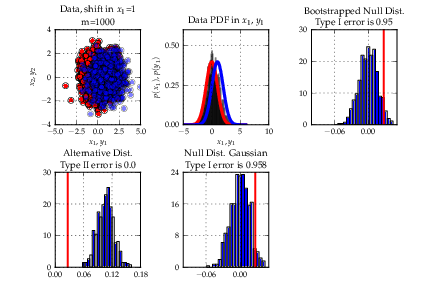
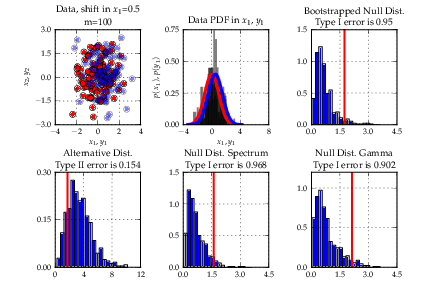
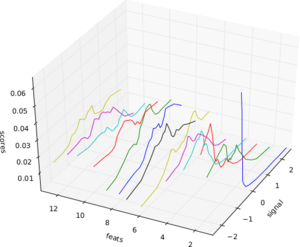
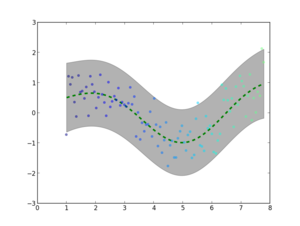
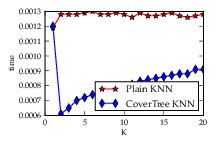
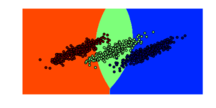
The summer came finally to an end and (yes in Berlin we still had 20 C end of October), unfortunately, so did GSoC with it. This has been the second time for SHOGUN to be in GSoC. For those unfamiliar with SHOGUN - it is a very versatile machine learning toolbox that enables unified large-scale learning for a broad range of feature types and learning settings, like classification, regression, or explorative data analysis. I again played the role of an org admin and co-mentor this year and would like to take the opportunity to summarize enhancements to the toolbox and my GSoC experience: In contrast to last year, we required code-contributions in the application phase of GSoC already, i.e., a (small) patch was mandatory for your application to be considered. This reduced the number of applications we received: 48 proposals from 38 students instead of 70 proposals from about 60 students last year but also increased the overall quality of the applications. In the end we were very happy to get 8 very talented students and have the opportunity of boosting the project thanks to their hard and awesome work. Thanks to google for sponsoring three more students compared to last GSoC. Still we gave one slot back to the pool for good to the octave project (They used it very wisely and octave will have a just-in-time compiler now, which will benefit us all!). SHOGUN 2.0.0 is the new release of the toolbox including of course all the new features that the students have implemented in their projects. On the one hand, modules that were already in SHOGUN have been extended or improved. For example, Jacob Walker has implemented Gaussian Processes (GPs) improving the usability of SHOGUN for regression problems. A framework for multiclass learning by Chiyuan Zhang including state-of-the-art methods in this area such as Error-Correcting Output Coding (ECOC) and ShareBoost, among others. In addition, Evgeniy Andreev has made very important improvements w.r.t. the accessibility of SHOGUN. Thanks to his work with SWIG director classes, now it is possible to use python for prototyping and make use of that code with the same flexibility as if it had been written in the C++ core of the project. On the other hand, completely new frameworks and other functionalities have been added to the project as well. This is the case of multitask learning and domain adaptation algorithms written by Sergey Lisitsyn and the kernel two-sample or dependence test by Heiko Strathmann. Viktor Gal has introduced latent SVMs to SHOGUN and, finally, two students have worked in the new structured output learning framework. Fernando Iglesias made the design of this framework introducing the structured output machines into SHOGUN while Michal Uricar has implemented several bundle methods to solve the optimization problem of the structured output SVM. It has been very fun and interesting how the work done in different projects has been put together very early, even during the GSoC period. Only to show an example of this dealing with the generic structured output framework and the improvements in the accessibility. It is possible to make use of the SWIG directors to implement the application specific mechanisms of a structured learning problem instance in python and then use the rest of the framework (written in C++) to solve this new problem. Students! You all did a great job and I am more than amazed what you all have achieved. Thank you very much and I hope some of you will stick around. Besides all these improvements it has been particularly challenging for me as org admin to scale the project. While I could still be deeply involved in each and every part of the project last GSoC, this was no longer possible this year. Learning to trust that your mentors are doing the job is something that didn't come easy to me. Having had about monthly all-hands meetings did help and so did monitoring the happiness of the students. I am glad that it all worked out nicely this year too. Again, I would like to mention that SHOGUN improved a lot code-base/code-quality wise. Students gave very constructive feedback about our (lack) of proper Vector/Matrix/String/Sparse Matrix types. We now have all these implemented doing automagic memory garbage collection behind scenes. We have started to transition to use Eigen3 as our matrix library of choice, which made quite a number of algorithms much easier to implement. We generalized the Label framework (CLabels) to be tractable for not just classification and regression but multitask and structured output learning. Finally, we have had quite a number of infrastructure improvements. Thanks to GSoC money we have a dedicated server for running the buildbot/buildslaves and website. The ML Group at TU Berlin does sponsor virtual machines for building SHOGUN on Debian and Cygwin. Viktor Gal stepped up providing buildslaves for Ubuntu and FreeBSD. Gunnar Raetschs group is supporting redhat based build tests. We have Travis CI running testing pull requests for breakage even before merges. Code quality is now monitored utilizing LLVMs scan-build. Bernard Hernandez appeared and wrote a fancy new website for SHOGUN. A more detailed description of the achievements of each of the students follows:

Tim Retout: Recruiting

On Monday, I need to start hiring a Perl programmer - or, at least, a programmer willing to write Perl. I work for a website where people post their CVs, which tends to help - although this will mean that my boss wants me to do it without going through recruiters. Which is fine. I just have to use the search interface that recruiters normally use. And looking through all these CVs, it dawned on me that I don't have a clue whether any of the people are suitable for the job. I have to search for keywords that we think might be relevant - "Perl", I guess - and then sort through the hundreds of people who come back from the search. It's very painful, because you can't really judge a CV without reading it - and even that won't necessarily tell you the important things about that person. Do they actually write good code? Do they work well in a team? When searching for a piece of information, you probably need just one website to answer your question; when searching for job candidates, I guess you need to see a range of CVs. And then you need to interview them; this could take weeks. Sucks to be me.

Next.

Previous.