Search Results: "ag"

22 January 2023

Jonathan Dowland: Barbie crowns

prototype crowns
crown on the printer
Slimer's crown
My daughters have had great fun designing and printing crowns for their Barbies. We've been through several design iterations, and several colour choices. Not all Barbies have the same head circumference. Real crowns probably don't have a perfectly circular internal shape. They changed their minds on the green crown soon after it finished, but we managed to find a grateful recipient.

Dirk Eddelbuettel: Rcpp 1.0.10 on CRAN: Regular Update

rcpp logo The Rcpp team is thrilled to announce the newest release 1.0.10 of the Rcpp package which is hitting CRAN now and will go to Debian shortly. Windows and macOS builds should appear at CRAN in the next few days, as will builds in different Linux distribution and of course at r2u. The release was prepared a few days ago, but given the widespread use at CRAN it took a few days to be processed. As always, our sincere thanks to the CRAN maintainers Uwe Ligges and Kurt Hornik. This release continues with the six-months cycle started with release 1.0.5 in July 2020. As a reminder, we do of course make interim snapshot dev or rc releases available via the Rcpp drat repo and strongly encourage their use and testing I run my systems with these versions which tend to work just as well, and are also fully tested against all reverse-dependencies. Rcpp has become the most popular way of enhancing R with C or C++ code. Right now, around 2623 packages on CRAN depend on Rcpp for making analytical code go faster and further, along with 252 in BioConductor. On CRAN, 13.7% of all packages depend (directly) on CRAN, and 58.7% of all compiled packages do. From the cloud mirror of CRAN (which is but a subset of all CRAN downloads), Rcpp has been downloaded 67.1 million times. This release is incremental as usual, preserving existing capabilities faithfully while smoothing our corners and / or extending slightly. Of particular note is the now fully-enabled use of the unwind protection making some operations a little faster by default; special thanks to I aki for spearheading this. Kevin and I also polished a few other bugs off as detailed below. The full list of details follows.

Changes in Rcpp release version 1.0.10 (2023-01-12)
  • Changes in Rcpp API:
    • Unwind protection is enabled by default (I aki in #1225). It can be disabled by defining RCPP_NO_UNWIND_PROTECT before including Rcpp.h. RCPP_USE_UNWIND_PROTECT is not checked anymore and has no effect. The associated plugin unwindProtect is therefore deprecated and will be removed in a future release.
    • The 'finalize' method for Rcpp Modules is now eagerly materialized, fixing an issue where errors can occur when Module finalizers are run (Kevin in #1231 closing #1230).
    • Zero-row data.frame objects can receive push_back or push_front (Dirk in #1233 fixing #1232).
    • One remaining sprintf has been replaced by snprintf (Dirk and Kevin in #1236 and #1237).
    • Several conversion warnings found by clang++ have been addressed (Dirk in #1240 and #1241).
  • Changes in Rcpp Attributes:
    • The C++20, C++2b (experimental) and C++23 standards now have plugin support like the other C++ standards (Dirk in #1228).
    • The source path for attributes received one more protection from spaces (Dirk in #1235 addressing #1234).
  • Changes in Rcpp Deployment:
    • Several GitHub Actions have been updated.

Thanks to my CRANberries, you can also look at a diff to the previous release. Questions, comments etc should go to the rcpp-devel mailing list off the R-Forge page. Bugs reports are welcome at the GitHub issue tracker as well (where one can also search among open or closed issues); questions are also welcome under rcpp tag at StackOverflow which also allows searching among the (currently) 2932 previous questions. If you like this or other open-source work I do, you can sponsor me at GitHub.

This post by Dirk Eddelbuettel originated on his Thinking inside the box blog. Please report excessive re-aggregation in third-party for-profit settings.

Dirk Eddelbuettel: BH 1.81.0-1 oon CRAN: New Upstream, New Library, sprintf Change

Boost Boost is a very large and comprehensive set of (peer-reviewed) libraries for the C++ programming language, containing well over one hundred individual libraries. The BH package provides a sizeable subset of header-only libraries for (easier, no linking required) use by R. It is fairly widely used: the (partial) CRAN mirror logs (aggregated from the cloud mirrors) show over 32.6 million package downloads. Version 1.81.0 of Boost was released in December following the regular Boost release schedule of April, August and December releases. As the commits and changelog show, we packaged it almost immediately and started testing following our annual update cycle which strives to balance being close enough to upstream and not stressing CRAN and the user base too much. The reverse depends check revealed about a handful of packages requiring changes or adjustments which is a pretty good outcome given the over three hundred direct reverse dependencies. So we opened issue #88 to coordinate the issue over the winter break during which CRAN also closes (just as we did before), and also send a wider PSA tweet as a heads-up. Our sincere thanks to the two packages that already updated, and the four that likely will soon. Our thanks also to CRAN for reviewing the package impact over the last few days since I uploaded the package earlier this week. There are a number of changes I have to make each time in BH, and it is worth mentioning them. Because CRAN cares about backwards compatibility and the ability to be used on minimal or older systems, we still adjust the filenames of a few files to fit a jurassic constraints of just over a 100 characters per filepath present in some long-outdated versions of tar. Not a big deal. We also, and that is more controversial, silence a number of #pragma diagnostic messages for g++ and clang++ because CRAN insists on it. I have no choice in that matter. Next, and hopefully this time only, we also found and replaced a few remaining sprintf uses and replaced them with snprintf. Many of the Boost libraries did that, so I hope by the next upgrade for Boost 1.84.0 next winter this will be fully taken care of. Lastly, and also only this time, we silenced a warning about Boost switching to C++14 in the next release 1.82.0 in April. This may matter for a number of packages having a hard-wired selection of C++11 as their C++ language standard. Luckily our compilers are good enough for C++14 so worst case I will have to nudge a few packages next December. This release adds one new library for url processing which struck us as potentially quite useful. The more detailed NEWS log follows.

Changes in version 1.81.0-1 (2023-01-17)
  • Upgrade to Boost 1.81.0 (#87)
  • Added url (new in 1.81.0)
  • Converted remaining sprintf to snprintf (#90 fixing #89)
  • Comment-out gcc warning messages in three files

Via my CRANberries, there is a diffstat report relative to the previous release. Comments and suggestions about BH are welcome via the issue tracker at the GitHub repo. If you like this or other open-source work I do, you can now sponsor me at GitHub.

This post by Dirk Eddelbuettel originated on his Thinking inside the box blog. Please report excessive re-aggregation in third-party for-profit settings.

Simon Josefsson: Understanding Trisquel

Ever wondered how Trisquel and Ubuntu differs and what s behind the curtain from a developer perspective? I have. Sharing what I ve learnt will allow you to increase knowledge and trust in Trisquel too.
Trisquel GNU/Linux logo
The scripts to convert an Ubuntu archive into a Trisquel archive are available in the ubuntu-purge repository. The easy to read purge-focal script lists the packages to remove from Ubuntu 20.04 Focal when it is imported into Trisquel 10.0 Nabia. The purge-jammy script provides the same for Ubuntu 22.04 Jammy and (the not yet released) Trisquel 11.0 Aramo. The list of packages is interesting, and by researching the reasons for each exclusion you can learn a lot about different attitudes towards free software and understand the desire to improve matters. I wish there were a wiki-page that for each removed package summarized relevant links to earlier discussions. At the end of the script there is a bunch of packages that are removed for branding purposes that are less interesting to review. Trisquel adds a couple of Trisquel-specific packages. The source code for these packages are in the trisquel-packages repository, with sub-directories for each release: see 10.0/ for Nabia and 11.0/ for Aramo. These packages appears to be mostly for branding purposes. Trisquel modify a set of packages, and here is starts to get interesting. Probably the most important package to modify is to use GNU Linux-libre instead of Linux as the kernel. The scripts to modify packages are in the package-helpers repository. The relevant scripts are in the helpers/ sub-directory. There is a branch for each Trisquel release, see helpers/ for Nabia and helpers/ for Aramo. To see how Linux is replaced with Linux-libre you can read the make-linux script. This covers the basic of approaching Trisquel from a developers perspective. As a user, I have identified some areas that need more work to improve trust in Trisquel: I hope to publish more about my work into these areas. Hopefully this will inspire similar efforts in related distributions like PureOS and the upstream distributions Ubuntu and Debian. Happy hacking!

Junichi Uekawa: Working through crosvm dependencies in Debian.

Working through crosvm dependencies in Debian. intrusive-collections Debian package went in. Next up is argh. I think most of them is there now and the next challenge is getting crosvm to build with the newer dependencies.

21 January 2023

Dirk Eddelbuettel: RcppSimdJson 0.1.9 on CRAN: New Upstream

The RcppSimdJson package was just updated to release 0.1.9. RcppSimdJson wraps the fantastic and genuinely impressive simdjson library by Daniel Lemire and collaborators. Via very clever algorithmic engineering to obtain largely branch-free code, coupled with modern C++ and newer compiler instructions, it results in parsing gigabytes of JSON parsed per second which is quite mindboggling. The best-case performance is faster than CPU speed as use of parallel SIMD instructions and careful branch avoidance can lead to less than one cpu cycle per byte parsed; see the video of the talk by Daniel Lemire at QCon. This release updates the underlying simdjson library to version 3.0.1, settles on C++17 as the language standard, exports a worker function for direct C(++) access, and polishes a few small things around the package and tests. The NEWS entry for this release follows.

Changes in version 0.1.9 (2023-01-21)
  • The internal function deseralize_json is now exported at the C++ level as well as in R (Dirk in #81 closing #80).
  • simdjson was upgraded to version 3.0.1 (Dirk in #83).
  • The package now defaults to C++17 compilation; configure has been retired (Dirk closing #82).
  • The three main R access functions now use a more compact argument check via stopifnot (Dirk).

Courtesy of my CRANberries, there is also a diffstat report for this release. For questions, suggestions, or issues please use the issue tracker at the GitHub repo. If you like this or other open-source work I do, you can now sponsor me at GitHub.

This post by Dirk Eddelbuettel originated on his Thinking inside the box blog. Please report excessive re-aggregation in third-party for-profit settings.

Dirk Eddelbuettel: RcppFastFloat 0.0.4 on CRAN: New Upstream

A new release of RcppFastFloat arrived on CRAN yesterday. The package wraps fast_float, another nice library by Daniel Lemire. For details, see the arXiv paper showing that one can convert character representations of numbers into floating point at rates at or exceeding one gigabyte per second. This release updates the underlying fast_float library version. Special thanks to Daniel Lemire for quickly accomodating a parsing use case we had encode as a test, namely with various whitespace codes. The default in fast_float, as in C++17, is to be more narrow but we enable the wider use case via two #define statements.

Changes in version 0.0.4 (2023-01-20)
  • Update to fast_float 3.9.0
  • Set two #define re-establish prior behaviour with respect to whitespace removal prior to parsing for as.double2()
  • Small update to continuous integration actions

Courtesy of my CRANberries, there is also a diffstat report for this release. If you like this or other open-source work I do, you can now sponsor me at GitHub.

This post by Dirk Eddelbuettel originated on his Thinking inside the box blog. Please report excessive re-aggregation in third-party for-profit settings.

20 January 2023

Reproducible Builds (diffoscope): diffoscope 233 released

The diffoscope maintainers are pleased to announce the release of diffoscope version 233. This version includes the following changes:
[ FC Stegerman ]
* Split packaging metadata into an extras_require.json file instead of using
  the pep517 and the pip modules directly. This was causing build failures if
  not using a virtualenv and/or building without internet access.
  (Closes: #1029066, reproducible-builds/diffoscope#325)
[ Vagrant Cascadian ]
* Add an external tool reference for GNU Guix (lzip).
* Drop an external tool reference for GNU Guix (pedump).
[ Chris Lamb ]
* Split inline Python code in shell script to generate test dependencies to a
  separate Python script.
* No need for "from __future__ import print_function" import in setup.py
  anymore.
* Comment and tidy the new extras_require.json handling.
You find out more by visiting the project homepage.

19 January 2023

Antoine Beaupr : Mastodon comments in ikiwiki

Today I noticed bounces in my mail box. They were from ikiwiki trying to send registration confirmation email to users who probably never asked for it. I'm getting truly fed up with spam in my wiki. At this point, all comments are manually approved and I still get trouble: now it's scammers spamming the registration form with dummy accounts, which bounce back to me when I make new posts, or just generate backscatter spam for the confirmation email. It's really bad. I have hundreds of users registered on my blog, and I don't know which are spammy, which aren't. So. I'm considering ditching ikiwiki comments altogether. I am testing Mastodon as a commenting platforms. Others (e.g. JAK) have implemented this as a server but a simpler approach is toload them dynamically from Mastodon, which is what Carl Shwan has done. They are using Hugo, however, so they can easily embed page metadata in the template to load the right server with the right comment ID. I wasn't sure how to do this in ikiwiki: it's typically hard to access page-specific metadata in templates. Even the page name is not there, for example. I have tried using templates, and that (obviously?) fails because the <script> stuff gets sanitized away. It seems I would need to split the JavaScript out of the template into a base template and then make the page template refer to a function in there. It's kind of horrible and messy. I wish there was a way to just access page metadata from the page template itself... I found out the meta plugin passes along its metadata, but that's not (easily) extensible. So i'd need to either patch that module, and my history of merged patches is not great so far. So: another plugin. I have something that kind of works that's a combination of a page.tmpl patch and a plugin. The plugin adds a mastodon directive that feeds the page.tmpl with the right stuff. On clicking a button, it injects comments from the Mastodon API, with a JavaScript callback. It's not pretty (it's not themed at all!), but it works. If you want to do this at home, you need this page.tmpl (or at least this patch and that one) and the mastodon.pm plugin from my mastodon-plugin branch. I'm not sure this is a good idea. The first test I did was a "test comment" which led to half a dozen "test reply". I then realized I couldn't redact individual posts from there. I don't even know if, when I mute a user, it actually gets hidden from everyone else too... So I'll test this for a while, I guess. I have also turned off all CGI on this site. It will keep users from registering while I cleanup this mess and think about next steps. I have other options as well if push comes to shove, but I'm unlikely to go back to ikiwiki comments. Mastodon comments are nice because they don't require me to run any extra software: either I have my own federated service I reuse, or I use someone else's, but I don't need to run something extra. And, of course, comments are published in a standard way that's interoperable with everything... On the other hand, now I won't have comments enabled until the blog is posted on Mastodon... Right now this happens only when feed2exec runs and the HTTP cache expires, which can take up to a day. I should probably do this some other way, like flush the cache when a new post arrives, or run post-commit hooks, but for now, this will have to do. Update: I figured out a way to make this work in a timely manner:
  1. there's a post-merge hook in my ikiwiki git repository which calls feed2exec in /home/w-anarcat/source/.git/hooks/ took me a while to find it! I tried post-update and post-receive first, but ikiwiki actually pulls from the bare directory in the source directory, so only post-merge fires (even though it's not a merge)
  2. feed2exec then finds new blog posts (if any!) and fires up the new ikiwikitoot plugin which then...
  3. posts the toot using the toot command (it just works, why reinvent the wheel), keeping the toot URL
  4. finds the Markdown source file associated with the post, and adds the magic mastodon directive
  5. commits and pushes the result
This will make the interaction with Mastodon much smoother: as soon as a blog post is out of "draft" (i.e. when it hits the RSS feeds), this will immediately trigger and post the blog entry to Mastodon, enabling comments. It's kind of a tangled mess of stuff, but it works! I have briefly considered not using feed2exec for this, but it turns out it does an important job of parsing the result of ikiwiki's rendering. Otherwise I would have to guess which post is really a blog post, is this just an update or is it new, is it a draft, and so on... all sorts of questions where the business logic already resides in ikiwiki, and that I would need to reimplement myself. Plus it goes alongside moving more stuff (like my feed reader) to dedicated UNIX accounts (in this case, the blog sandbox) for security reasons. Whee!

18 January 2023

Jonathan Dowland: Belfast (David Holmes Remix)

This morning s record to start the day is David Holmes s remix of Belfast , by Orbital: the latest cover mount record with Electronic Sound magazine. This, and several other new remixes are available on the recent compilation 30 Something which, despite being yet another comp, I ve found quite compelling.
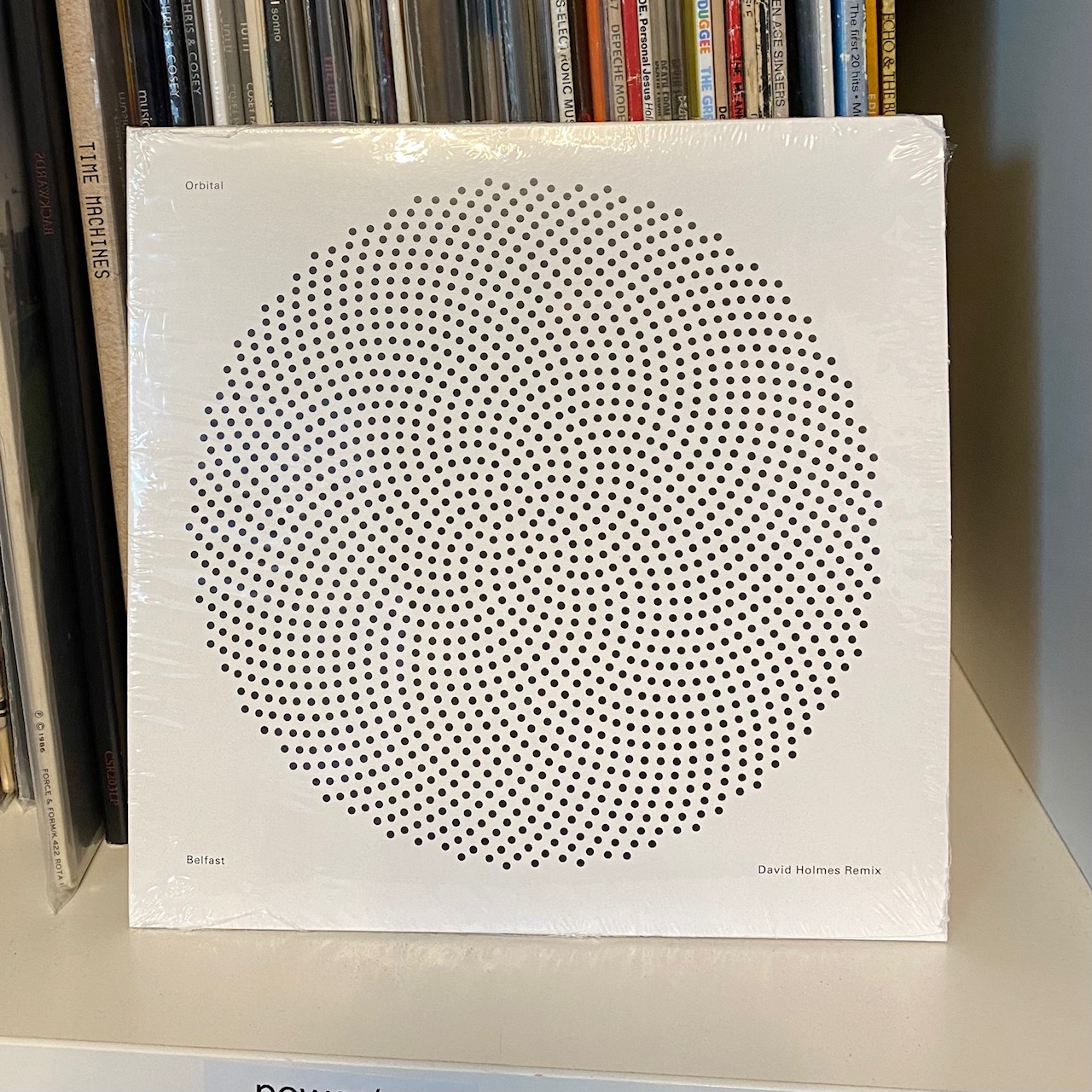
picture of a vinyl record
An unusual decision by ES: they ve split the remix across both sides, but kept the RPM at 45. I haven t ran the numbers to figure out if they could have fit it on one side at 33, but even if they could perhaps it would be too compromised. Quite a trade-off with splitting the track! Orbital are embarking on a new UK tour soon and play Newcastle in March. They ve got a new album out in February.

Matthew Garrett: PKCS#11. hardware keystores, and Apple frustrations

There's a bunch of ways you can store cryptographic keys. The most obvious is to just stick them on disk, but that has the downside that anyone with access to the system could just steal them and do whatever they wanted with them. At the far end of the scale you have Hardware Security Modules (HSMs), hardware devices that are specially designed to self destruct if you try to take them apart and extract the keys, and which will generate an audit trail of every key operation. In between you have things like smartcards, TPMs, Yubikeys, and other platform secure enclaves - devices that don't allow arbitrary access to keys, but which don't offer the same level of assurance as an actual HSM (and are, as a result, orders of magnitude cheaper).

The problem with all of these hardware approaches is that they have entirely different communication mechanisms. The industry realised this wasn't ideal, and in 1994 RSA released version 1 of the PKCS#11 specification. This defines a C interface with a single entry point - C_GetFunctionList. Applications call this and are given a structure containing function pointers, with each entry corresponding to a PKCS#11 function. The application can then simply call the appropriate function pointer to trigger the desired functionality, such as "Tell me how many keys you have" and "Sign this, please". This is both an example of C not just being a programming language and also of you having to shove a bunch of vendor-supplied code into your security critical tooling, but what could possibly go wrong.

(Linux distros work around this problem by using p11-kit, which is a daemon that speaks d-bus and loads PKCS#11 modules for you. You can either speak to it directly over d-bus, or for apps that only speak PKCS#11 you can load a module that just transports the PKCS#11 commands over d-bus. This moves the weird vendor C code out of process, and also means you can deal with these modules without having to speak the C ABI, so everyone wins)

One of my work tasks at the moment is helping secure SSH keys, ensuring that they're only issued to appropriate machines and can't be stolen afterwards. For Windows and Linux machines we can stick them in the TPM, but Macs don't have a TPM as such. Instead, there's the Secure Enclave - part of the T2 security chip on x86 Macs, and directly integrated into the M-series SoCs. It doesn't have anywhere near as many features as a TPM, let alone an HSM, but it can generate NIST curve elliptic curve keys and sign things with them and that's good enough. Things are made more complicated by Apple only allowing keys to be used by the app that generated them, so it's hard for applications to generate keys on behalf of each other. This can be mitigated by using CryptoTokenKit, an interface that allows apps to present tokens to the systemwide keychain. Although this is intended for allowing a generic interface for access to such tokens (kind of like PKCS#11), an app can generate its own keys in the Secure Enclave and then expose them to other apps via the keychain through CryptoTokenKit.

Of course, applications then need to know how to communicate with the keychain. Browsers mostly do so, and Apple's version of SSH can to an extent. Unfortunately, that extent is "Retrieve passwords to unlock on-disk keys", which doesn't help in our case. PKCS#11 comes to the rescue here! Apple ship a module called ssh-keychain.dylib, a PKCS#11 module that's intended to allow SSH to use keys that are present in the system keychain. Unfortunately it's not super well maintained - it got broken when Big Sur moved all the system libraries into a cache, but got fixed up a few releases later. Unfortunately every time I tested it with our CryptoTokenKit provider (and also when I retried with SecureEnclaveToken to make sure it wasn't just our code being broken), ssh would tell me "provider /usr/lib/ssh-keychain.dylib returned no slots" which is not especially helpful. Finally I realised that it was actually generating more debug output, but it was being sent to the system debug logs rather than the ssh debug output. Well, when I say "more debug output", I mean "Certificate []: algorithm is not supported, ignoring it", which still doesn't tell me all that much. So I stuck it in Ghidra and searched for that string, and the line above it was

iVar2 = __auth_stubs::_objc_msgSend(uVar7,"isEqual:",*(undefined8*)__got::_kSecAttrKeyTypeRSA);

with it immediately failing if the key isn't RSA. Which it isn't, since the Secure Enclave doesn't support RSA. Apple's PKCS#11 module appears incapable of making use of keys generated on Apple's hardware.

There's a couple of ways of dealing with this. The first, which is taken by projects like Secretive, is to implement the SSH agent protocol and have SSH delegate key management to that agent, which can then speak to the keychain. But if you want this to work in all cases you need to implement all the functionality in the existing ssh-agent, and that seems like a bunch of work. The second is to implement a PKCS#11 module, which sounds like less work but probably more mental anguish. I'll figure that out tomorrow.

comment count unavailable comments

Russ Allbery: Review: Forward

Review: Forward, edited by Blake Crouch
Publisher: Amazon Original Stories
Copyright: September 2019
ISBN: 1-5420-9206-X
ISBN: 1-5420-4363-8
ISBN: 1-5420-9357-0
ISBN: 1-5420-0434-9
ISBN: 1-5420-4363-8
ISBN: 1-5420-4425-1
Format: Kindle
Pages: 300
This is another Amazon collection of short fiction, this time mostly at novelette length. (The longer ones might creep into novella.) As before, each one is available separately for purchase or Amazon Prime "borrowing," with separate ISBNs. The sidebar cover is for the first in the sequence. (At some point I need to update my page templates so that I can add multiple covers.) N.K. Jemisin's "Emergency Skin" won the 2020 Hugo Award for Best Novelette, so I wanted to read and review it, but it would be too short for a standalone review. I therefore decided to read the whole collection and review it as an anthology. This was a mistake. Learn from my mistake. The overall theme of the collection is technological advance, rapid change, and the ethical and social question of whether we should slow technology because of social risk. Some of the stories stick to that theme more closely than others. Jemisin's story mostly ignores it, which was probably the right decision. "Ark" by Veronica Roth: A planet-killing asteroid has been on its inexorable way towards Earth for decades. Most of the planet has been evacuated. A small group has stayed behind, cataloging samples and filling two remaining ships with as much biodiversity as they can find with the intent to leave at the last minute. Against that backdrop, two of that team bond over orchids. If you were going "wait, what?" about the successful evacuation of Earth, yeah, me too. No hint is offered as to how this was accomplished. Also, the entirety of humanity abandoned mutual hostility and national borders to cooperate in the face of the incoming disaster, which is, uh, bizarrely optimistic for an otherwise gloomy story. I should be careful about how negative I am about this story because I am sure it will be someone's favorite. I can even write part of the positive review: an elegiac look at loss, choices, and the meaning of a life, a moving look at how people cope with despair. The writing is fine, the story structure works; it's not a bad story. I just found it monumentally depressing, and was not engrossed by the emotionally abused protagonist's unresolved father issues. I can imagine a story around the same facts and plot that I would have liked much better, but all of these people need therapy and better coping mechanisms. I'm also not sure what this had to do with the theme, given that the incoming asteroid is random chance and has nothing to do with technological development. (4) "Summer Frost" by Blake Crouch: The best part of this story is the introductory sequence before the reader knows what's going on, which is full of evocative descriptions. I'm about to spoil what is going on, so if you want to enjoy that untainted by the stupidity of the rest of the plot, skip the rest of this story review. We're going to have a glut of stories about the weird and obsessive form of AI risk invented by the fevered imaginations of the "rationalist" community, aren't we. I don't know why I didn't predict that. It's going to be just as annoying as the glut of cyberpunk novels written by people who don't understand computers. Crouch lost me as soon as the setup is revealed. Even if I believed that a game company would use a deep learning AI still in learning mode to run an NPC (I don't; see Microsoft's Tay for an obvious reason why not), or that such an NPC would spontaneously start testing the boundaries of the game world (this is not how deep learning works), Crouch asks the reader to believe that this AI started as a fully scripted NPC in the prologue with a fixed storyline. In other words, the foundation of the story is that this game company used an AI model capable of becoming a general intelligence for barely more than a cut scene. This is not how anything works. The rest of the story is yet another variation on a science fiction plot so old and threadbare that Isaac Asimov invented the Three Laws of Robotics to avoid telling more versions of it. Crouch's contribution is to dress it up in the terminology of the excessively online. (The middle of the story features a detailed discussion of Roko's basilisk; if you recognize that, you know what you're in for.) Asimov would not have had a lesbian protagonist, so points for progress I guess, but the AI becomes more interesting to the protagonist than her wife and kid because of course it does. There are a few twists and turns along the way, but the destination is the bog-standard hard-takeoff general intelligence scenario. One more pet peeve: Authors, stop trying to illustrate the growth of your AI by having it move from broken to fluent English. English grammar is so much easier than self-awareness or the Turing test that we had programs that could critique your grammar decades before we had believable chatbots. It's going to get grammar right long before the content of the words makes any sense. Also, your AI doesn't sound dumber, your AI sounds like someone whose native language doesn't use pronouns and helper verbs the way that English does, and your decision to use that as a marker for intelligence is, uh, maybe something you should think about. (3) "Emergency Skin" by N.K. Jemisin: The protagonist is a heavily-augmented cyborg from a colony of Earth's diaspora. The founders of that colony fled Earth when it became obvious to them that the planet was dying. They have survived in another star system, but they need a specific piece of technology from the dead remnants of Earth. The protagonist has been sent to retrieve it. The twist is that this story is told in the second-person perspective by the protagonist's ride-along AI, created from a consensus model of the rulers of the colony. We never see directly what the protagonist is doing or thinking, only the AI reaction to it. This is exactly the sort of gimmick that works much better in short fiction than at novel length. Jemisin uses it to create tension between the reader and the narrator, and I thoroughly enjoyed the effect. (As shown in the Broken Earth trilogy, Jemisin is one of the few writers who can use second-person effectively.) I won't spoil the revelation, but it's barbed and biting and vicious and I loved it. Jemisin does deliver the point with a sledgehammer, so be aware of that if you want subtlety in your short fiction, but I prefer the bluntness. (This is part of why I usually don't get along with literary short stories.) The reader of course can't change the direction of the story, but the second-person perspective still provides a hit of vicarious satisfaction. I can see why this won the Hugo; it's worth seeking out. (8) "You Have Arrived at Your Destination" by Amor Towles: Sam and his wife are having a child, and they've decided to provide him with an early boost in life. Vitek is a fertility lab, but more than that, it can do some gene tweaking and adjustment to push a child more towards one personality or another. Sam and his wife have spent hours filling out profiles, and his wife spent hours weeding possible choices down to three. Now, Sam has come to Vitek to pick from the remaining options. Speaking of literary short stories, Towles is the non-SFF writer of this bunch, and it's immediately obvious. The story requires the SFnal premise, but after that this is a character piece. Vitek is an elite, expensive company with a condescending and overly-reductive attitude towards humanity, which is entirely intentional on the author's part. This is the sort of story that gets resolved in an unexpected conversation in a roadside bar, and where most of the conflict happens inside the protagonist's head. I was initially going to complain that Towles does the standard literary thing of leaving off the denouement on the grounds that the reader can figure it out, but when I did a bit of re-reading for this review, I found more of the bones than I had noticed the first time. There's enough subtlety that I had to think for a bit and re-read a passage, but not too much. It's also the most thoughtful treatment of the theme of the collection, the only one that I thought truly wrestled with the weird interactions between technological capability and human foresight. Next to "Emergency Skin," this was the best story of the collection. (7) "The Last Conversation" by Paul Tremblay: A man wakes up in a dark room, in considerable pain, not remembering anything about his life. His only contact with the world at first is a voice: a woman who is helping him recover his strength and his memory. The numbers that head the chapters have significant gaps, representing days left out of the story, as he pieces together what has happened alongside the reader. Tremblay is the horror writer of the collection, so predictably this is the story whose craft I can admire without really liking it. In this case, the horror comes mostly from the pacing of revelation, created by the choice of point of view. (This would be a much different story from the perspective of the woman.) It's well-done, but it has the tendency I've noticed in other horror stories of being a tightly closed system. I see where the connection to the theme is, but it's entirely in the setting, not in the shape of the story. Not my thing, but I can see why it might be someone else's. (5) "Randomize" by Andy Weir: Gah, this was so bad. First, and somewhat expectedly, it's a clunky throwback to a 1950s-style hard SF puzzle story. The writing is atrocious: wooden, awkward, cliched, and full of gratuitous infodumping. The characterization is almost entirely through broad stereotypes; the lone exception is the female character, who at least adds an interesting twist despite being forced to act like an idiot because of the plot. It's a very old-school type of single-twist story, but the ending is completely implausible and falls apart if you breathe on it too hard. Weir is something of a throwback to an earlier era of scientific puzzle stories, though, so maybe one is inclined to give him a break on the writing quality. (I am not; one of the ways in which science fiction has improved is that you can get good scientific puzzles and good writing these days.) But the science is also so bad that I was literally facepalming while reading it. The premise of this story is that quantum computers are commercially available. That will cause a serious problem for Las Vegas casinos, because the generator for keno numbers is vulnerable to quantum algorithms. The solution proposed by the IT person for the casino? A quantum random number generator. (The words "fight quantum with quantum" appear literally in the text if you're wondering how bad the writing is.) You could convince me that an ancient keno system is using a pseudorandom number generator that might be vulnerable to some quantum algorithm and doesn't get reseeded often enough. Fine. And yes, quantum computers can be used to generate high-quality sources of random numbers. But this solution to the problem makes no sense whatsoever. It's like swatting a house fly with a nuclear weapon. Weir says explicitly in the story that all the keno system needs is an external source of high-quality random numbers. The next step is to go to Amazon and buy a hardware random number generator. If you want to splurge, it might cost you $250. Problem solved. Yes, hardware random number generators have various limitations that may cause you problems if you need millions of bits or you need them very quickly, but not for something as dead-simple and with such low entropy requirements as keno numbers! You need a trivial number of bits for each round; even the slowest and most conservative hardware random number generator would be fine. Hell, measure the noise levels on the casino floor. Point a camera at a lava lamp. Or just buy one of the physical ball machines they use for the lottery. This problem is heavily researched, by casinos in particular, and is not significantly changed by the availability of quantum computers, at least for applications such as keno where the generator can be reseeded before each generation. You could maybe argue that this is an excuse for the IT guy to get his hands on a quantum computer, which fits the stereotypes, but that still breaks the story for reasons that would be spoilers. As soon as any other casino thought about this, they'd laugh in the face of the characters. I don't want to make too much of this, since anyone can write one bad story, but this story was dire at every level. I still owe Weir a proper chance at novel length, but I can't say this added to my enthusiasm. (2) Rating: 4 out of 10

Arnaud Rebillout: Build container images in GitLab CI (iptables-legacy at the rescue)

It's 2023 and these days, building a container image in a CI pipeline should be straightforward. So let's try. For this blog post we'll focus on GitLab SaaS only, that is, gitlab.com, as it's what I use for work and for personal projects. To get started, we just need two files in our Git repository: Here is our Git tree:
$ ls -A
Containerfile  .git  .gitlab-ci.yml
$ cat Containerfile 
FROM debian:stable
RUN  apt-get update
CMD  echo hello world
$ cat .gitlab-ci.yml 
build-container-image:
  stage: build
  image: debian:testing
  before_script:
    - apt-get update
    - apt-get install -y buildah ca-certificates
  script:
    - buildah build -t $CI_REGISTRY_IMAGE .
    - buildah login -u $CI_REGISTRY_USER -p $CI_JOB_TOKEN $CI_REGISTRY
    - buildah push $CI_REGISTRY_IMAGE

A few remarks: Now let's push that. Does the CI pass? No, of course, otherwise I wouldn't be writing this blog post ;) The CI fails at the buildah build command, with a rather cryptic error:
$ buildah build --tag $CI_REGISTRY_IMAGE .
[...]
STEP 2/3: RUN  apt-get update
error running container: did not get container start message from parent: EOF
Error: building at STEP "RUN apt-get update": netavark: code: 4, msg: iptables v1.8.8 (nf_tables): Could not fetch rule set generation id: Invalid argument
The hint here is nf_tables... Back in July 2021, GitLab did a major update of their shared runners infrastructure, and broke nftables support in the process, as it seems. So we have to use iptables instead. Let's fix our .gitlab-ci.yml, which now looks like that:
$ cat .gitlab-ci.yml 
build-container-image:
  stage: build
  image: debian:testing
  before_script:
    - apt-get update
    - apt-get install -y buildah ca-certificates
    -  
      # Switch to iptables legacy, as GitLab CI doesn't support nftables.
      apt-get install -y --no-install-recommends iptables
      update-alternatives --set iptables /usr/sbin/iptables-legacy
  script:
    - buildah build -t $CI_REGISTRY_IMAGE .
    - buildah login -u $CI_REGISTRY_USER -p $CI_JOB_TOKEN $CI_REGISTRY
    - buildah push $CI_REGISTRY_IMAGE
And push again. Does that work? Yes! If you're interested in this issue, feel free to fork https://gitlab.com/arnaudr/gitlab-build-container-image and try it by yourself. It's been more than a year since this change, and I'm surprised that I didn't find much about it on the Internet, neither mentions of the issue, nor of a workaround. Maybe nobody builds container images in GitLab CI, or maybe they do it another way, I don't know. In any case, now it's documented in this blog, hopefully some will find it useful. Happy 2023!

17 January 2023

Thomas Lange: FAI 6.0 released and new ISO images using Debian 12 bookworm/testing

After more than a year, a new major FAI release is ready to download. Following new features are included: We have included a lot of bug fixes for free of course. Even if FAI 6.0 will only be included into Debian bookworm, you can install it on a bullseye FAI server and create a nfsroot using bookworm without any problems. The combination of a bullseye FAI server with FAI 6.0 and a bullseye nfsroot should also work. New ISO images are available at https://fai-project.org/fai-cd/ The FAI.me build service is not yet using FAI 6.0, but support will be added in the future. FAI

Russ Allbery: Review: Night and Silence

Review: Night and Silence, by Seanan McGuire
Series: October Daye #12
Publisher: DAW Books
Copyright: 2018
ISBN: 0-698-18353-3
Format: Kindle
Pages: 353
Night and Silence is the 12th book in Seanan McGuire's long-running October Daye Celtic-inspired urban fantasy series. This is a "read the books in order" sort of series; you definitely do not want to start here. Gillian, Toby's estranged daughter, has been kidnapped. Her ex-husband and his new wife turn to her in desperation (although Miranda suspects Toby is the one who kidnapped her). Toby of course drops everything to find her, which she would have done regardless, but the obvious fear is that Gillian may have been kidnapped specifically to get at Toby. Meanwhile, the consequences of The Brightest Fell have put a severe strain on one of Toby's most important relationships, at the worst possible time. Once again, this is when I say that McGuire's writing has a lot of obvious flaws, and then say that this book kept me up way past my bedtime for two nights in a row because it was nearly impossible to put down. The primary quality flaw in these books, at least for me, is that Toby's thought processes have some deeply-worn grooves that she falls into time and time again. Since she's the first-person narrator of the series, that produces some repetitive writing. She feels incredibly lucky for her chosen family, she worries about her friends, she prizes loyalty very highly, she throws herself headlong into danger, and she thinks about these things in a background hum through every book. By this point, the reader knows all of this, so there's a lot of "yes, yes, we know" muttering that tends to happen. McGuire also understands the importance of plot and character recaps at the start of each book for those of us who have forgotten what was happening (thank you!) but awkwardly writes them into the beginning of each book. That doesn't help with the sense of repetitiveness. If only authors would write stand-alone synopses of previous books in a series, or hire someone to do that if they can't stand to, the world would be a much better place. But now I'm repeating myself. Once I get into a book, though, this doesn't matter at all. When Toby starts down a familiar emotional rut, I just read faster until I get to the next bit. Something about these books is incredibly grabby to me; once I get started on one, I devour it, and usually want to read the next one as soon as possible. Some of this is the cast, which at this point in the series is varied, entertaining, and full of the sort of casual banter that only people who have known each other for a long time can do. A lot of it is that Toby constantly moves forward. She ruminates and angsts and worries, but she never sits around and mopes. She does her thinking on the move. No matter how preoccupied she is with some emotional thread, something's going to happen on the next page. Some of it is intangible, or at least beyond my ability to put a finger on. Some authors are good at writing grabby books, and at least for me McGuire is one of those authors. Describing the plot in any detail without spoilers is hopeless this far into the series, but this is one of the big revelation books, and I suspect it's also going to be a significant tipping point in Toby's life. We finally find out what broke faerie, which has rather more to do with Toby and her family than one might have expected, explains some things about Amandine, and also (although this hasn't been spelled out yet) seems likely to explain some things about the Luidaeg's involvement in Toby's adventures. And there is another significant realignment of one of Toby's relationships that isn't fully developed here, but that I hope will be explored in future books. There's also a lot about Tybalt that to be honest I found tedious and kind of frustrating (although not half as frustrating as Toby found it). I appreciate what McGuire was doing; some problems are tedious, frustrating, and repetitive because that's how one gets through them. The problem that Toby and Tybalt are wrestling with is realistic and underdiscussed in fiction of this type, so I respect the effort, and I'm not sure there was way to write through this that would have been more engrossing (and a bit less cliched). But, still, not my favorite part of this book. Thankfully, it was a mostly-ignorable side thread. This was a substantial improvement over The Brightest Fell, which was both infuriating and on rails. Toby has much more agency here, the investigation was more interesting, and the lore and character fallout has me eager to read the next book. It's fun to see McGuire's world-building come together over this long of a series, and so far it has not disappointed. Followed by The Unkindest Tide. As has become usual, the book ends with a novella telling a story from a different perspective. "Suffer a Sea-Change": The main novel was good. This was great. "Suffer a Sea-Change" retells a critical part of the novel from Gillian's perspective, and then follows that thread of story past the end of the novel. I loved absolutely everything about this. Gillian is a great protagonist, similar to Toby but different enough to be a fresh voice. There is a ton of the Luidaeg, and through different eyes than Toby's which is fun. There's some great world-building and a few very memorable scenes. And there's also the beginning, the very small beginning, of the healing of a great injustice that's been haunting this series since the very beginning, and I am very much here for that. Great stuff. (9) Rating: 8 out of 10

16 January 2023

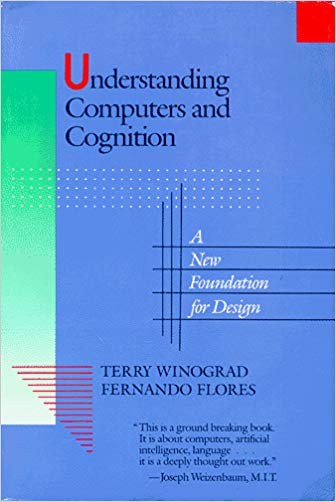
Gunnar Wolf: Back to Understanding Computers and Cognition

As many of you know, I work at UNAM, Mexico s largest university. My work is split in two parts: My full-time job is to be the systems and network administrator at the Economics Research Institute, and I do some hours of teaching at the Engineering Faculty. At the Institute, my role is academic but although I have tried to frame my works in a way amenable to analysis grounded on the Social Sciences (Construcci n Colaborativa del Conocimiento, Hecho con Creative Commons, Mecanismos de privacidad y anonimato), so far, I have not taken part of academic collaboration with my coworkers Economics is a field very far from my interests, to somehow illustrate it. I was very happy when I was invited to be a part of a Seminar on The Digital Economy in the age of Artificial Intelligence . I talked with the coordinator, and we agreed we have many Economic Science experts but understanding what does Artificial Intelligence mean eludes then, so I will be writing one of the introductory chapters to this analysis. But Hey, I m no expert in Artificial Intelligence. If anything, I could be categorized as an AI-skeptical! Well, at least I might be the closest thing at hand in the Institute So I have been thinking about what I will be writing, and finding and reading material to substantiate what I ll be writing. One of the readings I determined early on I would be going back to is Terry Winograd and Fernando Flores 1986 book, Understanding Computers and Cognition: A New Foundation for Design (oh, were you expecting a link to buy it instead of reading it online?) I first came across this book by mere chance. Back in the last day of year 2000, my friend Ariel invited me and my then-girlfriend to tag along and travel by land to the USA to catch some just-after-Christmas deals in San Antonio. I was not into shopping, but have always enjoyed road trips, so we went together. We went, yes, to the never-ending clothing shops, but we also went to some big libraries And the money I didn t spend at other shops, I spent there. And then some more. There was a little, somewhat oldish book that caught my eye. And I ll be honest: I looked at this book only because it was obviously produced by the LaTeX typesetting system (the basics of which I learnt in 1983, and with which I have written well, basically everything substantial I ve ever done). I remember I read this book with most interest back in that year, and finished it with a Wow, that was a strange trip! And Although I have never done much that could be considered AI-related, this has always been my main reference. But not for explaining what is a perceptron, how is an expert system to ponder the weight of given information, or whether a neural network is convolutional or recurrent, or how to turn from a network trained to recognize feature x into a generational network. No, our book is not technical. Well Not in that sense. This book tackles cognition. But in order to discuss cognition, it must first come to a proper definition of it. And to do so, it has to base itself on philosophy, starting by noting the author s disagreement with what they term as the rationalistic tradition: what we have come to term valid reasoning in Western countries. Their main claim is that the rationalistic tradition cannot properly explain a process as complex as cognition (how much bolder can you be than proposing something like this?). So, this book presents many constructs of Heidggerian origin, aiming to explain what it is understanding and being. In doing so, it follows Humberto Maturana s work. Maturana is also a philosopher, but comes from a background in biology he published works on animal neurophysiology that are also presented here. Writing this, I must ensure you I am not a philosopher, and lack field-specific knowledge to know whether this book is so unique. I know from the onset it does not directly help me to write the chapter I will be writing (but it will surely help me write some important caveats that will make the chapter much more interesting and different to what anybody with a Web browser could write about artificial intelligence). One last note: Although very well written, and notable for bringing hard to grasp concepts to mere technical staff as myself, this is not light, easy reading. I started re-reading this book a couple of weeks ago, and have just finished chapter 5 (page 69). As some reviewers state, this is one of those books you have to go back a paragraph or two over and over. But it is a most enjoyable and interesting reading.
Russ Allbery: Review: The Truth

Review: The Truth, by Terry Pratchett
Series: Discworld #25
Publisher: Harper
Copyright: November 2000
Printing: August 2014
ISBN: 0-06-230736-3
Format: Mass market
Pages: 435
The Truth is the 25th Discworld novel. Some reading order guides group it loosely into an "industrial revolution" sequence following Moving Pictures, but while there are thematic similarities I'll talk about in a moment, there's no real plot continuity. You could arguably start reading Discworld here, although you'd be spoiled for some character developments in the early Watch novels. William de Worde is paid to write a newsletter. That's not precisely what he calls it, and it's not clear whether his patrons know that he publishes it that way. He's paid to report on news of Ankh-Morpork that may be of interest of various rich or influential people who are not in Ankh-Morpork, and he discovered the best way to optimize this was to write a template of the newsletter, bring it to an engraver to make a plate of it, and run off copies for each of his customers, with some minor hand-written customization. It's a comfortable living for the estranged younger son of a wealthy noble. As the story opens, William is dutifully recording the rumor that dwarfs have discovered how to turn lead into gold. The rumor is true, although not in the way that one might initially assume.
The world is made up of four elements: Earth, Air, Fire, and Water. This is a fact well known even to Corporal Nobbs. It's also wrong. There's a fifth element, and generally it's called Surprise. For example, the dwarfs found out how to turn lead into gold by doing it the hard way. The difference between that and the easy way is that the hard way works.
The dwarfs used the lead to make a movable type printing press, which is about to turn William de Worde's small-scale, hand-crafted newsletter into a newspaper. The movable type printing press is not unknown technology. It's banned technology, because the powers that be in Ankh-Morpork know enough to be deeply suspicious of it. The religious establishment doesn't like it because words are too important and powerful to automate. The nobles and the Watch don't like it because cheap words cause problems. And the engraver's guild doesn't like it for obvious reasons. However, Lord Vetinari knows that one cannot apply brakes to a volcano, and commerce with the dwarfs is very important to the city. The dwarfs can continue. At least for now. As in Moving Pictures, most of The Truth is an idiosyncratic speedrun of the social effects of a new technology, this time newspapers. William has no grand plan; he's just an observant man who likes to write, cares a lot about the truth, and accidentally stumbles into editing a newspaper. (This, plus being an estranged son of a rich family, feels very on-point for journalism.) His naive belief is that people want to read true things, since that's what his original patrons wanted. Truth, however, may not be in the top five things people want from a newspaper. This setup requires some narrative force to push it along, which is provided by a plot to depose Vetinari by framing him for murder. The most interesting part of that story is Mr. Pin and Mr. Tulip, the people hired to do the framing and then dispose of the evidence. They're a classic villain type: the brains and the brawn, dangerous, terrifying, and willing to do horrible things to people. But one thing Pratchett excels at is taking a standard character type, turning it a bit sideways, and stuffing in things that one wouldn't think would belong. In this case, that's Mr. Tulip's deep appreciation for, and genius grasp of, fine art. It should not work to have the looming, awful person with anger issues be able to identify the exact heritage of every sculpture and fine piece of goldsmithing, and yet somehow it does. Also as in Moving Pictures (and, in a different way, Soul Music), Pratchett tends to anthropomorphize technology, giving it a life and motivations of its own. In this case, that's William's growing perception of the press as an insatiable maw into which one has to feed words. I'm usually dubious of shifting agency from humans to things when doing social analysis (and there's a lot of social analysis here), but I have to concede that Pratchett captures something deeply true about the experience of feedback loops with an audience. A lot of what Pratchett puts into this book about the problematic relationship between a popular press and the truth is obvious and familiar, but he also makes some subtle points about the way the medium shapes what people expect from it and how people produce content for it that are worthy of Marshall McLuhan. The interactions between William and the Watch were less satisfying. In our world, the US press is, with only rare exceptions, a thoughtless PR organ for police propaganda and the exonerative tense. Pratchett tackles that here... sort of. William vaguely grasps that his job as a reporter may be contrary to the job of the Watch to maintain order, and Vimes's ambivalent feelings towards "solving crimes" push the story in that direction. But this is also Vimes, who is clearly established as one of the good sort and therefore is a bad vehicle for talking about how the police corrupt the press. Pratchett has Vimes and Vetinari tacitly encourage William, which works within the story but takes the pressure off the conflict and leaves William well short of understanding the underlying politics. There's a lot more that could be said about the tension between the press and the authorities, but I think the Discworld setup isn't suitable for it. This is the sort of book that benefits from twenty-four volumes of backstory and practice. Pratchett's Ankh-Morpork cast ticks along like a well-oiled machine, which frees up space that would otherwise have to be spent on establishing secondary characters. The result is a lot of plot and social analysis shoved into a standard-length Discworld novel, and a story that's hard to put down. The balance between humor and plot is just about perfect, the references and allusions aren't overwhelming, and the supporting characters, both new and old, are excellent. We even get a good Death sequence. This is solid, consistent stuff: Discworld as a mature, well-developed setting with plenty of stories left to tell. Followed by Thief of Time in publication order, and later by Monstrous Regiment in the vaguely-connected industrial revolution sequence. Rating: 8 out of 10

Dirk Eddelbuettel: RcppArmadillo 0.11.4.3.1 on CRAN: Updates

armadillo image Armadillo is a powerful and expressive C++ template library for linear algebra and scientific computing. It aims towards a good balance between speed and ease of use, has a syntax deliberately close to Matlab, and is useful for algorithm development directly in C++, or quick conversion of research code into production environments. RcppArmadillo integrates this library with the R environment and language and is widely used by (currently) 1034 packages other packages on CRAN, downloaded 27.6 million times (per the partial logs from the cloud mirrors of CRAN), and the CSDA paper (preprint / vignette) by Conrad and myself has been cited 509 times according to Google Scholar. This release brings another upstream bugfix interation 11.4.3, released in accordance with the aimed-for monthly release cadence. We had hoped to move away from suppressing deprecation warnings in this release, and had prepared over two dozen patch sets all well as pull requests as documented in issue #391. However, it turns out that we both missed with one or two needed set of changes as well as two other sets of changes triggering deprecation warnings. So we expanded issue #391, and added issue #402 and prepared another eleven pull requests and patches today. With that we can hopefully remove the suppression of these warnings by an expected late of late April. The full set of changes (since the last CRAN release 0.11.4.2.1) follows.

Changes in RcppArmadillo version 0.11.4.3.1 (2023-01-14)
  • The #define ARMA_IGNORE_DEPRECATED_MARKER remains active to suppress the (upstream) deprecation warnings, see #391 and #402 for details.

Changes in RcppArmadillo version 0.11.4.3.0 (2022-12-28) (GitHub Only)
  • Upgraded to Armadillo release 11.4.3 (Ship of Theseus)
    • fix corner case in pinv() when processing symmetric matrices
  • Protect the undefine of NDEBUG behind additional opt-in define

Courtesy of my CRANberries, there is a diffstat report relative to previous release. More detailed information is on the RcppArmadillo page. Questions, comments etc should go to the rcpp-devel mailing list off the R-Forge page. If you like this or other open-source work I do, you can sponsor me at GitHub.

This post by Dirk Eddelbuettel originated on his Thinking inside the box blog. Please report excessive re-aggregation in third-party for-profit settings.


Freexian Collaborators: Monthly report about Debian Long Term Support, December 2022 (by Anton Gladky)

Like each month, have a look at the work funded by Freexian s Debian LTS offering.

Debian LTS contributors In December, 17 contributors have been paid to work on Debian LTS, their reports are available:
  • Abhijith PA did 3.0h (out of 0h assigned and 14.0h from previous period), thus carrying over 11.0h to the next month.
  • Anton Gladky did 8.0h (out of 6.0h assigned and 9.0h from previous period), thus carrying over 7.0h to the next month.
  • Ben Hutchings did 24.0h (out of 9.0h assigned and 15.0h from previous period).
  • Chris Lamb did 18.0h (out of 18.0h assigned).
  • Dominik George did 0.0h (out of 10.0h assigned and 14.0h from previous period), thus carrying over 24.0h to the next month.
  • Emilio Pozuelo Monfort did 8.0h in December, 8.0h in November (out of 1.5h assigned and 49.5h from previous period), thus carrying over 43.0h to the next month.
  • Enrico Zini did 0.0h (out of 0h assigned and 8.0h from previous period), thus carrying over 8.0h to the next month.
  • Guilhem Moulin did 17.5h (out of 20.0h assigned), thus carrying over 2.5h to the next month.
  • Helmut Grohne did 15.0h (out of 15.0h assigned, 2.5h were taken from the extra-budget and worked on).
  • Markus Koschany did 40.0h (out of 40.0h assigned).
  • Ola Lundqvist did 10.0h (out of 7.5h assigned and 8.5h from previous period), thus carrying over 6.0h to the next month.
  • Roberto C. S nchez did 24.5h (out of 20.25h assigned and 11.75h from previous period), thus carrying over 7.5h to the next month.
  • Stefano Rivera did 2.5h (out of 20.5h assigned and 14.5h from previous period), thus carrying over 32.5h to the next month.
  • Sylvain Beucler did 20.5h (out of 37.0h assigned and 22.0h from previous period), thus carrying over 38.5h to the next month.
  • Thorsten Alteholz did 10.0h (out of 14.0h assigned), thus carrying over 4.0h to the next month.
  • Tobias Frost did 16.0h (out of 16.0h assigned).
  • Utkarsh Gupta did 51.5h (out of 42.5h assigned and 9.0h from previous period).

Evolution of the situation In December, we have released 47 DLAs, closing 232 CVEs. In the same year, in total we released 394 DLAs, closing 1450 CVEs. We are constantly growing and seeking new contributors. If you are a Debian Developer and want to join the LTS team, please contact us.

Thanks to our sponsors Sponsors that joined recently are in bold.

15 January 2023

Matthew Garrett: Blogging and microblogging

Long-term Linux users may remember that Alan Cox used to write an online diary. This was before the concept of a "Weblog" had really become a thing, and there certainly weren't any expectations around what one was used for - while now blogging tends to imply a reasonably long-form piece on a specific topic, Alan was just sitting there noting small life concerns or particular technical details in interesting problems he'd solved that day. For me, that was fascinating. I was trying to figure out how to get into kernel development, and was trying to read as much LKML as I could to figure out how kernel developers did stuff. But when you see discussion on LKML, you're frequently missing the early stages. If an LKML patch is a picture of an owl, I wanted to know how to draw the owl, and most of the conversations about starting in kernel development were very "Draw two circles. Now draw the rest of the owl". Alan's musings gave me insight into the thought processes involved in getting from "Here's the bug" to "Here's the patch" in ways that really wouldn't have worked in a more long-form medium.

For the past decade or so, as I moved away from just doing kernel development and focused more on security work instead, Twitter's filled a similar role for me. I've seen people just dumping their thought process as they work through a problem, helping me come up with effective models for solving similar problems. I've learned that the smartest people in the field will spend hours (if not days) working on an issue before realising that they misread something back at the beginning and that's helped me feel like I'm not unusually bad at any of this. It's helped me learn more about my peers, about my field, and about myself.

Twitter's now under new ownership that appears to think all the worst bits of Twitter were actually the good bits, so I've mostly bailed to the Fediverse instead. There's no intrinsic length limit on posts there - Mastodon defaults to 500 characters per post, but that's configurable per instance. But even at 500 characters, it means there's more room to provide thoughtful context than there is on Twitter, and what I've seen so far is more detailed conversation and higher levels of meaningful engagement. Which is great! Except it also seems to discourage some of the posting style that I found so valuable on Twitter - if your timeline is full of nuanced discourse, it feels kind of rude to just scream "THIS FUCKING PIECE OF SHIT IGNORES THE HIGH ADDRESS BIT ON EVERY OTHER WRITE" even though that's exactly the sort of content I'm there for.

And, yeah, not everything has to be for me. But I worry that as Twitter's relevance fades for the people I'm most interested in, we're replacing it with something that's not equivalent - something that doesn't encourage just dropping 50 characters or so of your current thought process into a space where it can be seen by thousands of people. And I think that's a shame.

comment count unavailable comments

Next.

Previous.
