Search Results: "cas"

25 April 2016

Norbert Preining: G del and Daemons an excursion into literature

Explaining G del s theorems to students is a pain. Period. How can those poor creatures crank their mind around a Completeness and an Incompleteness Proof I understand that. But then, there are brave souls using G del s theorems to explain the world of demons to writers, in particular to answer the question:
You can control a Demon by knowing its True Name, but why?
goedel-glabrezu Very impressive. Found at worldbuilding.stackexchange.com, pointed to me by a good friend. I dare to full quote author Cort Ammon (nothing more is known), to preserve this masterpiece. Thanks!!!!
Use of their name forces them to be aware of the one truth they can never know. Tl/Dr: If demons seek permanent power but trust no one, they put themselves in a strange position where mathematical truisms paint them into a corner which leaves their soul small and frail holding all the strings. Use of their name suggests you might know how to tug at those strings and unravel them wholesale, from the inside out! Being a demon is tough work. If you think facing down a 4000lb Glabrezu without their name is difficult, try keeping that much muscle in shape in the gym! Never mind how many manicurists you go through keeping the claws in shape! I don t know how creative such demons truly are, but the easy route towards the perfect French tip that can withstand the rigors of going to the gym and benching ten thousand pounds is magic. Such a demon might learn a manicure spell from the nearby resident succubi. However, such spells are often temporary. No demon worth their salt is going to admit in front of a hero that they need a moment to refresh their mani before they can fight. The hero would just laugh at them. No, if a demon is going to do something, they re going to do it right, and permanently. Not just nice french tips with a clear lacquer over the top, but razor sharp claws that resharpen themselves if they are blunted and can extend or retract at will! In fact, come to think of it, why even go to the gym to maintain one s physique? Why not just cast a magic spell which permanently makes you into the glorious Hanz (or Franz) that the trainer keeps telling you is inside you, just waiting to break free. Just get the spell right once, and think of the savings you could have on gym memberships. Demons that wish to become more powerful, permanently, must be careful. If fairy tales have anything to teach is, it s that one of the most dangerous things you can do is wish for something forever, and have it granted. Forever is a very long time, and every spell has its price. The demon is going to have to make sure the price is not greater than the perks. It would be a real waste to have a manicure spell create the perfect claws, only to find that they come with a peculiar perchance to curve towards one s own heart in an attempt to free themselves from the demon that cast them. So we need proofs. We need proofs that each spell is a good idea, before we cast it. Then, once we cast it, we need proof that the spell actually worked intended. Otherwise, who knows if the next spell will layer on top perfectly or not. Mathematics to the rescue! The world of First Order Logic (FOL, or herefter simply logic ) is designed to offer these guarantees. With a few strokes of a pen, pencil, or even brush, it can write down a set of symbols which prove, without a shadow of a doubt, that not only will the spell work as intended, but that the side effects are manageable. How? So long as the demon can prove that they can cast a negation spell to undo their previous spell, the permanency can be reverted by the demon. With a few more fancy symbols, the demon can also prove that nobody else outside of the demon can undo their permanency. It s a simple thing for mathematics really. Mathematics has an amazing spell called reductio ad infinitum which does unbelievable things. However, there is a catch. There is always a catch with magic, even when that magic is being done through mathematics. In 1931, Kurt G del published his Incompleteness Theorems. These are 3 fascinating works of mathematical art which invoke the true names of First Order Logic and Set Theory. G del was able to prove that any system which is powerful enough to prove out all of algebra (1 + 1 = 2, 2 + 1 = 3, 3 * 5 = 15, etc.), could not prove its own validity. The self referential nature of proving itself crossed a line that First Order Logic simply could not return from. He proved that any system which tries must pick up one of these five traits: If the demon wants itself to be able to cancel the spell, his proof is going to have to include his own abilities, creating just the kind of self referential effects needed to invoke G del s incompleteness theorems. After a few thousand years, the demon may realize that this is folly. A fascinating solution the demon might choose is to explore the incomplete solution to G del s challenge. What if the demon permits the spell to change itself slightly, but in an unpredictable way. If the demon was a harddrive, perhaps he lets a single byte get changed by the spell in a way he cannot expect. This is actually enough to sidestep G del s work, by introducing incompleteness. However, now we have to deal with pesky laws of physic and magics. We can t just create something out of nothing, so if we re going to let the spell change a single byte of us, there must be a single byte of information, its dual, that is unleashed into the world. Trying to break such conservation laws opens up a whole can of worms. Better to let that little bit go free into the world. Well, almost. If you repeat this process a whole bunch of times, layering spells like a Matryoska doll, you re eventually left with a soul that is nothing but the leftover bits of your spells that you simply don t know enough about to use. If someone were collecting those bits and pieces, they might have the undoing of your entire self. You can t prove it, of course, but its possible that those pieces that you sent out into the world have the keys to undo your many layers of armor, and then you know they are the bits that can nullify your soul if they get there. So what do you do? You hide them. You cast your spells only on the darkest of nights, deep in a cave where no one can see you. If you need assistants, you make sure to ritualistically slaughter them all, lest one of them know your secret and whisper it to a bundle of reeds, The king has horns, if you are familiar with the old fairy tale. Make it as hard as possible for the secret to escape, and hope that it withers away to nothingness before someone discovers it, leaving you invincible. Now we come back to the name. The demon is going to have a name it uses to describe its whole self, including all of the layers of spellcraft it has acquired. This will be a great name like Abraxis, the Unbegotten Father or Satan, lord of the underworld. However, they also need to keep track of their smaller self, their soul. Failure to keep track of this might leave them open to an attack if they had missed a detail when casting their spells, and someone uncovered something to destroy them. This would be their true name, potentially something less pompous, like Gaylord Focker or Slartybartfarst. They would never use this name in company. Why draw attention to the only part of them that has the potential to be weak. So when the hero calls out for Slartybartfarst, the demon truly must pay attention. If they know the name the demon has given over the remains of their tattered soul, might they know how to undo the demon entirely? Fear would grip their inner self, like a child, having to once again consider that they might be mortal. Surely they would wish to destroy the hero that spoke the name, but any attempt runs the risk of falling into a trap and exposing a weakness (surely their mind is racing, trying to enumerate all possible weaknesses they have). It is surely better for them to play along with you, once you use their true name, until they understand you well enough to confidently destroy you without destroying themselves. So you ask for answers which are plausible. This one needs no magic at all. None of the rules are invalid in our world today. Granted finding a spell of perfect manicures might be difficult (believe me, some women have spent their whole life searching), but the rules are simply those of math. We can see this math in non-demonic parts of society as well. Consider encryption. An AES-256 key is so hard to brute force that it is currently believed it is impossible to break it without consuming 3/4 of the energy in the Milky Way Galaxy (no joke!). However, know the key, and decryption is easy. Worse, early implementations of AES took shortcuts. They actually left the signature of the path they took through the encryption in their accesses to memory. The caches on the CPU were like the reeds from the old fable. Merely observing how long it took to read data was sufficient to gather those reeds, make a flute, and play a song that unveils the encryption key (which is clearly either The king has horns or 1-2-3-4-5 depending on how secure you think your luggage combination is). Observing the true inner self of the AES encryption implementations was enough to completely dismantle them. Of course, not every implementation fell victim to this. You had to know the name of the implementation to determine which vulnerabilities it had, and how to strike at them. Or, more literally, consider the work of Alfred Whitehead, Principia Mathematica. Principia Mathematica was to be a proof that you could prove all of the truths in arithmetic using purely procedural means. In Principia Mathematica, there was no manipulation based on semantics, everything he did was based on syntax manipulating the actual symbols on the paper. G del s Incompleteness Theorem caught Principia Mathematica by the tail, proving that its own rules were sufficient to demonstrate that it could never accomplish its goals. Principia Mathematica went down as the greatest Tower of Babel of modern mathematical history. Whitehead is no longer remembered for his mathematical work. He actually left the field of mathematics shortly afterwards, and became a philosopher and peace advocate, making a new name for himself there. (by Cort Ammon)

24 April 2016

Bits from Debian: Debian welcomes its 2016 summer interns

GSoC 2016 logo Outreachy logo We're excited to announce that Debian has selected 29 interns to work with us this summer: 4 in Outreachy, and 25 in the Google Summer of Code. Here is the list of projects and the interns who will work on them: Android SDK tools in Debian: APT - dpkg communications rework: Continuous Integration for Debian-Med packages: Extending the Debian Developer Horizon: Improving and extending AppRecommender: Improving the debsources frontend: Improving voice, video and chat communication with Free Software: MIPS and MIPSEL ports improvements: Reproducible Builds for Debian and Free Software: Support for KLEE in Debile: The Google Summer of Code and Outreachy programs are possible in Debian thanks to the effort of Debian developers and contributors that dedicate part of their free time to mentor students and outreach tasks. Join us and help extend Debian! You can follow the students weekly reports on the debian-outreach mailing-list, chat with us on our IRC channel or on each project's team mailing lists. Congratulations to all of them!

Dominique Dumont: Automount usb devices with systemd

Hello Ever since udisk-glue was obsoleted with udisk (the first generation), I ve been struggling to find a solution to automatically mount a usb drive when such a device is connected to a kodi based home cinema PC. I wanted to avoid writing dedicated scripts or udev rules. Systemd is quite powerful and I thought that a simple solution should be possible using systemd configuration. Actually, auto-mount notion covers 2 scenario :
  1. A device is mounted after being plugged in
  2. An already available device is mounted when a process accesses its mount point
The first case is the one that is needed with Kodi. The second may be usefull so is also documented in this post. For the first case, add a line like the following in /etc/fstab:
/dev/sr0 /mnt/br auto defaults,noatime,auto,nofail 0 2
and reload systemd configuration:
sudo systemctl daemon-reload
The important parameters are auto and nofail : with auto , systemd mounts the filesystem as soon as the device is available. This behavior is different from sysvinit where auto is taken into account only when mount -a is run by init scripts. nofail ensures that boot does not fail when the device is not available. The second case is handled by a line like the following one (even if the line is split here to improve readability):
/dev/sr0 /mnt/br auto defaults,x-systemd.automount,\
   x-systemd.device-timeout=5,noatime,noauto 0 2
With the line above in /etc/fstab, the file system is mounted when user does (for instance) ls /mnt/br (actually, the first ls fails and triggers the mount. A second ls gives the expected result. There s probably a way to improve this behavior, but I ve not found it ) x-systemd.* parameters are documented in systemd.mount(5). Last but not least, using a plain device file (like /dev/sr0) works fine to automount optical devices. But it is difficult to predict the name of a device file created for a usb drive, so a LABEL or a UUID should be used in /etc/fstab instead of a plain device file. I.e. something like:
LABEL=my_usb_drive /mnt/my-drive auto defaults,auto,nofail 0 2
All the best
Tagged: kodi, systemd

21 April 2016

John Goerzen: Count me as a systemd convert

Back in 2014, I wrote about some negative first impressions of systemd. I also had a plea to debian-project to end all the flaming, pointing out that jessie will still boot , noting that my preference was for sysvinit but things are what they are and it wasn t that big of a deal. Although I still have serious misgivings about the systemd upstream s attitude, I ve got to say I find the system rather refreshing and useful in practice. Here s an example. I was debugging the boot on a server recently. It mounts a bunch of NFS filesystems and runs a third-party daemon that is started from an old-style /etc/init.d script. We had a situation where the NFS filesystems the daemon required didn t mount on boot. The daemon then was started, and unfortunately it basically does a mkdir -p on startup. So it started running and processing requests with negative results. So there were two questions: why did the NFS filesystems fail to start, and how could we make sure the daemon wouldn t start without them mounted? For the first, journalctl -xb was immensely helpful. It logged the status of each individual mount, and it turned out that it looked like a modprobe or kernel race condition when a bunch of NFS mounts were kicked off in parallel and all tried to load the nfsv4 module at the same time. That was easy enough to work around by adding nfsv4 to /etc/modules. Now for the other question: refusing to start the daemon if the filesystems weren t there. With systemd, this was actually trivial. I created /etc/systemd/system/mydaemon.service.requires (I ll call the service mydaemon here), and in it I created a symlink to /lib/systemd/system/remote-fs.target. Then systemctl daemon-reload, and boom, done. systemctl list-dependencies mydaemon will even show the the dependency tree, color-coded status of each item on it, and will actually show every single filesystem that remote-fs requires and the status of it in one command. Super handy. In a non-systemd environment, I d probably be modifying the init script and doing a bunch of manual scripting to check the filesystems. Here, one symlink and one command did it, and I get tools to inspect the status of the mydaemon prerequisites for free. I ve got to say, as someone that has occasionally had to troubleshoot boot ordering and update-rc.d symlink hell, troubleshooting this stuff in systemd is considerably easier and the toolset is more powerful. Yes, it has its set of poorly-documented complexity, but then so did sysvinit. I never thought the world is falling folks were right, but by now I can be counted among those that feels like systemd has matured to the point where it truly is superior to sysvinit. Yes, in 2014 it had some bugs, but by here in 2016 it looks pretty darn good and I feel like Debian s decision has been validated through my actual experience with it.

20 April 2016

Norbert Preining: GnuPG notes: subkeys, yubikey, gpg1 vs gpg2

Switching from one GnuPG master key to the usage of subkeys was long on my list of things I wanted to do, but never came around. With the advent of a YubiKey NEO in my pocket I finally took the plunge: reading through lots of web pages (and adding one here for confusion), trying to understand the procedures, and above all, understanding my own requirements! gpg-subkeys-yubi To sum up a long story, it was worth the plunge, and all over the security level of my working environment has improved considerable. While the advantages of subkeys are well documented (e.g., Debian Wiki), at the end of the day I was like probably many Debian Developers having one master key that was used for every action: mail decryption and signing, signing of uploads, etc. Traveling a lot I always felt uncomfortable. Despite a lengthy passphrase, I still didn t want my master key to get into wrong hands in case the laptop got stolen. Furthermore, I had my master key on several computers (work, laptop, mail server), which didn t help a lot either. With all this, I started to compile a list of requirements/objectives I wanted to have: Warning Before we start a word of caution make backups, best is to make backups at every stage. You don t want that an erroneous operations wipes out your precious keys without a backup! Preparation In the following I will assume that MASTERKEY environment variable contains the id of the master key to be converted. Furthermore, I have followed some of the advice here, so key ids will be shown in long format. Let us start with the current situation:
$ gpg -K $MASTERKEY
sec   4096R/0x6CACA448860CDC13 2010-09-14
      Key fingerprint = F7D8 A928 26E3 16A1 9FA0  ACF0 6CAC A448 860C DC13
uid                            Norbert Preining <norbert@preining.info>
uid                            Norbert Preining <preining@logic.at>
uid                            Norbert Preining <preining@debian.org>
uid                            Norbert Preining <preining@jaist.ac.jp>
ssb   4096R/0xD1D2BD14810F62B3 2010-09-14
In the following we will go through the following steps: Yubikey SmartCard setup There are several guides out there, but I will in very near future write one about using the NEO for various usage scenaria including GPG keys. Edit the current key The following can be done in one session or in different sessions, the screen logs are after starting with:
$ gpg --expert --edit-key $MASTERKEY
add expiry date Having an expiry date on your key serves two purposes: If you loose it, it will solve itself automatically, and furthermore, you are forced to deal with the key and refresh your gpg knowledge at least once a year. That are two perfect reasons to set expiry to one year. The following log selects each key in turn and sets its expiry date.
$ gpg --expert --edit-key $MASTERKEY
gpg (GnuPG) 1.4.20; Copyright (C) 2015 Free Software Foundation, Inc.
This is free software: you are free to change and redistribute it.
There is NO WARRANTY, to the extent permitted by law.
 
Secret key is available.
 
pub  4096R/0x6CACA448860CDC13  created: 2010-09-14  expires: never       usage: SC  
                               trust: ultimate      validity: ultimate
sub  4096R/0xD1D2BD14810F62B3  created: 2010-09-14  expires: never       usage: E   
[ultimate] (1). Norbert Preining <norbert@preining.info>
[ultimate] (2)  Norbert Preining <preining@logic.at>
[ultimate] (3)  Norbert Preining <preining@debian.org>
[ultimate] (4)  Norbert Preining <preining@jaist.ac.jp>
 
gpg> expire
Changing expiration time for the primary key.
Please specify how long the key should be valid.
         0 = key does not expire
      <n>  = key expires in n days
      <n>w = key expires in n weeks
      <n>m = key expires in n months
      <n>y = key expires in n years
Key is valid for? (0) 1y
Key expires at Mon 06 Feb 2017 08:09:16 PM JST
Is this correct? (y/N) y
 
You need a passphrase to unlock the secret key for
user: "Norbert Preining <norbert@preining.info>"
4096-bit RSA key, ID 0x6CACA448860CDC13, created 2010-09-14
 
Enter passphrase:
 
pub  4096R/0x6CACA448860CDC13  created: 2010-09-14  expires: 2017-02-06  usage: SC  
                               trust: ultimate      validity: ultimate
sub  4096R/0xD1D2BD14810F62B3  created: 2010-09-14  expires: never       usage: E   
[ultimate] (1). Norbert Preining <norbert@preining.info>
[ultimate] (2)  Norbert Preining <preining@logic.at>
[ultimate] (3)  Norbert Preining <preining@debian.org>
[ultimate] (4)  Norbert Preining <preining@jaist.ac.jp>
 
gpg> key 1
 
pub  4096R/0x6CACA448860CDC13  created: 2010-09-14  expires: 2017-02-06  usage: SC  
                               trust: ultimate      validity: ultimate
sub* 4096R/0xD1D2BD14810F62B3  created: 2010-09-14  expires: never       usage: E   
[ultimate] (1). Norbert Preining <norbert@preining.info>
[ultimate] (2)  Norbert Preining <preining@logic.at>
[ultimate] (3)  Norbert Preining <preining@debian.org>
[ultimate] (4)  Norbert Preining <preining@jaist.ac.jp>
 
gpg> expire
Changing expiration time for a subkey.
Please specify how long the key should be valid.
         0 = key does not expire
      <n>  = key expires in n days
      <n>w = key expires in n weeks
      <n>m = key expires in n months
      <n>y = key expires in n years
Key is valid for? (0) 1y
Key expires at Mon 06 Feb 2017 08:09:27 PM JST
Is this correct? (y/N) y
 
You need a passphrase to unlock the secret key for
user: "Norbert Preining <norbert@preining.info>"
4096-bit RSA key, ID 0x6CACA448860CDC13, created 2010-09-14
 
Enter passphrase:
 
pub  4096R/0x6CACA448860CDC13  created: 2010-09-14  expires: 2017-02-06  usage: SC  
                               trust: ultimate      validity: ultimate
sub* 4096R/0xD1D2BD14810F62B3  created: 2010-09-14  expires: 2017-02-06  usage: E   
[ultimate] (1). Norbert Preining <norbert@preining.info>
[ultimate] (2)  Norbert Preining <preining@logic.at>
[ultimate] (3)  Norbert Preining <preining@debian.org>
[ultimate] (4)  Norbert Preining <preining@jaist.ac.jp>
Add a photo Not strictly necessary, but an interesting feature. gpg suggests 240 288, I resized a photo of my head, greyscaled it, and optimized it with jpegoptim -s -m40 my-photo.jpg. The parameter 40 is the quality, I played around a bit to find the best balance between size and quality. The size should not be too big as the photo will be part of the key!
gpg> addphoto
 
Pick an image to use for your photo ID.  The image must be a JPEG file.
Remember that the image is stored within your public key.  If you use a
very large picture, your key will become very large as well!
Keeping the image close to 240x288 is a good size to use.
 
Enter JPEG filename for photo ID: GPG/norbert-head.jpg
Is this photo correct (y/N/q)? y
 
You need a passphrase to unlock the secret key for
user: "Norbert Preining <norbert@preining.info>"
4096-bit RSA key, ID 0x6CACA448860CDC13, created 2010-09-14
 
Enter passphrase:
 
pub  4096R/0x6CACA448860CDC13  created: 2010-09-14  expires: 2017-02-06  usage: SC  
                               trust: ultimate      validity: ultimate
sub* 4096R/0xD1D2BD14810F62B3  created: 2010-09-14  expires: 2017-02-06  usage: E   
[ultimate] (1). Norbert Preining <norbert@preining.info>
[ultimate] (2)  Norbert Preining <preining@logic.at>
[ultimate] (3)  Norbert Preining <preining@debian.org>
[ultimate] (4)  Norbert Preining <preining@jaist.ac.jp>
[ unknown] (5)  [jpeg image of size 4185]
Add subkeys of 2048bit for signing/encryption/authentication Now comes the interesting part, adding three subkeys: one for signing, one for encrypting, and one for authentication. The one for signing is the one you will use for signing your uploads to Debian as well as emails. The authentication key will later be used to provide ssh authentication. Note that you have to use the --expert expert option to edit-key (as shown above), otherwise gpg does not allow to do this. As I want to move the subkeys to the Yubikey NEO, a keysize of 2048bits is necessary. First for the signing:
gpg> addkey
Key is protected.
 
You need a passphrase to unlock the secret key for
user: "Norbert Preining <norbert@preining.info>"
4096-bit RSA key, ID 0x6CACA448860CDC13, created 2010-09-14
 
Enter passphrase:
 
Please select what kind of key you want:
   (3) DSA (sign only)
   (4) RSA (sign only)
   (5) Elgamal (encrypt only)
   (6) RSA (encrypt only)
   (7) DSA (set your own capabilities)
   (8) RSA (set your own capabilities)
Your selection? 4
RSA keys may be between 1024 and 4096 bits long.
What keysize do you want? (2048) 
Requested keysize is 2048 bits
Please specify how long the key should be valid.
         0 = key does not expire
      <n>  = key expires in n days
      <n>w = key expires in n weeks
      <n>m = key expires in n months
      <n>y = key expires in n years
Key is valid for? (0) 1y
Key expires at Mon 06 Feb 2017 08:10:06 PM JST
Is this correct? (y/N) y
Really create? (y/N) y
We need to generate a lot of random bytes. It is a good idea to perform
some other action (type on the keyboard, move the mouse, utilize the
disks) during the prime generation; this gives the random number
generator a better chance to gain enough entropy.
....+++++
..........+++++
 
pub  4096R/0x6CACA448860CDC13  created: 2010-09-14  expires: 2017-02-06  usage: SC  
                               trust: ultimate      validity: ultimate
sub* 4096R/0xD1D2BD14810F62B3  created: 2010-09-14  expires: 2017-02-06  usage: E   
sub  2048R/0xEC00B8DAD32266AA  created: 2016-02-07  expires: 2017-02-06  usage: S   
[ultimate] (1). Norbert Preining <norbert@preining.info>
[ultimate] (2)  Norbert Preining <preining@logic.at>
[ultimate] (3)  Norbert Preining <preining@debian.org>
[ultimate] (4)  Norbert Preining <preining@jaist.ac.jp>
[ unknown] (5)  [jpeg image of size 4185]
Now the same for encryption key:
gpg> addkey
Key is protected.
 
You need a passphrase to unlock the secret key for
user: "Norbert Preining <norbert@preining.info>"
4096-bit RSA key, ID 0x6CACA448860CDC13, created 2010-09-14
 
Enter passphrase:
 
Please select what kind of key you want:
   (3) DSA (sign only)
   (4) RSA (sign only)
   (5) Elgamal (encrypt only)
   (6) RSA (encrypt only)
   (7) DSA (set your own capabilities)
   (8) RSA (set your own capabilities)
Your selection? 6
RSA keys may be between 1024 and 4096 bits long.
What keysize do you want? (2048) 
Requested keysize is 2048 bits
Please specify how long the key should be valid.
         0 = key does not expire
      <n>  = key expires in n days
      <n>w = key expires in n weeks
      <n>m = key expires in n months
      <n>y = key expires in n years
Key is valid for? (0) 1y
Key expires at Mon 06 Feb 2017 08:10:20 PM JST
Is this correct? (y/N) y
Really create? (y/N) y
We need to generate a lot of random bytes. It is a good idea to perform
some other action (type on the keyboard, move the mouse, utilize the
disks) during the prime generation; this gives the random number
generator a better chance to gain enough entropy.
..+++++
........+++++
 
pub  4096R/0x6CACA448860CDC13  created: 2010-09-14  expires: 2017-02-06  usage: SC  
                               trust: ultimate      validity: ultimate
sub* 4096R/0xD1D2BD14810F62B3  created: 2010-09-14  expires: 2017-02-06  usage: E   
sub  2048R/0xEC00B8DAD32266AA  created: 2016-02-07  expires: 2017-02-06  usage: S   
sub  2048R/0xBF361ED434425B4C  created: 2016-02-07  expires: 2017-02-06  usage: E   
[ultimate] (1). Norbert Preining <norbert@preining.info>
[ultimate] (2)  Norbert Preining <preining@logic.at>
[ultimate] (3)  Norbert Preining <preining@debian.org>
[ultimate] (4)  Norbert Preining <preining@jaist.ac.jp>
[ unknown] (5)  [jpeg image of size 4185]
Finally for the authentication key. Note that only here the --expert is necessary! We use (8) RSA (set your own capabilities) and then toggle sign and encryption capabilities off, and authentication on.
gpg> addkey
Key is protected.
 
You need a passphrase to unlock the secret key for
user: "Norbert Preining <norbert@preining.info>"
4096-bit RSA key, ID 0x6CACA448860CDC13, created 2010-09-14
 
Enter passphrase:
 
Please select what kind of key you want:
   (3) DSA (sign only)
   (4) RSA (sign only)
   (5) Elgamal (encrypt only)
   (6) RSA (encrypt only)
   (7) DSA (set your own capabilities)
   (8) RSA (set your own capabilities)
Your selection? 8
 
Possible actions for a RSA key: Sign Encrypt Authenticate 
Current allowed actions: Sign Encrypt 
 
   (S) Toggle the sign capability
   (E) Toggle the encrypt capability
   (A) Toggle the authenticate capability
   (Q) Finished
 
Your selection? s
 
Possible actions for a RSA key: Sign Encrypt Authenticate 
Current allowed actions: Encrypt 
 
   (S) Toggle the sign capability
   (E) Toggle the encrypt capability
   (A) Toggle the authenticate capability
   (Q) Finished
 
Your selection? e
 
Possible actions for a RSA key: Sign Encrypt Authenticate 
Current allowed actions: 
 
   (S) Toggle the sign capability
   (E) Toggle the encrypt capability
   (A) Toggle the authenticate capability
   (Q) Finished
 
Your selection? a
 
Possible actions for a RSA key: Sign Encrypt Authenticate 
Current allowed actions: Authenticate 
 
   (S) Toggle the sign capability
   (E) Toggle the encrypt capability
   (A) Toggle the authenticate capability
   (Q) Finished
 
Your selection? q
RSA keys may be between 1024 and 4096 bits long.
What keysize do you want? (2048) 
Requested keysize is 2048 bits
Please specify how long the key should be valid.
         0 = key does not expire
      <n>  = key expires in n days
      <n>w = key expires in n weeks
      <n>m = key expires in n months
      <n>y = key expires in n years
Key is valid for? (0) 1y
Key expires at Mon 06 Feb 2017 08:10:34 PM JST
Is this correct? (y/N) y
Really create? (y/N) y
We need to generate a lot of random bytes. It is a good idea to perform
some other action (type on the keyboard, move the mouse, utilize the
disks) during the prime generation; this gives the random number
generator a better chance to gain enough entropy.
......+++++
+++++
 
pub  4096R/0x6CACA448860CDC13  created: 2010-09-14  expires: 2017-02-06  usage: SC  
                               trust: ultimate      validity: ultimate
sub* 4096R/0xD1D2BD14810F62B3  created: 2010-09-14  expires: 2017-02-06  usage: E   
sub  2048R/0xEC00B8DAD32266AA  created: 2016-02-07  expires: 2017-02-06  usage: S   
sub  2048R/0xBF361ED434425B4C  created: 2016-02-07  expires: 2017-02-06  usage: E   
sub  2048R/0x9C7CA4E294F04D49  created: 2016-02-07  expires: 2017-02-06  usage: A   
[ultimate] (1). Norbert Preining <norbert@preining.info>
[ultimate] (2)  Norbert Preining <preining@logic.at>
[ultimate] (3)  Norbert Preining <preining@debian.org>
[ultimate] (4)  Norbert Preining <preining@jaist.ac.jp>
[ unknown] (5)  [jpeg image of size 4185]
 
gpg> save
Check the current status Good point to take a break and inspect the current status. We should have one main key and three subkeys, all with expiry dates of 1 year ahead, and a photo also attached to the key:
$ gpg --expert --edit-key $MASTERKEY
gpg (GnuPG) 1.4.20; Copyright (C) 2015 Free Software Foundation, Inc.
This is free software: you are free to change and redistribute it.
There is NO WARRANTY, to the extent permitted by law.
 
Secret key is available.
 
gpg: checking the trustdb
gpg: public key 0x0FC3EC02FBBB8AB1 is 58138 seconds newer than the signature
gpg: 3 marginal(s) needed, 1 complete(s) needed, classic trust model
gpg: depth: 0  valid:   2  signed:  28  trust: 0-, 0q, 0n, 0m, 0f, 2u
gpg: depth: 1  valid:  28  signed:  41  trust: 28-, 0q, 0n, 0m, 0f, 0u
gpg: next trustdb check due at 2016-11-02
pub  4096R/0x6CACA448860CDC13  created: 2010-09-14  expires: 2017-02-06  usage: SC  
                               trust: ultimate      validity: ultimate
sub  4096R/0xD1D2BD14810F62B3  created: 2010-09-14  expires: 2017-02-06  usage: E   
sub  2048R/0xEC00B8DAD32266AA  created: 2016-02-07  expires: 2017-02-06  usage: S   
sub  2048R/0xBF361ED434425B4C  created: 2016-02-07  expires: 2017-02-06  usage: E   
sub  2048R/0x9C7CA4E294F04D49  created: 2016-02-07  expires: 2017-02-06  usage: A   
[ultimate] (1). Norbert Preining <norbert@preining.info>
[ultimate] (2)  Norbert Preining <preining@logic.at>
[ultimate] (3)  Norbert Preining <preining@debian.org>
[ultimate] (4)  Norbert Preining <preining@jaist.ac.jp>
[ultimate] (5)  [jpeg image of size 4185]
 
gpg>
Create revocation certificate In case something happens, like all your backups are burned, your computers are destroyed, or all data stolen by the NSA, it is a good idea to have an old fashioned paper print out of a revocation certificate which allows you to revoke the key even if you are not in possession of it. This should be printed out and kept in a safe place.
$ gpg --gen-revoke $MASTERKEY > GPG/revoke-certificate-$MASTERKEY.txt
 
sec  4096R/0x6CACA448860CDC13 2010-09-14 Norbert Preining <norbert@preining.info>
 
Create a revocation certificate for this key? (y/N) y
Please select the reason for the revocation:
  0 = No reason specified
  1 = Key has been compromised
  2 = Key is superseded
  3 = Key is no longer used
  Q = Cancel
(Probably you want to select 1 here)
Your decision? 1
Enter an optional description; end it with an empty line:
> 
Reason for revocation: Key has been compromised
(No description given)
Is this okay? (y/N) y
 
You need a passphrase to unlock the secret key for
user: "Norbert Preining <norbert@preining.info>"
4096-bit RSA key, ID 0x6CACA448860CDC13, created 2010-09-14
 
Enter passphrase:
 
ASCII armored output forced.
Revocation certificate created.
Please move it to a medium which you can hide away; if the NSA or KGB or Mossad gets access to this certificate, they can use it to make your key unusable. It is smart to print this certificate and store it away, just in case your media become unreadable. Create gpg 2.1 structure There are currently three versions of gpg available: classic (version 1) which is one static binary, perfect for servers or scripting tasks; stable (version 2.0) which is the modularized version supporting OpenPGP, S/MIME, and Secure Shell; and finally modern (version 2.1 and up) with enhanced features like support for Elliptic Curve cryptography. Debian currently ships version 1 as standard, and also the modern version (but there are traces in experimental of a pending transition). The newer versions of GnuPG are modularized and use an agent. For the following we need to kill any running instance of gpg-agent.
$ killall gpg-agent
After that a simple call to gpg2 to list the secret keys will convert the layout to the new standard:
$ gpg2 -K $MASTERKEY
gpg: keyserver option 'ca-cert-file' is obsolete; please use 'hkp-cacert' in dirmngr.conf
gpg: starting migration from earlier GnuPG versions
gpg: porting secret keys from '/home/norbert/.gnupg/secring.gpg' to gpg-agent
gpg: key 0xD2BF4AA309C5B094: secret key imported
gpg: key 0x6CACA448860CDC13: secret key imported
gpg: migration succeeded
sec   rsa4096/0x6CACA448860CDC13 2010-09-14 [SC] [expires: 2017-02-06]
      Key fingerprint = F7D8 A928 26E3 16A1 9FA0  ACF0 6CAC A448 860C DC13
uid                   [ultimate] Norbert Preining <norbert@preining.info>
uid                   [ultimate] Norbert Preining <preining@logic.at>
uid                   [ultimate] Norbert Preining <preining@debian.org>
uid                   [ultimate] Norbert Preining <preining@jaist.ac.jp>
uid                   [ultimate] [jpeg image of size 4185]
ssb   rsa4096/0xD1D2BD14810F62B3 2010-09-14 [E] [expires: 2017-02-06]
ssb   rsa2048/0xEC00B8DAD32266AA 2016-02-07 [S] [expires: 2017-02-06]
ssb   rsa2048/0xBF361ED434425B4C 2016-02-07 [E] [expires: 2017-02-06]
ssb   rsa2048/0x9C7CA4E294F04D49 2016-02-07 [A] [expires: 2017-02-06]
After this there will be new files/directories in the .gnupg directory, in particular: .gnupg/private-keys-v1.d/ which contains the private keys. Creating backup Now your .gnupg directory contains still all the keys, available for gpg1 and gpg2.1. You MUST MAKE A BACKUP NOW!!! on at least 3 USB sticks and maybe some other offline media. Keep them in a safe place, better in different and safe places, you will need them for extending the expiry date, signing other keys, etc. Warning concerning USB and vfat file systems gpg >= 2.1 requires gpg-agent which in turn needs a socket. If you have the backup on an USB drive (most often with vfat file system), you need to redirect the socket, as vfat does not support sockets! Edit /USBSTICK/gnupghome/S.gpg-agent and enter there
%Assuan%
socket=/dev/shm/S.gpg-agent
After that the socket will be created in /dev/shm/ instead and invoking gpg with gpg2 --homedir /USBSTICK/gnupghome will work. You have done your backups, right? Move sub keys to card As I mentioned, I want to have no keys on my laptop which I carry around to strange countries, instead I want to have them all on a Yubikey NEO. I will describe the setup and usage in details soon, but mention here only how to move the keys to the card. This requires a finished setup including change of pins. Note that when using gpg2 to move the keys to the card, the local copies are actually deleted, but only for the gpg2(.1) files. The gpg1 secret keys are still all in place.
$ gpg2 --edit-key $MASTERKEY
gpg (GnuPG) 2.1.11; Copyright (C) 2016 Free Software Foundation, Inc.
This is free software: you are free to change and redistribute it.
There is NO WARRANTY, to the extent permitted by law.
 
Secret key is available.
 
sec  rsa4096/0x6CACA448860CDC13
     created: 2010-09-14  expires: 2017-02-06  usage: SC  
     trust: ultimate      validity: ultimate
ssb  rsa4096/0xD1D2BD14810F62B3
     created: 2010-09-14  expires: 2017-02-06  usage: E   
ssb  rsa2048/0xEC00B8DAD32266AA
     created: 2016-02-07  expires: 2017-02-06  usage: S   
ssb  rsa2048/0xBF361ED434425B4C
     created: 2016-02-07  expires: 2017-02-06  usage: E   
ssb  rsa2048/0x9C7CA4E294F04D49
     created: 2016-02-07  expires: 2017-02-06  usage: A   
[ultimate] (1). Norbert Preining <norbert@preining.info>
[ultimate] (2)  Norbert Preining <preining@logic.at>
[ultimate] (3)  Norbert Preining <preining@debian.org>
[ultimate] (4)  Norbert Preining <preining@jaist.ac.jp>
[ultimate] (5)  [jpeg image of size 4185]
 
gpg> key 2
 
sec  rsa4096/0x6CACA448860CDC13
     created: 2010-09-14  expires: 2017-02-06  usage: SC  
     trust: ultimate      validity: ultimate
ssb  rsa4096/0xD1D2BD14810F62B3
     created: 2010-09-14  expires: 2017-02-06  usage: E   
ssb* rsa2048/0xEC00B8DAD32266AA
     created: 2016-02-07  expires: 2017-02-06  usage: S   
ssb  rsa2048/0xBF361ED434425B4C
     created: 2016-02-07  expires: 2017-02-06  usage: E   
ssb  rsa2048/0x9C7CA4E294F04D49
     created: 2016-02-07  expires: 2017-02-06  usage: A   
[ultimate] (1). Norbert Preining <norbert@preining.info>
[ultimate] (2)  Norbert Preining <preining@logic.at>
[ultimate] (3)  Norbert Preining <preining@debian.org>
[ultimate] (4)  Norbert Preining <preining@jaist.ac.jp>
[ultimate] (5)  [jpeg image of size 4185]
 
gpg> keytocard
Please select where to store the key:
   (1) Signature key
   (3) Authentication key
Your selection? 1
 
sec  rsa4096/0x6CACA448860CDC13
     created: 2010-09-14  expires: 2017-02-06  usage: SC  
     trust: ultimate      validity: ultimate
ssb  rsa4096/0xD1D2BD14810F62B3
     created: 2010-09-14  expires: 2017-02-06  usage: E   
ssb* rsa2048/0xEC00B8DAD32266AA
     created: 2016-02-07  expires: 2017-02-06  usage: S   
ssb  rsa2048/0xBF361ED434425B4C
     created: 2016-02-07  expires: 2017-02-06  usage: E   
ssb  rsa2048/0x9C7CA4E294F04D49
     created: 2016-02-07  expires: 2017-02-06  usage: A   
[ultimate] (1). Norbert Preining <norbert@preining.info>
[ultimate] (2)  Norbert Preining <preining@logic.at>
[ultimate] (3)  Norbert Preining <preining@debian.org>
[ultimate] (4)  Norbert Preining <preining@jaist.ac.jp>
[ultimate] (5)  [jpeg image of size 4185]
 
gpg> key 2
 
sec  rsa4096/0x6CACA448860CDC13
     created: 2010-09-14  expires: 2017-02-06  usage: SC  
     trust: ultimate      validity: ultimate
ssb  rsa4096/0xD1D2BD14810F62B3
     created: 2010-09-14  expires: 2017-02-06  usage: E   
ssb  rsa2048/0xEC00B8DAD32266AA
     created: 2016-02-07  expires: 2017-02-06  usage: S   
ssb  rsa2048/0xBF361ED434425B4C
     created: 2016-02-07  expires: 2017-02-06  usage: E   
ssb  rsa2048/0x9C7CA4E294F04D49
     created: 2016-02-07  expires: 2017-02-06  usage: A   
[ultimate] (1). Norbert Preining <norbert@preining.info>
[ultimate] (2)  Norbert Preining <preining@logic.at>
[ultimate] (3)  Norbert Preining <preining@debian.org>
[ultimate] (4)  Norbert Preining <preining@jaist.ac.jp>
[ultimate] (5)  [jpeg image of size 4185]
 
gpg> key 3
 
sec  rsa4096/0x6CACA448860CDC13
     created: 2010-09-14  expires: 2017-02-06  usage: SC  
     trust: ultimate      validity: ultimate
ssb  rsa4096/0xD1D2BD14810F62B3
     created: 2010-09-14  expires: 2017-02-06  usage: E   
ssb  rsa2048/0xEC00B8DAD32266AA
     created: 2016-02-07  expires: 2017-02-06  usage: S   
ssb* rsa2048/0xBF361ED434425B4C
     created: 2016-02-07  expires: 2017-02-06  usage: E   
ssb  rsa2048/0x9C7CA4E294F04D49
     created: 2016-02-07  expires: 2017-02-06  usage: A   
[ultimate] (1). Norbert Preining <norbert@preining.info>
[ultimate] (2)  Norbert Preining <preining@logic.at>
[ultimate] (3)  Norbert Preining <preining@debian.org>
[ultimate] (4)  Norbert Preining <preining@jaist.ac.jp>
[ultimate] (5)  [jpeg image of size 4185]
 
gpg> keytocard
Please select where to store the key:
   (2) Encryption key
Your selection? 2
 
sec  rsa4096/0x6CACA448860CDC13
     created: 2010-09-14  expires: 2017-02-06  usage: SC  
     trust: ultimate      validity: ultimate
ssb  rsa4096/0xD1D2BD14810F62B3
     created: 2010-09-14  expires: 2017-02-06  usage: E   
ssb  rsa2048/0xEC00B8DAD32266AA
     created: 2016-02-07  expires: 2017-02-06  usage: S   
ssb* rsa2048/0xBF361ED434425B4C
     created: 2016-02-07  expires: 2017-02-06  usage: E   
ssb  rsa2048/0x9C7CA4E294F04D49
     created: 2016-02-07  expires: 2017-02-06  usage: A   
[ultimate] (1). Norbert Preining <norbert@preining.info>
[ultimate] (2)  Norbert Preining <preining@logic.at>
[ultimate] (3)  Norbert Preining <preining@debian.org>
[ultimate] (4)  Norbert Preining <preining@jaist.ac.jp>
[ultimate] (5)  [jpeg image of size 4185]
 
gpg> key 3
 
sec  rsa4096/0x6CACA448860CDC13
     created: 2010-09-14  expires: 2017-02-06  usage: SC  
     trust: ultimate      validity: ultimate
ssb  rsa4096/0xD1D2BD14810F62B3
     created: 2010-09-14  expires: 2017-02-06  usage: E   
ssb  rsa2048/0xEC00B8DAD32266AA
     created: 2016-02-07  expires: 2017-02-06  usage: S   
ssb  rsa2048/0xBF361ED434425B4C
     created: 2016-02-07  expires: 2017-02-06  usage: E   
ssb  rsa2048/0x9C7CA4E294F04D49
     created: 2016-02-07  expires: 2017-02-06  usage: A   
[ultimate] (1). Norbert Preining <norbert@preining.info>
[ultimate] (2)  Norbert Preining <preining@logic.at>
[ultimate] (3)  Norbert Preining <preining@debian.org>
[ultimate] (4)  Norbert Preining <preining@jaist.ac.jp>
[ultimate] (5)  [jpeg image of size 4185]
 
gpg> key 4
 
sec  rsa4096/0x6CACA448860CDC13
     created: 2010-09-14  expires: 2017-02-06  usage: SC  
     trust: ultimate      validity: ultimate
ssb  rsa4096/0xD1D2BD14810F62B3
     created: 2010-09-14  expires: 2017-02-06  usage: E   
ssb  rsa2048/0xEC00B8DAD32266AA
     created: 2016-02-07  expires: 2017-02-06  usage: S   
ssb  rsa2048/0xBF361ED434425B4C
     created: 2016-02-07  expires: 2017-02-06  usage: E   
ssb* rsa2048/0x9C7CA4E294F04D49
     created: 2016-02-07  expires: 2017-02-06  usage: A   
[ultimate] (1). Norbert Preining <norbert@preining.info>
[ultimate] (2)  Norbert Preining <preining@logic.at>
[ultimate] (3)  Norbert Preining <preining@debian.org>
[ultimate] (4)  Norbert Preining <preining@jaist.ac.jp>
[ultimate] (5)  [jpeg image of size 4185]
 
gpg> keytocard
Please select where to store the key:
   (3) Authentication key
Your selection? 3
 
sec  rsa4096/0x6CACA448860CDC13
     created: 2010-09-14  expires: 2017-02-06  usage: SC  
     trust: ultimate      validity: ultimate
ssb  rsa4096/0xD1D2BD14810F62B3
     created: 2010-09-14  expires: 2017-02-06  usage: E   
ssb  rsa2048/0xEC00B8DAD32266AA
     created: 2016-02-07  expires: 2017-02-06  usage: S   
ssb  rsa2048/0xBF361ED434425B4C
     created: 2016-02-07  expires: 2017-02-06  usage: E   
ssb* rsa2048/0x9C7CA4E294F04D49
     created: 2016-02-07  expires: 2017-02-06  usage: A   
[ultimate] (1). Norbert Preining <norbert@preining.info>
[ultimate] (2)  Norbert Preining <preining@logic.at>
[ultimate] (3)  Norbert Preining <preining@debian.org>
[ultimate] (4)  Norbert Preining <preining@jaist.ac.jp>
[ultimate] (5)  [jpeg image of size 4185]
 
gpg> key 4
 
sec  rsa4096/0x6CACA448860CDC13
     created: 2010-09-14  expires: 2017-02-06  usage: SC  
     trust: ultimate      validity: ultimate
ssb  rsa4096/0xD1D2BD14810F62B3
     created: 2010-09-14  expires: 2017-02-06  usage: E   
ssb  rsa2048/0xEC00B8DAD32266AA
     created: 2016-02-07  expires: 2017-02-06  usage: S   
ssb  rsa2048/0xBF361ED434425B4C
     created: 2016-02-07  expires: 2017-02-06  usage: E   
ssb  rsa2048/0x9C7CA4E294F04D49
     created: 2016-02-07  expires: 2017-02-06  usage: A   
[ultimate] (1). Norbert Preining <norbert@preining.info>
[ultimate] (2)  Norbert Preining <preining@logic.at>
[ultimate] (3)  Norbert Preining <preining@debian.org>
[ultimate] (4)  Norbert Preining <preining@jaist.ac.jp>
[ultimate] (5)  [jpeg image of size 4185]
 
gpg> save
Note the repetition of selecting and deselecting keys. Current status After this procedure we are now in the following situation: In gpg words it looks like this:
$ gpg2 -K $MASTERKEY
gpg: keyserver option 'ca-cert-file' is obsolete; please use 'hkp-cacert' in dirmngr.conf
sec   rsa4096/0x6CACA448860CDC13 2010-09-14 [SC] [expires: 2017-02-06]
      Key fingerprint = F7D8 A928 26E3 16A1 9FA0  ACF0 6CAC A448 860C DC13
uid                   [ultimate] Norbert Preining <norbert@preining.info>
uid                   [ultimate] Norbert Preining <preining@logic.at>
uid                   [ultimate] Norbert Preining <preining@debian.org>
uid                   [ultimate] Norbert Preining <preining@jaist.ac.jp>
uid                   [ultimate] [jpeg image of size 4185]
ssb   rsa4096/0xD1D2BD14810F62B3 2010-09-14 [E] [expires: 2017-02-06]
ssb>  rsa2048/0xEC00B8DAD32266AA 2016-02-07 [S] [expires: 2017-02-06]
ssb>  rsa2048/0xBF361ED434425B4C 2016-02-07 [E] [expires: 2017-02-06]
ssb>  rsa2048/0x9C7CA4E294F04D49 2016-02-07 [A] [expires: 2017-02-06]
 
$ gpg -K $MASTERKEY
sec   4096R/0x6CACA448860CDC13 2010-09-14 [expires: 2017-02-06]
      Key fingerprint = F7D8 A928 26E3 16A1 9FA0  ACF0 6CAC A448 860C DC13
uid                            Norbert Preining <norbert@preining.info>
uid                            Norbert Preining <preining@logic.at>
uid                            Norbert Preining <preining@debian.org>
uid                            Norbert Preining <preining@jaist.ac.jp>
uid                            [jpeg image of size 4185]
ssb   4096R/0xD1D2BD14810F62B3 2010-09-14 [expires: 2017-02-06]
ssb   2048R/0xEC00B8DAD32266AA 2016-02-07 [expires: 2017-02-06]
ssb   2048R/0xBF361ED434425B4C 2016-02-07 [expires: 2017-02-06]
ssb   2048R/0x9C7CA4E294F04D49 2016-02-07 [expires: 2017-02-06]
 
$ gpg2 --card-status
 
....
Name of cardholder: Norbert Preining
....
PIN retry counter : 3 3 3
Signature counter : 0
Signature key ....: 5871 F824 2DCC 3660 2362  BE7D EC00 B8DA D322 66AA
      created ....: 2016-02-07 11:10:06
Encryption key....: 2501 195C 90AB F4D2 3DEA  A303 BF36 1ED4 3442 5B4C
      created ....: 2016-02-07 11:10:20
Authentication key: 9CFB 3775 C164 0E99 F0C8  014C 9C7C A4E2 94F0 4D49
      created ....: 2016-02-07 11:10:34
General key info..: sub  rsa2048/0xEC00B8DAD32266AA 2016-02-07 Norbert Preining <norbert@preining.info>
sec   rsa4096/0x6CACA448860CDC13  created: 2010-09-14  expires: 2017-02-06
ssb   rsa4096/0xD1D2BD14810F62B3  created: 2010-09-14  expires: 2017-02-06
ssb>  rsa2048/0xEC00B8DAD32266AA  created: 2016-02-07  expires: 2017-02-06
                                  card-no: 0006 03645719
ssb>  rsa2048/0xBF361ED434425B4C  created: 2016-02-07  expires: 2017-02-06
                                  card-no: 0006 03645719
ssb>  rsa2048/0x9C7CA4E294F04D49  created: 2016-02-07  expires: 2017-02-06
                                  card-no: 0006 03645719
$
Remove private master keys You are sure that you have a working backup? Did you try it with gpg --homedir ...? Only if you are really sure, continue. We are now removing the master key from both the gpg2 and gpg1 setup. removal for gpg2 gpg2 keeps the private keys in ~/.gnupg/private-keys-v1.d/KEYGRIP.key and the KEYGRIP can be found by adding --with-keygrip to the key listing. Be sure to delete the correct file, the one related to the master key.
$ gpg2 --with-keygrip --list-key $MASTERKEY
pub   rsa4096/0x6CACA448860CDC13 2010-09-14 [SC] [expires: 2017-02-06]
      Key fingerprint = F7D8 A928 26E3 16A1 9FA0  ACF0 6CAC A448 860C DC13
      Keygrip = 9DC1E90703856C1DE0EAC970CED7ABF5EE5EF79D
uid                   [ultimate] Norbert Preining <norbert@preining.info>
uid                   [ultimate] Norbert Preining <preining@logic.at>
uid                   [ultimate] Norbert Preining <preining@debian.org>
uid                   [ultimate] Norbert Preining <preining@jaist.ac.jp>
uid                   [ultimate] [jpeg image of size 4185]
sub   rsa4096/0xD1D2BD14810F62B3 2010-09-14 [E] [expires: 2017-02-06]
      Keygrip = 4B8FF57434DD989243666377376903281D861596
sub   rsa2048/0xEC00B8DAD32266AA 2016-02-07 [S] [expires: 2017-02-06]
      Keygrip = 39B14EF1392F2F251863A87AE4D44CE502755C39
sub   rsa2048/0xBF361ED434425B4C 2016-02-07 [E] [expires: 2017-02-06]
      Keygrip = E41C8DDB2A22976AE0DA8D7D11F586EA793203EA
sub   rsa2048/0x9C7CA4E294F04D49 2016-02-07 [A] [expires: 2017-02-06]
      Keygrip = A337DE390143074C6DBFEA64224359B9859B02FC
 
$ rm ~/.gnupg/private-keys-v1.d/9DC1E90703856C1DE0EAC970CED7ABF5EE5EF79D.key
$
After that the missing key is shown in gpg2 -K with an additional # meaning that the key is not available:
$ gpg2 -K $MASTERKEY
sec#  rsa4096/0x6CACA448860CDC13 2010-09-14 [SC] [expires: 2017-02-06]
...
removal for gpg1 Up to gpg v2.0 there is no simple way to delete only one part of the key. We export the subkeys, delete the private key, and reimport the subkeys:
$ gpg --output secret-subkeys --export-secret-subkeys $MASTERKEY
 
$ gpg --delete-secret-keys $MASTERKEY
 
sec  4096R/0x6CACA448860CDC13 2010-09-14 Norbert Preining <norbert@preining.info>
 
Delete this key from the keyring? (y/N) y
This is a secret key! - really delete? (y/N) y
 
$ gpg --import secret-subkeys
gpg: key 0x6CACA448860CDC13: secret key imported
gpg: key 0x6CACA448860CDC13: "Norbert Preining <norbert@preining.info>" not changed
gpg: Total number processed: 1
gpg:              unchanged: 1
gpg:       secret keys read: 1
gpg:   secret keys imported: 1
 
$
Current status We are basically at the stage we wanted to achieve: For gpg2.1 only the old encryption key is available, the master key is not, and the other sub keys are moved to the yubikey:
$ gpg2 -K $MASTERKEY
sec#  rsa4096/0x6CACA448860CDC13 2010-09-14 [SC] [expires: 2017-02-06]
      Key fingerprint = F7D8 A928 26E3 16A1 9FA0  ACF0 6CAC A448 860C DC13
uid                   [ultimate] Norbert Preining <norbert@preining.info>
uid                   [ultimate] Norbert Preining <preining@logic.at>
uid                   [ultimate] Norbert Preining <preining@debian.org>
uid                   [ultimate] Norbert Preining <preining@jaist.ac.jp>
uid                   [ultimate] [jpeg image of size 4185]
ssb   rsa4096/0xD1D2BD14810F62B3 2010-09-14 [E] [expires: 2017-02-06]
ssb>  rsa2048/0xEC00B8DAD32266AA 2016-02-07 [S] [expires: 2017-02-06]
ssb>  rsa2048/0xBF361ED434425B4C 2016-02-07 [E] [expires: 2017-02-06]
ssb>  rsa2048/0x9C7CA4E294F04D49 2016-02-07 [A] [expires: 2017-02-06]
$
And for gpg <= 2.0 the old encryption key and the sub keys are available, but the master key is not:
$ gpg -K $MASTERKEY
sec#  4096R/0x6CACA448860CDC13 2010-09-14 [expires: 2017-02-06]
      Key fingerprint = F7D8 A928 26E3 16A1 9FA0  ACF0 6CAC A448 860C DC13
uid                            Norbert Preining <norbert@preining.info>
uid                            Norbert Preining <preining@logic.at>
uid                            Norbert Preining <preining@debian.org>
uid                            Norbert Preining <preining@jaist.ac.jp>
uid                            [jpeg image of size 4185]
ssb   4096R/0xD1D2BD14810F62B3 2010-09-14 [expires: 2017-02-06]
ssb   2048R/0xEC00B8DAD32266AA 2016-02-07 [expires: 2017-02-06]
ssb   2048R/0xBF361ED434425B4C 2016-02-07 [expires: 2017-02-06]
ssb   2048R/0x9C7CA4E294F04D49 2016-02-07 [expires: 2017-02-06]
 
$
Split the .gnupg directory for mail server and laptop As mentioned, I want to have a gpg1 version available at the server where I read my emails, and be able to sign/encrypt emails there, while on my laptop no secret key is available. Thus I prepare two gnupg directories. For the mailserver the gpg2 specific files are removed:
$ cp -a .gnupg .gnupg-mail
$ cd .gnupg-mail
$ rm -rf private-keys-v1.d/ pubring.gpg~ reader_0.status
$ rm -rf S.gpg-agent* S.scdaemon .gpg-v21-migrated
On my laptop, where I did all this operation, I remove the gpg1 files, namely the outdated secring.gpg:
$ cd $HOME/.gnupg
$ rm secring.gpg
As a last step I move the .gnupg-mail directory to my mail server. Once could *expire* the old encryption key, but for now I leave it as is. Upload keys to keyservers If you are a Debian Developer, a simple update of your master key will suffice:
gpg --keyserver hkp://keyring.debian.org --send-key YOURMASTERKEYID
Note that the update from the keyring server to the actual Debian keyring takes up to one month. Until that time either do not upload anything, or use the (offline) master key for signing. After your key has been updated in the Debian keyring, signatures made with the signing subkey will be accepted for uploading to Debian. It might be also a good idea to upload your new keys to some keyservers like:
gpg --keyserver hkp://pool.sks-keyservers.net --send-key $MASTERKEY
Now you an also fix the configuration file skew between gpg1 and gpg2. Further remark I am currently trying to use the authentication key from my Yubikey NEO as ssh key, but bugs (see #795368 and #818969) prohibit it at the moment. Raphael Herzog gave a possible fix by killing the gpg-agent and restarting it with gpg-agent --daemon from an X terminal, and I can confirm that this worked. After one year before the key expires I need to extend the key validity for another year. For this you need the offline master key. I will describe the process when it becomes necessary. Reading list The following web sites have been useful in collecting the necessary information:
  1. https://iain.learmonth.me/yubikey-neo-gpg/
  2. https://iain.learmonth.me/yubikey-udev/
  3. http://blog.josefsson.org/2014/06/23/offline-gnupg-master-key-and-subkeys-on-yubikey-neo-smartcard/
  4. https://wiki.debian.org/Subkeys
  5. https://jclement.ca/articles/2015/gpg-smartcard/ as modernized version of (3)
  6. https://www.esev.com/blog/post/2015-01-pgp-ssh-key-on-yubikey-neo/ similar style, with ssh and gnome-keyring infos
  7. http://karlgrz.com/2fa-gpg-ssh-keys-with-pass-and-yubikey-neo/ also good reading
  8. https://help.riseup.net/en/security/message-security/openpgp/best-practices good and concise advise on gpg practices
My writing is mostly based on (5) with additions from (4). Please let me know of any errors, improvements, and fixes. I hope this walk-through might help others in the same situation.

19 April 2016

Michal &#268;iha&#345;: Weekly phpMyAdmin contributions 2016-W15

After weeks of bugfixing my focus has again shifted to refactoring and code cleanups. One big area was charsets and collations, which were cached in the session data so far. This had bad effect of making the session data quite huge leading to performance loss on every page, while the cached information is needed only on few pages. I've removed this caching, cleaned up the code and everything seems to be behave faster, even the pages which used cached content in the past. Second area was handling of file uploads. Historically we had two copies of code doing almost the same thing. I've tried to merge them and use File class for all the operations. However this code was built to handle lot of corner cases, so I'm a bit afraid of breaking some special setups. Handled issues:

Filed under: English phpMyAdmin 0 comments

Craig Sanders: Book Review: Trader s World by Charles Sheffield

One line review: Boys Own Dale Carnegie Post-Apocalyptic Adventures with casual racism and misogyny. That tells you everything you need to know about this book. I wasn t expecting much from it, but it was much worse than I anticipated. I m about half-way through it at the moment, and can t decide whether to just give up in disgust or keep reading in horrified fascination to see if it gets even worse (which is all that s kept me going with it so far). Book Review: Trader s World by Charles Sheffield is a post from: Errata

18 April 2016

Reproducible builds folks: Reproducible builds: week 50 in Stretch cycle

What happened in the reproducible builds effort between April 3rd and April 9th 2016: Media coverage Emily Ratliff wrote an article for SecurityWeek called Establishing Correspondence Between an Application and its Source Code - How Combining Two Completely Separate Open Source Projects Can Make Us All More Secure. Tails have started work on a design for freezable APT repositories to make it easier and practical to perform reproductions of an entire distribution at a given point in time, which will be needed to create reproducible installation- or live-media. Toolchain fixes Alexis Bienven e submitted patches adding support for SOURCE_DATE_EPOCH in several tools: transfig, imagemagick, rdtool, and asciidoctor. boyska submitted one for python-reportlab. Packages fixed The following packages have become reproducible due to changes in their build dependencies: atinject-jsr330 brailleutils cglib3 gnugo libcobra-java libgnumail-java libjchart2d-java libjcommon-java libjfreechart-java libjide-oss-java liblaf-widget-java liblastfm-java liboptions-java octave-control octave-mpi octave-nan octave-parallel octave-stk octave-struct octave-tsa oar The following packages became reproducible after getting fixed: Several uploads fixed some reproducibility issues, but not all of them: Patches submitted which have not made their way to the archive yet: Other upstream fixes Alexander Batischev made a commit to make newsbeuter reproducible. tests.reproducible-builds.org Package reviews 93 reviews have been removed, 66 added and 21 updated in the previous week. 12 new FTBFS bugs have been reported by Chris Lamb and Niko Tyni. Misc. This week's edition was written by Lunar, Holger Levsen, Reiner Herrmann, Mattia Rizzolo and Ximin Luo. With the departure of Lunar as a full-time contributor, Reproducible Builds Weekly News (this thing you're reading) has moved from his personal Debian blog on Debian People to the Reproducible Builds team web site on Debian Alioth. You may want to update your RSS or Atom feeds. Very many thanks to Lunar for writing and publishing this weekly news for so long, well & continously!

Petter Reinholdtsen: NUUG contests Norwegian police DNS seizure of popcorn-time.no

It is days like today I am really happy to be a member of the Norwegian Unix User group, a member association for those of us believing in free software, open standards and unix-like operating systems. NUUG announced today it will try to bring the seizure of the DNS domain popcorn-time.no as unlawful, to stand up for the principle that writing about a controversial topic is not infringing copyrights, and censuring web pages by hijacking DNS domain should be decided by the courts, not the police. The DNS domain was seized by the Norwegian National Authority for Investigation and Prosecution of Economic and Environmental Crime a month ago. I hope this bring more paying members to NUUG to give the association the financial muscle needed to bring this case as far as it must go to stop this kind of DNS hijacking.

Norbert Preining: TeX Live 2016 pretest and Debian packages

Preparation for the release of TeX Live 2016 have started some time ago with the freeze of updates in TeX Live 2015. Yesterday we announced the official start of the pretest period. That means that we invite people to test the new release and help fixing bugs. At the same time I have uploaded the first set of packages of TeX Live 2016 for Debian to the experimental suite. texlive-2016-debian-pretest Concerning the binaries we do expect a few further changes, but hopefully nothing drastic. The most invasive change on the tlmgr side is that cryptographic signatures are now verified to guarantee authenticity of the packages downloaded, but this is rather irrelevant for Debian users (though I will look into how that works in user mode). Other than that, many packages have been updated or added since the last Debian packages, here is the unified list: acro, animate, appendixnumberbeamer, arabluatex, asapsym, asciilist, babel-belarusian, bibarts, biblatex-bookinarticle, biblatex-bookinother, biblatex-caspervector, biblatex-chicago, biblatex-gost, biblatex-ieee, biblatex-morenames, biblatex-opcit-booktitle, bibtexperllibs, bxdvidriver, bxenclose, bxjscls, bxnewfont, bxpapersize, chemnum, cjk-ko, cochineal, csplain, cstex, datetime2-finnish, denisbdoc, dtx, dvipdfmx-def, ejpecp, emisa, fithesis, fnpct, font-change-xetex, forest, formation-latex-ul, gregoriotex, gzt, hausarbeit-jura, hyperxmp, imakeidx, jacow, l3, l3kernel, l3packages, latex2e, latex2e-help-texinfo-fr, latex-bib2-ex, libertinust1math, lollipop, lt3graph, lua-check-hyphen, lualibs, luamplib, luatexja, mathalfa, mathastext, mcf2graph, media9, metrix, nameauth, ndsu-thesis, newtx, normalcolor, noto, nucleardata, nwejm, ocgx2, pdfcomment, pdfpages, pkuthss, polyglossia, proposal, qcircuit, reledmac, rmathbr, savetrees, scanpages, stex, suftesi, svrsymbols, teubner, tex4ebook, tex-ini-files, tikzmark, tikzsymbols, titlesec, tudscr, typed-checklist, ulthese, visualtikz, xespotcolor, xetex-def, xetexko, ycbook, yinit-otf. Enjoy.

16 April 2016

Scott Kitterman: Future of secure systems in the US

As a rule, I avoid writing publicly on political topics, but I m making an exception. In case you haven t been following it, the senior Republican and the senior Democrat on the Senate Intelligence Committee recently announced a legislative proposal misleadingly called the Compliance with Court Orders Act of 2016. The full text of the draft can be found here. It would effectively ban devices and software in the United States that the manufacturer cannot retrieve data from. Here is a good analysis of the breadth of the proposal and a good analysis of the bill itself. While complying with court orders might sound great in theory, in practice this means these devices and software will be insecure by design. While that s probably reasonably obvious to most normal readers here, don t just take my word for it, take Bruce Schneier s. In my opinion, policy makers (and it s not just in the United States) are suffering from a perception gap about security and how technically hard it is to get right. It seems to me that they are convinced that technologists could just do security right while still allowing some level of extraordinary access for law enforcement if they only wanted to. We ve tried this before and the story never seems to end well. This isn t a complaint from wide eyed radicals that such extraordinary access is morally wrong or inappropriate. It s hard core technologists saying it can t be done. I don t know how to get the message across. Here s President Obama, in my opinion, completely missing the point when he equates a desire for security with fetishizing our phones above every other value. Here are some very smart people trying very hard to be reasonable about some mythical middle ground. As Riana Pfefferkorn s analysis that I linked in the first paragraph discusses, this middle ground doesn t exist and all the arm waving in the world by policy makers won t create it. Coincidentally, this same week, the White House announced a new Commission on Enhancing National Cybersecurity . Cybersecurity is certainly something we could use more of, unfortunately Congress seems to be heading off in the opposite direction and no one from the executive branch has spoken out against it. Security and privacy are important to many people. Given the personal and financial importance of data stored in computers (traditional or mobile), users don t want criminals to get a hold of it. Companies know this, which is why both Apple IOS and Google Android both encrypt their local file systems by default now. If a bill anything like what s been proposed becomes law, users that care about security are going to go elsewhere. That may end up being non-US companies products or US companies may shift operations to localities more friendly to secure design. Either way, the US tech sector loses. A more accurate title would have been Technology Jobs Off-Shoring Act of 2016. EDIT: Fixed a typo.

Ryan Kavanagh: Specifying a custom MTA path in caff

I recently had to sign someone s GPG key. I ve long used the caff tool from the signing-party package to help me with this. Unfortunately, I m using a new laptop and hadn t yet configured caff on it. Moreover, caff uses the system MTA by default, normally found at /usr/sbin/sendmail, and I hadn t yet properly configured it to send mail to the outside world. Since I have multiple email accounts and use mutt as my mail client, I use msmtp as my SMTP client / sendmail drop-in. This post describes how to configure caff to use msmtp. Reading the caff man page, one sees the following tantalising hint, which leads you to believe it s completely trivial to specify your own MTA:
$CONFIG 'mailer-send'  = [ 'sendmail', '-f', $CONFIG 'email' , '-it' ];
Unfortunately, substituting in a custom path, e.g., /home/rak/bin/msmtp/msmtp-default, for sendmail in the above line results in a long sequence of errors when caff tries to mail the signed keys:
Bareword "home" not allowed while "strict subs" in use at (eval 218) line 1.
Bareword "rak" not allowed while "strict subs" in use at (eval 218) line 1.
Bareword "bin" not allowed while "strict subs" in use at (eval 218) line 1.
Bareword "msmtp" not allowed while "strict subs" in use at (eval 218) line 1.
Bareword "default" not allowed while "strict subs" in use at (eval 218) line 1.
Fortunately, it s still straightforward to accomplish after reading the perldoc for Mail::Mailer. In my case, it was sufficient to add the following to my ~/.caffrc:
$ENV 'PERL_MAILERS'  = 'sendmail:'.$ENV 'HOME' .'/bin/msmtp/msmtp-default';
$CONFIG 'mailer-send'  = [ 'sendmail' ];
To specify alternate paths to your sendmail-style MTA, simply modify the value of $ENV 'PERL_MAILERS' after the initial sendmail: bit. If you re using stock msmtp, I believe the following pair of lines will work, though I haven t tested it:
$ENV 'PERL_MAILERS'  = 'sendmail:/usr/bin/msmtp';
$CONFIG 'mailer-send'  = [ 'sendmail' ];
If there s a more elegant way to accomplish this, I d be happy to hear about it!

John Goerzen: A Year of Flight

Dad-o, I m so glad you re a pilot! My 9-year-old son Jacob has been saying that, always with a big hug and his fond nickname for me ( dad-o ). It has now been a year since the first time I sat in the pilot s seat of a plane, taking my first step towards exploring the world from the sky. And now, one year after I first sat in the pilot s seat of an airborne plane, it s prompted me to think back to my own memories. vlcsnap-2015-07-24-20h35m16s96_1

Flying over the airport at Moundridge, KS Memories Back when I was a child, maybe about the age my children are now, I d be outside in the evening and see this orange plane flying overhead. Our neighbor Don had a small ultralight plane and a grass landing strip next to his house. I remember longing to be up in the sky with Don, exploring the world from up there. At that age, I didn t know all the details of why that wouldn t work I just knew I wanted to ride in it. It wasn t until I was about 11 that I flew for the first time. I still remember that TWA flight with my grandma, taking off early in the morning and flying just a little ways above the puffy clouds lit up all yellow and orange by the sunrise. Even 25 years later, that memory still holds as one of the most beautiful scenes I have ever seen. Exploring I have always been an explorer. When I go past something interesting, I love to go see what it looks like inside. I enjoy driving around Kansas with Laura, finding hidden waterfalls, old county courthouses, ghost towns, beautiful old churches, even small-town restaurants. I explore things around me, too once taking apart a lawnmower engine as a child, nowadays building HF antennas in my treetops or writing code for Linux. If there is little to learn about something, it becomes less interesting to me. I see this starting to build in my children, too. Since before they could walk, if we were waiting for something in a large building, we d go exploring. IMG_7231

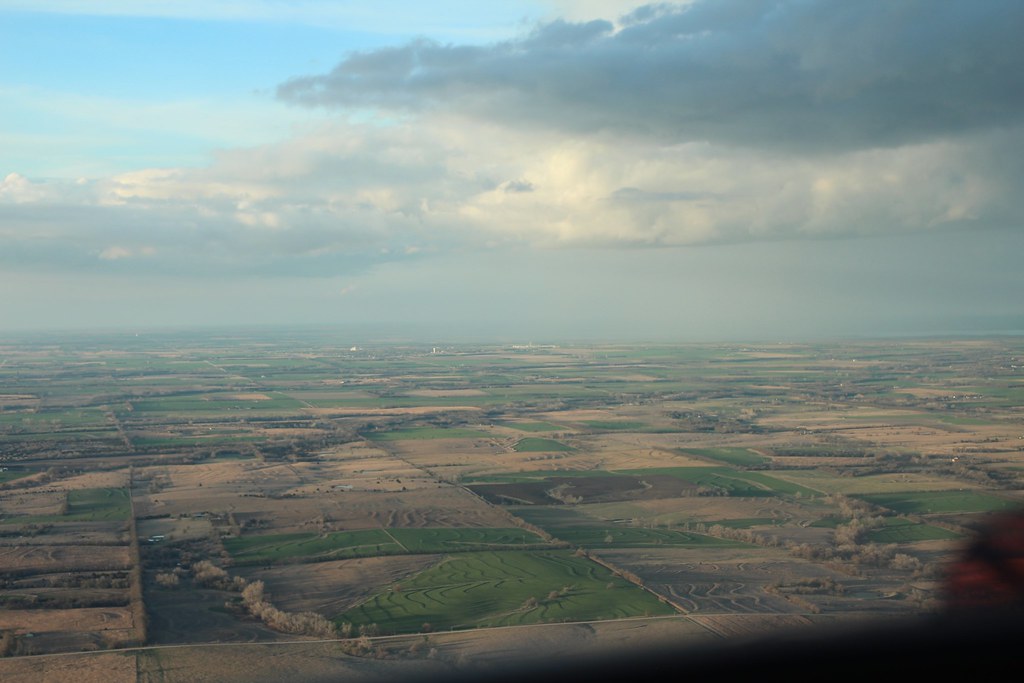
A patch of rain over Hillsboro, KS The New World A pilot once told me, Nobody can become a pilot without it changing the way they see the world and then, changing their life. I doubted that. But it was true. One of the most poetic sights I know is flying a couple thousand feet above an interstate highway at night, following it to my destination. All those red and white lights, those metal capsules of thousands of lives and thousands of stories, stretching out as far as the eye can see in either direction. IMG_7099

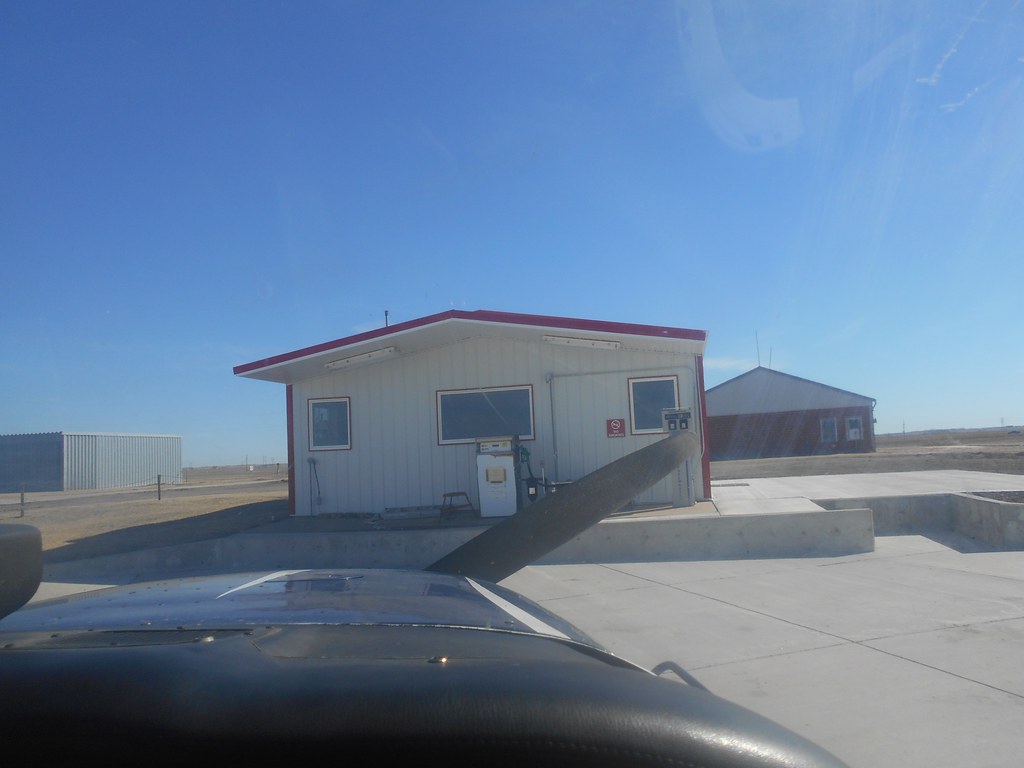
Kansas sunset from the plane When you re in a plane, that small town nowhere near a freeway that always seemed so far away suddenly is only a 15-minute flight away, not even enough time to climb up to a high cruise altitude. Two minutes after takeoff, any number of cities that are an hour s drive away are visible simultaneously, their unique features already recognizable: a grain elevator, oil refinery, college campus, lake, whatever. And all the houses you fly over each with people in them. Some pretty similar to you, some apparently not. But pretty soon you realize that we all are humans, and we aren t all that different. You can t tell a liberal from a conservative from the sky, nor a person s race or religion, nor even see the border between states. Towns and cities are often nameless from the sky, unless you re really low; only your navigation will tell you where you are. I ve had the privilege to fly to small out-of-the-way airports, the kind that have a car that pilots can use for free to go into town and get lunch, and leave the key out for them. There I ve met many friendly people. I ve also landed my little Cessna at a big commercial airport where I probably used only 1/10th of the runway, on a grass runway that was barely maintained at all. I ve flown to towns I d driven to or through many times, discovering the friendly folks at the small airport out of town. I ve flown to parts of Kansas I ve never been to before, discovered charming old downtowns and rolling hills, little bursts of rain and beautiful sunsets that seem to turn into a sea. Smith Center, KS airport terminal

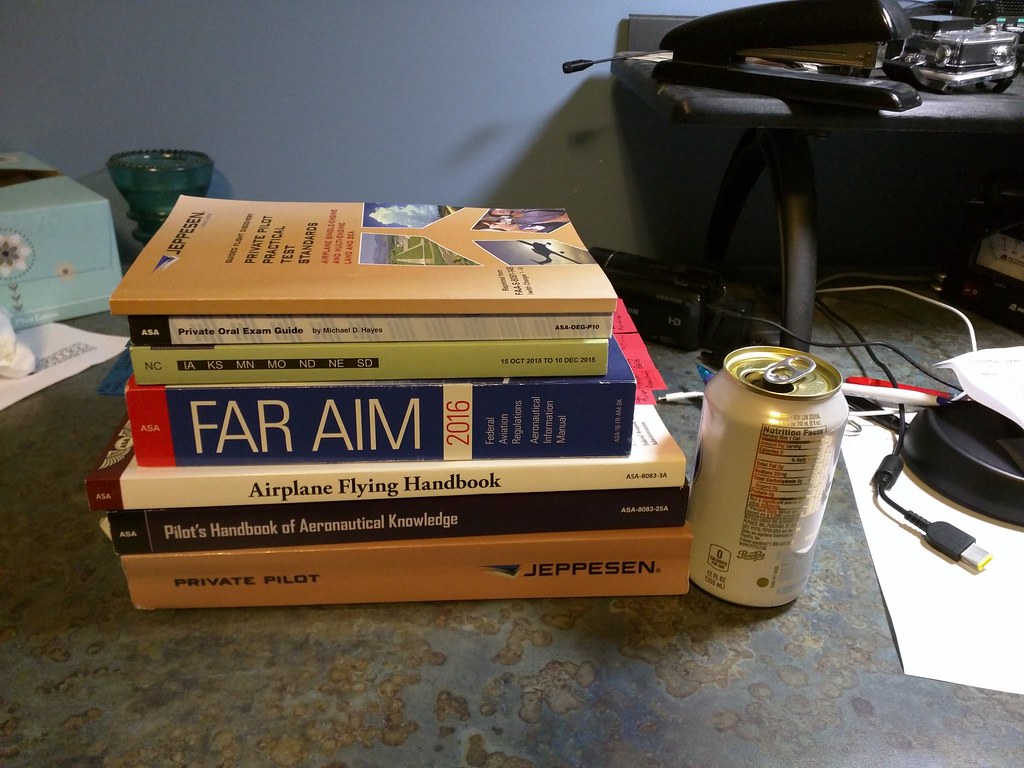
Parked at the Smith Center, KS airport terminal, about to meet some wonderful people For a guy that loves exploring the nooks and crannies of the world that everyone else drives by on their way to a major destination, being a pilot has meant many soul-filling moments. Hard Work I knew becoming a pilot would be a lot of hard work, and thankfully I remembered stories like that when I finally concluded it would be worth it. I found that I had an aptitude for a lot of things that many find difficult about being a pilot: my experience with amateur radio made me a natural at talking to ATC, my fascination with maps and navigation meant I already knew how to read aviation sectional maps before I even started my training and knew how to process that information in the cockpit, my years as a system administrator and programmer trained me with a careful and methodical decision-making process. And, much to the surprise of my flight instructor, I couldn t wait to begin the part of training about navigating using VORs (VHF radio beacons). I guess he, like many student pilots, had struggled with that, but I was fascinated by this pre-GPS technology (which I still routinely use in my flight planning, as a backup in case the GPS constellation or a GPS receiver fails). So that left the reflexes of flight, the art of it, as the parts I had to work on the hardest. The exam with the FAA is not like getting your driver s license. It s a multi-stage and difficult process. So when the FAA Designated Pilot Examiner said congratulations, pilot! and later told my flight instructor that you did a really good job with this one, I felt a true sense of accomplishment. IMG_20151021_193137

Some of my prep materials Worth It Passengers in a small plane can usually hear all the radio conversations going on. My family has heard me talking to air traffic control, to small and big planes. My 6-year-old son Oliver was playing yesterday, and I saw him pick up a plane and say this: Two-four-niner-golf requesting to land on runway one-seven . Two-four-niner-golf back-taxi on one-seven Two-four-niner-golf ready to takeoff on runway one-seven! That was a surprisingly accurate representation of some communication a pilot might have (right down to the made-up tailnumber with the spelling alphabet!) 20160408_203110

It just got more involved from there! Jacob and Oliver love model train shows. I couldn t take them to one near us, but there was one in Joplin, MO. So the day before Easter, while Laura was working on her Easter sermon, two excited boys and I (frankly also excited) climbed into a plane and flew to Joplin. We had a great time at the train show, discovered a restaurant specializing in various kinds of hot dogs (of course they both wanted to eat there), played in a park, explored the city, and they enjoyed the free cookies at the general aviation terminal building while I traded tips on fun places to fly with other pilots. When it comes right down to it, the smiles of the people I fly with are the most beautiful thing in the air. IMG_20151205_183440

Jacob after his first father-son flight with me

15 April 2016

Tanguy Ortolo: Let's Encrypt: threat or opportunity to other certificate authorities?

Let's Encrypt is a certificate authority (CA) that just left beta stage, that provides domain name-validated (DV) X.509 certificates for free and in an automated way: users just have to run a piece of software on their server to get and install a certificate, resulting in a valid TLS setup. A threat to other certificate authorities By providing certificates for free and automatically, Let's Encrypt is probably a threat a other CAs, a least for part of their activity. Indeed, for people that are satisfied with DV certificates, there are not many reasons to pay a commercial CA to get certificates in a non-automated way. For the CAcert non-commercial CA, that may mean a slow death, as this is their main activity . For people that want organization-validated (OV) or extended validation (EV) certificates, Let's Encrypt is not suitable, so it will not change anything regarding that. An opportunity for the most reactive The entrance of Let's Encrypt is also a significant opportunity for the certificate authorities that will be reactive enough to take advantage of their innovation. Indeed, they introduced automation in both domain name validation and certificate issuance (and revocation), by defining an open protocol that is meant to become an Internet standard. That protocol, named ACME, is not tied to Let's Encrypt and has several free software implementations, so it could be used for the same purpose by commercial CAs. A certification authority could, for instance: Such processes may require or benefit from improvements of the ACME protocol, which is the very reason Internet standards are defined in an open way. The first certification authority that would implement such a process could gain an advantage over its competitors, as it would greatly simplify getting and renewing certificates. I think even Let's Encrypt people would be happy to see that happen, as it would serve their goal, that is basically to help securing the Internet! Personally, I could buy such a service (assuming it is not restricted to juridical persons, according to a quite common (and detestable) sale discrimination against natural persons ). Notes
  1. CAcert is an unrecognised certificate authority, that provides an identity validation through a web of trust, and issues DV server certificates that do not include the validated identity. Now that Let's Encrypt can issue valid DV certificates, CAcert is no longer relevant for that activity. It also issues personal certificates, that do include the validated identity, and that can be used for encryption (e.g. S/MIME), signing (e.g. code signing) or authentication, which is an activity Let's Encrypt does not compete with.
  2. Yes, the Organization field of a certificate is probably not relevant to indicate a physical person's name, but the CommonName field is. Yes, that field is usually abused to store the domain name, but a proper use would be to put the owner's name in the CommonName field, and the domain names in the subjectAltName field.

Matthew Garrett: David MacKay

The first time I was paid to do software development came as something of a surprise to me. I was working as a sysadmin in a computational physics research group when a friend asked me if I'd be willing to talk to her PhD supervisor. I had nothing better to do, so said yes. And that was how I started the evening having dinner with David MacKay, and ended the evening better fed, a little drunker and having agreed in principle to be paid to write free software.

I'd been hired to work on Dasher, an information-efficient text entry system. It had been developed by one of David's students as a practical demonstration of arithmetic encoding after David had realised that presenting a visualisation of an effective compression algorithm allowed you to compose text without having to enter as much information into the system. At first this was merely a neat toy, but it soon became clear that the benefits of Dasher had a great deal of overlap with good accessibility software. It required much less precision of input, it made it easy to correct mistakes (you merely had to reverse direction in order to start zooming back out of the text you had entered) and it worked with a variety of input technologies from mice to eye tracking to breathing. My job was to take this codebase and turn it into a project that would be interesting to external developers.

In the year I worked with David, we turned Dasher from a research project into a well-integrated component of Gnome, improved its support for Windows, accepted code from an external contributor who ported it to OS X (using an OpenGL canvas!) and wrote ports for a range of handheld devices. We added code that allowed Dasher to directly control the UI of other applications, making it possible for people to drive word processors without having to leave Dasher. We taught Dasher to speak. We strove to avoid the mistakes present in so many other pieces of accessibility software, such as configuration that could only be managed by an (expensive!) external consultant. And we visited Dasher users and learned how they used it and what more they needed, then went back home and did what we could to provide that.

Working on Dasher was an incredible opportunity. I was involved in the development of exciting code. I spoke on it at multiple conferences. I became part of the Gnome community. I visited the USA for the first time. I entered people's homes and taught them how to use Dasher and experienced their joy as they realised that they could now communicate up to an order of magnitude more quickly. I wrote software that had a meaningful impact on the lives of other people.

Working with David was certainly not easy. Our weekly design meetings were, charitably, intense. He had an astonishing number of ideas, and my job was to figure out how to implement them while (a) not making the application overly complicated and (b) convincing David that it still did everything he wanted. One memorable meeting involved me gradually arguing him down from wanting five new checkboxes to agreeing that there were only two combinations that actually made sense (and hence a single checkbox) - and then admitting that this was broadly equivalent to an existing UI element, so we could just change the behaviour of that slightly without adding anything. I took the opportunity to delete an additional menu item in the process.

I was already aware of the importance of free software in terms of developers, but working with David made it clear to me how important it was to users as well. A community formed around Dasher, helping us improve it and allowing us to develop support for new use cases that made the difference between someone being able to type at two words per minute and being able to manage twenty. David saw that this collaborative development would be vital to creating something bigger than his original ideas, and it succeeded in ways he couldn't have hoped for.

I spent a year in the group and then went back to biology. David went on to channel his strong feelings about social responsibility into issues such as sustainable energy, writing a freely available book on the topic. He served as chief adviser to the UK Department of Energy and Climate Change for five years. And earlier this year he was awarded a knighthood for his services to scientific outreach.

David died yesterday. It's unlikely that I'll ever come close to what he accomplished, but he provided me with much of the inspiration to try to do so anyway. The world is already a less fascinating place without him.

comment count unavailable comments

13 April 2016

Keith Packard: x.org-election

X.org Election Time Vote Now It's more important than usual to actually get your vote in we're asking the membership to vote on changes the the X.org bylaws that are necessary for X.org to become a SPI affiliate project, instead of continuing on as a separate organization. While I'm in favor of this transition as I think it will provide much needed legal and financial help, the real reason we need everyone to vote is that we need of the membership to cast ballots for the vote to be valid. Last time, we didn't reach that value, so even though we had a majority voting in favor of the change, it didn't take effect. If you aren't in favor of this change, I'd still encourage you to vote as I'd like to get a valid result, no matter the outcome. Of course, we're also electing four members to the board. I'm happy to note that there are five candidates running for the four available seats, which shows that there are enough people willing to help serve the X.org community in this fashion.

12 April 2016

Reproducible builds folks: Reproducible builds: week 49 in Stretch cycle

What happened in the reproducible builds effort between March 27th and April 2nd: Toolchain fixes Packages fixed The following packages have become reproducible due to changes in their build dependencies: ctioga2, erlang-bitcask, libcommons-collections3-java, libjgoodies-animation-java, libjide-oss-java, octave-gsl, octave-interval, octave-io, octave-quaternion, octave-signal, octave-stk, segment, service-wrapper-java, sqlline, svnkit, uddi4j, velocity-tools. The following packages became reproducible after getting fixed: Some uploads fixed some reproducibility issues, but not all of them: Patches submitted which have not made their way to the archive yet: tests.reproducible-builds.org The i386 builders are now testing packages on i386 for reproducibility. It will probably take 4 weeks until everything has been build twice, on this arch. (h01ger) Package reviews 52 reviews have been removed, 24 added and 4 updated in the previous week. Chris Lamb reported 13 new FTBFS. New issue: copyright_year_in_comments_generated_by_ckbuilder. Misc. This week's edition was mostly written by Lunar, with some help by Reiner Herrmann and h01ger.

11 April 2016

Matthew Garrett: Making it easier to deploy TPMTOTP on non-EFI systems

I've been working on TPMTOTP a little this weekend. I merged a pull request that adds command-line argument handling, which includes the ability to choose the set of PCRs you want to seal to without rebuilding the tools, and also lets you print the base32 encoding of the secret rather than the qr code so you can import it into a wider range of devices. More importantly it also adds support for setting the expected PCR values on the command line rather than reading them out of the TPM, so you can now re-seal the secret against new values before rebooting.

I also wrote some new code myself. TPMTOTP is designed to be usable in the initramfs, allowing you to validate system state before typing in your passphrase. Unfortunately the initramfs itself is one of the things that's measured. So, you end up with something of a chicken and egg problem - TPMTOTP needs access to the secret, and the obvious thing to do is to put the secret in the initramfs. But the secret is sealed against the hash of the initramfs, and so you can't generate the secret until after the initramfs. Modify the initramfs to insert the secret and you change the hash, so the secret is no longer released. Boo.

On EFI systems you can handle this by sticking the secret in an EFI variable (there's some special-casing in the code to deal with the additional metadata on the front of things you read out of efivarfs). But that's not terribly useful if you're not on an EFI system. Thankfully, there's a way around this. TPMs have a small quantity of nvram built into them, so we can stick the secret there. If you pass the -n argument to sealdata, that'll happen. The unseal apps will attempt to pull the secret out of nvram before falling back to looking for a file, so things should just magically work.

I think it's pretty feature complete now, other than TPM2 support? That's on my list.

comment count unavailable comments

10 April 2016

Vincent Bernat: Testing network software with pytest and Linux namespaces

Started in 2008, lldpd is an implementation of IEEE 802.1AB-2005 (aka LLDP) written in C. While it contains some unit tests, like many other network-related software at the time, the coverage of those is pretty poor: they are hard to write because the code is written in an imperative style and tighly coupled with the system. It would require extensive mocking1. While a rewrite (complete or iterative) would help to make the code more test-friendly, it would be quite an effort and it will likely introduce operational bugs along the way. To get better test coverage, the major features of lldpd are now verified through integration tests. Those tests leverage Linux network namespaces to setup a lightweight and isolated environment for each test. They run through pytest, a powerful testing tool.

pytest in a nutshell pytest is a Python testing tool whose primary use is to write tests for Python applications but is versatile enough for other creative usages. It is bundled with three killer features:
  • you can directly use the assert keyword,
  • you can inject fixtures in any test function, and
  • you can parametrize tests.

Assertions With unittest, the unit testing framework included with Python, and many similar frameworks, unit tests have to be encapsulated into a class and use the provided assertion methods. For example:
class testArithmetics(unittest.TestCase):
    def test_addition(self):
        self.assertEqual(1 + 3, 4)
The equivalent with pytest is simpler and more readable:
def test_addition():
    assert 1 + 3 == 4
pytest will analyze the AST and display useful error messages in case of failure. For further information, see Benjamin Peterson s article.

Fixtures A fixture is the set of actions performed in order to prepare the system to run some tests. With classic frameworks, you can only define one fixture for a set of tests:
class testInVM(unittest.TestCase):
    def setUp(self):
        self.vm = VM('Test-VM')
        self.vm.start()
        self.ssh = SSHClient()
        self.ssh.connect(self.vm.public_ip)
    def tearDown(self):
        self.ssh.close()
        self.vm.destroy()
    def test_hello(self):
        stdin, stdout, stderr = self.ssh.exec_command("echo hello")
        stdin.close()
        self.assertEqual(stderr.read(), b"")
        self.assertEqual(stdout.read(), b"hello\n")
In the example above, we want to test various commands on a remote VM. The fixture launches a new VM and configure an SSH connection. However, if the SSH connection cannot be established, the fixture will fail and the tearDown() method won t be invoked. The VM will be left running. Instead, with pytest, we could do this:
@pytest.yield_fixture
def vm():
    r = VM('Test-VM')
    r.start()
    yield r
    r.destroy()
@pytest.yield_fixture
def ssh(vm):
    ssh = SSHClient()
    ssh.connect(vm.public_ip)
    yield ssh
    ssh.close()
def test_hello(ssh):
    stdin, stdout, stderr = ssh.exec_command("echo hello")
    stdin.close()
    stderr.read() == b""
    stdout.read() == b"hello\n"
The first fixture will provide a freshly booted VM. The second one will setup an SSH connection to the VM provided as an argument. Fixtures are used through dependency injection: just give their names in the signature of the test functions and fixtures that need them. Each fixture only handle the lifetime of one entity. Whatever a dependent test function or fixture succeeds or fails, the VM will always be finally destroyed.

Parameters If you want to run the same test several times with a varying parameter, you can dynamically create test functions or use one test function with a loop. With pytest, you can parametrize test functions and fixtures:
@pytest.mark.parametrize("n1, n2, expected", [
    (1, 3, 4),
    (8, 20, 28),
    (-4, 0, -4)])
def test_addition(n1, n2, expected):
    assert n1 + n2 == expected

Testing lldpd The general plan for to test a feature in lldpd is the following:
  1. Setup two namespaces.
  2. Create a virtual link between them.
  3. Spawn a lldpd process in each namespace.
  4. Test the feature in one namespace.
  5. Check with lldpcli we get the expected result in the other.
Here is a typical test using the most interesting features of pytest:
@pytest.mark.skipif('LLDP-MED' not in pytest.config.lldpd.features,
                    reason="LLDP-MED not supported")
@pytest.mark.parametrize("classe, expected", [
    (1, "Generic Endpoint (Class I)"),
    (2, "Media Endpoint (Class II)"),
    (3, "Communication Device Endpoint (Class III)"),
    (4, "Network Connectivity Device")])
def test_med_devicetype(lldpd, lldpcli, namespaces, links,
                        classe, expected):
    links(namespaces(1), namespaces(2))
    with namespaces(1):
        lldpd("-r")
    with namespaces(2):
        lldpd("-M", str(classe))
    with namespaces(1):
        out = lldpcli("-f", "keyvalue", "show", "neighbors", "details")
        assert out['lldp.eth0.lldp-med.device-type'] == expected
First, the test will be executed only if lldpd was compiled with LLDP-MED support. Second, the test is parametrized. We will execute four distinct tests, one for each role that lldpd should be able to take as an LLDP-MED-enabled endpoint. The signature of the test has four parameters that are not covered by the parametrize() decorator: lldpd, lldpcli, namespaces and links. They are fixtures. A lot of magic happen in those to keep the actual tests short:
  • lldpd is a factory to spawn an instance of lldpd. When called, it will setup the current namespace (setting up the chroot, creating the user and group for privilege separation, replacing some files to be distribution-agnostic, ), then call lldpd with the additional parameters provided. The output is recorded and added to the test report in case of failure. The module also contains the creation of the pytest.config.lldpd object that is used to record the features supported by lldpd and skip non-matching tests. You can read fixtures/programs.py for more details.
  • lldpcli is also a factory, but it spawns instances of lldpcli, the client to query lldpd. Moreover, it will parse the output in a dictionary to reduce boilerplate.
  • namespaces is one of the most interesting pieces. It is a factory for Linux namespaces. It will spawn a new namespace or refer to an existing one. It is possible to switch from one namespace to another (with with) as they are contexts. Behind the scene, the factory maintains the appropriate file descriptors for each namespace and switch to them with setns(). Once the test is done, everything is wipped out as the file descriptors are garbage collected. You can read fixtures/namespaces.py for more details. It is quite reusable in other projects2.
  • links contains helpers to handle network interfaces: creation of virtual ethernet link between namespaces, creation of bridges, bonds and VLAN, etc. It relies on the pyroute2 module. You can read fixtures/network.py for more details.
You can see an example of a test run on the Travis build for 0.9.2. Since each test is correctly isolated, it s possible to run parallel tests with pytest -n 10 --boxed. To catch even more bugs, both the address sanitizer (ASAN) and the undefined behavior sanitizer (UBSAN) are enabled. In case of a problem, notably a memory leak, the faulty program will exit with a non-zero exit code and the associated test will fail.

  1. A project like cwrap would definitely help. However, it lacks support for Netlink and raw sockets that are essential in lldpd operations.
  2. There are three main limitations in the use of namespaces with this fixture. First, when creating a user namespace, only root is mapped to the current user. With lldpd, we have two users (root and _lldpd). Therefore, the tests have to run as root. The second limitation is with the PID namespace. It s not possible for a process to switch from one PID namespace to another. When you call setns() on a PID namespace, only children of the current process will be in the new PID namespace. The PID namespace is convenient to ensure everyone gets killed once the tests are terminated but you must keep in mind that /proc must be mounted in children only. The third limitation is that, for some namespaces (PID and user), all threads of a process must be part of the same namespace. Therefore, don t use threads in tests. Use multiprocessing module instead.

9 April 2016

Steve Kemp: Recycling old ideas ..

My previous blog post was about fuzzing and finding segfaults in GNU Awk. At the time of this update they still remain unfixed. Reading about a new release of mutt I've seen a lot of complaints about how it handles HTML mail, by shelling out to lynx or w3m. As I have a vested interest in console based mail-clients I wanted to have a quick check to see how dangerous that could be. After all it wasn't so long ago that I discovered that printing a fingerprint of an SSH key could be dangerous, so the idea of parsing untrusted HTML is something I could see. In fact back in 2005 I reported that some specific HTML could crash Mozilla's firefox. Due to some ordering issues my Firefox bug was eventually reported as a duplicate, and although it seemed to qualify for the Mozilla bug-bounty and a CVE assignment I never received any actual cash. Shame. I'd have been more interested in testing the browser if I had a cheque to hang on my wall (and never cash). Anyway full-circle. Fuzzing the w3m console-based browser resulted in a bunch of segfaults when running this:
 w3m -dump $file.html
Anyway each of the two bugs I reported were fixed in a day or two, and both involved gnarly UTF-8/encoding transformations. Many thanks to Tatsuya Kinoshita for such prompt attention and excellent debugging skills. And lynx? Still no segfaults. I'll leave the fuzzer running over the weekend and if there are no faults found by Monday I guess I'll move on to links.

Next.

Previous.