Search Results: "bod"

28 October 2011

Matthew Garrett: Feeding the trolls

A few years ago I got up on stage and briefly talked about how the Linux community contained far too many people who were willing to engage in entirely inappropriate behaviour, how this discouraged people from getting involved and how we weren't very good at standing up against that sort of behaviour. Despite doing this in front of several hundred people, and despite the video of me doing so then being uploaded to the internet, this got me a sum total of:
Which is, really, what you'd expect, right? The internet seems intent on telling me otherwise:

Well, she didn't do herself any favors by talking at conferences about women in tech, or setting up a feminist movement. If you wanted to attract abuse, that's a good way to go about it. It should be expected.
(Source)

MikeeUSA is a troll. He has no means to actually harm anyone, and he does it purely for the lulz.

Thus, MikeeUSA trolled a woman, and she took the bait. I just don't get why this is news, I've been trolled before, I don't get a news story.

(Source)

I was going to start a rant about how this behavior is encouraged by the macho men online, but this was just one guy harassing her. "Due to harassment" reads as due to harassment from the community, but she gave in to one idiot. She let him win.
(Source)

The full comment thread has rather more examples. If you stand up and say anything controversial, you should expect abuse. And if you let that abuse change your behaviour in any way, you've let the trolls win.

These attitudes are problematic.

The immediate assumption underlying such advice is that the degree of abuse is related to what you've said, not who you are. I'm reasonably visible in the geek world. I've said a few controversial things. The worst thing that's happened to me has been Ryan Farmer deciding to subscribe me to several thousand mailing lists. Inconvenient, but not really threatening. I haven't, for instance, been sent death threats. Nobody has threatened to rape me. And even if they had done, I wouldn't need to worry too much - there's a rather stronger track record of violent antifeminism being targeted at women than men.

I don't have to worry about this kind of thing. That means I don't get to tell other people that they should have expected it. Nor do I get to tell them that they should ignore it, or that if they don't call the police then they have no grounds to complain. And nor does anyone else.

The trolls don't win because someone decides that getting out of the tech business is more appealing than continuing to face abuse. The trolls win because we consider their behaviour acceptable and then blame the victim for inviting them in the first place. That needs to change.

[1] It was justifiably pointed out that saying all this while standing on stage next to a mostly naked guy wearing a loincloth with a raccoon tail covering his penis may have weakened my message somewhat.

comment count unavailable comments

26 October 2011

Mike (stew) O'Connor: Bye Bye G+

Well, when I got an invite to try G+, I decided to make my first foray into social networking sites since friendster. It was mildly interesting while it lasted, however it seems that it is over for me now. I tried to use the name "Mike (stew) O'Connor" as I do on my gpg key. This caused my accounted to get flagged as violating their "real names" policy. I can't help but to feel a little offended that they think they know what my name is better than I do. I have a bit of a unique situation with my name. Pretty much NOBODY calls me "Mike" or "Michael" save a few people from my childhood. Its been this way for more than half of my life. My wife only ever has called me "stew". My two year old knows my name is "stew" but doesn't know my name is also "Mike". If I meet somebody new, I always introduce myself as "stew". All my clients call me stew... The instructions on google plus tell you "To help fight spam and prevent fake profiles, use the name your friends, family or co-workers usually call you.", So when my account was initially flagged. I tried changing my name to "Stew O'Connor". My account was "pending review" and I was still able to post and reply and the like. After review, my account was suspended, some of my privacy settings were changed, and I cannot change them back. Out of the 60 or so people that added me on G+, only one of them should ever be referring to me as "Mike". When someone calls me Mike that isn't one of the handful of people that "should" be calling me "Mike", my brain immediately puts them in the "oh, you don't know me very well" category. Oh well, Google, amazingly, you don't know me very well. After explaining to someone "oh, no you really should call me stew like everyone else", you say "No, I'd rather just not talk to you", now you are just being a jerk. Now I guess I have a retort to people that use the phrase which I find so annoying: "GIYF". Update: I appealed to change my name to Stew O'Connor which was denied, then appealed to change my name to Mike O'Connor which was also denied. I guess I was supposed to use "Michael" or something? Being denied "Mike", I deleted my suspeneded G+ account, feeling extra flouncy, chnaged by default search engine to duckduckgo.com.

Russ Allbery: Review: Scrum and XP from the Trenches

Review: Scrum and XP from the Trenches, by Henrik Kniberg
Publisher: InfoQ
Copyright: 2007
ISBN: 1-4303-2264-0
Format: Trade paperback
Pages: 127
For those not already familiar with it, Scrum is a project management methodology that's most often seen in the agile software development community. It attempts to do for project management what agile techniques do for software development (and, other than test-driven development, I think is more useful than most of agile). I'm not going to explain it here in detail, but if you do software development or project management of software-style projects (including integration and computing infrastructure), it's worth your attention. It provides some nice techniques for dealing with some of the banes of technical projects, particularly constantly changing requirements and the difficulties of estimates. Scrum and XP from the Trenches is subtitled "How we do Scrum" and is exactly what it says on the tin. It is a fairly detailed description of how Crisp (an agile Java development company in Sweden) does Scrum (with a little discussion of Extreme Programming). It doesn't explain what Scrum is, although it does provide a few pointers to resources if you've never heard of it (but this isn't the sort of book you'd be buying if you'd never heard of it). It also doesn't try to convince you that Scrum is wonderful, which is a nice trap to avoid. It gets right down to business and packs quite a bit of relentlessly practical content into a small number of pages. I've been doing Scrum for about a year, across two large projects, both times not entirely following the full Scrum model. Both times, most of the team was learning Scrum during the project. I've gone to some Scrum training and read a bit, largely on-line, but I haven't made an exhaustive study of it. I think I'm exactly the ideal audience for this book, although my guess is that people who have been doing Scrum for longer will also get something out of it. This is not an introduction; I don't think one is likely to get much benefit out of it without a couple of Scrum projects under one's belt so that one has a feel for the problems and failure modes. As Kniberg accurately points out, Scrum is a framework, not a precise rule set, and it can't be applied blindly in one situation using analysis from another. For that audience, though, this book is great. Kniberg has used Scrum in a variety of different situations and tried multiple solutions to many of its problems, so he can provide guidance not only on his preferred solutions but on the other solutions he's tried and why they don't work. I started taking extensive notes just a few pages in; it was exactly the book I needed to read for the full-project retrospective on how Scrum worked for a just-concluded work project, and for planning what changes we'll want to make for the next project. He goes through every step of the Scrum cycle and offers advice on each step, particularly for the sprint planning (which was extremely helpful). He then walks through release planning and advance estimation (one of the best parts of the book; I've seen the concept of a focus factor before, but this is one of the best and clearest explanations I've seen), talks about XP (Extreme Programming) techniques and testing, and then discusses how to coordinate multiple Scrum teams in a larger organization. The chapter on testing was the reason why I bought the book; the rest of the book lives up to it. As mentioned, my Scrum exposure is not broad, so Kniberg may just be following different orthodoxies. That said, he broke with the ones I was previously familiar with in some useful places. One is to attach a time unit to story points, something that I was told was close to anethema, but as presented here looks very useful. Another, not so much a break but an idea that I'd not encountered elsewhere, is downtime between sprints, an brilliant solution to a problem that I'd not even fully articulated but which had been plaguing our Scrum process. He also has some suggestions about communication that, while fairly obvious and common-sense stuff, still were things that hadn't occurred to me and that we should adopt. I paid for a hard-copy version of this book from Lulu because I like things like this on paper and am happy to support the author financially, but you can download a PDF file and read it for free from InfoQ and see whether it works as well for you as it did for me. If you're ramping up on Scrum, seeing some problems, and looking for good ideas on how to fix them, I highly recommend it. I'd love to read two or three more case studies like this to get some more perspectives on how to make Scrum work. The paper book will likely be making a circuit around our office to serve as fodder for our upcoming Scrum projects. Rating: 8 out of 10

24 October 2011

Colin Watson: Quality in Ubuntu 12.04 LTS

As is natural for an LTS cycle, lots of people are thinking and talking about work focused on quality rather than features. With Canonical extending LTS support to five years on the desktop for 12.04, much of this is quite rightly focused on the desktop. I'm really not a desktop hacker in any way, shape, or form, though. I spent my first few years in Ubuntu working mainly on the installer - I still do, although I do some other things now too - and I used to say only half-jokingly that my job was done once X started. Of course there are plenty of bugs I can fix, but I wanted to see if I could do something with a bit more structure, so I got to thinking about projects we could work on at the foundations level that would make a big difference. Image build pipeline One difficulty we have is that quite a few of our bugs - especially installer bugs, although this goes for some other things too - are only really caught when people are doing coordinated image testing just before a milestone release. Now, it takes a while to do all the builds and then it takes a while to test them. The excellent work of the QA team has meant that testing is much quicker now than it used to be, and a certain amount of smoke-testing is automated (particularly for server images). On the other hand, the build phase has only got longer as we've added more flavours and architectures, particularly as some parts of the process are still serialised per architecture or subarchitecture so ARM builds in particular take a very long time indeed. Exact timings are a bit difficult to get for various reasons, but I think the minimum time between a developer uploading a fix and us having a full set of candidate images on all architectures including that fix is currently somewhere north of eight hours, and that's with people cutting corners and pulling strings which is a suboptimal thing to have to do around release time. This obviously makes us reluctant to respin for anything short of showstopper bugs. If we could get things down to something closer to two hours, respins would be a much less horrible proposition and so we might be able to fix a few bugs that are serious but not showstoppers, not to mention that the release team would feel less burned out. We discussed this problem at the release sprint, and came up with a laundry list of improvements; I've scheduled this for discussion at UDS in case we can think of any more. Please come along if you're interested! One thing in particular that I'm working on is refactoring Germinate, a tool which dates right back to our first meeting before Ubuntu was even called Ubuntu and whose job is to expand dependencies starting from our lists of "seed" packages; we use this, among other things, to generate Task fields in the archive and to decide which packages to copy into our images. This was acceptably quick in 2004, but now that we run it forty times (eight flavours multiplied by five architectures) at the end of every publisher run it's actually become rather a serious performance problem: cron.germinate takes about ten minutes, which is over a third of the typical publisher runtime. It parses Packages files eight times as often as it needs to, Sources files forty times as often as it needs to, and recalculates the dependency tree of the base system five times as often as it needs to. I am confident that we can significantly reduce the runtime here, and I think there's some hope that we might be able to move the publisher back to a 30-minute cycle, which would increase the velocity of Ubuntu development in general. Maintaining the development release Our release cycle always starts with syncing and merging packages from Debian unstable (or testing in the case of LTS cycles). The vast majority of packages in Ubuntu arrive this way, and generally speaking if we didn't do this we would fall behind in ways that would be difficult to recover from later. However, this does mean that we get a "big bang" of changes at the start of the cycle, and it takes a while for the archive to be usable again. Furthermore, even once we've taken care of this, we have a long-established rhythm where the first part of the cycle is mainly about feature development and the second part of the cycle is mainly about stabilisation. As a result, we've got used to the archive being fairly broken for the first few months, and we even tell people that they shouldn't expect things to work reliably until somewhere approaching beta. This makes some kind of sense from the inside. But how are you supposed to do feature development that relies on other things in the development release? In the first few years of Ubuntu, this question didn't matter very much. Nearly all the people doing serious feature development were themselves serious Ubuntu developers; they were capable of fixing problems in the development release as they went along, and while it got in their way a little bit it wasn't all that big a deal. Now, though, we have people focusing on things like Unity development, and we shouldn't assume that just because somebody is (say) an OpenGL expert or a window management expert that they should be able to recover from arbitrary failures in development release upgrades. One of the best things we could do to help the 12.04 desktop be more stable is to have the entire system be less unstable as we go along, so that developers further up the stack don't have to be distracted by things wobbling underneath them. Plus, it's just good software engineering to keep the basics working as you go along: it should always build, it should always install, it should always upgrade. Ubuntu is too big to do something like having everyone stop any time the build breaks, the way you might do in a smaller project, but we shouldn't let things slide for months either. I've been talking to Rick Spencer and the other Ubuntu engineering leads at Canonical about this. Canonical has a system of "rotations", where you can go off to another team for a while if you're in need of a change or want to branch out a bit; so I proposed that we allow our engineers to spend a month or two at a time on what I'm calling the +1 Maintenance Team, whose job is simply to keep the development release buildable, installable, and upgradeable at all times. Rick has been very receptive to this, and we're going to be running this as a trial throughout the 12.04 cycle, with probably about three people at a time. As well as being professional archive gardeners, these people will also work on developing infrastructure to help us keep better track of what we need to do. For instance, we could deploy better tools from Debian QA to help us track uninstallable packages, or we could enhance some of our many existing reports to have bug links and/or comment facilities, or we could spruce up the weather report; there are lots of things we could do to make our own lives easier. By 12.04, I would like, in no particular order: Of course, this overlaps to a certain extent with the kinds of things that the MOTU team have been doing for years, not to mention with what all developers should be doing to keep their own houses in reasonable order, and I'd like us to work together on this; we're trying to provide some extra hands here to make Ubuntu better for everyone, not take over! I would love this to be an opportunity to re-energise MOTU and bring some new people on board. I've registered a couple of blueprints (priorities, infrastructure) for discussion at UDS. These are deliberately open-ended skeleton sessions, and I'll try to make sure they're scheduled fairly early in the week, so that we have time for break-out sessions later on. If you're interested, please come along and give your feedback!

23 October 2011

Gregor Herrmann: RC bugs 2011/42

this week my activities were split between some freshly-reported pkg-perl bugs, & looking at some of the older RC bugs. for most of the ones in the latter category I found again ready-to-be-applied patches, many of them from Ubuntu again. details:

22 October 2011

Francois Marier: Reducing the size of Apache 301 and 302 responses

Looking through the Libravatar access logs, I found that most of the traffic we currently serve consists of 302 redirects to Gravatar. Optimising that path is therefore very important.

While Apache allows admins to provide custom error pages for things like 404 or 500, it's not quite that straightforward for 30x return codes.

Standard 301 / 302 responsesBy default, Apache (and most web servers out there) returns a fairly large HTML page along with a 30x redirection. Try it for yourself by disabling automatic redirections in Firefox (Preferences Advanced General Accessibility) or by installing the Request Policy add-on.

The 302 responses sent by Libravatar looked like this:
$ curl -i http://cdn.libravatar.org/avatar/12345678901234567890123456789012
HTTP/1.1 302 Found
Date: Wed, 21 Sep 2011 01:51:52 GMT
Server: Apache
Cache-Control: max-age=86400
Location: http://www.gravatar.com/avatar/12345678901234567890123456789012.jpg?r=g&s=80&d=http://cdn.libravatar.org/nobody/80.png
Vary: Accept-Encoding
Content-Length: 310
Content-Type: text/html; charset=iso-8859-1

<!DOCTYPE HTML PUBLIC "-//IETF//DTD HTML 2.0//EN">
<html><head>
<title>302 Found</title>
</head><body>
<h1>Found</h1>
<p>The document has moved <a href="http://www.gravatar.com/avatar/12345678901234567890123456789012.jpg?r=g&s=80&d=http://cdn.libravatar.org/nobody/80.png">here</a>.</p>
</body></html>
As you can see, the body of the response is just as large as the headers and isn't really necessary.

Body-less 301 responsesAfter reading about the ErrorDocument directive, I created an empty file called 302 in the root of the web server and included this directive in my vhost configuration file:
ErrorDocument 302 /302
which made the responses look like this:
$ curl -i http://example.com/redir
HTTP/1.1 302 Found
Date: Wed, 21 Sep 2011 03:39:26 GMT
Server: Apache
Last-Modified: Wed, 21 Sep 2011 03:39:17 GMT
ETag: "8024d-0-4ad6b52201036"
Accept-Ranges: bytes
Content-Length: 0
Content-Type: text/plain

This one does have a completely empty body, however, there's an important problem with this solution: the Location header is missing! Not much point in reducing the size of the redirect if it's no longer working.

Custom 302 response pageThe next thing I tried (and ended up settling on) is this:
ErrorDocument 302 " "
which results in a 1-byte response (a single space) in the body:
$ curl -i http://example.com/redir
HTTP/1.1 302 Found
Date: Wed, 21 Sep 2011 03:37:50 GMT
Server: Apache
Location: http://www.example.com
Vary: Accept-Encoding
Content-Length: 1
Content-Type: text/html; charset=iso-8859-1

There is still a little bit of unnecessary information in this response (character set, Vary and Server headers), but it's a major improvement over the original.

If you know of any other ways to reduce this further, please leave a comment!

Vincent Sanders: I do not want anything NASty to happen

I have a lot of digital data to store, like most people I have photos, music, home movies, email and lots of other random data. Being a programmer I also tend to have huge piles of source code and builds lying about. If all that was not enough I work from home so I have copious mountains of work data too.

Many years ago I decided I wanted a single robust, backed up, file server for all of this. So I slapped together a machine from leftovers stuffed some drives in a software RAID array, served over NFS and CIFS and never looked back.

Over time the hardware has changed and the system upgraded but the basic approach of a custom built server has remained. When I needed a build engine to churn out hundreds of kernels a day for the ARM Linux autobuilder the system was expanded to cope and mid 2009 the current instantiation was created.

Current full height tower fileserverThe current system is a huge tower case (courtesy of Mark Hymers) containing a Core 2 Quad 2.33GHz (8 threads) with 8Gigabytes of memory and 13 drives across four SATA controllers split into several RAID arrays. Despite buying new drives at higher capacities I have tended to keep the old drives around for extra storage resulting in what you see here.

I recently looked at the power usage of this monster and realised I was paying a lot of money to spin rust which was simply uneconomic. Seriously, why did I have six sub 200Gigabyte drives running when a single 2T to replace them would pay for itself in power saved in under a month! In addition I no longer required the compute power available either, most definitely time for a downsize!

Several friends suggested a HP micro server might be just the thing. After examining and evaluating some other options (Thecus and QNAP NAS) I decided the HP route was most definitely the best value for money.

The HP Proliant micro server is a dual core Athlon II 1.3GHz system with a Gigabyte of memory, space for four SATA hard drives and a single 5 inch bay for an optical drive. All this in a roughly 250mm on a side cube.

My HP proliant microserverI went out and bought the server from ebuyer for 235 with free shipping and 100 cashback. I Immediately sent off the cash back paperwork so I would not forget(what an odd way to get discount) so total cost for the unit was 135. I then used Crucial to select a suitable memory upgrade to take the total to 2 Gigabytes of RAM for 14

The final piece of the solution was the drives for the storage. I decided the best capacity to cost ratio could be had from 2 TB drives and with four bays available would give a raw capacity of 8 TB or more usefully for this discussion 7.8 TiB

I did an experiment with 3x1 TB 7200 RPM drives from the existing server and determined that The overall system would not really benefit enough to justify the 50% price premium of 7200 RPM drives over 5400 RPM devices. I ended up getting four Samsung Spinpoint F4EG 2 TB drives for 230.

I also bought a black LG DVD-RW drive for 16 I would have also required a SATA data cable and a molex to SATA power cable if I had not already got them.

My HP microserver with the front door openPutting the components together was really simple. The internal layout and design of the enclosure mean it is easy to work with and has the feel of build quality I usually associate with HP and IBM server kit not something this small and inexpensive.

The provided documentation is good but unnecessary as most operations are obvious. They even provide the bolts to attach all the drives along with a wrench in the lockable front door, how thoughtful is that!

I then installed the system with Debian squeeze from the optical drive. Principally because I happened to have a network installer CD to hand although the BIOS does have network boot capability.

I used the installer to put the whole initial system together and did not have to resort to the command line even once, very impressed with how far D-I has come.

After asking several people for advice the general consensus was that I should create two partitions on each drive one for a RAID 1 /boot and one for a RAID 5 LVM area.

I did have to perform the entire install a second time because there is a gotcha with GUID Partition Table, RAID 1 boot drives and GRUB. You must have a small "BIOS" partition on the front of the drive or GRUB cannot install in the MBR and your system will not boot!

The partition layout I ended up with looks like:
Model: ATA SAMSUNG HD204UI (scsi)
Disk /dev/sda: 2000GB
Sector size (logical/physical): 512B/512B
Partition Table: gpt

Number Start End Size File system Name Flags
1 17.4kB 32.0MB 32.0MB bios_grub
3 32.0MB 1000MB 968MB raid
2 1000MB 2000GB 1999GB raid

The small Gigabyte partition was configured as a RAID 1 across all four drives and formatted with ext2 and mount point of /boot. The large space was configured as RAID 5 across all four drives with LVM on top. Logical volumes were allocated formatted ext3 (on advice from seevral people about ext4 instability they had observed) for 50 GiB root, 4 GiB swap and 1 TiB home space.

The normal Debian install proceeded and after the post install reboot I was presented with a login prompt. Absolutely no surprises at all no additional drivers required and a correctly running system.

Over the next few days I did the usual sysadmin stuff, rsynced data from the old fileserver including creating logical volumes for the various arrays from the old server none of which presented much of a problem. The 5.5TiB Raid 5 did however take a day or so to sync!

I used the microservers eSATA port to attach external drives I use for backup purposes which has also not been an issue so far.

I am currently running both the new and old systems for a few days and rsyncing data to the microserver until I am sure of it. Actually I will make the switch this weekend and shut the old system down and leave it till next weekend before I scrub the old drives.

Before I made it live I decided to run some benchmarks and gather some data just for interest.
Bonnie (Version 1.96) was run in the root logical volume (I repeated the tests in other volumes, there is sub 1% variation) the test used a 4GiB size and 16 files

Sequential OutputSequential InputRandom SeeksSequential CreateRandom Create
Per ChrBlockRewritePer ChrBlockCreateReadDeleteCreateReadDelete
/sec378K41M37M2216K330M412.811697+++++1833014246+++++14371
%CPU9711891301524+++2829+++22
Latency109ms681ms324ms116ms93389 s250ms29021 s814 s842 s362 s51 s61 s

Does not seem to be any notable issues there, the write speeds are a little lower than I might like but that is the cost of RAID 5 and 5400 RPM drives.

The rsync operations used to sync up the live data seem to manage just short of 20MiB/s for the home partition comprising of 250GiB in two and a half million files with the expected mix of file sizes. The video partition managed 33MiB/s on 1TiB of data in nine thousand files.

The bonnie tests were performed accessing the server over NFS with 24GiB size and 16 files.
Sequential OutputSequential InputRandom SeeksSequential CreateRandom Create
Per ChrBlockRewritePer ChrBlockCreateReadDeleteCreateReadDelete
/sec1733K29M19M4608K106M358.3146537142402157640821529
%CPU98249310108109997
Latency10894 s23242ms69159ms49772 s224ms250ms148ms24821 s157ms108ms2074 s719ms

or alternatively as percentages against the previous direct access values

Sequential OutputSequential InputRandom SeeksSequential CreateRandom Create
Per ChrBlockRewritePer ChrBlockCreateReadDeleteCreateReadDelete
/sec4646851213328712+++1311+++10
CPU1011850104347133+++3231+++31
Latency925121324893227795093049186462983440661178688

Not that that tells us much aside from that write is a bit slower over the network, read is gigabit network bandwidth limited and latency of disc over the network is generally poorer than direct.

In summary the total cost was 395 for a complete ready to use system with 5.5TiB of RAID 5 storage which can be NFS served at nearly 900Mbit/s. Overall I am happy with the result, my only real issue is the write performance is a little disappointing but it is good enough for what I need.

Adnan Hodzic: My DebConf11 summary and its after effects

Even though some three months have passed since DebConf11 has successfully ended, I still wanted to give you just a glimpse on how some parts were played through the eyes of a lunatic (read: organizer). Of course, blog post can t come close near of explaining anything but at least it should give some insight and hopefully some pointers to the future DebConf organizers. If you don t feel like reading this much text you can listen to last episode of This Week In Debian podcast and after it just head to Beginning of the end part. DebConf11 First of all I d like to apologize if I offended or hurt anyone in this whole process as it wasn t my intention and during DebConf organization this is nothing irregular, for you to get hurt or you hurting somebody else. One thing that got stuck with me this whole time is when Mart n Ferrari approached me after I did bid proposal of Bosnia/Herzegovina for DebConf11 back on DebConf9 and told me you have no idea what you just got yourself into I played cool and said something along the line of coure I do and boy did I lie. During DebConf organization you re bound to make some of your decisions instantaneously in which you ll lose something, the most you can do is assess what s the thing you can cut the cord on, even though if that thing or a person for that matter might have meant something to you. You ll lose things, relationships, friendships, contacts at the times sense of humor and maybe even common logic. Some of it comes back to you, some the very next day and for some it may take longer. Some of it was lost irreversibly, but even in that case it wasn t lost and could even be traced to some other cause. One thing that I m thankful for is that I didn t lose, not lose but even get distanced from those close to me, and that I didn t lose guy who was with me in this from very first day, my right hand, my partner in crime Velimir ( aroundthfur ). It s not even losing I m talking about here, because even by losing you re gaining something and this is part of your everyday life, it s just that your life frame kinda gets stuck on fast forward button. So once the ride s over you may feel bit dizzy asking yourself what just happened. During this time I was also contacted by Google recruiter regrading software engineer internship but to make a long story short I didn t make it due to my heavy involvement and my lack of time (read: fail). But I don t find this as losing either, first time I was contacted by them, next time they ll be contacted by me maybe even for different position this time (project manager? Big Smile. Even this DebConf wasn t our first bid we lost DebConf7 bid to Edinburgh, but it is perseverance that got us here. The moral I m trying to tell here is if you have a goal never back down from it. What I found to be our biggest problem and what I personally found as most painstaking in all of this was having and reporting to so many different sides and different groups while trying to keep them in same communication channel. Even my right hand (Velimir) was apart from me (Vienna), then place where two of us are coming from is not the place where DebConf is getting organized in. As in the end we ended up having all the parties separated and pulling to their own side, from Government of Republika Srpska to NGO to Debian to local team and to those who remained as undeclared . Option of cutting the cord in this case was missing as these were the components that DebCon11 was made of. Of course this meant you ll be missing workforce and there were days you d wake up driving >= 200 km/h (literally) with one hand on the wheel, other on the phone and your other right hand (Velimir) holding your RedBull. But you wouldn t do this just because you had to and there was no one else to do it, you d do it because you re responsible for the sake of the project and won t be just sitting there because by some unwritten hierarchy rules you re supposed to sit and supervise things. I d advise you do the same thing when you see there s no one else to do something, even if it means making coffee for one of the teams. I m not trying to scare you away from organizing your own DebConf, on the contrary after all I ve been through in past two years if someone asked me would I do it if I knew it was like this, without a doubt my answer would still be fsck yea . All the previous DebConf organizers told me about all of this, but why didn t I give up? For the same reason you won t give up and for the same reason why we believe in the same goal. If anything this is one of the stories you ll want to tell your kids about so When I was your age I used to sleep naked in the snow would turn to When I was your age I organized DebConf11 in Maybe this blog post wasn t even necessary and some things weren t supposed to be said, I guess sometimes I just can t shut up Smile For those who were on DebConf11 I hope you enjoyed and had a great time, otherwise I m saying all of this in vein. As organizer all you see is problems and you miss most of the confrence, but by what I know there are 11 candidate bids for DebConf13 and for me hearing that tells me the results of our efforts. DebConf11 after effects I could write a whole novel about this, but to keep it as short as possible, for last two years as a side project I was working on an idea of Government or some of its institutions migrating to Linux. At first I was somewhat loud about it, then after Microsoft heard about it and after they tried stopping the idea by trying to scare me by trying to interfere with my private life; as that didn t work its lobbyist came even near of obstructing the whole conference within the Government. For the sake of the conference, I convinced the Government that by supporting DebConf it doesn t mean they need to move to Linux and publicly stopped talking about it. I also convinced them that our only goal was to have successful conference and promote alternative options and open ideas. I wasn t lying as I saw this as new opportunity of them concluding on their own why they should or shouldn t not move, the better conference was the more chances of success we had. That s why I tried pushing as many representatives from various companies as in this case we would use reverse psychology where basically no one or few know what Linux or Debian for that matter is, but everybody knows who Google is, so if you have participants from i.e: Google or Austrian E-Health care system talking about how they are using your technology is better way to explain what s it all about really. Eventually Microsoft even had their first ever conference in Bosnia/Herzegovina and you wanna take a wild guess where it was held? Smile In the end we had a great conference, after the conference we were the ones that were approached by some big local companies interested in future co-operation and in the end a meeting with Mark Shuttleworth and President along with the core of Government was scheduled. Topic? Migration to Linux. For me personally this meeting went better then I could possibly even picture it, many topics were discussed and basically it was up to us/me to make a draft of the project plan and submit request for proposal to the Government. There was still some lobbying but it seemed as it all disappeared, runway was clear and open for the lift off. Necessary contacts with potential future partners were made and before any meetings were scheduled I announced I ll be taking a short break. I missed this years vacation, for matter of a fact I missed going to a vacation for last two years. I decided going to Dubrovnik for few days, just to recollect my thoughts, recompile my kernel and switch to lower gear as I was stuck in 6th gear for way too long. Beginning of the end Being on this vacation , even if it was only for few days this gave me an opportunity to look at it all from a different prospective, different angle and that s when it came to me. I realized that even before I was finished with one project without even realizing I was already involved with another one, one that would take much more time and one that might leave me wondering ~5 years later with question what if? After all if get involved with something I m not going to back out, it s either failure is not an option or I won t start doing it at all. Even if it brought me everything I wanted, how would you know if that s what you wanted if you haven t thought about it first? Having DebConf for the first time in this region already showed some (positive) results, but for seeing the actual results it may take a bit longer. We sowed the seeds now the best thing we can do is leave them as it is and see if anything grows out. Of course I could lean over them and protect them from any natural or any other type of hazards, this would also mean when I m not around it wouldn t know how to protect itself on its own. Besides all, interfering with natures way of doing things is rarely a good option. I consider myself to still be relatively young and threatening my well being over safe keeping some seeds and watching over if they grow into something or not doesn t really seem that attractive to me. Maybe one day I ll decide to leave the land, maybe I won t even get to see if anything grows out after all. Maybe some day someone will find this fruit, recognize its worth and claim it as it s own, maybe over time everybody forgets everything and even that this land once was a fertile ground. Maybe, maybe not. I m still a student, I was supposed to graduate last year but I took less classes last year so I wouldn t snap under all the pressure. That s why this year I have less classes and am supposed to graduate in May, that s less then a year until then and I just want to devote some time to myself, figure out what I want with me life, learn the things I want to learn, do the things I want to do. I want to turn back to working on Eclipse, I have some good plans for Eclipse and Android developers, lately I ve been slacking off way too much but I think I have a good excuse Smile In the end, all I know is that I still want to change the world, whether it s doing that inside of Google or in my own company, or some third place; or I ll just be laughing at this statement only time will show. I m hoping that now with all of this out of me I can finally finish the DebConf11 chapter of my life.

21 October 2011

Tollef Fog Heen: Today's rant about RPM

Before I start, I'll admit that I'm not a real RPM packager. Maype I'm approaching this from completely the wrong direction, what do I know? I'm in the process of packaging Varnish 3.0.2 which includes mangling the spec file. The top of the spec file reads:
%define v_rc
%define vd_rc % ?v_rc:-% ?v_rc 
Apparently, this is not legal, since we're trying to define v_rc as a macro with no body. It's however not possible to directly define it as an empty string which can later be tested on, you have to do something like:
%define v_rc % nil 
%define vd_rc % ?v_rc:-% ?v_rc 
Now, this doesn't work correctly either. % ?macro tests if macro is defined, not whether it's an empty string so instead of two lines, we have to write:
%define v_rc % nil 
%if 0% ?v_rc  != 0
%define vd_rc % ?v_rc:-% ?v_rc 
%endif
The 0 ?v_rc != 0 workaround is there so that we don't accidentially end up with == 0 which would be a syntax error. I think having four lines like that is pretty ugly, so I looked for a workaround and figured that, ok, I'll just rewrite every use of % vd_rc to % ?v_rc:-% ?v_rc . There are only a couple, so the damage is limited. Also, I'd then just comment out the v_rc definition, since that makes it clear what you should uncomment to have a release candidate version. In my naivety, I tried:
# %define v_rc ""
# is used as a comment character in spec files, but apparently not for defines. The define was still processed and the build process stopped pretty quickly. Luckily, doing # % define "" seems to work fine and is not processed. I have no idea how people put up with this or if I'm doing something very wrong. Feel free to point me at a better way of doing this, of course.

20 October 2011

Kai Wasserb ch: WEB.DE offers Phish

[UPDATE 2011-10-26] The story has developed.[/UPDATE] Recently I was talking with somebody about the WEB.DE toolbar, and today I finally got around to look something up I was told then. And while I searched for the information on the download page for the WEB.DE toolbar, I stumbled over the download URL for the installer:
http://wa.ui-portal.de/webde/webde/s?produkte.browserdownload.link.download.ff7&bd_mc=undef_undef&ns_type=pdf&ns_url=http://dl.web.de/browser/firefox/WEB.DE_MFF7_Setup.exe
There I was magically attracted by the ns_url parameter, because it smelled like something where you could just pass any URL along. And indeed you can: http://wa.ui-portal.de/webde/webde/s?produkte.browserdownload.link.download.ff7&bd_mc=undef_undef&ns_type=pdf&ns_url=http://bundestrojaner.net/inhalt-bundestrojaner-gratis-download-3.html. That should redirect you to http://bundestrojaner.net/inhalt-bundestrojaner-gratis-download-3.html instead of http://dl.web.de/browser/firefox/WEB.DE_MFF7_Setup.exe. This is a serious flaw, as it might allow an attacker to request a username and password combination from an unsuspecting user. With a harvest page designed to look like another WEB.DE page you should have a high return rate. This is, by the way, a flaw on the OWASP Top 10 (2010 edition). I've informed somebody working for United Internet and expect the bug to be resolved pretty soon, hopefully it won't work anylonger when you read this.

Pau Garcia i Quiles: The Secure Boot controversy

Red Hat s Matthew Garrett let the cat out of the bag about a month ago: when UEFI Secure Boot is adopted by mainboard manufacturers to satisfy Microsoft Windows 8 requirements, it may very well be the case that Linux and others (BSD, Haiku, Minix, OS/2, etc) will no longer boot. Matthew has written about it extensively and seems to know very well what the issues are (part I, part II), the details about signing binaries and why Linux does not support Secure Boot yet. The Free Software Foundation has also released a statement and started a campaign, which is, as usually, anti-Microsoft instead of pro-solutions. Now let me express my opinion on this matter: this is not Microsoft s fault. Facts Let s see what are the facts in this controversy: Problem The problem stems from the fact that most Linux vendors do not have the power to get their certificates in UEFI BIOS. Red Hat and Suse will for sure get their certificates bundled in server UEFI BIOS. Debian and Ubuntu? Maybe. NetBSD, OpenIndiana, Slackware, etc? No way. This is, in my humble opinion, a serious defect in the standard. A huge omission. Apparently while developing the Secure Boot specification everybody was busy talking about signed binaries, yet nobody thought for a second how the certificates will get into the UEFI BIOS. What should have been done The UEFI secure boot standard should have defined an organization (a Secure Boot Certification Authority ) that would issue and/or receive certificates from organizations/companies (Red Hat, Oracle, Ubuntu, Microsoft, Apple, etc) that want their binaries signed. This SBCA would also be in charge of verifying the background of those organizations. There is actually no need for a new organization: just use an existing one, such as Verisign, that carries on with this task for Microsoft for kernel-level binaries (AuthentiCode). Given that there is no Secure Boot Certification Authority, Microsoft asked BIOS (UEFI) developers and manufacturers to include their certificates, which looks 100% logical to me. The fact that Linux distributions do not have such power is unfortunate, but it is not Microsoft s fault at all. What can we do? Given its strong ties with Intel, AMD and others, maybe the Linux Foundation could start a task force and a Temporary Secure Boot Certification Authority to deal with UEFI BIOS manufacturers and developers. This task force and TSBCA would act as a proxy for minorities such as Linux, BSD, etc distributions. I am convinced this is our best chance to get something done in a reasonable amount of time. Complaining will not get us anything. Screaming at Microsoft will not get us anything. We need to propose solutions. Wait! Non-Microsoft certificates? Why? In addition to the missing Secure Boot Certification Authority, there is a second problem apparently nobody is talking about: what is the advantage mainboard manufacturers get from including non-Microsoft certificates? For instance: why would Gigabyte (or any other mainboard manufacturer) include the certificate for, say, Haiku? The benefit for Gigabyte would be negligible and if someone with ill-intentions gets Haiku s certificate, that piece of malware will be installable on all Gigabyte s mainboards.This would lead to manufacturer-targetted malware, which would be fatal to Gigabyte: oh, want to be immune to the-grandchild-of-Stuxnet? Buy (a computer with) an MSI mainboard, which does not include Haiku s certificate Given that 99% of desktops and laptops only run Windows, the result of this (yet unresolved) problem would be that manufacturers will only install Microsoft certificates, therefore they would be immune to malware signed with a Slackware certificate in the wild. If we are lucky, mainboard manufacturers will give us an utility to install more certificates under your own risk. The solution to the first problem looks easy to me. The solution to the second looks much more worrying to me.

19 October 2011

Matthew Garrett: Management of UEFI secure booting

This post is made in a personal capacity. While it represents the outcome of multiple discussions on the topic with a variety of people, nothing written below should be construed as Red Hat's corporate position

The FSF have released a statement on UEFI secure boot. It explains the fundamental issue here, which isn't something as simple as "will OEMs let me install Linux". It's "Does the end user have the ability to manage their own keys".

Secure boot is a valuable feature. It does neatly deal with the growing threat of pre-OS malware. There is an incentive for it to be supported under Linux. I discussed the technical aspects of implementing support for it here - it's not a huge deal of work, and it is being worked on. So let's not worry about that side of things. The problem is with the keys.

Secure boot is implemented in a straightforward way. Each section of a PE-COFF file is added together and a hash taken[1]. This hash is signed with the private half of a signing key and embedded into the binary. When you attempt to execute a file under UEFI, the firmware attempts to decrypt the embedded hash. This requires that the firmware have a either a copy of the public half of the signing key in its key database, or for there to be a chain of trust from the signing key to a key in its key database. Once it has the decrypted hash, it generates its own hash of the binary and compares them. If they match, the binary is executed.

What happens if it doesn't match? Per the UEFI specification, the firmware can then prompt the user and ask if they want to execute it anyway. If the user accepts then the hash of the binary is remembered[4] and can continue to be executed in future. This is similar to what you get when you visit a self-signed https site, or when you connect to an ssh server for the first time - the user must explicitly state that they trust the software that is being booted.

This is a little awkward for a couple of reasons. First, it means that any updates to the bootloader would require the user to manually accept the binary again. Second, as we've seen with https, there's the risk of uesrs just blindly accepting things. If it's acceptable to do this off internal media[5] then malware could just rely on some number of users saying "yes". And thirdly, we've been told that Microsoft's Windows logo requirements forbid this option.

The first is problematic but manageable with appropriate documentation. The second is a real risk that makes this approach far less compelling. And the third is probably a showstopper.

So signed but untrusted binaries are probably out, on technological, UI and policy grounds. What else?

We can sign binaries with a trusted key. This gets us interoperability, but comes at a cost. The first issue here is that we still don't know what the process for getting a trusted key is going to be. One option is for something like a generic Linux key that's provided by all firmware vendors. As long as the OEM doesn't remove it, then that Linux key could be used to sign other keys that are used by individual Linux vendors. The main difficulty involved in this is having the Linux key be managed by an authority that OEMs can trust to only provide keys to trustworthy organisations and maintain control of the private half of the key. Remember, if any malware is signed with any of these keys, it'll boot on any machine carrying this key. It's a lot of trust. It's not obvious that there's an organisation with sufficient trust at the moment.

The second approach is for each Linux vendor to generate their own key and get every OEM to carry it. Let's rule this out on the basis that it's an approach that doesn't scale at all. Red Hat could probably get its key into a bunch of OEM systems. Canonical too. Oracle? Probably for the vendors they care about. It's likely to be much harder for everyone else, and you still end up with the risk that you've just bought a computer that'll boot Red Hat but not Ubuntu.

The third approach is for each Linux vendor to obtain a key from someone who's already trusted. The most obvious authority here is Microsoft. Ignoring the PR unpleasantness involved with Linux vendors having to do business with Microsoft to get signed, so far Microsoft haven't given us any indication that this will be possible.

So every approach that involves us signing with a trusted key comes with associated problems. There's also a common problem with all of them - you only get to play if you have your own trusted key. Corporate Linux vendors can probably find a way to manage this. Everyone else (volunteer or hobbyist vendors, end users who want to run their own OS, anyone who wants to use a modified bootloader or kernel) is shut out.

The obvious workaround is for them to just turn off secure boot. Ignoring the arguments over whether or not OEMs will provide that option[6], it benefits nobody for Linux installation to require disabling a legitimate security feature. It's also not likely to be in a standard location on all systems and may have different naming. It's a support nightmare. Let's focus on trying to find a solution that provides the security and doesn't have obvious scaling issues.

There's a pretty simple one. If the problem centres around installing signing keys, why not have a standardised way of installing signing keys?

What we've proposed for this is an extension of the current UEFI standard for booting off removable media. There's a standardised location for putting the bootloader for USB sticks or optical media. For 32-bit PCs, it's EFI/BOOT/BOOTIA32.EFI. For 64-bit, it's EFI/BOOT/BOOTX64.EFI. Our proposal is to specify a path for key storage on the media. If the user attempts to boot off an item of removable media and finds a key file, we would like the firmware to prompt the user to install the key. Once the key is installed, the firmware will attempt to boot the bootloader on the removable media.

How does this avoid the problems associated with prompting the user to boot untrusted binaries? The first is that there's no problem with updates. Because a key has been imported, as long as future bootloader updates are signed with the same key, they'll boot without prompting the user. The second is that it can be limited to removable media. If malware infects the system and installs itself onto the hard drive, the firmware won't prompt for key installation. It'll just refuse to boot and fall back on whatever recovery procedures the OEM has implemented. The only way it could get on the system would involve the user explicitly booting off removable media, which would be a significant hurdle. If you're at that stage then you can also convince the user to disable secure boot entirely.

This proposal has been brought up with the UEFI standards working group, and with the UEFI plugfest taking place next week we're hoping it'll be discussed. It seems to satisfy the dual requirements of maintaining system security and ensuring that users have the flexibility to choose what they run on their system. But as with all technical proposals, feedback is entirely welcome.

[1] Hilariously, Microsoft's signing tool gets this wrong by also adding the contents of gaps between sections in direct contravention of their own specification. This is fine for binaries generated by Microsoft's toolchain because they don't have any gaps, but since our binaries do contain gaps[2] and since the standard firmware implementation[3] does implement the specification correctly, any Linux-generated binaries signed with the Microsoft tool fail validation. Go team.
[2] Something that is, as far as we can tell, permitted by the PE-COFF specification
[3] Written by Intel, not Microsoft
[4] Note that this means that only the specific binary is considered trusted. No key is imported, and any other binaries signed with the same key will also need to be manually trusted in the same way.
[5] As would be required if you ever want to be able to update your bootloader
[6] And to forestall panic, at this point we expect that most OEMs will provide this option on most hardware, if only because customers will still want to boot Windows 7. We do know that some hardware will ship without it. It's not implausible that some OEMs will remove it in order to reduce their support burden. But for the foreseeable future, you'll be able to buy hardware that runs Linux.

comment count unavailable comments

18 October 2011

John Goerzen: Greece part 3: Water

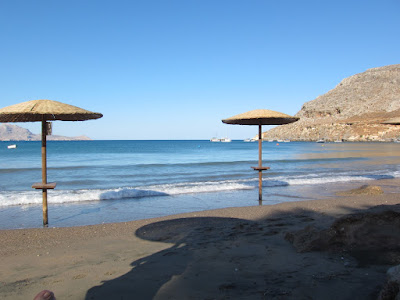
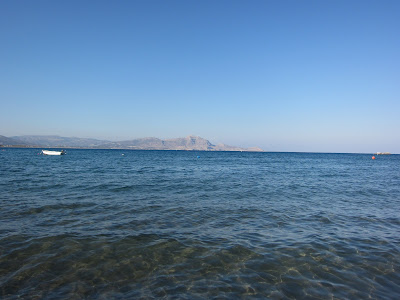
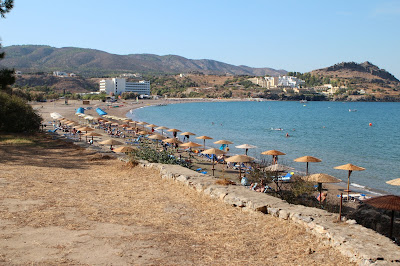
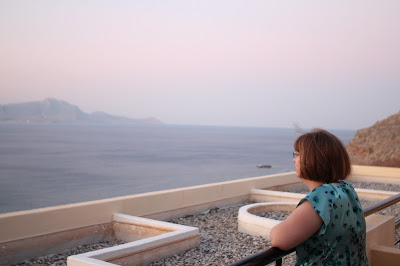
See also parts 1 and 2. That s a photo of Vlicha Beach, near our hotel. But before I talk about the Greek beaches, I need to explain something about living in Kansas. Kansas is in the middle of the United States. The nearest ocean is the Gulf of Mexico, which is 700 miles (1100km) away. That s roughly the same as the distance between Berlin and Minsk, or New York and Chicago. And I believe it s farther away from a saltwater body than all (or almost all) of Europe. So we re not just going to the beach every weekend or something. Vlicha Beach was all those incredible things you ever hear about beaches. The water was so clear that I could easily see my feat while wading in it. That, and the fish swimming around them. It was peaceful, relaxing, and picturesque. Between the deep blue of the sea and the same in the sky, I suppose it is no wonder that blue is often associated with Greece. We weren t exactly the only ones there. Though I think we were the only ones there with Kindles, which seemed to be much more popular in the USA than in Europe. We got several interested people carrying paper books asking what they were. Towards dusk, the mist would become more pronounced and the mountains off in the distance started to fade: The evening before we were set to fly home, we spent some time sitting on our balcony watching dusk set in. One last gaze out over the beautiful Aegean, the misty mountains, and the boats in the distance.

Rapha&#235;l Hertzog: What about creating The Ubuntu Administrator s Handbook?

I am currently running a crowdfunding campaign whose ultimate goal is to liberate the English translation of a French book that I have written. This book will be named The Debian Administrator s Handbook because it has primarily been written for Debian. Creating a new Ubuntu book based on The Debian Administrator s Handbook But since Ubuntu is based on Debian, a large part of its content applies equally well to Ubuntu. While discussing with Mark Shuttleworth, he suggested me to reuse those parts and to create a new book dedicated to Ubuntu. It would also cover the latest cloud technologies that Ubuntu has been delivering (since this is a topic that the current book does not cover). This is something that I have been envisioning for a while and something that I would be ready to try if we manage to complete the liberation of the current book. This project would then bring a truly free book to the Ubuntu ecosystem. Why? The official Ubuntu books are not really free There s a policy in place that ensures that official Ubuntu books use a free software/culture license and they are effectively available under the terms of a Creative Commons Share Alike license. But try to create a derivative book you won t find the sources (LaTeX or DocBook usually with most big books). You can only find a few PDF copies if you google for it. But this is really not the preferred form of modification for such a book. Those books are also not packaged. Ubuntu much like Debian deserves to have a good book embodying the values of free software that can be shipped together with its product. When I speak of liberation of the book, I really mean it in the way that free software hackers are used to: a public Git repository containing the DocBook sources, the pictures and the .dia files for the various schemas. Help Ubuntu by spreading the word I understand that at this point this proposed Ubuntu book is really hypothetical ( vaporware one could say) but we need to go step by step to make it a reality. And the first step is to ensure that we manage to liberate the Debian Administrator s Handbook. For this I am seeking the support of the Ubuntu community to promote the current fundraising campaign. If the perspective of the Ubuntu book is not enough to convince you, you ll be glad to learn that I also commit to give back to Ubuntu 15% of the money raised via the link below (once VAT has been subtracted). Click here to go to the crowdfunding campaign page and pledge a few euros. Then share this article (or the link http://debian-handbook.info/go/ulule-ubuntu/) and convince others to participate. At this point, the liberation target is entirely reachable with your help and the help of the community: the remaining 18 K needed in the liberation fund represent 720 persons giving 25 EUR each or 1800 persons giving 10 EUR each. Thank you very much for your support and your help in this project!

One comment Liked this article? Click here. My blog is Flattr-enabled.

13 October 2011

Alastair McKinstry: #### [WATER FRACTIONS IN EXTRASOLAR PLANETESIMALS](http://arxiv.org/PS_cache/arxiv/pdf/1110/1110.1774v1.pdf) #### Jura & Xu, Arxiv.org. #exoplanets, #water, #phd > Abstract: With the goal of using externally-polluted white dwarfs to investigate the water fractions of extrasolar planetesimals, we assemble from the literature a sample that we estimate to be more than 60% complete of DB white dwarfs warmer than 13,000 K, more luminous than 3 10 3 L and within 80 pc of the Sun. When considering all the stars together, we find the summed mass accretion rate of heavy atoms exceeds that of hydrogen by over a factor of 1000. If so, this sub-population of extrasolar asteroids treated as an ensemble has little water and is at least a factor of 20 drier than CI chondrites, the most primitive meteorites. In contrast, while an apparent excess of oxygen in a single DB can be interpreted as evidence that the accreted material originated in a water-rich parent body, we show that at least in some cases, there can be sufficient uncertainties in the time history of the accretion rate that such an argument may be ambiguous. Regardless of the difficulty associated with interpreting the results from an individual object, our analysis of the population of polluted DBs provides indirect observational support for the theoretical view that a snow line is important in disks where rocky planetesimals form. Ok, so we now have a way of estimating how wet planetary systems *were*, at the time they fell into the white dwarf star. Not very representative of the time they before the planet got roasted to a crisp by the stars Red Giant stage, however. Recovering the hydrogenation state of serpentinized minerals might be possible and useful.

#### [WATER FRACTIONS IN EXTRASOLAR PLANETESIMALS](http://arxiv.org/PS_cache/arxiv/pdf/1110/1110.1774v1.pdf) #### Jura & Xu, Arxiv.org. #exoplanets, #water, #phd > Abstract: With the goal of using externally-polluted white dwarfs to investigate the water fractions of extrasolar planetesimals, we assemble from the literature a sample that we estimate to be more than 60% complete of DB white dwarfs warmer than 13,000 K, more luminous than 3 10 3 L and within 80 pc of the Sun. When considering all the stars together, we find the summed mass accretion rate of heavy atoms exceeds that of hydrogen by over a factor of 1000. If so, this sub-population of extrasolar asteroids treated as an ensemble has little water and is at least a factor of 20 drier than CI chondrites, the most primitive meteorites. In contrast, while an apparent excess of oxygen in a single DB can be interpreted as evidence that the accreted material originated in a water-rich parent body, we show that at least in some cases, there can be sufficient uncertainties in the time history of the accretion rate that such an argument may be ambiguous. Regardless of the difficulty associated with interpreting the results from an individual object, our analysis of the population of polluted DBs provides indirect observational support for the theoretical view that a snow line is important in disks where rocky planetesimals form. Ok, so we now have a way of estimating how wet planetary systems *were*, at the time they fell into the white dwarf star. Not very representative of the time they before the planet got roasted to a crisp by the stars Red Giant stage, however. Recovering the hydrogenation state of serpentinized minerals might be possible and useful.

11 October 2011

Christian Perrier: RWC 2011 : after 1/4 finals

I was expecting to write more about the 7th Rugby World Cup, but real life, Debian work and running activities prevented me to do so.. Still, I watched several games and I can share my feelings now. First of all, this is a tremendous organization from New Zealand. It seems that about the entire country is working on making this even a great success and I really appreciate to see a place I certainly have to visit some day receiving such wordlwide attention (OK, admitedly, mostly in the part of the world that understands rugby). First round already gave several surprises even if the 1/4 finals were after all kinda expected (at least, the list of countries). Which lead us to the following 1/4 finals (in parenthesis are my bets): If you know about the results, you know I screwed it nearly completely..:-) The Welsh team played a great game against an uninspired Irish team. It has certainly been the best 1/4 final and they certainly deserve their win. Even though I usually tend to be supprotive of Ireland, I was very balanced here, and finally turned out to be in favor of the Welsh. We really have to fear them in semi-finals. Australia-South Africa was theoretically the most exciting 1/4 final but finally turned out to be quite boring. Both teams insisted on playing mostly to occupy their opponents part of the field, more than trying to score, then relying on penalties to score. That was apparently the good tactics for Australia ad they also deserve their win against a South-African team where forward players were not as decisive as they sometimes are. Argentina was again there and really there. It has been the only team up to now who lead score against New Zealand. And that was deserved. What a wonderful 1st halftime! Obviously, it was impossible for them to resist during second halftime and it slowly became obvious that the Blacks (saved during 1st half by the kicks of a very inspired Kiri Weepu) would finally manage to score tries. But, still, our argentinian friends, for instance the inoxydable "Super Mario" Ledesma, or the tireless Felipe Contepomi, were not here as a sacrificial victim. What to say about England-France? First half was astonishing for us, of course. This is what we love (and hate) with our beloved French team. Definitely the team that can make surprises and, imho, the only one that can beat New Zealand if that has to happen (but also the only one that can be entirely crushed by them). The defeat against Tonga and the week that followed completely transformed them. A stunning 3rd row, defending each and every single bit of England trying to invade "la patrie en danger". Rear lanes with the magicians of Toulouse (Clerc and M dard) as the ideal finishers of magic play by Parra, Trinh Duc, Mermoz, Palisson (the good surprise of this world cup, Alexis). And, during second half, a trilling resistance to assaults of the British White Knights, concluded by this delivering drop-goal by Trinh Duc. For sure, with games like this, they can beat everybody and by everybody, I mean everybody. Remember Millenium Stadium in 2007..:-) So, well. Australia-New Zealand and France-Wales. I know where my heart is balancing for both games. The Blacks and Les Bleus in final, thi is what we hope (and fear...), but both teams, particularly France, will have to first climb a quite big wall before reaching this.

10 October 2011

Vincent Bernat: SSL termination: stunnel, nginx & stud, round 2

A month ago, I published an article on the compared performances of stunnel, nginx and stud as SSL terminators. The conclusion was to use stud on a 64-bit system, with session caching and AES. stunnel was unable to scale properly and nginx exhibited important latency issues. I got constructive comments on many aspects. Therefore, here is the second round. The protagonists are the same but both the conditions and the conclusions have changed a bit.

Benchmarks The hardware platform remains unchanged: We focus on the following environment:
  • Ubuntu Lucid, featuring a patched version of OpenSSL 0.9.8k with AES-NI builtin and enabled by default
  • 2.6.39 kernel (250 HZ)
  • 64-bit
  • 1 core for HAProxy, 2 cores for network cards1, 4 cores for SSL, 1 core for the system
  • system limit of 100,000 file descriptors per process
On the SSL side, the main components are:
  • 2048-bit certificates
  • AES128-SHA cipher suite
  • 8 HTTP/1.0 requests per client
  • HTTP response payload of 1024 bytes
If you are interested in different conditions (32-bit, number of cores, 1024-bit certificates, proportion of session reuses), have a look at the previous article whose results on the matter are still valid. I only consider 2048-bit certificates because most certificates issued today are 2048-bit. In SP800-57, NIST advises that 1024-bit RSA keys will no longer be viable after 2010 and advises moving to 2048-bit RSA keys:
If information is initially signed in 2009 and needs to remain secure for a maximum of ten years (i.e., from 2009 to 2019), a 1024-bit RSA key would not provide sufficient protection between 2011 and 2019 and, therefore, it is not recommended that 1024-bit RSA be used in this case.
And the protagonists are: UPDATED: Configuration of nginx has been updated to switch to off both multi_accept and accept_mutex thanks to the feedback of Maxim Dounin on latency issues that were present in the previous article (and still present in the early version of this article). HAProxy (configuration) is used for stunnel and stud to add load-balancing. For each test, we want to maximize the number of HTTP transactions per second (TPS) while minimizing latency and unsucessful transactions. The maximum number of allowed failed transactions is set at 1 transaction out of 1000. The maximum allowed average latency is 100 ms2.

Control case Below is the first comparison between stud, nginx and stunnel on plain Ubuntu Lucid. Like in previous benchs, stunnel is not able to scale, with a maximum of 400 TPS. However, early latency issues of nginx has been solved, thanks to the change in configuration. stud and nginx gets similar performance but, as you can see on the bottom plot (whose scale is logarithmic) stud starts with an initial latency of 40 ms. This is pretty annoying. I have tried some micro optimization to solve this issue but without luck. If latency matters for you, stick with stunnel or nginx (or find where the problem lies in stud). UPDATED: After reporting this issue, a fix has been commited. The culprit was Nagle s algorithm which improves bandwidth at the expense of latency. With the fix, performances are mostly the same but there is no latency penalty any more. stud, nginx, stunnel on Ubuntu Lucid

OpenSSL 1.0.0e When I published the first round of benchmarks, Micha Trojnara was dubious about the bad results of stunnel. He told me on Twitter:
I solved it! You compiled stunnel against a 4 years old OpenSSL with MT-unsafe SSL_accept. Upgrade OpenSSL and rebuild stunnel. This bug was fixed in OpenSSL 1.0.0b. I implemented a (slow) workaround, so stunnel doesn t crash with earlier versions of OpenSSL.
Therefore, I backported Ubuntu Oneiric OpenSSL 1.0.0e to Ubuntu Lucid3 and, as you can see yourself on the plot below, there is a huge performance boost for stunnel: about 400%! stud features a slight improvement too (about 8%) but still starts with a latency of 40 ms while nginx does not improve. stud, nginx, stunnel with OpenSSL 1.0.0e

Intel Accelerator Engine Most Linux distributions are still using OpenSSL 0.9.8. For example, Debian Squeeze ships with OpenSSL 0.9.8o, Ubuntu Lucid with 0.9.8k and RHEL 5.7 with 0.9.8e. Therefore, they are not eligible to recent performance improvements. To solve this, Intel released Intel Accelerator Engine, which also brings, among other things, AES-NI support:
This is essentially a collection of assembler modules from development OpenSSL branch, packed together as a standalone engine. Standalone means that it can be compiled outside OpenSSL source tree without patching the latter. Idea is to provide a way to utilize new code in already released OpenSSL versions constrained by support and release policies limiting their evolvement to genuine bug fixes.
Alas, in my tests, there was no improvement compared to OpenSSL 1.0.0e (already patched with AES-NI support). stunnel comes with out-of-the-box support for additional engines. Just add something like this to your stunnel.conf:
engine=dynamic
engineCtrl=SO_PATH:/WOO/intel-accel-1.4/libintel-accel.so
engineCtrl=ID:intel-accel
engineCtrl=LIST_ADD:1
engineCtrl=LOAD
engineCtrl=INIT
For stud, you should grab support for engine selection from GitHub and for nginx, just specify the engine with ssl_engine.

Intel Performance Primitives In his great article Accelerated SSL , Simon Kuhn shows huge performance improvements by using Intel s IPP library, a library aimed at leveraging power of multi-core processors and including some cryptographic primitives and a patch to make use of them in OpenSSL. Unfortunately, this library is not free, not even as in free beer . The patch provided by Intel only applies on OpenSSL 0.9.8j. Simon updated it for OpenSSL 1.0.0d. It also applies with a slight modification to OpenSSL 1.0.0e. Look at Simon s article for instructions on how to compile OpenSSL with IPP. Simon measured 220% improvement on RSA 1024-bit private key operations by using this library. Unfortunately, we don t get such a performance burst with stud which exhibits a 15% improvement (but remember that private key operations only happen once every 8 transactions thanks to session reuse). Worst, with stunnel, performances are reduced by one third and nginx just segfaults. I think such a library is risky to use in production. stud and stunnel with IPP

Hyperthreading During the previous tests, only half the capacity of each core were used. For stud, adding more workers per core only slightly improves this situation (less than 10% with 4 workers per core). Therefore, I thought using hyperthreading could rectify the situation here. In this case, stud, stunnel and nginx are allocated 8 virtual cores instead of 4. stud only got a small improvement of 5%, nginx a moderate improvement of 11% while stunnel got a significant improvement of 26%. stud, stunnel and nginx with hyperthreading

Conclusion Here is a quick recap of the maximum TPS reached on each tests (while keeping average response time below 100 ms). All tests were run on 4 physical cores with 2048-bit certificates, AES128-SHA cipher suite. Each client makes 8 HTTP requests and reuse the first SSL session.
Context nginx 1.1.4 stunnel 4.44 stud @e207dbc5a3
OpenSSL 0.9.8k 1489 TPS 400 TPS 1492 TPS
OpenSSL 1.0.0e 1501 TPS 1561 TPS 1609 TPS
OpenSSL 1.0.0e + IPP - 1101 TPS 1857 TPS
OpenSSL 1.0.0e + HT 1718 TPS 1973 TPS 1694 TPS
I also would like to stress that below 1500 TPS, stunnel adds an overhead of a few milliseconds while stud adds 40 milliseconds. With OpenSSL 1.0.0e and hyperthreading enabled, stunnel has both good performance and low latency on low loads to moderate loads. You may just want to limit the number of allowed connections to avoid collapsing on high loads. While in the previous round, stud was the champion and stunnel lagged behind, the situation is now reversed : stunnel is on top! UPDATED: As said earlier, the latency issue with stud has been solved. Performances remain mostly the same.

  1. HAProxy and network cards don t need dedicated core for this kind of load. However, if you also want to handle non SSL traffic, those dedicated cores can get busy.
  2. The real condition is more complex. Each point is considered valid if the corresponding average latency is less than 100 ms or if the average on the next 8 points is less than 100 ms. Temporary latency bursts are therefore allowed. We are not so forgiveful with failed transactions.
  3. This is pretty straighforward: I just dropped multiarch support. I chose to use Ubuntu version of OpenSSL instead of upstream because there are some interesting patches, like automatic support of AES-NI.

9 October 2011

Emanuele Rocca: A neat VLC extension to download subtitles

As somebody who often watches movies and TV shows I have the recurring problem of finding the right English subtitles for the video I am about to enjoy. Now, that is really a tedious thing to do. You go on a website such as opensubtitles.org and type the title of what you are looking for. Then you usually have to choose from a plethora of results, download the archive, unzip it, fire up VLC, go to Video Subtitles Track Open File, and finally open your subtitles file. And what you typically find out at that point is that the subtitles are completely out of sync with the audio, but rather than doing the whole process again you prefer to just sync them with a bit of VLC-fu. Which always takes longer than you thought, but hey. Now, what if there was an extremely simple way to just choose the subtitles for a given movie directly from VLC? The good news is that somebody wrote a beautiful VLC extension that does exactly that. He also wrote an introductory article about VLC extensions. Thank you, Jean-Philippe Andr . Installing the thing is as simple as downloading the subtitles extension and putting it in the VLC scripts folder. On Linux machines, the extensions folder can be found at ~/.local/share/vlc/lua/extensions/, on Windows APPDATA\VLC\lua\extensions. But seriously, don t use Windows. Once the extension is installed you can start watching a movie and then click View Subtitles to open the subtitles search interface. This is how it looks like: Now that the practical problem is solved, please take some time to look at the source code. VLC uses Lua as the language for writing extensions. I certainly cannot say that the web is full of resources about how to extend VLC using Lua, but the piece of code I wrote about in this post is certainly a good way to start hacking, and maybe scratch yet another itch.

7 October 2011

Matt Zimmerman: Ada Lovelace Day 2011: Dr. Marian C. Diamond

For Ada Lovelace Day this year, I want to share my appreciation for Dr. Marian C. Diamond. In years past, I ve saluted women in the field of computing, which is my field as well. Dr. Diamond, however, is a biologist. Her research includes neuroanatomy, environment, immune functions, and hormones. In particular, she is interested in studying the effects of the external environment, aging, and immune responses on the cerebral neocortex. She has, in her words, had a love affair with the brain for about 70 years. I know very little about biology. The content and methods of her research are, frankly, beyond me, though some of her results have garnered popular attention. She has inspired me by demonstrating that rare combination of gifts: a deep understanding of a technical subject, and the ability to explain it to other people in an accessible way. In her interviews, articles and lectures, many of which are available online, Dr. Diamond displays these gifts in abundance. Her skill and enthusiasm for both learning and teaching is unmistakable. After applying her gifts in the classroom for many years, digital distribution has now enabled many more people to see and hear her, through millions of YouTube views. In 1960, she became the first female graduate student in UC Berkeley s anatomy department, and was apparently given the job of sewing a cover for a magnifying machine. I can only imagine the persistence required to continue from there to become a recognized leader in her field. She has gone on to help many other students along their way, and was named an unsung, everyday hero for the support she provided to students outside of the classroom or lab. As if that weren t enough, she has also traveled to Cambodia to apply her expertise in helping children injured by land mines. She still teaches today, just across the bay from where I write this, and will turn 85 next month.

Rapha&#235;l Hertzog: My Debian activities in September 2011

This is my monthly summary of my Debian related activities. If you re among the people who made a donation to support my work (144.3 , thanks everybody!), then you can learn how I spent your money. Otherwise it s just an interesting status update on my various projects. Dpkg work While taking care of the last details for the hardening feature in dpkg 1.16.1, I have mailed debian-devel to find volunteers to handle a hardening release goal. The objective is to ensure a large number of packages have been converted/rebuilt to actually use the new hardening build flags. Then I prepared the draft of the announce of the dpkg 1.16.1 upload (aka Bits of dpkg maintainers sent to debian-devel-announce) which got expanded by Guillem to also cover new features since dpkg 1.15.7. update-alternatives got some refactoring by Guillem which resulted in a regression that has been fortunately discovered by Sven Joachim. I fixed that regression and did some further cleanup inspired by the root cause of this regression (see top 4 commits here). Note that Sven is one of the few persons who are running the git version of dpkg. Hopefully the number of tester will increase since I recently documented the APT repositories with autobuilt versions of dpkg in the wiki. At the end of the month, I started working on a bugfix release (what s going to be 1.16.1.1) by fixing some of the unavoidable problems discovered after an upload that accumulated more than 4 months worth of work (see top 4 commits here). The Debian Administrator s Handbook I spent countless hours finalizing the launch of the crowdfunding campaign for the Debian Administrator s Handbook and it went live on September 27th. So far it s on good track with more than 63% of the base funding already secured. But we still have a long way to go to reach the liberation goal (we re at 21%). It s still worth nothing that more than 55% of the money raised has been put in the liberation fund so there are many persons who care about getting the book freed. More than 250 persons are supporting the project currently with an average contribution of 38 EUR. I would have expected much less for the average contribution but many more supporters. I still hope we can get more people on board with the perspective of a good DFSG-free Debian ebook. Did you order your copy? If not, click here and fix this! ;-) By the way Paypal used to be required but it s no longer the case, you can support the project just with your usual credit card. Misc blog updates Over time, I have written many useful articles for Debian users and Debian contributors. But scattered in the history, they are somewhat difficult to find. To fix this I have created some index pages listing them. Check them out: Two new articles joined those pages this month: How to triage bugs in the Debian Bug Tracking System and Understand dpkg and don t get stuck with a maintainer script failure. While writing the first article, I noticed we lacked a good page showing the most buggy packages so I quickly created it (with the help of UDD): http://qa.debian.org/cgi-bin/bugs-by-source Misc packaging work I did a small update to the developer s reference. Luca Falavigna submitted a patch to clarify how one is supposed to deal with meta-packages (cf #569219), I improved it and integrated the result in the SVN repository. I upgraded nautilus-dropbox to version 0.6.9 and while doing this I discovered a bug in mergechanges (filed as #640782). I uploaded a new release of quilt mainly to add the Multi-Arch: foreign field so that it can satisfy dependencies of foreign packages (i.e. packages of a different architecture). Django released some security advisories (tracked in #641405) and since the maintainer did not deal with the issue, I stepped up to the task (I m a backup maintainer) and released the fixed version 1.3.1 to unstable. I took the opportunity to switch from python-support to dh_python2, and do some misc improvements to the packaging (see changelog). I wanted to update publican to a newer version but it turned out to be not possible because Debian doesn t have the latest version of docbook-xsl yet. I also discovered some bugs in the test suite and forwarded upstream the patch I created (see upstream bug). On top of this, fop was failing due to some java problem related to the introduction of multiarch. After having reported the bug, the java maintainers quickly released a fixed version. So now publican is ready in the git repository but it s waiting on the docbook-xsl update. I got in touch with the maintainer who said he would have the time to take care of it by mid-october. Thanks See you next month for a new summary of my activities.

One comment Liked this article? Click here. My blog is Flattr-enabled.

Next.

Previous.