Release 0.3.9 of the RcppGSL package arrived at CRAN today, pretty much exactly one year since the last upload. The RcppGSL package provides an interface from R to the GNU GSL by relying on the Rcpp package.
This release brings some small documentation and CI polish, and enables builds on the newer (and still experimental) windows UCRT flavor (which will bring native utf-8 chars to Windows, see this and this write-up) thanks to a PR by Jeroen.
Changes in version 0.3.9 (2021-06-23)
The pdf vignette was extended by a small subsection (Dirk).
The CI setup was updated to use run.sh from r-ci (Dirk).
The windows was updated to GSL 2.7, and UCRT support was added (Jeroen in #28).
Last week I took the ICS course "Building an Embedded Application with Qt" and now it's time to put the gained knowledge into action. I decided to create an application to (simulate?) a heater control. Why? Because I have a very basic one at home, and I always dreamed of getting something better. So time to implement it.
Requirements
General
Try to do the business logic in C++ as much as possible.
Thermostat
0.1 C resolution.
Regulable hysteresis in the range +/- [0.1 1.0].
Temperature profiles
3 profiles to select (in fact I think 2 would be enough, but one more shouldn't hurt).
Each profile will have each own target temperature and hysteresis.
Profile selection
The system should be able to configure the desired profile in slots of 15' for each day (Monday to Sunday). So 96 slots per day.
Manual button
Sometimes I want to override the predefined configuration for a special situation. This button should allow me to set a new target temperature in a time slot from 15 minutes to 3 hours.
Heater on indicator
We want to know when the heater is being commanded to turn on.
Temperature sensor
This is not strictly decided, so the ability to use different kinds of sensors, one at a time, would be just nice.
User interface
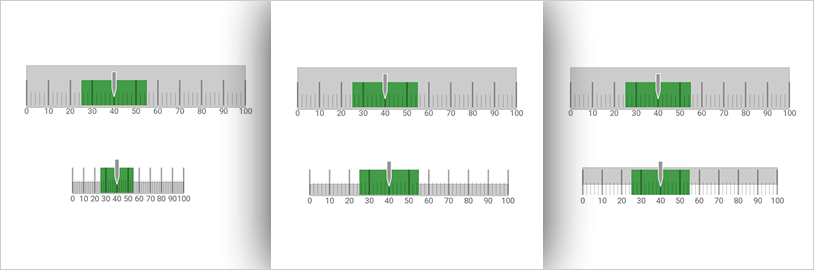
I did some sketches on what I would want as a UI. But I'm not a graphic designer, so I will first do a very simple but yet functional UI and then try to switch to a better designed UI. I dream on emulating an horizontal disc gauge, those where the user sees the border of the disc and the center of it shows the current temperature, perhaps even with a magnifier in the middle. Something like this, but with the needle fixed in the center.
Implementing the idea
The backend
Code repository at GitLab.
My first steps where to implement the C++ backend: a Settings class and a TemperatureEngine class.
For the temperature sensor I decided to make a very simple AbstractTemperatureSensor class and also implement a FakeTemperatureSensor. The later will come handy in order to be able to run tests.
Later on I can implement other temperature sources like reading an analog voltage from some GPIO, getting the data trough MQTT, etc.
The GUI
That's definitely Work In Progress :-)
May First Movement Technology has been running a
public Jitsi Meet instance since well before
the pandemic to support Internet-based, video meetings for folks who don't want
to rely on corporate and proprietary infrastructure.
However (until this week - see below), we haven't been using it for our own
meetings for one main reason: simultaneous interpretation. We're an
international organization with roots in the US and Mexico and we are committed
to building a bi-national leadership with a movement strategy that recongizes
the symbolic and practical disaster of the US/Mexico border.
As a result, we simply can't hold a meeting without simultaneous interpretation
between english and spanish.
Up to now, we've worked out a creative way to have mumble meetings with
simultaneous
interpretation. In
short: we have a room for interpretation. If you move into the interpretation
room, you hear the interpreter. If you move into the main room, you hear the
live voices of the participants. You can switch between rooms as needed. This
approach is rock solid, and we benefit from mumble's excellent performance in
low bandwidth situations and the availability of mumble clients on both Android
and iPhones.
However, there are limitations, which include:
You can't hear both the live voices and the interpretation at the same time:
it's one or the other. If you are in a face-to-face meeting and receiving
interpretation via headphones, you can see the person talking and even
remove the headphones from one ear to get a sense of the tone and emotions
of the speaker. Not with mumble. In fact, you can't even tell who is
speaking.
Two chat rooms: If you chat to the live group, it's only seen by the live
group. If you chat with the interpretation group, it's only seen by the
interpretation group.
No video in mumble: well, some people consider this a positive. I'll leave
it at that.
After years of reviewing the many dead-end threads and issue requests around
simultaneous interpretation on the Jitsi boards (and the Big Blue Button boards
for that matter) I finally came across the
thread
that led to the pull request
that changed everything.
With the ability to control local volume via the Jitsi Meet API, I was able to
pull together a very small amount of code to produce Jitsi Simultaneous
Interpretation (JSI) - a way to run your Jitsi
Meet server with an interpretation slider at the top allowing you to set the
volume of the interpreter at any time during the meeting.
It's still not perfect - the main problem is that you can't use any of the
Jitsi Meet apps - so it runs well on most desktops, but when it comes to cell
phones, it only runs (in browser) on modern android phones.
Updated my simple web recording app to support multiple cameras and selecting from it.
WebRecord.
I didn't need it until today because I didn't use a device with more than one camera as often, but I got hold of a HDMI USB capture device and that changed the game.
Accessibility
This is perhaps one of the strangest ways and yet also perhaps the straightest way to start the blog post. For the past weeks/months, a strange experience has been there. I am using a Logitech wireless keyboard and mouse for almost a decade. Now, for the past few months and weeks we observed a somewhat rare phenomena . While in-between us we have a single desktop computer. So me and mum take turns to be on the Desktop. At times, however, the system would sit idle and after some time it goes to low-power mode/sleep mode after 30 minutes.
Then, when you want to come back, you obviously have to give your login credentials. At times, the keyboard refuses to input any data in the login screen. Interestingly, the mouse still functions. Much more interesting is the fact that both the mouse and the keyboard use the same transceiver sensor to send data. And I had changed batteries to ensure it was not a power issue but still no input :(.
While my mother uses and used the power switch (I did teach her how to hold it for few minutes and then let it go) but for self, tried another thing. Using the mouse I logged of the session thinking perhaps some race condition or something might be in the session which was not letting the keystrokes be inputted into the system and having a new session might resolve it. But this was not to be
Luckily, on the screen you do have the option to reboot or power off. I did a reboot and lo, behold the system was able to input characters again. And this has happened time and again. I tried to find GOK and failed to remember that GOK had been retired. I looked up the accessibility page on Debian wiki. Very interesting, very detailed but sadly it did not and does not provide the backup I needed. I tried out florence but found that the app. is buggy.
Moreover, the instructions provided on the lightdm screen does not work. I do not get the on-screen keyboard while I followed the instructions. Just to be clear this is all on Debian testing which is gonna be Debian stable soonish
I even tried the same with xvkbd but no avail. I do use mate as my desktop-manager so maybe the instructions need some refinement ????
$ cat /etc/lightdm/lightdm-gtk-greeter.conf grep keyboard # a11y-states = states of accessibility features: name save state on exit, -name disabled at start (default value for unlisted), +name enabled at start. Allowed names: contrast, font, keyboard, reader. keyboard=xvkbd no-gnome focus & # keyboard-position = x y[;width height] ( 50%,center -0;50% 25% by default) Works only for onboard #keyboard=
Interestingly, Debian does provide two more on-screen keyboards, matchbox as well as onboard which comes from Ubuntu. While I have both of them installed. I find xvkbd to be enough for my work, the only issue seems to be I cannot get it from the drop-down box of accessibility at the login screen. Just to make sure that I have not gone to Gnome-display manager, I did run
$ sudo dpkg-reconfigure gdm3
Only to find out that I am indeed running lightdm. So I am a bit confused why it doesn t come up as an option when I have the login window/login manager running. FWIW I do run metacity as the window manager as it plays nice with all the various desktop environments I have, almost all of them.
So this is where I m stuck. If I do get any help, I probably would also add those instructions to the wiki page, so it would be convenient to the next person who comes with the same issue.
I also need to figure out some way to know whether there is some race-condition or something which is happening, have no clue how would I go about it without having whole lot of noise. I am sure there are others who may have more of an idea. FWIW, I did search unix.stackexchange as well as reddit/debian to see if I could see any meaningful posts but came up empty.
Freenode
I had not been using IRC for quite some time now. The reasons have been multiple issues with Riot (now element) taking the whole space on my desktop. I did get alerted to the whole thing about a week after the whole thing went down. Somebody messaged me DM. I *think* I put up a thread or a mini-thread about IRC or something in response to somebody praising telegram/WhatsApp or one of those apps. That probably triggered the DM.
It took me a couple of minutes to hit upon this. I was angry and depressed, seeing the behavior of the new overlords of freenode. I did see that lot of channels moved over to Libera.
It was also interesting to see that some communities were thinking of moving to some other obscure platform, which again could be held hostage to the same thing. One could argue one way or the other, but that would be tiresome and fact is any network needs lot of help to be grown and nurtured, whether it is online or offline.
I also saw that Libera was also using a software Solanum which is ircv3 compliant. Now having done this initial investigation, it was time to move to an IRC client. The Libera documentation is and was pretty helpful in telling which IRC clients would be good with their network. So I first tried hexchat. I installed it and tried to add Libera server credentials, it didn t work. Did see that they had fixed the bug in sid/unstable and now it s in testing. But at the time it was in sid, the bug-fixed and I wanted to have something which just ran the damn thing. I chanced upon quassel. I had played around with quassel quite a number of times before, so I knew I could play/use it. Hence, I installed it and was able to use it on the first try. I did use the encrypted server and just had to tweak some settings before I could use it with some help with their documentation. Although, have to say that even quassel upstream needs to get its documentation in order. It is just all over the place, and they haven t put any effort into streamlining the documentation, so that finding things becomes easier. But that can be said of many projects upstream.
There is one thing though that all of these IRC clients lack. The lack of a password manager. Now till that isn t fixed it will suck because you need another secure place to put your password/s. You either put it on your desktop somewhere (insecure) or store it in the cloud somewhere (somewhat secure but again need to remember that password), whatever you do is extra work. I am sure there will be a day when authenticating with Nickserv will be an automated task and people can just get on talking on channels and figuring out how to be part of the various communities. As can be seen, even now there is a bit of a learning curve for both newbies and people who know a bit about systems to get it working.
Now, I know there are a lot of things that need to be fixed in the anonymity, security place if I put that sort of hat. For e.g. wouldn t it be cool if either the IRC client or one of its add-on gave throwaway usernames and passwords. The passwords would be complex. This would make it easier who are paranoid about security and many do and would have. As an example we can see of Fuchs.
Now if the gentleman or lady is working in a professional capacity and would come to know of their real identity and perceive rightly or wrongly the role of that person, it will affect their career. Now, should it? I am sure a lot of people would be divided on the issue. Personally, as far as I am concerned, I would say no because whether right or wrong, whatever they were doing they were doing on their own time. Not on company time. So it doesn t concern the company at all. If we were to let companies police the behavior outside the time, individuals would be in a lot of trouble.
Although, have to say that is a trend that has been seen in companies that are firing people either on the left or right. A recent example that comes to mind is Emily Wilder who was fired by Associated Press. Interestingly, she was interviewed by Democracy now, and it did come out that she is a Jew. As can be seen and understood there is a lot of nuance to her story and not the way she was fired. It doesn t give a good taste in the mouth, but then getting fired nobody does. On few forums, people did share of people getting fired of their job because they were dancing (cops). Again, it all depends, for me again, hats off to anybody who feels like dancing or whatever because there are just so many depressing stories all around.
Banned and FOE
On few forums I was banned because I was talking about Brexit and American imperialism, both of which are seem to ruffle a few feathers in quite a few places. For instance, many people for obvious reasons do not like this video
Now I m sorry I am not able to and have not been able to give invidious links for the past few months. The reason being invidious itself went through some changes and the changes are good and bad. For e.g. now you need to share your google id with a third-party which at least to my mind is not a good idea. But that probably is another story altogether and it probably will need its own place.
Coming back to the video itself, this was shared by Anthony hazard and the Title is The Atlantic slave trade: What too few textbooks told you . I did see this video quite a few years ago and still find it hard to swallow that tens of millions of Africans were bought as slaves to the Americas, although to be fair it does start with the Spanish settlement in the land which would be called the U.S. but they bought slaves with themselves. They even got the American natives, i.e. people from different tribes which made up America at that point. One point to note is that U.S. got its independence on July 4, 1776 so all the people before that were called as European settlers for want of a better word. Some or many of these European settlers would be convicts who were sent from UK. But as shared in the article, that would only happen with U.S. itself is mature and open enough for that discussion. Going back to the original point though, these European or American settlers bought lot of slaves from Africa. The video does also shed some of the cruelty the Europeans or Americans did on the slaves, men and women in different ways. The most revelatory part though which I also forget many a times that because lot of people were taken from Africa and many of them men, it did lead to imbalances in the African societies not just in weddings but economics in general. It also developed a theory called Critical Race theory in which it tries to paint the Africans as an inferior race otherwise how would Christianity work where their own good book says All men are born equal .
That does in part explain why the African countries are still so far behind their European or American counterparts. But Africa can still be proud as they are richer than us, yup India. Sadly, I don t think America is ready to have that conversation anytime soon or if ever. And if it were to do, it would have to out-do any truth and reconciliation Committee which the world has seen. A mere apology or two would not just cut it. The problems of America sadly are not limited to just Africans but the natives of the land, for e.g. the Lakota people. In 1868, they put a letter stating we will give the land back to the Lakota people forever, but then the gold rush happened. In 2007, when the Lakota stated their proposal for independence, the U.S. through its force denied. So much for the paper, it was written on.
Now from what I came to know over the years, the American natives are called First nations . Time and time again the American Govt. has tried or been foul towards them. Some of the examples include The Yucca Mountain nuclear waste repository . The same is and was the case with The Keystone pipeline which is now dead. Now one could say that it is America s internal matter and I would fully agree but when they speak of internal matters of other countries, then we should have the same freedom.
But this is not restricted to just internal matters, sadly. Since the 1950 s i.e. the advent of the cold war, America s foreign policy made Regime changes all around the world. Sharing some of the examples from the Cold War
Iran 1953 Guatemala 1954 Democratic Republic of the Congo 1960 Republic of Ghana 1966 Iraq 1968 Chile 1973 Argentina 1976 Afghanistan 1978-1980s Grenada Nicaragua 1981-1990 1. Destabilization through CIA assets 2. Arming the Contras El Salvador 1980-92 Philippines 1986
Even after the Cold War ended the situation was anonymolus, meaning they still continued with their old behavior.
After the end of Cold War
Guatemala 1993 Serbia 2000 Iraq 2003- Afghanistan 2001 ongoing
There is a helpful Wikipedia article titled History of CIA which basically lists most of the covert regime changes done by U.S. The abvoe is merely a sub-set of the actions done by U.S.
Now are all the behaviors above of a civilized nation ? And if one cares to notice, one would notice that all the above countries in the list which had the regime change had either Oil or precious metals. So U.S. is and was being what it accuses China, a profiteer. But this isn t just the U.S. China story but more about the American abuse of its power.
My own country, India paid IMF loans till 1991 and we paid through the nose. There were economic sanctions against India. But then, this is again not just about U.S. India. Even with Europe or more precisely Norway which didn t want to side with America because their intelligence showed that no WMD were present in Iraq, the relationship still has issues.
Pandemic and the World
So I do find that this whole blaming of China by U.S. quite theatrical and full of double-triple standards. Very early during the debates, it came to light that the Spanish Flu actually originated in Kensas, U.S.
What was also interesting as I found in the Pentagon Papers much before The Watergate scandal came out that U.S. had realized that China would be more of a competitor than Russia. And this itself was in 1960 s itself. This shows the level of intelligence that the Americans had. From what I can recollect from whatever I have read of that era, China was still mostly an agri-based economy. So, how the U.S. was able to deduce that China will surpass other economies is beyond me even now. They surely must have known something that even we today do not.
One of the other interesting observations and understanding that I got while researching that every year we transfer an average of 7500 diseases from animal to humans and that should be a scary figure. I think more than anything else, loss of habitat and use of animals from food to clothing to medicine is probably the reason we are getting such diseases. I am also sure that there probably are and have been similar number of transfer of diseases from humans to animals as well but for well-known biases and whatnot those studies are neither done or are under-funded. There are and have been reports of something like 850,000 undiscovered viruses which various mammals and birds have.
Also I did find that most of such pandemics are hard to identify, for e.g. SARS 1 took about 15 years, Ebola we don t know till date from where it came. Even HIV has questions for us. Hell, even why does hearing go away is a mystery to us. In all of this, we want to say China is culpable. And while China may or may not be culpable, only time will tell, this is surely the opportunity for all countries to spend and make capacities in public health. Countries which will take lessons from it and improve their public healthcare models will hopefully will not suffer as those who will suffer and are continuing to suffer now
To those who feel that habitat loss of animals is untrue, I would suggest them to see Sherni which depicts the human/animal conflict in all its brutality. I am gonna warn in advance that the ending is not nice but what can you expect from a country in which forest area cover has constantly declined and the Govt. itself is only interested in headline management
The only positive story I can share from India is that finally the Modi Govt. has said we will do free vaccine immunization for everybody. Although the pace is nothing to write home about. One additional thing they relaxed was instead of going to Cowin or any other portal, people could simply walk in using their identity papers. Although, given the pace of vaccinations, it is going to take anywhere between 13-18 months or more depending on availability of vaccines.
Looking forward to all and any replies have a virtual keyboard, preferably xvkbd as that is good enough for my use-case.
After years of using and maintaining Qt there was a piece of the SDK that I never got to use as a developer: QML. Thanks to ICS I've took the free (in the sense of cost) QML Programming Fundamentals and Beyond.
It consists of seven sessions, which can be easily done in a few days. I did them all in 4 days, but with enough time available you can do them even faster. Of course some previous knowledge of Qt comes handy.
The only drawback was the need of a corporate e-mail in order to register (or at least the webpage says so). Apart from that it is really worth the effort. So, if you are planning into getting into QML this is definitely a nice way to start.
Over the past days, I have received tons of positive feedback on my previous blog post about forming the Debian BBB Packaging Team [1]. Feedback arrived via mail, IRC, [matrix] and Mastodon. Awesome. Thanks for sharing your thoughts, folks...
Therefore, here comes a short ...
Heads-Up on the current Ongoings
... around packaging BigBlueButton for Debian:
While looking at Kurento Media Server, we stumbled over forked portions of code that are not uploadable to Debian as is (kmsjsoncpp, kms-gstreamer). These components would contain old and unmaintained, but also KMS-patched copies of code. Uploading those would violate Debian policy (which in short forbids code duplications in the archive). We are in touch with Kurento upstream and they have removing these forked projects on their development roadmap, although it is unclear when this might be ready for productive use.
At the same time, we read BBB developer posts that suggested Janus WebRTC as a possible alternative to Kurento Media Server. As our main directive is getting BigBlueButton into Debian, we might drop the Kurento packaging initiative and spend resources on other components (as Janus WebRTC, thanks to Jonas Smedegaard, already is in Debian).
The coming week (what a great coincidence), BigBlueButton World 2021 [2] will be held online and the schedule promises a lot of interesting talks and speakers. If interested, join up for free registration. Amongst others, Paulo Lanzarin will be speaking about "BigBlueButton s Media Stack: Overview and the Road Ahead" (12:30 EST(!), June 23rd). For the complete schedule, see [3].
Credits
Thanks to Paul Wise, who joined the packaging effort last week.
Thanks to Ingo Wichmann from Linuxhotel who is my point of contact on this to the sponsor (German Unix Users Group e.V.) of this endeavour.
If you re writing a lot of Common Lisp and you want to follow the convention
of using all uppercase to refer to symbols in docstrings, comments etc., you
really need something better than the shift key. Similarly if you re writing
C and you have VARIOUS_LONG_ENUMS.
The traditional way is a caps lock key. But that means giving up a whole
keyboard key, all of the time, just for block capitalisation, which one hardly
uses outside of programming. So a better alternative is to come up with some
Emacs thing to get block capitalisation, as Emacs key binding is much more
flexible than system keyboard layouts, and can let us get block capitalisation
without giving up a whole key.
The simplest thing would be to bind some sequence of keys to just toggle caps
lock. But I came up with something a bit fancier. With the following, you
can type M-C, and then you get block caps until the point at which you ve
probably finished typing your symbol or enum name.
(defunspw/transient-caps-self-insert (&optional n)(interactive"p")(insert-char(upcase last-command-event) n))(defunspw/activate-transient-caps ()"Activate caps lock while typing the current whitespace-delimited word(s).This is useful for typing Lisp symbols and C enums which consistof several all-uppercase words separated by hyphens andunderscores, such that M-- M-u after typing will not upcase thewhole thing."(interactive)(let* ((map(make-sparse-keymap))(deletion-commands&apos(delete-backward-char
paredit-backward-delete
backward-kill-word
paredit-backward-kill-word
spw/unix-word-rubout
spw/paredit-unix-word-rubout))(typing-commands(cons&aposspw/transient-caps-self-insert
deletion-commands)))(substitute-key-definition&aposself-insert-command
#&aposspw/transient-caps-self-insert
map
(current-global-map))(set-transient-map
map
(lambda();; try to determine whether we are probably still about to try to type;; something in all-uppercase(and(member this-command typing-commands)(not(and(eq this-command &aposspw/transient-caps-self-insert)(= (char-syntax last-command-event) ?\ )))(not(and(or(bolp) (= (char-syntax(char-before)) ?\ ))(member this-command deletion-commands))))))))(global-set-key"\M-C"#&aposspw/activate-transient-caps)
A few notes:
I have caps lock on left-ctrl on standard keyboard layouts, and on the
sequence keypd-capslock-keypd on the Kinesis Advantage. These are about
equally inconvenient, but good enough for those rare cases one needs caps
lock outside of Emacs.
I also had the idea of binding this to Delete, because I don t use that at
all in Emacs, but Delete is relatively hard to hit on conventional
keyboards, sometimes missing, and might not work in some text terminals.
I ve actually trained myself to set the mark, type my symbol or enum and
then just C-x C-u to upcase it, so I m not actually using the above, but I
thought someone else might like it, so still worth posting.
"Again, we see there is nothing you can possess which I cannot take away."
The cinema was a rare and expensive treat in my youth, so I first came across Raiders of the Lost Ark by recording it from television onto a poor quality VHS. I only mention this as it meant I watched a slightly different film to the one intended, as my copy somehow missed off the first 10 minutes. For those not as intimately familiar with the film as me, this is just in time to see a Belloq demand Dr. Jones hand over the Peruvian head (see above), just in time to learn that Indy loathes snakes, and just in time to see the inadvertent reproduction of two Europeans squabbling over the spoils of a foreign land.
What this truncation did to my interpretation of the film (released thirty years ago today on June 19th 1981) is interesting to explore. Without Jones' physical and moral traits being demonstrated on-screen (as well as missing the weighing the gold head and the rollercoaster boulder scene), it actually made the idea of 'Indiana Jones' even more of a mythical archetype. The film wisely withholds Jones' backstory, but my directors cut deprived him of even more, and counterintuitively imbued him with even more of a legendary hue as the elision made his qualities an assumption beyond question. Indiana Jones, if you can excuse the clich , needed no introduction at all.
Good artists copy, great artists steal. And oh boy, does Raiders steal. I've watched this film about twenty times over the past two decades and it's now firmly entered into my personal canon. But watching it on its thirtieth anniversary was different not least because I could situate it in a broader cinematic context. For example, I now see the Gestapo officer in Major Strasser from Casablanca (1942), in fact just as I can with many of Raiders' other orientalist tendencies: not only in its breezy depictions of backwards sand people, but also of North Africa as an entrep t and playground for a certain kind of Western gangster. The opening as well, set in an equally reductionist pseudo-Peru, now feels like Werner Herzog's Aguirre, the Wrath of God (1972) but without, of course, any self-conscious colonial critique.
The imagery of the ark appears to be borrowed from James Tissot's The Ark Passes Over the Jordan, part of the fin de siecle fascination with the occult and (ironically enough given the background of Raiders' director), a French Catholic revival.
I can now also appreciate some of the finer edges that make this film just so much damn fun to watch. For instance, the comic book conceit that Jones and Belloq are a 'shadowy reflection' of one other and that they need 'only a nudge' to make one like the other. As is the idea that Belloq seems to be actually enjoying being evil. I also spotted Jones rejecting the martini on the plane. This feels less like a comment on corrupting effect of alcohol (he drinks rather heavily elsewhere in the film), but rather a subtle distancing from James Bond. This feels especially important given that the action-packed cold open is, let us be honest for a second, ripped straight from the 007 franchise.
John William's soundtracks are always worth mentioning. The corny Raiders March does almost nothing for me, but the highly-underrated 'Ark theme' certainly does. I delight in its allusions to Gregorian chant, the diabolus in musica and the Hungarian minor scale, fusing the Christian doctrine of the Holy Trinity (the stacked thirds, get it?), the ars antiqua of the Middle Ages with an 'exotic' twist that the Russian Five associated with central European Judaism.
The best use of the ark leitmotif is, of course, when it is opened. Here, Indy and Marion are saved by not opening their eyes whilst the 'High Priest' Belloq and the rest of the Nazis are all melted away. I'm no Biblical scholar, but I'm almost certain they were alluding to Leviticus 16:2 here:
The Lord said to Moses: Tell your brother Aaron that he is not to come whenever he chooses into the Most Holy Place behind the curtain in front of the atonement cover on the ark, or else he will die, for I will appear in the cloud above the mercy seat.
But would it be too much of a stretch to also see the myth of Orpheus and Eurydices too? Orpheus's wife would only be saved from the underworld if he did not turn around until he came to his own house. But he turned round to look at his wife, and she instantly slipped back into the depths:
For he who overcome should turn back his gaze
Towards the Tartarean cave,
Whatever excellence he takes with him
He loses when he looks on those below.
Perhaps not, given that Marion and the ark are not lost in quite the same way. But whilst touching on gender, it was interesting to update my view of archaeologist Ren Belloq. To countermand his slight queer coding (a trope of Disney villains such as Scar, Jafar, Cruella, etc.), there is a rather clumsy subplot involving Belloq repeatedly (and half-heartedly) failing to seduce Marion. This disavows any idea that Belloq isn't firmly heterosexual, essential for the film's mainstream audience, but it is especially important in Raiders because, if we recall the relationship between Belloq and Jones: 'it would take only a nudge to make you like me'. (This would definitely put a new slant on 'Top men'.)
However, my favourite moment is where the Nazis place the ark in a crate in order to transport it to the deserted island. On route, the swastikas on the side of the crate spontaneously burn away, and a disturbing noise is heard in the background. This short scene has always fascinated me, partly because it's the first time in the film that the power of the ark is demonstrated first-hand but also because gives the object an other-worldly nature that, to the best of my knowledge, has no parallel in the rest of cinema.
Still, I had always assumed that the Aak disfigured the swastikas because of their association with the Nazis, interpreting the act as God's condemnation of the Third Reich. But now I catch myself wondering whether the ark would have disfigured any iconography as a matter of principle or whether their treatment was specific to the swastika. We later get a partial answer to this question, as the 'US Army' inscriptions in the Citizen Kane warehouse remain untouched.
Far from being an insignificant concern, the filmmakers appear to have wandered into a highly-contested theological debate. As in, if the burning of the swastika is God's moral judgement of the Nazi regime, then God is clearly both willing and able to intervene in human affairs. So why did he not, to put it mildly, prevent Auschwitz? From this perspective, Spielberg appears to be limbering up for some of the academic critiques surrounding Holocaust representations that will follow Schindler's List (1993).
Given my nostalgic and somewhat ironic attachment to Raiders, it will always be difficult for me to objectively appraise the film. Even so, it feels like it is underpinned by an earnest attempt to entertain the viewer, largely absent in the affected cynicism of contemporary cinema. And when considered in the totality of Hollywood's output, its tonal and technical flaws are not actually that bad or at least Marion's muddled characterisation and its breezy chauvinism (for example) clearly have far worse examples.
Perhaps the most remarkable thing about the film in 2021 is that it hasn't changed that much at all. It spawned one good sequel (The Last Crusade), one bad one (The Temple of Doom), and one hardly worth mentioning at all, yet these adventures haven't affected the original Raiders in any meaningful way. In fact, if anything has affected the original text it is, once again, George Lucas himself, as knowing the impending backlash around the Star Wars prequels adds an inadvertent paratext to all his earlier works.
Yet in a 1978 discussion prior to the creation of Raiders, you can get a keen sense of how Lucas' childlike enthusiasm will always result in something either extremely good or something extremely bad somehow no middle ground is quite possible. Yes, it's easy to rubbish his initial ideas 'We'll call him Indiana Smith! but hasn't Lucas actually captured the essence of a heroic 'Americana' here, and that the final result is simply a difference of degree, not kind?
Last Thursday was my last working day at DFINITY. There are various reasons why I felt that after almost three years the DFINITY Foundation isn t quite the right place for me anymore, and this plan has been in the making for a while. Primarily, there are personal pull factors that strongly suggest that I ll take a break from full time employment, so I decided to see the launch of the Internet Computer through and then leave.
DFINITY has hired some amazing people, and it was a great pleasure to work with them. I learned a lot (some Rust, a lot of Nix, and just how merciless Conway s law is), and I dare say I had the opportunity to do some good work, contributing my part to make the Internet Computer a reality.
I am especially proud of the Interface Specification and the specification-driven design principles behind it. It even comes with a model reference implementation and acceptance test suite, and although we didn t quite get to do formalization, those familiar with the DeepSpec project will recognize some influence of their concept of deep specifications .
Besides that, there is of course my work on the Motoko programming language, where I build the backend,a the Candid interoperability layer, where I helped with the formalism, formulated the a generic soundness criterion for Interface Description Languages in a higher order settings and formally verified that in Coq. Fortunately, all of this work is now Free Software or at least Open Source.
With so much work poured into this project, I continue to care about it, and you ll see me post on the the developer forum and hack on Motoko. As the Internet Computer becomes gradually more open, I hope I can be gradually more involved again. But even without me contributing full-time I am sure that DFINITY and the Internet Computer will do well; when I left there were still plenty of smart, capable and enthusiastic people forging ahead.
So what s next?
So far, I have rushed every professional transition in my life: When starting my PhD, when starting my postdoc, when starting my job at DFINITY, and every time I regretted it. So this time, I will take a proper break and will explore the world a bit (as far as that is possible given the pandemic). I will stresslessly contribute to various open source projects. I also hope to do more public outreach and teaching, writing more blog posts again, recording screencasts and giving talks and lectures. If you want to invite me to your user group/seminar/company/workshop, please let me know! Also, I might be up for small interesting projects in a while.
Beyond these, I have no concrete plans and am looking forward to the inspiration I might get from hiking through the Scandinavian wilderness. If you happen to stumble across my tent, please stop for a tea.
Every couple of months, one of my users falls prey to phishing
attacks, and send their login/password data to an unknown somebody
who poses as Well, as me, their always-friendly and always-helpful
systems administrator.
What follows is, of course, me spending a week trying to get our
systems out of all of the RBLs/DNSBLs. But, no matter how fast I act,
there s always distruption and lost mails (bounced or classified as
spam) for my users.
Most of my users use the Webmail I have configured on our institute s
servers, Roundcube, for which I have the
highest appreciation. Only that Of course, when a user yields their
username and password to an attacker, it is very successful
at Sending huge amounts of unrequested mail, leading to my server
losing its reputation
This week, I set two bits of mitigation strategies. The first one,
most straightforward, was to ask Roundcube to disallow sending mails
with over ten recipients. In a Debian install, this is as easy as
setting up the following variable in /etc/roundcube/config.inc.php:
$config['max_recipients'] = 10
However, a dilligent spammer can still clog the server by sending
many, many, many, many requests maybe each of them with ten
recipients only; last weekend, I got a new mail every three seconds or
so.
Adding rate limit to a specific Roundcube action is not easy,
however, or at least it took me quite a bit of headbanging to get it
right . Roundcube is a very AJAX-y system where all (most, at least)
actions are received by /index.php and there is quite a bit of
parsing to do to understand the actions done. When sending a mail, of
course, it is done using the POST HTTP verb, and the URI-specified
variables include _task=mail&_unlock=loading<message_id> (of course,
with changing message IDs).
After some poking here and there, I faced to SpiderLabs
ModSecurity Only
that I am not yet well versed in writing rules for it. But after quite
a bit of reading, poking, breaking I was able to come up with the
following rules:
# How often does the limit counter expire   ratelimit_client=60,
# every 60 seconds
SecRule REQUEST_LINE "@rx POST.*_task=mail&_unlock" id:10,phase:2,nolog,pass,setuid:% tx.ua_hash ,setvar:user.ratelimit_client=+1,expirevar:user.ratelimit_client=60
# How many requests do we allow in the specified time period?
# @gt 3, 3 requests
SecRule user:ratelimit_client "@gt 2" chain,id:100009,phase:2,deny,status:429,setenv:RATELIMITED,log,msg:RATE-LIMITED
SecRule REQUEST_LINE "@rx POST.*_task=mail&_unlock"
The first line specifies the rule will match request lines specifying
the POST verb aind including the _task=mail&_unlock fragment in the
URL. It increments tht ratelimit_client user variable, but expires
it after 60 seconds.
The first line verifies whether the above specified variable (do note
that it s user: instead of user.) is greater than 2. If so, it
sets the deny action, HTTP return status of 429 (Too Many
Requests), and logs the reason why this request was denied
(rate-limited).
And Given the way Roundcube works, this even works transparently!
If a user hits the limit, the mail sending component will just wait
and, after a while, time out. Then, the user can click Send
again. If legitimate users are too productive and try to send over
three mails in a minute, they won t lose any of it; spammers will
(hopefully!) find it unbearably slow and give up.
Logging is quite informative; I will probably later restrict it to
show fewer parts (even if just for privacy sake, as it logs the full
request!) For a complex permissions framework such as mod_security,
having information such as the following is most welcome in order to
find a possibly misbehaving rule:
This is part of a series of posts on ideas for an ansible-like provisioning
system, implemented in Transilience.
Host variables
Ansible allows to specify per-host variables, and I like that. Let's try to
model a host as a dataclass:
@dataclassclassHost:""" A host to be provisioned. """name:strtype:str="Mitogen"args:Dict[str,Any]=field(default_factory=dict)def_make_system(self)->System:cls=getattr(transilience.system,self.type)returncls(self.name,**self.args)
This should have enough information to create a connection to the host, and can
be subclassed to add host-specific dataclass fields.
Host variables can then be provided as default constructor arguments when
instantiating Roles:
# Add host/group variables to role constructor argshost_fields=f.name:fforfinfields(host) forfieldinfields(role_cls):iffield.nameinhost_fields:role_kwargs.setdefault(field.name,getattr(host,field.name))role=role_cls(**role_kwargs)
Group variables
It looks like I can model groups and group variables by using dataclasses as
mixins:
Doing things like filtering all hosts that are members of a given group can be
done with a simple isinstance or issubclass test.
Playbooks
So far Transilience is executing on one host at a time, and Ansible can execute
on a whole host inventory.
Since the most part of running a playbook is I/O bound, we can parallelize
hosts using threads, without worrying too much about the performance impact of
GIL.
Let's introduce a Playbook class as the main entry point for a playbook:
classPlaybook:defsetup_logging(self):...defmake_argparser(self):description=inspect.getdoc(self)ifnotdescription:description="Provision systems"parser=argparse.ArgumentParser(description=description)parser.add_argument("-v","--verbose",action="store_true",help="verbose output")parser.add_argument("--debug",action="store_true",help="verbose output")returnparserdefhosts(self)->Sequence[Host]:""" Generate a sequence with all the systems on which the playbook needs to run """return()defstart(self,runner:Runner):""" Start the playbook on the given runner. This method is called once for each system returned by systems() """raiseNotImplementedError(f" self.__class__.__name__ .start is not implemented")defmain(self):parser=self.make_argparser()self.args=parser.parse_args()self.setup_logging()# Start all the runners in separate threadsthreads=[]forhostinself.hosts():runner=Runner(host)self.start(runner)t=threading.Thread(target=runner.main)threads.append(t)t.start()# Wait for all threads to completefortinthreads:t.join()
And an actual playbook will now look like something like this:
fromdataclassesimportdataclassimportsysfromtransilienceimportPlaybook,Host@dataclassclassMyServer(Host):srv_root:str="/srv"site_admin:str="enrico@enricozini.org"classVPS(Playbook):""" Provision my VPS """defhosts(self):yieldMyServer(name="server",args="method":"ssh","hostname":"host.example.org","username":"root", )defstart(self,runner):runner.add_role("fail2ban")runner.add_role("prosody")runner.add_role("mailserver",postmaster="enrico",myhostname="mail.example.org",aliases=... )if__name__=="__main__":sys.exit(VPS().main())
It looks quite straightforward to me, works on any number of hosts, and has a
proper command line interface:
A while ago, I got a request from Kentaro Hayashi on the project I use to manage funding requests addressed to Freexian. He was keen to see some improvements on the way reimbursement requests are handled in Debian. In my opinion, the idea is certainly good but he s not part of the treasurer team and was not willing to implement the project either, so it was not really ready to be submitted to us.
To be able to fund a useful project, we need either someone that is willing to do the work and try to push it further in Debian, or we need a Debian team interested in the result of the project (and in that case, we can try to find someone willing to implement the project). In this case, it s a bit sad that the treasurer team didn t comment at all but in general, what should we do with those suggestions ?
It would still be interesting to have a list of such suggestions and have Debian developers be able to advocate (+1) those suggestions. It s in this spirit that Kentaro created the Grow your ideas project on salsa.debian.org. Browse the list of issues, submit your own and click on (+1) to bump the suggestions that you find interesting. And click on the Watch button on the homepage to receive notifications when others submit suggestions so that you can evaluate those suggestions and possibly improve them through your comments.
In the end, this can only help those that are looking for ways to contribute to Debian: maybe some of them will formalize a concrete action plan and request funding for it! We have a pile of money sitting unused that s clearly targeted to pay contributors to improve our infrastructure. And we have endless lists of (wishlist) bugs on all our infrastructure projects (dak, distro-tracker, ). What are you waiting ?
Powershell and nushell take unix piping beyond raw streams of text to
structured or typed data. Is it possible to keep a traditional shell
like bash and still get typed pipes?
I think it is possible, and I'm now surprised noone seems to have done it
yet. This is a fairly detailed design for how to do it. I've not
implemented it yet. RFC.
Let's start with a command called typed. You can use it in a pipeline
like this:
typed foo typed bar typed baz
What typed does is discover the types of the commands to its left and its
right, while communicating the type of the command it runs back to them.
Then it checks if the types match, and runs the command, communicating the
type information to it. Pipes are unidirectional, so it may seem hard
to discover the type to the right, but I'll explain how it can be done
in a minute.
Now suppose that foo generates json, and bar filters structured data of a
variety of types, and baz consumes csv and pretty-prints a table. Then bar
will be informed that its input is supposed to be json, and that its output
should be csv. If bar didn't support json, typed foo and typed bar
would both fail with a type error.
Writing "typed" in front of everything is annoying. But it can be made a
shell alias like "t". It also possible to wrap programs using typed:
Or program could import a library that uses typed, so it
natively supports being used in typed pipelines. I'll explain one way to
make such a library later on, once some more details are clear.
Which gets us back to a nice simple pipeline, now automatically typed.
foo bar baz
If one of the commands is not actually typed, the other ones in the pipe will
treat it as having a raw stream of text as input or output.
Which will sometimes result in a type error (yay, I love type errors!),
but in other cases can do something useful.
find   bar   baz
# type error, bar expected json or csv
foo   bar   less
# less displays csv
So how does typed discover the types of the commands to the left and
right? That's the hard part. It has to start by finding the pids to its
left and right. There is no really good way to do that, but on Linux, it
can be done: Look at what /proc/self/fd/0 and /proc/self/fd/1 link to,
which contains the unique identifiers of the pipes. Then look at other
processes' fd/0 and fd/1 to find matching pipe identifiers. (It's also
possible to do this on OSX, I believe. I don't know about BSDs.)
Searching through all processes would be a bit expensive (around 15 ms with
an average number of processes), but there's a nice optimisation:
The shell will have started the processes close together in time, so the
pids are probably nearby. So look at the previous pid, and the next
pid, and fan outward. Also, check isatty to detect the beginning and end
of the pipeline and avoid scanning all the processes in those cases.
To indicate the type of the command it will run, typed simply opens
a file with an extension of ".typed". The file can be located
anywhere, and can be an already existing file, or can be created as needed
(eg in /run). Once it discovers the pid at the other end of a
pipe, typed first looks at /proc/$pid/cmdline to see if it's
also running typed. If it is, it looks at its open file handles
to find the first ".typed" file. It may need to wait for the file handle
to get opened, which is why it needs to verify the pid is running typed.
There also needs to be a way for typed to learn the type of the command
it will run. Reading /usr/share/typed/$command.typed is one way.
Or it can be specified at the command line, which is useful for wrapper scripts:
And typed communicates the type information to the command that it runs.
This way a command like bar can know what format its input should be in,
and what format to use as output. This might be done with environment
variables, eg INPUT_TYPE=JSON and OUTPUT_TYPE=CSV
I think that's everything typed needs, except for the syntax of types and
how the type checking works. Which I should probably not try to think up
off the cuff. I used Haskell ADT syntax in the example above, but don't
think that's necessarily the right choice.
Finally, here's how to make a library that lets a program natively support
being used in a typed pipeline. It's a bit tricky, because it has to run
typed, because typed checks /proc/$pid/cmdline as detailed above. So,
check an environment variable. When not set yet, set it, and exec typed,
passing it the path to the program, which it will re-exec. This should
be done before program does anything else.
This work was sponsored by Mark Reidenbach
on Patreon.
The Python programming language is one of the most popular and in huge demand. It is free, has a large community, is intended for the development of projects of varying complexity, is easy to learn, and opens up great opportunities for programmers. To work comfortably with it, you need special Python tools, which are able to simplify your work. We have selected the best Python tools that will be relevant in 2021.
Popular Python Tools 2021Python tools make life much easier for any developer and provide ample opportunities for creating effective applications or sites. These solutions help to automate different processes and minimize routine tasks.In fact, their functionality varies considerably. Some are made for full-fledged complex multi-level development, while others have a simplified interface that allows you to develop individual modules and blocks. Before choosing a tool, you need to define objectives and understand goals. In this case, it will become clear what exactly to use.
MailtrapAs you may probably know, in order to send an email, you need SMTP (Simple Mail Transfer Protocol). This is because you can't just send a letter to the recipient. It needs to be sent to the server from which the recipient will download this letter using IMAP and POP3.Mailtrap provides an opportunity to send emails in python. Moreover, Mailtrap provides #rest #api to access current emails. It can be used to automate email testing, which will improve your email marketing campaigns. For example, you can check the password recovery form in the Selenium Test and immediately see if an email was sent to the correct address. Then take a new password from the email and try to enter the site with it. Cool, isn't it?
Pros
All emails are in one place.
Mailtrap provides multiple inboxes.
Shared access is present.
It is easy to set up.
RESTful API
ConsNo visible disadvantages were found.
DjangoDjango is a free and open-source full-stack framework. It is one of the most important and popular among Python developers. It helps you move from a prototype to a ready-made working solution in a short time since its main task is to automate processes and speed up work through associations and libraries. It s a great choice for a product launch.You can use Django if at least a few of the following points interest you:
There is a need to develop the server-side of the API.
You need to develop a web application.
In the course of work, many changes are made, you have to constantly deploy the application and make edits.
There are many complex tasks that are difficult to solve on your own, and you will need the help of the community.
ORM support is needed to avoid accessing the database directly.
There is a need to integrate new technologies such as machine learning.
Django is a great Python Web Framework that does its job. It is not for nothing that it is one of the most popular, and is actively used by millions of developers.
ProsDjango has quite a few advantages. It contains a large number of ready-made solutions, which greatly simplifies development. Admin panel, database migration, various forms, user authentication tools are extremely helpful. The structure is very clear and simple.A large community helps to solve almost any problem. Thanks to ORM, there is a high level of security and it is comfortable to work with databases.
ConsDespite its powerful capabilities, Django's Python Web Framework has drawbacks. It is very massive, monolithic, therefore it develops slowly. Despite the many generic modules, the development speed of Django itself is reduced.
CherryPyCherryPy is a micro-framework. It is designed to solve specific problems, capable of running the program on any operating system. CherryPy is used in the following cases:
To create an application with small code size.
There is a need to manage several servers at the same time.
You need to monitor the performance of applications.
CherryPy refers to Python Frameworks, which are designed for specific tasks. It's clear, user-friendly, and ideal for Android development.
ProsCherryPy Python tool has a friendly and understandable development environment. This is a functional and complete framework, which can be used to build good applications. The source code is open, so the platform is completely free for developers, and the community, although not too large, is very responsive, and always helps to solve problems.
ConsThere are not so many cons to this Python tool. It is not capable of performing complex tasks and functions, it is intended more for specific solutions, for example, for the development of certain plugins or modules.
PyramidPython Pyramid tool is designed for programming complex objects and solving multifunctional problems. It is used by professional programmers and is traditionally used for identification and routing. It is aimed at a wide audience and is capable of developing API prototypes.It is used in the following cases:
You need problem indicator tools to make timely adjustments and edits.
You use several programming languages at once;
You work with reporting and financial calculations, forecasting;
You need to quickly create a simple application.
At the same time, the Python Web Framework Pyramid allows you to create complex applications with great functionality like a translation software.
ProsPyramid does an excellent job of developing basic applications quickly. It is quite flexible and easy to learn. In fact, the key to the success of this framework is that it is completely based on fundamental principles, using simple and basic programming techniques. It is minimalistic, but at the same time offers users a lot of freedom of action. It is able to work with both small applications and powerful multifunctional programs.
ConsIt is difficult to deviate from the basic principles. This Python tool makes the decision for you. Simple programs are very easy to implement. But to do something complex and large-scale, you have to completely immerse yourself in the study of the environment and obey it.
GrokGrok is a Python tool that works with templates. Its main task is to eliminate repetitions in the code. If the element is repeated, then the template that was already created earlier is simply applied. This greatly simplifies and speeds up the work.Grok suits developers in the following cases:
If a programmer has little experience and is not yet ready to develop his modules.
There is a need to quickly develop a simple application.
The functionality of the application is simple, straightforward, and the interface does not play a key role.
ProsThe Grok framework is a child of Zope3, which was released earlier. It has a simplified structure of work, easy installation of modules, more capabilities, and better flexibility. It is designed to develop small applications. Yes, it is not intended for complex work, but due to its functionality, it allows you to quickly implement a project.
ConsThe Grok community is not very large, as this Python tool has not gained widespread popularity. Nevertheless, it is used by Python adepts for comfortable development. It is impossible to implement complex tasks on it since the possibilities are quite limited.Grok is one of the best Python Web Frameworks. It is understandable and has enough features for comfortable development.
Web2PyWeb2Py is a Python tool that has its own IDEwhich, which includes a code editor, debugger, and deployment. It works great without the need for configuration or installation, provides a high level of data security, and is suitable for work on various platforms.Web2Py is great in the following cases:
When there is a need to develop something on different operating systems.
If there is no way to install and configure the framework.
When a high level of data security is required, for example, when developing financial applications or sales performance management tools.
If you need to carefully track bugs right during development, and not during the testing phase.
ProsWeb2Py is capable of working with different protocols, has a built-in error tracker, and has a backward compatibility feature that helps to work on the basis of previous versions of the framework. This means that code maintenance becomes much easier and cheaper. It's free, open-source, and very flexible.
ConsAmong the many Python tools, there are not many that require the latest version of the language. Web2Py is one of those and won't work on Python 3 and below. Therefore, you need to constantly monitor the updates.Web2Py does an excellent job of its tasks. It is quite simple and accessible to everyone.
BlueBreamBlueBream used to be called Zope3 before. It copes well with tasks of the medium and high level of complexity and is suitable for working on serious projects.
ProsThe BlueBream build system is quite powerful and suitable for complex tasks. You can create functional applications on it, and the principle of reuse of components makes the code easier. At the same time, the speed of development increases. The software can be scaled, and a transactional object database provides an easy path to store it. This means that queries are processed quickly and database management is simple.
ConsThis is not a very flexible framework, it is better to know clearly in advance what is required of it. In addition, it cannot withstand heavy loads. When working with 1000 users at the same time, it can crash and give errors. Therefore, it should be used to solve narrow problems.Python frameworks are often designed for specific tasks. BlueBream is one of these and is suitable for applications where database management plays a key role.
ConclusionPython tools come in different forms and have vastly different capabilities. There are quite a few of them, but in 2021 these will be the most popular and in demand. Experienced programmers always choose several development tools for their comfortable work.
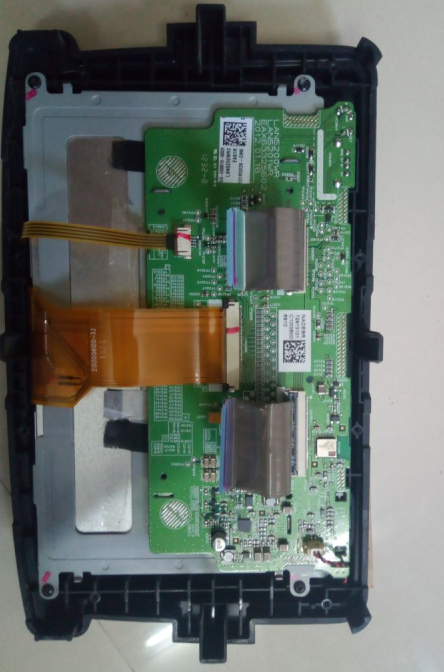
I have a 2013 model used car that I bought two years ago. It came with
a 7 inch touch screen
infotainment system on its dash
board with
features
like navigation, Bluetooth phone connectivity and a good FM AM radio. Except
the radio I rarely use navigation or Bluetooth phone sync. After couple of months
the touch started to become non-responsive. Since all important things
such as
call termination, mute and volume control have physical switches, I was happy
with it.
During a periodic car check up on a local workshop, mechanic pulled
battery terminals
making the infotainment system locked. Now it ask for 4 digit pass
code. Its one of their ant-theft mechanism and in order to enter those
digits you need a touch responsive screen. So now I am completed locked out.
I visited service center of this car to get it changed, turns out they
don t repair it and only change by the unit. And will cost me
Rs 50,000. Considering my usage is restricted to radio. That price is
way too much.
So my next options were,
Use a normal cheap car radio player. I dropped this plan, since stereo
players comes in very small size and I might need plastic
placeholders to close rest of the area from the 7 inch
screen. This can mess aesthetics of dash board. And it also
affect value of the car if I will sell in future.
Use a 7 inch third party infotainment system available in the
market. I did enquired with local car accessories shop and I
dropped this plan as well because most of them are android and
comes with enormous
number of pre installed apps which I never gonna use it
anyway. And I don t need one more device that need to be
connected to the
Internet. Also the wiring at the back of these devices are
different than what I have already so it need rewiring.
Last option was to change the infotainment system parts my own. I
was under the impression that these units are in-house made,
tightly assembled and sealed with screws that you never see in
your
life and you will never able to be open it up, let alone fix parts.
Couple of articles showed me that car infotainment system
sizes and wiring at the back are actually
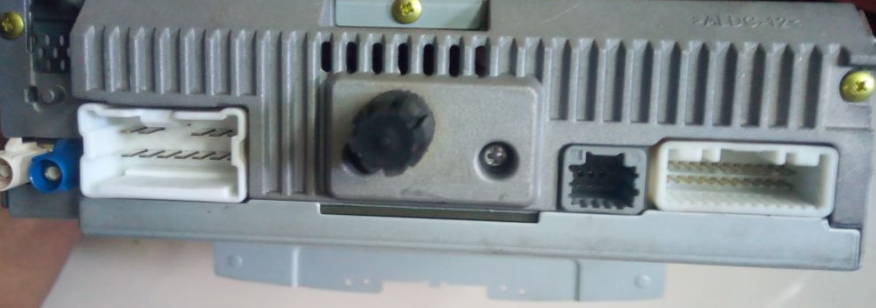
standardized. This particular
system s OEM is LG
After gaining confidence from several youtube videos and articles, I
chose the 3rd option and started to disassemble
head unit. Luckily
all those screw driver heads were with me. After taking everything
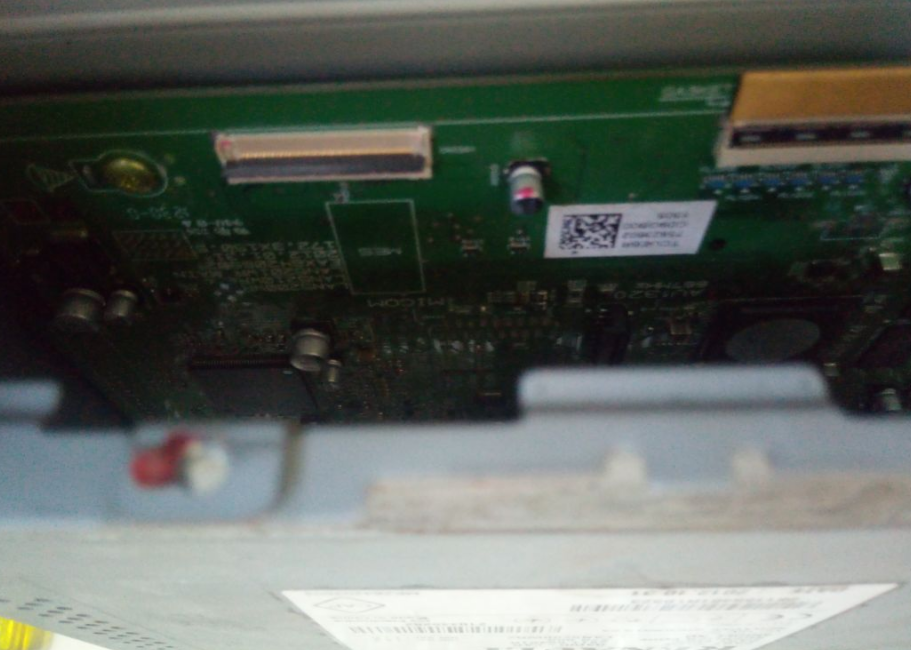
apart I could see back of touch screen glass bulged and pushing against the
display. The back of the display had a label with its manufacturers name
Innolux display and its model number
AT070TN94. You might know
this company from all those raspberry pi displays in the market. Also
Tesla car makers use Innolux display in their infotainment unit.
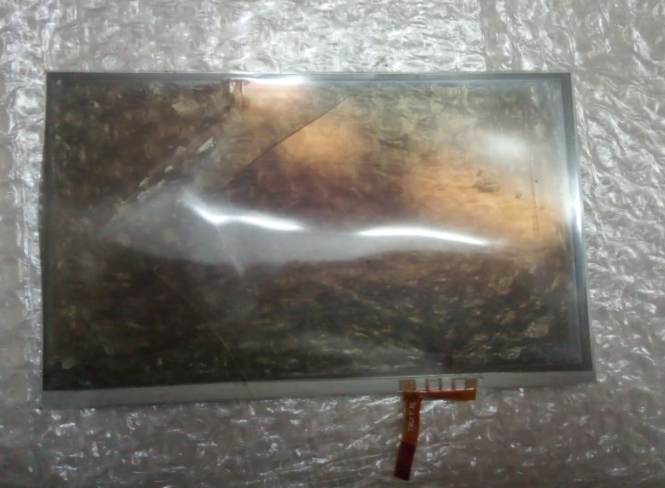
I was able to spot an online reseller in Hong Kong. I only
need a touch screen display but to be on the safe side
I also placed order for display as well(Price difference were
negligible) Took 1 month to reach at my hand due to COVID restrictions. I
assembled everything together and collected radio pass code the very
same day I received the item. Everything is working now. yay!
The touch screen + display cost me Rs 6000/-. I can easily get an
average android infotainment around this price. But it was the price I
paid for avoiding e-waste.
So if you have a broken head unit in your pre 2015 era car. Try to
change the parts yourself. Its not complicated like our mobile phones.
Like each month, have a look at the work funded by Freexian s Debian LTS offering.
Debian project funding
In May, we again put aside 2100 EUR to fund Debian projects. There was no proposals for new projects received, thus we re looking forward to receive more projects from various Debian teams! Please do not hesitate to submit a proposal, if there is a project that could benefit from the funding!
We re looking forward to receive more projects from various Debian teams! Learn more about the rationale behind this initiative in this article.
Debian LTS contributors
In May, 12 contributors have been paid to work on Debian LTS, their reports are available:
Abhijith PA did 7.0h (out of 14h assigned and 12h from April), thus carrying over 19h to June.
Evolution of the situation
In May we released 33 DLAs and mostly skipped our public IRC meeting and the end of the month. In June we ll have another team meeting using video as lined out on our LTS meeting page. Also, two months ago we announced that Holger would step back from his coordinator role and today we are announcing that he is back for the time being, until a new coordinator is found. Finally, we would like to remark once again that we are constantly looking for new contributors. Please contact Holger if you are interested!
The security tracker currently lists 41 packages with a known CVE and the dla-needed.txt file has 21 packages needing an update.
Thanks to our sponsors
Sponsors that joined recently are in bold.
In May I was assigned 13.5 hours of work by Freexian's Debian LTS
initiative and carried over 4.5 hours from earlier months. I worked
16 hours and will carry over the remainder.
I finished reviewing the futex code in the PREEMPT_RT patchset for
Linux 4.9, and identified several places where it had been
mis-merged with the recent futex security fixes. I sent a patch for
these upstream, which was accepted and applied in v4.9.268-rt180.
I have continued updating the Linux 4.9 package to later upstream
stable versions, and backported some missing security fixes. I have
still not made a new upload, but intend to do so this week.
It's been more than a year since I wrote about Opinionated IkiWiki, a
pre-configured, containerized deployment of Ikiwiki
with opinions. My intention was to make something that is easy to get up and
running if you are more experienced with containers than IkiWiki.
I haven't yet switched to Opinionated IkiWiki for this site, but that was my
goal, and I think it's mature enough now that I can migrate over at some point,
so it seems a good time to call it Version 1.0. I have been using it for my
own private PIM systems for a while now.
You can pull built images from quay.io, here:
https://quay.io/repository/jdowland/opinionated-ikiwiki
The source lives here:
https://github.com/jmtd/opinionated-ikiwiki
A description of some of the changes made to the IkiWiki version lives here:
https://github.com/jmtd/ikiwiki/blob/opinionated-doc/README.md
 Release 0.3.9 of the RcppGSL package arrived at CRAN today, pretty much exactly one year since the last upload. The RcppGSL package provides an interface from R to the GNU GSL by relying on the Rcpp package.
This release brings some small documentation and CI polish, and enables builds on the newer (and still experimental) windows UCRT flavor (which will bring native utf-8 chars to Windows, see this and this write-up) thanks to a PR by Jeroen.
 Last week I took the ICS course
 Updated my simple web recording app to support multiple cameras and selecting from it.

 Luckily, on the screen you do have the option to reboot or power off. I did a reboot and lo, behold the system was able to input characters again. And this has happened time and again. I tried to find GOK and failed to remember that GOK had been
 I even tried the same with xvkbd but no avail. I do use mate as my desktop-manager so maybe the instructions need some refinement ????
$ cat /etc/lightdm/lightdm-gtk-greeter.conf grep keyboard
 Over the past days, I have received tons of positive feedback on my previous blog post about forming the Debian BBB Packaging Team [1]. Feedback arrived via mail, IRC, [matrix] and Mastodon. Awesome. Thanks for sharing your thoughts, folks...
Therefore, here comes a short ...
Heads-Up on the current Ongoings
... around packaging BigBlueButton for Debian:
 If you re writing a lot of Common Lisp and you want to follow the convention
of using all uppercase to refer to symbols in docstrings, comments etc., you
really need something better than the shift key. Similarly if you re writing
C and you have

 "Again, we see there is nothing you can possess which I cannot take away."
 The imagery of the ark appears to be borrowed from James Tissot's The Ark Passes Over the Jordan, part of the fin de siecle fascination with the occult and (ironically enough given the background of Raiders' director), a French Catholic revival.


 Last Thursday was my last working day at

 Every couple of months, one of my users falls prey to phishing
attacks, and send their login/password data to an unknown somebody
who poses as Well, as me, their always-friendly and always-helpful
systems administrator.
What follows is, of course, me spending a week trying to get our
systems out of all of the RBLs/DNSBLs. But, no matter how fast I act,
there s always distruption and lost mails (bounced or classified as
spam) for my users.
Most of my users use the Webmail I have configured on our institute s
servers,
 A while ago, I got
 (+1) to bump the suggestions that you find interesting. And click on the Watch button on the homepage to receive notifications when others submit suggestions so that you can evaluate those suggestions and possibly improve them through your comments.
In the end, this can only help those that are looking for ways to contribute to Debian: maybe some of them will formalize a concrete action plan and
 Powershell and nushell take unix piping beyond raw streams of text to
structured or typed data. Is it possible to keep a traditional shell
like bash and still get typed pipes?
I think it is possible, and I'm now surprised noone seems to have done it
yet. This is a fairly detailed design for how to do it. I've not
implemented it yet. RFC.
Let's start with a command called

 The Python programming language is one of the most popular and in huge demand. It is free, has a large community, is intended for the development of projects of varying complexity, is easy to learn, and opens up great opportunities for programmers. To work comfortably with it, you need special Python tools, which are able to simplify your work. We have selected the best Python tools that will be relevant in 2021.








 In May I was assigned 13.5 hours of work by Freexian's Debian LTS
initiative and carried over 4.5 hours from earlier months. I worked
16 hours and will carry over the remainder.
I finished reviewing the futex code in the PREEMPT_RT patchset for
Linux 4.9, and identified several places where it had been
mis-merged with the recent futex security fixes. I sent a patch for
these upstream, which was accepted and applied in v4.9.268-rt180.
I have continued updating the Linux 4.9 package to later upstream
stable versions, and backported some missing security fixes. I have
still not made a new upload, but intend to do so this week.
 It's been more than a year since I wrote about