Jon Dowland: Sennheiser HD438 Headphones

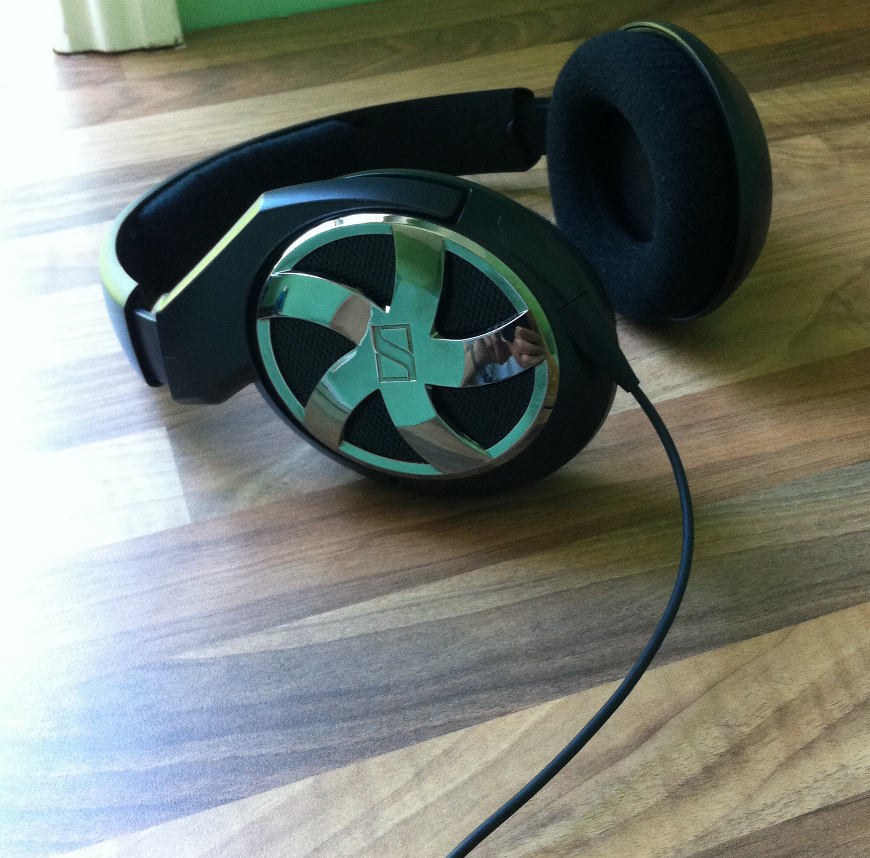 Sennheiser HD438
I just read this excellent blog post called "Linux Future" which defines a term "FLOS" to describe what the current direction of Linux development appears to be. Specifically, it addresses the divergence from what one might call the "UNIX" philosophy in new core technologies like
systemd.
I think sticking a new name to define this philosophical direction is a great idea. "FLOS" is something that both proponents and haters can rally around. It acknowledges the move away from the UNIX way of doing things, and doesn't overload a term like Linux, "ownership" of which is claimed by both camps (and others who just want to keep their heads down and get on with things!)
The next step, after embracing it, would be to define the strategy and the roadmap. Where is FLOS going? What's the endgame? Perhaps with such a vision we may end up with some technologies which will stand the test of time, like Apple's CoreAudio (10 years old) or Microsoft's win32 API (now 20 years old), rather than the ludicrously high plumbing turnover we endure right now.
(Oh my goodness, I finally wrote an actual Linux blog post.)
Having obtained a respectable set of headphones last year, I started
pondering about high definition music. Could I hear the difference between a
track mixed at CD quality, 16 bit samples / 44.1kHz sample rate, and the same
track mixed at a higher bit or sample rate? A number of artists have made HD
audio releases available in a variety of formats, most of which are now
obsolete (see: SACD, DVD-Audio) and/or hard to demux to something more modern.
However some artists have made digital HD audio releases. The last two Nine
Inch Nails records were released in HD and are more readily available.
 These releases also had nice per-track embedded art
 With release of first alpha for phpMyAdmin 4.0, it's time to resurrect my regular translation status posts.
So let's look at which translations are at 100% right now:
There are also several languages which need just few strings to be complete:
As you can see, there is still lot of languages missing, this might be your opportunity to contribute to phpMyAdmin. Also you are welcome to translate phpMyAdmin 4.0 using translation server.
If your language is already fully translated and you want to help as well, you can translate our documentation as well.
Filed under: English Phpmyadmin 0 comments Flattr this!
If tablet computers with hardware keyboards replace traditional Netbooks that's not really killing Netbooks but introducing a new version of the same thing.Tablets with hardware keyboards may, perhaps, be the next generation of the less than 10" netbooks, but to date I've yet to see something with a display smaller than 13" that is an upgrade over the 1000h Eee I own.
As usual, I've changed my plans for Weblate 1.4. Simply before I got to implementing features I wanted to have there, I've already implemented bunch of other things, which are worth releasing.
So my plan is to release Weblate 1.4 next week with current feature set (you can check list of fixed issues) and focus on 1.5 development then.
Some major features which will be available in Weblate 1.4:
Filed under: English Phpmyadmin Suse Weblate 0 comments Flattr this!
 I just returned home from Aaron Swartz s funeral in Chicago. Aaron was a good friend. The home I ve returned to is an apartment that was Aaron s before it was mine, that I have lived in with Aaron during several stints, and that I still share with many of his old books and posters. Although, I ve spent what feels like most of the last five days reading things that people have written about Aaron, I m still processing and digesting myself. Right now, I m very sad and at a loss for words.
While I reflect, I wanted to share this video recently put online by Finne Boonen. The video was made in 2006 at a Web 1.0 Elevator Pitch Competition held at Wikimania 2006 about a year after that both Aaron and I moved to Cambridge and met. The goal of the contest was to pitch Web 1.0 DotCom business ideas to a team of real Web 1.0 investors like it was still 1999.
Aaron and I formed a team along with SJ Klein (who I traveled to the funeral with this week), and Wikimania general counsel and interim executive director Brad Patrick. The video shows how as Danny O Brien has reminded us Aaron was funny. He came up with many our teams best lines in addition to checking our Web 1.0 boxes for tech guru and Stanford dropout. Our pitch for 1-800-INTERNET.COM is in the video below. The transcript was done by Phoebe Ayers in Facebook and the video is also available in WebM.
<iframe allowfullscreen="" frameborder="0" height="315" src="http://www.youtube.com/embed/NzFjWY6Fd_g" width="420"></iframe>
SJ: You know, Mako and I had some pretty good ideas for improving connectivity to the internet, and we think we can reach 90% of the world s population. So think about this. You re sitting in a Starbucks, and you need to connect to the internet. But you can t, because there s no internet. But what is there, near every Starbucks? There s a payphone! You pick up the payphone, and you call . 1-800-INTERNET. You can connect to our bank of researchers on our fast T1 connections and get any information you need! So, we don t actually have 1-800-INTERNET yet, we have 1-800-225-3224, so the first thing we need to do is buy the number. So here s Mako, who is our web designer from UC Santa Cruz and Bradford, our financial guru, and Aaron, who s handling all of our technical implementation. But Mako, you should explain the earballs. Mako: So, so, so yeah, so most people on the Internet are going for the eyeballs, but they ve just left all of these earballs. So I have some experience in web design, and it s true that this isn t really a website, but we still need good web design. So, so, I ve actually got a really experienced team, we can go into later, and we have some really great earcons not icons, but earcons.. And it s going to be all together, not apart like some of the websites. It s going to be together. Brad: so how does this work technically? Aaron: Well, I mean, so I only spent one year at Stanford but that s Ok, because there are new developmental technologies, we re going to throw away all that old stuff, we re going to use really reliable and efficient well-designed code that everyone can clearly understand, and write the whole thing in Perl. I know this is a risk, but I am confident that Perl is going to destroy those old C websites. No one will write websites in C anymore once we do this, it s going to be so much faster, and so dynamic, everythings going to be like, on top of everything. It s going to be great. Bradford: So here s the business model. It s really really simple, and it s a really really great idea. It s all about the licensing. Because what we re going to have are these underlying audio ads, While you re on the phone you re going to hear this subliminal advertising message. And the way it works is really really cool, because it s really really low volume, it s high impact! And it s even better, because we license it, and the way it works is when a caller calls 1-800-Internet, they re hearing the ad, but so is the representative, so we get to bill em twice! So that s it: All: 1-800-INTERNET.COMWe did not win and I still believe that we were robbed.
phpMyAdmin just got a new theme. It's available for download on our themes page.
New theme reflects look of new Windows and I have to admit it looks quite nice:
 As you can see, it also offers four color variants, configurable in it's
layout.inc.php file.
PS: More details on theme can be found on deviantART.
Filed under: English Phpmyadmin 0 comments Flattr this!
 As I couldn t retain my curiosity for Ubuntu s Raring Ringtail release, I ended up having a dual boot with Ubuntu 13.04 and Debian Sid.
Even thought at the moment 13.04 is only 24% complete, it s already a pretty promising release. However, one thing that heavily annoyed me is that global menu and HUD (still) don t work out of box with Eclipse IDE.
Being part of Debian Java team (working on Eclipse) I had to do something about it. To make it as simple as possible for you, I made a package which enables mentioned features.
Package is made for/tested and working on 32/64 bit architectures on 12.04/12.10/13.04 Ubuntu.
 In following days I ll push a Eclipse patch which will enable global menu and HUD support out of box, thus eliminating need to install this package in future.
*.asc file created by this
new code, I get the following:
gpg: WARNING: multiple signatures detected.  Only the first will be checked.
gpg: Signature made Thu 10 Jan 2013 03:58:43 PM PST using RSA key ID 5736DE75
gpg: Good signature from "Russ Allbery <rra@stanford.edu>"
gpg:                 aka "Russ Allbery <rra@debian.org>"
gpg:                 aka "Russ Allbery <eagle@windlord.stanford.edu>"
gpg:                 aka "Russ Allbery <eagle@eyrie.org>"
That's nice, I suppose, but it's not as helpful as it could be. Why not verify both signatures and report all of the results? I searched both the gpg man page and the Internet for some option I'm missing, without any luck. (Searching Google for that exact message amusingly turns up lots of verbatim output from Debian repository verification and almost nothing else.) If anyone knows, send me email (rra@stanford.edu or any other convenient address), and I'll update this post with the answer. UPDATE: gpg can currently only verify multiple signatures if the signatures are from keys with the same class and digest. I was attempting this with a 2048-bit RSA key and a 1024-bit DSA key, which gpg does not support. (Yet another reason to replace the WebAuth signing key with a newly-generated key.) Thanks to Philip Martin and Bernhard R. Link for the information! The note is that, way back when I was first learning Python, one of the things that bothered me the most was the lack of safe program execution. The best available was
os.spawnv(), which left something to be
desired. If you too were bothered by this but don't program in Python
enough to keep track of the current state of the art, there's now a
subprocess module that has much saner interfaces that work
properly, do reasonable things, and avoid the shell. It was added in
Python 2.4, with some nicer interfaces added in Python 2.5, so it's fairly
safe to use at this point.
As there is still some development ongoing in Weblate, it's time to share information about some of the features you can expect in upcoming release.
Recently, Weblate gained ability to display changes which caused string to be fuzzy. This currently only works with Gettext PO files as no other format provides this information. If this is available Weblate shows differences between current and previous string, what allows translator to easily spot what has been changed. Example can be seen on Uzbek translation of phpMyAdmin (until somebody translates that).
While working on this feature, I've realized, that Django does not include this information in PO files. Fortunately it was pretty easy to fix and I've created a pull request to implement this. Looking at this file made me fix another thing which annoyed me since I've used translations in Django for first time - it generates POT file for every language, making the updates really slow. Fortunately it was also easy to fix and pull request is here. So if you feel makemessages is too slow, this is patch for you.
But back to Weblate as there are more changes. For example automatic locking now works more fine grained and uses AJAX to update lock period. This means translation will be unlocked much faster if you close browser with Weblate.
Also searching for messages has been updated to include substring search as well as it is sometimes more useful than fulltext search.
Filed under: Django English Weblate 0 comments Flattr this!
Finally, I've found some time to update phpMyAdmin packages in Debian to 3.5 series. For long it was not possible due to licensing reasons, but recently this issue was resolved upstream by using jqPlot instead of Highcharts.
While packaging new version, I've also replaced all embedded libraries to use corresponding packages from Debian. I've done some testing and everything seems to work fine, but still this frightens me as some versions are slightly different than upstream.
Anyway new version is available in experimental for now. Ubuntu users can get it from phpMyAdmin PPA.
Filed under: Debian English Phpmyadmin 9 comments Flattr this!
I've just confirmed my flight and hotel bookings for FOSDEM 2013, so I'm looking to meet all great people there again.
This year my schedule is not that packed as I have no talks (Weblate lightning talk was not accepted) and also there will be no big phpMyAdmin team meeting, so get in touch if you want to discuss anything with me.
As most of the rooms still don't have a schedule, I can't give you hint where I will be present, but I definitely won't miss Friday beer event and Dieter's talk about phpMyAdmin in MySQL room. The rest pretty much depends on who I will meet :-).
Filed under: Debian English Phpmyadmin Suse Weblate 0 comments Flattr this!
 I'm looking for a new position as a Software Developer in eastern Switzerland, southern Germany or remote. Please have a look at my CV if some of the following buzzwords sound interesting to you:

 This is my monthly summary of my free software related activities. If you re among the people who made a donation to support my work (836.78 , thanks everybody!), then you can learn how I spent your money. Otherwise it s just an interesting status update on my various projects.
Debian Packaging
I uploaded Zim 0.58, WordPress 3.5 (and I had to file a ticket about the availability of sources of minified javascript files again) and another security update for python-django (696535).
Speaking of python-django, I forwarded one bug report of Anders Kaseorg concerning Django s bash completion (#695811).
I also sponsored the upload of ledgersmb 1.3.25-1.
Other Debian work
I contributed some patches to improve debian-installer support in live-build. I also added a work-around for bug #652946 in live-installer and committed a fix for this same bug in a jessie branch of partman-target.
I also prepared a bugfix for a counter-productive behavior of choose-mirror (#695261, it was not possible to override the codename of the release to install via preseed if you install from a CD with a full base system).
I discovered an oddity in the Packages.diff/Index file for the architectures armhf and s390x, I reported it to ftpmasters in #696792.
(All those issues were discovered while working for a customer)
Debian France
I spent quite some time on Debian France this month again. I started by setting up an internal gitolite to manage our accounting/administrative documents.
Then I updated galette, the web application that we are using to manage our database of members. In the process, I filed two bugs that we discovered. I immediately tested Galette by registering 4 members that joined during the former mini-Debconf in Paris.
We have plans to automate the membership renewal process so we have opened a Paypal account. This month we also cleared the last steps so that I and Sylvestre Ledru have full control on the Debian France bank account.
I also registered the new officers at the Tribunal d instance de Sarreguemines .
Salt bug reports
During the last mini-debconf, I discovered Salt (thanks to Julien Cristau!) and since I had to switch some servers of mine, I took this opportunity to upgrade to wheezy and try out salt at the same time.
It took much more time than expected but the result is pleasant. The configuration of all my servers is now well documented/specified in a central Git repository, and moving services is much easier than before.
In the process, I filed quite some bugs (#2865, #2851, #2866 and #2875), most of them have been fixed in the 0.11.1 release that just happened.
Thanks
I wish you a happy new year and all the best for 2013!
See you next month for a new summary of my activities.
4 comments Liked this article? Click here. My blog is Flattr-enabled.
 I'm still working on perl-cross-debian (just uploaded 0.0.2) and there's more to do on that with upstream but part of the reason to work on perl cross-building is to do what I can to help with the ARM64 port.
  aarch64-linux-gnu-gcc -Wp,-MD,usr/klibc/.__static_init.o.d  -nostdinc -iwithprefix

include -I/ PKGBUILDDIR /usr/include/arch/x86_64 -Iusr/include/arch/x86_64

-I/ PKGBUILDDIR /usr/include/bits64

-Iusr/include/bits64 -I/ PKGBUILDDIR /usr/klibc/../include

-Iusr/klibc/../include -I/ PKGBUILDDIR /usr/include -Iusr/include

-I/ PKGBUILDDIR /linux/include -Ilinux/include

-I/ PKGBUILDDIR /linux/arch/x86/include -Ilinux/arch/x86/include

-D__KLIBC__=2 -D__KLIBC_MINOR__=0 -D_BITSIZE=64 -fno-stack-protector -fwrapv -m64 -Os

-fno-asynchronous-unwind-tables -fomit-frame-pointer -falign-functions=1 -falign-jumps=1 -falign-loops=1

-W -Wall -Wno-sign-compare -Wno-unused-parameter -c -o usr/klibc/__static_init.o usr/klibc/__static_init.c

aarch64-linux-gnu-gcc: error: unrecognized command line option '-m64'

make[4]: *** [usr/klibc/__static_init.o] Error 1
--- a/usr/klibc/arch/arm/MCONFIG

+++ b/usr/klibc/arch/arm/MCONFIG

@@ -30,6 +30,13 @@

 ifeq ($(CONFIG_AEABI),y)

 KLIBCREQFLAGS += -mabi=aapcs-linux -mno-thumb-interwork

 else

+# aarch64

+ifeq ($(CONFIG_AARCH64),y)

+KLIBCREQFLAGS +=

+KLIBCOPTFLAGS += -mgeneral-regs-only

+else

 KLIBCREQFLAGS += -mabi=apcs-gnu -mno-thumb-interwork

 endif

 endif

+endif

+
debian/rules
ifeq ($(DEB_HOST_ARCH),arm64)

DEB_MAKE_ENVVARS := ARCH=arm CONFIG_AARCH64=y CPU_ARCH=armv8-a CPU_TUNE=generic

endif
....

code/debian/cross/klibc/klibc-2.0.1/linux/arch/arm/include -Ilinux/arch/arm/include -D__KLIBC__=2

-D__KLIBC_MINOR__=0 -D_BITSIZE=32 -fno-stack-protector -fwrapv -fno-exceptions -Os

-march=armv8-a -mtune=generic -mgeneral-regs-only -W -Wall -Wno-sign-compare -Wno-unused-parameter

-c -o ../foo.o usr/klibc/arch/arm/crt0.S

usr/klibc/arch/arm/crt0.S: Assembler messages:

usr/klibc/arch/arm/crt0.S:19: Error: operand 1 should be an integer register --  mov r0,sp'

usr/klibc/arch/arm/crt0.S:20: Error: operand 1 should be an integer register --  mov r1,#0'
--- a/usr/klibc/arch/arm/crt0.S

+++ b/usr/klibc/arch/arm/crt0.S

@@ -15,9 +15,13 @@

 #ifdef __thumb__

 	.thumb_func

 #endif

-

+#ifdef __aarch64__

+_start: mov x0, sp

+	mov x1, #0

+	bl __libc_init

+#else

 _start:	mov	r0, sp

 	mov	r1, #0

 	bl	__libc_init

-

+#endif

 	.size _start,.-_start
....

klibc-2.0.1/linux/arch/arm/include -Ilinux/arch/arm/include

-D__KLIBC__=2 -D__KLIBC_MINOR__=0 -D_BITSIZE=32 -fno-stack-protector -fwrapv -fno-exceptions -Os

-march=armv8-a -mtune=generic -mgeneral-regs-only -W -Wall -Wno-sign-compare -Wno-unused-parameter

-c -o usr/klibc/arch/arm/setjmp.o usr/klibc/arch/arm/setjmp.S

usr/klibc/arch/arm/setjmp.S: Assembler messages:

usr/klibc/arch/arm/setjmp.S:32: Error: unknown mnemonic  stmia' --  stmia r0, r4,r5,r6,r7,r8,r9,r10,fp,sp,lr '

usr/klibc/arch/arm/setjmp.S:33: Error: operand 1 should be an integer register --  mov r0,#0'

usr/klibc/arch/arm/setjmp.S:34: Error: operand 1 should be an integer register --  mov pc,lr'

usr/klibc/arch/arm/setjmp.S:42: Error: unknown mnemonic  ldmia' --  ldmia r0, r4,r5,r6,r7,r8,r9,r10,fp,sp,lr '

usr/klibc/arch/arm/setjmp.S:43: Error: unknown mnemonic  movs' --  movs r0,r1'

usr/klibc/arch/arm/setjmp.S:44: Error: unknown mnemonic  moveq' --  moveq r0,#1'

usr/klibc/arch/arm/setjmp.S:45: Error: operand 1 should be an integer register --  mov pc,lr'

make[5]: *** [usr/klibc/arch/arm/setjmp.o] Error 1
ldconfig: /usr/lib/aarch64-linux-gnu/*.so is for unknown machine 183. in every build log (success or fail) is apparently entirely normal until more packages get fixed. Really slows down scanning the build log.  Year 2013 has just started and it's time to think how to spend my free time during this year.
Weblate
Weblate was my toy project number one in last year and I expect it to stay for next year as well. I have several ideas for new features, but all that depends on free time. I will most likely spend my hackweek on that as well.
phpMyAdmin
I think my involvement will stay at about same level at phpMyAdmin - doing few random bugfixes, mostly security ones, taking care of infrastructure for translations and wiki and mentoring few GSoC students.
Gammu and Wammu
Gammu and Wammu has not seen much activity from me in past year and it will probably not change. I don't use the program anymore and this pretty much limits my interest in adding new features. In case somebody active will pop up on mailing list, I'd be happy to transfer the project ownership.
Mobile apps
I'd like to make some progress here, I was also thinking about making some of them working on Android as well, but this involves lot of learning and time is always an issue here. Anyway this might be good challenge for hackweek as well.
Debian
No changes expected here :-).
Others
I consider pretty much anything else from my software projects abandoned or finished.
Filed under: Debian English Gammu Phpmyadmin Suse Weblate 0 comments Flattr this!
Next.
 is that you cannot use funny desktop programs such as