Search Results: "cas"

9 May 2016

Russ Allbery: BookRiot's SF/F by Female Authors

A list by Nikki Steele of the 100 best SF and fantasy novels by female authors (in her subjective take), published on BookRiot, has been making the rounds, with people noting which of those they've read. These crop up from time to time, and I've always been tempted to do the work to track the list over time the way that I track award winners. I had some free time this afternoon, so went ahead and set that up (although I badly need to refactor or rewrite a lot of my review posting code). An extra advantage is that I can publish the list as a separate web page so that I don't spam RSS readers with a huge list. The list, annotated with ratings and reviews where I've read the books, is under the reviews section of my web site. As I have time, I may add more lists. I'm also (slowly) working on the project of adding all the nominees for major awards and annotating those, since often the short lists contain a lot of interesting material too. One big caveat for this list: Steele only lists the first book of series, and in many cases the first book isn't very good and is far from the best of the series. So you'll see some anomalous low ratings here for first books that improve later on.

8 May 2016

Dirk Eddelbuettel: Rblpapi 0.3.4

A new release of Rblpapi is now on CRAN. It provides a direct interface between R and the Bloomberg Terminal via the C++ API provided by Bloomberg Labs (but note that a valid Bloomberg license and installation is required). This marks the fifth release since the package first appeared on CRAN last year. Continued thanks to all contributors for code, suggestions or bug reports. This release contains a lot of internal fixes by Whit, John and myself and should prove to be more resilient to 'odd' representations of data coming back. The NEWS.Rd extract has more details:
Changes in Rblpapi version 0.3.4 (2016-05-08)
  • On startup, the API versions of both the headers and the runtime are displayed (PR #161 and #165).
  • Documentation about extended futures roll notation was added to the bdh manual page.
  • Additional examples for overrides where added to bdh (PR #158).
  • Internal code changes make retrieval of data in unusual variable types more robust (PRs #157 and #153)
  • General improvements and fixes to documentation (PR #156)
  • The bdp function now also supports an option verbose (PR #149).
  • The internal header Rblpapi_types.h was renamed from a lower-cased variant to conform with Rcpp Attributes best practices (PR #145).
Courtesy of CRANberries, there is also a diffstat report for the this release. As always, more detailed information is on the Rblpapi page. Questions, comments etc should go to the issue tickets system at the GitHub repo.

This post by Dirk Eddelbuettel originated on his Thinking inside the box blog. Please report excessive re-aggregation in third-party for-profit settings.

Niels Thykier: Another Britney patchset

I just submitted another patch series to improve Britney for review. If accepted, they will probably be merged into master within 2 weeks. The changes this time are probably most exciting for people that run/maintain Britney. Key highlights include: I would like to dwell a moment on the faux packages . We have had a helper script generate and inject fake packages into the list of packages (called faux packages ). They generally serve two purposes, which Britney will support:
  1. Whitelist of fake packages to satisfy dependencies of other packages.
    • These are generally stand-in for non-free machine configuration packages, where the end-user system would also fetch packages from the vendor s repository.
    • Packages relying on faux packages are generally not in main as Debian s main component is required to be self-contained.
    • These are (still) be called faux packages in/after the patch series
  2. Ensuring that certain packages are present and installable in testing.
    • We have a lot of d-i related packages here to avoid accidental breakage of d-i.
    • These are now referred to as a constraint (assuming there is no bike-shedding over the name).
Since Britney will now distinguish between these two use cases, I also make Britney enforce the second use case slightly better. Mind you, it can still be overruled by force-hints and BREAK_ARCHES, so there still enough rope to hang yourself. The other exciting part of this patch set (for me, at least) is that Britney will hopefully become simpler to deploy. No doubt there are still some missing features and paper cuts left, but I suspect we are not far from a:
  1. Fill out a template config file pointing Britney to your mirror
  2. Run britney -c britney.conf
  3. Make your archive kit update your target suite based on Britney s output.
  4. Put step 2+3 in crontab/jenkins/task scheduler of choice
  5. Profit
There will certainly be some features that requires extra steps. An example is the anti rc-bugs regression feature, which requires you to feed Britney with the list of RC bugs for your source and target suite. But even without, Britney would still protect your target suite from most installability issues.
Filed under: Debian, Release-Team

Arturo Borrero Gonz lez: Continuous integration for the Debian HA stack


Good news. The Debian Continuous Integration system is just awesome.

If a developer of a package prepares and declares tests for a given package, this CI system will trigger these test from time to time.
These tests are intended to check packages 'as installed', i.e, test what the end user is going to use in a final system.

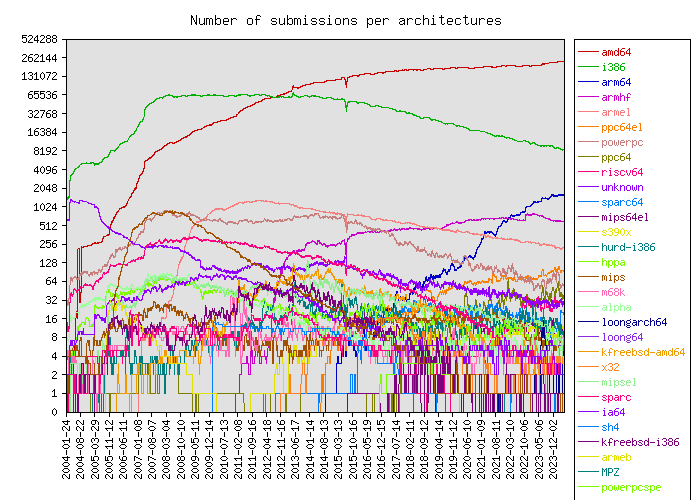
The CI system is being improved, and now it supports 2 architectures: amd64 and arm64. Also, it now implements LXC as a backend, so the level of isolation available to run tests is very good, allowing us developers to launch even more elaborated tests.

This is the case of the HA stack (pacemaker, corosync, crmsh...), and the good news is that Debian is now continuously testing these packages.

At the time of this blog post, these are the tests:

Check the CI page for corosync, pacemaker and crmsh for more details.

The basic tests for crmsh was contributed by myself, you can check the two [1][2] commits in the git packaging repo.

This means that we should be able to detect and fix issues in these software packages very early in the development cycle (very cheap and easy compared to fixing things once packages migrate to testing or even stable).

For all users of HA cluster with Debian, these are definitely good news. We have now a HA stack in a fairly different state than in previous years :-) Big step forward.

Most of my Netfilter packages also implement these tests, but that subject doesn't belong to this blogpost.

Petter Reinholdtsen: What is the best multimedia player in Debian?

Where I set out to figure out which multimedia player in Debian claim support for most file formats. A few years ago, I had a look at the media support for Browser plugins in Debian, to get an idea which plugins to include in Debian Edu. I created a script to extract the set of supported MIME types for each plugin, and used this to find out which multimedia browser plugin supported most file formats / media types. The result can still be seen on the Debian wiki, even though it have not been updated for a while. But browser plugins are less relevant these days, so I thought it was time to look at standalone players. A few days ago I was tired of VLC not being listed as a viable player when I wanted to play videos from the Norwegian National Broadcasting Company, and decided to investigate why. The cause is a missing MIME type in the VLC desktop file. In the process I wrote a script to compare the set of MIME types announced in the desktop file and the browser plugin, only to discover that there is quite a large difference between the two for VLC. This discovery made me dig up the script I used to compare browser plugins, and adjust it to compare desktop files instead, to try to figure out which multimedia player in Debian support most file formats. The result can be seen on the Debian Wiki, as a table listing all MIME types supported by one of the packages included in the table, with the package supporting most MIME types being listed first in the table. The best multimedia player in Debian? It is totem, followed by parole, kplayer, mpv, vlc, smplayer mplayer-gui gnome-mpv and kmplayer. Time for the other players to update their announced MIME support?

6 May 2016

Norbert Preining: Yubikey NEO

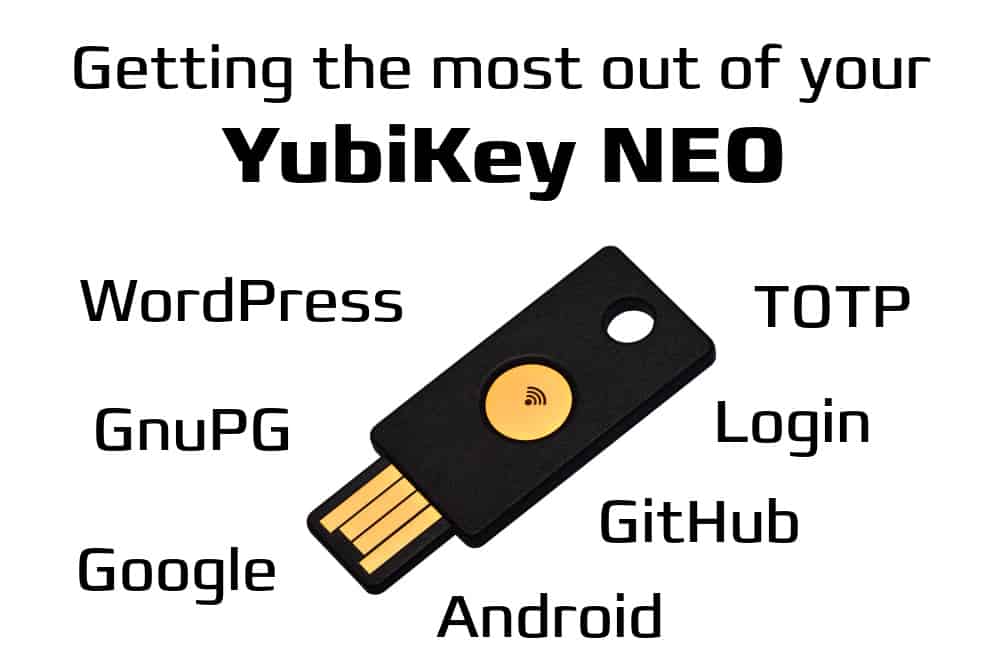
Two Factor authentication and general improvement of my security infrastructure was long on my todo list. Some month ago I finally purchased a Yubikey NEO from Yubico and try to consistently use it as second factor, as well as gpg signing/encrypting device. yubikey-neo I am trying to get the best out of my Yubikey NEO by using as many of its functionality, in particular: Smartcard for my GNuPG keys, OTP similar to Google Authenticator and similar, as well as challenge-response for additional login security, as well as all that over NFC to not keep keys/passwords on my mobile phone. While there are loads of guides (see the previous article on GnuPG for some of them), many of them are out-of-date for current distributions and GnuPG etc. So I tried to collect all I could find not the least to have a place to look it up in case I forget it again. The Hardware The Yubikey NEO is a great peace of hardware. I not even remotely understand how they manage that this little beast can do all these things and still work out without mixing things up. As far as I understand (please correct me) it has three independent circuits of communication: On top of these circuit of communication there is a variety of applications to make the most out of your Yubikey: Yubikey mode setup There are several modes, and using the ykpersonalize tool (readily available for Windows, Mac, Linux, and in the Debian package yubikey-personalization) one can program the key to work in a variety of modes. I chose to activate all options by passing in -m86 which stand for OTP/U2F/CCID composite device with MODE_FLAG_EJECT.
$ ykpersonalize -m86
Firmware version 3.4.3 Touch level 1792 Unconfigured
 
The USB mode will be set to: 0x86
 
Commit? (y/n) [n]: y
$
It is a good idea to unplug and replug the key after this operation. Yubikey udev rules for user access To allow users but root to use the Yubikey, additional udev rules are necessary:
SUBSYSTEMS=="usb", ATTRS idVendor =="1050", ATTRS idProduct =="0116", TAG+="uaccess"
which I put into /etc/udev/rules.d/99-yubikeys.rules on Debian. After that another unplug and replug should allow normal user to access the key. This can be checked by calling getfacl on the newly created /dev/hidraw? device. Using the HID/Challenge-Response mode (slot 2) If you want to secure your login with an additional second factor, there are several options documented on the Yubico site concerning yubico-pam. Since I cannot be sure to be always online with my laptop, I choose Challenge-Response authentication, and followed one-to-one Yubico s docs Local Authentication Using Challenge Response. Basically it boils down to install libpam-yubico, select mode-challenge-response when asked for configuration. Then one needs to personalizing the key (in particular slot 2) for challenge response with:
$ ykpersonalize -2 -ochal-resp -ochal-hmac -ohmac-lt64 -oserial-api-visible
...
Commit? (y/n) [n]: y
$
Next we need to save the challenge and expected response to the user s directory:
$ mkdir $HOME/.yubico
$ ykpamcfg -2 -v
...
Stored initial challenge and expected response in '/home/norbert/.yubico/challenge-123456'.
$
It might be a good idea to try this out, and if it works, activate it also for root. But be careful no key no login  Challenge: I am currently searching for a method to replace the second factor of they key optionally with a different authentication method, like a very difficult passphrase. This way I could log in even without my key, but in this case would need the complicated passphrase. From my reading of the pam manuals it seems to be possible, and I am planning to use pam_ssh and a specific login key with a complicated passphrase. I will report back when this is done. YubiOATH (TOTP) Time based One Time Passwords (aka Google Authenticator style) Without any setup whatsoever this worked out of the box. I use the Yubico Authenticator on my Android phone, and the dedicated application for the Linux desktop to create second factors for all kind of applications. Currently I am using it with Google login, Github, DropbBox, and WordPress (via the Two Factor plugin which can also be tweaked to use the NEO key as USB key via the FIDO U2F). Challenge: If I start the Yubico Personalization GUI, I see two free slots so where are the TOTPs computed? That also means that I have one slot free and for now I don t know what to do with it  Yubikey OpenGPG applet setup The Yubikeys support OpenPGP, and the applet is pre-installed (afaik), meaning you can directly configure the key and upload your keys. Here I use gpg2 (2.1) as it seems to better support card operations. To not interfere with the current gpg setup I use a temporary gpg home:
$ mkdir gpgtmp
$ chmod go-rwx gpgtmp
$ gpg2 --homedir gpgtmp --list-keys
gpg: keybox 'gpgtmp/pubring.kbx' created
gpg: gpgtmp/trustdb.gpg: trustdb created
Warning: The YubiKey NEO only supports 2048bit keys. If you want 4096bit keys you need to use one of the newer YubiKey 4, which gives you this option, but does not have support for NFC, and thus no way to interact with an Android (or other) mobile phone. Check the correct version of the applet There has been a bug in an older version of the applet, but since 2 years all keys sold should have a correct applet. You can check by:
$ gpg-connect-agent --homedir gpgtmp --hex "scd apdu 00 f1 00 00" /bye"
gpg-connect-agent: no running gpg-agent - starting '/usr/bin/gpg-agent'
gpg-connect-agent: waiting for the agent to come up ... (5s)
gpg-connect-agent: connection to agent established
D[0000]  01 00 10 90 00                                     .....           
OK
Looking at the output one sees D[0000] 01 00 10 which means applet version 1.0.10, which is the first version fixed. Replace pins of the key The standard pins are 123456 for the user pin, and 12345678 for the admin pin. These need immediate change! Warning: When changing the ping the normal pin must be 6 (at least?) digits, and the admin pin 8 (at least?), other gpg2 cannot use the key anymore. No idea why.
$ gpg2 --homedir gpgtmp --card-edit
 
Reader ...........: 1050:0116:X:0
Application ID ...: D2760001240102000006036457190000
Version ..........: 2.0
Manufacturer .....: Yubico
Serial number ....: 03645719
Name of cardholder: [not set]
Language prefs ...: [not set]
Sex ..............: unspecified
URL of public key : [not set]
Login data .......: [not set]
Signature PIN ....: forced
Key attributes ...: rsa2048 rsa2048 rsa2048
Max. PIN lengths .: 127 127 127
PIN retry counter : 3 3 3
Signature counter : 0
Signature key ....: [none]
Encryption key....: [none]
Authentication key: [none]
General key info..: [none]
 
gpg/card> admin
Admin commands are allowed
 
gpg/card> passwd
gpg: OpenPGP card no. D2760001240102000006036457190000 detected
 
1 - change PIN
2 - unblock PIN
3 - change Admin PIN
4 - set the Reset Code
Q - quit
 
Your selection? 3
PIN changed.
 
1 - change PIN
2 - unblock PIN
3 - change Admin PIN
4 - set the Reset Code
Q - quit
 
Your selection? 1
PIN changed.
 
1 - change PIN
2 - unblock PIN
3 - change Admin PIN
4 - set the Reset Code
Q - quit
 
Your selection? q
 
gpg/card> quit
After this you need to use the new pins for all changes. Setup basic data The key can also save some basic data about yourself, like name, sex, language preferences, login name, and url to obtain the public key. As before start gpg2 and then change these infos in the following way>
gpg/card> name
Cardholder's surname: Preining
Cardholder's given name: Norbert
 
gpg/card> sex
Sex ((M)ale, (F)emale or space): M
 
gpg/card> lang
Language preferences: de
 
gpg/card> login
Login data (account name): norbert
 
gpg/card> url
URL to retrieve public key: https://www.preining.info/preining-norbert.asc
 
gpg/card> list
 
Reader ...........: 1050:0116:X:0
Application ID ...: D2760001240102000006036457190000
Version ..........: 2.0
Manufacturer .....: Yubico
Serial number ....: 03645719
Name of cardholder: Norbert Preining
Language prefs ...: de
Sex ..............: male
URL of public key : https://www.preining.info/preining-norbert.asc
Login data .......: norbert
Signature PIN ....: forced
Key attributes ...: rsa2048 rsa2048 rsa2048
Max. PIN lengths .: 127 127 127
PIN retry counter : 3 3 3
Signature counter : 0
Signature key ....: [none]
Encryption key....: [none]
Authentication key: [none]
General key info..: [none]
 
gpg/card> quit
Move sub keys to Yubikey As laid out in the article on GnuPG subkeys, we are having three subkeys for signing, encryption, and authentication. In reality I will practically only use the signing key, but upload all three keys to the card. In the following I expect that you have a setup more or less similar to the one described in the article linked before. Again, we use GnuPG v2, mostly because it was the version that worked out of the box. In addition, if you are setting up a similar stage like in my GNuPG article with gpg1 keys on the mail server, then you don t want the gpg1 keys being removed. Basically you must have the Yubikey plugged in and call keytocard after selecting each key in turn (and deselecting it afterwards). Warning: There is another bug in the GnuPG applet that was fixed in later versions (but not in 1.0.10), namely that not all keys are accepted. This is a bit a pain. I needed to recreate a subkey to obtain a key that can be loaded onto the Yubikey. Unfortunately, Yubico has also stopped/disabled the ability to update applets (although I have to say their documentation is an incredible rubbish with respect to applets and upgrades ). As before, assume that $MASTERKEY contains the hex id of your master key.
$ gpg2 --edit-key $MASTERKEY
gpg (GnuPG) 2.1.11; Copyright (C) 2016 Free Software Foundation, Inc.
This is free software: you are free to change and redistribute it.
There is NO WARRANTY, to the extent permitted by law.
 
Secret key is available.
 
sec  rsa4096/0x6CACA448860CDC13
     created: 2010-09-14  expires: 2017-02-06  usage: SC  
     trust: ultimate      validity: ultimate
ssb  rsa4096/0xD1D2BD14810F62B3
     created: 2010-09-14  expires: 2017-02-06  usage: E   
ssb  rsa2048/0xEC00B8DAD32266AA
     created: 2016-02-07  expires: 2017-02-06  usage: S   
ssb  rsa2048/0xBF361ED434425B4C
     created: 2016-02-07  expires: 2017-02-06  usage: E   
ssb  rsa2048/0x9C7CA4E294F04D49
     created: 2016-02-07  expires: 2017-02-06  usage: A   
[ultimate] (1). Norbert Preining <norbert@preining.info>
[ultimate] (2)  Norbert Preining <preining@logic.at>
[ultimate] (3)  Norbert Preining <preining@debian.org>
[ultimate] (4)  Norbert Preining <preining@jaist.ac.jp>
[ultimate] (5)  [jpeg image of size 4185]
 
gpg> key 2
 
sec  rsa4096/0x6CACA448860CDC13
     created: 2010-09-14  expires: 2017-02-06  usage: SC  
     trust: ultimate      validity: ultimate
ssb  rsa4096/0xD1D2BD14810F62B3
     created: 2010-09-14  expires: 2017-02-06  usage: E   
ssb* rsa2048/0xEC00B8DAD32266AA
     created: 2016-02-07  expires: 2017-02-06  usage: S   
ssb  rsa2048/0xBF361ED434425B4C
     created: 2016-02-07  expires: 2017-02-06  usage: E   
ssb  rsa2048/0x9C7CA4E294F04D49
     created: 2016-02-07  expires: 2017-02-06  usage: A   
[ultimate] (1). Norbert Preining <norbert@preining.info>
[ultimate] (2)  Norbert Preining <preining@logic.at>
[ultimate] (3)  Norbert Preining <preining@debian.org>
[ultimate] (4)  Norbert Preining <preining@jaist.ac.jp>
[ultimate] (5)  [jpeg image of size 4185]
 
gpg> keytocard
Please select where to store the key:
   (1) Signature key
   (3) Authentication key
Your selection? 1
 
sec  rsa4096/0x6CACA448860CDC13
     created: 2010-09-14  expires: 2017-02-06  usage: SC  
     trust: ultimate      validity: ultimate
ssb  rsa4096/0xD1D2BD14810F62B3
     created: 2010-09-14  expires: 2017-02-06  usage: E   
ssb* rsa2048/0xEC00B8DAD32266AA
     created: 2016-02-07  expires: 2017-02-06  usage: S   
ssb  rsa2048/0xBF361ED434425B4C
     created: 2016-02-07  expires: 2017-02-06  usage: E   
ssb  rsa2048/0x9C7CA4E294F04D49
     created: 2016-02-07  expires: 2017-02-06  usage: A   
[ultimate] (1). Norbert Preining <norbert@preining.info>
[ultimate] (2)  Norbert Preining <preining@logic.at>
[ultimate] (3)  Norbert Preining <preining@debian.org>
[ultimate] (4)  Norbert Preining <preining@jaist.ac.jp>
[ultimate] (5)  [jpeg image of size 4185]
 
gpg> key 2
 
sec  rsa4096/0x6CACA448860CDC13
     created: 2010-09-14  expires: 2017-02-06  usage: SC  
     trust: ultimate      validity: ultimate
ssb  rsa4096/0xD1D2BD14810F62B3
     created: 2010-09-14  expires: 2017-02-06  usage: E   
ssb  rsa2048/0xEC00B8DAD32266AA
     created: 2016-02-07  expires: 2017-02-06  usage: S   
ssb  rsa2048/0xBF361ED434425B4C
     created: 2016-02-07  expires: 2017-02-06  usage: E   
ssb  rsa2048/0x9C7CA4E294F04D49
     created: 2016-02-07  expires: 2017-02-06  usage: A   
[ultimate] (1). Norbert Preining <norbert@preining.info>
[ultimate] (2)  Norbert Preining <preining@logic.at>
[ultimate] (3)  Norbert Preining <preining@debian.org>
[ultimate] (4)  Norbert Preining <preining@jaist.ac.jp>
[ultimate] (5)  [jpeg image of size 4185]
 
gpg> key 3
 
sec  rsa4096/0x6CACA448860CDC13
     created: 2010-09-14  expires: 2017-02-06  usage: SC  
     trust: ultimate      validity: ultimate
ssb  rsa4096/0xD1D2BD14810F62B3
     created: 2010-09-14  expires: 2017-02-06  usage: E   
ssb  rsa2048/0xEC00B8DAD32266AA
     created: 2016-02-07  expires: 2017-02-06  usage: S   
ssb* rsa2048/0xBF361ED434425B4C
     created: 2016-02-07  expires: 2017-02-06  usage: E   
ssb  rsa2048/0x9C7CA4E294F04D49
     created: 2016-02-07  expires: 2017-02-06  usage: A   
[ultimate] (1). Norbert Preining <norbert@preining.info>
[ultimate] (2)  Norbert Preining <preining@logic.at>
[ultimate] (3)  Norbert Preining <preining@debian.org>
[ultimate] (4)  Norbert Preining <preining@jaist.ac.jp>
[ultimate] (5)  [jpeg image of size 4185]
 
gpg> keytocard
Please select where to store the key:
   (2) Encryption key
Your selection? 2
 
sec  rsa4096/0x6CACA448860CDC13
     created: 2010-09-14  expires: 2017-02-06  usage: SC  
     trust: ultimate      validity: ultimate
ssb  rsa4096/0xD1D2BD14810F62B3
     created: 2010-09-14  expires: 2017-02-06  usage: E   
ssb  rsa2048/0xEC00B8DAD32266AA
     created: 2016-02-07  expires: 2017-02-06  usage: S   
ssb* rsa2048/0xBF361ED434425B4C
     created: 2016-02-07  expires: 2017-02-06  usage: E   
ssb  rsa2048/0x9C7CA4E294F04D49
     created: 2016-02-07  expires: 2017-02-06  usage: A   
[ultimate] (1). Norbert Preining <norbert@preining.info>
[ultimate] (2)  Norbert Preining <preining@logic.at>
[ultimate] (3)  Norbert Preining <preining@debian.org>
[ultimate] (4)  Norbert Preining <preining@jaist.ac.jp>
[ultimate] (5)  [jpeg image of size 4185]
 
gpg> key 3
 
sec  rsa4096/0x6CACA448860CDC13
     created: 2010-09-14  expires: 2017-02-06  usage: SC  
     trust: ultimate      validity: ultimate
ssb  rsa4096/0xD1D2BD14810F62B3
     created: 2010-09-14  expires: 2017-02-06  usage: E   
ssb  rsa2048/0xEC00B8DAD32266AA
     created: 2016-02-07  expires: 2017-02-06  usage: S   
ssb  rsa2048/0xBF361ED434425B4C
     created: 2016-02-07  expires: 2017-02-06  usage: E   
ssb  rsa2048/0x9C7CA4E294F04D49
     created: 2016-02-07  expires: 2017-02-06  usage: A   
[ultimate] (1). Norbert Preining <norbert@preining.info>
[ultimate] (2)  Norbert Preining <preining@logic.at>
[ultimate] (3)  Norbert Preining <preining@debian.org>
[ultimate] (4)  Norbert Preining <preining@jaist.ac.jp>
[ultimate] (5)  [jpeg image of size 4185]
 
gpg> key 4
 
sec  rsa4096/0x6CACA448860CDC13
     created: 2010-09-14  expires: 2017-02-06  usage: SC  
     trust: ultimate      validity: ultimate
ssb  rsa4096/0xD1D2BD14810F62B3
     created: 2010-09-14  expires: 2017-02-06  usage: E   
ssb  rsa2048/0xEC00B8DAD32266AA
     created: 2016-02-07  expires: 2017-02-06  usage: S   
ssb  rsa2048/0xBF361ED434425B4C
     created: 2016-02-07  expires: 2017-02-06  usage: E   
ssb* rsa2048/0x9C7CA4E294F04D49
     created: 2016-02-07  expires: 2017-02-06  usage: A   
[ultimate] (1). Norbert Preining <norbert@preining.info>
[ultimate] (2)  Norbert Preining <preining@logic.at>
[ultimate] (3)  Norbert Preining <preining@debian.org>
[ultimate] (4)  Norbert Preining <preining@jaist.ac.jp>
[ultimate] (5)  [jpeg image of size 4185]
 
gpg> keytocard
Please select where to store the key:
   (3) Authentication key
Your selection? 3
 
sec  rsa4096/0x6CACA448860CDC13
     created: 2010-09-14  expires: 2017-02-06  usage: SC  
     trust: ultimate      validity: ultimate
ssb  rsa4096/0xD1D2BD14810F62B3
     created: 2010-09-14  expires: 2017-02-06  usage: E   
ssb  rsa2048/0xEC00B8DAD32266AA
     created: 2016-02-07  expires: 2017-02-06  usage: S   
ssb  rsa2048/0xBF361ED434425B4C
     created: 2016-02-07  expires: 2017-02-06  usage: E   
ssb* rsa2048/0x9C7CA4E294F04D49
     created: 2016-02-07  expires: 2017-02-06  usage: A   
[ultimate] (1). Norbert Preining <norbert@preining.info>
[ultimate] (2)  Norbert Preining <preining@logic.at>
[ultimate] (3)  Norbert Preining <preining@debian.org>
[ultimate] (4)  Norbert Preining <preining@jaist.ac.jp>
[ultimate] (5)  [jpeg image of size 4185]
 
gpg> key 4
 
sec  rsa4096/0x6CACA448860CDC13
     created: 2010-09-14  expires: 2017-02-06  usage: SC  
     trust: ultimate      validity: ultimate
ssb  rsa4096/0xD1D2BD14810F62B3
     created: 2010-09-14  expires: 2017-02-06  usage: E   
ssb  rsa2048/0xEC00B8DAD32266AA
     created: 2016-02-07  expires: 2017-02-06  usage: S   
ssb  rsa2048/0xBF361ED434425B4C
     created: 2016-02-07  expires: 2017-02-06  usage: E   
ssb  rsa2048/0x9C7CA4E294F04D49
     created: 2016-02-07  expires: 2017-02-06  usage: A   
[ultimate] (1). Norbert Preining <norbert@preining.info>
[ultimate] (2)  Norbert Preining <preining@logic.at>
[ultimate] (3)  Norbert Preining <preining@debian.org>
[ultimate] (4)  Norbert Preining <preining@jaist.ac.jp>
[ultimate] (5)  [jpeg image of size 4185]
 
gpg> save
After that your keys are on the Yubikey (and only there!), and GNuPG will require the PIN (user pin) to sign/encrypt documents. Usage Many things have been said above, but to sum up when and how I am using the YubiKey now: Conclusions With this setup I am now quite content, but not completely. What I still want to do is full disk encryption where I need the Yubikey to boot and again, with an alternative for a very long passphrase. At the end, adding a second factor to the login is not really optimal, and only protects you against quick hacks. If the laptop is actually stolen, only full disc protection helps. Access to the hardware always guarantees that one has access to everything on the disc. Another thing I want to do is re-use the GnuPG key on the Yubikey as ssh key for logging into remote systems. That would mean that I get rid of even more keys on my laptop. But this is still in the work  The other open question is what to use the other available slot of the Yubikey for? I thought about some passwords (possible), but I don t feel to happy about having my password issued with the press of a key. But all in all, I like the setup much more than before and not having any GnuPG key on the laptop is a big plus.

Matthias Klumpp: Adventures in D programming

I recently wrote a bigger project in the D programming language, the appstream-generator (asgen). Since I rarely leave the C/C++/Python realm, and came to like many aspects of D, I thought blogging about my experience could be useful for people considering to use D. Disclaimer: I am not an expert on programming language design, and this is not universally valid criticism of D just my personal opinion from building one project with it. Why choose D in the first place? The previous AppStream generator was written in Python, which wasn t ideal for the task for multiple reasons, most notably multiprocessing and LMDB not working well together (and in general, multiprocessing being terrible to work with) and the need to reimplement some already existing C code in Python again. So, I wanted a compiled language which would work well together with the existing C code in libappstream. Using C was an option, but my least favourite one (writing this in C would have been much more cumbersome). I looked at Go and Rust and wrote some small programs performing basic operations that I needed for asgen, to get a feeling for the language. Interfacing C code with Go was relatively hard since libappstream is a GObject-based C library, I expected to be able to auto-generate Go bindings from the GIR, but there were only few outdated projects available which did that. Rust on the other hand required the most time in learning it, and since I only briefly looked into it, I still can t write Rust code without having the coding reference open. I started to implement the same examples in D just for fun, as I didn t plan to use D (I was aiming at Go back then), but the language looked interesting. The D language had the huge advantage of being very familiar to me as a C/C++ programmer, while also having a rich standard library, which included great stuff like std.concurrency.Generator, std.parallelism, etc. Translating Python code into D was incredibly easy, additionally a gir-d-generator which is actively maintained exists (I created a small fork anyway, to be able to directly link against the libappstream library, instead of dynamically loading it). What is great about D? This list is just a huge braindump of things I had on my mind at the time of writing  Interfacing with C There are multiple things which make D awesome, for example interfacing with C code and to a limited degree with C++ code is really easy. Also, working with functions from C in D feels natural. Take these C functions imported into D:
extern(C):
nothrow:
struct _mystruct  
alias mystruct_p = _mystruct*;
mystruct_p = mystruct_create ();
mystruct_load_file (mystruct_p my, const(char) *filename);
mystruct_free (mystruct_p my);
You can call them from D code in two ways:
auto test = mystruct_create ();
// treating "test" as function parameter
mystruct_load_file (test, "/tmp/example");
// treating the function as member of "test"
test.mystruct_load_file ("/tmp/example");
test.mystruct_free ();
This allows writing logically sane code, in case the C functions can really be considered member functions of the struct they are acting on. This property of the language is a general concept, so a function which takes a string as first parameter, can also be called like a member function of string. Writing D bindings to existing C code is also really simple, and can even be automatized using tools like dstep. Since D can also easily export C functions, calling D code from C is also possible. Getting rid of C++ cruft There are many things which are bad in C++, some of which are inherited from C. D kills pretty much all of the stuff I found annoying. Some cool stuff from D is now in C++ as well, which makes this point a bit less strong, but it s still valid. E.g. getting rid of the #include preprocessor dance by using symbolic import statements makes sense, and there have IMHO been huge improvements over C++ when it comes to metaprogramming. Incredibly powerful metaprogramming Getting into detail about that would take way too long, but the metaprogramming abilities of D must be mentioned. You can do pretty much anything at compiletime, for example compiling regular expressions to make them run faster at runtime, or mixing in additional code from string constants. The template system is also very well thought out, and never caused me headaches as much as C++ sometimes manages to do. Built-in unit-test support Unittesting with D is really easy: You just add one or more unittest blocks to your code, in which you write your tests. When running the tests, the D compiler will collect the unittest blocks and build a test application out of them. The unittest scope is useful, because you can keep the actual code and the tests close together, and it encourages writing tests and keep them up-to-date. Additionally, D has built-in support for contract programming, which helps to further reduce bugs by validating input/output. Safe D While D gives you the whole power of a low-level system programming language, it also allows you to write safer code and have the compiler check for that, while still being able to use unsafe functions when needed. Unfortunately, @safe is not the default for functions though. Separate operators for addition and concatenation D exclusively uses the + operator for addition, while the ~ operator is used for concatenation. This is likely a personal quirk, but I love it very much that this distinction exists. It s nice for things like addition of two vectors vs. concatenation of vectors, and makes the whole language much more precise in its meaning. Optional garbage collector D has an optional garbage collector. Developing in D without GC is currently a bit cumbersome, but these issues are being addressed. If you can live with a GC though, having it active makes programming much easier. Built-in documentation generator This is almost granted for most new languages, but still something I want to mention: Ddoc is a standard tool to generate code documentation for D code, with a defined syntax for describing function parameters, classes, etc. It will even take the contents of a unittest scope to generate automatic examples for the usage of a function, which is pretty cool. Scope blocks The scope statement allows one to execute a bit of code before the function exists, when it failed or was successful. This is incredibly useful when working with C code, where a free statement needs to be issued when the function is exited, or some arbitrary cleanup needs to be performed on error. Yes, we do have smart pointers in C++ and with some GCC/Clang extensions a similar feature in C too. But the scopes concept in D is much more powerful. See Scope Guard Statement for details. Built-in syntax for parallel programming Working with threads is so much more fun in D compared to C! I recommend taking a look at the parallelism chapter of the Programming in D book. Pure functions D allows to mark functions as purely-functional, which allows the compiler to do optimizations on them, e.g. cache their return value. See pure-functions. D is fast! D matches the speed of C++ in almost all occasions, so you won t lose performance when writing D code that is, unless you have the GC run often in a threaded environment. Very active and friendly community The D community is very active and friendly so far I only had good experience, and I basically came into the community asking some tough questions regarding distro-integration and ABI stability of D. The D community is very enthusiastic about pushing D and especially the metaprogramming features of D to its limits, and consists of very knowledgeable people. Most discussion happens at the forums/newsgroups at forum.dlang.org. What is bad about D? Half-proprietary reference compiler This is probably the biggest issue. Not because the proprietary compiler is bad per se, but because of the implications this has for the D ecosystem. For the reference D compiler, Digital Mars D (DMD), only the frontend is distributed under a free license (Boost), while the backend is proprietary. The FLOSS frontend is what the free compilers, LLVM D Compiler (LDC) and GNU D Compiler (GDC) are based on. But since DMD is the reference compiler, most features land there first, and the Phobos standard library and druntime is tuned to work with DMD first. Since major Linux distributions can t ship with DMD, and the free compilers GDC and LDC lack behind DMD in terms of language, runtime and standard-library compatibility, this creates a split world of code that compiles with LDC, GDC or DMD, but never with all D compilers due to it relying on features not yet in e.g. GDCs Phobos. Especially for Linux distributions, there is no way to say use this compiler to get the best and latest D compatibility . Additionally, if people can t simply apt install latest-d, they are less likely to try the language. This is probably mainly an issue on Linux, but since Linux is the place where web applications are usually written and people are likely to try out new languages, it s really bad that the proprietary reference compiler is hurting D adoption in that way. That being said, I want to make clear DMD is a great compiler, which is very fast and build efficient code. I only criticise the fact that it is the language reference compiler. UPDATE: To clarify the half-proprietary nature of the compiler, let me quote the D FAQ:
The front end for the dmd D compiler is open source. The back end for dmd is licensed from Symantec, and is not compatible with open-source licenses such as the GPL. Nonetheless, the complete source comes with the compiler, and all development takes place publically on github. Compilers using the DMD front end and the GCC and LLVM open source backends are also available. The runtime library is completely open source using the Boost License 1.0. The gdc and ldc D compilers are completely open sourced.
Phobos (standard library) is deprecating features too quickly This basically goes hand in hand with the compiler issue mentioned above. Each D compiler ships its own version of Phobos, which it was tested against. For GDC, which I used to compile my code due to LDC having bugs at that time, this means that it is shipping with a very outdated copy of Phobos. Due to the rapid evolution of Phobos, this meant that the documentation of Phobos and the actual code I was working with were not always in sync, leading to many frustrating experiences. Furthermore, Phobos is sometimes removing deprecated bits about a year after they have been deprecated. Together with the older-Phobos situation, you might find yourself in a place where a feature was dropped, but the cool replacement is not yet available. Or you are unable to import some 3rd-party code because it uses some deprecated-and-removed feature internally. Or you are unable to use other code, because it was developed with a D compiler shipping with a newer Phobos. This is really annoying, and probably the biggest source of unhappiness I had while working with D especially the documentation not matching the actual code is a bad experience for someone new to the language. Incomplete free compilers with varying degrees of maturity LDC and GDC have bugs, and for someone new to the language it s not clear which one to choose. Both LDC and GDC have their own issues at time, but they are rapidly getting better, and I only encountered some actual compiler bugs in LDC (GDC worked fine, but with an incredibly out-of-date Phobos). All issues are fixed meanwhile, but this was a frustrating experience. Some clear advice or explanation which of the free compilers is to prefer when you are new to D would be neat. For GDC in particular, being developed outside of the main GCC project is likely a problem, because distributors need to manually add it to their GCC packaging, instead of having it readily available. I assume this is due to the DRuntime/Phobos not being subjected to the FSF CLA, but I can t actually say anything substantial about this issue. Debian adds GDC to its GCC packaging, but e.g. Fedora does not do that. No ABI compatibility D has a defined ABI too bad that in reality, the compilers are not interoperable. A binary compiled with GDC can t call a library compiled with LDC or DMD. GDC actually doesn t even support building shared libraries yet. For distributions, this is quite terrible, because it means that there must be one default D compiler, without any exception, and that users also need to use that specific compiler to link against distribution-provided D libraries. The different runtimes per compiler complicate that problem further. The D package manager, dub, does not yet play well with distro packaging This is an issue that is important to me, since I want my software to be easily packageable by Linux distributions. The issues causing packaging to be hard are reported as dub issue #838 and issue #839, with quite positive feedback so far, so this might soon be solved. The GC is sometimes an issue The garbage collector in D is quite dated (according to their own docs) and is currently being reworked. While working with asgen, which is a program creating a large amount of interconnected data structures in a threaded environment, I realized that the GC is significantly slowing down the application when threads are used (it also seems to use UNIX signals SIGUSR1 and SIGUSR2 to stop/resume threads, which I still find odd). Also, the GC performed poorly on memory pressure, which did get asgen killed by the OOM killer on some more memory-constrained machines. Triggering a manual collection run after a large amount of these interconnected data structures wasn t needed anymore solved this problem for most systems, but it would of course have been better to not needing to give the GC any hints. The stop-the-world behavior isn t a problem for asgen, but it might be for other applications. These issues are at time being worked on, with a GSoC project laying the foundation for further GC improvements. version is a reserved word Okay, that is admittedly a very tiny nitpick, but when developing an app which works with packages and versions, it s slightly annoying. The version keyword is used for conditional compilation, and needing to abbreviate it to ver in all parts of the code sucks a little (e.g. the Package interface can t have a property version , but now has ver instead). The ecosystem is not (yet) mature In general it can be said that the D ecosystem, while existing for almost 9 years, is not yet that mature. There are various quirks you have to deal with when working with D code on Linux. It s always nothing major, usually you can easily solve these issues and go on, but it s annoying to have these papercuts. This is not something which can be resolved by D itself, this point will solve itself as more people start to use D and D support in Linux distributions gets more polished. Conclusion I like to work with D, and I consider it to be a great language the quirks it has in its toolchain are not that bad to prevent writing great things with it. At time, if I am not writing a shared library or something which uses much existing C++ code, I would prefer D for that task. If a garbage collector is a problem (e.g. for some real-time applications, or when the target architecture can t run a GC), I would not recommend to use D. Rust seems to be the much better choice then. In any case, D s flat learning curve (for C/C++ people) paired with the smart choices taken in language design, the powerful metaprogramming, the rich standard library and helpful community makes it great to try out and to develop software for scenarios where you would otherwise choose C++ or Java. Quite honestly, I think D could be a great language for tasks where you would usually choose Python, Java or C++, and I am seriously considering to replace quite some Python code with D code. For very low-level stuff, C is IMHO still the better choice. As always, choosing the right programming language is only 50% technical aspects, and 50% personal taste  UPDATE: To get some idea of D, check out the D tour on the new website tour.dlang.org.

5 May 2016

Sean Whitton: dh_make_elpa & dh_elpa_test

I recently completed and released some work on Debian s tooling for packaging Emacs Lisp addons to GNU Emacs. Emacs grew a package manager called package.el a few years ago, and last year David Bremner wrote the dh_elpa tool to simplify packaging addons for Debian by leveraging package.el features. Packaging a series of addons for Debian left me with a wishlist of features for dh_elpa and I was recently able to implement them. Debian tooling generally uses Perl, a language I didn t know before starting on this project. I was fortunate enough to receive a free review copy of Perl 5 by Example when I attended a meeting of the Bay Area Linux Users Group while I was visiting San Francisco a few months ago. I accepted the book with the intent of doing this work. dh_make_elpa dh_make_elpa (at present available from Debian experimental) is a Perl script to convert a git repository cloned from the upstream of an Emacs Lisp addon to a rudimentary Debian package. It performs a lot of guesswork, and its simple heuristics are something I hope to improve on. Since I am new to object-oriented program design in Perl and I wanted to leverage object-oriented Debian tooling library code, I took the structure of my project from dh_make_perl. In this manner I found it easy and pleasant to write a maintainable script. dh_elpa_test A lot of Emacs Lisp addon packages use a program called Cask to manage the Emacs Lisp dependencies needed to run their test suites. That meant that dh_auto_test often fails to run Emacs Lisp addon package test suites. Since the Debian packaging toolchain already has advanced dependency management, it s undesirable to involve Cask in the package build pipeline if it can be avoided. I had been copying and pasting the code needed to make the tests run in our environment to the debian/rules files of each package whose test suite I wanted to run. dh_elpa_test tries to detect Emacs Lisp addon package test suites and run them with the workarounds needed in our environment. This avoids boilerplate in debian/rules. dh_elpa_test also disables dh_auto_test to avoid a inadvertent Cask invocation. Future & acknowledgements My hope for this work was to make it easier and faster to package Emacs Lisp addon packages for Debian, for my own sake and for anyone new who is interested in joining the pkg-emacsen team. In the future, I want to have dh_elpa_test generate an autopkgtest definition so that a Testsuite: pkg-emacsen line in debian/control is enough to have an Emacs Lisp addon package test suite run on Debian CI. I m very grateful to David Bremner for reviewing and supporting this work, and also for supporting my Emacs Lisp addon packaging work more generally.

3 May 2016

Russ Allbery: Review: The Effective Engineer

Review: The Effective Engineer, by Edmond Lau
Publisher: Effective Bookshelf
Copyright: 2015
ISBN: 0-9961281-0-7
Format: Trade paperback
Pages: 222
Silicon Valley start-up tech companies have a standard way of thinking about work. Large chunks of this come from Google, which pioneered a wide variety of new, or at least not-yet-mainstream, ways of organizing and thinking about work. The rest accreted through experience with fast-paced start-ups, engineer-focused companies, web delivery of products, and rabid turnover and high job mobility within a hothouse of fairly similar companies. A key part of this mindset is the firm belief that this atmosphere has created a better way to work, at least for software engineers (and systems administrators, although heaven forbid that one call them that any more): more effective, more efficient, more focused on what really matters. I think this is at least partly true, at least from the perspective of a software engineer. This Silicon Valley work structure focuses on data gathering, data-based decision-making, introspection, analysis, and continuous improvement, all of which I think are defensibly pointed in the right direction (if rarely as rigorous as one might want to believe). It absorbs bits and pieces of work organization techniques that are almost certainly improvements for the type of work software engineers do: Agile, Lean, continuous deployment, and fast iteration times. In other cases, though, I'm less convinced that this Silicon Valley consensus is objectively better as opposed to simply different; interviewing, for instance, is a puzzle that I don't think anyone has figured out, and the remarkable consensus in Silicon Valley on how to interview (basically, "like Google except for the bits we thought were obnoxious") feels more like a social fad than a sign of getting it right. But every industry has its culture of good ideas, bad ideas, fads, and fashion, and it's quite valuable to know that culture if you want to work in that industry. The Effective Engineer is a self-published book by Edmund Lau, a Silicon Valley software engineer who also drifted (as is so common in Silicon Valley) into mentoring, organizing, and speaking to other software engineers. Its purpose, per the subtitle, is to tell you "how to leverage your efforts in software engineering to make a disproportionate and meaningful impact." While that's not exactly wrong, and the book contains some useful and valuable tips, I'd tend to give it a slightly different subtitle: "a primer on how a Silicon Valley software engineer is expected to think about their work." This is a bit more practical, a bit less confident, and a bit less convinced of its own correctness than Lau might want to present his work, but it's just as valuable of a purpose if you want to work in the industry. (And is a bit more honest about its applicability outside of that industry.) What this book does extremely well is present, in a condensed, straightforward, and fast-moving form, most of the highlights of how start-ups and web-scale companies approach software engineering and the SWE role in companies (SWE, meaning software engineer, is another bit of Google terminology that's now nearly universal). If you've already worked in or around this industry for a while, you've probably picked up a lot of this via osmosis: prioritize based on impact and be unapologetic about letting other things drop, have a growth mindset, reprioritize regularly, increase your iteration speed, measure everything constantly, check your assumptions against data, derisk your estimates, use code review and automated testing (but not too much), automate operations, and invest heavily in hiring and onboarding. (The preceding list is a chapter list for this book.) If you're working at one of these sorts of companies, you're probably currently somewhere between nodding and rolling your eyes because no one at work will shut up about these topics. But if you've not worked inside one of these companies, even if you've done software engineering elsewhere, this is a great book to read to prepare yourself. You're going to hear about these ideas constantly, and, if it achieves nothing else at all, The Effective Engineer will give you a firm enough grounding in the lingo and mindset that you can have intelligent conversations with people who assume this is the only way to think about software engineering. By this point, you might be detecting a certain cynicism in this review. It's not entirely fair: a lot of these ideas are clearly good ones, and Lau does a good job of describing them quickly and coherently. It's a good job for what it is. But there are a couple of things that limited its appeal for me. First, it's definitely a primer. I read it after having worked at a web-scale start-up for a year and a half. There wasn't much in it that seemed particularly new, and it's somewhat superficial. The whole middle section in particular (build tools for yourself, measure everything, be data-driven) are topics for which the devil is often in the details. Lau gives you the terminology and the expected benefits, but putting any one of these techniques into practice could be a book (or several) by itself. Don't expect to come away from The Effective Engineer with much of a concrete plan for how to do these things in your day-to-day software development projects. But it's a good reminder to be thinking about, say, how to embed metrics and data-gathering hooks into the software you write. This is the nature of a primer; no 222-page book can get into much depth about the fractal complexity of doing good, fast, scalable software development. Second, there's a fundamental question raised by a book like this: effective at what? Lau tackles that in the first chapter with his focus on impact and leverage, and it's good advice as far as it goes. (Regular readers of my book reviews know that I love this sort of time management and prioritization discussion.) But measuring impact is a hard problem that requires a prioritization framework, and this is not really the book for this. The Effective Engineer is written primarily for software developers at start-ups, leaves the whole venture-capital start-up process as unquestioned background material, and accepts without comment the standard measures of value in that world: fast-deployed products, hypergrowth, racing competitors for perceived innovation, and finding ways to extract money. That's as deep into the question of impact as Lau gets: increases in company revenue. There's nothing wrong with this for the kind of book Lau intended to write, and it's not his fault that I find it unsatisfying. But don't expect The Effective Engineer to ask any hard questions about whether that's a meaningful definition of impact, or to talk much about less objective goals: quality of implementation, craftsmanship, giving back to a broader community via free software contributions, impact on the world in ways that can't be measured in market share, or anything else that is unlikely to lead to objective impact for company profits. At best he leaves a bit of wiggle room around using the concept of impact with different goals. If you're a new graduate who wants to work at Silicon-Valley-style start-ups, this is a great orientation, and likewise if you're coming from a different area of software development into that world. If you're not working in that industry, The Effective Engineer may still be moderately interesting, but it's not written for that audience and has little or nothing to say of the challenges of other types of businesses. But if you've already worked in the industry for a while, or if you're more interested in deeper discussions of goals and subjective values, you may not get much out of this. Rating: 7 out of 10

2 May 2016

Vincent Bernat: Pragmatic Debian packaging

While the creation of Debian packages is abundantly documented, most tutorials are targeted to packages implementing the Debian policy. Moreover, Debian packaging has a reputation of being unnecessarily difficult1 and many people prefer to use less constrained tools2 like fpm or CheckInstall. However, I would like to show how building Debian packages with the official tools can become straightforward if you bend some rules:
  1. No source package will be generated. Packages will be built directly from a checkout of a VCS repository.
  2. Additional dependencies can be downloaded during build. Packaging individually each dependency is a painstaking work, notably when you have to deal with some fast-paced ecosystems like Java, Javascript and Go.
  3. The produced packages may bundle dependencies. This is likely to raise some concerns about security and long-term maintenance, but this is a common trade-off in many ecosystems, notably Java, Javascript and Go.

Pragmatic packages 101 In the Debian archive, you have two kinds of packages: the source packages and the binary packages. Each binary package is built from a source package. You need a name for each package. As stated in the introduction, we won t generate a source package but we will work with its unpacked form which is any source tree containing a debian/ directory. In our examples, we will start with a source tree containing only a debian/ directory but you are free to include this debian/ directory into an existing project. As an example, we will package memcached, a distributed memory cache. There are four files to create:
  • debian/compat,
  • debian/changelog,
  • debian/control, and
  • debian/rules.
The first one is easy. Just put 9 in it:
echo 9 > debian/compat
The second one has the following content:
memcached (0-0) UNRELEASED; urgency=medium
  * Fake entry
 -- Happy Packager <happy@example.com>  Tue, 19 Apr 2016 22:27:05 +0200
The only important information is the name of the source package, memcached, on the first line. Everything else can be left as is as it won t influence the generated binary packages.

The control file debian/control describes the metadata of both the source package and the generated binary packages. We have to write a block for each of them.
Source: memcached
Maintainer: Vincent Bernat <bernat@debian.org>
Package: memcached
Architecture: any
Description: high-performance memory object caching system
The source package is called memcached. We have to use the same name as in debian/changelog. We generate only one binary package: memcached. In the remaining of the example, when you see memcached, this is the name of a binary package. The Architecture field should be set to either any or all. Use all exclusively if the package contains only arch-independent files. In doubt, just stick to any. The Description field contains a short description of the binary package.

The build recipe The last mandatory file is debian/rules. It s the recipe of the package. We need to retrieve memcached, build it and install its file tree in debian/memcached/. It looks like this:
#!/usr/bin/make -f
DISTRIBUTION = $(shell lsb_release -sr)
VERSION = 1.4.25
PACKAGEVERSION = $(VERSION)-0~$(DISTRIBUTION)0
TARBALL = memcached-$(VERSION).tar.gz
URL = http://www.memcached.org/files/$(TARBALL)
%:
    dh $@
override_dh_auto_clean:
override_dh_auto_test:
override_dh_auto_build:
override_dh_auto_install:
    wget -N --progress=dot:mega $(URL)
    tar --strip-components=1 -xf $(TARBALL)
    ./configure --prefix=/usr
    make
    make install DESTDIR=debian/memcached
override_dh_gencontrol:
    dh_gencontrol -- -v$(PACKAGEVERSION)
The empty targets override_dh_auto_clean, override_dh_auto_test and override_dh_auto_build keep debhelper from being too smart. The override_dh_gencontrol target sets the package version3 without updating debian/changelog. If you ignore the slight boilerplate, the recipe is quite similar to what you would have done with fpm:
DISTRIBUTION=$(lsb_release -sr)
VERSION=1.4.25
PACKAGEVERSION=$ VERSION -0~$ DISTRIBUTION 0
TARBALL=memcached-$ VERSION .tar.gz
URL=http://www.memcached.org/files/$ TARBALL 
wget -N --progress=dot:mega $ URL 
tar --strip-components=1 -xf $ TARBALL 
./configure --prefix=/usr
make
make install DESTDIR=/tmp/installdir
# Build the final package
fpm -s dir -t deb \
    -n memcached \
    -v $ PACKAGEVERSION  \
    -C /tmp/installdir \
    --description "high-performance memory object caching system"
You can review the whole package tree on GitHub and build it with dpkg-buildpackage -us -uc -b.

Pragmatic packages 102 At this point, we can iterate and add several improvements to our memcached package. None of those are mandatory but they are usually worth the additional effort.

Build dependencies Our initial build recipe only work when several packages are installed, like wget and libevent-dev. They are not present on all Debian systems. You can easily express that you need them by adding a Build-Depends section for the source package in debian/control:
Source: memcached
Build-Depends: debhelper (>= 9),
               wget, ca-certificates, lsb-release,
               libevent-dev
Always specify the debhelper (>= 9) dependency as we heavily rely on it. We don t require make or a C compiler because it is assumed that the build-essential meta-package is installed and it pulls those. dpkg-buildpackage will complain if the dependencies are not met. If you want to install those packages from your CI system, you can use the following command4:
mk-build-deps \
    -t 'apt-get -o Debug::pkgProblemResolver=yes --no-install-recommends -qqy' \
    -i -r debian/control
You may also want to investigate pbuilder or sbuild, two tools to build Debian packages in a clean isolated environment.

Runtime dependencies If the resulting package is installed on a freshly installed machine, it won t work because it will be missing libevent, a required library for memcached. You can express the dependencies needed by each binary package by adding a Depends field. Moreover, for dynamic libraries, you can automatically get the right dependencies by using some substitution variables:
Package: memcached
Depends: $ misc:Depends , $ shlibs:Depends 
The resulting package will contain the following information:
$ dpkg -I ../memcached_1.4.25-0\~unstable0_amd64.deb   grep Depends
 Depends: libc6 (>= 2.17), libevent-2.0-5 (>= 2.0.10-stable)

Integration with init system Most packaged daemons come with some integration with the init system. This integration ensures the daemon will be started on boot and restarted on upgrade. For Debian-based distributions, there are several init systems available. The most prominent ones are:
  • System-V init is the historical init system. More modern inits are able to reuse scripts written for this init, so this is a safe common denominator for packaged daemons.
  • Upstart is the less-historical init system for Ubuntu (used in Ubuntu 14.10 and previous releases).
  • systemd is the default init system for Debian since Jessie and for Ubuntu since 15.04.
Writing a correct script for the System-V init is error-prone. Therefore, I usually prefer to provide a native configuration file for the default init system of the targeted distribution (Upstart and systemd).

System-V If you want to provide a System-V init script, have a look at /etc/init.d/skeleton on the most ancient distribution you want to target and adapt it5. Put the result in debian/memcached.init. It will be installed at the right place, invoked on install, upgrade and removal. On Debian-based systems, many init scripts allow user customizations by providing a /etc/default/memcached file. You can ship one by putting its content in debian/memcached.default.

Upstart Providing an Upstart job is similar: put it in debian/memcached.upstart. For example:
description "memcached daemon"
start on runlevel [2345]
stop on runlevel [!2345]
respawn
respawn limit 5 60
expect daemon
script
  . /etc/default/memcached
  exec memcached -d -u $USER -p $PORT -m $CACHESIZE -c $MAXCONN $OPTIONS
end script
When writing an Upstart job, the most important directive is expect. Be sure to get it right. Here, we use expect daemon and memcached is started with the -d flag.

systemd Providing a systemd unit is a bit more complex. The content of the file should go in debian/memcached.service. For example:
[Unit]
Description=memcached daemon
After=network.target
[Service]
Type=forking
EnvironmentFile=/etc/default/memcached
ExecStart=/usr/bin/memcached -d -u $USER -p $PORT -m $CACHESIZE -c $MAXCONN $OPTIONS
Restart=on-failure
[Install]
WantedBy=multi-user.target
We reuse /etc/default/memcached even if it is not considered a good practice with systemd6. Like for Upstart, the directive Type is quite important. We used forking as memcached is started with the -d flag. You also need to add a build-dependency to dh-systemd in debian/control:
Source: memcached
Build-Depends: debhelper (>= 9),
               wget, ca-certificates, lsb-release,
               libevent-dev,
               dh-systemd
And you need to modify the default rule in debian/rules:
%:
    dh $@ --with systemd
The extra complexity is a bit unfortunate but systemd integration is not part of debhelper7. Without those additional modifications, the unit will get installed but you won t get a proper integration and the service won t be enabled on install or boot.

Dedicated user Many daemons don t need to run as root and it is a good practice to ship a dedicated user. In the case of memcached, we can provide a _memcached user8. Add a debian/memcached.postinst file with the following content:
#!/bin/sh
set -e
case "$1" in
    configure)
        adduser --system --disabled-password --disabled-login --home /var/empty \
                --no-create-home --quiet --force-badname --group _memcached
        ;;
esac
#DEBHELPER#
exit 0
There is no cleanup of the user when the package is removed for two reasons:
  1. Less stuff to write.
  2. The user could still own some files.
The utility adduser will do the right thing whatever the requested user already exists or not. You need to add it as a dependency in debian/control:
Package: memcached
Depends: $ misc:Depends , $ shlibs:Depends , adduser
The #DEBHELPER# marker is important as it will be replaced by some code to handle the service configuration files (or some other stuff). You can review the whole package tree on GitHub and build it with dpkg-buildpackage -us -uc -b.

Pragmatic packages 103 It is possible to leverage debhelper to reduce the recipe size and to make it more declarative. This section is quite optional and it requires understanding a bit more how a Debian package is built. Feel free to skip it.

The big picture There are four steps to build a regular Debian package:
  1. debian/rules clean should clean the source tree to make it pristine.
  2. debian/rules build should trigger the build. For an autoconf-based software, like memcached, this step should execute something like ./configure && make.
  3. debian/rules install should install the file tree of each binary package. For an autoconf-based software, this step should execute make install DESTDIR=debian/memcached.
  4. debian/rules binary will pack the different file trees into binary packages.
You don t directly write each of those targets. Instead, you let dh, a component of debhelper, do most of the work. The following debian/rules file should do almost everything correctly with many source packages:
#!/usr/bin/make -f
%:
    dh $@
For each of the four targets described above, you can run dh with --no-act to see what it would do. For example:
$ dh build --no-act
   dh_testdir
   dh_update_autotools_config
   dh_auto_configure
   dh_auto_build
   dh_auto_test
Each of those helpers has a manual page. Helpers starting with dh_auto_ are a bit magic . For example, dh_auto_configure will try to automatically configure a package prior to building: it will detect the build system and invoke ./configure, cmake or Makefile.PL. If one of the helpers do not do the right thing, you can replace it by using an override target:
override_dh_auto_configure:
    ./configure --with-some-grog
Those helpers are also configurable, so you can just alter a bit their behaviour by invoking them with additional options:
override_dh_auto_configure:
    dh_auto_configure -- --with-some-grog
This way, ./configure will be called with your custom flag but also with a lot of default flags like --prefix=/usr for better integration. In the initial memcached example, we overrode all those magic targets. dh_auto_clean, dh_auto_configure and dh_auto_build are converted to no-ops to avoid any unexpected behaviour. dh_auto_install is hijacked to do all the build process. Additionally, we modified the behavior of the dh_gencontrol helper by forcing the version number instead of using the one from debian/changelog.

Automatic builds As memcached is an autoconf-enabled package, dh knows how to build it: ./configure && make && make install. Therefore, we can let it handle most of the work with this debian/rules file:
#!/usr/bin/make -f
DISTRIBUTION = $(shell lsb_release -sr)
VERSION = 1.4.25
PACKAGEVERSION = $(VERSION)-0~$(DISTRIBUTION)0
TARBALL = memcached-$(VERSION).tar.gz
URL = http://www.memcached.org/files/$(TARBALL)
%:
    dh $@ --with systemd
override_dh_auto_clean:
    wget -N --progress=dot:mega $(URL)
    tar --strip-components=1 -xf $(TARBALL)
override_dh_auto_test:
    # Don't run the whitespace test
    rm t/whitespace.t
    dh_auto_test
override_dh_gencontrol:
    dh_gencontrol -- -v$(PACKAGEVERSION)
The dh_auto_clean target is hijacked to download and setup the source tree9. We don t override the dh_auto_configure step, so dh will execute the ./configure script with the appropriate options. We don t override the dh_auto_build step either: dh will execute make. dh_auto_test is invoked after the build and it will run the memcached test suite. We need to override it because one of the test is complaining about odd whitespaces in the debian/ directory. We suppress this rogue test and let dh_auto_test executes the test suite. dh_auto_install is not overriden either, so dh will execute some variant of make install. To get a better sense of the difference, here is a diff:
--- memcached-intermediate/debian/rules 2016-04-30 14:02:37.425593362 +0200
+++ memcached/debian/rules  2016-05-01 14:55:15.815063835 +0200
@@ -12,10 +12,9 @@
 override_dh_auto_clean:
-override_dh_auto_test:
-override_dh_auto_build:
-override_dh_auto_install:
    wget -N --progress=dot:mega $(URL)
    tar --strip-components=1 -xf $(TARBALL)
-   ./configure --prefix=/usr
-   make
-   make install DESTDIR=debian/memcached
+
+override_dh_auto_test:
+   # Don't run the whitespace test
+   rm t/whitespace.t
+   dh_auto_test
It is up to you to decide if dh can do some work for you, but you could try to start from a minimal debian/rules and only override some targets.

Install additional files While make install installed the essential files for memcached, you may want to put additional files in the binary package. You could use cp in your build recipe, but you can also declare them:
  • files listed in debian/memcached.docs will be copied to /usr/share/doc/memcached by dh_installdocs,
  • files listed in debian/memcached.examples will be copied to /usr/share/doc/memcached/examples by dh_installexamples,
  • files listed in debian/memcached.manpages will be copied to the appropriate subdirectory of /usr/share/man by dh_installman,
Here is an example using wildcards for debian/memcached.docs:
doc/*.txt
If you need to copy some files to an arbitrary location, you can list them along with their destination directories in debian/memcached.install and dh_install will take care of the copy. Here is an example:
scripts/memcached-tool usr/bin
Using those files make the build process more declarative. It is a matter of taste and you are free to use cp in debian/rules instead. You can review the whole package tree on GitHub.

Other examples The GitHub repository contains some additional examples. They all follow the same scheme:
  • dh_auto_clean is hijacked to download and setup the source tree
  • dh_gencontrol is modified to use a computed version
Notably, you ll find daemons in Java, Go, Python and Node.js. The goal of those examples is to demonstrate that using Debian tools to build Debian packages can be straightforward. Hope this helps.

  1. People may remember the time before debhelper 7.0.50 (circa 2009) where debian/rules was a daunting beast. However, nowaday, the boilerplate is quite reduced.
  2. The complexity is not the only reason. Those alternative tools enable the creation of RPM packages, something that Debian tools obviously don t.
  3. There are many ways to version a package. Again, if you want to be pragmatic, the proposed solution should be good enough for Ubuntu. On Debian, it doesn t cover upgrade from one distribution version to another, but we assume that nowadays, systems get reinstalled instead of being upgraded.
  4. You also need to install devscripts and equivs package.
  5. It s also possible to use a script provided by upstream. However, there is no such thing as an init script that works on all distributions. Compare the proposed with the skeleton, check if it is using start-stop-daemon and if it sources /lib/lsb/init-functions before considering it. If it seems to fit, you can install it yourself in debian/memcached/etc/init.d/. debhelper will ensure its proper integration.
  6. Instead, a user wanting to customize the options is expected to edit the unit with systemctl edit.
  7. See #822670
  8. The Debian Policy doesn t provide any hint for the naming convention of those system users. A common usage is to prefix the daemon name with an underscore (like _memcached). Another common usage is to use Debian- as a prefix. The main drawback of the latest solution is that the name is likely to be replaced by the UID in ps and top because of its length.
  9. We could call dh_auto_clean at the end of the target to let it invoke make clean. However, it is assumed that a fresh checkout is used before each build.

Russ Allbery: Review: The Girl with the Dragon Tattoo

Review: The Girl with the Dragon Tattoo, by Stieg Larsson
Translator: Reg Keeland
Series: Millennium #1
Publisher: Vintage Crime
Copyright: 2005, 2008
Printing: June 2009
ISBN: 0-307-47347-3
Format: Mass market
Pages: 644
As The Girl with the Dragon Tattoo opens, Mikael Blomkvist is losing a criminal libel suit in Swedish court. His magazine, Millennium, published his hard-hitting piece of investigative journalism that purported to reveal sketchy arms deals and financial crimes by Hans-Erik Wennerstr m, a major Swedish businessman. But the underlying evidence didn't hold up, and Blomkvist could offer no real defense at trial. The result is a short prison stint for him (postponed several months into this book) and serious economic danger for Millennium. Lisbeth Salander is a (very) freelance investigator for Milton Security. Her specialty is research and background checks: remarkably thorough, dispassionate, and comprehensive. She's almost impossible to talk to, tending to meet nearly all questions with stony silence, but Dragan Armansky, the CEO of Milton Security, has taken her partly under his wing. She, and Milton Security, were hired by a lawyer named Dirch Frode to do a comprehensive background check on Mikael Blomkvist, which she and Dragan present near the start of the book. The reason, as the reader discovers in a few more chapters, is that Frode's employer wants to offer Blomkvist a very strange job. Over forty years ago, Harriet Vanger, scion of one of Sweden's richest industrial families, disappeared. Her uncle, Henrik Vanger, has been obsessed with her disappearance ever since, but in forty years of investigation has never been able to discover what happened to her. There are some possibilities for how her body could have been transported off the island the Vangers (mostly) lived, and live, on, but motive and suspects are still complete unknowns. Vanger wants Blomkvist to try his hand under the cover of writing a book about the Vanger family. Payment is generous, but even more compelling is Henrik Vanger's offer to give Blomkvist documented, defensible evidence against Wennerstr m at the end of the year. The Girl with the Dragon Tattoo (the original Swedish title is M n som hatar kvinnor, "Men who hate women") is the first of three mystery novels written at the very end of Stieg Larsson's life, all published posthumously. They made quite a splash when they were published: won multiple awards, sold millions of copies, and have resulted in four movies to date. I've had a copy of the book sitting around for a while and finally picked it up when in the mood for something a bit different. A major disclaimer up front: I read very little crime and mystery fiction. Every genre has its own conventions and patterns, and regular genre readers often look for different things than people new to that genre. My review is from a somewhat outside and inexperienced perspective, which may not be useful for regular genre readers. I'm also a US reader, reading the book in translation. It appears to be a very good translation, but it was also quite obvious to me that The Girl with the Dragon Tattoo was written from a slightly different set of cultural assumptions than I brought to the book. This is one of the merits of reading books from other cultures in translation. It can be eye-opening, and can carry some of the same thrill as science fiction or fantasy, to hit the parts of the book that question your assumptions. But it can also be hard to tell whether some striking aspect of a book is due to a genre convention I wasn't familiar with, a Swedish cultural assumption that I don't share, or just the personal style of the author. A few things do leap out as cultural differences. Blomkvist has to spend a few months in prison in the middle of this book, and that entire experience is completely foreign to an American understanding of what prison is like. The degradation, violence, and awfulness that are synonymous with prison for an American are almost entirely absent. He even enjoys the experience as quiet time to focus on writing a history of the Vangers (Blomkvist early on decides to take his cover story seriously, since he doubts he'll make any inroads into the mystery of Harriet's disappearance but can at least get a book out of it). It's a minor element in the book, glossed over in a few pages, but it's certainly eye-opening for how minimum security prison could be structured in a civilized country. Similarly, as an American reader, I was struck by how hard Larsson has to work to ruin Salander's life. Although much of the book is written from Blomkvist's perspective (in tight third person), Lisbeth Salander is the titular girl with the dragon tattoo and becomes more and more involved in the story as it develops. The story Larsson wanted to tell requires that she be in a very precarious position legally and socially. In the US, this would be relatively easy, particularly for someone who acts like Salander does. In Sweden, Larsson has to go to monumental efforts to find ways for Salander to credibly fall through Sweden's comprehensive social safety net, and still mostly relies on Salander's complete refusal to assist or comply with any form of authority or support. I've read a lot about differences in policies around social support between the US and Scandinavian countries, but I've rarely read something that drove the point home more clearly than the amount of work a novelist has to go to in order to mess up their protagonist's life in Sweden. The actual plot is slow-moving and as much about the psychology of the characters as it is about the mystery. The reader gets inside the thoughts of the characters occasionally, but Larsson shows far more than tells and leaves it to the reader to draw more general conclusions. Blomkvist's relationship with his long-time partner and Millennium co-founder is an excellent example: so much is left unstated that I would have expected other books to lay down in black and white, and the characters seem surprisingly comfortable with ambiguity. (Some of this may be my genre unfamiliarity; SFF tends to be straightforward to a fault, and more literary fiction is more willing to embrace ambiguous relationships.) While the mystery of Harriet's disappearance forms the backbone of the story, rather more pages are spent on Blomkvist navigating the emotional waters of the near-collapse of his career and business, his principles around investigation and journalism, and the murky waters of the Vanger's deeply dysfunctional family. Harriet's disappearance is something of a locked room mystery. The day she disappeared, a huge crash closed the only bridge from the island to the mainland, both limiting suspects and raising significant questions about why her body was never found on the island. It's also forty years into the past, so Blomkvist has to rely on Henrik Vanger's obsessive archives, old photographs, and old police reports. I found the way it unfolded to be quite satisfying: there are just enough clues to let Blomkvist credibly untangle things with some hard work and research, but they're obscure enough to make it plausible that previous investigators missed them. Through most of this novel, I wasn't sure what I thought of it. I have a personal interest in Blomkvist's journalistic focus wrongdoing by rich financiers but I had trouble warming to Blomkvist himself. He's a very passive, inward character, who spends a lot of the early book reacting to things that are happening to him. Salander is more dynamic and honestly more likable, but she's also deeply messed up, self-destructive, and does some viciously awful things in this book. And the first half of the book is very slow: lots of long conversations, lots of character introduction, and lots of Blomkvist wandering somewhat aimlessly. It's only when Larsson gets the two protagonists together that I thought the book started to click. Salander sees Blomkvist's merits more clearly than the reader can, I think. I also need to give a substantial warning: The Girl with the Dragon Tattoo is a very violent novel, and a lot of that violence is sexual. By mid-book, Blomkvist realizes that Harriet's disappearance is somehow linked with a serial killer whose trademark is horrific, sexualized symbolism drawn from Leviticus. There is a lot of rape here, including revenge rape by a protagonist. If that sort of thing is likely to bother you, you may want to steer way clear. That said, despite the slow pace, the nauseating subject matter, the occasionally very questionable ethics of protagonists, and a twist of the knife at the very end of the novel that I thought was gratuitously nasty on Larsson's part and wasn't the conclusion I wanted, I found myself enjoying this. It has a different pace and a different flavor than what I normally read, the characters are deep and complex enough to play off each other in satisfying ways, and Salander is oddly compelling to read about. Given the length, it's a substantial investment of time, but I don't regret reading it, and I'm quite tempted to read the sequel. I'm not sure this is the sort of book I can recommend (or not recommend) given my lack of familiarity with the genre, but I think US readers might get an additional layer of enjoyment out of seeing how different of a slant the Swedish setting puts on some of the stock elements of a crime novel. Followed by The Girl Who Played with Fire. Rating: 7 out of 10

1 May 2016

Lior Kaplan: Backporting of PHP security fixes

4 months ago I wrote my thoughts about PHP support during the PHP 5 support timeline vote:
I think we should limit what we guarantee (meaning keeping only one year of security support till end of 2017), and encourage project members and the eco-system (e.g. Linux distributions) to maintain further security based on best effort. This is already the case for out of official support releases like the 5.3 and 5.4 branches (examples for backports done by Debian: 5.3 and 5.4). And of course, we also have companies that make their money out of long term support (e.g. RedHat). On the other hand, we should help the eco system in doing such extended support, and hosting backported fixes in the project s git repo instead of having each Linux disto do the same patch work on its own.
But suggesting to others what they should do is easy, so I decided to finally find the time to also implement this myself. I ve started with back porting PHP 5.5 fixes to PHP 5.4, resulting in a GitHub repository with all the fixes, including CVE info NEWS file entries and references to the original commits. See https://github.com/kaplanlior/php-src/commits/PHP-5.4-security-backports . I hope this would later on find it s way into PHP LTS packages for Debian Wheezy. Next step would be to start doing the same for PHP 5.3 (back porting from PHP 5.4, and later on also from PHP 5.5). This can be in use for RHEL 6.x (as LTS support for Debian Squeeze was recently finished). The main idea of this repo, is to have a more central location for such work, hoping people would review and contribute fixes that should be taken into consideration. During the process of digging into the CVE information and the commits, I m also filling up a info such as CVE IDs to the NEWS file (e.g. https://github.com/php/php-src/pull/1892/files) and the web changelog (e.g. https://github.com/php/web-php/commits?author=kaplanlior), so users and researchers would find this info where it should be instead of digging themselves.
Filed under: Debian GNU/Linux, PHP

Russ Allbery: Review: The Oath

Review: The Oath, by Jeffrey Toobin
Publisher: Anchor
Copyright: 2012
Printing: June 2013
ISBN: 0-307-39071-3
Format: Trade paperback
Pages: 298
Jeffrey Toobin is a legal analyst for CNN and The New Yorker and plays a similar role for the intricacies of the legal system as popular science writers play for physics. I'd previously read and reviewed his The Nine, an excellent history of the Rehnquist Supreme Court. The Oath is half sequel and half extension, bringing the same analysis to the first four years of the Obama presidency and the appointments of Sonia Sotomayor and Elena Kagan. Sequels to popular history books that are not explicitly multi-volume works are a tricky publishing niche. People expect them to stand alone; I doubt it would work to tell people "read The Nine before reading this book," and regardless, Toobin did not take that approach. But the court profiled in The Oath only differs by two justices than that in The Nine. There was therefore a fair bit of repetition, since Toobin felt obligated to repeat his profiles of the five members of the court he had already deeply analyzed in the previous book. He even retold the story of Sandra Day O'Conner leaving the court despite it falling outside the focus of this book. I think these 300 pages could have been 150 pages of additional material in The Nine if Toobin had started this project later. That said, if you enjoyed The Nine (and I very much did), this is more of the same. Toobin picks up with Obama's inauguration ceremony and a fascinating bit of legal trivia over the oath of office, and then provides a detailed profile of the Roberts court and the major decisions of the first four years of Obama's presidency. His discussion of the nomination process and Obama's judicial philosophy rang very true following the death of Scalia: Obama's nomination of Merrick Garland is exactly what one would predict from Toobin's discussion. And, as with the previous book, I discovered that I had a lot of misconceptions about both Sotomayor and Kagan that Toobin cleared up. He does a great job showing the complexities of the interplay between law, politics, apparently unlikely friendships (such as Scalia and Ginsburg), and the executive and judicial branch. Worth particular mention is Toobin's discussion of the office of Solicitor General of the United States. I had no idea the role it plays in Supreme Court decisions. If I had given it any thought at all, I would have assumed it was essentially a variation on White House Counsel crossed with the Attorney General's office. But it's quite a bit more than that, as Elena Kagan's profile shows. If you, like I, raised an eyebrow at Obama's nomination of Elena Kagan to the Supreme Court from Solicitor General, wondering if that was at all similar to Bush's nomination of Harriet Miers, this section will be very informative. White House Counsel and Solicitor General are very, very different positions. However, The Oath has one major drawback that The Nine didn't: it's partisan. Now, Toobin is a liberal, with a clear preference towards the progressive side of the court. This was also true in The Nine, and I don't think that's a serious problem. Everyone writes from a particular perspective; stating it is more honest than concealing it, and it's the reader's responsibility to weigh multiple sides. But I thought Toobin was largely fair to those he disagreed with in The Nine. Even Thomas received some defense against popular misconceptions. It probably helped that much of that book focuses on conservatives who became liberals as the court shifted, people like Sandra Day O'Conner for whom Toobin has clear respect. I commented in my review of the previous book that it didn't feel quite balanced, but it felt like Toobin was trying hard to be fair. The Oath does not give that same feeling. Toobin hates the direction of the Roberts court, hates most of its 5-4 decisions, and strongly disagrees with the judicial philosophies of both Roberts and Alito. But more than that, he is clearly dubious that they even have coherent judicial philosophies. Maybe that's a legitimate critique, maybe it's not; regardless, I don't think he proves his case. The tone of much of the book is disgusted and angry rather than deliberate and relentless. Where Toobin engages with the thought process of Alito or, particularly, Roberts, the primary focus is to disagree with it rather than explain it. This happens to match my own emotional reaction, but I doubt it will be persuasive to someone who doesn't already agree with Toobin, and it hurts the quality of the history. I suspect this would have been a better book if Toobin had waited ten years before writing it (still covering the same time frame). Some distance from the subject helps provide a more complete and thoughtful history. But, of course, it likely wouldn't have sold as well. That said, one of the themes of this book is how the conservatives on the Roberts court are currently playing the role of radicals from the perspective of the judicial tradition, overturning settled case law and calling into question precedents that have been used to decide numerous cases. The liberals, in contrast, are currently mostly playing the role of conservatives: standing up for the principle of stare decisis, trying to maintain consistency with past decisions, trying to minimize disruptive change. Conservatives will argue (correctly) that this depends on one's time frame and that they're trying to overturn radical past decisions, but those radical decisions, whatever their merits, are now often more than fifty years into the past. I hadn't thought about the current Supreme Court ideological battles from that perspective and found it eye-opening. It also ties in well with Obama's judicial philosophy as Toobin presents it: preferring democracy, laws, and change from the ballot box, and with little appetite for controversial court decisions. Obama is a judicial conservative. He therefore favors the liberal wing as the court is currently constructed, but not because he has much appetite for pushing forward civil rights in the courts. This is not the book The Nine was. It's repetitive if you've read the previous book (which you should, as it's the better book of the two), and I thought Toobin's critical balance was off. But it has a lot of interesting things to say about Obama's approach to the law, how the executive branch interacts with the Supreme Court, and the philosophy and approaches of the newer justices on the court. Recommended, although not as strongly. Rating: 7 out of 10

30 April 2016

Chris Lamb: Free software activities in April 2016

Here is my monthly update covering a large part of what I have been doing in the free software world (previously):
Debian My work in the Reproducible Builds project was covered in our weekly reports. (#48, #49, #50, #51 & #52)
Uploads
  • redis (2:3.0.7-3) Adding, amongst some other changes, systemd LimitNOFILE support to allow a higher number of open file descriptors.


FTP Team

As a Debian FTP assistant I ACCEPTed 135 packages: aptitude, asm, beagle, blends, btrfs-progs, camitk, cegui-mk2, cmor-tables, containerd, debian-science, debops, debops-playbooks, designate-dashboard, efitools, facedetect, flask-testing, fstl, ganeti-os-noop, gnupg, golang-fsnotify, golang-github-appc-goaci, golang-github-benbjohnson-tmpl, golang-github-dchest-safefile, golang-github-docker-go, golang-github-dylanmei-winrmtest, golang-github-hawkular-hawkular-client-go, golang-github-hlandau-degoutils, golang-github-hpcloud-tail, golang-github-klauspost-pgzip, golang-github-kyokomi-emoji, golang-github-masterminds-semver-dev, golang-github-masterminds-vcs-dev, golang-github-masterzen-xmlpath, golang-github-mitchellh-ioprogress, golang-github-smartystreets-assertions, golang-gopkg-hlandau-configurable.v1, golang-gopkg-hlandau-easyconfig.v1, golang-gopkg-hlandau-service.v2, golang-objx, golang-pty, golang-text, gpaste, gradle-plugin-protobuf, grip, haskell-brick, haskell-hledger-ui, haskell-lambdabot-haskell-plugins, haskell-text-zipper, haskell-werewolf, hkgerman, howdoi, jupyter-client, jupyter-core, letsencrypt.sh, libbpp-phyl, libbpp-raa, libbpp-seq, libbpp-seq-omics, libcbor-xs-perl, libdancer-plugin-email-perl, libdata-page-pageset-perl, libevt, libevtx, libgit-version-compare-perl, libgovirt, libmsiecf, libnet-ldap-server-test-perl, libpgobject-type-datetime-perl, libpgobject-type-json-perl, libpng1.6, librest-client-perl, libsecp256k1, libsmali-java, libtemplates-parser, libtest-requires-git-perl, libtext-xslate-perl, linux, linux-signed, mandelbulber2, netlib-java, nginx, node-rc, node-utml, nvidia-cuda-toolkit, openfst, openjdk-9, openssl, php-cache-integration-tests, pulseaudio, pyfr, pygccxml, pytest-runner, python-adventure, python-arrayfire, python-django-feincms, python-fastimport, python-fitsio, python-imagesize, python-lib389, python-libtrace, python-neovim-gui, python3-proselint, pythonpy, pyzo, r-cran-ca, r-cran-fitbitscraper, r-cran-goftest, r-cran-rnexml, r-cran-rprotobuf, rrdtool, ruby-proxifier, ruby-seamless-database-pool, ruby-syslog-logger, rustc, s5, sahara-dashboard, salt-formula-ceilometer, salt-formula-cinder, salt-formula-glance, salt-formula-heat, salt-formula-horizon, salt-formula-keystone, salt-formula-neutron, salt-formula-nova, seer, simplejson, smrtanalysis, tiles-autotag, tqdm, tran, trove-dashboard, vim, vulkan, xapian-bindings & xapian-core.

27 April 2016

Mike Hommey: Announcing git-cinnabar 0.3.2

Git-cinnabar is a git remote helper to interact with mercurial repositories. It allows to clone, pull and push from/to mercurial remote repositories, using git. Get it on github. These release notes are also available on the git-cinnabar wiki. This is mostly a bug and regression-fixing release. What s new since 0.3.1?

26 April 2016

Matthias Klumpp: Why are AppStream metainfo files XML data?

This is a question raised quite quite often, the last time in a blogpost by Thomas, so I thought it is a good idea to give a slightly longer explanation (and also create an article to link to ). There are basically three reasons for using XML as the default format for metainfo files: 1. XML is easily forward/backward compatible, while YAML is not This is a matter of extending the AppStream metainfo files with new entries, or adapt existing entries to new needs. Take this example XML line for defining an icon for an application:
<icon type="cached">foobar.png</icon>
and now the equivalent YAML:
Icons:
  cached: foobar.png
Now consider we want to add a width and height property to the icons, because we started to allow more than one icon size. Easy for the XML:
<icon type="cached" width="128" height="128">foobar.png</icon>
This line of XML can be read correctly by both old parsers, which will just see the icon as before without reading the size information, and new parsers, which can make use of the additional information if they want. The change is both forward and backward compatible. This looks differently with the YAML file. The foobar.png is a string-type, and parsers will expect a string as value for the cached key, while we would need a dictionary there to include the additional width/height information:
Icons:
  cached: name: foobar.png
          width: 128
          height: 128
The change shown above will break existing parsers though. Of course, we could add a cached2 key, but that would require people to write two entries, to keep compatibility with older parsers:
Icons:
  cached: foobar.png
  cached2: name: foobar.png
          width: 128
          height: 128
Less than ideal. While there are ways to break compatibility in XML documents too, as well as ways to design YAML documents in a way which minimizes the risk of breaking compatibility later, keeping the format future-proof is far easier with XML compared to YAML (and sometimes simply not possible with YAML documents). This makes XML a good choice for this usecase, since we can not do transitions with thousands of independent upstream projects easily, and need to care about backwards compatibility. 2. Translating YAML is not much fun A property of AppStream metainfo files is that they can be easily translated into multiple languages. For that, tools like intltool and itstool exist to aid with translating XML using Gettext files. This can be done at project build-time, keeping a clean, minimal XML file, or before, storing the translated strings directly in the XML document. Generally, YAML files can be translated too. Take the following example (shamelessly copied from Dolphin):
<summary>File Manager</summary>
<summary xml:lang="bs">Upravitelj datoteka</summary>
<summary xml:lang="cs">Spr vce soubor </summary>
<summary xml:lang="da">Filh ndtering</summary>
This would become something like this in YAML:
Summary:
  C: File Manager
  bs: Upravitelj datoteka
  cs: Spr vce soubor 
  da: Filh ndtering
Looks manageable, right? Now, AppStream also covers long descriptions, where individual paragraphs can be translated by the translators. This looks like this in XML:
<description>
  <p>Dolphin is a lightweight file manager. It has been designed with ease of use and simplicity in mind, while still allowing flexibility and customisation. This means that you can do your file management exactly the way you want to do it.</p>
  <p xml:lang="de">Dolphin ist ein schlankes Programm zur Dateiverwaltung. Es wurde mit dem Ziel entwickelt, einfach in der Anwendung, dabei aber auch flexibel und anpassungsf hig zu sein. Sie k nnen daher Ihre Dateiverwaltungsaufgaben genau nach Ihren Bed rfnissen ausf hren.</p>
  <p>Features:</p>
  <p xml:lang="de">Funktionen:</p>
  <p xml:lang="es">Caracter sticas:</p>
  <ul>
  <li>Navigation (or breadcrumb) bar for URLs, allowing you to quickly navigate through the hierarchy of files and folders.</li>
  <li xml:lang="de">Navigationsleiste f r Adressen (auch editierbar), mit der Sie schnell durch die Hierarchie der Dateien und Ordner navigieren k nnen.</li>
  <li xml:lang="es">barra de navegaci n (o de ruta completa) para URL que permite navegar r pidamente a trav s de la jerarqu a de archivos y carpetas.</li>
  <li>Supports several different kinds of view styles and properties and allows you to configure the view exactly how you want it.</li>
  ....
  </ul>
</description>
Now, how would you represent this in YAML? Since we need to preserve the paragraph and enumeration markup somehow, and creating a large chain of YAML dictionaries is not really a sane option, the only choices would be: In both cases, we would loose the ability to translate individual paragraphs, which also means that as soon as the developer changes the original text in YAML, translators would need to translate the whole bunch again, which is inconvenient. On top of that, there are no tools to translate YAML properly that I am aware of, so we would need to write those too. 3. Allowing XML and YAML makes a confusing story and adds complexity While adding YAML as a format would not be too hard, given that we already support it for DEP-11 distro metadata (Debian uses this), it would make the business of creating metainfo files more confusing. At time, we have a clear story: Write the XML, store it in /usr/share/metainfo, use standard tools to translate the translatable entries. Adding YAML to the mix adds an additional choice that needs to be supported for eternity and also has the problems mentioned above. I wanted to add YAML as format for AppStream, and we discussed this at the hackfest as well, but in the end I think it isn t worth the pain of supporting it for upstream projects (remember, someone needs to maintain the parsers and specification too and keep XML and YAML in sync and updated). Don t get me wrong, I love YAML, but for translated metadata which needs a guarantee on format stability it is not the ideal choice. So yeah, XML isn t fun to write by hand. But for this case, XML is a good choice.

Reproducible builds folks: Reproducible builds: week 52 in Stretch cycle

What happened in the Reproducible Builds effort between April 17th and April 23rd 2016: Toolchain fixes Thomas Weber uploaded lcms2/2.7-1 which will not write uninitialized memory when writing color names. Original patch by Lunar. The GCC 7 development phase has just begun, so Dhole reworked his patch to make gcc use SOURCE_DATE_EPOCH if set which prompted interesting feedback, but it has not been merged yet. Alexis Bienven e submitted a patch for sphinx to strip Python object memory addresses from the generated documentation. Packages fixed The following packages have become reproducible due to changes in their build dependencies: cobertura, commons-pool, easymock, eclipselink, excalibur-logkit, gap-radiroot, gluegen2, jabref, java3d, jcifs, jline, jmock2, josql, jtharness, libfann, libgroboutils-java, libjemmy2-java, libjgoodies-binding-java, libjgrapht0.8-java, libjtds-java, liboptions-java, libpal-java, libzeus-jscl-java, node-transformers, octave-msh, octave-secs2d, openmama, rkward. The following packages have become reproducible after being fixed: Patches submitted that have not made their way to the archive yet: tests.reproducible-builds.org diffoscope development diffoscope 52 was released with changes from Mattia Rizzolo, h01ger, Satyam Zode and Reiner Herrmann, who also did the release. Notable changes included: As usual, diffoscope 52 is available on Debian, Archlinux and PyPI, other distributions will hopefully soon update. Package reviews 28 reviews have been added, 11 have been updated and 94 have been removed in this week. 14 FTBFS bugs were reported by Chris Lamb (one being was a duplicate of a bug filed by Sebastian Ramacher an hour earlier). Misc. This week's edition was written by Lunar, Holger 'h01ger' Levsen and Chris Lamb and reviewed by a bunch of Reproducible builds folks on IRC.

Steinar H. Gunderson: Full stack

As I'm nearing the point where Nageru, my live video mixer, can produce a stream directly that is actually suitable to streaming directly to clients (without a transcoding layer in the chain), it struck me the other day how much of the chain I've actually had to touch: In my test setup, the signal comes into a Blackmagic Intensity Shuttle. At some point, I found what I believe is a bug in the card's firmware; I couldn't fix it, but a workaround was applied in the Linux kernel. (I also have some of their PCI cards, in which I haven't found any bugs, but I have found bugs in their drivers.) From there, it goes into bmusb, a driver I wrote myself. bmusb uses libusb-1.0 to drive the USB card from userspace but for performance and stability reasons, I patched libusb to use the new usbfs zerocopy support in the Linux kernel. (The patch is still pending review.) Said zerocopy support wasn't written by me, but I did the work to clean up the support and push it upstream (it's in the 4.6-rc* series). Once safely through bmusb, it goes of course into Nageru, which I wrote myself. Nageru uses Movit for pixel processing, which I also wrote myself. Movit in turn uses OpenGL; I've found bugs in all three major driver implementations, and fixed a Nageru-related one in Mesa (and in the process of debugging that, found bugs in apitrace, a most useful OpenGL debugger). Sound goes through zita-resampler to stretch it ever so gently (in case audio and video clocks are out of sync), which I didn't wrote, but patched to get SSE support (patch pending upstream). So now Nageru chews a bit on it, and then encodes the video using x264 (that's the new part in 1.3.0 of course, you need a fast CPU to do that as opposed to using Quick Sync). I didn't write x264, but I had to redo parts of the speedcontrol patch (not part of upstream; awaiting review semi-upstream) because of bugs and outdated timings, but I also found a bug in x264 proper (fixed by upstream, pending inclusion). Muxing is done through ffmpeg, where I actually found multiple bugs in the muxer (some of which are still pending fixes). Once the stream is safely encoded and hopefully reasonably standards-conforming (that took me quite a while), it goes to Cubemap, which I wrote, for reflection to clients. For low-bitrate clients, it takes a detour through VLC to get a re-encode on a faster machine to lower bitrate I've found multiple bugs in VLC's streaming support in the past (and also fixed some of them, plus written the code that interacts with Cubemap). From there it goes to any of several clients, usually a browser. I didn't write any browsers (thank goodness!), but I wrote the client-side JavaScript that picks the closest relay, and the code for sending it to a Chromecast. I also found a bug in Chrome for Android (will be fixed in version 50 or 51, although the fix was just about turning on something that was already in the works), and one in Firefox for Linux (fixed by patching GStreamer's MP4 demuxer, although they've since switched away from that to something less crappy). IE/Edge also broke at some point, but unfortunately I don't have a way to report bugs to Microsoft. There's also at least one VLC bug involved on the client side (it starts decoding frames too late if they come with certain irregular timestamps, which causes them to drop), but I want to verify that they still persist even after the muxer is fixed before I go deep on that. Moral of the story: If anyone wants to write a multimedia application and says I'll just use <framework, language or library XYZ>, and I'll get everything for free; I just need to click things together! , they simply don't know what they're talking about and are in for a rude awakening. Multimedia is hard, an amazing amount of things can go wrong, complex systems have subtle bugs, and there is no silver bullet.

Dirk Eddelbuettel: RcppMgsPack 0.1.0

Over the last few months, I have been working casually on a new package to integrate MessagePack with R. What is MessagePack, you ask? To quote its website, "It's like JSON, but fast and small." Or in more extended terms:
MessagePack is an efficient binary serialization format. It lets you exchange data among multiple languages like JSON. But it's faster and smaller. Small integers are encoded into a single byte, and typical short strings require only one extra byte in addition to the strings themselves.
Now, serialization formats are a dime a dozen: JSON, BSON, Protocol Buffers, CaptnProto, Flatbuffer. The list goes on and on. So why another? In a nutshell: "software ecosystems". I happen to like working with Redis, and within the world of Redis, MessagePack is a first-class citizen supported by things close to the core like the embedded Lua interpreter, as well as fancy external add-ons such as the Redis Desktop Manager GUI. So nothing overly fundamentalist here, but a fairly pragmatic choice based on what happens to fit my needs. Plus, having worked on and off with Protocol Buffers for close to a decade, the chance of working with something not requiring a friggin' schema compiler seemed appealing for a chance. So far, we have been encoding a bunch of data streams at work via MessagePack into Redis (and of course back). It works really well---header-only C++11 libraries for the win. I'll provide an updated RcppRedis which uses this (if present) in due course. For now and the foreseeable future, this RcppMsgPack package will live only on the ghrr drat repository. To make RcppMsgPack work, I currently have to include the MessagePack 1.4.0 headers. A matching package for this version of the headers is in Debian but so far only in experimental. Once this hits the mainline repository I can depend on it, and upload a (lighter, smaller) RcppMsgPack to CRAN. Until then, please just do
## install drat if not present
if (!require(drat)) install.packages("drat")
## use drat to select ghrr repo
drat::addRepo("ghrr")
## install RcppMsgPack
install.packages("RcppMsgPack")
More details, issue tickets etc are at the GitHub repository.

This post by Dirk Eddelbuettel originated on his Thinking inside the box blog. Please report excessive re-aggregation in third-party for-profit settings.

25 April 2016

Antoine Beaupr : My free software activities, April 2016

Debian Long Term Support (LTS) This is my 5th month working on Debian LTS, started by Raphael Hertzog at Freexian. This is my largest month so far, in which I worked on completing the Xen and NSS packages updates from last month, but also spent a significant amount of time working on phpMyAdmin and libidn.

Updates to NSS and Xen completed This basically consisted on following up on the reviews from other security people. I basically continued building up on Brian's work and tested the package on a test server at Koumbit, which seems to have survived well the upgrade. The details are in this post to the debian-lts mailing list. As for NSS, the package was mostly complete, but I forgot to ship the tests for some reason, so I added them back. I also wrote the release team to see if it was possible to update NSS to the same version in all suites. Unfortunately, this issue is still pending, but I still hope we can find better ways of managing that package in the long term.

IDN and phpMyAdmin Most of my time this month was spent working on IDN and phpMyAdmin. Unfortunately, it turns out that someone else had worked on the libidn package. This is partly my fault: I forgot to check in the dsa-needed.txt file for assignment before working on the package. But considering how in flux the workflow currently is with the switch between the main security team and the LTS team for the wheezy maintenance, I don't feel too bad. Still, I prepared a package which was a bit more painful than it should have been because of GNUlib. I didn't even know about GNUlib before, oddly enough, and after that experience, I feel that it should just not exist at all anymore. I have filed a bug to remove that dependency at the very least, but I do not clearly see how such a tool is necessary on Debian at this point in time. But phpMyAdmin, no one had worked on that. And I understand why: even though it's a very popular package, there were quite a few outstanding issues (8!) in Wheezy, with 10-15 patches to be ported. Plus, it's ... well, PHP. And old PHP at that, with parts of it with modern autoloader classes, and other with mixed HTML and PHP content, require (and not require_once) and all sorts of nasty things you still find in the PHP universe. I nevertheless managed to produce a new Debian package for wheezy and test it on Koumbit's test servers. Hopefully, that can land into Wheezy soon.

Long term software support I am a little worried that we are, both in Jessie and Wheezy sitting in between stable releases for phpMyAdmin, something that is a recurring issue for a lot of packages in Debian stable or LTS. Sometimes, it just happens that the version that happens to be in Debian testing when it is released as stable is just not a supported release upstream. It's the case for phpMyAdmin in Jessie (4.3, whereas 4.0 and 4.4 are supported) and Wheezy (3.4, although it's unclear how long that was supported upstream). But even if the next Debian stable (Stretch), would pick a stable release upstream, there is actually no phpMyAdmin release that has a support window as long as Debian stable (roughly 3 years), let alone as long as Debian LTS (5 years). This is a similar problem with NSS: upstream is simply not supporting their product in the long term, or at least not in the terms we are used to in the Debian community (ie. only security fixes or regressions). This is, in my opinion, a real concern for the reliability and sustainability of the computing infrastructure we are creating. While some developers are of the opinion that software older than 18 months is too old, here we are shipping hardware and software in space or we have Solaris, which is supported for 16 years! Now that is a serious commitment and something we can rely on. 18 months is really, really, a tiny short time in the history of our civilization. I know computer programmers and engineers like to think of themselves in elitist terms, that they are changing the world every other year. But the truth is that things have not changed much in the last 4 decades where computing has existed, both in terms of security or functionality. Two quotes from my little quotes collection come to mind here:
Software gets slower faster than hardware gets faster. - Wirth's law The future is already here it's just not very evenly distributed. - William Gibson
Because of course, the response to my claims that computing is not really advancing is "but look! we have supercomputers in our pockets now!" Yes, of course, we do have those fancy phones and they are super-connected, but they are a threat to our fundamental rights and freedom. And those glittering advances always pale in comparison to what could be done if we wouldn't be wasting our time rewriting the same software over and over again on different, often proprietary, platforms, simply because of the megalomaniac fantasies of egoistic programmers. It would be great to build something that lasts, for a while. Software that does not need to be updated every 16 months. You'd think that something as basic as a screensaver release could survive what is basically the range of human infancy. Yet it seems we like to run mindlessly in the minefield of software development, one generation following the other without questioning the underlying assumption of infinite growth that permeates our dying civilization. I have talked about this before of course, but working with the LTS project just unnerves me so bad that I just needed to let out another rant. (For the record, I really have a lot of respect for JWZ and all the work he has done in the free software world. I frequently refer to his "no-bullshit" backup guide and use Xscreensaver daily. But I do think he was wrong in this case: asking Debian to remove Xscreensaver is just too much. The response from the maintainer was exemplary of how to handle such issues in the future. I restarted Xscreensaver after the stable update, and the message is gone, and things are still all fine. Thanks JWZ and Tormod for keeping things rolling.)

Other free software work With that in mind, I obviously didn't stop doing other computing work this month. In fact, I did a lot of work to try to generally fix the internet, that endless and not-quite-gratifying hobby so many of us are destroying our bodies to accomplish.

Build tools I have experimented a bit more with different build tools. I got worried because at some point cowbuilder got orphaned and I figured I could refresh the way I build packages for LTS. I looked into sbuild, but that ended up not bringing much improvements over my current cowbuilder setup (which I really need to document better). I was asked by the new maintainer to open a bug report to make such setups easier by guessing the basepath better, so we'll see how that goes. I did enjoy the simplicity of gitpkg and discovered cowpoke which made it about 2 times faster to build packages because I could use another server to build larger packages. I also found that gitpkg doesn't use -n by default when calling gzip, which makes it harder to reproduce tarballs when they are themselves built reproducibly, which is the case for Github tarballs (really nice of them). So I filed bug #820842 about that. It would be pretty awesome if such buildds would be available for Debian Developers to do their daily tasks. It could simply be a machine that would spin up a chroot with cowbuilder or it could even be a full, temporary VM although that would take way more resources than a simple VM with a cowbuilder setup. In the meantime, I should probably look at whalebuilder as an alternative to cowbuilder. It is a tool that supports building packages within a Docker chroot, which means that packages are built from a clean environment like pbuilder, and using COW optimisations but also without privileges or network access, which is a huge plus especially when you build untrusted packages.

Ikiwiki admonitions I have done some work to implement Moinmoin-like admonitions in Ikiwiki, something I am quite happy about since it's something I was really missing about Moinmoin. Admonitions bring a really nice way to outline certain blocks with varying severity levels and distinct styles. For example:
Admonitions are great!
This was done with a macro, but basically, since Markdown allows more or less arbitrary HTML, this can also be done with the <div> tag. I like that we don't have a new weird markup here. Yet, I still liked the sub-parser feature of MoinMoin, something that can be implemented in Ikiwiki, but it's a little more clunky. Normally, you'd probably do this with the inline macro and subpages, but it's certainly less intuitive that directly inlined content.

Ereader I got a new e-reader! I was hesitant between the Kobo Aura H20 and the Kobo Glo HD, which were the ones available at Bestbuy. So I bought both and figured I would return the other. That was a painful decision! In the end, both machines are pretty nice:
  • Aura H2O
    • Pros:
      • waterproof
      • larger screen (makes it easier to see web pages and better for the eyes)
      • naturally drawn to it
    • Cons:
      • heavier
      • larger (fits in outside pocket though)
      • port cover finicky
      • more expensive (180$) - prices may go down in future
  • Aura Glo HD
    • Pros
      • smaller (fits in inside pocket of both coats)
      • better resolution in theory (can't notice in practice)
      • cheaper (100$)
      • may be less common on the future (larger models more common? just a guess)
    • Cons
      • no SD card
      • smaller screen
      • power button in the middle
... but in the end, I ended up settling down on the Glo, mostly for the price. Heck, I saved around 100$, so for that amount, I could have gotten two machines so that if one breaks I would still have the other. I have ordered a cover for it on Deal Extreme about two weeks ago, and it still hasn't arrived. I suspect it's going to take a few more months to get there, by which point I may have changed e-reader again. Note that both e-readers needed an update to calibre, so I started working on a calibre backport (#818309) which I will complete soon. So anyways, I looked into better ways of transferring articles from the web to the e-reader, something which I do quite a bit to avoid spending too much time on the computer. Since the bookmark manager I use (Bookie) is pretty much dead, I started looking at other alternatives. And partly inspired by Framasoft's choice of Wallabag for their bookmarking service (Framabag), I started to look into that software, especially since my friend who currently runs the Bookie instance is thinking of switching to Wallabag as well. It seems the simplest way to browse articles remotely through a standard protocol is by implementing OPDS support in Wallabag. OPDS is a standard developed in part by the Internet Archive and it allows for browsing book collections and downloading them. Articles and bookmarks would then be presented as individual books that would be accessible from any OPDS-compatible device. Unfortunately, the Kobo e-readers don't support OPDS out of the box: you need to setup some OPDS-compatible reader like Koreader. And that I found nearly impossible to do: I was able to setup KSM (the "start menu", not to be confused with that KSM), but not Koreader in KSM. Besides, I do not want a separate OS running here on the tablet: I just want to start Koreader every once in a while. KSM just starts another system when you reboot the e-reader, something which is not really convenient on the Kobo. Basically, I just want to add Koreader as a tile in the home screen on the e-reader. I found the documentation on that topic to be sparse and hard to follow. It is often dispersed across multiple forum threads and involves uploading random binaries, often proprietary, to the e-reader. It had been a long time since I was asked to "register my software" frenetically, and I hadn't missed that one bit. So I decided to stay away from this until that solution and its documentation matures a bit.

Streaming re-established I have worked a bit on my home radio stream. I simply turned the Liquidsoap stream back online, and did a few tweaks to the documentation that I had built back then. All that experimenting led me to do two NMUs. One was for gmpc-plugins to fix a FTBFS (bug #807735) and to properly kill the shout streamer when completing the playback (bug #820908). The other was to fix the ezstream manpage (bug #573928), a patch that had been sitting there for 5 years! This was to try to find an easy way to stream random audio (say from a microphone) to the Icecast server, something which is surprisingly difficult, consider how basic that functionality is. I was surprised to see that Darkice just completely fails to start (bug #821040) and I had to fallback to the simplest ices2 software to stream the audio. I am still having issues with Liquidsoap: it's really unstable! As a server, I would expect it to keep running for days if not years. Unfortunately, there's always something that makes it crash. I had assertion failed (bug #821112) and I keep seeing it crash after 2-3 days fairly reliably, a bug I reported 3 years ago and that is still not fixed (bug #727307). Switching back the stream to Vorbis (because I was having problems with the commandline mp3 players and ogg123 is much more lightweight) created another set of problems too, this time with the phone. It seems that Android cannot stream Vorbis at all, something that is even worse in Cyanogenmod... I also had to tweak my MPD config to make the Android client be able to load the larger playlists (see dmix buffer is full).

Android apps So I have also done quite a bit of work again on my phone. I finally was told how to access from Termux from adb shell which is pretty cool because now I can start a screen on my phone and then, when I'm tired of tapping to type, I can just reconnect to it when I plug in a USB cable on my laptop. I sent a pull request to fix the documentation regarding that. I also tried to see how my SMS and Signal situation could be improved. Right now, I have two different apps to do SMS on my phone: I use both Signal and the VoIP.ms SMS client, because I do not have a contract or SIM card in my phone. Both work well independently, but it's somewhat annoying to have to switch between the two. (In fact, I feel that Signal itself has an issue with how it depends on the network to send encrypted messages: I often have to "ping" people in clear text (and therefore in the other app) so that they connect to their data plan to fetch my "secure" signal messages...) Anyways, I figured it would be nice if at least there would be a SMS fallback in Signal that would allow me to send regular text messages from signal through Voip.MS. That was dismissed really fast. Moxie even closed the conversation completely, something I had never experienced before, and doesn't feel exactly pleasant. The Voip.MS side was of course not impressed and basically shrugged it off because Signal was not receptive. I also tried to clear up the Libresignal confusion: there are 3 different projects named "Libresignal", and I am not sure I figured out the right thing, even though the issue is now closed and there's a FAQ that is supposed to make all that clear. Nevertheless, I opened two distinct feature requests to try to steer the conversation into a more productive direction: GCM-less calls and GCM support. But I'm not sure neither will go anywhere. In the meantime, I am using the official signal client, which I downloaded using gplaycli and which I keep up to date with Aptoide. Even though the reliability of that site is definitely questionable, it seems that once you have a trusted version, it is safe to upgrade, regardless of the source because there is a trust path between you and the developer. I also filed a few issues with varying levels of success/response from the community:

Random background radiation And then there's of course the monthly background noise of all the projects I happened to not only stumble on, but also file bugs or patches against:

Next.

Previous.