Search Results: "bab"

20 December 2012

Eshat Cakar: Limbo simply amazing

limbo_game
Wow, that was nice.
I just finished this game after playing it for the last two days. When watching at the final scene, I just had to post about it, for others to read but mainly for me to remember how I enjoyed playing this masterpiece.
There is probably enough information out there about how stunning and unique the look is, so I ll skip that.
Some might complain about the short playtime (it took me about three hours) but that worked perfectly for me, so it got on my recommended games list without restrictions.

Russell Coker: Samsung Galaxy S3 First Review with Power Case

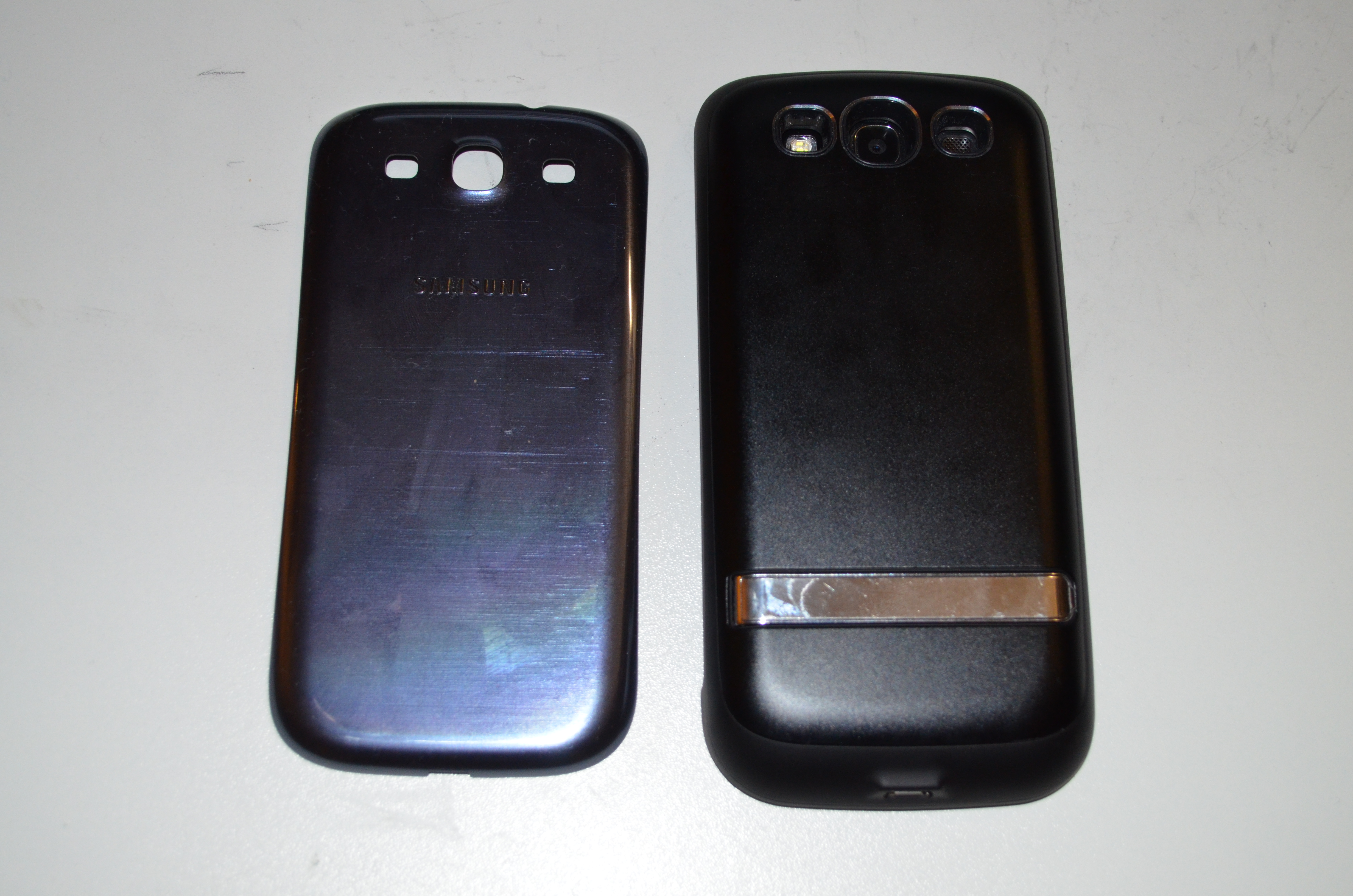
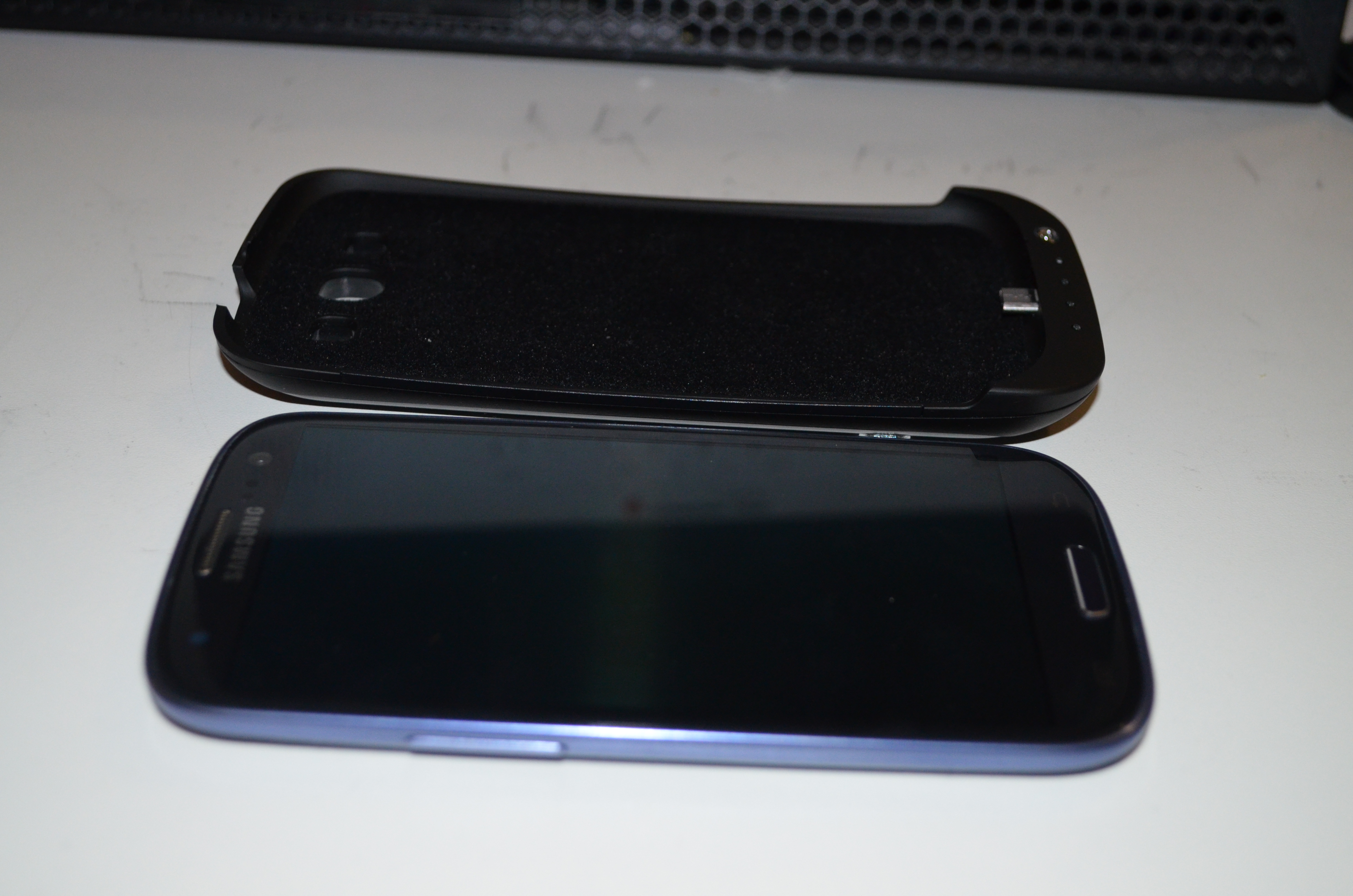
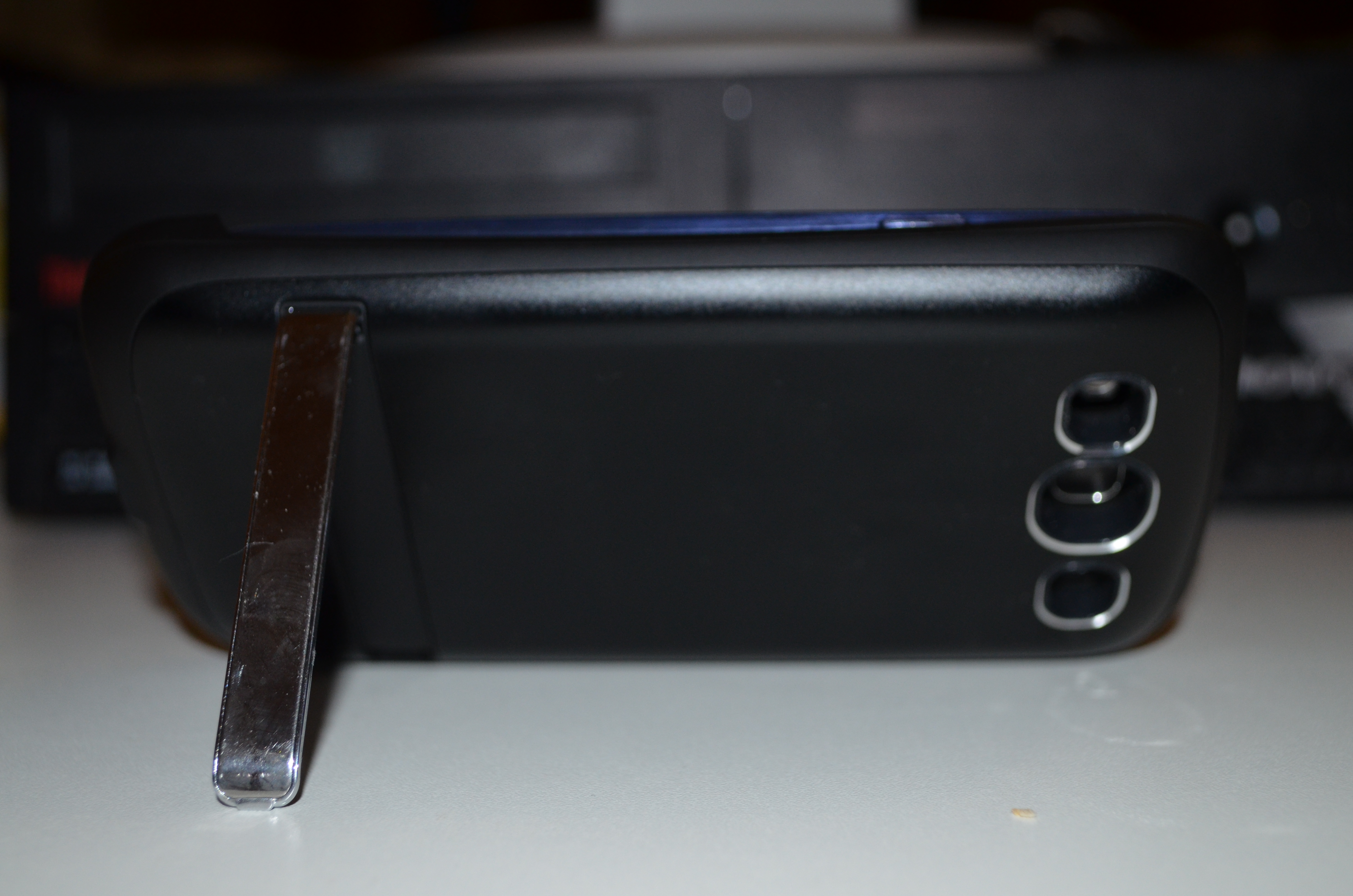
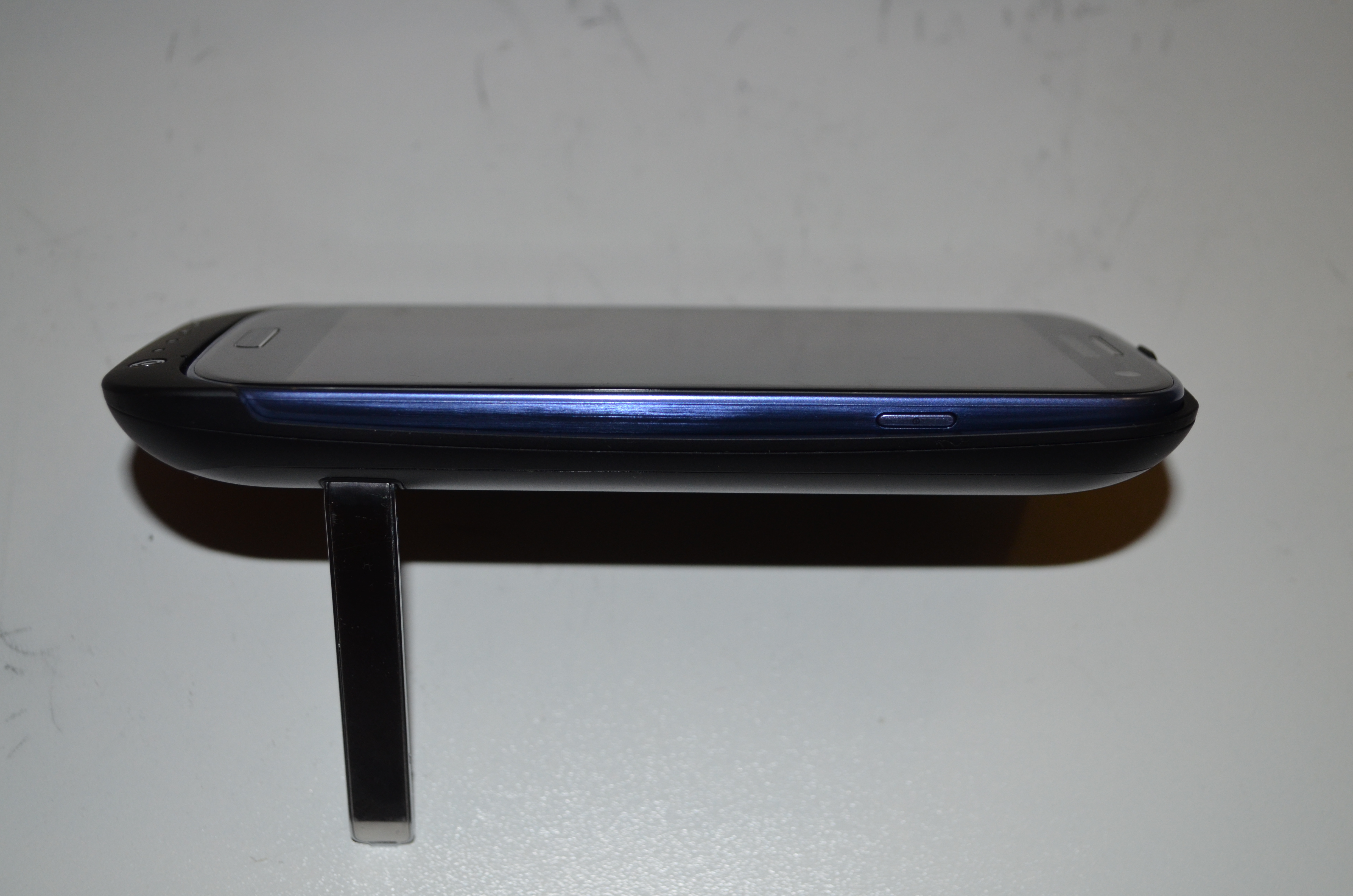
My new Samsung Galaxy S3 arrived a couple of days ago. Kogan added to the weirdness in their shipping that I documented in a previous post [1] by shipping the two phones on consecutive days with separate invoices for $789 each (as opposed to the $449 that I paid). This means that if customs were to track this down they could bust me for import duties (which apply whenever you order more than $1000 of electronics from another country) as multiple shipments in a small period of time are aggregated for tax purposes. It also means that it would be easy to defraud the tax office or an employer about the cost of the devices if I didn t blog about it Phone and Case Review back of power case with S3 installed next to back plastic of S3S3 and case next to each other To install the Samsung Galaxy S3 in the power case I bought from Kogan the back of the S3 has to be removed. One annoying implication of this is that when using the phone in it s case I will either have to carry the back of the phone with me or have no option of removing the case during the day. The phone has to slide in to the case from a small angle and if it s removed carelessly there seems to be a risk of breaking the power connector on the case. S3 on power case standedge view of S3 in power case stand The above photos show the kick-stand on the power case in use, I haven t yet had an opportunity to use the stand for anything other than photography and as it s made of thin plastic there s a reasonable chance that it will break off before I ever use it properly. One major deficiency of the power case is that it has no protection for the screen. The typical gel case will extend by about 2mm above the screen which means that you can place the phone screen-down on a table without a risk of scratching the screen. Also if a phone in a gel case is dropped on a hard surface it seems likely that the chance of the screen hitting a bump and cracking will be lower although I m not aware of any research regarding how well this theory works in practice. This combined with the fact that the power case is smooth and difficult to grip makes it quite unsuitable for regular use. I am concerned that the added mass of the power case would increase the risk of serious phone damage if it s dropped screen-down. I plan to buy a gel case ASAP which I will use most of the time. I will swap the gel case for the power case on the occasions when I expect to spend an extended period of time away from home or an office where I can charge my phone. The power case really should have been designed with a flange that extends above the level of the screen on all sites. It also shouldn t be smooth on the outside. Phone Review The Galaxy S3 equals the Galaxy S for the title of the most slippery phone I ve ever owned. This combined with the fact that the Galaxy S3 is slightly thinner and also 10% wider and longer makes it a more difficult phone to hold. It s a phone that really needs a case with a lot of grip. The camera is reasonable given the fact that any device that is 8.6mm thick will have a very small focal length and also a very small CCD for receiving light. The laws of physics just don t allow something the size of the Galaxy S3 to have a half-decent camera. My ideal mobile phone would be about the size of the Galaxy S3 with the power case, it would use the extra thickness for a big battery as well as a much longer focal length for the camera. I d like a phone to be about 16mm thick over most of it s area with a section that s 20mm for the camera. The burst shot mode (which allows you to take 20 pictures rapidly) is good for capturing certain types of relatively slow movement (EG someone s mouth moving when they talk). But it s no good at all if you try to pan the camera while doing burst mode. When I first started using the phone it gave me lots of hints about using various functions. This wasn t particularly useful for me as most things are obvious to anyone who has much experience with computers and the non-obvious things are probably going to be forgotten if you are doing something else when the help system prompts you. It will be useful for my sister in law who s getting the other phone, but the down-side of this is that I can t configure her phone before delivering it. She needs to use it first to see all the tips. The Galaxy S3 has a screen that s 4.8 diagonally which is slightly larger than the 4.0 screens of my previous Android phones (Sony Ericsson Xperia X10 and Samsung Galaxy S). That gives 44% more screen area which is a good thing. Unfortunately many apps seem to display the same amount of data, I had hoped that 44% more area and 140% more pixels would result in most apps displaying more data by default. Fortunately ConnectBot (my SSH client of choice) gives me 60 rows and 120 columns on the Galaxy S3 as opposed to the mere 31 rows and 80 columns on the Xperia X10. I don t use ConnectBot that often (a phone is a really bad ssh client no matter how you do it), but when I do it s really important and the extra space matters. The down-side of the larger screen for me is that the distance from the center of the palm of my hand to the end of my thumb is slightly less than 4.8 . This means that I can t hold the Galaxy S3 with one corner in the palm of my hand and still reach the far corner of the screen. So I am forced to hold the sides of the phone for one-handed use which means that it would be easier for it to slip out of my hand. A further complication is that the settings and back buttons are very close to the edge of the phone and can be hit by accident very easily. Hopefully a gel case will alleviate that. But I have never owned a hand-held device which was so difficult to hold in a stock configuration. According to AndroSensor (one of my favorite demo programs for showing useless things that a phone can do) the Galaxy S3 lacks support for measuring humidity and external temperature but it has all the other sensors. I think I can survive without knowing how hot and humid my pockets are, but it would still be nice to have every possible feature. The default partitioning of the phone storage is to have all internal storage used for applications and none used for a VFAT filesystem accessible over USB. It s nice that I won t run out of application storage space (a problem I ve had with every other Android device) but it does mean that I ll have to buy a micro SD card before I can use the phone properly. Micro SD storage costs about $1.50 per gig in the size range from 8G to 32G, it s not particularly expensive but it s annoying to have the phone not be fully usable right from the start. Without using a SD card I have to use gphoto2 to download pictures from the phone so it s fully usable in every way. But the cost of the power case, the gel case I m about to buy, and an SD card make the phone less of a bargain. The phone has more RAM, a faster CPU, and Android 4.1. These are all really good things, but nothing worth writing about in a review. Conclusions The power case is very poorly designed, I probably wouldn t buy it if I knew then what I know now. For one-handed phone use by someone like me with longer than average fingers a 4.0 phone is about the largest possible. This doesn t mean that phones should stay small, but it does mean that Apple weren t being entirely silly when they released all the 3.5 iPhones. Presumably a large portion of the population would find a 3.5 phone to be as usable as a 4.0 phone is for me. It now seems to me that as a 4.8 screen is going to be impractical for one-hand use by almost everyone the phone designers should concentrate more on larger phones similar to the Samsung Galaxy Note. I think that the 4.8 screen size may be ideal for some young children who could use it the way an adult might use a 7 tablet an Android phone seems to be a relatively common present for children in the 6-12 age range. Generally I think that no-one should ever buy a new phone or tablet without trying one of the same size. While I am happy with the S3 it really doesn t work in the way I expected. Having 2.9* as many characters on screen for ConnectBot is a massive benefit. If I ever write another magazine article on a hand-held device the extra size and resolution will really help if I found a suitable editor (please make suggestions in the comments). For the WordPress client to write long blog posts on it then the screen could potentially be reasonably useful, but so far it seems that it s more suited to reviewing posts and comments than to writing posts. Generally the Samsung Galaxy S3 is a good phone and I think it s great value for money when it s less than $500.

14 December 2012

Gunnar Wolf: Goodbye, LastFM - Again

I started using LastFM probably around 6 years ago, and loved its offering. I discovered a huge amount of music I would have never found otherwise. Then, some time later, it changed its terms of use, and those of us not in some selected countries lost the ability to stream them for free. Bummer. About one year ago, I decided to purchase a subscription. After all, getting to know new music is always good And listening to recommendations for friends with interesting music tastes is fun as well! Of my last music purchases, both in CD and as MP3 downloads (not a spectacular volume, probably some 15 albums in the last year), I can only point to two that I knew the interpreter beforehand. So, we could say I have bought approx. 1 album per month completely thanks to LastFM. But, as of January 15, they are changing their licensing terms, and LastFM streaming service will no longer be available in Mexico. All it will continue to give me is recommendations based on my listening habits, given I continue "scrobbling" - Much less useful, not to say completely useless given my usual patterns. So, I'm sadly cancelling my subscription, and quite probably will stop using the service altogether. And yes, this will make me reevaluate freely licensed music services. But while I know of several free music distribution sites such as Jamendo, I will long for this LastFM abililty to deliver me music that is aligned to my current tastes (instead of looking them up by myself) Any suggestions on where to look for a similar service?

12 December 2012

Raphael Geissert: A bashism a week: $RANDOM numbers

Commonly used to sleep a random amount of time or to create unique temporary file names, $RANDOM is one of those bashisms that you are best avoiding it altogether.

It is not uncommon to see scripts generating a "unique" temporary file name with code that goes like: tempf="/tmp/foo.$RANDOM", or tempf="/tmp/foo.$$.$RANDOM".

Under some shells the "unique" temporary file name will be "/tmp/foo." for the first example code. So much for randomness, right?

Even if you go around it by defining $RANDOM to the output of cksum after reading some bytes from /dev/urandom, please: don't do that. Use the mktemp command instead.
When creating temporary files there's more than just generating a file name. Just don't do it on your own: use mktemp. Really, use it, the list of those who weren't using mktemp (or similar) is large enough as it is.

Don't even dare to mention the linux kernel-based protection against symlink attacks. There's no excuse for not using mktemp.

Tip: If you are going to use multiple temporary files, create a temporary directory instead. Use mktemp -d.
Tip: Don't reuse a temporary file's name, even if you unlink/remove it. Generate a new one with mktemp.
Tip: Reusing also means doing things like tmp="$(mktemp)"; some_command > "$tmp.stdout" 2> "$tmp.stderr"
Tip: Even if $RANDOM is not empty, don't use it. It could have been exported as an environment variable. Again, just use mktemp.

For the remaining cases where you may want a pseudo random number such as for sleeping a random number of seconds: you can use something as simple as $$. Use shell arithmetic to adjust it as needed: use the modulo operator, multiply it, etc.

If you think you need something more "random" than the process' id, then you should probably not be using $RANDOM in the first place.

11 December 2012

Francesca Ciceri: Welcome Malatesta, Goodbye Kasbah!

Kasbah, my old laptop, is almost dead. It was my first laptop, an Asus X50C, which worked like a charm and was robust like a tank. But then the screen hinges broke. Time for a new one. So, ladies and gentlemen, I'm glad to present you malatesta. Malatesta is a Lenovo Thinkpad E335. Sadly, while kasbah worked with free drivers, malatesta requires proprietary drivers both for the video card and the wifi. Which sounds a bit ironic for a laptop named after a famous anarchist. The only two problems I encountered with it were related to the video card (00:01.0 VGA compatible controller: Advanced Micro Devices [AMD] nee ATI Device 9808) and the special keys. Malatesta worked well with the kernel of Squeeze, but freezed during the boot with Wheezy. Thankfully, I stumbled upon this blogpost by Blars Blarson suggesting to use the fglrx-driver with Sid. And that solved the problem. Another little odissey was the brightness of the monitor. With kernels < 3.2.0-4-amd64 the thinkpad_acpi didn't recognize my model and I was stuck with a brightness level probably visible from the outer space. Neither xrandr nor xbacklight could help, and I was seriously considering to use sunglasses to work (a slight unusual approach to the brightness problem, I know, but I suffer of migraines and couldn't bear an hyper-bright monitor), when the upgrade to Sid solved the problem. On the bright side (pun intended) this laptop was born without Windows. (Both malatesta and kasbah were shipped with FreeDOS). Now, if you're wondering about the names: my first namescheme was "references to songs by the Clash" (and kasbah is obviously for "Rock the Casbah", with a typo). But it wasn't really scalable. Since last year, I've decided to name my systems after famous anarchists. The server is named after one of my all time favourite anarchists, Buenaventura Durruti.
madamezou@durruti:~$ cat /etc/motd
%%%%%%%%%%%%%%%%%%%%%%%%%%%%%%%%%%%%%%%%%%%%%%%%%%%%%%%%%%%%%%%%%%%%%
Llevamos un mundo nuevo en nuestros corazones;
y ese mundo est  creciendo en este instante
                        Buenaventura Durruti
%%%%%%%%%%%%%%%%%%%%%%%%%%%%%%%%%%%%%%%%%%%%%%%%%%%%%%%%%%%%%%%%%%%%%
While the new laptop's name comes from Errico Malatesta.
madamezou@malatesta:~$ cat /etc/motd 
%%%%%%%%%%%%%%%%%%%%%%%%%%%%%%%%%%%%%%%%%%%%%%%%%%%%%%%%%%%%%%%%%%%%%
We anarchists do not want to emancipate the people;
We want the people to emancipate themselves.
            Errico Malatesta, L'Agitazione (18 June 1897)
%%%%%%%%%%%%%%%%%%%%%%%%%%%%%%%%%%%%%%%%%%%%%%%%%%%%%%%%%%%%%%%%%%%%%

Michal &#268;iha&#345;: Translate toolkit supports Android resources

After several months, my patches for Android resources support in translate-toolkit has been merged. All this originally started as question on stack overflow and after some playing, I've managed to integrate it to Weblate. Right now, this is already actively used by several projects, the biggest one probably being OsmAnd.

Filed under: English Weblate 0 comments Flattr this!

Russell Coker: Links December 2012

Steven Johnson gave an interesting TED talk about where good ideas come from [1]. He starts by attributing coffee replacing alcohol as a standard drink for some good ideas and then moves on to how ideas develop. Erez Lieberman Aiden and Jean-Baptiste Michel gave an interesting and amusing TED talk about the ngram analysis of books that Google scanned [2]. Here is the link for the Google Books ngram search [3]. Clay Shirky gave an insightful TED talk about how the Internet is changing the world [4]. He cites Open Source programmers as the modern day equivalent to the Invisible College based on our supposed great ability to get along with other people on the Internet. If we really are so much better than the rest of the Internet then things must be bad out there. He ends with ways of using Git to draft legislation. Hans Rosling gave an interesting TED talk about religion and the number of babies that women have [5]. His conclusion is that it s more about income and social stability and that the world s population can stabilise at 10 billion if we provide family planning to everyone. Alexis C. Madrigal wrote an interesting interview with Genevieve Bell about her work at Intel and the way people use technology [6]. Indigogo is raising funds for the Cuddle Mattress , it s a mattress with foam slats and a special fitted sheet to allow your arm to slide between the slats [7]. So you could have your arm underneath your SO for an extended period of time without risking nerve damage. They also show that when sleeping on your side your shoulder can go between the slats to avoid back problems. Nate Silver (who is famous for predicting US elections gave an interesting TED talk about racism and politics [8]. One of his main points is to show the correlation between racism and lack of contact of members of other races. Sociological Images has an interesting article by Lisa Wade about whether marriage is a universal human value [9]. In regard to historical marriage she says women were human property, equivalent to children, slaves, servants, and employees . The general trend in the comments seems to be that there are so many types of marriage that it s difficult to make any specific claims to traditional marriage unless you count a tradition of a short period in a single geographic region. Plurality is an excellent sci-fi short movie on youtube [10]. TED has an interesting interview with Hakeem Oluseyi about his research about astrophysics and how he achieved a successful career after being a gangster as a teenager [11]. He has some good ideas about helping other children from disadvantaged environments become successful. Paul Dwerryhouse wrote an interesting blog post about his work in designing and implementing a filesystem based on a Cassandra data store with FUSE [12]. Paul also wrote a post about using Apache Zookeeper to lock metadata to permit atomic operations [13]. The documentary Monumental Myths provides an interesting and insightful analysis of the processes of creating, maintaining, and explaining monuments [14]. It focusses on some significant monuments in the US and explains both sides to each story. Howard Zinn makes the insightful point that when people present a certain point of view of history it s not controversial, as soon as you present the other side they call it controversial . That happens even in debates about current issues. Howard also says to criticise whatever the government does is not anti-America, it s anti-government, it s pro-America, it s pro the people, it s pro the country . The song that plays during the closing credits is interesting too. The music video Same Love is one of the best presentations of the argument for marriage equality [15]. Chris Samuel wrote an interesting post about systems locked down for Windows 8 and options for purchasing PCs for running Linux [16]. His solution is to buy from ZaReason. I saw his laptop in action at the last LUV meeting and it looks really nice. Unfortunately a byproduct of the extremely thin form factor is the fact that it lacks a VGA port, this meant that Chris had to use my Thinkpad T61 (which is rather clunky by comparison) for his presentation.

8 December 2012

Russ Allbery: Review: Peacekeeper

Review: Peacekeeper, by Laura E. Reeve
Series: Major Ariane Kedros #1
Publisher: Roc
Copyright: December 2008
ISBN: 0-451-46245-9
Format: Mass market
Pages: 324
Ariane Kedros is a pilot of a second-wave prospecting ship. Second-wave prospectors are the first explorers into new systems after slower-than-light generation ships haul in the beacons that add them to the FTL network. She's also a reserve major in the Consortium military, which is a point of ongoing tension with her business partner and employer. She disappears on missions for the intelligence branch that she can't talk about, and usually ends up drinking herself into a stupor when she returns. In actuality, Kedros is not her real name. It's a fake identity given her after the last war, a war in which humans detonated a temporal distortion warhead for the first time and possibly destroyed an entire solar system. Kedros was part of the team that launched the bomb and is, according to the Terran Expansion League (the other side of the all-human conflict), a war criminal. She's in the equivalent of a witness protection program, as are all the other people involved in the act. But someone has broken their cover and is picking them off, one by one, and her latest secret mission from the Consortium is to protect another member of the group. Peacekeeper is Reeve's first novel, and unfortunately this shows badly at the start of the book. The writing is choppy and awkward, the paragraph breaks are a bit off, and the sentence structure kept making my teeth itch. I'm not a good enough technical critic to put a finger on what's wrong, but the writing doesn't flow. I also found myself anticipating and completing sentences in my head, which is a sign of too many low-level cliches. A few dozen pages into the book, the writing was bothering me, I hadn't warmed to any of the characters, and I wasn't sure I was going to like it. Ariane grew on me, though, particularly once she got into her mission and started balancing a cover assignment and her actual work. She's hurt, suffering from what's probably post-traumatic stress disorder and self-medicating with alcohol, but she's smart and competent and the plot is sufficiently tricky to provide a lot of meat. Not only is someone after her old team, but she and her partner discovered something potentially major on their last trip, an old friend of her partner has been murdered, the Consortium and the Terrans are negotiating a peace treaty, and all this is happening under the watchful eye of a superior alien race. The Minoans are probably Reeve's best creation here (if a little too similar to Vorlons at times). They're absolutely neutral, but they do not want humanity messing with temporal distortion weapons and are trying to nudge (or push) the humans into peace and disarmament. They are sticklers for not imposing their cultural practices on others, attempting to judge humanity solely by its own rules, but they're utterly literal-minded about rules. They expect everyone to follow any stated rules exactly and to the letter, making them excellent but frustrating overseers of disarmament treaties. They also have a fascinating tendency to interact with people in roles rather than as individuals. This is clearly the first book in an ongoing series, and a lot of the setup is not resolved here. We get only glimpses of what Ariane and her partner may have found, and only a few interactions with the Minoans, while Ariane tracks down who is responsible for killing her former team. There's a bit too much torture for my taste, and the subplot of Ariane's struggle with alcoholism wasn't really what I wanted to read about, but the writing seemed to get substantially better and the plot kept me turning the pages. There's a quality to military SF written by people who have actually been in the military that I find hard to describe but that helps a book tremendously. It didn't surprise me at all to learn that Reeve served in the US Air Force, since Peacekeeper has that quality. It's less about technical accuracy and more about a feel, a sense of what it's like to be inside a military routine and interacting with other military personnel. The culture feels coherent, despite not being described in detail. I think it makes for good SF in general, since it conveys to someone like me (who has never been in the military) a semi-alien but completely coherent culture. It certainly improves this book; in general, I thought Reeve's military characters were more interesting and more believable than her non-military characters. With the rocky beginning, the unpolished writing, and a villain who wasn't entirely satisfactory, I can't quite recommend Peacekeeper, but it's not a bad read. I'm not sure if I'll pick up the sequels, but I did leave it curious about the unresolved plot threads and willing to learn more about Reeve's world. Followed by Vigilante. Rating: 6 out of 10

Eddy Petri&#537;or: Faulty logic - confusing correlation with causation

I want to start this post by saying two things:
  1. It is sad when a good person decides to commit suicide
  2. It is even sadder anyone writing on a subject like this MUST add this kind of disclaimers in the hope the message of the writing isn't distorted because we are unable to listen to each other without suspecting/blaming the other of pure evilness/lack of compassion.
Imagine you are working in an office with other colleagues and one of them makes a print screen of your desktop screen and then displays it full-screen on your computer. You struggle a little and get frustrated when nothing works, the colleagues laugh at your expense. Pretty childish, but no harm, right? You laugh it off.

Imagine a similar scenario, but your shoelaces are tied to the desk without your notice, and the colleagues tied your laces so you can't stand, so the risk of injury is null. You stumble a little when you want to leave the desk. Again, childish, funny, but no harm, right? Again, you laugh it off.

Imagine even a scenario where you are the target of a prank that doesn't injure you physically, but it happens in front of an audience of 100 people. You might feel ashamed, embarrassed, depending on the prank. But that would go away with time, with your laughs or by leaving that audience, right?

So now imagine you are just a person that unknowingly contributed to the success of a harmless prank in which somebody was duped into thinking they were talking to a very public figure about some unimportant and inconsequential stuff related to their job. You'd brush it off, wouldn't you? Most likely, you'd probably laugh at the prank and you wouldn't think the pranksters should be prosecuted or fired. Even if the famous public figure would be upset, taking into account the fact that the things discussed were inconsequential, you wouldn't worry about it. I wouldn't worry even if that famous person was my direct boss and I was the one talking about my boss.

At least, that's how I am thinking, but for some reason, many people don't think this way. And yes, I am talking about the recent sad news about the apparent suicide of a nurse who was involved in the care of the person called Kate Middleton.

I don't want to talk about names, or man-made titles, man-made concepts, or how some people forget that even the most influential people in the world are still a member of this same species that all of us are. I don't even want to talk about this particular sad situation, I just want to talk about the totally irrational reaction many people had to it.


Everybody knows that jokes are a matter of taste. What I might consider funny, some people would take offence at, but, generally speaking, there's an area of jokes that even kids would consider funny. Also, if we are honest to ourselves, a joke is not funnier or less funnier if from the total of people in the room instead of 2 people not liking it, 5 people don't. Not even if some of them are so offended by the joke they leave the room. The joke is equally funny or in poor taste with 2 or with 100 people in the room.

And there's the issue of confusing correlation with causation. If I tell somebody some good news about my aunt and the next day that somebody happens to had bought a car, it doesn't mean my good news made that person decide they want to buy a car. It could be, but it's not necessary, it could be a coincidence.

The same happens in the sad case of the nurse. She decided to take her life, as far as it seems. But that's the extent to which we know anything about the situation. We don't know if the suicide had anything to do with the prank or not. Just the fact that it happened the next day doesn't mean AT ALL the prank call is the cause of the suicide. It doesn't even mean that is "the straw that broke the camel's back", it might be totally unrelated. Or it might not. Taking into account the inconsequential and harmless nature of the call, it seems even less likely. Yet, I might be mistaken.

What I am sure of now is that jumping to the conclusion that the prank call had anything to do with the death, is wrong, as it is jumping to the opposing conclusion. I am also sure that in the absence of other information, the latter, the lack of connection, is more likely, because we know that such drastic sad decisions are not generally caused by trivial stuff.

Time proximity doesn't prove causation. Geographical proximity doesn't either. There needs to be a lot more into it than simple temporal sequence.


Which gets me to the second part of irrational reactions: terminating the show and twitter accounts of the two pranksters. What the hell? Talk about hypersensitivity and paranoid reactions! Are we this blind and willing to blame the least insignificant thing for the gravest consequences that we forget how we all make decisions and how to use our brains, as soon as some tragedy happens?

<iframe allowfullscreen="allowfullscreen" frameborder="0" height="315" src="http://www.youtube.com/embed/tbhsdlJ_MiQ" width="560"></iframe>
Australian Prime-minister Julia Gillard making fun of doomsday believers


Imagine some person who thinks the 21st of December 2012 will bring the end of the earth. Imagine that person taking as a serious declaration the obvious joke from the Australian prime-minister Julia Gillard, and would end their lives to avoid the mayhem, panic and violence they think would follow the 21st of December. I wonder, would as many people blame Julia Gillard for the suicide? I doubt it. And the irony is that for such an hypothetical case, there would be a stronger case for causation than what we now know about the previous case.


I still wonder, when will we learn to think a little more rationally than the people walking the Earth 100.000 years ago?

6 December 2012

Leo 'costela' Antunes: Silly Wal(l Cloc)k 2.0

So I finally got the first laser-cut version of the Silly Wal(l Cloc)k done: The back plate was cut from a 1mm plexiglass sheet using this SVG. The black parts were spray painted with matte black and inserted back into the hollowed out sections (I should have made pictures of the pieces before assembling; too lazy to do it now). This proved out to be somewhat problematic, since keeping the small pieces (the chin and the white part of the suitcase handle) in place isn t really easy without gluing everything together, which I wanted to avoid because I m not sure what effect the glue might have on plexiglass in the long term. Another problem was the fact that the plexiglass sheet is white, but slightly translucent. Since the back piece of the clock is black, this caused the white parts to look dirty . As a workaround for both problems I ended up using a thin white cardboard sheet as additional background, where the small hollowed out pieces could be affixed and the translucency of the plexiglass could be hidden. On the other hand, the 1mm thickness for the plexiglass turned out to be perfect for the clock hands (or feet). I think it would still have worked with 2mm, but that might be too heavy for the puny clock torque and they might start snagging on each other. Careful eyes will also note that I made a stupid mistake when writing down the dimensions for the back plate and it ended up being slightly smaller than the available space. Not my brightest moment, but it worked out alright with the additional cardboard background. The next iteration will probably be made with a different two-color plexiglass sheet that can be engraved. Let s see how that works out. Related: Silly Wal(l Cloc)k

5 December 2012

Russell Coker: Ingress

Today Google sent me an invite for Ingress their latest augmented reality game [1]. The fact that they sent me the invitation while the Google Play store page for Ingress [2] tells me that it s not available in my country (Australia) is interesting. Google obviously aren t using their Big Brother powers effectively! The way to install Ingress if you are in Australia, New Zealand, or other countries where it s not supported is to do a Google search on the words Ingress and APK and take the highest available version (1.08 at the moment). Then you will find a web site that offers it with no authentication and the potential of getting a trojan version. Forcing people to install the software in an insecure manner doesn t seem to be in the best interests of Google. I first installed the game on my Sony Ericsson Xperia X10 which has a 1 GHz Qualcomm Snapdragon QSD8250 CPU and runs Android 2.3.3 compiled by Sony-Ericsson and performance was terrible. It often would fail to respond to the UI effectively, it would process touch actions after I had repeated them because they didn t seem to have registered, scrolling text at the same speed as playing audio was apparently impossible. Then I briefly tried running it on my Samsung Galaxy S which has a 1 GHz (ARM Cortex A8) CPU and runs Android 2.3.7 with a CyanogenMod-7.1.0-GalaxyS build. It seemed to be a bit faster but the difference was small enough that I could have imagined it. I tried it on the cheap Onix tablet I bought from Aldi this morning [3] but it refused to work every time I tried and eventually crashed the tablet and forced me to use the reset button. Finally I tried it on a Kogan Agora 10 tablet running Android 4.0.4 with what Kogan describes as a 1GHz ARMv7 CPU and it seemed a lot more usable. I haven t yet tried actually playing the game on the Kogan Agora tablet, but the fact that I can read the messages from other players is a significant improvement over the experience on the phones. On the phones the poor performance of the UI made it almost impossible to read messages from other players, now it s merely extremely annoying. I m very disappointed with this. Almost three years ago I reviewed the Seer augmented reality software from IBM that performed tasks that are more demanding and did it well [4]. The IBM Seer software ran on a HTC Hero which had a 528 MHz Qualcomm MSM7600A CPU, it s really disappointing that Ingress can t run well on modern phones particularly as the augmented reality part of the game which I ve seen so far is not much different to what Google Maps, Osmand, and other mapping programs do. The IBM Seer software was good enough to drive the purchase of new phones. When I first got an Android phone almost two years ago I wanted to run such augmented reality software and it was a factor that determined my choice of phone. Unfortunately I still haven t found anything to live up to that promise. IBM s software was tailored to the Australian Open even a tennis fan would find it to be of little interest for about 360 days of the year and I haven t found any other augmented reality software that is useful and works well (please let me know if there s something I ve missed). I find it difficult to imagine that anyone would be inspired to change their phone purchase plans after seeing a demo of Ingress on any hardware that I own. It seems that it will probably be usable on my Xperia X10 and all features should work on the Kogan Agora tablet, but I don t think that any of them will allow the game to live up to the hype.

Raphael Geissert: Introducing: a bashism a week

No matter how many scripting programming languages exist, it appears that shell programming is here to stay around. In many cases it is fast, it "does the job", and best of all: it is available "everywhere". The shell is used by makefiles, on every call to system(), and whatnot.

However, it is a real pain, implementations differ from the standards, some implementations still in use pre-date them, they leave room for undefined behaviour, and bugs in the implementations are nothing but unknown. You can't just specify a given shell interpreter and think you've dealt with the problem. Writing shell scripts that are portable among many platforms is a nightmare, if even possible.

Surprisingly, in spite of all that, a great amount of shell scripts appear to work flawlessly in many systems.

The switch from bash to dash as the default shell interpreter in Debian wasn't done without quite some work (more if you list archived bug reports), and the work ain't over.

For the following months I will be writing about different "bashisms" every Wednesday, hopefully helping people write slightly-more-portable shell scripts. The posts are going to be focused on widely-seen bashisms, probably ignoring those that Debian's policy defines as required to be implemented.

The term "bashism" must be understood as any feature or behaviour not required by SUSv3 (aka POSIX:2001), no matter what its origins are or even if the behaviour is not exhibited by the bash shell.

One of the key points is documenting the script's requirements, starting by specifying the right shell interpreter in the shebang.

Let's see what comes out of this experiment.

As a matter of fact, I have a few months worth of posts written already. All posts are going to be published at scheduled dates, just like this very post.

Russell Coker: Cheap Android Tablet from Aldi

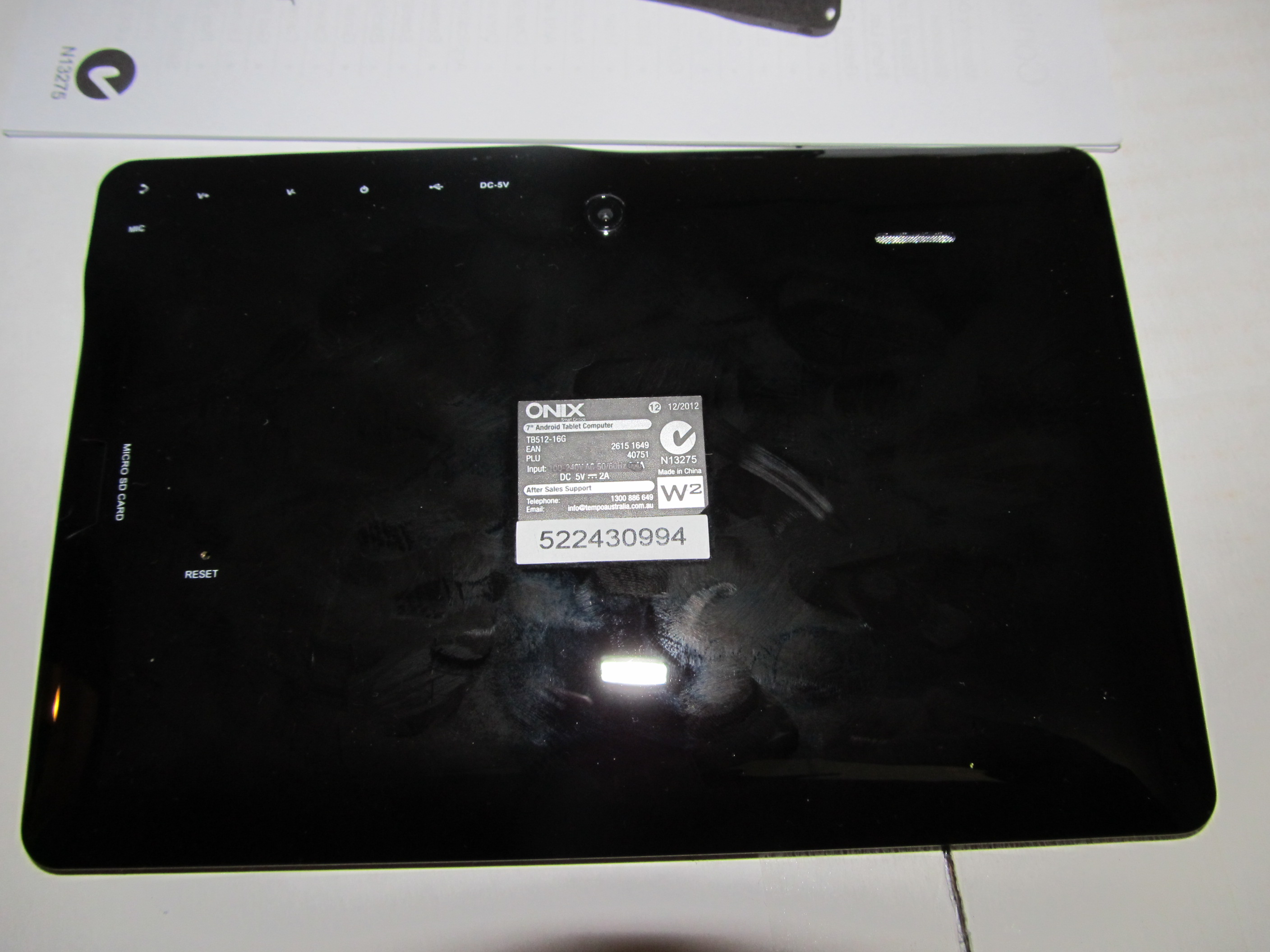
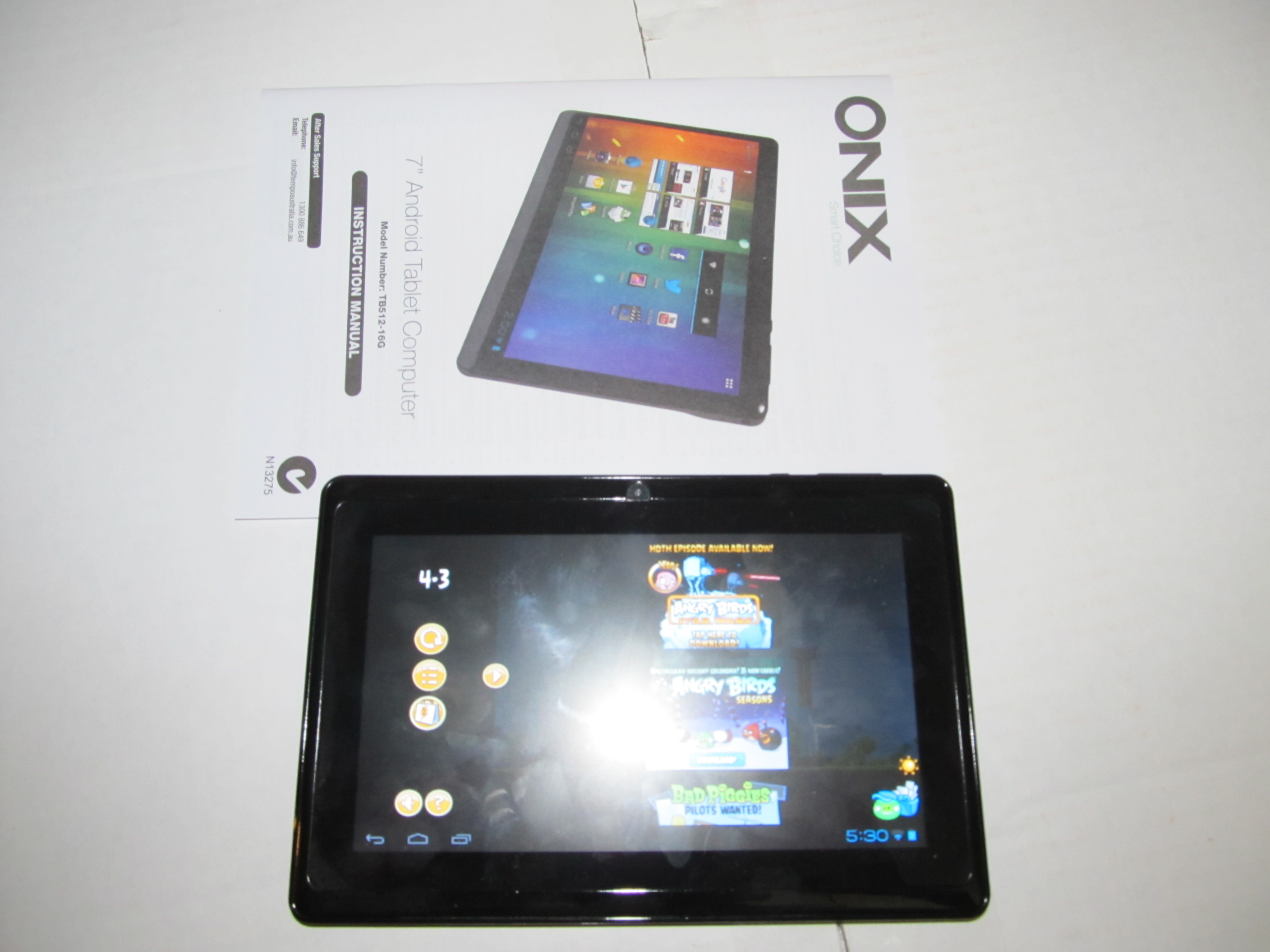
back of the onix 7 inch tabletfront of the onix 7 inch tablet and cover of manual I ve just bought a 7 Onix tablet from Aldi. It runs Android 4.0.4, has a 1GHz Cortex A8 CPU, 512M of RAM, 16G of flash storage, and a 800*480 display. They are selling rapidly and I don t know how long they will last probably you could get a returned one next week if you can t get one today. But if you like pink then you may be able to get one (the black ones are selling out first). The tablet seems like a nice piece of hardware, solid construction and it feels nice to hold. Mine has a minor screen defect, but that s the sort of
thing you expect from a cheap device, apart from that the display is good. The Wifi doesn t seem to have as good a range as some other devices (such as my phones and the more expensive 10 tablet I got from Kogan). This isn t a
problem for me (the data intensive uses for this device will be in the same room as the AP) but could be a killer for some people. If you have your phone or a dedicated 3G Wifi AP in your pocket while using the tablet then it should be fine, but if you have an AP at the wrong end of your house then you could be in trouble. I found Youtube unusable due to slow downloading even when sitting next to my AP but I can play videos downloaded from iView that are on my local web server (which is more important to me). I expect that I will be able to play local copies of TED talks too. The camera is bad by phone camera standards, fortunately I have no interest in using a tablet as a camera. I had no real problems with the Google Play store (something that caused problems for some users of an earlier Aldi Android tablet). Generally the tablet works well. The people who build Android for modern devices seem remarkably stupid when it comes to partitioning, every device I ve seen has only a small fraction of the storage usable for apps. This tablet is the worst I ve ever seen, it has 16G of storage of which there is 512M partitioned for apps of which only 400M is free when you first get the device! It comes pre-installed with outdated versions of the Facebook client and Google Maps (which isn t very useful on a Wifi device) and some other useless things. If you upgrade them to the latest versions then you ll probably lose another 100M of the 512M! Fortunately the Android feature to run apps from the VFAT partition works so I haven t been prevented from doing anything by this problem yet. In conclusion, it s not the greatest Android tablet. But you don t expect a great tablet for $100. What I hoped for was a somewhat low spec tablet that works reasonably well and that s what I got. I m happy.

4 December 2012

Russ Allbery: Review: The Borrowers

Review: The Borrowers, by Mary Norton
Series: The Borrowers #1
Illustrator: Beth Krush
Illustrator: Joe Krush
Publisher: Sandpiper
Copyright: 1953
Printing: 1986
ISBN: 0-15-204737-9
Format: Trade paperback
Pages: 180
Arrietty is a 14-year-old girl who lives under the clock. Well, actually, she lives under the kitchen floor, but the entrance to her family's passageway is under the clock, from which they get their name. She sleeps in an old cigar box, her living room is wallpapered with strips cut from letters (and decorated with postage stamps), and she keeps a journal in a miniature book that's half the size she is. Arrietty, and her parents Pod and Homily, are Borrowers. The Borrowers is a classic series of children's books by Mary Norton about miniature people who, at least in this first book, live in the walls and take things. Not big things, but all the little things: the blotter paper, the pins, the stray sock, old postage stamps, empty matchboxes, and the occasional thimble. With these things, they build their furniture, their clothes, and their homes, safely hidden in the walls and other secret places, always wary of the "human beans" (as Arrietty's mother tends to call them). That life is, of course, a remarkable simulation of middle-class, class-conscious British life, which is much of the fun. Arrietty's family lives in the home of an elderly woman who's confined to bed, so it's quiet, safe, and driven entirely by routine. They only have to watch out for the maid and the gardener, and they keep regular schedules. That's just the way the Borrowers like it; predictable and quiet. Which is why they get caught entirely by surprise when a boy shows up, recovering from illness in the country, and spots Pod on one of his borrowing runs. This is technically a re-read, but I read the original series so long ago that I barely remembered it. Not that there is all that much to remember, at least in the way of plot. This first book follows one of the standard plots for children's books of this type (although it follows Arrietty as the viewpoint character rather than the more common choice of the boy): boy discovers hidden creatures, hidden creatures are afraid, boy turns out to want to make friends with them, they strike up a friendship, peril nonetheless ensues. If you've read many children's books, you've probably read this before; The Mouse and the Motorcycle is an obvious example (and, in terms of plot, a somewhat better book). Arrietty is a typical protagonist, her parents are silly (and a bit flighty, particularly her mother), and the boy is, disappointingly, almost a non-entity. But you don't read The Borrowers for the plot. The brilliance of this book is in the descriptions of what they use, how they use it, and how they construct their ingenious homes. Norton captures much of the wonder of other miniaturization stories (the movie Honey, I Shrunk the Kids is an obvious example), but takes it one step further into clever and thoughtful repurposing. The book is full of off-hand descriptions of how everyday objects become different everyday objects for miniature people, giving it the same delight that one gets from descriptions of how model railroad dioramas or hand-made doll houses are constructed. The detailed (if busy) illustrations by the Krushes help tremendously with visualization and make the descriptions even more fun. This is very much a children's book based on an exploration of a single great idea, so don't expect too much in the way of plot or deep characterization. It's also not science fiction; there isn't any realistic extrapolation of culture. The Borrowers all behave like perfectly ordinary English people without any further explanation because, of course, that's what they would do. Re-reading it as an adult, I wished there was a bit more meat to it. But the ingenuity is still a delight. It's great fun to spend a couple of hours imagining how one would construct the miniature accouterments of everyday life. Followed by The Borrowers Afield. Rating: 7 out of 10

3 December 2012

Jon Dowland: Wheezy problems

I've recently replaced my laptop's HDD as the S.M.A.R.T. data suggested a potential failure. I took the opportunity to try out beta4 of debian-installer and to install a pure wheezy system. Prior to this I've been running a mostly wheezy system with some bits from sid or experimental. I've got quite a few notes about bugs I've hit in the installer, most of which I still need to file, but perhaps the most problematic appears to be known as #661789. Unless I'm reading this wrong, it would appear this show-stopper bug makes booting on an EFI system impossible without some workarounds, it's been a known problem for 9 months, and d-i beta4's images opt for EFI booting where possible. After the 8th install run I must admit I started getting angry that someone was wasting my time. Perhaps this is covered in some install notes somewhere. Anyway, I got an install working eventually (with legacy BIOS boot mode). and have been running wheezy for the last week. I've just now had a string of problems which were a fairly typical experience for me running a mixed system. Whenever I hit a problem, particularly in the GNOME3 stack, my first response was to check "am I running the latest version of the packages?" inevitably not and so I got around my problems via a reboot or something similarly drastic; updated the packages and left things. Until the next time. Just now, the following things happened: I've experienced all of the above (except for the PAM thing) more than once over the last 12 months or so since I blogged about moving to GNOME3. Now I'm running a pure wheezy system, at this point in the freeze the relevant packages are likely to be more stable. So, not running the latest version is no longer a reason to avoid fixing the problem. Time for me to start proper analysis! Debian is now in deep freeze. I've heard it said a few times that we are coming to the end of that process. Based on my experiences, in my humble opinion, we've got some work to do before we're release worthy.

Joey Hess: hledger

Apologies in advance for writing a long blog post about the dull and specialised subject of double-entry accounting from the Unix tools perspective, that ends up talking about Monads to boot. I can't believe I'm about to write such a thing, but I'm finding it an oddly interesting subject. double-entry accounting I've known of, though probably not really understood double entry accounting for a while, thanks to GnuCash. I think GnuCash did something rather special in making such a subject approachable to the layman, and I've been happy to recommend GnuCash to friends. I was stoked to find a chapter in my sister Anna's new book that happily and plausibly suggests readers use GnuCash. But for my personal use, GnuCash is clunky. I mean, I'm a programmer, but I can't bring any of my abilities to bear on it, without a deep dive into the code. The file format is opaque (and a real pain to keep checked into git with all the log files); the user interface is often confusing, but there's no benefit to its learning curve, it never seems to get better than manually entering data into its ledger, or perhaps importing data from a bank. I've never found the reports very useful. I've got perhaps a year of data in GnuCash, but it's fragmented and incomplete and not something I've been able to motivate myself to keep up with. So I have less financial data than I'd like. I'm hoping ledger will change that. ledger I've known about ledger for a while, at least since This Linux Weekly News article. It's a quintessential Unix tool, that simply processes text files. The genius of it is the simplicity of the file format, that gets the essence and full power of double entry bookeeping down to something that approaches a meme. Once you get the file format stuck in your head, you're done for.
2004/05/27 Book Store
      Expenses:Books                 $20.00
      Liabilities:Visa
starting to use hledger Now as a Haskell guy, I was immediately drawn to the Haskell clone, hledger. It's nice that there are two (mostly) compatable implementations of ledger too. So from here on, I'll be talking about hledger. I sat down and built a hledger setup for myself the other day. I started by converting the GnuCash books I have been keeping up-to-date, for a small side business (a rental property). It quickly turned into something like programming, in the best way, as I used features like: a modern unix program While I've been diving into hledger, I've been drawing all kinds of parallels between it and other modern Unix-friendly programs I use lately. I think we've gone over a bit of a watershed recently. Unix tools used to be either very simple and crude (though often quite useful), or really baroque and complex with far too many options (often due to 10-30 years of evolution). Or they were a graphical user interface, like GnuCash, and completely divorced from Unix traditions. The new unix programs have some commonalities... importing data After manually converting my GnuCash data, I imported all my PayPal history into hledger. And happily it calculates the same balance Paypal does. It also tells me I've paid PayPal $180 in transaction fees over the years, which is something PayPal certianly doesn't tell you on their website. (However, my current import from PayPal's CSV files is a hackish, and only handles USD currency, so I miss some currency conversion fees.) I also imported my Amazon Payments history, which includes all the Kickstarter transactions. I almost got this to balance, but hledger and Amazon disagree about how many hundreths of a cent remain in my account. Still, pretty good, and I know how much I paid Amazon in fees for my kickstarter, and how much was kicked back to Kickstarter as well. (Look for a cost breakdown in some future blog post.) At this point, hledger stats says I have 3700 transactions on file, which is not bad for what was just a few hours work yesterday. One problem is hledger's gotten a little slow with this many transactions. It takes 5 seconds to get a balance. The ledger program, written in C, is reportedly much faster. hledger recently had a O(n^2) slowdown fixed, which makes me think it's probably only starting to be optimised. With Haskell code, you can get lucky and get near C (language, not speed of light) performace without doing much, or less lucky and get not much better than python performance until you dive into optimising. So there's hope. harnessing haskell If there's one place hledger misses out on being a state of the art modern Unix program, it's in the rules files that are used to drive CSV imports. I found these really hard to use; the manual notes that "rules file parse errors are not the greatest"; and it's just really inflexible. I think the state of the art would be to use a Domain Specific Language here. For both my Amazon and PayPal imports I had CVS data something like:
date, description, amount, fees, gross
I want to take the feeds into account, and make a split transaction, like this:
date description
    assets:accounts:PayPal             $9.90
    expenses:transaction fees:PayPal   $0.10
    income:misc:PayPal                 -$10.00
This does not seem possible with the rules file. I also wanted to combine multiple CVS lines, to do with currency conversions, into a single transaction, and couldn't. The problem is that the rules file is an ad-hoc format, not a fully programmable one. If instead, hledger's rules files were compiled into standalone haskell programs that performed the import, arbitrarily complicated conversions like the above could be done. So, I'm thinking about something like this for a DSL.. I doubt I'll get much further than this, since I have a hacked together multi-pass importer that meets my basic needs. Still, this would be nice, and being able to think about adding thing kind of thing to a program cleanly is one of the reasons I reach for the Haskell version when possible these days. First, here's part of one of my two paypal import rules files (the other one extracts the transaction fees):
amount-field 7
date-field 0
description-field %(3) - %(4) - %(11)
base-account assets:accounts:PayPal
Bank Account
assets:accounts:checking
.*
expenses:misc:PayPal
That fills out the basic fields, and makes things with "Bank Account" in their description be categorised as bank transfers. Here's how it'd look as Haskell, carefully written to avoid the $ operator that's more than a little confusing in this context. :)
main :: IO ()
main = convert paypalConveter
paypalConverter :: [CSVLine] -> [Maybe Transaction]
paypalConverter = map convert
  where
    convert = do
        setAmount =<< field 7
        setDate =<< field 0
        setDescription =<< combine " - " [field 3, field 4, field 11]
        defaultAccounts
            "assets:accounts:PayPal" ==> "expenses:misc:PayPal"
        inDescription "Bank Account" ?
            "assets:accounts:PayPal" ==> "assets:accounts:checking"
That seems like something non-haskell people could get their heads around, especially if they didn't need to write the boilerplate function definitions and types at the top. But I may be biased. :) Internally, this seems to be using a combination Reader and Writer monad that can get at fields from a CSV line and build up a Transaction. But I really just made up a simple DSL as I went along and thew in enough syntax to make it seem practical to implement. :) Of course, a Haskell programmer can skip the monads entirely, or use others they prefer. And could do arbitrarily complicated stuff during imports, including building split transactions, and combining together multiple related CVS lines into a single transaction.

Erich Schubert: ResearchGate Spam

Update Dec 2012: ResearchGate still keeps on sending me their spam. Most of the colleagues I had that tried out RG now deleted their account there, apparently, so the invitation mails become fewer. Please do not try to push this link on Wikipedia just because you are also annoyed by their emails. My blog is not a "reliable source" by Wikipedia standards. It solely reflects my personal view of that web site, not journalistic or scientific research. The reason why I call ResearchGate spam is the weasel words they use to trick authors into sending the invitation spam. Here's the text coming with the checkbox you need to uncheck (from the ResearchGate "blog")
Add my co-authors that are already using ResearchGate as contacts and invite those who are not yet members.
See how it is worded so it sounds much more like "link my colleagues that are already on researchgate" instead of "send invitation emails to my colleagues"? It deliberately avoids the mentioning of "email", too. And according to the researchgate news post, this is hidden in "Edit Settings", too (I never bothered to try it -- I do not see any benefit to me in their offers, so why should I?). Original post below:
If you are in science, you probably already received a couple of copies of the ResearchGate spam. They are trying to build a "Facebook for scienctists", and so far, their main strategy seems to be aggressive inivitation spam. So far, I've received around 5 of their "inivitations", which essentially sound like "Claim your papers now!" (without actually getting any benefit). When I asked my colleagues about these invitations none actually meant to invite me! This is why I consider this behaviour of ResearchGate to be spam. Plus, at least one of these messages was a reminder, not triggered by user interaction. Right now, they claim to have 1.9 million users. They also claim "20% interact at least once a month". However, they have around 4000 Twitter followers and Facebook fans, and their top topics on their network are at like 10000-50000 users. That is probably a much more real user count estimation: 4k-40k. And these "20%" that interact, might just be those 20% the site grew in this timeframe and that happened to click on the sign up link. For a "social networking" site, these numbers are pointless anyway. That is probably even less than MySpace. Because I do not see any benefit in their offers! Before going on an extremely aggressive marketing campaign like this, they really should consider to actually have something to offer... And the science community is a lot about not wasting their time. It is a dangerous game that ResearchGate is playing here. It may appeal to their techies and investors to artificially inflate their user numbers in the millions. But if you pay for the user numbers with your reputation, that is a bad deal! Once you have the reputation as being a spammer (and mind it, every scientist I've talked to so far complained about the spam and "I clicked on it only to make it stop sending me emails") it's hard to be taken serious again. The scientific community is a lot about reputation, and ResearchGate is screwing up badly on this. In particular, according to researchgate founder on quora, the invitations are opt-out on "claiming" a paper. Sorry, this is wrong. Don't make users annoy other users by sending them unwanted invitations to a worthless service! And after all, there are alternatives such as Academia and Mendeley that do offer much more benefit. (I do not use these either, though. In my opinion, they also do not offer enough benefit to bother going to their website. I've mentioned the inaccuracy of Mendeleys data - and the lack of an option to get them corrected - before in an earlier blog post. Don't rely on Mendeley as citation manager! Their citation data is unreviewed. I'm considering to send ResearchGate (they're Berlin based, but there maybe also is a US office you could direct this to) a cease and desist letter, denying them to store personal information on me, and to use my name on their websites to promote their "services". They may have visions of a more connected and more collaborative science, but they actually don't have new solutions. You can't solve everything by creating yet another web forum and "web2.0izing" everything. Although many of the web 2.0 bubble boys don't want to hear it: you won't solve world hunger and AIDS by doing another website. And there is a life outside the web.

Paul Wise: Debian on mobile devices

Debian on Samsung Galaxy S It is possible to put Debian on smartphones like the Samsung Galaxy S: Linux mainline doesn't run on any of the mobile devices I have. It probably doesn't run on any of the mobile devices you have either. There has been some effort by the OpenMoko community to merge the gta02 kernel patches but it is not yet complete. I doubt Samsung will spend money on merging support for old devices obsoleted by more recent devices. There is Linaro but they are focused on things the hardware vendors pay them for and probably would not have the resources anyway. Therefore I would guess the timeframe for supporting the OpenMoko FreeRunner and the Samsung Galaxy S in Linux mainline is between many years and never. For better or worse, the Debian Linux kernel maintainers prefer not to include non-mainline stuff and Debian as a whole generally prefers to include one copy of each package instead of 9. The procedures I documented above are not a great way to support mobile devices at all and could break at any moment anyway. So everyone, please become a kernel developer and help merge all of the many many versions of Android Linux into Linux mainline so that you can have your favourite distribution on your devices. You can comment on this post at identi.ca.

1 December 2012

Thorsten Glaser: Proposed extensions to the JSON specification

The following proposal extends the JSON specification, with the idea of using JSON as an information interchange format, rather than just a way of writing certain ECMAscript values. They do not add anything but only restrict valid JSON content and encoders with some rationale. First of, I d like to remind everyone, including JSON s author, that JSON is case-sensitive, except in the four hexdigits after a backslash-u sequence in a String. Second, I d like to remind everyone that JSON is not binary-safe. No way around that, it implements Unicode (actually, 16-bit UCS-2, and it doesn t guarantee that UTF-16 surrogates are correctly paired) text. I also consider only UTF- 8, 16,32 B,L E valid encodings for JSON. (No PDP endian, either. Sorry, guys.) For my first proposal, I d like to point out CVE-2011-4815 which was about overflowing hashtables. The obvious fix is to randomise the hash per hashtable; to ensure this doesn t leak, we sort ASCIIbetically the keys of an Object in the encoder. (Using Unicode is good here we can just sort the keys as UTF-8 strings by their uint8_t value or as Unicode (UCS-2 or even UCS-4 or UTF-16) strings by the codepoints.) JSON was never preserving the order of elements in an Object anyway so we make it standardised (we still accept any order, and, when parsing, in collision cases, the later value wins). This also helps diffs. For my second proposal, I d like to forbid \u0000, \uFFFE, \uFFFF in strings. The first because many implementations use C strings, and for an information interchange format this is better; it also has security implications to allow NUL in a string. The other two, but not unpaired UTF-16 surrogates (as ECMAscript uses UCS-2 and got UTF-16 only later) because they re not valid Unicode; JSON was not binary-safe already so why bother. Among other benefits, this also helps implementations. For my third proposal, I d like to agree that implementations should impose a nesting depth limit that may be user-defined, and in the face of which, cyclic checking may be ignored by an encoder. I emit nesting depth overflows as literalnull; might also throw an error. Since I was asked, the common standard value is to restrict nesting depth is 32, unless the user specified one. (I also saw 8, but 32 WFM pretty well.) Most seem to use it even if it may seem low at first. Only specialised applications probably need more, and they can always pass a value. For my forth proposal, backslash-escape U+007F U+009F always. It may upset humans, editors, databases, etc. (This paragraph is newly added, after some IRC discussion.) All these do not permit anything that wasn t accepted to be accepted afterwards. I ve got a fifth proposal which changes acceptance rules but only for a subset of parsers: formally JSON is defined in ECMA-262 as industry standard that, in contrast to RFC 4627, always allowed any Value as top-level element of a JSON text. I d like to make it so, and ignore the RFC s requirement for it to be an Object or Array. Even so, the first two characters (after the BOM, if any) of a JSON text always are in the non-NUL 7-bit ASCII range, allowing for encoding detection. (This is done by the NUL octet pattern in the first four octets.) JSON has only taken off because it s a tightly defined simple format that can be used everywhere and isn t too awful for humans (escaping not needed for U+0020 U+D7FF and U+E000 U+FFFD after all, although I d also take the C1 control characters out, see my forth proposal above). I ve started to use a trailing comma in indexed and associative arrays in code I write at work, when the array values are one a line, to help version control systems to do their diffs, but refrain from asking for a JSON extension to permit that in order to not endanger compatibility any (no comment needed, it s just not worth it), but I d like my above proposals to be followed by implementators (and I m one of them). Some more discussion with Jonathan pointed out that JSON5 allows for trailing commata in Object and Array; IMHO the only feature of it that is not bad or outright harmful. I ll probably keep from accepting them because, on their own, they re not that useful, and I usually would run JSON texts, even configs, through a parser/encoder roundtrip to pretty-print them which would lose them anyway. As for binary-safeness: probably best to just use base64 and let the outer layers worry about compression. The data is usually unrelated to the JSON-encoded structure, and even if it s related to other data the base64 representation is usually similar (unless misaligned). Update 02.12.2012 Wrong I was about the first two characters: " " is a valid JSON text. Still possible to peek at four octets and determine the encoding by ordering the tests; updated my notes.

Matthew Garrett: Secure Boot bootloader for distributions available now

I'm pleased to say that a usable version of shim is now available for download. As I discussed here, this is intended for distributions that want to support secure boot but don't want to deal with Microsoft. To use it, rename shim.efi to bootx64.efi and put it in /EFI/BOOT on your UEFI install media. Drop MokManager.efi in there as well. Finally, make sure your bootloader binary is called grubx64.efi and put it in the same directory.

Now generate a certificate and put the public half as a binary DER file somewhere on your install media. On boot, the end-user will be prompted with a 10-second countdown and a menu. Choose "Enroll key from disk" and then browse the filesystem to select the key and follow the enrolment prompts. Any bootloader signed with that key will then be trusted by shim, so you probably want to make sure that your grubx64.efi image is signed with it.

If you want, you're then free to impose any level of additional signing restrictions - it's entirely possible to use this signing as the basis of a complete chain of trust, including kernel lockdowns and signed module loading. However, since the end-user has explicitly indicated that they trust your code, you're under no obligation to do so. You should make it clear to your users what level of trust they'll be able to place in their system after installing your key, if only to allow them to make an informed decision about whether they want to or not.

This binary does not contain any built-in distribution certificates. It does contain a certificate that was generated at build time and used to sign MokManager - you'll need to accept my assurance that the private key was deleted immediately after the build was completed. Other than that, it will only trust any keys that are either present in the system db or installed by the end user.

A couple of final notes: As of 17:00 EST today, I am officially (rather than merely effectively) no longer employed by Red Hat, and this binary is being provided by me rather than them, so don't ask them questions about it. Special thanks to everyone at Suse who came up with the MOK concept and did most of the implementation work - without them, this would have been impossible. Thanks also to Peter Jones for his work on debugging and writing a signing tool, and everyone else at Red Hat who contributed valuable review feedback.

comment count unavailable comments

Next.

Previous.