Search Results: "sf"

9 July 2012

John Goerzen: Decisions on Listening to Music

A couple of days ago, I commented about my thoughts on finding a better way to listen to music, and asked for suggestions. I ve checked out the avenues suggested, and here are my thoughts so far. Streaming service: Spotify Of the streaming service offerings, Spotify seems the most compelling. It has both Linux and Android clients. The Linux client is unofficial and a bit buggy, but serviceable. The service is fairly nice, and the serendipity of listening to radio of tracks like any track or artist I may pick is an incredible feature. It will mean a different mindset; rather than carefully choosing what I buy, I have a vast catalog at my fingertips. I d have to give up some control, but might be better off for it. Spotify can play local files, but sadly lacks support for FLAC that most of my collection is in. A little work with the shell, and I had a quick multi-core FLAC to MP3 conversion done. It can also identify local files and match them up with its catalog, but it does a somewhat poor job of it, despite the fact that my files are tagged by Musicbrainz. There are also a fair number of albums in my collection (from Magnatune and from local artists) that aren t in Spotify s catalog and probably never will be. I may wind up using git-annex or something like it to sync them between PCs. Surprisingly, it doesn t have any kind of web-based player available. It has a lot of features, but many of them are under-documented. Subsonic / Supersonic The idea of being able to stream music anywhere certainly has appeal, and the idea of streaming that music from my own machine my own collection is quite the appealing one. Subsonic seems to be the standard that people recommend for this. It has a web-based player that works well, as well as mobile clients for various platforms. The Android mobile client is particularly well-regarded and is probably the best one here, aside from Spotify. The playlists work well, as expected, and generally it has the appearance of a well-rounded system. There is a lot of flexibility in bitrates; maximum bitrates can be set per-user and per-client. It, of course, transcodes on the fly. My chief gripe about Subsonic is that it has no true album/artist/genre browser. Its main browser is mostly a filesystem browser. I have used clients that show album/artist/genre panes or sortable lists, based on tags, for so long that my filesystem organization is rather different centered around bitrate of rip, origin, etc. It is not very easy to navigate my collection in that way. The search feature can search artist and album, and this can partially make up for it. But there is simply no way to see a list of all artists in the collection. The server is written in Java, and takes up 362MB at startup. That s, I guess, decent for a Java server, but doesn t make me pleased as I d be running it on lower-end hardware. Supersonic is a git-maintained actively synced subsonic fork which removes the license cost (the source is GPL3 anyhow so that wasn t a big deal). Ampache Often mentioned in the same breath as Subsonic, this is yet another frequent suggestion for streaming your own collection. Its primary player is web-based, like Subsonic. It has full artist/genre browsers, and adds tag cloud and various other options as well by default, it loaded the tag cloud with my genre tags, which was a nice touch. The search feature is a little less robust, as it simply searches anywhere and returns a list of all matching tracks, rather than listing matching albums and artists before going into the list of all tracks. But that is somewhat of a minor nit. Ampache s web-based player, liks Subsonic s, uses Flash, but the implementation is really quite awkward. You can t simply click a play button and have playback start. Rather, you must add things to the playlist (queue), a frame on the web interface. Then, you must click play in THAT frame, which launches a new window for the player and transfers its contents to it. You thus have two separate running playlists. And if you think you can just add to the playlist of the player window, think again; you can only replace it. It is simply not possible to add a track to the end of that list without losing your existing place. This makes the usefulness of the web-based player rather, well, low. Playlist functionality in Ampache is rather odd. You can have playlists, but if you want to add a track to a saved playlist, first you have to clear you current playlist, then add the track to it, then save it to the existing playlist. Frontends for Ampache exist in banshee and in amarok. Banshee s is broken, and simply silently fails to do anything. Unless you look in the console, in which case you ll see a .NET backtrace. Banshee has had these mysterious errors for me for years. The Amarok plugin is so basic that you can browse by artist but not by album, and is almost unusable. There is also a rhythmbox plugin in Debian, but it is apparently for an old version of Rhythmbox and no longer works. The best frontend is a dedicated Ampache frontend called Viridian. It has a nice interface, provides features such as taskbar integration, and generally works pretty well. The only thing it s bad at is playlists, and here it s even worse than the web interface. It doesn t support modifying the server-side playlists at all. And accessing one is an annoying load playlist operation, that replaces your current play queue (also called the playlist ) with its contents by default. Several Android clients exist for Ampache, though it seems only one has seen any updates since 2010. mpd This is an interesting program, as it is designed more to provide multiple points of control for a single player than it is to stream a single collection to multiple devices. Nevertheless, I tested its HTTP and icecast stream modules. (It can also stream with PulseAudio, but PulseAudio causes devious breakage on my workstation, so I refuse to bother.) This could be made to work reasonably well on my LAN using the gmpc client. There are several Android clients as well, though none of them integrate as well as Subsonic or Spotify. Most seem focused on controlling a remote player. The ones that do stream do so with some hiccups, and don t integrate controls with the lock screen. gmpc is a reasonable control program and, combined with mplayer, makes a decent player. It can browse the database every way I d want to. It doesn t let me right-click on tracks to add them to playlists, but I can use copy/paste to do so, or add them to the play queue and from there to a playlist. It s annoying, but not completely unworkable. But here s the real concern. mpd has no provision whatsoever for any sort of encryption such as SSL. If I want to be listening to my music collection from on the road, I don t really wish to open up a streaming music service for the entire Internet. Nor do I really want to mess with SSH tunnels and the like, which are cumbersome on Android (and can be in general). This is pretty much a fatal flaw to me. Google Music An interesting service, but ultimately one I don t see the point for in my situation where I already have my music on a PC that is always on. It would probably accommodate my entire collection free, but how many weeks would it take me to get it there? And how would it stay in sync? It simply doesn t offer me any compelling advantage over streaming direct from my PC, so I don t see much need to bother with it. Others I briefly considered Streeme (poor mobile support), Audiogalaxy (no Linux support), Jinzora (appears dead), and Sockso (no mobile support). I also briefly considered other streaming services such as Pandora, Slacker, rdio, etc., but based on reviews didn t think that they were worth bothering with. Conclusions I m left mainly considering Spotify and Subsonic. For right now, I m going to try Spotify and see where that leads me, but may wind up getting back to Subsonic if I can t find tracks I want with Spotify.

8 July 2012

Iustin Pop: Thumbnails and other EXIF metadata fun

So, I was trying to write a script for myself to sanitise the EXIF metadata in images produced by my camera. I had a text file for a while with some tags that I should remove (like the camera serial number, etc.), but this became cumbersome and I wanted a fully scripted workflow. I thought initially it's a simple exercise: look at the current tags, decide either which one I wanted to remove (black-list) or alternatively keep (white-list; preferred solution) and then call exiftool with the appropriate options. Boy oh boy EXIF is just part of the equation. There are of course also the MakerNotes, which are manufacturer-specific and most of the time editable only as a block. Furthermore, there's no way to easily just duplicate each individual entry in this group to a standard EXIF or even XMP section, so basically you either keep to much or just give up a lot. Some of them can be copied to XMP, for example lens information, flash, etc. but white-balance (with the exiftool version that I have) is not, for example. Ideally I could just copy all maker notes to XMP, and then drop that entire group. For the record, the way to drop all and just copy some is to run:
exiftool -all= -tagsfromfile @ -Orientation -AllDates  other tags  file.jpg
But do not add "-makernotes", because that will bring the entire block back. The other fun thing is the number of thumbnails/preview images embedded. Looking at a random jpeg file, I found: Now, I doubt even the use of one thumbnail, but 3? And one being more than half a megabyte? Someone's going overboard at Nikon On the plus side, removing all thumbnails and sanitising the meta-data makes the jpeg files quite a bit smaller, which also means easier to share, at least; not sure if I want to actually clean the master copies (even though I keep the NEFs).

Lars Wirzenius: Obnam 1.1 (backup software)

I've released Obnam version 1.1, released 2012-06-30, but only announced now since I had trouble building the packages for code.liw.fi.

6 July 2012

Matthew Garrett: DMI checks are a last resort

Most x86 devices export various bits of system information via SMBIOS, including the system manufacturer, model and firmware version. This makes it possible for the kernel to alter its behaviour depending on the machine it's running on, usually referred to as "DMI quirking". This is a very attractive approach to handling machine-specific bugs - unfortunately it also means that we often end up working around symptoms with no understanding of the underlying issue.

Almost all x86 hardware is tested with Windows. For the most part vendors don't ship devices that don't work - if you install a stock copy of Windows on a system, you expect it to boot successfully and reboot properly. Basic ACPI functionality should be present and correct, including processor power-saving states. Time should pass at something approximating the real rate. And since stock Windows isn't updated with large numbers of DMI quirk entries, the hardware needs to do this with an operating system that's already shipped.

Which means that if Linux doesn't provide the same level of functionality, it means we're doing something different to Windows. Sometimes this is because we're doing something fundamentally different with the hardware - the HP NX6125, for example, resets its thermal trip points if the timer is set up in a different way to Windows. In this case we've decided that the additional functionality of doing things the Linux way is worth it, and we'll just blacklist the small set of machines that are broken by it.

But other times there's no need for the difference. For years we were triggering system reboots in a different way to Windows and then adding DMI workarounds for any systems that didn't work. The problem with this approach is that it's basically impossible to guarantee that you've found the full set of broken hardware. It's very easy to add another DMI quirk, but it doesn't solve the problem for anyone who bought a machine, tried Linux and gave up when they found reboot didn't work. More recently we've added a pile of quirks for Dells - turns out that in all cases we're working around a bug in their firmware that hangs if we're using VT-d.

We typically don't merge code that fixes a specific example of a problem without at least considering whether there's a wider class of similar problems that could all be solved at once. We should take the same attitude to DMI quirks. Sometimes they're the least harmful way of handling an issue, but most of the time they're just fixing one person's itch and leaving a larger number of people to continue cursing at Linux. There should at least be a demonstration of an attempt to understand the underlying problem before just adding another quirk, and every patch that permits the removal of some DMI checks should be greeted with great cheer.

comment count unavailable comments

5 July 2012

Don Armstrong: Wikipedia Deletion Reviews

Many community driven projects have a problem with overgrown bureaucratic processes reducing the desire and ability of casual contributors to contribute. Debian has struggled with this problem, with efforts like Debian Maintainers and sponsorship to address it, but it's insidious and difficult to completely overcome. I recently ran into this problem again with Wikipedia, where I'm a casual contributor (I probably average an edit a month). Sometime in 2006, I uploaded an image of a Boojum tree I took in 2004 to Wikipedia to provide an image for the Boojum tree article. It wasn't a particularly awe inspiring image, as I took it while I was teaching second quarter freshmen biology on campus, and showing the students the awesome Botanical Gardens at UCR. In 2011, a Wikipedia user asked for deletion of the image because of some confusion about the copyright on the image, as Apache::Gallery's default template footer contains Apache::Gallery's copyright. I didn't notice that during the 7 day deletion review period because I rarely log into Wikipedia. A few days ago, I noticed the deletion and asked for a Deletion Review. I assumed that my explanation that the copyright notice was for Apache::Gallery would be understood (or at least believed), and that at least the original reason for the deletion would be seen to be invalid. Instead, during the process I was questioned as to whether I actually took the picture, why I used GPLv2+ for the pictures, whether I was claiming other people's images, and whether the image was actually good enough to be in Wikipedia in the first place. Hundreds of lines of text, an edit to the template in A::G, hours wasted, people still unsatisfied, and the potential contributor (myself) feeling so annoyed with the entire process that I bothered to write this blog entry. While I'm not sure what to do about Wikipedia, I've been forcibly reminded of how important enabling easy contributions are, and how alienated one can feel when one is stymied by them to the point that your (admittedly insignificant) contribution to a project no longer seems worth the effort.

4 July 2012

Stefano Zacchiroli: bits from the DPL for June 2012

Monthly DPL bits, fresh from the oven^W^W^W hot from DebConf12, and just posted to d-d-a.
Howdy from DebConf12. It's hot, but it's also time to bother you again with a (not so) brief DPL activity report, this time for June 2012. Time-based freeze: DONE, short freeze: TODO Two highlights for this month. First, you've probably noticed Wheezy is now frozen, YAY. This is huge achievement for the release, but also for the project. It's the first time we do a time-based freeze, and it took some quite heated discussion at the beginning of the release cycle to decide to do this. And we did it properly: respecting the planned month and narrowing down the period later. This exercise has hopefully helped both DDs in their package planning and our upstreams in targeting Wheezy with stable releases of their software. Kudos to the release team for their coordination work! Now we've the second part still TODO: releasing Wheezy, without RC bugs, with a freeze period as short as possible. See the beginning of my last "bits from the DPL" mail for my usual song and dance :-P on how to deliver that, together. DebConf12 A lot of us will attend DebConf12. Enjoy it! ... and take the chance to both have fun and make great plans for Debian's future. But remember that "if it didn't happen on a mailing list, it didn't happen". Not all of us will be lucky enough to attend DebConf (in person or remotely). Make sure that those who don't can take part in your team decisions and get informed of what is going to happen here. Politics Zack's spring tour I spent a significant part of June doing Debian talks ins some sort of "spring tour" between Italy and France. In particular: Many thanks to the organizers of these events for inviting and sponsoring me (as well as other Debian people, in the ESRF case) and for their interest in Debian. Sprints Assets Discussions Some relevant discussions for project evolution has been going on in June and I took part into them. You might want to have a look at them: Misc Cheers.
PS the boring day-to-day activity log for June is available at master:/srv/leader/news/bits-from-the-DPL.txt.201206

28 June 2012

Sylvain Le Gall: OASIS 0.3.0 release

Logo OASIS small OASIS is a tool to integrate a configure, build and install system in your OCaml project. It helps to create standard entry points in your build system and allows external tools to analyse your project easily. It is the building brick of OASIS-DB, a CPAN for OCaml. This release takes almost 18 months to complete. This is too long and I will talk in another blog post on the way I am trying to improve this right now (esp. using continuous integration). This new release fixes a small bug (1 line) that prevents setup.ml to run with OCaml 4.00. If you have projects that was generated with a former release consider upgrading to OASIS 0.3.0. There are several big new stuff that comes with this release. It now supports Pack: field for libraries which allows to pack your library using -for-pack and so on. We are also compiling .cmxs (dynlink object for native) by default and we publish them in the META file. This feature was implemented in order to get more libraries to provide .cmxs and to help project like Ocsigen to take advantage of this. If you want to get rid of this at configure time, you can use ./configure --override native_dynlink false. We introduce two new default flags: --enable-tests and --disable-docs for configure. These are implicit flags that define if we will run Test sections or compile Document sections. They are especially useful to reduce the number of dependencies, because dependencies of Test will be excluded by default. We recommend to set Build$: flag(tests) to any Library or Executable sections that are only useful for tests. This allows you to really cut down the number of dependencies. The last change I want to introduce is about the old setup-dev subcommand which is now deprecated. It has been replaced by 2 different update schemes. I am pretty excited by this feature which in fact comes from OASIS user (esp. Lwt project). The former scheme was to have a big 'setup.ml' that always call the command oasis to update. This was complex and not very useful. We now have 2 mode: dynamic and weak. dynamic allow you to have a small setup.ml and to keep your VCS history clean but you need to install OASIS. weak need a big setup.ml but only need to call the command oasis if someone change something in _oasis. This mode is targeted to project that wants to be able to checkout from VCS an OCaml project without installing OASIS. The difference generated by weak mode doesn't pollute too much the VCS history because most the time they make sense. For example, you upgrade your package version number in _oasis and it produces a change with 6 lines where the version number changes in every META, setup.ml files and so on. This version has been tested on: You can download it here or use your favorite package manager: Debian (UPDATE: pending upload)
$ apt-get install -t experimental oasis
GODI
$ godi_console perform -build apps-oasis
odb.ml
$ ocaml odb.ml oasis
Here is the complete changelog: EXTREMLY IMPORTANT changes (read this) PACKAGES uploaded to oasis-db will be automatically "derived" before OCaml 4.00 release (i.e. oUnit v1.1.1 will be regenerated with this new version as oUnit v1.1.1~oasis1). PACKAGES not uploaded to oasis-db need to be regenerated. In order not to break 3rd party tools that consider a tarball constant, I recommend to create a new version. Thanks to INRIA OCaml team for synchronizing with us on this point. Major changes: You can now have the following example:
     ...
     Executable test_exec
       Install: false
       Build$: flag(tests)
       MainIs: testExec.ml
       BuildDepends: oUnit
     
     Test main
       Command: $test_exec
       TestTools: test_exec
     ...
The Run$: flag(tests) is implicit for the section Test main. The default value is false for tests. If all the executable for test are flagged correctly (Build$: flag(tests)), you'll get rid of the dependency on oUnit. It works the same for documentation, however the default is true. (Closes: #866) In order to allow interdependent flags, we transform back lazy values into unit -> string functions. This allows to change a flag value on the command line and to update all the dependent values. (Closes: #827, #938) It defines different ways to manage the auto-update of setup.ml: The choice between weak and dynamic depends on your need with regard to VCS and to the presence of oasis. The weak allow to checkout the project from VCS and be able to work on it, without the need of installing 'oasis' as long as you don't change the file _oasis. But it clutter your VCS history with changes to the build system each time you change something in _oasis. The 'dynamic' mode gives you no VCS history pollution but makes mandatory to have installed oasis libraries. Avoid copying executable to their real name. It helps to call ocamlbuild a single time for the whole build rather than calling it n time (n = number of executable sections) and copying resulting exec. This speeds up the build process because ocamlbuild doesn't have to compute/scan dependencies each time. The drawback is that you have to use $foo when you want to call Executable foo, because $foo will be '_build/.../main.byte'. For example:
CCOpt: -DEXTERNAL_EXP10 -L/sw/lib "-framework vecLib"
Will be parsed correctly and outputed according to target OS. In order to ease building oasis, we have minimize the number of dependencies. You only need to install ocamlmod, ocamlify and ocaml-data-notation for a standard build without tests. Dependencies on pcre, extlib and ocamlgraph has been dropped. The remaining dependencies are hidden behind a flag tests. OASIS now produces .cmxs file by default and add them to META. Now a META looks like:
     ...
     archive(byte) = "oasis.cma"
     archive(byte, plugin) = "oasis.cma"
     archive(native) = "oasis.cmxa"
     archive(native, plugin) = "oasis.cmxs"
     ...
This will ultimately help to generate automatically .cmxs for all oasis enabled projects. We hope that this new feature will improve dynamic linking use in OCaml (esp. for project like Ocsigen). Other changes Thanks to Anil Madhavapeddy, Pierre Chambart, Christophe Troestler, Jeremie Dimino, Ronan Le Hy, Yaron Minsky and Till Varoquaux for their help with this release. Also thanks to all the testers of the numerous release candidates. This was a long work and each time a tester has downloaded oasis has helped me to know that I was working for someone.

Sylvain Le Gall: Installing a new SSD on my laptop

3 years ago I bought a OCZ Core v2 SSD... I was very disappointed by write freeze, price and capacity. Recently a friend of mine, told me that I should try the new ones that has much improved in the meantime. So I decided to give another try to SSD on my laptop. I bought a Crucial M4 128GB SSD, because they seems to be of better quality than OCZ (and probably because of my first failed attempt). The price is correct (~130 ) and after some tests it seems quite good at write and read speed. So from this point of view, I am more convinced than my first attempt. Now, the real problem of the SSD is how to migrate your old data to your new drive. I have always upgraded my HD to a larger one and so a simple dd if=/dev/sda of=/dev/sdb bs=32M was enough... In the case of SSD you have to migrate to a smaller capacity. This includes to juggle a little bit with your partition to get something that fits. In order to improve a little bit the lifetime of my SSD, I have tried to follow various advice you can found on the Internet. One of this advice that seems to make sense, is to align your partition to a number modulo 2048 (rather than the default which is to start at 63). I followed this forum to do that. I end up with all partitions aligned to 2048. The GOOD news: doing data migration for Linux is a breeze. As a matter of fact, Linux support pretty well being move around, ending up on a different partition and so on... It just took me the time to transfer data, update grub and disk UUID and reboot. The BAD news: doing data migration for Windows is a hell. I always keep a Windows partition to test various OCaml software. But Windows doesn't like you like to be moved around. It especially doesn't like that the first sector of its partition get moved (i.e. from sector 63 to sector 2048). I spend a week trying to 'repair windows' but it was a pure waste of time. Thinkpad comes with a special ways to store passwords which is not compatible with the rescue mode of Windows, so you cannot access the repair mode -- because you need the Administrator password -- which is not readable... I decided to get back to the standard first sector on 63... Now Windows complained about 'hal.dll' missing. You know why ! Because the partition number has changed (from /dev/sda1 to /dev/sda3). Boot in Linux, run fdisk, enter expert mode, fix order -- after having remounted read-only the root partition and unmount everything else. Grub complains a little bit, fall into rescue mode. I fix that following these instructions and running 'grub-install --recheck /dev/sda'. So after 2 weeks of fights, I end up with a working windows (honestly, this is a pain, don't try to play with Windows partition, this OS is a lot more sensible sensitive than Linux).

24 June 2012

Joey Hess: trying obnam

Obnam 1.0 was released during several months when I had no well-connected server to use for backups. Yesterday I installed a terabyte disk in a basement with a fiber optic network connection, so my backupless time is over. Now, granted, I have a very multi-layered approach to backups; all my data is stored in git, most of it with dozens of copies automatically maintained, and with archival data managed by git-annex. But I still like to have a "real" backup system underneath, to catch anything else. And to back up those parts of my user's data that I have not given them tools to put into git yet... My backup server is not my basement, so I need to securely encrypt the backups stored there. Encrypting your offsite backups is such a good idea that I've always been surprised at the paucity of tools to do it. I got by with duplicity for years, but it's increasingly creaky, and the few times I've needed to restore, it's been a terrific pain. So I'm excited to be trying Obnam today. So far I quite like it. The only real problem is that it can be slow, when there's a transatlantic link between the client and the server. Each file backed up requires several TCP round-trips, and the latency kills the bandwidth. Large files are still sent fast, and obnam uses little resources on either the client or server while running. And this mostly only affects the initial, full backup. But the encryption and ease of use more than make up for this. The real killer feature with Obnam's encryption isn't that it's industry-standard encryption with gpg, that can be trivially enabled with a single option (--encrypt-with=DEADBEEF). No, the great thing about it is its key management. I generate a new gpg key for each system I back up. This prevents systems reading each other's backups. But that means you have to backup the backup keys.. or when a system is lost, the backup would be inaccessible. With Obnam, I can instead just grant my personal gpg key access to the repository: obnam add-key --keyid 2512E3C7. Now both the machine's key and my gpg key can access the data. Great system; can't revoke access, but otherwise perfect. I liked this so much I stole the design and used it in git-annex too. :) I'm also pleased I can lock down .ssh/authorized_keys on my backup server, to prevent clients running arbitrary commands. Duplicity runs ad-hoc commands over ssh, which defeated me from ever locking it down. Obnam can be easily locked down, like this: command="/usr/lib/openssh/sftp-server" This could still be improved, since clients can still read the whole filesystem with sftp. I'd like to have something like git-annex's git-annex-shell, which can limit access to only a specific repository. Hmm, if Obnam had its own server-side program like this, it could stream backup data to it using a protocol that avoids the roundtrips needed by the SFTP protocol, and fix the latency issue too. Lars, I know you've been looking for a Haskell starter project ... perhaps this is it? :)

23 June 2012

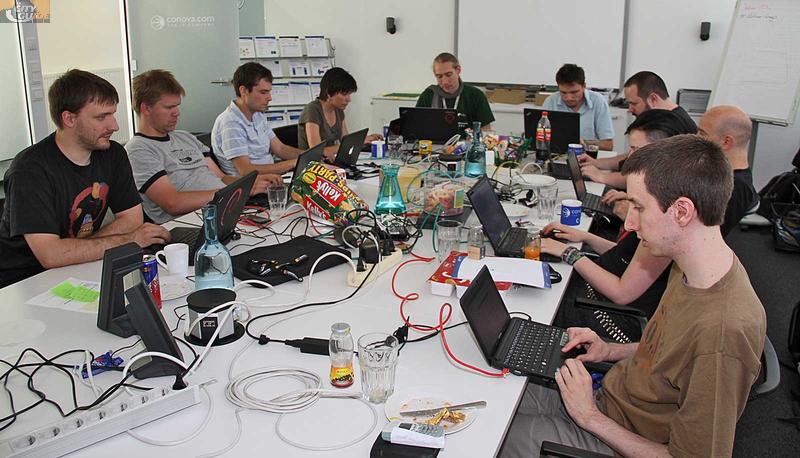
Bernd Zeimetz: Report from the Bug Squashing Party in Salzburg

bsp_2012_salzburg photo from salzburg-cityguide.com, Copyright (C) Uwe Brandl

Participation and Results From June 15-17th we held a Debian BugSquashingParty in Salzburg, hosted and sponsored by conova communications GmbH. It was a fun and busy weekend, with 15-17 people from 5 countries being around, mainly working on RC bugs in Testing/Unstable. Gerfried Fuchs (rhonda) also worked on triaging the impact of RC bugs on the version in Squeeze, while Peter Palfrader (weasel) took care of Tor related things and Debian sysadmin work, including starting on the new bugs and udd hosts. Phillip Hug (hug) worked on the debian.ch infrastructure. Together with Miroslav Such from Red Hat Bernd Zeimetz (bzed) worked on the packaging of the necessary libraries and daemons to add (basic) Spacewalk client support to Debian. As soon as the packages passed NEW and #677871 was applied (thanks to the APT guys for working on that already), managing Debian clients with Spacewalk should work out of the box. Of course we also had a little keysigning party :)

Statistics
  • about 68 bugs in unstable/testing were triaged/patched/fixed or at least pinged
  • 54 bugs were tagged to show if they affect Squeeze, several other bugs were pinged to retrieve necessary information or to trigger an update in the next stable pointrelease.
  • 5 packages were introduced into Debian (still in NEW, though) - the Spacewalk client related packages and libapache2-mod-auth-memcookie.

Accomodation Thanks to Debian funds we were able to provide accomodation for four participants in the JUFA youth hostel in Salzburg. We had paid in advance for eight, but changing to rooms with a higher category for only 4 people would have been equally or more expensive.

Press/Media coverage Additionally to being mentioned in the calendars on ProLinux and similar pages, we had some press coverage by the local newspaper and online magazines:

Fun facts We consumed 2kg of Leberkas, a big plate of "Buchteln mit Vanillesosse", about 16000cm^2 of Pizza, about 80 litres of coke, juice, beer and wine and I guess we drank at least the same amount of water. We had coffee made of 1.5kg coffee beans and managed to empty the (formerly well filled) icemaker in the fridge. Also we had successful training sessions of a standard Debconf game (rules won't be explained here obviously). Maybe we even successfully spread the game to the employees of a commercial linux distribution ;)

20 June 2012

Raphael Geissert: Not your gsoc project

Thanks to Google, for some years now there has been the so-called Google Summer of Code programme. Quite an interesting project it is.

However, how many of the slots assigned to Debian have resulted in successful projects? how many of them were actually completed by the student and not by the mentor or somebody else? are those projects in fact used or useful at all?

All these questions occurred to me while wondering what would have happened if Joey Hess' git-annex-related kickstarter project had instead been a GSOC project. His kickstart was very successful by the way. Joey: many congratulations!

Not trying to point my finger to the (IMHO many) failed or unsuccessful Debian-related gsoc projects, but I wonder how many successful projects are developed outside the get-paid-in-exchange model. I suspect most, at least in Debian.

What's done for those who actually "deliver" while working on projects as a hobby? is it really worth having GSOC slots for Debian?

19 June 2012

Joey Hess: I work for The Internet now

I have an interesting problem: How do I shoehorn "hired by The Internet for a full year to work on Free Software" into my resume? Yes, the git-annex Kickstarter went well. :) I had asked for enough to get by for three months. Multiple people thought I should instead work on it for a full year and really do the idea justice. Jason Scott was especially enthusiastic about this idea. So I added new goals and eventually it got there. graph: up and to the right, to 800% funded Don Marti thinks the success of my Kickstarter validates crowdfunding for Free Software. Hard to say; this is not the first Free Software to be funded on Kickstarter. Remember Diaspora? Here's what I think worked to make this a success: I've already put two weeks work into developing the git-annex assistant. I'm blogging about my progress every day on its development blog. The first new feature, a git annex watch command that automatically commits changes to git, will be in the next release of git-annex. I can already tell this is going to be a year of hard work, difficult problems, and great results. Thank you for helping make it happen.

18 June 2012

Gunnar Wolf: Turning failure into apparent success, and carrying on: e-voting in Jalisco

I will sound monothematic, but I have been devoting quite a bit of work to this topic lately: Trying to stop the advance of e-voting in Mexico, Latin America and the world. Why trying to stop it? Isn't technology supposed to help us, to get trustable processes? Yes, it's supposed to... but it just cannot achieve it, no matter how hard it is tried I won't get into explanations in this blog post, but there is plenty of information. Feel free to ask me for further details. Anyway Yesterday (Sunday, 2012-06-17) was the fifth simulated voting that will lead to the first wide-scale deployment of electronic voting booths in my country: About 10% of the population of the state of Jalisco (that means, ~500,000 people) will cast their votes on July 1st electronically. This particular case illustrates how simulated votings can be used to forge a lie: Pounce Consulting, the company that won the e-voting project for IEPC (Jalisco's voting authority), delivered their booths over 40 days late, just before the deadline for the project to be canceled. Oh, and by the way, it's the same company that just failed to deliver on time for another planned local authority (10% of the booths in the Federal District, where I live, where fortunately 100% of the votes will be cast on traditional, auditable and cheap paper). After this delay, five voting simulations were programmed, to get the local population acquinted with them. The first ones just failed to get the population's interest and had close to 40% failure rates (mainly regarding transmission). Several other "minor details" were reported, including mechanical details that allowed subsequent voters to see the vote of who had just left. Anyway, making long story short: The fifth and last simulation was held yesterday. Officially, it was finally successful (about time). As these booths include the "facilities" to communicate the results via the cellular network, but the populations where they are to be deployed do not yet have cellular coverage, 10% of the booths will have to be carried back to the Districtal Header (that can be a ~10hr trip) to be counted. Also, in all places, traditional paper stationery and paraphernalia will be printed just in case it is needed (and when will they now? When half of the votes are cast and lost?) Anyway... e-voting is still in its first stage in Mexico. Right now, I'm sure, no attempts to rig the election will be made (centrally). But every effort will be made (as it has been made) to dismiss the obviously big and nontrivial ways it has failed and will fail, and any problems will be labeled as "minor". And probably by 2018 we will be facing many more states (even nationwide) deployments. But propaganda fails to see the obvious: E-voting is more expensive, more complicated, leads to more possible failure states. E-voting should not be deployed in large-scale (i.e. more than a couple of hundred voters) elections. Electronic voting is insecure, violates secrecy, allows for fraud. No matter how many locks are put into it.

17 June 2012

C.J. Adams-Collier: Service Interruption

They heard my internets were down BEGIN PGP SIGNED MESSAGE
Hash: SHA256 , During the month of June, we experienced a service interruption which
has caused our mutual customer, School, an
inability to initiate outgoing calls. CenturyLink has also caused the
interruption of the school s DSL Internet service. During the interim
period, I have installed a VoIP phone and tied in to one of my backup
providers so that the school can function during the CenturyLink outage. My understanding is that will begin paying CenturyLink
directly for its service again due to the service interruption. Until
such time as I receive acknowledgment from you, we will continue paying
roughly $27/mo for the school s phone service. Once the transfer has
been completed to the satisfaction of the school board, Collier
Technologies LLC will discontinue payment for the DID - - ,
leaving a single DID, - - . I expect that the DID will be
moved back into the school s name within the next week. Please confirm
this or provide information as to why this will not happen. I have CC d
and , who represent the school board on this
email. Please include them in the reply. Since the DSL service has been interrupted at both the School s address
and at ours, and since CenturyLink has failed to provision the remaining
two $14.99/mo 10Mbit DSL circuits which Collier Technologies LLC has
been paying for despite their un-provisioned state, we will be reducing
the monthly payment from $150 to $70. My understanding is that $70 will
be more than sufficient to cover the two voice lines, inside wire
maintenance and regulatory fees. If this is not the case, please keep
us appraised of the situation. Do note that our decision to stop payment for service which is not being
provided does not, in our estimation, relieve CenturyLink from the three
year contract period negotiated verbally by you on its behalf on October
4th 2011. We currently consider CenturyLink to be in breach of
contract. Sincerely, C.J. Adams-Collier BEGIN PGP SIGNATURE
Version: GnuPG v1.4.12 (GNU/Linux) iQEcBAEBCAAGBQJP3TqdAAoJEEyimPmPQm23qqoH/jRmiIVHNCnH8EqgzsNQiUIm
LVrFg7kvpRIM692mzrGgkZTxG9KlVK+1/dZl1aPsmMP5Q6ni3NigzRDnywJZI53a
yTwTZhid8B4Tf+JOrhUhKPpmm+2YoHTYaobwgxk+rRgUGUHEMCZMPnjKNGGPDCgO
2jNz5fSnI6IinRz4nXwhAtGQRUXVJWXGrUCX1kQXGH4pNvjbgE8n6yAsC6sixlPa
ljDaNjxUEjUY4PmQdKNetkzQLxlq/OGJgRHZXHzfg37cJEF4L28DJBYvf8CHbt2K
87ELXGs6nDn54yI4q4ojODln9k/GzC+NY6MDXYdof7dNbeEPujvjQCiyRgjLc9E=
=uLKs
END PGP SIGNATURE

16 June 2012

Vincent Bernat: GPG Key Transition Statement 2012

I am transitioning my GPG key from an old 1024-bit DSA key to a new 4096-bit RSA key. The old key will continue to be valid for some time but I prefer all new correspondance to be encrypted with the new key. I will be making all signatures going forward with the new key. I have followed the excellent tutorial from Daniel Kahn Gillmor which also explains why this migration is needed. The only step that I did not execute is issuing a new certification for keys I have signed in the past. I did not find any search engine to tell me which key I have signed. Here is the signed transition statement (I have stolen it from Zack):
-----BEGIN PGP SIGNED MESSAGE-----
Hash: SHA256,SHA1
I am transitioning GPG keys from an old 1024-bit DSA key to a new
4096-bit RSA key.  The old key will continue to be valid for some
time, but I prefer all new correspondance to be encrypted in the new
key, and will be making all signatures going forward with the new key.
This transition document is signed with both keys to validate the
transition.
If you have signed my old key, I would appreciate signatures on my new
key as well, provided that your signing policy permits that without
reauthenticating me.
The old key, which I am transitional away from, is:
  pub   1024D/F22A794E 2001-03-23
      Key fingerprint = 5854 AF2B 65B2 0E96 2161  E32B 285B D7A1 F22A 794E
The new key, to which I am transitioning, is:
  pub   4096R/353525F9 2012-06-16 [expires: 2014-06-16]
      Key fingerprint = AEF2 3487 66F3 71C6 89A7  3600 95A4 2FE8 3535 25F9
To fetch the full new key from a public key server using GnuPG, run:
  gpg --keyserver keys.gnupg.net --recv-key 95A42FE8353525F9
If you have already validated my old key, you can then validate that
the new key is signed by my old key:
  gpg --check-sigs 95A42FE8353525F9
If you then want to sign my new key, a simple and safe way to do that
is by using caff (shipped in Debian as part of the "signing-party"
package) as follows:
  caff 95A42FE8353525F9
Please contact me via e-mail at <vincent@bernat.im> if you have any
questions about this document or this transition.
  Vincent Bernat
  vincent@bernat.im
  16-06-2012
-----BEGIN PGP SIGNATURE-----
Version: GnuPG v1.4.12 (GNU/Linux)
iQIcBAEBCAAGBQJP3LchAAoJEJWkL+g1NSX5fV0P/iEjcLp7EOky/AVkbsHxiV30
KId7aYmcZRLJpvLZPz0xxThZq2MTVhX+SdiPcrSTa8avY8Kay6gWjEK0FtB+72du
3RxhVYDqEQtrhUmIY2jOVyw9c0vMJh4189J+8iJ5HGQo9SjFEuRrP9xxNTv3OQD5
fRTMUBMC3q1/KcuhPA8ULp4L1OS0xTksRfvs6852XDfSJIZhsYxYODWpWqLsGEcu
DhQ7KHtbOUwjwsoiURGnjwdiFpbb6/9cwXeD3/GAY9uNHxac6Ufi4J64bealuPXi
O4GgG9cEreBTkPrUsyrHtCYzg43X0q4B7TSDg27j0xm+xd+jW/d/0AlBHPXcXemc
b+pw09qLOwQWbsd6d4bx22VXI75btSFs8HwR9hKHBeOAagMHz+AVl5pLXo2rYoiH
34fR1HWqyRdT3bCt19Ys1N+d0fznsZNFOMC+l23QyptOoMz7t7vZ6GbB20ExafrW
+gi7r1sV/6tb9sYMcVV2S3XT003Uwg8PXajyOnFHxPsMoX9zsk1ejo3lxkkTZs0H
yLZtUj3iZ3yX9e2yfv3eOxitR4+bIntEbMecnTI9xJn+33QTz/pWBqg9uDosqzUo
UoQtc6WVn9x3Zsi7aneDYcp06ZdphgsyWhgiLIhQG9MAK9wKthKiZv8DqGYDOsKt
WwpQFvns33e5x4SM4KxXiEYEARECAAYFAk/ctyEACgkQKFvXofIqeU5YLwCdFhEL
P7vpUJA2zv9+dpPN5GLfBlcAn0mDGJcjJpYZl/+aXEnP/8cE0day
=0QnC
-----END PGP SIGNATURE-----
For easier access, I have also published it in text format. You can check it with:
$ gpg --keyserver keys.gnupg.net --recv-key 95A42FE8353525F9
gpg: requesting key 353525F9 from hkp server keys.gnupg.net
gpg: key 353525F9: "Vincent Bernat <bernat@luffy.cx>" not changed
gpg: Total number processed: 1
gpg:              unchanged: 1
$ curl http://vincent.bernat.im/media/files/key-transition-2012.txt   \
>       gpg --verify
To avoid signing/encrypting with the old key who share the same email addresses than the new one, I have saved it, removed it from the keyring and added it again. The new key is now first in both the secret and the public keyrings and will be used whenever the appropriate email address is requested.
$ gpg --export-secret-keys F22A794E > ~/tmp/secret
$ gpg --export F22A794E > ~/tmp/public
$ gpg --delete-secret-key F22A794
sec  1024D/F22A794E 2001-03-23 Vincent Bernat <bernat@luffy.cx>
Delete this key from the keyring? (y/N) y
This is a secret key! - really delete? (y/N) y
$ gpg --delete-key F22A794E
pub  1024D/F22A794E 2001-03-23 Vincent Bernat <bernat@luffy.cx>
Delete this key from the keyring? (y/N) y
$ gpg --import ~/tmp/public
gpg: key F22A794E: public key "Vincent Bernat <bernat@luffy.cx>" imported
gpg: Total number processed: 1
gpg:               imported: 1
gpg: 3 marginal(s) needed, 1 complete(s) needed, classic trust model
gpg: depth: 0  valid:   2  signed:   0  trust: 0-, 0q, 0n, 0m, 0f, 2u
gpg: next trustdb check due at 2014-06-16
$ gpg --import ~/tmp/secret
gpg: key F22A794E: secret key imported
gpg: key F22A794E: "Vincent Bernat <bernat@luffy.cx>" not changed
gpg: Total number processed: 1
gpg:              unchanged: 1
gpg:       secret keys read: 1
gpg:   secret keys imported: 1
$ rm ~/tmp/public ~/tmp/secret
$ gpg --edit-key F22A794E
[...]
gpg> trust
[...]
Please decide how far you trust this user to correctly verify other users' keys
(by looking at passports, checking fingerprints from different sources, etc.)
  1 = I don't know or won't say
  2 = I do NOT trust
  3 = I trust marginally
  4 = I trust fully
  5 = I trust ultimately
  m = back to the main menu
Your decision? 5
Do you really want to set this key to ultimate trust? (y/N) y
I now need to gather some signatures for the new key. If this is appropriate for you, please sign the new key if you signed the old one.

14 June 2012

Russell Coker: The Financial Value of a University Degree

I ve read quite a few articles about the value of a degree. Most of them come from the US where the combination of increasing tuition fees and uncertain job market makes a degree seem like a risky investment. I think that most analysis of the value of a degree are missing some important points. The Value of Money at Different Times The value of money is different at various stages of your life. The impression that I get is that when a married couple have their house fully paid off and they either don t/won t have children or their children are old enough to leave home the amount of money that they earn seems to matter a lot less. Doing a university degree involves 3 or 4 years not earning money (or more if doing post-graduate studies), which is usually starting at the age of 18. Effectively getting a degree involves giving up some money while young for the opportunity to earn more when older. Any analysis based on directly comparing the money spent on the degree to the amount of financial return without considering when money is needed is not very useful. I think that a reasonable analysis would exclude income earned after the age of about 45. By that age most people have either achieved a solid financial position and learned to live within their means or messed up their finances so badly that they won t live long enough to recover. A Degree as a Signal The Wikipedia page on economic signalling gives education as an example of a signal. A signal in this case means something that doesn t inherently mean anything but which signifies something else. So completing a degree doesn t necessarily mean that you learned anything relevant to work, but if you are able to do it then it means that you can probably also do things which are economically useful for an employer. This raises the question of how else one might signal their ability to work. One obvious answer is by working, someone who has remained steadily employed for 3 or 4 years has demonstrated their ability to work reliably and get along with other people which should be at least as useful as a signal. It s Not Only the Degree Most analysis seem to compare average income of people with degrees with the average of income with people who didn t attend university. That is based on the assumption that the degree was the only difference. When I was young my parents spent a moderate amount of money on a full set of paper encyclopedias (about 2 meters of shelf space). I m sure that this gave me some educational benefit as they intended, and it was something that was apparently quite rare I don t recall seeing a full encyclopedia in anyone else s house before the Wikireader [1]. My parents also bought me quite a lot of computer gear (back when hardware was really expensive), were always available to drive me to computer users group meetings etc, and did everything else that seemed likely to have an educational benefit. The value of such learning opportunities is significant. I think that almost everyone who had similar learning opportunities to me when they were young will probably have experienced similar support and pressure to attend university. I also think that almost everyone who receives such opportunities will be able to earn more than the median income even if they don t attend university. To a large extent people who are going to be successful attend university. A university degree doesn t make anyone successful if they couldn t succeed without a degree. There are some careers that just aren t options if you don t have a relevant degree (such as medicine and law). But I believe that anyone who is capable of completing a difficult course such as medicine or law (or any other career that has legal requirements for a degree) is capable of being successful without a degree in many other fields. So comparing the wages of a doctor or a lawyer to an average person doesn t make sense, it makes more sense to try and compare their wages to someone of similar skill who didn t have such a qualification. Conclusion It seems to me that the question is, of the people who had great learning opportunities when they were young and who wanted to succeed, would they have earned much less if they hadn t attended university? The next question is, of the people who might earn significantly less without getting a degree, would that salary difference really have mattered, or would it just be a matter of earning some luxury money when they are too old to really need it? Related posts:
  1. Ideas for a Home University There seems to be a recent trend towards home-schooling. The...
  2. university degrees Recently someone asked me for advice on what they can...
  3. Microsoft Hires University Drop-Out for Recruiting Campaign news.com.au reports that MS has hired former Miss Australia Erin...

12 June 2012

Brett Parker: Mira Grant - Countdown

Hmm, so, at the end of Deadline, there appears to be the first chunk of the novella Countdown - and a notice "If you enjoyed Blackout look out for Countdown, an ebook only Newflesh novella also by Mira Grant" - it then seems to have the first chunk of that in print, I'm reasonably certain that it's not the full novella (it doesn't end cleanly enough for that). Now, last year (way back when Countdown was originally announced I commented asking when the UK release was going to happen for it (there's a US release, after all) - that was August 2nd 2011 - 10 months later, we've still not got any news on the UK release, and now we've even got a teaser at the end of Blackout. There's also notes that there's going to be some more novella for the series soon - which will be fantastic, if we ever get them in the UK :/ Ah well, hopefully we'll get it soon!

11 June 2012

Brett Parker: Newsflesh Trilogy

So, on Thursday the final part of the Newsflesh trilogy by Mira Grant came out, I'd only been waiting on it for a year. The series is fantastic, and the last book answers the over hanging questions from the second nicely - there's some twists along the way, and it's a Damned Good read. I didn't pick up Blackout (the last book) until Saturday night, as I was re-reading Feed and Deadline first - I'd finished Feed on Wednesday but didn't finish Deadline until Saturday. I picked up Blackout Saturday night at ~ 2200 and didn't go to sleep until ~ 0200 - then, waking up on Sunday, other than doing a few bits of work from 1100 till about 2100 I read the rest of Blackout, it's kinda addictive. It ends a bit abruptly, but well. If you've not read this series - pick up Feed - if you like it, you'll love the series... also, if you don't cry at at least 2 points in Feed, you're obviously a heartless bastard!

10 June 2012

C.J. Adams-Collier: Spinning up a telco with Asterisk

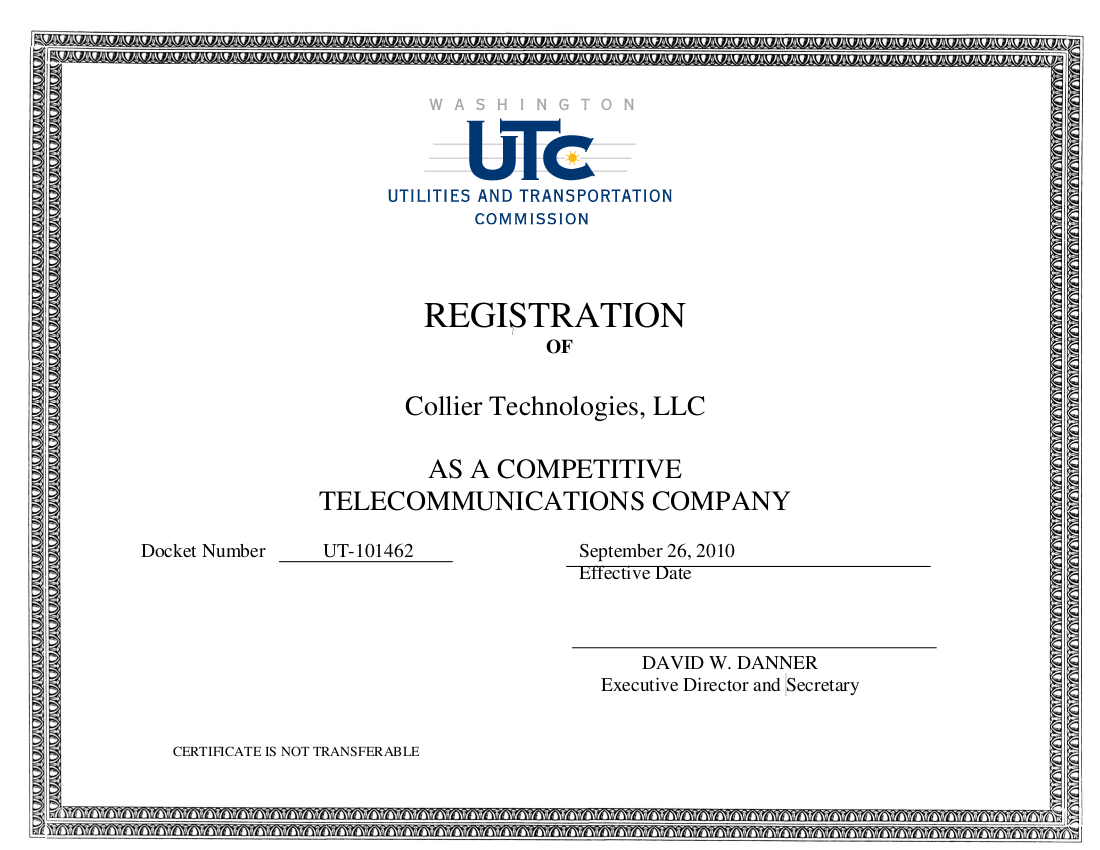
Back in 2010 our family moved to an island in an archipelago in the very top left of the US s continental 48. Before moving, we did some research regarding high speed network access. There are a number of ISPs in the county, and even one headquartered on our particular island. But we found that the location where we were moving was in a location that was only serviced by 1.5Mbit DSL. We had been spoiled in our previous two locations and had seen bittorrent swarms reach over 1 megabyte (8Mbit) per second. Our bill said 12 down and 2 up and I wouldn t be surprised if we achieved that. At any rate, we were disappointed by the speeds available and I wanted to do something to increase the availability of higher speed network access. Some of my friends from the North American Network Operators Group (NANOG) told me that one way to improve the infrastructure would be to get involved with telecommunications provisioning as a Competitive Local Exchange Carrier (CLEC). With the above in mind, I did some research and found that in my state, the authority which certifies and regulates telecommunication companies is the Washington Utilities and Transportation Commission (UTC). I found the application forms on their web site, filled them in, filed the appropriate documents with the appropriate departments and received a certificate in the mail shortly thereafter. We have since filed annual reports as required by regulations. And with the regulatory bits out of the way, we re now left with only the technical details. We have established collocation of some equipment near our state s central telecommunications facility at the Westin Building. Technically speaking, the equipment is not in the Westin, but at a facility connected to the Westin by multiple 10Gbit links. Close enough for me. On this equipment, we re running a Debian Squeeze Xen virtual machine and Digium s Asterisk packages:
cjac@sip0:/etc/asterisk$ grep -B1 -A3 Digium /etc/apt/sources.list
#
#  Digium asterisk packages
#
deb http://packages.asterisk.org/deb squeeze main
deb-src http://packages.asterisk.org/deb squeeze main
cjac@sip0:/etc/asterisk$ dpkg -l   grep digium
ii  asterisk                           1:1.8.11.1-1digium1~squeeze  Open Source Private Branch Exchange (PBX)
ii  asterisk-config                    1:1.8.11.1-1digium1~squeeze  Configuration files for Asterisk
ii  asterisk-core-sounds-en-gsm        1.4.21-1digium1~squeeze      asterisk PBX sound files - English/gsm
ii  asterisk-voicemail                 1:1.8.11.1-1digium1~squeeze  simple voicemail support for the Asterisk PBX
We saved up our nickles and dimes to purchase a 24-port analog telephony adapter (ATA). At the recommendation of one of the denizens of the #asterisk IRC channel on Freenode, we decided on the GrandStream GXW4024. It is pretty simple to configure them to register with the Asterisk server using SIP. The only problem we had was getting the RTP streams, and specifically their dynamically negotiated service ports, to traverse the NATting routers. We currently have no public IPv4 address space at the facility which hosts the ATA and so the rest of the internet sees all traffic originating from this facility as sourced from a single IP address. In order for this to work, the edge NAT/router device (in our case, BIG-IP LTM) needs to map its external L4 ports (TCP and UDP) to the ports of internal hosts so that traffic can flow correctly. This works fine for traffic which originates from internal hosts and is destined to hosts on the outside, but does not work so well when hosts on the outside wish to establish connections to hosts on the inside. Call management sessions established with the SIP protocol fall in the former category, but call media (voice, video, txt) sessions established with the RTP protocol fall into the latter; the host and port used to carry the media data are negotiated during the SIP session and the media socket is established out of band. The problem occurs when the call server (on the outside) attempts to establish an RTP stream with the caller (on the inside). The call server attempts to connect to the caller using the IP address from which it connected. The problem is that this address belongs to the NATting router, not the caller, and the router is not expecting the incoming request. To get around the NAT problem, we temporarily configured an OpenVPN tunnel to extend our L2 network segment. Our long-term solution will be to provision an Asterisk server in the same facility as the ATA and then register with it instead of the server in the exterior facility. Calls will then be switched at the local facility and the upstream link will be established using the IAX2 protocol, which does not suffer from the same NAT problems. All of the above provides us with the ability to make voice calls between the 24 channels of the ATA and any other SIP client which happens to be registered with our call server. This is all well and good, but we want to allow our customers to call the rest of the world. Enter our upstream provider, Threshold Communications, Inc. These folks are experienced and professional and have helped us successfully establish both outbound and inbound calling for very reasonable monthly costs. The call quality is indistinguishable from the lines provisioned by the local bell company, and inter-operates flawlessly with the Asterisk call server stack. Because calls transit our Asterisk server, we can add additional features such voicemail, speech to text, DTMF-driven menus, or call forwarding, for instance. We could even theoretically set up autopatch service using amateur frequencies or launch perl scripts to automate arbitrary fancyness. Our next step is to finish configuration of our 12-channel ZyXEL AAM1212 DSLAM modules so that we can deliver ADSL service over the same copper pairs as we deliver voice.

8 June 2012

Lars Wirzenius: Obnam 1.0 (backup software); a story in many words

tl;dr: Version 1.0 of Obnam, my snapshotting, de-duplicating, encrypting backup program is released. See the end of this announcement for the details. Where we see the hero in his formative years; parental influence From the very beginning, my computing life has involved backups. In 1984, when I was 14, my father was an independent telecommunications consultant, which meant he needed a personal computer for writing reports. He bought a Luxor ABC-802, a Swedish computer with a Z80 microprocessor and two floppy drives. My father also taught me how to use it. When I needed to save files, he gave me not one, but two floppies, and explained that I should store my files one one, and then copy them to the other one every now and then. Later on, over the years, I've made backups from a hard disk (30 megabytes!) to a stack of floppies, to a tape drive installed into a floppy interface (400 megabytes!), to a DAT drive, and various other media. It was always a bit tedious. The start of the quest; lengthy justification for NIH In 2004, I decided to do a full backup, by burning a copy of all my files onto CD-R disks. It took me most of the day. Afterwards, I sat admiring the large stack of disks, and realized that I would not ever do that again. I'm too lazy for that. That I had done it once was an aberration in the space-time continuum. Switching to DVD-Rs instead CD-Rs would reduce to the number of disks to burn, but not enough: it would still take a stack of them. I needed something much better. I had a little experience with tape drives, and that was enough to convince me that I didn't want them. Tape drives are expensive hardware, and the tapes also cost money. If the drive goes bad, you have to get a compatible one, or all your backups are toast. The price per gigabyte was coming down fast for hard drives, and it was clear that they were about to be very competitive with tapes for price. I looked for backup programs that I could use for disk based backups. rsync, of course, was the obvious choice, but there were others. I ended up doing what many geeks do: I wrote my own wrapper around rsync. There's hundred, possibly thousands, of such wrappers around the Internet. I also got the idea that doing a startup to provide online backup space would be a really cool thing. However, I didn't really do anything about that until 2007. More on that later. The rsync wrapper script I wrote used hardlinked directory trees to provide a backup history, though not in the smart way that backuppc does it. The hardlinks were wonderful, because they were cheap, and provided de-duplication. They were also quite cumbersome, when I needed to move my backups to a new disk the first time. It turned out that a lot of tools deal very badly with directory trees with large numbers of hardlinks. I also decided I wanted encrypted backups. This led me to find duplicity, which is a nice program that does encrypted backups, but I had issues with some of its limitations. To fix those limitations, I would have had to re-design and possibly re-implement the entire program. The biggest limitation was that it treated backups as full backup, plus a sequence of incremental backups, which were deltas against the previous backup. Delta based incrementals make sense for tape drives. You run a full backup once, then incremental deltas for every day. When enough time has passed since the full backup, you do a new full backup, and then future incrementals are based on that. Repeat forever. I decided that this makes no sense for disk based backups. If I already have backed up a file, there's no point in making me backup it again, since it's already there on the same hard disk. It makes even less sense for online backups, since doing a new full backup would require me to transmit all the data all over again, even though it's already on the server. The first battle I could not find a program that did what I wanted to do, and like every good NIHolic, I started writing my own. After various aborted attempts, I started for real in 2006. Here is the first commit message:
revno: 1
committer: Lars Wirzenius <liw@iki.fi>
branch nick: wibbr
timestamp: Wed 2006-09-06 18:35:52 +0300
message:
  Initial commit.
wibbr was the placeholder name for Obnam until we came up with something better. We was myself and Richard Braakman, who was going to be doing the backup startup with me. We eventually founded the company near the end of 2006, and started doing business in 2007. However, we did not do very much business, and ran out of money in September 2007. We ended the backup startup experiment. That's when I took a job with Canonical, and Obnam became a hobby project of mine: I still wanted a good backup tool. In September 2007, Obnam was working, but it was not very good. For example, it was quite slow and wasteful of backup space. That version of Obnam used deltas, based on the rsync algorithm, to backup only changes. It did not require the user to do full and incremental backups manually, but essentially created an endless sequence of incrementals. It was possible to remove any generation, and Obnam would manage the deltas as necessary, keeping the ones needed for the remaining generations, and removing the rest. Obnam made it look as if each generation was independent of each other. The wasteful part was the way in which metadata about files was stored: each generation stored the full list of filenames and their permissions and other inode fields. This turned out to be bigger than my daily delta. The lost years; getting lost in the forest For the next two years, I did a little work on Obnam, but I did not make progress very fast. I changed the way metadata was stored, for example, but I picked another bad way of doing it: the new way was essentially building a tree of directory and file nodes, and any unchanged subtrees were shared between generations. This reduced the space overhead per generation, but made it quite slow to look up the metadata for any one file. The final battle; finding cows in the forest In 2009 I decided to leave Canonical and after that, my Obnam hobby picked up in speed again. Below is a table of the number of commits per year, from the very first commit (bzr log -n0 awk '/timestamp:/ print $3 ' sed 's/-.*//' uniq -c awk ' print $2, $1 ' tac):
2006 466
2007 353
2008 402
2009 467
2010 616
2011 790
2012 282
During most of 2010 and 2011 I was unemployed, and happily hacking Obnam, while moving to another country twice. I don't recommend that as a way to hack on hobby projects, but it worked for me. After Canonical, I decided to tackle the way Obnam stores data from a new angle. Richard told me about the copy-on-write (or COW) B-trees that btrfs uses, originally designed by Ohad Rodeh (see his paper for details), and I started reading about that. It turned out that they're pretty ideal for backups: each B-tree stores data about one generation. To start a new generation, you clone the previous generation's B-tree, and make any modifications you need. I implemented the B-tree library myself, in Python. I wanted something that was flexible about how and where I stored data, which the btrfs implementation did not seem to give me. (Also, I worship at the altar of NIH.) With the B-trees, doing file deltas from the previous generation no longer made any sense. I realized that it was, in any case, a better idea to store file data in chunks, and re-use chunks in different generations as needed. This makes it much easier to manage changes to files: with deltas, you need to keep a long chain of deltas and apply many deltas to reconstruct a particular version. With lists of chunks, you just get the chunks you need. The spin-off franchise; lost in a maze of dependencies, all alike In the process of developing Obnam, I have split off a number of helper programs and libraries: I have found it convenient to keep these split off, since I've been able to use them in other projects as well. However, it turns out that those installing Obnam don't like this: it would probably make sense to have a fat release with Obnam and all dependencies, but I haven't bothered to do that yet. The blurb; readers advised about blatant marketing The strong points of Obnam are, I think: Backups may be stored on local hard disks (e.g., USB drives), any locally mounted network file shares (NFS, SMB, almost anything with remotely Posix-like semantics), or on any SFTP server you have access to. What's not so strong is backing up online over SFTP, particularly with long round trip times to the server, or many small files to back up. That performance is Obnam's weakest part. I hope to fix that in the future, but I don't want to delay 1.0 for it. The big news; readers sighing in relief I am now ready to release version 1.0 of Obnam. Finally. It's been a long project, much longer than I expected, and much longer than was really sensible. However, it's ready now. It's not bug free, and it's not as fast as I would like, but it's time to declare it ready for general use. If nothing else, this will get more people to use it, and they'll find the remaining problems faster than I can do on my own. I have packaged Obnam for Debian, and it is in unstable, and will hopefully get into wheezy before the Debian freeze. I provide packages built for squeeze on my own repository, see the download page. The changes in the 1.0 release compared to the previous one: The future; not including winning lottery numbers I expect to get a flurry of bug reports in the near future as new people try Obnam. It will take a bit of effort dealing with that. Help is, of course, welcome! After that, I expect to be mainly working on Obnam performance for the foreseeable future. There may also be a FUSE filesystem interface for restoring from backups, and a continous backup version of Obnam. Plus other features, too. I make no promises about how fast new features and optimizations will happen: Obnam is a hobby project for me, and I work on it only in my free time. Also, I have a bunch of things that are on hold until I get Obnam into shape, and I may decide to do one of those things before the next big Obnam push. Where; the trail of an errant hacker I've developed Obnam in a number of physical locations, and I thought it might be interesting to list them: Espoo, Helsinki, Vantaa, Kotka, Raahe, Oulu, Tampere, Cambridge, Boston, Plymouth, London, Los Angeles, Auckland, Wellington, Christchurch, Portland, New York, Edinburgh, Manchester, San Giorgio di Piano. I've also hacked on Obnam in trains, on planes, and once on a ship, but only for a few minutes on the ship before I got seasick. Thank you; sincerely SEE ALSO

Next.

Previous.