Search Results: "ina"

5 December 2020

Andrew Cater: Lots further forwards - but moving slowly through live CD testing

All of the testing of the normal Debian images has gone through the steps we lay out. We're now working on the Debian live CDs which take significantly longer per image.Looks like a long night until Steve is ready to sign the release and begin the final transfer - however much we try to minimise it, it's a 12-15 hour process and my thanks go to RattusRattus and Steve for the final stages of a very long day.

Joachim Breitner: Named goals in Coq

TL;DR: Some mildly tricky tricks allow you to select subgoals by name, like in Isabelle. This leads to more readable proofs, and proofs that are more robust against changes.

The need for case names Consider the following Coq proof, right out of the respected Software Foundations book, Chapter Inductively Defined Propositions (and slightly simplified):
Lemma star_app: forall T (s1 s2 : list T) (re : reg_exp T),
  s1 =~ Star re ->
  s2 =~ Star re ->
  s1 ++ s2 =~ Star re.
Proof.
  intros T s1 s2 re H1.
  remember (Star re) as re'.
   generalize dependent s2.
  induction H1.
  - (* MEmpty *) discriminate.
  - (* MChar *) discriminate.
  - (* MApp *) discriminate.
  - (* MUnionL *) discriminate.
  - (* MUnionR *) discriminate.
  - (* MStar0 *)
    injection Heqre' as Heqre''. intros s H. apply H.
  - (* MStarApp *)
    injection Heqre' as Heqre''.
    intros s3 H1. rewrite <- app_assoc.
    apply MStarApp.
    + apply H1_.
    + apply IHexp_match2.
      * rewrite Heqre''. reflexivity.
      * apply H1.
Qed.
This is a very typical example for a proof by induction over an inductively defined relation (in this case, the relations s =~ re which indicates that the string s matches the regular expression re): After some preparation, the invocation of a tactic like induction (could also be inversion or others) creates a number of new goals, one of for each rule of the relation. Then the modern(!) Coq user uses proof bullets to focus the goals, one after another, in order, to solve them. We can see from this example that proof bullets (which were a big improvement) are not quite satisfactory, and the author of this proof felt the need to annotate each subproof with the case it corresponds to. But these are mere comments! This is unsatisfactory, as there is nothing keeping them correct as my proof changes. And anyone who came to Coq from Isabelle is just flabbergasted that the state of art in Coq is still at that level So, wouldn t it be great if
  • I could focus goals by their name (e.g. MEmpty)
  • Focus them in any order (so that refactoring of my data types do not break my proofs)
  • This even worked when simultaneously inducting over or inverting multiple relations?

Simulating named goals in Coq Well, with a few tricks we can! It just takes three simple steps:
  1. I load a small file full of hacks (explained below):
    Require Import NamedCases.
  2. This allows me to prefix the type of the constructors of the inductive relations (i.e. the rules of the relation) with case <name>, , as follows:
    Reserved Notation "s =~ re" (at level 80).
    Inductive exp_match  T  : list T -> reg_exp T -> Prop :=
        MEmpty:
        case empty,
        [] =~ EmptyStr
        MChar:
        case char,
        forall x,
        [x] =~ (Char x)
        MApp:
        case app,
        forall s1 re1 s2 re2
        (H1 : s1 =~ re1)
        (H2 : s2 =~ re2),
        (s1 ++ s2) =~ (App re1 re2)
        MUnionL:
        case union_l,
        forall s1 re1 re2
        (H1 : s1 =~ re1),
        s1 =~ (Union re1 re2)
        MUnionR:
        case union_r,
        forall re1 s2 re2
        (H2 : s2 =~ re2),
        s2 =~ (Union re1 re2)
        MStar0:
        case star0,
        forall re,
        [] =~ (Star re)
        MStarApp:
        case star_app,
        forall s1 s2 re
        (H1 : s1 =~ re)
        (H2 : s2 =~ (Star re)),
        (s1 ++ s2) =~ (Star re)
      where "s =~ re" := (exp_match s re).
    This is the definition from the Software Foundations book; only the case <name>, lines are added.
  3. Now I can change the proof: After the induction tactic I use ; name_cases to name the cases, and then I can use the relatively new named goal focusing feature ([name]: , which I suggested two years ago, and was implemented by Th o Zimmermann) to focus a specific case:
    Lemma star_app2: forall T (s1 s2 : list T) (re : reg_exp T),
      s1 =~ Star re ->
      s2 =~ Star re ->
      s1 ++ s2 =~ Star re.
    Proof.
      intros T s1 s2 re H1.
      remember (Star re) as re'.
       generalize dependent s2.
      induction H1; name_cases.
      [empty]:  
         discriminate.
       
      [char]:  
         discriminate.
       
      [app]:  
         discriminate.
       
      [unionL]:  
         discriminate.
       
      [unionR]:  
        discriminate.
       
      [star0]:  
        injection Heqre' as Heqre''. intros s H. apply H.
       
      [starApp]:  
        injection Heqre' as Heqre''.
        intros s3 H1. rewrite <- app_assoc.
        apply MStarApp; clear_names.
        + apply H1_.
        + apply IHexp_match2.
          * rewrite Heqre''. reflexivity.
          * apply H1.
        
    Qed.
    The comments have turned into actual names!
Goal focusing is now just much more reliable. For example, let me try to discharge the boring cases by using ; try discriminate after the induction. This means there are suddenly only two goals left. With bullets, the first bullet would now suddenly focus a different goal, and my proof script would likely fail somewhere. With named goals, I get a helpful error message No such goal: empty and I can t even enter the first subproof. So let me delete these goals and, just to show off, focus the remaining goals in the wrong order:
Lemma star_app: forall T (s1 s2 : list T) (re : reg_exp T),
  s1 =~ Star re ->
  s2 =~ Star re ->
  s1 ++ s2 =~ Star re.
Proof.
  intros T s1 s2 re H1.
  remember (Star re) as re'.
   generalize dependent s2.
  induction H1; name_cases; try discriminate.
  [starApp]:  
    injection Heqre' as Heqre''.
    intros s3 H1. rewrite <- app_assoc.
    apply MStarApp; clear_names.
    + apply H1_.
    + apply IHexp_match2.
      * rewrite Heqre''. reflexivity.
      * apply H1.
    
  [star0]:  
    injection Heqre' as Heqre''. intros s H. apply H.
   
Qed.
I did not explain the clear_names tactic yet that I had to use after apply MStarApp. What I am showing here is a hack, and it shows these case names are extra hypothesis (of a trivially true type CaseName), and this tactic gets rid of it.

Even better than Isabelle The above even works when there are multiple inductions/inversions involved. To give an example, let s introduce another inductive predicate, and begin proving a lemma that one can do by induction on one and inversion on the other predicate.
Inductive Palindrome  T  : list T -> Prop :=
  EmptyPalin:
  case emptyP,
  Palindrome []
  SingletonPalin:
  case singletonP,
  forall x,
  Palindrome [x]
  GrowPalin:
  case growP,
  forall l x,
  Palindrome l -> Palindrome ([x] ++ l ++ [x])
.
Lemma palindrome_star_of_two:
  forall T (s : list T) x y,
  Palindrome s -> s =~ Star (App (Char x) (Char y)) ->
  s = [] \/ x = y.
Proof.
  intros T s x y HPalin HRe.
  induction HPalin; inversion HRe; name_cases.
At this point we have four open goals. Can you tell why there are four, and which ones they are? Luckily, Show Existentials will tell us their names (and Coq 8.13 will just show them in the proof state window). These names not only help us focus the goal in a reliable way; they even assist us in understanding what goal we have to deal with. For example, the last goal arose from the GrowP rule and the StarApp rule. Neat!
  [emptyP_star0]:  
    left. reflexivity.
   
  [emptyP_starApp]:  
     left. reflexivity.
   
  [singletonP_starApp]:  
    inversion HRe; clear HRe.
    inversion H5; clear H5.
    inversion H10; clear H10.
    inversion H11; clear H11.
    subst.
    inversion H3.
   
 [growP_starApp]:  
    admit. (* I did not complete the proof *)
  

Under the hood (the hack) The above actually works, but it works with a hack, and I wish that Coq s induction tactic would just do the right thing here. I hope eventually this will be the case, and this section will just be curiosity but until, it may actually be helpful.
  1. The trick1 is to leave markers in the proof state. We use a dedicate type CaseName, and a hypothesis name : CaseName indicates that this goal arose from the that case.
    Inductive CaseName := CaseNameI.
    With this, we can write StarApp: forall (starApp : CaseName), to name this case.
  2. For a little bit of polish, we can introduce notation for that:
    Notation "'case' x , t" := (forall  x : CaseName , t) (at level 200).
    This allows us to use the syntax you saw above.
  3. To easily discharge these CaseName assumptions when using the introduction forms, I wrote these tactics:
    Ltac clear_names := try exact CaseNameI.
    Ltac named_constructor  := constructor; [ exact CaseNameI   idtac .. ].
    Ltac named_econstructor := econstructor; [ exact CaseNameI   idtac .. ].
  4. Finally I wrote the tactic name_cases. What it does is relatively simple:
    For each subgoal: Take all hypotheses of type CaseName, concatenate their names, change the name of the current goal to that, and clear these hypotheses
    Unfortunately, my grasp of Coq tactic programming is rather rudimentary, and the only way I manged to solve this is a horrible monster of Ltac2, including hand-rolled imperative implementations of string concatenation and a little nested Ltac1 tactic within. You have been warned:
    From Ltac2 Require Import Ltac2.
    From Ltac2 Require Option.
    Set Default Proof Mode "Classic".
    Ltac name_cases := ltac2:(
      (* Horribly manual string manipulations. Does this mean I should
         go to the Ocaml level?
      *)
      let strcpy s1 s2 o :=
        let rec go := fun n =>
          match Int.lt n (String.length s2) with
            true => String.set s1 (Int.add o n) (String.get s2 n); go (Int.add n 1)
            false => ()
          end
        in go 0
      in
      let concat := fun s1 s2 =>
        let l := Int.add (Int.add (String.length s1) (String.length s2)) 1 in
        let s := String.make l (Char.of_int 95) in
        strcpy s s1 0;
        strcpy s s2 (Int.add (String.length s1) 1);
        s
      in
      Control.enter (let rec go () :=
        lazy_match! goal with
          [ h1 : CaseName, h2 : CaseName  - _ ] =>
          (* Multiple case names? Combine them (and recurse) *)
          let h := concat (Ident.to_string h1) (Ident.to_string h2) in
          Std.clear [h1; h2];
          let h := Option.get (Ident.of_string h) in
          assert ($h := CaseNameI);
          go ()
          [ _ : CaseName  - _ ] =>
          (* A single case name? Set current goal name accordingly. *)
          ltac1:(
            (* How to do this in ltac2? *)
            lazymatch goal with
              [ H : CaseName  - _ ] => refine ?[H]; clear H
            end
          )
          [  - _ ] =>
          Control.backtrack_tactic_failure "Did not find any CaseName hypotheses"
        end
      in go)
    ).
    If someone feels like re-implementing this in a way that is more presentable, I ll be happy to update this code (and learn something along the way
That s all it takes!

Conclusion With some mild hackery, we can get named cases in Coq, which I find indispensable in managing larger, evolving proofs. I wonder why this style is not more common, and available out of the box, but maybe it is just not known well enough? Maybe this blog post can help a bit here.

  1. I have vague recollections of seeing at least parts of this trick on some blog some years ago, and I do not claim originality here.

4 December 2020

Jonathan Dowland: Toronto

selfie skating at night
Nathan Phillips Square rink at night
view over Nathan Phillips Square rink
skaters by day
This time a year ago, I visited Toronto, Canada for my first (and hopefully not last) time, for the Red Hat Java team's face-to-face meetings. The hotel we were staying in was right next to Nathan Phillip's Square, which is an open-air Ice Rink for the winter months. I love Ice Skating and rarely took opportunities to do it (even before Covid-19) so I decided to take full advantage of the locality. Skating was free, but boot rental was not, so I bought some new skates. That meant an interesting problem getting them home on the plane. I think I got out there about 5 times over 5 days. It was busy during the day and very quiet at other times. 8am worked pretty well. My local Ice Rink has been intermittently open over the year as and when the Lockdown rules have allowed it, but the combination of cold air, indoor circulation and strenuous activity seem to me to be very unsafe, so I won't risk it. In Newcastle, the Centre for Life usually puts an outdoor rink on around Christmas, which is very expensive to skate on. Unfortunately they've decided against it this year. Toronto was great for more than just Ice Skating! I had a fantastic time meeting my team members; good food, good drink (especially Ice Wine); The CN Tower; a funky music instrument shop, and the first Teenage Engineering OP-1 I've ever seen in the flesh; not much Maple syrup, which surprised me. Good coffee. A comfortable-feeling city. It'll probably be a long while before I travel for work (or anything else) quite like this again. I'm glad to have made the most of it, whilst I could!
me, covered in snow

Russell Coker: ZFS 2.0.0 Released

Version 2.0 of ZFS has been released, it s now known as OpenZFS and has a unified release for Linux and BSD which is nice. One new feature is persistent L2ARC (which means that when you use SSD or NVMe to cache hard drives that cache will remain after a reboot) is an obvious feature that was needed for a long time. The Zstd compression invented by Facebook is the best way of compressing things nowadays, it s generally faster while giving better compression than all other compression algorithms and it s nice to have that in the filesystem. The PAM module for encrypted home directories is interesting, I haven t had a need for directory level encryption as block device encryption has worked well for my needs. But there are good use cases for directory encryption. I just did a quick test of OpenZFS on a VM, the one thing it doesn t do is let me remove a block device accidentally added to a zpool. If you have a zpool with a RAID-Z array and mistakenly add a new disk as a separate device instead of replacing a part of the RAID-Z then you can t remove it. There are patches to allow such removal but they didn t appear to get in to the OpenZFS 2.0.0 release. For my use ZFS on Linux 0.8.5 has been working fairly well and apart from the inability to remove a mistakenly added device I haven t had any problems with it. So I have no immediate plans to upgrade existing servers. But if I was about to install a new ZFS server I d definitely use the latest version. People keep asking about license issues. I m pretty sure that Oracle lawyers have known about sites like zfsonlinux.org for years, the fact that they have decided not to do anything about it seems like clear evidence that it s OK for me to keep using that code.

Dirk Eddelbuettel: #31: Test your R package against bleeding-edge gcc

Welcome to the 31th post in the rapturously rampant R recommendations series, or R4 for short. This post will once again feature Docker for use with R. Earlier this week, I received a note from CRAN about how my RcppTOML package was no longer building with the (as of right now of course unreleased) version 11 of the GNU C++ compiler, i.e. g++-11. And very kindly even included a hint about the likely fix (which was of course correct). CRAN, and one of its maintainers in particular, is extremely forward-looking in terms of toolchain changes. A year ago we were asked to updated possible use of global variables in C code as gcc-10 tightened the rules. This changes is a C++ one, and a fairly simple one of simply being more explicit with include headers. Previous g++ release had done the same. The question now was about the least painful way to get g++-11 onto my machine, with the least amount of side-effects. Regular readers of this blog will know where this is headed, but even use of Docker requires binaries. A look at g++-11 within packages.debian.org comes up empty. No Debian means no Ubuntu. But there is a PPA for Ubuntu with toolchain builds we have used before. And voil there we have it: within the PPA for Ubuntu Toolchain repository is the volatile packages PPA with both g++-10 and g++-11. Here Ubuntu 20.10 works with g++-10, but g++-11 requires Ubuntu 21.04. Docker containers are there for either. So with the preliminaries sorted out, the key steps are fairly straightforward: And that is it! RcppTOML is fairly minimal and could be a member of the tinyverse so no other dependencies are needed if your package has any you could just use the standard steps to install from source, or binary (including using RSPM or bspm). You can see the resulting Dockerfile which contains a minimal amount of extra stuff to deal with some environment variables and related settings. Nothing critical, but it smoothes the experience somewhat. This container is now built (under label rocker/r-edge with tags latest and gcc-11), and you can download it from Docker Hub. With that the proof of the (now fixed and uploaded) package building becomes as easy as
edd@rob:~/git/rcpptoml(master)$ docker run --rm -ti -v $PWD:/mnt -w /mnt rocker/r-edge:gcc-11 g++ --version
g++ (Ubuntu 11-20201128-0ubuntu2) 11.0.0 20201128 (experimental) [master revision fb6b29c85c4:a331ca6194a:e87559d202d90e614315203f38f9aa2f5881d36e]
Copyright (C) 2020 Free Software Foundation, Inc.
This is free software; see the source for copying conditions.  There is NO
warranty; not even for MERCHANTABILITY or FITNESS FOR A PARTICULAR PURPOSE.

edd@rob:~/git/rcpptoml(master)$ 
edd@rob:~/git/rcpptoml(master)$ docker run --rm -ti -v $PWD:/mnt -w /mnt rocker/r-edge:gcc-11 R CMD INSTALL RcppTOML_0.1.7.tar.gz
* installing to library  /usr/local/lib/R/site-library 
* installing *source* package  RcppTOML  ...
** using staged installation
** libs
g++ -std=gnu++11 -I"/usr/share/R/include" -DNDEBUG -I../inst/include/ -DCPPTOML_USE_MAP -I'/usr/lib/R/site-library/Rcpp/include'    -fpic  -g -O2 -fdebug-prefix-map=/build/r-base-Fuvi9C/r-base-4.0.3=. -fstack-protector-strong -Wformat -Werror=format-security -Wdate-time -D_FORTIFY_SOURCE=2 -g  -c RcppExports.cpp -o RcppExports.o
g++ -std=gnu++11 -I"/usr/share/R/include" -DNDEBUG -I../inst/include/ -DCPPTOML_USE_MAP -I'/usr/lib/R/site-library/Rcpp/include'    -fpic  -g -O2 -fdebug-prefix-map=/build/r-base-Fuvi9C/r-base-4.0.3=. -fstack-protector-strong -Wformat -Werror=format-security -Wdate-time -D_FORTIFY_SOURCE=2 -g  -c parse.cpp -o parse.o
g++ -std=gnu++11 -shared -L/usr/lib/R/lib -Wl,-Bsymbolic-functions -Wl,-z,relro -o RcppTOML.so RcppExports.o parse.o -L/usr/lib/R/lib -lR
installing to /usr/local/lib/R/site-library/00LOCK-RcppTOML/00new/RcppTOML/libs
** R
** inst
** byte-compile and prepare package for lazy loading
** help
*** installing help indices
** building package indices
** testing if installed package can be loaded from temporary location
** checking absolute paths in shared objects and dynamic libraries
** testing if installed package can be loaded from final location
** testing if installed package keeps a record of temporary installation path
* DONE (RcppTOML)
edd@rob:~/git/rcpptoml(master)$ 
I hope both the availability of such a base container with gcc-11 (and g++-11 and gfortran-11) as well as a recipe for building similar containers with newer clang version will help other developers. If you like this or other open-source work I do, you can sponsor me at GitHub.

This post by Dirk Eddelbuettel originated on his Thinking inside the box blog. Please report excessive re-aggregation in third-party for-profit settings.

3 December 2020

Daniel Lange: No dog food today - the Linux Foundation annual report

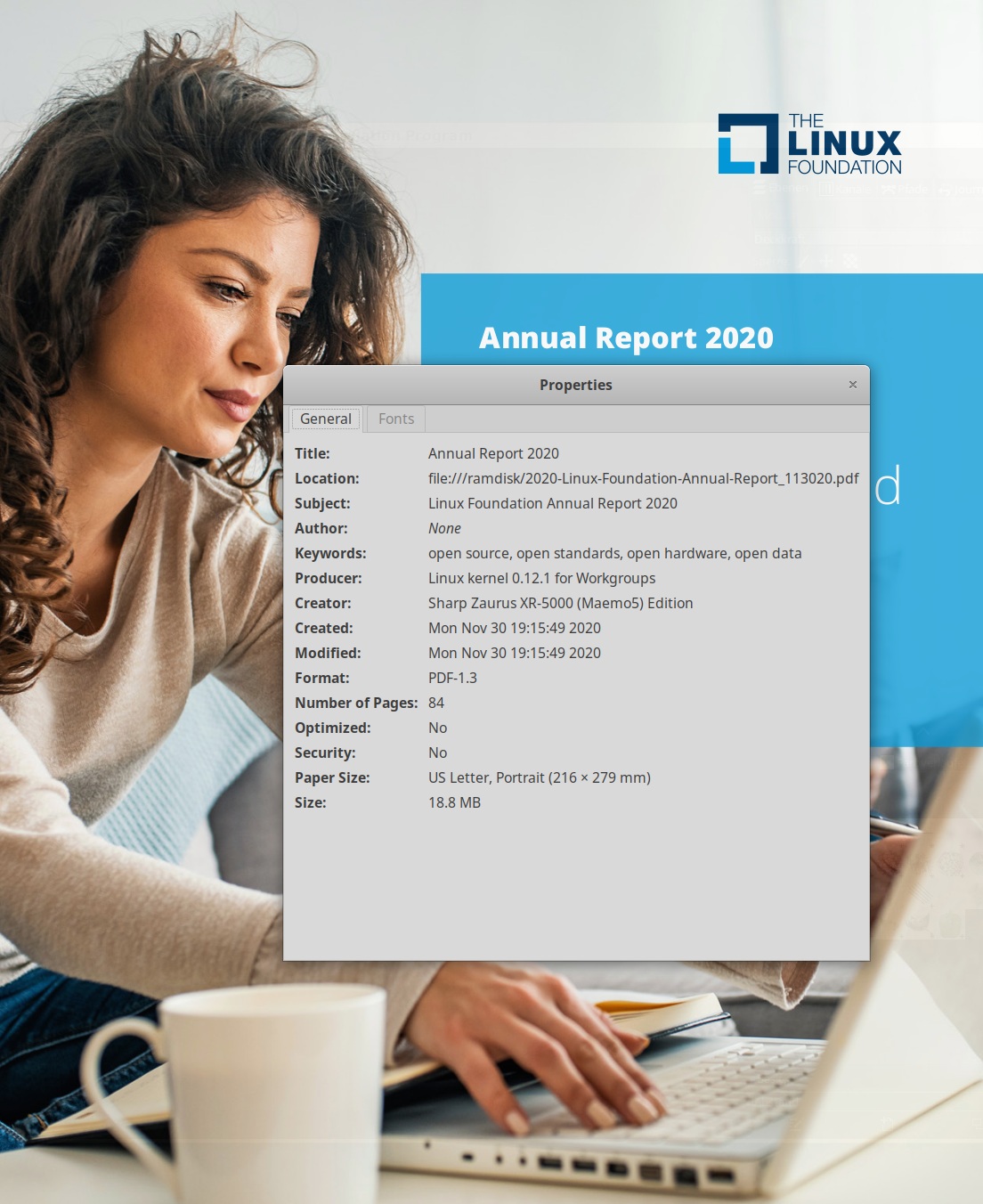
The Linux Foundation has published its annual report today. LWN calls it glossy and yeah, boy, it is shiny. So shiny that people that work in the publishing industry immediately see this has been produced with the Adobe toolchain which - unfortunately - is one of the big suites of software not yet available for Linux. Checking the PDF file metadata reveals the keywords "open source, open standards, open hardware, open data". That is what the Linux Foundation is about. Good stuff. Linux Foundation annual report 2020 cover The PDF producer meta data for the annual report PDF has been set to "Linux kernel 0.12.1 for Workgroups" and the PDF creator meta data element to "Sharp Zaurus XR-5000 (Maemo5) Edition". Somebody thought to better hide the real data and had some tongue-in-cheek ideas. Kudos. But nicer would have been to use Open Source software to produce the report, not? Running strings 2020-Linux-Foundation-Annual-Report_113020.pdf grep Adobe wc -l gives us 1229 lines and confirms the suspicion of the toolchain. A stale /Title (Annual Report 2020) /Producer (macOS Version 10.15.7 \(Build 19H15\) Quartz PDFContext) has been forgotten in the document to tell us about the platform. So, ladies and gentlemen, the Linux Foundation 2020 annual report has been produced on a Mac. Running Adobe Creative Cloud on MacOS Catalina 10.15.7. Which is proprietary software. Its kernel (and some userland pieces) are based on BSD. Not Linux.
The image on the front page also struck me as a bit odd ... using a ballpoint pen on the laptop screen? Unbranded laptop. Unbranded cup in the foreground. Kid in the background not paying attention to his tablet. All of that cries stock image so loud it hurts. Google currently finds ~560 uses of the picture and any editorial use nicely tells us that it is Dragana Gordic / Shutterstock. The image is "Smiling mom working at home with her child on the sofa while writing an email. Young woman working from home, while in quarantine isolation during the Covid-19 health crisis". See the Daily Mail for a wonderful example of the working mum in context. I hope, if her laptop had been powered on, it would have run Linux. I mean, what else would still run on an old white MacBook with an Intel "Core 2 Duo" processor from 2008? Daily Mail screenshot of the same stock image used Continue reading "No dog food today - the Linux Foundation annual report"

Alberto Garc a: Subcluster allocation for qcow2 images

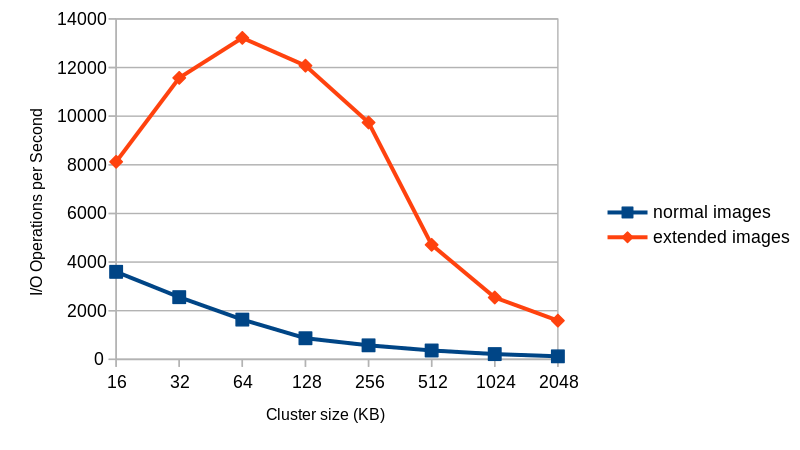
In previous blog posts I talked about QEMU s qcow2 file format and how to make it faster. This post gives an overview of how the data is structured inside the image and how that affects performance, and this presentation at KVM Forum 2017 goes further into the topic. This time I will talk about a new extension to the qcow2 format that seeks to improve its performance and reduce its memory requirements. Let s start by describing the problem. Limitations of qcow2 One of the most important parameters when creating a new qcow2 image is the cluster size. Much like a filesystem s block size, the qcow2 cluster size indicates the minimum unit of allocation. One difference however is that while filesystems tend to use small blocks (4 KB is a common size in ext4, ntfs or hfs+) the standard qcow2 cluster size is 64 KB. This adds some overhead because QEMU always needs to write complete clusters so it often ends up doing copy-on-write and writing to the qcow2 image more data than what the virtual machine requested. This gets worse if the image has a backing file because then QEMU needs to copy data from there, so a write request not only becomes larger but it also involves additional read requests from the backing file(s). Because of that qcow2 images with larger cluster sizes tend to: Unfortunately, reducing the cluster size is in general not an option because it also has an impact on the amount of metadata used internally by qcow2 (reference counts, guest-to-host cluster mapping). Decreasing the cluster size increases the number of clusters and the amount of necessary metadata. This has direct negative impact on I/O performance, which can be mitigated by caching it in RAM, therefore increasing the memory requirements (the aforementioned post covers this in more detail). Subcluster allocation The problems described in the previous section are well-known consequences of the design of the qcow2 format and they have been discussed over the years. I have been working on a way to improve the situation and the work is now finished and available in QEMU 5.2 as a new extension to the qcow2 format called extended L2 entries. The so-called L2 tables are used to map guest addresses to data clusters. With extended L2 entries we can store more information about the status of each data cluster, and this allows us to have allocation at the subcluster level. The basic idea is that data clusters are now divided into 32 subclusters of the same size, and each one of them can be allocated separately. This allows combining the benefits of larger cluster sizes (less metadata and RAM requirements) with the benefits of smaller units of allocation (less copy-on-write, smaller images). If the subcluster size matches the block size of the filesystem used inside the virtual machine then we can eliminate the need for copy-on-write entirely. So with subcluster allocation we get: This figure shows the average number of I/O operations per second that I get with 4KB random write requests to an empty 40GB image with a fully populated backing file.
I/O performance comparison between traditional and extended qcow2 images
Things to take into account: How to use this? Extended L2 entries are available starting from QEMU 5.2. Due to the nature of the changes it is unlikely that this feature will be backported to an earlier version of QEMU. In order to test this you simply need to create an image with extended_l2=on, and you also probably want to use a larger cluster size (the default is 64 KB, remember that every cluster has 32 subclusters). Here is an example:
$ qemu-img create -f qcow2 -o extended_l2=on,cluster_size=128k img.qcow2 1T
And that s all you need to do. Once the image is created all allocations will happen at the subcluster level. More information This work was presented at the 2020 edition of the KVM Forum. Here is the video recording of the presentation, where I cover all this in more detail: You can also find the slides here. Acknowledgments This work has been possible thanks to Outscale, who have been sponsoring Igalia and my work in QEMU.
Igalia and Outscale
And thanks of course to the rest of the QEMU development team for their feedback and help with this!

Bdale Garbee: Shifting Emphasis

I joined the Debian project in late 1994, well before the first stable release was issued, and have been involved in various ways continuously ever since. Over the years, I adopted a number of packages that are, or at least were at one time, fundamental to the distribution. But, not surprisingly, my interests have shifted over time. In the more than quarter century I've contributed to Debian, I've adopted existing packages that needed attention, packaged new software I wanted to use that wasn't yet in Debian, offered packages up for others to adopt, and even sometimes requested the removal of packages that became obsolete or replaced by something better. That all felt completely healthy. But over the last couple weeks, I realized I'm still "responsible" for some packages I'd had for a very long time, that generally work well but over time have accumulated bugs in functionality I just don't use, and frankly haven't been able to find the motivation to chase down. As one example, I just noticed that I first uploaded the gzip package 25 years ago today, on 2 December 1995. And while the package works fine for me and most other folks, there are 30 outstanding bugs and 3 forwarded bugs that I just can't muster up any energy to address. So, I just added gzip to a short list of packages I've offered up for adoption recently. I'm pleased that tar already has a new maintainer, and hope that both sudo and gzip will get more attention soon. It's not that I'm less interested in Debian. I've just been busy recently packaging up more software I use or want to use in designing high power model rockets and the solid propellant motors I fly in them, and would rather spend the time I have available for Debian maintaining those packages and all their various build dependencies than continuing to be responsible for core packages in the distribution that "work fine for me" but could use attention. I'm writing about this partly to mark the passing of more than a quarter century as a package maintainer for Debian, partly to encourage other Debian package maintainers with the right skills and motivation to consider adopting some of the packages I'm giving up, and finally to encourage other long-time participants in Debian to spend a little time evaluating their own package lists in a similar way.

Dirk Eddelbuettel: RcppTOML 0.1.7: Support for g++-11, Minor Updates

A new RcppTOML release arrived on CRAN earlier today evening. RcppTOML brings TOML to R. TOML is a file format that is most suitable for configurations, as it is meant to be edited by humans but read by computers. It emphasizes strong readability for humans while at the same time supporting strong typing as well as immediate and clear error reports. On small typos you get parse errors, rather than silently corrupted garbage. Much preferable to any and all of XML, JSON or YAML though sadly these may be too ubiquitous now. TOML has been making inroads with projects such as the Hugo static blog compiler, or the Cargo system of Crates (aka packages ) for the Rust language. CRAN had sent us a note that the package no longer compiled under the [unreleased, of course, never change, BDR ;-) ] g++-11 compiler, but were kind enough to hint that it was only lacking an #include <limits>. These things happen: newer compilers are generally more strict, and that is generally a good things. (Last year this time we prepped code for the more stringent view on global variables under gcc-10. Earlier g++ version had similar demands to clarify include headers.) I set up a simple Docker contain with on Ubuntu 21.04 with g++-11, R, and Rcpp to build the package and make this change (which was of course also PR ed upstream at cpptoml), plus some other small ones that update the package since the last release roughly 18 months ago. We also switched CI use to the r-ci setup I should blog about a little more, removed a bashism and updated a few URLs. The bulleted list of changes in this version follows.

Changes in version 0.1.7 (2020-12-01)
  • Add #include <limits> to header file, also contributed upstream, to permit compilation under the (unreleased) g++-11.
  • Switch the simple cleanup script to sh.
  • Switch CI use to r-ci for focal and bspm.
  • Update several TOML URLs to https://toml.io/en/.

Courtesy of my CRANberries, there is a diffstat report for this release. More information is on the RcppTOML page page. Please use the GitHub issue tracker for issues and bugreports. If you like this or other open-source work I do, you can sponsor me at GitHub.

This post by Dirk Eddelbuettel originated on his Thinking inside the box blog. Please report excessive re-aggregation in third-party for-profit settings.

1 December 2020

Utkarsh Gupta: FOSS Activites in November 2020

Here s my (fourteenth) monthly update about the activities I ve done in the F/L/OSS world.

Debian
This was my 23rd month of contributing to Debian. I became a DM in late March last year and a DD last Christmas! \o/ Apart from doing a bunch of activities like attending KubeCon + RubyConf (blog to follow!), et al and simultaneously giving my undergrad exams, I did (relatively) more work than I had really anticipated! Here are the following things I did in Debian this month:

Uploads and bug fixes:

Other $things:
  • Attended the Debian Ruby team meeting.
  • Mentoring for newcomers.
  • FTP Trainee reviewing.
  • Moderation of -project mailing list.
  • Sponsored phpmyadmin for William and libexif for Hugh.

Debian (E)LTS
Debian Long Term Support (LTS) is a project to extend the lifetime of all Debian stable releases to (at least) 5 years. Debian LTS is not handled by the Debian security team, but by a separate group of volunteers and companies interested in making it a success. And Debian Extended LTS (ELTS) is its sister project, extending support to the Jessie release (+2 years after LTS support). This was my fourteenth month as a Debian LTS and fourth month as a Debian ELTS paid contributor.
I was assigned 22.75 hours for LTS and 45.00 hours for ELTS and worked on the following things:
(for ELTS, I worked for 5.25 hours last month, so I had to work for 39.75 (+1 extra) hours this month)
(also, I did over-work by 5.00 hours for LTS this month, but I ll re-compensate it later to avoid so much fuss!)

LTS CVE Fixes and Announcements:

ELTS CVE Fixes and Announcements:
  • Issued ELA 306-1, fixing CVE-2020-25692, for openldap.
    For Debian 8 Jessie, these problems have been fixed in version 2.4.40+dfsg-1+deb8u7.
  • Issued ELA 310-1, fixing CVE-2020-0452, for libexif.
    For Debian 8 Jessie, these problems have been fixed in version 0.6.21-2+deb8u5.
  • Issued ELA 311-1, fixing CVE-2020-8037, for tcpdump.
    For Debian 8 Jessie, these problems have been fixed in version 4.9.3-1~deb8u2.
  • Issued ELA 312-1, backporting a new upstream release, 2020d, for tzdata.
    For Debian 8 Jessie, these problems have been fixed in version 2020d-0+deb8u1.
  • Issued ELA 313-1, fixing CVE-2020-15166, for zeromq3.
    For Debian 8 Jessie, these problems have been fixed in version 4.0.5+dfsg-2+deb8u3.
  • Prepared a debdiff for lxml (3.4.0-1+deb8u2) upload, which Emilio completed and rolled out later.

Other (E)LTS Work:
  • Front-desk duty from 26-10 until 01-10 and from 23-11 until 29-11 for both LTS and ELTS.
  • Triaged openldap, python-cryptography, motion, nvidia-cuda-toolkit, samba, lxml, highlight.js, imagemagick, mongodb, poppler, wordpress, raptor2, and blueman.
  • Marked CVE-2020-25659/python-cryptography as no-dsa for Stretch and Jessie.
  • Marked CVE-2020-25713/raptor2 as postponed for Stretch and Jessie.
  • Marked CVE-2020-27778/poppler as postponed for Stretch and Jessie.
  • Marked CVE-2020-5991/nvidia-cuda-toolkit as ignored for Stretch.
  • Marked CVE-2020-26566/motion as not-affected for Stretch.
  • Marked CVE-2020-26237/highlight.js as postponed for Jessie.
  • Auto EOL ed libpam-tacplus, motion, blueman, openrc, webcit, wordpress, linux, nvidia-cuda-toolkit, spip, and wireshark for Jessie.
  • Attended the sevent LTS meeting. Logs here.
  • General discussion on LTS private and public mailing list.

Until next time.
:wq for today.

Jonathan Carter: Free Software Activities for 2020-11

This month just went past way too fast, didn t get to all the stuff I wanted to, but managed to cover many essentials (not even listed here) that I ll cover in follow-up posts. In particular, highlights that I m thankful for are that we ve selected the final artwork for Bullseye. We ve also successfully hosted another two MiniDebConfs. One that was gaming themed, and a Brazilian event all in Portuguese! Videos are up on Debian s PeerTube instance (Gaming Edition Brazil) and on the DebConf video archive for direct download. Remember to take care of yourself out there! Physical safety is high on everyone s mind in these times, but remember to pay attention to your mental health too. It s ok if you won t hit all your usual targets and goals in these times, don t be too hard on yourself and burn out! 2020-11-01: Upload package gtetrinet (0.7.11+git20200916.46e7ade-2~bpo10+1) to Debian buster-backports. 2020-11-01: Upload package gnome-shell-extension-disconnect-wifi (26-1) to Debian unstable. 2020-11-02: Merge MR!2, MR!4 and MR!5 for zram-tools, follow 3-way merge closing MR!1 and MR!3. 2020-11-02: Upload package zram-swap (0.3.3-1) to Debian unstable (Closes: #917643, #928439, #928443). 2020-11-02: Close live-installer bugs #646704 (fix released a few years ago already), #700642 (nothing left to fix), #835391 (unproducible on latest images), #847446 (graphical d-i installer no longer provided). #714710 (problem not present on latest installation media) 2020-11-02: File ROM for calcoo (#973638) no longer maintained upstream, GTK-2 only. 2020-11-03: Upload package bundlewrap (4.2.2-1) to Debian unstable. 2020-11-03: Upload package feed2toot (0.14-1) to Debian unstable. 2020-11-03: Upload package feed2toot (0.14-2) to Debian unstable. 2020-11-03: Upload package flask-autoindex (0.6.6-2) to Debian unstable. 2020-11-03: Upload package flask-caching (1.9.0-1) to Debian unstable. 2020-11-03: Upload package flask-restful (0.3.8-5) to Debian unstable. 2020-11-08: Upload package s-tui (1.0.2-2) to Debian unstable (Closes: #961534). 2020-11-09: Merge MR!1 for bluefish (remove old icon). 2020-11-10: Upload package bluefish (2.2.12-1) to Debian unstable. 2020-11-10: Upload package calamares (3.2.33-1) to Debian unstable. 2020-11-11: Upload package calamares-settings-debian (11.0.4-1) to Debian unstable. 2020-11-17: Upload package gnome-shell-extension-multiple-workspaces (22-1) to Debian-unstable. 2020-11-24: Sponsor package xmodem (0.4.6+dfsg-2) for Debian unstable (Python Team request). 2020-11-24: Sponsor package python-opentracing (2.4.0-1) for Debian unstable (Python Team request). 2020-11-24: Sponsor package python-css-parser (1.0.6-1) for Debian unstable (Python Team request). 2020-11-24: Review package buildbot (2.8.4-1) (Needs some more work) (Python Team request). 2020-11-24: Review package gbsplay (0.0.94-1) (Needs some more work) (Games Team request). 2020-11-24: Sponsor package goverlay (0.4.2-1) for Debian unstable (Games Team request). 2020-11-24: Sponsor package lutris (0.5.8-1) for Debian unstable (Games Team request). 2020-11-24: Review package mangohud (0.5.1-1) for Debian unstable (Needs some more work) (Games Team request). 2020-11-24: Sponsor package vkbasalt (0.3.2.3-1) for Debian unstable (Games Team request). 2020-11-25: Sponsor package starfighter (2.3.3-1) for Debian unstable (Games Team request). 2020-11-25: Sponsor package pentobi (18.3-1) for Debian unstable (Games Team request). 2020-11-30: Sponsor package lutris (0.5.8-1) for Debian unstable (Games Team request) (New upload).

Paul Wise: FLOSS Activities November 2020

Focus This month I didn't have any particular focus. I just worked on issues in my info bubble.

Changes

Issues

Review

Administration
  • Debian wiki: disable attachments due to security issue, approve accounts

Communication
  • Respond to queries from Debian users and contributors on the mailing lists and IRC

Sponsors The visdom, apt-listchanges work and lintian-brush bug report were sponsored by my employer. All other work was done on a volunteer basis.

Dirk Eddelbuettel: inline 0.3.17: Refactored and New Tests

A new release of the inline package arrived on CRAN this evening and has already been shipped to Debian as well. inline facilitates writing code in-line in simple string expressions or short files. The package was used quite extensively by Rcpp in the days before Rcpp Attributes arrived on the scene proving an even better alternative for its use cases. inline is still use by rstan and a number of other packages. One of those other packages is mkin, and its author Johannes Ranke overhauled the saving and re-loading of C functions part with a really well-done set of contributions. In the process we also added unit testing via the lovely tinytest, and changed to continuous integration setup to r-ci. See below for a detailed list of changes extracted from the NEWS file.

Changes in inline version 0.3.17 (2020-11-30)
  • Unit testing is now supported via tinytest (Johannes in #15 addressing #14).
  • CI was updated to use focal and run.sh from r-ci on Travis and GitHub Actions (Dirk)
  • The writing and reading of compiled code was refactored and extended (Johannes in #16 fixing #13).
  • Some minor problems related to CRAN checks and tests were corrected (Johannes and Dirk in #17, Johannes in #18, #19, #20).
  • Small stylistic updates have been applied to some R and Rd files (Dirk).

Courtesy of my CRANberries, there is a comparison to the previous release. If you like this or other open-source work I do, you can now sponsor me at GitHub. For the first year, GitHub will match your contributions.

This post by Dirk Eddelbuettel originated on his Thinking inside the box blog. Please report excessive re-aggregation in third-party for-profit settings.

30 November 2020

Chris Lamb: Free software activities in November 2020

Here is my monthly update covering what I have been doing in the free software world during November 2020 (previous month):

Reproducible Builds One of the original promises of open source software is that distributed peer review and transparency of process results in enhanced end-user security. However, whilst anyone may inspect the source code of free and open source software for malicious flaws, almost all software today is distributed as pre-compiled binaries. This allows nefarious third-parties to compromise systems by injecting malicious code into ostensibly secure software during the various compilation and distribution processes. The motivation behind the Reproducible Builds effort is to ensure no flaws have been introduced during this compilation process by promising identical results are always generated from a given source, thus allowing multiple third-parties to come to a consensus on whether a build was compromised. The project is proud to be a member project of the Software Freedom Conservancy. Conservancy acts as a corporate umbrella allowing projects to operate as non-profit initiatives without managing their own corporate structure. If you like the work of the Conservancy or the Reproducible Builds project, please consider becoming an official supporter.
This month, I:
I also made the following changes to diffoscope:

Debian I performed the following uploads to the Debian Linux distribution this month: I also filed a release-critical bug against the minidlna package which could not be successfully purged from the system without reporting a cannot remove '/var/log/minidlna' error. (#975372)

Debian LTS This month I have worked 18 hours on Debian Long Term Support (LTS) and 12 hours on its sister Extended LTS project, including: You can find out more about the Debian LTS project via the following video:

27 November 2020

Shirish Agarwal: Farmer Protests and RCEP

Farmer Protests While I was hoping to write about RCEP exclusively, just today farmer protests have happened against three farm laws which had been passed by our Govt. about a month ago without consulting anybody. The bills benefit only big business houses at the cost of farmers. This has been amply shared by an open letter to one of the biggest business house which will benefit the most. Now while that is a national experience and what it tells, let me share, some experience from the State I come from, Maharashtra. About 4-5 years back Maharashtra delisted fruit and vegetables from the APMC market. But till date, the APMC market is working, why, the reasons are many. However, what it did was it forced the change to sugarcane, a water guzzling crop much more than previously. This has resulted in lowering the water table in Maharashtra and put them more into debt trap and later they had to commit suicide. Now let us see why the Punjab farmers have been so agitated that they are walking all the way to Delhi. They are right now, somewhere between Haryana-Delhi border. The reason is that because even their experiments with contract farming have not been good. This is why they are struggling to go to Delhi to make their collective voices heard and get the farm bills rolled back. Even the farmers from Gujarat were sued, but because of elections were put back, the intentions though are clear. This has also happened in Uttar Pradesh and for sugarcane and that too by Bajaj Company. At the end of the day, the laws made by the Govt. leaves our farmer at the mercy of big corporations. It is preposterous to believe that the farmer, with their small land holdings will be able to stand up to the Corporation. Add to that, they cannot go to Court. It is the SDM (Sub-Divisonal Magistrate) who will decide on the matters and has the last word. If this is allowed, in a couple of years there will be only few farmers or corporations who would have large hand-holdings, and they would be easily co-opted by the Government in power. Just in A gentleman who turned off water cannon being shot at farmers has been charged for murder  Currently, the Government procures rice in vast quantities and the farmers are assured at least some basic income, in the states of Punjab and Haryana
Procurement of Rice by Various States
Recently there was also an article in Indian Express which shares the farmer s apprehensions and does share that it s a complex problem with no easy solutions. The solution can only be dialogue between the two parties. This was also shared by Vivek Kaul, who is far more knowledgable than me on the subject and made a long read on the subject.

The Canada Way Recently, while sparring on the Internet, came to know of the Canada way. Here, the Government makes the farmer a corporation and the Government helps them. But the Canada way seems to largely work as the Canadian Government owns the majority of the lands in question. And yes, Indians have benefited from it but that is also due to a. the currency differential between Canadian dollar and Indian Rupee and the 99-year land lease. There may be other advantages that the Canadian Government bestows and that is the reason possibly that most Punjabi farmers go to Canada and UK to farm. While looking at it, I also came across the situation in the United States and it seems the situation there seems to be becoming even more grim.

RCEP RCEP stands for Regional Comprehensive Economic Partnership. We were supposed to be part of this partnership. Now why didn t we join, for two reasons, our judicial infrastructure is the worst. It took 8 years to decide on a tax retrospective case (Vodafone) and that too finally outside India. And that decision, by no means an end. The other thing is all those who have joined RCEP have lesser duties, tariffs then India. What this means is that they are much more competitive than India. While there is fear that perhaps that China may take over its assets as it has done with few countries around the world, the opportunity for those countries was too good to pass up even with the dangers. But, then even India has taken loans from the Asian Infrastructure Investment (AIIB) Bank where China is the biggest shareholder. So it doesn t make sense to be insecure on that front. And again, it is up to India or any other sovereign country to decide to take loans from some country, some multilateral organization or any other way and on what terms.

What China has done and doing is similar to what IMF (being used primarily by the United States) had done in its past. The only difference is that time it was the United States, now it is China. America co-opted Governments, and got assets, China doing the same, no difference in tactics, more or less the same. There has also been a somewhat interesting paper which discusses how the RCEP may unfold in different circumstances. In short, it tells that the partners will benefit, some more than others. It also does compare the RCEP to CPTPP (The Comprehensive and Progressive Agreement for Trans-Pacific Partnership). While the study is a bit academic in nature as the United States has walked out and the new president-elect Joe Biden hasn t made any moves and is unlikely to make any moves as there is deep divide and resentment about multilateral trade partnerships domestically within the United States. This news and understanding was quite shocking to me as it shows that unlike the United States of the past, which was supposed to be a beacon of capitalism and seemed to enjoy capitalism, it seems to be an opportunist only. There is also this truth that under Biden, there is only so many things on which he would need and can spend his political capital on.
Statistica Chart of differences between Republicans and Democrats
As can be seen, economy at least for the democrats, this time around is pretty far round the corner. He has a host of battles and would have to choose which to fight and which to ignore. In the end, we are left to our own devices. At the moment, India does not know when it s economy will recover
PTI News, Nov 27, 2020
There has been another worrying bit of news, now all newspapers will need to get some sort of permission, certification from Govt. of India about any news of the world. This is harking back on the 1970 s, 1980 s era

Arturo Borrero Gonz lez: Netfilter virtual workshop 2020 summary

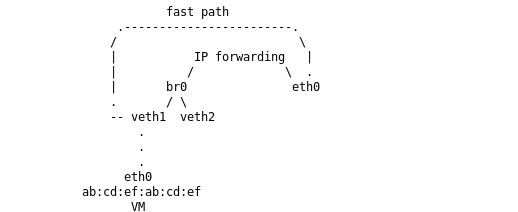
Netfilter logo Once a year folks interested in Netfilter technologies gather together to discuss past, ongoing and future works. The Netfilter Workshop is an opportunity to share and discuss new ideas, the state of the project, bring people together to work & hack and to put faces to people who otherwise are just email names. This is an event that has been happening since at least 2001, so we are talking about a genuine community thing here. It was decided there would be an online format, split in 3 short meetings, once per week on Fridays. I was unable to attend the first session on 2020-11-06 due to scheduling conflict, but I made it to the sessions on 2020-11-13 and 2020-11-20. I would say the sessions were joined by about 8 to 10 people, depending on the day. This post is a summary with some notes on what happened in this edition, with no special order. Pablo did the classical review of all the changes and updates that happened in all the Netfilter project software components since last workshop. I was unable to watch this presentation, so I have nothing special to comment. However, I ve been following the development of the project very closely, and there are several interesting things going on, some of them commented below. Florian Westphal brought to the table status on some open/pending work for mptcp option matching, systemd integration and finally interfacing from nft with cgroupv2. I was unable to participate in the talk for the first two items, so I cannot comment a lot more. On the cgroupv2 side, several options were evaluated to how to match them, identification methods, the hierarchical tree that cgroups present, etc. We will have to wait a bit more to see how the final implementation looks like. Also, Florian presented his concerns on conntrack hash collisions. There are no real-world known issues at the moment, but there is an old paper that suggests we should keep and eye on this and introduce improvements to prevent future DoS attack vectors. Florian mentioned these attacks are not practical at the moment, but who knows in a few years. He wants to explore introducing RB trees for conntrack. It will probably be a rbtree structure of hash tables in order to keep supporting parallel insertions. He was encouraged by others to go ahead and play/explore with this. Phil Sutter shared his past and future iptables development efforts. He highlighted fixed bugs and his short/midterm TODO list. I know Phil has been busy lately fixing iptables-legacy/iptables-nft incompatibilities. Basically addressing annoying bugs discovered by all ruleset managers out there (kubernetes, docker, openstack neutron, etc). Lots of work has been done to improve the situation; moreover I myself reported, or forwarded from the Debian bug tracker, several bugs. Anyway I was unable to attend this talk, only learnt a few bits in the following sessions, so I don t have a lot to comment here. But when I was fully present, I was asked by Phil about the status of netfilter components in Debian, and future plans. I shared my information. The idea for the next Debian stable release is to don t include iptables in the installer, and include nftables instead. Since Debian Buster, nftables is the default firewalling tool anyway. He shared the plans for the RedHat-related ecosystem, and we were able to confirm that we are basically in sync. Pablo commented on the latest Netfilter flowtable enhancements happening. Using the flowtable infrastructure, one can create kernel network bypasses to speed up packet throughput. The latest changes are aimed for bridge and VLAN enabled setups. The flowtable component will now know how to bypass in these 2 network architectures as well as the previously supported ingress hook. This is basically aimed for virtual machines and containers scenarios. There was some debate on use cases and supported setups. I commented that a bunch of virtual machines connected to a classic linux bridge and then doing NAT is basically what Openstack Neutron does, specifically in DVR setups. Same can be found in some container-based environments. Early/simple benchmarks done by Pablo suggest there could be huge performance improvements for those use cases. There was some inevitable comparison of this approach to what others, like DPDK/XDP can do. A point was raised about this being a more generic and operating system-integrated solution, which should make it more extensible and easier to use. flowtable for bridges Stefano Bravio commented on several open topics for nftables that he is interested on working on. One of them, issues related to concatenations + vmap issues. He also addressed concerns with people s expectations when migrating from ipset to nftables. There are several corner features in ipset that aren t currently supported in nftables, and we should document them. Stefano is also wondering about some tools to help in the migration. A translation layer like there is in place for iptables. Eric Gaver commented there are a couple of semantics that will not be suitable for translation, such as global sets, or sets of sets. But ipset is way simpler than iptables, so a translation mechanism should probably be created. In any case, there was agreement that anything that helps people migrate is more than welcome, even if it doesn t support 100% of the use cases. Stefano is planning to write documentation in the nftables wiki on how the pipapo algorithm works and the supported use cases. Other plans by Stefano include to work on some optimisations for faster matches. He mentioned using architecture specific instruction to speed up sets operations, like lookups. Finally, he commented that some folks working with eBPF have showed interest in reusing some parts of the nftables sets infrastructure (pipapo) because they have detected performance issues in their own data structures in some cases. It is not clear how to best achieve it, how to better bridge the two things together. Probably the ideal is to generalize the pipapo data structures and integrate it into the generic bitmap library or something which can be used by anyone. Anyway, he hopes to get some more time to focus on Netfilter stuff begining with the next year, in a couple of months. Moving a bit away from the pure software development topics, Pablo commented on the netfilter.org infrastructure. Right now the servers are running on gandi.net, on virtual machines that are being basically donated to us. He pointed that the plan is to simplify the infrastructure. For that reason, for example, FTP services has been shut down. Rsync services have been shut down as well, so basically we no longer have a mirrors infrastructure. The bugzilla and wikis we have need some attention, given they are old software pieces, and we need to migrate them to be more modern. Finally, the new logo that was created was presented. Later on, we spent a good chunk of the meeting discussing options on how to address the inevitable iptables deprecation situation. There are some open questions, and we discussed several approaches. From doing nothing at all, which means keeping the current status-quo, to setting a deadline date for the deprecation like the python community did with python2. I personally like this deadline idea, but it is perceived like a negative push by other. We all agree that the current do nothing approach is not sustainable either. Probably the way to go is basically to be more informative. We need to clearly communicate that choosing iptables for anything in 2020 is a bad idea. There are additional initiatives to help on this topic, without being too aggressive. A FAQ will probably be introduced. Eric Garver suggested we should bring nftables front and center. Given the website still mentions iptables everywhere, we will probably refresh the web content, introduce additional informative banners and similar things. There was an interesting talk on the topic of nft table ownership. The idea is to attach a table, and all the child objects, to a process. Then, we prevent any modifications to the table or the child objects by external entities. Basically, allocating and locking a table for a certain netlink socket. This is a nice way for ruleset managers, like firewalld, to ensure they have full control of what s happening to their ruleset, reducing the chances for ending with an inconsistent configuration. There is a proof-of-concept patch by Pablo to support this, and Eric mentioned he is pretty much interested in any improvements to support this use case. The final time block in the final session day was dedicated to talk about the next workshop. We are all very happy we could meet. Meeting virtually is way easier (and cheaper) than in person. Perhaps we can make it online every 3 or 6 months instead of, or in addition to, one big annual physical event. We will see what happens next year. That s all on my side!
25 November 2020

Shirish Agarwal: Women state in India and proposal for corporates in Indian banking

Gradle and Kotlin in Debian Few months back, I was looking at where Gradle and Kotlin were in Debian. They still seem to be a work in progress. I found the Android-tools salsa repo which tells me the state of things. While there has been movement on both, a bit more on Kotlin, it still seems it would take a while. For kotlin, the wiki page is most helpful as well as the android-tool salsa kotlin board page . Ironically, some of the more important info. is shared in a blog post which ideally should also have been reflected in kotlin board page . I did see some of the bugs so know it s pretty much dependency hell. I can only congratulate and encourage Samyak Jain and Raman Sarda. I also played a bit with the google-android-emulator-installer which is basically a hook which downloads the binary from google. I do not know what the plans are, but perhaps in the future they also might be build locally, who knows. Just sharing/stating here so it s part of my notes whenever I wanna see what s happening

Women in India I am sure some of you might remember my blog post from last year. It is almost close to a year 2020 now and the question to be asked is, has much changed ? After a lot or hue and cry the Government of India shared the NCRB data of crimes against women and caste crimes. The report shared that crimes against women had risen by 7.3% in a year, similarly crimes against lower castes also went by similar percentage . With the 2020 pandemic, I am sure the number has gone up more. And there is a possibility that just like last year, next year the Government would cite the pandemic and say no data. This year they have done it for migrant deaths during lockdown , for job losses due to the pandemic and so on and so forth. So, it will be no surprise if the Govt. says about NCRB data next year as well. Although media has been showing some in spite of the regular threats to the journalists as shared in the last blog post. There is also data that shows that women participation in labor force has fallen sharply especially in the last few years and the Government seems to have no neither idea nor do they seem to care for the same. There aren t any concrete plans to bring back the balance even a little bit.

Few Court judgements But all hope is not lost. There have been a couple of good judgements, one from the CIC (Chief Information Commissioner) wherein in specific cases a wife can know salary details of her husband, especially if there is some kind of maintenance due from the husband. There was so much of hue and cry against this order that it was taken down from the livelaw RTI corner. Luckily, I had downloaded it, hence could upload and share it. Another one was a case/suit about a legally matured women who had decided to marry without parental consent. In this case, the Delhi High Court had taken women s side and stated she can marry whom she wants. Interestingly, about a week back Uttar Pradesh (most notorious about crime against women) had made laws called Love Jihad and 2 -3 states have followed them. The idea being to create an atmosphere of hate against Muslims and women have no autonomy about what they want. This is when in a separate suit/case against Sudharshan TV (a far-right leaning channel promoting hate against Muslims) , the Government of India itself put an affidavit stating that Tablighis (a sect of Muslims who came from Malaysia to India for religious discourse and assembly) were not responsible for dissemination of the virus and some media has correctly portrayed the same. Of course, those who are on the side of the Govt. on this topic think a traitor has written. They also thought that the Govt. had taken a wrong approach but couldn t tell of a better approach to the matter. There are too many matters in the Supreme Court of women asking for justice to tell all here but two instances share how the SC has been buckling under the stress of late, one is a webinar which was chaired by Justice Subramaniam where he shared how the executive is using judicial appointments to do what it wants. The gulf between the executive and the SC has been since Indira Gandhi days, especially the judicial orders which declared that the Emergency is valid by large, it has fallen much more recently and the executive has been muscling in which have resulted in more regressive decisions than progressive.

This observation is also in tune with another study which came to the same result although using data. The raw data from the study could give so much more than what has been shared. For e.g. as an idea for the study, of the ones cited, how many have been in civil law, personal law, criminal or constitutional law. This would give a better understanding of things. Also what is shocking is none of our court orders have been cited in the west in the recent past, when there used to be a time when the west used to take guidance from Indian jurisprudence sometimes and cite the orders to reach similar conclusion or if not conclusion at least be used as a precedent. I guess those days are over.

Government giving Corporate ownership to Private Sector Banks There was an Internal Working Group report to review extant ownership guidelines and Corporate Structure for Indian Private Sector Banks. This is the actual title of the report. Now there were and are concerns about the move which were put forth by Dr. Raghuram Rajan and Viral Acharya. While Dr. Rajan had been the 23rd Governor of RBI from 4th September 2013 to 4th September 2016. His most commendable work which largely is unknown to most people was the report A hundred small steps which you buy from sage publications. Viral Acharya was the deputy governor from 23rd January 2017 23rd July 2019. Mr. Acharya just recently published his book Quest for Restoring Financial Stability in India which can be bought from the same publication house as well. They also wrote a three page article stating that does India need corporates in banking? More interestingly, he shares two points from history both world war 1 and world war 2. In both cases, the allies had to cut down the businesses who had owned banks. In Germany, it was the same and in Japan, the zaibatsu s dissolution, both of which were needed to make the world safe again. Now, if we don t learn lessons from history it is our fault, not history s. What was also shared that this idea was taken up in 2013 but was put into cold-storage. He also commented on the pressure on RBI as all co-operative banks have come under its ambit in the last few months. RBI has had a patchy record, especially in the last couple of years, with big scams like ILFS, Yes Bank, PMC Bank, Laxmi Vilas Bank among others. The LVB Bank being the most recent one. If new banking licenses have to be given they can be given to good NBFC s who have been in the market for a long time and have shown maturity while dealing with public money. What is the hurry for giving it to Corporate/business houses ? There are many other good points in the report with which both Mr. Rajan and Mr. Acharya are in agreement and do hope the other points/suggestions/proposals are implemented. There was and is an interesting report by Reserve Bank of India called financial sector legislative reforms commission report volume 1 . If and when it gets deleted from RBI, I have put up a copy at my WordPress account, so we shall always have one. Interestingly, while looking through the people who were part of the committee was a somewhat familiar name Murmu . This is perhaps the first time you see people from a sort of political background being in what should be a cut and dry review which have people normally from careers in finance or Accounts. It also turns out that only one person was in favor of banks going to corporates, all the rest were against. It seems that the specific person hadn t heard the terms self-lending , connected-lending and conflict of interest. One of the more interesting comments in the report is if a corporate has a bank, then why would he go to Switzerland, he would just wash the money in his own bank. And if banks were to become to big to fail like it happened in the United States, it would be again private gains, public losses. There was also a Washington Post article which shares some of the reasons that Indian banks fail. I think we need to remind ourselves once again, how things can become
https://www.youtube.com/watch?v=2gK3s5j7PgA

Positive News at end At the end I do not want to end on a sour notes, hence sharing a YouTube channel of Films Division India where you can see of the very classic works and interviews of some of the greats in Indian art cinema.

https://www.youtube.com/user/FilmsDivision/videos Also sharing a bit of funny story I came to know about youtube-dl, apparently it was taken off from github but thanks to efforts from EFF, Hackernews and others, it is now back in action.

23 November 2020

Shirish Agarwal: White Hat Senior and Education

I had been thinking of doing a blog post on RCEP which China signed with 14 countries a week and a day back but this new story has broken and is being viraled a bit on the interwebs, especially twitter and is pretty much in our domain so thought would be better to do a blog post about it. Also, there is quite a lot packed so quite a bit of unpacking to do.

Whitehat, Greyhat and Blackhat For those of you who may not, there are actually three terms especially in computer science that one comes across. Those are white hats, grey hats and black hats. Now clinically white hats are like the fiery angels or the good guys who basically take permissions to try and find out weakness in an application, program, website, organization and so on and so forth. A somewhat dated reference to hacker could be Sandra Bullock (The Net 1995) , Sneakers (1992), Live Free or Die Hard (2007) . Of the three one could argue that Sandra was actually into viruses which are part of computer security but still she showed some bad-ass skills, but then that is what actors are paid to do  Sneakers was much more interesting for me because in that you got the best key which can unlock any lock, something like quantum computing is supposed to do. One could equate both the first movies in either as a White hat or a Grey hat . A Grey hat is more flexible in his/her moral values, and they are plenty of such people. For e.g. Julius Assange could be described as a Grey hat, but as you can see and understand those are moral issues.

A black hat on the other hand is one who does things for profit even if it harms the others. The easiest fictitious examples are all Die Hard series, all of them except the 4th one, all had bad guys or black hats. The 4th also had but is the odd one out as it had Matthew Farell (Justin Long) as a Grey hat hacker. In real life Kevin Mitnick, Kevin Poulsen, Robert Tappan Morris, George Hotz, Gary McKinnon are some examples of hackers, most of whom were black hats, most of them reformed into white hats and security specialists. There are many other groups and names but that perhaps is best for another day altogether. Now why am I sharing this. Because in all of the above, the people who are using and working with the systems have better than average understanding of systems and they arguably would be better than most people at securing their networks, systems etc. but as we shall see in this case there has been lots of issues in the company.

WhiteHat Jr. and 300 Million Dollars Before I start this, I would like to share that for me this suit in many ways seems to be similar to the suit filed against Krishnaraj Rao . Although the difference is that Krishnaraj Rao s case/suit is that it was in real estate while this one is in education although many things are similar to those cases but also differ in some obvious ways. For e.g. in the suit against Krishnaraj Rao, the plaintiff s first approached the High Court and then the Supreme Court. Of course Krishnaraj Rao won in the High Court and then in the SC plaintiff s agreed to Krishnaraj Rao s demands as they knew they could not win in SC. In that case, a compromise was reached by the plaintiff just before judgement was to be delivered. In this case, the plaintiff have directly approached the Delhi High Court. The charges against Mr. Poonia (the defendant in this case) are very much similar to those which were made in Krishnaraj Rao s suit hence won t be going into those details. They have claimed defamation and filed a 20 crore suit. The idea is basically to silence any whistle-blowers.

Fictional Character Wolf Gupta The first issue in this case or perhaps one of the most famous or infamous character is an unknown. While he has been reportedly hired by Google India, BJYU, Chandigarh. This has been reported by Yahoo News. I did a cursory search on LinkedIn to see if there indeed is a wolf gupta but wasn t able to find any person with such a name. I am not even talking the amount of money/salary the fictitious gentleman is supposed to have got and the various variations on the salary figures at different times and the different ads.

If I wanted to, I could have asked few of the kind souls whom I know are working in Google to see if they can find such a person using their own credentials but it probably would have been a waste of time. When you show a LinkedIn profile in your social media, it should come up in the results, in this case it doesn t. I also tried to find out if somehow BJYU was a partner to Google and came up empty there as well. There is another story done by Kan India but as I m not a subscriber, I don t know what they have written but the beginning of the story itself does not bode well. While I can understand marketing, there is a line between marketing something and being misleading. At least to me, all of the references shared seems misleading at least to me.

Taking down dissent One of the big no-nos at least from what I perceive, you cannot and should not take down dissent or critique. Indians, like most people elsewhere around the world, critique and criticize day and night. Social media like twitter, mastodon and many others would not exist in the place if criticisms are not there. In fact, one could argue that Twitter and most social media is used to drive engagements to a person, brand etc. It is even an official policy in Twitter. Now you can t drive engagements without also being open to critique and this is true of all the web, including of WordPress and me  . What has been happening is that whitehatjr with help of bjyu have been taking out content of people citing copyright violation which seems laughable. When citizens critique anything, we are obviously going to take the name of the product otherwise people would have to start using new names similar to how Tom Riddle was known as Dark Lord , Voldemort and He who shall not be named . There have been quite a few takedowns, I just provide one for reference, the rest of the takedowns would probably come in the ongoing suit/case.
Whitehat Jr. ad showing investors fighting

Now a brief synopsis of what the ad. is about. The ad is about a kid named Chintu who makes an app. The app. Is so good that investors come to his house and right in the lawn and start fighting each other. The parents are enjoying looking at the fight and to add to the whole thing there is also a nosy neighbor who has his own observations. Simply speaking, it is a juvenile ad but it works as most parents in India, as elsewhere are insecure.
Jihan critiquing the whitehatjr ad
Before starting, let me assure that I asked Jihan s parents if it s ok to share his ad on my blog and they agreed. What he has done is broken down the ad and showed how juvenile the ad is and using logic and humor as a template for the same. He does make sure to state that he does not know how the product is as he hasn t used it. His critique was about the ad and not the product as he hasn t used that.

The Website If you look at the website, sadly, most of the site only talks about itself rather than giving examples that people can look in detail. For e.g. they say they have few apps. on Google play-store but no link to confirm the same. The same is true of quite a few other things. In another ad a Paralympic star says don t get into sports and get into coding. Which athlete in their right mind would say that? And it isn t that we (India) are brimming with athletes at the international level. In the last outing which was had in 2016, India sent a stunning 117 athletes but that was an exception as we had the women s hockey squad which was of 16 women, and even then they were overshadowed in numbers by the bureaucratic and support staff. There was criticism about the staff bit but that is probably a story for another date. Most of the site doesn t really give much value and the point seems to be driving sales to their courses. This is pressurizing small kids as well as teenagers and better who are in the second and third year science-engineering whose parents don t get that it is advertising and it is fake and think that their kids are incompetent. So this pressurizes both small kids as well as those who are learning, doing in whatever college or educational institution . The teenagers more often than not are unable to tell/share with them that this is advertising and fake. Also most of us have been on a a good diet of ads. Fair and lovely still sells even though we know it doesn t work. This does remind me of a similar fake academy which used very much similar symptoms and now nobody remembers them today. There used to be an academy called Wings Academy or some similar name. They used to advertise that you come to us and we will make you into a pilot or an airhostess and it was only much later that it was found out that most kids were doing laundry work in hotels and other such work. Many had taken loans, went bankrupt and even committed suicide because they were unable to pay off the loans due to the dreams given by the company and the harsh realities that awaited them. They were sued in court but dunno what happened but soon they were off the radar so we never came to know what happened to those million of kids whose life dreams were shattered.

Security Now comes the security part. They have alleged that Mr. Poonia broke into their systems. While this may be true, what I find funny is that with the name Whitehat, how can they justify it? If you are saying you are white hat you are supposed to be much better than this. And while I have not tried to penetrate their systems, I did find it laughable that the site is using an expired https:// certificate. I could have tried further to figure out the systems but I chose not to. How they could not have an automated script to get the certificate fixed is beyond me, this is known as certificate outage and is very well understood in the industry. There are tools like Let s Encrypt and Certbot (both EFF) and many others. But that is their concern, not mine.

Comparison A similar offering would be unacademy but as can be seen they neither try to push you in any way and nor do they make any ridiculous claims. In fact how genuine unacademy is can be gauged from the fact that many of its learning resources are available to people to see on YT and if they have tools they can also download it. Now, does this mean that every educational website should have their content for free, of course not. But when a channel has 80% 90% of it YT content as ads and testimonials then they surely should give a reason to pause both for parents and students alike. But if parents had done that much research, then things would not be where they are now.

Allegations Just to complete, there are allegations by Mr. Poonia with some screenshots which show the company has been doing a lot of bad things. For e.g. they were harassing an employee at night 2 a.m. who was frustrated and working in the company at the time. Many of the company staff routinely made sexist and offensive, sexual abusive remarks privately between themselves for prospective women who came to interview via webcam (due to the pandemic). There also seems to be a bit of porn on the web/mobile server of the company as well. There also have been allegations that while the company says refund is done next day, many parents who have demanded those refunds have not got it. Now while Mr. Poonia has shared some quotations of the staff while hiding the identities of both the victims and the perpetrators, the language being used in itself tells a lot. I am in two minds whether to share those photos or not hence atm choosing not to. Poonia has also contended that all teachers do not know programming, and they are given scripts to share. There have been some people who did share that experience with him
Suruchi Sethi
From the company s side they are alleging he has hacked the company servers and would probably be using the Fruit of the poisonous tree argument which we have seen have been used in many arguments.

Conclusion Now that lies in the eyes of the Court whether the single bench chooses the literal meaning or use the spirit of the law or the genuine concerns of the people concerned. While in today s hearing while the company asked for a complete sweeping injunction they were unable to get it. Whatever may happen, we may hope to see some fireworks in the second hearing which is slated to be on 6.01.2021 where all of this plays out. Till later.

22 November 2020

Arturo Borrero Gonz lez: How to use nftables from python

Netfilter logo One of the most interesting (and possibly unknown) features of the nftables framework is the native python interface, which allows python programs to access all nft features programmatically, from the source code. There is a high-level library, libnftables, which is responsible for translating the human-readable syntax from the nft binary into low-level expressions that the nf_tables kernel subsystem can run. The nft command line utility basically wraps this library, where all actual nftables logic lives. You can only imagine how powerful this library is. Originally written in C, ctypes is used to allow native wrapping of the shared lib object using pure python. To use nftables in your python script or program, first you have to install the libnftables library and the python bindings. In Debian systems, installing the python3-nftables package should be enough to have everything ready to go. To interact with libnftables you have 2 options, either use the standard nft syntax or the JSON format. The standard format allows you to send commands exactly like you would do using the nft binary. That format is intended for humans and it doesn t make a lot of sense in a programmatic interaction. Whereas JSON is pretty convenient, specially in a python environment, where there are direct data structure equivalents. The following code snippet gives you an example of how easy this is to use:
#!/usr/bin/env python3

import nftables
import json
nft = nftables.Nftables()
nft.set_json_output(True)
rc, output, error = nft.cmd("list ruleset")
print(json.loads(output))
This is functionally equivalent to running nft -j list ruleset. Basically, all you have to do in your python code is: The key here is to use the JSON format. It allows adding ruleset modification in batches, i.e. to create tables, chains, rules, sets, stateful counters, etc in a single atomic transaction, which is the proper way to update firewalling and NAT policies in the kernel and to avoid inconsistent intermediate states. The JSON schema is pretty well documented in the libnftables-json(5) manpage. The following example is copy/pasted from there, and illustrates the basic idea behind the JSON format. The structure accepts an arbitrary amount of commands which are interpreted in order of appearance. For instance, the following standard syntax input:
flush ruleset
add table inet mytable
add chain inet mytable mychain
add rule inet mytable mychain tcp dport 22 accept
Translates into JSON as such:
  "nftables": [
      "flush":   "ruleset": null  ,
      "add":   "table":  
        "family": "inet",
        "name": "mytable"
     ,
      "add":   "chain":  
        "family": "inet",
        "table": "mytable",
        "chain": "mychain"
     
      "add":   "rule":  
        "family": "inet",
        "table": "mytable",
        "chain": "mychain",
        "expr": [
              "match":  
                "left":   "payload":  
                    "protocol": "tcp",
                    "field": "dport"
                 ,
                "right": 22
             ,
              "accept": null  
        ]
     
] 
I encourage you to take a look at the manpage if you want to know about how powerful this interface is. I ve created a git repository to host several source code examples using different features of the library: https://github.com/aborrero/python-nftables-tutorial. I plan to introduce more code examples as I learn and create them. There are several relevant projects out there using this nftables python integration already. One of the most important pieces of software is firewalld. They started using the JSON format back in 2019. In the past, people interacting with iptables programmatically would either call the iptables binary directly or, in the case of some C programs, hack libiptc/libxtables libraries into their source code. The native python approach to use libnftables is a huge step forward, which should come handy for developers, network engineers, integrators and other folks using the nftables framework in a pythonic environment. If you are interested to know how this python binding works, I invite you to take a look at the upstream source code, nftables.py, which contains all the magic behind the scenes.

Markus Koschany: My Free Software Activities in October 2020

Welcome to gambaru.de. Here is my monthly report (+ the first week in November) that covers what I have been doing for Debian. If you re interested in Java, Games and LTS topics, this might be interesting for you. Debian Games

Debian Java
pdfsam
Misc Debian LTS This was my 56. month as a paid contributor and I have been paid to work 20,75 hours on Debian LTS, a project started by Rapha l Hertzog. In that time I did the following: ELTS Extended Long Term Support (ELTS) is a project led by Freexian to further extend the lifetime of Debian releases. It is not an official Debian project but all Debian users benefit from it without cost. The current ELTS release is Debian 8 Jessie . This was my 29. month and I have been paid to work 15 hours on ELTS. Thanks for reading and see you next time.

Next.

Previous.