Search Results: "ag"

31 July 2007

Neil Williams: pilot-qof and gpe-expenses new releases

Minor bug fix and translation update release for pilot-qof and what was originally going to be a similar upload for gpe-expenses - until I decided that the PO files should really be split because apps using the expenses object library didn't need translated strings from the gpe-expenses application.
So what I learnt on gpe-cash has been put into place for gpe-expenses. A few consequences:

Aurelien Jarno: New GNU/kFreeBSD build daemon

We now have a second GNU/kFreeBSD build daemon building the kfreebsd-amd64 architecture. It has been kindly offered and is hosted in UK by The Positive Internet Company Ltd. It adds redundancy to our buildd network, which is important given that the other kfreebsd-amd64 build daemon machine is on a simple ADSL line, and so less reliable than a machine in a datacenter. For those who want to know more, here is the current status of the GNU/kFreeBSD buildd network: My goal is to eventually get rid of all build daemons that I am hosting at home on my ADSL line, though that is less critical now.

Neil Williams: More on multiple po directories

Further to problems with
gettext and split po files, glib_gettextize turns out not to be usable with more than one po/ directory. I've just converted gpe-expenses to multiple POT files (for the same reasons as gpe-cash) and I'm due to make the upstream release and upload later. glib_gettextize needs to be replaced by gettextize but this is not problem free. gettextize is noisy and keeps tampering with my build, putting in things like config.rpath and forcing -I m4 additions when that is already included elsewhere. So ./autogen.sh now supports gettextize but stops it running twice. I'm storing the gettextize support files in CVS just to allow the post-gettextize environment to be retained without needing to deal with the aftermath of gettextize --force.
Also, one tweak is needed to the Makevars file in the new directory - change the subdir po location to po-lib or whatever you use.
The changes will show up in gpe-expenses CVS later.

Russell Coker: Praising Children vs Praising Programmers

In a comment on my blog post titled Childhood, Don Marti refers to an earlier blog post he wrote which refers to a New York Magazine article about the effects of praising children. The article does in some depth to describe scientific research into the issue of praising children for being “smart” vs praising them for working hard - with the conclusion being that it’s significantly better to praise them for working hard! One quote from that article that I find very significant is “Baumeister has come to believe the continued appeal of self-esteem is largely tied to parents pride in their children s achievements: It s so strong that ‘when they praise their kids, it s not that far from praising themselves’“. This matches my theory about people who subject their children to TV documentaries about gifted children. The conclusions regarding children seem quite clear and the article provides direct advice to parents and teachers as to how to avoid the problems. One issue I am wondering about after reading the NYM article is whether being exposed to smarter children hurts a child’s learning ability. The fact that there is no correlation between high self-esteem and learning ability has been proven, but the reports do not indicate whether there might be a correlation between a decreases in self-esteem and a decrease in learning ability. I recall pointing out to one the few good teachers at high-school that having some of the most capable and some of the least capable students in the same class was inefficient and led to excessive boredom for the more capable students and excessive difficulty in keeping up for the less capable students. I was told that “streaming” was considered bad because it was bad for the less capable students to know their status. I was also refused access to my results of the Westpac Maths contest for the same reason - which seems particularly strange, I was in the training program for the International Mathematical Olympiad so I doubt that releasing my score from one maths contest would change anyone’s opinion of my ability. I am also wondering about how this effects adults (apart from their education history). Should we try to praise work colleagues for their effort instead of being smart? Are adults discouraged from trying hard at their work when they see others succeeding with little apparent effort? One data point for this seems to be kernel coders in the Linux community. Everyone sees super-star Linux kernel coders on stage (on a pedestal) at conferences and it’s easy to believe that such people are significantly more intelligent than others (the well-known programmers are indeed very smart - but they also work a lot harder than most people believe) and that being so smart is a necessary pre-condition for submitting Linux kernel patches. I have met many people who appear to have the ability to be good at any type of coding but seem intimidated by kernel coding it for these reasons. Statements such as “I’ve been doing Linux coding for 10 years but I’m not a kernel coder” are often heard at Linux conferences. Also people who’s skills are respected are often regarded as kernel coders without any real reason. The Linux kernel is a large C program with limited options for a debugger, if you are good at C coding you should do OK! I know that I am trivialising the issues related to kernel coding, there are some tasks such as reverse-engineering device-drivers and debugging some of the tricky race conditions that require special skills - but no-one is born with such skills! I would not suggest that someone try a significant kernel coding task on their first attempt - as with all areas of programming it’s best to start with the easy things first. The web site kernelnewbies.org is a good source of information for people who are getting into kernel coding. I wonder whether a change in the attitudes towards such things could encourage more people to write free software, and more of the current programmers to attempt new challenges (such as kernel coding).

Adrian von Bidder: Debian Press Clippings

I am subscribed to the Google news alerts for the keyword Debian, and usually this means that I am notified of every security upgrade at least three or four times (needlessly, since I'm subscribed to Debian's security announcements anyway...) But today, two headlines sparked my interest: One, Carla Schroeder wrote an introductory article into building Custom Linux kernels with Debian and Fedora (though why somebody would want to do this is beyond me...), showing how easy the process is (I may be biased, but I find Debian's way is easier. On the other hand, it within the -- rpm -- package framework instead of a custom command -- make-kpkg in Debian -- feels more consistent and logical. Without reading documentation you won't get anywhere on both systems, so it probably doesn't matter...) One down for Carla, however, for not doing enough basic research: “The new naming convention [linux-* instead of kernel-* packages] opens the door to using other kernels with Debian, which I don't know what those would be, but Debian is ready for them.” Or one down for us, the Debian project, for not making enough noise around the various non-Linux ports. Though that will come when GNU/kFreeBSD is released with lenny... Two, Debian derivative SimplyMEPIS, which switched to Ubuntu as a base operating system a year ago, is now returning to Debian GNU/Linux as its base system. The main reason seems to be long term stability and upgradeability - which is a key strength of Debian for many other users as well (me, for one.) The reason for switching to Ubuntu in the first place has been newer application versions and predictable upgrade schedules (and that Warren Woodford misunderstood how Ubuntu LTS was to be maintained, apparently) -- both issues are being addressed within Debian as we get better release management and faster integration of new application versions (the big pieces of software I use regularly are the Linux kernel, X.org, KDE and OpenOffice.org, all of which I find are integrated in unstable fast enough, and much faster than 2 years ago. That the testing migration sometimes takes time is not a problem since mixing etch, lenny and sid is usually possible without problems even in a production (desktop) environment.) So, if we take a step back from the day-to-day squabbling between developers working at cross purposes and look at the output we produce, I believe we're still doing some things right.

Gunnar Wolf: Hot water and long pipes

Every now and then, I see somebody who -just as Russell did today- talks about the advantages of water heating systems not being tank-based, but tankless! Sounds kewl, hah? Shiny, new?
Well... I live at a house that is slowly but steadily started to show its age. Built in 1955 and owned for almost two decades by the very renowned phycisist (of course, my father's mentor and teacher) Marcos Moshinsky, my parents bought it in 1974, and it has been my home since 1976. And, at least since 1980 (I cannot be sure about earlier events for reasons that might be obvious to the casual reader), we have always had an Calentador Ascot de paso. Ascot (and further companies that have bought their name) have manufacutred this kind of water heaters for at least 60 years in Mexico. Yes, they are gas-based and not electricals like the ones Rusell links to, but that might just be because in Mexico gas has always been incredibly cheaper than electricity. And yes, the heater is godsent for ecolocigally conscious people - No more storing 20 to 40 lt (the sizes of the usual storage-based tanks around here) of hot water all day around just because you might want to take a shower, no more waiting for 20 minutes after you turn it on until you start having your morning shower (and more important, no more taking your morning shower ice-cold just because you overslept!)
Yes, it seems like life is perfect with our tankless (de paso) system... Almost.
As I said, our house was built over 50 years ago. It was built on what intended by then to be a middle-upper class suburb, on a very modern house with fancy stuff and all. And of course, the heater was not planned for the most visible or hearable areas of the house - specifically, nowhere close the living room - or the bedrooms. Silly details, the bathrooms are close to those areas. So, what's the answer? Want to take a shower? Ok, open the water...
And wait.
For around 3-5 minutes, until the hot water finishes the looong ride from the opposite corner of the house.
Of course, it takes a path that's not easy to intercept in order to move the heater to a saner place: The hot water pipe goes right under the middle of the living room, yay.
So we use our fancy de paso system whenever we are too lazy. Nadezhda and I prefer to fill one hot water bucket (~20lt) for each in the washing room, just by the kitchen (and the heater, of course!) and throw hot water over us to get a nice bath. Or, in case we are too lazy for that, collect as much as possible from the otherwise-wasted hot water in another bucket (we usually get ~10lt - but I fear another such amount just falls around it) and use it later for our various household duties.

30 July 2007

Enrico Zini: lastsupper

Leonardo's "Last Supper" A lovely article mentions that:
superimposing the Last Supper with its mirror-image throws up another picture containing a figure who looks like a Templar knight and another holding a small baby.
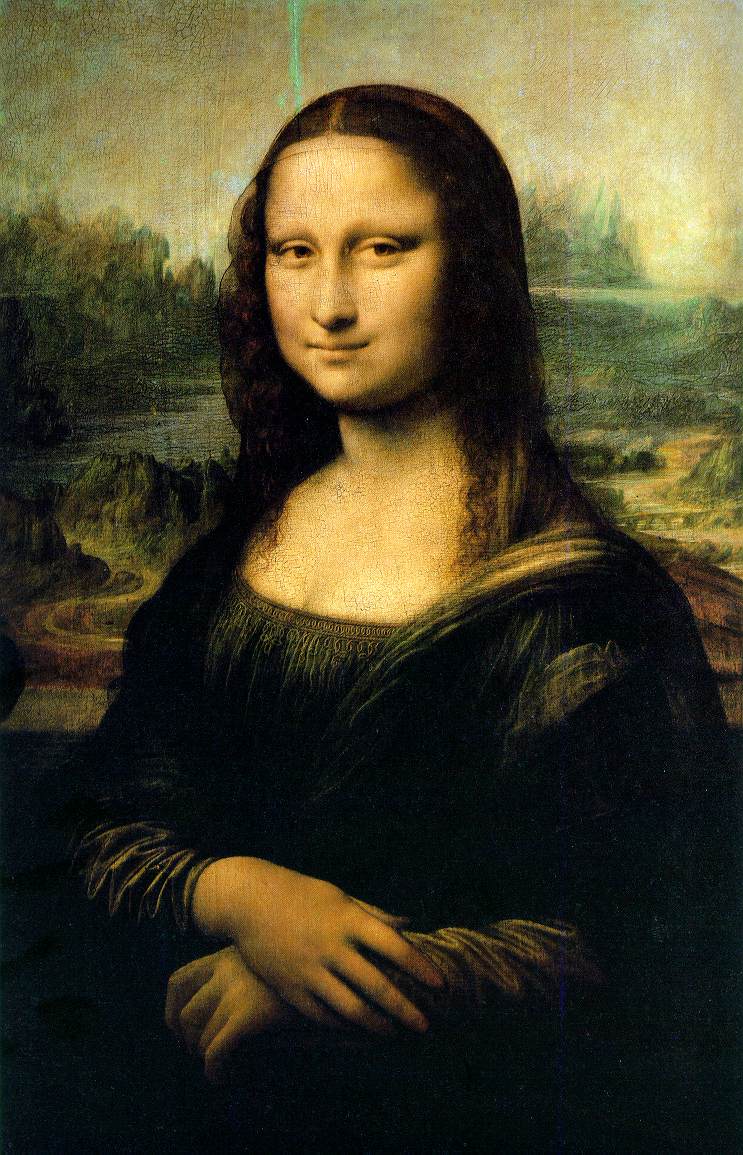
Apparently all the websites showing the resulting image were heavily slashdotted, but superimposing a mirrored image is not rocket science, so I gave it a try. The result has nothing to do with Templar knights, but is shows very clearly that Jesus becomes Chtulhu: Jesus with superimposed mirror image Excited by this finding, I looked for more. I could not find much in the Mona Lisa: Mona Lisa with superimposed mirror image But indeed the Vitruvian Man after superimposing a mirror image shows incredibly large balls: Vitruvian Man with superimposed mirror image Leonardo was Italian, and in Italy "growing big balls" means "getting very tired and sick of something". This is clearly a very deep message from Leonardo. But why stop at Lenoardo? Teomondo Scrofalo with superimposed mirror image Absolutely wonderful.

Steve Kemp: That I can't show you how

Russell Coker has recently started posting random tech-tips and recipes in his blog :
To improve things in this regard I plan to increase the number of posts I write with solutions to random technical problems that I encounter with the aim of providing a resource for google searches and to randomly inform people who read my blog.
This is nice to see on Planet Debian - although I hope we continue to see the personal entries. For anybody else who is considering posting things like this I would be delighted if you'd copy them to the Debian Administration website. There have been numerous times when I've been just about to write something on a topic, seen it posted elsewhere and figured I shouldn't do so: (Notable examples off the top of my head: Introduction to OpenVZ, Introduction to GIT, several Xen pieces.) I don't get many submissions, which I'm getting resigned to, but it is easy and people really really are greatful for new posts. In other news linuxlinks.com are a bunch of spammers and will be reported as such. I utterly fail to care that they've added "my software" to their list; if I cared I'd join their site and agree to receive emails from them..

Julien Valroff: First x86-64 system

Despite my previous choice to stick with an i386 system, I couldn’t resist any longer when I have seen that both openoffice.org and the proprietary Flash player were easily available in the amd64 port (not a fresh piece of news). I have thus just re-installed my main desktop machine which is now running a complete amd64 system. I have added this architecture to my unofficial packages repository, and all the arch-dependent packages in the unstable branch were re-built. Note that I do not plan to re-build packages available for the current stable distribution (namely etch). This might however change in the future if people show interest for
this. I have been able to build i386 packages in a chroot using pbuilder and cowdancer, which I will explain later in an article.

Patrick Winnertz: Troubles concerning virtualbox

The laste week I started to work further on the (rejected) virtualbox package. The reason for the reject was that there were some license issues (the tarball contains code (c) Microsoft ... which has to be considered non-free). After working around this issues I found several other issues as missing copyright statements in some files (which makes them non-distributable) and some other problems concerninc the license of this piece of code. This is blog entry is meant to show that there is still work in progress :) Every other problem concerning virtualbox is removed, but I guess we'll have to wait for 1.5.0 for debian until innotek has remove these license issues. :S Maybe we'll can work around this license issues, but sadly I guess not :S

Evan Prodromou: 11 Thermidor CCXV

It seems like everything's coming up wiki these last few days. I guess it's just part of going to Wikimania -- wiki is in the air. For example, I'm glad to see that Wikispaces now supports OpenID for login. That's excellent news for the wiki world -- Wikispaces joins a growing number of wiki projects and wiki providers who support OpenID: WetPaint, Wikitravel, wikiHow, AboutUs, and many others. OpenID is really coming together as a global sign-on for wikis. This is good news, because it means we can start talking about distributed reputation systems for wikis, making for one big wiki family. I think it would be great if Wikipedia and Wikia were ready to come on board with OpenID sometime soon. It's unfortunate that OpenID deployment at Wikimedia is dependent on the single user login system, which is a huge effort that's taking longer than expected. Wikia is waiting to see what Wikimedia does. I tried out Wikispaces's OpenID support, and it seems pretty good. I got a spurious error when I logged in -- it responded to my automatically-provided nick, "Evan", with a message that made it sound like I'd just typed in that nickname. Other than that, it worked quite smoothly. Good job to Wikispaces, and real bonus for OpenID. tags:

Marco d'Itri: udev vs. proprietary NVIDIA driver

udev 0.113-1 mounts /dev noexec, and this breaks the proprietary NVIDIA driver. So far I am inclined to revert the change, but I am soliciting opinions about applications mmap'ing PROT_EXEC /dev/zero and if it is a good idea and should be allowed, or not. Feel free to post to #435250.

Andrew Stribblehill: Cappuccino milk

Over the past few months I have been asymptotically approaching being able to make a good cappuccino or latte. (I'm way better than the glassy-eyed morons who are usually behind an espresso machine but nowhere near "good barista".) However, over the last few weeks I have noticed that sometimes I was not able to steam the milk properly. I get very little foam then when I bang out the biggest of the bubbles, it’s virtually flat. I had thought that I was just having a bad run, but then a colleague mentioned it too. It turns out that only some of the bottles have this characteristic, and we haven't determined, from analysis of the codes on the bottle tops, what determines this. Each was full-fat milk from the same dairy. If anyone who reads this knows the answer, please mention it in a comment.

Reinhard Tartler: revu

Scott Kitterman ubuntu@kitterman.com writes:
Why do REVU and mentors need to be separate?
I’ve been thinking about this as well. Here my thoughts: I never actively used mentors. To me, mentors is mainly an apt-get’able repository, where interested contributors can submit packages. It acts mainly as a hosting service for packages. There are quite some differences to REVU, but I think the most important one is that REVU lets you collect opinions on a contribution in the web application. In mentors.debian,net, this happens on the mailing list. Do we need this disctinction? I don’t think so. See e.g. Bundle Buggy (http://bundlebuggy.aaronbentley.com/), which is used on the bazaar development mailing list to collect and review contributions. It has got a new feature which allows Developers to vote on a submission via email commands on the mailing list, to which Bundle Buggy is subscribed. I think that ideally, we could join all three mediums: Mail, Web-app and IRC. REVU could look for comments and commands for a package on a mailing list. On the other hand, reviews and submissions could be announced on an IRC Channel. We could even think about giving comments/commands via irc. It mainly needs one: Someone to do it. I’m sorry to say that REVU isn’t really under development since some time. I’d be more than happy if some people would approach me and said: “I want to implement some of the ideas floating around REVU2”. I think this would perhaps force me to start again coding on it. ATM, REVU is in maintenance only mode. :(

Dave Noble: The Simpsons Movie

The other day, I ended up watching the new Simpsons movie; unfortunately, however I found it to be somewhat less than what I'd expected it to be. I think that unfortunately the format has become boring to me; the gags are no longer new, and it was too much like watching a long episode on TV.
In other news, I'm still in Oslo until the 6th; trying to sort out employment and studies for next year.
That is all.

David Welton: Updated Linux Incompatibility List

After an exhausting trip home from OSCON (Portland to Frankfurt 10 hours, then by car to Innsbruck, 6 hours), I caught something nasty and am taking it easy. So I took a little bit of time to work on updating the Linux Incompatibility List to use DedaWiki, to which I also added a search function. Hopefully this will allow me to manage spam just a little bit better, as it is becoming a serious problem for that site, due to its popularity.

Miriam Ruiz: Lets try Epiphany

Is it just my perception, or Firefox/Iceweasel crashes too much lately? At some point in the future I might consider switching to Konqueror, but for now I’d prefer making a smaller change and stick to Gecko. After having a look at the available options, and asking some people (thanks dudes, thanks Sam, thanks Tolimar), I’ve decided to give a chance to Epiphany. Lets see how it goes! :)

Michal Čihař: Testing gammu

I finally managed to learn CTest enough to be able to add some test cases to add some automatic testing to Gammu. Well there is not much to test until we have some fake driver for phones which can be used to feed custom data, but at least some parsers can receive testing. First thing I try to focus on is vCard parsing. I know this is currently tricky and I'm trying to collect as many problematic vCards as possible. For now I have collected some from issues in bug tracker and my emails when people reported some problems. So if you have some vCard which Gammu parses wrongly, please send then to me. For now 3 of 5 vCard tests fail, but I hope to resolve those problems until release will happen :-).

Russell Coker: Porn vs Rape

Chris Samuel blogs about a plan to censor porn from the Internet in Australia. According to the ZDNet article the Fundamentalist Christian party Family First wants a national porn filter to protect children. However there is strong evidence to suggest that the incidence of rape decreases as the availability of pornography increases. Access to porn prevents rapes! The question is whether protecting people (mostly women and children) from rape is more important than protecting the strange and unusual (by the standards of modern Australian society) religious beliefs of a minority of people who oppose porn. The current research on porn vs rape is based on comparing different regions of the US with different levels of Internet access. It would be more accurate if a scientific test could be performed in a controlled environment. The US has the largest number of prisoners of any country and the largest proportion of the population in prison of any first-world country and rape is common in prison. It would be easy to grant access to porn to one cell block of a prison and deny access to another and then record the incidence of reported rape (currently in the US porn is restricted in prisons and masturbation in prison is a crime). The results of such research could be used to devise government policy with the aim of protecting people from rape. Of course that would require compassion - something that’s extremely uncommon in politicians particularly the ones that claim to be Christian. Some people are requesting the creation of Christian Porn - so Porn and Christianity don’t have to be opposed. The same site has an interesting page Masturbation: God’s Great Gift to Us. Now if all those rapists could be encouraged to watch Christian Porn and take advantage of God’s Great Gift then the world would be a better place.

Bernhard R. Link: about the suggested "Debian maintainers"

As one of the most often made arguments for the current Debian General Resolution about the introduction of DMs seems to be that "finding a sponsor is hard", I want to shift discussion a bit in the other direction: How about more review instead of less?

Currently only sponsored people have the privilege of having a human looking at their packages before upload. We normal DDs only have some automated tools other people wrote for us (lintian, linda, piuparts) and some self written ones (checking diffs, comparing to previous revisions and so on) and have to hope we spot all problems not yet detectable by machines ourself. What do teams and people with comaintainers do? Any chance one of the other can look over the package you generated? Is there any chance to get something like that for the rest of us? (Ideally without drawing too much manpower from the sponsorees, though in my experience slowing that down might also help, there was more than one package I could not sponsor because someone already uploaded it before even being able to write half the list of obvious problems). Perhaps some ring to review each other packages (of course best with some classification. There is often not that much sense to have someone not liking it looking into cdbs packages or vice versa).

Next.

Previous.