Search Results: "sf"

29 July 2012

Gregor Herrmann: RC bugs 2012/27-30

during the last weeks I was quite busy with other things (like DebCamp, DebConf, & vacations), so this is a report covering 4 weeks. at least I managed to catch up during the last days a bit

28 July 2012

Steve Kemp: I will be awesome, eventually.

Earlier this year, in March, I switched to the bluetile tiling window, and it has been a great success. So I was interested in seeing Vincent Bernats post about switching to Awesome, I myself intend to do that "eventually", now I've successfully dipped my toes into tiling-land, via bluetiles simple config and gnome-friendly setup. One thing that puts me off is the length of my sessions:
skx@precious:~/hg/blog$ ps -ef   grep skx
skx       2237     1  0 Mar12 ?        00:00:01 /usr/bin/gnome-keyring-daemon ...
As you can see I've been logged into my desktop session for four months. I lock the screen when I wander away, but generally login once when the computer boots and never again for half a year or so. FWIW:
skx@precious:~/hg/blog$ uptime
 23:01:19 up 138 days,  4:44,  4 users,  load average: 0.02, 0.06, 0.02
ObQuote: "I'm 30 years old. I'm almost a grown man. " - Rocketman

Jon Dowland: books

I'm forty pages into a battered copy of "Complicity" by Iain Banks. I picked this copy up for the princely sum of 90p at Barter Books last weekend. For the uninitiated, Barter Books is a grand old bookshop situated in a disused train station in Alnwick, Northumberland. It has the dubious pleasure of being the originator of the "keep calm and carry on" fad. At the time that I bought it, I wasn't sure whether it was already in my swollen reading pile, but 90p wasn't a great loss if so. I could leave it in the book pile at my next hotel. (it was, and that's a sorry indictment of the state of my reading pile.) This gnarled paperback has character. There's a faded price sticker on the back revealing a first-hand price in Australian Dollars. The book started its post-sale life on the other side of the world. Where else has it been? I take some small pleasure in planning the next step in its future. To imagine this book with a long tail of readers having a free market value of 90p, or roughly the price of a posh chocolate bar, I'm struck by both wondering how publishers and writers like Mr Banks make a living (and yet they do) but also how the pricing of ebooks, completely lacking in this character I've written about and non-transferable, seems over inflated to the end user. I've been struggling to short list a selection of books to take on holiday. Most of my friends have responded "buy a kindle", with a complete lack of sympathy for my predicament. I'm borrowing one which means I can finally find out whether I'll "take" to it. I'm concerned I'll not be able to get sucked into a story in the same way I can with a paper book. I certainly won't rely on just the kindle for my reading needs. I don't want to prejudge my experiment too much but I suspect I won't be convinced. Where I can see technology supporting my reading is in addition to the paper book: particularly for non fiction, technical books, academic papers, more graphical-oriented things (photo books, graphic novels). I do have a small but growing collection of old, rare-in-print texts that I've only been able to source as PDFs. I think something like the Google Nexus 7 would do the job for these and fit into my life more readily than the kindle.

Alberto Garc a: GUADEC 2012

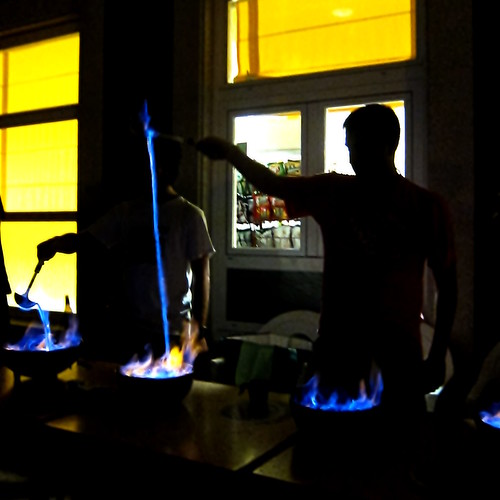
Third day of GUADEC already. And in Coru a! Coru a This is a very special city for me. I came here in 1996 to study Computer Science. Here I discovered UNIX for the first time, and spent hours learning how to use it. It s funny to see now those old UNIX servers being displayed in a small museum in the auditorium where the main track takes place. It was also here where I learnt about free software, installed my first Debian system, helped creating the local LUG and met the awesome people that founded Igalia with me. Then we went international, but our headquarters and many of our people are still here so I guess we can still call this home. So, needless to say, we are very happy to have GUADEC here this time. I hope you all are enjoying the conference as much as we are. I m quite satisfied with how it s been going so far, the local team has done a good job organising everything and taking care of lots of details to make the life of all attendees easier. I especially want to stress all the effort put into the network infrastructure, one of the best that I remember in a GUADEC conference. At Igalia we ve been very busy lately. We re putting lots of effort in making WebKit better, but our work is not limited to that. Our talks this year show some of the things we ve been doing: We are also coordinating 4 BOFs (a11y, GNOME OS, WebKit and Grilo) and hosted a UX hackfest in our offices before the conference. And we have a booth next to the info desk where you can get some merchandising and see our interactivity demos. WebKitGTK+ In case you missed the conference this year, all talks are being recorded and the videos are expected to be published really soon (before the end of the conference). So enjoy the remaining days of GUADEC, and enjoy Coru a! And of course if you re staying after the conference and want to know more about the city or about Galicia, don t hesitate to ask me or anyone from the local team, we ll be glad to help you. Queimada

26 July 2012

Charles Plessy: Adopted mime-support.

With L szl B sz rm nyi we adopted mime-support, which was maintained since September 1996 by Brian White. It is the first package of standard priority that I take care of. It gives me the same feeling as when side wheels were removed from my bicycle, a long, long time ago. We transferred the source package on Alioth, and uploaded a first update allowing the extraction of information for the mailcap file directly from Desktop files. I think that the next two works will be to resolve the bug about the handling of PHP files, and to update the mime.types base, if possible in synergy with Fedora or other distributions.

24 July 2012

Gunnar Wolf: Ten theses in favor of free download of cultural goods on the Internet (by Enrique G. Gallegos)

This is one of the days where reading my everyday newspaper was worth more than just getting bitter at the news. I found this text in La Jornada, my usual newspaper. I liked it very much, and decided to translate it for a wider audience. Of course, if you can read Spanish, do yourself a favor and go to the original. It is not that the text is so easy to translate. And, after all, I'm not a native English writer. I'm trying to do a literal translation, even when disagreeing with the author. Ten theses in favor of free download of cultural goods on the Internet Enrique G. Gallegos Poet and philosopher. Currently a researcher in Universidad Aut noma Metropolitana-C
  1. Historical legacy. Criticists who promote the persecution of piracy and free downloads of cultural works from the Internet argue that the patrimonial rights have been wronged; they start off suposing that a cultural work is formed from a historical void, as if there was a "nothing" to begin with, and then a "something" appeared. Nothing more fallacious: All cultural products has its precedents, and thanks to these it generates part of its best forces.
  2. Opening towards the future. Human beings are projected into the future. As the main philosophies of the 20th century have explored, one of the singular characteristics of mankind is the ability to think and imagine the future. Products of culture are the best ways to think and project society, politics, love, hope, needs, failures A song, a poem, an essay, can trigger imaginary worlds with a transformative potential. To deny this to humanity with "patrimonial damage" as an argument is to mutilate man's temporal nature.
  3. Recognition of the present. Cultural works generate moments of reflection, criticism and pleasure; they can trigger actions demanding commitment, solidarity and strong indignation against injustice. If every cultural work is adscribed in some way to a historic tradition, and if cultural products anre necessary to imagine other possible worlds and open our future, it's not less true that they also allow us to recognize our present by making us more sensitive to others' ideas, sensations and emotions. Without culture, there is no present nor others' presence.
  4. Divulgation of the cultural heritage. If culture is "heritage of mankind", it should be also spread by any possible way. But not just spread, but actively sought for the biggest number of people to be able to effectively have access to it. In a potentially interconnected world, Internet is the most adequate world for it (despite its limitations). Therefore, penalizing free downloads means avoiding spreading it and restricting access to those groups who don't have enough economic resources.
  5. Preserving cultural heritage. If we agree that cultural works are heritage of mankind, we need to take every action needed to preserve them. But preserving culture does not only mean keeping the products in museums, galleries or never-polluted drawers; it rather means to keep them in the collective memory and in the flow of constant interpretations and appropiations. Said in other words, the genuine way to preserve culture is to allow universal access to cultural goods. That's why, holding that free copies and downloads of books, music, videos, etc. over the Internet are harmful, is an incompatible argument with the obligation to preserve cultural heritage.
  6. They are not goods. Cultural works are material and spiritual manifestations of mankind, concretions of its historicity; they are, also, expressions of emotions, ideas and projections of other lives and other worlds. That's why they cannot be equated to goods or inserted in patrimonialist logic. The market might want to cheat by giving a certain price to a painting by Orozco or auctioning a Baudelaire manuscript, but it will never be able to aprehend their true meaning as cultural works. And it's not that culture is not faluable, but taht its estimation criteria do not follow the rules of market, but those of the imponderable and unlimited.
  7. Price disproportion. Assuming we accept the possibility that intermediaries charge for the services they perform, the value of a book, record or movie should never exceed the daily wage of a worker or employee. But this ellection would only be one more option within the effective possibility that people opt to download or freely copy the cultural work. The final decision as to which media to go to should be a sovereign resolution of the culture-interested person.
  8. The principle of the most benefit. Even when copies and free downloads over Internet could generate a patrimonial "wrong" to third parties, the cultural benefit obtained by it will always be greater in as much that it carries out intensely the principle to foster, spread and access the cultural heritage of mankind. To think otherwise is to privilege the few over the many.
  9. The real evil is elsewhere. Murder, women- and children-trade, poverty and misery are the real evils that ache mankind. According to the United Nations, in 2010 there were 468 thousand murders in the world; the estimation is that 3500 million people live in poverty; in their 2009 inform, the UN found over 2400 victims of "people trade", kidnapped as sex slaves; in some regions in Africa, close to 30% of children suffer acute malnutrition and six people (between children and adults) die every day from hunger. That's why pretending that free download of cultural works is an evil is clearly a tricky and deceptive speech
  10. Against the intermediary-salesman. Culture does not need intermedieries that reduce cultural works to goods. Culture is too important to leavie it in the hands of salespeople that simplistly equate cultural goods with cakes. An intermediary of this kind will never understand the difference between a work of art and a disposable razor blade. What the world needs is more support from the government from every country to artists, creators and poets, as well as ensuring the conditions for the absolute mobility freedom for cultural works.

23 July 2012

Michal Čihař: Weblate hacking #1

The first day of Hackweek VIII is about to end for me and it's time to share some of the results. As planned, I've started hacking on Weblate. The most prominent feature from today are email notifications. You can now monitor the translation in various ways - be informed about new strings to translate, new contributor, added suggestion or simply watch all translations. Another bigger change is rearranging of main page, which now provides instant access to per language stats, which were quite hidden before. Rest of time was spent on adding some sort of spam protection (need to deploy this to demo to see how successful it is) and one more promoting widget (88x31 pixels). There are 6 open issues targeted for 1.2 release, so there is still something to do in next days :-).

Filed under: English Suse Weblate 0 comments Flattr this!

21 July 2012

Enrico Zini: Giving away distromatch

Giving away distromatch at last year's Fosdem I tried to inject a lot of energy into distromatch but shortly afterwards I've had to urgently rewrite the nm.debian.org website. After Lars Wirzenius GTDFH talks in Bologna and Varese I wrote a tool which, among other things, is able to scan my home dir and list how many projects I'm working on. The output was scary. Like, they are too many. Like, I couldn't even recite the list out of memory. And since I couldn't do that, I had no idea there were so many. And I kept being stressful because I couldn't manage to take care of them all properly. Now that I became conscious of the situation, it's time to deal with it like a grown up, and politely back off from some of my irresponsible responsibilities. Distromatch is one of them. It had just started as a proof of concept prototype, and I had the vision that it could be the basis for a fantastic culture of sharing and exchange of information across distributions. I need to distinguish the vision from the responsibility. I still have that vision for distromatch, but I cannot take responsibility for making it happen. So I am giving it up to anyone who has the time and resources to pick up that responsibility. Current status It works well enough as a prototype. I believe it can successfully map a large enough slice of packages, that one can prototype stuff based on it. I have for example used it to export the Debtags categories for other distros, and the resulting file looked big enough to be used for prototyping category-based features on distributions that don't have them yet. I think it also works well enough to support a few common use cases, like sharing screenshots, or doing most of the work of converting dependency lists from a distro to another. And finally, anyone can deploy it, and work on it. Existing data sources Everything I index in the Debian distromatch deployment is available at http://dde.debian.net/exports/distromatch/. The rpm-based data in there comes from an export script I wrote that runs on Sophie, but which I cannot maintain properly. This is an experimental export of Fedora and OpenSUSE data: http://tmp.vuntz.net/misc/distromatch/distromatch-opensuse-fedora.tar All existing export scripts are found in distromatch git repo on gitorious. Contacts I gathered at Fosdem At Fosdem I devoted quite some work to get contacts from all possible distributions and software repositories, so that distromatch could be hooked into them. Here is a dump of what I have collected: Some of those contacts may have "expired" in the meantime: I wouldn't assume all of them still remember talking with me, although most probably still do. My commitment for the time being I am happy to commit, at the moment, to maintaining a working data export for Debian data. I can take responsibility for making it so that the Debian data for it stays up to date, and to fix it asap if it isn't the case. I hope that now someone can take distromatch over from me, and make it grow to achieve its great potential.

19 July 2012

Michal Čihař: Sponsoring phpMyAdmin

We've decided to accept sponsorships of phpMyAdmin in more official way. So if you or your company want to financially support this software, you now have great chance to do that. Time to time we've received offers for sponsoring, but we never got to point where we could easily handle these. In the past we were limited by sf.net requirements for no advertisement on website, but it got leveraged over the time and we did not change our policy much. For now the only benefit we are providing to our sponsors (besides good feeling that they are supporting good project) is logo and link on our website. In the future we might add some more, but at first we want to see how it works in this scale. Anyway if you are interested in sponsoring phpMyAdmin, you can do that on our website.

Filed under: English Phpmyadmin 0 comments Flattr this!

18 July 2012

Niels Thykier: Lintian-NG Accessing Lintian s collection data with 90 lines

 $ LINTIAN_ROOT=. perl lintian-ng ../lintian_2.5.10.dsc
 Successfully unpacked 1 packages
 Did you know that source:lintian/2.5.10 contains 3745 files or/and directories (excl. root dir)
 This useless information was brought to you by Lintian-NG
 $ git describe
 2.5.10-61-g7670427
 $ wc -l lintian-ng
 90 lintian-ng
This includes everything from creating a temporary lab, adding the packages to it and running all of Lintian s collections on it (parallelised, of cource). Writing this script yesterday would probably have required 250-300 lines of code to achieve the same. That said, 90 lines are still a bit much to copy/waste into this blog, so I won t do a $ cat lintian-ng . :) If you are interested in how it looks you can (for now) fetch it from http://people.debian.org/~nthykier/lintian-ng/lintian-ng Oh yeah, files or/and directories is actually any (extractable) entry in the tarball

17 July 2012

Sylvain Le Gall: Coding by example, migrating ocsoap to OASIS and ocamlbuild

In my effort to automate most of the stuff needed to release, I am working on a SOAP to OCaml converter. Richard W.M. Jones has kindly allowed me to take-over its project "ocsoap". The project is now located here and I am working on making it compatible with FusionForge SOAP. My first step was to make it compatible with OASIS and ocamlbuild. The project is Makefile based and needs some extra care to make it ocamlbuild based. The oasis-fication itself was a piece of cake. Just describe the dependencies of the project and make some extra choice like compiling the camlp5 extension to a .cma rather than a .cmo. You can see the _oasis and myocamlbuild.ml results, compared to the initial Makefile. The _oasis is simple:
OASISFormat:  0.3
Name:         ocsoap
Version:      0.7.1
Synopsis:     SOAP converter to OCaml code
Authors:      Richard W.M. Jones, Sylvain Le Gall
License:      LGPL-2.1 with OCaml linking exception
Plugins:      DevFiles (0.3), META (0.3), 
              StdFiles (0.3)
BuildTools:   ocamlbuild,
              cduce
BuildDepends: dynlink,
              pxp-lex-utf8,
              pxp-engine,
              netclient,
              cduce,
              extlib,
              calendar,
              pcre
Library ocsoap
  Path:       src
  Modules:    OCSoap
Library pa_ocsoapclientstubs
  Path:          src
  Modules:       Pa_ocsoapclientstubs
  BuildTools:    camlp5o
  BuildDepends:  camlp5
  FindlibParent: ocsoap
  FindlibName:   syntax
  CompiledObject: byte
  
Executable wsdl_validate
  Path:       src
  MainIs:     wsdl_validate.ml
  
Executable wsdltointf
  Path:       src
  MainIs:     wsdltointf.ml
Executable adwords_test1
  Path: examples/adwords
  BuildDepends: ocsoap
  MainIs: test1.ml
  Build$: flag(tests)
  Install: false
  BuildTools: camlp5o
  BuildDepends: ocsoap.syntax
Executable adwords_test2 
  Path: examples/adwords
  BuildDepends: ocsoap
  MainIs: test2.ml
  Build$: flag(tests)
  Install: false
  BuildTools: camlp5o
  BuildDepends: ocsoap.syntax
Executable adwords_examples 
  Path: examples/adwords
  BuildDepends: ocsoap
  MainIs: example.ml
  Build$: flag(tests)
  Install: false
  BuildTools: camlp5o
  BuildDepends: ocsoap.syntax
Document "api-ocsoap"
  Title: API reference of OCSoap
  Type: ocamlbuild (0.3)
  BuildTools+: ocamldoc
  XOCamlbuildLibraries: ocsoap
  XOCamlbuildPath:      src/
Most of it was generated using oasis quickstart, that helps you to write _oasis. This part was not tricky and mostly a translation of what the previous Makefile was explaining, in its language. Now comes the tricky part, translating Makefile rules into ocamlbuild rules. This part is more tricky because the general principle behind Makefile and ocamlbuild are not exactly the same. Let's start with a simple rule: compiling a CDuce .cd file into a .cdo. Here is the Makefile rule:
%.cdo: %.cd
        $(CDUCE) --compile $<
In the oasis-fication, we have added an extra complexity, because we move the source to src, which needs extra flags. Here is the ocamlbuild rule:
rule "cduce: %.cd -> %.cdo"
  ~prod:"%.cdo"
  ~dep:"%.cd"
  begin
    fun env build ->
      Cmd(S[cduce;
            T(tags_of_pathname (env "%.cd")++"cduce"++"compile");
            A"--compile";
            A"-I"; P(Filename.dirname (env "%.cd"));
            P (env "%.cd")])
  end
;;
It is a little bit more complex, lets explain it. The function rule create a rule with a name and a function that execute it. The labels ~prod and ~dep are the right and left parts of %.cdo: %.cd of the Makefile. When we call env "%cd", it replaces the % by the matching part of ~prod and ~dep. Next we return a Rule.action. The rule in this case is a command Cmd. This rules use a sequence S, which are the command line itself. The sequence is made of smaller pieces that can be a placeholder for tag content (T + what will trigger it), atom (A, typically command line option), and filename (P). For a file src/foo.ml, the command generated will
cduce $(TAG) --compile -I src src/foo.ml
where $(TAG) will be replaced by the content of flag ["file:src/foo.ml"; "cduce"; "compile"] content. But also by the content of flag ["cduce"; "compile"] content, the flag just need to be subset. For example if you want to add --verbose to the command line, just add flag ["cduce"; "compile"] (S[A"--verbose"]);; somewhere in myocamlbuild.ml. Next rules, we need to compile %.cdo to %.cmo. It is trickier because in this case, we want to have %.cmi eventually built before. It is not require to build it before, if there is no %.mli file. Here is the code to do that:
let cduce_mkstubs includes =
  Quote (S([cduce;
            S(List.map
                (fun fn -> S[A"-I"; P fn])
                includes);
            A"--mlstub"]));;
(* cduce < 0.3.9:  cdo2ml -static *) 
let cduce_compile_args env =
  [
    A"-c"; A"-package"; A"cduce";
    A"-pp"; cduce_mkstubs [Filename.dirname (env "%.cmi")];
    A"-I"; P(Filename.dirname (env "%.cmi"));
    A"-impl"; P(env "%.cdo")
  ]
;;
let cduce_prepare_compile env build =
  List.iter
    (function
         Outcome.Bad _ ->
           (* Fail but it just means that the .cmi will be generated 
            * during compilation.
            *)
           ()
         Outcome.Good _ ->
           ())
    (build [[env "%.cmi"]])
;;
rule "cduce: %.cdo -> %.cmo"
  ~prod:"%.cmo"
  ~dep:"%.cdo"
  begin
    fun env build ->
      cduce_prepare_compile env build;
      Cmd(S(
        [ocamlfind; ocamlc;
         T(tags_of_pathname (env "%.cdo")
           ++"cduce"++"ocamlc"++"compile"++"byte")]
        @ (cduce_compile_args env)))
  end
;;
The difference with the former rules, is that we call cduce_prepare_compile which in turns call (build [[env "%.cmi"]]). The call to build will ask ocamlbuild to compile src/foo.cmi, but we don't care about the result, i.e. in case of Outcome.Bad exn we don't fail. This way we don't stop the build process that will continue and produce a .cmo and .cmi just out of the .cdo. The .cdo itself is compiled as a .ml file with ocamlfind ocamlc except that we apply cduce --mlstub as a preprocessor A"-pp"; Quote(S[cduce; ..; A"--mlstub"]). The last rule that I will comment is the one that transform a .intf into a .ml. This rule is particular because it is totally different than the pieces of code of the original Makefile. Here are the couple of rules that was needed to translate .intf:
examples/adwords/%Service.cmx: examples/adwords/%Service.intf                                                       
   ocamlfind ocamlopt $(OCAMLOPTFLAGS) -c \                                                                          
     -pp "camlp5o ./pa_ocsoapclientstubs.cmo -impl" -c -impl $<
.depend: $(wildcard *.mli) $(wildcard *.ml) \
  $(wildcard examples/adwords/*.mli) $(wildcard examples/adwords/*.ml)
  $(OCAMLDEP) $^ > .depend
  for f in examples/adwords/*.intf; do \
    $(OCAMLDEP) \
    -pp "camlp5o ./pa_ocsoapclientstubs.cmo pr_o.cmo -impl" $$f \
    >> .depend; \
  done
Here is the ocamlbuild rule:
rule "ocsoap: %.intf -> %.ml"
  ~prod:"%.ml"
  ~deps:(if !ocsoap_dev then
           ["%.intf"; !pa_ocsoapclientstubs]
         else
           ["%.intf"])
  begin
    fun env build ->
      Cmd(S[Px !camlp5o; P !pa_ocsoapclientstubs; P "pr_o.cmo"; A"-impl";
            P(env "%.intf"); A"-o"; P(env "%.ml")])
  end
;;
Here we decided to translate directly the .intf into a .ml file. The good thing about ocamlbuild is that it has a powerfull dynamicy dependencies scheme. So here you will generate the .ml file, which in turns will generate a .ml.depends and then will be compiled the standard way. In the makefile, you need to compute the .depends file using a different process that will do everything before the compilation even starts (in fact, before the inclusion of the .depends). We also use the trick to use an OCaml printer (pr_o.cmo) with camlp5o, that will directly output the standard .ml file. Don't hesitate to post comment if you have question about OASIS and ocamlbuild Enjoy.

16 July 2012

Thorsten Glaser: Apache 2, https clients linked against GnuTLS, connection errors

I ve been debugging a weird problem at work after upgrading a complex system from lenny to wheezy, some https clients failed to connect: GNU wget and Debian s version of lynx(1) which is linked against libgnutls26 fail. NSS applications continue to work, as does cURL; wget and lynx on MirBSD (linked with OpenSSL of course) work. Even Debian s gnutls-cli tools from both gnutls26 and gnutls28 work. Huh. The error_log shows renegotiation problems, yet setting the new Apache 2 configuration option to use insecure renegotiation doesn t help either. (The option is a total #FAIL: its only other value is use secure TLSv1.x renegotiation , but I don t want/need SSL renegortiation at all, anyway.) Natureshadow told me this was a hot issue on Debianforum at the moment, yet, nobody had a clue or enough information to file a formal bugreport against (initially) apache2, as that s what changed. I tracked it down on a new VM with no configuration otherwise, and here are my findings so others don t run into it.

Tracking down the problem, this can be reduced to the following configuration (minimised, to show the problem) in /etc/apache2/sites-enabled/1one:

	<VirtualHost *:443>
		ServerName wiki-70.lan.tarent.de
		RedirectMatch permanent . https://evolvis-70.lan.tarent.de/
		SSLEngine on
		SSLCertificateFile /etc/ssl/W_lan_tarent_de.cer
		SSLCertificateKeyFile /etc/ssl/private/W_lan_tarent_de.key
		SSLCertificateChainFile /etc/ssl/godaddy.ca
	</VirtualHost>
 

Do not mind the actual content, this is a very stripped-down demo on a not-actually-set-up-yet box.

Same is valid for the companion configuration file /etc/apache2/sites-enabled/2two:

	NameVirtualHost *:443
	<VirtualHost *:443>
		ServerName evolvis-70.lan.tarent.de
		SSLEngine on
		# workaround for BEAST (CVE-2011-3389), short-term
		SSLCipherSuite RC4-SHA
		SSLCertificateFile /etc/ssl/W_lan_tarent_de.cer
		SSLCertificateKeyFile /etc/ssl/private/W_lan_tarent_de.key
		SSLCertificateChainFile /etc/ssl/godaddy.ca
		SSLProtocol TLSv1
	</VirtualHost>
 

Turns out the BEAST workaround was at fault here: the differing SSLCipherSuites between the vhosts (on the same Legacy IP / TCP Port tuple, as we use Wildcard SSL Certificates) made Apache 2 want to renegotiate, so either commenting it on 2two or, better, adding it to 1one helped. Interestingly enough, the SSLProtocol directive did not matter (in my tests). So, keep SSL settings synchronised between vhosts. In fact, those were already from include files, but 2two was from the Evolvis 5 generation, whereas we added to 1one an Include of the httpd.ssl1.inc file generated by the previous releases of EvolvisForge and had not switched those legacy vhosts to the new configuration, as everything worked on lenny. This wlog entry brought to you by the system administrators of tarent solutions GmbH and the Evolvis Project, based on FusionForge.

15 July 2012

Debian Med: Debian Med Bits: Report from LSM Geneva by Andreas Tille

In this report from LSM 2012 in Geneva I will report about
  1. Medical imaging using Debian
  2. Debian Med packaging workshop
  3. Integration of VistA into Debian
  4. Other interesting talks
Medical imaging using Debian There were about 10 attendees basically upstream developers of medical imaging software. The talk got some attention and the message to include even more medical imaging software into Debian was well percived. Thanks to Mathieu Malaterre there was some live demonstration which was way easier for him as a medical imaging expert than it would have been for me.
Debian Med packaging workshop Due to my advertising in the talk yesterday three students (two of them from one medical imaging project, one from an other project) attended the workshop. Thanks to Axel Beckert who helped me out surviving the challenge to walk on unexplored ground.

The idea of the workshop was to ask the attendees to name a package of their own and just package this. Because two of the attendees were upstream developers of CreaTools we decided to go on for packaging this. After circumeventing some pitfalls in the beginning it went rather smoothly and after about 2.5 hours we were able to commit some initial packaging to the Debian Med Git repository which comes quite close to a ready package (perhaps some split into a library and a development package needs to be done and for sure testing is needed).
Quoting Frederic Cervenansky, upstream of CreaTools
Thanks for your work. Your workshop was very interesting and didactic: a relevant discussion between Claire and me for the future of Creatools has emerged from the difficulties you encountered to package creatools. I will try, before the end of the month, to fully package creatools. And for sure, I will contact the debian-med mailing list.
Integration of VistA into Debian I had the good chance to directly address some issues of Claudio Zaugg the speaker in the talk Implementing open source Health Information Systems in Low- and Middle Income Countries a practical review directly before mine. It turned out that by using Debian packaged software might help simplifying the issues they had in supporting health care workers in Low- and Middle Income Countries.
My talk was partly repeating some basic ideas about Debian Med from the talk on Monday because the audience was completely different. Than I tried to explain in detail how we tried hard to establish good contacts to upstream developers and why this is essential to finalise the goal to include hospital information systems straight into Debian any by doing so open the doors of hospitals for large scale Debian installations.
There is also video recording of this talk. Other interesting talks OpenEMR, a multi-language free open source electronic health record for international use Just discussed the packaging of OpenEMR which is prepared for Debian Med as it can be seen on our tasks page. The contact to the creator of some inofficial package will be established to finalise this task.
OpenFovea : when open-source and biophysical research get married Just another target for Debian Med popped up in this talk to further enhance Debian Med in covering all issues of medical care on one hand and on the other hand helping upstream authors to distribute their code
more effectively.
Collaborative software development for nanoscale physics The talk would have fit very nicely into the Debian Science workshop at ESRF (European Synchrotron Radiation Facility) in Grenoble because it was about ETRF (European Theoretical Radiation Facility). At previous LSM events I had just talked with Yann and the work to include their software into Debian is on its way.
Free software and High Performance Computing This talk was not directly connected to my Debian work but I simply enjoyed to see how "two people" had a really entertaining talk about Top 500 computers. Vittoria, you made my last day at LSM.

Francois Marier: Browsing privacy and ad blocking on Android

On the desktop, I usually rely on Privoxy to strip out ads, tracking resources and other privacy-invading elements. So I was looking for an equivalent solution on Android. Firefox 10 With the current version of Firefox for Android, you can simply install the Adblock Plus extension and it will filter most undesirable elements from webpages. Unfortunately, that extension is not yet available for the latest Firefox Beta, so I had to find another solution. Android Adblock It turns out that there is an Open Source proxy similar to Privoxy (though much more limited in functionality) available for Android: Adblock (also available on the F-Droid Free Software market). However, its default configuration really doesn't block much and so you'll probably want to import a new blocklist as soon as you install it. I used a combination of the Easylist and EasyPrivacy blocklists. Configuring Fennec to use a proxy Unlike its desktop cousin, Firefox for Android (also called Fennec) doesn't expose proxy settings in the user interface. Instead, you have to open the about:config page and configure the following settings manually:

network.proxy.http = localhost
network.proxy.http_port = 8080
network.proxy.ssl = localhost
network.proxy.ssl_port = 8080
network.proxy.type = 1
Once you're done, test your connection by going into the AdBlock application and turning the proxy off. Then switch back to Firefox and go to a new website. You should get an error message telling you that the proxy is blocking connections. That means it's successfully using your proxy to talk to other websites and not connecting to them directly. (It might also be possible to set this up in the default Android browser or in the Chrome for Android Beta, but I haven't been able to find how. Feel free to leave a comment if you know how it's done.) Bonus tips While you're at it, I highly recommend you turn on the Do Not Track feature in Firefox. Some large sites (like Twitter) have recently committed to turning off individual tracking on web requests which contain this new privacy header. Also, if you want to help move the mobile web away from a WebKit monoculture (remember how bad the Internet Explorer 6 monoculture was for the web?), then please consider joining the Mobile Testdrivers team and help us make Firefox rock on Android!

13 July 2012

Joey Hess: I am become Joey, destroyer of drives

drive #1 To add to the fun of being in Nicaragua, my laptop's solid state drive died the second day here. Seems this is the failure mode for a SSD, get a little slow, and then a switch flips and it stops accepting any writes, at all, becoming a read-only media. Never was there an indication of a problem in SMART etc. Did you know that Nicaragua has neither names for most roads, nor addresses? Rather than trying to shoehorn the directions to my hotel into the address fields of Amazon.com, I shipped the replacement SSD to home, and thought I'd limp along. drive #2 I destroyed my second drive one hour after getting it working. A borrowed USB flash drive, which seems to have melted under the unusual load while I was away at lunch. Perhaps putting an ext3 filesystem on it was a very bad idea, although I have successfully run other USB flash drives that way for years. Perhaps it was a cheap drive that only pretended to hold 32 gb. drive #3 For several days I happily used the third drive, a USB hard drive, as my temporary root filesystem. Until I destroyed it by knocking it off my bed. drive #4, #5 Now my netbook is running from a Debian Live USB key, with a second USB key for my customisations. So far I have not managed to destroy these, but there's still a day left in my trip..

11 July 2012

Paul Tagliamonte: The "hell-server"

I s pose a better name would be How to preform automated deep-source checks I ve pushed the code to paultag/qlight, and it s just for personal use at the moment. It s built to use paultag/sb around sbuild. Basically, it preforms a crudload of tests such as licensecheck, suspicious-source, pyflakes, bashisms, cppcheck, php in linter mode, and a ton of other checks. You can see a large majority of them in the source file. The batch runner is a singleton , so it s safely called more then once. It s running on a 5-minute cron, and I ve configured a dput target to push it into it s queue & run the enqueue script. Here s some example output from a random package I had lying around:
  ===== build status =====
sbo-run-clang  successful
sbo-run-gcc  successful
  ===== global status =====
Ran plugin extract, exit code 0
Ran plugin watch, exit code 0
Ran plugin licensecheck, exit code 0
Ran plugin validate-source, exit code 0
Ran plugin build, exit code 0
Ran plugin descr, exit code 0
Ran plugin lintian, exit code 0
  ===== descr =====
I: PT: Does this sound right? "gbemol is/are a(n) Graphical frontend for the Music Player Daemon (MPD)"
  ===== piuparts =====
   [last 20 lines]
  ===== licenses =====
BSD (3 clause) 
GPL (v2 or later) 
GPL (v2 or later) GENERATED FILE
GPL (v2 or later) (with incorrect FSF address) 
LGPL (v2 or later) (with incorrect FSF address) 
*No copyright* GPL (v2 or later) 
*No copyright* UNKNOWN
  ===== lintian =====
I: gbemol: spelling-error-in-binary usr/bin/gbemol Wheter Whether
W: gbemol: hardening-no-relro usr/bin/gbemol
I: gbemol: spelling-error-in-manpage usr/share/man/man1/gbemol.1.gz allows to allows one to
  ===== watch =====
-- Scanning for watchfiles in .
-- Found watchfile in ./debian
-- In debian/watch, processing watchfile line:
   http://sf.net/gbemol/gbemol-(.*)\.tar.gz
-- Found the following matching hrefs:
     gbemol-0.3.tar.gz
     gbemol-0.3.1.tar.gz
     gbemol-0.3.2.tar.gz
Newest version on remote site is 0.3.2, local version is 0.3.2
 => Package is up to date
-- Scan finished
  ===== source issues =====
suspicious-source:
bashisms:
script ./ltmain.sh does not appear to have a #! interpreter line;
you may get strange results
possible bashism in ./ltmain.sh line 368 ($RANDOM):
        my_tmpdir="$ my_template -$ RANDOM-0 $$"
error: ./ltmain.sh: Unterminated quoted string found, EOF reached. Wanted: <">
pyflakes:
cppcheck:
[src/gbemol-utils.c:167]: (error) Memory leak: path
[src/libmpdclient.c:1654]: (error) Possible null pointer dereference: output - otherwise it is redundant to check if output is null at line 1663
[src/libmpdclient.c:1655]: (error) Possible null pointer dereference: output - otherwise it is redundant to check if output is null at line 1663
[src/libmpdclient.c:1656]: (error) Possible null pointer dereference: output - otherwise it is redundant to check if output is null at line 1663
[src/libmpdclient.c:1664]: (error) Possible null pointer dereference: output - otherwise it is redundant to check if output is null at line 1663
phplint:
desktop validate:
.//.pc/desktop_file.patch/gbemol.desktop: warning: key "Encoding" in group "Desktop Entry" is deprecated
.//.pc/desktop_file.patch/gbemol.desktop: error: (will be fatal in the future): value "gbemol.png" for key "Icon" in group "Desktop Entry" is an icon name with an extension, but there should be no extension as described in the Icon Theme Specification if the value is not an absolute path
.//.pc/desktop_file.patch/gbemol.desktop: warning: value "Application;AudioVideo;Player;" for key "Categories" in group "Desktop Entry" contains a deprecated value "Application"
mp3check:
mp3val:
fontlint:
ftvalid:
msgfmt:
POFileChecker:
POFileSpell:
pngcheck:
jpeginfo:
ogginfo:
oggz-validate:
xmllint:
lacheck:
jslint:
check for environ calls to home:
check for use of /tmp:
./intltool-extract.in:    $OUTFILE     = "./tmp/$OUTFILE.h"
check for use of system():
./aclocal.m4:    lt_ld_extra= awk '/^include /   system(sprintf("cd /etc; cat %s 2>/dev/null", \[$]2)); skip = 1;     if (!skip) print \[$]0; skip = 0;  ' < /etc/ld.so.conf   $SED -e 's/#.*//;/^[  ]*hwcap[    ]/d;s/[:,  ]/ /g;s/=[^=]*$//;s/=[^= ]* / /g;/^$/d'   tr '\n' ' ' 
./intltool-merge.in:    return 1 if ((-x $file) or (system("$file -l >$devnull") == 0));
./intltool-merge.in:    system ("$iconv -f $encoding -t UTF-8 <$devnull 2>$devnull");
./intltool-update.in:    return 1 if ((-x $file) or (system("$file --version >$devnull") == 0));
./intltool-update.in:          system ($EXTRACT, "--update", "--srcdir=$SRCDIR",
./intltool-update.in:          system ($EXTRACT, "--update", "--type=$gettext_type", 
./intltool-update.in:    system ("$MSGMERGE", "-o", $outfile, $infile, "$MODULE.pot");
./intltool-update.in:    system ("$MSGFMT", "-o", "$devnull", "--verbose", $output_file);
./intltool-update.in:   system ("$MSGFMT", "-o", "$devnull", "--verbose", "$SRCDIR/$lang.po");
./configure:    lt_ld_extra= awk '/^include /   system(sprintf("cd /etc; cat %s 2>/dev/null", \$2)); skip = 1;     if (!skip) print \$0; skip = 0;  ' < /etc/ld.so.conf   $SED -e 's/#.*//;/^[   ]*hwcap[    ]/d;s/[:,  ]/ /g;s/=[^=]*$//;s/=[^= ]* / /g;/^$/d'   tr '\n' ' ' 
./intltool-extract.in:        system ("mkdir -p $dirname");
./intltool-extract.in:        system("mkdir tmp/"); 
./debian/gbemol.1:the \fBDebian\fP system (but may be used by others).  Permission is 
./debian/manpage.sgml:      the &debian; system (but may be used by others).  Permission is
  ===== sbo-run-clang.log warnings =====
update-binfmts: warning: unable to close /proc/sys/fs/binfmt_misc/register: Invalid argument
update-binfmts: warning: unable to enable binary format python2.6
dpkg-source: warning: extracting unsigned source package (gbemol_0.3.2-2.dsc)
dpkg-buildpackage: warning: using a gain-root-command while being root
gbemol-preferences.c:483:13: warning: 'gbemol_preferences_load_spin' defined but not used [-Wunused-function]
gbemol-net.c:60:11: warning: variable 'res' set but not used [-Wunused-but-set-variable]
dpkg-shlibdeps: warning: package could avoid a useless dependency if debian/gbemol/usr/bin/gbemol was not linked against libfontconfig.so.1 (it uses none of the library's symbols).
dpkg-shlibdeps: warning: package could avoid a useless dependency if debian/gbemol/usr/bin/gbemol was not linked against libatk-1.0.so.0 (it uses none of the library's symbols).
dpkg-shlibdeps: warning: package could avoid a useless dependency if debian/gbemol/usr/bin/gbemol was not linked against librt.so.1 (it uses none of the library's symbols).
dpkg-shlibdeps: warning: package could avoid a useless dependency if debian/gbemol/usr/bin/gbemol was not linked against libgio-2.0.so.0 (it uses none of the library's symbols).
dpkg-shlibdeps: warning: package could avoid a useless dependency if debian/gbemol/usr/bin/gbemol was not linked against libcairo.so.2 (it uses none of the library's symbols).
dpkg-shlibdeps: warning: package could avoid a useless dependency if debian/gbemol/usr/bin/gbemol was not linked against libpango-1.0.so.0 (it uses none of the library's symbols).
dpkg-shlibdeps: warning: package could avoid a useless dependency if debian/gbemol/usr/bin/gbemol was not linked against libpangocairo-1.0.so.0 (it uses none of the library's symbols).
dpkg-shlibdeps: warning: package could avoid a useless dependency if debian/gbemol/usr/bin/gbemol was not linked against libfreetype.so.6 (it uses none of the library's symbols).
dpkg-shlibdeps: warning: package could avoid a useless dependency if debian/gbemol/usr/bin/gbemol was not linked against libpangoft2-1.0.so.0 (it uses none of the library's symbols).
dpkg-gencontrol: warning: File::FcntlLock not available; using flock which is not NFS-safe
     + add misc-depends to fix lintian warning.
  ===== sbo-run-gcc.log warnings =====
dpkg-source: warning: extracting unsigned source package (gbemol_0.3.2-2.dsc)
dpkg-buildpackage: warning: using a gain-root-command while being root
gbemol-preferences.c:483:13: warning: 'gbemol_preferences_load_spin' defined but not used [-Wunused-function]
gbemol-net.c:60:11: warning: variable 'res' set but not used [-Wunused-but-set-variable]
dpkg-shlibdeps: warning: package could avoid a useless dependency if debian/gbemol/usr/bin/gbemol was not linked against libfontconfig.so.1 (it uses none of the library's symbols).
dpkg-shlibdeps: warning: package could avoid a useless dependency if debian/gbemol/usr/bin/gbemol was not linked against libatk-1.0.so.0 (it uses none of the library's symbols).
dpkg-shlibdeps: warning: package could avoid a useless dependency if debian/gbemol/usr/bin/gbemol was not linked against librt.so.1 (it uses none of the library's symbols).
dpkg-shlibdeps: warning: package could avoid a useless dependency if debian/gbemol/usr/bin/gbemol was not linked against libgio-2.0.so.0 (it uses none of the library's symbols).
dpkg-shlibdeps: warning: package could avoid a useless dependency if debian/gbemol/usr/bin/gbemol was not linked against libcairo.so.2 (it uses none of the library's symbols).
dpkg-shlibdeps: warning: package could avoid a useless dependency if debian/gbemol/usr/bin/gbemol was not linked against libpango-1.0.so.0 (it uses none of the library's symbols).
dpkg-shlibdeps: warning: package could avoid a useless dependency if debian/gbemol/usr/bin/gbemol was not linked against libpangocairo-1.0.so.0 (it uses none of the library's symbols).
dpkg-shlibdeps: warning: package could avoid a useless dependency if debian/gbemol/usr/bin/gbemol was not linked against libfreetype.so.6 (it uses none of the library's symbols).
dpkg-shlibdeps: warning: package could avoid a useless dependency if debian/gbemol/usr/bin/gbemol was not linked against libpangoft2-1.0.so.0 (it uses none of the library's symbols).
dpkg-gencontrol: warning: File::FcntlLock not available; using flock which is not NFS-safe
     + add misc-depends to fix lintian warning.
Not as interesting as it can get, but still pretty cool. Andrea, I swear I m not picking on you :) More to come later (hopefully) :)

10 July 2012

Arnaud Quette: Definitive solution to IPMI over LAN with Dell iDrac Express

I have this bunch of Dell R610, with iDrac6 Express management cards. I used these, among other things, for developing IPMI support in NUT and working on Infrastructure & Cloud power management. But that's the topic of another post (still, if you're interested in, check this and that). The thing is that this "IPMI" monitoring development has been limited to local support (Ie, power supplies can't be monitored remotely by the nut-ipmipsu driver), due to an issue : any attempt to enable IPMI access over the network was miserably failing! Well, these attempts were limited to a couple of 15 minutes runs, without plain motivation, almost a year ago. The various firmwares were up to date (iDrac 1.70, ...) , everything was running and configured fine, locally. But still... no IPMI available through the network! Looking on the Net, I've learned that many Dell customers with iDrac Express cards, were having the same issue. Dell support seems to have replaced tons of motherboards! There, I switched to other things, and time has passed.... A good year later (last week), I decided that it was time to get back on this. And I've found the solution there Incredible: this was due to a 'bug' in the Broadcom NetXtreme II LoM (LAN on Motherboad) firmware! I've not had time to dig this issue in depth, but here is a base explanation, for what it's worth: Some LoM initial self tests are failing. Thus, the LoM are not switched to the managed mode, and can't actually be available for BMC management (thus no IPMI over the network). In my case, the tests were wrongly failing at 'A07', a test which tries to establish a Gigabit connection! Strangely, all these servers are connected on a Gb switch! Not a fully satisfactory answer, but that said, there is a solution, and I've not much time to pour into this investigation (comments may always change my mind though!). So here is a comprehensive procedure to fix this, from your Linux system, and using FreeDOS:
$ mkfs.msdos /dev/sdX1
Note: 'X' is to be replaced by the exact name of your USB key. An hint: call 'tail -f /var/log/syslog" and unplug / replug your USB key. You will see some entries like "...sdb Attached SCSI removable disk". So, there, it's "sdb".
$ qemu -boot a -fda balder10.img -hda /dev/sdX A:\> sys c: A:\> xcopy /E /N a: c:
Note that you will need "root" privileges.
$ qemu -hda /dev/sdX
$ unzip Bcom_LAN_14.2.x_DOSUtilities_A03.exe
c:\ uxdiag -t abcd mfw 1
For what it's worth (again), I just hope that it will be useful to others... I will now prepare another post using using FreeIPMI to manage your servers, the GNU way... cheers,
-- Arno Thanks to Jordi Clariana, his enlightening post, Daniel for this one, Aur lien was motivating me again in solving this iDrac Express issue and Al Chu (FreeIPMI project leader) for all his invaluable help on IPMI.

Gunnar Wolf: From DebCamp to DebConf through cheese, wine and an intro track

One week. One long week. One beautiful week. One of the two major weeks of the year has passed since my previous post. Surely, we are in the middle of the two Major Weeks of the year, in the yearly schedule I have upheld for almost(!) ten years: DebConf+DebCamp. Yesterday, DebConf officially started. For the first time ever, we had a DebConf track targetted at the local (for a wide definition of local: All of the Central American countries) communities, which I chaired. We had the following talk lineup during this track: I believe it was a great success, and I hope the talks are useful in the future. They will be put online soon thanks to the tireless work of our work team. Today we sadly lost the presence of our DPL due to very happy circumstances he will surely announce himself. But DebConf will continue nevertheless - And proof of that is our anual, great, fun and inviting Cheese and Wine Party! After a series of organizational hiccups I hope nobody notices (oops, was I supposed not to say this?), today we had a beautiful, fun and most successful cheese and wine party, as we have had year after year since 2005. As many other people, we did our humble contribution for this party to be the success it deserves. There is lots of great cheeses, great wines, and much other great stuff we have to thank to each of the individuals who made this C&W party the success it was. Yes, it might be among the least-academic parts of our conference, but at the same time, it's one of its most cherished -and successful- traditions. And above all else, we have to thank our Great Leader^W^WCheeseMaster (who we still need to convince to play by our Great Leader's mandates - And no, I don't mean Zack here!) Hugs and thanks to my good and dear friend Christian Perrier for giving form to one of DebConf's social traditions that makes it so unique, so different from every other academic or communitary conference I have ever been part of. We still have most of the week to go. And if you are not in Managua (and are not coming soon), you can follow our activities following our video streams. Remember, debian/rules, now more than ever! And even given the (perpetual) heat in Managua: Wheezy is frozen, whee! [ all photos here taken by regina ]
AttachmentSize
100_2110.JPG1.53 MB
100_2119.JPG1.49 MB
100_2121.JPG1.52 MB
100_2135.JPG1.49 MB
100_2144.JPG1.11 MB
100_2146.JPG1.53 MB
100_2145.JPG1.08 MB
100_2122.JPG1.51 MB

9 July 2012

Julien Danjou: Logitech K750 keyboard and Unifying Receiver Linux support

A year ago, I bought a Logitech Wireless Solar Keyboard K750. I'm particularly picky on keyboards, but this one is good. It has an incredible useful feature: while being wireless, it has no need for disposable or rechargeable batteries, it uses solar power! Logitech Wireless Solar Keyboard K750 My problem is that there's obviously no way to know the battery status from Linux, the provided application only working on Windows. And one dark night, while fragging on QuakeLive, my keyboard stopped working: it had no battery left. This activity being quite energy consuming, it emptied the whole battery. Someone should write code to get the battery status and light meter from Linux: challenge accepted! How the keyboard works Logitech Unifying Receiver This keyboard, like many of the new wireless devices from Logitech, uses the Unifying interface. It's an USB receiver that can be attached up to 6 differents devices (mouse, keyboards ). On old Linux kernel, the Unifying receiver is recognized as only one keyboard and/or one mouse device. Recently, a driver called hid-logitech-dj has been added to the Linux kernel. With this driver, each device attached to the receiver is recognized as one different device. What the Logitech application does Logitech Solar App The Logitech application under Windows works that way: you launch it, and it displays the battery charge level. On the keyboard, there's a special "light" button (up right). When pressed, a LED will light up on the keyboard: green if the keyboard is receiving enough light and is charging, red if the keyboard does not receive enough light and is therefore discharging. Pushing this same button while the application is running will makes the light meter activated: the application will tell you how much lux your keyboard is receiving. Let's reverse engineer this As far as I know, there's nothing in the USB HID protocol that handles this kind of functionality (battery status, light meter ) in a standard way. So the first task to accomplish is, unfortunately, to reverse engineer the program. I discovered a bit too late that Drew Fisher did a good presentation on USB reverse engineering at 28c3. You might want to take a look at it if you want to reverse engineer on USB. I did not need it, but I learned a few things. Anyway, my plan was the following: run the Logitech application inside a virtual machine running Windows, give it direct access to the USB keyboard, and sniff what happens on the USB wire. To achieve that, you need a virtual machine emulator that can do USB pass-through. Both KVM and VirtualBox can do that, but VirtualBox works much better with USB and allow hot(un)plugging of devices, so I used it. To sniff what happens on the USB, you need to load the usbmon Linux kernel module. Simply doing modprobe usbmon will work. You can then use Wireshark which know how to use usbmon devices and understand the USB protocol. USB stuff you need to know You don't need to know much about USB to understand what I'll write about below, but for the sake of comprehensibility I'll write a couple of things here before jumping in. To communicate with an USB device, we communicate with one of its endpoints. Endpoints are regrouped into an interface. Interfaces are regrouped into a configuration. A device might contains one or several configurations. There's also several types of packets in the USB wire protocol, and at least two of them interest us there, they are: All of this and more is well (and better) explained in the chapter 13 of Linux Device Drivers, Third Edition. Sniffed data Once everything was set-up, I ran my beloved Wireshark. There's a an URB of type interrupt sent each time you press any key with some data in it. Therefore I advise you to plug another keyboard (or use the laptop keyboard if you're doing this on a laptop), otherwise you'll get crazy trying to sniff the keyboard you're typing on. At this point, just launching the application does a bunch of USB traffic. Pressing the "light" button on the keyboard makes even more USB packets coming in and out. Here's the interesting packets that I noticed once I excluded the noise: With all this, the next step was clear: understand the packets and reproduce that exchange under Linux. What the packets mean The "go for the light meter" packet The packet sent from the computer to the keyboard is the following. <figure>
Frame 17: 71 bytes on wire (568 bits), 71 bytes captured (568 bits)
    Frame Length: 71 bytes (568 bits)
    Capture Length: 71 bytes (568 bits)
USB URB
    URB id: 0xffff880161997240
    URB type: URB_SUBMIT ('S')
    URB transfer type: URB_CONTROL (0x02)
    Endpoint: 0x00, Direction: OUT
        0... .... = Direction: OUT (0)
        .000 0000 = Endpoint value: 0
    Device: 6
    URB bus id: 1
    Device setup request: relevant (0)
    Data: present (0)
    URB sec: 1340124450
    URB usec: 495643
    URB status: Operation now in progress (-EINPROGRESS) (-115)
    URB length [bytes]: 7
    Data length [bytes]: 7
    [Response in: 18]
    [bInterfaceClass: HID (0x03)]
    URB setup
        bmRequestType: 0x21
            0... .... = Direction: Host-to-device
            .01. .... = Type: Class (0x01)
            ...0 0001 = Recipient: Interface (0x01)
    bRequest: SET_REPORT (0x09)
    wValue: 0x0210
        ReportID: 16
        ReportType: Output (2)
    wIndex: 2
    wLength: 7
0000  40 72 99 61 01 88 ff ff 53 02 00 06 01 00 00 00   @r.a....S.......
0010  22 ad e0 4f 00 00 00 00 1b 90 07 00 8d ff ff ff   "..O............
0020  07 00 00 00 07 00 00 00 21 09 10 02 02 00 07 00   ........!.......
0030  00 00 00 00 00 00 00 00 00 00 00 00 00 00 00 00   ................
0040  10 01 09 03 78 01 00                              ....x..
</figure> What's here interesting is the last part representing the data. wLength says that the length of the data is 7 bytes, so let's take a look at those 7 bytes: 10 01 09 03 78 01 00. Well, actually, you can't decode them like that, unless you're a freak or a Logitech engineer. And I have actually no idea what they mean. But sending this to the keyboard will trigger an interesting thing: the keyboard will start sending URB interrupt with some data without you pressing any more key. The "light meter and battery values" packet This is most interesting packet. This is the one sent by the keyboard to the host and that contains the data we want to retrieve. <figure>
Frame 1467: 84 bytes on wire (672 bits), 84 bytes captured (672 bits)
    Frame Length: 84 bytes (672 bits)
    Capture Length: 84 bytes (672 bits)
USB URB
    URB id: 0xffff88010c43c380
    URB type: URB_COMPLETE ('C')
    URB transfer type: URB_INTERRUPT (0x01)
    Endpoint: 0x83, Direction: IN
        1... .... = Direction: IN (1)
        .000 0011 = Endpoint value: 3
    Device: 2
    URB bus id: 6
    Device setup request: not relevant ('-')
    Data: present (0)
    URB sec: 1334953309
    URB usec: 728740
    URB status: Success (0)
    URB length [bytes]: 20
    Data length [bytes]: 20
    [Request in: 1466]
    [Time from request: 0.992374000 seconds]
    [bInterfaceClass: Unknown (0xffff)]
Leftover Capture Data: 1102091039000c061d474f4f4400000000000000
0000  80 c3 43 0c 01 88 ff ff 43 01 83 02 06 00 2d 00   ..C.....C.....-.
0010  5d c5 91 4f 00 00 00 00 a4 1e 0b 00 00 00 00 00   ]..O............
0020  14 00 00 00 14 00 00 00 00 00 00 00 00 00 00 00   ................
0030  02 00 00 00 00 00 00 00 00 02 00 00 00 00 00 00   ................
0040  11 02 09 10 39 00 0c 06 1d 47 4f 4f 44 00 00 00   ....9....GOOD...
0050  00 00 00 00                                       ....
</figure> This packets come in regularly (1 per second) on the wire for some time once you sent the "go for the light meter" packet. At one point they are emitted less often and do not contain the value for the light meter anymore, suggesting that the control packet sent earlier triggers the activation of the light meter for a defined period. Now you probably wonder where the data are in this. They're in the 20 bytes leftover in the capture data part, indicated by Wireshark, at the end of the packet: 11 02 09 10 39 00 0c 06 1d 47 4f 4f 44 00 00 00 00 00 00 00. Fortunately, it was easy to decode. Knowing we're looking for 2 values (battery charge and light meter), we just need to observe and compare the packet emitted on the wire with the values displayed by the Logitech Solar App. To achieve this, I looked both at the Logitech Solar App and Wireshark while bringing more and more light near the keyboard, increasing the lux value received by the meter on the Solar App, and saw that the fields represented in blue (see below) where changing in Wireshark. Since 2 bytes were changing, I guessed that it was coded on 16 bits, and therefore it was easy to correlate the value with the Solar App. <figure>
[ ....9....GOOD....... ]
11 02 09 10 39 00 0c 06 1d 47 4f 4f 44 00 00 00 00 00 00 00
4 bytes - 1 byte for battery charge - 2 bytes for light meter - 2 bytes - 4 bytes for GOOD - 7 bytes
</figure> In this example, the battery has a charge of 0x39 = 57 % and the light meter receives 0x0c = 12 lux of light. It's basically dark, and that makes sense: it was night and the light was off in my office, the only light being the one coming from my screen. I've no idea what the GOOD part of the packet is about, but it's present in every packet and it's actually very handy to recognize such a packet. Therefore I'm considering this as some sort of useful mark for now. For the other bytes, they were always the same (0x11 0x2 0x9 0x10 at the beginning, 7 times 0x00 at the end). The 2 bytes between the light meter and GOOD probably mean something, but I've no idea what for now. Building our solar app Now we've enough information to build our own very basic solar application. We know how to triggers the light meter, and we know how to decode the packets. We're going to write a small application using libusb. Here's a quick example. It's not perfect and does not check for error codes, be careful. <figure>
/* Written by Julien Danjou <julien> in 2012 */
#include <linux/hid.h>
#include <libusb.h>
#include <stdio.h>
#include <stdlib.h>
#include <string.h>
int main(void)
 
    libusb_context *ctx;
    libusb_init(&ctx);
    libusb_set_debug(ctx, 3);
    /* Look at the keyboard based on vendor and device id */
    libusb_device_handle *device_handle = libusb_open_device_with_vid_pid(ctx, 0x046d, 0xc52b);
    fprintf(stderr, "Found keyboard 0x%p\n", device_handle);
    libusb_device *device = libusb_get_device(device_handle);
    struct libusb_device_descriptor desc;
    libusb_get_device_descriptor(device, &desc);
    for(uint8_t config_index = 0; config_index < desc.bNumConfigurations; config_index++)
     
        struct libusb_config_descriptor *config;
        libusb_get_config_descriptor(device, config_index, &config);
        /* We know we want interface 2 */
        int iface_index = 2;
        const struct libusb_interface *iface = &config->interface[iface_index];
        for (int altsetting_index = 0; altsetting_index < iface->num_altsetting; altsetting_index++)
         
            const struct libusb_interface_descriptor *iface_desc = &iface->altsetting[al>tsetting_index];
            if (iface_desc->bInterfaceClass == LIBUSB_CLASS_HID)
             
                libusb_detach_kernel_driver(device_handle, iface_index);
                libusb_claim_interface(device_handle, iface_index);
                unsigned char ret[65535];
                unsigned char payload[] = "\x10\x02\x09\x03\x78\x01\x00";
                if(libusb_control_transfer(device_handle,
                                           LIBUSB_REQUEST_TYPE_CLASS   LIBUSB_RECIPIENT_INTERFACE,
                                           HID_REQ_SET_REPORT,
                                           0x0210, iface_index, payload, sizeof(payload) - 1, 10000))
                 
                    int actual_length = 0;
                    while(actual_length != 20   strncmp((const char *) &ret[9], "GOOD", 4))
                        libusb_interrupt_transfer(device_handle,
                                                  iface_desc->endpoint[0].bEndpointAddress,
                                                  ret, sizeof(ret), &actual_length, 100000);
                    uint16_t lux = ret[5] << 8   ret[6];
                    fprintf(stderr, "Charge: %d %%\nLight: %d lux\n", ret[4], lux);
                 
                libusb_release_interface(device_handle, iface_index);
                libusb_attach_kernel_driver(device_handle, iface_index);


    libusb_close(device_handle);
    libusb_exit(ctx);
 
</figure> What the program is doing is the following: This gives the following:
Found keyboard 0x0x24ec8e0
Charge: 64 %
Light: 21 lux
Challenge accomplished! To be continued Unfortunately, this approach has at least one major drawback. We have to disconnect the Logitech Unifying Receiver from the kernel. That means that while we're waiting for the packet, we're dropping packets corresponding to other events from every connected device (key presses, pointer motions ). In order to solve that, I sent a request for help on the linux-input mailing list. That way, I learned that Logitech is actually using the HID++ protocol to communicate with the devices using the Unifying Receiver. Lars-Dominik Braun managed to get the HID++ specifications from Logitech and published them with their authorization. This opens a whole new world. With that document, I may be able to understand the part I reverse engineered and convert this to a more useful and generic library using the hidraw interface (so we don't have to disconnect the devices from the kernel driver).

Benjamin Mako Hill: The Global Iron Blogger Network

Since last November, I've been participating in and coordinating Iron Blogger: a drinking club where you pay $5 to a "beer" pool if you fail to blog weekly. The revival of Iron Blogger in Boston has been a big success. Even more exciting, however, is that Iron Blogger concept has spread. There are now two other Iron Blogger instances: in San Francisco coordinated by Parker Higgens, and in Berlin run by Nicole Ebber and Michelle Thorne. Yesterday, we convened a virtual meeting of the Global Iron Blogger Council (i.e., an email thread) and we all agreed a new on iron blogger rule that might sweeten the deal for jet-setting prospective Iron Bloggers: any paid-up member of any Iron Blogger club can attend meet-ups in any other Iron Blogger cities if they happen to be in town for one. Because We Are One. If you want to join us in Boston, we have some room through attrition. Rust bloggers, perhaps? If you'd like to join, you should contact me. And if you'd like to set up your own in a different city, the code is in git. One warning, however. As those of us that have set it up have figured out, the documentation for the software to run Iron Blogger is between poor and non-existent. If you do want to set up your own instance, please get in touch. I'm happy to give you some pointers that you'll probably need but, more importantly, I'd like to work with the next brave soul to put together documentation of the setup process along the way.

Next.

Previous.