Search Results: "ana"

28 July 2016

Elena 'valhalla' Grandi: kvm virtualization on a liberated X200, part 1

kvm virtualization on a liberated X200, part 1

As the libreboot website warns https://libreboot.org/docs/hcl/x200.html: there are issues with virtualization on x200 without microcode updated.

Virtualization is something that I use, and I have a number of VMs on that laptop, managed with libvirt; since it has microcode version 1067a, I decided to try and see if I was being lucky and virtualization was working anyway.

The result is that the machines no longer start: the kernel loads, and then it crashes and reboots. I don't remember why, however, I tried to start a debian installer CD (iso) I had around, and that one worked.

So, I decided to investigate a bit more: apparently a new installation done from that iso (debian-8.3.0-amd64-i386-netinst.iso) boots and works with no problem, while my (older, I suspect) installations don't. I tried to boot one of the older VMs with that image in recovery mode, tried to chroot in the original root and got failed to run command '/bin/bash': Exec format error.

Since that shell was lacking even the file command, I tried then to start a live image, and choose the lightweight debian-live-8.0.0-amd64-standard.iso: that one didn't start in the same way as the existing images.

Another try with debian-live-8.5.0-i386-lxde-desktop.iso confirmed that apparently Debian > 8.3 works, Debian 8.0 doesn't (I don't have ISOs for versions 8.1 and 8.2 to bisect properly the issue).

I've skimmed the release notes for 8.3 https://www.debian.org/News/2016/20160123 and noticed that there was an update in the intel-microcodehttps://packages.debian.org/jessie/intel-microcode package, but AFAIK the installer doesn't have anything from non-free, and I'm sure that non-free wasn't enabled on the VMs.

My next attempt (thanks tosky on #debian-it for suggesting this obvious solution that I was missing :) ) was to run one of the VMs with plain qemu instead of kvm and bring it up-to-date: the upgrade was successful and included the packages in this screenshot, but on reboot it's still not working as before.

Immagine/fotohttp://social.gl-como.it/photos/valhalla/image/ecb0e193b16fbd507d0148636177961b

Right now, I think I will just recreate from scratch the images I need, but when I'll have time I'd like to investigate the issue a bit more, so hopefully there will be a part 2 to this article.

Norbert Preining: TUG 2016 Day 3 Stories and Histories

The last day of TUG 2016, or at least the last day of talks, brought four one-hour talks from special guests, and several others, where many talks told us personal stories and various histories.
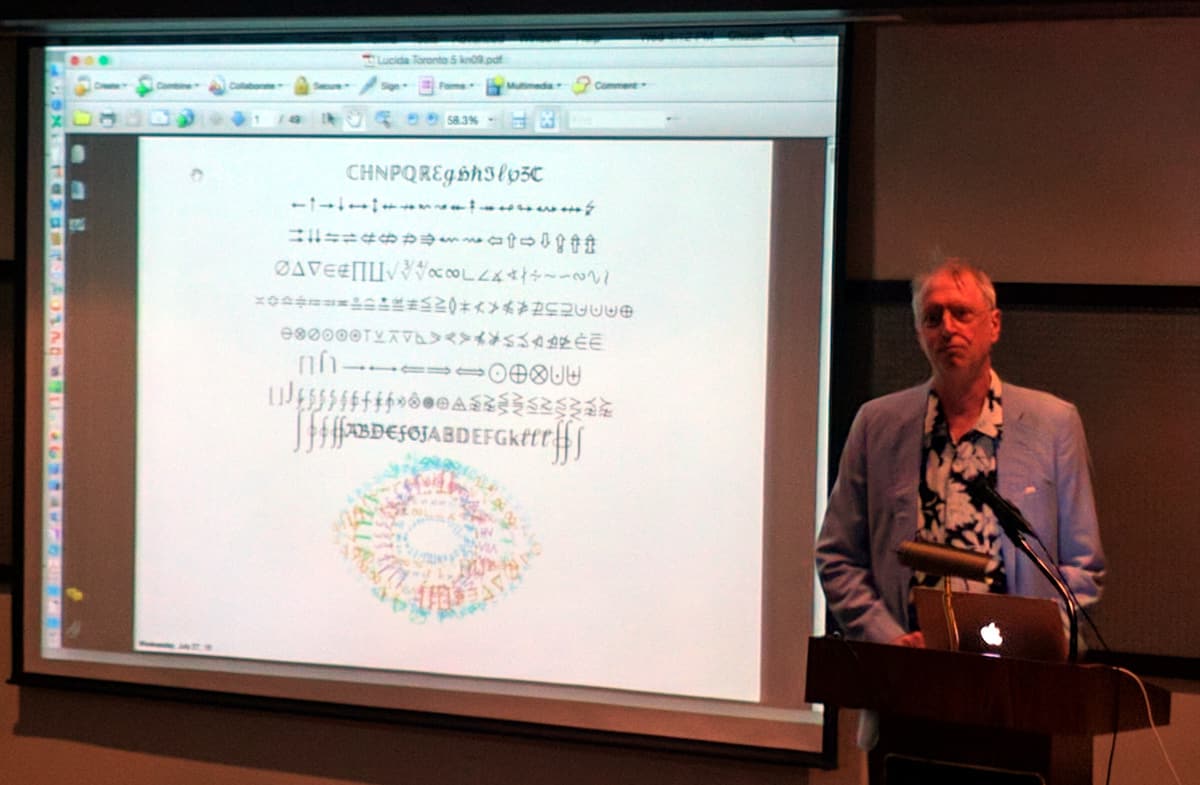
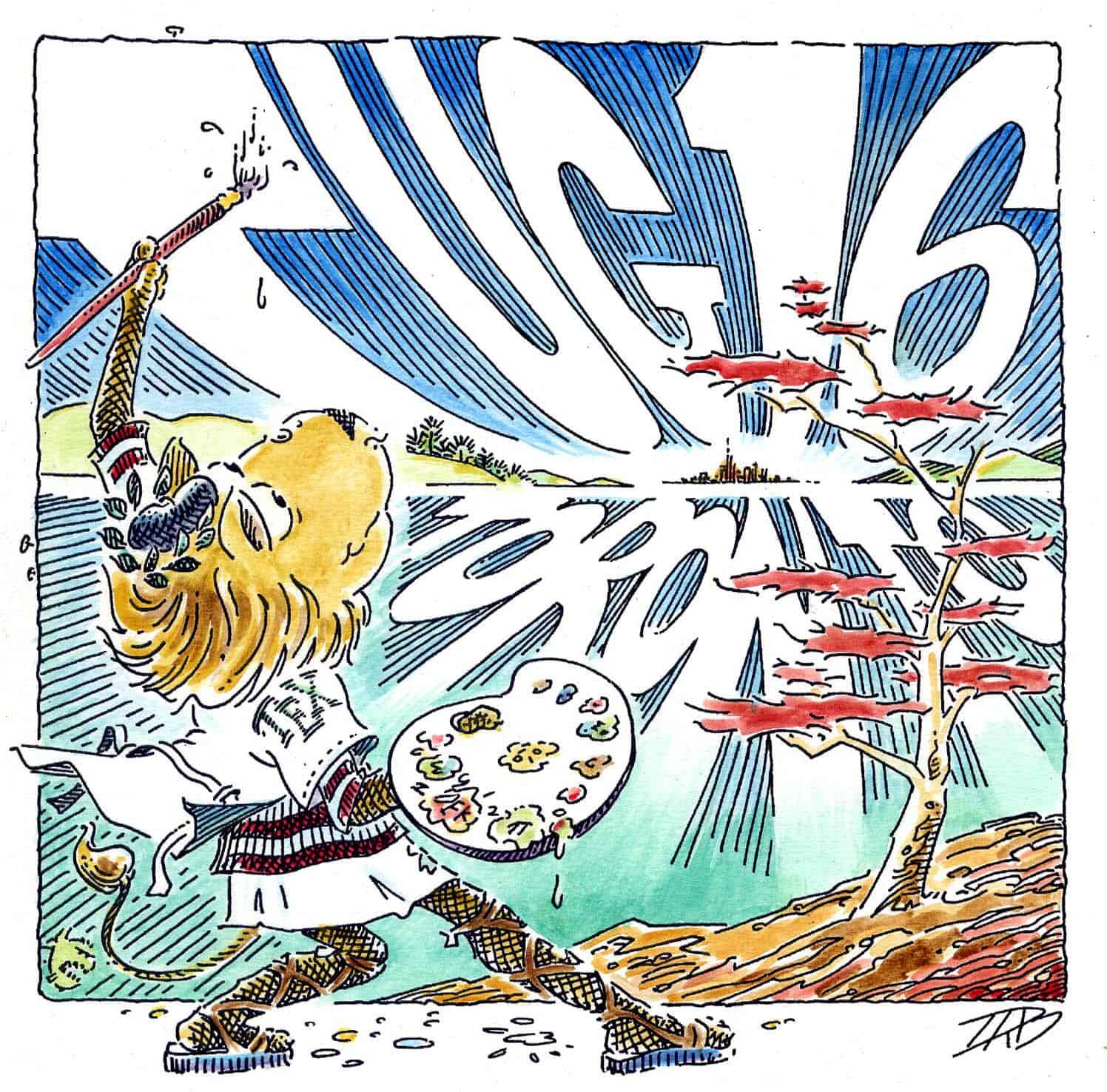
tug2016-biglow A great finish of a great conference. Jennifer Claudio The case for justified text Due to a strange timezone bug in my calendar program, I completely overslept a morning meeting and breakfast, as well as the first talk, so unfortunately I don t have anything to report about this surely intersting talk comparing justification in various word processors and TeX. Leyla Akhmadeeva, Rinat Gizatullin, Boris Veytsman Are justification and hyphenation good or bad for the reader? Still half dizzy and without coffee, I couldn t really follow this talk, and only woke up till the end when there was a lot of interesting discussion about speed reading and its non-existence (because it is simply skimming over text), and improvements on reading comprehension. Charles Bigelow Looking for legibility Another special guest, Charles Bigelow, presented a huge pool of research and work into readability, and how attitude and usage of fonts change over time. A very involving and well laid out talk, full of interesting background images and personal opinions and thoughts. Charles also touched onto topics of readability on modern devices like e-readers and mobiles. He compared the recent developments in font design for mobile devices with their work on Lucida 20+ years ago, and concluded that both arrived at the same solutions. A very educating and amusing talk packed full with information on readability. I surely will revisit the recording in a study session. David Walden Some notes on the history of digital typography David touches on many topics of the history of digital typography which he has experienced himself over the years: First the development of newspaper production and printing, then the evolvement of editors from simple text editors over word processors to full-fledged DTP programs. Finally he touches on various algorithmic problems that appear in the publishing business. Tim Inkster The beginning of my career Tim, our fanatastic guide through his print shop the Procupine s Quill on the second excursion day, talked about his private ups and downs in the printing business, all filled with an infinite flow of funny stories and surprising anecdotes. Without slides and anything but his voice and his stories, he kept us hanging on his lips without a break. I recommend watching the recording of his talk because one cannot convey the funny comments and great stories he shared with us in this simple blog. Joe Clark Type and tiles on the TTC Joe unveils the history of rise and fall of the underground types and
tiles in Toronto. It is surprising to me that a small metro network as in Toronto can have such a long history of changes of design, layout, presentation. Some of the photos completely stymed me how can anyone put up signs like that? I was thinking. To quote Joe (hopefully I remember correctly):
You see what happens without adult supervision.
Abdelouahad Bayar Towards an operational (La)TeX package supporting optical scaling of dynamic mathematical symbols A technical talk about a trial in providing optical scaling of mathematical symbols. As far as I understand it tries to improve on the TeX way of doing extensible math symbols by glueing things together. It seems to be highly involved and technically interesting project, but I couldn t completely grasp the aim of it. Michael Cohen, Blanca Mancilla, John Plaice Zebrackets: A score of years and delimiters John introduced us to Zebrackets, stripped parentheses and brackets, to help us keep track of pairing of those beasts. But as we know, Zebras are very elusive animals, and so we saw lots of stripped brackets around. The idea of better markup of matching parentheses is definitely worth developing. Charles Bigelow Probably approximately not quite correct: Revise, repeat The second talk of Charles, this time on the history of the Lucida fonts, from the early beginnings drawn on graph paper to recent developments using FontLab producing OpenType fonts. A truly unique crash course through the development of one of the very big families of fonts, and one of the first outside Computer Modern that had also support for proper math typesetting in TeX.
Aggressively legible!
One of the key phrases that popped up again and again was aggressively legible, mostly in negative connotations as far to fat symbols or far to big Arabic letters. But for me this font family is still close to my heart. I purchased it back than from Y&Y for my PhD thesis, and since then have upgraded to the TUG version including the OpenType fonts, and I use them for most of my presentation. Maybe I like the aggressive legibility! Chuck slided in lots of nice comments about Kris Holmes, the development practice in their cooperation, stories of business contacts, and many more, making this talk a very lively and amusing, and at the same time very educating talk.
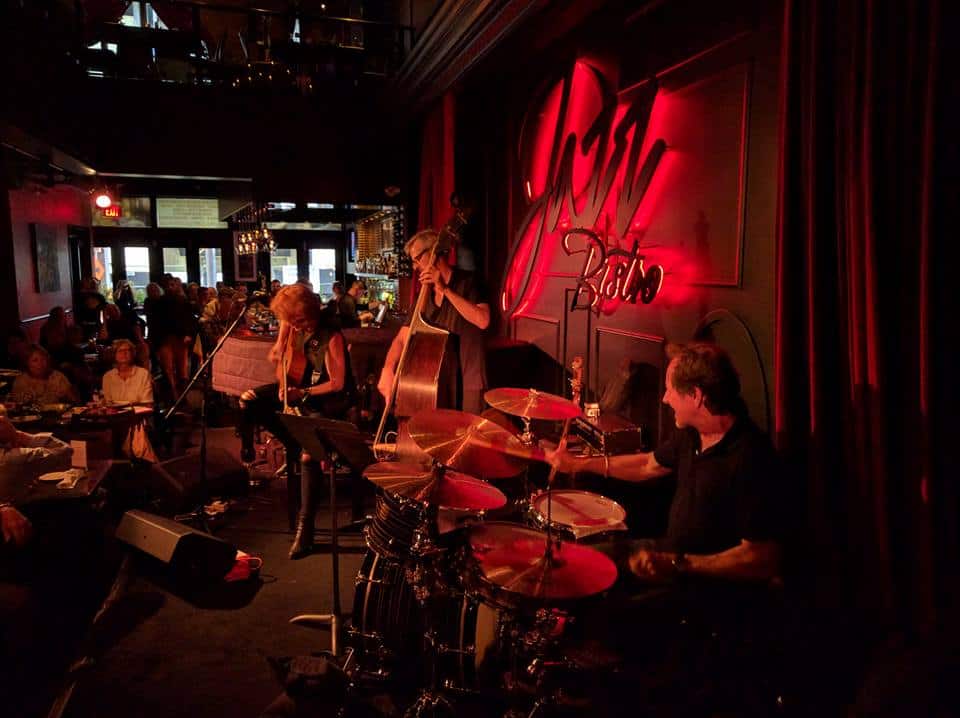
This concluded the TUG conference talks, and we thanked Pavneet for his excellent organization. But since we still have up to two days of excursions, many people dispersed quickly, just to meet again for a optional Type and Tile Tour 3-5 subway stops with discussion of typesetting This guided tour through the underground of Toronto, guided by Joe Clark who spoke in the morning about this topic, was attended by far too many participants. I think there were around 25 when we left. I thought that this will not work out properly, and so decided to leave the group and wander around alone. The last program point for today was dinner with a blues music concert in the near by Jazz Bistro:
jazz-bistro Excellent life music in a bit schick/sophisticated atmosphere was a good finish for this excellent day. With Herb from MacTeX and his wife we killed two bottles of red wine, before slowly tingling back to the hotel. A great finishing day of talks.

26 July 2016

Rhonda D'Vine: Debian LGBTIQA+

I have a long overdue blog entry about what happened in recent times. People that follow my tweets did catch some things. Most noteworthy there was the Trans*Inter*Congress in Munich at the start of May. It was an absolute blast. I met so many nice and great people, talked and experienced so many great things there that I'm still having a great motivational push from it every time I think back. It was also the time when I realized that I in fact do have body dysphoria even though I thought I'm fine with my body in general: Being tall is a huge issue for me. Realizing that I have a huge issue (yes, pun intended) with my length was quite relieving, even though it doesn't make it go away. It's something that makes passing and transitioning for me harder. I'm well aware that there are tall women, and that there are dedicated shops for lengthy women, but that's not the only thing that I have trouble with. What bothers me most is what people read into tall people: that they are always someone they can lean on for comfort, that tall people are always considered to be self confident and standing up for themselves (another pun, I know ... my bad). And while I'm fine with people coming to me for leaning on to, I rarely get the chance to do so myself. And people don't even consider it. When I was there in Munich, talking with another great (... pun?) trans woman who was as tall as me I finally had the possibility to just rest my head on her shoulder and finally feel the comfort I need just as much as everyone else out there, too. Probably that's also the reason why I'm so touchy and do go Free Hugging as often as possible. But being tall also means that you are usually only the big spoon when cuddling up. Having a small mental breakdown because of realizing that didn't change the feeling directly but definitely helped with looking for what I could change to fix that for myself. Then, at the end of may, the movie FtWTF - female to what the fuck came to cinema. It's a documentary about six people who got assigned female at birth. And it's absolutely charming, and has great food for thoughts in it. If you ever get the chance to watch it you definitely should. And then came debconf16 in Capetown. The flight to there was canceled and we had to get rebooked. The first offer was to go through Dubai, and gladly a colleague did point out to the person behind the desk that that wouldn't be safe for myself and thus out of scope. In the end we managed to get to Capetown quite nice, and even though it was winter when the sun was shining it was quite nice. Besides the cold nights that is. Or being stuck on the way up to table mountain because a colleague had cramps in his lags and we had to call mountain rescue. Gladly the night was clear, and when the mountain rescue finally got us to top and it was night already we had one of the nicest views from up there most people probably never will experience. And then ... I got invited to a trans meetup in Capetown. I was both excited and nervous about it, what to expect there. But it was simply great. The group there was simply outstandingly great. The host gave update information on progress on clinical support within south Africa, from what I took with me is that there is only one clinic there for SRS which manages only two people a year which is simply ... yuck. Guess you can guess how many years (yes, decades) the waiting line is ... I was blown away though by the diversity of the group, on so many levels, most notably on the age spectrum. It was a charm to meet you all there! If you ever stop by in Capetown and you are part of the LGBTIQ community, make sure you get in contact with the Triangle Project. But, about the real reason to write this entry: I was approached at Debconf by at least two people who asked me what I thought about creating an LGBTIQA+ group within Debian, and if I'd like to push for that. Actually I think it would be a good idea to have some sort of exchange between people on the queer spectrum (and I hope I don't offend anyone with just saying queer for LGBTIQA+ people). Given that I'm quite outspoken people approach me every now and then so I'm aware that there is a fair amount of people that would fall into that category. On the other hand some of them wouldn't want to have it publicly known because it shouldn't matter and isn't really the business of others. So I'm uncertain. If we follow that path I guess something that is closed or at least offers the possibility to have a closed communication would be needed to not out someone by just joining in the discussion. It's was easier with Debian Women where it was (somewhat) clear that male participants are allies supporting the cause and not considered being women themselves, but often enough (mostly cis hetero male) people are afraid to join a dedicated LGBTIQA+ group because they have the fear of having their identity judged. These things should be considered before creating such a place so that people can feel comfortable when joining and know what to expect beforehand. For the time being I created #debian-diversity on irc.debian.org to discuss how to move forward. Please bear in mind that even the channel name is up for discussion. Acronyms might not be the way to go in my opinion, just read back up the discussion that lead to the Diversity Statement of Debian where the original approach was to start listing groups for inclusiveness but it was quickly clear that it can get outdated too easily. I am willing to be part of that effort, but right now I have some personal things to deal which eat up a fair amount of my time. My kid starts school in September (yes, it's that long already, time flies ...). And it looks like I'll have to move a second time in the near future: I'll have to leave my current flat by the end of the year and the Que[e]rbau I'm moving into won't be ready by that time to host me yet ... F*ck. :(

/personal permanent link Comments: 1 Flattr this

Norbert Preining: TUG 2016 Day 1 Routers and Reading

The first day of the real conference started with an excellent overview of what one can do with TeX, spanning from traditional scientific journal styles to generating router configuration for cruising ships.
tug2016-color All this was crowned with an invited talk my Kevin Larson from Microsoft s typography department on how to support reading comprehension. Pavneet Aurora Opening: Passport to the TeX canvas Pavneet, our never-sleeping host and master of organization, opened the conference with a very philosophical introduction, touching upon a wide range of topics ranging from Microsoft, Twitter to the beauty of books, pages, and type. I think at some point he even mentioned TeX, but I can t remember for sure. His words put up a very nice and all-inclusive stage, a community that is open to all kind of influences with any disregard or prejudice. Let us hope that is reflects reality. Thanks Pavneet. Geoffrey Poore Advances in PythonTeX Our first regular talk was by Geoffrey reporting on recent advances in PythonTeX, a package that allows including python code in your TeX document. Starting with an introduction to PythonTeX, Geoggrey reports about an improved verbatim environment, fvextra, which patches fancyvrb, and improved interaction between tikz and PythonTeX. As I am a heavy user of listings for my teaching on algebraic specification languages, I will surely take a look at this package and see how it compares to listings. Stefan Kottwitz TeX in industry I: Programming Cisco network switches using TeX Next was Stefan from Lufthansa Industry Solutions, who reported first about his working environment, Cruise Ships with a very demanding IT infrastructure he has to design and implement. Then he introduced us to his way of generating IP configurations for all the devices using TeX. The reason he chose this method is that it allows him to generate at the same time proper documentation. It was surprising for me to hear that by using TeX he could far more efficiently and quicker produce well designed and easily accessible documentation, which helped both the company as well as made the clients happy! Stefan Kottwitz TeX in industry II: Designing converged network solutions After a coffee break, Stefan continued his exploration into industrial usage of TeX, this time about using tikz to generate graphics representing the network topology on the ships. Boris Veytsman Making ACM LaTeX styles Next up was Boris which brought us back to traditional realms of TeX when he guided us into the abyss of ACM LaTeX styles he tried to maintain for some time, until he plunged into a complete rewrite of the styles. Frank Mittelbach Alice goes floating global optimized pagination including picture placements The last talk before lunch (probably a strategic placement, otherwise Frank would continue for hours and hours) was Frank on global optimization of page breaks. Frank showed us what can and can not be done with current LaTeX, and how to play around with global optimization of pagination, using Alice in Wonderland as running example. We can only hope that his package is soon available in an easily consumable version to play around. Thai lunch Pavneet has organized three different lunch-styles for the three days of the conference, today s was Thai with spring rools, fried noodles, one kind of very interesting orange noodles, and chicken something. Michael Doob baseball rules summary After lunch Michael gave us an accessible explanation of the most arcane rules a game can have the baseball rules by using pseudo code. I think the total number of loc needed to explain the overall rules would fill more pages than the New York phonebook, so I am deeply impressed by all those who can understand these rules. Some of us even wandered off in the late afternoon to see a match with life explanations of Michael. Amartyo Banerjee, S.K. Venkatesan A Telegram bot for printing LaTeX files Next up was Amartyo who showed a Telegram (as in messenger application) bot running on a Raspberry Pi, that receives (La)TeX files and sends back compiled PDF files. While it is not ready for consumption (If you sneeze the bot will crash!), it looks like a promising application. Furthermore, it is nice to see how open APIs (like Telegram) can spur development of useful tools, while closed APIs (including threatening users, like WhatApp) hinders it. Norbert Preining Security improvements in the TeX Live Manager and installer Next up was my own talk about beefing up the security of TeX Live by providing integrity and authenticity checks via GnuPG, a feature that has been introduced with the recent release of TeX Live 2016. The following discussion gave me several good idea on how to further improve security and usability. Arthur Reutenauer -The TeX Live M sub-project (and open discussion) Arthur presented the TeX Live M (where the M stands supposedly for Mojca, who couldn t attend unfortunately) project: Their aim is to provide a curated and quality verified sub-part of TeX Live that is sufficiently complete for many applications, and easier for distributors and packagers. We had a lively discussion after Arthur s short presentation, mostly about why TeX Live does not have a on-the-fly installation like MikTeX. I insisted that this is already possible, using the tex-on-the-fly package which uses the mktextex infrastructure, but also caution against using it by default due to delays induced by repeatably reading the TeX Live database. I think this is a worth-while project for someone interested in learning the internals of TeX Live, but I am not sure whether I want to invest time into this feature. Another discussion point was about a testing infrastructure, which I am currently working on. This is in fact high on my list, to have some automatic minimal functionality testing a LaTeX package should at least load! Kevin Larson Reading between the lines: Improving comprehension for students Having a guest from Microsoft is rather rare in our quite Unix-centered environment, so big thanks to Pavneet again for setting up this contact, and big thanks to Kevin for coming. Kevin gave us a profound introduction to reading disabilities and how to improve reading comprehension. Starting with an excursion into what makes a font readable and how Microsoft develops optimally readable fonts, he than turned to reading disabilities like dyslexia, and how markup of text can increase students comprehension rate. He also toppled my long-term believe that dyslexia is connected to the similar shape of letters which are somehow visually malprocessed this was the scientific status from the 1920ies till the 70ies, but since then all researchers have abandoned this interpretation and dyslexia is now linked to problems linking shape to phonems. Kevin did an excellent job with a slightly difficult audience some people picking about grammer differences between British and US English and permanently derailing the discussion, and even more the high percentage of typographically somehow specially tasted participants. After the talk I had a lengthy discussion with Kevin about if/how this research can be carried over to non-Roman writing systems, in particular Kanji/Hanzi based writing systems, where dyslexia shows itself probably in different context. Kevin also mentioned that they want to add interword space to Chinese to help learners of Chinese (children, foreigners) to better parse, and studies showed that this helps a lot in comprehension. On a meta-level, this talk bracketed with the morning introduction by Pavneet, describing an open environment with stimulus back and forth in all directions. I am very happy that Kevin took the pain to come in his tight schedule, and I hope that the future will bring better cooperation at the end we are all working somehow on the same front only the the tools differ.
izakaya-sake-partyAfter the closing of the session, one part of our group went off to the baseball match, while another group dived into a Japanese-style Izakaya where we managed to kill huge amounts of sake and quite an amount of food. The photo shows me after the first bottle of sake, while just seeping on an intermediate small amount of genshu (kind of strong undiluted sake) before continuing to the next bottle. An interesting and stimulating first day of TUG, and I am sure that everyone was looking forward to day 2.

25 July 2016

Norbert Preining: TUG 2016 Day 0 Books and Beers

The second pre-conference day was dedicated to books and beers, with a visit to an exquisite print studio, and a beer tasting session at one of the craft breweries in Canada. In addition we could grab a view into the Canadian lifestyle by visiting Pavneet s beautiful house in the countryside, as well as enjoying traditional style pastries from a bakery.
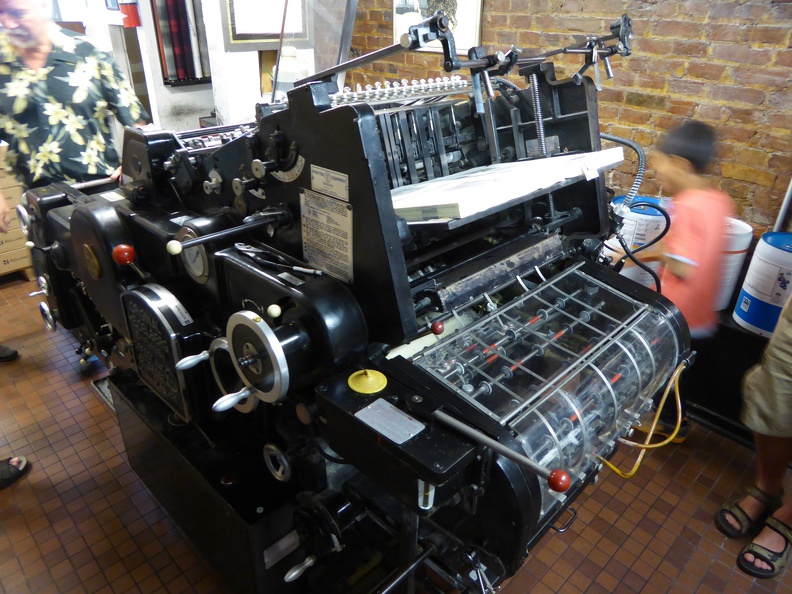
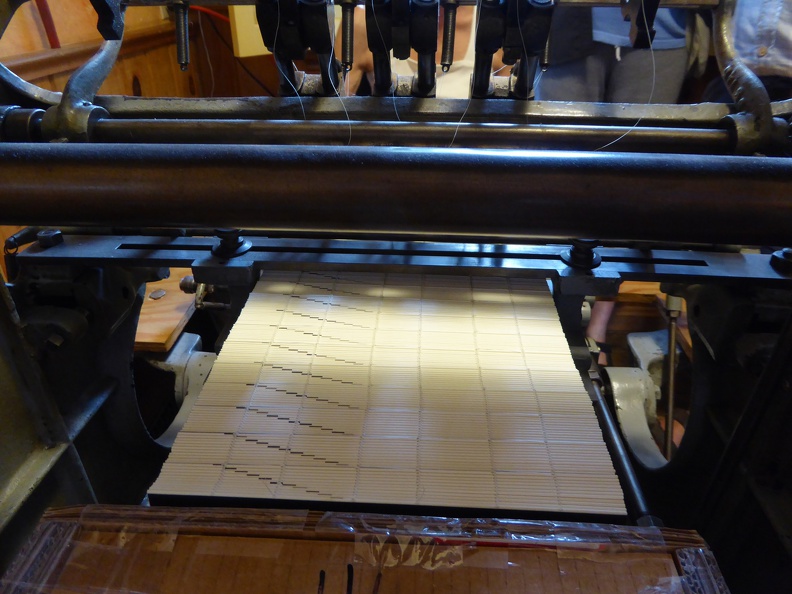
Heidelberg printing machine at Porcupine's quilt
In short, a perfect combination for us typography and beer savvy freaks! This morning we had somehow an early start from the hotel. Soon the bus left downtown Toronto and entered countryside Ontario, large landscapes filled with huge (for my Japanese feeling) estates and houses, separated by fields, forests and wild landscape. Very beautiful and inviting to live there. On our way to the printing workshop we stopped at Pavneet s house for a very short visit of the exterior, which includes mathematics in the bricking. According to Pavneet, his kids hate to see math on the wall I would be proud to have it.
Pavneet's house is hiding some mathematics
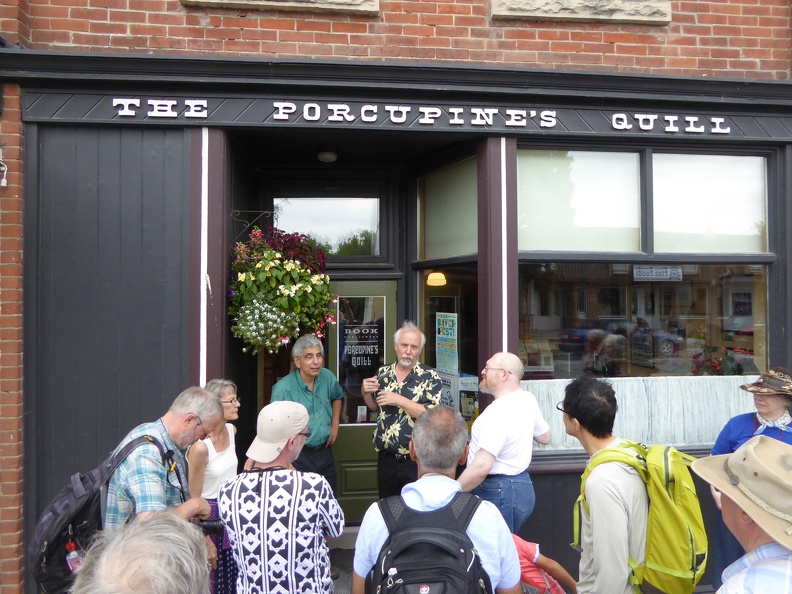
A bit further on we entered into Erin, where the Porcupine s Quill is located. A small building along the street, one could easily oversee that rare jewel! In addition considering that according to the owners, Google Maps has a bad error which would lead you to a completely different location. This printing workshop, led by Tim and Elke Inkster, is producing books in a traditional style using an old Heidelberg Offset printing machine.
Entrance to the Porcupine's Quill, a local bookshop doing excellent printing
Elke introduced us to the sewing of folded signatures together with a lovely old sewing machine. It was the first time I actually saw one in action.
Sewn signatures
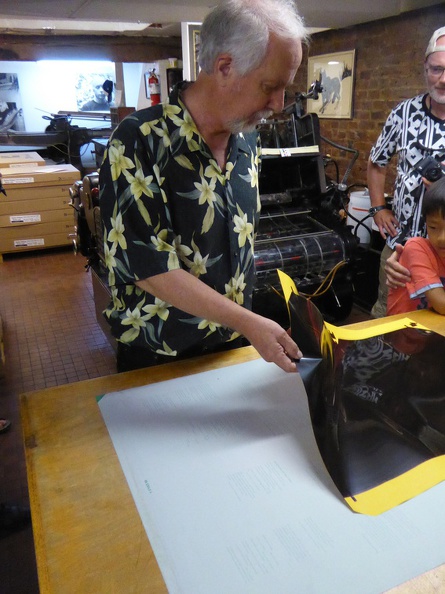
Tim, the head master of the printing shop, first entertained us with stories about Chinese publishers visiting them in the old cold-war times, before diving into explanations of the actual machines around, like the Heidelberg offset printing machine.
Master Tim is showing us offset technique
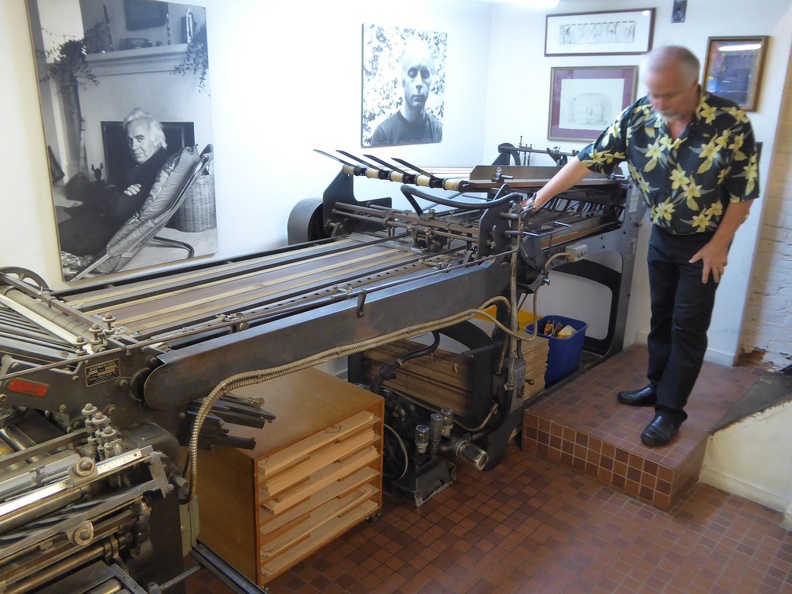
In the back of the basement of the little studio there is also a huge folding machine, which cuts up the big signatures of 16 pages and folds them into bundles. An impressive example of tricky engineering.
The folding machine creates from a printed signature 16 pages in proper order.
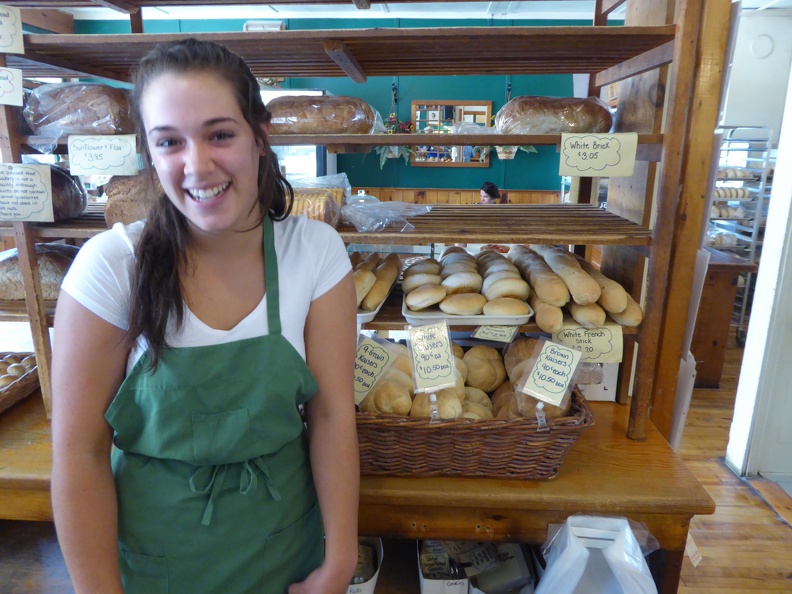
Due to the small size of the printing studio, our groups were actually split into two groups, and while the other group got its guided tour, we grabbed coffee and traditional cookies and pastries from the nearby Holtom s bakery. Loads of nice pastries with various filling, my favorite being the slightly salty cherry pie, and above all the rhubarb-raspberry pie.
Nearby old-style bakery, selling Viennese-style "Kaisersemmel", calling them "Kaiser buns". There must be an Austrian hiding somewhere around.
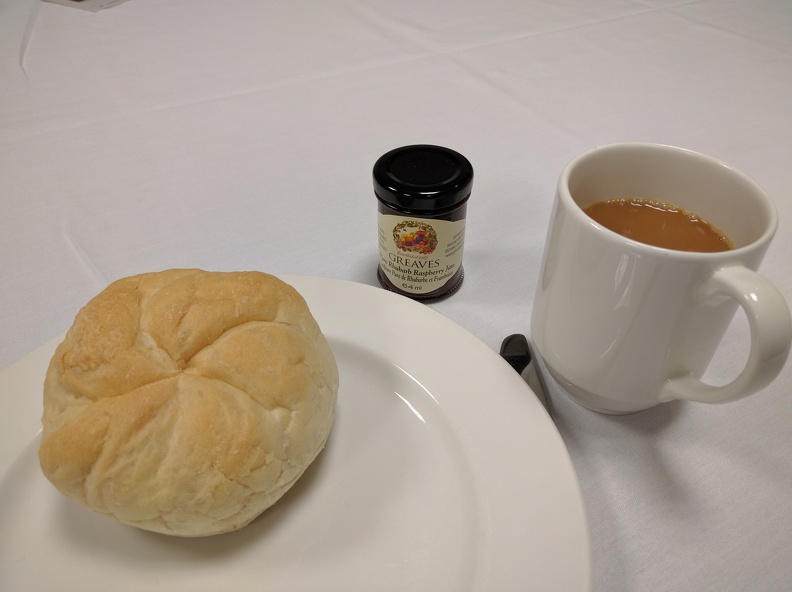
To my absolute astonishment I also found there a Viennese Kaisersemmel , called Kaiser bun here, but keeping the shape and the idea (but unfortunately not the crispy cracky quality of the original in Vienna). Of course I got two of them, together with a nice jam from the region, and enjoyed these Viennese breakfast the next day morning.
Viennese breakfast from the Bakery near Porcupine's Quill
Leaving the Quill we headed for a lunch in a nice pizzeria (I got Pizza Toscana) which also served excellent local beer how would I like to have something like this over in Japan! Our last stop on this excursion was Stone Hammer Brewery, ne of the most famous craft breweries in Canada.
One of the top craft breweries in Canada, the Stone Hammer
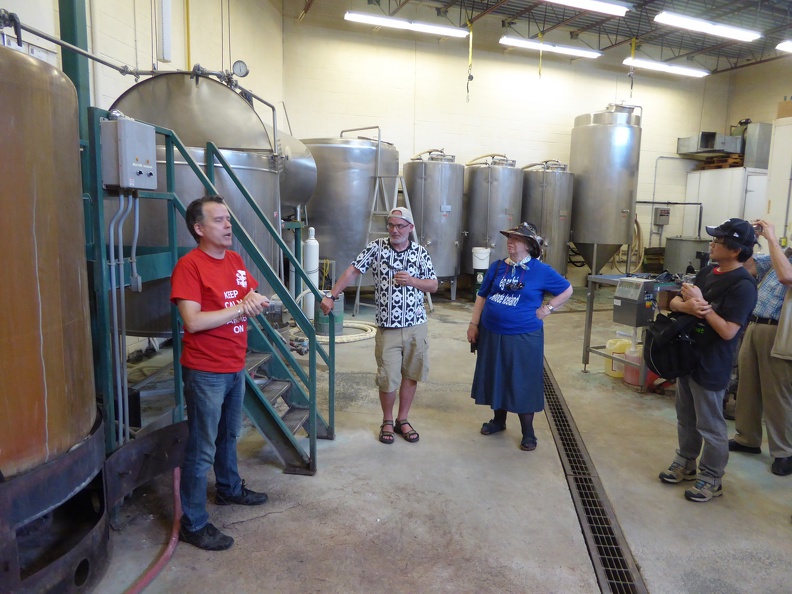
keep-calmAlthough they wont win a prize for typography (besides one page of a coaster there that carried a nice pun), their beers are exquisite. We got five different beers to taste, plus extensive explanations on brewing methods and differences. Now I finally understand why most of the new craft breweries in Japan are making Ales: Ales don t need a long process and are ready for sale in rather short time, compared to e.g. lagers.)
Explanations of the the secrets of beer brewing
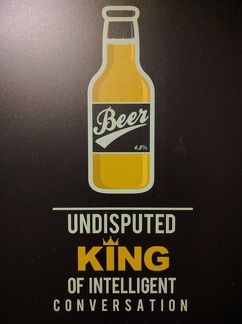
Nothing to add to this poster found in the Stone Hammer Brewery!
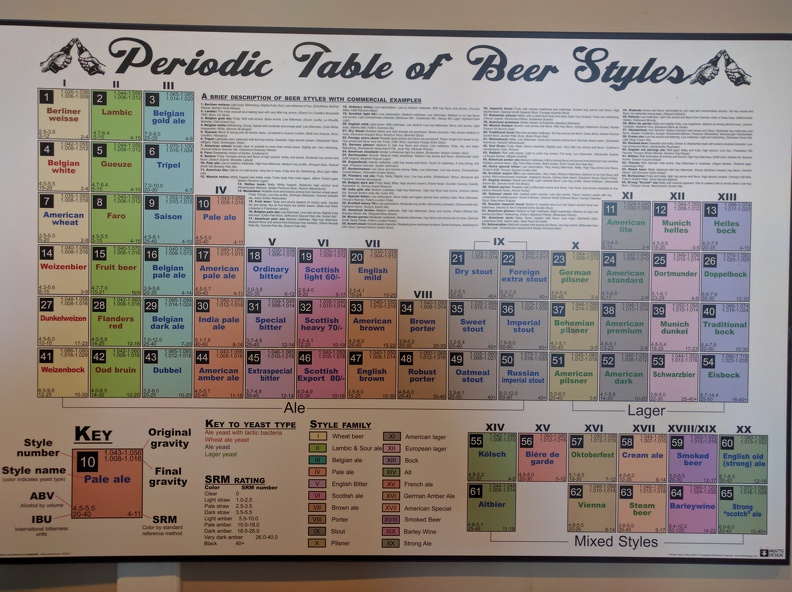
Also at the Stone Hammer Brewery I spotted this very nice poster on the wall of the toilet. And I cannot agree more, everything can easily be discussed over a good beer it calms down aversions, makes even the worst enemies friends, and is healthy for both the mind and body. Filled with excellent beer, some of us (notably an unnamed US TeXnician and politician), stacked up on beers to carry home. I was very tempted to get a huge batch, but putting cans into an airplane seems to be not the optimal idea. Since we are talking cans, I was surprised to hear that many craft beer brewers nowadays prefer cans due to their better protection of the beer from light and oxygen, both killers of good beer. Before leaving we took a last look at the Periodic Table of Beer Types, which left me in awe about how much I don t know and I probably never will know. In particular, I heard the first time of a Vienna style beer Vienna is not really famous for beer, better to say, it is infamous. So maybe this is a different Vienna than my home town that is meant here.
Lots to study here, the Periodic Table of Beers
Another two hour bus ride brought us back to Toronto, where we met with other participants at the reception in a restaurant of Mediterranean cuisine, where I could enjoy for the first time in years a good Tahina and Humus. All around another excellent day, now I only would like to have two days of holidays, guess I need to relax in the lectures starting from tomorrow.

Sven Hoexter: me vs terminal emulator

I think my demands for a terminal emulator are pretty basic but none the less I run into trouble every now and then. This time it was a new laptop and starting from scratch with an empty $HOME and the current Debian/testing instead of good old Jessie. For the last four or five years I've been a happy user of gnome-terminal, configured a mono space font, a light grey background with black text color, create new tabs with Ctrl-n, navigate the tabs with Ctrl-Left and Ctrl-Right, show no menubar, select URLs with double click. Suited me well with my similarly configured awesome window manager, where I navigate with Mod4-Left and Mod4-Right between the desktops on the local screen and only activate a handful of the many default tiling modes. While I could get back most of my settings, somehow all cited gconf kung-foo to reconfigure the URL selection pattern in gnome-terminal failed, and copy&pasting URLs from the terminal was a pain in the ass. Long story short I now followed the advice of a coworker to just use the xfce4-terminal. That still required a few tweaks to get back to do what I want it to do. To edit the keybindings you've to know that you've to use the GTK way and edit them within in the menu while selecting the menu entry. But you've to allow that first (why oh why?):
echo "gtk-can-change-accels=1" >> ~/.gtkrc-2.0
Fair enough that is documented. Changing the keybinding generates fancy things in ~/.config/xfce4/terminal/accels.scm in case you plan to hand edit a few more of them. I also edited a few things in ~/.config/xfce4/terminal/terminalrc:
MiscAlwaysShowTabs=TRUE
MiscMenubarDefault=FALSE
So I guess I can remove gnome-terminal for now and stay with another GTK2 application. Doesn't feel that good but well at least it works.

Norbert Preining: TUG 2016 Day -1 Wines and Waters

This years TUG is held in Toronto, Canada, and our incredible host Pavneet has managed to put together an busy program of excursions and events around the real conference. The -1st day (yeah, you read right, the minus-first day), that is two days before the actual conference starts, was dedicated to an excursion to enjoying wines at the wine estate Ch teau des Charmes, followed by a visit to the Niagara falls.
The amount of water running down the Horseshoe Falls is incredible
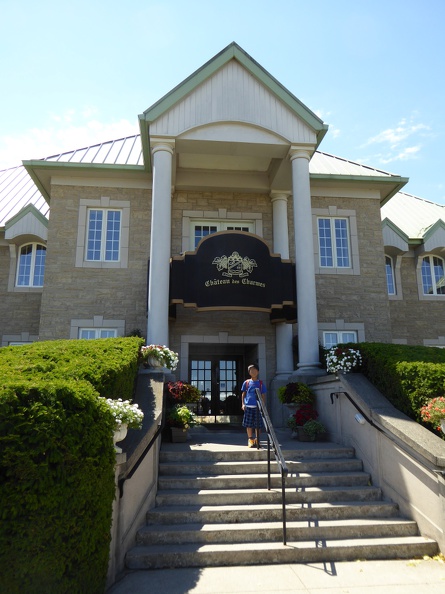
What should I say, if the first thing after getting out of the bus is a good wine, then there is nothing to go wrong I arrived in Toronto already two days earlier in the late afternoon, and spend Friday relaxing, recovering from the long flight, walking the city a bit, trying to fix my cold, and simply going slowly. Saturday morning we met already at a comfortable 10am in the morning (still to early for me, due to jet lag and a slightly late evening before), but the first 2h of bus drive allowed us to relax. Our first stop was the Ch teau des Charmes, and impressive building surrounded by vineyards.
Entrance to the Ch teau des Charmes
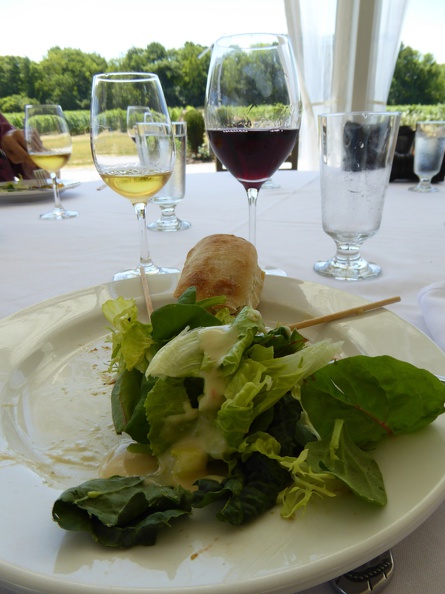
We were immediately handed over to a sandwich lunch with white, red, and ice wine. Good start! And although the breakfast wasn t that long time ago, the delicious sandwiches (at least the vegetarian ones I tried) were good foundation for the wine.
Lunch impressions at Ch teau des Charmes
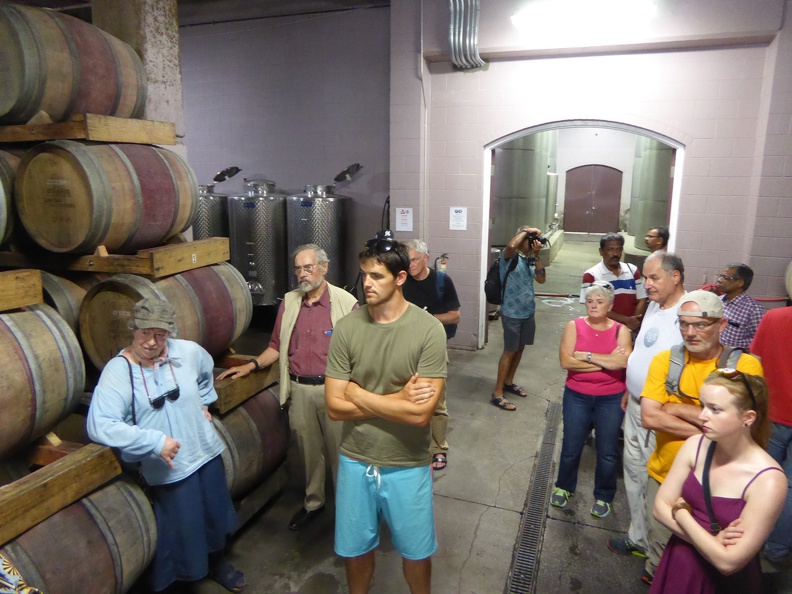
After having refilled our energy reserves, we are ready to start our tour. Our guide, very, if not over, enthusiastic, explains us that practically everything related to wine in Canada has been started at this Ch teau from the current owner the Ch teau system where farmer and wine producer are the same, import of European grapes, winter protection methods, wine making I was close to forgetting our Roman and Greek ancestors. At least she admitted that the Ice wine was brought over by an Austrian but perfection was done here, were the controls of the government are much stricter than anywhere else hmmm, somehow I cannot completely believe all this narrative, but at least it is enjoyable. So now that we know all about the history, we dive into the production process area, and the barrel space, always accompanied with extensive comments and (self-)praise.
Enjoying the explanations of our very enthusiastic guide
After this exhaustive and exhausting round, we are guided back to the patio to taste another three different wines, a white (bit too warm, not so much my taste), a rose (very good), and a red made from a new grape variety that has mutated first here on the Ch teau (interesting). As I didn t have enough, I tried to get something out of the big containers directly, but without success!
Me trying to get a full load of wine
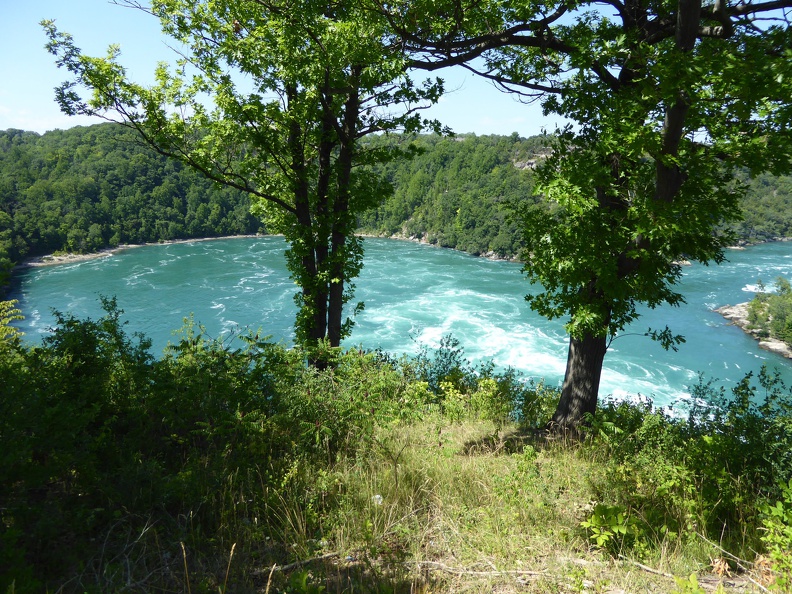
Happy and content, and after passing through the shopping area, we are boarding the bus to continue direction of the Niagara Falls. Passing by at quite some nice houses of definitely quite rich people (although Pavneet told me that houses in Toronto are far more expensive than those here how can someone afford this?), we first have a view onto the lower Niagara river. A bit further one we are let out to see huge whirlpools in the river, where boat tours are bringing sightseers on a rough ride ride into the pool.
Whirlpools along the Niagara river
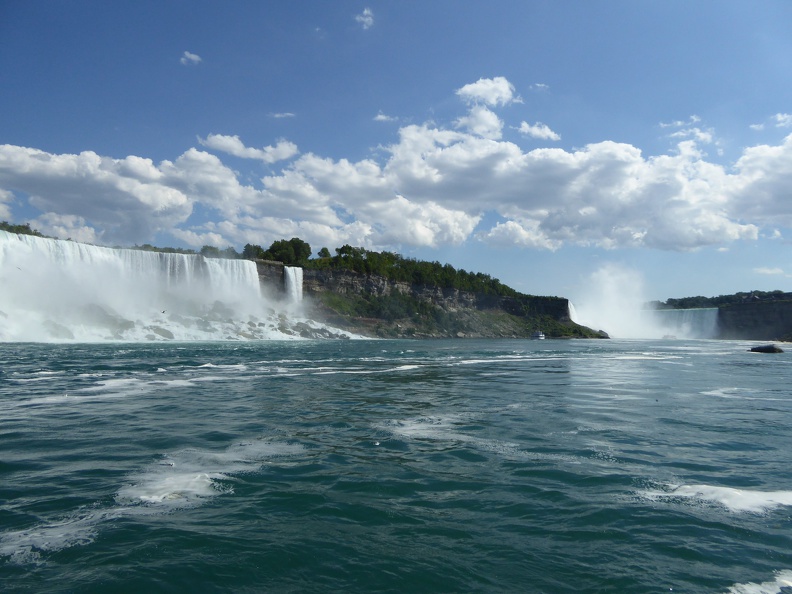
Only a slight bit further on we finally reach the Niagara falls, with the great view onto the American falls in full power, and the Horseshoe Falls further up.
Horseshoe Falls in view
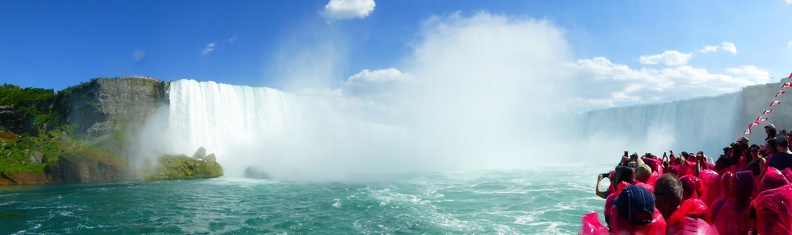
We immediately boarded a boat tour making a short trip to the Horseshoe Fall. Lining up with hundreds and hundreds of other spectators, we prepare for the splash with red rain wear (the US side uses blue, not that any side would rescue a wrong person and create an illegal immigrant!). The trip passes first under the American Falls and continues right into the mist that fills all the area in the middle of the Horseshoe falls. Spectacular impression with walls of water falling down on both sidess.
Panorama of the Horseshoe Falls
Returned from the splash and having dried our feet, we walk along the ridge to see the Horseshoe falls from close up. The amount of water falling down these falls is incredible, and so is the erosion that creates the brown foam on the water down in the pool, made up from pulverized limestone. Blessed as we were, the sun was laughing all the day and we got a nice rainbow right in the fall.
Horseshoe Falls with boat and rainbow, lovely.
The surroundings of the fall are less impressive Disney land? Horror cabinet? Jodel bar? A wild mixture of amusement park style locations squeezed together and overly full with people as if enjoying the nature itself would not be enough. All immersed by ever blasting loudspeaker music.
Torture around Niagara falls
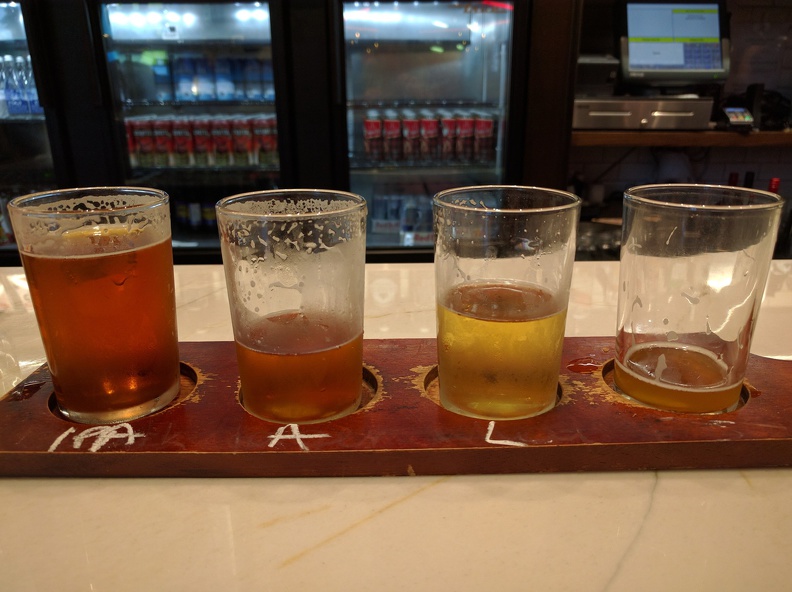
The only plus point I could find in this encampment of forced happiness was a local craft beer brewer where one could taste 8 different beers I made it only to four, though.
Beer tasting at Niagara Brewery, IPA, Amber ale, Lager, and some Light Fruity Radler beer.
Finally night was falling in and we moved down to the falls again to enjoy the illumination of the falls.
Night view onto Niagara falls
After this wonderful finish we boarded the bus and back to Toronto, where we arrived around mid-night. A long but very pleasurable Day Minus One! Further photos can be seen at the gallery TUG 2016 Day Minus One.

24 July 2016

Tom Marble: jai-gagne-le-tour-de-crosstown-2016

J'ai gagn le Tour de Crosstown 2016! Everyone knows that today the finish line for Le Tour de France was crossed on Les Champs- lys es in Paris... And if you haven't seen some of the videos I highly recommend checking out the onboard camera views and the landscapes! Quel beau pays I'm happy to let you know that today I won the Tour de Crosstown 2016 which is the cycling competition at Lifetime Crosstown inspired by and concurrent to Le Tour de France. There were about twenty cyclists competing to see who could earn the most points -- by attending cycling class bien s r. I earned the maillot jaune with 23 points and my next closest competitor had 16 points (with the peloton far behind). But that's just part of the story.

Tour de Crosstown 2016
For some time I've been coming to Life Time Fitness at Crosstown for yoga (in Josefina's class) and playing racquetball with my friend David. The cycling studio is right next to the racquetball courts and there's been a class on Saturday's at the same time we usually play. I told David that it looked like fun and he said, having tried it, that it is fun (and a big workout). In early June David got busy and then had an injury that has kept him off the court ever since. So one Saturday morning I decided to try cycling. I borrowed a heart rate monitor (but had no idea what it was for) and tried to bike along in my regular gym shorts, shoes and a t-shirt. Despite being a cycling newbie I was immediately captured by Alison's music and enthusiasm. She's dancing on her bike and you can't help but lock in the beat. Of course that's just after she tells you to dial up the resistance... and the sweat just pours out! I admit that workout hit me pretty hard, but I had to come back and try the 5:45 am Wednesday EDGE cycle class (gulp). Despite what sounds like a crazy impossible time to get out and on a bike it actually works out super well. This plan requires one to up-level one's organization and after the workout I can assure you that you're fully awake and charged for the day! Soon I invested in my own heart rate monitor. Then I realized it would work so much better if I had a metabolic assessment to tune my aerobic and anaerobic training zones. While I signed up for the assessment I decided to work with May as my personal trainer. In addition to helping me with my upper body (complementing the cycling) May is a nutritionist and has helped me dial in this critical facet of training. Even though I'm still working to tune my diet around my workouts, I've already learned a lot by using My Fitness Pal and, most importantly, I have a whole new attitude about food. Pour les curieux, la nutritioniste maison s'est absent e en France pendant le mois de juillet. Soon I would invest in bike shoes, jerseys and shorts and begin to push myself into the proper zones during workouts and fuel my body properly afterwords. All these changes have led to dramatic weight loss \o/ A few of you know that the past two years have involved a lot of personal hardship. Upon reflection I have come to appreciate that things in my life that I can actually control are a massive opportunity. I decided that fixing my exercise and nutrition were the opportunities I want to focus on. A note for for my Debian friends... I'm sorry to have missed you in Cape Town, but I hope to join you in Montr al next year. So when the Tour de Crosstown started in July I decided this was the time for me to get serious. I want to thank all the instructors for the great workouts (and for all the calories I've left on the bike): Alison, Kristine, Olivia, Tasha, and Caroline! The result of my lifestyle changes are hard to describe.. I feel an amazing amount of energy every day. The impact of prior back injury is now almost non-existent. And what range of motion I hadn't recovered from the previous summer's being "washing machined" by a 3 meter wave while body surfing at the beach in Hossegor is now fully working. Now I'm thinking it's time to treat myself to a new bike :) I'm looking at large touring frames and am currently thinking of the Surly Disc Trucker. In terms of bike shops I've had a good experience with One on One and Grand Performance has come highly recommended. If anyone has suggestions for bikes, bike features, or good shops please let me know! I would encourage everyone here in Minneapolis to join me as guest for a Wed morning 5:45am EDGE cycle class. I'm betting you'll have as much fun as a I do.. and I guarantee you will sweat! The challenge in waking up will pay off handsomely in making you energized for the whole day. Let's bike allons-y!

Russ Allbery: Review: The Run of His Life

Review: The Run of His Life, by Jeffrey Toobin
Publisher: Random House
Copyright: 1996, 1997
Printing: 2015
ISBN: 0-307-82916-2
Format: Kindle
Pages: 498
The O.J. Simpson trial needs little introduction to anyone who lived through it in the United States, but a brief summary for those who didn't. O.J. Simpson is a Hall of Fame football player and one of the best running backs to ever play the game. He's also black, which is very relevant much of what later happened. After he retired from professional play, he became a television football commentator and a spokesperson for various companies (particularly Hertz, a car rental business). In 1994, he was arrested for the murder of two people: his ex-wife, Nicole Brown Simpson, and Ron Goldman (a friend of Nicole's). The arrest happened after a bizarre low-speed police chase across Los Angeles in a white Bronco that was broadcast live on network television. The media turned the resulting criminal trial into a reality TV show, with live cable television broadcasts of all of the court proceedings. After nearly a full year of trial (with the jury sequestered for nine months more on that later), a mostly black jury returned a verdict of not guilty after a mere four hours of deliberation. Following the criminal trial, in an extremely unusual legal proceeding, Simpson was found civilly liable for Ron Goldman's death in a lawsuit brought by his family. Bizarre events surrounding the case continued long afterwards. A book titled If I Did It (with "if" in very tiny letters on the cover) was published, ghost-written but allegedly with Simpson's input and cooperation, and was widely considered a confession. Another legal judgment let the Goldman family get all the profits from that book's publication. In an unrelated (but also bizarre) incident in Las Vegas, Simpson was later arrested for kidnapping and armed robbery and is currently in prison until at least 2017. It is almost impossible to have lived through the O.J. Simpson trial in the United States and not have formed some opinion on it. I was in college and without a TV set at the time, and even I watched some of the live trial coverage. Reactions to the trial were extremely racially polarized, as you might have guessed. A lot of black people believed at the time that Simpson was innocent (probably fewer now, given subsequent events). A lot of white people thought he was obviously guilty and was let off by a black jury for racial reasons. My personal opinion, prior to reading this book, was a common "third way" among white liberals: Simpson almost certainly committed the murders, but the racist Los Angeles police department decided to frame him for a crime that he did commit by trying to make the evidence stronger. That's a legitimate reason in the US justice system for finding someone innocent: the state has an obligation to follow correct procedure and treat the defendant fairly in order to get a conviction. I have a strong bias towards trusting juries; frequently, it seems that the media second-guesses the outcome of a case that makes perfect sense as soon as you see all the information the jury had (or didn't have). Toobin's book changed my mind. Perhaps because I wasn't watching all of the coverage, I was greatly underestimating the level of incompetence and bad decision-making by everyone involved: the prosecution, the defense, the police, the jury, and the judge. This court case was a disaster from start to finish; no one involved comes away looking good. Simpson was clearly guilty given the evidence presented, but the case was so badly mishandled that it gave the jury room to reach the wrong verdict. (It's telling that, in the far better managed subsequent civil case, the jury had no trouble reaching a guilty verdict.) The Run of His Life is a very detailed examination of the entire Simpson case, from the night of the murder through the end of the trial and (in an epilogue) the civil case. Toobin was himself involved in the media firestorm, breaking some early news of the defense's decision to focus on race in The New Yorker and then involved throughout the trial as a legal analyst, and he makes it clear when he becomes part of the story. But despite that, this book felt objective to me. There are tons of direct quotes, lots of clear description of the evidence, underlying interviews with many of the people involved to source statements in the book, and a comprehensive approach to the facts. I think Toobin is a bit baffled by the black reaction to the case, and that felt like a gap in the comprehensiveness and the one place where he might be accused of falling back on stereotypes and easy judgments. But other than hole, Toobin applies his criticism even-handedly and devastatingly to all parties. I won't go into all the details of how Toobin changed my mind. It was a cumulative effect across the whole book, and if you're curious, I do recommend reading it. A lot was the detailed discussion of the forensic evidence, which was undermined for the jury at trial but looks very solid outside the hothouse of the case. But there is one critical piece that I would hope would be handled differently today, twenty years later, than it was by the prosecutors in that case: Simpson's history of domestic violence against Nicole. With what we now know about patterns of domestic abuse, the escalation to murder looks entirely unsurprising. And that history of domestic abuse was exceedingly well-documented: multiple external witnesses, police reports, and one actual prior conviction for spousal abuse (for which Simpson did "community service" that was basically a joke). The prosecution did a very poor job of establishing this history and the jury discounted it. That was a huge mistake by both parties. I'll mention one other critical collection of facts that Toobin explains well and that contradicted my previous impression of the case: the relationship between Simpson and the police. Today, in the era of Black Lives Matter, the routine abuse of black Americans by the police is more widely known. At the time of the murders, it was less recognized among white Americans, although black Americans certainly knew about it. But even in 1994, the Los Angeles police department was notorious as one of the most corrupt and racist big-city police departments in the United States. This is the police department that beat Rodney King. Mark Fuhrman, one of the police officers involved in the case (although not that significantly, despite his role at the trial), was clearly racist and had no business being a police officer. It was therefore entirely believable that these people would have decided to frame a black man for a murder he actually committed. What Toobin argues, quite persuasively and with quite a lot of evidence, is that this analysis may make sense given the racial tensions in Los Angeles but ignores another critical characteristic of Los Angeles politics, namely a deference to celebrity. Prior to this trial, O.J. Simpson largely followed the path of many black athletes who become broadly popular in white America: underplaying race and focusing on his personal celebrity and connections. (Toobin records a quote from Simpson earlier in his life that perfectly captures this approach: "I'm not black, I'm O.J.") Simpson spent more time with white businessmen than the black inhabitants of central Los Angeles. And, more to the point, the police treated him as a celebrity, not as a black man. Toobin takes some time to chronicle the remarkable history of deference and familiarity that the police showed Simpson. He regularly invited police officers to his house for parties. The police had a long history of largely ignoring or downplaying his abuse of his wife, including not arresting him in situations that clearly seemed to call for that, showing a remarkable amount of deference to his side of the story, not pursuing clear violations of the court judgment after his one conviction for spousal abuse, and never showing much inclination to believe or protect Nicole. Even on the night of the murder, they started following a standard playbook for giving a celebrity advance warning of investigations that might involve them before the news media found out about them. It seems clear, given the evidence that Toobin collected, that the racist Los Angeles police didn't focus that animus at Simpson, a wealthy celebrity living in Brentwood. He wasn't a black man in their eyes; he was a rich Hall of Fame football player and a friend. This obviously raises the question of how the jury could return an innocent verdict. Toobin provides plenty of material to analyze that question from multiple angles in his detailed account of the case, but I can tell you my conclusion: Judge Lance Ito did a horrifically incompetent job of managing the case. He let the lawyers wander all over the case, interacted bizarrely with the media coverage (and was part of letting the media turn it into a daytime drama), was not crisp or clear about his standards of evidence and admissibility, and, perhaps worst of all, let the case meander on at incredible length. With a fully sequestered jury allowed only brief conjugal visits and no media contact (not even bookstore shopping!). Quite a lot of anger was focused on the jury after the acquittal, and I do think they reached the wrong conclusion and had all the information they would have needed to reach the correct one. But Toobin touches on something that I think would be very hard to comprehend without having lived through it. The jury and alternate pool essentially lived in prison for nine months, with guards and very strict rules about contact with the outside world, in a country where compensation for jury duty is almost nonexistent. There were a lot of other factors behind their decision, including racial tensions and the sheer pressure from judging a celebrity case about which everyone has an opinion, but I think it's nearly impossible to underestimate the psychological tension and stress from being locked up with random other people under armed guard for three quarters of a year. It's hard for jury members to do an exhaustive and careful deliberation in a typical trial that takes a week and doesn't involve sequestration. People want to get back to their lives and families. I can only imagine the state I would be in after nine months of this, or how poor psychological shape I would be in to make a careful and considered decision. Similarly, for those who condemned the jury for profiting via books and media appearances after the trial, the current compensation for jurors is $15 per day (not hour). I believe at the time it was around $5 per day. There are a few employers who will pay full salary for the entire jury service, but only a few; many cap the length at a few weeks, and some employers treat all jury duty as unpaid leave. The only legal requirement for employers in the United States is that employees that serve on a jury have their job held for them to return to, but compensation is pathetic, not tied to minimum wage, and employers do not have to supplement it. I'm much less inclined to blame the jurors than the system that badly mistreated them. As you can probably tell from the length of this review, I found The Run of His Life fascinating. If I had followed the whole saga more closely at the time, this may have been old material, but I think my vague impressions and patchwork of assumptions were more typical than not among people who were around for the trial but didn't invest a lot of effort into following it. If you are like me, and you have any interest in the case or the details of how the US criminal justice system works, this is a fascinating case study, and Toobin does a great job with it. Recommended. Rating: 8 out of 10

23 July 2016

Mateus Bellomo: Send/receive text messages to buddies

Some weeks ago I ve implemented the option to send a text message from telepathy-resiprocate Empathy. At that time I just implemented it at apps/telepathy/TextChannel class which wasn t the ideal. Now, with a better understand of the resip/recon and resip/dum APIs, I was able to move this implementation there. Besides that I also have implemented the option to receive a text message. For that I have done some changes at resip/recon/ConversationManager and resip/recon/UserAgent classes, along some other. The complete changes could be seen at [1]. This branch also holds modifications related to send/receive presence. This is necessary since to send a message to a contact he/she should be online. There is still work to be done specially checking the possible error cases but at least we could see a first prototype working. Follow some images:
textChannel_JitsiAccount logged in with Jitsi
textChannel_EmpathyAccount logged in with Empathy using telepathy-resiprocate
[1] https://github.com/resiprocate/resiprocate/compare/master MateusBellomo:mateus-presence-text

22 July 2016

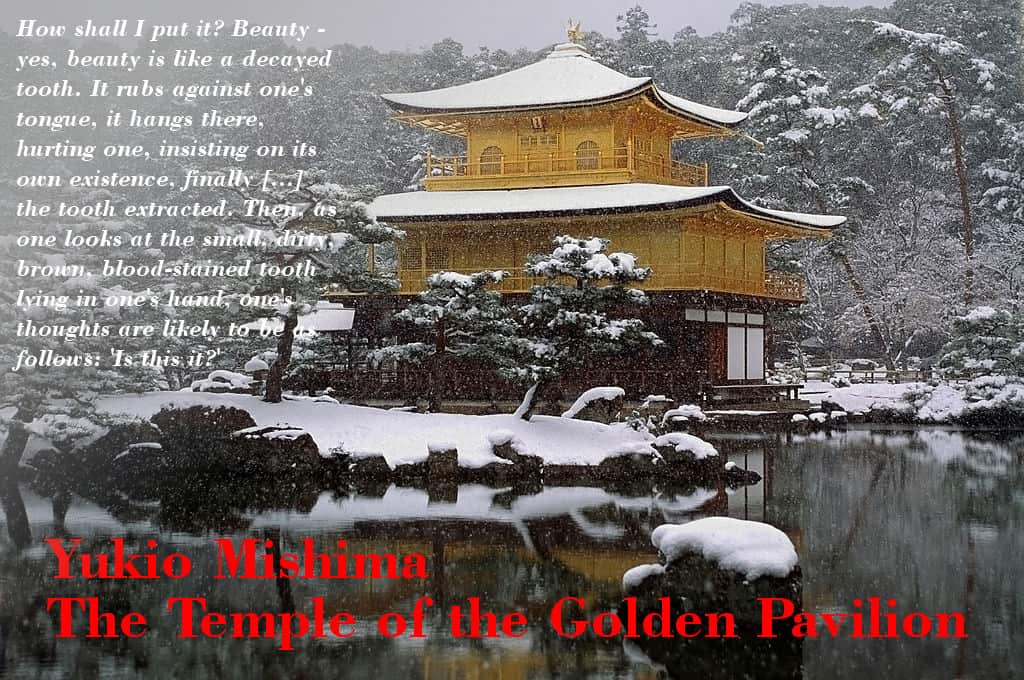
Norbert Preining: Yukio Mishima The Temple of the Golden Pavilion

A masterpiece of modern Japanese literature: Yukio Mishima ( ) The Temple of the Golden Pavilion ( ). The fictional story about the very real arson attack that destroyed the Golden Pavilion in 1950.
mishima-golden-temple A bit different treatise on beauty and ugliness!
How shall I put it? Beauty yes, beauty is like a decayed tooth. It rubs against one s tongue, it hangs there, hurting one, insisting on its own existence, finally [ ] the tooth extracted. Then, as one looks at the small, dirty, brown, blood-stained tooth lying in one s hand, one s thoughts are likely to be as follows: Is this it?
Mizoguchi, a stutterer, is from young years on taken by a near mystical imagination of the Golden Pavilion, influence by his father who considers it the most beautiful object in the world. After his father s death he moves to Kyoto and becomes acolyte in the temple. He develops a friendship with Kashiwagi, who uses his clubfeet to make women feel sorry for him and make them fall in love with his clubfeet, as he puts it. Kashiwagi also puts Mizoguchi onto the first tracks of amorous experiences, but Mizoguchi invariably turns out to be impotent but not due to his stuttering, but due to the image of the Golden Pavilion appearing in the essential moment and destroying every chance.
Yes, this was really the coast of the Sea of Japan! Here was the source of all my unhappiness, of all my gloomy thoughts, the origin of all my ugliness and all my strength. It was a wild sea.
Mizoguchi is getting more and more mentally about his relation with the head monk, neglects his studies, and after a stark reprimand he escapes to the north coast, from where he is brought back by police to the temple. He decides to burn down the Golden Pavilion, which has taken more and more command of his thinking and doing. He carries out the deed with the aim to burn himself in the top floor, but escapes in the last second to retreat into the hills to watch the spectacle.
Closely based on the true story of the arsonist of the Golden Pavilion, whom Mishima even visited in prison, the book is a treatise about beauty and ugly.
At his trial he [the real arsonist] said: I hate myself, my evil, ugly, stammering self. Yet he also said that he did not in any way regret having burned down the Kinkakuji.
Nancy Wilson Ross in the preface
Mishima is master in showing these two extremes by contrasting the refined qualities of Japanese culture flower arrangement, playing the shakuhachi, with immediate outburst of contrasting behavior: cold and brutal recklessness. Take for example the scene were Kashiwagi is arranging flowers, stolen by Mizoguchi from the temple grounds, while Mizoguchi is playing the flute. They also discuss koans and various interpretations. Enters the Ikebana teacher, and mistress of Kashiwagi. She congratulates Kashiwagi to his excellent arrangement, which he answers coldly by quitting their relationship, both as teacher as well as mistress, and telling her not to see him again in a formal style. She, still ceremonially kneeling, suddenly destroys the flower arrangement, only to be beaten and thrown out by Kashiwagi. And the beauty and harmony has turned to ugliness and hate in seconds. Beauty and Ugliness, two sides of the same medal, or inherently the same, because it is only up to the point of view. Mishima ingeniously plays with this duality, and leads us through the slow and painful development of Mizoguchi to the bitter end, which finally gives him freedom, freedom from the force of beauty. Sometimes seeing how our society is obsessed with beauty I cannot get rid of the feeling that there are far more Mizoguchis at heart.

Russell Coker: 802.1x Authentication on Debian

I recently had to setup some Linux workstations with 802.1x authentication (described as Ethernet authentication ) to connect to a smart switch. The most useful web site I found was the Ubuntu help site about 802.1x Authentication [1]. But it didn t describe exactly what I needed so I m writing a more concise explanation. The first thing to note is that the authentication mechanism works the same way as 802.11 wireless authentication, so it s a good idea to have the wpasupplicant package installed on all laptops just in case you need to connect to such a network. The first step is to create a wpa_supplicant config file, I named mine /etc/wpa_supplicant_SITE.conf. The file needs contents like the following:
network= 
 key_mgmt=IEEE8021X
 eap=PEAP
 identity="USERNAME"
 anonymous_identity="USERNAME"
 password="PASS"
 phase1="auth=MD5"
 phase2="auth=CHAP password=PASS"
 eapol_flags=0
 
The first difference between what I use and the Ubuntu example is that I m using eap=PEAP , that is an issue of the way the network is configured, whoever runs your switch can tell you the correct settings for that. The next difference is that I m using auth=CHAP and the Ubuntu example has auth=PAP . The difference between those protocols is that CHAP has a challenge-response and PAP just has the password sent (maybe encrypted) over the network. If whoever runs the network says that they don t store unhashed passwords or makes any similar claim then they are almost certainly using CHAP. Change USERNAME and PASS to your user name and password. wpa_supplicant -c /etc/wpa_supplicant_SITE.conf -D wired -i eth0 The above command can be used to test the operation of wpa_supplicant.
Successfully initialized wpa_supplicant
eth0: Associated with 00:01:02:03:04:05
eth0: CTRL-EVENT-EAP-STARTED EAP authentication started
eth0: CTRL-EVENT-EAP-PROPOSED-METHOD vendor=0 method=25
TLS: Unsupported Phase2 EAP method 'CHAP'
eth0: CTRL-EVENT-EAP-METHOD EAP vendor 0 method 25 (PEAP) selected
eth0: CTRL-EVENT-EAP-PEER-CERT depth=0 subject=''
EAP-MSCHAPV2: Authentication succeeded
EAP-TLV: TLV Result - Success - EAP-TLV/Phase2 Completed
eth0: CTRL-EVENT-EAP-SUCCESS EAP authentication completed successfully
eth0: CTRL-EVENT-CONNECTED - Connection to 00:01:02:03:04:05 completed [id=0 id_str=]
Above is the output of a successful test with wpa_supplicant. I replaced the MAC of the switch with 00:01:02:03:04:05. Strangely it doesn t like CHAP but is automatically selecting MSCHAPV2 and working, maybe anything other than PAP would do.
auto eth0
iface eth0 inet dhcp
  wpa-driver wired
  wpa-conf /etc/wpa_supplicant_SITE.conf
Above is a snippet of /etc/network/interfaces that works with this configuration.

Dirk Eddelbuettel: RcppCCTZ 0.0.5

Version 0.0.5 of RcppCCTZ arrived on CRAN a couple of days ago. It reflects an upstream fixed made a few weeks ago. CRAN tests revealed that g++-6 was tripping over one missing #define; this was added upstream and I subsequently synchronized with upstream. At the same time the set of examples was extended (see below). Somehow useR! 2016 got in the way and while working on the then-incomplete examples during the traveling I forgot to release this until CRAN reminded me that their tests still failed. I promptly prepared the 0.0.5 release but somehow failed to update NEWS files etc. They are correct in the repo but not in the shipped package. Oh well. CCTZ is a C++ library for translating between absolute and civil times using the rules of a time zone. In fact, it is two libraries. One for dealing with civil time: human-readable dates and times, and one for converting between between absolute and civil times via time zones. It requires only a proper C++11 compiler and the standard IANA time zone data base which standard Unix, Linux, OS X, ... computers tend to have in /usr/share/zoneinfo. RcppCCTZ connects this library to R by relying on Rcpp. Two good examples are now included, and shown here. The first one tabulates the time difference between New York and London (at a weekly level for compactness):
R> example(tzDiff)
tzDiffR> # simple call: difference now
tzDiffR> tzDiff("America/New_York", "Europe/London", Sys.time())
[1] 5
tzDiffR> # tabulate difference for every week of the year
tzDiffR> table(sapply(0:52, function(d) tzDiff("America/New_York", "Europe/London",
tzDiff+                                       as.POSIXct(as.Date("2016-01-01") + d*7))))
 4  5 
 3 50 
R> 
Because the two continents happen to spring forward and fall backwards between regular and daylight savings times, there are, respectively, two and one week periods where the difference is one hour less than usual. A second example shifts the time to a different time zone:
R> example(toTz)
toTzR> toTz(Sys.time(), "America/New_York", "Europe/London")
[1] "2016-07-14 10:28:39.91740 CDT"
R> 
Note that because we return a POSIXct object, it is printed by R with the default (local) TZ attribute (for "America/Chicago" in my case). A more direct example asks what time it is in my time zone when it is midnight in Tokyo:
R> toTz(ISOdatetime(2016,7,15,0,0,0), "Japan", "America/Chicago")
[1] "2016-07-14 15:00:00 CDT"
R>
More changes will come in 0.0.6 as soon as I find time to translate the nice time_tool (command-line) example into an R function. Changes in this version are summarized here:
Changes in version 0.0.5 (2016-07-09)
  • New utility example functions toTz() and tzDiff
  • Synchronized with small upstream change for additional #ifdef for compiler differentiation
We also have a diff to the previous version thanks to CRANberries. More details are at the RcppCCTZ page; code, issue tickets etc at the GitHub repository.

This post by Dirk Eddelbuettel originated on his Thinking inside the box blog. Please report excessive re-aggregation in third-party for-profit settings.

21 July 2016

Vincent Fourmond: QSoas version 2.0 is out / QSoas paper

I thought it would come before that, but I've finally gotten around releasing version 2.0 of my data analysis program, QSoas !
It provides significant improvements to the fit interface, in particular for multi-buffer fits, with a Multi fit engine that performs very well for large multibuffer fits, a spreadsheet editor for fit parameters, and more usability improvements. It also features the definition of fits with distribution of values of one of the fit parameter, and new built-in fits. In addition, QSoas version 2.0 features new commands to derive data, to flag buffers and handle large multi-column datasets, and improvements of existing commands. The full list of changes since version 1.0 can be found there.
As before, you can download the source code from our website, and purchase the pre-built binaries following the links from that page too.In addition, I am glad to announce that QSoas is now described in a recent publication, Fourmond, Anal. Chem., 2016, 88, 5050-5052. Please cite this publication if you used QSoas to process your data.

20 July 2016

Daniel Pocock: How many mobile phone accounts will be hijacked this summer?

Summer vacations have been getting tougher in recent years. Airlines cut into your precious vacation time with their online check-in procedures and a dozen reminder messages, there is growing concern about airport security and Brexit has already put one large travel firm into liquidation leaving holidaymakers in limbo. If that wasn't all bad enough, now there is a new threat: while you are relaxing in the sun, scammers fool your phone company into issuing a replacement SIM card or transferring your mobile number to a new provider and then proceed to use it to take over all your email, social media, Paypal and bank accounts. The same scam has been appearing around the globe, from Britain to Australia and everywhere in between. Many of these scams were predicted in my earlier blog SMS logins: an illusion of security (April 2014) but they are only starting to get publicity now as more aspects of our lives are at risk, scammers are ramping up their exploits and phone companies are floundering under the onslaught. With the vast majority of Internet users struggling to keep their passwords out of the wrong hands, many organizations have started offering their customers the option of receiving two-factor authentication codes on their mobile phone during login. Rather than making people safer, this has simply given scammers an incentive to seize control of telephones, usually by tricking the phone company to issue a replacement SIM or port the number. It also provides a fresh incentive for criminals to steal phones while cybercriminals have been embedding code into many "free" apps to surreptitiously re-route the text messages and gather other data they need for an identity theft sting. Sadly, telephone networks were never designed for secure transactions. Telecoms experts have made this clear numerous times. Some of the largest scams in the history of financial services exploited phone verification protocols as the weakest link in the chain, including a $150 million heist reminiscent of Ocean's 11. For phone companies, SMS messaging came as a side-effect of digital communications for mobile handsets. It is less than one percent of their business. SMS authentication is less than one percent of that. Phone companies lose little or nothing when SMS messages are hijacked so there is little incentive for them to secure it. Nonetheless, like insects riding on an elephant, numerous companies have popped up with a business model that involves linking websites to the wholesale telephone network and dressing it up as a "security" solution. These companies are able to make eye-watering profits by "purchasing" text messages for $0.01 and selling them for $0.02 (one hundred percent gross profit), but they also have nothing to lose when SIM cards are hijacked and therefore minimal incentive to take any responsibility. Companies like Google, Facebook and Twitter have thrown more fuel on the fire by encouraging and sometimes even demanding users provide mobile phone numbers to "prove they are human" or "protect" their accounts. Through these antics, these high profile companies have given a vast percentage of the population a false sense of confidence in codes delivered by mobile phone, yet the real motivation for these companies does not appear to be security at all: they have worked out that the mobile phone number is the holy grail in cross-referencing vast databases of users and customers from different sources for all sorts of creepy purposes. As most of their services don't involve any financial activity, they have little to lose if accounts are compromised and everything to gain by accurately gathering mobile phone numbers from as many users as possible.


Can you escape your mobile phone while on vacation? Just how hard is it to get a replacement SIM card or transfer/port a user's phone number while they are on vacation? Many phone companies will accept instructions through a web form or a phone call. Scammers need little more than a user's full name, home address and date of birth: vast lists of these private details are circulating on the black market, sourced from social media, data breaches (99% of which are never detected or made public), marketing companies and even the web sites that encourage your friends to send you free online birthday cards. Every time a company has asked me to use mobile phone authentication so far, I've opted out and I'll continue to do so. Even if somebody does hijack my phone account while I'm on vacation, the consequences for me are minimal as it will not give them access to any other account or service, can you and your family members say the same thing? What can be done?
  • Opt-out of mobile phone authentication schemes.
  • Never give the mobile phone number to web sites unless there is a real and pressing need for them to call you.
  • Tell firms you don't have a mobile phone or that you share your phone with your family and can't use it for private authentication.
  • If you need to use two-factor authentication, only use technical solutions such as smart cards or security tokens that have been engineered exclusively for computer security. Leave them in a locked drawer or safe while on vacation. Be wary of anybody who insists on SMS and doesn't offer these other options.
  • Rather than seeking to "protect" accounts, simply close some or all social media accounts to reduce your exposure and eliminate the effort of keeping them "secure" and updating "privacy" settings.
  • If your bank provides a relationship manager or other personal contact, this
    can also provide a higher level of security as they get to know you.
Previous blogs on SMS messaging, security and two factor authentication, including my earlier blog SMS Logins: an illusion of security.

19 July 2016

Michael Prokop: DebConf16 in Capetown/South Africa: Lessons learnt

DebConf 16 in Capetown/South Africa was fantastic for many reasons. My Capetown/South Africa/Culture/Flight related lessons: My technical lessons from DebConf16: BTW, thanks to the video team the recordings from the sessions are available online.

Lars Wirzenius: Debugging over email

I write free software and I have some users. My primary support channels are over email and IRC, which means I do not have direct access to the system where my software runs. When one of my users has a problem, we go through one or more cycles of them reporting what they see and me asking them for more information, or asking them to try this thing or that thing and report results. This can be quite frustrating. I want, nay, need to improve this. I've been thinking about this for a while, and talking with friends about it, and here's my current ideas. First idea: have a script that gathers as much information as possible, which the user can run. For example, log files, full configuration, full environment, etc. The user would then mail the output to me. The information will need to be anonymised suitably so that no actual secrets are leaked. This would be similar to Debian's package specific reportbug scripts. Second idea: make it less likely that the user needs help solving their issue, with better error messages. This would require error messages to have sufficient explanation that a user can solve their problem. That doesn't necessarily mean a lot of text, but also code that analyses the situation when the error happens to include things that are relevant for the problem resolving process, and giving error messages that are as specific as possible. Example: don't just fail saying "write error", but make the code find out why writing caused an error. Third idea: in addition to better error messages, might provide diagnostics tools as well. A friend suggested having a script that sets up a known good set of operations and verifies they work. This would establish a known-working baseline, or smoke test, so that we can rule things like "software isn't completely installed". Do you have ideas? Mail me (liw@liw.fi) or tell me on identi.ca (@liw) or Twitter (@larswirzenius).

Dirk Eddelbuettel: Rcpp 0.12.6: Rolling on

The sixth update in the 0.12.* series of Rcpp has arrived on the CRAN network for GNU R a few hours ago, and was just pushed to Debian. This 0.12.6 release follows the 0.12.0 release from late July, the 0.12.1 release in September, the 0.12.2 release in November, the 0.12.3 release in January, the 0.12.4 release in March, and the 0.12.5 release in May --- making it the tenth release at the steady bi-montly release frequency. Just like the previous release, this one is once again more of a refining maintenance release which addresses small bugs, nuisances or documentation issues without adding any major new features. That said, some nice features (such as caching support for sourceCpp() and friends) were added. Rcpp has become the most popular way of enhancing GNU R with C or C++ code. As of today, 703 packages on CRAN depend on Rcpp for making analytical code go faster and further. That is up by about fourty packages from the last release in May! Similar to the previous releases, we have contributions from first-time committers. Artem Klevtsov made na_omit run faster on vectors without NA values. Otherwise, we had many contributions from "regulars" like Kirill Mueller, James "coatless" Balamuta and Dan Dillon as well as from fellow Rcpp Core contributors. Some noteworthy highlights are encoding and string fixes, generally more robust builds, a new iterator-based approach for vectorized programming, the aforementioned caching for sourceCpp(), and several documentation enhancements. More details are below.
Changes in Rcpp version 0.12.6 (2016-07-18)
  • Changes in Rcpp API:
    • The long long data type is used only if it is available, to avoid compiler warnings (Kirill M ller in #488).
    • The compiler is made aware that stop() never returns, to improve code path analysis (Kirill M ller in #487 addressing issue #486).
    • String replacement was corrected (Qiang in #479 following mailing list bug report by Masaki Tsuda)
    • Allow for UTF-8 encoding in error messages via RCPP_USING_UTF8_ERROR_STRING macro (Qin Wenfeng in #493)
    • The R function Rf_warningcall is now provided as well (as usual without leading Rf_) (#497 fixing #495)
  • Changes in Rcpp Sugar:
    • Const-ness of min and max functions has been corrected. (Dan Dillon in PR #478 fixing issue #477).
    • Ambiguities for matrix/vector and scalar operations have been fixed (Dan Dillon in PR #476 fixing issue #475).
    • New algorithm header using iterator-based approach for vectorized functions (Dan in PR #481 revisiting PR #428 and addressing issue #426, with futher work by Kirill in PR #488 and Nathan in #503 fixing issue #502).
    • The na_omit() function is now faster for vectors without NA values (Artem Klevtsov in PR #492)
  • Changes in Rcpp Attributes:
    • Add cacheDir argument to sourceCpp() to enable caching of shared libraries across R sessions (JJ in #504).
    • Code generation now deals correctly which packages containing a dot in their name (Qiang in #501 fixing #500).
  • Changes in Rcpp Documentation:
    • A section on default parameters was added to the Rcpp FAQ vignette (James Balamuta in #505 fixing #418).
    • The Rcpp-attributes vignette is now mentioned more prominently in question one of the Rcpp FAQ vignette.
    • The Rcpp Quick Reference vignette received a facelift with new sections on Rcpp attributes and plugins begin added. (James Balamuta in #509 fixing #484).
    • The bib file was updated with respect to the recent JSS publication for RProtoBuf.
Thanks to CRANberries, you can also look at a diff to the previous release. As always, even fuller details are on the Rcpp Changelog page and the Rcpp page which also leads to the downloads page, the browseable doxygen docs and zip files of doxygen output for the standard formats. A local directory has source and documentation too. Questions, comments etc should go to the rcpp-devel mailing list off the R-Forge page.

This post by Dirk Eddelbuettel originated on his Thinking inside the box blog. Please report excessive re-aggregation in third-party for-profit settings.

18 July 2016

John Goerzen: Building a home firewall: review of pfsense

For some time now, I ve been running OpenWRT on an RT-N66U device. I initially set that because I had previously been using my Debian-based file/VM server as a firewall, and this had some downsides: every time I wanted to reboot that, Internet for the whole house was down; shorewall took a fair bit of care and feeding; etc. I ve been having indications that all is not well with OpenWRT or the N66U in the last few days, and some long-term annoyances prompted me to search out a different solution. I figured I could buy an embedded x86 device, slap Debian on it, and be set. The device I wound up purchasing happened to have pfsense preinstalled, so I thought I d give it a try. As expected, with hardware like that to work with, it was a lot more capable than OpenWRT and had more features. However, I encountered a number of surprising issues. The biggest annoyance was that the system wouldn t allow me to set up a static DHCP entry with the same IP for multiple MAC addresses. This is a very simple configuration in the underlying DHCP server, and OpenWRT permitted it without issue. It is quite useful so my laptop has the same IP whether connected by wifi or Ethernet, and I have used it for years with no issue. Googling it a bit turned up some rather arrogant pfsense people saying that this is broken and poor design, and that your wired and wireless networks should be on different VLANs anyhow. They also said just give it the same hostname for the different IPs but it rejects this too. Sigh. I discovered, however, that downloading the pfsense backup XML file, editing the IP within, and re-uploading it gets me what I want with no ill effects! So then I went to set up DNS. I tried to enable the DNS Forwarder , but it wouldn t let me do that while the DNS Resolver was still active. Digging in just a bit, it appears that the DNS Forwarder and DNS Resolver both provide forwarding and resolution features; they just have different underlying implementations. This is not clear at all in the interface. Next stop: traffic shaping. Since I use VOIP for work, this is vitally important for me. I dove in, and found a list of XML filenames for wizards: one for Dedicated Links and another for Multiple Lan/Wan . Hmmm. Some Googling again turned up that everyone suggests using the Multiple Lan/Wan wizard. Fine. I set it up, and notice that when I start an upload, my download performance absolutely tanks. Some investigation shows that outbound ACKs aren t being handled properly. The wizard had created a qACK queue, but neglected to create a packet match rule for it, so ACKs were not being dealt with appropriately. Fixed that with a rule of my own design, and now downloads are working better again. I also needed to boost the bandwidth allocated to qACK (setting it to 25% seemed to do the trick). Then there was the firewall rules. The interface section is first-match-wins, whereas the floating section is last-match-wins. This is rather non-obvious. Getting past all the interface glitches, however, the system looks powerful, solid, and well-engineered under the hood, and fairly easy to manage.

17 July 2016

Iustin Pop: Energy bar restored!

So, I've been sick. Quite sick, as for the past ~2 weeks I wasn't able to bike, run, work or do much beside watch movies, look at photos and play some light games (ARPGs rule in this case, all you need to do is keep the left mouse button pressed). It was supposed to be only a light viral infection, but it took longer to clear out than I expected, probably due to it happening right after my dental procedure (and possibly me wanting to restart exercise too soon, to fast). Not fun, it felt like the thing that refills your energy/mana bar in games broke. I simply didn't feel restored, despite sleeping a lot; 2-3 naps per day sound good as long as they are restorative, if they're not, sleeping is just a chore. The funny thing is that recovery happened so slow, that when I finally had energy it took me by surprise. It was like oh, wait, I can actually stand and walk without feeling dizzy! Wohoo! As such, yesterday was a glorious Saturday I was therefore able to walk a bit outside the house this weekend and feel like having a normal cold, not like being under a cursed: -4 vitality spell. I expect the final symptoms to clear out soon, and that I can very slowly start doing some light exercise again. Not tomorrow, though In the meantime, I'm sharing a picture from earlier this year that I found while looking through my stash. Was walking in the forest in Pontresina on a beatiful sunny day, when a sudden gust of wind caused a lot of the snow on the trees to fly around and make it look a bit magical (photo is unprocessed beside conversion from raw to jpeg, this is how it was straight out of the camera): Winter in the forest Why a winter photo? Because that's exactly how cold I felt the previous weekend: 30 C outside, but I was going to the doctor in jeans and hoodie and cap, shivering

Next.

Previous.