Junichi Uekawa: August comes.
 August comes. Kids are on summer staycation. This is not sustainable.
 Here is my monthly update covering what I have been doing in the free software world during July 2021 (previous month):
As part of my role of being the assistant Secretary of the Open Source Initiative and a board director of Software in the Public Interest I attended their respective monthly meetings. As outlined in last months posts, however, my term on the OSI board has been slightly extended due to the discovery of a vulnerability in OSI's recent election as a result, the 2021 election is currently being re-run.
Reproducible Builds
One of the original promises of open source software is that distributed peer review and transparency of process results in enhanced end-user security. However, whilst anyone may inspect the source code of free and open source software for malicious flaws, almost all software today is distributed as pre-compiled binaries. This allows nefarious third parties to compromise systems by injecting malicious code into ostensibly secure software during the various compilation and distribution processes. The motivation behind the Reproducible Builds effort is to ensure no flaws have been introduced during this compilation process by promising identical results are always generated from a given source, thus allowing multiple third-parties to come to a consensus on whether a build was compromised.
This month, I:
help2man calls and the cause of avoidable reproducibility issues. (#984778 filed against the heudiconv package is a good example of the problem.) [...]178 and 179 to PyPI and Debian:
redis:
6.0.15-1 New upstream security release.6.2.5-1 (to Debian experimental) New upstream security release.python-django:
3.2.5-1 (to Debian experimental) New upstream security release.3.2.5-2 (to Debian experimental) Don't symlink /usr/bin/django-admin to django-admin.py. Instead, ship the script generated by the Python entry_points system, otherwise we introduce a confusing django-admin.py-related deprecation message when using django-admin (ie. without the .py extension). (#991098)mtools:
4.0.32-1 New upstream release.4.0.33-1 New upstream release.4.0.33-1+really4.0.32-1 Revert to version 4.0.32-1 due to regressions on ARM systems affecting the Debian Installer. (#991403)libjdom1-java, a lightweight and fast library for using XML. Attackers could have caused a denial of service via a
specially-crafted HTTP request. I therefore issued DLA 2712-1 to address this problem.
redis key-value database system to address several integer overflow issues. Some BITFIELD commands were affected, although only on 32-bit systems. The issue was also addressed in Debian sid and experimental too.
icu (CVE-2021-30535), kimageformats (CVE-2021-36083), libsepol (CVE-2021-36084, CVE-2021-36085, CVE-2021-36086 & CVE-2021-36087), libuv1 (CVE-2021-22918), mediawiki (CVE-2021-35197), ndpi, php7.0 (CVE-2021-21704), postsrsd (CVE-2021-35525), putty (CVE-2021-36367), quassel (CVE-2021-34825), roundcube (CVE-2020-18670 & CVE-2020-18671), etc.


 A minor maintenance release, now at version 0.0.19, of RcppAnnoy is now on CRAN. RcppAnnoy is the Rcpp-based R integration of the nifty Annoy library by Erik Bernhardsson. Annoy is a small and lightweight C++ template header library for very fast approximate nearest neighbours originally developed to drive the famous Spotify music discovery algorithm.
This release only contains internal packaging changes. Nothing changes upstream, or in package functionality. Detailed changes follow.
Courtesy of my CRANberries, there is also a diffstat report for this release. If you like this or other open-source work I do, you can sponsor me at GitHub.Changes in version 0.0.19 (2021-07-30)
- Minor tweaks to default CI setup and DESCRIPTION file
This post by Dirk Eddelbuettel originated on his Thinking inside the box blog. Please report excessive re-aggregation in third-party for-profit settings.
 I wrote about budgeting nine years ago and I've been a little reluctant to write about it again: by far, it's the blog post that has attracted the most requests from people asking me to link to their blog, site, or service.
I wasn't good at budgeting then and I'm still not good at it now, although I have learned a few things in the intervening time. Those things more properly relate to accounting than budgeting (so there's the first thing:
I learned the difference!). I wanted to write about some of the things I've learned since then, starting with our family's approach to pooling income.
Pooling
From talking to friends about how they manage stuff, this doesn't seem to be a common approach. We pay all our income into a shared account. We agree on an amount of "play money" that we can individually spend on whatever we like, and we pay that amount to ourselves from the shared account every month. Crucially, the amount we pick is the same for each of us, irrespective of our relative incomes. All of our shared family expenses come out of the shared account.
Some of my friends, especially (exclusively) the bread-winners, find this a bit alarming. One of the things I like about it is that whichever partner earns less than the other is not disadvantaged in terms of their discretionary spending. When my wife earned less than me, and I believe structural sexism was a contributing factor to that, that impacted us both equally. When my wife was not earning a salary at all, but was doing the lion's share of bringing up our children, she has the same discretionary spend as I do. Apart from the equity of it, there's a whole class of gripes and grumbles that some of my friends have about their partner's spending habits or money management that we completely avoid.
 Installing Debian/GNU Linux under bhyve on TrueNAS Core I got myself a TrueNAS Mini X+ couple of months ago. I have it running TrueNAS Core based on FreeBSD. In that system you can run VMs under FreeBSD s native hypervisor, bhyve. Since there are a couple of quirks around running Debian specifically, I decided to write up a quick article about setting up Debian-based VM there.
The quirks The ones I ve stumbled upon were:
A new package RcppFarmHash is now on CRAN in an inaugural version 0.0.1.
RcppFarmHash wraps the Google FarmHash family of hash functions (written by Geoff Pike and contributors) that are used for example by Google BigQuery for the
FARM_FINGERPRINT.
The package was prepared and uploaded yesterday afternoon, and to my surprise already on CRAN this (early) morning when I got up. So here is another #ThankYouCRAN for very smoothing operations.
The very brief NEWS entry follows:
If you like this or other open-source work I do, you can now sponsor me at GitHub.Changes in version 0.0.1 (2021-07-25)
- Initial version and CRAN upload
This post by Dirk Eddelbuettel originated on his Thinking inside the box blog. Please report excessive re-aggregation in third-party for-profit settings.
 Running a playbook in a remote chroot or container is not supported by Ansible, but I have invented a good workaround to do it anyway.
The first step is to install Mitogen for Ansible (ansible-mitogen in Debian) and then configure ansible.cfg to use it:
[defaults]
strategy = mitogen_linear
But everybody should use Mitogen anyway, because it makes Ansible much faster. The trick to have Ansible operate in a chroot is to make it call a wrapper script instead of Python. The wrapper can be created manually or by another playbook, e.g.:
  vars:
  - fsroot: /mnt
  tasks:
  - name: Create the chroot wrapper
    copy:
      dest: "/usr/local/sbin/chroot_ inventory_hostname_short "
      mode: 0755
      content:
        #!/bin/sh -e
        exec chroot  fsroot  /usr/bin/python3 "$@"
  - name: Continue with stage 2 inside the chroot
    debug:
      msg:
        - "Please run:"
        - "ansible-playbook therealplaybook.yaml -l  inventory_hostname  -e ansible_python_interpreter=/usr/local/sbin/chroot_ inventory_hostname_short "
This works thanks to Mitogen, which funnels all remote tasks inside that single call to Python. It would not work with standard Ansible, because it copies files to the remote system with SFTP and would do it outside of the chroot.
The same principle can also be applied to containers by changing wrapper script, e.g:
#!/bin/sh -e
exec systemd-run --quiet --pipe --machine= container_name  --service-type=exec /usr/bin/python3 "$@"
After the wrapper will have been installed then you can run the real playbook by setting the ansible_python_interpreter variable, either on the command line, in the inventory or anywhere else that variables can be defined:
ansible-playbook therealplaybook.yaml -l inventory_hostname -e ansible_python_interpreter=/usr/local/sbin/chroot_ inventory_hostname_short
 The fourteenth release of littler as a CRAN package just landed, following in the now fifteen year history (!!) as a package started by Jeff in 2006, and joined by me a few weeks later.
littler is the first command-line interface for R as it predates
Rscript. It allows for piping as well for shebang scripting via #!, uses command-line arguments more consistently and still starts faster. It also always loaded the methods package which Rscript only started to do in recent years.
littler lives on Linux and Unix, has its difficulties on macOS due to yet-another-braindeadedness there (who ever thought case-insensitive filesystems as a default were a good idea?) and simply does not exist on Windows (yet the build system could be extended see RInside for an existence proof, and volunteers are welcome!). See the FAQ vignette on how to add it to your PATH.
A few examples are highlighted at the Github repo, as well as in the examples vignette.
This release brings two new example scripts and command wrappers (compiledDeps.r, silenceTwitterAccount.r), along with extensions, corrections, or polish for a number a of other examples as detailed in the NEWS file entry below.
My CRANberries provides a comparison to the previous release. Full details for the littler release are provided as usual at the ChangeLog page, and now also on the new package docs website. The code is available via the GitHub repo, from tarballs and now of course also from its CRAN page and viaChanges in littler version 0.3.13 (2021-07-24)
- Changes in examples
- New script
compiledDeps.rto show which dependencies are compiled- New script
silenceTwitterAccount.rwrapping rtweet- The
-cor--codeoption forinstallRSPM.rwas corrected- The
kitten.rscript now passes options bunny and puppy on to thepkgKitten::kitten()call; new options to call the Arma and Eigen variants were added- The
getRStudioDesktop.randgetRStudioServer.rscripts were updated for a change in rvest- Two typos in the
tt.rhelp message were correct (Aaron Wolen in #86)- The message in
cranIncoming.rwas corrected.- Changes in package
- Added Continuous Integration runner via
run.shfrom r-ci.- Two vignettes got two extra vignette attributes.
- The mkdocs-material documentation input was moved.
- The basic unit tests were slightly refactored and updated.
install.packages("littler"). Binary packages are available directly in Debian as well as soon via Ubuntu binaries at CRAN thanks to the tireless Michael Rutter.
Comments and suggestions are welcome at the GitHub repo.
If you like this or other open-source work I do, you can now sponsor me at GitHub.
This post by Dirk Eddelbuettel originated on his Thinking inside the box blog. Please report excessive re-aggregation in third-party for-profit settings.

mod_auth_kerb available. Given mod_auth_kerb hasn't seen a release since 2013, this is quite understandable. Thankfully, there is a replacement available, mod_auth_gssapi. Even better, it's available in CentOS 7 and 8 and in Debian and Ubuntu too!
So I quickly whipped up a PR to completely replace mod_auth_kerb with mod_auth_gssapi in our installer and successfully tested that it still works in CentOS 7 (even if upgrading from a mod_auth_kerb installation) and CentOS 8.
Yay, the issue at hand seemed fixed. But just writing a post about that would've been boring, huh?
Well, and then I dared to test the same on Debian
Turns out, our installer was using the wrong path to the Apache configuration and the wrong username Apache runs under while trying to setup Kerberos, so it could not have ever worked. Luckily Ewoud and I were able to fix that too. And yet the installer was still unable to fetch the keytab from my FreeIPA server
Let's dig deeper! To fetch the keytab, the installer does roughly this:
# kinit -k
# ipa-getkeytab -k http.keytab -p HTTP/foreman.example.com
And if one executes that by hand to see the a actual error, you see:
# kinit -k
kinit: Cannot determine realm for host (principal host/foreman@)
Well, yeah, the principal looks kinda weird (no realm) and the interwebs say for "kinit: Cannot determine realm for host":
ipa-client-install when joining the realm
But there must be something, right? Looking at the principal in the error, it's missing both the domain of the host and the realm.
I was pretty sure that my DNS and config was right, but what about gethostname(2)?
# hostname
foreman
Bingo! Let's see what happens if we force that to be an FQDN?
# hostname foreman.example.com
# kinit -k
NO ERRORS! NICE! We're doing science here, right? And I still have the CentOS 8 box I had for the previous round of tests. What happens if we set that to have a shortname? Nothing. It keeps working fine. And what about CentOS 7? VMs are cheap. Well, that breaks like on Debian, if we force the hostname to be short. Interesting. Is it a version difference between the systems?
gethostname(2) must return an FQDN.
I've documented that for our users and can now sleep a bit better. At least, it wasn't DNS, right?!
Btw, freeipa won't be in bulsseye, which makes me a bit sad, as that means that Foreman won't be able to automatically join FreeIPA realms if deployed on Debian 11. The following contributors got their Debian Developer accounts in the last two months:
A new version 0.0.6 of RcppSpdlog is now on CRAN. It contains releases 1.9.0 of spdlog which in turn contains an updated version of fmt.
RcppSpdlog bundles spdlog, a wonderful header-only C++ logging library with all the bells and whistles you would want that was written by Gabi Melman, and also includes fmt by Victor Zverovich. No R package-side changes were needed or made.
The (minimal) NEWS entry for this release follows.
Courtesy of my CRANberries, there is also a diffstat report. More detailed information is on the RcppSpdlog page. If you like this or other open-source work I do, you can sponsor me at GitHub.Changes in RcppSpdlog version 0.0.6 (2021-07-21)
- Upgraded to upstream release spdlog 1.9.0
This post by Dirk Eddelbuettel originated on his Thinking inside the box blog. Please report excessive re-aggregation in third-party for-profit settings.
 Via my work on the
media-types package,
I wanted to know which packages were using the media type
application/x-xcf,
which apparently is not correct (#991158).
The https://codesearch.debian.net site gives the answer. (Thanks!)
Moreover, one can create a user
key, for command-line remote
access; here is an example below (the file dcs-apikeyHeader-plessy.txt
contains x-dcs-apikey: followed by my access key).
curl -X GET "https://codesearch.debian.net/api/v1/searchperpackage?query=application/x-xcf&match_mode=literal" -H @dcs-apikeyHeader-plessy.txt > result.json
mutt.
cat result.json
  jq --raw-output '.[]."package"'
  dd-list --stdin
  sed -e '/^ /d' -e '/^$/'d -e 's/$/,/' -e 's/^/  /'
 I realised this week that my recent efforts to improve how Consfigurator makes
the fork(2) system call have also created a way to install executables to
remote systems which will execute arbitrary Common Lisp code. Distributing
precompiled programs using free software implementations of the Common Lisp
standard tends to be more of a hassle than with a lot of other high level
programming languages. Executables will often be hundreds of megabytes in
size even if your codebase is just a few megabytes, because the whole
interactive Common Lisp environment gets bundled along with your program s
code. Commercial Common Lisp implementations manage to do better, as I
understand it, by knowing how to shake out unused code paths. Consfigurator s
new mechanism uploads only changed source code, which might only be kilobytes
in size, and updates the executable on the remote system. So it should be
useful for deploying Common Lisp-powered web services, and the like.
Here s how it works. When you use Consfigurator you define an ASDF system
analagous to a Python package or Perl distribution called your consfig .
This defines HOST objects to represent the machines that you ll use
Consfigurator to manage, and any custom properties, functions those properties
call, etc.. An ASDF system can depend upon other systems; for example, every
consfig depends upon Consfigurator itself. When you execute Consfigurator
deployments, Consfigurator uploads the source code of any ASDF systems that
have changed since you last deployed this host, starts up Lisp on the remote
machine, and loads up all the systems. Now the remote Lisp image is in a
similarly clean state to when you ve just started up Lisp on your laptop and
loaded up the libraries you re going to use. Only then are the actual
deployment instructions are sent on stdin.
What I ve done this week is insert an extra step for the remote Lisp image in
between loading up all the ASDF systems and reading the deployment from stdin:
the image calls fork(2) and establishes a pipe to communicate with the child
process. The child process can be sent Lisp forms to evaluate, but for each
Lisp form it receives it will actually fork again, and have its child
process evaluate the form. Thus, going into the deployment, the original
remote Lisp image has the capability to have arbitrary Lisp forms evaluated in
a context in which all that has happened is that a statically defined set of
ASDF systems has been loaded the child processes never see the full
deployment instructions sent on stdin. Further, the child process responsible
for actually evaluating the Lisp form received from the first process first
forks off another child process and sets up its own control pipe, such that it
too has the capacbility to have arbitrary Lisp forms evaluated in a cleanly
loaded context, no matter what else it might put in its memory in the
meantime. (Things are set up such that the child processes responsible for
actually evaluating the Lisp forms never see the Lisp forms received for
evaluation by other child processes, either.)
So suppose now we have an ASDF system
:com.silentflame.cool-web-service,
and there is a function (start-server PORT) which we should call to start
listening for connections. Then we can make our consfig depend upon that ASDF
system, and do something like this:
CONSFIG> (deploy-these ((:ssh :user "root") :sbcl) server.example.org
           ;; Set up Apache to proxy requests to our service.
           (apache:https-vhost ...)
           ;; Now apply a property to dump the image.
           (image-dumped "/usr/local/bin/cool-web-service"
                         '(cool-web-service:start-server 1234)))
(cool-web-service:start-server 1234). And that
form will get evaluated in a pristine Lisp image, where the only meaningful
things that have happened is that some ASDF systems have been loaded and a
single fork(2) has taken place. You d probably need to add some other
properties to add some mechanism for actually invoking
/usr/local/bin/cool-web-service and restarting it when the executable is
updated.
(Background: The primary reason why Consfigurator s remote Lisp images need to
call fork(2) is that they need to do things like setuid from root to other
accounts and enter chroots without getting stuck in those contexts.
Previously we forked right before entering such contexts, but that meant that
Consfigurator deployments could never be multithreaded, because it might later
be necessary to fork, and you can t usually do that once you ve got more than
one thread running. So now we fork before doing anything else, so that the
parent can then go multithreaded if desired, but can still execute
subdeployments in contexts like chroots by sending Lisp forms to evaluate in
those contexts into the control pipe.)
sqlite3 /media/.../KOBOeReader/.kobo/KoboReader.sqliteINSERT INTO user(UserID,UserKey) VALUES('1','');.../KOBOeReader/.adds/koreader/settings/SSH/authorized_keyssyncthing binary into .../KOBOeReader/.adds/-p 2222 -l root~/.config/syncthing/config.xml:
<configuration version="18">
    <gui enabled="true" tls="false" debugging="false">
        <address>0.0.0.0:8384</address>
    </gui>
</configuration>
ca-certificates.crt file (say from your Linux
desktop) into /etc/ssl/certs/ on the Kobo (otherwise syncthing
cannot bootstrap discovery servers)/mnt/onboard/.adds/syncthingSettings: GUI tab.
Then, figure out how to start it. Here are your options:
inittab or whatever). downside: power usage.udev hacks). downside: unreliable (see wallabako)..../KOBOeReader/scripts) to start syncthing. The first is
syncthing-start.sh:
#!/bin/sh
/mnt/onboard/.adds/syncthing serve &
syncthing-stop.sh:
#!/bin/sh
/usr/bin/pkill syncthing
.../KOBOeReader/.adds/nm/syncthing:
menu_item :main    :Syncthing (toggle)    :cmd_spawn         :exec /mnt/onboard/scripts/syncthing-stop.sh
  chain_success:skip:4
    chain_success                      :cmd_spawn          :exec /mnt/onboard/scripts/syncthing-start.sh
    chain_success                      :dbg_toast          :Started Syncthing server
    chain_failure                      :dbg_toast          :Error starting Syncthing server
    chain_always:skip:-1
  chain_success                        :dbg_toast          :Stopped Syncthing server
menu_item :main    :Syncthing (start)    :cmd_output         :exec /mnt/onboard/scripts/syncthing-start.sh
menu_item :main    :Syncthing (stop)    :cmd_output         :exec /mnt/onboard/scripts/syncthing-stop.sh
(start)
action. In either case, syncthing doesn't actually start.
 A new release 0.2.2 of pkgKitten is now on CRAN, and will be uploaded to Debian. pkgKitten makes it simple to create new R packages via a simple function invocation. A wrapper
kitten.r exists in the littler package to make it even easier.
This release simply corrects on minor aspect in the optional roxygen2 use, and updates the DESCRIPTION file.
More details about the package are at the pkgKitten webpage, the pkgKitten docs site, and the pkgKitten GitHub repo. Courtesy of my CRANberries site, there is also a diffstat report for this release. If you like this or other open-source work I do, you can now sponsor me at GitHub.Changes in version 0.2.2 (2021-07-19)
- Small update to DESCRIPTION
- Document hello2() argument
This post by Dirk Eddelbuettel originated on his Thinking inside the box blog. Please report excessive re-aggregation in third-party for-profit settings.
I d like to shed some light at the process of Authentication since it s a fundamental building block in creating secure tools that need to communicate with other actors over the network. When tools and/or users interact with one another e.g., through a web browser both ends of the interactions need a way to make sure, they re communicating with the right party. Some bad actor might for example create a web page that looks like your bank s online banking portal.

 Hindus comprise 83% of Indian couples with more than two child children
 If one wants to, one can read a bit more about the Uttar Pradesh Population bill here. The sad part is that the systems which need fixing, nobody wants to fix. The reason being simple. If you get good health service by public sector, who will go to the private sector. In Europe, AFAIK they have the best medical bang for the money. Even the U.S. looks at Europe and hopes it had the systems that Europe has but that again is probably for another day.
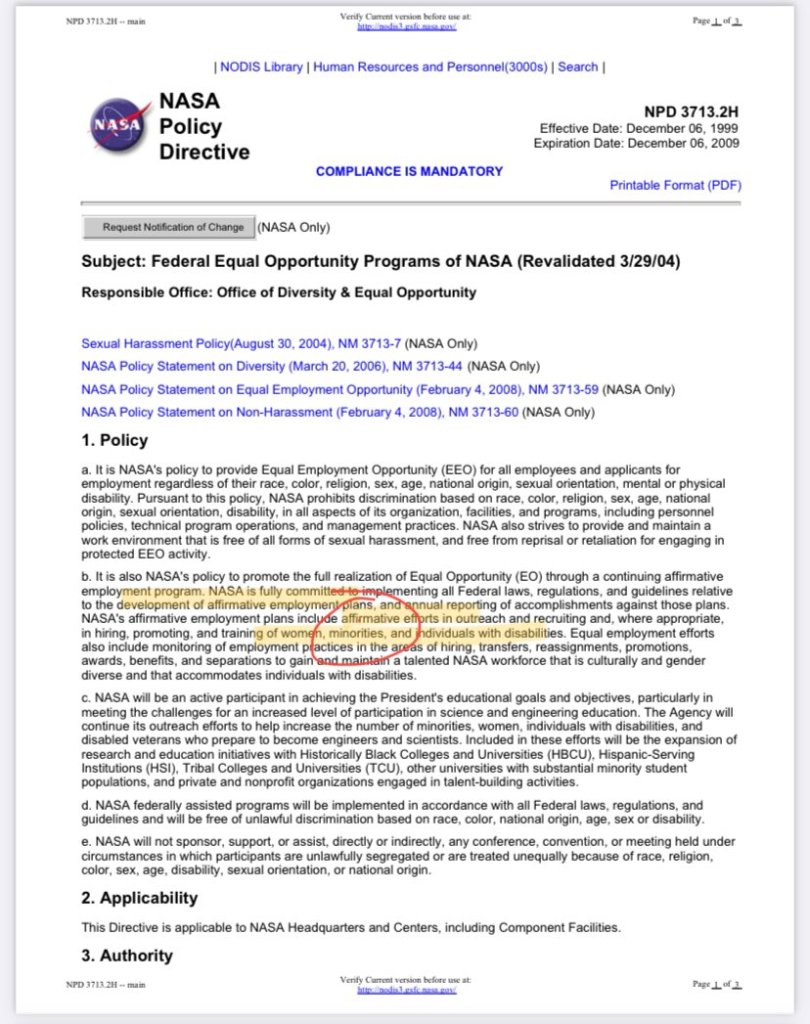 NASA Federal Equal Opportunity Policy Directive NPD 3713 2H
 Export incentive schemes being reduced
 IIT pupil tries to sell kidney to repay loan, but no takers for Dalit organ.
On another completely different level was Karen Hao who was full of empathy as she shared the humility, grace, warmth and kinship she describes in her interaction with the photojournalist. His body of work can be seen via his ted talk in 2020 where he shared a brief collage of his works. Latest, though in a turnaround, the Taliban have claimed no involvement in the death of photojournalist Danish Siddiqui. This could be in part to show the Taliban in a more favorable light as they do and would want to be showcased as progressive, even though they are forcing that all women within a certain age become concubines or marry the fighters and killing the minority Hazaras or doing vile deeds with them. Meanwhile, statements made by Hillary Clinton almost a decade, 12 years ago have come back into circulation which stated how the U.S. itself created the Taliban to thwart the Soviet Union and once that job was finished, forgot all about it. And then in 2001, it landed back in Afghanistan while the real terrorists were Saudi. To date, not all documents of 9/11 are in the public domain. One can find more information of the same here. This is gonna take probably another few years before Saudi Arabia s whole role in the September 11 attacks will be known.
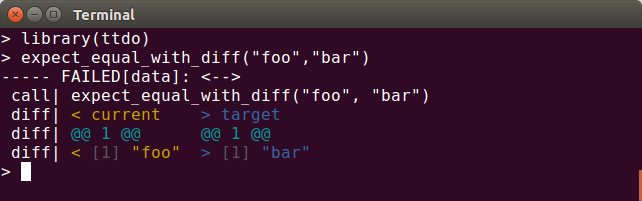
Last but not the least, came to know about the Pegasus spyware and how many prominent people in some nations were targeted, including in mine India. Will not talk more as it s already a big blog post and Pegasus revelations need an article on its own. A new (and genuinely) minor release of our ttdo package arrived on CRAN today. The ttdo package extends the most excellent (and very minimal / zero depends) unit testing package tinytest by Mark van der Loo with the very clever and well-done diffobj package by Brodie Gaslam to give us test results with visual diffs (as shown in the screenshot below) which seemingly is so compelling an idea that it eventually got copied by another package
 This release cleans up one microscopic wart of an R warning when installing and byte-compiling the package due to a
sprintf call with an unused argument.
And once again, this release gets a #ThankYouCRAN mark as it was processed in a fully automated and intervention-free manner in a matter of minutes.
As usual, the NEWS entry follows.
CRANberries provides the usual summary of changes to the previous version. Please use the GitHub repo and its issues for any questions. If you like this or other open-source work I do, you can now sponsor me at GitHub.Changes in ttdo version 0.0.8 (2021-07-17)
- Expand sprintf template to suppress R warning
This post by Dirk Eddelbuettel originated on his Thinking inside the box blog. Please report excessive re-aggregation in third-party for-profit settings.
Next.