Search Results: "ag"

19 August 2007

Adam Rosi-Kessel: Solid State Kitchen Linux Box

Dear LazyWeb: Our kitchen laptop is on its last legs. I’d like to replace it with a standalone LCD and a cheap, quiet, low-power CPU with just one or two gigabytes of storage for the operating system (music and other data are stored on a server in the basement). Can someone point me in the right direction? This is an instance where Google doesn’t provide an obvious leading/consensus solution. Most searches for solid state computers point to laptops, which isn’t what I want. The closest thing I’ve found is the Zonbox, but I’m not interested in their network/subscription storage model. Ideal specs: Suggestions?

Wouter Verhelst: "empty" LDAP addressbooks

Bernhard R. Link blogs about LDAP addressbooks in Thunderb^WIcedove, and mentions:
Also don't be confused by no records shown in the new addressbook. I guess that is some measure against always loading a possibly large remote addressbook. To test just enter anything in the search field, and the matching records should show up nicely. (I'm not sure if all versions allow searching for substrings. If they do, try searching for the at sign, to get a full list.)
Actually, the reason is that an LDAP server is not a database, and it is not required to return the full list of matching items of a search, if that list is sufficiently large (I believe the RFC suggests a minimum of 100 items to be returned); this is to avoid people DoSsing the LDAP server by accident. It also means that the suggestion to search for the at sign to get all items in the directory may not work.

Holger Levsen: again

Again I have 99 unread mails in my mailbox ;-)

More than two weeks ago I watched Inbox zero, which I recommend you to watch if you have problems coping with your inbox, even if it mostly boils down to "getting things done".

/me smiles and continues to update tuxmath :-)

Biella Coleman: The Lingering Memories of War

As many readers of this blog know, I tend not to shy away from writing about my mother s struggle with Alzheimers. But in the last 6 months and especially since I paid my last visit to my mother, I have found it much harder to sit and write about her current state of affairs. If we think of Alzheimers as a journey to a new place, she is almost at the point of reaching that place of great loneliness and inhospitality, which is not only new and different both for her and those around her but is a virtual prison, for it rarely allows you to leave and visit the places of your past. More than ever, her memory and understanding of her life as she (as I and many others), once knew it, is fading fast; Of course, this was to be expected but it is quite difficult to imagine what it will be like until the actual experience unmistakably knocks on the door of present time and unfortunately, when it knocks, you can t do anything but open the door and let it in. Unsurprisingly, it is incredibly difficult to witness and interact with a person who is losing most all recollections, the stuff of which, you come to realize, is what defines a person and allows you to more or less have the opportunity to seamlessly interact with him or her. In the last number of months, I have perhaps been more silent than usual because there is only so much I can and want to think about when it comes to my mother s decline. I talk to her nearly every day and I have decided for now, that is enough. But I am retreating out of my silence after reading a refreshingly honest, though still somewhat timid piece on Alzheimer in the NYTimes, entitled Zen and the Art of Coping With Alzheimer s
The piece is striking because it offers a more realistic portrayal of the disease than most mainstream media accounts and it provides some really sound advice about the importance of just letting go and going with the flow when interacting with those with Alzheimers. At the same time, it lacks a certain window into just how disheartening and hard it can be to witness the decline, and how hard it can be to manage those conversations and interactions. On the whole, I try to go with the flow. For example, I recently returned from a visit and soon after I left, my mother forgot I was even there. She started to ask me over and over again when I was coming home for a visit and when I told her I was just there, her semi-humorous reaction was well, why didn t anyone tell me? (and then proceeded to castigate her caretaker for not telling her!!). Perhaps I did not stay long enough, or perhaps her lack of recall would happen no matter what. To hear she forgot shook me hard and deeply. The first time I realized she could not remember I had just visited, I was able to jog her memory by listing off all that we did together. Finally, when I mentioned that I bought a new refrigerator while in PR, something clicked. She is still worried about money, so buying a refrigerator was enough to remind her I had spent a lot of money. But after it was clear that she felt quite bad about not remembering, I knew that was the first and last time I would try to jog her memory. Instead, I will merge and mold my reality to her reality, as much as I can and assure her that I will soon visit.
(more…)

Alexis Sukrieh: The road to libdevel-repl-perl, part 2

Thanks to Florian Ragwitz, who packaged libpadwalker-perl 1.5-1, there is no blocker anymore that prevents libdevel-repl-perl from entering sid: By the way, the author of Devel::REPL, Matt S Trout, looks pretty happy to see his module entering Debian. I’ve just uploaded libdevel-repl-perl, this upload closes the exciting work session we did during all the weekend with Damyan Ivanov, in order to get the module into debian. All its dependencies are now in the Perl group’s hands. That was fun. Team maintenance rocks!
MJ Ray: Hamburg Classic

NDR are broadcasting the Hamburg Classic in DVB (digital) and PAL (analogue) at 19 east at 11-14 GMT today, while ARD at 19 east and 13 east overlaps at 12.30-15.00 GMT, presumably including the closing stages. Notably, this race has excluded Tour de France winner Contador, apparently as well as everyone else even mentioned in connection with the Fuentes affair. Yesterday's last stages of the Burgos and the Deutschland-Tour seemed surprisingly unsurprising, with Juan Mauricio Soler and Jens Voigt kept their respective leads.

Joerg Jaspert: UMTS?

Im currently looking if a UMTS data connection (flatrate) is something for me. Looking around it seems Vodafone has the best network for UMTS with that HSDPA technology (3.6MBit/s max. instead of only 384kbit/s). Especially the area I am most interested in - my way to work, is only available with HSDPA from Vodafone, all other telcos dont seem to be able to get UMTS there. Some days ago I sat besides someone in a train back home who was using UMTS connection. And didnt seem to have any problems. When I asked he told me that its fairly stable, on the whole way he only knows two points where the card seems to switch to the slower GPRS way. And looking at his screen he was using some weird webchat thingie, so nothing that likes too huge lags. (Ah, btw - how can anyone seriously chat in such a weird way? I mean - we have IRC, WTF are people dumb enough to use their webbrowser to chat? Thats so silly) My main usage would be to be online on the way to work / back home, which is about 1.5h each, so 3hours on days where I go to work (using ICEs, so at least there are repeaters for the mobile stuff in the trains). Most of my online usage is ssh based, usually via (Open)VPNs, then some mail sync runs and various small things. Moobicent does offer a flatrate (a real one, not such a “customers are dumb and dont see it is trafficlimited just because we named it flat”one) using the Vodafone network. The hardware I need for it costs 99EUR when I order there. Its some PC Express Card that comes with a PCMCIA Adapter. Now, has anyone out there reading this blog experiences to share? Using google there is Marcs blog which suggests it shouldn’t be too hard to get it all running, but maybe there is something I missed to take into account? Comments? Suggestions? Anything? Email me or catch me on IRC, (no, my blog doesnt have comments), and I summarize the results later. Update:UMTS == 3G; 2 People already told me that the Vodafone net is the right selection in Germany, one said the same for UK.

Bernhard R. Link: Using slapd as thunderbird/icedove addressbook

It&aposs been some time since I got this working, but I decided to now also blog about it here now, as I was just asked it.

The main magic to get thunderbird/icedove use your ldap server as addressbook, is to include the proper schema. Search the web for mozillaAbPersonObsolete and you should find it. You do not have to use any of it&aposs new fields, not even the object class in it is needed. Your slap only have to know about the field names, then thunderbird will be able to show the normal inetorgperson&aposs mail attribute.

Some caveats, though:

You might think you might test your settings in thunderbirds by using that button to download everything and store it locally. In my experience that never works but strangly asks for a password, while the addressbook is already nicely working and needs no password at all.

Also don&apost be confused by no records shown in the new addressbook. I guess that is some measure against always loading a possibly large remote addressbook. To test just enter anything in the search field, and the matching records should show up nicely. (I&aposm not sure if all versions allow searching for substrings. If they do, try searching for the at sign, to get a full list.)

The shown fields seem also a bit strange, and differ with the different mozilla messenger/thunderbird/icedove versions. In some versions the field the primary name is extracted from can be changed, but directive to set that seems to change even more often.

Finaly, some snippet for your /etc/icedove/global-config.js, which causes all newly created users to have an addressbook as default. I forgot if all are needed or why I added them, but those that are unnecessary at least do not seem to harm. (Last tested version is the one in etch, though. Newer version might again have something changed).

   /* ldap-Server for FOOBAR */
   pref("ldap_2.autoComplete.useDirectory", true);
   pref("ldap_2.prefs_migrated", true);
   pref("ldap_2.servers.mathematik.attrmap.DisplayName", "displayName");
   pref("ldap_2.servers.default.attrmap.DisplayName", "displayName");
   pref("ldap_2.servers.mathematik.auth.savePassword", true);
   pref("ldap_2.servers.mathematik.description", "FOOBAR");
   pref("ldap_2.servers.mathematik.filename", "foobar.mab");
   pref("ldap_2.servers.mathematik.maxHits", 500);
   pref("ldap_2.servers.mathematik.uri", "ldap://HOSTNAME:389/ou=People,dc=FOOBAR,dc=TLD??sub?(mail=*)");
   

Andreas Metzler: those were the times

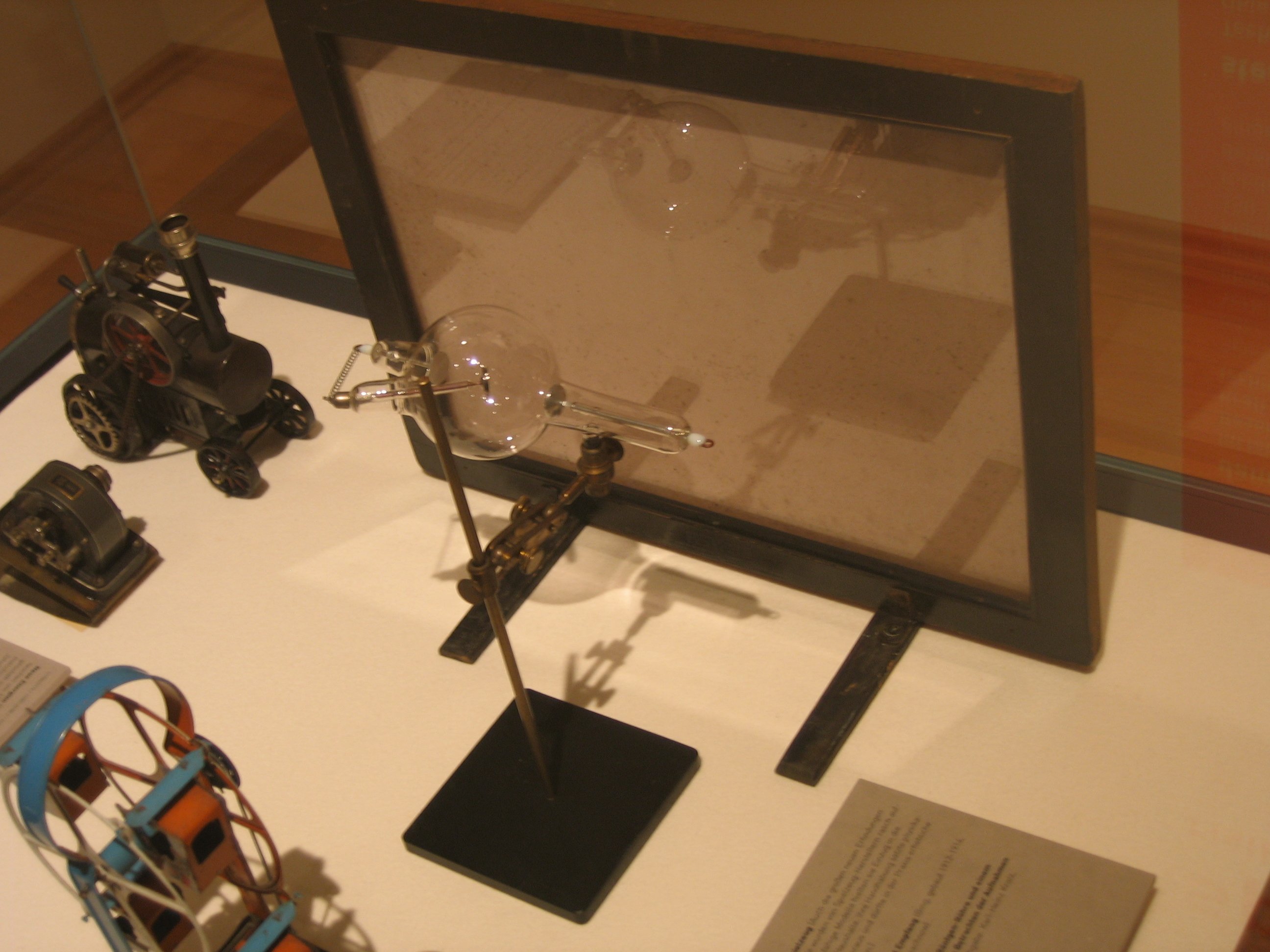
Found at the exhibition Play with Technology in Technisches Museum Wien: Toy x-ray machine from early 20th century
a small working x-ray machine toy. See description.

Russell Coker: Colorado Software Summit 2007

On about 5 years I attended the conference The Colorado Software Summit. The first one was the last conference under the old name (ColoradOS/2) but then as OS/2 was rapidly losing market share and the conference delegates changed their programming interests it changed to become a Java conference. The Colorado Software Summit rapidly became known as THE event to really learn about Java, other conferences are larger and have a higher profile but the organisers of CSS decided to keep the numbers smaller (600 is usually the maximum number of delegates) to provide better opportunities for the delegates to meet and confer. One of the attractions of CSS is the large number of skilled and experienced people who attend, there are many delegates who can teach you lots of interesting things even though they aren’t on the speaking list. I ended up never doing any serious Java programming, but I still found that I learned enough and had enough fun to justify the expense. Currently there is an early registration open which saves $200 off the full price ($1,795 instead of $1,995), this lasts until the 31st of August. In addition to this the organisers have offered a further $100 discount to the first five readers of my blog who register personally (IE an individual not a corporation is paying for the ticket). To take advantage of the extra $100 discount you must include the code CSS509907 in your registration. PS I have no financial interest in this matter. I like the conference organisers, but that largely stems from the fact that they run great conferences that I have enjoyed. I recommend the conference because it’s really good.

Simon Richter: Hacking

Some more hacking and the xcontrol aware "checkbuilddeps" command is nearly done. I have no idea whether using apt to access the package database was a good idea -- those bits that deal with it are hardly readable. On the other hand, directly reading the status database is frowned upon. Hooray for more abstraction layers. In other news, there is now a wiki page for xcontrol.

18 August 2007

Joerg Jaspert: UMTS?

Im currently looking if a UMTS data connection (flatrate) is something for me. Looking around it seems Vodafone has the best network for UMTS with that HSDPA technology (3.6MBit/s max. instead of only 384kbit/s). Especially the area I am most interested in - my way to work, is only available with HSDPA from Vodafone, all other telcos dont seem to be able to get UMTS there. Some days ago I sat besides someone in a train back home who was using UMTS connection. And didnt seem to have any problems. When I asked he told me that its fairly stable, on the whole way he only knows two points where the card seems to switch to the slower GPRS way. And looking at his screen he was using some weird webchat thingie, so nothing that likes too huge lags. (Ah, btw - how can anyone seriously chat in such a weird way? I mean - we have IRC, WTF are people dumb enough to use their webbrowser to chat? Thats so silly) My main usage would be to be online on the way to work / back home, which is about 1.5h each, so 3hours on days where I go to work (using ICEs, so at least there are repeaters for the mobile stuff in the trains). Most of my online usage is ssh based, usually via (Open)VPNs, then some mail sync runs and various small things. Moobicent does offer a flatrate (a real one, not such a “customers are dumb and dont see it is trafficlimited just because we named it flat”one) using the Vodafone network. The hardware I need for it costs 99EUR when I order there. Its some PC Express Card that comes with a PCMCIA Adapter. Now, has anyone out there reading this blog experiences to share? Using google there is Marcs blog which suggests it shouldn’t be too hard to get it all running, but maybe there is something I missed to take into account? Comments? Suggestions? Anything? Email me or catch me on IRC, (no, my blog doesnt have comments), and I summarize the results later.

David Welton: Business Friendly

Growing up in Eugene, Oregon, which like Berkeley or Boulder could have the label "People's Republic of" applied to it, I always thought of "business friendly", as something along the lines of helping huge corporations avoid laws against pollution, or other antisocial behavior. Only after moving to Europe did I begin to get an idea of what the very positive side of "business friendly" is in the US. Truth be told, all countries tend to protect their 'big players' to some degree, be it the US propping up creaking airlines after September 11th, Italy finding various clever ways to get around rules about funding Fiat and Alitalia, or France finding it in their 'national interests' to discourage a potential bid for Danone (yogurt!) by PepsiCo. Some are better or worse (the UK has been pretty good about not interfering), but there is a tendency to want to intervene. Leaving be the discussion over whether those sorts of policies are good, bad, or ugly, the biggest difference between continental Europe and the US is the ease with which new companies - 'startups' can be created and enter a market. As a first hand example, I decided this summer to create DedaSys as a real company in order to better separate my business and personal financial dealings. Were I to do that in Italy or Austria, we would be talking about fees upwards of 3000 Euros (about 4000 dollars at market rates), which is a great deal of money for something that is not making a lot of it at this point in time. Contrast this with what it took to create a Limited Liability Company (LLC) in Oregon, my home state. To have things done up professionally, it's certainly possible to lay down a bit of cash there too, but by trading my time for money, and with the assistance of some nolo.com books about the creation and maintenance of an LLC, I was able to register DedaSys with the state of Oregon for the grand total of 55 dollars, and was actually able to complete the process remotely from Austria prior to going home on vacation, where I did the only thing I needed to do in person: open a bank account. So it costs 1% of what it costs in Italy or Austria to open a company that provides limited liability... a very impressive difference, especially to a small, new company that does not have the connections a Ford or a Fiat will likely have to enable it to deal with all the other paperwork, rules, and regulations to deal with. Add to that a culture of greater risk taking (meaning also more acceptance of failure), better funding opportunities, and... one comes to the conclusion that Paul Graham is right. It's a pity, because the people in Europe are top notch. In Italy alone, I know a bunch of really bright hackers. Granted, some of them aren't interested, and are probably better off not starting a company or otherwise dealing with the business side of the equation, but it's always nice to have that opportunity. In closing, here is another example of bureaucracy in action, from my personal on line journal about life in Italy, and now Austria, which I recently revamped by moving it to the Typo platform: Confronting the bureaucratic beast - registering an Italian domain Two months to accomplish what can be done in ten minutes with a .com!

Gustavo R. Montesino: Final SoC releases

I've just finished releasing new versions of all modules related to my Summer of Code project, the Bug Triage and Forward Tool. If my mentor doesn't find any serious bug, these will be the last releases under the SoC flag. Thanks again, Google, for this great program and the progress it brings to Free Software.

The releases:

bzutils 0.2:
btsutils 0.3:
bug-triage 0.2.2:
Debian packages should hit the archive as soon as they get evaluated and sponsored. Of course, a full status report will also be posted during the evaluation time.

Erich Schubert: More (ranting) on Skype

A couple of people have pointed me to the "Skype DoS exploit code" that has been published. I had seen that, but I'm not convinced it works as simple as that. Some of the information around it doesn't make completely sense (such as using the term 'server', when they're referring to super nodes I guess, and since supernodes are just regular user machines annexed by the Skype network, they supposedly run the same software, don't they? So why doesn't it take down the client the exploit is run on?Also I'd bet that someone has tried feeding the Skype client long URIs before; that is one of the most popular ways of seeing if some software can break. You know, Buffer Overflow [wikipedia] is probably the most common class of security issues (maybe second only to PHP programming errors or SQL injection by now, though, with so many people with too little expertise writing webapps in PHP)Others probably are wondering why I'm writing so much "against" Skype.There are numerous reasons: And, honest, there is nothing in Skype that other apps wouldn't offer, or had been offering before except being really aggressive at getting through firewalls without any user intervention.

Bdale Garbee: Conservation: It's in the Bag

I was just reading the latest issue of Home Power magazine, which is celebrating 20 years of publication with this issue. One of the articles, by Kathleen Jarschke-Schultze, talks about the value of reusable cotton bags for shopping instead of accepting the usual "paper or plastic". It caught my eye because my wife Karen is an avid cotton-bag user. Kathleen ends the article with an idea that I think is worth repeating:
So how about this new etiquette: Conservation in everything except courtesy and generosity. Seems like that would be a refreshing change. We all need to just put one foot in front of the other to keep moving forward on conserving global resources. Even if it is slow or small, take that first step.
I like that. Conservation, courtesy, and generosity should never go out of style...

17 August 2007

Gunnar Wolf: Aggressive bug reports leading to a good answer (or so I hope)

Joey complains about users filing aggressive or otherwise inappropriate bug reports. Well, in this case I must say I bit the bullet.
Yesterday, somebody complained about the maintenance statuse of libapache2-mod-perl2. Usually, I would have sadly nodded and said that, yes, since the API change between mod_perl for Apache 1.x and mod_perl2 for Apache 2.x (which was a long time ago - with perfect timing not to be accepted in the last weeks of Sarge's hard-freeze period, causing many of us to have to maintain two or even three versions of our code depending on the API used - But that's a different story I won't go into details now). But this time, the bug report was sent with Severity: critical.
I replied to this report, intending just to lower its priority and get the attention of the maintainers by sending it to a couple of Debian lists - But soon afterwards, it became obvious that I was probably the person most interested in this package in Debian - At least, me and some other pkg-perl fellows who -as foolishly as myself- volunteered to step forward when needed.
Well, in short: I am now the proud owner of one of the packages most vital for many of the systems I've written for my work. It's also more complex than most of the other packages I maintain. From an undermaintained and quite full of warnings build process and resulting package set, I managed to make it linda- and lintian- clean, and... Well, now we have to dig through its open bugs. Its build system is far from orthodox from a Perl point of view, and that took me most of the day, but hey - TIMTOWTDI, right? :)

Erich Schubert: Skype problems aren't solved, but just worked around?

Skype seems slowly to recover from yesterdays blackout.However, it doesn't look to me as if they've actually solved the problem. I assume they've just added a workaround (e.g. maybe using DNS to locate good servers?) that help recovering. At least when enough people download the new version.If you look at the graphs at Njanjan.to and 85qm.de, then they still look far from healthy.I'm not talking about the mere numbers - Skype reports about 3 Million users connected, which would mean 1 out of 3 regular users is back. But I'm talking about the shape of the curve. During regular operations, the curve used to be smooth. Which is easy to explain: by some million users going online and offline indepentenly, it all smoothens out. The curve goes up when people start working in a densely populated area and goes down when they go to bed. But if you look at the graphs for the past few hours parts of the Skype P2P network still appear to get disconnected and reconnected. They cerainly didn't flip a switch and people could connect again. The service still appears to be going up and down.To me, that indicates that they actually didn't solve the problem, but just found a way to make the problems not take down the whole network, while parts still drop off now and then.Just my guesses, though. And Skype will not tell the truth either, you bet. (You might want to skim over the presentation "Silver Needle In The Skype" [PDF], about the inner workings of Skype, their obfuscation technologies and how far they go at hiding what their software is actually doing)P.S. I've read in a blog that Skype might right now only allow one connection per IP. That would even more support the rumors that they're actually trying to defend against an attack on their network (and using the IP limit to slow down the attacks?)P.P.S. Another interesting note: the Skype stats on the Skype website report 5.5 Million connected users - my Skype client reports 3.7 Million. Which number is correct?

Alexis Sukrieh: The road to libdevel-repl-perl, part 1

I decided to play with Devel::REPL which looks to be exactly what I need to enhance my Perl Console. That module is not packaged in Debian, then I started packaging it with the help of the Debian Perl Group (big thanks go to Damyan Ivanov for his help). The day was pretty productive and we’re almost done now, as you can see in this tomboy note: PS MadCoder: I’m sorry dude, I’m still speaking about Perl :P

Miriam Ruiz: Gnash 0.8.1 is on the way

As the new version of Gnash (0.8.1) is probably going to be released in some weeks, I decided it was time to make some newer packages available. I’ve done a lot of changes on them, first of all I’ve removed all the library packages, as they don’t seem to make a lot of sense right now. There is still no gnash-dev package and will probably not be at least for a while. I’ve also made available different options of the program, right now one compiled with GTK+ and AGG, and another one with KDE and OpenGL. I might add newer ones in the future. I’m not really sure if those packages, or this approach, will end up in Debian’s repository yet, anyway, due to some reasons I cannot say here, but in any case it’s the first release of packages of Gnash I’m proud of, so I thought someone might be interested.

Next.

Previous.