Search Results: "az"

26 February 2011

Vincent Fourmond: A praise for TikZ

I have been using xfig for ages to draw figures, and I appreciate it, especially combined with a small script I wrote based on an original idea by Seb Desreux at H&K, fig2ps, that allows painless integration of LaTeX code inside xfig figures. But recently, it seems that I've hit limitations in xfig. Mainly, if it is great when you want to produce sober figures, whenever you want to do something fancier, including shadings and the like, frustration comes in quickly (since it is purely impossible). I've spent a while looking for a decent alternative, until I had a look again at pgf, which since turned into TikZ. That was amazing. It integrates painlessly within LaTeX and is simply great to work with. Drawing complex diagrams with noes and complex relations between them is trivial. It handles moving the nodes very gracefully, and styling can be done in a CSS-like fashion (though it definitely isn't CSS), which means you can first concentrate on structure and then turn your graph into something nice, while for all the other programs I know, you have to handle both structural and stylistic aspects at the same time. Sure enough, you need to like the command-driven approach, as mice won't come in too useful here... As a side note, I wanted to express my admiration of Till Tantau's (TikZ's author) mastery of (La)TeX: TikZ can be seen as an interpreter of a simple graphical language written in pure TeX, which is, according to my humble experience with dirty trick in TeX, is simply amazing. Many thanks, Till !

Rog rio Brito: My problems with Chromium

Given that Chromium/Chrome is used more and more (as became apparent with the discussion of including it in Debian's squeeze), I decided to give it some tries, mainly Giuseppe Iuculano's version. I occasionally install Chromium from Fabien Tassin's daily builds. And, to be honest, I have also contributed a good amount (about 400) of translated strings to the Brazilian Portuguese part of Chromium. As a matter of fact, I have even done some "activism" and incentivated other people to create their accounts on Launchpad and help with the projects. But I always come back to Iceweasel/Firefox, especially with Mike Hommey's frequently updated repository. What are my reasons for staying with Iceweasel, and not with Chromium? I would be satisfied if any of the above were fixed or better documented, but it seems that some of those are, at best, going to wait a long time.

25 February 2011

Patrick Schoenfeld: Let me introduce DPKG::Log and dpkg-report

We have customers, which require a report about what we've done during maintenance windows. Usually this includes a report about upgrades, newly installed packages etc. and obviously everything we've done apart from that.
Till now we've prepared them manually. For a greater bunch of systems this is a big PITA, because to be somehow useful you have to collect the data for all systems and after that, prepare a report where you have:

Its also error-prone because humans make mistakes.

Perl to the rescue!
At least the part about generating a report about installed/upgraded/removed packages could be automated, because dpkg writes a well-formed logfile in /var/log/dpkg.log. But I noticed that there appearently is no library specialised at parsing that file. Its not a big deal, because the format of that file is really simple, but a proper library would be nice anyway.
And so I wrote such a library.
It basically takes a logfile, reads it line by line and stores each line parameterized into a generic object.

Its features include:

Based on that, I wrote another library DPKG::Log::Analyse, which takes a log, parses it with DPKG::Log and then extracts the more relevant information such as installed packages, upgraded packages, removed packages etc.

This, in turn, features:
- Info about newly installed packages
- Info about removed packages
- Info about upgraded packages
- Info about packages which got installed and removed again
- Info about packages which stayed halfinstalled or halfconfigured at the end of the logfile (or defined reporting period)


These libraries are already uploaded to CPAN and packaged for Debian.
They passed the NEW queue very quickly and are therefore available for Sid:

http://packages.debian.org/sid/libdpkg-log-perl

As an example use (and for my own use case, as stated above), I wrote dpkg-report, which uses the module and a Template::Toolkit based template to generate a report about what happened in the given logfile.
It currently misses some documentation, but it works somehow like this:

Report for a single host over the full log:
dpkg-report

Report for a single host for the last two days:
dpkg-report --last-two-days

Report for multiple hosts (and logfiles):
The script expects that each log file has the name <systemname>.dpkg.log so that it can guess the hostname from the system and can grab all such log files from a directory if a directory is specified as log-file arguments:</systemname>

dpkg-report --log-file /path/to/logs

This will generate a report about all systems without any merging.

Report for multiple hosts with merging:
dpkg-report --log-file /path/to/logs --merge

This will do the following:
A (fictive) report could look some what like this:

dpkg-Report for all:
------------------------
Newly Installed:
abc
Removed:
foo
Upgraded:
bar (0.99-12 - 1.00-1)

dpkg-Report for test*:
------------------------
Newly Installed:
blub

dpkg-Report for test1:
------------------------
Upgraded:
baz (1.0.0-1 -> 1.0.0-2)

dpkg-Report for test2:
------------------------
Upgraded:
zab (0.9.7 -> 0.9.8)

Currently this report generator is only included in the source package or in the git(hub) repository of the library. I wonder if it makes sense to let the source package build another binary package for it.
But its only a 238 lines perl script with a dependency on the perl library so I'm unsure if it warrants a new binary package. What do others think?

17 February 2011

Jan Hauke Rahm: Gnome calendar

Dear lazyweb, I m using Gnome for quite some time now and I m always satisfied with the interfaces I have to whatever I need. There is one thing, though, that I miss: a calendar. I don t like evolution, I don t need another mail client. What I want is a simple, yet sophisticated application that I can put appointments in and which reminds me of them (recurring issues should be possible, too). It may but doesn t have to be somehow attached to the Gnome clock or whatever. Though I expect it to look Gnome-like and be accessible from the panel. Do you know such? And is there even a Debian package for it? Thanks.
<fb:like action="like" colorscheme="light" href="http://blog.jhr-online.de/266" layout="default" show_faces="true" width="400">

13 February 2011

Evgeni Golov: Mustek PoweMust 1000 USB on Debian Squeeze

Some (long) time ago, I wrote an article how to setup a Mustek PowerMust 1000 USB on Debian Sarge. Since then Etch, Lenny and now Squeeze were released and the machine the UPS was attached to was replaced.Yesterday I have upgraded this machine from Lenny to Squeeze and of course nut has kicked me in the nuts, telling me it can t connect to the UPS.When I replaced the old machine, I had to connect the UPS via USB instead of serial, as the new machine has only one serial port and that one is needed for the serial console to my Sun Netra T1. On Lenny, I was using the megatec_usb driver which seems borked on Squeeze and is superseeded by the blazer_usb one. So here is my nut setup on Squeeze:nut.conf:
MODE=standalone
UPSD_OPTIONS=""
UPSMON_OPTIONS=""
ups.conf:
[powermust]
    driver = blazer_usb
    port = schrank
    vendorid = 0665
    productid = 5161
    desc = "Mustek PowerMust 1000"
Yes, port has to be set, but can be any random string.upsd.conf:
ACL all 0.0.0.0/0
ACL localhost 127.0.0.1/32
ACCEPT localhost
REJECT all
upsmon.conf:
RUN_AS_USER nut
MONITOR powermust@localhost 1 nut nut master
MINSUPPLIES 1
SHUTDOWNCMD "/sbin/shutdown -h +0"
POLLFREQ 5
POLLFREQALERT 5
HOSTSYNC 15
DEADTIME 15
POWERDOWNFLAG /etc/killpower
RBWARNTIME 43200
NOCOMMWARNTIME 300
FINALDELAY 5
upssched.conf:
CMDSCRIPT /upssched-cmd
I hope this helps someone ;)

12 February 2011

Evgeni Golov: Privacy-over-IP does not exist

Did not exist.Will never exist.There was quite a lot of buzz about privacy with that new IPv6 thingy. Some say it is bad, as you will have a static address. Some say the privacy extensions will fix everything. I say: lemme rant ;)First of all, that was the internet, when I started using it back in 1999:

 [  New Yorker Magazine, March 1993] On the Internet nobody knows that you are a dog'
[ New Yorker Magazine, March 1993] On the Internet nobody knows that you are a dog And that s the internet today:

robcottingham.ca - How the hell does Facebook know I'm a dog?
[ robcottingham.ca] How the hell does Facebook know I m a dog?

Well, I d say that s not correct. Even in 1999 facebook could know you are a dog (if you ignore the fact, that there was no facebook in 1999), it s just noone really cared about it. But let s start from the beginning :)An IP-address is a 32-bit integer

An IP-address is technically a 32-bit integer, formatted into 4 8-bit parts (you can read more about IPv4 at Wikipedia), which makes a total of 4,294,967,296 possible IP-addresses. Your ISP has a range in this address-space it can give to its customers (you). My ISP (Unitymedia) owns about 300,000 IP-addresses (based on the RIPE database), which is about 0.007% of the whole address-space. If you look at the RIPE page, you see two common netname prefixes (DE-KNRW and DE-IESY-HFC) which match two regions of Germany where my ISP has its customers (Unitymedia is a merge of ish and iesy). What does that mean? It means one can map a Unitymedia customer into one of these regions, even if he would change his IP-address (Unitymedia uses DHCP with high lease-times, so this does not happen actually). It does not map the customer to a dog yet, but I bet real GeoIP databases can map them correctly to a city (I didn t try much, but this site suggests it works: http://www.ip-adress.com/?lc=en at least they map me correctly to Duesseldorf).Dynamic IP-addresses do not improve privacy

Given the above facts, even if Unitymedia would give me a new IP-address every X hours (many DSL-providers have X=24), it is still possible to map me into a set of about 150,000 users (here user means customer, there still may be multiple computers connected via the same line). I would even go further and say the set is much smaller, as I think I am not able to get every free IP-address from DE-KNRW-*, as these should be bound to cities/regions (GeoIP databases exist, you rememember?) and I do not move with my line.Routers and reverse DNS kill privacy

Currently, my IP-address is 62.143.232.104, which has a reverse DNS entry ip-62-143-232-104.unitymediagroup.de and does not say anything about me or my location, besides of the obvious Unitymedia customer . But look at the traceroute:

4  7111A-MX960-01-ae5.frankfurt.unity-media.net (80.81.192.181)
5  13NOC-MX960-01-ae8.kerpen.unity-media.net (80.69.107.26)
6  1411G-MX960-01-ae9.neuss.unity-media.net (80.69.107.2)
7  1411J-MX960-01-ae1.bilk.unity-media.net (80.69.107.70)
8  PH-1411J-uBR10k-06-Te-1-2-0.bilk.unity-media.net (80.69.102.106)
Frankfurt is about 250km from here, Kerpen about 60, Neuss about 10 and Bilk is a part of the city I live in, about 4km away from my home. I guess you get the idea :)Browsers kill privacy tooDo I have to say more than a link to https://panopticlick.eff.org/? My Chromium scores one in 1,400,000. How much IP-addresses did I have to hide in again?We are at the dog level now, dogs use BoneOS with FireBark, not Linux with Chromium :)IPv6 kills cute kittensOh, and privacy, because with IPv6, there are 2^128 IPv6-addresses out there, of which your provider will maybe own a /32 (2^96 addresses) and give you a /48 (2^80 addresses) or (more likely) /64 (2^64 addresses). Then you enable the great IPv6 privacy extensions (RFC4941) and happily hide in your own assigned subnet, still being a customer of your ISP, still living in the same city and using your old browser It s just about mapping subnets instead of individual IP-addresses then. And we can t get lower as the dog levelPeople can annoy meI did not write all this to teach you, you can do yourself with Wikipedia and RFCs. There is a person out there, who thinks using a random name, mail address and twitter account could fool me into thinking that s a new, yet unknown, person to me. Well, I am not stupid, sorry. When you comment on my blog, your IP-address is logged, when I approve the comment, I often look at the reverse DNS and the whois entry of that IP-address (sorry, I AM paranoid). I even might check my webserver logs (or Piwik) where did you come from (Google etc), writing accidentally in your comment does not help :) Also, if you are trying to fool me, don t use your own computer, running Windows 7 and Firefox which I installed. Oh, and probably do not use your home line which I used to login into my admin-area using my unique Chromium ;)Sorry Hanna Lena, the chicken has just eaten her own eggs And yes, one can track down a single person on this big thing called internet, IPv6 will not change this (in any direction).

Joey Hess: d-i is ten

I just realized that the Debian Installer is ten years old! It actually got started ten years ago last summer, but now is also an apt anniversary -- ten years ago, I successfully booted d-i for the first time. It's amazing that d-i has been around as long as Debian Developers who have "been with the project longer than most". (Many of whom have been long-time contributors to d-i themselves.) Astonishing that my basic design has held up and remains relevant. And every time I boot up the Debian kFreeBSD installer, or run the graphical installer, or hear someone raving about how easy Ubuntu was for them to install (and know d-i was underneath), I'm amazed at the places people have taken d-i. The code has recently moved to git. As changes like ext4 by default start to flow in to d-i, with Wheezy development starting up, I hope to see more people enticed into working on d-i. Anyone can do like Matthew Palmer has done with netcfg -- pick a component of d-i that interests you, check out its git repository, and take it from being reasonably well team-maintained to awesomely you-maintained. In five or ten years Matthew will be able to look back at all the people who have used d-i to install over IPv6, and on WPA wireless, and with his other netcfg improvements. Trust me, it's a great feeling. Previously: d-i retrospective (better written than the above & well worth a re-read)

David Welton: Book Review: Start Small, Stay Small, A Developer's Guide to Launching a Startup

<iframe frameborder="0" marginheight="0" marginwidth="0" scrolling="no" src="http://rcm.amazon.com/e/cm?lt1=_blank&amp;bc1=000000&amp;IS2=1&amp;bg1=FFFFFF&amp;fc1=000000&amp;lc1=0000FF&amp;t=dedasys-20&amp;o=1&amp;p=8&amp;l=as4&amp;m=amazon&amp;f=ifr&amp;asins=B003YH9MMI" style="width: 120px; height: 240px; float: left; margin-right: 10px;"></iframe> I tend to be a sucker for business books, to the point where I created (and later sold) a site to discuss them. Part of the motivation for creating that site was that a lot of them tend to contain one good idea, and an inordinate amount of fluff. This book does not - it's good material that could not easily be summarized because it's full of information. I think it's actually one of the more relevant books I've ever read in that, for my situation, the idea behind it really speaks to me. I work as a consultant during the days, and I like it a lot. Rather than working on the same old thing year after year, I get to meet new people, new clients, new situations, and help them out, which is motivating. However, consulting has its downsides too, in that it doesn't create a great deal of long-term value. Once you've finished up a project, it's on to the next one, or no money comes in. I'm also a bit older and more set in my ways: I did my time in the California Bay Area, and I don't relish going back and working like mad on a "Real Startup" with VC backing, crazy hours, and having the thing consume my life. The idea behind "Start Small, Stay Small" is to find and create really niche products: stuff that will earn you some extra money as a developer, but also niches that are small enough to not really be interesting to larger companies that need a lot of income to justify a forray into a particular market segment. This, then, becomes your 'competitive advantage': Microsoft, or even 37 Signals, simply isn't going to chase after a market that is worth 20,000 dollars a year. And yet for someone working on their own, if you manage to set up something that brings in that money, and mostly automate it so that it's not a second job, it's a tidy extra bit of money. Several projects like that might even be enough to live on, depending on your lifestyle. With that in mind, the authors, Rob Walling and Mike Taper, delve into the details of how to go about doing so. The whole thing is done under the assumption that you don't have a lot of time or money to throw at things that don't bring in concrete results in relatively short order. Various subjects discussed in detail include how to find a niche, how to create a sales web site, how to measure market demand, conversion rates, how to productively outsource less critical portions of your business, and much more. They also discuss what sorts of numbers to look at for various aspects of the business, and anchor the discussion with real numbers for many things, rather than just giving you a hand-wavy phrase that's not that useful in the real world. It's not a 'timeless' book as all the concrete numbers and techniques reference technologies, sites, and the market dynamics of 2011, but after all, that's part of what makes it good. Other things I didn't like so much were being sold on their for-pay "micropreneur community", and the relatively high price of the book but I think it's worth it given the real advice you get. If you don't like marketing, and think that products succeed or fail on their merits alone, of course the book will leave you cold, but of course you're wrong about that anyway!

Wouter Verhelst: Ten years of Debian

My first ever Linux installation was done in the late nineties 1998 or thereabouts but was a RedHat 4.5 installation rather than a Debian one. The reason for that was fairly simple: the Infomagick sixpack CD set that I'd bought contained RedHat, Debian, and Slackware, but the RedHat installation was the only one that could be installed directly from CD the other two required me to write floppies and boot from those to start the installation, and I wasn't very fond of that idea. It was only a few years and a few broken RedHat upgrades later that I saw the light and considered trying out this Debian thing that some of my classmates were talking about. The fact that I'd just bought my own computer (rather than having to compete for time with my siblings on my parents' computer) was a good reason to do a fresh Linux installation. I'd been planning to install Linux From Scratch, but as what was still known as the LFS HOWTO told me you'd need a working Linux installation to do that, I considered my options. Since I'd developed a strong dislike of RedHat, I wasn't interested in doing another RedHat anymore. So, I downloaded the most recent version of Debian at the time (Potato Test Cycle III), wrote it to a CD, and installed. I've probably still got the CD lying around somewhere. A few months later, I found these "Linux Gazette" packages in the archive, with the latest packaged issue being 47, but the latest upstream version being much higher. Trying to figure out what was going on, I mailed the maintainer, Adrian Bridgett, who encouraged me to take over maintenance. Thus began my life of actively contributing to Open Source software. In November 2000, I applied to become a Debian Developer. In January 2001, Martin Michlmayr was assigned to be my AM. And in early February 2001, now just over ten years ago, I'd become a Debian Developer. Yes, that was fast, and no, I probably wasn't really ready yet, at the time. Originally, I only cared much about these Linux Gazette packages. But, as time went on, I started looking around, too. A friend passed me an old Macintosh Centris 610. As I tried to install Debian on it, I found that it didn't actually run very well. This turned out to be due to it having a broken 68LC040 processor, so I bought me another m68k-based mac, one with a full 68040 processor (a Centris 650). Thus I became involved in the m68k port and buildd maintenance. As these old machines came with 80MB or 250MB SCSI hard disks of which I had none laying around, and a then-recent Debian installation had minimum requirements of about 200MB, I was in need of network storage to be able to do anything useful with the mac. NFS didn't work as expected; the RTC implementation on m68k mac hardware was reverse engineered and didn't work too well at the time, which meant that the clock would run slower if the machine was under load, and that in turn would mean that make would get confused about timestamps, since they would suddenly appear to originate from the future (in NFS, it's the server that assigns time stamps, not the client). There was a simple solution, however; Pavel Macheck had written this neat 'Network Block Device', which would let the client do its own filesystem on network storage. Only it wasn't packaged; but then, that was easy to fix. Thus I started maintaining the single piece of software that I've worked the most on, to date. A few years later, Pavel lost interest in maintaining NBD, and handed over upstream maintenance to me and maintenance of the kernel side to Paul Clements. Thus began my life in upstream work. And while I originally joined Debian with the intent of using it as a learning experience and stepping stone on my way to more "important" free software, I found that it wasn't as satisfying as was my work for Debian. Over the years, there's been this duality where I've felt like I was doing too much and not enough at the same time. Too much, because the things I was doing would eat up much of my spare time, leaving little time left for other hobbies. Not enough, because I witnessed other people doing much more for Debian than I did, and I wanted to make a difference. As the years passed by, many things have changed. Not only in Debian, but also besides it. I became an independent contractor, focusing mostly on supporting people in using Debian (although I support them with other distributions, too). The importance of a port went from 'something which these weird porter people are doing, and that we should probably help them with if it doesn't work, but is their problem really' to 'something that I really really really have to make sure works for my packages', and back for the port that I cared about most. After several years of trying, I finally managed to explain to my parents what this Debian thing is, why it matters, and what my role in the whole thing is. We did a few releases, some taking longer than I would've liked. People joined the project, and left again. Some of my friends died. My fame in the project rose, even though I wasn't aware of it initially; and thus I was rather surprised when someone asked me whether I was "the Wouter Verhelst" at a key signing party. Recently, I've started looking back, and considered the things which Debian has meant to me. Ten years ago, I was 22, still in college, and had way too much spare time on my hands. I'd recently gotten my first Internet installation, and all these online communities were very new to me. Yes, that was all probably rather late. Debian has changed my life in many ways; it has allowed me to meet various kinds of people, both online and in meatspace. I've been to Helsinki, Edinburgh, Mar del Plata, C ceres, and New York City, places that I might otherwise not have visited. Each of these trips was an incredible experience that I have fond memories of; and while the most fond ones originate from Helsinki, I cherish the memories of each of these trips as some of the best trips I've ever done. Working on Debian has forced me to learn about the inner workings of a Linux-based system, which is knowledge that has helped me tremendously professionally, too. And finally, working on Debian has given me a unique perspective on this whole FOSS community, which has helped shape my ethics and my view of the world. While I believe that I would've subscribed to most of that ideology at any rate, I'm not sure that the details of my beliefs and understanding would've been exactly the same. And while I don't agree on every position that the project subscribes to as a whole, I do believe that the philosophies that lie at the core of this project contain just the right mix of pragmatism and ideology that makes it possible for our project to thrive in a changing world of not only a growing group of people who subscribe unconditionally to the free software ideals, but also business people who care mostly about money. Over the years, somehow I moved from "one of the recent batch of new Debian Developers" to "someone who's been with the project longer than most". It still feels weird to see people shut up because you've built up a reputation in some area, and you give your gut opinion on some subject without researching it too much. I try not to let that happen too often. Today, ten years and just over a week ago, my life as a Debian Developer started, and it would change the way I looked at the world, the things I would do in my spare time, and the people I would meet. I wouldn't have it any other way. Thanks, Debian, for what's been a blast; may the next ten years be as inspiring to me and everyone as the past ten!

10 February 2011

Marco Silva: Using Horizontal Sharding in SQLAlchemy to display multiple DBs

My problem was: I had a number of databases generated in different machines and I wanted to query them as if they were one, using the database the data came from as a field while querying and while showing results. The databases are SQLite3 files, generated using SQLAlchemy in a Python program. I solved this by using SQLAlchemy, which was good because I could use the same ORM mapping that the program used. I noticed that the Horizontal Sharding SQLAlchemy extension would fit well the problem, although not perfectly. I had to make some changes in some classes of this extension, and now it works fine. It was possible to filter the data using database as a criteria, but I couldn't get the database information from each line of a query result. I made a simple patch to SQLAlchemy, which wasn't likely to be introduced in the distribution, but worked for me, and sent it to its bug tracker. The change was included in SQLAlchemy in a very different fashion, as expected, but since I'm using the released version from SQLAlchemy, I kept on using my version of the patch. I don't want to do direct changes in SQLAlchemy source code, so I made the change in my program:
class ShardedSessionShardId(ShardedSession):
    def __init__(self, *args, **kwargs):
        super(ShardedSessionShardId, self).__init__(*args, **kwargs)
        self._query_cls = ShardedQueryShardId
class ShardedQueryShardId(ShardedQuery):
    def _execute_and_instances(self, context):
        if self._shard_id is not None:
            result = self.session.connection(
                            mapper=self._mapper_zero(),
                            shard_id=self._shard_id).execute(context.statement, self._params)
            news = list(self.instances(result, context))
            for new in news:
                new.shard_id = self._shard_id
            return iter(news)
        else:
            partial = []
            for shard_id in self.query_chooser(self):
                result = self.session.connection(
                            mapper=self._mapper_zero(),
                            shard_id=shard_id).execute(context.statement, self._params)
                news = list(self.instances(result, context))
                for new in news:
                    new.shard_id = shard_id
                partial = partial + news
            # if some kind of in memory 'sorting'
            # were done, this is where it would happen
            return iter(partial)
create_session = sessionmaker(class_=ShardedSessionShardId)
Another problem is that I had to make each result be included in the query, even if two results from different DBs have the same primary key. I achieved this by changing two classes: WeakInstanceDict, and Mapper. For using the new WeakInstanceDict, I had again to change the ShardedSession variation:
class WeakInstanceDictNoIdentity(WeakInstanceDict):
    def add(self, state):
        # if state.key in self:
        #     if dict.__getitem__(self, state.key) is not state:
        #         raise AssertionError("A conflicting state is already "
        #                             "present in the identity map for key %r"
        #                             % (state.key, ))
        # else:
            dict.__setitem__(self, state.key, state)
            self._manage_incoming_state(state)
class ShardedSessionShardId(ShardedSession):
    def __init__(self, *args, **kwargs):
        super(ShardedSessionShardId, self).__init__(*args, **kwargs)
        self._query_cls = ShardedQueryShardId
        self._identity_cls = WeakInstanceDictNoIdentity
        self.identity_map = self._identity_cls()
To start using the new Mapper, I simply replaced each call to mapper with MapperNoIdentity:
class MapperNoIdentity(Mapper):
    def _instance_processor(self, context, path, adapter,
                                polymorphic_from=None, extension=None,
                                only_load_props=None, refresh_state=None,
                                polymorphic_discriminator=None):
        """Produce a mapper level row processor callable
           which processes rows into mapped instances."""
        pk_cols = self.primary_key
        if polymorphic_from or refresh_state:
            polymorphic_on = None
        else:
            if polymorphic_discriminator is not None:
                polymorphic_on = polymorphic_discriminator
            else:
                polymorphic_on = self.polymorphic_on
            polymorphic_instances = util.PopulateDict(
                                        self._configure_subclass_mapper(
                                                context, path, adapter)
                                        )
        version_id_col = self.version_id_col
        if adapter:
            pk_cols = [adapter.columns[c] for c in pk_cols]
            if polymorphic_on is not None:
                polymorphic_on = adapter.columns[polymorphic_on]
            if version_id_col is not None:
                version_id_col = adapter.columns[version_id_col]
        identity_class = self._identity_class
        def identity_key(row):
            return identity_class, tuple([row[column] for column in pk_cols])
        new_populators = []
        existing_populators = []
        load_path = context.query._current_path + path
        def populate_state(state, dict_, row, isnew, only_load_props):
            if isnew:
                if context.propagate_options:
                    state.load_options = context.propagate_options
                if state.load_options:
                    state.load_path = load_path
            if not new_populators:
                new_populators[:], existing_populators[:] = \
                                    self._populators(context, path, row,
                                                        adapter)
            if isnew:
                populators = new_populators
            else:
                populators = existing_populators
            if only_load_props:
                populators = [p for p in populators
                                if p[0] in only_load_props]
            for key, populator in populators:
                populator(state, dict_, row)
        session_identity_map = context.session.identity_map
        if not extension:
            extension = self.extension
        translate_row = extension.get('translate_row', None)
        create_instance = extension.get('create_instance', None)
        populate_instance = extension.get('populate_instance', None)
        append_result = extension.get('append_result', None)
        populate_existing = context.populate_existing or self.always_refresh
        if self.allow_partial_pks:
            is_not_primary_key = _none_set.issuperset
        else:
            is_not_primary_key = _none_set.issubset
        def _instance(row, result):
            if translate_row:
                ret = translate_row(self, context, row)
                if ret is not EXT_CONTINUE:
                    row = ret
            if polymorphic_on is not None:
                discriminator = row[polymorphic_on]
                if discriminator is not None:
                    _instance = polymorphic_instances[discriminator]
                    if _instance:
                        return _instance(row, result)
            # determine identity key
            if refresh_state:
                identitykey = refresh_state.key
                if identitykey is None:
                    # super-rare condition; a refresh is being called
                    # on a non-instance-key instance; this is meant to only
                    # occur within a flush()
                    identitykey = self._identity_key_from_state(refresh_state)
            else:
                identitykey = identity_key(row)
            # instance = session_identity_map.get(identitykey)
            # if instance is not None:
            #     state = attributes.instance_state(instance)
            #     dict_ = attributes.instance_dict(instance)
            #     isnew = state.runid != context.runid
            #     currentload = not isnew
            #     loaded_instance = False
            #     if not currentload and \
            #             version_id_col is not None and \
            #             context.version_check and \
            #             self._get_state_attr_by_column(
            #                     state,
            #                     dict_,
            #                     self.version_id_col) != \
            #                             row[version_id_col]:
            #         raise orm_exc.ConcurrentModificationError(
            #                 "Instance '%s' version of %s does not match %s"
            #                 % (state_str(state),
            #                     self._get_state_attr_by_column(
            #                                 state, dict_,
            #                                 self.version_id_col),
            #                         row[version_id_col]))
            # elif refresh_state:
            if refresh_state:
                # out of band refresh_state detected (i.e. its not in the
                # session.identity_map) honor it anyway.  this can happen
                # if a _get() occurs within save_obj(), such as
                # when eager_defaults is True.
                state = refresh_state
                instance = state.obj()
                dict_ = attributes.instance_dict(instance)
                isnew = state.runid != context.runid
                currentload = True
                loaded_instance = False
            else:
                # check for non-NULL values in the primary key columns,
                # else no entity is returned for the row
                if is_not_primary_key(identitykey[1]):
                    return None
                isnew = True
                currentload = True
                loaded_instance = True
                if create_instance:
                    instance = create_instance(self,
                                                context,
                                                row, self.class_)
                    if instance is EXT_CONTINUE:
                        instance = self.class_manager.new_instance()
                    else:
                        manager = attributes.manager_of_class(
                                                instance.__class__)
                        # TODO: if manager is None, raise a friendly error
                        # about returning instances of unmapped types
                        manager.setup_instance(instance)
                else:
                    instance = self.class_manager.new_instance()
                dict_ = attributes.instance_dict(instance)
                state = attributes.instance_state(instance)
                state.key = identitykey
                # manually adding instance to session.  for a complete add,
                # session._finalize_loaded() must be called.
                state.session_id = context.session.hash_key
                session_identity_map.add(state)
            if currentload or populate_existing:
                if isnew:
                    state.runid = context.runid
                    context.progress[state] = dict_
                if not populate_instance or \
                        populate_instance(self, context, row, instance,
                            only_load_props=only_load_props,
                            instancekey=identitykey, isnew=isnew) is \
                            EXT_CONTINUE:
                    populate_state(state, dict_, row, isnew, only_load_props)
            else:
                # populate attributes on non-loading instances which have
                # been expired
                # TODO: apply eager loads to un-lazy loaded collections ?
                if state in context.partials or state.unloaded:
                    if state in context.partials:
                        isnew = False
                        (d_, attrs) = context.partials[state]
                    else:
                        isnew = True
                        attrs = state.unloaded
                        # allow query.instances to commit the subset of attrs
                        context.partials[state] = (dict_, attrs)
                    if not populate_instance or \
                            populate_instance(self, context, row, instance,
                                only_load_props=attrs,
                                instancekey=identitykey, isnew=isnew) is \
                                EXT_CONTINUE:
                        populate_state(state, dict_, row, isnew, attrs)
            if loaded_instance:
                state._run_on_load(instance)
            if result is not None and \
                        (not append_result or
                            append_result(self, context, row, instance,
                                    result, instancekey=identitykey,
                                    isnew=isnew)
                                    is EXT_CONTINUE):
                result.append(instance)
            return instance
        return _instance
I had to include some auxiliary definitions to make the rewrites work:
_none_set = frozenset([None])
_runid = 1L
_id_lock = util.threading.Lock()
def _new_runid():
    global _runid
    _id_lock.acquire()
    try:
        _runid += 1
        return _runid
    finally:
        _id_lock.release()
It would be good to be able to set these identity requirements as a parameter. My last problem was selecting more than one database to search. setshard only worked for one, so I created a new field in query, called shards, and checked for it on querychooser:
def query_chooser(query):
    try:
        return query.shards
    except AttributeError:
        pass
    return tcs.keys()
So, when I want to look only in a list of shards, I set this field. I'm aware that this is not a recommended python idiom, but, well, it works fine.

9 February 2011

Alexander Reichle-Schmehl: WOW! We are on the front page of the taz!

The taz (short for die tageszeitung) is one of the major German daily newspapers. And they currently feature the Squeeze release on their frontpage! The article is very good (and well investigated), managing to explain some technical details quite well, and...
It's currently the most read article! Wow! Update: The online version of the austrian newspaper der Standard has also an article about the Squeeze release!

7 February 2011

Matthew Garrett: Hardware vexation

My laptop (an HP 2530p) gets quite a lot of abuse. It's been with me enough to have done the equivalent of going round the world 4 or 5 times, and it's typically just thrown in a bag without any particular care or attention being given to its care or wellbeing. It's been dropped a couple of times with the only damage being some corners that aren't really as even as they should be. All in all, it's survived amazingly well. But it recently started refusing to boot, merely flashing its LEDs. After finally finding a list of what these mean, I narrowed it down to the memory. Taking it apart and putting it back together again got things working for a while, but then it happened again. And again. So, since I have one memory module and two slots, I decided to just move the RAM in the hope that there's something physically wrong with the slot. It worked! Until I got to the BIOS splash and it informed me that Intel AMT requires that there be memory in slot 0. And didn't give me an opportunity to continue without AMT.

My hardware is conspiring against me.

Mike Hommey: Yet another clarification about Iceweasel

I m glad that 5 years after the facts, people are still not getting them straight. The Firefox logo was not under a free copyright license. Therefore, Debian was using the Firefox name with the earth logo (without the fox), which was and still is under a free copyright license. Then Mozilla didn t want the Firefox name associated to an icon that is not the Firefox icon, for trademark reasons. Fair enough. Although at the time Debian had concerns with the trademark policy, there was no point arguing over it, since Debian was not going to use the logo under a non-free copyright license anyway. Now, it happens that the logo has turned to a free copyright license. Request for a trademark license was filed a few weeks after we found out about the good news, and we are still waiting for an agreement draft from Mozilla to hopefully go forward. It is still not certain that this will actually lead to Debian shipping something called Firefox some day, but things are progressing, even if at a rather slow pace, and I have good hope (discussions are promising). By the way, thank you for the nice words, Daniel.

Michal &#268;iha&#345;: New phpMyAdmin themes

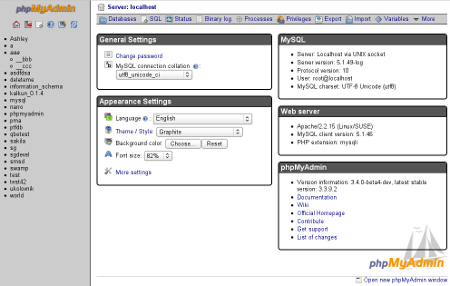
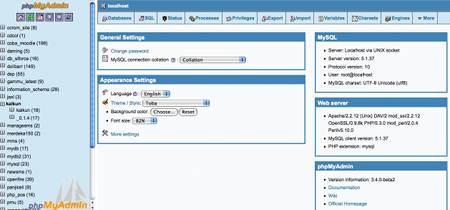
Today, I've made available two new themes for phpMyAdmin on our demo server. First one is Toba theme which was contributed by Azhari Harahap: Toba theme Second one is Graphite theme which I've started during Hackweek and finished during free time around FOSDEM: Graphite theme And we're still waiting for more contributions to our Theme contest. PS: Forgot to mention that new themes are only for 3.4 branch and won't work with others.

Filed under: English Phpmyadmin Suse 0 comments Flattr this!

6 February 2011

Christian Perrier: Squeeze released

This is the gazillionth entry on Planet Debian about Squeeze being released. If I had to say one thing about it, it would be that I think the way it was handled this time has been really great. The debian-publicity team, lead by the tireless Reichles, did great job in doing as many buzz as possible around that release....but managed to do it in the "spirit" of free software (pushing release parties, animating a feed on identi.ca, preparing press releases, etc.). The Release Team did a tremendous job during the 6 months of the freeze, by carefully balancing between conservatism and liberalism in accepting (or denying) our gazillion of request for freeze exceptions The FTP, CD, installer, website, documentation teams organized things really well for their respective fields of responsibility. A special mention to the tremendous effort done about the release notes, release announcements documents (and of course, their translators). I'm currently busy upgrading my servers (at home and at work) and things are going smoothly (except the first two I did without carefully reading warnings about missing firmwares...they're now waiting for me to provide them with the right non free firmware packages, 30km away from here). And, for myself, I celebrated the release this morning by squashing my personal best time on an half-marathon (officials races excepted) by nearly 7 minutes, bringing it just below 1h45 (PB in official races is 1h37). Release power! :) And, during that afternoon, I also had the please of having my pet package (geneweb) and my most important package (samba) having their first release in unstable, targeted for wheezy. Squeeeeeeze meeeeeeeeeeeee!

Dirk Eddelbuettel: Wynton Marsalis and the Jazz at Lincoln Center Orchestra

Went to the CSO on Friday night to see the annual concert of Wynton Marsalis and the Jazz at Lincoln Center Orchestra. This year's concert featured one set with four pieces from the new Vitoria Suite album---see here for a raving review. Those pieces were indeed very nice and I may to grab the disc to hear the full suite. Thhis was followed by a number of pieces composed or arranged by different band members. All in all a great concert. Hard not to love when you twelve-man strong brass section featuring four trumpets, three trombones, five saxophones supported by a nice rhythm section of three. Recommended.

Erich Schubert: Debian Squeeze released!

Debian GNU/Linux 6.0 "squeeze" has been released today.
Congratulations to everyone involved in ironing the last few bugs out.
(My own involvement had been a bit limited recently, but I at least kept my few remaining packages in a ready-to-release state and helped with the occasional bug report and patch.)
Some people think that Ubuntu is the better Debian - I do NOT. Debian is a fun place, has great people working on it and is true to its aims at creating a truly free and high-quality distribution. The long release cycles of Debian are a feature, not a bug. Stable is for production systems, not toy projects.
The proper way of attributing Debian stable is conservative and sustainable, but not outdated. It actually can do everything you need - and will do so in 10 years.
If you have been using Open Source for as long as me (say 15+ years) you will probably have seen software hypes come and go. The one thing that has been always the same was Debian: dead reliable. There was a time when everyone was crazy about enlightement for it's shiny pretty UI. Almost like Compiz-Beryl just two years ago. It came, as a matter of fact Debian also had it, but it also went.
I also remember how people complained that Debian didn't ship Xgl back in 2006 when this was the latest hype (there was no Debian release in 2006). Well, Xgl died in 2008. The features remained, but done in a much nicer way, and also found their way into Debian. In fact, I also ran Xgl at least once, on Debian, but just not on "stable". One could say that Xgl never was quite "stable", was it?
Debian stable is good the way it is: an administrators choice. Of course, developers might have different needs, but there also is testing, unstable and experimental. Just make sure to align your choice with your needs. And sometimes, also rethink your needs: there is no "latest beta versions" and "stable platform" at the same time.

Charles Plessy: Long life to Squeeze !

Debian just published Squeeze today. It is an excellent release, that I hope I will keep for a long time on my machines. Among the improvements, boot has been accelerated. On my laptop with a second hand SSD, it only takes 20 seconds to see the login screen. I was amazed when I saw this for the first time. I was often upgrading from Stable to Testing quite quickly, to install more recent versions of desktop applications. But the backports change the game. I hope that I will not switch to Testing before one year or two. For Squeeze, I will also prepare backports for the packages I maintain. I hope that more people will enjoy them. Most of these packages are independant from the graphical system, and more in general from its core. The backports will allow to use recent version of these packages on top of a stable distribution. Since Lenny, Debian Med displays the contents of its metapackages with tasks pages, that include draft packages as well. Not all will make it in Debian, and I would like to have the feedback from our users to better chose our priorities. Contact us on the debian-med@lists.debian.org mailing list ! These new packages will also be distributed for Squeeze through the backports. Thanks again to everybody who contributed to the release of Squeeze !

Tiago Bortoletto Vaz: Released!

Nice try tassia! I'm sure you can do even better for Wheezy :)

3 February 2011

Joey Hess: so long second thoughts

So Debian 6.0 "Squeeze" is due to be released this weekend. I've been doing my part annoying the release team with various risky last minute changes for not-formally-RC bugs. The best of these was making kFreeBSD CD images be actually used by d-i. Which had been silently ignoring them (so nobody noticed), and then I "broke" it to at least complain that it couldn't use them, and is now entirely fixed. Anyhow, there are these Debian release parties planned in 68 locations worldwide, this weekend. I have never been to a Debian release party. The timing is never right. The nearest one is 6 hours away, so I won't be making the trip. But yesterday I had a crazy idea, and I seem to have done enough that I can't back out now. announcing the Debian Party Line mumble.debian.net is a mumble server. Mumble is a nice system for doing group voice chats. I will be hosting a kind of virtual release party there, on February 5th and 6th. We'll follow the progress of the release, maybe have some scheduled events (if someone wants to do a talk or tutorial session). And at the end we'll hear what it sounds like when we all get Squeezed. So, should be fun, assuming my servers don't melt down due to bandwidth use. Hope to chat with you there! Please visit its page for details and to RSVP. squeeze countdown

Next.

Previous.