Search Results: "pm"

3 April 2013

Joey Hess: upstream git repositories

Daniel Pocock posted The multiple repository conundrum in Linux packaging. While a generally good and useful post, which upstream developers will find helpful to understand how Debian packages their software, it contains this statement:
If it is the first download, the maintainer creates a new git repository. If it has been packaged before, he clones the repository. The important point here is that this is not the upstream repository, it is an independent repository for Debian packaging.
The only thing important about that point is that it highlights an unnecessary disconnect between the Debian developer and upstream development. One which upstream will surely find annoying and should certainly not be bothered with. There is absolutely no technical reason to not use the upstream git repository as the basis for the git repository used in Debian packaging. I would never package software maintained in a git repository upstream and not do so. The details are as follows: So using the upstream git repository is valuable. And there is absolutely no technical value, and plenty of potential friction in maintaining a history-disconnected git repository for Debian packaging.

Michal Čihař: Weblate and Hackweek 9

You might have already noticed that there is Hackweek 9 coming next week. At SUSE we will get pizzas, icecream and other nice stuff, but most importantly we can spend the week on hacking anything we want. Same as last year, I want to spend most of my Hackweek on Weblate, nice crowdsourcing tool for translations. The major goal is to finish 1.5 release, what should not be that hard. The most challenging bits for new machine translation interface are already implemented, and the rest is pretty much only tweaking of existing code. Another thing we want to explore is possibility of using Weblate for openSUSE translations. Currently they are mostly kept in SVN, what is blocker for using Weblate, but we will see what can be done there.

Filed under: English Phpmyadmin Suse Weblate 0 comments Flattr this!

1 April 2013

Lisandro Damián Nicanor Pérez Meyer: On the road to Qt 5: Qt 4.8.4 and qtchooser uploaded to experimental

I have just uploaded Qt 4.8.4 to experimental. Apart from being the newest upstream release of the 4 series, it adds the basic support for coexisting with Qt 5. Because of this support it will need to go trough the NEW queue though, so we will need to be patient.

Developers will be interested in qtchooser, the tool that allows to switch between Qt 4 and 5 development apps. It has also been uploaded to experimental.

Of course, all this has been possible thanks to the efforts of the wonderful Qt/KDE team =)

Update: our efficacious FTP masters have already made Qt pass the NEW queue. Thanks a lot!

31 March 2013

Nathan Handler: Debian Mobile

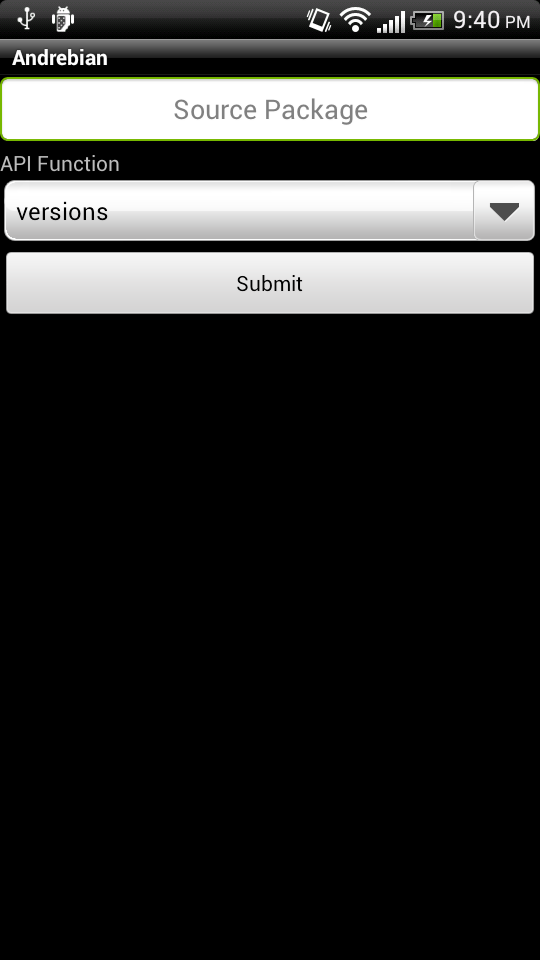
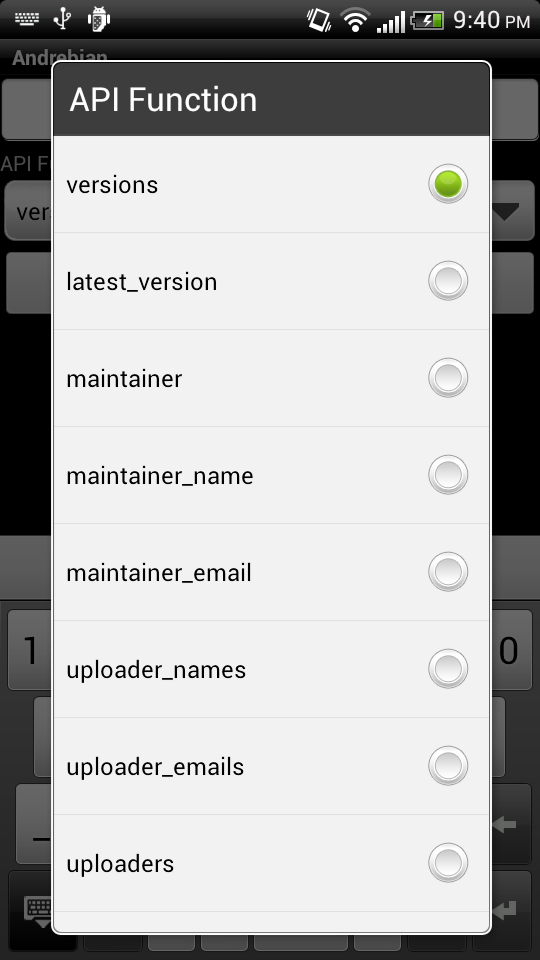
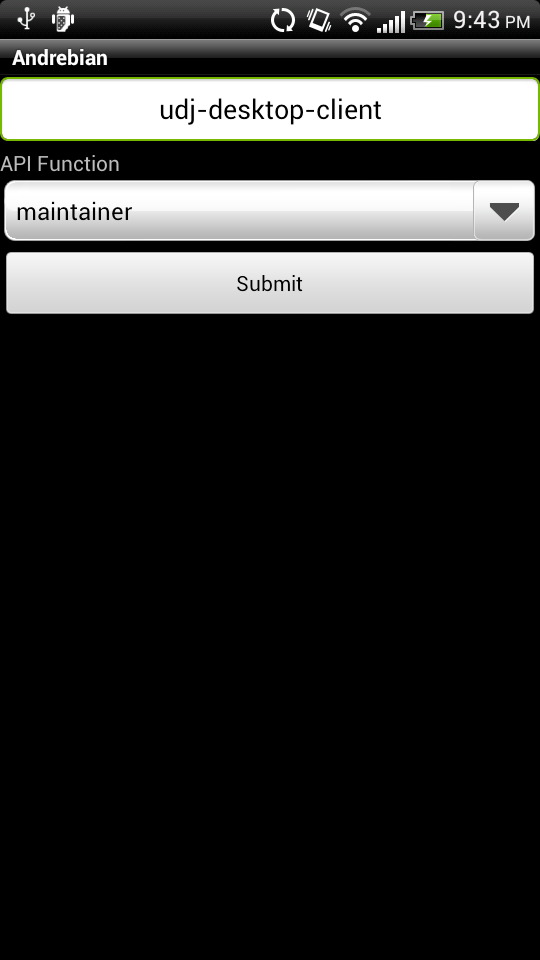
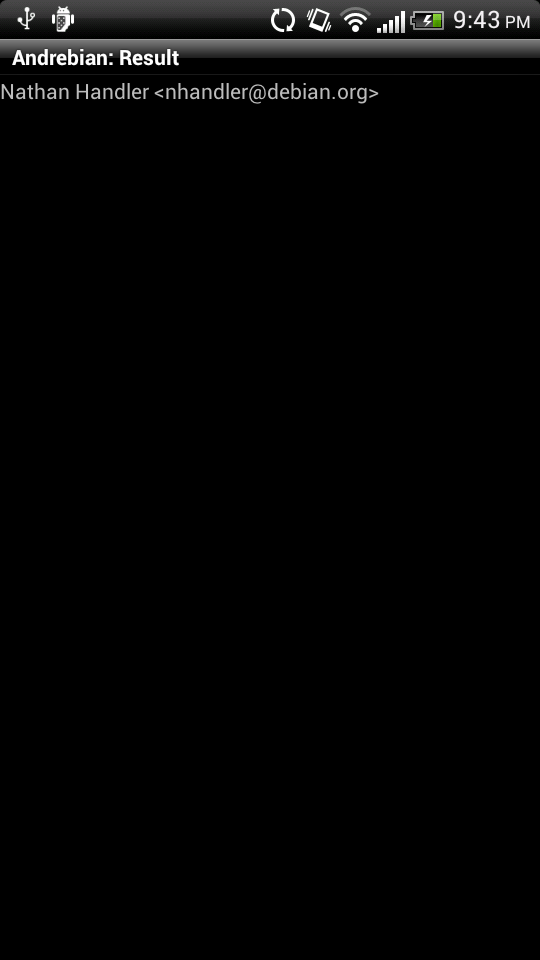
For one of my classes, the final project is to work on a personal project for four weeks. Since I have never done mobile programming before, I decided I would use this project as a chance to teach myself the basics of Android development. Paul Tagliamonte recently blogged about a Google Summer of Code project idea for a Debian Android application. It was this post that motivated me to create a Debian Android application for my final project. We are only in the middle of week one, but my plan is to have at least a basic BTS and PTS interface done by the end of the project. Then, depending on a few things, I hope to turn it into a Google Summer of Code project or simply continue developing it on my own. As I mentioned, I am only a few days into the project. One of the first hurdles I encountered was interacting with the SOAP interfaces available for the PTS and BTS. There are a few examples available on the wiki, but there are not any for Java. A Google search also failed to return any clear and simple results. As a result, I decided I would create a Python script that would accept requests from the Java Android application via a REST API and pass them on to the SOAP API before returning the result as JSON. Before I could finish writing the script, Paul mentioned that he had already written a similar program a few months ago. I immediately stopped working on my script and began preparing a patch for Paul's program to add support for some missing PTS SOAP functions as well as the entire BTS. After a few hours, I had the ability to query the PTS and BTS via a REST API from Java. While I normally prefer to use VIM for my programming, I decided to follow Google's recommendation and use Eclipse. I was able to follow their guide to get the SDK setup and a simple demo application running. One of the few hurdles I encountered was when I wanted to make web requests. Due to the ability for such requests to stall, you are required to perform them in a separate thread. This only becomes aparant when you try to test your application on an actual device; the emulator will happily run the process in the main thread. Regardless, I was eventually able to modify the demo application to allow me to make requests to my Python REST server and then parse and display the result. Here are some screenshots of the application running. Main Screen API Functions Information Entered Result If you have any feature suggestions, questions, or comments, feel free to send me an email (nhandler@debian.org). The source code for the Android application is currently not available, but I plan to put it up in a git repository sometime in the near future. The source code for the Python script that provides a REST API to access the PTS and BTS SOAP interface is available on GitHub.

28 March 2013

Michal Čihař: phpMyAdmin translations status

Next round of phpMyAdmin 4.0 translation status report is coming. So let's look at which translations are at 100% right now (new ones are bold): Almost complete: As you can see, there is still lot of languages missing, this might be your opportunity to contribute to phpMyAdmin. Also you are welcome to translate phpMyAdmin 4.0 using translation server. If your language is already fully translated and you want to help as well, you can translate our documentation as well.

Filed under: English Phpmyadmin 2 comments Flattr this!

Russ Allbery: wallet 1.0

Finally. The wallet is a system management tool for storing and retrieving secure data. I originally wrote it as part of our Kerberos v5 migration project to replace the old Kerberos v4 system we had for distributing srvtabs. It's still mostly used at Stanford for distributing keytabs, but it's extensible and supports storing arbitrary secure data. We also use it internally for storing database passwords, SSL private keys, and anything else that needs to be kept secure and retrieved later. It supports a rich ACL mechanism and namespace enforcement and is built on top of remctl for security and confidentiality. I did a bunch of development on it originally in 2006 and 2007, but then it solved our immediate problems and I didn't have much time to work on it. I used pre-1.0 versions because there was so much more on it that I wanted to do. But we've been running it in production for years, and while there's still tons more work that needs to be done, it really deserves a 1.0 version. Jon Robertson converted the database backend to DBIx::Class (which added PostreSQL support) and implemented schema upgrading, which were two of the major things that were keeping me from putting a 1.0 version on it. So it's time. Other new features since the previous release include a change to the default ACLs so that owners of objects can destroy them by default, a new ldap-attr ACL type that checks whether the caller has a particular attribute set in LDAP (which will let us use our entitlement system to control access), and support for storing and managing key rotation for WebAuth keyrings. There's also a new acl check command to determine whether an ACL exists and a new comment field and command to store an arbitrary comment about an object. Our local naming policy has also gotten much more complex, so I turned it into a module to provide an example to others of how to implement some reasonably detailed namespace and object autocreation controls. You can get the latest version from the wallet distribution page. I'm going to upgrade Debian packages to experimental or unstable (depending on the freeze status) as soon as I get a chance to write a bit more documentation and hopefully figure out debconf integration with the database setup support inside Debian for the server piece.

27 March 2013

Michal Čihař: I did it again

phpMyAdmin's website just got small facelift from me. The motivation was to make navigation easier in some parts and to come up with consistent color schema. This time changes are not that major as in past - basically just CSS changes and few minor changes to HTML code. The structure of the website is still pretty much same and I did not touch the texts at all. Unfortunately this is still not responsive design, so it will not look that good in small or huge resolutions, but I hope to get back to this later.

Filed under: English Phpmyadmin 2 comments Flattr this!

25 March 2013

Julien Danjou: Announcing Climate, the OpenStack capacity leasing project

While working on the XLcloud project (HPC on cloud) it appeared clear to us that OpenStack was missing a critical component towards resource reservations.
A capacity leasing service is something really needed by service providers, especially in the context of cloud platforms dedicated to HPC style workload. Instead of building something really specific, the decision has been made to build a new standalone OpenStack components aiming to provide this kind of functionnality to OpenStack. In the spirit of others OpenStack components, it will be extensible to fullfil a large panel of needs around this problematic.
The project is named Climate, and is hosted on StackForge. It will follow the standard OpenStack development modal. This service will be able to handle a calendar of reservations for various resources, based on various criteria. The project is still at its early design stage, and we plan to have a unconference session during the next OpenStack summit in Portland to present our plans and ideas for the future!

20 March 2013

Masayuki Hatta: Recipe for Debian Haskell packaging

The following is what I usually do when I want to debianize a Haskell stuff from Hackage. This is a personal recipe, by no means official procedure or such. I may be wrong, badly at that.
  1. Check pkg-haskell repository whether your intended package already exists or not. Somebody might work on it already.
  2. Find the webpage of your intended package at HackageDB, then download Cabal source package . Untar it. The tarball filename should be changed to fit the Debian source package convention. For example, if the original name is something like foobar-1.0.tar.gz, then it should be haskell-foobar_1.0.orig.tar.gz.
  3. File ITP. reportbug is your friend.
  4. Run cabal-debian in untared dir:
     $ cabal-debian --debianize --quilt
    
    We do have the upstream tarball, so use quilt. See http://wiki.debian.org/UsingQuilt. It might give you warnings about changelog. debian/changelog doesn t exist yet, so ignore it.
  5. Now read http://wiki.debian.org/Haskell/CollabMaint/Processes and http://wiki.debian.org/Haskell/CollabMaint/PackageTemplate carefully. Then do things as they say. These two are short, but well-written instructions. Edit the generated debian/control appropriately. Do not forget to make your debian/copyright machine-friendly. See http://www.debian.org/doc/packaging-manuals/copyright-format/1.0/.
  6. Test whether your package is flawless and really buildable. Do lintian. Use pbuilder.
     $ lintian haskell-foobar_1.0-1_amd64.changes
     # pbuilder --build haskell-foobar_1.0-1.dsc
    
  7. Read http://wiki.debian.org/Haskell/CollabMaint/DarcsBasic. Darcs is quite easy to use, and you don t have to be the master of Darcs to merely debianize things anyway. Basically, what I usually do is
     $ darcs record -a; darcs push --repo=debian
    
    Darcs is well-suited to Haskell-related development, but seems you can use Git, too.
  8. Change debian/changelog. UNRELEASED in the first line should be unstable or experimental . Do not forget to close ITP.
  9. Finally, do
     $ debuild -tc; debcommit -r; debrelease; darcs push --repo=debian
    
    That s all folks!

Jan Wagner: Chemnitzer Linux-Tage 2013!

Also this year the Debian project was present at Chemnitzer Linuxtage, this time right next the debianforum.de booth. The booth folks arriving on friday organized a flashmob at Expitas after booth setup. Unfortunatly our second planned flashmob at the mensa was boycotted by much more students, so we ended up in the Turm-Brauhaus, which is a great location with good drinks but the service was very harshly. On the next two days at the booth we chatted and discussed with visitors and other exhibitors a wide variety of questions, including 'When will be (the next Debian version) released?' and 'Are there installation disks available?'. The answers was as always 'When we are ready and we will have reached the quality-level we defined', 'No we don't have installation medias, as they are always outdated. Do you have an USB-dongle with you?'. Merchandising was requested by visitors as always, but we just had some leftovers of fosdem, brought by Axel. The demonstration was as usual a small box running Babelbox and xpenguins which worked out the last years too. This year there were three lectures held by Debian related people, about Debian GIS, Aptitude - known but even unknown and SSH and unreliable network connections. The organisation team did a really great job. The social event at saturday night was very exciting and we left it early in the morning. The whole event was indeed fun and a pleasure to find new friends and meet old ones of the Free Software community. Many thanks to Florian Baumann, Jan Dittberner, Andreas Tille, Christian Hoffmann, Axel Beckert, Markus Rekkenbeil, Daniel Schier, Jonas Genannt, Jan H rsch and kurio for taking care and running the booth, which worked out this year extreme smoothly from my point of view. Likewise as the last years a special thanks to TMT GmbH & Co. KG, which kindly donated additional boothtickets, the equipment, its transportation and accommodation for almost half of the booth staff.

Michal Čihař: Server troubles

This night you might have noticed that some services like hosted Weblate or phpMyAdmin wiki being quite flaky. It was caused by DDOS attack which pretty much busted firewall and thus made unable to open new connections. In the morning when I've realized this, I introduced another breakage by too strict filtering on firewall :-). However now everything should be back to normal.

Filed under: English Phpmyadmin Weblate 0 comments Flattr this!

19 March 2013

Michal Čihař: Libravatar support in Weblate

For some time, Weblate was showing avatars for users. Just as I've discovered Libravatar - free and federated alternative to Gravatar, I thought it would be better replacement. Quickly looking at their website, it seems that they transparently provide all avatars from Gravatar as well, so the migration seems to be pretty much painless. Basic replacement to use their server is just matter of changing base URLs, however to support federated behavior, you have to install pyLibravatar. Weblate in Git now supports both these ways. While implementing the client side, I did also setup my own instance of Surrogator to provide avatars for some of my domains. Surprisingly this worked fine without problems, but let's see how much used this will actually become.

Filed under: English Phpmyadmin Weblate 2 comments Flattr this!

18 March 2013

Michal Čihař: phpMyAdmin translations status

Next round of phpMyAdmin 4.0 translation status report is coming. So let's look at which translations are at 100% right now: Almost complete: As you can see, there is still lot of languages missing, this might be your opportunity to contribute to phpMyAdmin. Also you are welcome to translate phpMyAdmin 4.0 using translation server. If your language is already fully translated and you want to help as well, you can translate our documentation as well.

Filed under: English Phpmyadmin 0 comments Flattr this!

17 March 2013

Daniel Pocock: Spotting Cypriots with Bitcoin

For anybody in Cyrpus right now, it should be relatively easy to spot those residents who keep their wealth in physical gold, silver or Bitcoin. Why? They will be the only people smiling this week, as everybody else has just had 6-10% of their bank account gouged by a once-off tax. What is really scary is that Cyprus is a Eurozone country. Will we now see the panic spread to Italy and Spain as citizens fear a copy-cat raid on their funds in the coming days or at some uncertain moment in the future? This latest development should not be seen as a small country' issue. The US did similar things with gold confiscation in the 1930s. Australia has decided to prop up the stock market by raising forced pension contributions on 1 July. What is different in Cyprus is that people will feel the pain immediately, and that modern technology will let the shockwaves spread. It might be worth refreshing my earlier blog will 2013 be the year of BitCoin?

16 March 2013

Lars Wirzenius: Obnam 1.4 (backup software) release

I've just pushed out the release files for Obnam version 1.4, my backup application, and Larch, my B-tree library, which Obnam uses. They are available via my home page (http://liw.fi/). Since Debian is frozen, I am not uploading packages to Debian, but .deb files are available from my personal apt repository for intrepid explorers. (I will be uploading to Debian again after the freeze. I am afraid I'm too lazy to upload to experimental, or do backports. Help is welcome!) From the Obnam NEWS file: Bug fixes:

15 March 2013

Hideki Yamane: pbuilder/cowbuilder and piuparts failed

Today, I've failed to create pbuilder's base.tgz and cowbuilder's base.cow, and log says as below

Get:1 http://ftp.jp.debian.org sid Release.gpg [836 B]
Hit http://ftp.jp.debian.org sid Release
Ign http://ftp.jp.debian.org sid Release
Hit http://ftp.jp.debian.org sid/main amd64 Packages/DiffIndex
Hit http://ftp.jp.debian.org sid/main Translation-en
Fetched 836 B in 0s (3011 B/s)
Reading package lists...
W: GPG error: http://ftp.jp.debian.org sid Release: The following signatures were invalid: BADSIG AED4B06F473041FA Debian Archive Automatic Signing Key (6.0/squeeze) <ftpmaster debian.org="">
I: Obtaining the cached apt archive contents</ftpmaster>
"The following signatures were invalid: BADSIG" ?

apt (0.9.7.8) unstable; urgency=criticial

* SECURITY UPDATE: InRelease verification bypass
- CVE-2013-1051

[ David Kalnischk ]
* apt-pkg/deb/debmetaindex.cc,
test/integration/test-bug-595691-empty-and-broken-archive-files,
test/integration/test-releasefile-verification:
- disable InRelease downloading until the verification issue is
fixed, thanks to Ansgar Burchardt for finding the flaw
Maybe this cause it (just wild guess).

And piuparts also failed.


8m16.5s DEBUG: Starting command: ['chroot', '/tmp/tmpivurbJ', 'eatmydata', 'umount', '/proc']
8m16.5s DUMP:
umount: /proc: device is busy.
(In some cases useful info about processes that use
the device is found by lsof(8) or fuser(1))
8m16.5s DEBUG: Command failed (status=1), but ignoring error: ['chroot', '/tmp/tmpivurbJ', 'eatmydata', 'umount', '/proc']
8m16.5s DEBUG: Starting command: ['rm', '-rf', '--one-file-system', '/tmp/tmpivurbJ']
8m16.6s DUMP:
rm: skipping '/tmp/tmpivurbJ/proc', since it's on a different device
8m16.6s ERROR: Command failed (status=1): ['rm', '-rf', '--one-file-system', '/tmp/tmpivurbJ']
rm: skipping '/tmp/tmpivurbJ/proc', since it's on a different device

8m16.7s DEBUG: Starting command: ['chroot', '/tmp/tmpivurbJ', 'umount', '/proc']
8m16.8s DUMP:
chroot: failed to run command 'umount': No such file or directory


It mounts binfmt_misc mount under /proc and try to umount /proc without umount it again, again and again... then failed. What causes this annoying behavior?

Please let me know.

Russ Allbery: C TAP Harness 2.0

This package is my pure C test harness that understands the TAP protocol. It's akin to prove, except written in C. It also provides a TAP library for C and shell scripts, which is useful even if you don't want to use the harness. I was going to just do a small release with no major changes, just some cleanup and merging of changes from elsewhere, but I do hate making tiny releases and I'd been meaning to get back to doing some larger development for a while. So this release has several major changes, including one backward-incompatible one. The backward-incompatible change is that, to specify a list of tests to run, one now needs to use the -l option to runtests. That's because the default interpretation of the command line is now that it is a list of tests to run and summarize. This is more consistent with other test harnesses, such as prove. Also in this release, runtests will look for the test name as given if it can't find it by appending -t or .t, which allows one to pass the actual name of the test executable on the command line (with or without the -o option). This makes command-line completion less annoying. There are a few other minor fixes to display: output is flushed after each test executable completes even if the output isn't a terminal, which produces better display when teeing to a log file, and partial status of tests that use lazy plans now show the total test count as "?" to match the behavior of prove. I also fixed a few errors when displaying a test abort to a terminal. You can get the latest version from the C TAP Harness distribution page.

MJ Ray: Debian Project Leader 2013 election campaign links: part 1

This is basically a link-post to the Debian Project Leader election email discussions on GMANE s blog-style interface to debian-vote. After only 3 days of the 21, there s already a pageful, so if I don t start collecting links now, I ll probably miss some. Right or wrong, I ve grouped these into three topics: The Job
  1. Why do you think you are a good candidate for DPL (10 Mar 2013)
  2. How do you plan to represent Debian externally? (10 Mar 2013)
  3. about a DPL board (12 Mar 2013)
  4. DPL term duration (12 Mar 2013)
  5. Work balance and traveling (12 Mar 2013)
  6. trying to do awesome and risking to fail (11 Mar 2013)
  7. To Lucas: how do you plan to push your ideas (12 Mar 2013)
  8. All candidates quotes for the press if you win (13 Mar 2013)
Money
  1. using debian funds for Debian s hardware infrastru (12 Mar 2013)
  2. Usage of Debian s Money (12 Mar 2013)
  3. Debian s relationship with money and the economy (12 Mar 2013)
Project Management
  1. getting new people to Debian (10 Mar 2013)
  2. Free Software challenges and Debian role (11 Mar 2013)
  3. Development and technical issues and challenges (10 Mar 2013)
  4. Are there problematic infrastructure or processes in Debian? (12 Mar 2013)
  5. to Moray: encourage teams to take interns (11 Mar 2013)
So, what do you think are the key points or differences? Leave me a comment, or get involved in the discussions. Campaigning ends and voting begins 30/31 March.

14 March 2013

Matthias Klumpp: Tanglu

Hi everyone! Today I make an announcement I thought I would never ever make. But things changed. Discussion about this has a long history, starting as a non-serious suggestion at DesktopSummit 2011, continued with people on IRC, but it was decided back then that it wouldn t be worth the effort. This has changed too, and a small team has formed to work on it. We hereby announce Tanglu, a new Debian-based-Linux distribution. A new logo?Why do we need another one? Let me explain the concepts of that distro: Tanglu will be based on Debian Testing and follow the Debian development closely. It will have a 6-months release-cycle and it s target audience are Linux desktop users. We will make installing and setting up the distro as easy as possible. Tanglu will be usable for both developers of upstream software and the average Linux user and Linux newbie. This is possible because in our opinion developers and users don t have different needs for a desktop system. Both kinds of users like a polished desktop which just works . We will, hwever, not apply any kind of fancy modification on upstream software, we will basically just distribute what upstream created, so users can get an almost pure GNOME and KDE experience. Tanglu is designed to be able to solve the issue that Debian is frozen for a long time and Debian Developers can t make new upstream versions available for testing easily. During a Debian freeze, DDs can upload their software to the current Tanglu development version and later start the new Debian cycle with already tested packages from Tanglu. The delta between Tanglu and Debian should be kept as minimal as possible. However, Tanglu is not meant as experimental distribution for Debian, so please upload experimental stuff to Experimental. Only packages good enough for a release should go into Tanglu. Ideally, Tanglu and Debian should be working well together in mixed environments, where you for example have Debian servers and multiple Tanglu desktops with the new software, targeted at desktop user. Since the differences between Tanglu and Debian should not be very high, administering both systems should be very easy (if you know Debian). Tanglu will be an open project, driven by community. At the beginning of each cycle, people can make suggestions for release goals they want to implement (similar to Fedora, but without FESCo). These proposals are discussed in public and are rejected if there are major technical concerns. If consensus about a certain proposal is lacking, a vote is done for it. The proposal can be accepted with absolute majority. If this does not happen, the proposal is postponed for the next release, where people can vote for it again. If nobody wants that function, it is rejected. In general, decisions made by Debian are superior and have to be followed. We don t think we know every package and every software better than the original upstream. That s why it makes much sense to rely on feedback from others and to have a community-based and peer-reviewed distribution, instead of secretly developing stuff and dumping it on the community. Tanglu will have a highly predictable set of features, defined at the beginning of a cycle, so you will know what you can expect from the next release as soon as possible and plan for it. Tanglu will make it easy to deploy applications for it. It will contain a software-center, similar to what Ubuntu has. We will also try to establish a solution for a Linux-AppCenter , a place for Linux applications, which will be open not only for Tanglu, but can be implemented in any other distribution too. Possible income will flow back into development of the platform. Now, let s answer the FQA (Future Questions Asked): Why don t you contribute to Debian directly and create yet another distribution? First of all, we contribute to Debian ;-) And for me, I can say that I will contribute to Debian even more. The point is that Debian can not cover all possible use-cases, and with Tanglu we want to make a distro which solves this. You might ask why we have to create a new distro for that, instead of creating improvements inside Debian? Creating a new distro allows us to do stuff we can never do in Debian. For example, we will include proprietary firmware in that distro, we will make installations of proprietary stuff possible easily (but don t ship with it by default) and we will have a time-based release cycle. These are already things which are a no-go for Debian, and that s fine. We don t want Debian to support these cases, as it is already a great distribution. We want to offer a distro as close to Debian as possible, but with a few modifications for use-cases which are not covered by Debian itself. Of course we will participate in DEX. If Debian Developers contribute to Tanglu, freezes will take even longer! This is an often-heard concern, it comes up on every mailinglist discussion about continuing development while freeze. I would disagree here, packaging new upstream stuff is not slowing down testing and improving of packages in Testing. Also, Tanglu is an offer for Debian developers to participate (we will sync privileges for their packages) we don t expect anyone to work on it, but as we think DDs know their packages best, we will make it possible for them to participate without extra barriers. We hope that Tanglu can add value to Debian and that Debian cycles can start with better-tested packages. You said you are a small team you cannot develop a whole distribution with it! Let s put that to the test! ;-) All people working on this are well aware of the issue that the project can not survive without much community-involvement on the long run. But we see a chance that many people are interested in it and that there is a high demand for it. At the beginning, we will just start with a small set of packages. We will also sync many packages from Ubuntu, to reduce workload. For example, it is planned to use the Ubuntu-Kernel and KDE packaging. By doing this, we keep the workload at the beginning low. We also reduce duplicate work with that. We even have some possible sponsors for the new distribution. But nothing is set in stone yet, so just wait for it to happen. :) Why not participate in Arch, OpenSUSE $other_distro? These are not Debian ;-) . I know, it sounds odd, but if you like the Debian way of doing things, you want to use a Debian-based distribution. There is nothing wrong with OpenSUSE. And Debian has issues too. But we want to be close to Debian and use it s tools and way of doing things. I hate you!!! You are doing it wrong!! The project is useless!

Well, that s fine. But there is no reason for hating us. If you dislike our idea, there are basically two options: First, you hate us but the project is successful. In that case, you have been wrong with hate, as there are definitely people who liked the project and contributed to it. Second, you hate us and we fail. In this case, there is no reason for hate, as the project will just vanish and you don t have to worry about it. So hating it would ve been just a big waste of energy. Also keep in mind that forking is a way to keep development healthy and to adapt software to new use-cases which it didn t target before. And we are not introducing incompatibilities here (like e.g. writing our own display server could). Instead, we want to stay close to Debian and reuse as much code as possible. Which desktop will you use? Everyone can add a new desktop to Tanglu, as long as the desktop-environment is present in Debian. Long term, we will have to offer Linux-newbies a default flavour, probably by setting a default download on the website. But as long as there is a community for a given desktop-environment, the desktop is considered as supported. At the beginning, we will focus on KDE, as many people have experience with it. But adding vanilla GNOME is planned too. Can you say something about the software used in Tanglu? Yes, but this is still in flow, so I can t promise final decisions here. On the server, side, we will try to use the Dak for repository management, as soon as we have enough server capacity. We will also use the standard Debian repository GUI and basically reuse most of the software there, to diverge less from Debian. The distribution itself will use a Linux Kernel from Ubuntu and systemd as the primary init system, as well as the login manager logind. It will be based on current Debian Testing with some fresh packages from Unstable and Experimental. We might also use the Ubuntu driver packages and KDE packaging. We expect to have a very rough start with the first release, but there will be enough time to polish Tanglu. Nice idea! How can I help? Well, you can help with basically anything at time from writing manuals, over designing logos and pages to administering a webserver and create packages. We are at an early stage of development at the moment, but we wanted to go public with it as soon as possible, to include the community and receive feedback so we can make that distro community-centric from the beginning. Most of the infrastructure is currently in progress too. So, if you want to get started with Tanglu, subscribe to our mailinglist tanglu-devel and write a mail to it, intruducing yourself. We can then include you in the loop. Generally, if you want to get access to our machines, a trusted GPG-signature will help a lot. If you want to talk to us, join #tanglu-devel or Freenode! Most discussions are currently happening there. And that s it! Tanglu will be awesome!

Some other projects of mine will develop a bit slower because I am now involved in Tanglu. But nothing will stop, and there is some pretty cool stuff coming for both GNOME and KDE (and I still have to implement DEP-11 for Debian). :)

Joerg Jaspert: zsh config - and prompt

As most people that are using that funny grey on black thing with the blinking white box AKA a commandline, I do have a heavily configured shell. zsh in my case. Some while ago my old configuration for it started to annoy me and so I set out to redo it. With the basic requirement to be flexible and able to adjust to various zsh versions (back as far as Lenny). I ve set out and looked how others do it and took the (I hope) best bits and put them together in a way I like it. Maybe others want to pick from me, so here I describe a little, maybe someone is interested First - the config is completly inside .zsh. The only thing directly in my $HOME is a symlink from $HOME/.zshenv to $HOME/.zsh/zshenv.home. All in one place, nicer this way. The zshenv just sets ZDOTDIR, so zsh then uses the .zsh itself. Next I am using modules . Well, actually everything is splitted out in small(er) files, so its way easier to maintain. And to overwrite stuff wherever I need to. So my .zshrc just loads those module files - and then goes and checks if it finds the same file inside a series of subdirectories. Those subdirectories are based on the hostname, the kernel name, the username, the domain name and the name of the distribution of the system. And a number of combinations of those. That system allows me, for example, to have a set of aliases defined only on Debian systems (like those to do with apt-get & co). Or define some extra variables if I login to the host franck, domain debian.org. Or whatever more. I m also on the way of doing something similar for all my dotfiles. While I was working at that I finally got fed up with the fact that my prompt, which is based on Phil! s wasn t doing what I wanted it on various of the hosts I access. Thankfully someone pointed me at a change to the grml zsh config: Frank Terbeck rewrote their prompt to make use of the zstyle system. Now that got me going, I like the idea of having the whole prompt easily configurable and changeable. My prompt always has shown slight differences depending on where the shell runs, which meant I had to carefully craft PS1 for every such change, and when one changes something one had to check all the places to adjust them too. No longer. I took Franks work and extended it for me. I wanted to still have a design matching my old prompt (minus colors, I changed color themes anyways), but with full flexibility the zstyle system can offer here. Now I am at a point where As an example, on the ftp-master host my prompt, while otherwise being the same as everywhere else, contains one extra item - displaying the current status of the archive (dinstall). If you want to try it, the setup file is available, but note that I don t give any warranty. :) Works for me . I load it in my Prompts module, while having the prompt setup file in my function path. The 4 commented lines, my testcase, are a nice example of a custom token, though a real life one, the setup for the ftp-master prompt with the one extra item can be found over here. Comments? Bugfixes? Enhancements? Update: Got asked for an example how to use my prompt to fake another. So here is what you need to do to use my prompt setup to imitate the prompt clint, as delivered with zsh:
autoload promptinit && promptinit
zstyle ':prompt:ganneff' vcs_info true
# Alternatively you can set whatever you like it to be.
zstyle ':prompt:ganneff' set_vcs_info_defaults true
zstyle ':prompt:ganneff' colors true
## no right prompt
zstyle ':prompt:ganneff:right:setup' use-rprompt false
## color of brackets depending on variable
zstyle ':prompt:ganneff:*:items:openbracket' pre '$ $ SSH_CLIENT+"$ PR_YELLOW " :-"$ PR_RED " '
zstyle ':prompt:ganneff:*:items:openbracket' post '$ PR_NO_COLOR '
zstyle ':prompt:ganneff:*:items:closebracket' pre '$ $ SSH_CLIENT+"$ PR_YELLOW " :-"$ PR_RED " '
zstyle ':prompt:ganneff:*:items:closebracket' post '$ PR_NO_COLOR '
zstyle ':prompt:ganneff:*:items:openanglebracket' pre '$ $ SSH_CLIENT+"$ PR_YELLOW " :-"$ PR_RED " '
zstyle ':prompt:ganneff:*:items:openanglebracket' post '$ PR_NO_COLOR '
zstyle ':prompt:ganneff:*:items:closeanglebracket' pre '$ $ SSH_CLIENT+"$ PR_YELLOW " :-"$ PR_RED " '
zstyle ':prompt:ganneff:*:items:closeanglebracket' post '$ PR_NO_COLOR '
## extra date format, and its color
zstyle ':prompt:ganneff:*:items:date' token '%D %a %y/%m/%d %R %Z '
zstyle ':prompt:ganneff:*:items:date' pre '$ PR_CYAN '
## pts. %l instead of %y, also color again
zstyle ':prompt:ganneff:*:items:pts' token '%l'
zstyle ':prompt:ganneff:*:items:pts' pre '$ PR_GREEN '
zstyle ':prompt:ganneff:*:items:pts' post '$ PR_NO_COLOR '
## host ends with :
zstyle ':prompt:ganneff:*:items:host' token '%m:'
## and a different style for the rc level
zstyle ':prompt:ganneff:*:items:rc' token '%(?..[%?%1v] )'
zstyle ':prompt:ganneff:*:items:rc' pre ''
## change color for other parts that differ to my default
zstyle ':prompt:ganneff:*:items:user' pre '$ PR_GREEN '
zstyle ':prompt:ganneff:*:items:host' pre '$ PR_GREEN '
zstyle ':prompt:ganneff:*:items:at' pre '$ PR_GREEN '
zstyle ':prompt:ganneff:*:items:path' pre '$ PR_GREEN '
zstyle ':prompt:ganneff:*:items:history' pre ''
## Show the shell level in a different way
zstyle ':prompt:ganneff:*:items:shell-level' pre ''
zstyle ':prompt:ganneff:*:items:shell-level' token 'zsh%(2L./$SHLVL.) '
## And history is just a bold number. Lazy here, not using pre and post
zstyle ':prompt:ganneff:*:items:history' token '%B%h%b '
## And the last part in prompt, a # or % depending on privileges
## Using standard zsh tokens for bold
zstyle ':prompt:ganneff:*:items:privileges' pre '%B'
zstyle ':prompt:ganneff:*:items:privileges' post '%b'
## Now there are two parts not defined by default, so lets create them
## Both are simple existing variables, no need for extra precmd functions
## system info
zstyle ':prompt:ganneff:extra:ostype' pre '$ PR_CYAN '
zstyle ':prompt:ganneff:extra:ostype' post '$ PR_NO_COLOR '
zstyle ':prompt:ganneff:extra:ostype' token "$ MACHTYPE /$ OSTYPE /$(uname -r)"
## zsh version
zstyle ':prompt:ganneff:extra:zshvers' pre '$ PR_CYAN '
zstyle ':prompt:ganneff:extra:zshvers' post '$ PR_NO_COLOR '
zstyle ':prompt:ganneff:extra:zshvers' token "$ ZSH_VERSION "
zstyle ':prompt:ganneff:left:full:setup' items \
    openbracket date closebracket openbracket pts closebracket openbracket ostype closebracket \
    openbracket zshvers closebracket newline openanglebracket user at host \
    path closeanglebracket newline \
    shell-level space history rc space vcs privileges space
prompt ganneff
And if you now tell me Uh, thats so much more than just saying /prompt clint/ , then you are right. But then: This way is flexible. As I wrote above, my prompt on the ftpmaster host is different. Actually, my prompt on all machines inside the domain debian.org differs, by having
zstyle ':prompt:ganneff:*:items:host' pre '$ PR_YELLOW '
in the Prompts definition for domain:debian.org. And thats enough to show me im on a .debian.org machine by a yellow hostname, instead of my default red. On the ftpmaster host I have the additional few lines: # Want one more piece in my prompt here, dinstall status zstyle :prompt:ganneff:left:full:setup items \ ulcorner line openparentheses user at host pts closeparentheses line history \ line dinstall line shell-level line flexline openparentheses path closeparentheses line urcorner newline \ llcorner line rc openparentheses time closeparentheses line vcs line change-root pipe space
zstyle ':prompt:ganneff:extra:dinstall' pre '$ PR_CYAN '
zstyle ':prompt:ganneff:extra:dinstall' post '$ PR_NO_COLOR '
zstyle ':prompt:ganneff:extra:dinstall' token '$DINSTALL'
zstyle ':prompt:ganneff:extra:dinstall' precmd jj_update_dinstall
zmodload zsh/mapfile
jj_update_dinstall ()  
    DINSTALL="$ $ (z)$ (f)mapfile[/srv/ftp.debian.org/web/dinstall.status] [2] [3,99] "
 
And woo, thats simple. I think. (There ought to be a way to just easily add the item at a defined place in the items zstyle, but meh, too lazy to look).

Next.

Previous.