Search Results: "rul"

14 May 2024

Matthew Palmer: "Is This Project Still Maintained?"

If you wander around a lot of open source repositories on the likes of GitHub, you ll invariably stumble over repos that have an issue (or more than one!) with a title like the above. Sometimes sitting open and unloved, often with a comment or two from the maintainer and a bunch of I ll help out! followups that never seemed to pan out. Very rarely, you ll find one that has been closed, with a happy ending. These issues always fascinate me, because they say a lot about what it means to maintain an open source project, the nature of succession (particularly in a post-Jia Tan world), and the expectations of users and the impedence mismatch between maintainers, contributors, and users. I ve also recently been thinking about pre-empting this sort of issue, and opening my own issue that answers the question before it s even asked.

Why These Issues Are Created As both a producer and consumer of open source software, I completely understand the reasons someone might want to know whether a project is abandoned. It s comforting to be able to believe that there s someone on the other end of the line , and that if you have a problem, you can ask for help with a non-zero chance of someone answering you. There s also a better chance that, if the maintainer is still interested in the software, that compatibility issues and at least show-stopper bugs might get fixed for you. But often there s more at play. There is a delusion that maintained open source software comes with entitlements an expectation that your questions, bug reports, and feature requests will be attended to in some fashion. This comes about, I think, in part because there are a lot of open source projects that are energetically supported, where generous volunteers do answer questions, fix reported bugs, and implement things that they don t personally need, but which random Internet strangers ask for. If you ve had that kind of user experience, it s not surprising that you might start to expect it from all open source projects. Of course, these wonders of cooperative collaboration are the exception, rather than the rule. In many (most?) cases, there is little practical difference between most projects that are maintained and those that are formally declared unmaintained . The contributors (or, most often, contributor singular) are unlikely to have the time or inclination to respond to your questions in a timely and effective manner. If you find a problem with the software, you re going to be paddling your own canoe, even if the maintainer swears that they re still maintaining it.

A Thought Appears With this in mind, I ve been considering how to get ahead of the problem and answer the question for the software projects I ve put out in the world. Nothing I ve built has anything like what you d call a community ; most have never seen an external PR, or even an issue. The last commit date on them might be years ago. By most measures, almost all of my repos look unmaintained . Yet, they don t feel unmaintained to me. I m still using the code, sometimes as often as every day, and if something broke for me, I d fix it. Anyone who needs the functionality I ve developed can use the code, and be pretty confident that it ll do what it says in the README. I m considering creating an issue in all my repos, titled Is This Project Still Maintained? , pinning it to the issues list, and pasting in something I m starting to think of as The Open Source Maintainer s Manifesto . It goes something like this:

Is This Project Still Maintained? Yes. Maybe. Actually, perhaps no. Well, really, it depends on what you mean by maintained . I wrote the software in this repo for my own benefit to solve the problems I had, when I had them. While I could have kept the software to myself, I instead released it publicly, under the terms of an open licence, with the hope that it might be useful to others, but with no guarantees of any kind. Thanks to the generosity of others, it costs me literally nothing for you to use, modify, and redistribute this project, so have at it!

OK, Whatever. What About Maintenance? In one sense, this software is maintained , and always will be. I fix the bugs that annoy me, I upgrade dependencies when not doing so causes me problems, and I add features that I need. To the degree that any on-going development is happening, it s because I want that development to happen. However, if maintained to you means responses to questions, bug fixes, upgrades, or new features, you may be somewhat disappointed. That s not maintenance , that s support , and if you expect support, you ll probably want to have a support contract , where we come to an agreement where you pay me money, and I help you with the things you need help with.

That Doesn t Sound Fair! If it makes you feel better, there are several things you are entitled to:
  1. The ability to use, study, modify, and redistribute the contents of this repository, under the terms stated in the applicable licence(s).
  2. That any interactions you may have with myself, other contributors, and anyone else in this project s spaces will be in line with the published Code of Conduct, and any transgressions of the Code of Conduct will be dealt with appropriately.
  3. actually, that s it.
Things that you are not entitled to include an answer to your question, a fix for your bug, an implementation of your feature request, or a merge (or even review) of your pull request. Sometimes I may respond, either immediately or at some time long afterwards. You may luck out, and I ll think hmm, yeah, that s an interesting thing and I ll work on it, but if I do that in any particular instance, it does not create an entitlement that I will continue to do so, or that I will ever do so again in the future.

But I ve Found a Huge and Terrible Bug! You have my full and complete sympathy. It s reasonable to assume that I haven t come across the same bug, or at least that it doesn t bother me, otherwise I d have fixed it for myself. Feel free to report it, if only to warn other people that there is a huge bug they might need to avoid (possibly by not using the software at all). Well-written bug reports are great contributions, and I appreciate the effort you ve put in, but the work that you ve done on your bug report still doesn t create any entitlement on me to fix it. If you really want that bug fixed, the source is available, and the licence gives you the right to modify it as you see fit. I encourage you to dig in and fix the bug. If you don t have the necessary skills to do so yourself, you can get someone else to fix it everyone has the same entitlements to use, study, modify, and redistribute as you do. You may also decide to pay me for a support contract, and get the bug fixed that way. That gets the bug fixed for everyone, and gives you the bonus warm fuzzies of contributing to the digital commons, which is always nice.

But My PR is a Gift! If you take the time and effort to make a PR, you re doing good work and I commend you for it. However, that doesn t mean I ll necessarily merge it into this repository, or even work with you to get it into a state suitable for merging. A PR is what is often called a gift of work . I ll have to make sure that, at the very least, it doesn t make anything actively worse. That includes introducing bugs, or causing maintenance headaches in the future (which includes my getting irrationally angry at indenting, because I m like that). Properly reviewing a PR takes me at least as much time as it would take me to write it from scratch, in almost all cases. So, if your PR languishes, it might not be that it s bad, or that the project is (dum dum dummmm!) unmaintained , but just that I don t accept this particular gift of work at this particular time. Don t forget that the terms of licence include permission to redistribute modified versions of the code I ve released. If you think your PR is all that and a bag of potato chips, fork away! I won t be offended if you decide to release a permanent fork of this software, as long as you comply with the terms of the licence(s) involved. (Note that I do not undertake support contracts solely to review and merge PRs; that reeks a little too much of pay to play for my liking)

Gee, You Sound Like an Asshole I prefer to think of myself as forthright and plain-speaking , but that brings to mind that third thing you re entitled to: your opinion. I ve written this out because I feel like clarifying the reality we re living in, in the hope that it prevents misunderstandings. If what I ve written makes you not want to use the software I ve written, that s fine you ve probably avoided future disappointment.

Opinions Sought What do you think? Too harsh? Too wishy-washy? Comment away!

12 May 2024

Elana Hashman: I am very sick

I have not been able to walk since February 18, 2023. When people ask me how I'm doing, this is the first thing that comes to mind. "Well, you know, the usual, but also I still can't walk," I think to myself. If I dream at night, I often see myself walking or running. In conversation, if I talk about going somewhere, I'll imagine walking there. Even though it's been over a year, I remember walking to the bus, riding to see my friends, going out for brunch, cooking community dinners. But these days, I can't manage going anywhere except by car, and I can't do the driving, and I can't dis/assemble and load my chair. When I'm resting in bed and follow a guided meditation, I might be asked to imagine walking up a staircase, step by step. Sometimes, I do. Other times, I imagine taking a little elevator in my chair, or wheeling up ramps. I feel like there is little I can say that can express the extent of what this illness has taken from me, but it's worth trying. To an able-bodied person, seeing me in a power wheelchair is usually "enough." One of my acquaintances cried when they last saw me in person. But frankly, I love my wheelchair. I am not "wheelchair-bound" I am bed-bound, and the wheelchair gets me out of bed. My chair hasn't taken anything from me. *** In October of 2022, I was diagnosed with myalgic encephalomyelitis. Scientists and doctors don't really know what myalgic encephalomyelitis (ME) is. Diseases like it have been described for over 200 years.1 It primarily affects women between the ages of 10-39, and the primary symptom is "post-exertional malaise" or PEM: debilitating, disproportionate fatigue following activity, often delayed by 24-72 hours and not relieved by sleep. That fatigue has earned the illness the misleading name of "Chronic Fatigue Syndrome" or CFS, as though we're all just very tired all the time. But tired people respond to exercise positively. People with ME/CFS do not.2 Given the dearth of research and complete lack of on-label treatments, you may think this illness is at least rare, but it is actually quite common: in the United States, an estimated 836k-2.5m people3 have ME/CFS. It is frequently misdiagnosed, and it is estimated that as many as 90% of cases are missed,4 due to mild or moderate symptoms that mimic other diseases. Furthermore, over half of Long COVID cases likely meet the diagnostic criteria for ME,5 so these numbers have increased greatly in recent years. That is, ME is at least as common as rheumatoid arthritis,6 another delightful illness I have. But while any doctor knows what rheumatoid arthritis is, not enough7 have heard of "myalgic encephalomylitis." Despite a high frequency and disease burden, post-viral associated conditions (PASCs) such as ME have been neglected for medical funding for decades.8 Indeed, many people, including medical care workers, find it hard to believe that after the acute phase of illness, severe symptoms can persist. PASCs such as ME and Long COVID defy the typical narrative around common illnesses. I was always told that if I got sick, I should expect to rest for a bit, maybe take some medications, and a week or two later, I'd get better, right? But I never got better. These are complex, multi-system diseases that do not neatly fit into the Western medical system's specializations. I have seen nearly every specialty because ME/CFS affects nearly every system of the body: cardiology, nephrology, pulmonology, neurology, opthalmology, and, many, many more. You'd think they'd hand out frequent flyer cards, or a medical passport with fun stamps, but nope. Just hundreds of pages of medical records. And when I don't fit neatly into one particular specialist's box, then I'm sent back to my primary care doctor to regroup while we try to troubleshoot my latest concerning symptoms. "Sorry, can't help you. Not my department." With little available medical expertise, a lot of my disease management has been self-directed in partnership with primary care. I've read hundreds of articles, papers, publications, CME material normally reserved for doctors. It's truly out of necessity, and I'm certain I would be much worse off if I lacked the skills and connections to do this; there are so few ME/CFS experts in the US that there isn't one in my state or any adjacent state.9 So I've done a lot of my own work, much of it while barely being able to read. (A text-to-speech service is a real lifesaver.) To facilitate managing my illness, I've built a mental model of how my particular flavour of ME/CFS works based on the available research I've been able to read and how I respond to treatments. Here is my best attempt to explain it: The best way I have learned to manage this is to prevent myself from doing activities where I will exceed that aerobic threshold by wearing a heartrate monitor,12 but the amount of activity that permits in my current state of health is laughably restrictive. Most days I'm unable to spend more than one to two hours out of bed. Over time, this has meant worsening from a persistent feeling of tiredness all the time and difficulty commuting into an office or sitting at a desk, to being unable to sit at a desk for an entire workday even while working from home and avoiding physically intense chores or exercise without really understanding why, to being unable to leave my apartment for days at a time, and finally, being unable to stand for more than a minute or two or walk. But it's not merely that I can't walk. Many folks in wheelchairs are able to live excellent lives with adaptive technology. The problem is that I am so fatigued, any activity can destroy my remaining quality of life. In my worst moments, I've been unable to read, move my arms or legs, or speak aloud. Every single one of my limbs burned, as though I had caught fire. Food sat in my stomach for hours, undigested, while my stomach seemingly lacked the energy to do its job. I currently rely on family and friends for full-time caretaking, plus a paid home health aide, as I am unable to prep meals, shower, or leave the house independently. This assistance has helped me slowly improve from my poorest levels of function. While I am doing better than I was at my worst, I've had to give up essentially all of my hobbies with physical components. These include singing, cooking, baking, taking care of my houseplants, cross-stitching, painting, and so on. Doing any of these result in post-exertional malaise so I've had to stop; this reduction of activity to prevent worsening the illness is referred to as "pacing." I've also had to cut back essentially all of my volunteering and work in open source; I am only cleared by my doctor to work 15h/wk (from bed) as of writing. *** CW: severe illness, death, and suicide (skip this section) The difficulty of living with a chronic illness is that there's no light at the end of the tunnel. Some diseases have a clear treatment path: you take the medications, you complete the procedures, you hit all the milestones, and then you're done, perhaps with some long-term maintenance work. But with ME, there isn't really an end in sight. The median duration of illness reported in one 1997 study was over 6 years, with some patients reporting 20 years of symptoms.13 While a small number of patients spontaneously recover, and many improve, the vast majority of patients are unable to regain their baseline function.14 My greatest fear since losing the ability to walk is getting worse still. Because, while I already require assistance with nearly every activity of daily living, there is still room for decline. The prognosis for extremely ill patients is dismal, and many require feeding tubes and daily nursing care. This may lead to life-threatening malnutrition;15 a number of these extremely severe patients have died, either due to medical neglect or suicide.16 Extremely severe patients cannot tolerate light, sound, touch, or cognitive exertion,17 and often spend most of their time lying flat in a darkened room with ear muffs or an eye mask.18 This is all to say, my prognosis is not great. But while I recognize that the odds aren't exactly in my favour, I am also damn stubborn. (A friend once cheerfully described me as "stubbornly optimistic!") I only get one shot at life, and I do not want to spend the entirety of it barely able to perceive what's going on around me. So while my prognosis is uncertain, there's lots of evidence that I can improve somewhat,19 and there's also lots of evidence that I can live 20+ years with this disease. It's a bitter pill to swallow, but it also means I might have the gift of time something that not all my friends with severe complex illnesses have had. I feel like I owe it to myself to do the best I can to improve; to try to help others in a similar situation; and to enjoy the time that I have. I already feel like my life has been moving in slow motion for the past 4 years there's no need to add more suffering. Finding joy, as much as I can, every day, is essential to keep up my strength for this marathon. Even if it takes 20 years to find a cure, I am convinced that the standard of care is going to improve. All the research and advocacy that's been happening over the past decade is plenty to feel hopeful about.20 Hope is a discipline,21 and I try to remind myself of this on the hardest days. *** I'm not entirely sure why I decided to write this. Certainly, today is International ME/CFS Awareness Day, and I'm hoping this post will raise awareness in spaces that aren't often thinking about chronic illnesses. But I think there is also a part of me that wants to share, reach out in some way to the people I've lost contact with while I've been treading water, managing the day to day of my illness. I experience this profound sense of loss, especially when I think back to the life I had before. Everyone hits limitations in what they can do and accomplish, but there is so little I can do with the time and energy that I have. And yet, I understand even this precious little could still be less. So I pace myself. Perhaps I can inspire you to take action on behalf of those of us too fatigued to do the advocacy we need and deserve. Should you donate to a charity or advocacy organization supporting ME/CFS research? In the US, there are many excellent organizations, such as ME Action, the Open Medicine Foundation, SolveME, the Bateman Horne Center, and the Workwell Foundation. I am also happy to match any donations through the end of May 2024 if you send me your receipts. But charitable giving only goes so far, and I think this problem deserves the backing of more powerful organizations. Proportionate government funding and support is desperately needed. It's critical for us to push governments22 to provide the funding required for research that will make an impact on patients' lives now. Many organizers are running campaigns around the world, advocating for this investment. There is a natural partnership between ME advocacy and Long COVID advocacy, for example, and we have an opportunity to make a great difference to many people by pushing for research and resources inclusive of all PASCs. Some examples I'm aware of include: But outside of collective organizing, there are a lot of sick individuals out there that need help, too. Please, don't forget about us. We need you to visit us, care for us, be our confidantes, show up as friends. There are a lot of people who are very sick out here and need your care. I'm one of them.

7 May 2024

John Goerzen: Photographic comparison: Is the Kobo Libra Colour display worse than the Kobo Libra 2?

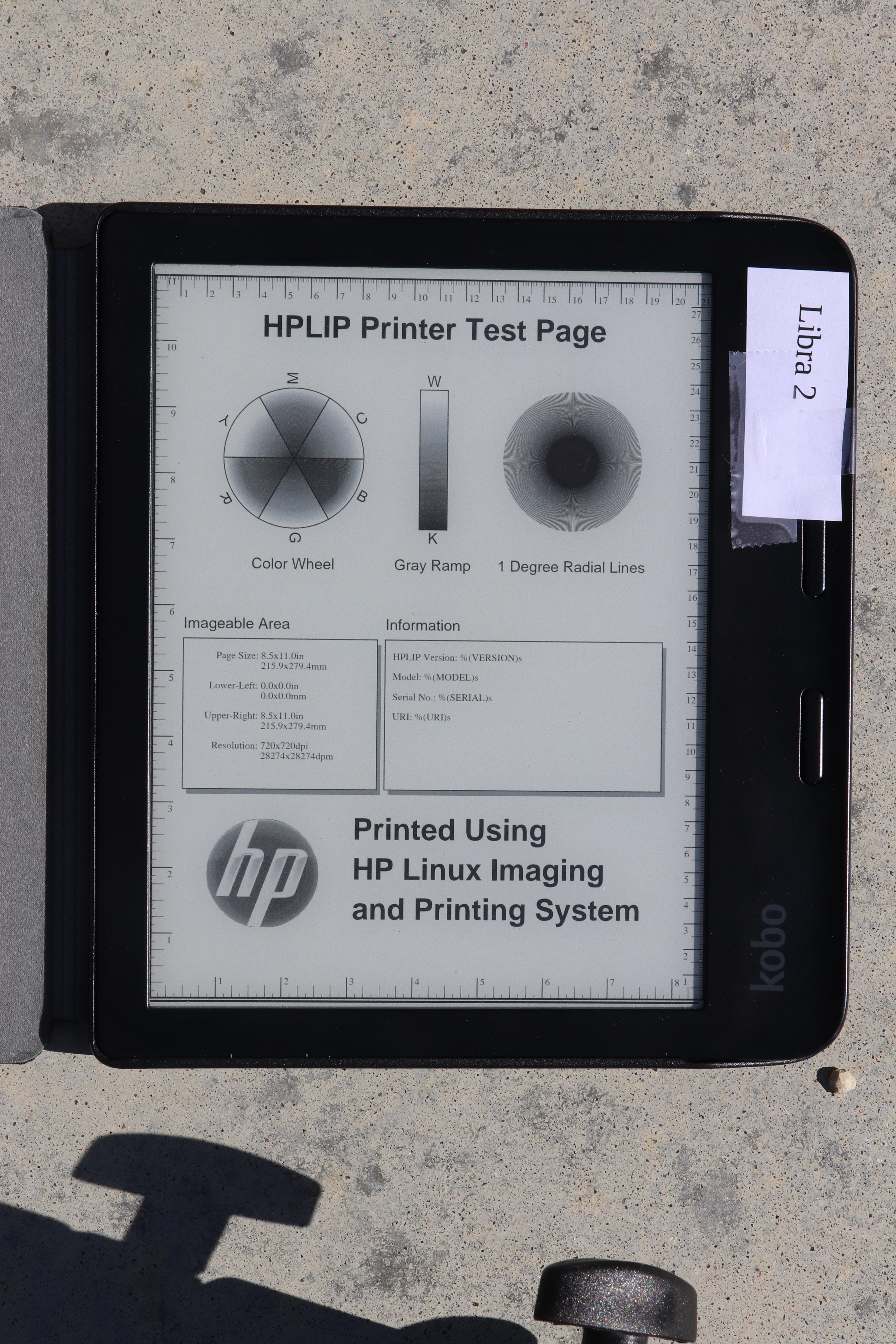
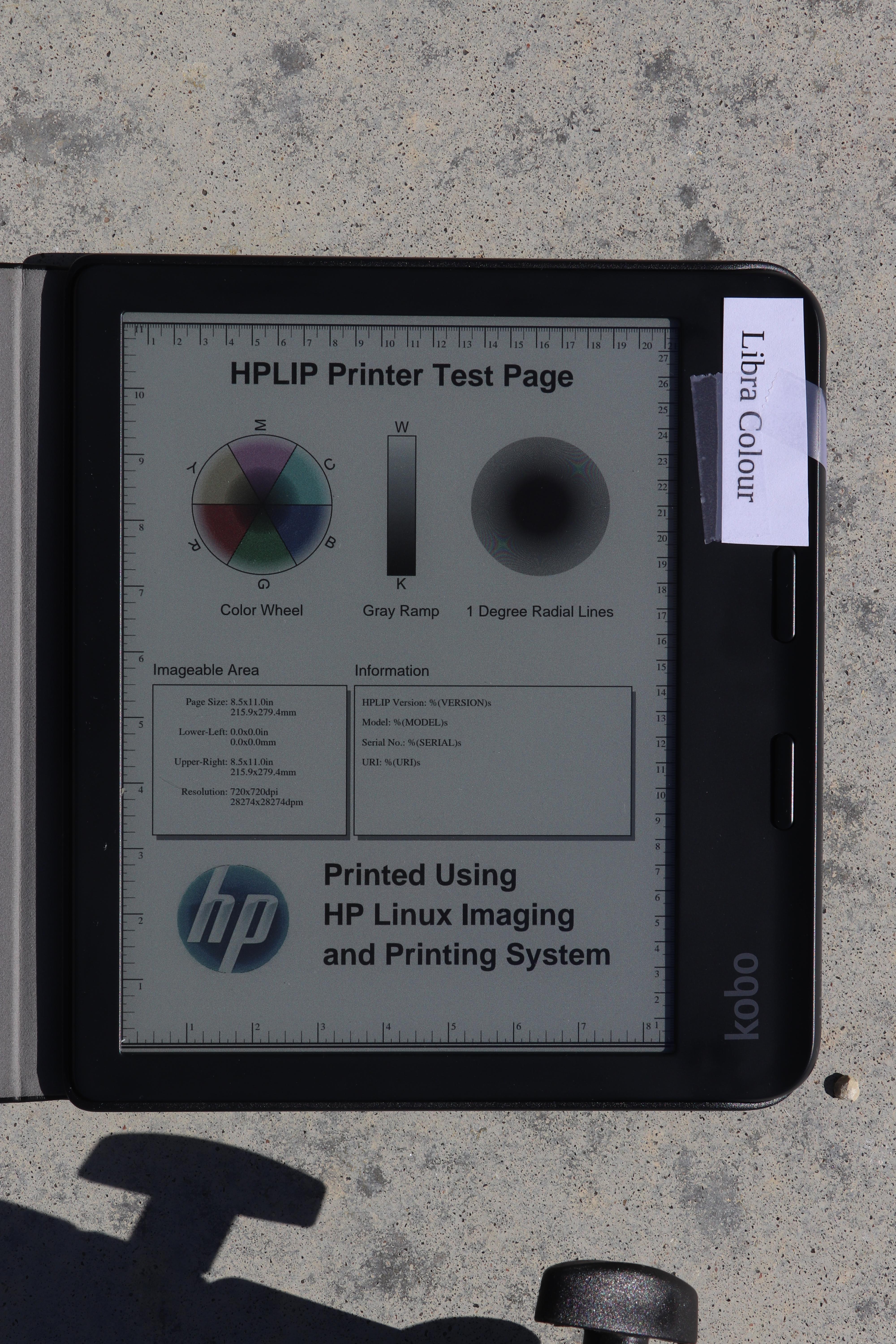
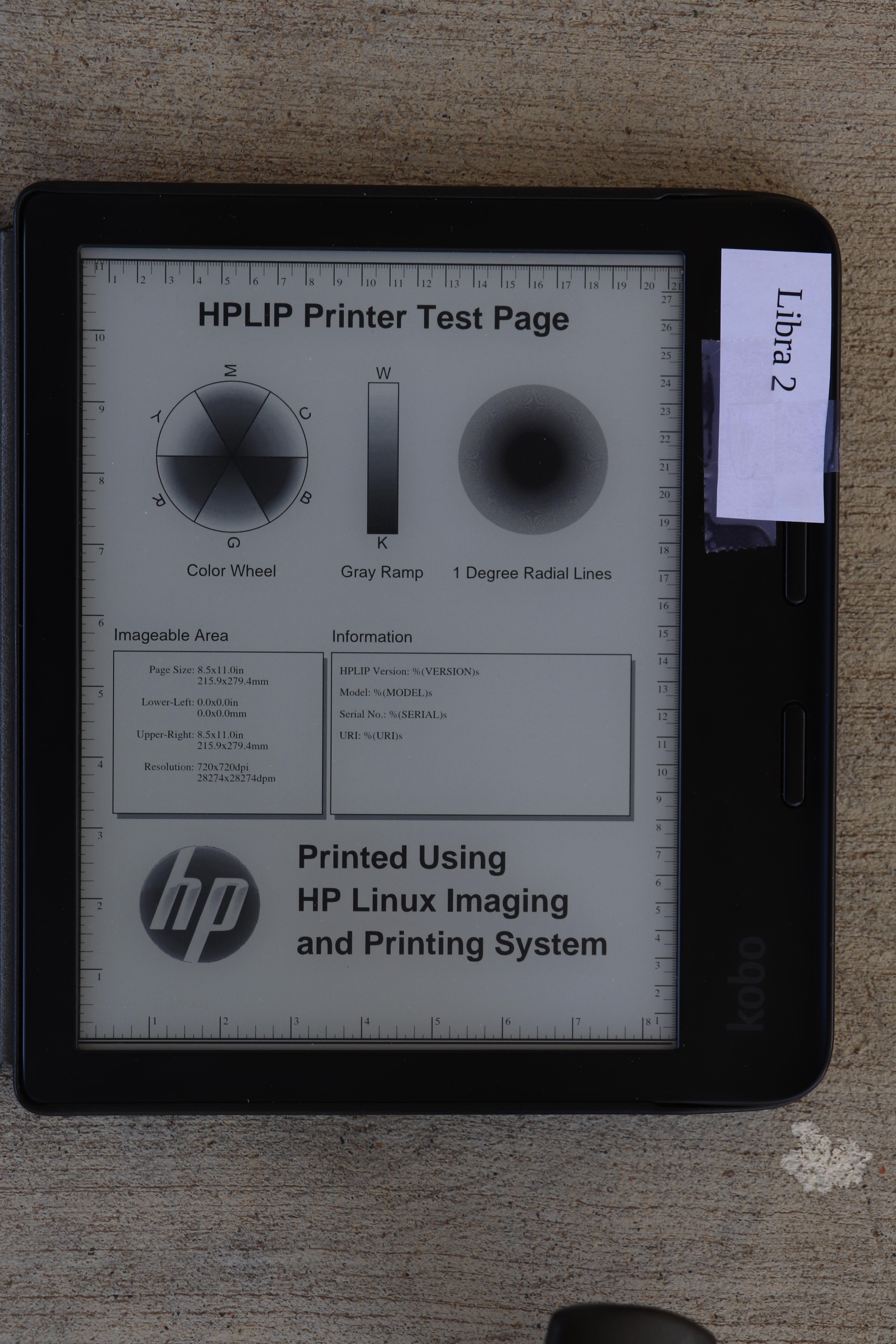
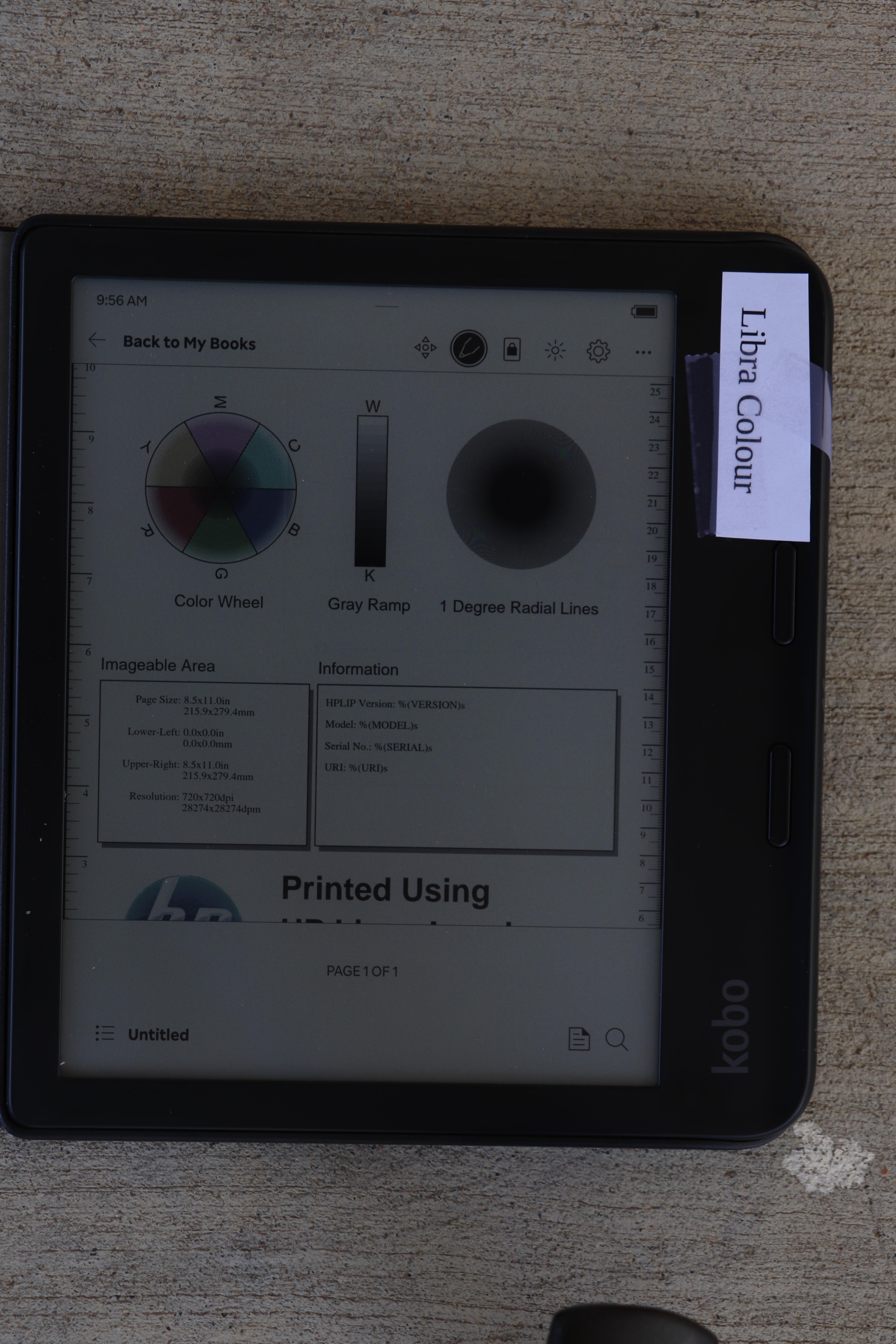
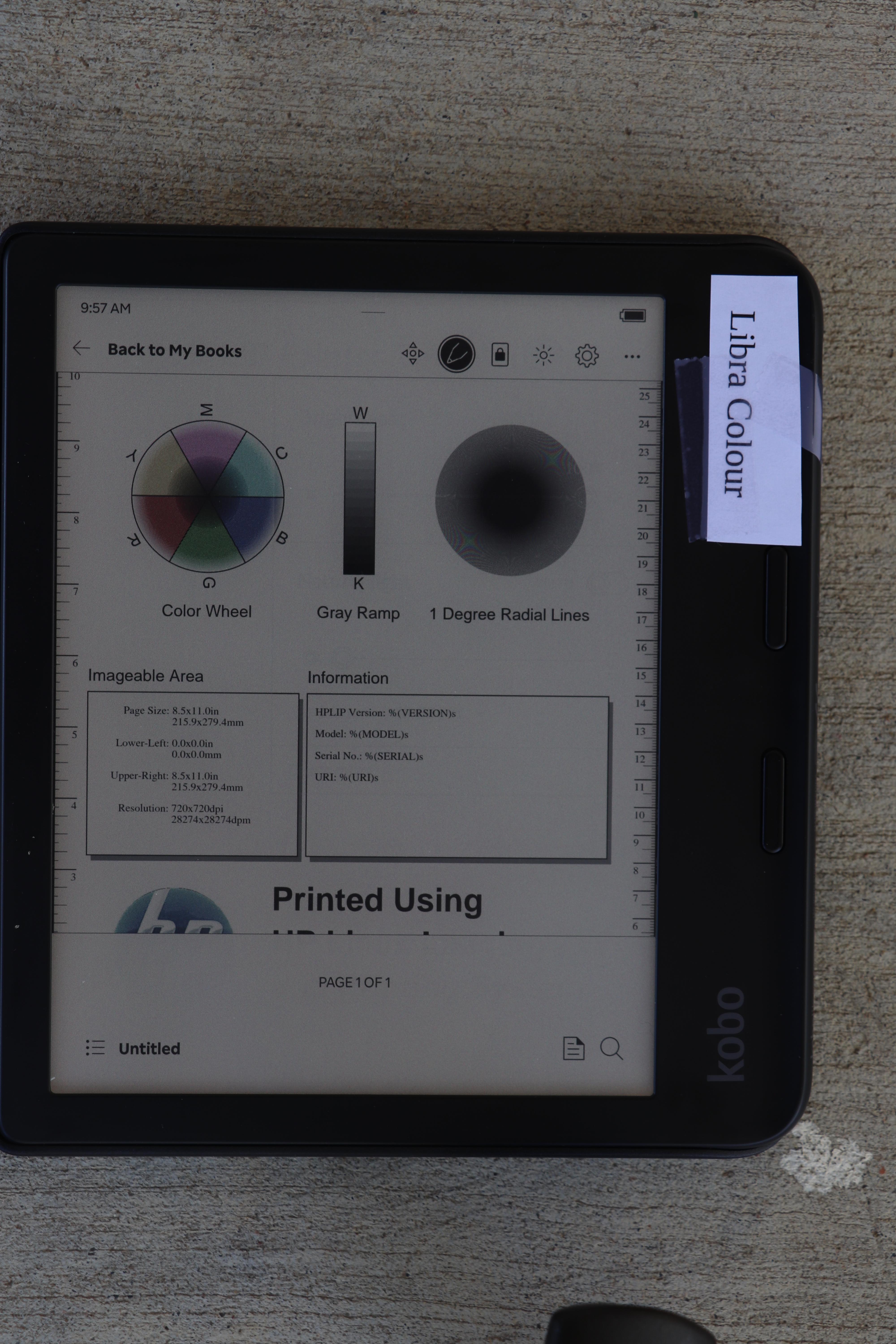
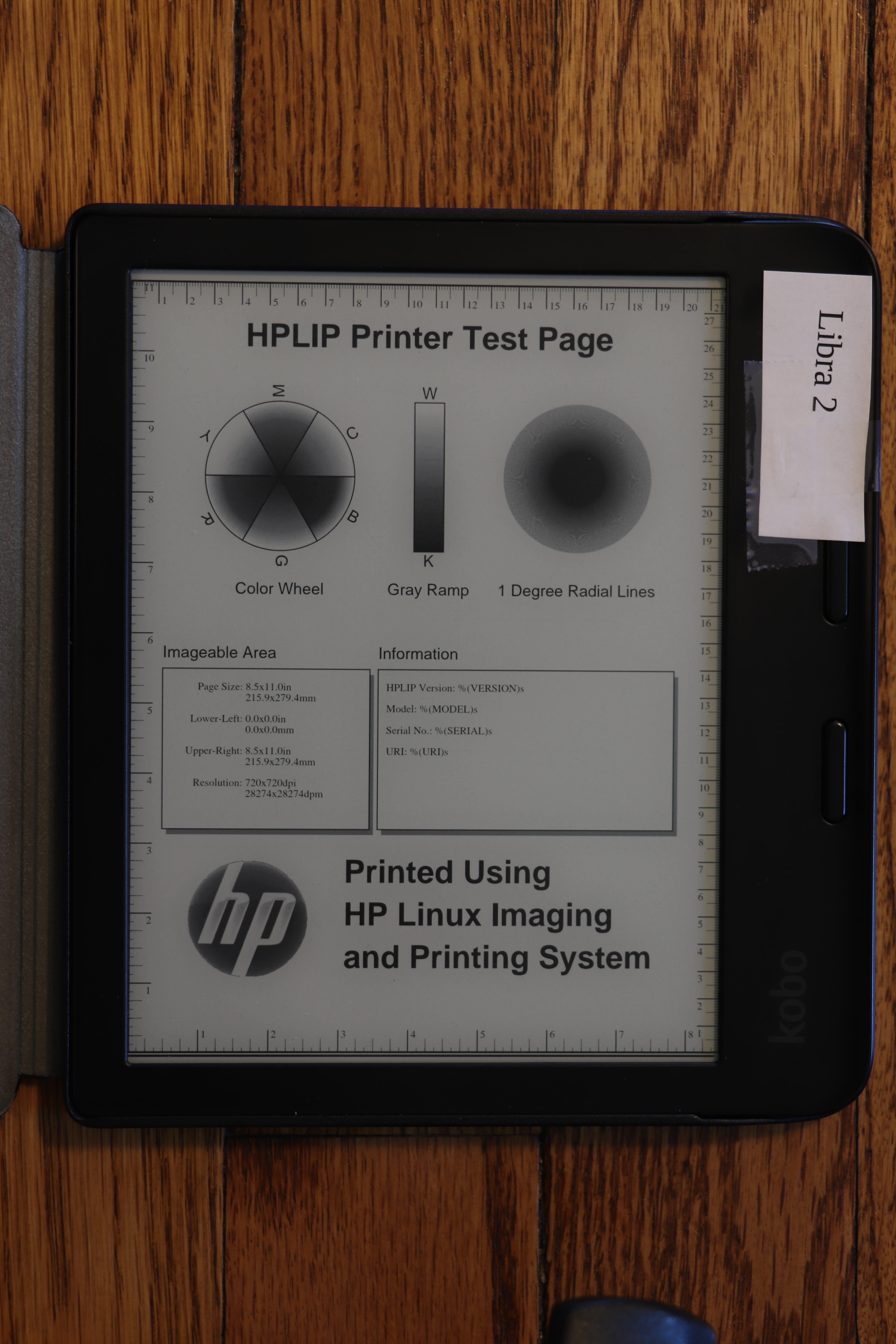
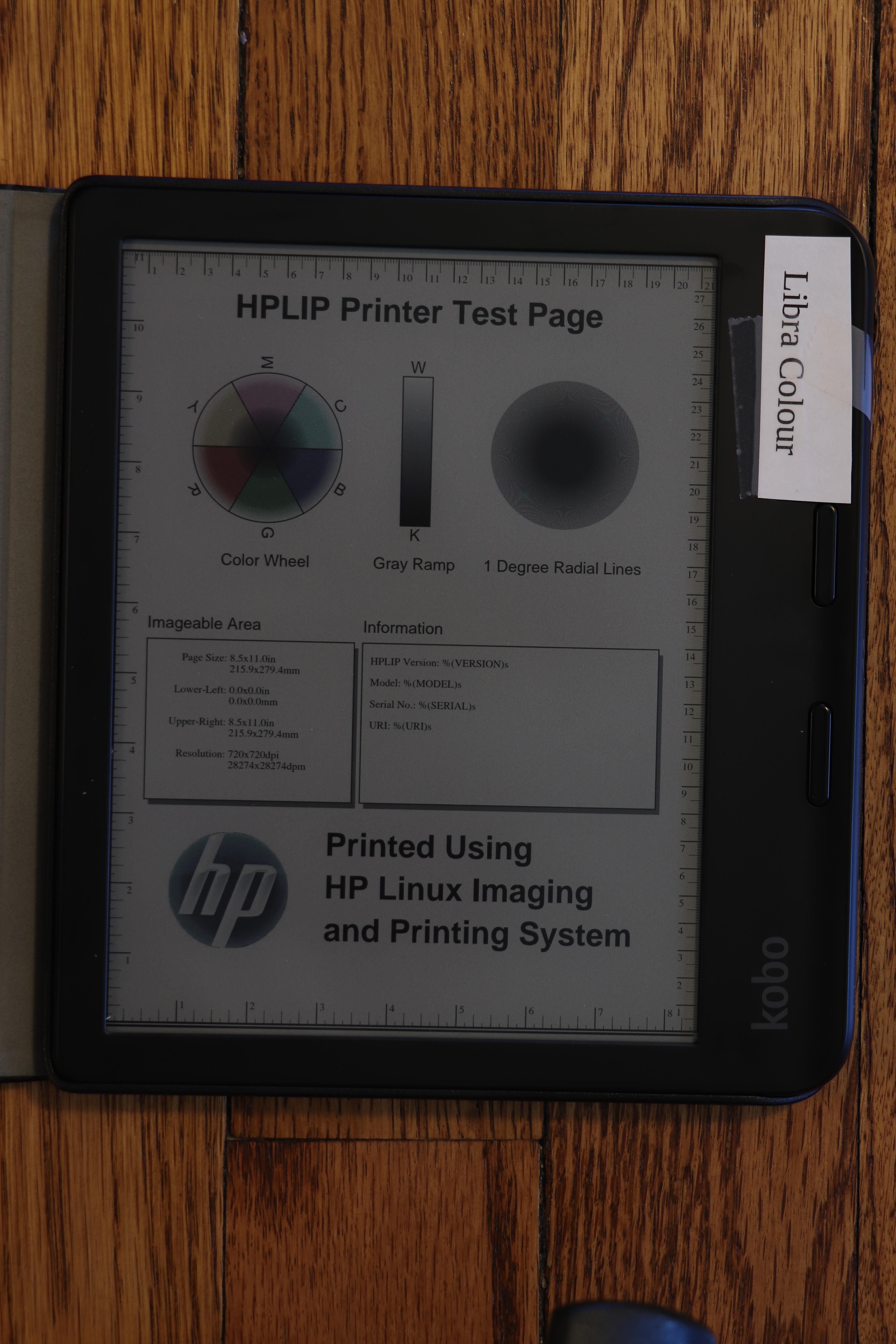
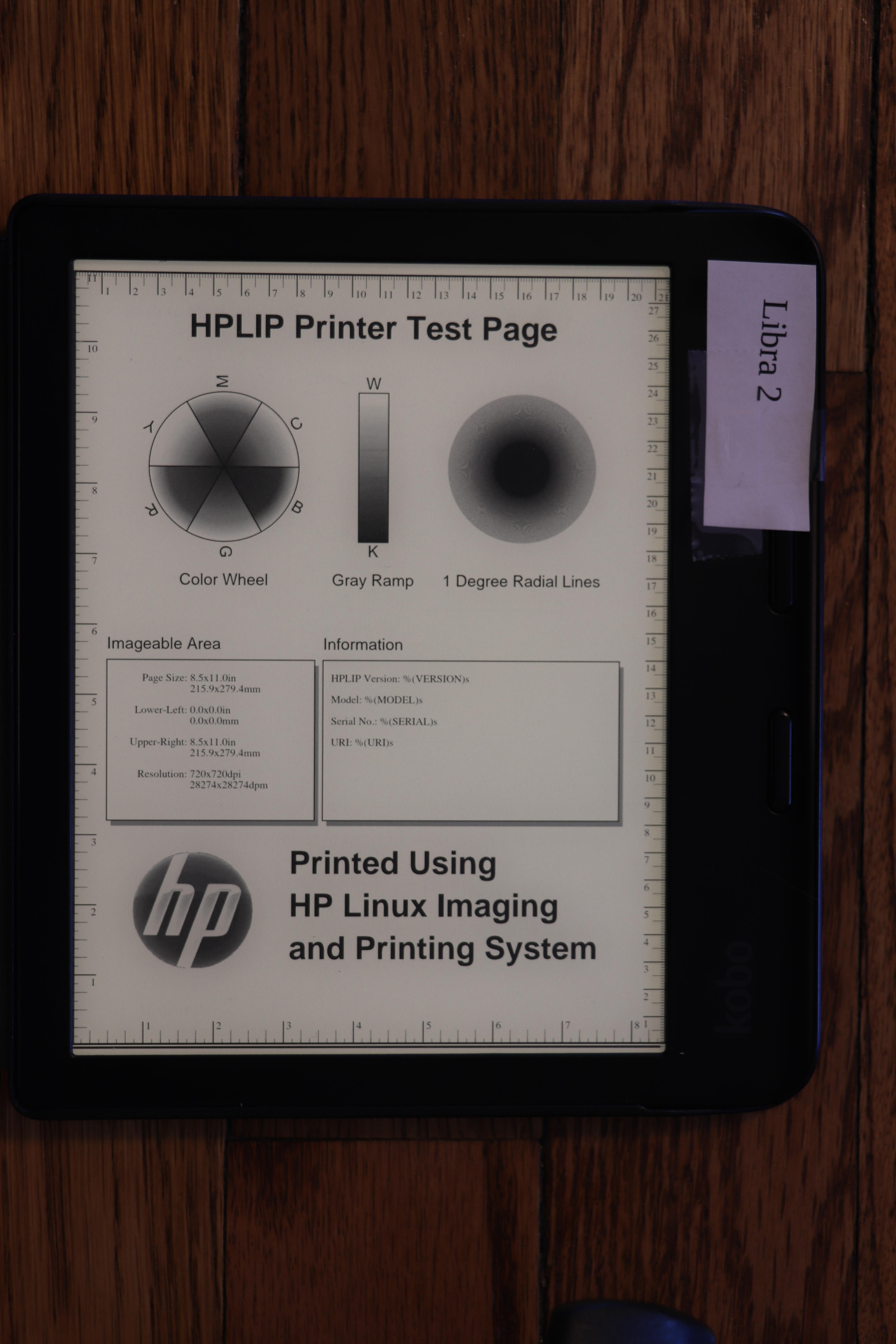
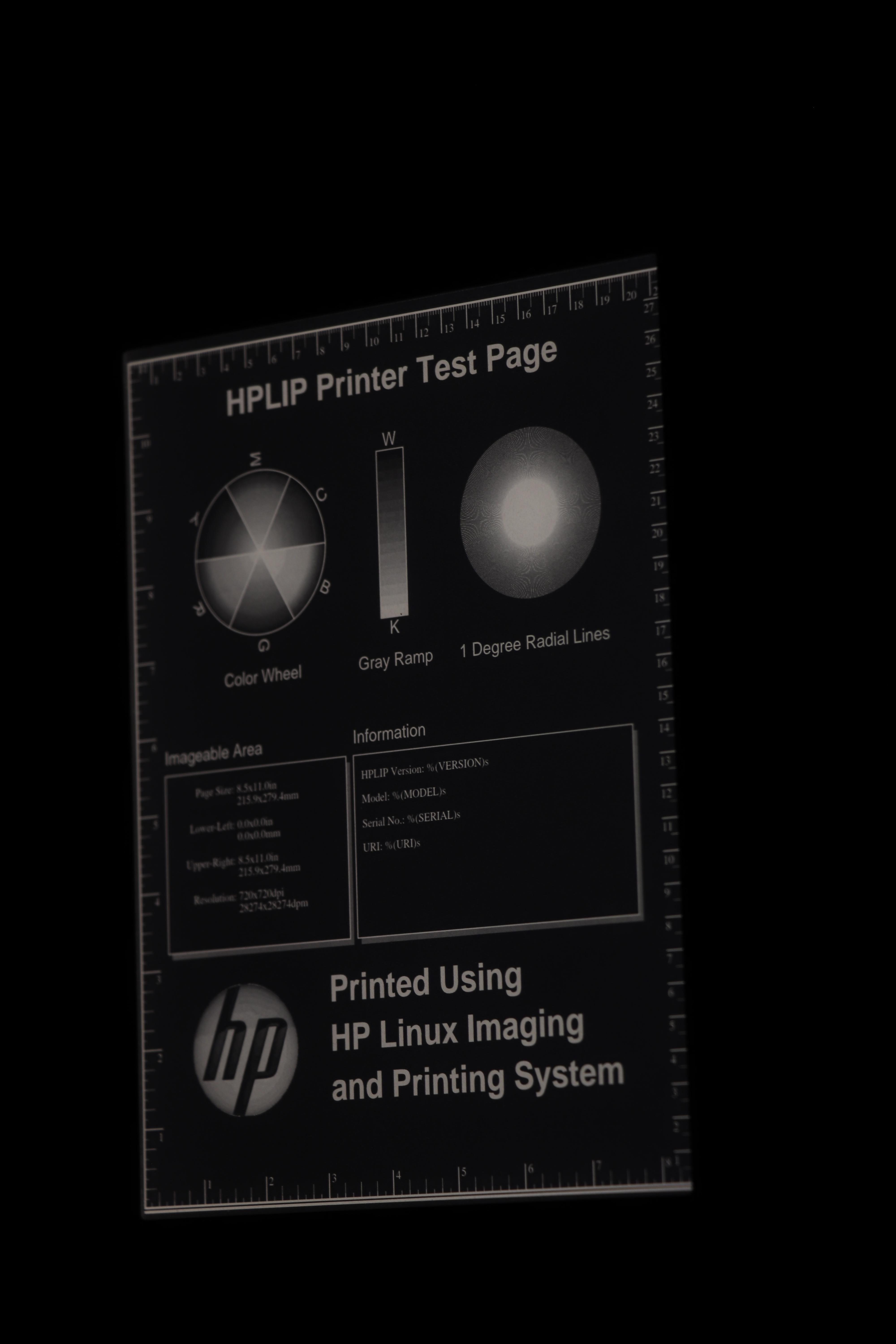
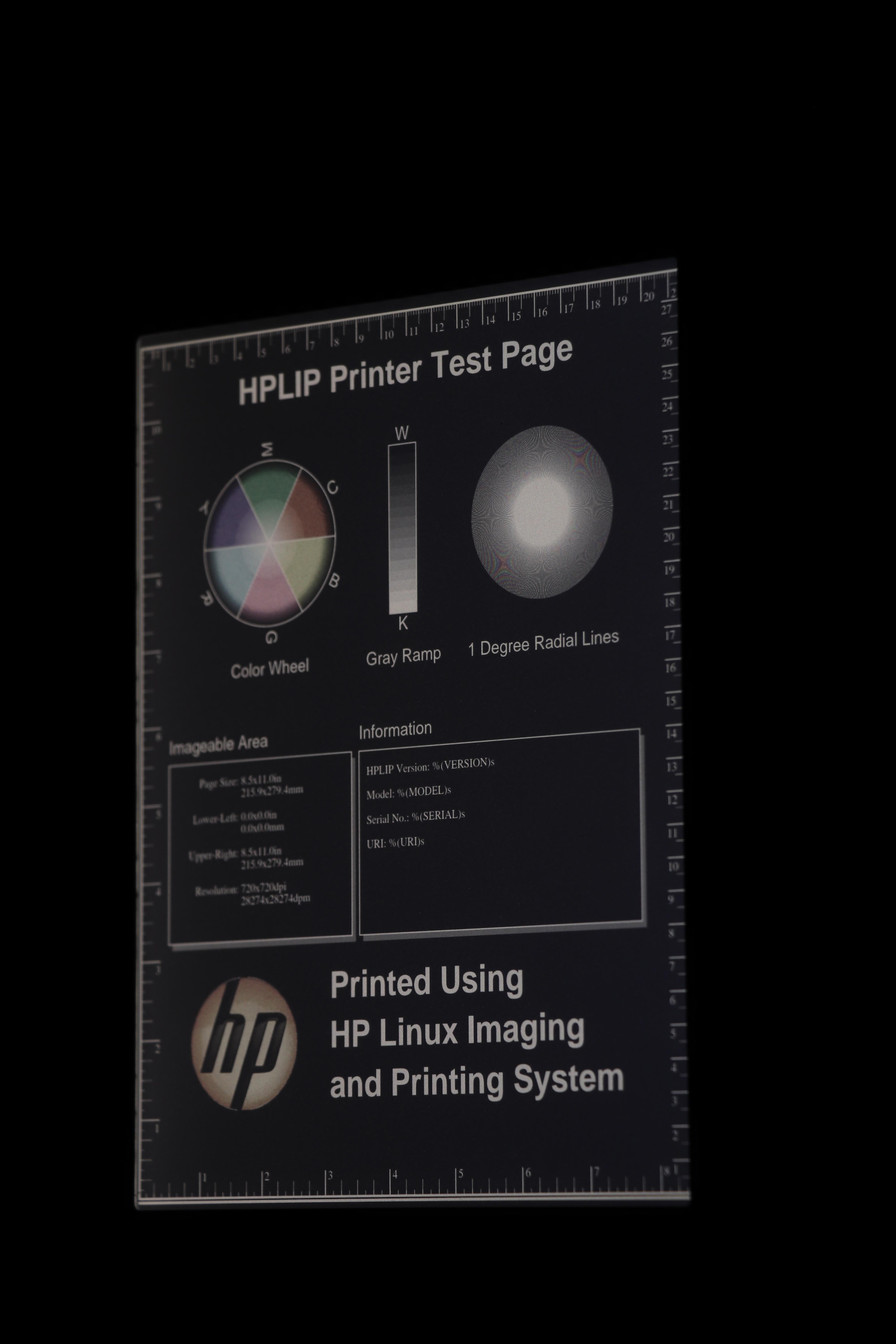
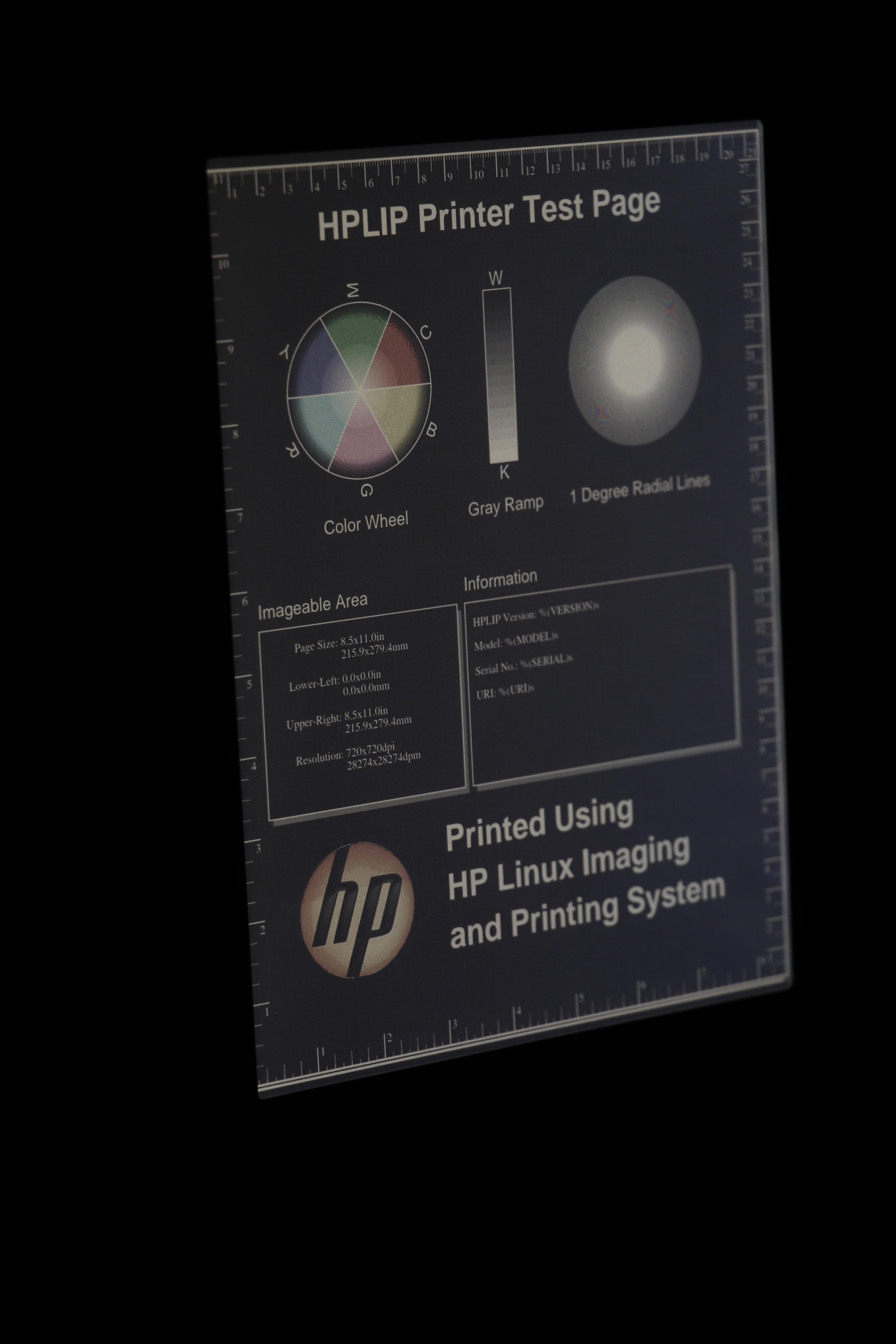
I ve been using E Ink-based ereaders for quite a number of years now. I ve had my Kobo Libra 2 for a few years, and was looking forward to the Kobo Libra Colour the first color E Ink display in a mainstream ereader line. I found the display to be a mixed bag; contrast seemed a lot worse on B&W images, and the device backlight (it s not technically a back light) seemed to cause a particular contrast reduction in dark mode. I went searching for information on this. I found a lot of videos on Kobo Libra 2 vs Libra Colour and so forth, but they were all pretty much useless. These were the mistakes they made: So I dug out my Canon DSLR, tripod, and set up shots. Every shot here is set at ISO 100. Every shot in the same setting has the same exposure settings, which I document. The one thing I forgot to shut off was automatic white balance; you can notice it is active if you look closely at the backgrounds, but WB isn t really relevant to this comparison anyhow. Because there has also been a lot of concern about how well fine B&W details will show up on the Kobo Libra Colour screen, I shot all photos using a PDF test image from the open source hplip package (testpage.ps.gz converted to PDF). This also rules out font differences between the devices. I ensured a full screen refresh before each shot. This is all because color E Ink is effectively a filter called Kaleido over the B&W layer. This causes dimming and some other visual effects. You can click on any image here to see a full-resolution view. The full-size images are the exact JPEG coming from the camera, with only two modifications: 1) metadata has been redacted for privacy reasons, and 2) some images were losslessly rotated after the shoot. OK, onwards! Outdoors, bright sun, shot from directly overhead Bright sun is ideal lighting for an E Ink display. They need no lighting at all in this scenario, and in fact, if you turn on their internal display light, it will probably not be very noticeable. Of course, this is in contrast to phone LCD screens, for which bright sunlight is the worst. Scene: Morning sunlight reaching the ereaders at an angle. The angle was sufficient so that no shadows were cast by the camera or tripod. Device light: Off on both Exposure: 1/160, f16, ISO 100 You can see how much darker the Libra Colour is here. Though in these bright conditions, it is still plenty bright. There may actually be situations in which the Libra 2 is too bright in direct sunlight, requiring a person to squint or whatnot. Looking at the radial lines, it is a bit difficult to tell because the difference in brightness, but I don t see a hugely obvious reduction in quality in the Libra 2. Later I have a shot where I try to match brightness, and we ll check it out again there. Outdoors, shade, shot from directly overhead For the next shot, I set the ereaders in shade, but still well-lit with the diffuse sunlight from all around. The first two have both device lights off. For the third, I set the device light on the Kobo Colour to 100%, full cool shade, to try to see how close I could get it to the Libra 2 brightness. (Sorry it looks like I forgot to close the toolbar on the Colour for this set, but it doesn t modify the important bits of the underlying image.) Device light: Initially off on both Exposure: 1/60, f6.4, ISO 100 Here you can see the light on the Libra Colour was nearly able to match the brightness on the Libra 2. Indoors, room lit with overhead and window light, device light off We continue to move into dimmer light with this next shot. Device light: Off on both Exposure: 1/4, f5, ISO 100 Indoors, room lit with overhead and window light, device light on Now we have the first head-to-head with the device light on. I set the Libra 2 to my favorite warmth setting, found a brightness that looked good, and then tried my best to match those settings on the Libra Colour. My camera s light meter aided in matching brightness. Device light: On (Libra 2 at 40%, Libra Colour at 59%) Exposure: 1/8, f5, ISO 100 (Apparently I am terrible at remembering to dismiss menus, sigh.) Indoors, dark room, dark mode, at an angle The Kobo Libra Colour surprised me with its dark mode. When viewed at an oblique angle, the screen gets pretty washed out. I maintained the same brightness settings here as I did above. It is much more noticeable when the brightness is set down to my preferred nighttime level (4%), or with a more significant angle. Since you can t see my tags, the order of the photos here will be: Libra 2 (standard orientation), Colour (standard orientation), Colour (turned around. Device light: On (as above) Exposure: 1/4, f5.6, ISO 100 Notice how I said I maintained the same brightness settings as before, and yet the Libra Colour looks brighter than the Libra 2 here, whereas it looked the same in the prior non-dark mode photos. Here s why. I set the exposure of each set of shots based on camera metering. As we have seen from the light-off photos, the brightness of a white pixel is a lot less on a Libra Colour than on the Libra 2. However, it is likely that the brightness of a black pixel is about that same. Therefore, contrast on the Libra Colour is lower than on the Libra 2. The traditional shot is majority white pixels, so to make the Libra Colour brightness match that of the Libra 2, I had to crank up the brightness on the Libra Colour to compensate for the darker white background. With me so far? Now with the inverted image, you can see what that does. It doesn t just raise the brightness of the white pixels, but it also raises the brightness of the black pixels. This is expected because we didn t raise contrast, only brightness. Also, in the last image, you can see it is brighter to the right. Again, other conditions that are more difficult to photograph make that much more pronounced. Viewing the Libra Colour from one side (but not the other), in dark mode, with the light on, produces noticeably worse contrast on one side. Conclusions This isn t a slam dunk. Let s walk through this: I don t think there is any noticeable loss of detail on the Libra Colour. The radial lines appeared as well defined on it as on the Libra 2. Oddly, with the backlight, some striations were apparent in the gray gradient test, but I wouldn t be using an E Ink device for clear photographic reproduction anyhow. If you read mostly black and white: If you had been using a Kobo Libra Colour and were handed a Libra 2, you would go, Wow! What an upgrade! The screen is so much brighter! There s little reason to get a Libra Colour. The Libra 2 might be hard to find these days, but the new Clara BW (with a 6 instead of the 7 screen on the Libra series) might be just the thing for you. The Libra 2 is at home in any lighting, from direct sun to pitch black, and has all the usual E Ink benefits (eg, battery life measured in weeks) and drawbacks (slower refresh rate) that we re all used to. If you are interested in photographic color reproduction mostly indoors: Consider a small tablet. The Libra Colour s 4096 colors are going to appear washed out compared to what you re used to on a LCD screen. If you are interested in color content indoors and out: The Libra Colour might be a good fit. It could work well for things where superb color rendition isn t essential for instance, news stories (the Pocket integration or Calibre s news feature could be nice there), comics, etc. In a moderately-lit indoor room, it looks like the Libra Colour s light can lead it to results that approach Libra 2 quality. So if most of your reading is in those conditions, perhaps the Libra Colour is right for you. As a final aside, I wrote in this article about the Kobo devices. I switched from Kindles to Kobos a couple of years ago due to the greater openness of the Kobo devices (you can add things like Nickel Menu and KOReader to them, and they have built-in support for more useful formats), their featureset, and their cost. The top-of-the-line Kindle devices will have a screen very similar if not identical to the Libra 2, so you can very easily consider this to be a comparison between the Oasis and the Libra Colour as well.

1 May 2024

Antoine Beaupr : Tor migrates from Gitolite/GitWeb to GitLab

Note: I've been awfully silent here for the past ... (checks notes) oh dear, 3 months! But that's not because I've been idle, quite the contrary, I've been very busy but just didn't have time to write about anything. So I've taken it upon myself to write something about my work this week, and published this post on the Tor blog which I copy here for a broader audience. Let me know if you like this or not.
Tor has finally completed a long migration from legacy Git infrastructure (Gitolite and GitWeb) to our self-hosted GitLab server. Git repository addresses have therefore changed. Many of you probably have made the switch already, but if not, you will need to change:
https://git.torproject.org/
to:
https://gitlab.torproject.org/
In your Git configuration. The GitWeb front page is now an archived listing of all the repositories before the migration. Inactive git repositories were archived in GitLab legacy/gitolite namespace and the gitweb.torproject.org and git.torproject.org web sites now redirect to GitLab. Best effort was made to reproduce the original gitolite repositories faithfully and also avoid duplicating too much data in the migration. But it's possible that some data present in Gitolite has not migrated to GitLab. User repositories are particularly at risk, because they were massively migrated, and they were "re-forked" from their upstreams, to avoid wasting disk space. If a user had a project with a matching name it was assumed to have the right data, which might be inaccurate. The two virtual machines responsible for the legacy service (cupani for git-rw.torproject.org and vineale for git.torproject.org and gitweb.torproject.org) have been shutdown. Their disks will remain for 3 months (until the end of July 2024) and their backups for another year after that (until the end of July 2025), after which point all the data from those hosts will be destroyed, with only the GitLab archives remaining. The rest of this article expands on how this was done and what kind of problems we faced during the migration.

Where is the code? Normally, nothing should be lost. All repositories in gitolite have been either explicitly migrated by their owners, forcibly migrated by the sysadmin team (TPA), or explicitly destroyed at their owner's request. An exhaustive rewrite map translates gitolite projects to GitLab projects. Some of those projects actually redirect to their parent in cases of empty repositories that were obvious forks. Destroyed repositories redirect to the GitLab front page. Because the migration happened progressively, it's technically possible that commits pushed to gitolite were lost after the migration. We took great care to avoid that scenario. First, we adopted a proposal (TPA-RFC-36) in June 2023 to announce the transition. Then, in March 2024, we locked down all repositories from any further changes. Around that time, only a handful of repositories had changes made after the adoption date, and we examined each repository carefully to make sure nothing was lost. Still, we built a diff of all the changes in the git references that archivists can peruse to check for data loss. It's large (6MiB+) because a lot of repositories were migrated before the mass migration and then kept evolving in GitLab. Many other repositories were rebuilt in GitLab from parent to rebuild a fork relationship which added extra references to those clones. A note to amateur archivists out there, it's probably too late for one last crawl now. The Git repositories now all redirect to GitLab and are effectively unavailable in their original form. That said, the GitWeb site was crawled into the Internet Archive in February 2024, so at least some copy of it is available in the Wayback Machine. At that point, however, many developers had already migrated their projects to GitLab, so the copies there were already possibly out of date compared with the repositories in GitLab. Software Heritage also has a copy of all repositories hosted on Gitolite since June 2023 and have continuously kept mirroring the repositories, where they will be kept hopefully in eternity. There's an issue where the main website can't find the repositories when you search for gitweb.torproject.org, instead search for git.torproject.org. In any case, if you believe data is missing, please do let us know by opening an issue with TPA.

Why? This is an old project in the making. The first discussion about migrating from gitolite to GitLab started in 2020 (almost 4 years ago). But going further back, the first GitLab experiment was in 2016, almost a decade ago. The current GitLab server dates from 2019, replacing Trac for issue tracking in 2020. It was originally supposed to host only mirrors for merge requests and issue trackers but, naturally, one thing led to another and eventually, GitLab had grown a container registry, continuous integration (CI) runners, GitLab Pages, and, of course, hosted most Git repositories. There were hesitations at moving to GitLab for code hosting. We had discussions about the increased attack surface and ways to mitigate that, but, ultimately, it seems the issues were not that serious and the community embraced GitLab. TPA actually migrated its most critical repositories out of shared hosting entirely, into specific servers (e.g. the Puppet Git repository is just on the Puppet server now), leveraging Git's decentralized nature and removing an entire attack surface from our infrastructure. Some of those repositories are mirrored back into GitLab, but the authoritative copy is not on GitLab. In any case, the proposal to migrate from Gitolite to GitLab was effectively just formalizing a fait accompli.

How to migrate from Gitolite / cgit to GitLab The progressive migration was a challenge. If you intend to migrate between hosting platforms, we strongly recommend to make a "flag day" during which you migrate all repositories at once. This ensures a smoother transition and avoids elaborate rewrite rules. When Gitolite access was shutdown, we had repositories on both GitLab and Gitolite, without a clear relationship between the two. A priori, the plan then was to import all the remaining Gitolite repositories into the legacy/gitolite namespace, but that seemed wasteful, particularly for large repositories like Tor Browser which uses nearly a gigabyte of disk space. So we took special care to avoid duplicating repositories. When the mass migration started, only 71 of the 538 Gitolite repositories were Migrated to GitLab in the gitolite.conf file. So, given that we had hundreds of repositories to migrate:, we developed some automation to "save time". We already automate similar ad-hoc tasks with Fabric, so we used that framework here as well. (Our normal configuration management tool is Puppet, which is a poor fit here.) So a relatively large amount of Python code was produced to basically do the following:
  1. check if all on-disk repositories are listed in gitolite.conf (and vice versa) and either add missing repositories or delete them from disk if garbage
  2. for each repository in gitolite.conf, if its category is marked Migrated to GitLab, skip, otherwise;
  3. find a matching GitLab project by name, prompt the user for multiple matches
  4. if a match is found, redirect if the repository is non-empty
    • we have GitLab projects that look like the real thing, but are only present to host migrated Trac issues
    • in such cases we cloned the Gitolite project locally and pushed to the existing repository instead
  5. otherwise, a new repository is created in the legacy/gitolite namespace, using the "import" mechanism in GitLab to automatically import the repository from Gitolite, creating redirections and updating gitolite.conf to document the change
User repositories (those under the user/ directory in Gitolite) were handled specially. First, the existing redirection map was checked to see if a similarly named project was migrated (so that, e.g. user/dgoulet/tor is properly treated as a fork of tpo/core/tor). Then the parent project was forked in GitLab and the Gitolite project force-pushed to the fork. This allows us to show the fork relationship in GitLab and, more importantly, benefit from the "pool" feature in GitLab which deduplicates disk usage between forks. Sometimes, we found no such relationships. Then we simply imported multiple repositories with similar names in the legacy/gitolite namespace, sometimes creating forks between user repositories, on a first-come-first-served basis from the gitolite.conf order. The code used in this migration is now available publicly. We encourage other groups planning to migrate from Gitolite/GitWeb to GitLab to use (and contribute to) our fabric-tasks repository, even though it does have its fair share of hard-coded assertions. The main entry point is the gitolite.mass-repos-migration task. A typical migration job looked like:
anarcat@angela:fabric-tasks$ fab -H cupani.torproject.org gitolite.mass-repos-migration 
[...]
INFO: skipping project project/help/infra in category Migrated to GitLab
INFO: skipping project project/help/wiki in category Migrated to GitLab
INFO: skipping project project/jenkins/jobs in category Migrated to GitLab
INFO: skipping project project/jenkins/tools in category Migrated to GitLab
INFO: searching for projects matching fastlane
INFO: Successfully connected to https://gitlab.torproject.org
import gitolite project project/tor-browser/fastlane into gitlab legacy/gitolite/project/tor-browser/fastlane with desc 'Tor Browser app store and deployment configuration for Fastlane'? [Y/n] 
INFO: importing gitolite project project/tor-browser/fastlane into gitlab legacy/gitolite/project/tor-browser/fastlane with desc 'Tor Browser app store and deployment configuration for Fastlane'
INFO: building a new connect to cupani
INFO: defaulting name to fastlane
INFO: importing project into GitLab
INFO: Successfully connected to https://gitlab.torproject.org
INFO: loading group legacy/gitolite/project/tor-browser
INFO: archiving project
INFO: creating repository fastlane (fastlane) in namespace legacy/gitolite/project/tor-browser from https://git.torproject.org/project/tor-browser/fastlane into https://gitlab.torproject.org/legacy/gitolite/project/tor-browser/fastlane
INFO: migrating Gitolite repository project/tor-browser/fastlane to GitLab project legacy/gitolite/project/tor-browser/fastlane
INFO: uploading 399 bytes to /srv/git.torproject.org/repositories/project/tor-browser/fastlane.git/hooks/pre-receive
INFO: making /srv/git.torproject.org/repositories/project/tor-browser/fastlane.git/hooks/pre-receive executable
INFO: adding entry to rewrite_map /home/anarcat/src/tor/tor-puppet/modules/profile/files/git/gitolite2gitlab.txt
INFO: modifying gitolite.conf to add: "config gitweb.category = Migrated to GitLab"
INFO: rewriting gitolite config /home/anarcat/src/tor/gitolite-admin/conf/gitolite.conf to change project project/tor-browser/fastlane to category Migrated to GitLab
INFO: skipping project project/bridges/bridgedb-admin in category Migrated to GitLab
[...]
In the above, you can see migrated repositories skipped then the fastlane project being archived into GitLab. Another example with a later version of the script, processing only user repositories and showing the interactive prompt and a force-push into a fork:
$ fab -H cupani.torproject.org  gitolite.mass-repos-migration --include 'user/.*' --exclude '.*tor-?browser.*'
INFO: skipping project user/aagbsn/bridgedb in category Migrated to GitLab
[...]
INFO: skipping project user/phw/atlas in category Migrated to GitLab
INFO: processing project user/phw/obfsproxy (Philipp's obfsproxy repository) in category Users' development repositories (Attic)
INFO: Successfully connected to https://gitlab.torproject.org
INFO: user repository detected, trying to find fork phw/obfsproxy
WARNING: no existing fork found, entering user fork subroutine
INFO: found 6 GitLab projects matching 'obfsproxy' (https://gitweb.torproject.org/user/phw/obfsproxy.git)
0 legacy/gitolite/debian/obfsproxy
1 legacy/gitolite/debian/obfsproxy-legacy
2 legacy/gitolite/user/asn/obfsproxy
3 legacy/gitolite/user/ioerror/obfsproxy
4 tpo/anti-censorship/pluggable-transports/obfsproxy
5 tpo/anti-censorship/pluggable-transports/obfsproxy-legacy
select parent to fork from, or enter to abort: ^G4
INFO: repository is not empty: in-pack: 2104, packs: 1, size-pack: 414
fork project tpo/anti-censorship/pluggable-transports/obfsproxy into legacy/gitolite/user/phw/obfsproxy^G [Y/n] 
INFO: loading project tpo/anti-censorship/pluggable-transports/obfsproxy
INFO: forking project user/phw/obfsproxy into namespace legacy/gitolite/user/phw
INFO: waiting for fork to complete...
INFO: fork status: started, sleeping...
INFO: fork finished
INFO: cloning and force pushing from user/phw/obfsproxy to legacy/gitolite/user/phw/obfsproxy
INFO: deleting branch protection: <class 'gitlab.v4.objects.branches.ProjectProtectedBranch'> =>  'id': 2723, 'name': 'master', 'push_access_levels': [ 'id': 2864, 'access_level': 40, 'access_level_description': 'Maintainers', 'deploy_key_id': None ], 'merge_access_levels': [ 'id': 2753, 'access_level': 40, 'access_level_description': 'Maintainers' ], 'allow_force_push': False 
INFO: cloning repository git-rw.torproject.org:/srv/git.torproject.org/repositories/user/phw/obfsproxy.git in /tmp/tmp6orvjggy/user/phw/obfsproxy
Cloning into bare repository '/tmp/tmp6orvjggy/user/phw/obfsproxy'...
INFO: pushing to GitLab: https://gitlab.torproject.org/legacy/gitolite/user/phw/obfsproxy
remote: 
remote: To create a merge request for bug_10887, visit:        
remote:   https://gitlab.torproject.org/legacy/gitolite/user/phw/obfsproxy/-/merge_requests/new?merge_request%5Bsource_branch%5D=bug_10887        
remote: 
[...]
To ssh://gitlab.torproject.org/legacy/gitolite/user/phw/obfsproxy
 + 2bf9d09...a8e54d5 master -> master (forced update)
 * [new branch]      bug_10887 -> bug_10887
[...]
INFO: migrating repo
INFO: migrating Gitolite repository https://gitweb.torproject.org/user/phw/obfsproxy.git to GitLab project https://gitlab.torproject.org/legacy/gitolite/user/phw/obfsproxy
INFO: adding entry to rewrite_map /home/anarcat/src/tor/tor-puppet/modules/profile/files/git/gitolite2gitlab.txt
INFO: modifying gitolite.conf to add: "config gitweb.category = Migrated to GitLab"
INFO: rewriting gitolite config /home/anarcat/src/tor/gitolite-admin/conf/gitolite.conf to change project user/phw/obfsproxy to category Migrated to GitLab
INFO: processing project user/phw/scramblesuit (Philipp's ScrambleSuit repository) in category Users' development repositories (Attic)
INFO: user repository detected, trying to find fork phw/scramblesuit
WARNING: no existing fork found, entering user fork subroutine
WARNING: no matching gitlab project found for user/phw/scramblesuit
INFO: user fork subroutine failed, resuming normal procedure
INFO: searching for projects matching scramblesuit
import gitolite project user/phw/scramblesuit into gitlab legacy/gitolite/user/phw/scramblesuit with desc 'Philipp's ScrambleSuit repository'?^G [Y/n] 
INFO: checking if remote repo https://git.torproject.org/user/phw/scramblesuit exists
INFO: importing gitolite project user/phw/scramblesuit into gitlab legacy/gitolite/user/phw/scramblesuit with desc 'Philipp's ScrambleSuit repository'
INFO: importing project into GitLab
INFO: Successfully connected to https://gitlab.torproject.org
INFO: loading group legacy/gitolite/user/phw
INFO: creating repository scramblesuit (scramblesuit) in namespace legacy/gitolite/user/phw from https://git.torproject.org/user/phw/scramblesuit into https://gitlab.torproject.org/legacy/gitolite/user/phw/scramblesuit
INFO: archiving project
INFO: migrating Gitolite repository https://gitweb.torproject.org/user/phw/scramblesuit.git to GitLab project https://gitlab.torproject.org/legacy/gitolite/user/phw/scramblesuit
INFO: adding entry to rewrite_map /home/anarcat/src/tor/tor-puppet/modules/profile/files/git/gitolite2gitlab.txt
INFO: modifying gitolite.conf to add: "config gitweb.category = Migrated to GitLab"
INFO: rewriting gitolite config /home/anarcat/src/tor/gitolite-admin/conf/gitolite.conf to change project user/phw/scramblesuit to category Migrated to GitLab
[...]
Acute eyes will notice the bell used as a notification mechanism as well in this transcript. A lot of the code is now useless for us, but some, like "commit and push" or is-repo-empty live on in the git module and, of course, the gitlab module has grown some legs along the way. We've also found fun bugs, like a file descriptor exhaustion in bash, among other oddities. The retirement milestone and issue 41215 has a detailed log of the migration, for those curious. This was a challenging project, but it feels nice to have this behind us. This gets rid of 2 of the 4 remaining machines running Debian "old-old-stable", which moves a bit further ahead in our late bullseye upgrades milestone. Full transparency: we tested GPT-3.5, GPT-4, and other large language models to see if they could answer the question "write a set of rewrite rules to redirect GitWeb to GitLab". This has become a standard LLM test for your faithful writer to figure out how good a LLM is at technical responses. None of them gave an accurate, complete, and functional response, for the record. The actual rewrite rules as of this writing follow, for humans that actually like working answers provided by expert humans instead of artificial intelligence which currently seem to be, glorified, mansplaining interns.

git.torproject.org rewrite rules Those rules are relatively simple in that they rewrite a single URL to its equivalent GitLab counterpart in a 1:1 fashion. It relies on the rewrite map mentioned above, of course.
RewriteEngine on
# this RewriteMap connects the gitweb projects to their GitLab
# equivalent
RewriteMap gitolite2gitlab "txt:/etc/apache2/gitolite2gitlab.txt"
# if this becomes a performance bottleneck, convert to a DBM map with:
#
#  $ httxt2dbm -i mapfile.txt -o mapfile.map
#
# and:
#
# RewriteMap mapname "dbm:/etc/apache/mapfile.map"
#
# according to reports lavamind found online, we hit such a
# performance bottleneck only around millions of entries, which is not our case
# those two rules can go away once all the projects are
# migrated to GitLab
#
# this matches the request URI so we can check the RewriteMap
# for a match next
#
# WARNING: this won't match URLs without .git in them, which
# *do* work now. one possibility would be to match the request
# URI (without query string!) with:
#
# /git/(.*)(.git)?/(((branches hooks info objects/).*) git-.* upload-pack receive-pack HEAD config description)?.
#
# I haven't been able to figure out the actual structure of
# those URLs, so it's really hard to figure out the boundaries
# of the project name here. I stopped after pouring around the
# http-backend.c code in git
# itself. https://www.git-scm.com/docs/http-protocol is also
# kind of incomplete and unsatisfying.
RewriteCond % REQUEST_URI  ^/(git/)?(.*).git/.*$
# this makes the RewriteRule match only if there's a match in
# the rewrite map
RewriteCond $ gitolite2gitlab:%2 NOT_FOUND  !NOT_FOUND
RewriteRule ^/(git/)?(.*).git/(.*)$ https://gitlab.torproject.org/$ gitolite2gitlab:$2 .git/$3 [R=302,L]
# Fallback everything else to GitLab
RewriteRule (.*) https://gitlab.torproject.org [R=302,L]

gitweb.torproject.org rewrite rules Those are the vastly more complicated GitWeb to GitLab rewrite rules. Note that we say "GitWeb" but we were actually not running GitWeb but cgit, as the former didn't actually scale for us.
RewriteEngine on
# this RewriteMap connects the gitweb projects to their GitLab
# equivalent
RewriteMap gitolite2gitlab "txt:/etc/apache2/gitolite2gitlab.txt"
# special rule to process targets of the old spec.tpo site and
# bring them to the right redirect on the new spec.tpo site. that should turn, for example:
#
# https://gitweb.torproject.org/torspec.git/tree/address-spec.txt
#
# into:
#
# https://spec.torproject.org/address-spec
RewriteRule ^/torspec.git/tree/(.*).txt$ https://spec.torproject.org/$1 [R=302]
# list of endpoints taken from cgit's cmd.c
# those two RewriteCond are necessary because we don't move
# all repositories at once. once the migration is completed,
# they can be removed.
#
# and yes, they are copied all over the place below
#
# create a match for the project name to check if the project
# has been moved to GitLab
RewriteCond % REQUEST_URI  ^/(.*).git(/.*)?$
# this makes the RewriteRule match only if there's a match in
# the rewrite map
RewriteCond $ gitolite2gitlab:%1 NOT_FOUND  !NOT_FOUND
# main project page, like summary below
RewriteRule ^/(.*).git/?$ https://gitlab.torproject.org/$ gitolite2gitlab:$1 / [R=302,L]
# summary
RewriteCond % REQUEST_URI  ^/(.*).git/.*$
RewriteCond $ gitolite2gitlab:%1 NOT_FOUND  !NOT_FOUND
RewriteRule ^/(.*).git/summary/?$ https://gitlab.torproject.org/$ gitolite2gitlab:$1 / [R=302,L]
# about
RewriteCond % REQUEST_URI  ^/(.*).git/.*$
RewriteCond $ gitolite2gitlab:%1 NOT_FOUND  !NOT_FOUND
RewriteRule ^/(.*).git/about/?$ https://gitlab.torproject.org/$ gitolite2gitlab:$1 / [R=302,L]
# commit
RewriteCond % REQUEST_URI  ^/(.*).git/.*$
RewriteCond $ gitolite2gitlab:%1 NOT_FOUND  !NOT_FOUND
RewriteCond "% QUERY_STRING " "(.*(?:^ &))id=([^&]*)(&.*)?$"
RewriteRule ^/(.*).git/commit/? https://gitlab.torproject.org/$ gitolite2gitlab:$1 /-/commit/%2 [R=302,L,QSD]
RewriteCond % REQUEST_URI  ^/(.*).git/.*$
RewriteCond $ gitolite2gitlab:%1 NOT_FOUND  !NOT_FOUND
RewriteRule ^/(.*).git/commit/? https://gitlab.torproject.org/$ gitolite2gitlab:$1 /-/commits/HEAD [R=302,L]
# diff, incomplete because can diff arbitrary refs and files in cgit but not in GitLab, hard to parse
RewriteCond % REQUEST_URI  ^/(.*).git/.*$
RewriteCond $ gitolite2gitlab:%1 NOT_FOUND  !NOT_FOUND
RewriteCond % QUERY_STRING  id=([^&]*)
RewriteRule ^/(.*).git/diff/? https://gitlab.torproject.org/$ gitolite2gitlab:$1 /-/commit/%1 [R=302,L,QSD]
# patch
RewriteCond % REQUEST_URI  ^/(.*).git/.*$
RewriteCond $ gitolite2gitlab:%1 NOT_FOUND  !NOT_FOUND
RewriteCond % QUERY_STRING  id=([^&]*)
RewriteRule ^/(.*).git/patch/? https://gitlab.torproject.org/$ gitolite2gitlab:$1 /-/commit/%1.patch [R=302,L,QSD]
# rawdiff, incomplete because can show only one file diff, which GitLab cannot
RewriteCond % REQUEST_URI  ^/(.*).git/.*$
RewriteCond $ gitolite2gitlab:%1 NOT_FOUND  !NOT_FOUND
RewriteCond % QUERY_STRING  id=([^&]*)
RewriteRule ^/(.*).git/rawdiff/?$ https://gitlab.torproject.org/$ gitolite2gitlab:$1 /-/commit/%1.diff [R=302,L,QSD]
# log
RewriteCond % REQUEST_URI  ^/(.*).git/.*$
RewriteCond $ gitolite2gitlab:%1 NOT_FOUND  !NOT_FOUND
RewriteCond % QUERY_STRING  h=([^&]*)
RewriteRule ^/(.*).git/log/?$ https://gitlab.torproject.org/$ gitolite2gitlab:$1 /-/commits/%1 [R=302,L,QSD]
RewriteCond % REQUEST_URI  ^/(.*).git/.*$
RewriteCond $ gitolite2gitlab:%1 NOT_FOUND  !NOT_FOUND
RewriteRule ^/(.*).git/log/?$ https://gitlab.torproject.org/$ gitolite2gitlab:$1 /-/commits/HEAD [R=302,L]
RewriteCond % REQUEST_URI  ^/(.*).git/.*$
RewriteCond $ gitolite2gitlab:%1 NOT_FOUND  !NOT_FOUND
RewriteRule ^/(.*).git/log(/?.*)$ https://gitlab.torproject.org/$ gitolite2gitlab:$1 /-/commits/HEAD$2 [R=302,L]
# atom
RewriteCond % REQUEST_URI  ^/(.*).git/.*$
RewriteCond $ gitolite2gitlab:%1 NOT_FOUND  !NOT_FOUND
RewriteCond % QUERY_STRING  h=([^&]*)
RewriteRule ^/(.*).git/atom/?$ https://gitlab.torproject.org/$ gitolite2gitlab:$1 /-/commits/%1 [R=302,L,QSD]
RewriteCond % REQUEST_URI  ^/(.*).git/.*$
RewriteCond $ gitolite2gitlab:%1 NOT_FOUND  !NOT_FOUND
RewriteRule ^/(.*).git/atom/?$ https://gitlab.torproject.org/$ gitolite2gitlab:$1 /-/commits/HEAD [R=302,L,QSD]
# refs, incomplete because two pages in GitLab, defaulting to "tags"
RewriteCond % REQUEST_URI  ^/(.*).git/.*$
RewriteCond $ gitolite2gitlab:%1 NOT_FOUND  !NOT_FOUND
RewriteRule ^/(.*).git/refs/?$ https://gitlab.torproject.org/$ gitolite2gitlab:$1 /-/tags [R=302,L]
RewriteCond % REQUEST_URI  ^/(.*).git/.*$
RewriteCond $ gitolite2gitlab:%1 NOT_FOUND  !NOT_FOUND
RewriteCond % QUERY_STRING  h=([^&]*)
RewriteRule ^/(.*).git/tag/? https://gitlab.torproject.org/$ gitolite2gitlab:$1 /-/tags/%1 [R=302,L,QSD]
# tree
RewriteCond % REQUEST_URI  ^/(.*).git/.*$
RewriteCond $ gitolite2gitlab:%1 NOT_FOUND  !NOT_FOUND
RewriteCond % QUERY_STRING  id=([^&]*)
RewriteRule ^/(.*).git/tree(/?.*)$ https://gitlab.torproject.org/$ gitolite2gitlab:$1 /-/tree/%1$2 [R=302,L,QSD]
RewriteCond % REQUEST_URI  ^/(.*).git/.*$
RewriteCond $ gitolite2gitlab:%1 NOT_FOUND  !NOT_FOUND
RewriteRule ^/(.*).git/tree(/?.*)$ https://gitlab.torproject.org/$ gitolite2gitlab:$1 /-/tree/HEAD$2 [R=302,L]
# /-/tree has no good default in GitLab, revert to HEAD which is a good
# approximation (we can't assume "master" here anymore)
RewriteCond % REQUEST_URI  ^/(.*).git/.*$
RewriteCond $ gitolite2gitlab:%1 NOT_FOUND  !NOT_FOUND
RewriteRule ^/(.*).git/tree/?$ https://gitlab.torproject.org/$ gitolite2gitlab:$1 /-/tree/HEAD [R=302,L]
# plain
RewriteCond % REQUEST_URI  ^/(.*).git/.*$
RewriteCond $ gitolite2gitlab:%1 NOT_FOUND  !NOT_FOUND
RewriteCond % QUERY_STRING  h=([^&]*)
RewriteRule ^/(.*).git/plain(/?.*)$ https://gitlab.torproject.org/$ gitolite2gitlab:$1 /-/raw/%1$2 [R=302,L,QSD]
RewriteCond % REQUEST_URI  ^/(.*).git/.*$
RewriteCond $ gitolite2gitlab:%1 NOT_FOUND  !NOT_FOUND
RewriteRule ^/(.*).git/plain(/?.*)$ https://gitlab.torproject.org/$ gitolite2gitlab:$1 /-/raw/HEAD$2 [R=302,L]
# blame: disabled
#RewriteCond % REQUEST_URI  ^/(.*).git/.*$
#RewriteCond $ gitolite2gitlab:%1 NOT_FOUND  !NOT_FOUND
#RewriteCond % QUERY_STRING  h=([^&]*)
#RewriteRule ^/(.*).git/blame(/?.*)$ https://gitlab.torproject.org/$ gitolite2gitlab:$1 /-/blame/%1$2 [R=302,L,QSD]
# same default as tree above
#RewriteCond % REQUEST_URI  ^/(.*).git/.*$
#RewriteCond $ gitolite2gitlab:%1 NOT_FOUND  !NOT_FOUND
#RewriteRule ^/(.*).git/blame(/?.*)$ https://gitlab.torproject.org/$ gitolite2gitlab:$1 /-/blame/HEAD/$2 [R=302,L]
# stats
RewriteCond % REQUEST_URI  ^/(.*).git/.*$
RewriteCond $ gitolite2gitlab:%1 NOT_FOUND  !NOT_FOUND
RewriteRule ^/(.*).git/stats/?$ https://gitlab.torproject.org/$ gitolite2gitlab:$1 /-/graphs/HEAD [R=302,L]
# still TODO:
# repolist: once migration is complete
#
# cannot be done:
# atom: needs a feed token, user must be logged in
# blob: no direct equivalent
# info: not working on main cgit website?
# ls_cache: not working, irrelevant?
# objects: undocumented?
# snapshot: pattern too hard to match on cgit's side
# special case, we keep a copy of the main index on the archive
RewriteRule ^/?$ https://archive.torproject.org/websites/gitweb.torproject.org.html [R=302,L]
# Fallback: everything else to GitLab
RewriteRule .* https://gitlab.torproject.org [R=302,L]
The reference copy of those is available in our (currently private) Puppet git repository.

Guido G nther: Free Software Activities April 2024

A short status update of what happened on my side last month. Maintenance and code review keep to be the top time sinks (in a positive way). If you want to support my work see donations.

Matthew Palmer: The Mediocre Programmer's Guide to Rust

Me: Hi everyone, my name s Matt, and I m a mediocre programmer. Everyone: Hi, Matt. Facilitator: Are you an alcoholic, Matt? Me: No, not since I stopped reading Twitter. Facilitator: Then I think you re in the wrong room.
Yep, that s my little secret I m a mediocre programmer. The definition of the word hacker I most closely align with is someone who makes furniture with an axe . I write simple, straightforward code because trying to understand complexity makes my head hurt. Which is why I ve always avoided the more academic languages, like OCaml, Haskell, Clojure, and so on. I know they re good languages people far smarter than me are building amazing things with them but the time I hear the word endofunctor , I ve lost all focus (and most of my will to live). My preferred languages are the ones that come with less intellectual overhead, like C, PHP, Python, and Ruby. So it s interesting that I ve embraced Rust with significant vigour. It s by far the most complicated language that I feel at least vaguely comfortable with using in anger . Part of that is that I ve managed to assemble a set of principles that allow me to almost completely avoid arguing with Rust s dreaded borrow checker, lifetimes, and all the rest of the dark, scary corners of the language. It s also, I think, that Rust helps me to write better software, and I can feel it helping me (almost) all of the time. In the spirit of helping my fellow mediocre programmers to embrace Rust, I present the principles I ve assembled so far.

Neither a Borrower Nor a Lender Be If you know anything about Rust, you probably know about the dreaded borrow checker . It s the thing that makes sure you don t have two pieces of code trying to modify the same data at the same time, or using a value when it s no longer valid. While Rust s borrowing semantics allow excellent performance without compromising safety, for us mediocre programmers it gets very complicated, very quickly. So, the moment the compiler wants to start talking about explicit lifetimes , I shut it up by just using owned values instead. It s not that I never borrow anything; I have some situations that I know are borrow-safe for the mediocre programmer (I ll cover those later). But any time I m not sure how things will pan out, I ll go straight for an owned value. For example, if I need to store some text in a struct or enum, it s going straight into a String. I m not going to start thinking about lifetimes and &'a str; I ll leave that for smarter people. Similarly, if I need a list of things, it s a Vec<T> every time no &'b [T] in my structs, thank you very much.

Attack of the Clones Following on from the above, I ve come to not be afraid of .clone(). I scatter them around my code like seeds in a field. Life s too short to spend time trying to figure out who s borrowing what from whom, if I can just give everyone their own thing. There are warnings in the Rust book (and everywhere else) about how a clone can be expensive . While it s true that, yes, making clones of data structures consumes CPU cycles and memory, it very rarely matters. CPU cycles are (usually) plentiful and RAM (usually) relatively cheap. Mediocre programmer mental effort is expensive, and not to be spent on premature optimisation. Also, if you re coming from most any other modern language, Rust is already giving you so much more performance that you re probably ending up ahead of the game, even if you .clone() everything in sight. If, by some miracle, something I write gets so popular that the expense of all those spurious clones becomes a problem, it might make sense to pay someone much smarter than I to figure out how to make the program a zero-copy masterpiece of efficient code. Until then clone early and clone often, I say!

Derive Macros are Powerful Magicks If you start .clone()ing everywhere, pretty quickly you ll be hit with this error:

error[E0599]: no method named  clone  found for struct  Foo  in the current scope

This is because not everything can be cloned, and so if you want your thing to be cloned, you need to implement the method yourself. Well sort of. One of the things that I find absolutely outstanding about Rust is the derive macro . These allow you to put a little marker on a struct or enum, and the compiler will write a bunch of code for you! Clone is one of the available so-called derivable traits , so you add #[derive(Clone)] to your structs, and poof! you can .clone() to your heart s content. But there are other things that are commonly useful, and so I ve got a set of traits that basically all of my data structures derive:

#[derive(Clone, Debug, Default)]
struct Foo  
    // ...
 

Every time I write a struct or enum definition, that line #[derive(Clone, Debug, Default)] goes at the top. The Debug trait allows you to print a debug representation of the data structure, either with the dbg!() macro, or via the :? format in the format!() macro (and anywhere else that takes a format string). Being able to say what exactly is that? comes in handy so often, not having a Debug implementation is like programming with one arm tied behind your Aeron. Meanwhile, the Default trait lets you create an empty instance of your data structure, with all of the fields set to their own default values. This only works if all the fields themselves implement Default, but a lot of standard types do, so it s rare that you ll define a structure that can t have an auto-derived Default. Enums are easily handled too, you just mark one variant as the default:

#[derive(Clone, Debug, Default)]
enum Bar  
    Something(String),
    SomethingElse(i32),
    #[default]   // <== mischief managed
    Nothing,
 

Borrowing is OK, Sometimes While I previously said that I like and usually use owned values, there are a few situations where I know I can borrow without angering the borrow checker gods, and so I m comfortable doing it. The first is when I need to pass a value into a function that only needs to take a little look at the value to decide what to do. For example, if I want to know whether any values in a Vec<u32> are even, I could pass in a Vec, like this:

fn main()  
    let numbers = vec![0u32, 1, 2, 3, 4, 5];
    if has_evens(numbers)  
        println!("EVENS!");
     
 
fn has_evens(numbers: Vec<u32>) -> bool  
    numbers.iter().any( n  n % 2 == 0)
 

Howver, this gets ugly if I m going to use numbers later, like this:

fn main()  
    let numbers = vec![0u32, 1, 2, 3, 4, 5];
    if has_evens(numbers)  
        println!("EVENS!");
     
    // Compiler complains about "value borrowed here after move"
    println!("Sum:  ", numbers.iter().sum::<u32>());
 
fn has_evens(numbers: Vec<u32>) -> bool  
    numbers.iter().any( n  n % 2 == 0)
 

Helpfully, the compiler will suggest I use my old standby, .clone(), to fix this problem. But I know that the borrow checker won t have a problem with lending that Vec<u32> into has_evens() as a borrowed slice, &[u32], like this:

fn main()  
    let numbers = vec![0u32, 1, 2, 3, 4, 5];
    if has_evens(&numbers)  
        println!("EVENS!");
     
 
fn has_evens(numbers: &[u32]) -> bool  
    numbers.iter().any( n  n % 2 == 0)
 

The general rule I ve got is that if I can take advantage of lifetime elision (a fancy term meaning the compiler can figure it out ), I m probably OK. In less fancy terms, as long as the compiler doesn t tell me to put 'a anywhere, I m in the green. On the other hand, the moment the compiler starts using the words explicit lifetime , I nope the heck out of there and start cloning everything in sight. Another example of using lifetime elision is when I m returning the value of a field from a struct or enum. In that case, I can usually get away with returning a borrowed value, knowing that the caller will probably just be taking a peek at that value, and throwing it away before the struct itself goes out of scope. For example:

struct Foo  
    id: u32,
    desc: String,
 
impl Foo  
    fn description(&self) -> &str  
        &self.desc


Returning a reference from a function is practically always a mortal sin for mediocre programmers, but returning one from a struct method is often OK. In the rare case that the caller does want the reference I return to live for longer, they can always turn it into an owned value themselves, by calling .to_owned().

Avoid the String Tangle Rust has a couple of different types for representing strings String and &str being the ones you see most often. There are good reasons for this, however it complicates method signatures when you just want to take some sort of bunch of text , and don t care so much about the messy details. For example, let s say we have a function that wants to see if the length of the string is even. Using the logic that since we re just taking a peek at the value passed in, our function might take a string reference, &str, like this:

fn is_even_length(s: &str) -> bool  
    s.len() % 2 == 0
 

That seems to work fine, until someone wants to check a formatted string:

fn main()  
    // The compiler complains about "expected  &str , found  String "
    if is_even_length(format!("my string is  ", std::env::args().next().unwrap()))  
        println!("Even length string");


Since format! returns an owned string, String, rather than a string reference, &str, we ve got a problem. Of course, it s straightforward to turn the String from format!() into a &str (just prefix it with an &). But as mediocre programmers, we can t be expected to remember which sort of string all our functions take and add & wherever it s needed, and having to fix everything when the compiler complains is tedious. The converse can also happen: a method that wants an owned String, and we ve got a &str (say, because we re passing in a string literal, like "Hello, world!"). In this case, we need to use one of the plethora of available turn this into a String mechanisms (.to_string(), .to_owned(), String::from(), and probably a few others I ve forgotten), on the value before we pass it in, which gets ugly real fast. For these reasons, I never take a String or an &str as an argument. Instead, I use the Power of Traits to let callers pass in anything that is, or can be turned into, a string. Let us have some examples. First off, if I would normally use &str as the type, I instead use impl AsRef<str>:

fn is_even_length(s: impl AsRef<str>) -> bool  
    s.as_ref().len() % 2 == 0
 

Note that I had to throw in an extra as_ref() call in there, but now I can call this with either a String or a &str and get an answer. Now, if I want to be given a String (presumably because I plan on taking ownership of the value, say because I m creating a new instance of a struct with it), I use impl Into<String> as my type:

struct Foo  
    id: u32,
    desc: String,
 
impl Foo  
    fn new(id: u32, desc: impl Into<String>) -> Self  
        Self   id, desc: desc.into()  


We have to call .into() on our desc argument, which makes the struct building a bit uglier, but I d argue that s a small price to pay for being able to call both Foo::new(1, "this is a thing") and Foo::new(2, format!("This is a thing named name ")) without caring what sort of string is involved.

Always Have an Error Enum Rust s error handing mechanism (Results everywhere), along with the quality-of-life sugar surrounding it (like the short-circuit operator, ?), is a delightfully ergonomic approach to error handling. To make life easy for mediocre programmers, I recommend starting every project with an Error enum, that derives thiserror::Error, and using that in every method and function that returns a Result. How you structure your Error type from there is less cut-and-dried, but typically I ll create a separate enum variant for each type of error I want to have a different description. With thiserror, it s easy to then attach those descriptions:

#[derive(Clone, Debug, thiserror::Error)]
enum Error  
    #[error(" 0  caught fire")]
    Combustion(String),
    #[error(" 0  exploded")]
    Explosion(String),
 

I also implement functions to create each error variant, because that allows me to do the Into<String> trick, and can sometimes come in handy when creating errors from other places with .map_err() (more on that later). For example, the impl for the above Error would probably be:

impl Error  
    fn combustion(desc: impl Into<String>) -> Self  
        Self::Combustion(desc.into())
     
    fn explosion(desc: impl Into<String>) -> Self  
        Self::Explosion(desc.into())


It s a tedious bit of boilerplate, and you can use the thiserror-ext crate s thiserror_ext::Construct derive macro to do the hard work for you, if you like. It, too, knows all about the Into<String> trick.

Banish map_err (well, mostly) The newer mediocre programmer, who is just dipping their toe in the water of Rust, might write file handling code that looks like this:

fn read_u32_from_file(name: impl AsRef<str>) -> Result<u32, Error>  
    let mut f = File::open(name.as_ref())
        .map_err( e  Error::FileOpenError(name.as_ref().to_string(), e))?;
    let mut buf = vec![0u8; 30];
    f.read(&mut buf)
        .map_err( e  Error::ReadError(e))?;
    String::from_utf8(buf)
        .map_err( e  Error::EncodingError(e))?
        .parse::<u32>()
        .map_err( e  Error::ParseError(e))
 

This works great (or it probably does, I haven t actually tested it), but there are a lot of .map_err() calls in there. They take up over half the function, in fact. With the power of the From trait and the magic of the ? operator, we can make this a lot tidier. First off, assume we ve written boilerplate error creation functions (or used thiserror_ext::Construct to do it for us)). That allows us to simplify the file handling portion of the function a bit:

fn read_u32_from_file(name: impl AsRef<str>) -> Result<u32, Error>  
    let mut f = File::open(name.as_ref())
        // We've dropped the  .to_string()  out of here...
        .map_err( e  Error::file_open_error(name.as_ref(), e))?;
    let mut buf = vec![0u8; 30];
    f.read(&mut buf)
        // ... and the explicit parameter passing out of here
        .map_err(Error::read_error)?;
    // ...

If that latter .map_err() call looks weird, without the e and such, it s passing a function-as-closure, which just saves on a few characters typing. Just because we re mediocre, doesn t mean we re not also lazy. Next, if we implement the From trait for the other two errors, we can make the string-handling lines significantly cleaner. First, the trait impl:

impl From<std::string::FromUtf8Error> for Error  
    fn from(e: std::string::FromUtf8Error) -> Self  
        Self::EncodingError(e)
     
 
impl From<std::num::ParseIntError> for Error  
    fn from(e: std::num::ParseIntError) -> Self  
        Self::ParseError(e)


(Again, this is boilerplate that can be autogenerated, this time by adding a #[from] tag to the variants you want a From impl on, and thiserror will take care of it for you) In any event, no matter how you get the From impls, once you have them, the string-handling code becomes practically error-handling-free:

    Ok(
        String::from_utf8(buf)?
            .parse::<u32>()?
    )

The ? operator will automatically convert the error from the types returned from each method into the return error type, using From. The only tiny downside to this is that the ? at the end strips the Result, and so we ve got to wrap the returned value in Ok() to turn it back into a Result for returning. But I think that s a small price to pay for the removal of those .map_err() calls. In many cases, my coding process involves just putting a ? after every call that returns a Result, and adding a new Error variant whenever the compiler complains about not being able to convert some new error type. It s practically zero effort outstanding outcome for the mediocre programmer.

Just Because You re Mediocre, Doesn t Mean You Can t Get Better To finish off, I d like to point out that mediocrity doesn t imply shoddy work, nor does it mean that you shouldn t keep learning and improving your craft. One book that I ve recently found extremely helpful is Effective Rust, by David Drysdale. The author has very kindly put it up to read online, but buying a (paper or ebook) copy would no doubt be appreciated. The thing about this book, for me, is that it is very readable, even by us mediocre programmers. The sections are written in a way that really clicked with me. Some aspects of Rust that I d had trouble understanding for a long time such as lifetimes and the borrow checker, and particularly lifetime elision actually made sense after I d read the appropriate sections.

Finally, a Quick Beg I m currently subsisting on the kindness of strangers, so if you found something useful (or entertaining) in this post, why not buy me a refreshing beverage? It helps to know that people like what I m doing, and helps keep me from having to sell my soul to a private equity firm.

30 April 2024

Russell Coker: Links April 2024

Ron Garret wrote an insightful refutation to 2nd amendment arguments [1]. Interesting article from the UK about British Gas losing a civil suit about bill collecting techniques that are harassment [2]. This should be a criminal offence investigated by the police and prosecuted by the CPS. David Brin wrote a new version of his essay about dealing with blackmail in the US political system [3]. Cory Doctorow gave an insightful lecture about Enshittification for the Transmediale festival in Berlin [4]. This link has video and a transcript, I read the transcript. The Cut has an insightful article by a journalist who gave $50k in cash to a scammer and compares the scam to techniques used to extort false confessions [5]. Truth Dig has an informative article about how Nick Bostrom is racist and how his advocacy of eugenics influences Effective Altruism and a lot of Silicon Valley [6]. Bruce Scneier and Nathan Sanders wrote an insightful article about the problems with a frontier slogan for AI development [7]. Brian Krebs wrote an informative article about the links between Chinese APT companies and the Chinese government [8].

29 April 2024

Tim Retout: seL4 Microkit Tutorial

Recently I revisited my previous interest in seL4 - a fast, highly assured operating system microkernel for building secure systems. The seL4 Microkit tutorial uses a simple Wordle game example to teach the basics of seL4 Microkit (formerly known as the seL4 Core Platform), which is a framework for creating static embedded systems on top of the seL4 microkernel. Microkit is also at the core of LionsOS, a new project to make seL4 accessible to a wider audience. The tutorial is easy to follow, needing few prerequisites beyond a QEMU emulator and an AArch64 cross-compiler toolchain (Microkit being limited to 64-bit ARM systems currently). Use of an emulator makes for a quick test-debug cycle with a couple of Makefile targets, so time is spent focusing on walking through the Microkit concepts rather than on tooling issues. This is an unusually good learning experience, probably because of the academic origins of the project itself. The Di taxis documentation framework would class this as truly a tutorial rather than a how-to guide - you do learn a lot by implementing the exercises.

28 April 2024

Russell Coker: Kitty and Mpv

6 months ago I switched to Kitty for terminal emulation [1]. So far there s only been one thing that I couldn t effectively do with Kitty that I did with Konsole in the past, that is watching a music video in 1/4 of the screen while using the rest for terminals. I could setup multiple Kitty windows taking up the rest of the screen but I wanted to keep using a single Kitty with multiple terminals and just have mpv go over one of them. Kitty supports it s own graphical interface so mpv vo=kitty works but took 6* the CPU power in my tests which isn t good for a laptop. For X11 there s a ontop option for mpv that does what you expect, but that doesn t work on Wayland. Not working is mostly Wayland s fault as there is a long tail of less commonly used graphical operations that work in X11 but aren t yet implemented in Wayland. I have filed a Debian bug report about this, the mpv man page should note that it s only going to work on X11 on Linux. I have discovered a solution to that, in the KDE settings there s a Window Rules section, I created an entry for Window class exactly matching mpv and then added a rule Keep above other windows and set it for force and yes . After that I can just resize mpv to occlude just one terminal and keep using the rest. Also one noteworthy thing with this is that it makes mpv go on top of the KDE taskbar, which can be a feature.

25 April 2024

Petter Reinholdtsen: 45 orphaned Debian packages moved to git, 391 to go

Nine days ago, I started migrating orphaned Debian packages with no version control system listed in debian/control of the source to git. At the time there were 438 such packages. Now there are 391, according to the UDD. In reality it is slightly less, as there is a delay between uploads and UDD updates. In the nine days since, I have thus been able to work my way through ten percent of the packages. I am starting to run out of steam, and hope someone else will also help brushing some dust of these packages. Here is a recipe how to do it. I start by picking a random package by querying the UDD for a list of 10 random packages from the set of remaining packages:
PGPASSWORD="udd-mirror" psql --port=5432 --host=udd-mirror.debian.net \
  --username=udd-mirror udd -c "select source from sources \
   where release = 'sid' and (vcs_url ilike '%anonscm.debian.org%' \
   OR vcs_browser ilike '%anonscm.debian.org%' or vcs_url IS NULL \
   OR vcs_browser IS NULL) AND maintainer ilike '%packages@qa.debian.org%' \
   order by random() limit 10;"
Next, I visit http://salsa.debian.org/debian and search for the package name, to ensure no git repository already exist. If it does, I clone it and try to get it to an uploadable state, and add the Vcs-* entries in d/control to make the repository more widely known. These packages are a minority, so I will not cover that use case here. For packages without an existing git repository, I run the following script debian-snap-to-salsa to prepare a git repository with the existing packaging.
#!/bin/sh
#
# See also https://bugs.debian.org/804722#31
set -e
# Move to this Standards-Version.
SV_LATEST=4.7.0
PKG="$1"
if [ -z "$PKG" ]; then
    echo "usage: $0 "
    exit 1
fi
if [ -e "$ PKG -salsa" ]; then
    echo "error: $ PKG -salsa already exist, aborting."
    exit 1
fi
if [ -z "ALLOWFAILURE" ] ; then
    ALLOWFAILURE=false
fi
# Fetch every snapshotted source package.  Manually loop until all
# transfers succeed, as 'gbp import-dscs --debsnap' do not fail on
# download failures.
until debsnap --force -v $PKG   $ALLOWFAILURE ; do sleep 1; done
mkdir $ PKG -salsa; cd $ PKG -salsa
git init
# Specify branches to override any debian/gbp.conf file present in the
# source package.
gbp import-dscs  --debian-branch=master --upstream-branch=upstream \
    --pristine-tar ../source-$PKG/*.dsc
# Add Vcs pointing to Salsa Debian project (must be manually created
# and pushed to).
if ! grep -q ^Vcs- debian/control ; then
    awk "BEGIN   s=1   /^\$/   if (s==1)   print \"Vcs-Browser: https://salsa.debian.org/debian/$PKG\"; print \"Vcs-Git: https://salsa.debian.org/debian/$PKG.git\"  ; s=0     print  " < debian/control > debian/control.new && mv debian/control.new debian/control
    git commit -m "Updated vcs in d/control to Salsa." debian/control
fi
# Tell gbp to enforce the use of pristine-tar.
inifile +inifile debian/gbp.conf +create +section DEFAULT +key pristine-tar +value True
git add debian/gbp.conf
git commit -m "Added d/gbp.conf to enforce the use of pristine-tar." debian/gbp.conf
# Update to latest Standards-Version.
SV="$(grep ^Standards-Version: debian/control awk ' print $2 ')"
if [ $SV_LATEST != $SV ]; then
    sed -i "s/\(Standards-Version: \)\(.*\)/\1$SV_LATEST/" debian/control
    git commit -m "Updated Standards-Version from $SV to $SV_LATEST." debian/control
fi
if grep -q pkg-config debian/control; then
    sed -i s/pkg-config/pkgconf/ debian/control
    git commit -m "Replaced obsolete pkg-config build dependency with pkgconf." debian/control
fi
if grep -q libncurses5-dev debian/control; then
    sed -i s/libncurses5-dev/libncurses-dev/ debian/control
    git commit -m "Replaced obsolete libncurses5-dev build dependency with libncurses-dev." debian/control
fi
Some times the debsnap script fail to download some of the versions. In those cases I investigate, and if I decide the failing versions will not be missed, I call it using ALLOWFAILURE=true to ignore the problem and create the git repository anyway. With the git repository in place, I do a test build (gbp buildpackage) to ensure the build is actually working. If it does not I pick a different package, or if the build failure is trivial to fix, I fix it before continuing. At this stage I revisit http://salsa.debian.org/debian and create the project under this group for the package. I then follow the instructions to publish the local git repository. Here is from a recent example:
git remote add origin git@salsa.debian.org:debian/perl-byacc.git
git push --set-upstream origin master upstream pristine-tar
git push --tags
With a working build, I have a look at the build rules if I want to remove some more dust. I normally try to move to debhelper compat level 13, which involves removing debian/compat and modifying debian/control to build depend on debhelper-compat (=13). I also test with 'Rules-Requires-Root: no' in debian/control and verify in debian/rules that hardening is enabled, and include all of these if the package still build. If it fail to build with level 13, I try with 12, 11, 10 and so on until I find a level where it build, as I do not want to spend a lot of time fixing build issues. Some times, when I feel inspired, I make sure debian/copyright is converted to the machine readable format, often by starting with 'debhelper -cc' and then cleaning up the autogenerated content until it matches realities. If I feel like it, I might also clean up non-dh-based debian/rules files to use the short style dh build rules. Once I have removed all the dust I care to process for the package, I run 'gbp dch' to generate a debian/changelog entry based on the commits done so far, run 'dch -r' to switch from 'UNRELEASED' to 'unstable' and get an editor to make sure the 'QA upload' marker is in place and that all long commit descriptions are wrapped into sensible lengths, run 'debcommit --release -a' to commit and tag the new debian/changelog entry, run 'debuild -S' to build a source only package, and 'dput ../perl-byacc_2.0-10_source.changes' to do the upload. During the entire process, and many times per step, I run 'debuild' to verify the changes done still work. I also some times verify the set of built files using 'find debian' to see if I can spot any problems (like no file in usr/bin any more or empty package). I also try to fix all lintian issues reported at the end of each 'debuild' run. If I find Debian specific patches, I try to ensure their metadata is fairly up to date and some times I even try to reach out to upstream, to make the upstream project aware of the patches. Most of my emails bounce, so the success rate is low. For projects with no Homepage entry in debian/control I try to track down one, and for packages with no debian/watch file I try to create one. But at least for some of the packages I have been unable to find a functioning upstream, and must skip both of these. If I could handle ten percent in nine days, twenty people could complete the rest in less then five days. I use approximately twenty minutes per package, when I have twenty minutes spare time to spend. Perhaps you got twenty minutes to spare too? As usual, if you use Bitcoin and want to show your support of my activities, please send Bitcoin donations to my address 15oWEoG9dUPovwmUL9KWAnYRtNJEkP1u1b. Update 2024-05-04: There is an updated edition of my migration script, last updated 2024-05-04.

Jonathan McDowell: Sorting out backup internet #3: failover

With local recursive DNS and a 5G modem in place the next thing was to work on some sort of automatic failover when the primary FTTP connection failed. My wife works from home too and I sometimes travel so I wanted to make sure things didn t require me to be around to kick them into switch the link in use. First, let s talk about what I didn t do. One choice to try and ensure as seamless a failover as possible would be to get a VM somewhere out there. I d then run Wireguard tunnels over both the FTTP + 5G links to the VM, and run some sort of routing protocol (RIP, OSPF?) over the links. Set preferences such that the FTTP is preferred, NAT v4 to the VM IP, and choose somewhere that gave me a v6 range I could just use directly. This has the advantage that I m actively checking link quality to the outside work, rather than just to the next hop. It also means, if the failover detection is fast enough, that existing sessions stay up rather than needing re-established. The downsides are increased complexity, adding another point of potential failure (the VM + provider), the impact on connection quality (even with a decent endpoint it s an extra hop and latency), and finally the increased cost involved. I can cope with having to reconnect my SSH sessions in the event of a failure, and I d rather be sure I can make full use of the FTTP connection, so I didn t go this route. I chose to rely on local link failure detection to provide the signal for failover, and a set of policy routing on top of that to make things a bit more seamless. Local link failure turns out to be fairly easy. My FTTP is a PPPoE configuration, so in /etc/ppp/peers/aquiss I have:
lcp-echo-interval 1
lcp-echo-failure 5
lcp-echo-adaptive
Which gives me a failover of ~ 5s if the link goes down. I m operating the 5G modem in bridge rather than router mode, which means I get the actual IP from the 5G network via DHCP. The DHCP lease the modem hands out is under a minute, and in the event of a network failure it only hands out a 192.168.254.x IP to talk to its web interface. As the 5G modem is the last resort path I choose not to do anything special with this, but the information is at least there if I need it. To allow both interfaces to be up and the FTTP to be preferred I m simply using route metrics. For the PPP configuration that s:
defaultroute-metric 100
and for the 5G modem I have:
iface sfp.31 inet dhcp
    metric 1000
    vlan-raw-device sfp
There s a wrinkle in that pppd will not replace an existing default route, so I ve created /etc/ppp/ip-up.d/default-route to ensure it s added:
#!/bin/bash
[ "$PPP_IFACE" = "pppoe-wan" ]   exit 0
# Ensure we add a default route; pppd will not do so if we have
# a lower pref route out the 5G modem
ip route add default dev pppoe-wan metric 100   true
Additionally, in /etc/dhcp/dhclient.conf I ve disabled asking for any server details (DNS, NTP, etc) - I have internal setups for the servers I want, and don t want to be trying to select things over the 5G link by default. However, what I do want is to be able to access the 5G modem web interface and explicitly route some traffic out that link (e.g. so I can add it to my smokeping tests). For that I need some source based routing. First step, add a 5g table to /etc/iproute2/rt_tables:
16  5g
Then I ended up with the following in /etc/dhcp/dhclient-exit-hooks.d/modem-interface-route, which is more complex than I d like but seems to do what I want:
#!/bin/sh
case "$reason" in
    BOUND RENEW REBIND REBOOT)
        # Check if we've actually changed IP address
        if [ -z "$old_ip_address" ]  
           [ "$old_ip_address" != "$new_ip_address" ]  
           [ "$reason" = "BOUND" ]   [ "$reason" = "REBOOT" ]; then
            if [ ! -z "$old_ip_address" ]; then
                ip rule del from $old_ip_address lookup 5g
            fi
            ip rule add from $new_ip_address lookup 5g
            ip route add default dev sfp.31 table 5g   true
            ip route add 192.168.254.1 dev sfp.31 2>/dev/null   true
        fi
    ;;
    EXPIRE)
        if [ ! -z "$old_ip_address" ]; then
            ip rule del from $old_ip_address lookup 5g
        fi
    ;;
    *)
    ;;
esac
What does all that aim to do? We want to ensure traffic directed to the 5G WAN address goes out the 5G modem, so I can SSH into it even when the main link is up. So we add a rule directing traffic from that IP to hit the 5g routing table, and a default route in that table which uses the 5G link. There s no configuration for the FTTP connection in that table, so if the 5G link is down the traffic gets dropped, which is what we want. We also configure 192.168.254.1 to go out the link to the modem, as that s where the web interface lives. I also have a curl callout (curl --interface sfp.31 to ensure it goes out the 5G link) after the routes are configured to set dynamic DNS with Mythic Beasts, which helps with knowing where to connect back to. I seem to see IP address changes on the 5G link every couple of days at least. Additionally, I have an entry in the interfaces configuration carving out the top set of the netblock my smokeping server is in:
    up ip rule add from 192.0.2.224/27 lookup 5g
My smokeping /etc/smokeping/config.d/Probes file then looks like:
*** Probes ***
+ FPing
binary = /usr/bin/fping
++ FPingNormal
++ FPing5G
sourceaddress = 192.0.2.225
+ FPing6
binary = /usr/bin/fping
which allows me to use probe = FPing5G for targets to test them over the 5G link. That mostly covers the functionality I want for a backup link. There s one piece that isn t quite solved, however, IPv6, which can wait for another post.

14 April 2024

Petter Reinholdtsen: Time to move orphaned Debian packages to git

There are several packages in Debian without a associated git repository with the packaging history. This is unfortunate and it would be nice if more of these would do so. Quote a lot of these are without a maintainer, ie listed as maintained by the 'Debian QA Group' place holder. In fact, 438 packages have this property according to UDD (SELECT source FROM sources WHERE release = 'sid' AND (vcs_url ilike '%anonscm.debian.org%' OR vcs_browser ilike '%anonscm.debian.org%' or vcs_url IS NULL OR vcs_browser IS NULL) AND maintainer ilike '%packages@qa.debian.org%';). Such packages can be updated without much coordination by any Debian developer, as they are considered orphaned. To try to improve the situation and reduce the number of packages without associated git repository, I started a few days ago to search out candiates and provide them with a git repository under the 'debian' collaborative Salsa project. I started with the packages pointing to obsolete Alioth git repositories, and am now working my way across the ones completely without git references. In addition to updating the Vcs-* debian/control fields, I try to update Standards-Version, debhelper compat level, simplify d/rules, switch to Rules-Requires-Root: no and fix lintian issues reported. I only implement those that are trivial to fix, to avoid spending too much time on each orphaned package. So far my experience is that it take aproximately 20 minutes to convert a package without any git references, and a lot more for packages with existing git repositories incompatible with git-buildpackages. So far I have converted 10 packages, and I will keep going until I run out of steam. As should be clear from the numbers, there is enough packages remaining for more people to do the same without stepping on each others toes. I find it useful to start by searching for a git repo already on salsa, as I find that some times a git repo has already been created, but no new version is uploaded to Debian yet. In those cases I start with the existing git repository. I convert to the git-buildpackage+pristine-tar workflow, and ensure a debian/gbp.conf file with "pristine-tar=True" is added early, to avoid uploading a orig.tar.gz with the wrong checksum by mistake. Did that three times in the begin before I remembered my mistake. So, if you are a Debian Developer and got some spare time, perhaps considering migrating some orphaned packages to git? As usual, if you use Bitcoin and want to show your support of my activities, please send Bitcoin donations to my address 15oWEoG9dUPovwmUL9KWAnYRtNJEkP1u1b.

13 April 2024

Simon Josefsson: Reproducible and minimal source-only tarballs

With the release of Libntlm version 1.8 the release tarball can be reproduced on several distributions. We also publish a signed minimal source-only tarball, produced by git-archive which is the same format used by Savannah, Codeberg, GitLab, GitHub and others. Reproducibility of both tarballs are tested continuously for regressions on GitLab through a CI/CD pipeline. If that wasn t enough to excite you, the Debian packages of Libntlm are now built from the reproducible minimal source-only tarball. The resulting binaries are reproducible on several architectures. What does that even mean? Why should you care? How you can do the same for your project? What are the open issues? Read on, dear reader This article describes my practical experiments with reproducible release artifacts, following up on my earlier thoughts that lead to discussion on Fosstodon and a patch by Janneke Nieuwenhuizen to make Guix tarballs reproducible that inspired me to some practical work. Let s look at how a maintainer release some software, and how a user can reproduce the released artifacts from the source code. Libntlm provides a shared library written in C and uses GNU Make, GNU Autoconf, GNU Automake, GNU Libtool and gnulib for build management, but these ideas should apply to most project and build system. The following illustrate the steps a maintainer would take to prepare a release:
git clone https://gitlab.com/gsasl/libntlm.git
cd libntlm
git checkout v1.8
./bootstrap
./configure
make distcheck
gpg -b libntlm-1.8.tar.gz
The generated files libntlm-1.8.tar.gz and libntlm-1.8.tar.gz.sig are published, and users download and use them. This is how the GNU project have been doing releases since the late 1980 s. That is a testament to how successful this pattern has been! These tarballs contain source code and some generated files, typically shell scripts generated by autoconf, makefile templates generated by automake, documentation in formats like Info, HTML, or PDF. Rarely do they contain binary object code, but historically that happened. The XZUtils incident illustrate that tarballs with files that are not included in the git archive offer an opportunity to disguise malicious backdoors. I blogged earlier how to mitigate this risk by using signed minimal source-only tarballs. The risk of hiding malware is not the only motivation to publish signed minimal source-only tarballs. With pre-generated content in tarballs, there is a risk that GNU/Linux distributions such as Trisquel, Guix, Debian/Ubuntu or Fedora ship generated files coming from the tarball into the binary *.deb or *.rpm package file. Typically the person packaging the upstream project never realized that some installed artifacts was not re-built through a typical autoconf -fi && ./configure && make install sequence, and never wrote the code to rebuild everything. This can also happen if the build rules are written but are buggy, shipping the old artifact. When a security problem is found, this can lead to time-consuming situations, as it may be that patching the relevant source code and rebuilding the package is not sufficient: the vulnerable generated object from the tarball would be shipped into the binary package instead of a rebuilt artifact. For architecture-specific binaries this rarely happens, since object code is usually not included in tarballs although for 10+ years I shipped the binary Java JAR file in the GNU Libidn release tarball, until I stopped shipping it. For interpreted languages and especially for generated content such as HTML, PDF, shell scripts this happens more than you would like. Publishing minimal source-only tarballs enable easier auditing of a project s code, to avoid the need to read through all generated files looking for malicious content. I have taken care to generate the source-only minimal tarball using git-archive. This is the same format that GitLab, GitHub etc offer for the automated download links on git tags. The minimal source-only tarballs can thus serve as a way to audit GitLab and GitHub download material! Consider if/when hosting sites like GitLab or GitHub has a security incident that cause generated tarballs to include a backdoor that is not present in the git repository. If people rely on the tag download artifact without verifying the maintainer PGP signature using GnuPG, this can lead to similar backdoor scenarios that we had for XZUtils but originated with the hosting provider instead of the release manager. This is even more concerning, since this attack can be mounted for some selected IP address that you want to target and not on everyone, thereby making it harder to discover. With all that discussion and rationale out of the way, let s return to the release process. I have added another step here:
make srcdist
gpg -b libntlm-1.8-src.tar.gz
Now the release is ready. I publish these four files in the Libntlm s Savannah Download area, but they can be uploaded to a GitLab/GitHub release area as well. These are the SHA256 checksums I got after building the tarballs on my Trisquel 11 aramo laptop:
91de864224913b9493c7a6cec2890e6eded3610d34c3d983132823de348ec2ca  libntlm-1.8-src.tar.gz
ce6569a47a21173ba69c990965f73eb82d9a093eb871f935ab64ee13df47fda1  libntlm-1.8.tar.gz
So how can you reproduce my artifacts? Here is how to reproduce them in a Ubuntu 22.04 container:
podman run -it --rm ubuntu:22.04
apt-get update
apt-get install -y --no-install-recommends autoconf automake libtool make git ca-certificates
git clone https://gitlab.com/gsasl/libntlm.git
cd libntlm
git checkout v1.8
./bootstrap
./configure
make dist srcdist
sha256sum libntlm-*.tar.gz
You should see the exact same SHA256 checksum values. Hooray! This works because Trisquel 11 and Ubuntu 22.04 uses the same version of git, autoconf, automake, and libtool. These tools do not guarantee the same output content for all versions, similar to how GNU GCC does not generate the same binary output for all versions. So there is still some delicate version pairing needed. Ideally, the artifacts should be possible to reproduce from the release artifacts themselves, and not only directly from git. It is possible to reproduce the full tarball in a AlmaLinux 8 container replace almalinux:8 with rockylinux:8 if you prefer RockyLinux:
podman run -it --rm almalinux:8
dnf update -y
dnf install -y make wget gcc
wget https://download.savannah.nongnu.org/releases/libntlm/libntlm-1.8.tar.gz
tar xfa libntlm-1.8.tar.gz
cd libntlm-1.8
./configure
make dist
sha256sum libntlm-1.8.tar.gz
The source-only minimal tarball can be regenerated on Debian 11:
podman run -it --rm debian:11
apt-get update
apt-get install -y --no-install-recommends make git ca-certificates
git clone https://gitlab.com/gsasl/libntlm.git
cd libntlm
git checkout v1.8
make -f cfg.mk srcdist
sha256sum libntlm-1.8-src.tar.gz 
As the Magnus Opus or chef-d uvre, let s recreate the full tarball directly from the minimal source-only tarball on Trisquel 11 replace docker.io/kpengboy/trisquel:11.0 with ubuntu:22.04 if you prefer.
podman run -it --rm docker.io/kpengboy/trisquel:11.0
apt-get update
apt-get install -y --no-install-recommends autoconf automake libtool make wget git ca-certificates
wget https://download.savannah.nongnu.org/releases/libntlm/libntlm-1.8-src.tar.gz
tar xfa libntlm-1.8-src.tar.gz
cd libntlm-v1.8
./bootstrap
./configure
make dist
sha256sum libntlm-1.8.tar.gz
Yay! You should now have great confidence in that the release artifacts correspond to what s in version control and also to what the maintainer intended to release. Your remaining job is to audit the source code for vulnerabilities, including the source code of the dependencies used in the build. You no longer have to worry about auditing the release artifacts. I find it somewhat amusing that the build infrastructure for Libntlm is now in a significantly better place than the code itself. Libntlm is written in old C style with plenty of string manipulation and uses broken cryptographic algorithms such as MD4 and single-DES. Remember folks: solving supply chain security issues has no bearing on what kind of code you eventually run. A clean gun can still shoot you in the foot. Side note on naming: GitLab exports tarballs with pathnames libntlm-v1.8/ (i.e.., PROJECT-TAG/) and I ve adopted the same pathnames, which means my libntlm-1.8-src.tar.gz tarballs are bit-by-bit identical to GitLab s exports and you can verify this with tools like diffoscope. GitLab name the tarball libntlm-v1.8.tar.gz (i.e., PROJECT-TAG.ARCHIVE) which I find too similar to the libntlm-1.8.tar.gz that we also publish. GitHub uses the same git archive style, but unfortunately they have logic that removes the v in the pathname so you will get a tarball with pathname libntlm-1.8/ instead of libntlm-v1.8/ that GitLab and I use. The content of the tarball is bit-by-bit identical, but the pathname and archive differs. Codeberg (running Forgejo) uses another approach: the tarball is called libntlm-v1.8.tar.gz (after the tag) just like GitLab, but the pathname inside the archive is libntlm/, otherwise the produced archive is bit-by-bit identical including timestamps. Savannah s CGIT interface uses archive name libntlm-1.8.tar.gz with pathname libntlm-1.8/, but otherwise file content is identical. Savannah s GitWeb interface provides snapshot links that are named after the git commit (e.g., libntlm-a812c2ca.tar.gz with libntlm-a812c2ca/) and I cannot find any tag-based download links at all. Overall, we are so close to get SHA256 checksum to match, but fail on pathname within the archive. I ve chosen to be compatible with GitLab regarding the content of tarballs but not on archive naming. From a simplicity point of view, it would be nice if everyone used PROJECT-TAG.ARCHIVE for the archive filename and PROJECT-TAG/ for the pathname within the archive. This aspect will probably need more discussion. Side note on git archive output: It seems different versions of git archive produce different results for the same repository. The version of git in Debian 11, Trisquel 11 and Ubuntu 22.04 behave the same. The version of git in Debian 12, AlmaLinux/RockyLinux 8/9, Alpine, ArchLinux, macOS homebrew, and upcoming Ubuntu 24.04 behave in another way. Hopefully this will not change that often, but this would invalidate reproducibility of these tarballs in the future, forcing you to use an old git release to reproduce the source-only tarball. Alas, GitLab and most other sites appears to be using modern git so the download tarballs from them would not match my tarballs even though the content would. Side note on ChangeLog: ChangeLog files were traditionally manually curated files with version history for a package. In recent years, several projects moved to dynamically generate them from git history (using tools like git2cl or gitlog-to-changelog). This has consequences for reproducibility of tarballs: you need to have the entire git history available! The gitlog-to-changelog tool also output different outputs depending on the time zone of the person using it, which arguable is a simple bug that can be fixed. However this entire approach is incompatible with rebuilding the full tarball from the minimal source-only tarball. It seems Libntlm s ChangeLog file died on the surgery table here. So how would a distribution build these minimal source-only tarballs? I happen to help on the libntlm package in Debian. It has historically used the generated tarballs as the source code to build from. This means that code coming from gnulib is vendored in the tarball. When a security problem is discovered in gnulib code, the security team needs to patch all packages that include that vendored code and rebuild them, instead of merely patching the gnulib package and rebuild all packages that rely on that particular code. To change this, the Debian libntlm package needs to Build-Depends on Debian s gnulib package. But there was one problem: similar to most projects that use gnulib, Libntlm depend on a particular git commit of gnulib, and Debian only ship one commit. There is no coordination about which commit to use. I have adopted gnulib in Debian, and add a git bundle to the *_all.deb binary package so that projects that rely on gnulib can pick whatever commit they need. This allow an no-network GNULIB_URL and GNULIB_REVISION approach when running Libntlm s ./bootstrap with the Debian gnulib package installed. Otherwise libntlm would pick up whatever latest version of gnulib that Debian happened to have in the gnulib package, which is not what the Libntlm maintainer intended to be used, and can lead to all sorts of version mismatches (and consequently security problems) over time. Libntlm in Debian is developed and tested on Salsa and there is continuous integration testing of it as well, thanks to the Salsa CI team. Side note on git bundles: unfortunately there appears to be no reproducible way to export a git repository into one or more files. So one unfortunate consequence of all this work is that the gnulib *.orig.tar.gz tarball in Debian is not reproducible any more. I have tried to get Git bundles to be reproducible but I never got it to work see my notes in gnulib s debian/README.source on this aspect. Of course, source tarball reproducibility has nothing to do with binary reproducibility of gnulib in Debian itself, fortunately. One open question is how to deal with the increased build dependencies that is triggered by this approach. Some people are surprised by this but I don t see how to get around it: if you depend on source code for tools in another package to build your package, it is a bad idea to hide that dependency. We ve done it for a long time through vendored code in non-minimal tarballs. Libntlm isn t the most critical project from a bootstrapping perspective, so adding git and gnulib as Build-Depends to it will probably be fine. However, consider if this pattern was used for other packages that uses gnulib such as coreutils, gzip, tar, bison etc (all are using gnulib) then they would all Build-Depends on git and gnulib. Cross-building those packages for a new architecture will therefor require git on that architecture first, which gets circular quick. The dependency on gnulib is real so I don t see that going away, and gnulib is a Architecture:all package. However, the dependency on git is merely a consequence of how the Debian gnulib package chose to make all gnulib git commits available to projects: through a git bundle. There are other ways to do this that doesn t require the git tool to extract the necessary files, but none that I found practical ideas welcome! Finally some brief notes on how this was implemented. Enabling bootstrappable source-only minimal tarballs via gnulib s ./bootstrap is achieved by using the GNULIB_REVISION mechanism, locking down the gnulib commit used. I have always disliked git submodules because they add extra steps and has complicated interaction with CI/CD. The reason why I gave up git submodules now is because the particular commit to use is not recorded in the git archive output when git submodules is used. So the particular gnulib commit has to be mentioned explicitly in some source code that goes into the git archive tarball. Colin Watson added the GNULIB_REVISION approach to ./bootstrap back in 2018, and now it no longer made sense to continue to use a gnulib git submodule. One alternative is to use ./bootstrap with --gnulib-srcdir or --gnulib-refdir if there is some practical problem with the GNULIB_URL towards a git bundle the GNULIB_REVISION in bootstrap.conf. The srcdist make rule is simple:
git archive --prefix=libntlm-v1.8/ -o libntlm-1.8-src.tar.gz HEAD
Making the make dist generated tarball reproducible can be more complicated, however for Libntlm it was sufficient to make sure the modification times of all files were set deterministically to the timestamp of the last commit in the git repository. Interestingly there seems to be a couple of different ways to accomplish this, Guix doesn t support minimal source-only tarballs but rely on a .tarball-timestamp file inside the tarball. Paul Eggert explained what TZDB is using some time ago. The approach I m using now is fairly similar to the one I suggested over a year ago. If there are problems because all files in the tarball now use the same modification time, there is a solution by Bruno Haible that could be implemented. Side note on git tags: Some people may wonder why not verify a signed git tag instead of verifying a signed tarball of the git archive. Currently most git repositories uses SHA-1 for git commit identities, but SHA-1 is not a secure hash function. While current SHA-1 attacks can be detected and mitigated, there are fundamental doubts that a git SHA-1 commit identity uniquely refers to the same content that was intended. Verifying a git tag will never offer the same assurance, since a git tag can be moved or re-signed at any time. Verifying a git commit is better but then we need to trust SHA-1. Migrating git to SHA-256 would resolve this aspect, but most hosting sites such as GitLab and GitHub does not support this yet. There are other advantages to using signed tarballs instead of signed git commits or git tags as well, e.g., tar.gz can be a deterministically reproducible persistent stable offline storage format but .git sub-directory trees or git bundles do not offer this property. Doing continous testing of all this is critical to make sure things don t regress. Libntlm s pipeline definition now produce the generated libntlm-*.tar.gz tarballs and a checksum as a build artifact. Then I added the 000-reproducability job which compares the checksums and fails on mismatches. You can read its delicate output in the job for the v1.8 release. Right now we insists that builds on Trisquel 11 match Ubuntu 22.04, that PureOS 10 builds match Debian 11 builds, that AlmaLinux 8 builds match RockyLinux 8 builds, and AlmaLinux 9 builds match RockyLinux 9 builds. As you can see in pipeline job output, not all platforms lead to the same tarballs, but hopefully this state can be improved over time. There is also partial reproducibility, where the full tarball is reproducible across two distributions but not the minimal tarball, or vice versa. If this way of working plays out well, I hope to implement it in other projects too. What do you think? Happy Hacking!

9 April 2024

Ian Jackson: Why we ve voted No to CfD for Derril Water solar farm

[personal profile] ceb and I are members of the Derril Water Solar Park cooperative. We were recently invited to vote on whether the coop should bid for a Contract for Difference, in a government green electricity auction. We ve voted No. Green electricity from your mainstream supplier is a lie For a while [personal profile] ceb and I have wanted to contribute directly to green energy provision. This isn t really possible in the mainstream consumer electricy market. Mainstream electricity suppliers 100% green energy tariffs are pure greenwashing. In a capitalist boondoogle, they basically divvy up the electricity so that customers on the (typically more expensive) green tariff get the green electricity, and the other customers get whatever is left. (Of course the electricity is actually all mixed up by the National Grid.) There are fewer people signed up for these tariffs than there is green power generated, so this basically means signing up for a green tariff has no effect whatsoever, other than giving evil people more money. Ripple About a year ago we heard about Ripple. The structure is a little complicated, but the basic upshot is: Ripple promote and manage renewable energy schemes. The schemes themselves are each an individual company; the company is largely owned by a co-operative. The co-op is owned by consumers of electricity in the UK., To stop the co-operative being an purely financial investment scheme, shares ownership is limited according to your electricity usage. The electricity is be sold on the open market, and the profits are used to offset members electricity bills. (One gotcha from all of this is that for this to work your electricity billing provider has to be signed up with Ripple, but ours, Octopus, is.) It seemed to us that this was a way for us to directly cause (and pay for!) the actual generation of green electricity. So, we bought shares in one these co-operatives: we are co-owners of the Derril Water Solar Farm. We signed up for the maximum: funding generating capacity corresponding to 120% of our current electricity usage. We paid a little over 5000 for our shares. Contracts for Difference The UK has a renewable energy subsidy scheme, which goes by the name of Contracts for Difference. The idea is that a renewable energy generation company bids in advance, saying that they ll sell their electricity at Y price, for the duration of the contract (15 years in the current round). The lowest bids win. All the electricity from the participating infrastructure is sold on the open market, but if the market price is low the government makes up the difference, and if the price is high, the government takes the winnings. This is supposedly good for giving a stable investment environment, since the price the developer is going to get now doesn t depends on the electricity market over the next 15 years. The CfD system is supposed to encourage development, so you can only apply before you ve commissioned your generation infrastructure. Ripple and CfD Ripple recently invited us to agree that the Derril Water co-operative should bid in the current round of CfDs. If this goes ahead, and we are one of the auction s winners, the result would be that, instead of selling our electricity at the market price, we ll sell it at the fixed CfD price. This would mean that our return on our investment (which show up as savings on our electricity bills) would be decoupled from market electricity prices, and be much more predictable. They can t tell us the price they d want to bid at, and future electricity prices are rather hard to predict, but it s clear from the accompanying projections that they think we d be better off on average with a CfD. The documentation is very full of financial projections and graphs; other factors aren t really discussed in any detail. The rules of the co-op didn t require them to hold a vote, but very sensibly, for such a fundamental change in the model, they decided to treat it roughly the same way as for a rules change: they re hoping to get 75% Yes votes. Voting No The reason we re in this co-op at all is because we want to directly fund renewable electricity. Participating in the CfD auction would involve us competing with capitalist energy companies for government subsidies. Subsidies which are supposed to encourage the provision of green electricity. It seems to us that participating in this auction would remove most of the difference between what we hoped to do by investing in Derril Water, and just participating in the normal consumer electricity market. In particular, if we do win in the auction, that s probably directly removing the funding and investment support model for other, market-investor-funded, projects. In other words, our buying into Derril Water ceases to be an additional green energy project, changing (in its minor way) the UK s electricity mix. It becomes a financial transaction much more tenously connected (if connected at all) to helping mitigate the climate emergency. So our conclusion was that we must vote against.

comment count unavailable comments

28 March 2024

Scarlett Gately Moore: Kubuntu, KDE Report. In Loving Memory of my Son.

Personal: As many of you know, I lost my beloved son March 9th. This has hit me really hard, but I am staying strong and holding on to all the wonderful memories I have. He grew up to be an amazing man, devoted christian and wonderful father. He was loved by everyone who knew him and will be truly missed by us all. I have had folks ask me how they can help. He left behind his 7 year old son Mason. Mason was Billy s world and I would like to make sure Mason is taken care of. I have set up a gofundme for Mason and all proceeds will go to the future care of him. https://gofund.me/25dbff0c

Work report Kubuntu: Bug bashing! I am triaging allthebugs for Plasma which can be seen here: https://bugs.launchpad.net/plasma-5.27/+bug/2053125 I am happy to report many of the remaining bugs have been fixed in the latest bug fix release 5.27.11. I prepared https://kde.org/announcements/plasma/5/5.27.11/ and Rik uploaded to archive, thank you. Unfortunately, this and several other key fixes are stuck in transition do to the time_t64 transition, which you can read about here: https://wiki.debian.org/ReleaseGoals/64bit-time . It is the biggest transition in Debian/Ubuntu history and it couldn t come at a worst time. We are aware our ISO installer is currently broken, calamares is one of those things stuck in this transition. There is a workaround in the comments of the bug report: https://bugs.launchpad.net/ubuntu/+source/calamares/+bug/2054795 Fixed an issue with plasma-welcome. Found the fix for emojis and Aaron has kindly moved this forward with the fontconfig maintainer. Thanks! I have received an https://kfocus.org/spec/spec-ir14.html laptop and it is truly a great machine and is now my daily driver. A big thank you to the Kfocus team! I can t wait to show it off at https://linuxfestnorthwest.org/. KDE Snaps: You will see the activity in this ramp back up as the KDEneon Core project is finally a go! I will participate in the project with part time status and get everyone in the Enokia team up to speed with my snap knowledge, help prepare the qt6/kf6 transition, package plasma, and most importantly I will focus on documentation for future contributors. I have created the ( now split ) qt6 with KDE patchset support and KDE frameworks 6 SDK and runtime snaps. I have made the kde-neon-6 extension and the PR is in: https://github.com/canonical/snapcraft/pull/4698 . Future work on the extension will include multiple versions track support and core24 support.

I have successfully created our first qt6/kf6 snap ark. They will show showing up in the store once all the required bits have been merged and published. Thank you for stopping by. ~Scarlett

24 March 2024

Niels Thykier: debputy v0.1.21

Earlier today, I have just released debputy version 0.1.21 to Debian unstable. In the blog post, I will highlight some of the new features.
Package boilerplate reduction with automatic relationship substvar Last month, I started a discussion on rethinking how we do relationship substvars such as the $ misc:Depends . These generally ends up being boilerplate runes in the form of Depends: $ misc:Depends , $ shlibs:Depends where you as the packager has to remember exactly which runes apply to your package. My proposed solution was to automatically apply these substvars and this feature has now been implemented in debputy. It is also combined with the feature where essential packages should use Pre-Depends by default for dpkg-shlibdeps related dependencies. I am quite excited about this feature, because I noticed with libcleri that we are now down to 3-5 fields for defining a simple library package. Especially since most C library packages are trivial enough that debputy can auto-derive them to be Multi-Arch: same. As an example, the libcleric1 package is down to 3 fields (Package, Architecture, Description) with Section and Priority being inherited from the Source stanza. I have submitted a MR to show case the boilerplate reduction at https://salsa.debian.org/siridb-team/libcleri/-/merge_requests/3. The removal of libcleric1 (= $ binary:Version ) in that MR relies on another existing feature where debputy can auto-derive a dependency between an arch:any -dev package and the library package based on the .so symlink for the shared library. The arch:any restriction comes from the fact that arch:all and arch:any packages are not built together, so debputy cannot reliably see across the package boundaries during the build (and therefore refuses to do so at all). Packages that have already migrated to debputy can use debputy migrate-from-dh to detect any unnecessary relationship substitution variables in case you want to clean up. The removal of Multi-Arch: same and intra-source dependencies must be done manually and so only be done so when you have validated that it is safe and sane to do. I was willing to do it for the show-case MR, but I am less confident that would bother with these for existing packages in general. Note: I summarized the discussion of the automatic relationship substvar feature earlier this month in https://lists.debian.org/debian-devel/2024/03/msg00030.html for those who want more details. PS: The automatic relationship substvars feature will also appear in debhelper as a part of compat 14.
Language Server (LSP) and Linting I have long been frustrated by our poor editor support for Debian packaging files. To this end, I started working on a Language Server (LSP) feature in debputy that would cover some of our standard Debian packaging files. This release includes the first version of said language server, which covers the following files:
  • debian/control
  • debian/copyright (the machine readable variant)
  • debian/changelog (mostly just spelling)
  • debian/rules
  • debian/debputy.manifest (syntax checks only; use debputy check-manifest for the full validation for now)
Most of the effort has been spent on the Deb822 based files such as debian/control, which comes with diagnostics, quickfixes, spellchecking (but only for relevant fields!), and completion suggestions. Since not everyone has a LSP capable editor and because sometimes you just want diagnostics without having to open each file in an editor, there is also a batch version for the diagnostics via debputy lint. Please see debputy(1) for how debputy lint compares with lintian if you are curious about which tool to use at what time. To help you getting started, there is a now debputy lsp editor-config command that can provide you with the relevant editor config glue. At the moment, emacs (via eglot) and vim with vim-youcompleteme are supported. For those that followed the previous blog posts on writing the language server, I would like to point out that the command line for running the language server has changed to debputy lsp server and you no longer have to tell which format it is. I have decided to make the language server a "polyglot" server for now, which I will hopefully not regret... Time will tell. :) Anyhow, to get started, you will want:
$ apt satisfy 'dh-debputy (>= 0.1.21~), python3-pygls'
# Optionally, for spellchecking
$ apt install python3-hunspell hunspell-en-us
# For emacs integration
$ apt install elpa-dpkg-dev-el markdown-mode-el
# For vim integration via vim-youcompleteme
$ apt install vim-youcompleteme
Specifically for emacs, I also learned two things after the upload. First, you can auto-activate eglot via eglot-ensure. This badly feature interacts with imenu on debian/changelog for reasons I do not understand (causing a several second start up delay until something times out), but it works fine for the other formats. Oddly enough, opening a changelog file and then activating eglot does not trigger this issue at all. In the next version, editor config for emacs will auto-activate eglot on all files except debian/changelog. The second thing is that if you install elpa-markdown-mode, emacs will accept and process markdown in the hover documentation provided by the language server. Accordingly, the editor config for emacs will also mention this package from the next version on. Finally, on a related note, Jelmer and I have been looking at moving some of this logic into a new package called debpkg-metadata. The point being to support easier reuse of linting and LSP related metadata - like pulling a list of known fields for debian/control or sharing logic between lintian-brush and debputy.
Minimal integration mode for Rules-Requires-Root One of the original motivators for starting debputy was to be able to get rid of fakeroot in our build process. While this is possible, debputy currently does not support most of the complex packaging features such as maintscripts and debconf. Unfortunately, the kind of packages that need fakeroot for static ownership tend to also require very complex packaging features. To bridge this gap, the new version of debputy supports a very minimal integration with dh via the dh-sequence-zz-debputy-rrr. This integration mode keeps the vast majority of debhelper sequence in place meaning most dh add-ons will continue to work with dh-sequence-zz-debputy-rrr. The sequence only replaces the following commands:
  • dh_fixperms
  • dh_gencontrol
  • dh_md5sums
  • dh_builddeb
The installations feature of the manifest will be disabled in this integration mode to avoid feature interactions with debhelper tools that expect debian/<pkg> to contain the materialized package. On a related note, the debputy migrate-from-dh command now supports a --migration-target option, so you can choose the desired level of integration without doing code changes. The command will attempt to auto-detect the desired integration from existing package features such as a build-dependency on a relevant dh sequence, so you do not have to remember this new option every time once the migration has started. :)

Jacob Adams: Regular Reboots

Uptime is often considered a measure of system reliability, an indication that the running software is stable and can be counted on. However, this hides the insidious build-up of state throughout the system as it runs, the slow drift from the expected to the strange. As Nolan Lawson highlights in an excellent post entitled Programmers are bad at managing state, state is the most challenging part of programming. It s why did you try turning it off and on again is a classic tech support response to any problem. In addition to the problem of state, installing regular updates periodically requires a reboot, even if the rest of the process is automated through a tool like unattended-upgrades. For my personal homelab, I manage a handful of different machines running various services. I used to just schedule a day to update and reboot all of them, but that got very tedious very quickly. I then moved the reboot to a cronjob, and then recently to a systemd timer and service. I figure that laying out my path to better management of this might help others, and will almost certainly lead to someone telling me a better way to do this. UPDATE: Turns out there s another option for better systemd cron integration. See systemd-cron below.

Stage One: Reboot Cron The first, and easiest approach, is a simple cron job. Just adding the following line to /var/spool/cron/crontabs/root1 is enough to get your machine to reboot once a month2 on the 6th at 8:00 AM3:
0 8 6 * * reboot
I had this configured for many years and it works well. But you have no indication as to whether it succeeds except for checking your uptime regularly yourself.

Stage Two: Reboot systemd Timer The next evolution of this approach for me was to use a systemd timer. I created a regular-reboot.timer with the following contents:
[Unit]
Description=Reboot on a Regular Basis
[Timer]
Unit=regular-reboot.service
OnBootSec=1month
[Install]
WantedBy=timers.target
This timer will trigger the regular-reboot.service systemd unit when the system reaches one month of uptime. I ve seen some guides to creating timer units recommend adding a Wants=regular-reboot.service to the [Unit] section, but this has the consequence of running that service every time it starts the timer. In this case that will just reboot your system on startup which is not what you want. Care needs to be taken to use the OnBootSec directive instead of OnCalendar or any of the other time specifications, as your system could reboot, discover its still within the expected window and reboot again. With OnBootSec your system will not have that problem. Technically, this same problem could have occurred with the cronjob approach, but in practice it never did, as the systems took long enough to come back up that they were no longer within the expected window for the job. I then added the regular-reboot.service:
[Unit]
Description=Reboot on a Regular Basis
Wants=regular-reboot.timer
[Service]
Type=oneshot
ExecStart=shutdown -r 02:45
You ll note that this service is actually scheduling a specific reboot time via the shutdown command instead of just immediately rebooting. This is a bit of a hack needed because I can t control when the timer runs exactly when using OnBootSec. This way different systems have different reboot times so that everything doesn t just reboot and fail all at once. Were something to fail to come back up I would have some time to fix it, as each machine has a few hours between scheduled reboots. One you have both files in place, you ll simply need to reload configuration and then enable and start the timer unit:
systemctl daemon-reload
systemctl enable --now regular-reboot.timer
You can then check when it will fire next:
# systemctl status regular-reboot.timer
  regular-reboot.timer - Reboot on a Regular Basis
     Loaded: loaded (/etc/systemd/system/regular-reboot.timer; enabled; preset: enabled)
     Active: active (waiting) since Wed 2024-03-13 01:54:52 EDT; 1 week 4 days ago
    Trigger: Fri 2024-04-12 12:24:42 EDT; 2 weeks 4 days left
   Triggers:   regular-reboot.service
Mar 13 01:54:52 dorfl systemd[1]: Started regular-reboot.timer - Reboot on a Regular Basis.

Sidenote: Replacing all Cron Jobs with systemd Timers More generally, I ve now replaced all cronjobs on my personal systems with systemd timer units, mostly because I can now actually track failures via prometheus-node-exporter. There are plenty of ways to hack in cron support to the node exporter, but just moving to systemd units provides both support for tracking failure and logging, both of which make system administration much easier when things inevitably go wrong.

systemd-cron An alternative to converting everything by hand, if you happen to have a lot of cronjobs is systemd-cron. It will make each crontab and /etc/cron.* directory into automatic service and timer units. Thanks to Alexandre Detiste for letting me know about this project. I have few enough cron jobs that I ve already converted, but for anyone looking at a large number of jobs to convert you ll want to check it out!

Stage Three: Monitor that it s working The final step here is confirm that these units actually work, beyond just firing regularly. I now have the following rule in my prometheus-alertmanager rules:
  - alert: UptimeTooHigh
    expr: (time() - node_boot_time_seconds job="node" ) / 86400 > 35
    annotations:
      summary: "Instance  Has Been Up Too Long!"
      description: "Instance  Has Been Up Too Long!"
This will trigger an alert anytime that I have a machine up for more than 35 days. This actually helped me track down one machine that I had forgotten to set up this new unit on4.

Not everything needs to scale Is It Worth The Time One of the most common fallacies programmers fall into is that we will jump to automating a solution before we stop and figure out how much time it would even save. In taking a slow improvement route to solve this problem for myself, I ve managed not to invest too much time5 in worrying about this but also achieved a meaningful improvement beyond my first approach of doing it all by hand.
  1. You could also add a line to /etc/crontab or drop a script into /etc/cron.monthly depending on your system.
  2. Why once a month? Mostly to avoid regular disruptions, but still be reasonably timely on updates.
  3. If you re looking to understand the cron time format I recommend crontab guru.
  4. In the long term I really should set up something like ansible to automatically push fleetwide changes like this but with fewer machines than fingers this seems like overkill.
  5. Of course by now writing about it, I ve probably doubled the amount of time I ve spent thinking about this topic but oh well

9 March 2024

Reproducible Builds: Reproducible Builds in February 2024

Welcome to the February 2024 report from the Reproducible Builds project! In our reports, we try to outline what we have been up to over the past month as well as mentioning some of the important things happening in software supply-chain security.

Reproducible Builds at FOSDEM 2024 Core Reproducible Builds developer Holger Levsen presented at the main track at FOSDEM on Saturday 3rd February this year in Brussels, Belgium. However, that wasn t the only talk related to Reproducible Builds. However, please see our comprehensive FOSDEM 2024 news post for the full details and links.

Maintainer Perspectives on Open Source Software Security Bernhard M. Wiedemann spotted that a recent report entitled Maintainer Perspectives on Open Source Software Security written by Stephen Hendrick and Ashwin Ramaswami of the Linux Foundation sports an infographic which mentions that 56% of [polled] projects support reproducible builds .

Mailing list highlights From our mailing list this month:

Distribution work In Debian this month, 5 reviews of Debian packages were added, 22 were updated and 8 were removed this month adding to Debian s knowledge about identified issues. A number of issue types were updated as well. [ ][ ][ ][ ] In addition, Roland Clobus posted his 23rd update of the status of reproducible ISO images on our mailing list. In particular, Roland helpfully summarised that all major desktops build reproducibly with bullseye, bookworm, trixie and sid provided they are built for a second time within the same DAK run (i.e. [within] 6 hours) and that there will likely be further work at a MiniDebCamp in Hamburg. Furthermore, Roland also responded in-depth to a query about a previous report
Fedora developer Zbigniew J drzejewski-Szmek announced a work-in-progress script called fedora-repro-build that attempts to reproduce an existing package within a koji build environment. Although the projects README file lists a number of fields will always or almost always vary and there is a non-zero list of other known issues, this is an excellent first step towards full Fedora reproducibility.
Jelle van der Waa introduced a new linter rule for Arch Linux packages in order to detect cache files leftover by the Sphinx documentation generator which are unreproducible by nature and should not be packaged. At the time of writing, 7 packages in the Arch repository are affected by this.
Elsewhere, Bernhard M. Wiedemann posted another monthly update for his work elsewhere in openSUSE.

diffoscope diffoscope is our in-depth and content-aware diff utility that can locate and diagnose reproducibility issues. This month, Chris Lamb made a number of changes such as uploading versions 256, 257 and 258 to Debian and made the following additional changes:
  • Use a deterministic name instead of trusting gpg s use-embedded-filenames. Many thanks to Daniel Kahn Gillmor dkg@debian.org for reporting this issue and providing feedback. [ ][ ]
  • Don t error-out with a traceback if we encounter struct.unpack-related errors when parsing Python .pyc files. (#1064973). [ ]
  • Don t try and compare rdb_expected_diff on non-GNU systems as %p formatting can vary, especially with respect to MacOS. [ ]
  • Fix compatibility with pytest 8.0. [ ]
  • Temporarily fix support for Python 3.11.8. [ ]
  • Use the 7zip package (over p7zip-full) after a Debian package transition. (#1063559). [ ]
  • Bump the minimum Black source code reformatter requirement to 24.1.1+. [ ]
  • Expand an older changelog entry with a CVE reference. [ ]
  • Make test_zip black clean. [ ]
In addition, James Addison contributed a patch to parse the headers from the diff(1) correctly [ ][ ] thanks! And lastly, Vagrant Cascadian pushed updates in GNU Guix for diffoscope to version 255, 256, and 258, and updated trydiffoscope to 67.0.6.

reprotest reprotest is our tool for building the same source code twice in different environments and then checking the binaries produced by each build for any differences. This month, Vagrant Cascadian made a number of changes, including:
  • Create a (working) proof of concept for enabling a specific number of CPUs. [ ][ ]
  • Consistently use 398 days for time variation rather than choosing randomly and update README.rst to match. [ ][ ]
  • Support a new --vary=build_path.path option. [ ][ ][ ][ ]

Website updates There were made a number of improvements to our website this month, including:

Reproducibility testing framework The Reproducible Builds project operates a comprehensive testing framework (available at tests.reproducible-builds.org) in order to check packages and other artifacts for reproducibility. In February, a number of changes were made by Holger Levsen:
  • Debian-related changes:
    • Temporarily disable upgrading/bootstrapping Debian unstable and experimental as they are currently broken. [ ][ ]
    • Use the 64-bit amd64 kernel on all i386 nodes; no more 686 PAE kernels. [ ]
    • Add an Erlang package set. [ ]
  • Other changes:
    • Grant Jan-Benedict Glaw shell access to the Jenkins node. [ ]
    • Enable debugging for NetBSD reproducibility testing. [ ]
    • Use /usr/bin/du --apparent-size in the Jenkins shell monitor. [ ]
    • Revert reproducible nodes: mark osuosl2 as down . [ ]
    • Thanks again to Codethink, for they have doubled the RAM on our arm64 nodes. [ ]
    • Only set /proc/$pid/oom_score_adj to -1000 if it has not already been done. [ ]
    • Add the opemwrt-target-tegra and jtx task to the list of zombie jobs. [ ][ ]
Vagrant Cascadian also made the following changes:
  • Overhaul the handling of OpenSSH configuration files after updating from Debian bookworm. [ ][ ][ ]
  • Add two new armhf architecture build nodes, virt32z and virt64z, and insert them into the Munin monitoring. [ ][ ] [ ][ ]
In addition, Alexander Couzens updated the OpenWrt configuration in order to replace the tegra target with mpc85xx [ ], Jan-Benedict Glaw updated the NetBSD build script to use a separate $TMPDIR to mitigate out of space issues on a tmpfs-backed /tmp [ ] and Zheng Junjie added a link to the GNU Guix tests [ ]. Lastly, node maintenance was performed by Holger Levsen [ ][ ][ ][ ][ ][ ] and Vagrant Cascadian [ ][ ][ ][ ].

Upstream patches The Reproducible Builds project detects, dissects and attempts to fix as many currently-unreproducible packages as possible. We endeavour to send all of our patches upstream where appropriate. This month, we wrote a large number of such patches, including:

If you are interested in contributing to the Reproducible Builds project, please visit our Contribute page on our website. However, you can get in touch with us via:

7 March 2024

Gunnar Wolf: Constructed truths truth and knowledge in a post-truth world

This post is a review for Computing Reviews for Constructed truths truth and knowledge in a post-truth world , a book published in Springer Link
Many of us grew up used to having some news sources we could implicitly trust, such as well-positioned newspapers and radio or TV news programs. We knew they would only hire responsible journalists rather than risk diluting public trust and losing their brand s value. However, with the advent of the Internet and social media, we are witnessing what has been termed the post-truth phenomenon. The undeniable freedom that horizontal communication has given us automatically brings with it the emergence of filter bubbles and echo chambers, and truth seems to become a group belief. Contrary to my original expectations, the core topic of the book is not about how current-day media brings about post-truth mindsets. Instead it goes into a much deeper philosophical debate: What is truth? Does truth exist by itself, objectively, or is it a social construct? If activists with different political leanings debate a given subject, is it even possible for them to understand the same points for debate, or do they truly experience parallel realities? The author wrote this book clearly prompted by the unprecedented events that took place in 2020, as the COVID-19 crisis forced humanity into isolation and online communication. Donald Trump is explicitly and repeatedly presented throughout the book as an example of an actor that took advantage of the distortions caused by post-truth. The first chapter frames the narrative from the perspective of information flow over the last several decades, on how the emergence of horizontal, uncensored communication free of editorial oversight started empowering the netizens and created a temporary information flow utopia. But soon afterwards, algorithmic gatekeepers started appearing, creating a set of personalized distortions on reality; users started getting news aligned to what they already showed interest in. This led to an increase in polarization and the growth of narrative-framing-specific communities that served as echo chambers for disjoint views on reality. This led to the growth of conspiracy theories and, necessarily, to the science denial and pseudoscience that reached unimaginable peaks during the COVID-19 crisis. Finally, when readers decide based on completely subjective criteria whether a scientific theory such as global warming is true or propaganda, or question what most traditional news outlets present as facts, we face the phenomenon known as fake news. Fake news leads to post-truth, a state where it is impossible to distinguish between truth and falsehood, and serves only a rhetorical function, making rational discourse impossible. Toward the end of the first chapter, the tone of writing quickly turns away from describing developments in the spread of news and facts over the last decades and quickly goes deep into philosophy, into the very thorny subject pursued by said discipline for millennia: How can truth be defined? Can different perspectives bring about different truth values for any given idea? Does truth depend on the observer, on their knowledge of facts, on their moral compass or in their honest opinions? Zoglauer dives into epistemology, following various thinkers ideas on what can be understood as truth: constructivism (whether knowledge and truth values can be learnt by an individual building from their personal experience), objectivity (whether experiences, and thus truth, are universal, or whether they are naturally individual), and whether we can proclaim something to be true when it corresponds to reality. For the final chapter, he dives into the role information and knowledge play in assigning and understanding truth value, as well as the value of second-hand knowledge: Do we really own knowledge because we can look up facts online (even if we carefully check the sources)? Can I, without any medical training, diagnose a sickness and treatment by honestly and carefully looking up its symptoms in medical databases? Wrapping up, while I very much enjoyed reading this book, I must confess it is completely different from what I expected. This book digs much more into the abstract than into information flow in modern society, or the impact on early 2020s politics as its editorial description suggests. At 160 pages, the book is not a heavy read, and Zoglauer s writing style is easy to follow, even across the potentially very deep topics it presents. Its main readership is not necessarily computing practitioners or academics. However, for people trying to better understand epistemology through its expressions in the modern world, it will be a very worthy read.

Valhalla's Things: Jeans, step two. And three. And four.

Posted on March 7, 2024
Tags: madeof:atoms, FreeSoftWear
A woman wearing a regular pair of slim-cut black denim jeans. I was working on what looked like a good pattern for a pair of jeans-shaped trousers, and I knew I wasn t happy with 200-ish g/m cotton-linen for general use outside of deep summer, but I didn t have a source for proper denim either (I had been low-key looking for it for a long time). Then one day I looked at an article I had saved about fabric shops that sell technical fabric and while window-shopping on one I found that they had a decent selection of denim in a decent weight. I decided it was a sign, and decided to buy the two heaviest denim they had: a 100% cotton, 355 g/m one and a 97% cotton, 3% elastane at 385 g/m 1; the latter was a bit of compromise as I shouldn t really be buying fabric adulterated with the Scourge of Humanity, but it was heavier than the plain one, and I may be having a thing for tightly fitting jeans, so this may be one of the very few woven fabric where I m not morally opposed to its existence. And, I d like to add, I resisted buying any of the very nice wools they also seem to carry, other than just a couple of samples. Since the shop only sold in 1 meter increments, and I needed about 1.5 meters for each pair of jeans, I decided to buy 3 meters per type, and have enough to make a total of four pair of jeans. A bit more than I strictly needed, maybe, but I was completely out of wearable day-to-day trousers. a cardboard box with neatly folded black denim, covered in semi-transparent plastic. The shop sent everything very quickly, the courier took their time (oh, well) but eventually delivered my fabric on a sunny enough day that I could wash it and start as soon as possible on the first pair. The pattern I did in linen was a bit too fitting, but I was afraid I had widened it a bit too much, so I did the first pair in the 100% cotton denim. Sewing them took me about a week of early mornings and late afternoons, excluding the weekend, and my worries proved false: they were mostly just fine. The only bit that could have been a bit better is the waistband, which is a tiny bit too wide on the back: it s designed to be so for comfort, but the next time I should pull the elastic a bit more, so that it stays closer to the body. The same from the back, showing the applied pockets with a sewn logo. I wore those jeans daily for the rest of the week, and confirmed that they were indeed comfortable and the pattern was ok, so on the next Monday I started to cut the elastic denim. I decided to cut and sew two pairs, assembly-line style, using the shaped waistband for one of them and the straight one for the other one. I started working on them on a Monday, and on that week I had a couple of days when I just couldn t, plus I completely skipped sewing on the weekend, but on Tuesday the next week one pair was ready and could be worn, and the other one only needed small finishes. A woman wearing another pair of jeans; the waistband here is shaped to fit rather than having elastic. And I have to say, I m really, really happy with the ones with a shaped waistband in elastic denim, as they fit even better than the ones with a straight waistband gathered with elastic. Cutting it requires more fabric, but I think it s definitely worth it. But it will be a problem for a later time: right now three pairs of jeans are a good number to keep in rotation, and I hope I won t have to sew jeans for myself for quite some time. A plastic bag with mid-sized offcuts of denim; there is a 30 cm ruler on top that is just wider than the bag I think that the leftovers of plain denim will be used for a skirt or something else, and as for the leftovers of elastic denim, well, there aren t a lot left, but what else I did with them is the topic for another post. Thanks to the fact that they are all slightly different, I ve started to keep track of the times when I wash each pair, and hopefully I will be able to see whether the elastic denim is significantly less durable than the regular, or the added weight compensates for it somewhat. I m not sure I ll manage to remember about saving the data until they get worn, but if I do it will be interesting to know. Oh, and I say I ve finished working on jeans and everything, but I still haven t sewn the belt loops to the third pair. And I m currently wearing them. It s a sewist tradition, or something. :D



  1. The links are to the shop for Italy; you can copy the Codice prodotto and look for it on one of the shop version for other countries (where they apply the right vat etc., but sadly they don t allow to mix and match those settings and the language).

Next.

Previous.