Search Results: "mako"

26 October 2008

Benjamin Mako Hill: Eric von Hippel

For those that are curious as to I've been up to recently, you might be interested to read this portrait of Eric von Hippel on Linux.com. The article mentions that I'm currently studying with von Hippel in my own effort to try to help build a more evidence-based understanding of how free software works and explore some of the ways I might help it work better.

25 October 2008

Benjamin Mako Hill: Recent and Upcoming Talks

I've been a bit remiss about keeping this space up to date with my upcoming talks over the last month or so. Here's me playing catchup. On Monday October 20th, I gave a talk on Selectricity for the IEEE Boston Section's Society on Social Implications of Technology. It covered more or less the same ground I coverd in my OSCON talk on the same subject. Then next day, Tuesday October 21st, I gave a short talk on Revealing Errors as part of the MIT-Harvard-Yale Cyberscholars meeting. There was nothing new or ground-breaking in either but it was good to spread the word on the projects -- work continues on both. I also have one more coming up: another Revealing Errors talk in Amherst, Massachusetts at my alma mater on October 31st (Halloween). If you are in Western Massachusetts and would like to meet up or attend the talk, let me know.

24 October 2008

Benjamin Mako Hill: Punditry

On the morning after the final US presidential debate that happened a week ago, I was invited onto the excellent new WNYC morning show The Takeaway -- syndicated by Public Radio International. One of the hosts, John Hockenberry, was in Boston to tape that edition of the show. I was on to talk about Selectricity and some of other ways that we might use election technologies. I was on and off (mostly off) air for the whole second hour (7:00-8:00 AM) of taping and had a bit of a segment just into the second half of the hour. You can check out the website or download the podcast. Although it's definitely not as fun to listen to as my a last gig on public radio, it's certainly more consequential. The role of the techno-pundit was also -- unfortunately? --- easier for me to fill.

15 October 2008

MJ Ray: Software in the Public Interest October 2008

The monthly IRC board meeting of Software in the Public Interest will take place later today, as announced by SPI’s secretary last week. While the announcement is back on time (yay!), the agenda isn’t (aww!). I’d be quite interested to learn how SPI is going to try to reduce the risk to its reserves, given the current slow decline of its primary bank which is not one of the first US banks getting bailed out. I think the best way for not-for-profits to avoid risking donations at the moment is to avoid having them in their bank accounts, in line with the Better Business Bureau standard that
“the charity’s unrestricted net assets available for use should not be more than three times the size of the past year’s expenses or three times the size of the current year’s budget, whichever is higher.”
Back in June 2005, SPI’s board of the time (Ian Jackson, John Goerzen, Jimmy Kaplowitz, David Graham, Bruce Perens, Benj. Mako Hill, Branden Robinson) decided to “remain noncompliant” with that standard and I fear that chicken could be coming home to roost now. I hope we don’t lose anything, but AIUI we’ve got nearly $150,000 in play. Update: Unlike its UK analogue, the Federal Deposit Insurance Corporation covers corporation accounts up to $250,000, so SPI is only risking temporary unavailability, not yet a risk of loss. Thanks to bd_ for pointing me to that.

4 October 2008

Y Giridhar Appaji Nag: One for revealingerrors.com

This one derives inspiration from revealing errors site that Benjamin Mako Hill runs.

27092008440 medium/large 27092008441 medium/large 27092008442 medium/large


The kid in the picture was trying to use the Tata Indicom kiosk at Richmond Road (Bangalore) and suddenly a Windows start menu turned up on the screen. Sound and tested technology backing is what the kiosk reads in bold; well, if you insist!

20 September 2008

Benjamin Mako Hill: Software Freedom Day Boston

It's late notice but Boston area folks should drop by the local Software Freedom Day events today. It goes from 10:00-16:00 and is located in a great space in Chinatown. More information in on the wiki. I'm teaming up with John Sullivan of the FSF to talk about free software on in your pocket on unexecpted platforms. We'll show off CHDK (for cameras), the FreeRunner (a phone), and probably also talk about RockBox, iPodLinux, and more. It should be laid back and fun! The whole point of SFD (and this SFD event in particular) is create a space that's appropriate to folks that don't already know about free and open source software and that aren't necessary technical. If you are a hacker or an advocate, show up and meet some like minded folks and introduce new people to the ideas that inspire you. If you are just curious about this stuff this event is designed for you. If you're not in Boston, check the SFD webpage. There are hundreds of events around the world and may even be one near you!

Francois Marier: Getting your project included into Free Software distributions

After releasing a new Free Software project to the world, you may be interested to see it included by the main Linux or Free Software distributions. After all this is the easiest way for end-users to download and install your software.

Here are a couple of technical details that will increase the chances that your project will be picked up by a distribution.
Can I distribute this software?The first question that a distribution maintainer will need to answer is this one: can my distribution legally distribute this piece of software?

There are two ways you can help here:Once your software has past this check, the next question will be of course: does it actually work?
Will it work on my distro?To answer this question, the maintainer will have to install the software and figure out all of the external dependencies that need to be installed at the same time.

Therefore, your tarball should include:What's changed?Another element that can make life easier for the maintainers of your software in downstream distributions is to include indications of what changes from one release to the next.

One important detail is to use a sane versioning system. In a nutshell, this means:Another thing that you should include is a changelog (normally in a file called Changes or ChangeLog). This document will be used by maintainers to decide when to upgrade to a new version and to figure out which bugs may be fixed by the new version. It should contain:Finally, to make sure that distro maintainers don't miss new releases of your software, make sure you sign your project up on Freshmeat and announce new releases there.
Proposing your Package to DistrosOn Debian, the main way that users and upstream developers can suggest packages for inclusion in the archive is through the Debian Bug Tracking system. Bugs are filled against the special wnpp (Work-needed and Prospective Packages) pseudo-package and are titled something like RFP: superfoo -- bringing more foo to the desktop where RFP stands for "Request For Package".

Alternatively, if you are a Debian/Ubuntu user, you may also want to build and maintain the package yourself. In which case, you will need to find a sponsor.

Other distributions have different procedures. Feel free to leave a comment explaining what these may be.

More detailed information on getting packaged for Debian is available on the Debian wiki.

12 September 2008

Benjamin Mako Hill: What I'm Up To

It's been a year or so since I last reported what I was up to in my "day job." The last year has been a productive, if sometimes schizophrenic, period. I've had a good time working with Eric von Hippel (innovation and free and open source software research guru) and have decided I'd like to do a bit more of that. So I'm taking classes again -- mostly sociological methods courses -- to try to learn a bit about becoming a social scientist. To do so, I've enrolled in the Technology, Innovation and Entrepreneurship PhD program at the MIT Sloan School of Management and am working on putting together an interdisciplinary -- probably even interdepartmental -- research program. My basic research questions remain the ones that have motivated all my work: How can I get a better understanding of communities producing free stuff? How can I help those communities do so more effectively? MIT has a large number of people who share these goals and interests. Who knows, if I can put together enough of them and an academically rigorous research proposal that will provide a real benefit to the free software and free culture communities I care about, I might even manage to get a degree out of it! I'll also be staying on as a fellow at the MIT Center for Future Civic Media where I'll continue to maintain and expand Selectricity, work on Revealing Errors, and more.

6 September 2008

Benjamin Mako Hill: Happy Birthday GNU

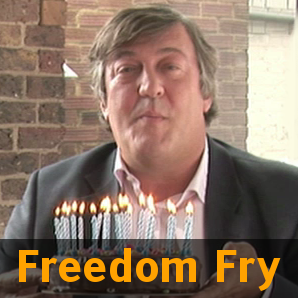
Nearly a week after its release, I suspect most of my audience has seen the FSF's Freedom Fry video of Stephen Fry wishing the GNU project and the free software movement a happy birthday. While I'm not usually one for birthdays, I thought I'd at least reflect on it briefly. Certainly, it's a wonderful video -- for which Matt Lee at others at the FSF should be proud. But it's fact that the GNU project is now twenty-five years old that is truly noteworthy. /copyrighteous/images/freedom_fry.png Wikipedia says that a generation (i.e., the average interval between the birth of parents and of their offspring) is somewhere between 25-30 years in most of the Western world. Twenty-five years isn't just a big number divisible by five, it marks a generational shift. Certainly, GNU has matured and accomplished wonderful things in last quarter-century. More importantly perhaps, it's produced wonderful progeny. It has spawned hundreds of thousands of free software projects, thousands of free or nearly-free operating systems, and an unbelievably vibrant global free and open source software community. Beyond the software realm, the free culture movement, most free licensing projects, and much of the access to knowledge movement can trace a connection back to GNU. We are living, and building, a new generation of the free software movement. It's not been an entirely smooth ride, feelings have been hurt, and it's hard for GNU's proponents -- myself included -- to not wince at some of what has been done in GNU's name and because of its example. But even cynics must admit: the world is an undeniably better place because of GNU and the efforts and ideas that it has motivated. I turn 28 in December and have spent my entire computing life in world where free software was a viable option and an active form of resistance. Here's to another generation! May we be half as productive and positive as the last!

27 August 2008

Benjamin Mako Hill: Feminism in Practice

When my friends Karen and Annina were confronted with an offensive sticker on the laptop of someone working at our lab, they organized a very constructive and effective intervention. I was so impressed that I made a short illustrated write-up of the story on my wiki.

22 August 2008

Benjamin Mako Hill: Free Software Project Management HOWTO

I took a little time today to make a new release of the Free Software Project Management HOWTO. Nearly eight years after I wrote it, much of the document is out of date or has been replaced with better, more comprehensive write-ups. In particular, I think Karl Fogel's book, Producing Open Source Software says everything insightful I say in the HOWTO, a whole lot clearly -- plus adds a lot I missed. That said, my HOWTO is short and is apparently still useful to folks. I updated it to include links to a new German translation courtesy to Robert F. Schmitt, to fix a bunch of links that time broke, and to address a few obvious mistakes that readers have pointed out. Thinking about the documents' future, I'm happy to release it under Creative Commons BY-SA in addition to GFDL and would love to help out on a wiki book project to merge a few of related efforts into a comprehensive wiki reference work.

21 August 2008

Benjamin Mako Hill: Story of Josephville

After a late-night IRC conversation about egg corns, shaggy dog stories and feghoots the idea for a short story came to me in the bathtub this morning. I give you, The Story of Josephville. Apologies in advance.

18 August 2008

Jurij Smakov: DebConf8 impressions

What I liked What I did not like What I did

Benjamin Mako Hill: Charles Kane and Jim Gettys

I watched Citizen Kane several weeks ago and was shocked to learn that the major villian in the film is a political boss named Jim Gettys. Of course, a real Jim Gettys is a well known X Window System contributor who is currently working at an OLPC manager. Last night someone reminded me that OLPC's new President and COO -- who I'd always just thought of as Chuck -- is named Charles Kane! Here's a short clip from a video of the fictional Charles Kane giving a rather long speech decrying the fictional Jim Gettys! (Also in Ogg.) I haven't been this amused since I learned that the head villian in the cartoon Jem was named Eric Raymond!

14 August 2008

Benjamin Mako Hill: Vaporizer

Nothing is more embarrassing than a website announcing that something will happen on a particular date -- e.g., a product will be released, a feature will be turned on -- after the date has come and gone! Even worse, putting things off repeatedly can be a lot of work! To help such people, I just did a very quick 10 minute hack I'm calling The Vaporizer. It looks like just a date on a webpage. However, if the date originally listed has come and gone, a little bit of Javascript will change the site so that it shows tomorrow's date instead. Vaporware providers of all types can use it to safely (and effortlessly) put things off without worrying about looking overdue! I have seen the future, and the future is tomorrow.

11 August 2008

Benjamin Mako Hill: Making Wiki Images More Wiki

One thing that has always annoyed me about most wiki is the way they handle images. MediaWiki, like most wikis, allows users to upload images and embed pictures. However, if you want to change an image, you need to download the file, open it up in GIMP, Inkscape, or Photoshop, edit it, save it, and re-upload it. Somewhere in this long process, the ease of editing that makes wikis so wonderful gets lost. Basically, I'm annoyed because images in wikis aren't very "wiki." I had a talk with Brianna Laugher at Wikimania about ways to make it easier to folks to edit pictures from within the browser -- even if it is only simple stuff. Yesterday I took the afternoon to write a new MediaWiki extension which gives a working example of in-browser image editing. It provides the ability to crop images using David Spurr's wonderful Javascript cropping user interface and uses ImageMagick to do the actual image manipulation. It is in the form of an extension to Mediawiki I've called EditImage. It's an afternoon hack from an under-qualified PHP hacker so it's nothing special. You can read it about on its page in the Mediawiki wiki and you can try it out on my personal wiki where I have it installed. I'm certainly not the first person to think about doing this. In fact, some old pages in the MediaWiki wiki imply that I'm not even the first person to play around with the idea of using Spurr's code to do image cropping for MediaWiki. Hopefully though, my code can act as a nice first step and a framework for folks wanting to add additional image manipulation features. For example, I think it would be quick to add the ability to do in-browser brightness and contrast manipulation and I would love to see this in a future version of the extension.

8 August 2008

Benjamin Mako Hill: Revealing Errors OSCON Keynote

When I gave a Revealing Errors talk at Lug Radio Live USA, I had the misfortune of being up against Robert Love's talk on Android which many people at the conference wanted to see -- myself included! One person who showed up to my talk anyway was Allison Randall. She was apparently entertained enough to invite me to give a short version of the talk as one of the keynote presentations at OSCON 2008! In the talk, I covered the ideas behind my Revealing Errors project and quickly walked through a few examples that showcase what I'm trying to do. I'm happy with the result: a couple thousand people showed up for the talk despite the fact that it was at 8:45 AM after the biggest "party night" of the conference! For those that missed it for whatever reason, you can watch a video recording that O'Reilly made and that I've embedded below. A larger version of the Flash video as well as a QuickTime version is over on blip.tv and I've created an OGG Theora version for all my freedom loving readers.

21 July 2008

Matthew Garrett: The fallacy of the completely inclusive community

Emma Jane Hogbin gave a presentation on the gender gap in free software at Lugradio Live this weekend. One of the central messages was that a great deal of how to avoid putting women off computing can be distilled down to "Don't be a dick". This ties in well with Mako's restatement of the Ubuntu code of conduct as "Be excellent to each other" (a wonderful phrasing which demonstrates that Bill and Ted's Excellent Adventure is the most philosophically worthwhile film that Keanu Reeves has ever appeared in, and certainly not The fucking Matrix) and led to my 5 minute rant on why I hate the Linux community slightly later in the day, but does leave a certain problem. What standards are used to define whether given behaviour is dickish or not? The comments here show that there's disagreement even within a single sub-community of the larger free software world. Ben suggests that the reaction to perceived inappropriate behaviour is perhaps even more discouraging than the original behaviour, suggesting that bitching about things that offend you is dickish behaviour in and of itself. How do we decide whether someone is being a dick or helping the community? Is lack of tolerance a form of exclusionary behaviour?

This topic is actually one of the issues discussed in the Geek Social Fallacies, but here's a nice easy example. Would tolerating planet posts encouraging the eradication of the Jewish population be inclusive or exclusive? I suspect that most people would agree that it wouldn't be acceptable behaviour, which leads us to the next question. Why? There's two obvious arguments here. The first is that at a community level we have some form of rough moral consensus that advocating genocide is Just Wrong, and so criticising Nazis is obviously the right thing to do. The second argument is more pragmatic than philosophical - alienating millions of people in order to avoid alienating hate groups could be considered to reduce our potential contributor base in an unfortunate way.

I'm a fan of the second argument. The example I gave is emotive and relatively recent history has resulted in people tending to be pretty uniform in considering genocide to be a bad thing, but many other cases aren't clear cut. What I consider to be objectification of women is seen by others as appreciation of natural beauty. What I think of as sexist jokes are perceived by others as acceptable humour. When I advocate intolerance of certain behaviour, people are going to see me not having enough tolerance. So we end up in a situation where people make the "We should all just get along and be tolerant of each other" argument, which sounds fine but is fundamentally flawed in one significant way.

Advocating tolerance excludes the intolerant.

The reason people fail to see this is that it doesn't sound like a flaw. If you ask people whether we need to support intolerance, the immediate answer is probably no. But by advocating exclusion of intolerance, you're excluding all those who have good reasons to be intolerant. You're excluding the women who don't want to feel that the community sees them as a pair of breasts attached to some legs. You're excluding the ethnic groups who would prefer to avoid racist slurs or ethnic stereotyping. Telling anti-fascism protestors that they're being intolerant isn't likely to endear you to them. Advocating tolerance is telling the intolerant that they're wrong and should just deal with whatever it is that makes them unhappy.

So, ironically, tolerating certain types of intolerance is probably required in order to avoid alienating many potential contributors. That means some way of deciding what kinds of behaviour are acceptable and which are unacceptable. In the absence of either pre-existing community consensus or some philosophical breakthrough that allows unambiguous determination of the "rightness" of a given action, I'm going to suggest that we look at it from a pragmatic viewpoint. How many potential contributors do we discourage by criticising a certain type of behaviour? How many do we discourage by tolerating it?

The fallacy of the completely inclusive community is the idea that it includes everyone. The reality is that a certain level of social exclusion is required in order to include a wider range of people. So don't criticise people purely for criticising someone else's behaviour - make an argument for why that behaviour benefits the community. And when you see behaviour that you think discourages others, call people on it. Even if nobody's behaviour changes as a result, you're sending a signal that not everyone in the community agrees. Sometimes all people want is to know that there'll be some people on their side.

But, above all, try not to be a dick.

Benjamin Mako Hill: OSCON and More

I'm in Portland, Oregon for the week where I'll be at OSCON. I'll be giving two talks on the final day of the conference (July 25): the first will be a 15 minute keynote on Revealing Errors at 8:45 in the Portland Ballroom; the second is a full-length normal talk on Selectricity at 11:35AM in Portland 255. It will be my first long-form talk about Selectricity and I'm looking forward to it. Because myself, a few Free Software Foundation staff members including Campaign Manager Joshua Gay, and quite a few FSF associate members will be in town, we're going to hold a small FSF Associate Members event in Portland (the first outside Boston!). It's going to be in the form of a pizza party with a few small talks from FSF folk including myself. Here are the details:
FSF Associate Members (& friends!) Event
July 22nd 6:30-9:00PM
Old Town Pizza
226 NW Davis St
Portland, OR 97209
It's free and open to all but is designed to provide a forum for members and friends. If you are an FSF member, please consider coming. If you're not a member yet, please don't let it keep you away; staff will be able to sign up new members there. RSVPs to Deborah Nicholson aren't necessary to attend but would be welcome. I'll be heading to Seattle right after the conference for a few days. If you would like to meet up in Seattle or Portland this week, please don't hesitate to get in contact.

Benjamin Mako Hill: I Will Revise

Once again, Wikimania was wonderful. I gave my scheduled talk on Autonomo.us and network freedom and network services. I also filled in for a few speakers to give a "Zotero for Wikipedians" demo and to say a few words about the BY-SA/FDL work as part of a Creative Commons panel. Perhaps the most memorable part of the conference was the writing and performance of I Will Revise. A couple days before the conference, a small group of Wikipedians -- The Difftones -- wrote the song at a karaoke bar in Alexandria. We had a wonderful time leading a room full of lightning talk attendees in song and a final rendition by a massive, fully-packed, stage at the party on the final night! It's online on meta.wikimedia.org. You should feel free to revise it, add verses, and improve it!

Next.

Previous.