Search Results: "jmtd"

21 April 2015

Jonathan Dowland: Useful script

Here's a useful shell procedure:
vigg ()
 
  git grep --color=auto -lz "$1"   xargs -r0 sh -c "vi +/\"$1\" \"\$@\" < /dev/tty"
 
git grep is a very effective way to run a recursive grep over a git repository, or part of a git repository (by default, it limits its search to the sub-tree you are currently sitting in). I quite often find myself wanting to edit every file that matched a search, and so wrote this snippet. The /dev/tty-ugliness is to work around vi complaining that it's standard input was set to /dev/null by xargs. BSD xargs has a command, -o, which sorts this out; GNU xargs doesn't, but the manual suggests the above portable workaround. This marks the first time a BSD tool has had a feature I've wanted and the GNU equivalent doesn't.

23 March 2015

Jonathan Dowland: Linux music players, 2015 edition

Now I'm back to Linux on the Desktop for my dayjob, I was slightly nervous about checking out the state of the art for Linux music players; an area I've never felt the Linux desktop was very strong on. However for the time being I've largely side-stepped the issue by listening to BBC 6 Music for most of the day. For better or worse, I scrobble, and somebody has written a neat web app for scrobbling along to radio stations. When I want to listen to something different for a change, I've been trying out a trial of Google Play Music, for which somebody has written a Chrome extension to scrobble. On the rare occasions I listen to local music, I'm using VLC. Google Play Music seems pretty good, but I'm not getting a lot from my trial because 6 Music is generally fantastic. Scrobbling 6 Music has revealed a bit of a disconnect for how I use last.fm, and how website thinks you should use it. Within a day or two, my "music compability" with 6 Music was (predictably) "SUPER". Looking at my "Top artists", right near the top are 6 Music's current playlist favourites Courtney Barnett and Nadine Shah, who I can (at least) recall the songs that have been played; just below them are Young Fathers, who I cannot. A little lower are Hot Chip and Slaves: both artists who have current singles out which I enjoyed for a while, but the relentless BBC playlist policy is overdoing them and I'm inclined to switch over when they come on now. If I listen to a whole album in a given week, then the artist will likely (and rightly) be sat at the top of "last 7 days"; if I don't, then it could be something I can't even remember listening to.

12 March 2015

Jonathan Dowland: R.I.P. Terry Pratchett

Pratchett and I, around 1998 Pratchett and I, around 1998
Terry Pratchett dies, aged 66. It looks like his last novel will be The Long Utopia, the fourth book in the Long Earth series, co-written with Stephen Baxter.

8 March 2015

Jonathan Dowland: archive.org is not backup

I thinking archiving is important, archive.org is great, and I'm proud of what little contribution I've made to date. Someone recently pointed out that an upload I had made is now inaccessible. In it's place is a short message: this item is unavailable due to issues with its content. What issues are not made clear. I've never been contacted by archive.org about this, not even to be admonished, should they have felt that to be necessary. I've tried contacting them to find out what the issues are but have heard nothing back. It's worth remembering: Just because it's available now, even on archive.org, doesn't mean it will be Tomorrow!

2 March 2015

Jonathan Dowland: Debian and Docker

I've been playing around with Debian and Docker a little bit. I found Joey Hess' post about Docker trust interesting reading, in particular this advice:
I'd recommend only trusting docker images you build yourself. I have some docker images published somewhere that are built with 100% straight debootstrap with no modifications (...) But I'm not going to link to them, because again, you should only trust docker images you built yourself.
On that advice, I did exactly that. I've pushed the basic scripts I used to build my images to github:jmtd/debian-docker. Suggestions welcome! However, I am planning to share the images I build, at least for my own convenience, on the Docker repository. I'm hoping to publish some PGP-signed sums somewhere so you could verify the binary images on the Docker registry if you so wish. The three images I'm currently maintaining are: (note: I haven't pushed them all yet.) With docker 1.5.x at least, the i386 image works fine on amd64 hosts. I've used it as the basis for running wine and Windows binaries. I might push a wine image if I generalise it enough to be more useful. The Docker folks recommend using Debian as a base image because it's a small size (approx. 163M for my base image, 85.01M for the semi-official one: See Joey's blog for some of the differences) but with a good set of tools. I wondered whether I could leverage the efforts of the Emdebian project to get an even smaller base image. Unfortunately, the Emdebian project discontinued their 'Grip' project midway through last year. A basic Emdebian grip install is a fair bit smaller than the equivalent wheezy image, but once you've applied security updates most of the difference is lost. I suspect that some of Emdebian's minimisation techniques would be useful and applicable for shrinking Docker base images.

25 February 2015

Jonathan Dowland: CD ripping on Linux

A few months ago I decided it would be good to re-rip my CD collection, retaining a lossless digital copy, and set about planning the project. I then realised I hadn't the time to take the project on for the time being and parked it, but not before figuring a few bits and pieces out. Starting at the beginning, with ripping the CDs. The most widely used CD ripping software on Linux systems is still cdparanoia, which is pretty good, but it's still possible to get bad CD rips, and I've had several in a very small sample size. On Windows systems, the recommended ripper is Exact Audio Copy, or EAC for short. EAC calculates checksums of ripped CDs or tracks and compares them against an online database of rips called AccurateRip. It also calibrates your CD drive against the same database and uses the calculated offset during the rip. I wasn't aware of any AccurateRip-supporting rippers until recently when Mark Brown introduced me to morituri. I've done some tentative experiments and it appears to be produce identical rips to EAC for some sample CDs (with different CD reading hardware too). Fundamentally, AccurateRip is a proprietary database, and so I think the longer term goal in the F/OSS community should be to create an alternative, open database of rip checksums and drive offsets. The audio community has already been burned by the CDDB database going proprietary, but at least we now have the far superior MusicBrainz.

25 January 2015

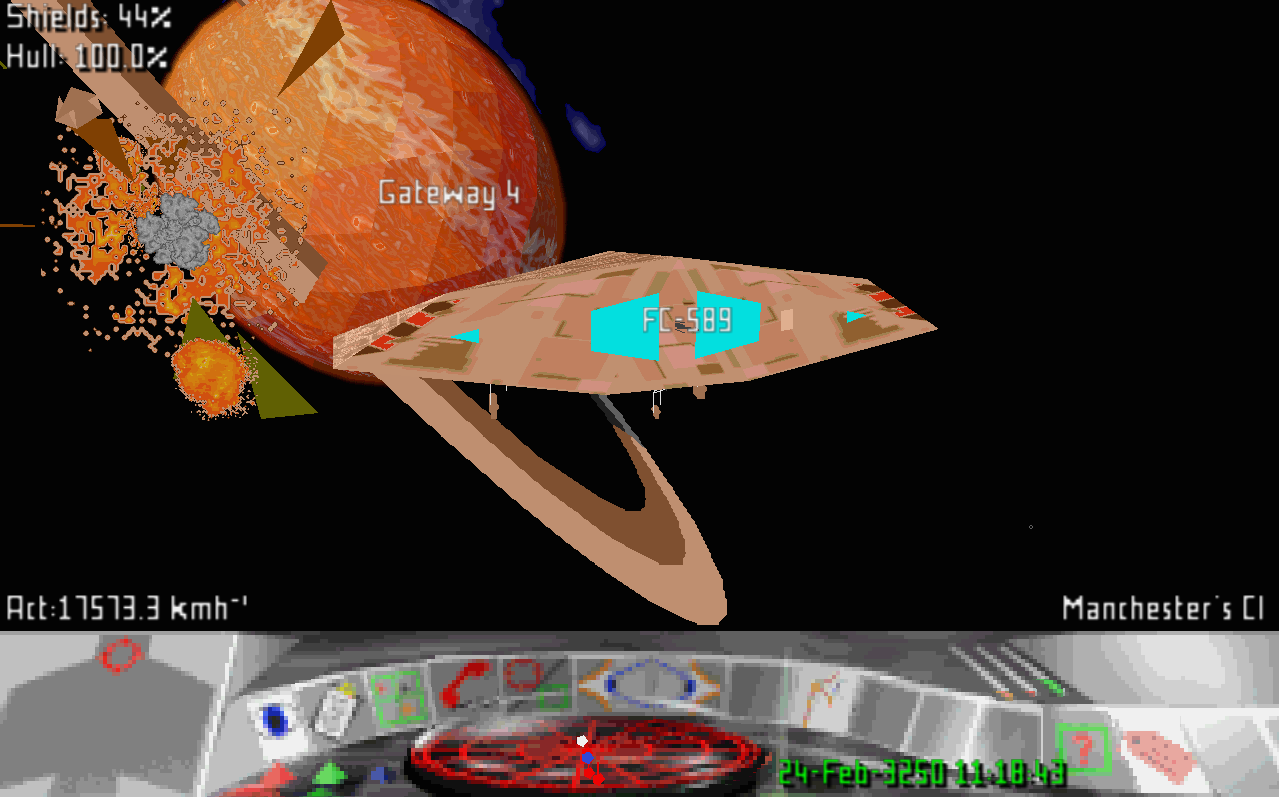
Jonathan Dowland: Frontier: First Encounters

Cobra mk. 3 Cobra mk. 3
Four years ago, whilst looking for something unrelated, I stumbled across Tom Morton's port of "Frontier: Elite II" for the Atari to i386/OpenGL. This took me right back to playing Frontier on my Amiga in the mid-nineties. I spent a bit of time replaying Frontier and its sequel, First Encounters, for which there exists an interesting family of community-written game engines based on a reverse-engineering of the original DOS release. I made some scrappy notes about engines, patches etc. at the time, which are on my frontier page. With the recent release of Elite: Dangerous, I thought I'd pick up where I left in 2010 and see if I could get the Thargoid ship. I'm nowhere near yet, but I've spent some time trying to maximize income during the game's initial Soholian Fever period. My record in a JJFFE-derived engine (and winning the Wiccan Ware race during the same period) is currently 727,800. Can you do better?

22 December 2014

Jonathan Dowland: Blade Runner: Alien Easter Egg?

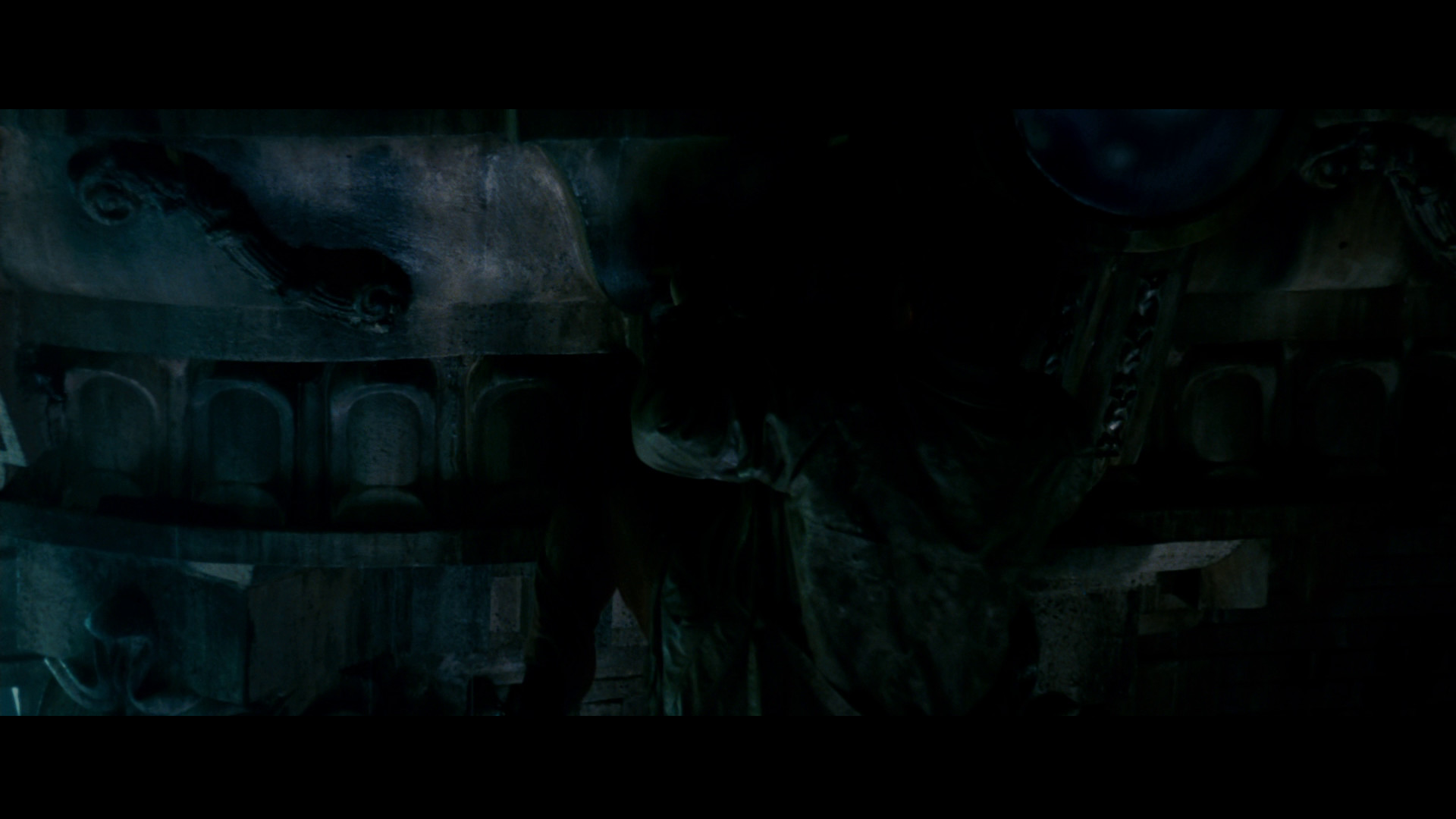
A few weeks ago I went to see Blade Runner: The Final Cut in a one-off showing at the Tyneside Cinema. I've only watched the Final Cut once and that viewing was a bit compromised, so it was nice to see it properly, and on a massive screen with decent surround sound too. Whilst watching it I saw something that I thought might potentially have been a visual reference to Scott's earlier movie, Alien. When Deckard is climbing onto the roof of the Bradbury building, there's a decorative motif that to me, looks very Giger-esque, biomechanical, a bit like a chest-burster.
click for full frame click for full frame
I went back and took a screenshot from the Blu Ray at the same point. What do you think? As it happens, whilst the inner regions of the building in the movie are the Bradbury building (or at least the entrance hall), I don't think the upper exterior shots are.
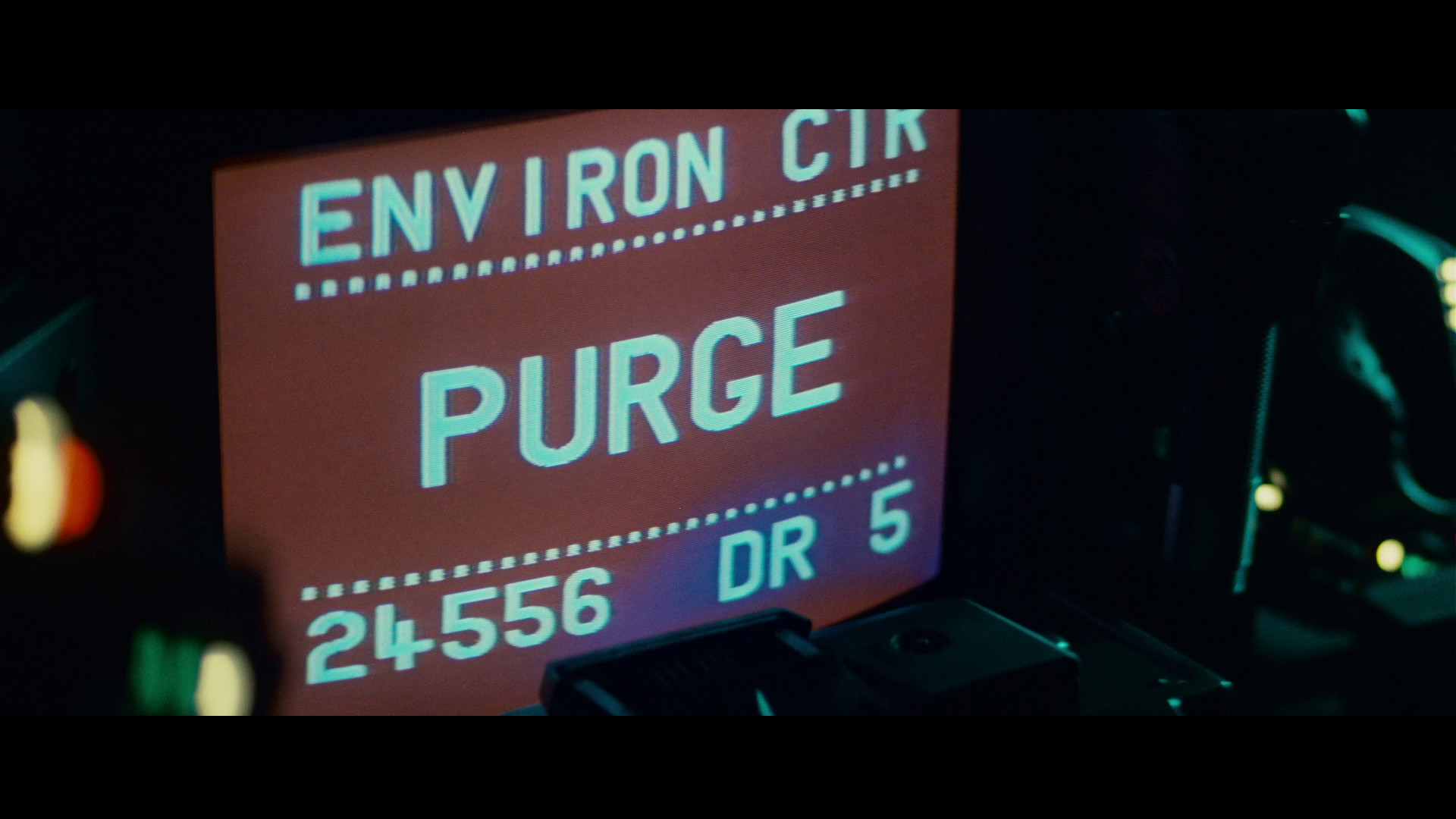
Purge Purge
There are a few other, well-known references to Alien in Blade Runner, although they are likely simply re-used effects rather than explicitly easter eggs. The display screen in Gaff's Spinner is re-used from the Narcissus (here's a comparison) and the ambience in Deckard's apartment also featured in the Nostromo's medical bay. Some enterprising person has put together a 12 hour session of that particular sound effect looping. There's a number of other comparisons and spots at this propsummit.com thread.

27 November 2014

Jonathan Dowland: PGP transition statement

-----BEGIN PGP SIGNED MESSAGE-----
Hash: SHA512,SHA1
I'm transitioning from my old, 1024-bit DSA PGP key, FD35 0B0A C6DD 5D91 DB7A 83D1 168B 4E71 7032 F238, to my newer, 4096-bit RSA key, E037 CB2A 1A00 61B9 4336 3C8B 0907 4096 06AA AAAA. If you have signed my old key, I'd be very grateful if you would consider signing my new key. (Thanks in advance!) This is long overdue! I've had 06AAAAAA since 2009, but it took me a while to get enough signatures on it for me to consider a transition. I still have far more signatures on my older key, owing to attending more conferences when I was using it than since I switched. This statement, available in plaintext at http://jmtd.net/log/pgp_transition/statement.txt, has been signed with both keys. I've marked my old key as expiring in around 72 days time, which coincides with my change of job, and will be just short of ten years since I generated it.
-----BEGIN PGP SIGNATURE-----
Version: GnuPG/MacGPG2 v2.0.22 (Darwin)
iQIcBAEBCgAGBQJUdysuAAoJEAkHQJYGqqqquQ0QALVGcn9Wbasg0oh8JeE8rN7h
k7FeZjmGk+ZwfXwo4Eq4pjxKp+TN+r4xBCFSHDRmMaAm9q7aWF/RqkdNiEtioQfJ
SmfzLsoEnSBmS9dr1LvAoxIlUzs/9Lt8EY2tB4NQne3QIu3VyRBjQDvqff6KJgkV
849+GsrJezkg/2VFZkZp1N9y0YwrmezV/1j0N6zR8Y20LlF4YuD3egUJYvbrQ1pA
krJwhiHskXRinqviYMg4CuTZZ3m2wc4fM6uiY5t9taqK90KFgmg73KvW6Rx2L+XP
BUzTlSYHnK+qI23Cng//DthFww2Wf9RofkfRgXk0zAe4+DcoMZzALKtZQA6GrT46
wzsmu459p5nUwwa6BzUvqBzyVtzbtHN5xaFwbjHCPlemsFlH/8LHackJLsBvr2Gp
q292huYu/HNo+Q6OIslFX6rc5AR3HKdbU2DxYMPAfI+CEtW1XwetK8ADSZc1v54C
+sc+Yb2kAleLX2xMIfS9JqvcKOP2Gbo7nTdRPnS2jZRWOv8JxVfFiSzHVODtlLfk
AmRvms5rQ2nPnB21yOd+DP2sACVKY0MS7/UwMh2hoQLR/bSu/jRh24n3WHDfQWtF
Jp4AD80ABFV2t/pSP1L70HlxwPmOzra8AVzCdXMOT/SdT387rSM9fvue4FY5goT+
/pResJSl9pAbBCtjOFJoiEYEARECAAYFAlR3Ky4ACgkQFotOcXAy8jiLawCgofsp
ggze/iSpfkyeL0vhXi6N/WMAoLQogFQY+VaQrVP3lGl1VVh4jw0W
=JBA4
-----END PGP SIGNATURE-----

19 November 2014

Jonathan Dowland: Moving to Red Hat

I'm changing jobs! From February 2015, I will be joining Red Hat as a Senior Software Engineer. I'll be based in Newcastle and working with the Middleware team. I'm going to be working with virtualisation, containers and Docker in particular. I know a few of the folks in the Newcastle office already, thanks to their relationship with the School of Computing Science, and I'm very excited to work with them, as well as the wider company. It's also going to be great to be contributing to the free software community as part of my day job. This October marked my tenth year working for Newcastle University. I've had a great time, learned a huge amount, and made some great friends. It's going to be sad to leave, especially the School of Computing Science where I've spent the last four years, but it's the right time to move on, It's an area that I've been personally interested in for a long time and I'm very excited to be trying something new.

8 October 2014

Jonathan Dowland: Ansible

I've just recently built the large bulk of VMs that we use for first semester teaching. This year that was 112. We use the same general approach for these as our others: get a generic base image up and running, with just enough configuration complete so a puppet client starts up; get it talking to our master; let puppet take it from there. There are pragmatic balances between how much we do in the kickstart versus how much we do in puppet, but also when we build a new VM from scratch versus when we clone an existing image, and how specialisation we do in the clone image. Unfortunately this year we ended up in a situation where our clone image wouldn't talk to our puppet master out of the box, due to some changes we'd made to our master set up since the clone image was prepared. We didn't really have enough time to re-clone the entire set of VMs from a fixed base image, and instead needed to fix them whilst up. However we couldn't rely on puppet to do that, since they wouldn't talk to the puppet master. We needed to manually reset the puppet client state per VM and then re-establish a trust relationship with the correct master (which is not the default master hostname in our environment anymore). Luckily, we deploy a local account with a known passphrase via the kickstart, which also has sudo access, as an interim measure before puppet strips it back out again and sets up proper LDAP and Kerberos authentication. So we can at least get into the boxes. However logging into 112 VMs by hand is not a particularly pleasant task. In the past I might have tried to achieve this using something like clusterssh but this year I decided to give ansible a try instead. Ansible started life, I believe, as a tool that would let you run arbitrary commands on remote hosts, including navigating ssh and sudo as required, without needing any agent software on the remote end. It has since seemed to grow into an enterprise product in its own right, seemingly in competition with puppet, chef, cfengine et al. Looking at the Ansible website now I'd be rather put off by just how "enterprisey" it has become - much as I am by the puppet website, if I'm honest - but if you persevere past the webinars, testimonials, etc. etc., you can find yourself to the documentation, and running an arbitrary command is as simple as The hosts file format is simple
[somehosts]
host1
host2
...
[otherhosts]
host3
The command line can be a little bit more complex, especially if you need to use one username for ssh, another for sudo, and you don't want to use ssh key auth:
ansible -i ./hostsfile somehosts -k -u someuser \
    --sudo -K -a 'puppet agent --onetime --no-daemonize --verbose 
"all" would work where I've used somehosts in the example above. So there you go: using one configuration management system to bootstrap another. I'm sure I've reserved myself a special place in hell for this.

2 October 2014

Jonathan Dowland: Gigabyte J1900N-D3V Mini-ITX mainboard

For my 31st birthday I decided to build myself a computer, specifically a NAS and backup server which could do some other bits and pieces. I ended up buying a system based on the Gigabyte J1900N-D3V SoC from Mini-ITX (who's after sales support is great, by the way). I hope to write up a more comprehensive overview of what I've ended up with (probably in my rather dusty hardware section), but in the meantime I have a question for anyone else with this board:
If you've upgraded the BIOS, do the more recent BIOS versions insist on there being a display connected in order to boot?
Sadly the V1 BIOS version does, which seriously limits the utility of this board for my purposes. I did manage to flash the board up to V3, once, but it later decided to downgrade itself (believing the flashed BIOS to be corrupt). I haven't managed a second time. The EFI implementation in this board is... interesting. Convincing it to boot anything legacy is a tricky task. As an aside, I recently stumbled across this suggestion on reddit to use an old-ish, Core-era Thinkpad T-series with a dock for this exact purpose: the spare ultrabay gives you two SATA drive slots; the laptop battery serves as a crude UPS and there's a built in keyboard and mouse, avoiding the issue I'm having with the J1900N-D3V. A Core i5 is more than fast enough for what I want to do and it will have vt. Hindsight is a wonderful thing...

29 September 2014

Jonathan Dowland: Letter to Starburst magazine

I recently read a few issues of Starburst magazine which is good fun, but a brief mention of the Man Booker prize in issue 404 stoked the fires of the age old SF-versus-mainstream argument, so I wrote the following:
Dear Starburst, I found it perplexing that, in "Brave New Words", issue 404, whilst covering the Man-Booker shortlist, Ed Fortune tried to simultaneously argue that genre readers "read broadly" yet only Howard Jacobson's novel would be of passable interest. Asides from the obvious logical contradiction he is sadly overlooking David Mitchell's critically lauded and undisputably SF&F novel "The Bone Clocks", which it turned out was also overlooked by the short-listers. Still, Jacobson's novel made it, meaning SF&F represents 16% of the shortlist. Not too bad I'd say. All the best & keep up the good work!
As it happens I'm currently struggling through "J". I'm at around the half-way mark.

28 September 2014

Jonathan Dowland: Puppet and filesystem mounts

Well, not long after writing my last post I've found some time to write up some of my puppet adventures, sooner than I imagined... Outside work, I sys-admin a VPS instance that is shared by a few friends. We recently embarked in a project to migrate to a different VPS instance and I took the opportunity to revisit how we managed home directories. I've got all the disk space allocated to the VM set up as LVM physical volumes. This has proven very useful for later expansion: we can do it all live. Each user on the VM may have one or more UNIX accounts that they use. Therefore, in the old scheme, for the jon user, we mounted an allocation of disk space at /home/jons, put the account home directories under it at e.g. /home/jons/jon, symlinked /home/jon -> /home/jons/jon for brevity, and set that as the home field in the passwd entry. This worked surprisingly well, but I was always uncomfortable with having a symlink in the home path (and some software was, too.) For the new machine, I decided to try bind mounts. Short story: they just work. However, the mtab (and df output) can look a little cluttered, and mount order becomes quite important. To manage the set-up, I wrote a few puppet snippets. First, a convenience definition to make the actual bind-mounts a little less verbose.
define bindmount($device)  
  mount   $name:
    device  => $device,
    ensure  => mounted,
    fstype  => 'none',
    options => 'bind',
    dump    => 0,
    pass    => 2,
    require => File[$device],
   
 
Once that was in place, we then needed to ensure that the directories to which the LV were to be mounted, and to where the user's home would be bind-mounted, actually exist; we also need to mount the underlying LV and set up the bind mount. The dependency chain is actually a graph, but with the majority of dependencies quite linear:
define bindmounthome()  
  file   ["/home/$ name s", "/home/$ name "]:
    ensure  => directory,
    -> # depended upon by
  mount   "/home/$ name s":
    device  => "LABEL=$ name ",
    ensure  => mounted,
    fstype  => 'ext4',
    options => 'defaults',
    dump    => 0,
    pass    => 2,
    -> # depended upon by
  bindmount   "/home/$ name ":
    device  => "/home/$ name s/$ name ",
   
  file   "/home/$ name s/$ name ":
    ensure  => directory,
    owner   => $name,
    group   => $name,
    mode    => 0701, # 0701/drwx-----x
    require => [User[$name], Group[$name], Mount["/home/$ name s"]],
   
 
That covers the underlying mounts and the "primary" accounts. However, the point of this exercise was to support the secondary accounts for each user. There's a bit of repetition here, and with some refactoring both this and the preceding bindmounthome definition could be a bit shorter, but I'm not sure whether that would be at the expense of legibility:
define seconduser($parent)  
  file   "/home/$ name ":
    ensure => directory,
    -> # depended upon by
  bindmount   "/home/$ name ":
    device => "/home/$ parent s/$ name ",
   
  file   "/home/$ parent s/$ name ":
    ensure  => directory,
    owner   => $name,
    group   => $name,
    mode    => 0701, # 0701/drwx-----x
    require => [User[$name], Group[$name], Mount["/home/$ parent s"]],
   
 
I had to re-read the above a couple of times just now to convince myself that I hadn't missed the dependencies between the mount invocations towards the bottom, but they're there: so, puppet will always run the mount for /home/jons before /home/jons/jon. Since puppet is writing to the fstab, this means that the ordering is correct and a sequential start-up will work. If you want anything cleverer than serialised, one-at-a-time mounting at boot, I think one would have to use something other than trusty-old fstab for the job. I'm planning to look at Systemd's mount unit type, but there's no rush as this particular host is still running sysvinit for the time being.

Jonathan Dowland: What have I been up to?

It's been a little while since I've written about what I've been up to. The truth is I've been busy with moving house - and I'll write a bit more about that at another time. But asides from that there have been some bits and bobs. I use a little tool called archivemail to tidy up old listmail (my policy is to retain 30 days of listmail for most lists). If I unsubscribe to a list, then eventually I end up with an empty mail folder corresponding to that list. I decided it would be nice to extend archivemail to delete mailboxes if, after the archiving has taken place, the mailbox is empty. Doing this properly means adding delete routines to Python's "mailbox" library, which is part of the Python standard library. I've therefore started work on a patch for Python. Since this is an enhancement, Python would only accept a patch for Python 3. Therefore, eventually, I would also have to port archivemail from Python 2 to 3. "archivemail" is basically abandonware at the moment, and the principal Debian maintainer is MIA. There was a release critical bug filed against it, so I joined the Debian Python team to co-maintain archivemail in Debian. I've worked around the RC bug but a proper fix is still to come. In other Debian news, I've been mostly quiet. A small patch for squishyball to get it to build on Hurd, and a temporary fix patch for lhasa to get it to build on the build daemons for all architectures (problems with the test suite). All three of lhasa, squishyball and archivemail need a little bit of love to get them into shape before the jessie freeze. I've had plans to write up some of the more interesting technical things I've been up to at work, but with the huge successes of the School we've been so busy I haven't had time. Hopefully you can soon look forward to some of our further adventures with puppet, including evaluating Shibboleth modules, some stuff about handling user directories, bind mounts and LVM volumes and actually publishing some of our more useful internal modules; I hope we will also (soon) have some useful data to go with our experiments with Linux LXC containers versus KVM-powered virtual machines in some of our use-cases. I've also got a few bits and pieces on Systemd to write up.

16 July 2014

Jon Dowland: Mac

My job exposes me to a large variety of computing systems and I regularly use Mac, Windows and Linux desktops. My main desktop environment at home and work has been Debian GNU/Linux for over 10 years. However every now and then I take a little "holiday" and use something else for a few weeks. Often I'm spurred on by some niggle or other on the GNOME desktop, or burn-out with whatever the current contentious issue of the moment is in Debian. Usually I switched to Windows and I used it as an excuse to play some computer games. Last November I had just such an excuse to take a holiday but this time I opted to go for Mac. I had a back-log of Mac issues to investigate at work anyway. I haven't looked back. It appears I have switched for good. I've been meaning to write about this for some time, but I couldn't quite get the words right. I doubted I could express my frustrations in a constructive, helpful way, even if I think that my experiences are useful and my discoveries valuable, perhaps I would put them across in a way that seemed inciteful rather than insightful. I wasn't sure anyone cared. Certainly the GNOME community doesn't seem interested in feedback. I turns out that one person that doesn't care is me: I didn't realise just how broken the F/OSS desktop is. The straw that broke the camel's back was the file manager replacing type-ahead find with a search but (to seemlessly switch metaphor) it turns out I'd been cut a thousand times already. I'm not just on the other side of the fence, I'm several fields away. Sometimes community people write about their concerns with whether they're going in the right direction, or how to tell the difference between legitimate complaints, trolls and whiners. When I look at conferences now, the sea of Thinkpads was replaced with a sea of Apple Macs a long time ago now, and the Thinkpads haven't come back. I'd suggest: don't worry about the whiners. Worry about the leavers. What does this mean for my Debian involvement? Well, you can't help but have noticed that I've done very little this year. I've written nearly exclusively about music so far. the good news is: I still regularly use Debian, and I still intend to stay involved, just not on the desktop. I'm essentially only maintaining two packages now, lhasa and squishyball. I might pick up a few more (possibly archivemail if the situation doesn't improve) but I'm happy with a low package load; I'd like to make sure the ones I do maintain are maintained well. The sum of all my Debian efforts this year have been to get these two (or three) ship-shape. I have a bunch of other things I'd like to achieve in Debian which are not packages, and a larger package load would just distract from them. (We really are too package-oriented in Debian).

30 June 2014

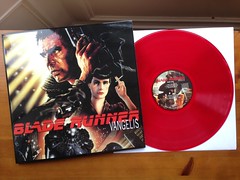
Jon Dowland: Blade Runner remastered OST

record photo translucent red pressing
Vangelis' soundtrack for the movie Blade Runner is one of my favourite film soundtracks. Its troubled history is reasonably well documented on Wikipedia . At the time of writing, that article doesn't mention the recent 2013 reissue which was remastered and released on Vinyl, and possibly SACD too. Last year I spotted this record and bought it for a friend's birthday. In the year since I've eventually gave into temptation and bought another copy for myself. This was a little unfortunate in terms of timing as my record player has been packed away for two months pending a house move. I did manage to test it out on a Numark PT-01 but it really needs a proper setup to do it justice. In the mean time, one can watch a video of someone else's copy playing: In related news, I've recently enjoyed the BBC's adaptation of Do Androids Dream of Electric Sheep?, as part of their "Dangerous Visions" series. Much like the film, the play elides a lot of material from the book; including Deckard's wife and (more sadly) the entire Buster Friendly / Mercer side-story. However it retains the second police station, which (to me) was the key, classic Dick "What-the..." moment in the novel.

12 June 2014

Jon Dowland: Spiral

March Of The Pigs March Of The Pigs
I stumbled across this whilst packing up my 7" records. It's one of my favourite 'features' on a blank side.

27 May 2014

Jon Dowland: Nine Inch Nails, Manchester, 2014

I spent the bank holiday weekend mostly in Manchester with my brother and a couple of friends, mostly to see Nine Inch Nails perform, but also to enjoy the pleasures of the city.
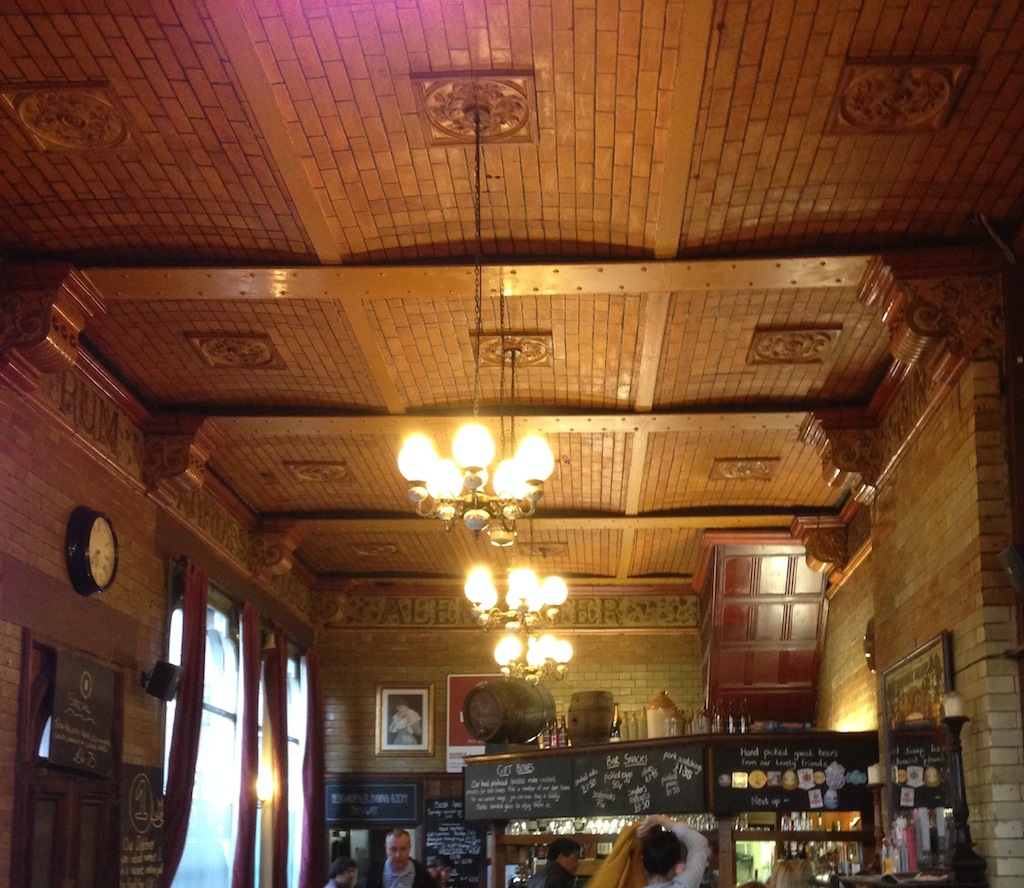
the Marble Arch's ceiling the Marble Arch's ceiling
We arrived on the Sunday and after checking in headed out to get some food. I'd booked us a table at the historic Marble Arch - the pub which gives its name to the parent company Marble Beers - and produce my most favourite ales. Whenever a Marble beer ends up as a guest at one of the Newcastle real ale pubs a friend of mine (who is much more on top of this stuff than I am) lets me know and we stop off for a few. Invariably there's a crowd of a dozen or so Manchester expats in bar when we do. I reserved our table over twitter, which is a bit of a novelty for me. My two friends are ale skeptics but - due to lack of choice - we all ended up sampling the Chocolate Marble and the Ginger 5.1, which went down a storm. They are possibly converts now. There was an Earl Grey IPA too, which was nice but a bit on the strong side for sessioning.
copyright   Jonathan Dowland 2014, http://creativecommons.org/licenses/by/4.0/ click for the animated version
The gig was great - I prefer club gigs to arena gigs but the sound techs for NIN know what they are doing and the mix was great. The visuals were stunning too. Highlights for me were "The Great Destroyer" - in particular the extended, improvised 5 minute glitch-meltdown coda; the slow build of "Eraser" and "The Day The World Went Away" - played faithfully to the CD mix rather than the traditional extended live arrangement. I miss the former live arrangement, which includes a drawn out drum-backed finish, but this arrangement had a lot of force, with all four of the band bashing guitars into a pummelling wall of sound. I've heard that at least one person has taped the show and it turns out recordings have just recently surfaced for the two club gigs my brother and I attended back in 2005 and 2007 - meaning there are now widely available, high quality ROIO copies for every NIN gig I've ever been to. Afterwards we tried to find a decent club. Manchester is a lot larger than my native city and there's plenty of places to go, if you know where they are. We had originally planned to visit The Factory on Charles Street, but we didn't believe it was open on the Sunday. The Factory is Peter Hook's (formerly of Joy Division/New Order) club - occupying the former office spaces of Factory records. I've chanced in there once before as it's right across the road from the Lass O' Gowrie pub, which is the haunt of choice for HE/tech people whenever we're in Manchester for conferences.
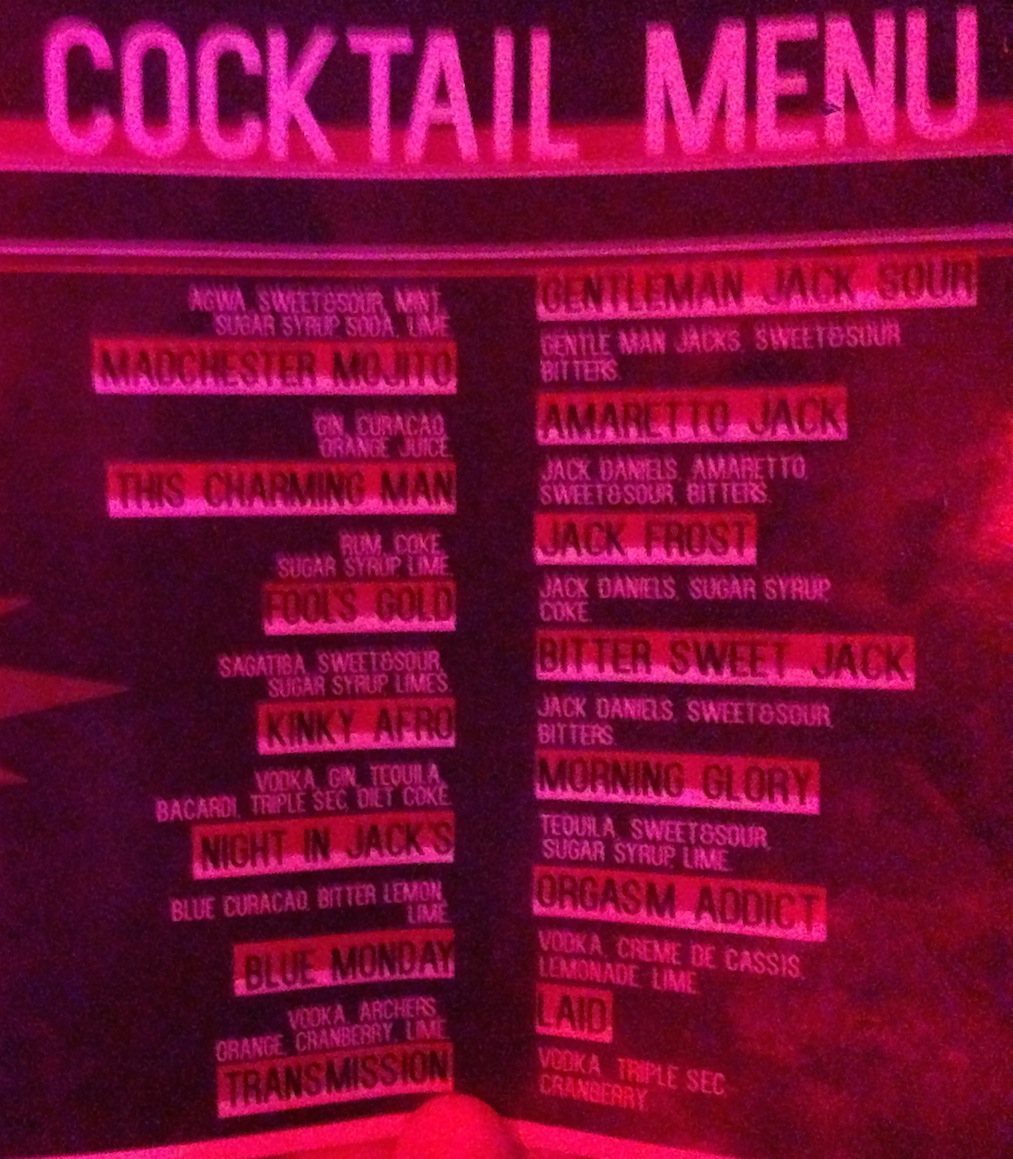
cheesy cocktail names cheesy cocktail names
Instead we gravitated towards Dry Bar on Oldham street. By coincidence this place also has historic ties to Factory Records. However the doormen wouldn't let us in! Finally we landed at a place which had one name on the door and a different name on the inside (Jack's). Like the aformentioned Lass O' Gowrie and perhaps half of all pubs and clubs in Manchester, the place is decked out as a shrine to the former musical giants of the City, with framed pictures of Mark E Smith, the Ha ienda again, the Stone Roses in their boy-band-looks hay day, John Peel (champion of many of them) and of course Tony Wilson. I can't help but wonder whether people who live here get royally sick of that. This place served some delicious albeit clich -titled Cocktails and played a pretty good set - the obligatory Madchester throwback interlude was followed by a chunk of Northern Soul and a couple of early Rap classics. Setlist wise it was pretty much identical to that of Foundation in Newcastle, 12 years ago, no doubt because Foundation was cribbing heavily from the Ha ienda in the first place.
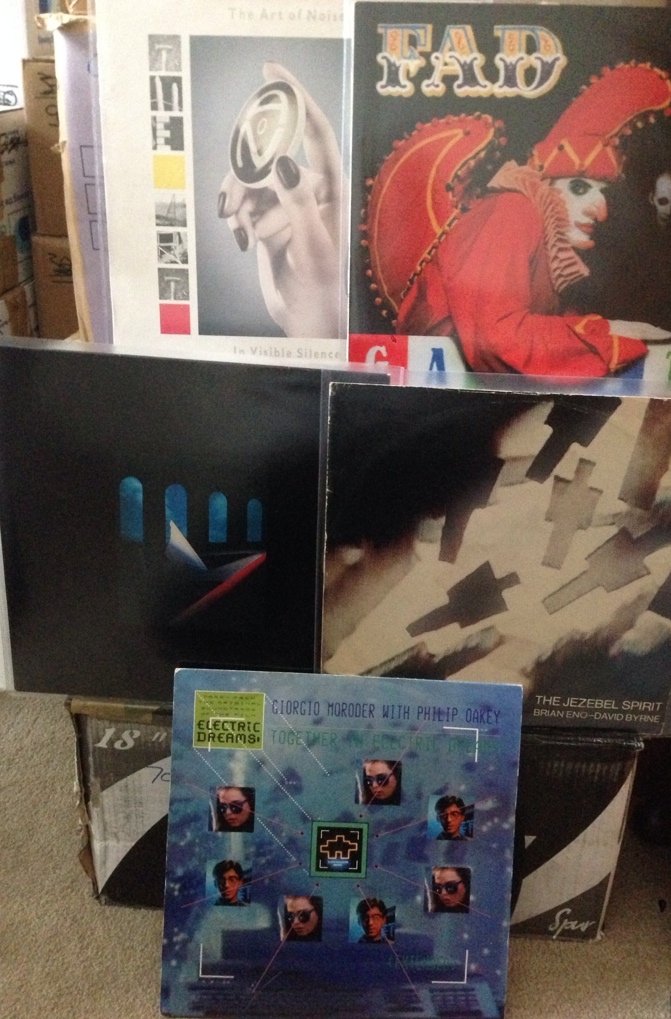
Record haul Record haul
Monday was dedicated to exploring and shopping. Top of my list of places to go was my pilgrimage venue Vinyl Exchange. Whilst waiting for it to open we rolled around in Affleck's Palace, which turned out to have a small record stall within. After Vinyl Exchange we chanced across another record store right across the road - Picadilly Records - which happens to be larger and focuses more on new releases. It didn't take long before we found another small, DIY record shop, then another. We tried out the Fopp branch here - more Vinyl; then Urban Outfitters - more; then an Oxfam branch - even more. I actually got Vinyl snow blind at this point. I've been controlling myself admirably and only picked up a couple of bits and pieces. My best find was Fad Gadget's sophmore album "Incontinent".

Jon Dowland: 2012 In Review

2013 is nearly all finished up and so I thought I'd spend a little time writing up what was noteable in the last twelve months. When I did so I found an unfinished draft from the year before. It would be a shame for it to go to waste, so here it is. 2012 was an interesting year in many respects with personal highs and lows. Every year I see a lots of "round-up"-style blog posts on the web, titled things like "2012 in music", which attempt to summarize the highlights of the year in that particular context. Here's JWZ's effort, for example. Often they are prefixed with statements like "2012 was a strong year for music" or whatever. For me, 2012 was not a particularly great year. I discovered quite a lot of stuff that I love that was new to me, but not new in any other sense. In Music, there were a bunch of come-back albums that made the headlines. I picked up both of Orbital's Wonky and Brian Eno's Lux (debatably a comeback: his first ambient record since 1983, his first solo effort since 2005, but his fourth collaborative effort on Warp in the naughties). I've enjoyed them both, but I've already forgotten Wonky and I still haven't fully embraced Lux (and On Land has not been knocked from the top spot when I want to listen to ambience.) There was also Throbbing Gristle's (or X-TG) final effort, a semi/post-TG, partly posthumous double-album swan song effort which, even more than Lux, I still haven't fully digested. In all honesty I think it was eclipsed by the surprise one-off release of a live recording of a TG side project featuring Nik Void of Factory Floor: Carter Tutti Void's Transverse, which is excellent. Ostensibly a four-track release, there's a studio excerpt V4 studio (Slap 1) which is available from (at least) Amazon. There's also a much more obscure fifth "unreleased" track cruX which I managed to "buy" from one of the web shops for zero cost. The other big musical surprise for me last year was Beth Jeans Houghton and the Hooves of Destiny: Yours Truly, Cellophane Nose. I knew nothing of BJH, although it turns out I've heard some of her singles repeatedly on Radio 6, but her band's guitarist Ed Blazey and his partner lived in the flat below me briefly. In that time I managed to get to the pub with him just once, but he kindly gave me a copy of their album on 12" afterwards. It reminds me a bit of Goldfrapp circa "Seventh Tree": I really like it and I'm looking forward to whatever they do next. Reznor's How To Destroy Angels squeezed out An Omen EP which failed to set my world on fire as a coherent collection, despite a few strong songs individually. In movies, sadly once again I'd say most of the things I recall seeing would be "also rans". Prometheus was a disappointment, although I will probably rewatch it in 2D at least once. The final Batman was fun although not groundbreaking to me and it didn't surpass Ledger's efforts in The Dark Knight. Inception remains my favourite Nolan by a long shot. Looper is perhaps the stand-out, not least because it came from nowhere and I managed to avoid any hype. In games, I moaned about having moaning about too many games, most of which are much older than 2012. I started Borderlands 2 after enjoying Borderlands (disqualified on age grounds) but to this day haven't persued it much further. I mostly played the two similar meta-games: The Playstation Plus download free games in a fixed time period and the more sporadic but bountiful humble bundle whack-a-mole. More on these another time. In reading, as is typical I mostly read stuff that was not written in 2012. Of that which was, Charles Stross's The Apocalypse Codex was an improvement over The Fuller Memorandum which I did not enjoy much, but in general I'm finding I much prefer Stross's older work to his newer; David Byrne's How Music Works was my first (and currently last) Google Books ebook purchase, and I read it entirely on a Nexus 7. I thoroughly enjoyed the book but the experience has not made a convert of me away from paper. He leans heavily on his own experiences which is inevitable but fortunately they are wide and numerous. Iain Banks' Stonemouth was an enjoyable romp around a fictional Scottish town (one which, I am reliably informed, is incredibly realistical rendered). One of his "mainstream" novels, It avoided a particular plot pattern that I've grown to dread with Banks, much to my suprise (and pleasure). Finally, the stand-out pleasant surprise novel of the year was Pratchett and Baxter's The Long Earth. With a plot device not unlike Banks' Transition or Stross's Family Trade series, the pair managed to write a journey-book capturing the sense-of-wonder that these multiverse plots are good for. (Or perhaps I have a weakness for them). It's hard to find the lines between Baxter and Pratchett's writing, but the debatably-reincarnated Tibetan Monk-cum-Artificial Intelligence 'Lobsang' must surely be Pratchett's. Pratchett managed to squeeze out another non-Discworld novel (Dodger) as well as a long-overdue short story collection, although I haven't read either of them yet. On to 2013's write-up...
Next.

Previous.