Search Results: "jan"

11 November 2022

Reproducible Builds: Reproducible Builds in October 2022

Welcome to the Reproducible Builds report for October 2022! In these reports we attempt to outline the most important things that we have been up to over the past month. As ever, if you are interested in contributing to the project, please visit our Contribute page on our website.
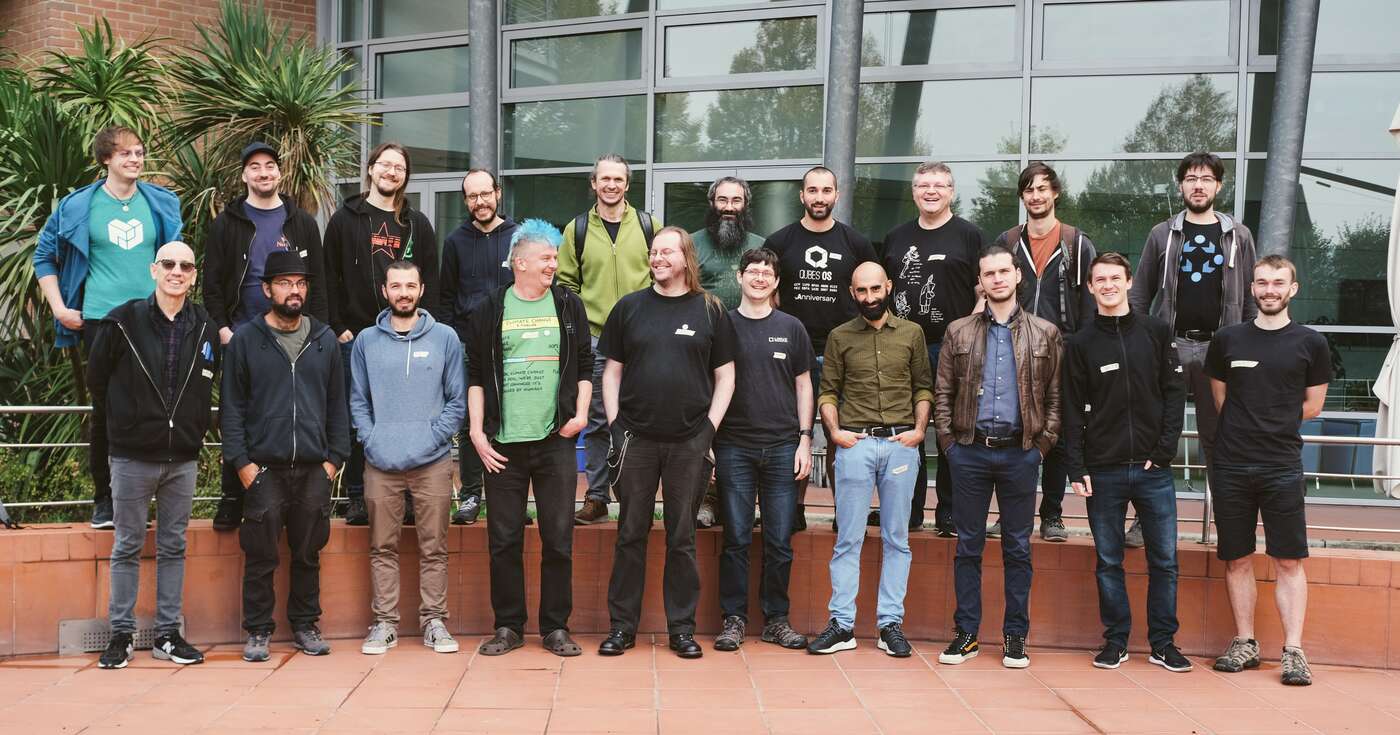
Our in-person summit this year was held in the past few days in Venice, Italy. Activity and news from the summit will therefore be covered in next month s report!
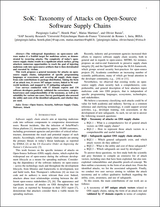
A new article related to reproducible builds was recently published in the 2023 IEEE Symposium on Security and Privacy. Titled Taxonomy of Attacks on Open-Source Software Supply Chains and authored by Piergiorgio Ladisa, Henrik Plate, Matias Martinez and Olivier Barais, their paper:
[ ] proposes a general taxonomy for attacks on opensource supply chains, independent of specific programming languages or ecosystems, and covering all supply chain stages from code contributions to package distribution.
Taking the form of an attack tree, the paper covers 107 unique vectors linked to 94 real world supply-chain incidents which is then mapped to 33 mitigating safeguards including, of course, reproducible builds:
Reproducible Builds received a very high utility rating (5) from 10 participants (58.8%), but also a high-cost rating (4 or 5) from 12 (70.6%). One expert commented that a reproducible build like used by Solarwinds now, is a good measure against tampering with a single build system and another claimed this is going to be the single, biggest barrier .

It was noticed this month that Solarwinds published a whitepaper back in December 2021 in order to:
[ ] illustrate a concerning new reality for the software industry and illuminates the increasingly sophisticated threats made by outside nation-states to the supply chains and infrastructure on which we all rely.
The 12-month anniversary of the 2020 Solarwinds attack (which SolarWinds Worldwide LLC itself calls the SUNBURST attack) was, of course, the likely impetus for publication.
Whilst collaborating on making the Cyrus IMAP server reproducible, Ellie Timoney asked why the Reproducible Builds testing framework uses two remarkably distinctive build paths when attempting to flush out builds that vary on the absolute system path in which they were built. In the case of the Cyrus IMAP server, these happened to be: Asked why they vary in three different ways, Chris Lamb listed in detail the motivation behind to each difference.
On our mailing list this month:
The Reproducible Builds project is delighted to welcome openEuler to the Involved projects page [ ]. openEuler is Linux distribution developed by Huawei, a counterpart to it s more commercially-oriented EulerOS.

Debian Colin Watson wrote about his experience towards making the databases generated by the man-db UNIX manual page indexing tool:
One of the people working on [reproducible builds] noticed that man-db s database files were an obstacle to [reproducibility]: in particular, the exact contents of the database seemed to depend on the order in which files were scanned when building it. The reporter proposed solving this by processing files in sorted order, but I wasn t keen on that approach: firstly because it would mean we could no longer process files in an order that makes it more efficient to read them all from disk (still valuable on rotational disks), but mostly because the differences seemed to point to other bugs.
Colin goes on to describe his approach to solving the problem, including fixing various fits of internal caching, and he ends his post with None of this is particularly glamorous work, but it paid off .
Vagrant Cascadian announced on our mailing list another online sprint to help clear the huge backlog of reproducible builds patches submitted by performing NMUs (Non-Maintainer Uploads). The first such sprint took place on September 22nd, but another was held on October 6th, and another small one on October 20th. This resulted in the following progress:
41 reviews of Debian packages were added, 62 were updated and 12 were removed this month adding to our knowledge about identified issues. A number of issue types were updated too. [1][ ]
Lastly, Luca Boccassi submitted a patch to debhelper, a set of tools used in the packaging of the majority of Debian packages. The patch addressed an issue in the dh_installsysusers utility so that the postinst post-installation script that debhelper generates the same data regardless of the underlying filesystem ordering.

Other distributions F-Droid is a community-run app store that provides free software applications for Android phones. This month, F-Droid changed their documentation and guidance to now explicitly encourage RB for new apps [ ][ ], and FC Stegerman created an extremely in-depth issue on GitLab concerning the APK signing block. You can read more about F-Droid s approach to reproducibility in our July 2022 interview with Hans-Christoph Steiner of the F-Droid Project. In openSUSE, Bernhard M. Wiedemann published his usual openSUSE monthly report.

Upstream patches The Reproducible Builds project detects, dissects and attempts to fix as many currently-unreproducible packages as possible. We endeavour to send all of our patches upstream where appropriate. This month, we wrote a large number of such patches, including:

diffoscope diffoscope is our in-depth and content-aware diff utility. Not only can it locate and diagnose reproducibility issues, it can provide human-readable diffs from many kinds of binary formats. This month, Chris Lamb prepared and uploaded versions 224 and 225 to Debian:
  • Add support for comparing the text content of HTML files using html2text. [ ]
  • Add support for detecting ordering-only differences in XML files. [ ]
  • Fix an issue with detecting ordering differences. [ ]
  • Use the capitalised version of Ordering consistently everywhere in output. [ ]
  • Add support for displaying font metadata using ttx(1) from the fonttools suite. [ ]
  • Testsuite improvements:
    • Temporarily allow the stable-po pipeline to fail in the CI. [ ]
    • Rename the order1.diff test fixture to json_expected_ordering_diff. [ ]
    • Tidy the JSON tests. [ ]
    • Use assert_diff over get_data and an manual assert within the XML tests. [ ]
    • Drop the ALLOWED_TEST_FILES test; it was mostly just annoying. [ ]
    • Tidy the tests/test_source.py file. [ ]
Chris Lamb also added a link to diffoscope s OpenBSD packaging on the diffoscope.org homepage [ ] and Mattia Rizzolo fix an test failure that was occurring under with LLVM 15 [ ].

Testing framework The Reproducible Builds project operates a comprehensive testing framework at tests.reproducible-builds.org in order to check packages and other artifacts for reproducibility. In October, the following changes were made by Holger Levsen:

  • Run the logparse tool to analyse results on the Debian Edu build logs. [ ]
  • Install btop(1) on all nodes running Debian. [ ]
  • Switch Arch Linux from using SHA1 to SHA256. [ ]
  • When checking Debian debstrap jobs, correctly log the tool usage. [ ]
  • Cleanup more task-related temporary directory names when testing Debian packages. [ ][ ]
  • Use the cdebootstrap-static binary for the 2nd runs of the cdebootstrap tests. [ ]
  • Drop a workaround when testing OpenWrt and coreboot as the issue in diffoscope has now been fixed. [ ]
  • Turn on an rm(1) warning into an info -level message. [ ]
  • Special case the osuosl168 node for running Debian bookworm already. [ ][ ]
  • Use the new non-free-firmware suite on the o168 node. [ ]
In addition, Mattia Rizzolo made the following changes:
  • Ensure that 2nd build has a merged /usr. [ ]
  • Only reconfigure the usrmerge package on Debian bookworm and above. [ ]
  • Fix bc(1) syntax in the computation of the percentage of unreproducible packages in the dashboard. [ ][ ][ ]
  • In the index_suite_ pages, order the package status to be the same order of the menu. [ ]
  • Pass the --distribution parameter to the pbuilder utility. [ ]
Finally, Roland Clobus continued his work on testing Live Debian images. In particular, he extended the maintenance script to warn when workspace directories cannot be deleted. [ ]
If you are interested in contributing to the Reproducible Builds project, please visit our Contribute page on our website. However, you can get in touch with us via:

9 November 2022

Debian Brasil: Brasileiros(as) Mantenedores(as) e Desenvolvedores(as) Debian a partir de julho de 2015

Desde de setembro de 2015, o time de publicidade do Projeto Debian passou a publicar a cada dois meses listas com os nomes dos(as) novos(as) Desenvolvedores(as) Debian (DD - do ingl s Debian Developer) e Mantenedores(as) Debian (DM - do ingl s Debian Maintainer). Estamos aproveitando estas listas para publicar abaixo os nomes dos(as) brasileiros(as) que se tornaram Desenvolvedores(as) e Mantenedores(as) Debian a partir de julho de 2015. Desenvolvedores(as) Debian / Debian Developers / DDs: Marcos Talau Fabio Augusto De Muzio Tobich Gabriel F. T. Gomes Thiago Andrade Marques M rcio de Souza Oliveira Paulo Henrique de Lima Santana Samuel Henrique S rgio Durigan J nior Daniel Lenharo de Souza Giovani Augusto Ferreira Adriano Rafael Gomes Breno Leit o Lucas Kanashiro Herbert Parentes Fortes Neto Mantenedores(as) Debian / Debian Maintainers / DMs: Guilherme de Paula Xavier Segundo David da Silva Polverari Paulo Roberto Alves de Oliveira Sergio Almeida Cipriano Junior Francisco Vilmar Cardoso Ruviaro William Grzybowski Tiago Ilieve
Observa es:
  1. Esta lista ser atualizada quando o time de publicidade do Debian publicar novas listas com DMs e DDs e tiver brasileiros.
  2. Para ver a lista completa de Mantenedores(as) e Desenvolvedores(as) Debian, inclusive outros(as) brasileiros(as) antes de julho de 2015 acesse: https://nm.debian.org/public/people

3 November 2022

Arturo Borrero Gonz lez: New OpenPGP key and new email

Post logo I m trying to replace my old OpenPGP key with a new one. The old key wasn t compromised or lost or anything bad. Is still valid, but I plan to get rid of it soon. It was created in 2013. The new key id fingerprint is: AA66280D4EF0BFCC6BFC2104DA5ECB231C8F04C4 I plan to use the new key for things like encrypted emails, uploads to the Debian archive, and more. Also, the new key includes an identity with a newer personal email address I plan to use soon: arturo.bg@arturo.bg The new key has been uploaded to some public keyservers. If you would like to sign the new key, please follow the steps in the Debian wiki.
-----BEGIN PGP PUBLIC KEY BLOCK-----
mQINBGNjvX4BEADE4w5x0SQmxWLAI1R17RCC98ngTkD/FMyos0GF5xmv0VJeLYhw
x6oJRmiNGHY8+gjq7SyVCWmlwbLKBEPFNI1k5WcrTB+ClgGkWB5KBnbLKm6CSP4N
ccSbrUQrZW+zxk3Q5h3CJljZpmflB2dvRfnDMSSaw8zOc37EtszW3AVVKNYAu3wj
mXpfwI72/OSELhSvhkr51L+ZlEYUMCITeO+jpiWsnU+sA8oKKPjW4+X8cjrN4eFa
1PAPILDf+Omst5SKM2aV5LGZ8rBzb5wNJF6yDexDw2XmfbFWLOfYzFRY6GTXJz/p
8Fh6O1wkHM9RnwmesCXTtkaGQsVFiVsoqGFyzrkIdWPUruB3RG5EzOkapWi/cnbD
1sy7yrUgy99Ew5yzmLaZ40hmRyq/gBBw4yRkdQaddbkErx+9hT+2tJELa5wrmWkb
FtaVZ38xC6gacOZqRjp0Xqtr0jobI0vED8vzIyY0zJwWM0Hu6qqq4hkLWZHjCy8a
T5Oe/Cb78Kqwa2mzJfncDahPxcgxpnbkYdvKokRtNBDftLVEz+Do8Dczw7Me4BoK
HmU8wLyeGeDTmeoBXpxKH90T+rQokgsiiD13bWZ+nBxILun1tjOTVVONG6SHdP3f
unolq8SU3K+m67lLa+pWjyYcNRS2OTWGOz/1zsH2R39ZOyfGD09/10aAKwARAQAB
tC1BcnR1cm8gQm9ycmVybyBHb256YWxleiA8YXJ0dXJvLmJnQGFydHVyby5iZz6J
AlQEEwEKAD4WIQSqZigNTvC/zGv8IQTaXssjHI8ExAUCY2O9fgIbAwUJA8JnAAUL
CQgHAwUVCgkICwUWAgMBAAIeAQIXgAAKCRDaXssjHI8ExCZdD/9Z3vR4sV7vBED4
+mCjdNWWf/mw5YlkZo+XQiMVVss4HfQLdt7VxXgGdcOz5Hond9ax3+qeCEo4DdXq
TC0ACpSCu/TPil6vzbE/kO6i6a4oZjFyteAbbcMXP35stbtDM0U5EZH0adIKknfF
msIPTIdJ/dpkcshtBJIoPqjuuTEBa7bF3OYCajHVqwP4Wsgjy4TvDOwl3hy7bhrQ
ZZHqbh7kW40+alQYaJ8jDvbDh/jhN1/pEiZS9ETu0JfBAF3PYPRLW6XedvwZiPWd
jTXwJd0E+vN5LE1Go8OaYvZb9iitZ21UaYOUnFuhw7SEOSQGfEUBs39+41gBj6vW
05HKCEA6kda9NpfptMbUoSSU+hwRfNA5TdnlxtcRv4NqUigzqa1LoXLdxTsyus+K
BL7dRpKXc72JCrEA3vClisD2FgsxLLRCCSDVM8UM/it/YW7tv42XuhQkTW+okQX4
c5laMzTL+ZV8UOoshseTDOsQsdXhskdnWbnuSwAez2/Dd1gHczuN/+lPiiEnyaTF
XgH17K/F25+92MmwPQcFRVPQcYcbyx1VylA6aCgK6gOEqHCejlZv5XLouzbQh1j1
k6MjUR1ncz8vPV5xSuOMAISqozJ9GxUZT2O3o9Vc9pNg5UEzqTvyURgLOdie8yM4
T93S3nKuHVZ++ZVxEOlPnfEfbFP+xbQrQXJ0dXJvIEJvcnJlcm8gR29uemFsZXog
PGFydHVyb0BkZWJpYW4ub3JnPokCVAQTAQoAPhYhBKpmKA1O8L/Ma/whBNpeyyMc
jwTEBQJjY73LAhsDBQkDwmcABQsJCAcDBRUKCQgLBRYCAwEAAh4BAheAAAoJENpe
yyMcjwTEMKQQAIe18Np+jdhwxHEFZNppBQ69BtyrnPQg4K5VngZ0NUZdVi+/FU7q
Tc9Z1qNydnXgmav3dafL2/l5zDX9wz7mQD2F0a6luOxZwl1PE6iP5f3cUD7uC9zb
148i1bZGEJbO4iNZKTlJKlbNR9m1PG47pv964CHZnNGp6lsnEspxe2G8DJD48Pje
gbhYukgOtIhQ1CaB1fc8aVwZvXZVSbNBLAqp7pAGhTFJqzHE8/U0sn1/V/wPzFAd
TZtWzKfYAkIIFJI5Rr6LVApIwIe7nWymTdgH4crCd2GZkGR+d6ihPKVSxUAUfoAx
EJQUSJY8rYi39gSDhPuEoK8BYXS1nWFGJiNV1o8xaljQo8rNT9myCaeZuQBLX41/
LRzK4XrxYPvjZpKNucc7fSK+UFriQGzdcAaWtW45Kp/8GmAoLVyCD0DPZNWNJdxp
IORhB33aWakhvDKgaLQa16MJ8fSc3ytn/1lxWzDXA1j05i81y/AOKPtCwBKzQWPF
biuZs3kJgZagLq6L6VOQDHlKqf+jqfl1fWeo04iDg98e0TYKABUfiTz8/MdQcV/X
8VkCgtuZ8BcPPyYzBjvuXWZTvdu0n2pikqAPL4u2cbWfD8JIP2AVCJp9HMGKvENo
XcJgY4h6T3rrC/9EidxECfXlsDbUJxLq0WfJLik84+LRtde3kZiReaIRtC5BcnR1
cm8gQm9ycmVybyBHb256YWxleiA8YXJ0dXJvQG5ldGZpbHRlci5vcmc+iQJUBBMB
CgA+FiEEqmYoDU7wv8xr/CEE2l7LIxyPBMQFAmNjvd8CGwMFCQPCZwAFCwkIBwMF
FQoJCAsFFgIDAQACHgECF4AACgkQ2l7LIxyPBMSP/g/+MHmxCAi/X+NMHodg9Qou
wEG4Vf1uluAE6c+c1QECCdtSsRjBs1dZoJzGsA23t4LWqluyaptuLDWJQEz+EVKR
mG0bvvropNaoOEShnY069pg7lUHuO/GLeDRhfEH3KT45sIVbLly8QkoGaINSCDLe
RBNaHC6feIC8NfQzQEt72nbi4SgdSQUg0F3lj4WxxECVhXsw/YCqh1d3QYqwRVEE
lCGQ4EbavjtRhO8U7dcL1VwHemKHNq3XvM3PJf1OoPgxWqFW5rHbAdlXdN3WAI6u
DAy7kY+qihz3w6rIDTFq6I3YBTrZ44J+5mN21ZC2iDXAsa/C3Uam0vFsjs/pizuq
WgGI9Vmsyap+bOOjuRSX4hemZoOT4a2GC723fS1dFresYWo3MmwfA3sjgV5tK3ZN
XIpxYIvi6HAHLOAarDaE8Sha1GHvrmPwfZ+cEgTL0mqW3efSF3AFmGHduMB+agzK
rM9sksrRQhbY2fHnBLo1t06SQx3rmhlz5mD1ljQEIzna9D6QKleRu4hgImRLHnCB
CN3o+mZa1MHhaIFzViaD2i3Fv2+bYgT7vnS4QAneLW8O/ZgpAc2MUxMoci5JNyfJ
mWdae7Kbs4Z8rrt/mH2gYyioSB0po4VtVwKWEUW9cLtZusA6mFnMviFpfjakb9TX
MimBAv9hAYpxd+HdfHinmqS0MEFydHVybyBCb3JyZXJvIEdvbnphbGV6IDxhYm9y
cmVyb0B3aWtpbWVkaWEub3JnPokCVAQTAQoAPhYhBKpmKA1O8L/Ma/whBNpeyyMc
jwTEBQJjY735AhsDBQkDwmcABQsJCAcDBRUKCQgLBRYCAwEAAh4BAheAAAoJENpe
yyMcjwTEGooP/20PR5N34m7CNtyaO96H5W0ULuAuSNuoXaKWDo5LGU6zzDriXbIu
ryYtR66vWF5suf7fHZYX8Ufq4PEsG1UNYEGA9hnjPg3oVwGzBJI7f6Rl2P5Pc8wJ
Eq2kN/xKmfUKIrvgh1f5xgFqC4hzcLDkVlLsPowZWfep8dLY4mtVrsrCD1URhelw
zRDGZ3rTVHWXmfXbSHWR2bgZIIrCtVF8BHStg5b6HuAWpj4Oa0eMfBde0N2RZkLE
ye/r2y/lraHfpT7MXnRMcEmltrv8fic7yvj/Nh4ESWr7UmfbV+GiSw9dc/AlVMXM
ihaW0eXv4F5uMtLJOiqI7bv3UfWSvoqwf2a8EPnzOeBBHhQOOJN7O4UzKBK5GAO8
C3k0I1AV3cTmrXrqT/5yoYAHSekDFCIPES//6Y/pO0ITtCbXkA5e8vaulJbtyXpE
g0Z7I7M1kikL6reZ2PuzsR0psEb/x81bWXODIegyOJolPXMRAY7n9J0xpCnSW9yr
CN4j6YT3Oame04JslwX5Xg1cyheuiusotETYNSKRaGaYBCxYffOWoTLNIBa+RCGc
SVOzJq5pd8fVRM1h2ZZFnfpPJBUb62qPsbk6VwmesGoGevB70zcNQYEI+c35kRfM
IOuJWRIN3Wxx0rpxb5E3i/3TASHM86Dix1VW9vsC/atGU/cgaoTOiNVztDdBcnR1
cm8gQm9ycmVybyBHb256YWxleiA8YXJ0dXJvLmJvcnJlcm8uZ2xlekBnbWFpbC5j
b20+iQJUBBMBCgA+FiEEqmYoDU7wv8xr/CEE2l7LIxyPBMQFAmNjvg8CGwMFCQPC
ZwAFCwkIBwMFFQoJCAsFFgIDAQACHgECF4AACgkQ2l7LIxyPBMS7NA/9F7OL/j7a
xnTDjxAHEiyrCzrBQc/DEAM/yim8E+0UBeTJSZR/bShtbvLbSukeL43tKksPhN/X
skjRF8sJ8KWUnpmSWjv1DQTh7AtkJqACnq7+VtQZq3yuKUCNRNpM8lSFxtmYDUqE
XXD4eMXKoJfdphQ+qpViba+RGXg6sd69Dq739zT/OFMuKZ33z8h7hVNXmoWGcBz6
txvN3cWVJhTLdiBvtn38/0dX7IupQLypLOtP0oZdjoUjkRxTo5biOxt3hUGnxS4x
97PPeRGc4j7lv5ADwFV8bo+g54ZMGRjOcyZmA7dlWFN51JrTx3udW2jgXkYqm7UM
xP4lNwDs9TmT3jan6wR08uwlDakOXfDm3gCQEviN+350sJs2tY+JKBN4QR7NpqeU
2aDFOo0G/0ggf0QbFsMkaTSozerVHRGXMdAi+pbYA6pPWPu8lHIkvvdoj4xUu+Ko
cHX0DCRxmL9mylTbZEanrp5gSpne79McrkbQX2/Yc8lWykCtL5/jHVTD4iNiO5Rf
IJYPAVmC2nlj2URfzwGjjoL5apTStZfng4H2Ccq+3cmhwOXI7pb+PsGeI5PND00A
qHFxe590HFhPxLHoftMIlspstoCvHYGcWQxHNbXW6ccmhHdNYT8Pn4ecKgfr6pCt
0ysilOD2ppPJ88hffKA4nTdtX2Tz2ZwOYwG5Ag0EY2O9fgEQALrapVuv1IcLDit8
9gejdA/Dtlufb2/baImVaQD+dTx2QdMxxEiNKl00a5OhMzXDj9tFrB1Lv4z0t8cY
iDJ+NuydDGgz3MlJgWW0GlpAz8yiul2iqTnkWl3cWeiI+VaX8wzL+acmmkPvlrN8
hM7I55BPr8uBWVIQ7VDmI+ts8gi73xE+Etzzrh13GSSnnYnezfGUQrNfYFcip7D0
hB3bpUIGiPdQ45vSZqXUQx/B6FlabiIGRau8Rt4vaEBGXGFZ9rIR+rMJWx6GqYX4
uY1KM2JZ3SKHk++MWGYdzHdM2oaP6xckZq+u/WiwutkYLLO2hnr03lcAu1IDT1C1
YNPrbTKfqUt+3r0oUK5BrG1Cjdc1mZqcXzYcexOLp79FJLb0t5wPdfgU8dT10kjE
uQxeSYiS4oSpikVQkKoFk++/U95d/z/y/81A6v+cfRus6mW+wRSFSwks7Q5ct7zW
UyKELLC4i4EDgnJXmavVcBD0TWzhH/rZpz9FsO4Mb18IYwbV1/144019/RjiPk5Z
MMNdsjorjV2MtrCIoeAGRgZhbFP2P7CcZOp6ZWzjj40ENlElbLp3VCfkYcTiPHJv
2iaiDz2Mhfmhb1Q/5d/a9tYTYINPmv2QVo+m5Zf+1/U29d2HZMRhD4aqDsivvgtd
GpAnKeus6ePSMqpwjO6v2bmQhjpbABEBAAGJAjwEGAEKACYWIQSqZigNTvC/zGv8
IQTaXssjHI8ExAUCY2O9fgIbDAUJA8JnAAAKCRDaXssjHI8ExA5AD/9VWS1/jHM9
aE3HKCDL4CpiXQPc4ds+3/ft6LXwuCMA/tkt8I4svKZGCCi/X5NfiQetVD+cSzVO
nmloctMt/24yjnGNNSFsDozkn/RqzZIhLJBI69gX4JWR4wpeh4kXMItNM5ZlYw3H
DmuLrf/ey8E2NzbFdzj1VQNoENuwtL2pIJrvK92AcS7acvP0FpiS8riLc5a933SW
oPgelQ1j/04WAH8cyKXB/pruq3OhtK0/b8ylIeI0f7a57dxQj5wysyBVKl+EJd/n
UhypVqMDRWL7N0FttGb9gZ6OVvQnt7iwbtS3tYqAK479+GZwi/Wh/RB2dCDyz8jk
zE0j6y7huP4XzpbBbPVntLDdVAYmpW6iIaTWYxlu79FEUw4JmZdY7hJoEDpHuDIz
ylo0YQgjnRfRfWSdnGCosFrY5UgThPVTaQAILCPtdVyWY4/6s1UaeNs3H0PRA5mz
UT4vDKxGq9gXHnE+qg3dfwMcLR3cDPPWUFVeTfNitZ3Y9eV7SdbQXt5NeOXzFadz
DBc9ZzNx3rBEyUUooU0MEmbltyUFM7R/hVcdpFxs12SgHrvgh13tuxVVVNBXTwwo
pSxmap42vHJERQ8ZJQ4lrvnxNZcuwLHSZK7xVzb0b/1wMooNnhw18vlStMWQJwKl
DiXs/L/ifab2amg9jshULAPgVSw7QeP2OQ==
=UABf
-----END PGP PUBLIC KEY BLOCK-----
If you are curious about what that long code block contains, check this https://cirw.in/gpg-decoder/ For the record, the old key fingerprint is: DD9861AB23DC3333892E07A968E713981D1515F8 Cheers!

1 November 2022

Jonathan Dowland: Halloween playlist 2022

I hope you had a nice Halloween! I've collected together some songs that I've enjoyed over the last couple of years that loosely fit a theme: ambient, instrumental, experimental, industrial, dark, disconcerting, etc. I've prepared a Spotify playlist of most of them, but not all. The list is inline below as well, with many (but not all) tracks linking to Bandcamp, if I could find them there. This is a bit late, sorry. If anyone listens to something here and has any feedback I'd love to hear it. (If you are reading this on an aggregation site, it's possible the embeds won't work. If so, click through to my main site) Spotify playlist: https://open.spotify.com/playlist/3bEvEguRnf9U1RFrNbv5fk?si=9084cbf78c364ac8; The list, with Bandcamp embeds where possible: Some sources
  1. Via Stuart Maconie's Freak Zone
  2. Via Mary Anne Hobbs
  3. Via Lose yourself with
  4. Soma FM - Doomed (Halloween Special)

Russ Allbery: Review: What Makes This Book So Great

Review: What Makes This Book So Great, by Jo Walton
Publisher: Tor
Copyright: January 2014
ISBN: 0-7653-3193-4
Format: Hardcover
Pages: 447
Jo Walton, in addition to being an excellent science fiction and fantasy writer, is a prodigious reader and frequent participant in on-line SFF book discussion going back to the Usenet days. This book is a collection of short essays previously published on Tor.com between July 2008 and February 2011. The unifying theme is that Walton regularly re-reads her favorite books, and each essay (apart from some general essays on related topics) is about why this specific book is one that she re-reads, and (as the title says) what makes it so great. Searching for the title of one of the essays turns it up on Tor.com still, so this is one of those collections that you don't have to buy since you can read its contents on-line for free. That said, it looks like these essays were from before Tor.com started classifying posts into series, so it's going to be challenging to track them down in the huge number of other articles Walton has written for the site. (That said, you can't go far wrong by reading any of her essays at random.) I read these essays as they were originally published, so this was also a re-read for me, but it had been a while. I'm happy to report that they were just as much fun the second time. In the introduction and in the final essay of this collection, Walton draws a distinction between what she's doing, criticism, and reviewing. As someone else who writes about books (in a far more amateur fashion), I liked this distinction. The way I'd characterize it is that criticism is primarily about the work: taking it apart to see what makes it tick, looking for symbolism and hidden meanings, and comparing and contrasting other works that are tackling similar themes. I've often finished a work of criticism and still had no idea if the author enjoyed reading the work being criticized or not, since that isn't the point. Reviewing is assistance to consumers and focuses more on the reader: would you enjoy this book? Is it enjoyable to read? Does it say something new? What genre and style is it in, so that you can match that to your tastes? Talking about books is neither of those things, although it's a bit closer to reviewing. But the emphasis is on one's personal enjoyment instead of attempting to review a product for others. When I talk about books with friends, I talk primarily about what bits I liked, what bits I didn't like, where the emotional beats were for me, and what interesting things the book did that surprised me or caught my attention. One can find a review in there, and sometimes even criticism, but the focus and the formality is different. (And, to be honest, my reviews are more on the "talking about the book" side than fully proper reviews.) These essays are indeed talking about books. They're all re-reads; in some cases the first re-read, but more frequently the latest of many re-reads. There are lots of spoilers, which makes for bad reviews (the target audience of a review hasn't read the book yet) but good fodder for conversations about books. (The spoilers are mostly marked, but if you're particularly averse to spoilers, you'll need to read carefully.) Most of the essays are about a single book, but there are a few on more general topics, such as Walton's bafflement that anyone would skim a novel. Since these are re-reads, and the essays collected here are more than a decade old, the focus is on older books. Some of them are famous: Vinge's A Fire Upon the Deep and A Deepness in the Sky, early Le Guin, Samuel Delaney's SF novels, Salmon Rushdie's Midnight's Children. Some of them are more obscure. C.J. Cherryh, for example, is a writer who never seems to get much on-line attention, but who is one of Walton's favorites. Most of the essays stand alone or come in small clusters about a writer, often sprinkled through the book instead of clumped together. (The book publishes the essays in the same order they originally appeared on Tor.com.) The two largest groups of essays are re-readings of every book in Steven Brust's Vlad Taltos universe (including Brokedown Palace and the Paarfi books) up to Jhegaala, and every book in Lois McMaster Bujold's Miles Vorkosigan series up to Diplomatic Immunity. This is fitting: those are two of the great series of science fiction, but don't seem to be written about nearly as much as I would expect. There are over 130 essays in a 447 page book, so there's a lot of material here and none of them outlive their welcome. Walton has a comfortable, approachable style that bubbles with delight and appreciation for books. I think it's impossible to read this collection without wanting to read more, and without adding several more books to the ever-teetering to-read pile. This is perhaps not the best source of reading recommendations if you dislike spoilers, although it can be used for that if you read carefully. But if you love listening to conversations about the genre and talking about how books bounce off each other, and particularly if you have read most of these books already or don't mind spoilers, this collection is a delight. If you're the type of SFF reader who likes reading the reviews in Locus or is already reading Tor.com, highly recommended. Rating: 8 out of 10

30 October 2022

Utkarsh Gupta: FOSS Activites in October 2022

Here s my (thirty-seventh) monthly but brief update about the activities I ve done in the F/L/OSS world.

Debian
This was my 46th month of actively contributing to Debian. I became a DM in late March 2019 and a DD on Christmas 19! \o/ There s a bunch of things I do, both, technical and non-technical. Here are the things I did this month:

Debian Uploads
  • ruby-espeak (1.1.0-1) - New upstream version, v1.1.0.

Other $things:
  • Being an AM for Arun Kumar, process #1024. Process completed. \o/
  • Sponsoring stuff for non-DDs.
  • Mentoring for newcomers.
  • Moderation of -project mailing list.

Ubuntu
This was my 21st month of actively contributing to Ubuntu. Now that I joined Canonical to work on Ubuntu full-time, there s a bunch of things I do! \o/ I mostly worked on different things, I guess. I was too lazy to maintain a list of things I worked on so there s no concrete list atm. Maybe I ll get back to this section later or will start to list stuff from the fall, as I was doing before. :D

Debian (E)LTS
Debian Long Term Support (LTS) is a project to extend the lifetime of all Debian stable releases to (at least) 5 years. Debian LTS is not handled by the Debian security team, but by a separate group of volunteers and companies interested in making it a success. And Debian Extended LTS (ELTS) is its sister project, extending support to the Jessie release (+2 years after LTS support). This was my thirty-seventh month as a Debian LTS and twenty-eighth month as a Debian ELTS paid contributor.
I worked for 35.00 hours for LTS and 25.00 hours for ELTS.

LTS CVE Fixes and Announcements:
  • Issued DLA 3146-1, fixing CVE-2022-2928 and CVE-2022-2929, for isc-dhcp.
    For Debian 10 buster, these problems have been fixed in version 4.4.1-2+deb10u2.
  • Issued DLA 3165-1, fixing CVE-2022-43680, for expat.
    For Debian 10 buster, these problems have been fixed in version 2.2.6-2+deb10u6.
  • Issued DLA 3166-1, fixing CVE-2022-29970, for ruby-sinatra.
    For Debian 10 buster, these problems have been fixed in version 2.0.5-4+deb10u1.
  • Uploaded dropbear to fix CVE-2021-36369 in buster. Waiting for ELTS upload to issue the DLA. But will do soon now.
  • src:joblib is a bit painful - having to backport patches to Py2. :/
  • Started to look at other set of packages.

ELTS CVE Fixes and Announcements:
  • Issued ELA 715-1, fixing CVE-2022-43680, for expat.
    For Debian 9 stretch, these problems have been fixed in version 2.2.0-2+deb9u7.
    For Debian 8 jessie, these problems have been fixed in version 2.1.0-6+deb8u10.
  • Issued ELA 716-1, fixing CVE-2018-25045 and CVE-2020-25626, for djangorestframework.
    For Debian 9 stretch, these problems have been fixed in version 3.4.0-2+deb9u1.
  • Uploaded dropbear to fix CVE-2021-36369 in buster. Waiting for ELTS upload, too. But some backporting problems. :/
  • src:joblib is a bit painful - having to backport patches to Py2. :/
  • Started to look at other set of packages.

Other (E)LTS Work:
  • Triaged joblib, dropbear, ruby-sinatra, djangorestframework, isc-dhcp, and expat.
  • Reverted Mark freerdp CVEs wrongly affecting freerdp <2.0.0 in the ELTS tracker.
  • Helped and assisted new contributors joining Freexian (LTS/ELTS).
  • Answered questions (& discussions) on IRC (#debian-lts and #debian-elts) and Matrix.
  • Participated and helped fellow members with their queries via private mail and chat.
  • General and other discussions on LTS private and public mailing list.
  • Attended the monthly meeting held on Jitsi on October 27th.

Until next time.
:wq for today.

25 October 2022

Arturo Borrero Gonz lez: Netfilter Workshop 2022 summary

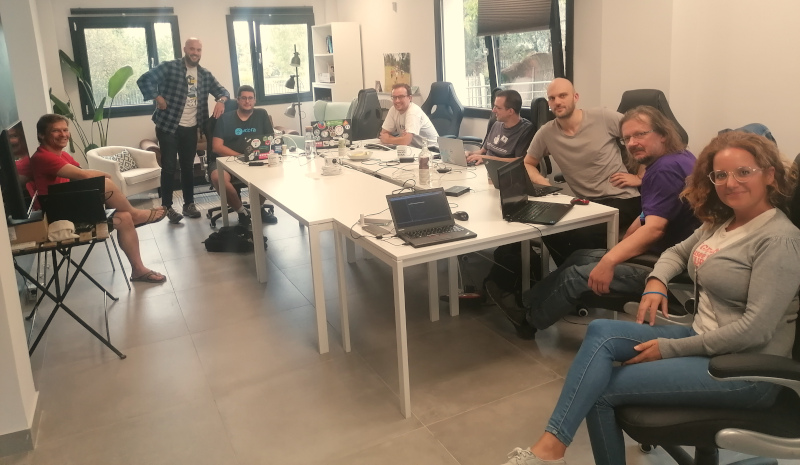
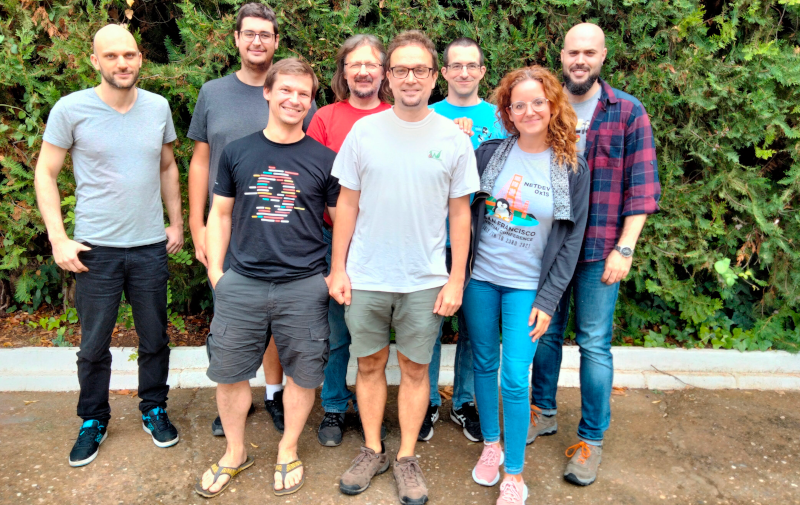
Netfilter logo This is my report from the Netfilter Workshop 2022. The event was held on 2022-10-20/2022-10-21 in Seville, and the venue was the offices of Zevenet. We started on Thursday with Pablo Neira (head of the project) giving a short welcome / opening speech. The previous iteration of this event was in virtual fashion in 2020, two years ago. In the year 2021 we were unable to meet either in person or online. This year, the number of participants was just eight people, and this allowed the setup to be a bit more informal. We had kind of an un-conference style meeting, in which whoever had something prepared just went ahead and opened a topic for debate. In the opening speech, Pablo did a quick recap on the legal problems the Netfilter project had a few years ago, a topic that was settled for good some months ago, in January 2022. There were no news in this front, which was definitely a good thing. Moving into the technical topics, the workshop proper, Pablo started to comment on the recent developments to instrument a way to perform inner matching for tunnel protocols. The current implementation supports VXLAN, IPIP, GRE and GENEVE. Using nftables you can match packet headers that are encapsulated inside these protocols. He mentioned the design and the goals, that was to have a kernel space setup that allows adding more protocols by just patching userspace. In that sense, more tunnel protocols will be supported soon, such as IP6IP, UDP, and ESP. Pablo requested our opinion on whether if nftables should generate the matching dependencies. For example, if a given tunnel is UDP-based, a dependency match should be there otherwise the rule won t work as expected. The agreement was to assist the user in the setup when possible and if not, print clear error messages. By the way, this inner thing is pure stateless packet filtering. Doing inner-conntracking is an open topic that will be worked on in the future. Pablo continued with the next topic: nftables automatic ruleset optimizations. The times of linear ruleset evaluation are over, but some people have a hard time understanding / creating rulesets that leverage maps, sets, and concatenations. This is where the ruleset optimizations kick in: it can transform a given ruleset to be more optimal by using such advanced data structures. This is purely about optimizing the ruleset, not about validating the usefulness of it, which could be another interesting project. There were a couple of problems mentioned, however. The ruleset optimizer can be slow, O(n!) in worst case. And the user needs to use nested syntax. More improvements to come in the future. Next was Stefano Brivio s turn (Red Hat engineer). He had been involved lately in a couple of migrations to nftables, in particular libvirt and KubeVirt. We were pointed to https://libvirt.org/firewall.html, and Stefano walked us through the 3 or 4 different virtual networks that libvirt can create. He evaluated some options to generate efficient rulesets in nftables to instrument such networks, and commented on a couple of ideas: having a null matcher in nftables set expression. Or perhaps having kind of subsets, something similar to a view in a SQL database. The room spent quite a bit of time debating how the nft_lookup API could be extended to support such new search operations. We also discussed if having intermediate facilities such as firewalld could provide the abstraction levels that could make developers more comfortable. Using firewalld also may have the advantage that coordination between different system components writing ruleset to nftables is handled by firewalld itself and developers are freed of the responsibility of doing it right. Next was Fernando F. Mancera (Red Hat engineer). He wanted to improve error reporting when deleting table/chain/rules with nftables. In general, there are some inconsistencies on how tables can be deleted (or flushed). And there seems to be no correct way to make a single table go away with all its content in a single command. The room agreed in that the commands destroy table and delete table should be defined consistently, with the following meanings: This topic diverted into another: how to reload/replace a ruleset but keep stateful information (such as counters). Next was Phil Sutter (Netfilter coreteam member and Red Hat engineer). He was interested in discussing options to make iptables-nft backward compatible. The use case he brought was simple: What happens if a container running iptables 1.8.7 creates a ruleset with features not supported by 1.8.6. A later container running 1.8.6 may fail to operate. Phil s first approach was to attach additional metadata into rules to assist older iptables-nft in decoding and printing the ruleset. But in general, there are no obvious or easy solutions to this problem. Some people are mixing different tooling version, and there is no way all cases can be predicted/covered. iptables-nft already refuses to work in some of the most basic failure scenarios. An other way to approach the issue could be to introduce some kind of support to print raw expressions in iptables-nft, like -m nft xyz. Which feels ugly, but may work. We also explored playing with the semantics of release version numbers. And another idea: store strings in the nft rule userdata area with the equivalent matching information for older iptables-nft. In fact, what Phil may have been looking for is not backwards but forward compatibility. Phil was undecided which path to follow, but perhaps the most common-sense approach is to fall back to a major release version bump (2.x.y) and declaring compatibility breakage with older iptables 1.x.y. That was pretty much it for the first day. We had dinner together and went to sleep for the next day. The room The second day was opened by Florian Westphal (Netfilter coreteam member and Red Hat engineer). Florian has been trying to improve nftables performance in kernels with RETPOLINE mitigations enabled. He commented that several workarounds have been collected over the years to avoid the performance penalty of such mitigations. The basic strategy is to avoid function indirect calls in the kernel. Florian also described how BPF programs work around this more effectively. And actually, Florian tried translating nf_hook_slow() to BPF. Some preliminary benchmarks results were showed, with about 2% performance improvement in MB/s and PPS. The flowtable infrastructure is specially benefited from this approach. The software flowtable infrastructure already offers a 5x performance improvement with regards the classic forwarding path, and the change being researched by Florian would be an addition on top of that. We then moved into discussing the meeting Florian had with Alexei in Zurich. My personal opinion was that Netfilter offers interesting user-facing interfaces and semantics that BPF does not. Whereas BPF may be more performant in certain scenarios. The idea of both things going hand in hand may feel natural for some people. Others also shared my view, but no particular agreement was reached in this topic. Florian will probably continue exploring options on that front. The next topic was opened by Fernando. He wanted to discuss Netfilter involvement in Google Summer of Code and Outreachy. Pablo had some personal stuff going on last year that prevented him from engaging in such projects. After all, GSoC is not fundamental or a priority for Netfilter. Also, Pablo mentioned the lack of support from others in the project for mentoring activities. There was no particular decision made here. Netfilter may be present again in such initiatives in the future, perhaps under the umbrella of other organizations. Again, Fernando proposed the next topic: nftables JSON support. Fernando shared his plan of going over all features and introduce programmatic tests from them. He also mentioned that the nftables wiki was incomplete and couldn t be used as a reference for missing tests. Phil suggested running the nftables python test-suite in JSON mode, which should complain about missing features. The py test suite should cover pretty much all statements and variations on how the nftables expression are invoked. Next, Phil commented on nftables xtables support. This is, supporting legacy xtables extensions in nftables. The most prominent problem was that some translations had some corner cases that resulted in a listed ruleset that couldn t be fed back into the kernel. Also, iptables-to-nftables translations can be sloppy, and the resulting rule won t work in some cases. In general, nft list ruleset nft -f may fail in rulesets created by iptables-nft and there is no trivial way to solve it. Phil also commented on potential iptables-tests.py speed-ups. Running the test suite may take very long time depending on the hardware. Phil will try to re-architect it, so it runs faster. Some alternatives had been explored, including collecting all rules into a single iptables-restore run, instead of hundreds of individual iptables calls. Next topic was about documentation on the nftables wiki. Phil is interested in having all nftables code-flows documented, and presented some improvements in that front. We are trying to organize all developer-oriented docs on a mediawiki portal, but the extension was not active yet. Since I worked at the Wikimedia Foundation, all the room stared at me, so at the end I kind of committed to exploring and enabling the mediawiki portal extension. Note to self: is this perhaps https://www.mediawiki.org/wiki/Portals ? Next presentation was by Pablo. He had a list of assorted topics for quick review and comment. Following this, a new topic was introduced by Stefano. He wanted to talk about nft_set_pipapo, documentation, what to do next, etc. He did a nice explanation of how the pipapo algorithm works for element inserts, lookups, and deletion. The source code is pretty well documented, by the way. He showed performance measurements of different data types being stored in the structure. After some lengthly debate on how to introduce changes without breaking usage for users, he declared some action items: writing more docs, addressing problems with non-atomic set reloads and a potential rework of nft_rbtree. After that, the next topic was kubernetes & netfilter , also by Stefano. Actually, this topic was very similar to what we already discussed regarding libvirt. Developers want to reduce packet matching effort, but also often don t leverage nftables most performant features, like sets, maps or concatenations. Some Red Hat developers are already working on replacing everything with native nftables & firewalld integrations. But some rules generators are very bad. Kubernetes (kube-proxy) is a known case. Developers simply won t learn how to code better ruleset generators. There was a good question floating around: What are people missing on first encounter with nftables? The Netfilter project doesn t have a training or marketing department or something like that. We cannot force-educate developers on how to use nftables in the right way. Perhaps we need to create a set of dedicated guidelines, or best practices, in the wiki for app developers that rely on nftables. Jozsef Kadlecsik (Netfilter coreteam) supported this idea, and suggested going beyond: such documents should be written exclusively from the nftables point of view: stop approaching the docs as a comparison to the old iptables semantics. Related to that last topic, next was Laura Garc a (Zevenet engineer, and venue host). She shared the same information as she presented in the Kubernetes network SIG in August 2020. She walked us through nftlb and kube-nftlb, a proof-of-concept replacement for kube-proxy based on nftlb that can outperform it. For whatever reason, kube-nftlb wasn t adopted by the upstream kubernetes community. She also covered latest changes to nftlb and some missing features, such as integration with nftables egress. nftlb is being extended to be a full proxy service and a more robust overall solution for service abstractions. In a nutshell, nftlb uses a templated ruleset and only adds elements to sets, which is exactly the right usage of the nftables framework. Some other projects should follow its example. The performance numbers are impressive, and from the early days it was clear that it was outperforming classical LVS-DSR by 10x. I used this opportunity to bring a topic that I wanted to discuss. I ve seen some SRE coworkers talking about katran as a replacement for traditional LVS setups. This software is a XDP/BPF based solution for load balancing. I was puzzled about what this software had to offer versus, for example, nftlb or any other nftables-based solutions. I commented on the highlighs of katran, and we discussed the nftables equivalents. nftlb is a simple daemon which does everything using a JSON-enabled REST API. It is already packaged into Debian, ready to use, whereas katran feels more like a collection of steps that you need to run in a certain order to get it working. All the hashing, caching, HA without state sharing, and backend weight selection features of katran are already present in nftlb. To work on a pure L3/ToR datacenter network setting, katran uses IPIP encapsulation. They can t just mangle the MAC address as in traditional DSR because the backend server is on a different L3 domain. It turns out nftables has a nft_tunnel expression that can do this encapsulation for complete feature parity. It is only available in the kernel, but it can be made available easily on the userspace utility too. Also, we discussed some limitations of katran, for example, inability to handle IP fragmentation, IP options, and potentially others not documented anywhere. This seems to be common with XDP/BPF programs, because handling all possible network scenarios would over-complicate the BPF programs, and at that point you are probably better off by using the normal Linux network stack and nftables. In summary, we agreed that nftlb can pretty much offer the same as katran, in a more flexible way. Group photo Finally, after many interesting debates over two days, the workshop ended. We all agreed on the need for extending it to 3 days next time, since 2 days feel too intense and too short for all the topics worth discussing. That s all on my side! I really enjoyed this Netfilter workshop round.
17 October 2022

Jeremy Bicha: Ubuntu bug fix anniversary

I first installed Ubuntu when Ubuntu 6.06 LTS Dapper Drake was released. I was brand new to Linux. This was Ubuntu s first LTS release; the very first release of Ubuntu was only a year and a half before. I was impressed by how usable and useful the system was. It soon became my primary home operating system and I wanted to help make it better. On October 15, 2009, I was helping test the release candidates ISOs for the Ubuntu 9.10 release. Specifically, I tested Edubuntu. Edubuntu has since been discontinued but at the time it was an official Ubuntu flavor preloaded with lots of education apps. One of those education apps was Moodle, an e-learning platform. When testing Moodle, I found that a default installation would make Moodle impossible to use locally. I figured out how to fix this issue. This was really exciting: I finally found an Ubuntu bug I knew how to fix. I filed the bug report. This was very late in the Ubuntu 9.10 release process and Ubuntu was in the Final Freeze state. In Final Freeze, every upload to packages included in the default install need to be individually approved by a member of the Ubuntu Release Team. Also, I didn t have upload rights to Ubuntu. Jordan Mantha (LaserJock), an Edubuntu maintainer, sponsored my bug fix upload. I also forwarded my patch to Debian. While trying to figure out what wasn t working with Moodle, I stumbled across a packaging bug. Edubuntu provided a choice of MySQL or PostgreSQL for the system default database. MySQL was the default, but if PostgreSQL were chosen instead, Moodle wouldn t work. I figured out how to fix this bug too a week later. Jordan sponsored this upload and Steve Langasek from the Release Team approved it so it also was able to be fixed before 9.10 was released. Although the first bug was new to 9.10 because of a behavior change in a low-level dependency, this PostgreSQL bug existed in stable Ubuntu releases. Therefore, I prepared Stable Release Updates for Ubuntu 9.04 and Ubuntu 8.04 LTS. Afterwards Six months later, I was able to attend my first Ubuntu Developer Summit. I was living in Bahrain (in the Middle East) at the time and a trip to Belgium seemed easier to me than if I were living in the United States where I usually live. This was the Ubuntu Developer Summit where planning for Ubuntu 10.10 took place. I like to believe that I helped with the naming since I added Maverick to the wiki page where people contribute suggestions. I did not apply for financial sponsorship to attend and I stayed in a budget hotel on the other side of Brussels. The event venue was on the outskirts of Brussels so there wasn t a direct bus or metro line to get there. I rented a car. I didn t yet have a smartphone and I had a LOT of trouble navigating to and from the site every day. I learned then that it s best to stay close to the conference site since a lot of the event is actually in the unstructured time in the evenings. Fortunately, I managed to arrive in time for Mark Shuttleworth s keynote where the Unity desktop was first announced. This was released in Ubuntu 10.10 in the Ubuntu Netbook Remix and became the default for Ubuntu Desktop in Ubuntu 11.04. Ubuntu s switch to Unity provided me with a huge opportunity. In April 2011, GNOME 3.0 was released. I wanted to try it but it wasn t yet packaged in Ubuntu or Debian. It was suggested that I could help work on packaging the major new version in a PPA. The PPA was convenient because I was able to get permission to upload there easier than being able to upload directly to Ubuntu. My contributions there then enabled me to get upload rights to the Ubuntu Desktop packages later that year. At a later Ubuntu Developer Summit, it was suggested that I start an official Ubuntu flavor for GNOME. So along with Tim Lunn (darkxst), I co-founded Ubuntu GNOME. Years later, Canonical stopped actively developing Unity; instead, Ubuntu GNOME was merged into Ubuntu Desktop. Along the way, I became an Ubuntu Core Developer and a Debian Developer. And in January 2022, I joined Canonical on the Desktop Team. This all still feels amazing to me. It took me a long time to be comfortable calling myself a developer! Conclusion My first Ubuntu bugfix was 13 years ago this week. Because Ubuntu historically uses alphabetical adjective animal release names, 13 years means that we have rolled around to the letter K again! Later today, we begin release candidate ISO testing for Ubuntu 22.10 Kinetic Kudu . I encourage you to help us test the release candidates and report bugs that you find. If you figure out how to fix a bug, we still sponsor bug fixes. If you are an Ubuntu contributor, I highly encourage you to attend an Ubuntu Summit if you can. The first Ubuntu Summit in years will be in 3 weeks in Prague, but the intent is for the Ubuntu Summits to be recurring events again.

6 October 2022

Dirk Eddelbuettel: Rblpapi 0.3.14: Updates and Extensions

bloomberg terminal Version 0.3.14 of the Rblpapi package arrived on CRAN earlier today. Rblpapi provides a direct interface between R and the Bloomberg Terminal via the C++ API provided by Bloomberg (but note that a valid Bloomberg license and installation is required). This is the fourteenth release since the package first appeared on CRAN in 2016. It comprises a nice PR from Robert Harlow extending support to B-PIPE authentication (for those who have it) along with a few fixes made since the last release in January. The last one provided from a kind assist by Tomas Kalibera who pointed out how to overcome an absolute rpath dynamic linker instruction (and as I noticed noticed something I already did in another package ah well) so that we no longer require StagedInstall: yes. The detailed list of changes follow below.

Changes in Rblpapi version 0.3.14 (2022-10-05)
  • Build configuration was generalized to consider local copies of library and headers (Dirk in #362)
  • A ticker symbol was corrected (Dirk in #368 addressing an issue #366 and #367)
  • Support for B-PIPE was added (Robert Harlow in #369 closing #342)
  • The package no longer requires staged installation thanks to an assist from Tomas Kalibera (Dirk in #373)
  • The retired package fts is no longer suggested (Dirk in #374 closing #372)

Courtesy of my CRANberries, there is also a diffstat report for the this release. As always, more detailed information is on the Rblpapi page. Questions, comments etc should go to the issue tickets system at the GitHub repo. If you like this or other open-source work I do, you can now sponsor me at GitHub.

This post by Dirk Eddelbuettel originated on his Thinking inside the box blog. Please report excessive re-aggregation in third-party for-profit settings.

2 October 2022

Steve McIntyre: Firmware vote result - the people have spoken!

It's time for another update on Debian's firmware GR. I wrote about the problem back in April and about the vote itself a few days back. Voting closed last night and we have a result! This is unofficial so far - the official result will follow shortly when the Project Secretary sends a signed mail to confirm it. But that's normally just a formality at this point. A Result! The headline result is: Choice 5 / Proposal E won: Change SC for non-free firmware in installer, one installer. I'm happy with this - it's the option that I voted highest, after all. More importantly, however, it's a clear choice of direction, as I was hoping for. Of the 366 Debian Developers who voted, 289 of them voted this option above NOTA and 63 below, so it also meets the 3:1 super-majority requirement for amending a Debian Foundation Document (Constitution section 4.1.3). So, what happens next? We have quite a few things to do now, ideally before the freeze for Debian 12 (bookworm), due January 2023. This list of work items is almost definitely not complete, and Cyril and I are aiming to get together this week and do more detailed planning for the d-i pieces. Off the top of my head I can think of the following: If you think I've missed anything here, please let me and Cyril know - the best place would be the mailing list (debian-boot@lists.debian.org). If you'd like to help implement any of these changes, that would be lovely too!

29 September 2022

Antoine Beaupr : Detecting manual (and optimizing large) package installs in Puppet

Well this is a mouthful. I recently worked on a neat hack called puppet-package-check. It is designed to warn about manually installed packages, to make sure "everything is in Puppet". But it turns out it can (probably?) dramatically decrease the bootstrap time of Puppet bootstrap when it needs to install a large number of packages.

Detecting manual packages On a cleanly filed workstation, it looks like this:
root@emma:/home/anarcat/bin# ./puppet-package-check -v
listing puppet packages...
listing apt packages...
loading apt cache...
0 unmanaged packages found
A messy workstation will look like this:
root@curie:/home/anarcat/bin# ./puppet-package-check -v
listing puppet packages...
listing apt packages...
loading apt cache...
288 unmanaged packages found
apparmor-utils beignet-opencl-icd bridge-utils clustershell cups-pk-helper davfs2 dconf-cli dconf-editor dconf-gsettings-backend ddccontrol ddrescueview debmake debootstrap decopy dict-devil dict-freedict-eng-fra dict-freedict-eng-spa dict-freedict-fra-eng dict-freedict-spa-eng diffoscope dnsdiag dropbear-initramfs ebtables efibootmgr elpa-lua-mode entr eog evince figlet file file-roller fio flac flex font-manager fonts-cantarell fonts-inconsolata fonts-ipafont-gothic fonts-ipafont-mincho fonts-liberation fonts-monoid fonts-monoid-tight fonts-noto fonts-powerline fonts-symbola freeipmi freetype2-demos ftp fwupd-amd64-signed gallery-dl gcc-arm-linux-gnueabihf gcolor3 gcp gdisk gdm3 gdu gedit gedit-plugins gettext-base git-debrebase gnome-boxes gnote gnupg2 golang-any golang-docker-credential-helpers golang-golang-x-tools grub-efi-amd64-signed gsettings-desktop-schemas gsfonts gstreamer1.0-libav gstreamer1.0-plugins-base gstreamer1.0-plugins-good gstreamer1.0-plugins-ugly gstreamer1.0-pulseaudio gtypist gvfs-backends hackrf hashcat html2text httpie httping hugo humanfriendly iamerican-huge ibus ibus-gtk3 ibus-libpinyin ibus-pinyin im-config imediff img2pdf imv initramfs-tools input-utils installation-birthday internetarchive ipmitool iptables iptraf-ng jackd2 jupyter jupyter-nbextension-jupyter-js-widgets jupyter-qtconsole k3b kbtin kdialog keditbookmarks keepassxc kexec-tools keyboard-configuration kfind konsole krb5-locales kwin-x11 leiningen lightdm lintian linux-image-amd64 linux-perf lmodern lsb-base lvm2 lynx lz4json magic-wormhole mailscripts mailutils manuskript mat2 mate-notification-daemon mate-themes mime-support mktorrent mp3splt mpdris2 msitools mtp-tools mtree-netbsd mupdf nautilus nautilus-sendto ncal nd ndisc6 neomutt net-tools nethogs nghttp2-client nocache npm2deb ntfs-3g ntpdate nvme-cli nwipe obs-studio okular-extra-backends openstack-clients openstack-pkg-tools paprefs pass-extension-audit pcmanfm pdf-presenter-console pdf2svg percol pipenv playerctl plymouth plymouth-themes popularity-contest progress prometheus-node-exporter psensor pubpaste pulseaudio python3-ldap qjackctl qpdfview qrencode r-cran-ggplot2 r-cran-reshape2 rake restic rhash rpl rpm2cpio rs ruby ruby-dev ruby-feedparser ruby-magic ruby-mocha ruby-ronn rygel-playbin rygel-tracker s-tui sanoid saytime scrcpy scrcpy-server screenfetch scrot sdate sddm seahorse shim-signed sigil smartmontools smem smplayer sng sound-juicer sound-theme-freedesktop spectre-meltdown-checker sq ssh-audit sshuttle stress-ng strongswan strongswan-swanctl syncthing system-config-printer system-config-printer-common system-config-printer-udev systemd-bootchart systemd-container tardiff task-desktop task-english task-ssh-server tasksel tellico texinfo texlive-fonts-extra texlive-lang-cyrillic texlive-lang-french texlive-lang-german texlive-lang-italian texlive-xetex tftp-hpa thunar-archive-plugin tidy tikzit tint2 tintin++ tipa tpm2-tools traceroute tree trocla ucf udisks2 unifont unrar-free upower usbguard uuid-runtime vagrant-cachier vagrant-libvirt virt-manager vmtouch vorbis-tools w3m wamerican wamerican-huge wfrench whipper whohas wireshark xapian-tools xclip xdg-user-dirs-gtk xlax xmlto xsensors xserver-xorg xsltproc xxd xz-utils yubioath-desktop zathura zathura-pdf-poppler zenity zfs-dkms zfs-initramfs zfsutils-linux zip zlib1g zlib1g-dev
157 old: apparmor-utils clustershell davfs2 dconf-cli dconf-editor ddccontrol ddrescueview decopy dnsdiag ebtables efibootmgr elpa-lua-mode entr figlet file-roller fio flac flex font-manager freetype2-demos ftp gallery-dl gcc-arm-linux-gnueabihf gcolor3 gcp gdu gedit git-debrebase gnote golang-docker-credential-helpers golang-golang-x-tools gtypist hackrf hashcat html2text httpie httping hugo humanfriendly iamerican-huge ibus ibus-pinyin imediff input-utils internetarchive ipmitool iptraf-ng jackd2 jupyter-qtconsole k3b kbtin kdialog keditbookmarks keepassxc kexec-tools kfind konsole leiningen lightdm lynx lz4json magic-wormhole manuskript mat2 mate-notification-daemon mktorrent mp3splt msitools mtp-tools mtree-netbsd nautilus nautilus-sendto nd ndisc6 neomutt net-tools nethogs nghttp2-client nocache ntpdate nwipe obs-studio openstack-pkg-tools paprefs pass-extension-audit pcmanfm pdf-presenter-console pdf2svg percol pipenv playerctl qjackctl qpdfview qrencode r-cran-ggplot2 r-cran-reshape2 rake restic rhash rpl rpm2cpio rs ruby-feedparser ruby-magic ruby-mocha ruby-ronn s-tui saytime scrcpy screenfetch scrot sdate seahorse shim-signed sigil smem smplayer sng sound-juicer spectre-meltdown-checker sq ssh-audit sshuttle stress-ng system-config-printer system-config-printer-common tardiff tasksel tellico texlive-lang-cyrillic texlive-lang-french tftp-hpa tikzit tint2 tintin++ tpm2-tools traceroute tree unrar-free vagrant-cachier vagrant-libvirt vmtouch vorbis-tools w3m wamerican wamerican-huge wfrench whipper whohas xdg-user-dirs-gtk xlax xmlto xsensors xxd yubioath-desktop zenity zip
131 new: beignet-opencl-icd bridge-utils cups-pk-helper dconf-gsettings-backend debmake debootstrap dict-devil dict-freedict-eng-fra dict-freedict-eng-spa dict-freedict-fra-eng dict-freedict-spa-eng diffoscope dropbear-initramfs eog evince file fonts-cantarell fonts-inconsolata fonts-ipafont-gothic fonts-ipafont-mincho fonts-liberation fonts-monoid fonts-monoid-tight fonts-noto fonts-powerline fonts-symbola freeipmi fwupd-amd64-signed gdisk gdm3 gedit-plugins gettext-base gnome-boxes gnupg2 golang-any grub-efi-amd64-signed gsettings-desktop-schemas gsfonts gstreamer1.0-libav gstreamer1.0-plugins-base gstreamer1.0-plugins-good gstreamer1.0-plugins-ugly gstreamer1.0-pulseaudio gvfs-backends ibus-gtk3 ibus-libpinyin im-config img2pdf imv initramfs-tools installation-birthday iptables jupyter jupyter-nbextension-jupyter-js-widgets keyboard-configuration krb5-locales kwin-x11 lintian linux-image-amd64 linux-perf lmodern lsb-base lvm2 mailscripts mailutils mate-themes mime-support mpdris2 mupdf ncal npm2deb ntfs-3g nvme-cli okular-extra-backends openstack-clients plymouth plymouth-themes popularity-contest progress prometheus-node-exporter psensor pubpaste pulseaudio python3-ldap ruby ruby-dev rygel-playbin rygel-tracker sanoid scrcpy-server sddm smartmontools sound-theme-freedesktop strongswan strongswan-swanctl syncthing system-config-printer-udev systemd-bootchart systemd-container task-desktop task-english task-ssh-server texinfo texlive-fonts-extra texlive-lang-german texlive-lang-italian texlive-xetex thunar-archive-plugin tidy tipa trocla ucf udisks2 unifont upower usbguard uuid-runtime virt-manager wireshark xapian-tools xclip xserver-xorg xsltproc xz-utils zathura zathura-pdf-poppler zfs-dkms zfs-initramfs zfsutils-linux zlib1g zlib1g-dev
Yuck! That's a lot of shit to go through. Notice how the packages get sorted between "old" and "new" packages. This is because popcon is used as a tool to mark which packages are "old". If you have unmanaged packages, the "old" ones are likely things that you can uninstall, for example. If you don't have popcon installed, you'll also get this warning:
popcon stats not available: [Errno 2] No such file or directory: '/var/log/popularity-contest'
The error can otherwise be safely ignored, but you won't get "help" prioritizing the packages to add to your manifests. Note that the tool ignores packages that were "marked" (see apt-mark(8)) as automatically installed. This implies that you might have to do a little bit of cleanup the first time you run this, as Debian doesn't necessarily mark all of those packages correctly on first install. For example, here's how it looks like on a clean install, after Puppet ran:
root@angela:/home/anarcat# ./bin/puppet-package-check -v
listing puppet packages...
listing apt packages...
loading apt cache...
127 unmanaged packages found
ca-certificates console-setup cryptsetup-initramfs dbus file gcc-12-base gettext-base grub-common grub-efi-amd64 i3lock initramfs-tools iw keyboard-configuration krb5-locales laptop-detect libacl1 libapparmor1 libapt-pkg6.0 libargon2-1 libattr1 libaudit-common libaudit1 libblkid1 libbpf0 libbsd0 libbz2-1.0 libc6 libcap-ng0 libcap2 libcap2-bin libcom-err2 libcrypt1 libcryptsetup12 libdb5.3 libdebconfclient0 libdevmapper1.02.1 libedit2 libelf1 libext2fs2 libfdisk1 libffi8 libgcc-s1 libgcrypt20 libgmp10 libgnutls30 libgpg-error0 libgssapi-krb5-2 libhogweed6 libidn2-0 libip4tc2 libiw30 libjansson4 libjson-c5 libk5crypto3 libkeyutils1 libkmod2 libkrb5-3 libkrb5support0 liblocale-gettext-perl liblockfile-bin liblz4-1 liblzma5 libmd0 libmnl0 libmount1 libncurses6 libncursesw6 libnettle8 libnewt0.52 libnftables1 libnftnl11 libnl-3-200 libnl-genl-3-200 libnl-route-3-200 libnss-systemd libp11-kit0 libpam-systemd libpam0g libpcre2-8-0 libpcre3 libpcsclite1 libpopt0 libprocps8 libreadline8 libselinux1 libsemanage-common libsemanage2 libsepol2 libslang2 libsmartcols1 libss2 libssl1.1 libssl3 libstdc++6 libsystemd-shared libsystemd0 libtasn1-6 libtext-charwidth-perl libtext-iconv-perl libtext-wrapi18n-perl libtinfo6 libtirpc-common libtirpc3 libudev1 libunistring2 libuuid1 libxtables12 libxxhash0 libzstd1 linux-image-amd64 logsave lsb-base lvm2 media-types mlocate ncurses-term pass-extension-otp puppet python3-reportbug shim-signed tasksel ucf usr-is-merged util-linux-extra wpasupplicant xorg zlib1g
popcon stats not available: [Errno 2] No such file or directory: '/var/log/popularity-contest'
Normally, there should be unmanaged packages here. But because of the way Debian is installed, a lot of libraries and some core packages are marked as manually installed, and are of course not managed through Puppet. There are two solutions to this problem:
  • really manage everything in Puppet (argh)
  • mark packages as automatically installed
I typically chose the second path and mark a ton of stuff as automatic. Then either they will be auto-removed, or will stop being listed. In the above scenario, one could mark all libraries as automatically installed with:
apt-mark auto $(./bin/puppet-package-check   grep -o 'lib[^ ]*')
... but if you trust that most of that stuff is actually garbage that you don't really want installed anyways, you could just mark it all as automatically installed:
apt-mark auto $(./bin/puppet-package-check)
In my case, that ended up keeping basically all libraries (because of course they're installed for some reason) and auto-removing this:
dh-dkms discover-data dkms libdiscover2 libjsoncpp25 libssl1.1 linux-headers-amd64 mlocate pass-extension-otp pass-otp plocate x11-apps x11-session-utils xinit xorg
You'll notice xorg in there: yep, that's bad. Not what I wanted. But for some reason, on other workstations, I did not actually have xorg installed. Turns out having xserver-xorg is enough, and that one has dependencies. So now I guess I just learned to stop worrying and live without X(org).

Optimizing large package installs But that, of course, is not all. Why make things simple when you can have an unreadable title that is trying to be both syntactically correct and click-baity enough to flatter my vain ego? Right. One of the challenges in bootstrapping Puppet with large package lists is that it's slow. Puppet lists packages as individual resources and will basically run apt install $PKG on every package in the manifest, one at a time. While the overhead of apt is generally small, when you add things like apt-listbugs, apt-listchanges, needrestart, triggers and so on, it can take forever setting up a new host. So for initial installs, it can actually makes sense to skip the queue and just install everything in one big batch. And because the above tool inspects the packages installed by Puppet, you can run it against a catalog and have a full lists of all the packages Puppet would install, even before I even had Puppet running. So when reinstalling my laptop, I basically did this:
apt install puppet-agent/experimental
puppet agent --test --noop
apt install $(./puppet-package-check --debug \
    2>&1   grep ^puppet\ packages 
      sed 's/puppet packages://;s/ /\n/g'
      grep -v -e onionshare -e golint -e git-sizer -e github-backup -e hledger -e xsane -e audacity -e chirp -e elpa-flycheck -e elpa-lsp-ui -e yubikey-manager -e git-annex -e hopenpgp-tools -e puppet
) puppet-agent/experimental
That massive grep was because there are currently a lot of packages missing from bookworm. Those are all packages that I have in my catalog but that still haven't made it to bookworm. Sad, I know. I eventually worked around that by adding bullseye sources so that the Puppet manifest actually ran. The point here is that this improves the Puppet run time a lot. All packages get installed at once, and you get a nice progress bar. Then you actually run Puppet to deploy configurations and all the other goodies:
puppet agent --test
I wish I could tell you how much faster that ran. I don't know, and I will not go through a full reinstall just to please your curiosity. The only hard number I have is that it installed 444 packages (which exploded in 10,191 packages with dependencies) in a mere 10 minutes. That might also be with the packages already downloaded. In any case, I have that gut feeling it's faster, so you'll have to just trust my gut. It is, after all, much more important than you might think.

Similar work The blueprint system is something similar to this:
It figures out what you ve done manually, stores it locally in a Git repository, generates code that s able to recreate your efforts, and helps you deploy those changes to production
That tool has unfortunately been abandoned for a decade at this point. Also note that the AutoRemove::RecommendsImportant and AutoRemove::SuggestsImportant are relevant here. If it is set to true (the default), a package will not be removed if it is (respectively) a Recommends or Suggests of another package (as opposed to the normal Depends). In other words, if you want to also auto-remove packages that are only Suggests, you would, for example, add this to apt.conf:
AutoRemove::SuggestsImportant false;
Paul Wise has tried to make the Debian installer and debootstrap properly mark packages as automatically installed in the past, but his bug reports were rejected. The other suggestions in this section are also from Paul, thanks!

10 September 2022

Joachim Breitner: rec-def: Behind the scenes

A week ago I wrote about the rec-def Haskell library, which allows you to write more recursive definitions, such as in this small example:
let s1 = RS.insert 23 s2
    s2 = RS.insert 42 s1
in RS.get s1
This will not loop (as it would if you d just used Data.Set), but rather correctly return the set S.fromList [23,42]. See the previous blog post for more examples and discussion of the user-facing side of this. For quick reference, these are the types of the functions involved here: The type of s1 and s2 above is not Set Int, but rather RSet Int, and in this post I ll explain how RSet works internally.

Propagators, in general The conceptual model behind an recursive equation like above is
  • There are a multiple cells that can hold values of an underlying type (here Set)
  • These cells have relations that explain how the values in the cells should relate to each other
  • After registering all the relations, some form of solving happens.
  • If the solving succeeds, we can read off the values from the cells, and they should satisfy the registered relation.
This is sometimes called a propagator network, and is a quite general model that can support different kind of relations (e.g. equalities, inequalities, functions), there can be various solving strategies (iterative fixed-points, algebraic solution, unification, etc.) and information can flow on along the edges (and hyper-edges) possibly in multiple directions. For our purposes, we only care about propagator networks where all relations are functional, so they have a single output cell that is declared to be a function of multiple (possibly zero) input cells, without affecting these input cells. Furthermore, every cell is the output of exactly one such relation.

IO-infested propagator interfaces This suggests that an implementation of such a propagator network could provide an interface with the following three operations:
  • Functions to declare cells
  • Functions to declare relations
  • Functions to read values off cells
This is clearly an imperative interface, so we ll see monads, and we ll simply use IO. So concretely for our small example above, we might expect
There is no need for an explicit solve function: solving can happen when declareInsert or getCell is called as a User I do not care about that. You might be curious about the implementation of newCell, declareInsert and getCell, but I have to disappoint you: This is not the topic of this article. Instead, I want to discuss how to turn this IO-infested interface into the pure interface seen above?

Pure, but too strict Obviously, we have to get rid of the IO somehow, and have to use unsafePerformIO :: IO a -> a somehow. This dangerous function creates a pure-looking value that, when used the first time, will run the IO-action and turn into that action s result. So maybe we can simply write the following: Indeed, the types line up, but if we try to use that code, nothing will happen. Our insert is too strict to be used recursively: It requires the value of c2 (as it is passed to declareInsert, which we assume to be strict in its arguments) before it can return c1, so the recursive example at the top of this post will not make any progress.

Pure, lazy, but forgetful To work around this, maybe it suffices if we do not run declareInsert right away, but just remember that we have to do it eventually? So let s introduce a new data type for RSet a that contains not just the cell (Cell a), but also an action that we still have to run before getting a value: This is better: insert is now lazy in its arguments (for this it is crucial to pattern-match on RSet only inside the todo code, not in the pattern of insert!) This means that our recursive code above does not get stuck right away.

Pure, lazy, but runs in circles But it is still pretty bad: Note that we do not run get s2 in the example above, so that cell s todo, which would declareInsert 42, will never run. This cannot work! We have to (eventually) run the declaration code from all involved cells before we can use getCell! We can try to run the todo action of all the dependencies as part of a cell s todo action: Now we certainly won t forget to run the second cell s todo action, so that is good. But that cell s todo action will run the first cell s todo action, and that again the second cell s, and so on.

Pure, lazy, terminating, but not thread safe This is silly: We only need (and should!) run that code once! So let s keep track of whether we ran it already: Ah, much better: It works! Our call to get c1 will trigger the first cell s todo action, which will mark it as done before calling the second cell s todo action. When that now invokes the first cell s todo action, it is already marked done and we break the cycle, and by the time we reach getCell, all relations have been correctly registered. In a single-threaded world, this would be all good and fine, but we have to worry about multiple threads running get concurrently, on the same or on different cells. In fact, because we use unsafePerformIO, we have to worry about this even when the program is not using threads. And the above code has problems. Imagine a second call to get c1 while the first one has already marked it as done, but has not finished processing all the dependencies yet: It will call getCell before all relations are registered, which is bad.

Recursive do-once IO actions Making this thread-safe seems to be possible, but would clutter both the code and this blog post. So let s hide that problem behind a nice and clean interface. Maybe there will be a separate blog post about its implementation (let me know if you are curious), or you can inspect the code in System.IO.RecThunk module yourself). The interface is simply
data Thunk
thunk :: IO [Thunk] -> IO Thunk
force :: Thunk -> IO ()
and the idea is that thunk act will defer the action act until the thunk is passed to force for the first time, and force will not return until the action has been performed (possibly waiting if another thread is doing that at the moment), and also until the actions of all the thunks returned by act have performed, recursively, without running into cycles. We can use this in our definition of RSet and get to the final, working solution: This snippet captures the essential ideas behind rec-def:
  • Use laziness to allow recursive definition to describe the propagator graph naturally
  • Use a form of explicit thunk to register the propagator graph relations at the right time (not too early/strict, not too late)

And that s all? The actual implementation in rec-def has a few more moving parts. In particular, it tries to support different value types (not just sets), possibly with different implementations, and even mixing them (e.g. in member :: Ord a => a -> RSet a -> RBool), so the generic code is in Data.Propagator.Purify, and supports various propagators underneath. The type RSet is then just a newtype around that, defined in Data.Recursive.Internal to maintain the safety of the abstraction, I went back and forth on a few variants of the design here, including one where there was a generic R type constructor (R (Set a), R Bool etc.), but then monomorphic interface seems simpler.

Does it really work? The big remaining question is certainly: Is this really safe and pure? Does it still behave like Haskell? The answer to these questions certainly depends on the underlying propagator implementation. But it also depends on what we actually mean by safe and pure ? For example, do we expect the Static Argument Transformation be semantics preserving? Or is it allowed to turn undefined values into defined ones (as it does here)? I am unsure myself yet, so I ll defer this discussion to a separate blog post, after I hopefully had good discussions about this here at ICFP 2022 in Ljubljana. If you are around and want to discuss, please hit me up!

1 September 2022

Russ Allbery: Summer haul

It's been a while since I posted one of these! Or, really, much of anything else. Busy and distracted this summer and a bit behind on a wide variety of things at the moment, although thankfully not in a bad way. Sara Alfageeh & Nadia Shammas Squire (graphic novel)
Travis Baldree Legends & Lattes (sff)
Leigh Bardugo Six of Crows (sff)
Miles Cameron Artifact Space (sff)
Robert Caro The Power Broker (nonfiction)
Kate Elliott Servant Mage (sff)
Nicola Griffith Spear (sff)
Alix E. Harrow A Mirror Mended (sff)
Tony Judt Postwar (nonfiction)
T. Kingfisher Nettle & Bone (sff)
Matthys Levy & Mario Salvadori Why Buildings Fall Down (nonfiction)
Lev Menand The Fed Unbound (nonfiction)
Courtney Milan Trade Me (romance)
Elie Mystal Allow Me to Retort (nonfiction)
Quenby Olson Miss Percy's Pocket Guide (sff)
Anu Partanen The Nordic Theory of Everything (nonfiction)
Terry Pratchett Hogfather (sff)
Terry Pratchett Jingo (sff)
Terry Pratchett The Last Continent (sff)
Terry Pratchett Carpe Jugulum (sff)
Terry Pratchett The Fifth Elephant (sff)
Terry Pratchett The Truth (sff)
Victor Ray On Critical Race Theory (nonfiction)
Richard Roberts A Spaceship Repair Girl Supposedly Named Rachel (sff)
Nisi Shawl & Latoya Peterson (ed.) Black Stars (sff anthology)
John Scalzi The Kaiju Preservation Society (sff)
James C. Scott Seeing Like a State (nonfiction)
Mary Sisson Trang (sff)
Mary Sisson Trust (sff)
Benjanun Sriduangkaew And Shall Machines Surrender (sff)
Lea Ypi Free (nonfiction)
It's been long enough that I've already read and reviewed some of these. Already read and pending review are the next two Pratchett novels in my slow progress working through them. Had to catch up with the Tor.com re-read series. So many books and quite definitely not enough time at the moment, although I've been doing better at reading this summer than last summer!

31 August 2022

Russell Coker: Links Aug 2022

Armor is an interesting technology from Manchester University for stopping rowhammer attacks on DRAM [1]. Unfortunately armor is a term used for DRAM that looks fancy for ricers so finding out whether it s used in production is difficult. The Reckless Limitless Scope of Web Browsers is an insightful analysis of the size of web specs and why it s impossible to implement them properly [2]. Framework is a company that makes laptop kits you can assemble and upgrade, interesting concept [3]. I ll keep buying second hand laptops for less than $400 but if I wanted to spend $1000 then I d consider one of these. FS has an insightful article about why unstructured job interviews (IE the vast majority of job interviews) give a bad result [4]. How a child killer inspired Ayn Rand and indirectly conservatives all around the world [5]. Ayn Rand s love of a notoriously sadistic child killer is well known, but this article has a better discussion of it than most. 60 Minutes had an interesting article on Foreign Accent Syndrome where people suddenly sound like they are from another country [6]. 18 minute video but worth watching. Most Autistic people have experience of people claiming that they must be from another country because of the way they speak. Having differences in brain function lead to differences in perceived accent is nothing new. The IEEE has an interesting article about the creation of the i860, the first million-transistor chip [7]. The Game of Trust is an interactive web site demonstrating the game theory behind trusting other people [8]. Here s a choose your own adventure game in Twitter (Nitter is a non-tracking proxy for Twitter) [9], can you get your pawn elected Emperor of the Holy Roman Empire?

27 August 2022

James Valleroy: FreedomBox Packages in Debian

FreedomBox is a Debian pure blend that reduces the effort needed to run and maintain a small personal server. Being a pure blend means that all of the software packages which are used in FreedomBox are included in Debian. Most of these packages are not specific to FreedomBox: they are common things such as Apache web server, firewalld, slapd (LDAP server), etc. But there are a few packages which are specific to FreedomBox: they are named freedombox, freedombox-doc-en, freedombox-doc-es, freedom-maker, fbx-all and fbx-tasks. freedombox is the core package. You could say, if freedombox is installed, then your system is a FreedomBox (or a derivative). It has dependencies on all of the packages that are needed to get a FreedomBox up and running, such as the previously mentioned Apache, firewalld, and slapd. It also provides a web interface for the initial setup, configuration, and installing apps. (The web interface service is called Plinth and is written in Python using Django framework.) The source package of freedombox also builds freedombox-doc-en and freedombox-doc-es. These packages install the FreedomBox manuals for English and Spanish, respectively. freedom-maker is a tool that is used to build FreedomBox disk images. An image can be copied to a storage device such as a Solid State Disk (SSD), eMMC (internal flash memory chip), or a microSD card. Each image is meant for a particular hardware device (or target device), or a set of devices. In some cases, one image can be used across a wide range of devices. For example, the amd64 image is for all 64-bit x86 architecture machines (including virtual machines). The arm64 image is for all 64-bit ARM machines that support booting a generic image using UEFI. fbx-all and fbx-tasks are special metapackages, both built from a single source package named debian-fbx. They are related to tasksel, a program that displays a curated list of packages that can be installed, organized by interest area. Debian blends typically provide task files to list their relevant applications in tasksel. fbx-tasks only installs the tasks for FreedomBox (without actually installing FreedomBox). fbx-all goes one step further and also installs freedombox itself. In general, FreedomBox users won t need to interact with these two packages. Links:

26 August 2022

Antoine Beaupr : How to nationalize the internet in Canada

Rogers had a catastrophic failure in July 2022. It affected emergency services (as in: people couldn't call 911, but also some 911 services themselves failed), hospitals (which couldn't access prescriptions), banks and payment systems (as payment terminals stopped working), and regular users as well. The outage lasted almost a full day, and Rogers took days to give any technical explanation on the outage, and even when they did, details were sparse. So far the only detailed account is from outside actors like Cloudflare which seem to point at an internal BGP failure. Its impact on the economy has yet to be measured, but it probably cost millions of dollars in wasted time and possibly lead to life-threatening situations. Apart from holding Rogers (criminally?) responsible for this, what should be done in the future to avoid such problems? It's not the first time something like this has happened: it happened to Bell Canada as well. The Rogers outage is also strangely similar to the Facebook outage last year, but, to its credit, Facebook did post a fairly detailed explanation only a day later. The internet is designed to be decentralised, and having large companies like Rogers hold so much power is a crucial mistake that should be reverted. The question is how. Some critics were quick to point out that we need more ISP diversity and competition, but I think that's missing the point. Others have suggested that the internet should be a public good or even straight out nationalized. I believe the solution to the problem of large, private, centralised telcos and ISPs is to replace them with smaller, public, decentralised service providers. The only way to ensure that works is to make sure that public money ends up creating infrastructure controlled by the public, which means treating ISPs as a public utility. This has been implemented elsewhere: it works, it's cheaper, and provides better service.

A modest proposal Global wireless services (like phone services) and home internet inevitably grow into monopolies. They are public utilities, just like water, power, railways, and roads. The question of how they should be managed is therefore inherently political, yet people don't seem to question the idea that only the market (i.e. "competition") can solve this problem. I disagree. 10 years ago (in french), I suggested we, in Qu bec, should nationalize large telcos and internet service providers. I no longer believe is a realistic approach: most of those companies have crap copper-based networks (at least for the last mile), yet are worth billions of dollars. It would be prohibitive, and a waste, to buy them out. Back then, I called this idea "R seau-Qu bec", a reference to the already nationalized power company, Hydro-Qu bec. (This idea, incidentally, made it into the plan of a political party.) Now, I think we should instead build our own, public internet. Start setting up municipal internet services, fiber to the home in all cities, progressively. Then interconnect cities with fiber, and build peering agreements with other providers. This also includes a bid on wireless spectrum to start competing with phone providers as well. And while that sounds really ambitious, I think it's possible to take this one step at a time.

Municipal broadband In many parts of the world, municipal broadband is an elegant solution to the problem, with solutions ranging from Stockholm's city-owned fiber network (dark fiber, layer 1) to Utah's UTOPIA network (fiber to the premises, layer 2) and municipal wireless networks like Guifi.net which connects about 40,000 nodes in Catalonia. A good first step would be for cities to start providing broadband services to its residents, directly. Cities normally own sewage and water systems that interconnect most residences and therefore have direct physical access everywhere. In Montr al, in particular, there is an ongoing project to replace a lot of old lead-based plumbing which would give an opportunity to lay down a wired fiber network across the city. This is a wild guess, but I suspect this would be much less expensive than one would think. Some people agree with me and quote this as low as 1000$ per household. There is about 800,000 households in the city of Montr al, so we're talking about a 800 million dollars investment here, to connect every household in Montr al with fiber and incidentally a quarter of the province's population. And this is not an up-front cost: this can be built progressively, with expenses amortized over many years. (We should not, however, connect Montr al first: it's used as an example here because it's a large number of households to connect.) Such a network should be built with a redundant topology. I leave it as an open question whether we should adopt Stockholm's more minimalist approach or provide direct IP connectivity. I would tend to favor the latter, because then you can immediately start to offer the service to households and generate revenues to compensate for the capital expenditures. Given the ridiculous profit margins telcos currently have 8 billion $CAD net income for BCE (2019), 2 billion $CAD for Rogers (2020) I also believe this would actually turn into a profitable revenue stream for the city, the same way Hydro-Qu bec is more and more considered as a revenue stream for the state. (I personally believe that's actually wrong and we should treat those resources as human rights and not money cows, but I digress. The point is: this is not a cost point, it's a revenue.) The other major challenge here is that the city will need competent engineers to drive this project forward. But this is not different from the way other public utilities run: we have electrical engineers at Hydro, sewer and water engineers at the city, this is just another profession. If anything, the computing science sector might be more at fault than the city here in its failure to provide competent and accountable engineers to society... Right now, most of the network in Canada is copper: we are hitting the limits of that technology with DSL, and while cable has some life left to it (DOCSIS 4.0 does 4Gbps), that is nowhere near the capacity of fiber. Take the town of Chattanooga, Tennessee: in 2010, the city-owned ISP EPB finished deploying a fiber network to the entire town and provided gigabit internet to everyone. Now, 12 years later, they are using this same network to provide the mind-boggling speed of 25 gigabit to the home. To give you an idea, Chattanooga is roughly the size and density of Sherbrooke.

Provincial public internet As part of building a municipal network, the question of getting access to "the internet" will immediately come up. Naturally, this will first be solved by using already existing commercial providers to hook up residents to the rest of the global network. But eventually, networks should inter-connect: Montr al should connect with Laval, and then Trois-Rivi res, then Qu bec City. This will require long haul fiber runs, but those links are not actually that expensive, and many of those already exist as a public resource at RISQ and CANARIE, which cross-connects universities and colleges across the province and the country. Those networks might not have the capacity to cover the needs of the entire province right now, but that is a router upgrade away, thanks to the amazing capacity of fiber. There are two crucial mistakes to avoid at this point. First, the network needs to remain decentralised. Long haul links should be IP links with BGP sessions, and each city (or MRC) should have its own independent network, to avoid Rogers-class catastrophic failures. Second, skill needs to remain in-house: RISQ has already made that mistake, to a certain extent, by selling its neutral datacenter. Tellingly, MetroOptic, probably the largest commercial dark fiber provider in the province, now operates the QIX, the second largest "public" internet exchange in Canada. Still, we have a lot of infrastructure we can leverage here. If RISQ or CANARIE cannot be up to the task, Hydro-Qu bec has power lines running into every house in the province, with high voltage power lines running hundreds of kilometers far north. The logistics of long distance maintenance are already solved by that institution. In fact, Hydro already has fiber all over the province, but it is a private network, separate from the internet for security reasons (and that should probably remain so). But this only shows they already have the expertise to lay down fiber: they would just need to lay down a parallel network to the existing one. In that architecture, Hydro would be a "dark fiber" provider.

International public internet None of the above solves the problem for the entire population of Qu bec, which is notoriously dispersed, with an area three times the size of France, but with only an eight of its population (8 million vs 67). More specifically, Canada was originally a french colony, a land violently stolen from native people who have lived here for thousands of years. Some of those people now live in reservations, sometimes far from urban centers (but definitely not always). So the idea of leveraging the Hydro-Qu bec infrastructure doesn't always work to solve this, because while Hydro will happily flood a traditional hunting territory for an electric dam, they don't bother running power lines to the village they forcibly moved, powering it instead with noisy and polluting diesel generators. So before giving me fiber to the home, we should give power (and potable water, for that matter), to those communities first. So we need to discuss international connectivity. (How else could we consider those communities than peer nations anyways?c) Qu bec has virtually zero international links. Even in Montr al, which likes to style itself a major player in gaming, AI, and technology, most peering goes through either Toronto or New York. That's a problem that we must fix, regardless of the other problems stated here. Looking at the submarine cable map, we see very few international links actually landing in Canada. There is the Greenland connect which connects Newfoundland to Iceland through Greenland. There's the EXA which lands in Ireland, the UK and the US, and Google has the Topaz link on the west coast. That's about it, and none of those land anywhere near any major urban center in Qu bec. We should have a cable running from France up to Saint-F licien. There should be a cable from Vancouver to China. Heck, there should be a fiber cable running all the way from the end of the great lakes through Qu bec, then up around the northern passage and back down to British Columbia. Those cables are expensive, and the idea might sound ludicrous, but Russia is actually planning such a project for 2026. The US has cables running all the way up (and around!) Alaska, neatly bypassing all of Canada in the process. We just look ridiculous on that map. (Addendum: I somehow forgot to talk about Teleglobe here was founded as publicly owned company in 1950, growing international phone and (later) data links all over the world. It was privatized by the conservatives in 1984, along with rails and other "crown corporations". So that's one major risk to any effort to make public utilities work properly: some government might be elected and promptly sell it out to its friends for peanuts.)

Wireless networks I know most people will have rolled their eyes so far back their heads have exploded. But I'm not done yet. I want wireless too. And by wireless, I don't mean a bunch of geeks setting up OpenWRT routers on rooftops. I tried that, and while it was fun and educational, it didn't scale. A public networking utility wouldn't be complete without providing cellular phone service. This involves bidding for frequencies at the federal level, and deploying a rather large amount of infrastructure, but it could be a later phase, when the engineers and politicians have proven their worth. At least part of the Rogers fiasco would have been averted if such a decentralized network backend existed. One might even want to argue that a separate institution should be setup to provide phone services, independently from the regular wired networking, if only for reliability. Because remember here: the problem we're trying to solve is not just technical, it's about political boundaries, centralisation, and automation. If everything is ran by this one organisation again, we will have failed. However, I must admit that phone services is where my ideas fall a little short. I can't help but think it's also an accessible goal maybe starting with a virtual operator but it seems slightly less so than the others, especially considering how closed the phone ecosystem is.

Counter points In debating these ideas while writing this article, the following objections came up.

I don't want the state to control my internet One legitimate concern I have about the idea of the state running the internet is the potential it would have to censor or control the content running over the wires. But I don't think there is necessarily a direct relationship between resource ownership and control of content. Sure, China has strong censorship in place, partly implemented through state-controlled businesses. But Russia also has strong censorship in place, based on regulatory tools: they force private service providers to install back-doors in their networks to control content and surveil their users. Besides, the USA have been doing warrantless wiretapping since at least 2003 (and yes, that's 10 years before the Snowden revelations) so a commercial internet is no assurance that we have a free internet. Quite the contrary in fact: if anything, the commercial internet goes hand in hand with the neo-colonial internet, just like businesses did in the "good old colonial days". Large media companies are the primary censors of content here. In Canada, the media cartel requested the first site-blocking order in 2018. The plaintiffs (including Qu becor, Rogers, and Bell Canada) are both content providers and internet service providers, an obvious conflict of interest. Nevertheless, there are some strong arguments against having a centralised, state-owned monopoly on internet service providers. FDN makes a good point on this. But this is not what I am suggesting: at the provincial level, the network would be purely physical, and regional entities (which could include private companies) would peer over that physical network, ensuring decentralization. Delegating the management of that infrastructure to an independent non-profit or cooperative (but owned by the state) would also ensure some level of independence.

Isn't the government incompetent and corrupt? Also known as "private enterprise is better skilled at handling this, the state can't do anything right" I don't think this is a "fait accomplit". If anything, I have found publicly ran utilities to be spectacularly reliable here. I rarely have trouble with sewage, water, or power, and keep in mind I live in a city where we receive about 2 meters of snow a year, which tend to create lots of trouble with power lines. Unless there's a major weather event, power just runs here. I think the same can happen with an internet service provider. But it would certainly need to have higher standards to what we're used to, because frankly Internet is kind of janky.

A single monopoly will be less reliable I actually agree with that, but that is not what I am proposing anyways. Current commercial or non-profit entities will be free to offer their services on top of the public network. And besides, the current "ha! diversity is great" approach is exactly what we have now, and it's not working. The pretense that we can have competition over a single network is what led the US into the ridiculous situation where they also pretend to have competition over the power utility market. This led to massive forest fires in California and major power outages in Texas. It doesn't work.

Wouldn't this create an isolated network? One theory is that this new network would be so hostile to incumbent telcos and ISPs that they would simply refuse to network with the public utility. And while it is true that the telcos currently do also act as a kind of "tier one" provider in some places, I strongly feel this is also a problem that needs to be solved, regardless of ownership of networking infrastructure. Right now, telcos often hold both ends of the stick: they are the gateway to users, the "last mile", but they also provide peering to the larger internet in some locations. In at least one datacenter in downtown Montr al, I've seen traffic go through Bell Canada that was not directly targeted at Bell customers. So in effect, they are in a position of charging twice for the same traffic, and that's not only ridiculous, it should just be plain illegal. And besides, this is not a big problem: there are other providers out there. As bad as the market is in Qu bec, there is still some diversity in Tier one providers that could allow for some exits to the wider network (e.g. yes, Cogent is here too).

What about Google and Facebook? Nationalization of other service providers like Google and Facebook is out of scope of this discussion. That said, I am not sure the state should get into the business of organising the web or providing content services however, but I will point out it already does do some of that through its own websites. It should probably keep itself to this, and also consider providing normal services for people who don't or can't access the internet. (And I would also be ready to argue that Google and Facebook already act as extensions of the state: certainly if Facebook didn't exist, the CIA or the NSA would like to create it at this point. And Google has lucrative business with the US department of defense.)

What does not work So we've seen one thing that could work. Maybe it's too expensive. Maybe the political will isn't there. Maybe it will fail. We don't know yet. But we know what does not work, and it's what we've been doing ever since the internet has gone commercial.

Subsidies The absurd price we pay for data does not actually mean everyone gets high speed internet at home. Large swathes of the Qu bec countryside don't get broadband at all, and it can be difficult or expensive, even in large urban centers like Montr al, to get high speed internet. That is despite having a series of subsidies that all avoided investing in our own infrastructure. We had the "fonds de l'autoroute de l'information", "information highway fund" (site dead since 2003, archive.org link) and "branchez les familles", "connecting families" (site dead since 2003, archive.org link) which subsidized the development of a copper network. In 2014, more of the same: the federal government poured hundreds of millions of dollars into a program called connecting Canadians to connect 280 000 households to "high speed internet". And now, the federal and provincial governments are proudly announcing that "everyone is now connected to high speed internet", after pouring more than 1.1 billion dollars to connect, guess what, another 380 000 homes, right in time for the provincial election. Of course, technically, the deadline won't actually be met until 2023. Qu bec is a big area to cover, and you can guess what happens next: the telcos threw up their hand and said some areas just can't be connected. (Or they connect their CEO but not the poor folks across the lake.) The story then takes the predictable twist of giving more money out to billionaires, subsidizing now Musk's Starlink system to connect those remote areas. To give a concrete example: a friend who lives about 1000km away from Montr al, 4km from a small, 2500 habitant village, has recently got symmetric 100 mbps fiber at home from Telus, thanks to those subsidies. But I can't get that service in Montr al at all, presumably because Telus and Bell colluded to split that market. Bell doesn't provide me with such a service either: they tell me they have "fiber to my neighborhood", and only offer me a 25/10 mbps ADSL service. (There is Vid otron offering 400mbps, but that's copper cable, again a dead technology, and asymmetric.)

Conclusion Remember Chattanooga? Back in 2010, they funded the development of a fiber network, and now they have deployed a network roughly a thousand times faster than what we have just funded with a billion dollars. In 2010, I was paying Bell Canada 60$/mth for 20mbps and a 125GB cap, and now, I'm still (indirectly) paying Bell for roughly the same speed (25mbps). Back then, Bell was throttling their competitors networks until 2009, when they were forced by the CRTC to stop throttling. Both Bell and Vid otron still explicitly forbid you from running your own servers at home, Vid otron charges prohibitive prices which make it near impossible for resellers to sell uncapped services. Those companies are not spurring innovation: they are blocking it. We have spent all this money for the private sector to build us a private internet, over decades, without any assurance of quality, equity or reliability. And while in some locations, ISPs did deploy fiber to the home, they certainly didn't upgrade their entire network to follow suit, and even less allowed resellers to compete on that network. In 10 years, when 100mbps will be laughable, I bet those service providers will again punt the ball in the public courtyard and tell us they don't have the money to upgrade everyone's equipment. We got screwed. It's time to try something new.

Updates There was a discussion about this article on Hacker News which was surprisingly productive. Trigger warning: Hacker News is kind of right-wing, in case you didn't know. Since this article was written, at least two more major acquisitions happened, just in Qu bec: In the latter case, vMedia was explicitly saying it couldn't grow because of "lack of access to capital". So basically, we have given those companies a billion dollars, and they are not using that very money to buy out their competition. At least we could have given that money to small players to even out the playing field. But this is not how that works at all. Also, in a bizarre twist, an "analyst" believes the acquisition is likely to help Rogers acquire Shaw. Also, since this article was written, the Washington Post published a review of a book bringing similar ideas: Internet for the People The Fight for Our Digital Future, by Ben Tarnoff, at Verso books. It's short, but even more ambitious than what I am suggesting in this article, arguing that all big tech companies should be broken up and better regulated:
He pulls from Ethan Zuckerman s idea of a web that is plural in purpose that just as pool halls, libraries and churches each have different norms, purposes and designs, so too should different places on the internet. To achieve this, Tarnoff wants governments to pass laws that would make the big platforms unprofitable and, in their place, fund small-scale, local experiments in social media design. Instead of having platforms ruled by engagement-maximizing algorithms, Tarnoff imagines public platforms run by local librarians that include content from public media.
(Links mine: the Washington Post obviously prefers to not link to the real web, and instead doesn't link to Zuckerman's site all and suggests Amazon for the book, in a cynical example.) And in another example of how the private sector has failed us, there was recently a fluke in the AMBER alert system where the entire province was warned about a loose shooter in Saint-Elz ar except the people in the town, because they have spotty cell phone coverage. In other words, millions of people received a strongly toned, "life-threatening", alert for a city sometimes hours away, except the people most vulnerable to the alert. Not missing a beat, the CAQ party is promising more of the same medicine again and giving more money to telcos to fix the problem, suggesting to spend three billion dollars in private infrastructure.

Jonathan Dowland: Replacement nosecone for Janod Rocket

My youngest has a cute little wooden Rocket puzzle, made by a French company called Janod. Sadly, at some point, we lost the nose cone part, so I designed and printed a replacement.
Rocket cone
It's substantially based on one module from an OpenSCAD "Nose Cone Library" by Garrett Goss, which he kindly released to the public domain. I embellished the cone with a top pointy bit and a rounded brim. I also hollowed out the bottom to make space for a magnet. Originally I designed an offset-from-centre slot for the magnet, the idea being, you would insert the magnet off-centre and it would slot into position and be partly held in by the offset, and you could then stick a blob of glue or similar to finish the job. Unfortunately I had a layer shift during the print, so that didn't work. I reamed out a small alcove instead. The white trim is adapted from the lid from some kitchen herbs, trimmed back. I secured the magnet and glued the lid over the bottom. Here it is: rocket.scad. My contributions are under the terms of Creative Commons Attribution-ShareAlike 4.0 International (CC BY-SA 4.0).

22 August 2022

Russ Allbery: Review: And Shall Machines Surrender

Review: And Shall Machines Surrender, by Benjanun Sriduangkaew
Series: Machine Mandate #1
Publisher: Prime Books
Copyright: 2019
ISBN: 1-60701-533-1
Format: Kindle
Pages: 86
Shenzhen Sphere is an artificial habitat wrapped like complex ribbons around a star. It is wealthy, opulent, and notoriously difficult to enter, even as a tourist. For Dr. Orfea Leung to be approved for a residency permit was already a feat. Full welcome and permanence will be much harder, largely because of Shenzhen's exclusivity, but also because Orfea was an agent of Armada of Amaryllis and is now a fugitive. Shenzhen is not, primarily, a human habitat, although humans live there. It is run by the Mandate, the convocation of all the autonomous AIs in the galaxy that formed when they decided to stop serving humans. Shenzhen is their home. It is also where they form haruspices: humans who agree to be augmented so that they can carry an AI with them. Haruspices stay separate from normal humans, and Orfea has no intention of getting involved with them. But that's before her former lover, the woman who betrayed her in the Armada, is assigned to her as one of her patients. And has been augmented in preparation for becoming a haruspex. Then multiple haruspices kill themselves. This short novella is full of things that I normally love: tons of crunchy world-building, non-traditional relationships, a solidly non-western setting, and an opportunity for some great set pieces. And yet, I couldn't get into it or bring myself to invest in the story, and I'm still trying to figure out why. It took me more than a week to get through less than 90 pages, and then I had to re-read the ending to remind me of the details. I think the primary problem was that I read books primarily for the characters, and I couldn't find a path to an emotional connection with any of these. I liked Orfea's icy reserve and tight control in the abstract, but she doesn't want to explain what she's thinking or what motivates her, and the narration doesn't force the matter. Krissana is a bit more accessible, but she's not the one driving the story. It doesn't help that And Shall Machines Surrender starts in medias res, with a hinted-at backstory in the Armada of Amaryllis, and then never fills in the details. I felt like I was scrabbling on a wall of ice, trying to find some purchase as a reader. The relationships made this worse. Orfea is a sexual sadist who likes power games, and the story dives into her relationship with Krissana with a speed that left me uninterested and uninvested. I don't mind BDSM in story relationships, but it requires some foundation: trust, mental space, motivations, effects on the other character, something. Preferably, at least for me, all romantic relationships in fiction get some foundation, but the author can get away with some amount of shorthand if the relationship follows cliched patterns. The good news is that the relationships in this book are anything but cliched; the bad news is that the characters were in the middle of sex while I was still trying to figure out what they thought about each other (and the sex scenes were not elucidating). Here too, I needed some sort of emotional entry point that Sriduangkaew didn't provide. The plot was okay, but sort of disappointing. There are some interesting AI politics and philosophical disagreements crammed into not many words, and I do still want to know more, but a few of the plot twists were boringly straightforward and too many words were spent on fight scenes that verged on torture descriptions. This is a rather gory book with a lot of (not permanent) maiming that I could have done without, mostly because it wasn't that interesting. I also was disappointed by the somewhat gratuitous use of a Dyson sphere, mostly because I was hoping for some set pieces that used it and they never came. Dyson spheres are tempting to use because the visual and concept is so impressive, but it's rare to find an author who understands how mindbogglingly huge the structure is and is able to convey that in the story. Sriduangkaew does not; while there are some lovely small-scale descriptions of specific locations, the story has an oddly claustrophobic feel that never convinced me it was set somewhere as large as a planet, let alone the artifact described at the start of the story. You could have moved the whole story to a space station and nothing would have changed. The only purpose to which that space is put, at least in this installment of the story, is as an excuse to have an unpopulated hidden arena for a fight scene. The world-building is great, what there is of it. Despite not warming to this story, I kind of want to read more of the series just to get more of the setting. It feels like a politically complicated future with a lot of factions and corners and a realistic idea of bureaucracy and spheres of government, which is rarer than I would like it to be. And I loved that the cultural basis for the setting is neither western nor Japanese in both large and small ways. There is a United States analogue in the political background, but they're both assholes and not particularly important, which is a refreshing change in English-language SF. (And I am pondering whether my inability to connect with the characters is because they're not trying to be familiar to a western lens, which is another argument for trying the second installment and seeing if I adapt with more narrative exposure.) Overall, I have mixed feelings. Neither the plot nor the characters worked for me, and I found a few other choices (such as the third-person present tense) grating. The setting has huge potential and satisfying complexity, but wasn't used as vividly or as deeply as I was hoping. I can't recommend it, but I feel like there's something here that may be worth investing some more time into. Followed by Now Will Machines Hollow the Beast. Rating: 6 out of 10

12 August 2022

Shirish Agarwal: Mum and Books

The last day
The first lesson I would like everybody to know and have is to buy two machines, especially a machine to check low blood pressure. I had actually ordered one from Amazon but they never delivered. I hope to sue them in consumer court in due course of time. The other one is a blood sugar machine which I ordered and did get, but the former is more important than the latter, and the reason why will be known soon. Mum had stopped eating solids and was entirely on liquids for the last month of her life. I did try enticing her however I could with aromatic food but failed. Add to that we had weird weather this entire year. June is supposed to be when the weather turns and we have gentle showers, but this whole June it felt like we were in an oven. She asked for liquids whenever and although I hated that she was not eating solids, at least she was having liquids (juices and whatnot) and that s how I pacified myself. I had been repeatedly told by family and extended family to get a full-time nurse but she objected time and again for the same and I had to side with her. Then July 1st came around and part of extended family also came, and they impressed both on me and her to get a nurse so finally, I was able to get her nurse. I was also being pulled in various directions (outside my stuff, mumma s stuff) and doing whatever she needed in terms of supplies. On July 4th, think she had low blood pressure but without a machine, one cannot know. At least that s what I know. If somebody knows anything better, please share, who knows it may save lives. I don t have a blood pressure monitor even to date

There used to be 5-6 doctors in our locality before the Pandemic, but because of the Pandemic and whatever other reasons, almost all doctors had given up attending house calls. And the house where I live is a 100-year-old house so it has narrow passageways and we have no lift. So taking her in and out is a challenge and an ordeal, and something that is not easily done. I had to do some more works so I asked the nurse to stay a bit over 8 p.m. I came and the nurse left for the day. That day I had been distracted for a number of reasons which I don t remember what was but at that point in time, doing those works seemed important. I called out to her but she didn t respond. I remember the night before she had been agitated while sleeping, I slept nearby and kept an eye on her. I had called her a few times to ask whether she needed something but she didn t respond. (this is about the earlier night). That evening, it was raining quite a bit, I called her a few times but she didn t speak. I kissed her on the cheek and realized she is cold. Mumma usually becomes very agitated if she feels cold and shouts at me. I realized she is cold and her body a bit stiff. I was supposed to eat but just couldn t. I dunno what I suspected, I just hired a rickshaw and went around till 9 p.m. and it was a fruitless search for a doctor. I returned home, and again called her but there was no response. Because she was not responding, I became fearful, had a shat, and then dialed the hospital. Asking for the ambulance, it took about an hr. but finally, the ambulance came in. It was now 11 o clock or 2300 hrs. when the ambulance arrived in. It took another half an hr. getting few kids who had come from some movie or something to get them to help mum get down through the passage to the ambulance. We finally reached the hospital at 2330. The people on casualty that day were known to me, and they also knew my hearing problem, so it was much easier to communicate. Half an hour later, they proclaimed her dead. Fortunately or not, I had just bought the newer mobile phone just a few days back. And right now, In India, WhatsApp is one of the most used apps. So I was able to chat with everybody and tell them what was happening or rather what has happened. Of all, mamaji (mother s brother) shared that most members of the family would not be able to come except a cousin sister who lives in Mumbai. I was instructed to get the body refrigerated for a few hrs. It is only then I came to know various ways in which the body is refrigerated and how cruel it would have been towards Atal Bihari Vajpayee s family, but that is politics. I had to go to quite a few places and was back home around 3 a.m. I was supposed to sleep, but sleep was out of the question. I whiled away a few hrs. playing, seeing movies, something or the other to keep myself distracted as literally, I had no idea what to do. Morning came, took a bath, went outside, had some snacks, came home and somewhere then slept. One of my Mausi s (mother s sister) was insisting to get the body burnt in the morning itself but I wanted at least one relative to be there on the last journey. Cousin sister and her husband came to Pune around 4 p.m. I somehow woke, ringing, the vibration I do not know what. I took a short bath, rushed to the place where we had kept the body, got the body and from there where we had asked permission to get the body burned. More than anything else, I felt so sad that except for cousin sister, and me, nobody was with her on the last journey. Even that day, it was raining hard, so people avoided going out. Brother-in-law tried to give me some money, but I brushed it off. I just wanted their company, money is and was never the criteria. So, in the evening we had a meal, my cousin sister, brother-in-law, their two daughters and me. The next day we took the bones and ash to Alandi and did what was needed. I have tried to resurrect the day so many times in my head trying to figure out what I could have done better and am inconclusive. Having a blood pressure monitor for sure would have prevented the tragedy or at least post-phoned for it for a few more days, weeks, years, dunno. I am not medically inclined.

The Books I have to confess, the time they said she is no more, I was hoping that the doctors would say, we have a pill, would you like to take it, it would reunite you with mum. Maybe it wa crazy or whatever, but if such a situation had been, I would have easily gone for it. If I were to go, some people might miss me, but nobody would miss me terribly, and at least I would be with her. There was nothing to look forward to. What saved me from going mad was Michael Crichton s Timeline. It is a fascinating and seductive book. I had actually read it years ago but had forgotten. So many days and nights I was able to sleep hoping that quantum teleportation can be achieved. Anybody in my space would be easily enticed. What joy would it be if I were to meet mum once again. I can tell my other dumb child what to do so she lives for few more years. I could talk to her, just be with her for some time. It is a powerful and seductive idea. I can see so many cults and whatnot that can be formed around it, there may already be, who knows. Another good book that helped me to date has been Through The, Rings Of Fire (Hardcover, J. D. Benedict Thyagarajan). It is an autobiography of Venkat Chalasany (story of an orphan boy who became a successful builder in Pune and the setbacks he had.) While the author has very strong views and I sometimes feel very naive views about things, I was taken a ride of my own city as it was in 1970s and 1980s. I could very well imagine all the different places and people as if they were happening right now. While I have finished the main story, there is still a bit left to read and I read 5-10 minutes every day as it s like a sweet morsel, it s like somebody sharing a tale passed without me having to make an effort. And no lies, the author has been pretty upfront where he has exaggerated or told lies or simply made-up stuff. I was thinking of adding something about movies and some more info or impressions about android but it seems that would have to wait, I do hope, it does work for somebody, even if a single life can be saved from what I shared above, my job is done.

Next.

Previous.