Russ Allbery: Review: The Genocidal Healer
| Series: | Sector General #8 |
| Publisher: | Orb |
| Copyright: | 1991 |
| Printing: | May 2003 |
| ISBN: | 0-7653-0663-8 |
| Format: | Trade paperback |
| Pages: | 255 |
| Series: | Sector General #8 |
| Publisher: | Orb |
| Copyright: | 1991 |
| Printing: | May 2003 |
| ISBN: | 0-7653-0663-8 |
| Format: | Trade paperback |
| Pages: | 255 |
The Debian LTS Team, funded by [Freexian s Debian LTS offering]
(https://www.freexian.com/lts/debian/), is pleased to report its activities for
March.
Leonardo and I are happy to
announce another maintenance release 0.1.4 of our dtts package
which has been on CRAN for four
years now. dtts builds upon
our nanotime
package as well as the beloved data.table to bring
high-performance and high-resolution indexing at the
nanosecond level to data frames. dtts aims to
offers the time-series indexing versatility of xts (and zoo) to the immense
power of data.table while
supporting highest nanosecond resolution.
This release, not unlike yesterday s
release of nanotime, is driven by recent changes in the bit64 package which
underlies it. Michael,
who now maintains it, had sent in two PRs to prepare for these changes.
I updated continuous integration, and switched to Authors@R, and that
pretty much is the release. The short list of changes follows.
Courtesy of my CRANberries, there is also a [diffstat repor]tbsdiffstat for this release. Questions, comments, issue tickets can be brought to the GitHub repo.Changes in version 0.1.4 (2026-04-23)
This post by Dirk Eddelbuettel originated on his Thinking inside the box blog. If you like this or other open-source work I do, you can now sponsor me at GitHub. You can also sponsor my Tour de Shore 2026 ride in support of the Maywood Fine Arts Center.
gwt (Git Worktree) to manage Git repositories using worktrees.
This article explains what the tool does, how it evolved, and how I used
GitHub Copilot CLI to develop it (in
fact the idea of building the script was also to test the tool).main branch build process
(there we use git fetch and git archive to retrieve its contents).
When working on the scripts to manage the orphan branches I discovered the
worktree feature of git, a
functionality that allows me to keep multiple branches checked out in parallel
using a single .git folder, removing the need to use git switch and git
stash when changing between branches (until now I ve been a heavy user of those
commands).
Reading about it I found that a lot of people use worktrees with the help of a
wrapper script to simplify the management. After looking at one or two posts
and the related scripts I decided to create my own using a specific directory
structure to simplify things.
That s how I started to work on the gwt script; as I also wanted to test
copilot I decided to build it using its help (I have a pro license at work and
wanted to play with the cli version instead of integrated into an editor, as I
didn t want to learn a lot of new keyboard shortcuts).gwt enforces a simple, filesystem-visible model:
bare.git (treated as an implementation
detail)gwt doesn t try to be a general git wrapper; it
only handles operations that map cleanly to this layoutmy-repo/
+-- bare.git/ # the Git repository (internal)
+-- main/ # worktree for branch "main"
+-- feature/api/ # worktree for branch "feature/api"
+-- fix/docs/ # worktree for branch "fix/docs"
+-- orphan-history/ # worktree for the "orphan-history" branchgwt init <url> Clone a repository and set up the gwt layoutgwt convert <dir> Convert an existing Git checkout to the gwt layoutgwt add [--orphan] <branch> [<base>] Create a new worktree (optionally
orphaned)gwt remove <branch> Remove a worktree and unregister it (asks the user to
remove the local branch too, useful when removing already merged branches)gwt rename <old> <new> Rename a branch AND its worktree directorygwt list List all worktreesgwt default [<branch>] Get or set the default branchgwt current Print the current worktree or branch nameinit and convert all of the commands work inside a directory
structure that follows the gwt layout, which looks for the bare.git folder to
find the root folder of the structure.
As I don t want to hide which commands are really used by the wrapper, all git
and filesystem operations pass through a single run shell function that prints
each command before executing it. This gives complete visibility into what the
tool is doing.
Also, destructive operations (remove, rename) default to preview mode:
$ gwt remove feature-old --dry-run
+ git -C bare.git branch -d feature-old
+ git -C bare.git worktree remove feature-old/
Apply these changes? [y/N]:gwt script has grown from 597 lines in its original version (git-wt) to
1,111 lines when writing the first draft of this post.
This growth happened through incremental, test-driven development, with each
feature being refined based on real usage patterns.
What follows is a little history of the script evolution written with the help
of git log.
copilot to create the initial
version of the git-wt script with the original core commands.
I started to use the tool with a remote repostory (I made copies of the branches
in some cases to avoid missing work) and fixed bugs (trivial ones with neovim,
larger ones asking copilot to fix the issues for me, so I had less typing to
do).
rename:
/ on their name and my tool checks out the
worktrees using the branch name as the path inside the gwt root folder
(i.e. a fix/rename branch creates the fix directory and checks the branch
inside the fix/rename folder) the rename command had to clean up the empty
parent directoriesworktree repair command to make things work locally, but the rename also
affects the remote branch reference, to avoid surprises the command unsets the
remote branch reference so it can be pushed again using the new name (of
course, the user is responsible of managing the old remote branch, as the
gwt can t guess what it should do with it).zsh with the Powerlevel10k
theme I asked copilot to help me add visual elements to the prompt when
working with gwt folders, something that I would have never tried without
help, as it would have required a lot of digging on my part on how to do it, as
I never looked into it.
The initial version of the code was on an independent file that I sourced from
my .zshrc file and it prints on the right part of the prompt
when we are inside a gwt folder (note that if the folder is a worktree we see
the existing git integration text right before it, so we have the previous
behavior and we see that it is a gwt friendly repo) and if we are on the root
folder or the bare.git folder we see gwt or bare
(I added the text because there are no git promts on those folders).
I also asked copilot to create zsh autocompletion functions (I only use
zsh, so I didn t add autocompletion for other shells). The good thing here is
that I wouldn t have done that manually, as it would have required some reading
to get it right, but the output of copilot worked and I can update things
using it or manually if I need to.
One thing I was missing from the script was the possibility of changing the
working directory easily, so I wrote a gwt wrapper function for zsh that
intercepts commands that require shell cooperation (changing the working
directory) and delegates everything else to the core script.
Currently the function supports the following enhanced commands:
cd [<branch>]: change into a worktree or the default one if missingconvert <dir>: convert a checkout, then cd into the initial worktreeadd [--orphan] <branch> [<base>]: create a worktree, then cd into it on successrename <old> <new>: rename a worktree, then cd into it if we were inside itcd command will not work on other shells or if the user does not
load my wrapper, but the rest will still work without the working directory
changes.git-wt was a long name I renamed the tool to gwt, I could
have done it by hand, but using copilot I didn t have to review all files by
myself and it did it right (note that I have it configured to always ask me
before doing changes, as it sometimes tries to do something I don t want and I
like to check its changes as I have the files in git repos, I manually add
the files when I like the status and if the cli output is not clear I allow it
to apply it and check the effects with git diff so I can validate or revert
what was done).convert commandAfter playing with one repo I added the convert subcommand for migrating
existing checkouts, it seemed a simple task at first, but it took multiple
iterations to get it right, as I found multiple issues while testing (in fact I
did copies of the existing checkouts to be able to re-test each update, as some
of the iterations broke them).
The version of the function when this post was first edited had the following
comment explaining what it does:
# ---------------------------------------------------------------------------
# convert - convert an existing checkout into the gwt layout
# ---------------------------------------------------------------------------
#
# Must be run from the parent directory of <dir>.
#
# Steps:
# 1. Read branch from the checkout's HEAD
# 2. Rename <dir> to <dir>.wt.tmp (sibling, same filesystem)
# 3. Create <dir>/ as the new gwt root
# 4. Move <dir>.wt.tmp/.git to <dir>/bare.git; set core.bare = true
# 5. Fix fetch refspec (bare clone default maps refs directly, no remotes/)
# 6. Add a --no-checkout worktree so git wires up the metadata and
# creates <dir>/<branch>/.git (the only file in that dir)
# 7. Move that .git file into the real working tree (<dir>.wt.tmp)
# 8. Remove the now-empty placeholder directory
# 9. Move the real working tree into place as <dir>/<branch>
# 10. Reset the index to HEAD so git status is clean
# (--no-checkout leaves the index empty)
# 11. Create <dir>/.git -> bare.git symlink so plain git commands work
# from the root without --git-dir
#
# The .git file ends up at the same absolute path git recorded in step 5,
# so no worktree repair is needed. Working tree files are never modified..git link was added when I noticed that I could run commands that don t
need the checked out files on the root of the gwt structure, which is handy
sometimes (i.e. a git fetch or a git log, that shows the log of the branch
marked as default).
After playing with commands that used the bare.git folder I updated the init
and convert commands to keep the origin refs, ensuring that the remote
tracking works correctly.add commandWhile playing with the tool on more repos I noticed that I also had to enhance
the add command to better handle worktree creation, depending on my needs.
Right now the tool supports the following use cases:
branch exists locally or on origin, it just checks it out.branch does not exist, we create it using the given base branch or,
if no base is given, the current worktree (if we are in the root folder or
bare.git the command fails).--orphan option to be able to
create orphan branches directly.p10k and zsh integration (autocompletion &
functions), leaving everything in a single file.
Now my .zshrc file adds the following to source both things:
# After loading the p10k configuration
if type gwt >/dev/null 2>&1; then
source <(gwt p10k)
fi
[...]
# After loading autocompletion
if type gwt >/dev/null 2>&1; then
source <(gwt zsh)
fiYYYY.mm.dd-r#) so I added a subcommand to show
its value or bump it using the current date and computing the right revision
number.copilotAlthough I ve never been a fan of AI tools I have to admit that the copilot
CLI has been very useful for building the tool:
convert command started as a simple rename operation, but
evolved to also create a .git symlink and intelligently handle various
migration scenarios all because I used it repeatedly and refined the
implementation each time.gwt is deliberately opinionated:
source <(gwt zsh) and supports adding a prompt
segment when using p10k, as described earlier.bare.git directory name is non-negotiable. This
is how gwt discovers the repository root from any subdirectory, and how the
tool knows whether a directory is a gwt repository. The simplicity of this
marker means the discovery mechanism is foolproof and requires no
configuration.gwt deliberately has no configuration. There are
no .gwtrc files or config directories. This makes it portable; the tool
works the same way everywhere, and repositories can be shared across systems
without synchronizing configuration.gwt): 1,111 lines of pure shell, no external dependenciesgwt with copilot taught me some things:
cd behavior without actually
using the tool dailyworktree subcommands, as it is easier to
use the git versions if I ever needed them).gwt format and tried to preview
the post using docker compose, it failed because the worktree I was on didn t
have the Git submodule initialized.
My blog theme is included on the repository as a submodule, and when I used
gwt to check out different branches in worktrees, the submodule was not
initialized in the new worktrees.
This led me to add new internal function and a gwt submodule command to
handle submodule initialization; the internal function is called from convert
and add (when converting a repo or adding a worktree) and the public command
is useful to update the submodules on existing branches.feature/new-api, docs/user-guide), the worktree directories
are created with the branch name as the path, so a branch like feature/new-api
would create two nested folders (feature and new-api inside it).
However, there was a mismatch in how the zsh wrapper function resolved
worktree paths (initially it used shell parameter expansion, i.e.
rel="$ cwd#"$REPO_ROOT"/ "), versus how the core script calculated them,
causing the cd command to fail or navigate to the wrong location when branch
names contained slashes.
The fix involved ensuring consistent path resolution throughout the script and
wrapper (now it uses a function that processes the git worktree list output),
so that gwt cd feature/new-api correctly navigates to the worktree directory
regardless of path depth.gwt is a tool that solves a real problem: managing multiple Git branches
simultaneously without context-switching overhead.
I m sure I m going to keep using it for my projects, as it simplifies some
workflows, although I ll also use switch and stash in some cases, but I like
the use of multiple worktrees in parallel.
In fact I converted this blog repository checkout to the gwt format to work on
a separate branch as it felt the right approach even if I m the only one using
the repo now, and it helped me improve the tool, as explained before.
Also, it was a good example of how to use AI tools like copilot to develop a
simple tool and keep it evolving while using it.
In any case, although I find the copilot useful and has saved me time, I don t
trust it to work without supervision, it worked well, but got stuck some times
and didn t do the things as I wanted in multiple occasions.
I also have an additional problem now I ve been reading about it, but I
don t really know which models to use or how the premium requests are computed
(I ve only been playing with it since last month and I ran out of requests the
last day of the month on purpose, just to see what happened it stops working
;).
On my work machine I ve been using a specific user account with a GitHub
Copilot Business subscription and I only used the Anthropic Claude Sonnet 4.6
model and with my personal account I configured the Anthropic Claude Haiku 4.5
model, but I ve only used that to create the initial draft of this post (I ended
up rewriting most of it manually anyway) and to review the final version (I m
not a native speaker and it was useful for finding typos and improving the style
in some parts).
I guess I ll try other models with copilot in the future and check other
command line tools like aider or
claude-code, but probably only using
free accounts unless I get a payed account at work, as I have with GitHub
Copilot.
To be fair, what I will love to be able to do is to use local models (aider can
do it), but the machines I have are not powerful enough. I tried to run a simple
test and it felt really slow, but when I have the time or the need I ll try
again, just in case.
Another minor update 0.3.14 for our nanotime
package is now on CRAN, and has
compiled for r2u (and
will have to wait to be uploaded to Debian until dependency bit64 has been
updated there). nanotime
relies on the RcppCCTZ
package (as well as the RcppDate
package for additional C++ operations) and offers efficient high(er)
resolution time parsing and formatting up to nanosecond resolution,
using the bit64
package for the actual integer64 arithmetic. Initially
implemented using the S3 system, it has benefitted greatly from a
rigorous refactoring by Leonardo who not only rejigged
nanotime internals in S4 but also added new S4 types for
periods, intervals and durations.
This release has been driven almost entirely by Michael, who took over as
bit64 maintainer
and has been making changes there that have an effect on us
downstream . He reached out with a number of PRs which (following
occassional refinement and smoothing) have all been integrated. There
are no user-facing changes, or behavioural changes or enhancements, in
this release.
The NEWS snippet below has the fuller details.
Thanks to my CRANberries, there is a diffstat report for this release. More details and examples are at the nanotime page; code, issue tickets etc at the GitHub repository and all documentation is provided at the nanotime documentation site.Changes in version 0.3.14 (2026-04-22)
- Tests were refactored to use
NA_integer64_(Michael Chirico in #149 and Dirk in #156)nanodurationwas updated for changes in nanotime 4.8.0 (Michael Chirico in #152 fixing #151)- Use of
as.integer64(keep.names=TRUE)has been refactored (Michael Chirico in #154 fixing #153)- In tests, nanotime is attached after bit64; this still needs a better fix (Michael Chirico in #155)
- The package now has a hard dependency on the just released bit64 version 4.8.0 (or later)
This post by Dirk Eddelbuettel originated on his Thinking inside the box blog. If you like this or other open-source work I do, you can now sponsor me at GitHub. You can also sponsor my Tour de Shore 2026 ride in support of the Maywood Fine Arts Center.
Armadillo is a powerful
and expressive C++ template library for linear algebra and scientific
computing. It aims towards a good balance between speed and ease of use,
has a syntax deliberately close to Matlab, and is useful for algorithm
development directly in C++, or quick conversion of research code into
production environments. RcppArmadillo
integrates this library with the R environment and language and is
widely used by (currently) 1263 other packages on CRAN, downloaded 45.7 million
times (per the partial logs from the cloud mirrors of CRAN), and the CSDA paper (preprint
/ vignette) by Conrad and myself has been cited 683 times according
to Google Scholar.
This versions updates to the 15.2.5 and 15.2.6 upstream Armadillo releases from,
respectively, two and five days ago. The package has already been
updated for Debian, and built for
r2u. When we ran the
reverse-dependency check for 15.2.5 at the end of last week, one package
failed. I got in touch with the authors, filed an issue, poked some
more, isolated the one line that caused an example to fail and right
then 15.2.6 came out fixing just that. It was after all an upstream
issue. We used to ran these checks before Conrad made a release, he now
skips this and hence needed a quick follow-up release. It can
happen.
The other big change is that this R package release phases out the
dual support for both C++14 or newer (as in current Armadillo) along with a C++11
fallback for more slowly updating packages. I am happy to say that after
over eight months of this managed transition (during which CRAN expulsed some laggard
packages that were not moving in from C++11) we are now at all packages
using C++14 or newer which is nice. And I will take this as an
opportunity to stress that one can in fact manage a disruptive API
change this way as we just demonstrated. Sadly, R Core does not seem to
have gotten that message and rollout of this package was also still a
little delayed because of the commotion created by the last minute API
changes preceding the R 4.6.0 release later this week.
Smaller changes in the package are a switch in pdf vignette
production to the Rcpp::asis() driver, and a
higher-precision computation in rmultinom() (matching a
change made in R-devel during last week in its use of Kahan summation).
All detailed changes since the last CRAN release follow.
Changes in RcppArmadillo version 15.2.6-1 (2026-04-20)
- Upgraded to Armadillo release 15.2.6 (Medium Roast Deluxe)
- Ensure internally computed tolerances are not
NaN- The
rmultinomdeploys 'Kahan summation' as R-devel does now.Changes in RcppArmadillo version 15.2.5-1 [github-only] (2026-04-18)
- Upgraded to Armadillo release 15.2.5 (Medium Roast Deluxe)
- Fix for handling NaN elements in
.is_zero()- Fix for handling NaN in tolerance and conformance checks
- Faster handling of diagonal views and submatrices with one row>
Courtesy of my CRANberries, there is a diffstat report relative to previous release. More detailed information is on the RcppArmadillo page. Questions, comments etc should go to the rcpp-devel mailing list off the Rcpp R-Forge page.
This post by Dirk Eddelbuettel originated on his Thinking inside the box blog. If you like this or other open-source work I do, you can sponsor me at GitHub. You can also sponsor my Tour de Shore 2026 ride in support of the Maywood Fine Arts Center.
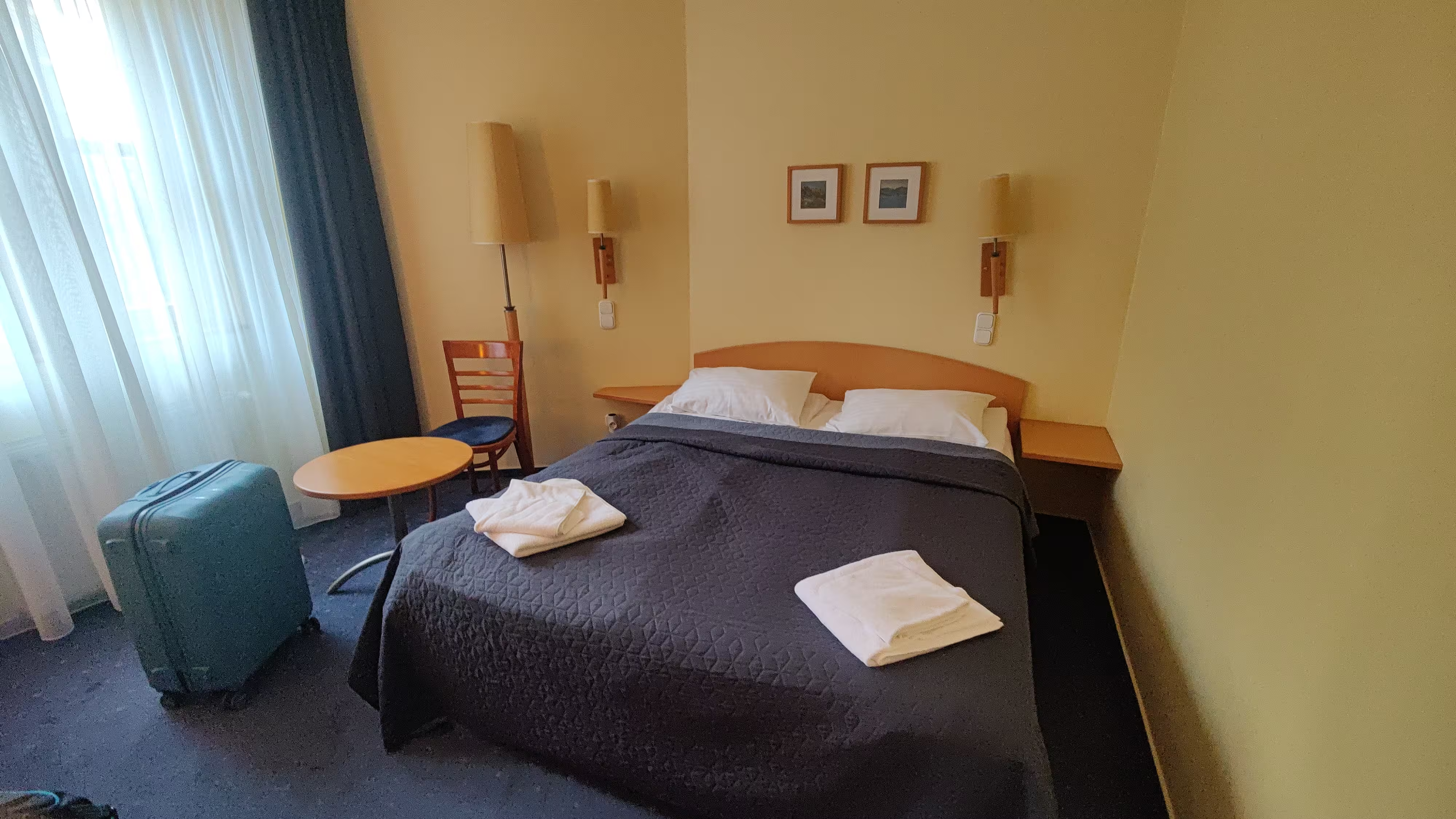
A shot of my room. Photo by Ravi Dwivedi, released under CC-BY-SA 4.0.
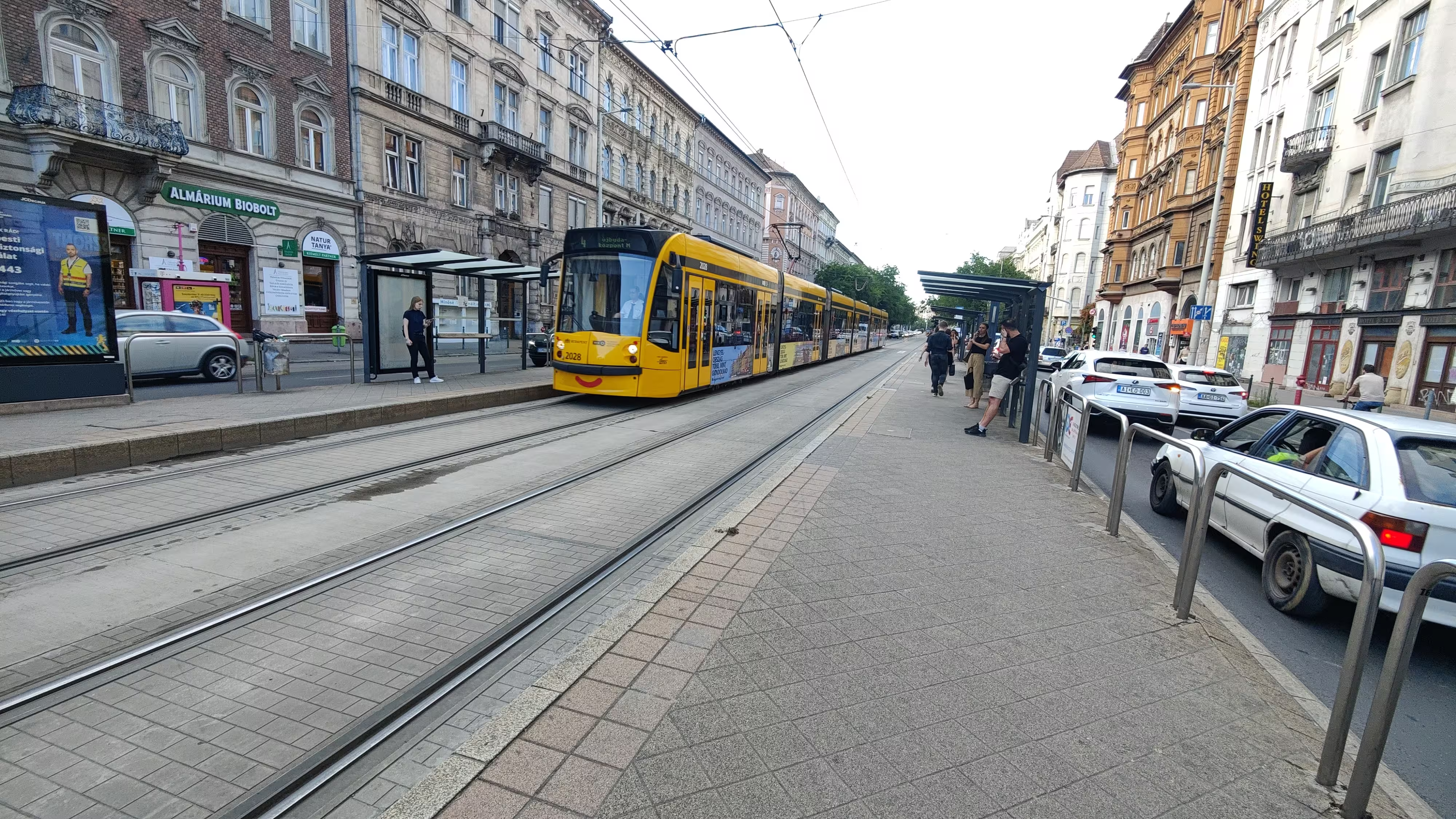
A tram in Budapest. Photo by Ravi Dwivedi, released under CC-BY-SA 4.0.

The red building in the picture served as the conference venue. Photo by Ravi Dwivedi, released under CC-BY-SA 4.0.
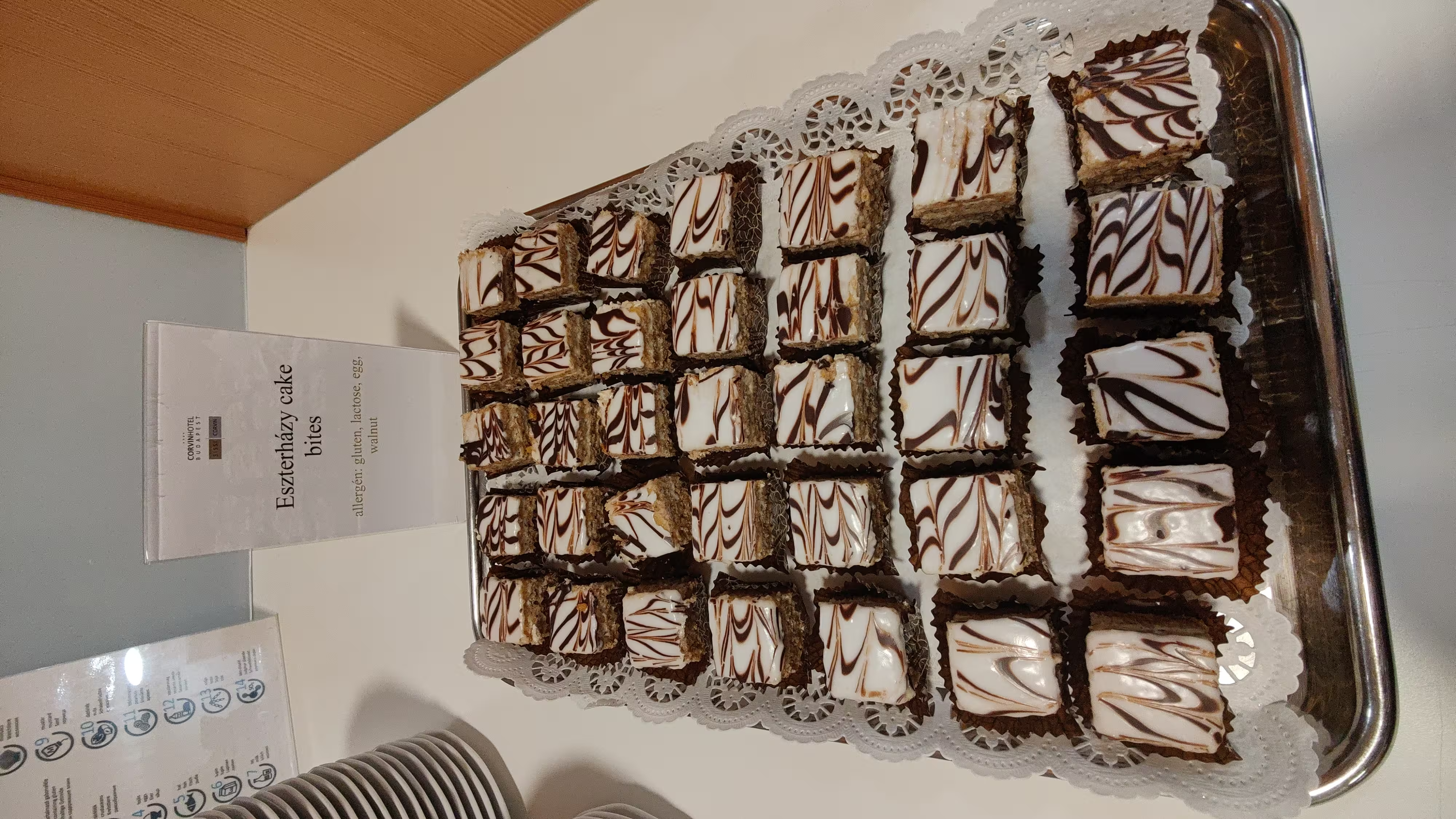
These Esterh zy cake bites were really yummy. Photo by Ravi Dwivedi, released under CC-BY-SA 4.0.
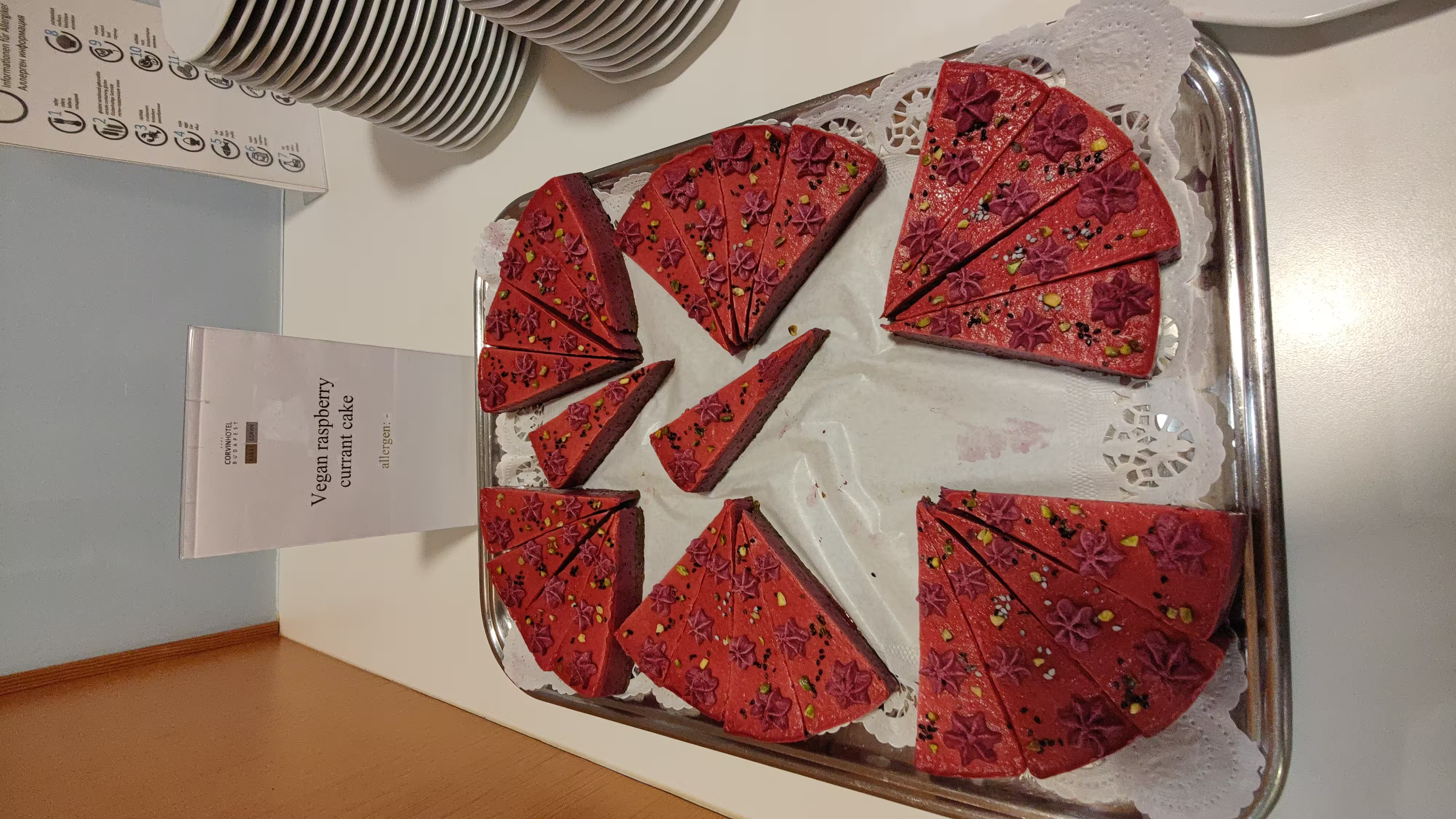
Raspberry Currant cake slices. Photo by Ravi Dwivedi, released under CC-BY-SA 4.0.
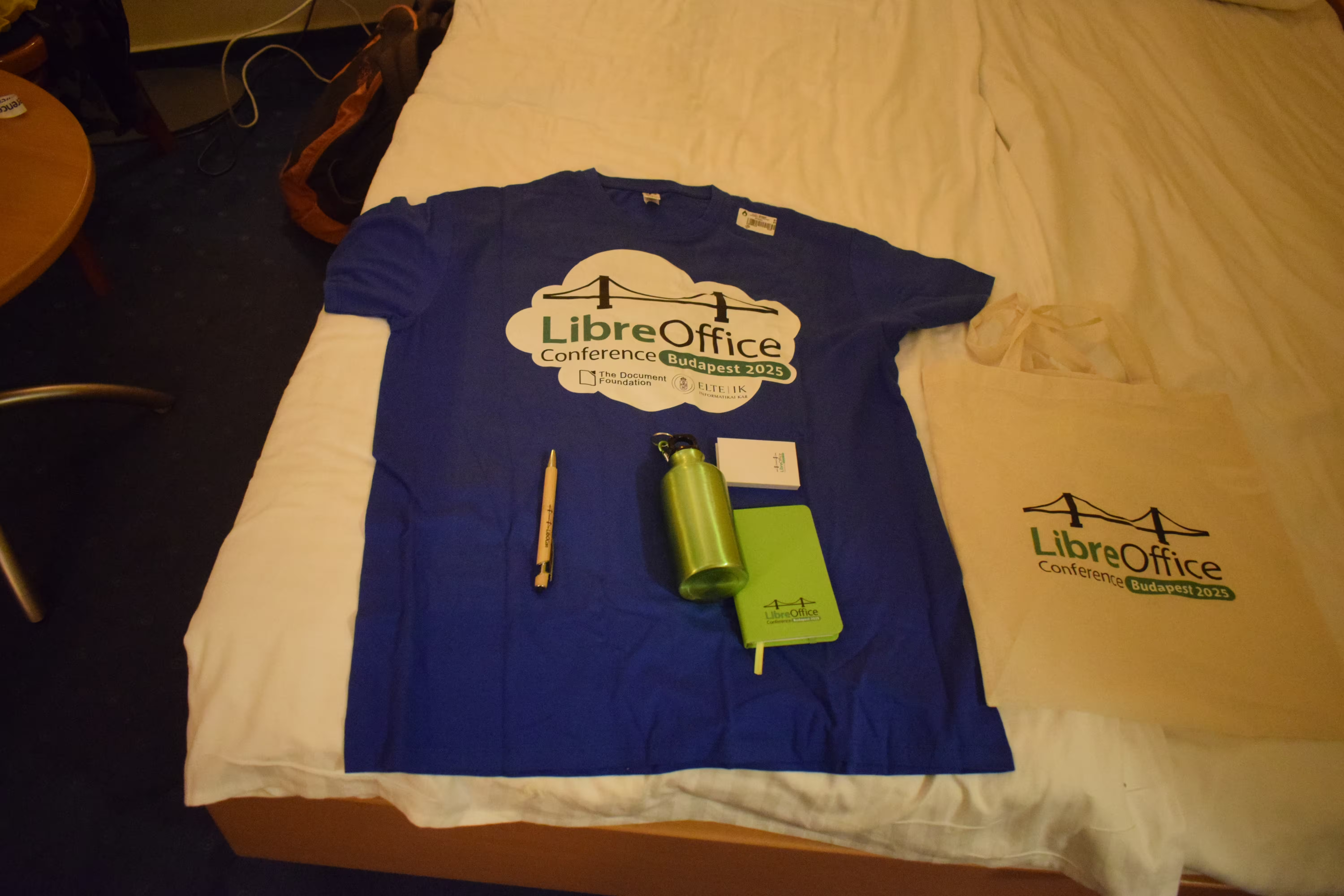
Conference swag. Photo by Ravi Dwivedi, released under CC-BY-SA 4.0.
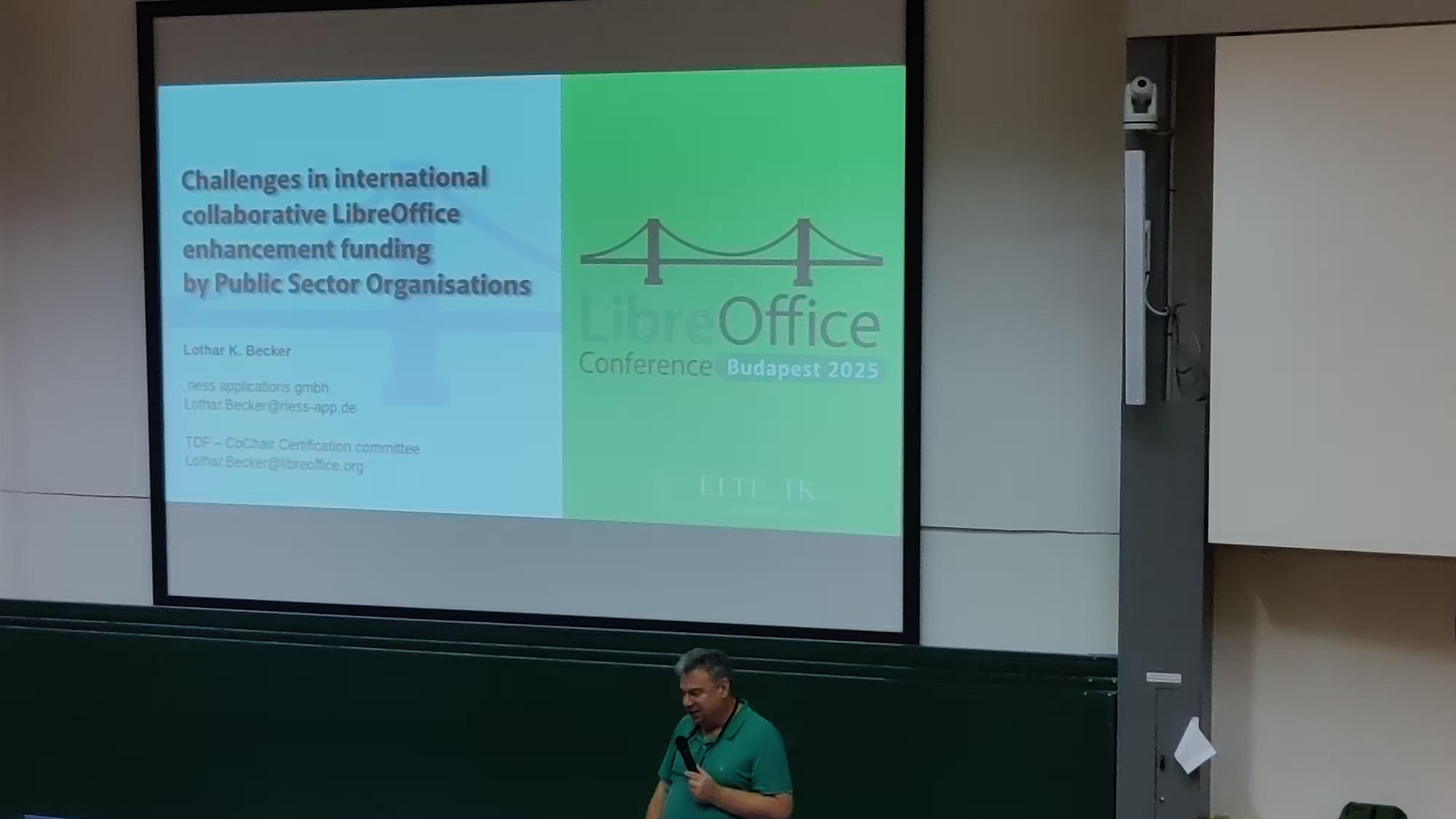
Lothar giving his presentation. Photo by Ravi Dwivedi, released under CC-BY-SA 4.0.
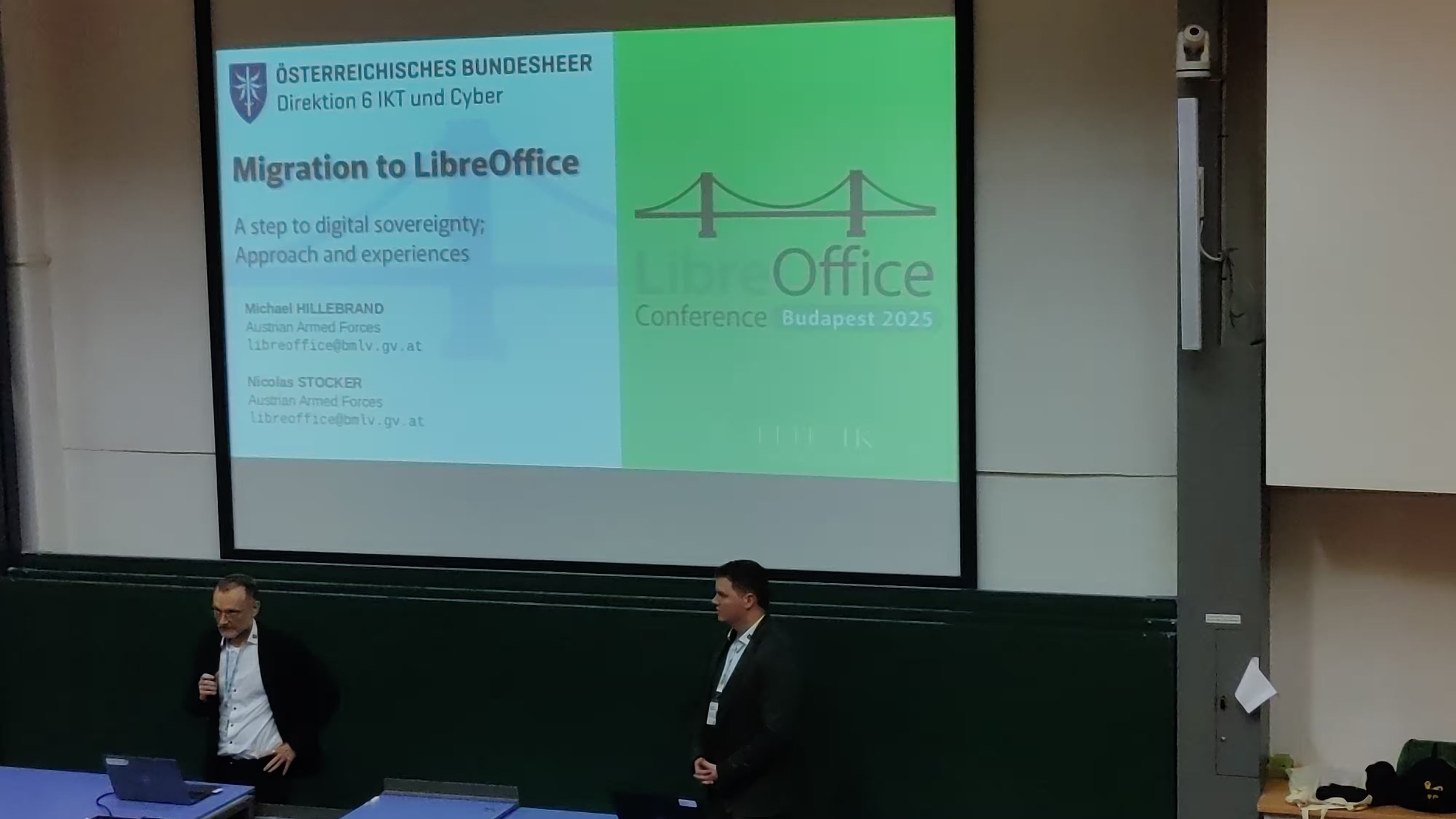
Presentation on migration to LibreOffice by Austrian Armed Forces. Photo by Ravi Dwivedi, released under CC-BY-SA 4.0.
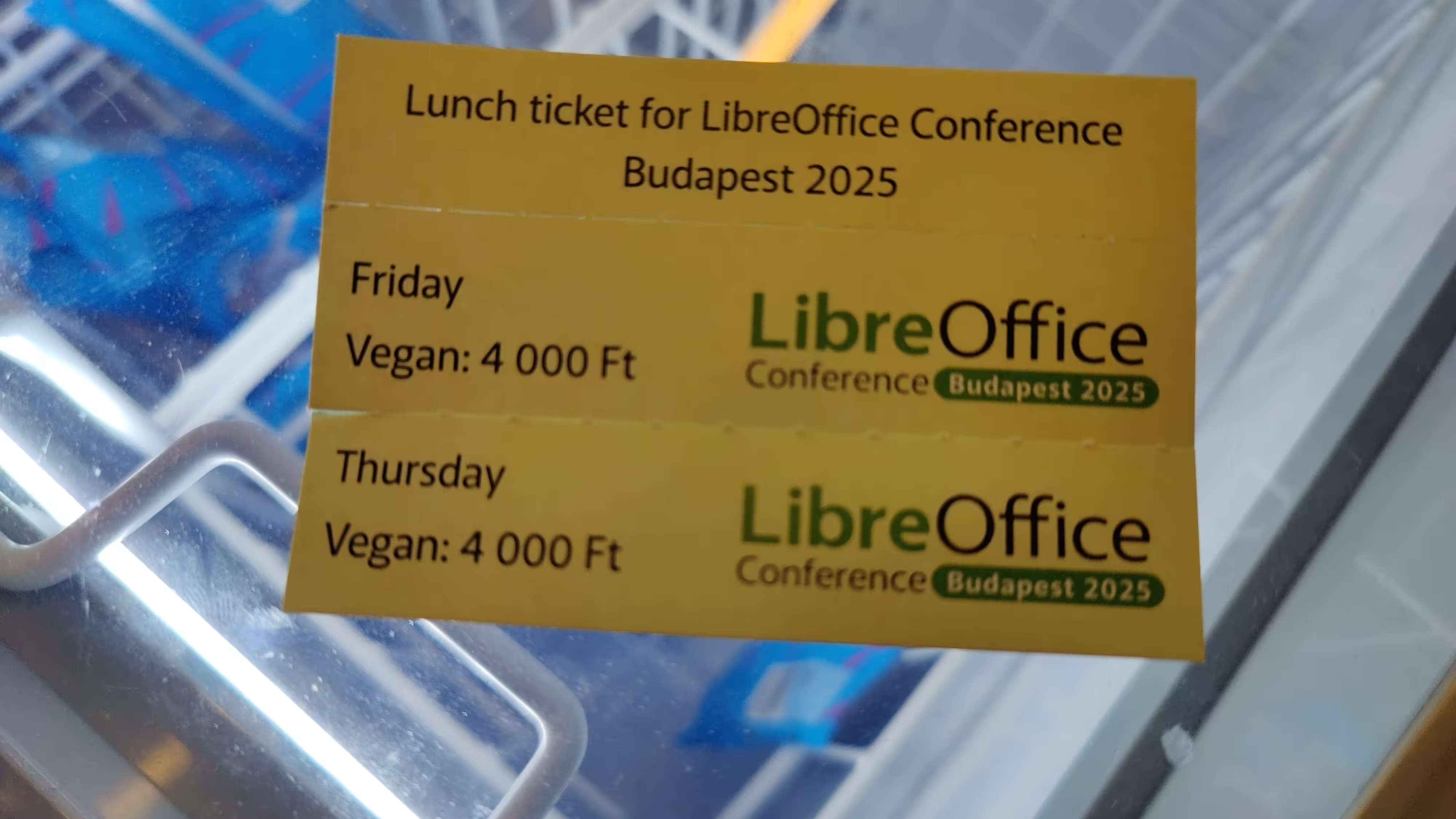
My lunch ticket for the conference. Photo by Ravi Dwivedi, released under CC-BY-SA 4.0.
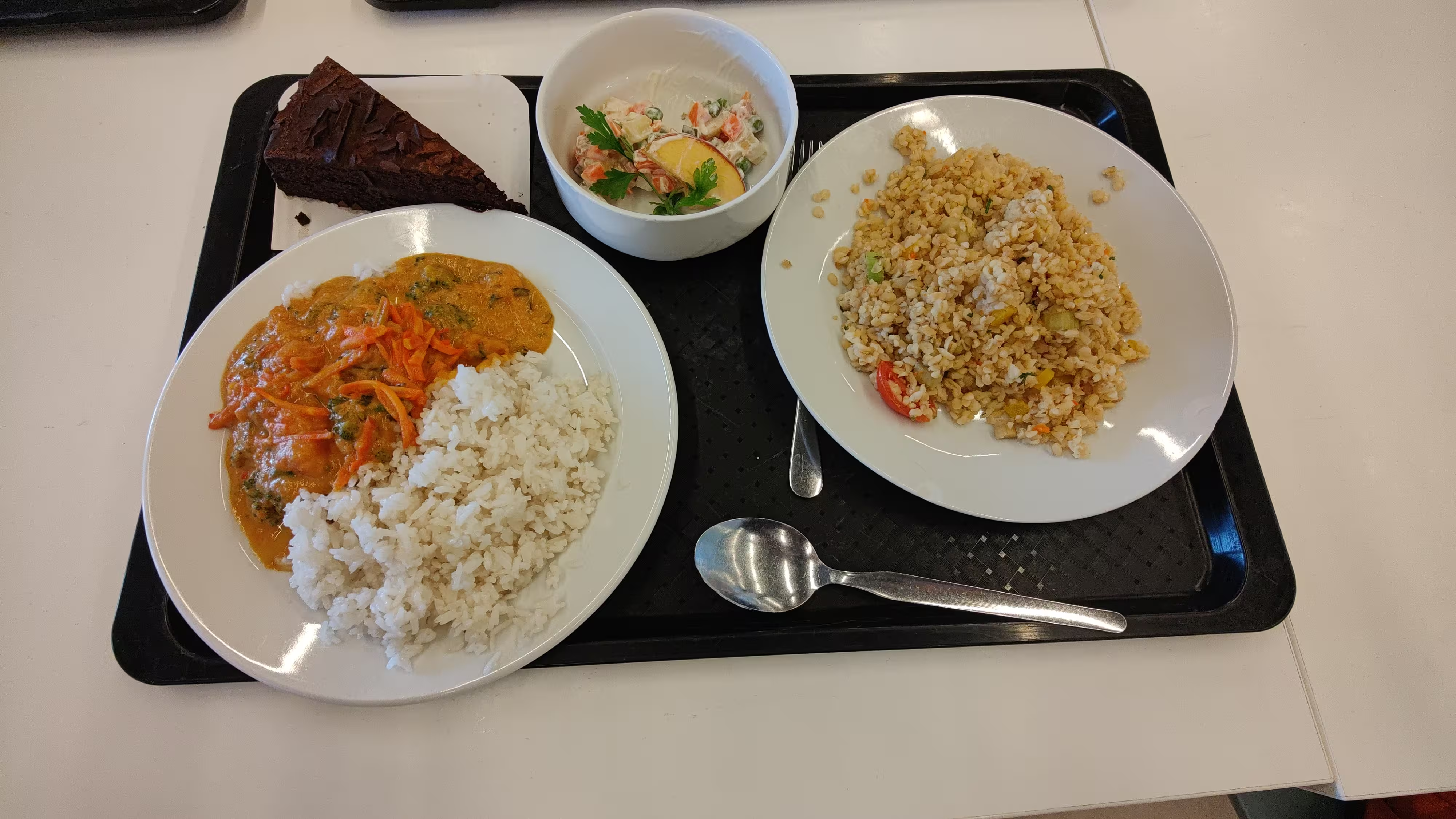
The lunch I had on the first day. Photo by Ravi Dwivedi, released under CC-BY-SA 4.0.
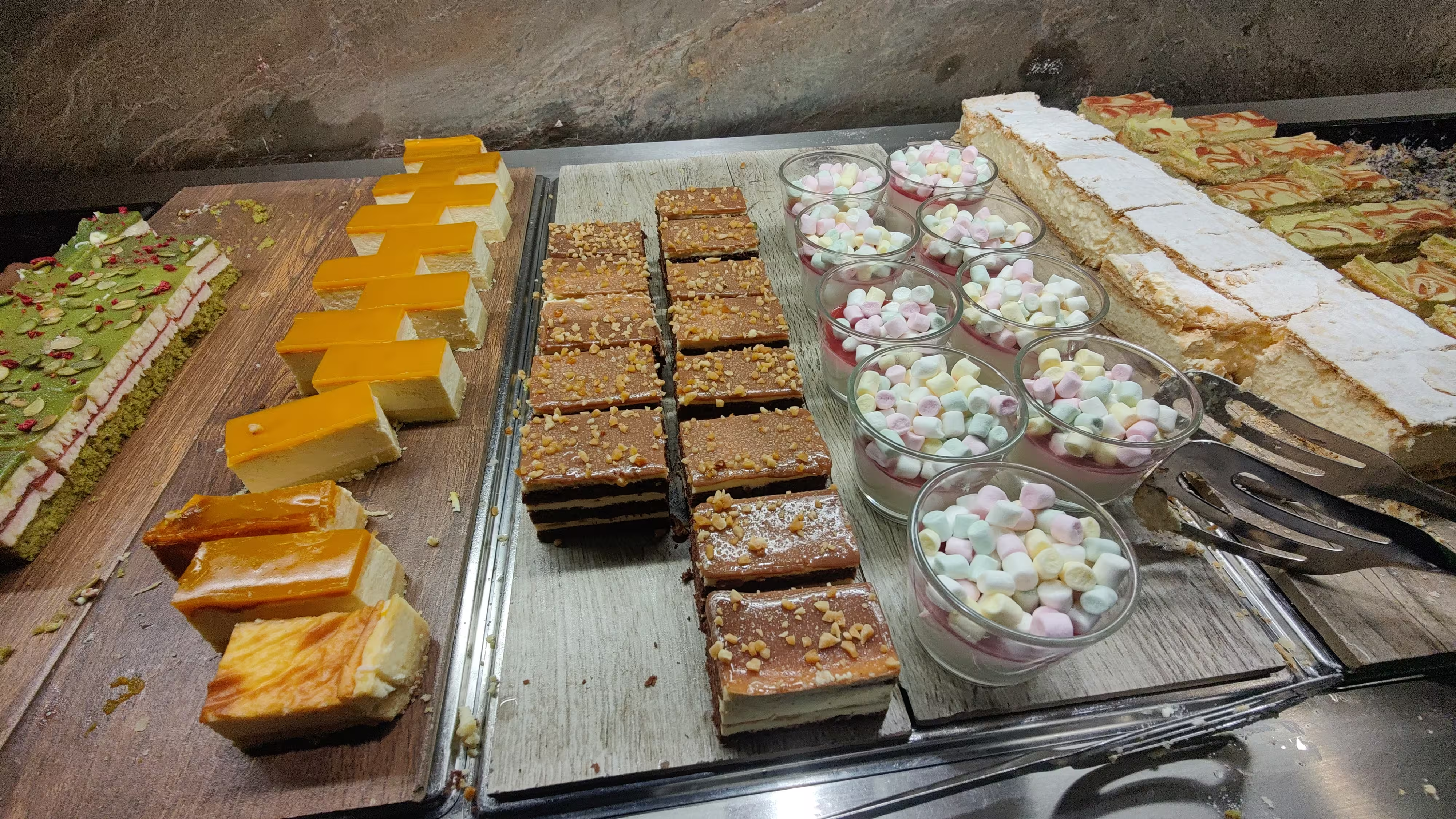
Desserts at Tofea Grill. Photo by Ravi Dwivedi, released under CC-BY-SA 4.0.
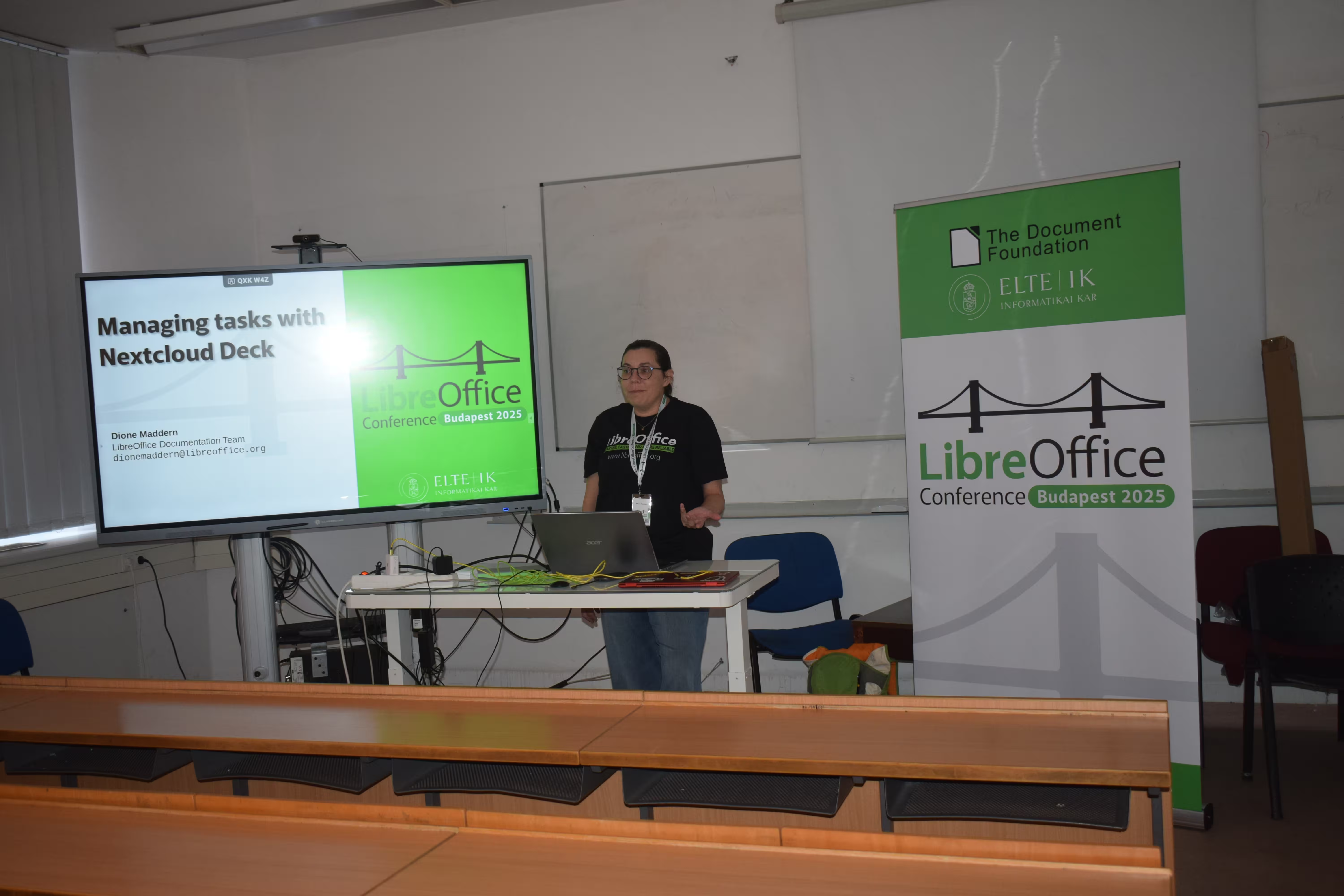
Dione giving her presentation. Photo by Ravi Dwivedi, released under CC-BY-SA 4.0.
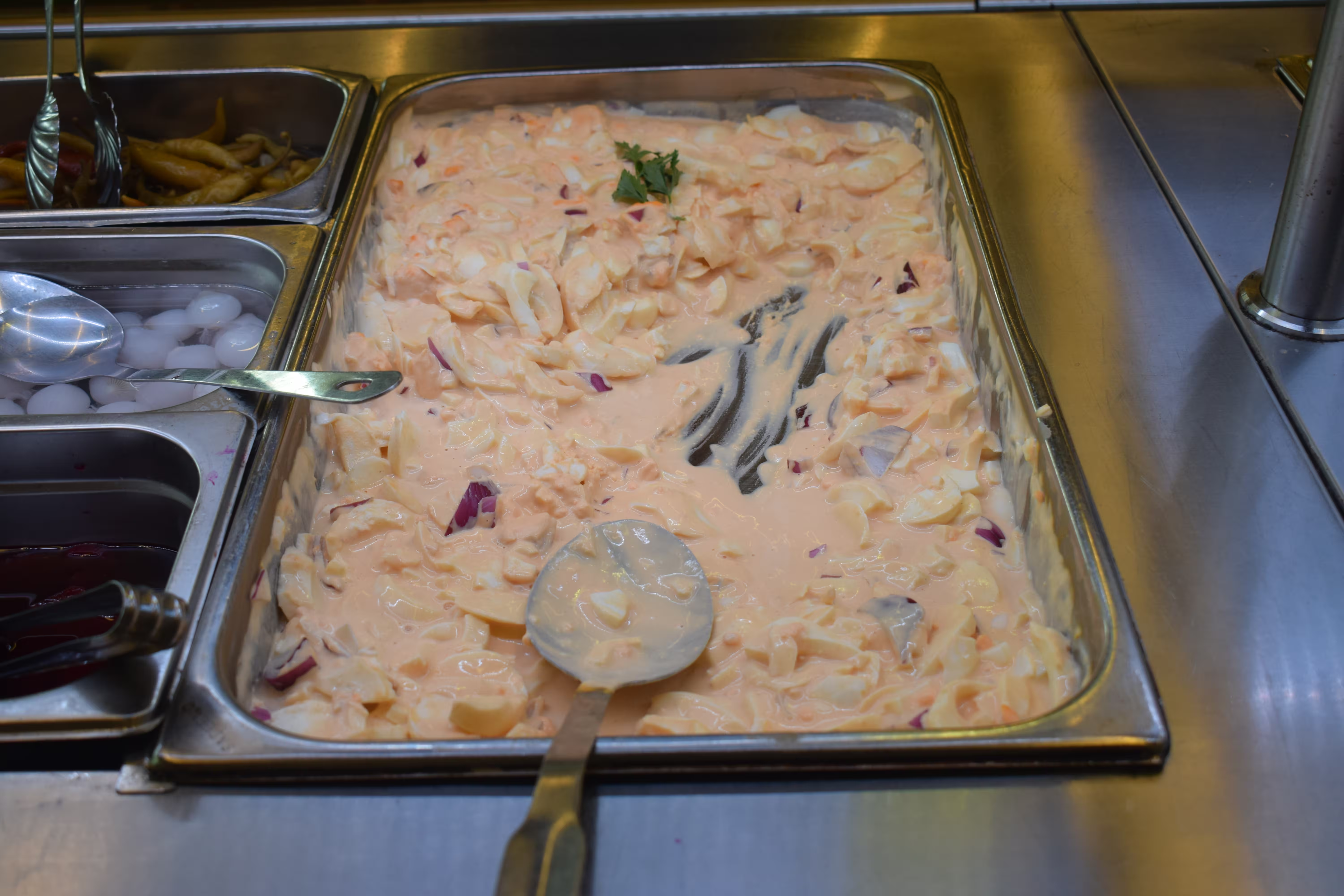
Egg white salad. Photo by Ravi Dwivedi, released under CC-BY-SA 4.0.
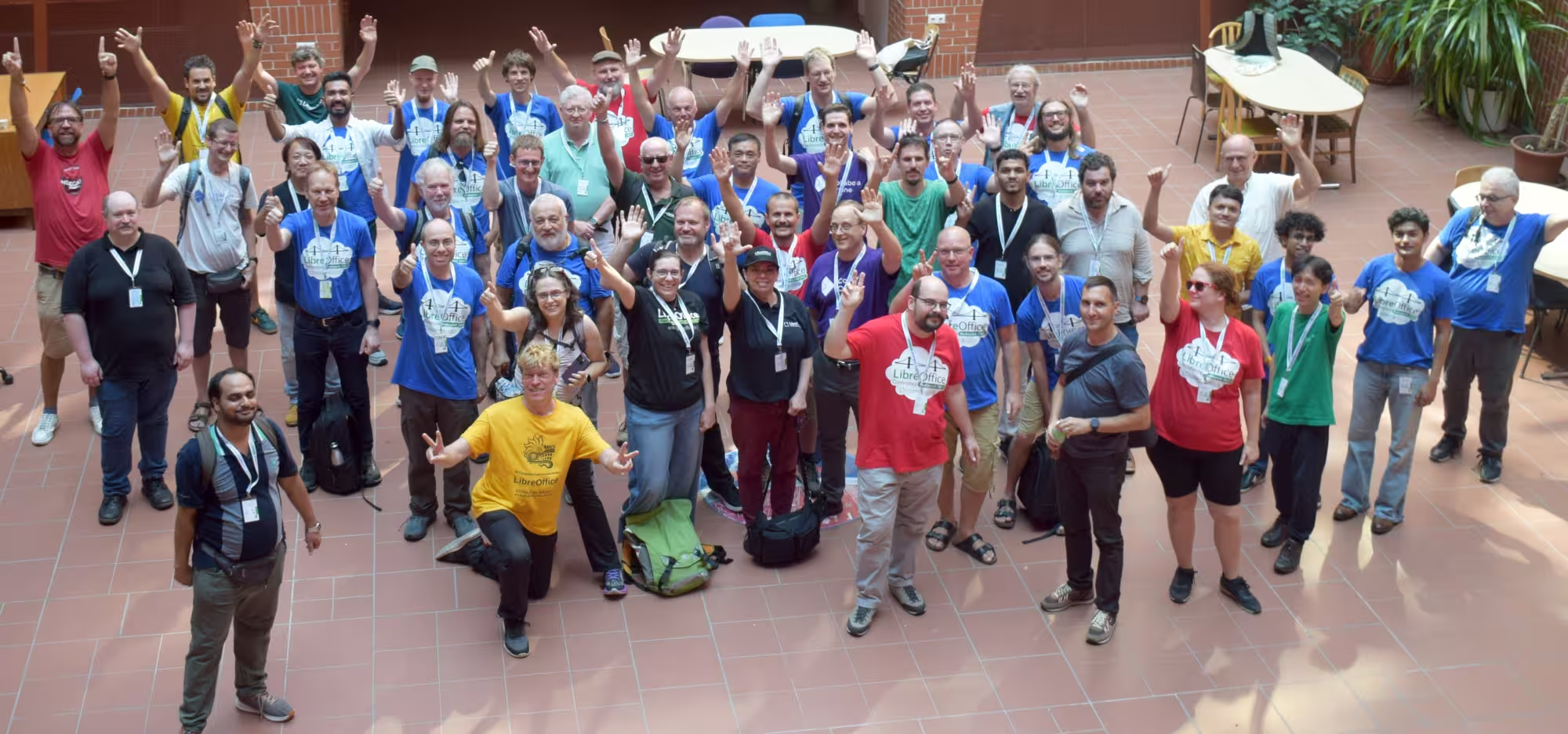
Group photo

| Publisher: | Orbit |
| Copyright: | October 2010 |
| Printing: | May 2011 |
| ISBN: | 0-316-12341-2 |
| Format: | Trade paperback |
| Pages: | 627 |
| Series: | Class 5 #6 |
| Publisher: | Eclipse |
| Copyright: | November 2024 |
| ISBN: | 1-7637844-0-1 |
| Format: | Kindle |
| Pages: | 289 |

~/.config/user-dirs.dirs configuration file.
If you are a system administrator or distribution vendor and want to set default locations for the default XDG directories, you can edit the /etc/xdg/user-dirs.defaults file to set global defaults that affect all users on the system (users can still adjust the settings however they like though).
xdg-user-dirs brings full support for the Meson build system (dropping Automake), translation updates, and some robustness improvements to its code. We also fixed the arbitrary code execution from unsanitized input bug that the Arch Linux Wiki mentions here for the xdg-user-dirs utility, by replacing the shell script with a C binary.
Thanks to everyone who contributed to this release!
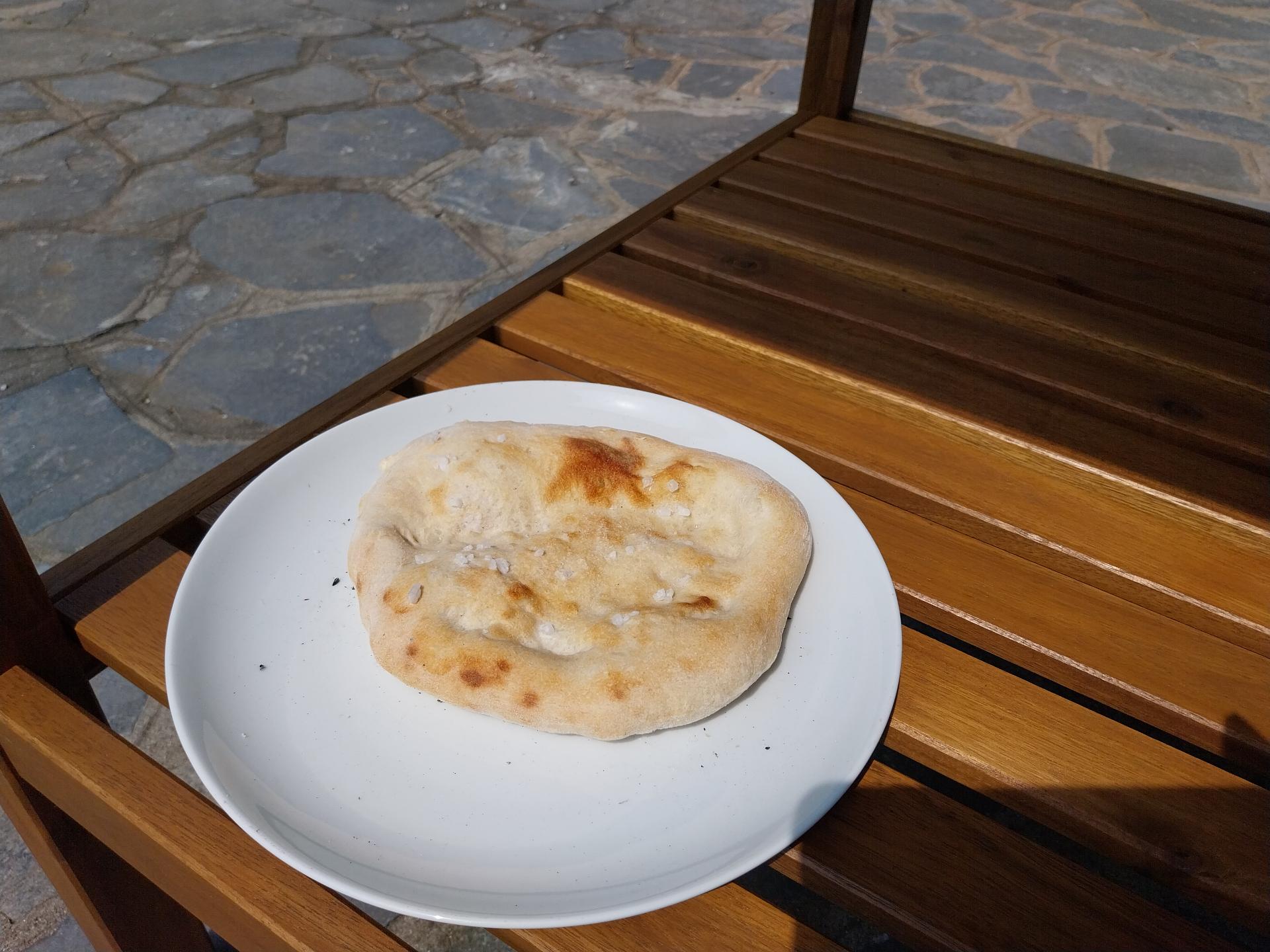
And it was good. The kind of pizza that is quite soft, especially near
the borders.
We ate it with fresh mozzarella and tomatoes, and then made another one
the same way, to finish the mozzarella.
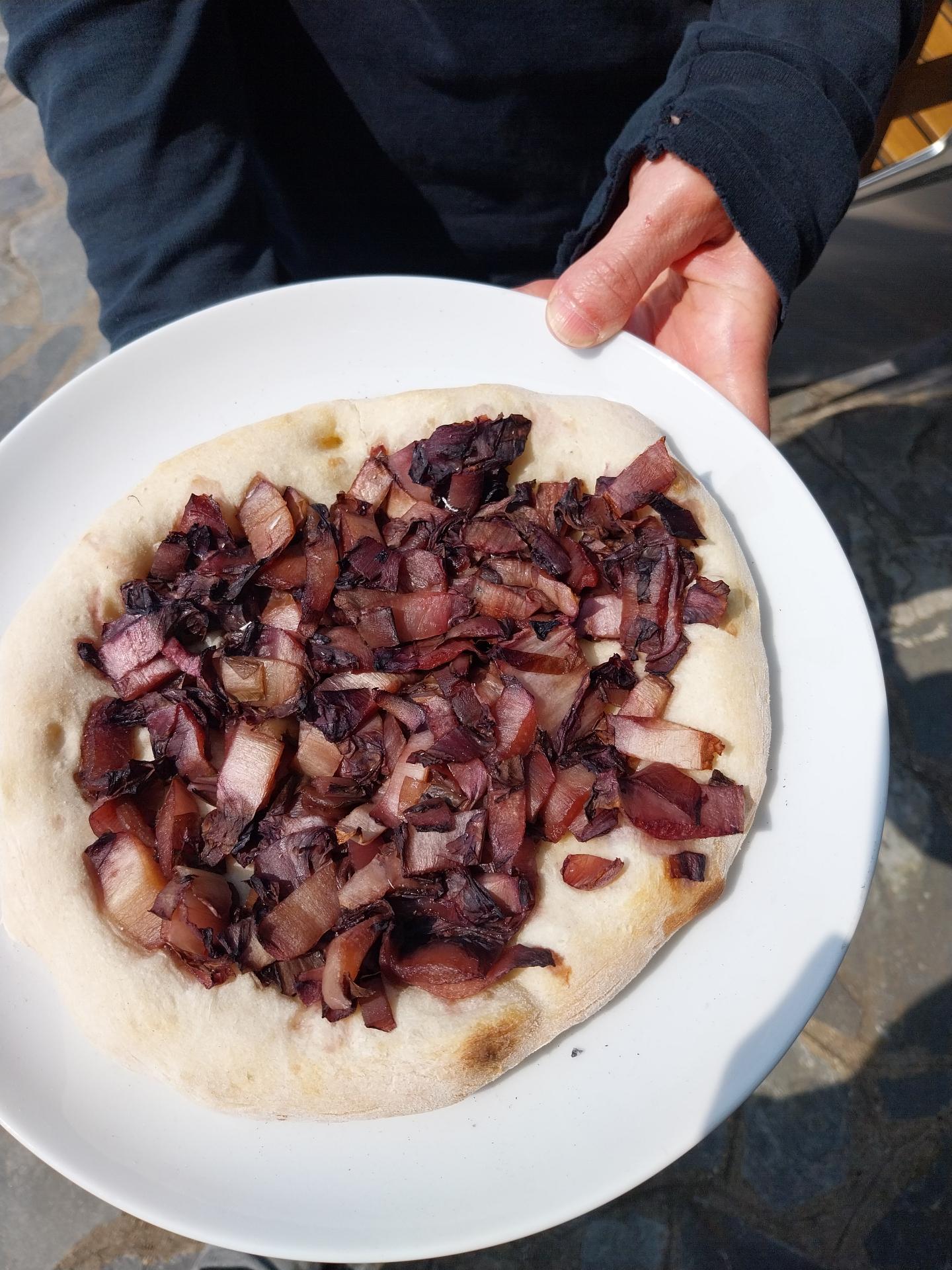
This was supposed to be our lunch, but we decided to try one with some
leftover cooked radicchio, and that also worked quite nicely.
And finally, we decided we needed to try a more classical pizza, with
tomato sauce and cured meat, of which we forgot to take pictures.
Up to here we had eaten about half of the dough, and we were getting
full: I had prepared significantly more than what I expected to eat, to
be able to accidentally burn some, but also with the idea to bake
something else to be eaten later.
So I made two more focaccias with just water and salt, and then I tried
to cook some bread with what I expected to be residual heat.
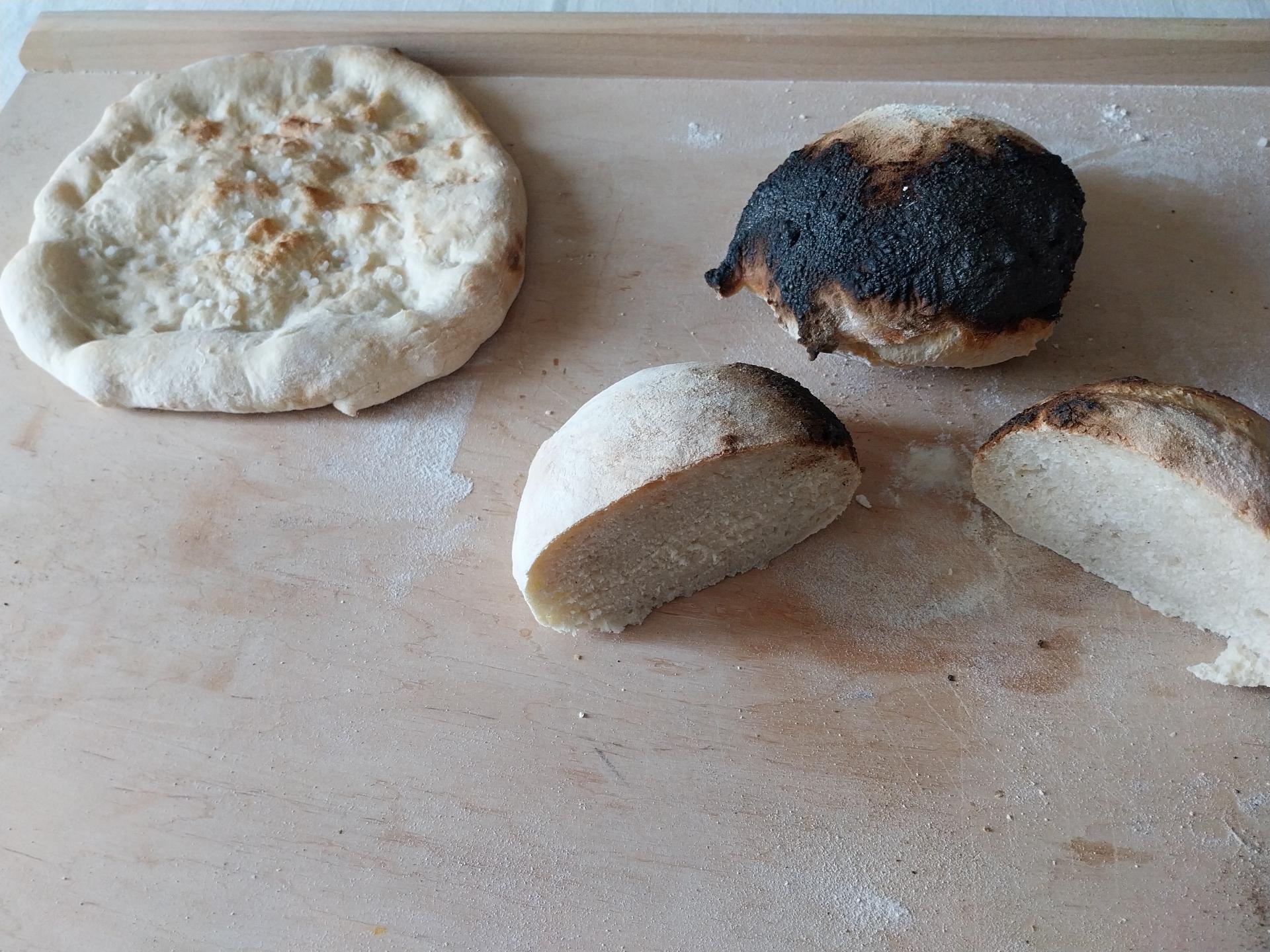
Except that the oven was getting a bit too cold, so my partner added
some charcoal, and when I put the last two unflattened balls right at
the back of the oven where it was still warmer, that side carbonized.
After 5 minutes I moved them to the middle of the oven, and turned them,
and then after another turn and 5 more minutes they were ready. And
other than the burnt crust, they were pretty edible.
So, the thoughts after our first experience.
Everybody around the table (my SO, my mother and me) was quite happy
with the results, and they are different enough from the ones I could
get with the regular oven.
As I should have expected, it s much faster than a masonry oven, both in
getting to temperature and in cooling down: my plan for residual heat
bread cooking will have to be adjusted with experience.
We were able to get it hot enough, but not as hot as it s supposed to be
able to get: we suspect that using just charcoal may have influenced it,
and next week we ll try to get some wood, and try with a mix.
As for the recipe, dividing the dough in eight parts worked quite well:
maybe the pizzas are a bit on the smaller side, but since they come one
at a time it s more convenient to cut and share them, and maybe make a
couple more at the end.
Of course, I ll want to try different recipes, for different styles of
pizzas (including some almost-trademark-violating ones) and for other
types of flatbread.
I expect it won t be hard to find volunteers to help us with the
experiments. :D
- A lot
- Everyone has a few universal basic qualities, and some special qualities. To me life is pursuit of exploring world based on those qualities and maturing those qualities as one goes on about exploring world/life with those qualities.
Discovering and enhancing experiences as one goes through them.
- life is endless suffering
- my answer might change daily, but this is what I ve noticed and feel recently. Life is a spectrum with two distinct ends: what we control and what we don t. At birth, the spectrum is largely tilted toward control, but throughout our lives, it gradually shifts toward the other side. Ultimately, as we approach death, we lose all control over any aspect of our existence, reaching the other end of the spectrum.
tho this isn t universal, privilege plays a huge part in what you control tho i believe it holds true for the majority
but yeah man, meaning and purpose are dynamic, it s in their nature to change i can give you a different answer this evening itself xD
- Funeral Monologue from Synecdoche, New York. https://www.youtube.com/watch?v=Z9PzSNy3xj0
- Zindagi ek nadiya hai, Aur mujhe tairna nahi aata
(translation - Life is a river, and I don t know how to swim)
On a more serious note, Life is what you make it out for yourself. The only established truth is that it will end. We can never know if there is something after or if there was something before. So try to live a life that you feel aspired by? But this question was beautifully answered by that book which you had about that dying professor
(Me - He was talking about Tuesday s with Morrie)
- My answer is 42
- One, it s living on your own terms, you define everything for yourself, success, normal, whatever. You get to curate your version of it no matter the societal norms.
It s an accumulation of experiences - friends, parents, work, activities, doing shit loads. Sab try karo- travel, zumba, art, music, workout, sports, dil kara ye karna hai karlo. (translation - If your heart wants to do it, just do it.)
Then I think relationships - all that you ve nurtured, people forget maintaining people because of work. It takes efforts to keep people in your life, everyone that comes has a place in yours, how well thats stays is upto you. You also get to curate your people, who stays who don t. Family toh hai hi (translation - family is there) but everyone else that comes along can make it pretty good.
So I don t want to be 50 and be like chalo ab kuch apne liye karte hai (translation - Come on, now let s do something for ourselves) Do whatever shit you want today. Not everything costs money, and if it does get thrifty
But do keep healthy while doing all of that
- Being alive so that my daughter can grow up and i can help raising her kids as well. Raising kids without mother is tough :P
- Definitively, I feel like Life is a by product of proteins and energy working together. But in a more personal sense, Life is a dumb joke played onto us. It s a rat race. But rats exists because of life and then it becomes a chicken-egg problem
Honestly, I don t give good answers to life questions. I m generally the one asking
Life can be like a box of chocolates, you don t know what you re gonna get untill you experience the chocolate(assuming the chocolates are heterogenous and contains a mix of everything)
Camus once said, Life is a revolt , and one of his students added more spice to it like Life is a revolt against the meaninglessness of existence"
I kinda feel like Life is the pursuit of every person s search for meaning
- Imprisonment waiting for execution
I have one more thought while we are on the topic , game with pre defined starting position and predefined destination , path to reach is a maze
- A phase where you can have a really good time or really bad one, usually the mix of both. A phase where you are prisoner to responsibility and materialistic wants.
It s a hell for you, where you try to create heaven for others. Being born was never your choice, but ending is always in your hands but you are a prisoner. You fear that leaving this world behind will destroy the heavens you created for others and they will be back to hell. But eventually everyone moves on watching the hourglass of their life.
Once you are left with no desires or no one to create heavens for, you look arround yourself. You see everyone chasing something, everyone scared of their limitted life time sliping away yet you want it to end sooner.
Doesn t matter if it was all good till now, or all bad. The other half is waiting for redemption. If it was all good, it s best time to die don t wait for the bad to start. If was all bad, it s still the best time to die what if it was the good one and more worst is waiting for you. We desire to be remembered, yet we want to free from this loop of suffering.
Someone once said, life is a suffering, chose your sufferings.
- Life to me is to live without regrets and live with freedom.
Life is always unpredictable and this unpredictability makes it more interesting and worth it.
- As of now, for the state of mind that I am in , I think for me life is about subtle struggle, subtle inconveniences and yet moving forward cause that s all I know.
I am not sure if any of this has any meaning, but sometimes I feel I was born of a purpose and that the universe has my back.
For me it s about raising my consciousness, understanding people to their depths, gaining moderate material success and helping people to some extend.
I have tried to seek a grander meaning but I have failed.
Life for me is what I make out it.
In my times of great success i rarely think about life for I am busy enjoying it, whatever you may call that state of mind.
- For me its the little things that you enjoy with YOUR people
- Life to me is about living and loving, and doing it in a way that sustains. It s the people who shape you, the work you get absorbed in, the quiet moments in between. There s also the wanting, the drive to figure out what s worth going after and how to get there, but that s just one part of it, not the point of it. And none of it happens in a vacuum. I m aware of the privileges that let me live this way, and I try to hold on to that gratitude. In the end, life has both a material and a non-material side, and a lot of what we do is chasing material things in an attempt to satisfy something non-material within us
- Mere liye (translation - for me) life is staying at my home and studying random economics papers. That s when I enjoy myself the most.
- Very complicated
Some days I wish this life never ended and some time I feel it would be better if it stopped at that moment.
It all depends on the events that happen in the so called life .
So life to me is a string of events that happen anyway and you get to make some decisions which can turn it in any direction and then you wonder how did that happen.
- not forgetting to breathe, learn, eat, game, take a good shit, love, sleep.
- To be honest it changed with time! At 19 it was about freedom, wasn t sure what freedom meant but i wanted that! To be free from everything, maybe because parents still controlled a part of my life. Then came 22-24 where i was working, trying to figure out what i want, the meaning changed from freedom to living for myself. To earn more, to be greedy about myself and pursue whatever would help me gain more steps in my career.
Came my mba life, switched my life from doing for myself to trying everything out to have no regrets. Life meaning was just about living with no regrets, invested, gambled, did everything to earn that tag of yeah, have tried that . Now it has all switched to, it was all just a fake facade. Life turned to having a meaningful life rather than finding meaning in what i am doing. Living for people around me, chhoti chhoti cheezo m khushi (translation - happiness in small things(?)) isn t really a topic of conversation but more of happy thing for me. So it changed, and m quite happy to be honest. Life did show me a lot of failures, but was privileged enough to face those failures. Gained a lot of learnings if not money
Hopeful for more learnings and change meaning of life with time
- A task.
- You have different answers at different times You learn different meanings at different times When you are studying, basically it is about job, finding a partner then it becomes, house, car other things based on your income in between, there can be passion too
Free Software was a passion, electoral politics too, but both kind of faded and I want cooperative and user driven development now (prav - something that motivates me every day) and these days learning Chinese and watching Cdrama takes a huge part of my leisure time it is heavily subjective and also influences by previous experiences people around you, how much influence they have on you
it also depends on if they had to struggle in their life or not, for some life did not give much troubles and trouble itself can be relative people who never had to struggle may find even smallest challenges as troubles like if you own a car, your worry is finding a parking slot
- I am too young to think about lyfe
- A ticket to see the show on earth, I guess
I guess life is different depending on the mood. It is a very broad question.
(Me - What is it in this present mood?)
Learning stuff (like I am learning a new language) and being happy but also to regulate emotions in a world where being optimistic is getting harder each day.
Life is also having a unique set of glasses you wear. Both in terms of looking from your eyeballs and your psychological perspective. Both are unique and cannot be replicated.
It is interesting what people on their deathbed think of life. If I know I am dying, my perspective would change a whole lot.
Life is finishing reading books while we are alive
Life is sleeping after a good XMPP chat
- Dukh dard peeda (translation - surrow pain suffering)
- uhh to word it? life is just like a journey from A to somewhere and its all about what paths you take and what line you get on to me, just a series of short adventures that all connect to a larger sequence until you can t have any more adventures-
(Me - eee, THE END. drop dead, like a coin)
yeaaaah- I am not really for spirituality of an afterlife, to me life just ends at some point, after which point there fails to remain a discernable you, and some X time after which, you will be last remembered, try to make that last time a good one I guess?
(Me - no soul?)
uhhh not in the way most people think of it i guess?
theres just a lot ofyous, theres the physical you, there is the idea of you, there is the expectation of you, and one of the undefinable you I would label as the soul maybe? like the part thats not physically you, but also certainly you
(Me - can t say I understood part, but I get you in this sense)
mhm- well its about just questioning who you are more so questioning what life is-, I have sadly spent way too much time trying to figure that out
- Making the best of the time you have
- living a full range of experiences and embracing the good ones, seeing all that the world has to offer. In the end we were always just stardust. Might as well enjoy it when we are stardust with a consciousness of our own.
- For some reason or the Universe s /dev/random I was born here as a biological being, and from my experience I understood living is hard and the best way to live is by embracing it. Loving everyone and everything around you. Be happy and joyful until you naturally say good bye to this world.
- Life is being fucked by everything and you just have to figure out and try to stick to the things worth being fucked forNote: Following was transcribed from a audio message.
- There are five conditions to become a life to survive in the environment. I think there s five conditions by the biological definitions and reproduction is one of the factor virus is not considered a life form because it cannot reproduce on its own but technically it s kind of a life because it reproduces using the DNA ability this is the biological definition. Do you want a philosophical definition?I m grateful for all the replies, outlooks, and subsequent conversations I got to have after this question with everyone. After all, it was a deeply personal question. It does fit in nicely with my definition of life:
My definition is kind of the same except that you get life experiences along with it as a human. Extra benefits is that you are not an NPC. All other organisms are NPCs. But humans can interpret the world and change it to their liking. That is life in the case of a human. But then many humans are mostly NPCs. But they still can change the life. Okay, fuck this. Where is this even going?
A human is an exception in the case of life, because human is not an NPC. Human can interrupt the world, human can change it to its liking, which is why we are such a successful organism on this planet. That is life to me. That s a human. But all of this is kind of meaningless, because the biological impurity of a human being still exists, so you still have the urges to reproduce, which kind of makes it like just another organism. But then, humans are yet to evolve to overcome that biological imperative.
hz.tools will be tagged
#hztools.Frequency Changes and
Discontinuities. Since then, ARF has grown a few more.
After getting all that down, I opted to start at what I thought the simplest
container would look like,
TLV
(tag-length-value) encoded packets. This is a fairly well trodden path,
and used by a bunch of existing protocols
we
all
know
and
love.
Each ARF file (or stream) was a set of
encoded packets (sometimes called data units in other specs). This means that
unknown packet types may be skipped (since the length is included) and
additional data can be added after the existing fields without breaking
existing decoders.
| Flag | Description |
| 0x01 | Critical (tag must be understood) |
tag field. This tag indicates how the contents of the
value field should be interpreted.
| Tag ID | Description |
| 0x01 | Header |
| 0x02 | Stream Header |
| 0x03 | Samples |
| 0x04 | Frequency Change |
| 0x05 | Timing |
| 0x06 | Discontinuity |
| 0x07 | Location |
| 0xFE | Vendor Extension |
00, // tag (0; no subpacket is 0 yet)
00, // flags (0; no flags)
00, 00 // length (0; no data)
// data would go here, but there is none
sparky)
stores Frequency data internally, which makes conversion between the two
natural.
| ID | Name | Description |
| 0x01 | f32 | interleaved 32 bit floating point scalar values |
| 0x02 | i8 | interleaved 8 bit signed integer scalar values |
| 0x03 | i16 | interleaved 16 bit signed integer scalar values |
| 0x04 | u8 | interleaved 8 bit unsigned integer scalar values |
| 0x05 | f64 | interleaved 64 bit floating point scalar values |
| 0x06 | f16 | interleaved 16 bit floating point scalar values |
00, 00, 00, fa, de, dc, ab, 1e, // magic
00, 00, 00, 00, 00, 00, 00, 00, // flags
18, 27, a6, c0, b5, 3b, 06, 07, // start time (1740543127)
// guid (fb47f2f0-957f-4545-94b3-75bc4018dd4b)
fb, 47, f2, f0, 95, 7f, 45, 45,
94, b3, 75, bc, 40, 18, dd, 4b,
// site_id (ba07c5ce-352b-4b20-a8ac-782628e805ca)
ba, 07, c5, ce, 35, 2b, 4b, 20,
a8, ac, 78, 26, 28, e8, 05, ca
num streams field of the Header. This has the nice effect of
enabling clients to read all the stream headers without requiring buffering of
unread packets from the stream.
00, 01, // id (1)
00, 00, 00, 00, 00, 00, 00, 00, // flags
01, // format (float32)
01, // byte order (Little Endian)
00, 00, 01, d1, a9, 4a, 20, 00, // rate (2 MHz)
00, 00, 5a, f3, 10, 7a, 40, 00, // frequency (100 MHz)
// guid (7b98019d-694e-417a-8f18-167e2052be4d)
7b, 98, 01, 9d, 69, 4e, 41, 7a,
8f, 18, 16, 7e, 20, 52, be, 4d,
// site_id (98c98dc7-c3c6-47fe-bc05-05fb37b2e0db)
98, c9, 8d, c7, c3, c6, 47, fe,
bc, 05, 05, fb, 37, b2, e0, db,
format and
byte_order field sent in the related Stream Header.
01, // id
ab, cd, ab, cd, // iq samples
01, // id
00, 00, b5, e6, 20, f4, 80, 00 // frequency (200 MHz)
01, // id
sys field indicates the Geodetic system to be used for the provided
latitude, longitude and elevation fields. The full list of supported
geodetic systems is currently just WGS84, but in case something meaningfully
changes in the future, it d be nice to migrate forward.
Unfortunately, being a bit of a coward here, the accuracy field is a bit of a
cop-out. I d really rather it be what we see out of kinematic state estimation
tools like a kalman filter, or at minimum, some sort of ellipsoid. This is
neither of those - it s a perfect sphere of error where we pick the largest
error in any direction and use that. Truthfully, I can t be bothered to model
this accurately, and I don t want to contort myself into half-assing something
I know I will half-ass just because I know better.
| System | Description |
| 0x01 | WGS84 - World Geodetic System 1984 |
00, 00, 00, 00, 00, 00, 00, 00, // flags
01, // system (wgs84)
3f, f3, be, 76, c8, b4, 39, 58, // latitude (1.234)
40, 02, c2, 8f, 5c, 28, f5, c3, // longitude (2.345)
40, 59, 00, 00, 00, 00, 00, 00, // elevation (100)
40, 24, 00, 00, 00, 00, 00, 00 // accuracy (10)
// extension id (b24305f6-ff73-4b7a-ae99-7a6b37a5d5cd)
b2, 43, 05, f6, ff, 73, 4b, 7a,
ae, 99, 7a, 6b, 37, a5, d5, cd,
// data (0x01, 0x02, 0x03, 0x04, 0x05)
01, 02, 03, 04, 05
u16 65535 bytes. Given the u8 sample header, this limits us
to 8191 32 bit sample pairs at a time. I wound up believing that the overhead in
terms of additional packet framing is worth it because always encoding 4
byte lengths felt like overkill, and a dynamic length scheme ballooned
codepaths in the decoder that I was trying to keep as easy to change as
possible as I worked with the format.
The nineteenth release of the qlcal package
arrivied at CRAN just now, and
has already been built for r2u. This version
synchronises with QuantLib 1.42
released this week.
qlcal
delivers the calendaring parts of QuantLib. It is provided (for the R
package) as a set of included files, so the package is self-contained
and does not depend on an external QuantLib library (which can be
demanding to build). qlcal covers
over sixty country / market calendars and can compute holiday lists, its
complement (i.e. business day lists) and much more. Examples
are in the README at the repository, the package page,
and course at the CRAN package
page.
This releases updates to the 2025 holidays for China, Singapore, and
Taiwan.
The full details from NEWS.Rd follow.
Courtesy of my CRANberries, there is a diffstat report for this release. See the project page and package documentation for more details, and more examples.Changes in version 0.1.1 (2026-04-15)
- Synchronized with QuantLib 1.42 released two days ago
- Calendar updates for China, Singapore, Taiwan
This post by Dirk Eddelbuettel originated on his Thinking inside the box blog. If you like this or other open-source work I do, you can sponsor me at GitHub. You can also sponsor my Tour de Shore 2026 ride in support of the Maywood Fine Arts Center.
debci 3.14 was released on March 4th, with a followup 3.14.1 release with
regression fixes a few days afterwards. Those releases were followed by new
development and maintenance work that will provide extra capabilities and
stability to the platform.
This month saw the initial version of an incus backend
land in Debian CI. The transition into the new backend will be done carefully so
as to not disrupt testing migration. Each package will be running jobs with
both the current lxc backend and with incus. Packages that have the same result
on both backends will be migrated over, and packages that exhibit different
results will be investigated further, resulting in bug reports and/or other
communication with the maintainers.
On the frontend side, the code has been ported to Bootstrap 5
over from the now ancient Bootstrap 3. This need has been
originally reported back in 2024
based on the lack of security support for Bootstrap 3. Beyond improving
maintainability, this upgrade also enables support for dark mode in debci,
which is still work in progress.
Both updates mentioned in this section will be available in a following debci
release.
hatchling, python-mitogen,
python-virtualenv, python-discovery, dh-python, pypy3, python-pipx,
and git-filter-repo.crun, libmaxminddb, librdkafka,
lowdown, platformdirs, python-discovery, sphinx-argparse-cli, tox,
tox-uv.DPKG_ROOT to support installing hurd.riscv64.
After another NMU,
python-memray finally migrated.epson-inkjet-printer-escpr and
sane-airscan. He also fixed a packaging bug in printer-driver-oki. As of
systemd 260.1-1 the configuration of lpadmin has been added to the sysusers.d
configuration. All printing packages can now simply depend on the
systemd-sysusers package and don t have to take care of its creation in
maintainer scripts anymore.python-pyhanko-certvalidator. pyHanko is a suite for signing and stamping PDF
files, and one of the few libraries that can be leveraged to sign PDFs with
eIDAS Qualified Electronic Signatures.
A maintenance release 0.3.13 of the anytime
package arrived on CRAN today,
sticking with the roughly yearly schedule we have now. Binaries for r2u have been built
already. The package is fairly feature-complete, and code and
functionality remain mature and stable.
anytime
is a very focused package aiming to do just one thing really
well: to convert anything in integer, numeric, character,
factor, ordered, input format to either POSIXct (when called as
anytime) or Date objects (when called as
anydate) and to do so without requiring a format
string as well as accomodating different formats in one input
vector. See the anytime page,
the GitHub repo
for a few examples, the nice pdf
vignette, and the beautiful documentation site
for all documentation.
This release was triggered by a bizarre bug seen on elementary os 8.
For reason anytime was
taking note on startup where it runs, and used a small and simply piece
of code reading /etc/os-release when it exists. We assumed
sane content, but this particular operating system and releases managed
to have a duplicate entry throwing us spanner. So now this code is
robust to duplicates, and no longer executed on each startup but as
needed which is a net improvement. We also switched the vignette to
being deployed by the new Rcpp::asis() driver.
The short list of changes follows.
Courtesy of my CRANberries, there is also a diffstat report of changes relative to the previous release. The issue tracker tracker off the GitHub repo can be use for questions and comments. More information about the package is at the package page, the GitHub repo, in the vignette, and at the documentation site.Changes in anytime version 0.3.13 (2026-04-14)
- Continuous integration has received minor updates
- The vignette now use the
Rcpp::asis()driver, and references have been refreshed- Stateful 'where are we running' detection is now more robust, and has been moved from running on each startup to a cached 'as needed' case
This post by Dirk Eddelbuettel originated on his Thinking inside the box blog. If you like this or other open-source work I do, you can now sponsor me at GitHub. You can also sponsor my Tour de Shore 2026 ride in support of the Maywood Fine Arts Center.
LC_ALL=C llama-server \
-ngl 256 \
-c $(( 42 * 1024)) \
--temp 0.7 \
--repeat_penalty 1.1 \
-n -1 \
-m Qwen3-Coder-30B-A3B-Instruct-Q5_K_S.gguf
It only takes a few minutes to load the model for the first time
and prepare a nice API server for me at
https://my.reverse.proxy.example.com:8080/v1/, available
(note, this sets up the server up without authentication; use a
reverse proxy with authentication if you need it) for all the API
clients I care to test. I switch models regularly to test different
new ones, the Qwen3-Coder one just happen to be the one I use at the
moment. Perhaps these packages is something for you to have fun with
too?
As usual, if you use Bitcoin and want to show your support of my
activities, please send Bitcoin donations to my address
15oWEoG9dUPovwmUL9KWAnYRtNJEkP1u1b.
One thing that should be noted is that some of the support people seemed to be very good at their jobs and they were all friendly. It was the system that failed here, turning a minor issue of a missing part into a 6 week saga.
Furilabs needs to do the following to address this issue:
Next.