Search Results: "gabriel"

3 November 2009

Biella Coleman: Touching Music via the Voice-O-Graph

In no way can I be describe myself as music aficionado for I rarely seek music. But music being that it makes its way into your ears through so many venues and vehicles, certainly finds me. A few years ago I stumbled upon Owen Chapman s music at live performance (using ice among other objects) at a conference on copyright s counterparts. I immediately loved it not only because it is a genre of electronic music I tend to like but because of the depth of its texture. While all music enfolds this feature, when I listen to his music, it is as if I am not listening to music but also touching it (and vice-versa). He just released an album whose song and sounds keep with his signature style of deep texture. It also makes an ethical call and claim: since remixing/sampling is citational, akin to academic quotation, it thus deserves a kind of explicit recognition and commentary. To honor this he is providing his music free of charge once one dips in with their own commentary and contribution. Full details and music here

28 October 2009

Biella Coleman: Pragmatism vs Ethics


Pragmatism vs Ethics, originally uploaded by the biella.
On Thursday I will be helping to kick start a debate about some of the possible differences (or not) between free and open source software at Eyebeam, which will be hosted by Upgrade. If you are interested but are not in NYC, there will be a live stream and chat.

25 October 2009

Biella Coleman: Branding Politics, Branding Change

Brands are most often associated with the world of crass consumerism but they can play a key role in fomenting political change. Or so claim some pretty clever thinkers and activists and they will be giving talk about the importance of branding for democratic politics, this Monday at 7 PM, at the Change You Want to See
Please join us this Monday, October 26th as we continue our series on Symbols, Branding and Persuasion with an exploration of branding in the context of electoral and legislative politics. We ll start with a presentation by media theorist Stephen Duncombe, author of Dream: Reimagining Progressive Politics in an Age of Fantasy and the forthcoming Branding the New Deal. Afterward Jessica Teal, design manager for the Obama 2008 presidential campaign will join Duncombe for a conversation via video skype. Like it or not, propaganda and mass persuasion are part of modern democratic politics. Many progressives today have an adverse reaction to propaganda: ours is a politics based in reason and rationality, not symbols and fantasy. Given our last administration s fondness for selling fantasies as reality, this aversion to branding, marketing and propaganda is understandable. But it is also na ve. Mass persuasion is a necessary part of democratic politics, the real issue is what ethics it embodies and which values it expresses. Looking critically at how the Roosevelt Administration tried to brand the New Deal and how the Obama campaign leveraged principles of marketing and advertising gives us an opportunity to think about different models of political persuasion.

20 October 2009

Biella Coleman: Improving Code: a moral tale

Sweet and Clever. Almost makes the existence of Mike USA worth it.

12 October 2009

Biella Coleman: Digital Anthropology, the Anthropology of the Digital

I have not been a frequent fixture on my own blog as I am writing what is called an Annual Review of Anthropology on digital media and ethnography. Truth be told it is killing me as there is a 6000 word limit and 100-150 works one must mention and entertain (usually by throwing in some categorical statement that makes sense for 10+ works). One thing is clear: the literature on digital media by anthropologists is switching from trickle to steady and very interesting stream. Even if I Epically Fail, I have already learned a lot, which is what I keep telling myself as I struggle through the writing stage of the article. But if you want a taste of some recent work, there are some blog entries you can check out: Daniel Miller who was one of the first anthropologists to venture in this area (and kick-started the first program in digital anthro) at UCL has written a nice review of various books recently published. And for the same blog, I wrote an overview
of my work on hacking, liberalism, and pleasure. So if you want a short introduction to the books being published by anthropologists on digital media, I highly recommend checking Daniel Miller s post.

9 October 2009

Biella Coleman: Taking Down Internet Pundits

So I love biting irony as a way to make A Point and one of my favorite essays in this regard is If Men Could Menstruate. For a while now, I have been waiting for some biting irony, really mockery, to be launched at the free wheeling Internet punditry that is so common today . Well, here is one amazing video morsel directed at the social media guru (pictured below). Since the social media guru is just one class of Internet pundit, I hope more mockery will follow. <object height="344" width="425"><param name="movie" value="http://www.youtube.com/v/ZKCdexz5RQ8&amp;hl=en&amp;fs=1&amp;"><param name="allowFullScreen" value="true"><param name="allowscriptaccess" value="always"><embed allowfullscreen="true" allowscriptaccess="always" height="344" src="http://www.youtube.com/v/ZKCdexz5RQ8&amp;hl=en&amp;fs=1&amp;" type="application/x-shockwave-flash" width="425"></embed></object>

2 October 2009

Biella Coleman: Memefactory @ NYU


Memefactory @ NYU, originally uploaded by the biella.
At this point in my career, I can t really see myself organizing much of anything as it is time I don t seem to have. But after I saw Memefactory, I decided that it was well worth my time to get these guys and their computers to NYU. With help from a string of organizations at NYU, Memefactory will be performing a souped up, updated version of their masterful performance tour of Internet memes on October 9th. It is SO worth checking out. (ps, we remixed this poster though we did not get much of the bling)

******************
If one were to assume there might be any kind of end to the meaningless drivel on the web, one would be wrong. For this very reason, we present MemeFactory NYU. We re lucky enough to have been invited by NYU to present our second, full-length MemeFactory during which we wax philosorapsophical about the state of popular (and some unpopular and some berpopular) internet media. That means about one and one half of one hours of 3 projectors, 3 gentlemen, more pictures of cats, videos of fails and power ratings over 9000 than any previous MemeFactory. We d call it bang-for-your-buck, but damn this shindig is $Free! So don your pancake hat - or your furry suit, we wont judge - and get ready to Get Down, get WeeGee d and of course Crank That. http://wwksf.com/nyu To recap: WHEN: October 9 7:30-9:00. WHERE: Warren Weaver Hall RM 109, http://cs.nyu.edu/web/Location/directions.html (Free and Open to the Public) WHO: What We Know So Far http://www.whatweknowsofar.com/NYU WHY: Because it is not another academic lecture but lively performance filled with nothing but insight and humor for die-hard Internet memeologists and newbies alike. Take the plunge with the memefactory! SPONSORED: NYU @ Free Culture, Council on Culture and Media, Center for Religion and Media, NYU ACM s Chapter

24 September 2009

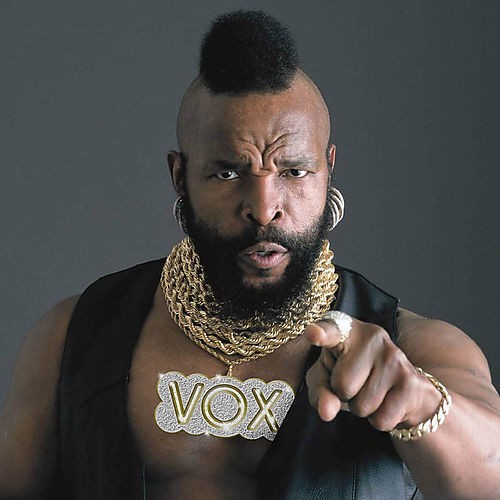
Biella Coleman: I Pity the Fool


I Pity the Fool, originally uploaded by the biella.
When I fly, I often do so with Continental Airlines because 1) I tend to like their international flights 2) they have many flights at convenient times to San Juan, PR where I head to around 4-6 times a year. Like most airlines, their food is nothing to be desired but their gluten free option is about some of the worst food I have ever tasted. The chicken is cooked to death but otherwise entirely buck naked. Like there is nothing on it, they throw some rice in the container, and sometimes (and only sometimes) a packet of Mrs. Dash. The best part of the meal, is a coconut macaroon. After about five years of this meal (usually putting it to the side but sometimes forgetting my food and suffering from hunger) I decided it was high time to take action; I could no longer confront the bleak reality of nude rubbery chicken. So I wrote them letter. I kept it brief and knew boring would not advance My Cause, so I just decided to add some rhetorical flourish and, naturally who else came to mind than the grand master of rhetorical flourish, Mr. T. After providing the basics, like describing the truly offensive nature of nude and rubbery chicken, I drove the nail deep into wood by stating : I pity the fool that has has to survive through their gluten free meal and that naked chicken sucked more than the word suck could ever really convey (though I did duly note my appreciation for the gluten free option and that I generally liked their service). After sending off the letter I forgot about it almost immediately nor did I fly with them again for many months (not because I boycotting, I just found cheaper flights). I recently flew to Puerto Rico and lo and behold have found the gluten free option has taken a drastic turn for the better. In fact, not only was the chicken no longer naked it was in fact, fully clothed, blackened chicken, spiced to no end. And the cherry on top was a gluten free blueberry muffin and some nice fruit. Go Continental. I will never know if my letter touched the soul of some Continental office employee, working in some nameless faceless, practically windowless office park, one whose life of labor is a bit like that gluten free chicken that I so despised, rubbery and naked, in other words with no flavour or spice. But I will forever think that a dash of spice, that with the aid of the badassery that is Mr. T, one can lightly kick corporate ass to take action.

3 September 2009

Andrew McMillan: Storing Secrets

Something that has been annoying me recently with my bank has been that their website tells me that they will never ask for my password over the phone. And then their call centre asks me for my password. Over the phone. Of course the call centre doesn't mean my website password - they mean the special 'ultra-secure 5ekr1t code phrase', but they don't have a good, universally understood word to use for that. Hopefully they'll work one out, but they appear to have got the message anyway. This got me to thinking about how these phrases are used, and how insecure they are in reality. After all when I store a website password I go to significant lengths to ensure that the same password is not represented by the same string of characters in my database. How vulnerable are our secrets in the databases of organisations we do business with?
<!--break--> Simple Password Storage Surprisingly often people do store passwords in databases in plain text, so that should their website get hacked someone would quite possibly be able to download the whole password database. Please feel free to name and shame these organisations in the comments below. My own pet hate in this regard is the 'Mailman' mailing list software: by default on 'mailman day' - the first day of each month - it sends me my password. In plain text. Of course many developers recognise this flaw, and work around it by using a one-way hash to obscure the password. Usually they choose md5 for their hashing algorithm though, and they often fail to use a 'salt' to randomise the plaintext prior to hashing. This means that even though a password might seem obscure like 'Supercalifragilisticexpialidocious!', and no doubt it will hash to something that seems obscure like 'a7290d426b6a1764af6fd7fba5db214e', but you can often find it straighforwardly by looking it up through one of the friendly reverse hash lookup websites. There's even a Digest::MD5::Reverse perl module on CPAN to interface to a bunch of these in a more automated way! Oh dear. One way to go beyond this is using a 1-way hashing algorithm, with a random salt included into the plaintext before the hashing, so that if (god forbid) two users had 'password' for their password I might see two rows in my database like:
davical=# select username, password from usr;
  username                       password                          
-------------+------------------------------------------------
 user1          SSHA qCctCH5dirYCf29uxJiE68LvmLRDdnBkbldiWlE=
 user2          SSHA y8yOzjoh9fSkVwLaXGoVtWdiIYxmU2FCb2dOZXc=
(2 rows)
When the user wants to log in I apply the same transformation to their incoming password (appending the same salt) and compare against my stored hash. If they match then it must be the same password they used previously. Storing passwords in this way secures them from casual, or even reasonably determined access, although naturally they can still be logged at the beginning and end of the communication - or even in the middle, if we didn't encrypt that bit! The PHP function I use to salt and hash the password is as follows:
/**
* Make a salted SHA1 string, given a string and (possibly) a salt.  PHP5 only (although it
* could be made to work on PHP4 (@see http://www.openldap.org/faq/data/cache/347.html). The
* algorithm used here is compatible with OpenLDAP so passwords generated through this
* function should be able to be migrated to OpenLDAP.
*
* If no salt is supplied we will generate a random one.
*
* @param string $instr The string to be salted and SHA1'd
* @param string $salt Some salt to sprinkle into the string to be SHA1'd so we don't
*                     get the same PW always hashing to the same value.
* @return string  SSHA  followed by a base64 encoded SHA1 of the salted string.
*/
function session_salted_sha1( $instr, $salt = "" )  
  if ( $salt == "" )  
    $salt = substr( base64_encode(sha1(rand(100000,9999999),true))), 2, 9);
   
  return ( sprintf(" SSHA %s", base64_encode(sha1($instr.$salt, true) . $salt)));
 
What about Secret Code Phrases? The problem with these secret code phrases, apart from all of the forgetability and guessability problems that have repeatedly been identified elsewhere, is that they are much less likely to be stored in a one-way hash. Are you going to ask your call-centre staff to type in the customer's secret code phrase? Didn't think so. And if you did it's going to add pronouncability issues to the whole mix. So this means that those organisations who have our secret code phrases in their database will, in all likelihood, have them stored directly as plain text, displaying them to the random call-centre staffer along with all of our other account details, and especially making them vulnerable to accidental disclosure. Disclosure of a sort that doesn't necessarily involve knowing they have been disclosed. Proliferation of Use These things provide the appearance of security - 'Security Theatre' as Bruce Schneier terms it - and because of that they're taken up in a kind of a cargo cult of security: "if the banks do it that way it must be a really good form of security". This makes the problem much worse, because now I have to remember a secret code phrases not only for banks, but for ISPs, phone companies, online auction websites, and so on. How many mother's maiden names, favourite teachers and friend's phone numbers do I have? I'm sure I'm at well up whatever curve it is that measures the number of passwords a person has, because five years ago I had so many I started to store them all in an encrypted database - protected by a yet another password, of course. Now in order to get my story straight I have to store my 'secret code phrases' in there too. If I didn't store my secret code phrases in that database, I'd obviously be re-using them everywhere, from a very small set - perhaps the same one that everyone around me overhears, every time I have to ring my bank to authorise another payment from my account. Because the proliferation of use is not just the breadth of wannabe thespians hoping to climb on the stage of this latest play, but the way they want to use it all the time, too. In fact the only conversation I've had recently with my bank where they didn't want it was when they rang me. Obviously I was the only person who could answer a phone in my house, right? It isn't just security theatre: I think we can see that this analogy belongs much deeper into the sub-genre of 'Security Farce'. Is there a solution? I don't have any easy answers - other than the ones to my security questions, of course - but some improvements are possible. Other banks have quizzed me about stuff like recent expenditure or credit card limits from time to time, but I've usually passed those tests by reading my last bank statement - or failed them by not having it to hand! I don't really think that the answers can lie in that direction because the information is only quite loosely tied to my identity. For some parts of the call-centre handling of secret code phrases there are changes that could make them more secure, but in the fairly short term these organisations need to find a different way to perform these out of band identity checks. For the actual storage of the code phrases it would be a marginal improvement if the database did not contain the actual phrase. Perhaps it could be encrypted with some application-known key, so that it can be unencrypted when it needs to be displayed, but never stored in the clear. Of course there's still the problem with that key... Verification of the secret code phrase could be done by someone not involved in the transaction, so that the call could be temporarily passed into a 'verification stream' where a different person performed the verification step without the context of the account details or enquiry. Though this sort of complexity seems unlikely with call centres seemingly being outsourced to the cheapest supplier. One thing does seem likely to become increasingly true: there is less and less private data in our lives, and every time we share one of these little nuggets with our bank, or our electricity company, or our on-line associates-we-call-friends, is one more chance that it escapes into the hands of the foaming-at-the-mouth-terrorist-cracker-communist-nazi-right-wing-religious-fruitcake hordes. The highest bar for personal verification which any of my banks currently sets for me is a random choice from a set of personally entered questions, with a set of personally entered answers, for which I have to enter two randomly selected characters using my mouse. That's not bad for safe verification, and I'd have to be really impressed with their security if that was stored in the database by a passphrase-protected encryption key. With that bank I don't know what they do over the phone - I assume they've concluded they can trust my logged on persona enough that I can do what I want online, consequently I haven't had to call them and share those secrets with everyone in earshot. Maybe paranoid freaks like me will go back to a chequebook and close down on-line access to their bank accounts entirely when they find themselves having to supply a skin scraping in order to authorise their next $500 payment. "Please insert your finger in the AccuYou(tm) BloodSucker(tm) to proceed with this payment" - well, I guess it might cut down my spending! In any case, biometrics need to be understood before they can be used effectively and appropriately - and remotely over the phone is probably not one of the ways that they can be trusted to work.

3 June 2009

Biella Coleman: Mike Daisy on Facebook

Soon before leaving NYC for the summer, Sumana invited me to see a monologue on facebook by Mike Daisy. It was a good show and he has since provided an mp3 of it. There are some classic moments in there, especially toward the middle of the audio. I am looking for am mp3 of his Great Men of Genius where he addresses Mr Hubbard among others (I find stuff on it
but not it). Anyone have it or pointers to where it might be?

2 June 2009

Biella Coleman: (Pobre) Shorty va ser sinbolico


shorty, originally uploaded by the biella.
As part of my reading bonanza, I am currently reading and enjoying Ellen Ullman s The Bug. She has a short section on puns and programmers which I like:

Puns, I would say, represented a human being s pent-up need for ambiguity. That a word could signify two things at once! And these double meanings could be simultaneously understood! What a relief from the flat-line understanding of a programmer s conversation with the machine! p. 59
Last night, I heard a Spanish pun that I particularly liked, having to do with my sister s dog, Shorty who is an odd creature (being a mix of Pit Bull, which is for certain, and legend goes, Chihuahua) will be as of the end of the day > sinbolico. I bet the Spanish speakers know what is happening to Shorty today. Anyone want to take a guess?

30 May 2009

Biella Coleman: Two forces of the academic universe: scorching and buttering

So I am struck by two opposing forces that characterize so much academic labor. Basically academics spend a lot and I mean mounds of time judging their peers. It happens informally ( blah is smart blah gave such a crappy talk at the MLA ) and formally (journal reviews, book reviews, letter of recommendation, tenure letters and it goes on and on). While there is certainly a middle ground in judgment in the form of constructive criticism (that which is neither too critical or full of praise), much of this labor is uber-critical and geared toward tearing down and scorching the intellectual earth you walk on. You should read some of the journal reviews! They are a window into some pretty seething nastiness, or at least it comes across as such. But thankfully scorn, which sometimes is pretty humorous, other times spot on, and other times, just pitiful, sits at the edge of full blown, often overblown, PRAISE. You can find it in journal reviews but it reaches its Whole Hog Glory in letters of recommendation. These letters are all about buttering up, buttering people up to present them as god s gift to earth or something similar. I rather enjoy reading and writing letters of recommendation because basically the content is the same (I know blah in this capacity, they are full of nothing but alien-like intelligence and total awesomeness, for these reasons, this is why they are perfect for your program) but the words and style, well, they are always different. And I frankly I just feel good reading them and writing them. Perhaps we have to praise so exuberantly to keep the two forces in cosmic balance.

29 May 2009

Biella Coleman: My return

After a fairly tiring (though exciting) semester of teaching, I have packed my books, lots of files, and other things I Can t Live Without, and shipped myself via Jet Blue to Puerto Rico where I will spend my summer. My reason for being here is simple: I want to see my mother who continues to live in a state of minimalism at a nursing home with Alzheimers. Coming home is never easy. Seeing her for the first time after an absence of months is especially hard and expect will continue to be as such, so long as I have periods away from her like I do. I never imagined that I would live between two cities as I do, but in general I am grateful I have a job that allows me to bridge these two places. When I am in NYC, I am so ridiculously busy (being an assistant professor is not unlike being a medical resident and doctor except the tempo slows down during our summers, at least to some extent) that I don t for better or for worse have my mother always perched on my mind. But being here is a different story. Not only do I have to structure my own time (so my mind can wander easily into those nether regions), but the house I stay in is nothing but filled with memories of my mom, most especially from the last 4 years she spent here with Alzheimers Along with visiting my mom, most of my time will be occupied in front of the computer working on the first draft of my book manuscript, which is due on September 15, 2009, 2 days before my birthday. I think I can hack it given that I have lots of time on my hands and when I get into work mode I can get a lot done. But the first month or so is going to be really really rough. I always find the transition into stare at your monitor mode for the entire day sort of tough. Puerto Rico also has a host of magnetic distractions like the garden and the beach, which I don t love but in fact adore. I also don t really associate the tropics/this house/the summer with mental work, but I will spend the next few weeks reversing that association or else I will be in deep trouble! Right now I am setting up the office, struggling to find the right a/c unit for the space, and in a few days I hope to be writing away

Biella Coleman: Nietzsche on art, being mighty poetic

Set outside ourselves, we swim in an enigmatic, fiery element, no
longer knowing ourselves nor recognizing the most familiar of
things; we no longer possess any standard of measurement,
everything lawlike and rigid begins to shift, everything gleams in
new colours, speaks to us in new signs and characters.

27 May 2009

Biella Coleman: Journal of Legal Anthropology

Something I have been thinking a lot about lately is why social science and humanities journals have been slower to move toward the land of open access in comparison to the hard sciences. There are a few obvious reasons but there are others which are still a mystery to me. I understand why existing journals can t easily pry away from established relations and obligations so I am not all that surprised that these journals, whether in the hard sciences or soft , have not gone open access. But perhaps newly minted journals are in better position to start right off the bat with an OA agreement. This is what the International Journal of Communication recently did and I am sure there are other examples. So today I was disappointed to find out that the following new Anthropology journal theJournal of Legal Anthropology has seemingly gone down a traditionalist copyright route. But I don t just want to point fingers here as I know editors are often in a very difficult position when seeking sponsorship and support for a new journal. That is, achieving OA, I understand is no walk in the park. And yet given their mission and given that it is a legal journal, it also makes sense to have some sort of open format:
International in scope, we hope it will be accessible beyond a specialist legal anthropology area and, in practice, both widen what is understood within the discipline of anthropology as legal and position the legal as also socio-cultural in terms of contemporary anthropology. The journal is produced by anthropologists interested in making anthropology accessible (translatable) in other settings and disciplines, and by legal practitioners with support from academics working in human rights, conflict and related areas
A walled garden is not suited for the flowers of access to grow. But perhaps they tried and failed. If this is the case, it would also be good to learn of these experiences, which can be used in future cases to pave the path toward greater access.

Biella Coleman: Free as in

Free as in pie. Might have to start a gluten free version.

Biella Coleman: Liberated and..

With more vacation time, longer (paid) maternity leave, and decent and affordable child care, I am sure this scenario would be different.

19 May 2009

Biella Coleman: Chain-reaction of ideas

One day, I would love to teach a class on the culture and politics of technology and ditch all of the academic pieces and replace with a string of novels and fictional short stories. Though it may be a few years before I can pull this off, I am already compiling my list and there is naturally a healthy serving of science fiction (along with Kurt Vonnegut, who I adore). Perhaps one my favorite science fiction authors is Philip Dick who edges his readers close to delirum and sometimes insanity and all through mere words. But one of my favorite writings by PD comes not from his fictional fun house but from a regular (and staid) letter composed of a simple and elegant description of what makes science fiction so e(special):
I think Dr. Willis McNelly at the California State University at
Fullerton put it best when he said that the true protagonist of an sf
story or novel is an idea and not a person. If it is *good* sf the
idea is new, it is stimulating, and, probably most important of all,
it sets off a chain-reaction of ramification-ideas in the mind of the
reader; it so-to-speak unlocks the reader s mind so that the mind,
like the author s, begins to create. Thus sf is creative and it
inspires creativity, which mainstream fiction by-and-large does not
do. We who read sf (I am speaking as a reader now, not a writer) read
it because we love to experience this chain-reaction of ideas being
set off in our minds by something we read, something with a new idea
in it; hence the very best since fiction ultimately winds up being a
collaboration between author and reader, in which both create and
enjoy doing it: joy is the essential and final ingredient of science
fiction, the joy of discovery of newness. Philip Dick (in a letter)
May 14, 1981
Truth be told, I don t really know much about science fiction outside of the classics but I look forward to reading more and slowly am adding a few pieces to my collection. And when I need to find out something about sci fi, I turn to Sumana who is pretty well schooled in its ways. She has recently co-edited a new anthology of science fiction stories including one on hardware hacking and faith that some of you might enjoy.

18 May 2009

Biella Coleman: Tonight: Bollier, NYU

Monday, May 18, 7:00pm VENUE: Courant Institute
251 Mercer Street (Warren Weaver Hall)
Room 109 TITLE: The Struggle to Build a Digital Republic ABSTRACT: David Bollier will speak about the themes of his new book, Viral
Spiral: How the Commoners Built a Digital Republic of Their Own (New
Press). The book is the first comprehensive history of the free
culture movement and sharing economy that is empowering ordinary
people, disrupting markets and changing politics and culture. Bollier
will talk about the rise of free and open source software, Creative
Commons licenses, the new forms of non-market creativity (Wikipedia,
blogs, remix music, videos) as well as fascinating innovations in open
science, open education and open business models. More about the
book can be found at the website www.viralspiral.cc. More about
Bollier can be found at www.bollier.org.

9 May 2009

Biella Coleman: Fresh

If you are into sustainable farming this movie will likely catch your fancy.There is a screening here in NYC at the end of May. Supposedly they are going to stream the movie online, which I certainly hope to be the case. A political documentary that is behind bars is really not so useful and is a contradictory project as well. If you are into the idea of farming but live in the city, and New York City in specific, you can attend a Htink workshop on May 17th and start urban farming.

Next.

Previous.