Search Results: "bod"

29 September 2024

Reproducible Builds: Supporter spotlight: Kees Cook on Linux kernel security
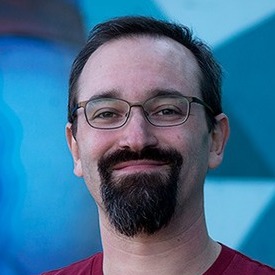
The Reproducible Builds project relies on several projects, supporters and sponsors for financial support, but they are also valued as ambassadors who spread the word about our project and the work that we do. This is the eighth installment in a series featuring the projects, companies and individuals who support the Reproducible Builds project. We started this series by featuring the Civil Infrastructure Platform project, and followed this up with a post about the Ford Foundation as well as recent ones about ARDC, the Google Open Source Security Team (GOSST), Bootstrappable Builds, the F-Droid project, David A. Wheeler and Simon Butler. Today, however, we will be talking with Kees Cook, founder of the Kernel Self-Protection Project.

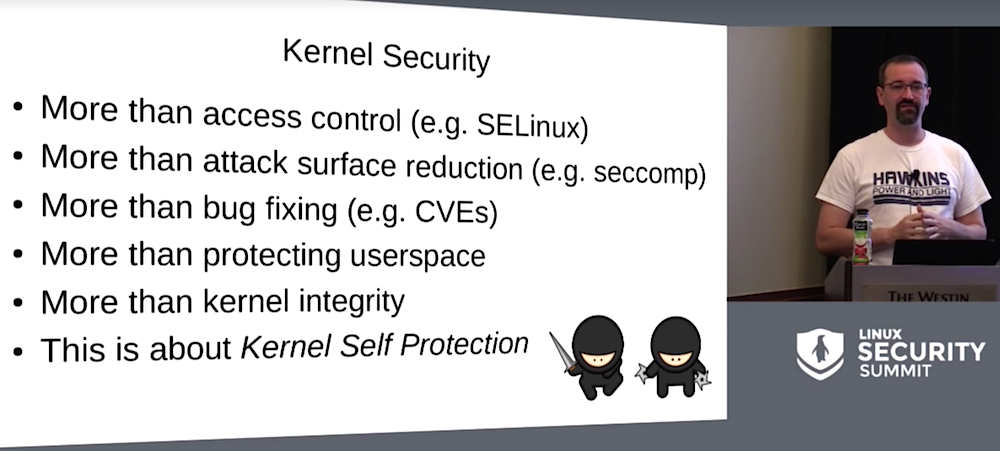
Vagrant Cascadian: Could you tell me a bit about yourself? What sort of things do you work on? Kees Cook: I m a Free Software junkie living in Portland, Oregon, USA. I have been focusing on the upstream Linux kernel s protection of itself. There is a lot of support that the kernel provides userspace to defend itself, but when I first started focusing on this there was not as much attention given to the kernel protecting itself. As userspace got more hardened the kernel itself became a bigger target. Almost 9 years ago I formally announced the Kernel Self-Protection Project because the work necessary was way more than my time and expertise could do alone. So I just try to get people to help as much as possible; people who understand the ARM architecture, people who understand the memory management subsystem to help, people who understand how to make the kernel less buggy.
Vagrant: Could you describe the path that lead you to working on this sort of thing? Kees: I have always been interested in security through the aspect of exploitable flaws. I always thought it was like a magic trick to make a computer do something that it was very much not designed to do and seeing how easy it is to subvert bugs. I wanted to improve that fragility. In 2006, I started working at Canonical on Ubuntu and was mainly focusing on bringing Debian and Ubuntu up to what was the state of the art for Fedora and Gentoo s security hardening efforts. Both had really pioneered a lot of userspace hardening with compiler flags and ELF stuff and many other things for hardened binaries. On the whole, Debian had not really paid attention to it. Debian s packaging building process at the time was sort of a chaotic free-for-all as there wasn t centralized build methodology for defining things. Luckily that did slowly change over the years. In Ubuntu we had the opportunity to apply top down build rules for hardening all the packages. In 2011 Chrome OS was following along and took advantage of a bunch of the security hardening work as they were based on ebuild out of Gentoo and when they looked for someone to help out they reached out to me. We recognized the Linux kernel was pretty much the weakest link in the Chrome OS security posture and I joined them to help solve that. Their userspace was pretty well handled but the kernel had a lot of weaknesses, so focusing on hardening was the next place to go. When I compared notes with other users of the Linux kernel within Google there were a number of common concerns and desires. Chrome OS already had an upstream first requirement, so I tried to consolidate the concerns and solve them upstream. It was challenging to land anything in other kernel team repos at Google, as they (correctly) wanted to minimize their delta from upstream, so I needed to work on any major improvements entirely in upstream and had a lot of support from Google to do that. As such, my focus shifted further from working directly on Chrome OS into being entirely upstream and being more of a consultant to internal teams, helping with integration or sometimes backporting. Since the volume of needed work was so gigantic I needed to find ways to inspire other developers (both inside and outside of Google) to help. Once I had a budget I tried to get folks paid (or hired) to work on these areas when it wasn t already their job.
Vagrant: So my understanding of some of your recent work is basically defining undefined behavior in the language or compiler? Kees: I ve found the term undefined behavior to have a really strict meaning within the compiler community, so I have tried to redefine my goal as eliminating unexpected behavior or ambiguous language constructs . At the end of the day ambiguity leads to bugs, and bugs lead to exploitable security flaws. I ve been taking a four-pronged approach: supporting the work people are doing to get rid of ambiguity, identify new areas where ambiguity needs to be removed, actually removing that ambiguity from the C language, and then dealing with any needed refactoring in the Linux kernel source to adapt to the new constraints. None of this is particularly novel; people have recognized how dangerous some of these language constructs are for decades and decades but I think it is a combination of hard problems and a lot of refactoring that nobody has the interest/resources to do. So, we have been incrementally going after the lowest hanging fruit. One clear example in recent years was the elimination of C s implicit fall-through in switch statements. The language would just fall through between adjacent cases if a break (or other code flow directive) wasn t present. But this is ambiguous: is the code meant to fall-through, or did the author just forget a break statement? By defining the [[fallthrough]] statement, and requiring its use in Linux, all switch statements now have explicit code flow, and the entire class of bugs disappeared. During our refactoring we actually found that 1 in 10 added [[fallthrough]] statements were actually missing break statements. This was an extraordinarily common bug! So getting rid of that ambiguity is where we have been. Another area I ve been spending a bit of time on lately is looking at how defensive security work has challenges associated with metrics. How do you measure your defensive security impact? You can t say because we installed locks on the doors, 20% fewer break-ins have happened. Much of our signal is always secondary or retrospective, which is frustrating: This class of flaw was used X much over the last decade so, and if we have eliminated that class of flaw and will never see it again, what is the impact? Is the impact infinity? Attackers will just move to the next easiest thing. But it means that exploitation gets incrementally more difficult. As attack surfaces are reduced, the expense of exploitation goes up.
Vagrant: So it is hard to identify how effective this is how bad would it be if people just gave up? Kees: I think it would be pretty bad, because as we have seen, using secondary factors, the work we have done in the industry at large, not just the Linux kernel, has had an impact. What we, Microsoft, Apple, and everyone else is doing for their respective software ecosystems, has shown that the price of functional exploits in the black market has gone up. Especially for really egregious stuff like a zero-click remote code execution. If those were cheap then obviously we are not doing something right, and it becomes clear that it s trivial for anyone to attack the infrastructure that our lives depend on. But thankfully we have seen over the last two decades that prices for exploits keep going up and up into millions of dollars. I think it is important to keep working on that because, as a central piece of modern computer infrastructure, the Linux kernel has a giant target painted on it. If we give up, we have to accept that our computers are not doing what they were designed to do, which I can t accept. The safety of my grandparents shouldn t be any different from the safety of journalists, and political activists, and anyone else who might be the target of attacks. We need to be able to trust our devices otherwise why use them at all?
Vagrant: What has been your biggest success in recent years? Kees: I think with all these things I am not the only actor. Almost everything that we have been successful at has been because of a lot of people s work, and one of the big ones that has been coordinated across the ecosystem and across compilers was initializing stack variables to 0 by default. This feature was added in Clang, GCC, and MSVC across the board even though there were a lot of fears about forking the C language. The worry was that developers would come to depend on zero-initialized stack variables, but this hasn t been the case because we still warn about uninitialized variables when the compiler can figure that out. So you still still get the warnings at compile time but now you can count on the contents of your stack at run-time and we drop an entire class of uninitialized variable flaws. While the exploitation of this class has mostly been around memory content exposure, it has also been used for control flow attacks. So that was politically and technically a large challenge: convincing people it was necessary, showing its utility, and implementing it in a way that everyone would be happy with, resulting in the elimination of a large and persistent class of flaws in C.
Vagrant: In a world where things are generally Reproducible do you see ways in which that might affect your work? Kees: One of the questions I frequently get is, What version of the Linux kernel has feature $foo? If I know how things are built, I can answer with just a version number. In a Reproducible Builds scenario I can count on the compiler version, compiler flags, kernel configuration, etc. all those things are known, so I can actually answer definitively that a certain feature exists. So that is an area where Reproducible Builds affects me most directly. Indirectly, it is just being able to trust the binaries you are running are going to behave the same for the same build environment is critical for sane testing.
Vagrant: Have you used diffoscope? Kees: I have! One subset of tree-wide refactoring that we do when getting rid of ambiguous language usage in the kernel is when we have to make source level changes to satisfy some new compiler requirement but where the binary output is not expected to change at all. It is mostly about getting the compiler to understand what is happening, what is intended in the cases where the old ambiguity does actually match the new unambiguous description of what is intended. The binary shouldn t change. We have used diffoscope to compare the before and after binaries to confirm that yep, there is no change in binary .
Vagrant: You cannot just use checksums for that? Kees: For the most part, we need to only compare the text segments. We try to hold as much stable as we can, following the Reproducible Builds documentation for the kernel, but there are macros in the kernel that are sensitive to source line numbers and as a result those will change the layout of the data segment (and sometimes the text segment too). With diffoscope there s flexibility where I can exclude or include different comparisons. Sometimes I just go look at what diffoscope is doing and do that manually, because I can tweak that a little harder, but diffoscope is definitely the default. Diffoscope is awesome!
Vagrant: Where has reproducible builds affected you? Kees: One of the notable wins of reproducible builds lately was dealing with the fallout of the XZ backdoor and just being able to ask the question is my build environment running the expected code? and to be able to compare the output generated from one install that never had a vulnerable XZ and one that did have a vulnerable XZ and compare the results of what you get. That was important for kernel builds because the XZ threat actor was working to expand their influence and capabilities to include Linux kernel builds, but they didn t finish their work before they were noticed. I think what happened with Debian proving the build infrastructure was not affected is an important example of how people would have needed to verify the kernel builds too.
Vagrant: What do you want to see for the near or distant future in security work? Kees: For reproducible builds in the kernel, in the work that has been going on in the ClangBuiltLinux project, one of the driving forces of code and usability quality has been the continuous integration work. As soon as something breaks, on the kernel side, the Clang side, or something in between the two, we get a fast signal and can chase it and fix the bugs quickly. I would like to see someone with funding to maintain a reproducible kernel build CI. There have been places where there are certain architecture configurations or certain build configuration where we lose reproducibility and right now we have sort of a standard open source development feedback loop where those things get fixed but the time in between introduction and fix can be large. Getting a CI for reproducible kernels would give us the opportunity to shorten that time.
Vagrant: Well, thanks for that! Any last closing thoughts? Kees: I am a big fan of reproducible builds, thank you for all your work. The world is a safer place because of it.
Vagrant: Likewise for your work!


For more information about the Reproducible Builds project, please see our website at reproducible-builds.org. If you are interested in ensuring the ongoing security of the software that underpins our civilisation and wish to sponsor the Reproducible Builds project, please reach out to the project by emailing contact@reproducible-builds.org.
28 September 2024

Dave Hibberd: EuroBSDCon 2024 Report

This year I attended EuroBSDCon 2024 in Dublin. I always appreciate an excuse to head over to Ireland, and this seemed like a great chance to spend some time in Dublin and learn new things. Due to constraints on my time I didn t go to the 2 day devsummit that precedes the conference, only the main event itself.

The Event EuroBSDCon was attended by about 200-250 people, the hardcore of the BSD community! Attendees came from all over, I met Canadians, USAians, Germanians, Belgians and Irelandians amongst other nationalities! The event was at UCD Dublin, which is a gorgeous university campus about 10km south of Dublin proper in Stillorgan. The speaker hotel was a 20 minute walk (at my ~9min/km pace) from the hotel, or a quick bus journey. It was a pleasant walk, through the leafy campus and then along some pretty broad pavements, albeit beside a dual carriageway. The cycle infrastructure was pretty excellent too, but I sadly was unable to lease a city bike and make my way around on 2 wheels - Dublinbikes don t extend that far out the city. Lunch each day was Irish themed food - Saturday was beef stew (a Frenchman asked me what it was called - his only equivalent words were Beef Bourguignon ) and Sunday was Bangers & Mash! The kitchen struggled a bit - food was brought out in bowls in waves, and that ensured there was artificial scarcity that clearly left anxiety for some that they weren t going to be fed! Everyone I met was friendly from the day I arrived, and that set me very much at ease and made the event much more enjoyable - things are better shared with others. Big shout out to dch and Blake Willis for spending a lot of time talking to me over the weekend!

Talks I Attended

Keynote: Evidence based Policy formation in the EU Tom Smyth This talk given by Tom Smyth was an interesting look into his work with EU Policymakers in ensuring fair competition for his small, Irish ISP. It was an enlightening look into the workings of the EU and the various bodies that set, and manage policy. It truly is a complicated beast, but the feeling I left with was that there are people all through the organisation who are desperate to do the right thing for EU citizens at all costs. Sadly none of it is directly applicable to me living in the UK, but I still get to have a say on policy and vote in polls as an Irish citizen abroad.

10(ish) years of FreeBSD/arm64 Andrew Turner I have been a fan of ARM platforms for a long, long time. I had an early ARM Chromebook and have been equal measures excited and frustrated by the raspberry pi since first contact. I tend to find other ARM people at events and this was no exception! It was an interesting view into one person s dedication to making arm64 a platform for FreeBSD, starting out with no documentation or hardware to becoming a first-class platform. It s interesting to see the roadmap and things upcoming too and makes me hopeful for the future of arm64 in various OSes!

1-800-RC(8)-HELP: Dial Into FreeBSD Service Scripts Mastery! Mateusz Piotrowski rc scripts and startup applications scare me a bit. I m better at systemd units than sysvinit scripts, but that isn t really a transferable skill! This was a deep dive into lots of the functionality that FreeBSD s RC offers, and highlighted things that I only thought were limited to Linux s systemd. I am much more aware of what it s capable of now, but I m still scared to take it on! Afterwards I had a great chat in the hallway with Mateusz about our OS s different approaches to this problem and was impressed with the pragmatic view he had on startup, systemd, rc and the future!

Package management without borders. Using Ravenports on multiple BSDs Michael Reim Ports on the BSDs interest me, but I hadn t realised that outside of each major BSD s collection there were other, cross platform ports collections offered. Ravenports is one of these under developments, and it was good to understand the hows, why and what s happenings of the system. Plus, with my hibbian obsession on building other people s software as my own packages, it s interesting to see how others are doing it!

Building a Modern Packet Radio Network using Open Software me I spoke for 45 minutes to share my passion and frustration for amateur radio, packet radio, the law, the technology and what we re doing in the UK Packet network. This was a lot of fun - it felt like I had a busy room, lots of people interested in the stupid stuff I do with technology and I had lots of conversations after the fact about radio, telecoms, networking and at one point was cornered by what I describe as the Erlang Mafia to talk about how they could help!

Hacking - 30 years ago Walter Belgers This unrecorded talk looked at the history of the Dutch hacker scene, and a young group of hackers explorations of the early internet before modern security was a thing. It was exciting, enrapturing, well presented and a great story of a well spent youth in front of computers.

Social By 1730 I was pretty drained so I took myself back to the hotel missing the last talks, had some down time, and got the DART train to the social event at Brewdog. This invovled about an hour s walking and some train time and that was a nice time to reset my head and just watch the world. The train I was on had a particularly interesting feature where when the motors were not loaded (slowdown or coasting) the lights slowly flickered dim-bright-dim. I don t know if this is across the fleet or just this one, but it was fun to pontificate as I looked out the window at South Dublin passing by. The social was good - a few beer tokens (cider in my case, trying to avoid beer-driven hangovers still), some pleasant junk food and plenty of good company to talk to, lots of people wanting to talk about radio and packet to me! Brewdog struggled a bit - both in bar speed (a linear queue formed despite the staff preferring the crowd-around method of queue) and buffet food appeared in somewhat disjointed waves, meaning that people loitered around the food tables and cleared the plates of wings, sliders, fries, onion rings, mac & cheese as they appeared 4-5 plates at a time. Perhaps a few hundred hungry bodies was a bit too much for them to feed at once. They had shuffleboard that was played all night by various groups! I caught the last bus home, which was relatively painless!

Is our software sustainable? Kent Inge Fagerland Simonsen This was an interesting look into reducing the footprint of software to make it a net benefit. Lots of examples of how little changes can barrel up to big, gigawatthour changes when aggregated over the entire installbase of android or iOS!

A Packet s Journey Through the OpenBSD Network Stack Alexander Bluhm This was an analysis of what happens at each stage of networking in OpenBSD and was pretty interesting to see. Lots of it was out my depth, but it s cool to get an explanation and appreciation for various elements of how software handles each packet that arrives and the differences in the ipv4 and ipv6 stack!

FreeBSD at 30 Years: Its Secrets to Success Kirk McKusick This was a great statistical breakdown of FreeBSD since inception, including top committers, why certain parts of the system and community work so well and what has given it staying power compared to some projects on the internet that peter out after just a few years! Kirk s excitement and passion for the project really shone through, and I want to read his similarly titled article in the FreeBSD Journal now!

Building an open native FreeBSD CI system from scratch with lua, C, jails & zfs Dave Cottlehuber Dave spoke pretty excitedly about his work on a CI system using tools that FreeBSD ships with, and introduced me to the integration of C and Lua which I wasn t fully aware of before. Or I was, and my brain forgot it! With my interest in software build this year, it was quite a timely look at how others are thinking of doing things (I am doing similar stuff with zfs!). I look forward to playing with it when it finally is released to the Real World!

Building an Appliance Allan Jude This was an interesting look into the tools that FreeBSD provides which can be used to make immutable, appliance OSes without too much overhead. Fail safe upgrades and boots with ZFS, running approved code with secure boot, factory resetting and more were discussed! I have had thoughts around this in the recent past, so it was good to have some ideas validated, some challenged and gave me food for thought.

Experience as a speaker I really enjoyed being a speaker at the event! I ve spoken at other things before, but this really was a cut above. The event having money to provide me a hotel was a really welcome surprise, and also receiving a gorgeous scarf as a speaker gift was a great surprise (and it has already been worn with the change of temperature here in Scotland this week!). I would definitely consider returning, either as an attendee or as a speaker. The community of attendees were pragmatic, interesting, engaging and welcoming, the organising committee were spot-on in their work making it happen and the whole event, while turning my brain to mush with all the information, was really enjoyable and I left energised and excited by things instead of ground down and tired.

26 September 2024

Melissa Wen: Reflections on 2024 Linux Display Next Hackfest

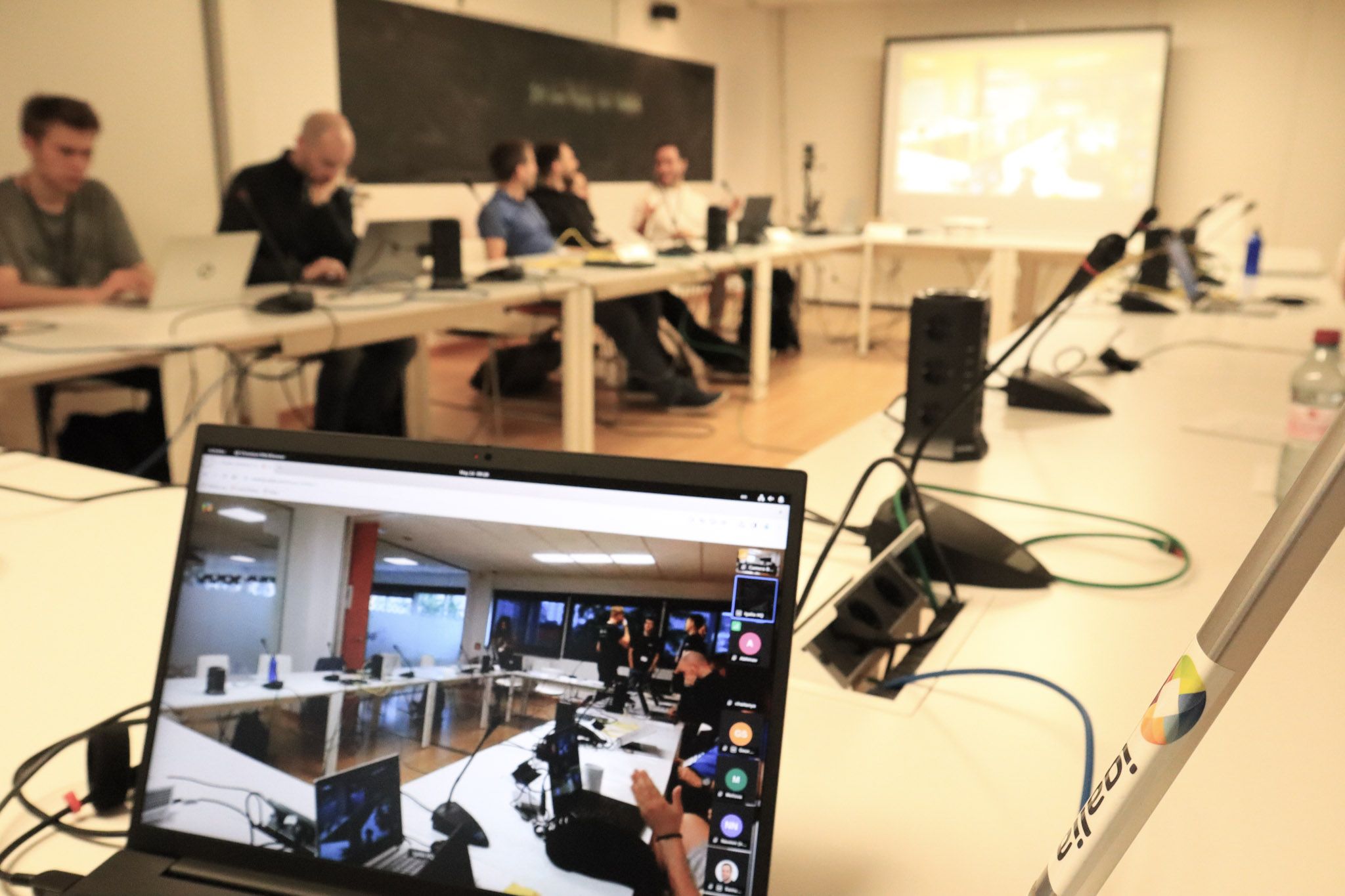
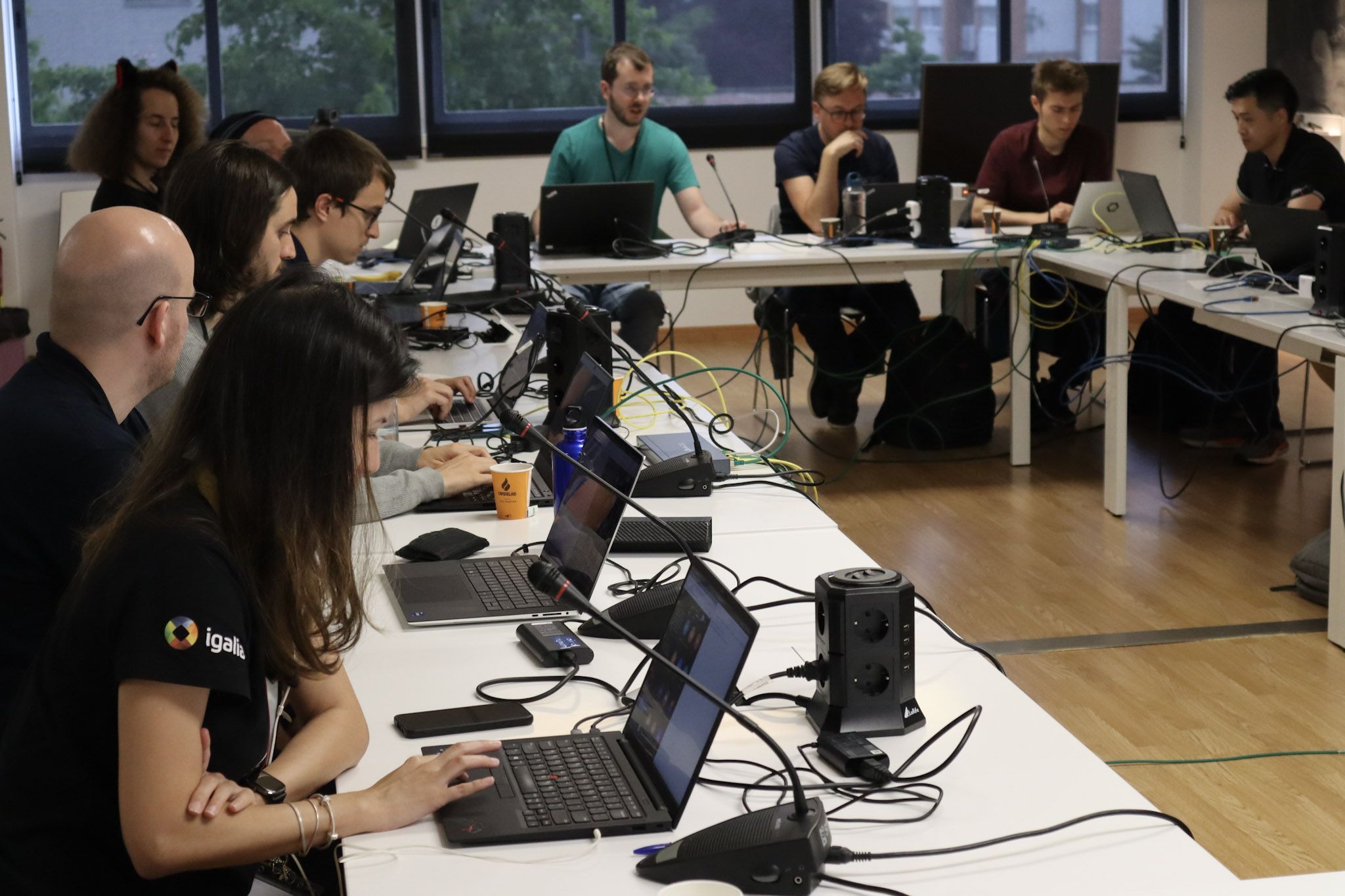
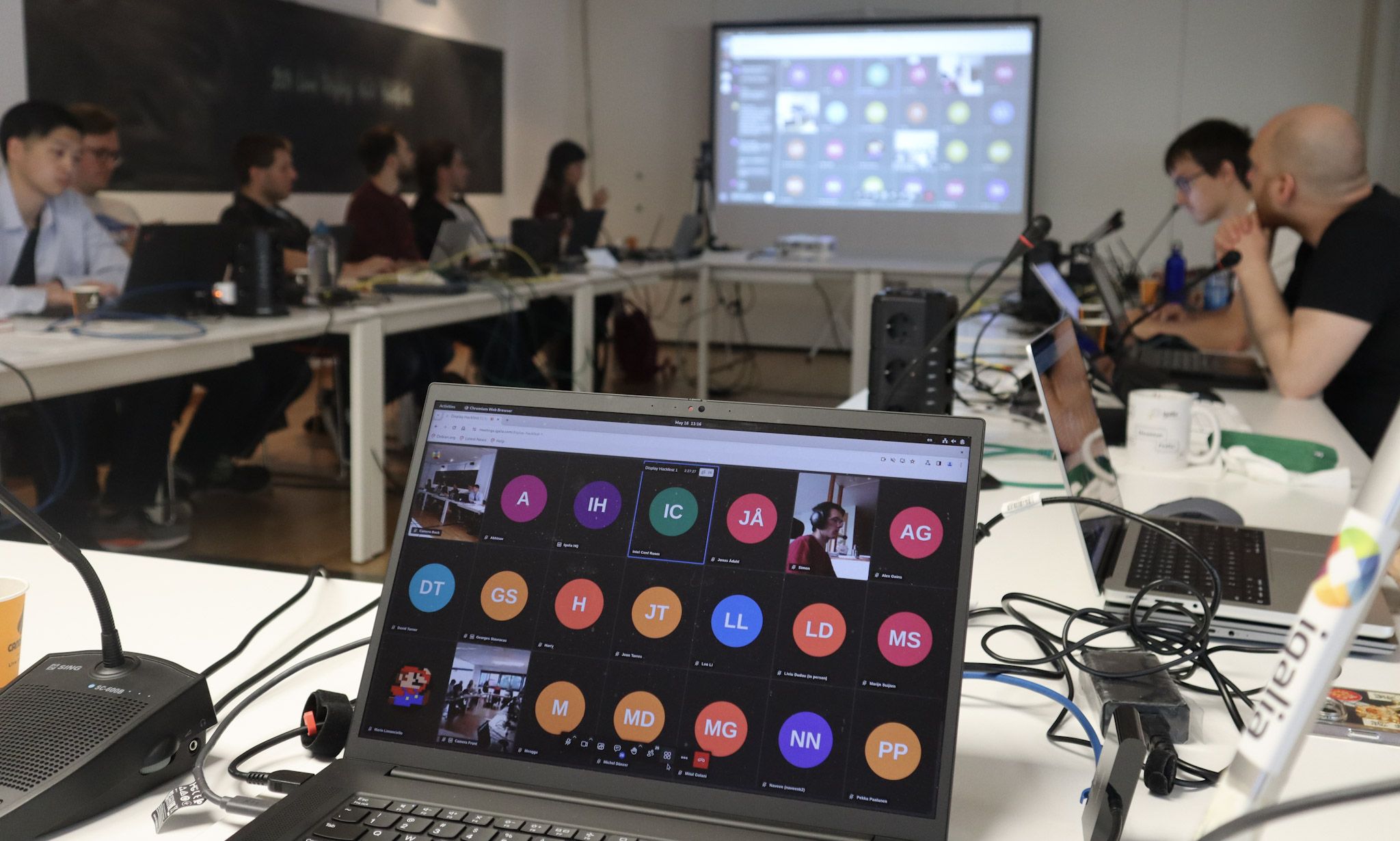
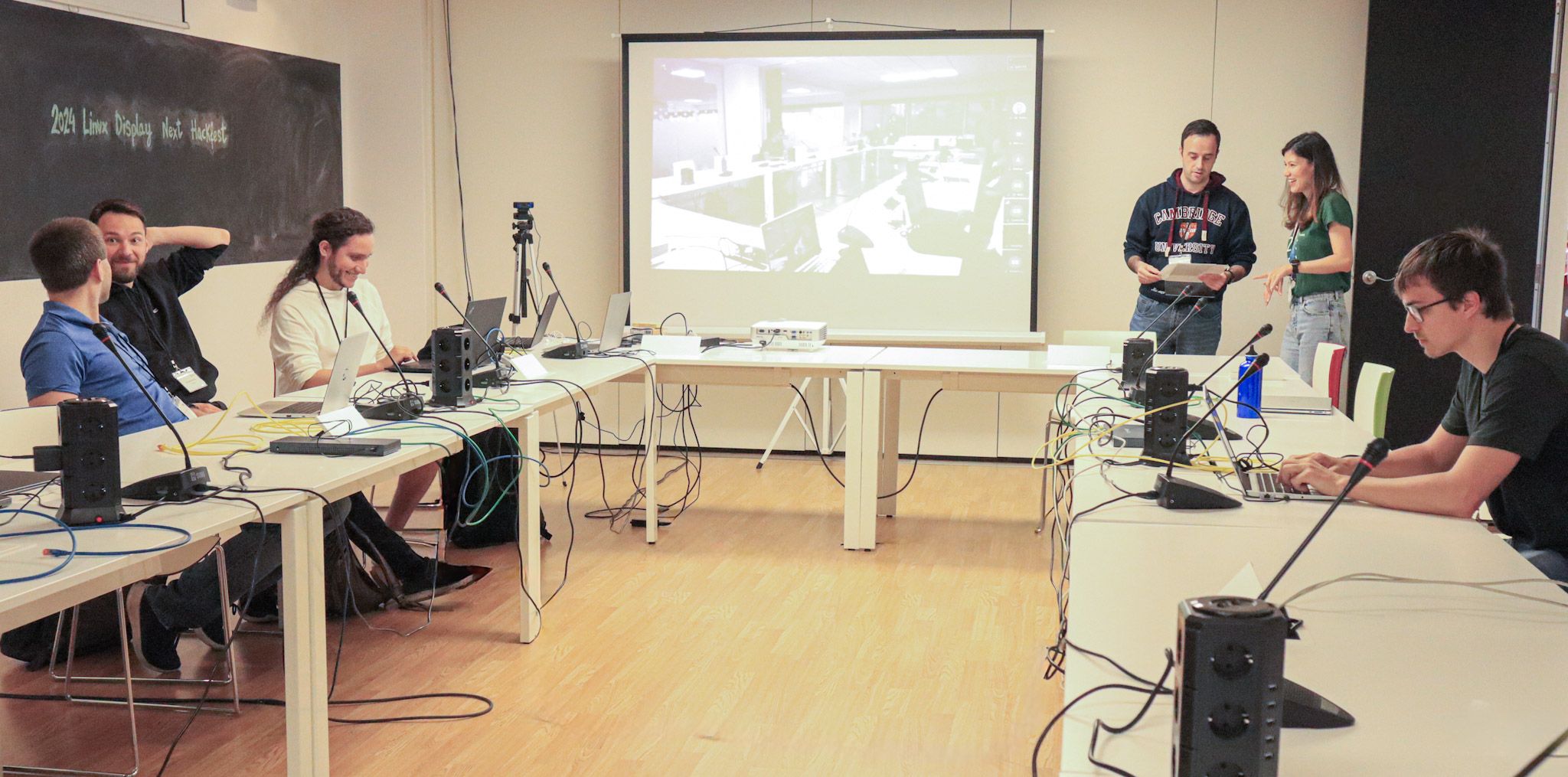
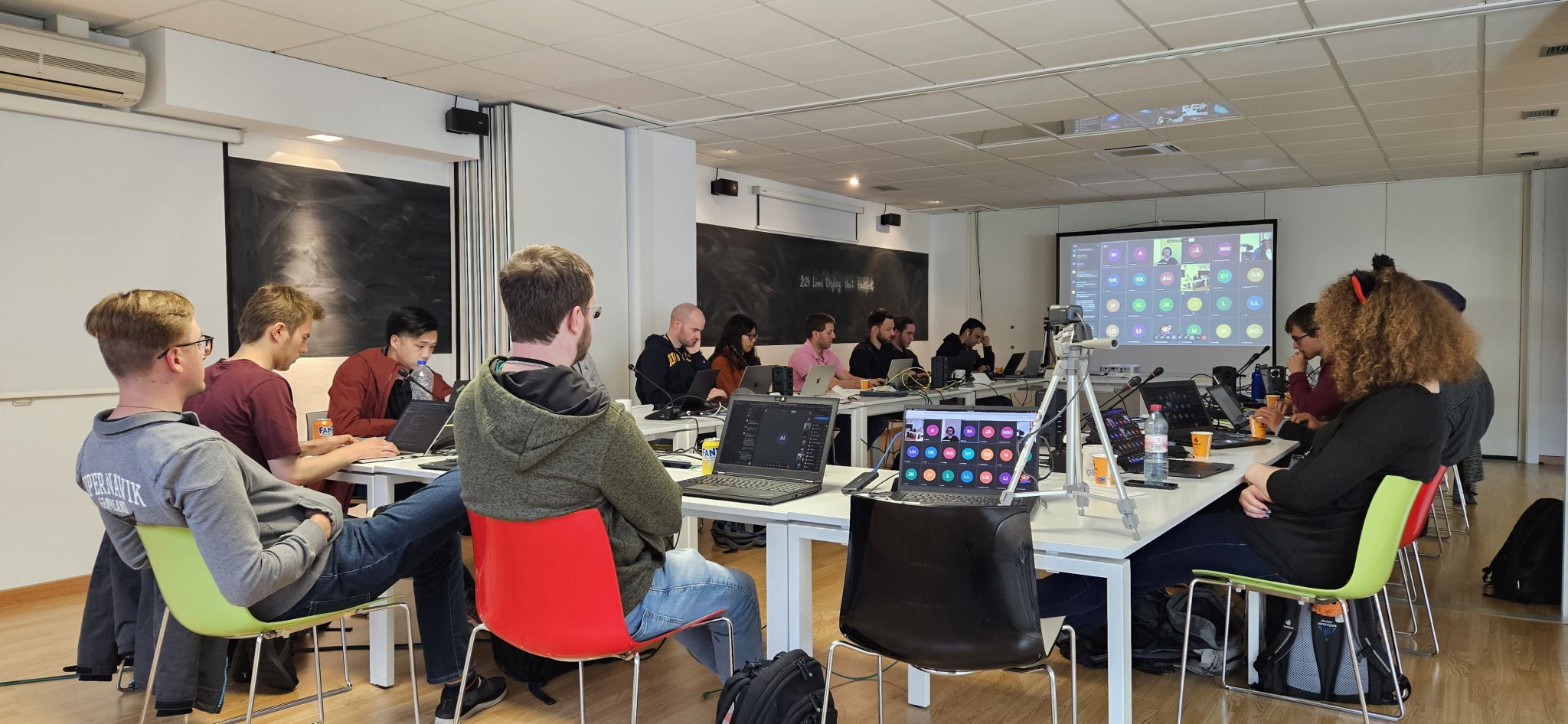
Hey everyone! The 2024 Linux Display Next hackfest concluded in May, and its outcomes continue to shape the Linux Display stack. Igalia hosted this year s event in A Coru a, Spain, bringing together leading experts in the field. Samuel Iglesias and I organized this year s edition and this blog post summarizes the experience and its fruits. One of the highlights of this year s hackfest was the wide range of backgrounds represented by our 40 participants (both on-site and remotely). Developers and experts from various companies and open-source projects came together to advance the Linux Display ecosystem. You can find the list of participants here. The event covered a broad spectrum of topics affecting the development of Linux projects, user experiences, and the future of display technologies on Linux. From cutting-edge topics to long-term discussions, you can check the event agenda here.

Organization Highlights The hackfest was marked by in-depth discussions and knowledge sharing among Linux contributors, making everyone inspired, informed, and connected to the community. Building on feedback from the previous year, we refined the unconference format to enhance participant preparation and engagement. Structured Agenda and Timeboxes: Each session had a defined scope, time limit (1h20 or 2h10), and began with an introductory talk on the topic.
  • Participant-Led Discussions: We pre-selected in-person participants to lead discussions, allowing them to prepare introductions, resources, and scope.
  • Transparent Scheduling: The schedule was shared in advance as GitHub issues, encouraging participants to review and prepare for sessions of interest.
Engaging Sessions: The hackfest featured a variety of topics, including presentations and discussions on how participants were addressing specific subjects within their companies.
  • No Breakout Rooms, No Overlaps: All participants chose to attend all sessions, eliminating the need for separate breakout rooms. We also adapted run-time schedule to keep everybody involved in the same topics.
  • Real-time Updates: We provided notifications and updates through dedicated emails and the event matrix room.
Strengthening Community Connections: The hackfest offered ample opportunities for networking among attendees.
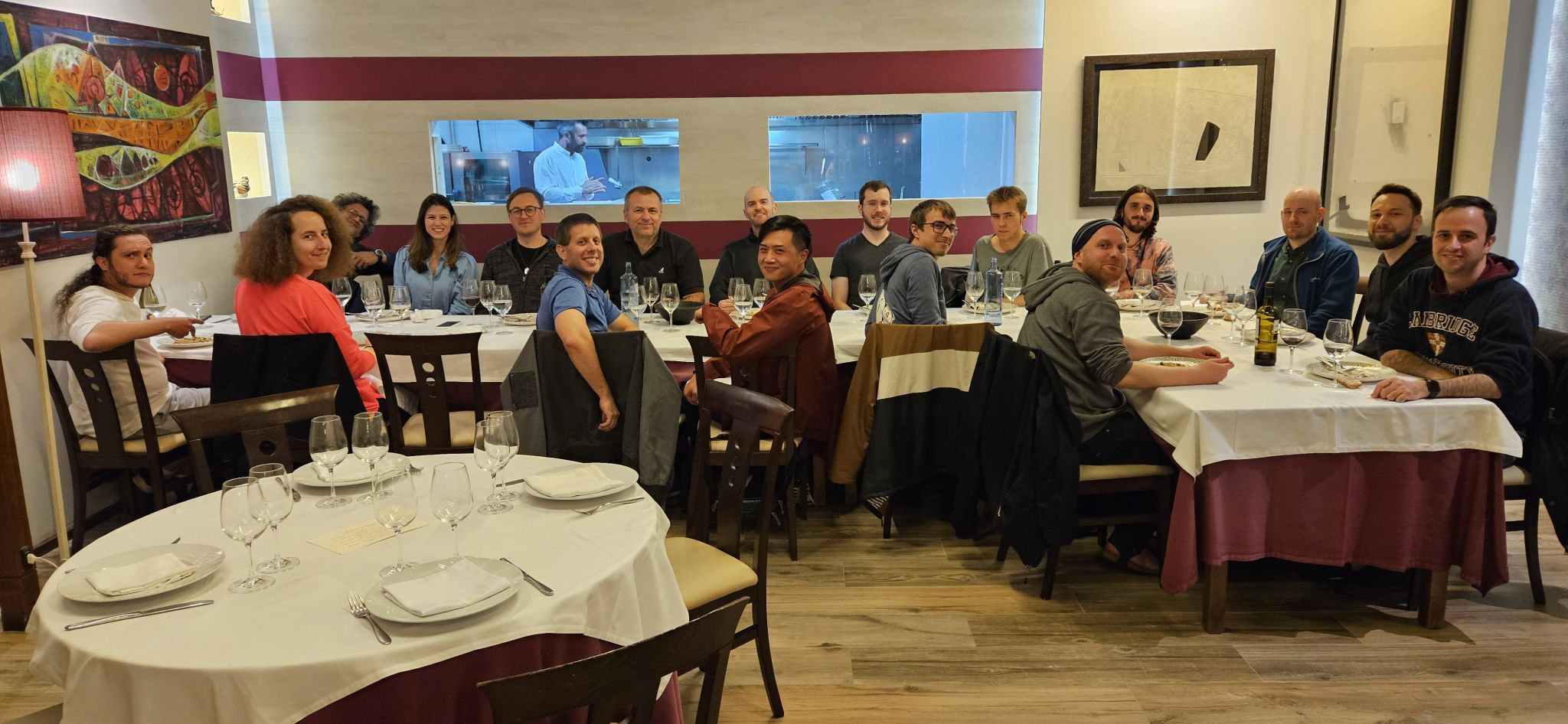
  • Social Events: Igalia sponsored coffee breaks, lunches, and a dinner at a local restaurant.
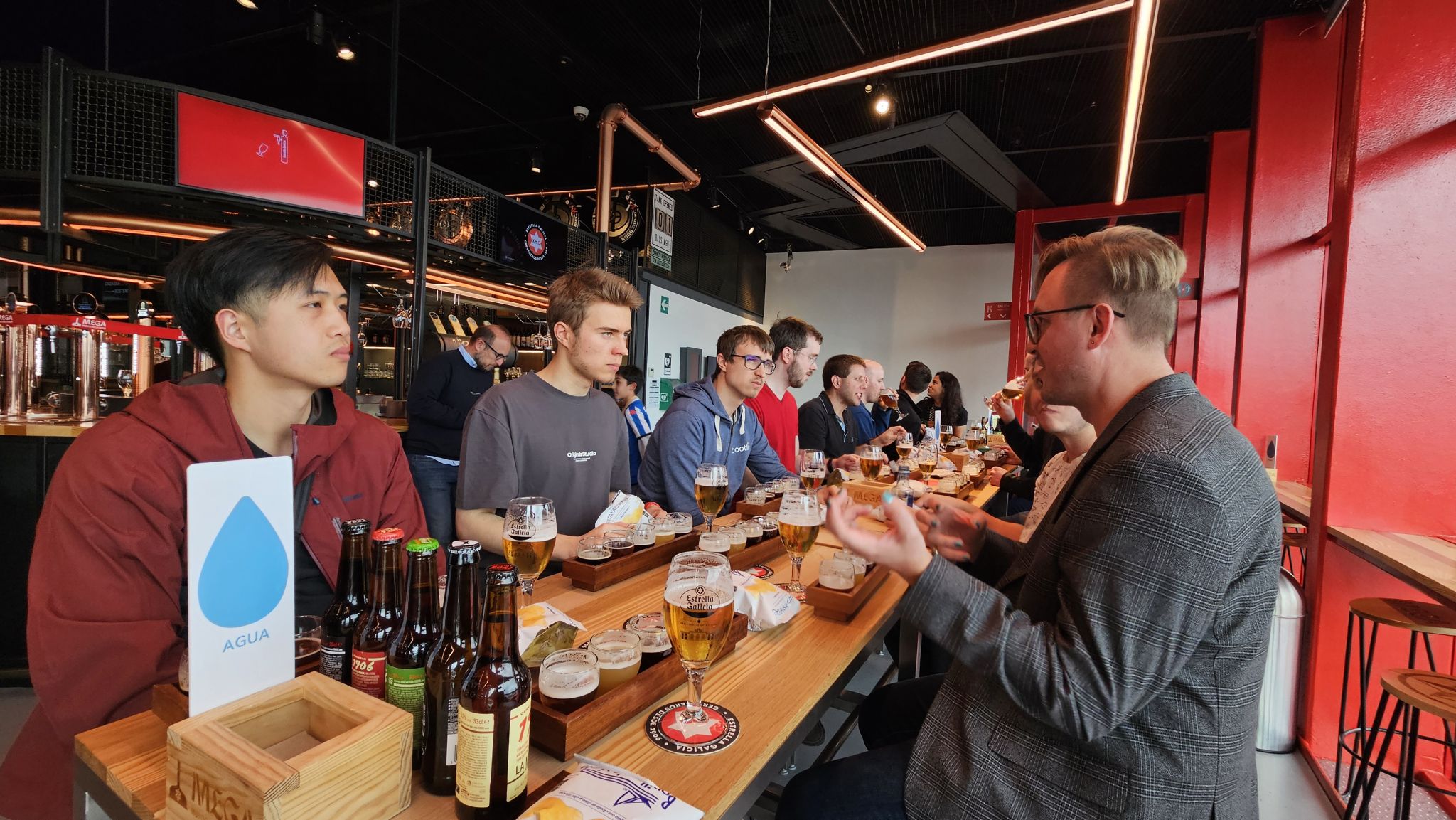
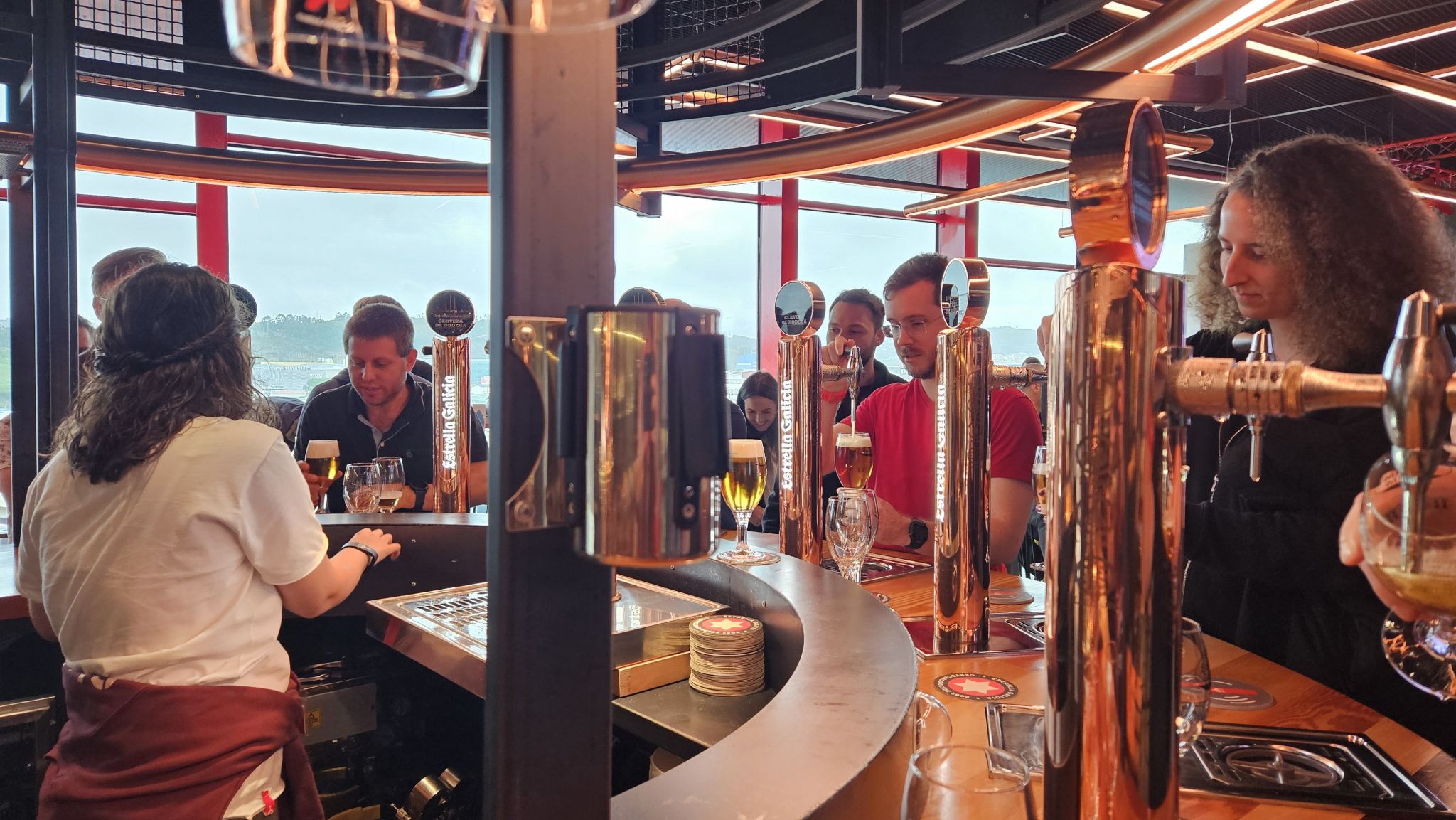
  • Museum Visit: Participants enjoyed a sponsored visit to the Museum of Estrela Galicia Beer (MEGA).

Fruitful Discussions and Follow-up The structured agenda and breaks allowed us to cover multiple topics during the hackfest. These discussions have led to new display feature development and improvements, as evidenced by patches, merge requests, and implementations in project repositories and mailing lists. With the KMS color management API taking shape, we discussed refinements and best approaches to cover the variety of color pipeline from different hardware-vendors. We are also investigating techniques for a performant SDR<->HDR content reproduction and reducing latency and power consumption when using the color blocks of the hardware.

Color Management/HDR Color Management and HDR continued to be the hottest topic of the hackfest. We had three sessions dedicated to discuss Color and HDR across Linux Display stack layers.

Color/HDR (Kernel-Level) Harry Wentland (AMD) led this session. Here, kernel Developers shared the Color Management pipeline of AMD, Intel and NVidia. We counted with diagrams and explanations from HW-vendors developers that discussed differences, constraints and paths to fit them into the KMS generic color management properties such as advertising modeset needs, IN\_FORMAT, segmented LUTs, interpolation types, etc. Developers from Qualcomm and ARM also added information regarding their hardware. Upstream work related to this session:

Color/HDR (Compositor-Level) Sebastian Wick (RedHat) led this session. It started with Sebastian s presentation covering Wayland color protocols and compositor implementation. Also, an explanation of APIs provided by Wayland and how they can be used to achieve better color management for applications and discussions around ICC profiles and color representation metadata. There was also an intensive Q&A about LittleCMS with Marti Maria. Upstream work related to this session:

Color/HDR (Use Cases and Testing) Christopher Cameron (Google) and Melissa Wen (Igalia) led this session. In contrast to the other sessions, here we focused less on implementation and more on brainstorming and reflections of real-world SDR and HDR transformations (use and validation) and gainmaps. Christopher gave a nice presentation explaining HDR gainmap images and how we should think of HDR. This presentation and Q&A were important to put participants at the same page of how to transition between SDR and HDR and somehow emulating HDR. We also discussed on the usage of a kernel background color property. Finally, we discussed a bit about Chamelium and the future of VKMS (future work and maintainership).

Power Savings vs Color/Latency Mario Limonciello (AMD) led this session. Mario gave an introductory presentation about AMD ABM (adaptive backlight management) that is similar to Intel DPST. After some discussions, we agreed on exposing a kernel property for power saving policy. This work was already merged on kernel and the userspace support is under development. Upstream work related to this session:

Strategy for video and gaming use-cases Leo Li (AMD) led this session. Miguel Casas (Google) started this session with a presentation of Overlays in Chrome/OS Video, explaining the main goal of power saving by switching off GPU for accelerated compositing and the challenges of different colorspace/HDR for video on Linux. Then Leo Li presented different strategies for video and gaming and we discussed the userspace need of more detailed feedback mechanisms to understand failures when offloading. Also, creating a debugFS interface came up as a tool for debugging and analysis.

Real-time scheduling and async KMS API Xaver Hugl (KDE/BlueSystems) led this session. Compositor developers have exposed some issues with doing real-time scheduling and async page flips. One is that the Kernel limits the lifetime of realtime threads and if a modeset takes too long, the thread will be killed and thus the compositor as well. Also, simple page flips take longer than expected and drivers should optimize them. Another issue is the lack of feedback to compositors about hardware programming time and commit deadlines (the lastest possible time to commit). This is difficult to predict from drivers, since it varies greatly with the type of properties. For example, color management updates take much longer. In this regard, we discusssed implementing a hw_done callback to timestamp when the hardware programming of the last atomic commit is complete. Also an API to pre-program color pipeline in a kind of A/B scheme. It may not be supported by all drivers, but might be useful in different ways.

VRR/Frame Limit, Display Mux, Display Control, and more and beer We also had sessions to discuss a new KMS API to mitigate headaches on VRR and Frame Limit as different brightness level at different refresh rates, abrupt changes of refresh rates, low frame rate compensation (LFC) and precise timing in VRR more. On Display Control we discussed features missing in the current KMS interface for HDR mode, atomic backlight settings, source-based tone mapping, etc. We also discussed the need of a place where compositor developers can post TODOs to be developed by KMS people. The Content-adaptive Scaling and Sharpening session focused on sharpening and scaling filters. In the Display Mux session, we discussed proposals to expose the capability of dynamic mux switching display signal between discrete and integrated GPUs. In the last session of the 2024 Display Next Hackfest, participants representing different compositors summarized current and future work and built a Linux Display wish list , which includes: improvements to VTTY and HDR switching, better dmabuf API for multi-GPU support, definition of tone mapping, blending and scaling sematics, and wayland protocols for advertising to clients which colorspaces are supported. We closed this session with a status update on feature development by compositors, including but not limited to: plane offloading (from libcamera to output) / HDR video offloading (dma-heaps) / plane-based scrolling for web pages, color management / HDR / ICC profiles support, addressing issues such as flickering when color primaries don t match, etc. After three days of intensive discussions, all in-person participants went to a guided tour at the Museum of Extrela Galicia beer (MEGA), pouring and tasting the most famous local beer.

Feedback and Future Directions Participants provided valuable feedback on the hackfest, including suggestions for future improvements.
  • Schedule and Break-time Setup: Having a pre-defined agenda and schedule provided a better balance between long discussions and mental refreshments, preventing the fatigue caused by endless discussions.
  • Action Points: Some participants recommended explicitly asking for action points at the end of each session and assigning people to follow-up tasks.
  • Remote Participation: Remote attendees appreciated the inclusive setup and opportunities to actively participate in discussions.
  • Technical Challenges: There were bandwidth and video streaming issues during some sessions due to the large number of participants.

Thank you for joining the 2024 Display Next Hackfest We can t help but thank the 40 participants, who engaged in-person or virtually on relevant discussions, for a collaborative evolution of the Linux display stack and for building an insightful agenda. A big thank you to the leaders and presenters of the nine sessions: Christopher Cameron (Google), Harry Wentland (AMD), Leo Li (AMD), Mario Limoncello (AMD), Sebastian Wick (RedHat) and Xaver Hugl (KDE/BlueSystems) for the effort in preparing the sessions, explaining the topic and guiding discussions. My acknowledge to the others in-person participants that made such an effort to travel to A Coru a: Alex Goins (NVIDIA), David Turner (Raspberry Pi), Georges Stavracas (Igalia), Joan Torres (SUSE), Liviu Dudau (Arm), Louis Chauvet (Bootlin), Robert Mader (Collabora), Tian Mengge (GravityXR), Victor Jaquez (Igalia) and Victoria Brekenfeld (System76). It was and awesome opportunity to meet you and chat face-to-face. Finally, thanks virtual participants who couldn t make it in person but organized their days to actively participate in each discussion, adding different perspectives and valuable inputs even remotely: Abhinav Kumar (Qualcomm), Chaitanya Borah (Intel), Christopher Braga (Qualcomm), Dor Askayo (Red Hat), Jiri Koten (RedHat), Jonas dahl (Red Hat), Leandro Ribeiro (Collabora), Marti Maria (Little CMS), Marijn Suijten, Mario Kleiner, Martin Stransky (Red Hat), Michel D nzer (Red Hat), Miguel Casas-Sanchez (Google), Mitulkumar Golani (Intel), Naveen Kumar (Intel), Niels De Graef (Red Hat), Pekka Paalanen (Collabora), Pichika Uday Kiran (AMD), Shashank Sharma (AMD), Sriharsha PV (AMD), Simon Ser, Uma Shankar (Intel) and Vikas Korjani (AMD). We look forward to another successful Display Next hackfest, continuing to drive innovation and improvement in the Linux display ecosystem!

25 September 2024

Melissa Wen: Reflections on 2024 Linux Display Next Hackfest

Hey everyone! The 2024 Linux Display Next hackfest concluded in May, and its outcomes continue to shape the Linux Display stack. Igalia hosted this year s event in A Coru a, Spain, bringing together leading experts in the field. Samuel Iglesias and I organized this year s edition and this blog post summarizes the experience and its fruits. One of the highlights of this year s hackfest was the wide range of backgrounds represented by our 40 participants (both on-site and remotely). Developers and experts from various companies and open-source projects came together to advance the Linux Display ecosystem. You can find the list of participants here. The event covered a broad spectrum of topics affecting the development of Linux projects, user experiences, and the future of display technologies on Linux. From cutting-edge topics to long-term discussions, you can check the event agenda here.

Organization Highlights The hackfest was marked by in-depth discussions and knowledge sharing among Linux contributors, making everyone inspired, informed, and connected to the community. Building on feedback from the previous year, we refined the unconference format to enhance participant preparation and engagement. Structured Agenda and Timeboxes: Each session had a defined scope, time limit (1h20 or 2h10), and began with an introductory talk on the topic.
  • Participant-Led Discussions: We pre-selected in-person participants to lead discussions, allowing them to prepare introductions, resources, and scope.
  • Transparent Scheduling: The schedule was shared in advance as GitHub issues, encouraging participants to review and prepare for sessions of interest.
Engaging Sessions: The hackfest featured a variety of topics, including presentations and discussions on how participants were addressing specific subjects within their companies.
  • No Breakout Rooms, No Overlaps: All participants chose to attend all sessions, eliminating the need for separate breakout rooms. We also adapted run-time schedule to keep everybody involved in the same topics.
  • Real-time Updates: We provided notifications and updates through dedicated emails and the event matrix room.
Strengthening Community Connections: The hackfest offered ample opportunities for networking among attendees.
  • Social Events: Igalia sponsored coffee breaks, lunches, and a dinner at a local restaurant.
  • Museum Visit: Participants enjoyed a sponsored visit to the Museum of Estrela Galicia Beer (MEGA).

Fruitful Discussions and Follow-up The structured agenda and breaks allowed us to cover multiple topics during the hackfest. These discussions have led to new display feature development and improvements, as evidenced by patches, merge requests, and implementations in project repositories and mailing lists. With the KMS color management API taking shape, we discussed refinements and best approaches to cover the variety of color pipeline from different hardware-vendors. We are also investigating techniques for a performant SDR<->HDR content reproduction and reducing latency and power consumption when using the color blocks of the hardware.

Color Management/HDR Color Management and HDR continued to be the hottest topic of the hackfest. We had three sessions dedicated to discuss Color and HDR across Linux Display stack layers.

Color/HDR (Kernel-Level) Harry Wentland (AMD) led this session. Here, kernel Developers shared the Color Management pipeline of AMD, Intel and NVidia. We counted with diagrams and explanations from HW-vendors developers that discussed differences, constraints and paths to fit them into the KMS generic color management properties such as advertising modeset needs, IN\_FORMAT, segmented LUTs, interpolation types, etc. Developers from Qualcomm and ARM also added information regarding their hardware. Upstream work related to this session:

Color/HDR (Compositor-Level) Sebastian Wick (RedHat) led this session. It started with Sebastian s presentation covering Wayland color protocols and compositor implementation. Also, an explanation of APIs provided by Wayland and how they can be used to achieve better color management for applications and discussions around ICC profiles and color representation metadata. There was also an intensive Q&A about LittleCMS with Marti Maria. Upstream work related to this session:

Color/HDR (Use Cases and Testing) Christopher Cameron (Google) and Melissa Wen (Igalia) led this session. In contrast to the other sessions, here we focused less on implementation and more on brainstorming and reflections of real-world SDR and HDR transformations (use and validation) and gainmaps. Christopher gave a nice presentation explaining HDR gainmap images and how we should think of HDR. This presentation and Q&A were important to put participants at the same page of how to transition between SDR and HDR and somehow emulating HDR. We also discussed on the usage of a kernel background color property. Finally, we discussed a bit about Chamelium and the future of VKMS (future work and maintainership).

Power Savings vs Color/Latency Mario Limonciello (AMD) led this session. Mario gave an introductory presentation about AMD ABM (adaptive backlight management) that is similar to Intel DPST. After some discussions, we agreed on exposing a kernel property for power saving policy. This work was already merged on kernel and the userspace support is under development. Upstream work related to this session:

Strategy for video and gaming use-cases Leo Li (AMD) led this session. Miguel Casas (Google) started this session with a presentation of Overlays in Chrome/OS Video, explaining the main goal of power saving by switching off GPU for accelerated compositing and the challenges of different colorspace/HDR for video on Linux. Then Leo Li presented different strategies for video and gaming and we discussed the userspace need of more detailed feedback mechanisms to understand failures when offloading. Also, creating a debugFS interface came up as a tool for debugging and analysis.

Real-time scheduling and async KMS API Xaver Hugl (KDE/BlueSystems) led this session. Compositor developers have exposed some issues with doing real-time scheduling and async page flips. One is that the Kernel limits the lifetime of realtime threads and if a modeset takes too long, the thread will be killed and thus the compositor as well. Also, simple page flips take longer than expected and drivers should optimize them. Another issue is the lack of feedback to compositors about hardware programming time and commit deadlines (the lastest possible time to commit). This is difficult to predict from drivers, since it varies greatly with the type of properties. For example, color management updates take much longer. In this regard, we discusssed implementing a hw_done callback to timestamp when the hardware programming of the last atomic commit is complete. Also an API to pre-program color pipeline in a kind of A/B scheme. It may not be supported by all drivers, but might be useful in different ways.

VRR/Frame Limit, Display Mux, Display Control, and more and beer We also had sessions to discuss a new KMS API to mitigate headaches on VRR and Frame Limit as different brightness level at different refresh rates, abrupt changes of refresh rates, low frame rate compensation (LFC) and precise timing in VRR more. On Display Control we discussed features missing in the current KMS interface for HDR mode, atomic backlight settings, source-based tone mapping, etc. We also discussed the need of a place where compositor developers can post TODOs to be developed by KMS people. The Content-adaptive Scaling and Sharpening session focused on sharpening and scaling filters. In the Display Mux session, we discussed proposals to expose the capability of dynamic mux switching display signal between discrete and integrated GPUs. In the last session of the 2024 Display Next Hackfest, participants representing different compositors summarized current and future work and built a Linux Display wish list , which includes: improvements to VTTY and HDR switching, better dmabuf API for multi-GPU support, definition of tone mapping, blending and scaling sematics, and wayland protocols for advertising to clients which colorspaces are supported. We closed this session with a status update on feature development by compositors, including but not limited to: plane offloading (from libcamera to output) / HDR video offloading (dma-heaps) / plane-based scrolling for web pages, color management / HDR / ICC profiles support, addressing issues such as flickering when color primaries don t match, etc. After three days of intensive discussions, all in-person participants went to a guided tour at the Museum of Extrela Galicia beer (MEGA), pouring and tasting the most famous local beer.

Feedback and Future Directions Participants provided valuable feedback on the hackfest, including suggestions for future improvements.
  • Schedule and Break-time Setup: Having a pre-defined agenda and schedule provided a better balance between long discussions and mental refreshments, preventing the fatigue caused by endless discussions.
  • Action Points: Some participants recommended explicitly asking for action points at the end of each session and assigning people to follow-up tasks.
  • Remote Participation: Remote attendees appreciated the inclusive setup and opportunities to actively participate in discussions.
  • Technical Challenges: There were bandwidth and video streaming issues during some sessions due to the large number of participants.

Thank you for joining the 2024 Display Next Hackfest We can t help but thank the 40 participants, who engaged in-person or virtually on relevant discussions, for a collaborative evolution of the Linux display stack and for building an insightful agenda. A big thank you to the leaders and presenters of the nine sessions: Christopher Cameron (Google), Harry Wentland (AMD), Leo Li (AMD), Mario Limoncello (AMD), Sebastian Wick (RedHat) and Xaver Hugl (KDE/BlueSystems) for the effort in preparing the sessions, explaining the topic and guiding discussions. My acknowledge to the others in-person participants that made such an effort to travel to A Coru a: Alex Goins (NVIDIA), David Turner (Raspberry Pi), Georges Stavracas (Igalia), Joan Torres (SUSE), Liviu Dudau (Arm), Louis Chauvet (Bootlin), Robert Mader (Collabora), Tian Mengge (GravityXR), Victor Jaquez (Igalia) and Victoria Brekenfeld (System76). It was and awesome opportunity to meet you and chat face-to-face. Finally, thanks virtual participants who couldn t make it in person but organized their days to actively participate in each discussion, adding different perspectives and valuable inputs even remotely: Abhinav Kumar (Qualcomm), Chaitanya Borah (Intel), Christopher Braga (Qualcomm), Dor Askayo, Jiri Koten (RedHat), Jonas dahl (Red Hat), Leandro Ribeiro (Collabora), Marti Maria (Little CMS), Marijn Suijten, Mario Kleiner, Martin Stransky (Red Hat), Michel D nzer (Red Hat), Miguel Casas-Sanchez (Google), Mitulkumar Golani (Intel), Naveen Kumar (Intel), Niels De Graef (Red Hat), Pekka Paalanen (Collabora), Pichika Uday Kiran (AMD), Shashank Sharma (AMD), Sriharsha PV (AMD), Simon Ser, Uma Shankar (Intel) and Vikas Korjani (AMD). We look forward to another successful Display Next hackfest, continuing to drive innovation and improvement in the Linux display ecosystem!

17 September 2024

Russ Allbery: Review: The Book That Broke the World

Review: The Book That Broke the World, by Mark Lawrence
Series: Library Trilogy #2
Publisher: Ace
Copyright: 2024
ISBN: 0-593-43796-9
Format: Kindle
Pages: 366
The Book That Broke the World is high fantasy and a direct sequel to The Book That Wouldn't Burn. You should not start here. In a delightful break from normal practice, the author provides a useful summary of the previous volume at the start of this book to jog your memory. At the end of The Book That Wouldn't Burn, the characters were scattered and in various states of corporeality after some major revelations about the nature of the Library and the first appearance of the insectile Skeer. The Book That Wouldn't Burn picks up where it left off, and there is a lot more contact with the Skeer, but my guess that they would be the next viewpoint characters does not pan out. Instead, we get a new group and a new protagonist: Celcha, whose sees angels who come to visit her brother. I have complaints, but before I launch into those, I should say that I liked this book apart from the totally unnecessary cannibalism. (I'll get to that.) Livira is a bit sidelined, which is regrettable, but Celcha and her brother are interesting new characters, and both Arpix and Clovis, supporting characters in the first book, get some excellent character development. Similar to the first book, this is a puzzle box story full of world-building tidbits with intellectually-satisfying interactions. Lawrence elaborates and complicates his setting in ways that don't contradict earlier parts of the story but create more room and depth for the characters to be creative. I came away still invested in this world and eager to find out how Lawrence pulls the world-building and narrative threads together. The biggest drawback of this book is that it's not new. My thought after finishing the first book of the series was that if Lawrence had enough world-building ideas to fill three books to that same level of density, this had the potential of being one of my favorite fantasy series of all time. By the end of the second book, I concluded that this is not the case. Instead of showing us new twists and complications the way the first book did throughout, The Book That Broke the World mostly covers the same thematic ground from some new angles. It felt like Lawrence was worried the reader of the first book may not have understood the theme or the world-building, so he spent most of the second book nailing down anything that moved. I found that frustrating. One of the best parts of The Book That Wouldn't Burn was that Lawrence trusted the reader to keep up, which for me hit the glorious but rare sweet spot of pacing where I was figuring out the world at roughly the same pace as the characters. It surprised me in some very enjoyable ways. The Book That Broke the World did not surprise me. There are a few new things, which I enjoyed, and a few elaborations and developments of ideas, which I mostly enjoyed, but I saw the big plot twist coming at least fifty pages before it happened and found the aftermath more annoying than revelatory. It doesn't help that the plot rests on character misunderstandings, one of my least favorite tropes. One of the other disappointments of this book is that the characters stop using the Library as a library. The Library at the center of this series is a truly marvelous piece of world-building with numerous fascinating features that are unrelated to its contents, but Livira used it first and foremost as a repository of books. The first book was full of characters solving problems by finding a relevant book and reading it. In The Book That Broke the World, sadly, this is mostly gone. The Library is mostly reduced to a complicated Big Dumb Object setting. It's still a delightful bit of world-building, and we learn about a few new features, but I only remember two places where the actual books are important to the story. Even the book referenced in the title is mostly important as an artifact with properties unrelated to the words that it contains or to the act of reading it. I think this is a huge lost opportunity and something I hope Lawrence fixes in the last book of the trilogy. This book instead focuses on the politics around the existence of the Library itself. Here I'm cautiously optimistic, although a lot is going to depend on the third book. Lawrence has set up a three-sided argument between groups that I will uncharitably describe as the libertarian techbros, the "burn it all down" reactionaries, and the neoliberal centrist technocrats. All three of those positions suck, and Lawrence had better be setting the stage for Livira to find a different path. Her unwillingness to commit to any of those sides gives me hope, but bringing this plot to a satisfying conclusion is going to be tricky. I hope I like what Lawrence comes up with, but it feels far from certain. It doesn't help that he's started delivering some points with a sledgehammer, and that's where we get to the unnecessary cannibalism. Thankfully this is a fairly small part of the tail end of the book, but it was an unpleasant surprise that I did not want in this novel and that I don't think made the story any better. It's tempting to call the cannibalism gratuitous, but it does fit one of the main themes of this story, namely that humans are depressingly good at using any rule-based object in unexpected and nasty ways that are contrary to the best intentions of the designer. This is the fundamental challenge of the Library as a whole and the question that I suspect the third book will be devoted to addressing, so I understand why Lawrence wanted to emphasize his point. The reason why there is cannibalism here is directly related to a profound misunderstanding of the properties of the library, and I detected an echo of one of C.S. Lewis's arguments in The Last Battle about the nature of Hell. The problem, though, is that this is Satanic baby-killerism, to borrow a term from Fred Clark. There are numerous ways to show this type of perversion of well-intended systems, which I know because Lawrence used other ones in the first book that were more subtle but equally effective. One of the best parts of The Book That Wouldn't Burn is that there were few real villains. The conflict was structural, all sides had valid perspectives, and the ethical points of that story were made with some care and nuance. The problem with cannibalism as it's used here is not merely that it's gross and disgusting and off-putting to the reader, although it is all of those things. If I wanted to read horror, I would read horror novels. I don't appreciate surprise horror used for shock value in regular fantasy. But worse, it's an abandonment of moral nuance. The function of cannibalism in this story is like the function of Satanic baby-killers: it's to signal that these people are wholly and irredeemably evil. They are the Villains, they are Wrong, and they cease to be characters and become symbols of what the protagonists are fighting. This is destructive to the story because it's designed to provoke a visceral short-circuit in the reader and let the author get away with sloppy story-telling. If the author needs to use tactics like this to point out who is the villain, they have failed to set up their moral quandary properly. The worst part is that this was entirely unnecessary because Lawrence's story-telling wasn't sloppy and he set up his moral quandary just fine. No one was confused about the ethical point here. I as the reader was following without difficulty, and had appreciated the subtlety with which Lawrence posed the question. But apparently he thought he was too subtle and decided to come back to the point with a pile-driver. I think that seriously injured the story. The ethical argument here is much more engaging and thought-provoking when it's more finely balanced. That's a lot of complaints, mostly because this is a good book that I badly wanted to be a great book but which kept tripping over its own feet. A lot of trilogies have weak second books. Hopefully this is another example of the mid-story sag, and the finale will be worthy of the start of the story. But I have to admit the moral short-circuiting and the de-emphasis of the actual books in the library has me a bit nervous. I want a lot out of the third book, and I hope I'm not asking this author for too much. If you liked the first book, I think you'll like this one too, with the caveat that it's quite a bit darker and more violent in places, even apart from the surprise cannibalism. But if you've not started this series, you may want to wait for the third book to see if Lawrence can pull off the ending. Followed by The Book That Held Her Heart, currently scheduled for publication in April of 2025. Rating: 7 out of 10

16 September 2024

Russ Allbery: Review: The Wings Upon Her Back

Review: The Wings Upon Her Back, by Samantha Mills
Publisher: Tachyon
Copyright: 2024
ISBN: 1-61696-415-4
Format: Kindle
Pages: 394
The Wings Upon Her Back is a political steampunk science fantasy novel. If the author's name sounds familiar, it may be because Samantha Mills's short story "Rabbit Test" won Nebula, Locus, Hugo, and Sturgeon awards. This is her first novel. Winged Zemolai is a soldier of the mecha god and the protege of Mecha Vodaya, the Voice. She has served the city-state of Radezhda by defending it against all enemies, foreign and domestic, for twenty-six years. Despite that, it takes only a moment of errant mercy for her entire life to come crashing down. On a whim, she spares a kitchen worker who was concealing a statue of the scholar god, meaning that he was only pretending to worship the worker god like all workers should. Vodaya is unforgiving and uncompromising, as is the sleeping mecha god. Zemolai's wings are ripped from her back and crushed in the hand of the god, and she's left on the ground to die of mechalin withdrawal. The Wings Upon Her Back is told in two alternating timelines. The main one follows Zemolai after her exile as she is rescued by a young group of revolutionaries who think she may be useful in their plans. The other thread starts with Zemolai's childhood and shows the reader how she became Winged Zemolai: her scholar family, her obsession with flying, her true devotion to the mecha god, and the critical early years when she became Vodaya's protege. Mills maintains the separate timelines through the book and wraps them up in a rather neat piece of symbolic parallelism in the epilogue. I picked up this book on a recommendation from C.L. Clark, and yes, indeed, I can see why she liked this book. It's a story about a political awakening, in which Zemolai slowly realizes that she has been manipulated and lied to and that she may, in fact, be one of the baddies. The Wings Upon Her Back is more personal than some other books with that theme, since Zemolai was specifically (and abusively) groomed for her role by Vodaya. Much of the book is Zemolai trying to pull out the hooks that Vodaya put in her or, in the flashback timeline, the reader watching Vodaya install those hooks. The flashback timeline is difficult reading. I don't think Mills could have left it out, but she says in the afterword that it was the hardest part of the book to write and it was also the hardest part of the book to read. It fills in some interesting bits of world-building and backstory, and Mills does a great job pacing the story revelations so that both threads contribute equally, but mostly it's a story of manipulative abuse. We know from the main storyline that Vodaya's tactics work, which gives those scenes the feel of a slow-motion train wreck. You know what's going to happen, you know it will be bad, and yet you can't look away. It occurred to me while reading this that Emily Tesh's Some Desperate Glory told a similar type of story without the flashback structure, which eliminates the stifling feeling of inevitability. I don't think that would not have worked for this story. If you simply rearranged the chapters of The Wings Upon Her Back into a linear narrative, I would have bailed on the book. Watching Zemolai being manipulated would have been too depressing and awful for me to make it to the payoff without the forward-looking hope of the main timeline. It gave me new appreciation for the difficulty of what Tesh pulled off. Mills uses this interwoven structure well, though. At about 90% through this book I had no idea how it could end in the space remaining, but it reaches a surprising and satisfying conclusion. Mills uses a type of ending that normally bothers me, but she does it by handling the psychological impact so well that I couldn't help but admire it. I'm avoiding specifics because I think it worked better when I wasn't expecting it, but it ties beautifully into the thematic point of the book. I do have one structural objection, though. It's one of those problems I didn't notice while reading, but that started bothering me when I thought back through the story from a political lens. The Wings Upon Her Back is Zemolai's story, her redemption arc, and that means she drives the plot. The band of revolutionaries are great characters (particularly Galiana), but they're supporting characters. Zemolai is older, more experienced, and knows critical information they don't have, and she uses it to effectively take over. As setup for her character arc, I see why Mills did this. As political praxis, I have issues. There is a tendency in politics to believe that political skill is portable and repurposable. Converting opposing operatives to the cause is welcomed not only because they indicate added support, but also because they can use their political skill to help you win instead. To an extent this is not wrong, and is probably the most true of combat skills (which Zemolai has in abundance). But there's an underlying assumption that politics is symmetric, and a critical reason why I hold many of the political positions that I do hold is that I don't think politics is symmetric. If someone has been successfully stoking resentment and xenophobia in support of authoritarians, converts to an anti-authoritarian cause, and then produces propaganda stoking resentment and xenophobia against authoritarians, this is in some sense an improvement. But if one believes that resentment and xenophobia are inherently wrong, if one's politics are aimed at reducing the resentment and xenophobia in the world, then in a way this person has not truly converted. Worse, because this is an effective manipulation tactic, there is a strong tendency to put this type of political convert into a leadership position, where they will, intentionally or not, start turning the anti-authoritarian movement into a copy of the authoritarian movement they left. They haven't actually changed their politics because they haven't understood (or simply don't believe in) the fundamental asymmetry in the positions. It's the same criticism that I have of realpolitik: the ends do not justify the means because the means corrupt the ends. Nothing that happens in this book is as egregious as my example, but the more I thought about the plot structure, the more it bothered me that Zemolai never listens to the revolutionaries she joins long enough to wrestle with why she became an agent of an authoritarian state and they didn't. They got something fundamentally right that she got wrong, and perhaps that should have been reflected in who got to make future decisions. Zemolai made very poor choices and yet continues to be the sole main character of the story, the one whose decisions and actions truly matter. Maybe being wrong about everything should be disqualifying for being the main character, at least for a while, even if you think you've understood why you were wrong. That problem aside, I enjoyed this. Both timelines were compelling and quite difficult to put down, even when they got rather dark. I could have done with less body horror and a few fewer fight scenes, but I'm glad I read it. Science fiction readers should be warned that the world-building, despite having an intricate and fascinating surface, is mostly vibes. I started the book wondering how people with giant metal wings on their back can literally fly, and thought the mentions of neural ports, high-tech materials, and immune-suppressing drugs might mean that we'd get some sort of explanation. We do not: heavier-than-air flight works because it looks really cool and serves some thematic purposes. There are enough hints of technology indistinguishable from magic that you could make up your own explanations if you wanted to, but that's not something this book is interested in. There's not a thing wrong with that, but don't get caught by surprise if you were in the mood for a neat scientific explanation of apparent magic. Recommended if you like somewhat-harrowing character development with a heavy political lens and steampunk vibes, although it's not the sort of book that I'd press into the hands of everyone I know. The Wings Upon Her Back is a complete story in a single novel. Content warning: the main character is a victim of physical and emotional abuse, so some of that is a lot. Also surgical gore, some torture, and genocide. Rating: 7 out of 10

11 September 2024

Valhalla's Things: Two Linen Hoods

Posted on September 11, 2024
Tags: madeof:atoms, craft:sewing, FreeSoftWear
A woman wearing a white hood with a deep shoulder covering that ends in a point at about waist height.  The hood is not fitted, has a slight point because of the rectangular construction, and on the torso part one can see the big square gusset that gives it fullness. I ve been influenced again into feeling the need for a garment. It was again a case of multiple sources conspiring in the same direction for unrelated reasons, but I decided I absolutely needed a linen hood, made from the heavy white linen I knew I had in my stash. Why? I don t know. I do like the feeling of wearing a hood, and the white linen should give a decent protection from the sun, but I don t know how often I m going to wear these instead of just a hat. On the other hand the linen was already there and I needed something small to sew. A woman wearing a hood in the same shape, but made in tartan-print flannel.  It looks slightly smaller than the linen one. My first idea was to make a square hood: some time ago I had already made one out of some leftovers of duvet cover, vaguely inspired by the S , because I have a long-term plan of making one a bit more from scratch1. I like the fact that this pattern is completely made out of squares and rectangles, and while the flannel one is quite fitting, as suitable for a warm garment, I felt that by making it just a cm or two wider it would have worked nicely for a warm weather one, and indeed it did. A woman wearing some sort of white veil that covers the head and has two scarf-like appendages, one wrapped around the shoulders and falling on the back, and one falling on the front side, kept in place with one arm. Except, before I even started on the square hood, I started to think that the same square top would also be good for a hood-scarf, one of those long flowy garments that sit on the head, wrap around the neck and fall down, moving with the wind and the movements of the person. Because, let s be honest. worn in a way that look like a veil they feel nice, it s true. But with the help of a couple of pins then you can do this. A woman wearing what looks like a deep hood over some sort of fabric face mask, showing only the eyes, in a way that resembles characters in a video game.  There are again two scarf-like edges that fall on the front and back. And no, I ve never played that game2, and I m not even 100% sure what it is about, other than killing people, climbing buildings and petting cats3, but that s not really an issue when making a bit of casual cosplay of something, right? Anyway, should anybody feel the need to make themselves a hood or ten, the patterns have been released as usual as #FreeSoftWear: square hood and hood scarf.

  1. I m not going to raise the sheep :D I m actually not even going to wash and comb the wool, I ll start from the step just after those :D
  2. because proprietary software, because somewhat underpowered computers and other related reasons that are somewhat incidental to the game itself.
  3. at least two out of three things that make it look like a perfectly enjoyable activity.

2 September 2024

Gunnar Wolf: Free and open source software and other market failures

This post is a review for Computing Reviews for Free and open source software and other market failures , a article published in Communications of the ACM
Understanding the free and open-source software (FOSS) movement has, since its beginning, implied crossing many disciplinary boundaries. This article describes FOSS s history, explaining its undeniable success throughout the 1990s, and why the movement today feels in a way as if it were on autopilot, lacking the steam it once had. The author presents several examples of different industries where, as it happened with FOSS in computing, fundamental innovations happened not because the leading companies of each field are attentive to customers needs, but to a certain degree, despite them not even considering those needs, it is typically due to the hubris that comes from being a market leader. Kemp exemplifies his hypothesis by presenting the messy landscape of the commercial, mutually incompatible systems of Unix in the 1980s. Different companies had set out to implement their particular flavor of open Unix computers, but with clear examples of vendor lock-in techniques. He speculates that, if we had been able to buy a reasonably priced and solid Unix for our 32-bit PCs nobody would be running FreeBSD or Linux today, except possibly as an obscure hobby. He states that the FOSS movement was born out of the utter market failure of the different Unix vendors. The focus of the article shifts then to the FOSS movement itself: 25 years ago, as FOSS systems slowly gained acceptance and then adoption in the serious market and at the center of the dot-com boom of the early 2000s, Linux user groups (LUGs) with tens of thousands of members bloomed throughout the world; knowing this history, why have all but a few of them vanished into oblivion? Kemp suggests that the strength and vitality that LUGs had ultimately reflects the anger that prompted technical users to take the situation into their own hands and fix it; once the software industry was forced to change, the strongly cohesive FOSS movement diluted. The frustrations and anger of [information technology, IT] in 2024, Kamp writes, are entirely different from those of 1991. As an example, the author closes by citing the difficulty of maintaining despite having the resources to do so an aging legacy codebase that needs to continue working year after year.

1 September 2024

Russ Allbery: Review: Reasons Not to Worry

Review: Reasons Not to Worry, by Brigid Delaney
Publisher: Harper
Copyright: 2022
Printing: October 2023
ISBN: 0-06-331484-3
Format: Kindle
Pages: 295
Reasons Not to Worry is a self-help non-fiction book about stoicism, focusing specifically on quotes from Seneca, Epictetus, and Marcus Aurelius. Brigid Delaney is a long-time Guardian columnist who has written on a huge variety of topics, including (somewhat relevantly to this book) her personal experiences trying weird fads. Stoicism is having a moment among the sort of men who give people life advice in podcast form. Ryan Holiday, a former marketing executive, has made a career out of being the face of stoicism in everyone's podcast feed (and, of course, hosting his own). He is far from alone. If you pay attention to anyone in the male self-help space right now (Cal Newport, in my case), you have probably heard something vague about the "wisdom of the stoics." Given that the core of stoicism is easily interpreted as a strategy for overcoming your emotions with logic, this isn't surprising. Philosophies that lean heavily on college dorm room logic, discount emotion, and argue that society is full of obvious flaws that can be analyzed and debunked by one dude with some blog software and a free afternoon have been very popular in tech circles for the past ten to fifteen years, and have spread to some extent into popular culture. Intriguingly, though, stoicism is a system of virtue ethics, which means it is historically in opposition to consequentialist philosophies like utilitarianism, the ethical philosophy behind effective altruism and other related Silicon Valley fads. I am pretty exhausted with the whole genre of men talking to each other about how to live a better life Cal Newport by himself more than satisfies the amount of that I want to absorb but I was still mildly curious about stoicism. My education didn't provide me with a satisfying grounding in major historical philosophical movements, so I occasionally look around for good introductions. Stoicism also has some reputation as an anxiety-reduction technique, and I could use more of those. When I saw a Discord recommendation for Reasons Not to Worry that specifically mentioned its lack of bro perspective, I figured I'd give it a shot. Reasons Not to Worry is indeed not a bro book, although I would have preferred fewer appearances of the author's friend Andrew, whose opinions on stoicism I could not possibly care less about. What it is, though, is a shallow and credulous book that falls squarely in the middle of the lightweight self-help genre. Delaney is here to explain why stoicism is awesome and to convince you that a school of Greek and Roman philosophers knew exactly how you should think about your life today. If this sounds quasi-religious, well, I'll get to that. Delaney does provide a solid introduction to stoicism that I think is a bit more approachable than reading the relevant Wikipedia article. In her presentation, the core of stoicism is the practice of four virtues: wisdom, courage, moderation, and justice. The modern definition of "stoic" as someone who is impassive in the presence of pleasure or pain is somewhat misleading, but Delaney does emphasize a goal of ataraxia, or tranquility of mind. By making that the goal rather than joy or pleasure, stoicism tries to avoid the trap of the hedonic treadmill in favor of a more achievable persistent contentment. As an aside, some quick Internet research makes me doubt Delaney's summary here. Other material about stoicism I found focuses on apatheia and associates ataraxia with Epicureanism instead. But I won't start quibbling with Delaney's definitions; I'm not qualified and this review is already too long. The key to ataraxia, in Delaney's summary of stoicism, is to focus only on those parts of life we can control. She summarizes those as our character, how we treat others, and our actions and reactions. Everything else wealth, the esteem of our colleagues, good health, good fortune is at least partly outside of our control, and therefore we should enjoy it when we have it but try to be indifferent to whether it will last. Attempting to control things that are outside of our control is doomed to failure and will disturb our tranquility. Essentially all of this book is elaborations and variations on this theme, specialized to some specific area of life like social media, anxiety, or grief and written in the style of a breezy memoir. If you're familiar with modern psychological treatment frameworks like cognitive behavioral therapy or acceptance and commitment therapy, this summary of stoicism may sound familiar. (Apparently this is not an accident; the predecessor to CBT used stoicism as a philosophical basis.) Stoicism, like those treatment approaches, tries to refocus your attention on the things that you can improve and de-emphasizes the things outside of your control. This is a lot of the appeal, at least to me (and I think to Delaney as well). Hearing that definition, you may have some questions. Why those virtues specifically? They sound good, but all virtues sound good almost by definition. Is there any measure of your success in following those virtues outside your subjective feeling of ataraxia? Does the focus on only things you can control lead to ignoring problems only mostly outside of your control, where your actions would matter but only to a small degree? Doesn't this whole philosophy sound a little self-centered? What do non-stoic virtue ethics look like, and why do they differ from stoicism? What is the consequentialist critique of stoicism? This is where the shortcomings of this book become clear: Delaney is not very interested in questions like this. There are sections on some of those topics, particularly the relationship between stoicism and social justice, but her treatment is highly unsatisfying. She raises the question, talks about her doubts about stoicism's applicability, and then says that, after further thought, she decided stoicism is entirely consistent with social justice and the stoics were right after all. There is a little bit more explanation than that, but not much. Stoicism can apparently never be wrong; it can only be incompletely understood. Self-help books often fall short here, and I suspect this may be what the audience wants. Part of the appeal of the self-help genre is artificial certainty. Becoming a better manager, starting a business, becoming more productive, or working out an entire life philosophy are not problems amenable to a highly approachable and undemanding book. We all know that at some level, but the seductive allure of the self-help genre is the promise of simplifying complex problems down to a few approachable bullet points. Here is a life philosophy in a neatly packaged form, and if you just think deeply about its core principles, you will find they can be applied to any situation and any doubts you were harboring will turn out to be incorrect. I am all too familiar with this pattern because it's also how fundamentalist Christianity works. The second time Delaney talked about her doubts about the applicability of stoicism and then claimed a few pages later that those doubts disappeared with additional thought and discussion, my radar went off. This book was sounding less like a thoughtful examination of one specific philosophy out of many and more like the soothing adoption of religious certainty by a convert. I was therefore entirely unsurprised when Delaney all but says outright in the epilogue that she's adopted stoicism as her religion and approaches it with the same dedicated practice that she used to bring to Catholicism. I think this is where a lot of self-help books end up, although most of them don't admit it. There's nothing wrong with this, to be clear. It sounds like she was looking for a non-theistic religion, found one that she liked, and is excited to tell other people about it. But it's a profound mismatch with what I was looking for in an introduction to stoicism. I wanted context, history, and a frank discussion of the problems with adopting philosophy to everyday issues. I also wanted some acknowledgment that it is highly unlikely that a few men who lived 2000 years ago in a wildly different social context, and with drastically limited information about cultures other than their own, figured out a foolproof recipe for how to approach life. The subsequent two millennia of philosophical debates prove that stoicism didn't end the argument, and that a lot of other philosophers thought that stoicism got a few things wrong. You would never know that from this book. What I wanted is outside the scope of this sort of undemanding self-help book, though, and this is the problem that I keep having with philosophy. The books I happen across are either nigh-incomprehensibly dense and academic, or they're simplified into catechism. This was the latter. That's probably more the fault of my reading selection than it is the fault of the book, but it was still annoying. What I will say for this book, and what I suspect may be the most useful property of self-help books in general, is that it prompts you to think about basic stoic principles without getting in the way of your thoughts. It's like background music for the brain: nothing Delaney wrote was very thorny or engaging, but she kept quietly and persistently repeating the basic stoic formula and turning my thoughts back to it. Some of those thoughts may have been useful? As a source of prompts for me to ponder, Reasons Not to Worry was therefore somewhat successful. The concept of not trying to control things outside of my control is simple but valid, and it probably didn't hurt me to spend a week thinking about it. "It kind of works as an undemanding meditation aid" is not a good enough reason for me to recommend this book, but maybe that's what someone else is looking for. Rating: 5 out of 10

31 August 2024

Vincent Bernat: Fixing layout shifts caused by web fonts

In 2020, Google introduced Core Web Vitals metrics to measure some aspects of real-world user experience on the web. This blog has consistently achieved good scores for two of these metrics: Largest Contentful Paint and Interaction to Next Paint. However, optimizing the third metric, Cumulative Layout Shift, which measures unexpected layout changes, has been more challenging. Let s face it: optimizing for this metric is not really useful for a site like this one. But getting a better score is always a good distraction. To prevent the flash of invisible text when using web fonts, developers should set the font-display property to swap in @font-face rules. This method allows browsers to initially render text using a fallback font, then replace it with the web font after loading. While this improves the LCP score, it causes content reflow and layout shifts if the fallback and web fonts are not metrically compatible. These shifts negatively affect the CLS score. CSS provides properties to address this issue by overriding font metrics when using fallback fonts: size-adjust, ascent-override, descent-override, and line-gap-override. Two comprehensive articles explain each property and their computation methods in detail: Creating Perfect Font Fallbacks in CSS and Improved font fallbacks.

Interactive tuning tool Instead of computing each property from font average metrics, I put together a tool for interactively tuning fallback fonts.1

Instructions
  1. Load your custom font.
  2. Select a fallback font to tune.
  3. Adjust the size-adjust property to match the width of your custom font with the fallback font. With a proportional font, it is not possible to achieve a perfect match.
  4. Fine-tune the ascent-override property. Aim to align the final dot of the last paragraph while monitoring the font s baseline. For more precise adjustment, disable the option.
  5. Modify the descent-override property. The goal is to make the two boxes match. You may need to alternate between this and the previous property for optimal results.
  6. If necessary, adjust the line-gap-override property. This step is typically not required.
The process needs to be repeated for each fallback font. Some platforms may not include certain fonts. Notably, Android lacks most fonts found in other operating systems. It replaces Georgia with Noto Serif, which is not metrically-compatible.

Tool

This tool is not available from the Atom feed.

Results For the body text of this blog, I get the following CSS definition:
@font-face  
  font-family: Merriweather;
  font-style: normal;
  font-weight: 400;
  src: url("../fonts/merriweather.woff2") format("woff2");
  font-display: swap;
 
@font-face  
  font-family: "Fallback for Merriweather";
  src: local("Noto Serif"), local("Droid Serif");
  size-adjust: 98.3%;
  ascent-override: 99%;
  descent-override: 27%;
 
@font-face  
  font-family: "Fallback for Merriweather";
  src: local("Georgia");
  size-adjust: 106%;
  ascent-override: 90.4%;
  descent-override: 27.3%;
 
font-family: Merriweather, "Fallback for Merriweather", serif;
After a month, the CLS metric improved to 0:
Core Web Vitals scores for vincent.bernat.ch showing all 6 metrics as green. Notably the Cumulative Layout Shift is 0.
Recent Core Web Vitals scores for vincent.bernat.ch

About custom fonts Using safe web fonts or a modern font stack is often simpler. However, I prefer custom web fonts. Merriweather and Iosevka, which are used in this blog, enhance the reading experience. An alternative approach could be to use Georgia as a serif option. Unfortunately, most default monospace fonts are ugly. Furthermore, paragraphs that combine proportional and monospace fonts can create visual disruption. This occurs due to mismatched vertical metrics or weights. To address this issue, I adjust Iosevka s metrics and weight to align with Merriweather s characteristics.

  1. Similar tools already exist, like the Fallback Font Generator, but they were missing a few features, such as the ability to load the fallback font or to have decimals for the CSS properties. And no source code.

Russ Allbery: Review: The Shepherd's Crown

Review: The Shepherd's Crown, by Terry Pratchett
Series: Discworld #41
Publisher: Harper
Copyright: 2015
Printing: 2016
ISBN: 0-06-242998-1
Format: Trade paperback
Pages: 276
The Shepherd's Crown is the 41st and final Discworld novel and the 5th and final Tiffany Aching novel. You should not start here. There is a pretty major character event in the second chapter of this book. I'm not going to say directly what it is, but you will likely be able to guess from the rest of the review. If you're particularly adverse to spoilers, you may want to skip reading this until you've read the book. Tiffany Aching is extremely busy. Witches are responsible for all the little tasks that fall between the cracks, and there are a lot of cracks. The better she gets at her job, the more of the job there seems to be.
"Well," said Tiffany, "there's too much to be done and not enough people to do it." The smile that the kelda gave her was a strange one. The little woman said, "Do ye let them try? Ye mustn't be afraid to ask for help. Pride is a good thing, my girl, but it will kill you in time."
And that's before an earth-shattering change in the world of witches, one that leaves Tiffany shuttling between Lancre and the Chalk trying to be too many things to too many people. Plus the kelda is worried some deeper trouble is brewing. And then Tiffany gets an exiled elven queen who has never understood the worth of other people dumped on her, and has to figure out what to do with her. The starting idea is great. I continue to be impressed with how well Pratchett handles Tiffany's coming-of-age story. Finding one's place in the world isn't one lesson or event; it's layers of them, with each new growth in responsibility uncovering new things to learn that are often quite different from the previous problems. Tiffany has worked through child problems, adolescent problems, and new adulthood problems. Now she's on a course towards burnout, which is exactly the kind of problem Tiffany would have given her personality. Even better, the writing at the start of The Shepherd's Crown is tight and controlled and sounds like Pratchett, which was a relief after the mess of Raising Steam. The contrast is so sharp that I found myself wondering if parts of this book had been written earlier, or if Pratchett found a new writing or editing method. The characters all sound like themselves, and although some of the turns of phrase are not quite as sharp as in earlier books, they're at least at the level of Snuff. Unfortunately, it doesn't last. There are some great moments and some good quotes, but the writing starts to slip at about the two-thirds point, the sentences began to meander, the characters start repeating the name of the person they're talking to, and the narration becomes increasingly strained. It felt like Pratchett knew the emotional tone he wanted to evoke but couldn't find a subtle way to express it, so the story and the characters start to bludgeon the reader with Grand Statements. It's never as bad as Raising Steam, but it doesn't slip smoothly off the page to rewrite your brain the way that Pratchett could at his best. What makes this worse is that the plot is not very interesting. I wanted to read a book about Tiffany understanding burnout, asking for help, and possibly also about mental load and how difficult delegation is. There is some movement in that direction: she takes on some apprentices, although we don't see as much of her interactions with them as I'd like, and there's an intriguing new male character who wants to be a witch. I wish Pratchett had been able to give Geoffrey his own book. He and his goat were the best part of the story, but it felt rushed and I think he would have had more impact if the reader got to see him develop his skills over time the way that we did with Tiffany. But, alas, all of that is side story to the main plot, which is about elves. As you may know from previous reviews, I do not get along with Pratchett's conception of elves. I find them boring and too obviously evil, and have since Lords and Ladies. Villains have never been one of Pratchett's strengths, and I think his elves are my least favorite. One of the goals of this book is to try to make them less one-note by having Tiffany try to teach one of them empathy, but I didn't find any of the queen's story arc convincing. If Pratchett had pulled those threads together with something more subtle, emotional, and subversive, I think it could have worked, but instead we got another battle royale, and Lords and Ladies did that better.
"Granny never said as she was better than others. She just got on with it and showed 'em and people worked it out for themselves."
And so we come to the end. I wish I could say that the quality held up through the whole series, and it nearly did, but alas it fell apart a bit at the end. Raising Steam I would skip entirely. The Shepherd's Crown is not that bad, but it's minor Pratchett that's worth reading mainly because it's the send-off (and there are a lot of reasons within the story to think Pratchett knew that when writing it). There are a few great lines, some catharsis, and a pretty solid ending for Tiffany, but it's probably not a book that I'll re-read. Content warning: major character death. Special thanks to Emmet Asher-Perrin, whose Tor.com/Reactor re-read of all of Discworld got me to pick the series up again and finally commit to reading all of it. I'm very glad I did. Rating: 6 out of 10

30 August 2024

Russ Allbery: Review: Thornhedge

Review: Thornhedge, by T. Kingfisher
Publisher: Tor
Copyright: 2023
ISBN: 1-250-24410-2
Format: Kindle
Pages: 116
Thornhedge is a fantasy novella by T. Kingfisher, the pen name that Ursula Vernon uses for her adult writing. It won the 2024 Hugo Award for best novella. No matter how much my brain wants to misspell the title, it is a story about a hedge, not a Neolithic earthwork.
The fairy was the greenish-tan color of mushroom stems and her skin bruised blue-black, like mushroom flesh. She had a broad, frog-like face and waterweed hair. She was neither beautiful nor made of malice, as many of the Fair Folk are said to be.
There is a princess asleep in a tower, surrounded by a wall of thorns. Toadling's job is to keep anyone from foolishly breaking in. At first, it was a constant struggle and all that she could manage, but with time, the flood of princes slowed to a trickle. A road was built and abandoned. People fled. There was a plague. With any luck, the tower was finally forgotten. Then a knight shows up. Not a very rich knight, nor a very successful knight. Just a polite and very persistent knight who wants to get into the tower that Toadling does not want him to get into. As you might have guessed, this is a Sleeping Beauty retelling. As you may have also guessed from the author, or from the cover text that says "not all curses should be broken," this version is a bit different. How and why it departs from the original is a surprise that slowly unfolds over the course of the story, in parallel to a delicate, cautious, and delightfully kind-hearted conversation between the knight and the fairy. If you have read a T. Kingfisher story before, particularly one of her fractured fairy tales, you know what to expect. Toadling is one of her typical well-meaning, earnest, slightly awkward protagonists who is just trying to do the right thing in a confusing world full of problems and dangers. She's constantly overwhelmed and yet she keeps going, because what else is there to do. Like a lot of Kingfisher's writing, it's a story about quiet courage from someone who doesn't consider herself courageous. One of the twists this time is that the knight is a character from a similar vein: doggedly unwilling to leave any problem alone, but equally determined to try to be kind. The two of them together make for a story with a gentle and rather melancholy tone. We do, eventually, learn the whole backstory of the tower, the wall of thorns, and Toadling. There is a god, a rather memorable one, who is frustratingly cryptic in the way that gods are. There are monsters who are more loving than most humans. There are humans who turn out to be surprisingly decent when it matters. And, like most of Kingfisher's writing, there is a constant awareness of how complicated the world is, how full it is of people who are just trying to get through each day, and how heavy of burdens people can shoulder when they don't see another way. This story pulled me right in. It is not horror, although there are a few odd bits like there always are in Kingfisher stories. Your largest risk as a reader is that it might make you cry if stories about earnest people doing their best in overwhelming situations hit you that way. My primary complaint is that there was nowhere near enough ending for me. After everything I learned about the characters, I wanted to spend some time with them outside of the bounds of the story. Kingfisher points the reader in a direction and then leaves the rest to your imagination, and I can see why she chose that story construction, but I wanted more catharsis than I got. That complaint aside, this is quintessential T. Kingfisher, and I am unsurprised that it won a Hugo. If you've read any of her other fractured fairy tales, or the 2023 Hugo winner for best novel, you know the sort of stories she tells, and you probably know whether you will like this. I am one of the people who like this. Rating: 8 out of 10

27 August 2024

Russ Allbery: Review: Dark Horse

Review: Dark Horse, by Michelle Diener
Series: Class 5 #1
Publisher: Eclipse
Copyright: June 2015
ISBN: 0-9924559-3-6
Format: Kindle
Pages: 366
Dark Horse is a science fiction romance novel, the first of a five book series as of this writing. It is self-published, although it is sufficiently well-edited and packaged that I had to do some searching to confirm that. Rose was abducted by aliens. The Tecrans picked her up along with a selection of Earth animals, kept her in a cell in their starship, and experimented on her. As the book opens, she has managed to make her escape with the aid of an AI named Sazo who was also imprisoned on the Tecran ship. Sazo dealt with the Tecrans, dropped the ship in the middle of Grih territory, and then got Rose and most of the animals on shuttles to a nearby planet. Dav Jallan is the commander of the ship the Grih sent to investigate the unexplained appearance of a Class 5 Tecran warship in the middle of their territory. The Grih and the Tecran, along with three other species, are members of the United Council, which means in theory they're all at peace. With the Tecran, that theory is often strained. Dav is not going to turn down one of their highly-advanced Class 5 warships delivered to him on a silver platter. There is only the matter of the unexpected cargo, the first orange dots (indicating unknown life forms) that most of the Grih have ever seen. There is a romance. That romance did not work for me. I thought it was highly unprofessional on Dav's part and a bit too obviously constructed on the author's part. It also leans on the subgenre convention that aliens can be remarkably physically similar and sexually compatible, which always causes problems for my suspension of disbelief even though I know it's no less plausible than faster-than-light travel. Despite that, I had so much fun with this book! It was absolutely delightful and weirdly grabby in a way that caught me by surprise. I was skimming some parts of it to write this review and found myself re-reading multiple pages before I dragged myself back on task. I think the most charming part of this book is that the United Council has a law called the Sentient Beings Agreement that makes what the Tecran were doing extremely illegal, and the Grih and the other non-Tecran aliens take this very seriously and with a refreshing lack of cynicism. Rose has a typical human reaction to ending up in a place where she doesn't know the rules and isn't entirely an expected guest. She almost reflexively smoothes over miscommunications and tensions, trying to adapt to their expectations. And then, repeatedly, the Grih realize how much work she's doing to adapt to them, feel enraged at the Tecran and upset that they didn't understand or properly explain something, and find some way to make Rose feel more comfortable. It's surprisingly soothing and comforting to read. It occurred to me in several places that Dark Horse could be read as a wish-fulfillment fantasy of what life as a woman could be like if men took their fair share of the mental load. (This concept is usually applied to housework, but I think it generalizes to other social and communication contexts.) I suspect this was not an accident. There is a lot of wish fulfillment in this book. The Grih are very human-like but hunky, which is convenient for the romance subplot. They struggle to sing, value music exceptionally highly, and consider Rose's speaking voice beautifully musical. Her typical human habit of singing to herself is a source of immediate and almost overwhelming fascination. The supplies Rose takes from the Tecran ship when she flees just happen to be absurdly expensive scented shampoo and equally expensive luxury adaptable clothing. The world she lands on, and the Grih ship, are low-gravity compared to Earth, so Rose is unusually strong for her size. Grih military camouflage has no effect on her human vision. The book is set up to make Rose special. If that type of wish fulfillment is going to grate, wait on this book until you're more in the mood for it. But I like wish fulfillment books when they're done well. Part of why I like to read is to imagine a better world. And Rose isn't doted on; despite their hospitality, she's constantly underestimated by the Grih. Even with their deep belief in the Sentient Beings Agreement, they find it hard to believe that an unknown sentient, even an advanced sentient, is really their equal. Their concern at the start is somewhat patronizing, so watching Rose constantly surprise them delighted the part of my brain that likes both competence porn and deserved reversals, even though the competence here is often due to accidents of biology. It helps that Diener tells the story in alternating perspectives, so the reader first watches Rose do something practical and straightforward from her perspective and then gets to enjoy the profound surprise and chagrin of the aliens. There is a plot beneath this first contact story, and beyond the political problem of figuring out what to do with Rose and the Tecran. Sazo, Rose's AI friend, does not want the Grih to know he exists. He has a history that Rose does not know about and may not be entirely safe. As the political situation with the Tecran escalates, Sazo is pursuing goals of his own, and Rose has a firm opinion about where her loyalties should lie. The resolution is nothing ground-breaking as far as SF goes, but I thought it was satisfyingly tense and complex. Dark Horse leaves obvious room for a sequel, but it comes to a satisfying conclusion. The writing is serviceable, particularly once you get into the story. I would not call it great, and it's not going to win any literary awards, but it didn't interfere with my enjoyment of the story. This is not the sort of book that will make anyone's award list, but it is easily in the top five of books I had the most fun reading this year. Maybe save it for when you're looking for something light and wholesome and don't mind some rather obvious tropes, but if you're in the mood for imagining people who take laws seriously and sincerely try to help other people, I found this an utterly delightful way to pass the time. I immediately bought the sequel. Recommended. Followed by Dark Deeds. Rating: 8 out of 10

21 August 2024

Russ Allbery: Review: These Burning Stars

Review: These Burning Stars, by Bethany Jacobs
Series: Kindom Trilogy #1
Publisher: Orbit
Copyright: October 2023
ISBN: 0-316-46342-6
Format: Kindle
Pages: 430
These Burning Stars is a science fiction thriller with cyberpunk vibes. It is Bethany Jacobs's first novel and the first of an expected trilogy, and won the 2024 Philip K. Dick Award for the best SF paperback original published in the US. Generation starships brought humanity to the three star systems of the Treble, where they've built a new and thriving culture of billions. The Treble is ruled by the Kindom, a tripartite government structure built around the worship of six gods and the aristocratic power of the First Families. The Clerisy handle religion, the Secretaries run the bureaucracy, and the Cloaksaan enforce the decisions of the other branches. The Nightfoots are one of the First Families. They control sevite, the propellant required to move between the systems of the Treble now that the moon Jeve and the sole source of natural jevite has been destroyed. Esek Nightfoot is a cleric, theoretically following the rules of the Clerisy, but she has made a career of training cloaksaan. She is is mercurial, powerful, ruthless, ambitious, politically well-connected, and greatly feared. She is also obsessed with a person named Six: an orphan she first encountered at a training school who was too young to have a gender or a name but who was already one of the best fighters in the school. In the sort of manipulative challenge typical of Esek, she dangled the offer of a place as a student and challenged the child to learn enough to do something impressive. The subsequent twenty years of elusive taunts and mysterious gifts from the impossible-to-locate Six have driven Esek wild. Cleric Chono was beside Esek for much of that time. One of Six's classmates and another of Esek's rescues, Chono is the rare student who became a cleric rather than a cloaksaan. She is pious, cautious, and careful, the opposite of Esek's mercurial rage, but it's impossible to spend that much time around the woman and not be affected and manipulated by her. As this story opens, Chono is summoned by the First Cleric to join Esek on an assignment: recover a data coin that was stolen from a pirate raid on the Nightfoot compound. He refuses to tell them what data is on it, only saying that he believes it could be used to undermine public trust in the Nightfoot family. Jun is a hacker with considerably fewer connections to power or government and no desire to meet any of these people. She and her partner Liis make a dubiously legal living from smaller, quieter jobs. Buying a collection of stolen data coins for an archivist consortium is riskier than she prefers, but she's been tracking down rumors of this coin for months. The deal is worth a lot of money, enough to make a huge difference for her family. This is the second book I've read recently with strong cyberpunk vibes, although These Burning Stars mixes them with political thriller. This is a messy world with complicated political and religious systems, a lot of contentious history, and vast inequality. The story is told in two interleaved time sequences: the present-day fight over the data coin and the information that it contains, and a sequence of flashbacks telling the history of Esek's relationship with Six and Chono. Jun's story is the most cyberpunk and the one I found the most enjoyable to read, but Chono is a good viewpoint character for Esek's vicious energy and abusive charisma. Six is not a viewpoint character. For most of the book, they're present mostly in shadows, glimpses, and consequences, but they're the strongest character of the book. Both Esek and Six are larger than life, creatures of legend stuffed into mundane politics but too full of strong emotions, both good and bad, to play by any of the rules. Esek has the power base and access to the levers of government, but Six's quiet competence and mercilessly targeted morality may make them the more dangerous of the pair. I found the twisty political thriller part of this book engrossing and very difficult to put down, but it was also a bit too much drama for me in places. Jacobs has some surprises in store, one of which I did not expect at all, and they're set up beautifully and well-done within the story, but Esek and Six become an emotional star that the other characters orbit around and are in danger of getting pulled into. Chono is an accomplished and powerful character in her own right, but she's also an abuse victim, and while those parts are realistic, I didn't entirely enjoy reading them. There is quiet competence here alongside the drama, but I think I wanted the balance of emotion to tip a bit more towards the competence. There is one thing that Jacobs does with the end of the book that greatly impressed me. Unfortunately I can't even hint at it for fear of spoilers, but the ending is unsettling in a way that I found surprising and thought-provoking. I think what I can say is that this book respects the intelligence and skill of secondary characters in a way that I think is rare in a story with such overwhelming protagonists. I'm still thinking about that, and it's going to pull me right into the sequel. This is not going to be to everyone's taste. Esek is a viewpoint character and she can be very nasty. There's a lot of violence and abuse, including one rather graphic fight scene that I thought dragged on much longer than it needed to. But it's a satisfying, complex story with a true variety of characters and some real surprises. I'm glad I read it. Followed by On Vicious Worlds, not yet published as I write this. Content warnings: emotional and physical abuse, graphic violence, off-screen rape and sexual abuse of minors. Rating: 7 out of 10

19 August 2024

Matthew Garrett: Client-side filtering of private data is a bad idea

(The issues described in this post have been fixed, I have not exhaustively researched whether any other issues exist)

Feeld is a dating app aimed largely at alternative relationship communities (think "classier Fetlife" for the most part), so unsurprisingly it's fairly popular in San Francisco. Their website makes the claim:

Can people see what or who I'm looking for?
No. You're the only person who can see which genders or sexualities you're looking for. Your curiosity and privacy are always protected.


which is based on you being able to restrict searches to people of specific genders, sexualities, or relationship situations. This sort of claim is one of those things that just sits in the back of my head worrying me, so I checked it out.

First step was to grab a copy of the Android APK (there are multiple sites that scrape them from the Play Store) and run it through apk-mitm - Android apps by default don't trust any additional certificates in the device certificate store, and also frequently implement certificate pinning. apk-mitm pulls apart the apk, looks for known http libraries, disables pinning, and sets the appropriate manifest options for the app to trust additional certificates. Then I set up mitmproxy, installed the cert on a test phone, and installed the app. Now I was ready to start.

What became immediately clear was that the app was using graphql to query. What was a little more surprising is that it appears to have been implemented such that there's no server state - when browsing profiles, the client requests a batch of profiles along with a list of profiles that the client has already seen. This has the advantage that the server doesn't need to keep track of a session, but also means that queries just keep getting larger and larger the more you swipe. I'm not a web developer, I have absolutely no idea what the tradeoffs are here, so I point this out as a point of interest rather than anything else.

Anyway. For people unfamiliar with graphql, it's basically a way to query a database and define the set of fields you want returned. Let's take the example of requesting a user's profile. You'd provide the profile ID in question, and request their bio, age, rough distance, status, photos, and other bits of data that the client should show. So far so good. But what happens if we request other data?

graphql supports introspection to request a copy of the database schema, but this feature is optional and was disabled in this case. Could I find this data anywhere else? Pulling apart the apk revealed that it's a React Native app, so effectively a framework for allowing writing of native apps in Javascript. Sometimes you'll be lucky and find the actual Javascript source there, but these days it's more common to find Hermes blobs. Fortunately hermes-dec exists and does a decent job of recovering something that approximates the original input, and from this I was able to find various lists of database fields.

So, remember that original FAQ statement, that your desires would never be shown to anyone else? One of the fields mentioned in the app was "lookingFor", a field that wasn't present in the default profile query. What happens if we perform the incredibly complicated hack of exporting a profile query as a curl statement, add "lookingFor" into the set of requested fields, and run it?

Oops.

So, point 1 is that you can't simply protect data by having your client not ask for it - private data must never be released. But there was a whole separate class of issue that was an even more obvious issue.

Looking more closely at the profile data returned, I noticed that there were fields there that weren't being displayed in the UI. Those included things like "ageRange", the range of ages that the profile owner was interested in, and also whether the profile owner had already "liked" or "disliked" your profile (which means a bunch of the profiles you see may already have turned you down, but the app simply didn't show that). This isn't ideal, but what was more concerning was that profiles that were flagged as hidden were still being sent to the app and then just not displayed to the user. Another example of this is that the app supports associating your profile with profiles belonging to partners - if one of those profiles was then hidden, the app would stop showing the partnership, but was still providing the profile ID in the query response and querying that ID would still show the hidden profile contents.

Reporting this was inconvenient. There was no security contact listed on the website or in the app. I ended up finding Feeld's head of trust and safety on Linkedin, paying for a month of Linkedin Pro, and messaging them that way. I was then directed towards a HackerOne program with a link to terms and conditions that 404ed, and it took a while to convince them I was uninterested in signing up to a program without explicit terms and conditions. Finally I was just asked to email security@, and successfully got in touch. I heard nothing back, but after prompting was told that the issues were fixed - I then looked some more, found another example of the same sort of issue, and eventually that was fixed as well. I've now been informed that work has been done to ensure that this entire class of issue has been dealt with, but I haven't done any significant amount of work to ensure that that's the case.

You can't trust clients. You can't give them information and assume they'll never show it to anyone. You can't put private data in a database with no additional acls and just rely on nobody ever asking for it. You also can't find a single instance of this sort of issue and fix it without verifying that there aren't other examples of the same class. I'm glad that Feeld engaged with me earnestly and fixed these issues, and I really do hope that this has altered their development model such that it's not something that comes up again in future.

(Edit to add: as far as I can tell, pictures tagged as "private" which are only supposed to be visible if there's a match were appropriately protected, and while there is a "location" field that contains latitude and longitude this appears to only return 0 rather than leaking precise location. I also saw no evidence that email addresses, real names, or any billing data was leaked in any way)

comment count unavailable comments

14 August 2024

Lukas M rdian: Netplan v1.1 released

I m happy to announce that Netplan version 1.1 is now available on GitHub and is soon to be deployed into a Debian and/or Ubuntu installation near you! Six months and 120 commits after the previous version (including one patch release v1.0.1), this release is brought to you by 17 free software contributors from around the globe.  Kudos to everybody involved!

Highlights
  • Custom systemd-networkd-wait-online logic override to wait for link-local and routable interfaces. (#456, #482)
  • Modification of the embedded-switch-mode setting without virtual-function (VF) definitions on SR-IOV devices (#454)
  • Parser flag to ignore individual, broken configurations, instead of not generating any backend configuration (#412)
  • Fixes for @ProtonVPN (#495) and @microsoft Azure Linux (#445), contributed by those companies

Releasing v1.1

Documentation

Bug fixes

New Contributors Full Changelog: 1.0 1.1

11 August 2024

Ravi Dwivedi: My Austrian Visa Refusal Story

Vienna - the capital of Austria - is one of the most visited cities in the world, popular for its rich history, gardens, and cafes, along with well-known artists like Beethoven, Mozart, G del, and Freud. It has also been consistently ranked as the most livable city in the world. For these reasons, I was elated when my friend Snehal invited me last year to visit Vienna for a few days. We included Christmas and New Year s Eve in my itinerary due to the city s popular Christmas markets and lively events. The festive season also ensured that Snehal had some days off for sightseeing. Indians require a visa to visit Austria. Since the travel dates were near, I rushed to book an appointment online with VFS Global in Delhi, and quickly arranged the required documents. However, at VFS, I found out that I had applied in the wrong appointment category (tourist), which depends on the purpose of the visit, and that my travel dates do not allow enough time for visa authorities to make a decision. Apparently, even if you plan to stay only for a part of the trip with the host, you need to apply under the category Visiting Friends and Family . Thus, I had to book another appointment under this category, and took the opportunity to shift my travel dates to allow at least 15 business days for the visa application to be processed, removing Christmas and New Year s Eve from my itinerary. The process went smoothly, and my visa application was submitted by VFS. For reference, here s a list of documents I submitted - The following charges were collected from me.
Service Description Amount (Indian Rupees)
Cash Handling Charge - SAC Code: (SAC:998599) 0
VFS Fee - India - SAC Code: (SAC:998599) 1,820
VISA Fee - India - SAC Code: 7,280
Convenience Fee - SAC Code: (SAC:998599) 182
Courier Service - SAC Code: (SAC:998599) 728
Courier Assurance - SAC Code: (SAC:998599) 182
Total 10,192
I later learned that the courier charges (728 INR) and the courier assurance charges (182 INR) mentioned above were optional. However, VFS didn t ask whether I wanted to include them. When the emabssy is done processing your application, it will send your passport back to VFS, from where you can either collect it yourself or get it couriered back home, which requires you to pay courier charges. However, courier assurance charges do not add any value as VFS cannot assure anything about courier and I suggest you get them removed. My visa application was submitted on the 21st of December 2023. A few days later, on the 29th of December 2023, I received an email from the Austrian embassy asking me to submit an additional document -
Subject: AUSTRIAN VISA APPLICATION - AMENDMENT REQUEST: Ravi Dwivedi VIS 4331 Dear Applicant, On 22.12.2023 your application for Visa C was registered at the Embassy. You are requested to kindly send the scanned copies of the following documents via email to the Embassy or submit the documents at the nearest VFS centre, for further processing of your application:
  • Kindly submit Electronic letter of guarantee EVE- Elektronische Verpflichtungserkl rung obtained from the Fremdenpolizeibeh rde of the sponsor s district in Austria. Once your host company/inviting company has obtained the EVE, please share the reference number (starting from DEL_____) received from the authorities, with the Embassy.
Kindly Note: It is in your own interest to fulfil the requirements as indicated above and submit the missing documents within 14 days of the receipt of this email. Otherwise a decision will be taken based on the documentation available. Sie werden in Ihrem Interesse ersucht, die gekennzeichneten M ngel so schnell wie m glich zu beheben bzw. fehlende Unterlagen umgehend nachzureichen, um die weitere Bearbeitung des Antrages zu erm glichen. Sollten Sie innerhalb 14 Tagen die gekennzeichneten M ngel nicht beheben bzw. die fehlenden Unterlagen nicht nachreichen, wird ber den vorliegenden Antrag ohne diese Unterlagen bzw. M ngelbehebung entschieden. Austrian Embassy New Delhi R.J/ Consular Section +91 11 2419 2700 EP-13, Chandragupta Marg, Chanakyapuri, New Delhi 110 021, India bmeia.gv.at/botschaft/new-delhi facebook.at/AustrianEmbassyNewDelhihttp://www.facebook.at/AustrianEmbassyNewDelhi twitter.com/MFA_Austriahttp://www.twitter.com/MFA_Austria [refocus1][Signatur_V+30]https://www.bmeia.gv.at/en/european-foreign-policy/foreign-trade/refocus-austria/[Logo_AT_IN_22px]
I misunderstood the required document (the EVE) to be a scanned copy of the letter of guarantee form signed by Snehal, and responded by attaching it. Upon researching, Snehal determined that the document is an electronic letter of guarantee, and is supposed to be obtained at a local police station in Vienna. He visited a police station the next day and had a hard time conversing due to the language barrier (German is the common language in Austria, whereas Snehal speaks English). That day was a weekend, so he took an appointment for Monday, but in the meantime the embassy had finished processing my visa. My visa was denied, and the refusal letter stated:
The Austrian embassy in Delhi examined your application; the visa has been refused. The decision is based on the following reason(s):
  • The information submitted regarding the justification for the purpose and conditions of the intended stay was not reliable.
  • There are reasonable doubts as to your intention to leave the territory of the Member States before the expiry of the visa.
Other remarks: You have been given an amendment request, which you have failed to fulfil, or have only fulfilled inadequately, within the deadline set. You are a first-time traveller. The social and economic roots with the home country are not evident. The return from Schengen territory does therefore not seem to be certain.
I could have reapplied after obtaining the EVE, but I didn t because I found the following line
The social and economic roots with the home country are not evident.
offensive for someone who was born and raised in India, got the impression that the absence of electronic guarantee letter was not the only reason behind the refusal, had already wasted 12,000 INR on this application, and my friend s stay in Austria was uncertain after January. In fact, my friend soon returned to India. To summarize -
  1. If you are visiting a host, then the category of appointment at VFS must be Visiting Friends and Family rather than Tourist .
  2. VFS charged me for courier assurance, which is an optional service. Make sure to get these removed from your bill.
  3. Neither my travel agent nor the VFS application center mentioned the EVE.
  4. While the required documents list from the VFS website does mention it in point 6, it leads to a dead link.
  5. Snehal informed me that a mere two months ago, his wife s visa was approved without an EVE. This hints at inconsistency in processing of applications, even those under identical categories.
Such incidents are a waste of time and money for applicants, and an embarrassment to VFS and the Austrian visa authorities. I suggest that the Austrian visa authorities fix that URL, and provide instructions for hosts to obtain the EVE. Credits to Snehal and Contrapunctus for editing, Badri for proofreading.

31 July 2024

Russ Allbery: Review: The Book That Wouldn't Burn

Review: The Book That Wouldn't Burn, by Mark Lawrence
Series: Library Trilogy #1
Publisher: Ace
Copyright: 2023
ISBN: 0-593-43793-4
Format: Kindle
Pages: 561
The Book That Wouldn't Burn is apparently high fantasy, but of the crunchy sort that could easily instead be science fiction. It is the first of a trilogy. Livira is a young girl, named after a weed, who lives in a tiny settlement in the Dust. She is the sort of endlessly curious and irrepressible girl who can be more annoying than delightful to adults who are barely keeping everyone alive. Her settlement is not the sort of place that's large enough to have a name; only their well keeps them alive in the desert and the ever-present dust. There is a city somewhere relatively near, which Livira dreams of seeing, but people from the settlement don't go there. When someone is spotted on the horizon approaching the settlement, it's the first time Livira has ever seen a stranger. It's also not a good sign. There's only one reason for someone to seek them out in the Dust: to take. Livira and the other children are, in short order, prisoners of the humanoid dog-like sabbers, being dragged off to an unknown fate. Evar lives in the library and has for his entire life. Specifically, he lives in a square room two miles to a side, with a ceiling so high that it may as well be a stone sky. He lived there with his family before he was lost in the Mechanism. Years later, the Mechanism spit him out alongside four other similarly-lost kids, all from the same library in different times. None of them had apparently aged, but everyone else was dead. Now, years later, they live a strange and claustrophobic life with way too much social contact between way too few people. Evar's siblings, as he considers them, were each in the Mechanism with a book. During their years in the Mechanism they absorbed that book until it became their focus and to some extent their personality. His brothers are an assassin, a psychologist, and a historian. His sister, the last to enter the Mechanism and a refugee from the sabber attack that killed everyone else, is a warrior. Evar... well, presumably he had a book, since that's how the Mechanism works. But he can't remember anything about it except the feeling that there was a woman. Evar lives in a library in the sense that it's a room full of books, but those books are not on shelves. They're stacked in piles and massive columns, with no organizational system that any of them could discern. There are four doors, all of which are closed and apparently impenetrable. In front of one of them is a hundred yards of char and burned book remnants, but that door is just as impenetrable as the others. There is a pool in the center of the room, crops surrounding it, and two creatures they call the Soldier and the Assistant. That is the entirety of Evar's world. As you might guess from the title, this book is about a library. Evar's perspective of the library is quite odd and unexplained until well into the book, and Livira's discovery of the library and subsequent explorations are central to her story, so I'm going to avoid going into too many details about its exact nature. What I will say is that I have read a lot of fantasy novels that are based around a library, but I don't think I've ever read one that was this satisfying. I think the world of The Book That Wouldn't Burn is fantasy, in that there are fundamental aspects of this world that don't seem amenable to an explanation consistent with our laws of physics. It is, however, the type of fantasy with discoverable rules. Even better, it's the type of fantasy where discovering the rules is central to the story, for both the characters and the readers, and the rules are worth the effort. This is a world-building tour de force: one of the most engrossing and deeply satisfying slow revelations that I have read in a long time. This book is well over 500 pages, the plot never flags, new bits of understanding were still slotting into place in the last chapter, and there are lots of things I am desperately curious about that Lawrence left for the rest of the series. If you like puzzling out the history and rules of an invented world and you have anything close to my taste in characters and setting, you are going to love this book. (Also, there is at least one C.S. Lewis homage that I will not spoil but that I thought was beautifully done and delightfully elaborated, and I am fairly sure there is a conversation happening between this book and Philip Pullman's His Dark Materials series that I didn't quite untangle but that I am intrigued by.) I do need to offer a disclaimer: Livira is precisely the type of character I love reading about. She's stubborn, curious, courageous, persistent, egalitarian, insatiable, and extremely sharp. I have a particular soft spot for exactly this protagonist, so adjust the weight of my opinion accordingly. But Lawrence also makes excellent use of her as a spotlight to illuminate the world-building. More than anything else in the world, Livira wants to understand, and there is so much here to understand. There is an explanation for nearly everything in this book, and those explanations usually both make sense and prompt more questions. This is such a tricky balance for the writer to pull off! A lot of world-building of this sort fails either by having the explanations not live up to the mysteries or by tying everything together so neatly that the stakes of the world collapse into a puzzle box. Lawrence avoids both failures. This world made sense to me but remained sufficiently messy to feel like humans were living in it. I also thought the pacing and timing were impeccable: I figured things out at roughly the same pace as the characters, and several twists and turns caught me entirely by surprise. I do have one minor complaint and one caveat. The minor complaint is that I thought one critical aspect of the ending was a little bit too neat and closed. It was the one time in the book where I thought Lawrence simplified his plot structure rather than complicated it, and I didn't like the effect it had on the character dynamics. There is, thankfully, the promise of significant new complications in the next book. The caveat is a bit harder to put my finger on, but a comparison to Alaya Dawn Johnson's The Library of Broken Worlds might help. That book was also about a library, featured a protagonist thrown into the deep end of complex world-building, and put discovery of the history and rules at the center of the story. I found the rules structure of The Book That Wouldn't Burn more satisfyingly complicated and layered, in a way that made puzzle pieces fit together in my head in a thoroughly enjoyable way. But Johnson's book is about very large questions of identity, history, sacrifice, and pain, and it's full of murky ambiguity and emotions that are only approached via metaphor and symbolism. Lawrence's book is far more accessible, but the emotional themes are shallower and more straightforward. There is a satisfying emotional through-line, and there are some larger issues at stake, but it won't challenge your sense of morality and justice the way that The Library of Broken Worlds might. I think which of those books one finds better will depend on what mood you're in and what reading experience you're looking for. Personally, I was looking for a scrappy, indomitable character who would channel her anger into overcoming every obstacle in the way of thoroughly understanding her world, and that's exactly what I got. This was my most enjoyable reading experience of the year to date and the best book I've read since Some Desperate Glory. Fantastic stuff, highly recommended. Followed by The Book That Broke the World, and the ending is a bit of a cliffhanger so you may want to have that on hand. Be warned that the third book in the series won't be published until 2025. Rating: 9 out of 10

17 July 2024

Gunnar Wolf: Script for weather reporting in Waybar

While I was living in Argentina, we (my family) found ourselves checking for weather forecasts almost constantly weather there can be quite unexpected, much more so that here in Mexico. So it took me a bit of tinkering to come up with a couple of simple scripts to show the weather forecast as part of my Waybar setup. I haven t cared to share with anybody, as I believe them to be quite trivial and quite dirty. But today, V ctor was asking for some slightly-related things, so here I go. Please do remember I warned: Dirty. Forecast I am using OpenWeather s open API. I had to register to get an APPID, and it allows me for up to 1,000 API calls per day, more than plenty for my uses, even if I am logged in at my desktops at three different computers (not an uncommon situation). Having that, I set up a file named /etc/get_weather/, that currently reads:
# Home, Mexico City
LAT=19.3364
LONG=-99.1819
# # Home, Paran , Argentina
# LAT=-31.7208
# LONG=-60.5317
# # PKNU, Busan, South Korea
# LAT=35.1339
#LONG=129.1055
APPID=SomeLongRandomStringIAmNotSharing
Then, I have a simple script, /usr/local/bin/get_weather, that fetches the current weather and the forecast, and stores them as /run/weather.json and /run/forecast.json:
#!/usr/bin/bash
CONF_FILE=/etc/get_weather
if [ -e "$CONF_FILE" ]; then
    . "$CONF_FILE"
else
    echo "Configuration file $CONF_FILE not found"
    exit 1
fi
if [ -z "$LAT" -o -z "$LONG" -o -z "$APPID" ]; then
    echo "Configuration file must declare latitude (LAT), longitude (LONG) "
    echo "and app ID (APPID)."
    exit 1
fi
CURRENT=/run/weather.json
FORECAST=/run/forecast.json
wget -q "https://api.openweathermap.org/data/2.5/weather?lat=$ LAT &lon=$ LONG &units=metric&appid=$ APPID " -O "$ CURRENT "
wget -q "https://api.openweathermap.org/data/2.5/forecast?lat=$ LAT &lon=$ LONG &units=metric&appid=$ APPID " -O "$ FORECAST "
This script is called by the corresponding systemd service unit, found at /etc/systemd/system/get_weather.service:
[Unit]
Description=Get the current weather
[Service]
Type=oneshot
ExecStart=/usr/local/bin/get_weather
And it is run every 15 minutes via the following systemd timer unit, /etc/systemd/system/get_weather.timer:
[Unit]
Description=Get the current weather every 15 minutes
[Timer]
OnCalendar=*:00/15:00
Unit=get_weather.service
[Install]
WantedBy=multi-user.target
(yes, it runs even if I m not logged in, wasting some of my free API calls but within reason) Then, I declare a "custom/weather" module in the desired position of my ~/.config/waybar/waybar.config, and define it as:
"custom/weather":  
    "exec": "while true;do /home/gwolf/bin/parse_weather.rb;sleep 10; done",
"return-type": "json",
 ,
This script basically morphs a generic weather JSON description into another set of JSON bits that display my weather in the way I prefer to have it displayed as:
#!/usr/bin/ruby
require 'json'
Sources =  :weather => '/run/weather.json',
           :forecast => '/run/forecast.json'
           
Icons =  '01d' => ' ', # d   day
         '01n' => ' ', # n   night
         '02d' => ' ',
         '02n' => ' ',
         '03d' => ' ',
         '03n' => ' ',
         '04d'  => ' ',
         '04n' => ' ',
         '09d' => ' ',
         '10n' =>  '  ',
         '10d' => ' ',
         '13d' => ' ',
         '50d' => ' '
         
ret =  'text': nil, 'tooltip': nil, 'class': 'weather', 'percentage': 100 
# Current weather report: Main text of the module
begin
  weather = JSON.parse(open(Sources[:weather],'r').read)
  loc_name = weather['name']
  icon = Icons[weather['weather'][0]['icon']]   ' ' + f['weather'][0]['icon'] + f['weather'][0]['main']
  temp = weather['main']['temp']
  sens = weather['main']['feels_like']
  hum = weather['main']['humidity']
  wind_vel = weather['wind']['speed']
  wind_dir = weather['wind']['deg']
  portions =  
  portions[:loc] = loc_name
  portions[:temp] = '%s  %2.2f C (%2.2f)' % [icon, temp, sens]
  portions[:hum] = '  %2d%%' % hum
  portions[:wind] = ' %2.2fm/s %d ' % [wind_vel, wind_dir]
  ret['text'] = [:loc, :temp, :hum, :wind].map   p  portions[p] .join(' ')
rescue => err
  ret['text'] = 'Could not process weather file (%s   %s: %s)' % [Sources[:weather], err.class, err.to_s]
end
# Weather prevision for the following hours/days
begin
  cast = []
  forecast = JSON.parse(open(Sources[:forecast], 'r').read)
  min = ''
  max = ''
  day=Time.now.strftime('%Y.%m.%d')
  by_day =  
  forecast['list'].each_with_index do  f,i 
    by_day[day]  = []
    time = Time.at(f['dt'])
    time_lbl = '%02d:%02d' % [time.hour, time.min]
    icon = Icons[f['weather'][0]['icon']]   ' ' + f['weather'][0]['icon'] + f['weather'][0]['main']
    by_day[day] << f['main']['temp']
    if time.hour == 0
      min = '%2.2f' % by_day[day].min
      max = '%2.2f' % by_day[day].max
      cast << '          min: <b>%s C</b> max: <b>%s C</b>' % [min, max]
      day = time.strftime('%Y.%m.%d')
      cast << '        <b>%04d.%02d.%02d</b>  ' %
              [time.year, time.month, time.day]
    end
    cast << '%s   %2.2f C    %2d%%   %s %s' % [time_lbl,
                                                f['main']['temp'],
                                                f['main']['humidity'],
                                                icon,
                                                f['weather'][0]['description']
                                               ]
  end
  cast << '          min: <b>%s</b> C max: <b>%s C</b>' % [min, max]
  ret['tooltip'] = cast.join("\n")
  
rescue => err
  ret['tooltip'] = 'Could not process forecast file (%s   %s)' % [Sources[:forecast], err.class, err.to_s]
end
# Print out the result for Waybar to process
puts ret.to_json
The end result? Nothing too stunning, but definitively something I find useful and even nicely laid out: Screenshot Do note that it seems OpenWeather will return the name of the closest available meteorology station with (most?) recent data for my home, I often get Ciudad Universitaria, but sometimes Coyoac n or even San ngel Inn.

Gunnar Wolf: Scholarly spam Wulfenia

I just got one of those utterly funny spam messages And yes, I recognize everybody likes building a name for themselves. But some spammers are downright silly. I just got the following mail:
From: Hermine Wolf <hwolf850@gmail.com>
To: me, obviously  
Date: Mon, 15 Jul 2024 22:18:58 -0700
Subject: Make sure that your manuscript gets indexed and showcased in the prestigious Scopus database soon.
Message-ID: <CAEZZb3XCXSc_YOeR7KtnoSK4i3OhD=FH7u+A5xSMsYvhQZojQA@mail.gmail.com>
This message has visual elements included. If they don't display, please   
update your email preferences.
*Dear Esteemed Author,*
Upon careful examination of your recent research articles available online,
we are excited to invite you to submit your latest work to our esteemed    
journal, '*WULFENIA*'. Renowned for upholding high standards of excellence 
in peer-reviewed academic research spanning various fields, our journal is 
committed to promoting innovative ideas and driving advancements in        
theoretical and applied sciences, engineering, natural sciences, and social
sciences. 'WULFENIA' takes pride in its impressive 5-year impact factor of 
*1.000* and is highly respected in prestigious databases including the     
Science Citation Index Expanded (ISI Thomson Reuters), Index Copernicus,   
Elsevier BIOBASE, and BIOSIS Previews.                                     
                                                                           
*Wulfenia submission page:*                                                
[image: research--check.png][image: scrutiny-table-chat.png][image:        
exchange-check.png][image: interaction.png]                                
.                                                                          
Please don't reply to this email                                           
                                                                           
We sincerely value your consideration of 'WULFENIA' as a platform to       
present your scholarly work. We eagerly anticipate receiving your valuable 
contributions.                                                             
*Best regards,*                                                            
Professor Dr. Vienna S. Franz                                              
Scholarly spam Who cares what Wulfenia is about? It s about you, my stupid Wolf cousin!

Next.

Previous.