Search Results: "Martin"

4 May 2013

Ian Campbell: Taking over qcontrol upstream, releasing qcontrol 0.5.0

Taking over Qcontrol upstream When I took over the qcontrol package in Debian, back in October 2012, I was aware that upstream hadn't been active for quite a while (since late 2009). I figured that would be OK since the software was pretty simple and pretty much feature complete. Nevertheless since I've been maintaining the package I've had a small number of wishlist bugs (many with patches, thanks guys!) which are really upstream issues. While I could carry them as patches in the Debian package they would really be better taken care of by an upstream. With that in mind I mailed the previous upstream (and original author) Byron Bradley back in February to ask if he would mind if I took over as upstream. Unfortunately I haven't yet heard back, given how long upstream has been inactive for this isn't terribly surprising so having waited several months I have decided to just go ahead and take over upstream development. Thanks Byron for all your work on the project, I hope you don't mind me taking over. Since it is unlikely that I will be able to access the old website or Subversion repository I have converted the repository to git and uploaded it to gitorious: I don't expect I'll be doing an awful lot of proactive upstream development but at least now I have a hat I can put on when someone reports an "upstream" issue against qcontrol and somewhere which can accept upstream patches from myself and others. I'm still deciding what to do about a website etc. I may just enable the gitorious wiki or I may setup an ikiwiki software site type setup, which has the advantage of being a little more flexible and providing a neat way of dealing with bug reports without being too much overhead to setup up. In the meantime its been almost 5 years since the last release, so... New Release: qcontrol 0.5.0 This is a rollup of some changes which were made in the old upstream SVN repository but never released and some patches which had been made in the Debian packaging. What's here corresponds to the Debian 0.4.2+svn-r40-3 package. The 0.4.2 release was untagged in SVN, but corresponds to r14, new stuff since then includes: As well as the change of maintainer I think the addition of the daemon mode warrants the bump to 0.5.0. Get the new release from git or http://www.hellion.org.uk/qcontrol/releases/0.5.0/.

16 April 2013

Stefano Zacchiroli: bits from the DPL for March-April 2013

Dear Project Members,
   "Now that I have your attention, I would like to make the following
delegations:"

... nah, scrap that. In my last day in office I first of all owe you a report of DPL activities for the last reporting period of this term, i.e. March 8th until today. Here it is! Highlights Talks Over the past month or so I've attended and spoken on behalf of Debian in the following occasions: Assets I've approved the budget for the following forthcoming sprints: Also, we've bought a 3-year warranty pack for the disk array that powers ftp-master.d.o (~900 USD). On the income side, Brian Gupta has started an interesting matching fund experiment, in order to raise funds for the forthcoming DebConf13. The matching fund will be open until April 30th, so your help in spreading news would be welcome. Many thanks to Brian for the idea and to his company, Brandorr Group, for funding it. DPL helpers Three more DPL helpers IRC meetings have been held; minutes are available at the usual place. Legal Spring Cleaning I've finally cleaned up the pile of pending legal matters (but I'm sure new ones will show up for the delight of the next DPL :-P) Once again, I'd like to thank SFLC for the pro bono and very high quality legal advice they keep on offering to Debian. Miscellaneous
Now, before I get sentimental, let me thank Gergely, Lucas, and Moray for running in the recently concluded DPL election. Only thinking of running and then go through a campaign denote a very high commitment to the Project; we should all be thankful to them. Then I'd like to congratulate Lucas for his election. I've known him for a long time, and I can testify about his clear vision of the role Debian has to play in Free Software and on what Debian needs to improve to do so. Best wishes for the term ahead, Lucas! Finally, I'd like to thank you all for the support you've shown me over the past 3 years. Serving as DPL is a great honor, but also a very demanding job. Thank to you all, and to how cool Debian is, it has been for me an incredibly rewarding experience. I had no idea what I were doing when I embarked on this adventure, but in hindsight I don't regret any of it. See you around, as I don't plan to be anywhere far away from Debian anytime soon. Cheers.
PS the day-to-day activity logs for March and April 2013 are available at the usual place master:/srv/leader/news/bits-from-the-DPL.txt.20130 3,4

11 April 2013

Martin Pitt: New fatrace released, Debian package coming

Paul Wise poked me this morning about uploading fatrace ( file access trace , see the original announcement for details) to Debian, thanks for the reminder! So I filed an Intent To Package, and will upload it in a few days, unless some discussion evolves. I also took the opportunity to do some modernization: The power-usage-report script now uses the current PowerTop 2.x instead of the old 1.13, uses Python 3 now, and includes the process device activity in the report. I released this as 0.5. The actual fatrace binary didn t change its behaviour, it just got some code optimizations; thanks to Yann Droneaud for those.

10 April 2013

Julian Andres Klode: apt-show-versions rewrite in C++ (more than 10 times faster)

The script apt-show-versions is developed by another Debian Developer called Christoph Martin in Perl. Recently, it turned out that apt-show-versions is too slow for some users; so I decided to rewrite his program using APT s C++ API. I expect this to be part of a future APT release, rendering the original apt-show-versions obsolete. The rewrite is sadly not 100% backwards compatible to the original version; as some option names had to be renamed due to our command-line parser not supporting option names like -nh, and some other options were dropped because they are hard to support (like status-file and lists-dir) with our command-line parsing. I also decided not to keep the the -p and -r options, but use the standard APT command-line conventions insteads. For now, it also cannot show you the distribution names you have specified in your sources.list file, but will always display codenames instead; if available. I hope to fix this in Jessie by extending APT s cache format a bit. On the performance side, this program now takes about 0.09s compared to the 1.40 seconds needed by apt-show-versions. The times are taken with all data in caches. The current version can be found in a git repository, a link to gitweb is: http://anonscm.debian.org/gitweb/?p=users/jak/apt-show-versions.git
Please also note that support for allversions is not 100% implemented yet, but it should work for most uses. Now, go testing and report back!
Filed under: Debian

4 April 2013

Martin Pitt: Urgent PostgreSQL security updates for Debian/Ubuntu

PostgreSQL just released security updates. 9.1 (as found in Debian testing and unstable and Ubuntu 11.10 and later) is affected by a critical remote vulnerability which potentially allows anyone who can access the TCP port (without credentials) to corrupt local files. If your PostgreSQL database exposes the TCP port to any potentially untrusted location, please shut down your servers and update now! PostgreSQL 8.4 for Debian stable (squeeze) and Ubuntu 8.04 LTS and 10.04 LTS also got an update, but these are much less urgent. Debian and Ubuntu advisories for all stable releases, as well as Debian testing are going out as we speak. The updates are already on security.debian.org and security.ubuntu.com. I also uploaded updates for Debian unstable (8.4, 9.1, and 9.2 in experimental) and the Ubuntu backports PPA, but it will take a bit for these to build as we don t have embargoed staging builds for those. Christoph updated the apt.postgresql.org repository as well. Warning: If you use the current Ubuntu raring Beta-2 candidate images, you will still have the old version. So if you do anything serious with those installations, please make sure to upgrade immediately. Update: Debian and Ubuntu security announcements have been sent out, and all packages in the backports PPA are built. Please see the official FAQ if you want to know some more details about the nature of the vulnerabilities.

24 March 2013

Sune Vuorela: Announcing Rawatar Qt5 libravatar client library

So. following up on my previous post about implementing a libravatar server, this will be an announcement of a quick Qt5 based client library for libravatar so that everyone can put avatars everywhere! Get it while it is hot on
git.kde.org There isn t much screenshots to show off, given it is effectively just converting a string with an email into a URL for a image. And thanks to Martin Sandsmark for coming up with such a great name. Now I expect him to show off what it can be used for. Another thanks goes to Andreas Hartmetz for going thru the code & api.

21 March 2013

Martin Pitt: python-dbusmock 0.6 released

I just pushed out a new python-dbusmock release 0.6. Calling a method on the mock now emits a MethodCalled signal on the org.freedesktop.DBus.Mock interface. In some cases this is easier to track than parsing the mock s log or using GetMethodCalls. Thanks to Lars Uebernickel for this. DBusMockObject.AddTemplate() and DBusTestCase.spawn_server_template() can now load local templates from your own project by specifying a path to a *.py file as template name. Thanks to Lucas De Marchi for this feature. I also wrote a quite comprehensive template for systemd s logind. It stubs out the power management functionality as well as user/seat/session objects, and is convincing enough for loginctl. Some bits like AttachDevice is missing, as this sounds unlikely to be required for D-BUS mock tests, but please let me know if you need anything else. The mock processes now terminate automatically if their connected D-BUS goes down, as advertised in the documentation. You can get the new tarball from Launchpad, and I uploaded it to Debian experimental now. Enjoy!

20 March 2013

Martin-Éric Racine: Outstanding issue in Debian: unroutable public v6 IP

Given how Debian and Ubuntu nowadays enable IPv6 support by default, the routing table includes some IPv6 entries by standard. However, this has the unpleasant side-effect that lib C tries to connect to public IPv6 addresses, even in a case when the only IPv6 entries are for loopback and local link. Apparently, libc incorrectly assumes that the mere presence of any IPv6 means that there is a usable default IPv6 route. This results in, among other things, APT failing at fetching packages from the Debian repository if the DNS rotation returned the IPv6 address for the server first. I was thus wondering whether libc6 could be made to reject public IPv6 addresses, in cases when the host has no IPv6 gateway in its routing table? Or would there be a smarter way to prevent applications from failing at contacting IPv6 addresses whenever there is no IPv6 connection to the outside world?

13 March 2013

Steve Kemp: So I'm a year older

Last week I had another birthday, which was nice. I'm now all mature, and everything. Honest. I received a few surprise gifts from friends and strangers alike, which was pretty good. Other than that I didn't do too much. This weekend I'm going to be using "airbnb" to spend the weekend in Dundee with my partner who is regularly commuting between Edinburgh and Perth/Dundee, to work in various hospitals. With all the commuting time she's not had too much time to explore the actual city, and I've only been there once before so I'm sure it will be a fun weekend. The templer static site generator got a little bit of pimping on LWN.net the other day, thanks to Martin Michlmayr, although embarassingly I seem to have read the article and repeated the content in the conclusion, and duplicated that in my own comment. Ooops. Beyond that I've done little coding recently, although I suspect now that nodejs has had a stable release I might do something interesting soon. I don't want to dwell on the failure of Sim City - because I don't run windows and couldn't have tried it even if I wanted to - but I'm pondering the idea of a persistant grid-space where different items can be placed. I've not tried anything browser-based before, but the popularity of things like minecraft make me wonder if you had an "infinite grid" where folk could store "stuff", and scroll around in a browser you might be able to do interesting things. Starting small, with a 100x100 grid, and some kind of updated play-by-mail turfwars/drug-war like experience should be simple. But then again enthusiasm is easy to generate until you start working out how you'd interface with the server and what kind of client you'd need. Now to enjoy some 21 year old whisky and call it a night..

5 March 2013

Martin Pitt: Automatically generating documentation from GIR files

Many libraries build a GObject introspection repository (*.gir) these days which allows the library to be used from many scripting (Python, JavaScript, Perl, etc.) and other (e. g. Vala) languages without the need for manually writing bindings for each of those. One issue that I hear surprisingly often is there is zero documentation for those bindings . Tools for building documentation out of a .gir have existed for a long time already, just far too many people seem to not know about them. For example, to build Yelp XML documentation out of the libnotify bindings for Python:
  $ g-ir-doc-tool --language=Python -o /tmp/notify-doc /usr/share/gir-1.0/Notify-0.7.gir
Then you can call yelp /tmp/notify-doc to browse the documentation. You can of course also use the standard Mallard tools to convert them to HTML for sticking them on a website:
  $ cd /tmp/notify-doc
  $ yelp-build html .
Admittedly they are far from pretty, and there are still lots of refinements that should be done for the documentation itself (like adding language specific examples) and also for the generated result (prettification, dynamic search, and what not), but it s certainly far from nothign , and a good start. If you are interested in working on this, please show up in #introspection or discuss it on bugzilla, desktop-devel-list@, or the library specific lists/bug trackers.

24 February 2013

Sylvain Le Gall: Configuration management: Puppet is worth it.

Replying to an old blog post of Martin F. Krafft: Configuration management, I want to give my point of view. The problems listed by madduck are quite common with Puppet, but I think Puppet is still worth, mostly because you can solve all these problems. Let give you my opinion on the list: True. I think the approach of puppet is not really UNIXish. It is probably on purpose. The biggest issue is probably the PKI. It breaks frequently for unknown reason. The "non intuitive configuration language" is probably a matter of taste. I think the language is not very well designed and strange, but I can cope with that. The attempt to versioning -- if I understand correcly what it means -- refers to the fact that when Puppet replace a file it moves the old file to a bucket. This is not a good thing, but you can say "backup => '.puppet-bak'" and you get almost the same behavior as ".dpkg-old". False debate. We can discuss for hours on Ruby, PHP, Java or whatever pet language people has invented. I am not a fan of Ruby but it is still nice as a general purpose language. To my mind, Ruby is still better to write daemon than bash. False debate.
   info: Caching catalog for centi.....
   info: Applying configuration version '1350597216'
   notice: Finished catalog run in 3.08 seconds
The config of this node is not complex, but 3s is not that bad for something that runs every 30min. If you need sub-second speed for this kind of thing, maybe you are not looking for this kind of tool. Does 144s of server time per day is a big deal ? With a lot more complex setup, I can reach 30s for a run, although this is the point where I manage a lot of thing with it. False and True. Augeas allows you to replace a single value (even more precise than a line). Just have a look at the augeas type. This is pretty nice and allow to do thing like replacing "Defaults env_reset" by "Defaults env_reset, !tty_tickets" in 4 lines of code. So this i not precisely "a single line of text", but there is other way to do it. False. Well if you organize your code with manifests/site.pp and manifests/classes/*.pp, it seems like there is a separation between the two. Next you can try inheritance and define to create specific high-level features. False-ish. Hey at least there are error message ;-) Now, most of the error that are related to the programming language are useless (at least as cryptic as a C++ error message). But as usual with error message in programming language True. Multi versions installation is horrible and you have to fix a lot of stuff to manage a sane overall configuration. Not sure to understand this point, I use puppet over IPv6... To whoever is considering using puppet, this is worth a try. It is a nice system that really helps to maintain a decent configuration across nodes.

20 February 2013

Martin Pitt: umockdev 0.2: record/replay input devices

I just released umockdev 0.2. The big new feature of this release is support for evdev ioctls. I. e. you can now record what e. g. X.org is doing to touchpads, touch screens, etc.:
  $ umockdev-record /dev/input/event15 > /tmp/touchpad.umockdev
  # umockdev-record -i /tmp/touchpad.ioctl /dev/input/event15 -- Xorg -logfile /dev/null
and load that back into a testbed with X.org using the dummy driver:
  cat <<EOF > xorg-dummy.conf
  Section "Device"
        Identifier "test"
        Driver "dummy"
  EndSection
  EOF
  $ umockdev-run -l /tmp/touchpad.umockdev -i /dev/input/event15=/tmp/touchpad.ioctl -- \
       Xorg -config xorg-dummy.conf -logfile /tmp/X.log :5
Then e. g. DISPLAY=:5 xinput will recognize the simulated device. Note that Xvfb won t work as that does not use udev for device discovery, but only adds the XTest virtual devices and nothing else, so you need to use the real X.org with the dummy driver to run this as a normal user. This enables easier debugging of new kinds of input devices, as well as writing tests for handling multiple touchscreens/monitors, integration tests of Wacom devices, and so on. This release now also works with older automakes and Vala 0.16, so that you can use this from Ubuntu 12.04 LTS. The daily PPA now also has packages for that. Attention: This version does not work any more with recorded ioctl files from version 0.1. More detailled list of changes:

15 February 2013

Kartik Mistry: My fantastic four aka #DPLgame

* Inspired by DPL Game post. Not in order,
1. Christian Perrier
2. Martin Zobel-Helas
3. Russ Allbery
4. Cyril Brulebois Pick anyone. All four are capable leaders! Although, I only met Christian personally from list, I ve watched others doing great work in Debian since long time.

Francesca Ciceri: The DPL game

In his latest bits from the DPL, Stefano wrote:
I'd like to respond (also) here to inquiries I'm receiving these days: I will not run again as DPL. So you have about 20 days to mob\^Wconvince other DDs to run, or decide to run yourself. Do not to wait for the vary last minute, as that makes for lousy campaigns.
Ladies and gentlemen, I am pleased to present you... THE DPL GAME GOALS:
The goal of the game is to let people know you think they'd be nice DPLs.
The point is not to pressure them, but to let them know they're awesome and make them at least consider the idea to run for DPL. The winners are those who have at least one of their Fantastic Four running for DPL. Bonus points if one of them ends being the next DPL. RULES:
Name three persons (plus a reserve, just in case) you'd like to see as candidates for DPL. Publicly list them (on your blog or on identi.ca using the hashtag #DPLgame) or at least let them know that you'd like to have them as candidate for DPL (via private mail).
You may want to add a couple of lines explaining the rationale for your choices. AGE:
0-99 NUMBER OF PLAYERS:
The more the merrier Some suggestions on how to play:
First think of the qualities a DPL needs to do, in your opinion, a good job. Then look around you: the people you work with, the people you see interact on mailing list, etc. There must be someone with those qualities.
Here are my Fantastic Four (in rigorous alphabetic order): In my opinion, they all more or less have: enthusiasm, a general understanding of dynamics inside the project and of various technical sides of the project itself, ability to delegate and coordinate with different people (inside and outside the project), good communication skills and some diplomacy and ability in de-escalating conflicts. These are people I worked with or I observed working and discussing on mailing lists, and I think they'd do a good job. But -hey!- we are almost a thousand of developers and you cannot possibly know everyone or observe all the people who work in the various teams. This is why you should pick your four names!

12 February 2013

Martin Pitt: umockdev: record and mock hardware for debugging and testing

What is this? umockdev is a set of tools and a library to mock hardware devices for programs that handle Linux hardware devices. It also provides tools to record the properties and behaviour of particular devices, and to run a program or test suite under a test bed with the previously recorded devices loaded. This allows developers of software like gphoto or libmtp to receive these records in bug reports and recreate the problem on their system without having access to the affected hardware, as well as writing regression tests for those that do not need any particular privileges and thus are capable of running in standard make check. After working on it for several weeks and lots of rumbling on G+, it s now useful and documented enough for the first release 0.1! Component overview umockdev consists of the following parts: Example: Record and replay PtP/MTP USB devices So how do you use umockdev? For the debug a problem use case you usually don t want to write a program that uses libumockdev, but just use the command line tools. Let s capture some runs from libmtp tools, and replay them in a mock environment: Example: using the library to fake a battery If you want to write regression tests, it s usually more flexible to use the library instead of calling everything through umockdev-run. As a simple example, let s pretend we want to write tests for upower. Batteries, and power supplies in general, are simple devices in the sense that userspace programs such as upower only communicate with them through sysfs and uevents. No /dev nor ioctls are necessary. docs/examples/ has two example programs how to use libumockdev to create a fake battery device, change it to low charge, sending an uevent, and running upower on a local test system D-BUS in the testbed, with watching what happens with upower --monitor-detail. battery.c shows how to do that with plain GObject in C, battery.py is the equivalent program in Python that uses the GI binding. You can just run the latter like this:
  umockdev-wrapper python3 docs/examples/battery.py
and you will see that upowerd (which runs on a temporary local system D-BUS in the test bed) will report a single battery with 75% charge, which gets down to 2.5% a second later. The gist of it is that you create a test bed with
  UMockdevTestbed *testbed = umockdev_testbed_new ();
and add a device with certain sysfs attributes and udev properties with
    gchar *sys_bat = umockdev_testbed_add_device (
            testbed, "power_supply", "fakeBAT0", NULL,
            /* attributes */
            "type", "Battery",
            "present", "1",
            "status", "Discharging",
            "energy_full", "60000000",
            "energy_full_design", "80000000",
            "energy_now", "48000000",
            "voltage_now", "12000000",
            NULL,
            /* properties */
            "POWER_SUPPLY_ONLINE", "1",
            NULL);
You can then e. g. change an attribute and synthesize a change uevent with
  umockdev_testbed_set_attribute (testbed, sys_bat, "energy_now", "1500000");
  umockdev_testbed_uevent (testbed, sys_bat, "change");
With Python or other introspected languages, or in Vala it works the same way, except that it looks a bit leaner due to proper object semantics. Packages I have a packaging branch for Ubuntu and a recipe to do daily builds with the latest upstream code into my daily builds PPA (for 12.10 and raring). I will soon upload it to Raring proper, too. What s next? The current set of features should already get you quite far for a range of devices. I d love to get feedback from you if you use this for anything useful, in particular how to improve the API, the command line tools, or the text dump format. I m not really happy with the split between umockdev (sys/dev) and ioctl files and the relatively complicated CLI syntax of umockdev-record, so any suggestion is welcome. One use case that I have for myself is to extend the coverage of ioctls for input devices such as touch screens and wacom tablets, so that we can write some tests for gnome-settings-daemon plugins. I also want to find a way to pass ioctls back to the test suite/calling program instead of having to handle them all in the preload library, which would make it a lot more flexible. However, due to the nature of the ioctl ABI this is not easy. Where to go to The code is hosted on github in the umockdev project; this started out as a systemd branch to add this functionality to libudev, but after a discussion with Kay we decided to keep it separate. But I kept it in git anyway, given how popular it is today. For the bzr lovers, Launchpad has an import at lp:umockdev. Release tarballs will be on Launchpad as well. Please file bugs and enhancement requests in the git hub tracker. Finally, if you have questions or want to discuss something, you can always find me on IRC (pitti on Freenode or GNOME). Thanks for your attention and happy testing!

11 February 2013

Francesca Ciceri: DIY: Debian swirl plushie in six easy steps

please, do try this at home finished swirl The first time I met my Debian team mates (from the Publicity and WWW teams) was during DebConf11 in Banja Luka, in 2011. I was very excited, and being the craft geek I am, I decided to bring them little handmade gifts. After some thought, I opted for a Debian swirl plush charm/keychain. And here is how I made it, in six easy steps. It's a really simple project, you just need a bit of patience for the sewing part: the swirl is sewn by hand and it's very important to make regular stitches. The finished swirl measures approximately 7.5x12 cm. What you'll need tools for the project Step 1 first step: trace the swirl on felt Make a sketch of your swirl on paper or, if you don't feel too confident about your drawing skills, print this pattern I made. Trace it on the felt and cut it on felt twice (you'll need two swirl-shaped pieces for the plushie). You can also fold the felt double and cut just one time (as I did). Step 2 second step: where to start sewing Pin the two swirl-shaped pieces together, with the wrong sides inside. With the red thread, using back stitch, sew them together, starting from the lower end as indicated in the image above. Step 3 third step: stuffing When you reach the point marked in the image above, start stuffing the filling into the curved part of the swirl (use a pen to stuff it more easily in the narrow part of the curve). Step 4 fourth step: more stuffing Continue stuffing the swirl and sewing it until you reach the point marked in the picture above. Step 5 fifth step: how to place the ring Now it's time to add the ribbon and the ring: cut 4 cm of ribbon and fold it lenghtwise. Slide on it the ring and fold it again, then put the two ends between the folds of the swirl, as shown in the picture above. Step 6 sixth step: sewing til the end Continue sewing til the end. Congratulations, you now have a Debian plushie. I really loved creating these, and I'm really happy to know that the swirls I made are now scattered around the world: one in Austria, one in Australia, one in Denmark, four in Germany, three in Italy and one in Martinique. And the one I made for this tutorial will end in Italy as well (Mark, it's yours). If you have any doubts about the pattern, you can contact me. And if you make one, please send me a pic. This pattern is released under CC-BY-SA 3.0 license: this means that you can share, distribute, modify and even use it commercially but you'll need to mention the original author (OH HAI! it's me!) and maintain the same license.

2 February 2013

Steve Kemp: More competition for server management and automation is good

It was interesting to read recently from Martin F. Krafft a botnet-like configuration management proposal. Professionally I've used CFEngine, which in version 2.x, supported a bare minimum of primitives, along with a distribution systme to control access to a central server. Using thse minimal primitives you could do almost anything: Now I have my mini cluster (and even before that when I had 3-5 machines) it was time to look around for something for myself. I didn't like the overhead of puppet, and many of the other systems. Similarly I didn't want to mess around with weird configuration systems. From CFEngine I'd learned that using only a few simple primitives would be sufficient to manage many machines provided you could wrap them in a real language - for control flow, loops, conditionals, etc. What more natural choice was there than perl, the sysadmin army-knife? To that end slaughter was born: Over time it evolved so that HTTP wasn't the only transport. Now you can fetch your policies, and the files you might serve, via git, hg, rsync, http, and more. Today I've added one final addition, and now it is possible to distribute "modules" alongside policies and files. Modules are nothing more than perl modules, so they can be as portable as you are careful. I envisage writing a couple of sample modules; for example one allowing you to list available sites in Apache, disable the live ones, enable/disable mod_rewrite, etc. These modules will be decoupled from the policies, and will thus be shareable. Anyway , I'm always curious to learn about configuration management systems but I think that even though I've reinvented the wheel I've done so usefully. The DSL that other systems use can be fiddly and annoying - using a real language at the core of the system seems like a good win. There are systems layered upon SSH, such as fabric, ansible, etc, and that was almost a route I went down - but ultimately I prefer the notion of client-pull to server-push, although it is possible in the future we'll launche a mini-daemon to allow a central host/hosts to initial a run.

1 February 2013

Martin F. Krafft: A botnet for configuration management

Following my last rant about configuration management, I've had a closer look at Salt, both for my personal use, as well as for a client who would like to deploy something that is not Puppet. Salt has some very good ideas, for instance: But there are also a couple of downsides to Salt: Those are the big issues. There are many small issues two, but those won't be around for too long as the project is moving along quickly and the community is vibrant. This is surely an important point that speaks for Salt. However, the above issues seem to hint at design choices that might well turn out to stand in the way later. Following a day of frustration, I now feel the overpowering urge to write my own configuration management system, because of course I feel that I could do it better than everyone else. Does this sound familiar to you? Let's just say hypothetically that I would, then I'd want to reuse as much existing functionality as possible. For instance, I'd want the entire remote execution framework to be independent from any configuration management implemented on top. So what does this mean? What would such a remote execution framework need? Here are some thoughts: Doesn't this sound like a Unix botnet to you? ;) I could imagine whacking this up with a bit of Python, some shell glue, socat and SSH: the server would have an authorized_keys file with forced commands connecting the client to the server process via sockets. Or I could imagine using twisted for that. But I would prefer if something like this already existed. Anyone? Comments are broken on my blog, and I cannot be bothered to work on them. If you have any input, please write to me. I will (eventually) condense all feedback into a new article. NP: Mouse on Mars: Parastrophics

22 January 2013

John Goerzen: Today is Pretend St. Patrick s Day!

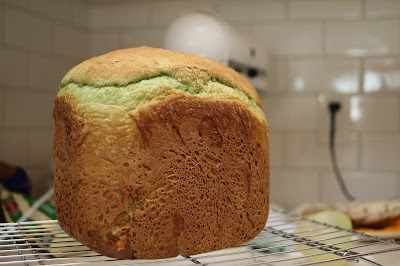
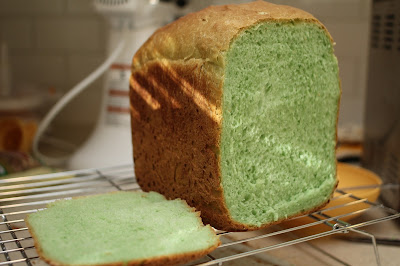
Today in the USA is Martin Luther King, Jr., day. But sometimes these holidays get confusing for a 6-year-old. I asked Jacob the other day if he knew what holiday was coming up. He thought about it for a second, then declared it would be St. Patrick s Day. He was excited because St. Patrick s Day is green. When he realized that it was really MLK Day, he was disappointed. That day isn t green. So I said, Jacob, how about we celebrate pretend St. Patrick s Day on Monday? His face lit up, he got a huge smile, and said, Oh yes! Great idea, dad! Oliver got all excited about it too. I was already planning on us doing some cooking, and thankfully had green food coloring already. So I sort of discarded my plans so each meal could have something green in it. When the boys woke up this morning, I wished each of them Happy Pretend St. Patrick s Day! We all wore green. Jacob put his shirt on backwards so the side with more green would be facing front. For breakfast, our green dish was green crepes with a succotash (based on baby lima beans and corn) filling. The boys were excited to discover that the crepes could be green on one side, and green and a little brown on the other. Jacob was unsure of the succotash idea, but after having a few bites, declared it excellent . After breakfast, we made bread. They loved watching the green food coloring disperse in the water. We checked on how green the dough looked periodically. We watched how it was rising and whether it was staying green. And we checked in on it backing, as the crust turned from green to brown. We discussed green bread over and over. Important questions were asked and answers were attempted. And then, of course, the moment of truth removing the loaf from the pan. The boys jabbered excitedly that there was some green peeking out. While we waited for it to cool, we went out to the creek. The creek is dry this year, so we got to walk in it. Jacob used his stick to make a line behind him. I asked him, Is that a line so we can find our way back? Oh! Uhm. Yes! And then he added arrows so we d know which way to go. Jacob stopped every 20 or so feet to collect pretend train tickets from Oliver and me. Oliver eventually grew tired of this, so Jacob started collecting Oliver s ticket from me. They climbed on some trees, managed to find some mud, drew outlines of train cars in the dirt, and then followed Jacob s line back down the creek bed. They pointed out any green things they saw. Then we went back to the house, took off our warm coats, and cut into the bread. Can you imagine the excitement? I hadn t realized green is a flavor, but it must have been somehow, because those boys absolutely loved this green bread. When we got out the jam, Jacob realized that it was red on the green bread, and that now his bread was Christmas-colored. All sorts of green bread discoveries were made, but the best among them was that if you hold a slice of green bread up to the bright sun, the sun makes it glow green and it looks like a stained-glass window. Sometimes a few drops of food coloring can add a ton of excitement to a day.

13 January 2013

Russ Allbery: afs-monitor 2.4

I love free software. Two more patches from users of my AFS monitoring scripts (primarily for Nagios) on the heels of the last release, so have another release. This one adds another ignore line to check_afs_bos for the output when there are long-running scheduled jobs, and adds an optional regex filter to check_afs_quotas to select the volumes whose quota one wants to check. Thanks to Georg Sluyterman and Christian Ospelkaus for the patches. You can get the latest version from the afs-monitor distribution page. As before, Debian packages have been uploaded to my personal repository. Also, a quick note about a previous journal entry: Philip Martin and Bernhard R. Link pointed me at the relevant part of the gpg source, which will only check signatures if all signatures use the same class and digest. I updated my previous entry. Thank you!

Next.

Previous.