Reproducible Builds: Reproducible Builds in July 2023
 Welcome to the July 2023 report from the Reproducible Builds project. In our reports, we try to outline the most important things that we have been up to over the past month. As ever, if you are interested in contributing to the project, please visit the Contribute page on our website.
 Marcel Fourn et al. presented at the IEEE Symposium on Security and Privacy in San Francisco, CA on The Importance and Challenges of Reproducible Builds for Software Supply Chain Security.
As summarised in last month s report, the abstract of their paper begins:
The 2020 Solarwinds attack was a tipping point that caused a heightened awareness about the security of the software supply chain and in particular the large amount of trust placed in build systems. Reproducible Builds (R-Bs) provide a strong foundation to build defenses for arbitrary attacks against build systems by ensuring that given the same source code, build environment, and build instructions, bitwise-identical artifacts are created. (PDF)
 Chris Lamb published an interview with Simon Butler, associate senior lecturer in the School of Informatics at the University of Sk vde, on the business adoption of Reproducible Builds.
(This is actually the seventh instalment in a series featuring the projects, companies and individuals who support our project. We started this series by featuring the Civil Infrastructure Platform project, and followed this up with a post about the Ford Foundation as well as recent ones about ARDC, the Google Open Source Security Team (GOSST), Bootstrappable Builds, the F-Droid project and David A. Wheeler.)
 Vagrant Cascadian presented Breaking the Chains of Trusting Trust at FOSSY 2023.
Rahul Bajaj has been working with Roland Clobus on merging an overview of environment variations to our website:
I have identified 16 root causes for unreproducible builds in my empirical study, which I have linked to the corresponding documentation. The initial MR right now contains information about 10 root causes. For each root cause, I have provided a definition, a notable instance, and a workaround. However, I have only found workarounds for 5 out of the 10 root causes listed in this merge request. In the upcoming commits, I plan to add an additional 6 root causes. I kindly request you review the text for any necessary refinements, modifications, or corrections. Additionally, I would appreciate the help with documentation for the solutions/workarounds for the remaining root causes: Archive Metadata, Build ID, File System Ordering, File Permissions, and Snippet Encoding. Your input on the identified root causes for unreproducible builds would be greatly appreciated. [ ]
 Just a reminder that our upcoming Reproducible Builds Summit is set to take place from October 31st November 2nd 2023 in Hamburg, Germany.
Our summits are a unique gathering that brings together attendees from diverse projects, united by a shared vision of advancing the Reproducible Builds effort. During this enriching event, participants will have the opportunity to engage in discussions, establish connections and exchange ideas to drive progress in this vital field.
If you re interested in joining us this year, please make sure to read the event page which has more details about the event and location.
 There was more progress towards making the Go programming language ecosystem reproducible this month, including:
- Adding a new subpage on the GoLang website to show reproduction of the published Go binaries, along with release candidates along with a new binary to produce the given results. This has resulted in page of unreproducible packages as well as a reproducible releases page. This was achieved via Go bug #513700.
- In addition a tool to reproduce posted Go binaries was added: This command rebuilds or verifies all the artifacts [ ] for the latest supported releases.
while packaginggovulncheckfor Arch Linux I noticed a checksum mismatch for a tar file I downloaded fromgo.googlesource.com. I used diffoscope to compare the.tarfile I downloaded with the.tarfile the build server downloaded, and noticed the timestamps are different.
 In Debian, 20 reviews of Debian packages were added, 25 were updated and 25 were removed this month adding to our knowledge about identified issues. A number of issue types were updated, including marking
ffile_prefix_map_passed_to_clang being fixed since Debian bullseye [ ] and adding a Debian bug tracker reference for the nondeterminism_added_by_pyqt5_pyrcc5 issue [ ].
In addition, Roland Clobus posted another detailed update of the status of reproducible Debian ISO images on our mailing list. In particular, Roland helpfully summarised that live images are looking good, and the number of (passing) automated tests is growing .

Bernhard M. Wiedemann published another monthly report about reproducibility within openSUSE.
 F-Droid added 20 new reproducible apps in July, making 165 apps in total that are published with Reproducible Builds and using the upstream developer s signature. [ ]
The Sphinx documentation tool recently accepted a change to improve deterministic reproducibility of documentation. It s internal
util.inspect.object_description
attempts to sort collections, but this can fail. The change handles the failure case by using string-based object descriptions as a
fallback deterministic sort ordering, as well as adding recursive object-description calls for list and tuple datatypes. As a result,
documentation generated by Sphinx will be more likely to be automatically reproducible.
Lastly in news, kpcyrd posted to our mailing list announcing a new repro-env tool:
My initial interest in reproducible builds was how do I distribute pre-compiled binaries on GitHub without people raising security concerns about them . I ve cycled back to this original problem about 5 years later and built a tool that is meant to address this. [ ]
Upstream patches
The Reproducible Builds project detects, dissects and attempts to fix as many currently-unreproducible packages as possible. We endeavour to send all of our patches upstream where appropriate. This month, we wrote a large number of such patches, including:
-
Bernhard M. Wiedemann:
django-graphql-jwt (fails to build in 2038)doxygen (filesystem ordering issue)git-interactive-rebase-tool (date-related issue)obs-buildprocmeter (parallelism race condition)promupython-cx_Freeze (version update for year 2038 fix)python-zope.deprecationpython310 (ASLR-related issue)python-control (fails to build-j4)python-DateTime (fails to build in 2038)python-pyface (date/time-related issue)python-quantities (date/time-related issue)python-scipy (date/time-related issue)rpmlintstarship (filesystem ordering issue)Telethonxindy (fails to build in 2036)yt (filesystem ordering issue)- Drop Sphinx doctrees in
python-bpython, python-flup, python-mysqlclient, python-waitress, python-WebOb, python-WebTest, python-zope.event, python-zope.hookable & python-zope.i18nmessageid
-
Chris Lamb (lamby):
- #1040232 filed against
dotenv-cli.
- #1040904 filed against
unity-java.
- #1041840 filed against
ruby-babosa (forwarded upstream).
- #1041842 filed against
guidata (forwarded upstream).
-
Johannes Schauer Marin Rodrigues (josch):
-
John Neffenger:
- openjdk/jfx#446 (openjfx), Enable reproducible builds with
SOURCE_DATE_EPOCH, a three-and-a-half year effort started by Bernhard M. Wiedemann in January 2020, taken over by John Neffenger in March 2021, integrated upstream in June 2023, and available starting with JavaFX 21 on September 19, 2023.
 In diffoscope development this month, versions
244, 245 and 246 were uploaded to Debian unstable by Chris Lamb, who also made the following changes:
- Don t include the file size in image metadata. It is, at best, distracting, and it is already in the directory metadata. [ ]
- Add compatibility with
libarchive-5. [ ]
- Mark that the
test_dex::test_javap_14_differences test requires the procyon tool. [ ]
- Initial work on DOS/MBR extraction. [ ]
- Move to using
assert_diff in the .ico and .jpeg tests. [ ]
- Temporarily mark some Android-related as
XFAIL due to Debian bugs #1040941 & #1040916. [ ]
- Fix the test skipped reason generation in the case of a version outside of the required range. [ ]
- Update copyright years. [ ][ ]
- Fix try.diffoscope.org. [ ]
In addition, Gianfranco Costamagna added support for LLVM version 16. [ ]
Testing framework
 The Reproducible Builds project operates a comprehensive testing framework (available at tests.reproducible-builds.org) in order to check packages and other artifacts for reproducibility. In July, a number of changes were made by Holger Levsen:
-
General changes:
- Upgrade Jenkins host to Debian bookworm now that Debian 12.1 is out. [ ][ ][ ][ ]
- djm: improve UX when rebooting a node fails. [ ]
- djm: reduce wait time between rebooting nodes. [ ]
-
Debian-related changes:
-
Various refactoring of the Debian scheduler. [ ][ ][ ]
- Make Debian live builds more robust with respect to salsa.debian.org returning HTTP 502 errors. [ ][ ]
- Use the legacy SCP protocol instead of the SFTP protocol when transfering Debian live builds. [ ][ ]
- Speed up a number of database queries thanks, Myon! [ ][ ][ ][ ][ ]
- Split
create_meta_pkg_sets job into two (for Debian unstable and Debian testing) to half the job runtime to approximately 90 minutes. [ ][ ]
- Split scheduler job into four separate jobs, one for each tested architecture. [ ][ ]
- Treat more PostgreSQL errors as serious (for some jobs). [ ]
- Re-enable automatic database documentation now that
postgresql_autodoc is back in Debian bookworm. [ ]
- Remove various hardcoding of Debian release names. [ ]
- Drop some i386 special casing. [ ]
-
Other distributions:
- Speed up Alpine SQL queries. [ ]
- Adjust CSS layout for Arch Linux pages to match 3 and not 4 repos being tested. [ ]
- Drop the community Arch Linux repo as it has now been merged into the extra repo. [ ]
- Speed up a number of Arch-related database queries. [ ]
- Try harder to properly cleanup after building OpenWrt packages. [ ]
- Drop all
kfreebsd-related tests now that it s officially dead. [ ]
-
System health:
-
Node health checks:
- Run system and node health checks for Jenkins less frequently. [ ]
- Try to restart any failed
dpkg-db-backup [ ] and munin-node services [ ].
In addition, Vagrant Cascadian updated the paths in our automated to tests to use the same paths used by the official Debian build servers. [ ]
If you are interested in contributing to the Reproducible Builds project, please visit our Contribute page on our website. However, you can get in touch with us via:
-
IRC:
#reproducible-builds on irc.oftc.net.
-
Mailing list:
rb-general@lists.reproducible-builds.org
-
Mastodon: @reproducible_builds@fosstodon.org
-
Twitter: @ReproBuilds
django-graphql-jwt(fails to build in 2038)doxygen(filesystem ordering issue)git-interactive-rebase-tool(date-related issue)obs-buildprocmeter(parallelism race condition)promupython-cx_Freeze(version update for year 2038 fix)python-zope.deprecationpython310(ASLR-related issue)python-control(fails to build-j4)python-DateTime(fails to build in 2038)python-pyface(date/time-related issue)python-quantities(date/time-related issue)python-scipy(date/time-related issue)rpmlintstarship(filesystem ordering issue)Telethonxindy(fails to build in 2036)yt(filesystem ordering issue)- Drop Sphinx doctrees in
python-bpython,python-flup,python-mysqlclient,python-waitress,python-WebOb,python-WebTest,python-zope.event,python-zope.hookable&python-zope.i18nmessageid
- #1040232 filed against
dotenv-cli. - #1040904 filed against
unity-java. - #1041840 filed against
ruby-babosa(forwarded upstream). - #1041842 filed against
guidata(forwarded upstream).
- openjdk/jfx#446 (openjfx), Enable reproducible builds with
SOURCE_DATE_EPOCH, a three-and-a-half year effort started by Bernhard M. Wiedemann in January 2020, taken over by John Neffenger in March 2021, integrated upstream in June 2023, and available starting with JavaFX 21 on September 19, 2023.
libarchive-5. [ ]test_dex::test_javap_14_differences test requires the procyon tool. [ ]assert_diff in the .ico and .jpeg tests. [ ]XFAIL due to Debian bugs #1040941 & #1040916. [ ]
The Reproducible Builds project operates a comprehensive testing framework (available at tests.reproducible-builds.org) in order to check packages and other artifacts for reproducibility. In July, a number of changes were made by Holger Levsen:
-
General changes:
- Upgrade Jenkins host to Debian bookworm now that Debian 12.1 is out. [ ][ ][ ][ ]
- djm: improve UX when rebooting a node fails. [ ]
- djm: reduce wait time between rebooting nodes. [ ]
-
Debian-related changes:
- Various refactoring of the Debian scheduler. [ ][ ][ ]
- Make Debian live builds more robust with respect to salsa.debian.org returning HTTP 502 errors. [ ][ ]
- Use the legacy SCP protocol instead of the SFTP protocol when transfering Debian live builds. [ ][ ]
- Speed up a number of database queries thanks, Myon! [ ][ ][ ][ ][ ]
- Split
create_meta_pkg_setsjob into two (for Debian unstable and Debian testing) to half the job runtime to approximately 90 minutes. [ ][ ] - Split scheduler job into four separate jobs, one for each tested architecture. [ ][ ]
- Treat more PostgreSQL errors as serious (for some jobs). [ ]
- Re-enable automatic database documentation now that
postgresql_autodocis back in Debian bookworm. [ ] - Remove various hardcoding of Debian release names. [ ]
- Drop some i386 special casing. [ ]
-
Other distributions:
- Speed up Alpine SQL queries. [ ]
- Adjust CSS layout for Arch Linux pages to match 3 and not 4 repos being tested. [ ]
- Drop the community Arch Linux repo as it has now been merged into the extra repo. [ ]
- Speed up a number of Arch-related database queries. [ ]
- Try harder to properly cleanup after building OpenWrt packages. [ ]
- Drop all
kfreebsd-related tests now that it s officially dead. [ ]
- System health:
-
Node health checks:
- Run system and node health checks for Jenkins less frequently. [ ]
- Try to restart any failed
dpkg-db-backup[ ] andmunin-node services[ ].
If you are interested in contributing to the Reproducible Builds project, please visit our Contribute page on our website. However, you can get in touch with us via:
-
IRC:
#reproducible-buildsonirc.oftc.net. -
Mailing list:
rb-general@lists.reproducible-builds.org - Mastodon: @reproducible_builds@fosstodon.org
- Twitter: @ReproBuilds
 I've never been a fan of IoT devices for obvious reasons: not only do they tend
to be excellent at being expensive vendor locked-in machines, but far too often,
they also end up turning into e-waste after a short amount of time.
Manufacturers can go out of business or simply decide to


 At the end of the series while a slightly progressive end is shown, in reality you are left wondering whether the decision taken by the protagonist and the woman having just no agency. The hero knowing he is superior to her because of her perceived weakness. A deep-rooted malaise that is difficult to break out of. His father too and the relationship the hero longs for to have with his father who is no more. He does share some of his feelings with his mum, which touches the cord of probably every child whose mother father left them early and all those things they wanted to talk or would have chatted out if they knew this would be the last conversation they will ever have with them. Couldn t even say sorry for all the wrongs and the pain we have given them. There are just too many layers in the webseries that I would need to see it a few times to be aware of. I could sense the undercurrents but sometimes you need to see such series or movies multiple times to understand them or it could simply be the case of me being just too thick. There are also poems and poems as we know may have multiple meanings and is or can be more contextual to the person reading it rather than the creator.
At the end, while it does show a positive end, in reality I feel there is no redemption for us. I am talking about men. We are too proud, too haughty and too insecure. And if things don t go the way we want, it s the women who pay the price


 Mais uma edi o da

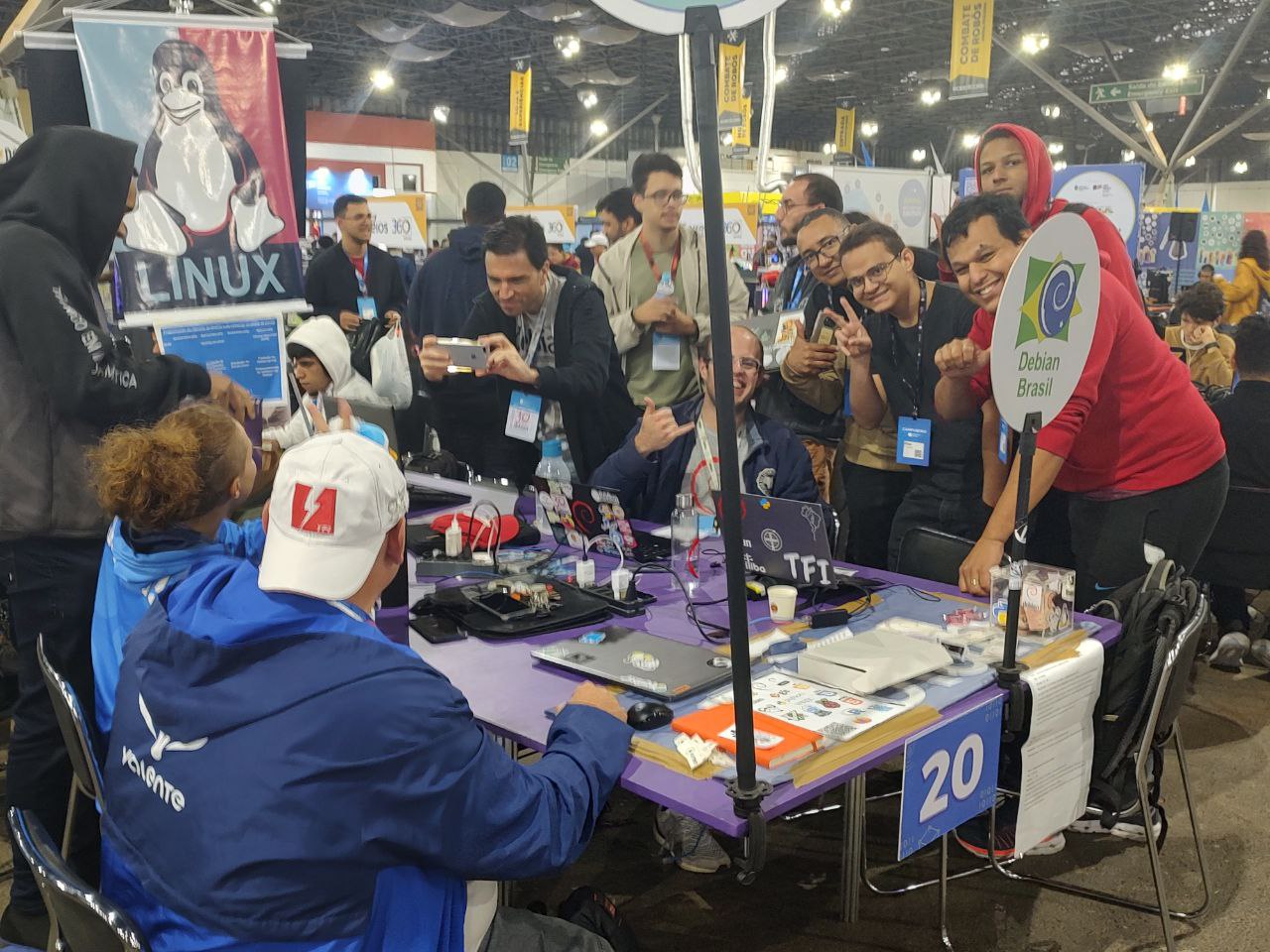
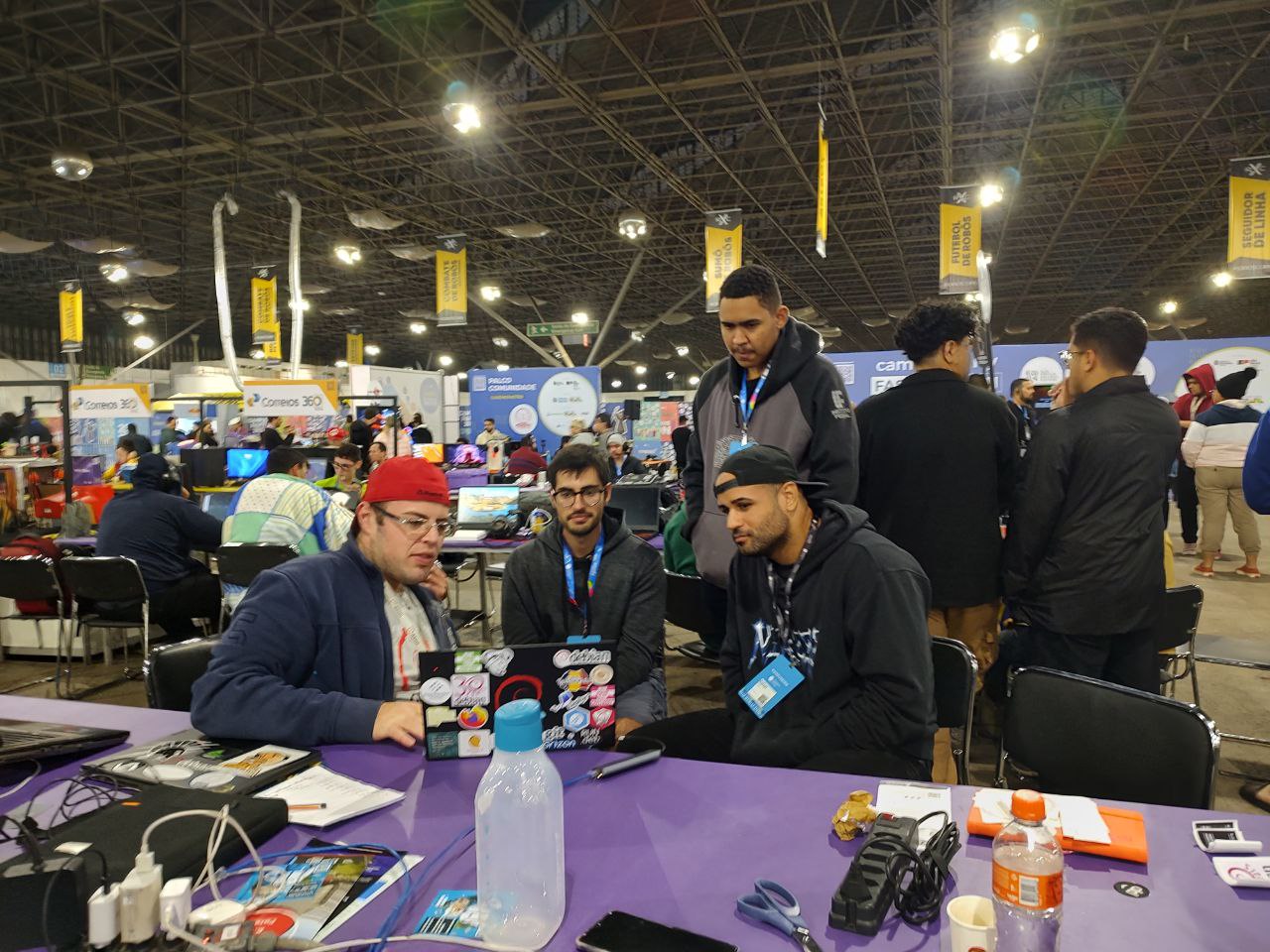
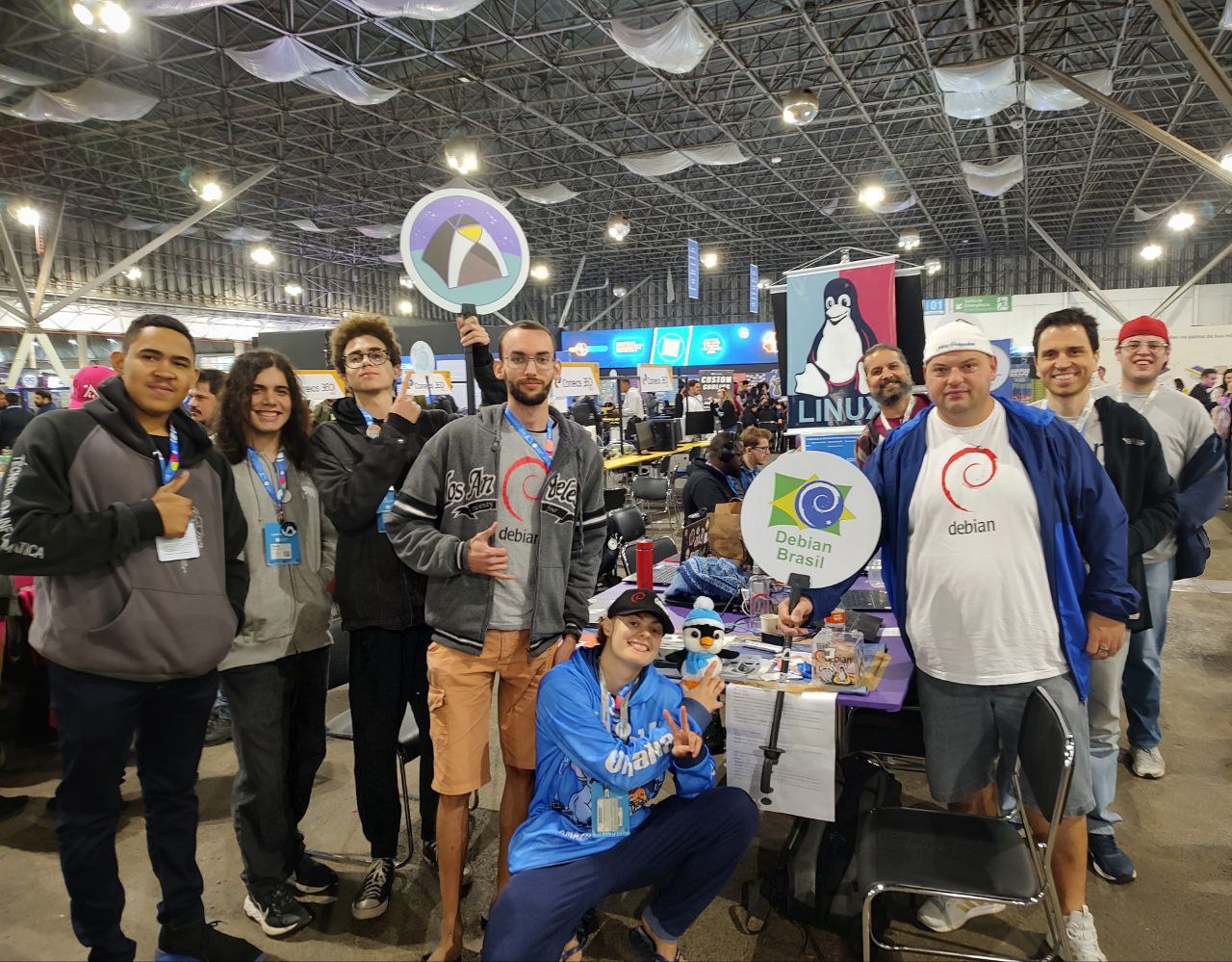





 August.
 A long time ago, around the turn of the century, I was looking at some Useful Origami website and found a pattern for a document folder with a lot of pockets.
 And by a lot of pockets I really mean a lot! I immediately had to fold one, and then another one, and then a few others, both in a size suitable for business cards and as a folder for A4 sheets of paper.
 And then, a few years ago I needed a new document folder, and looked for these instructions, and couldn t find them anywhere. Luckily I still had some of the folders I had made, and the model was simple enough that I could unfold those and reconstruct the instructions.
I tried to show them around to see if anybody knew where it came from, but had no results.
 Now that I ve prepared a new website for patterns for non-fiber crafts (and that I needed a new folder :D ) I ve decided to post

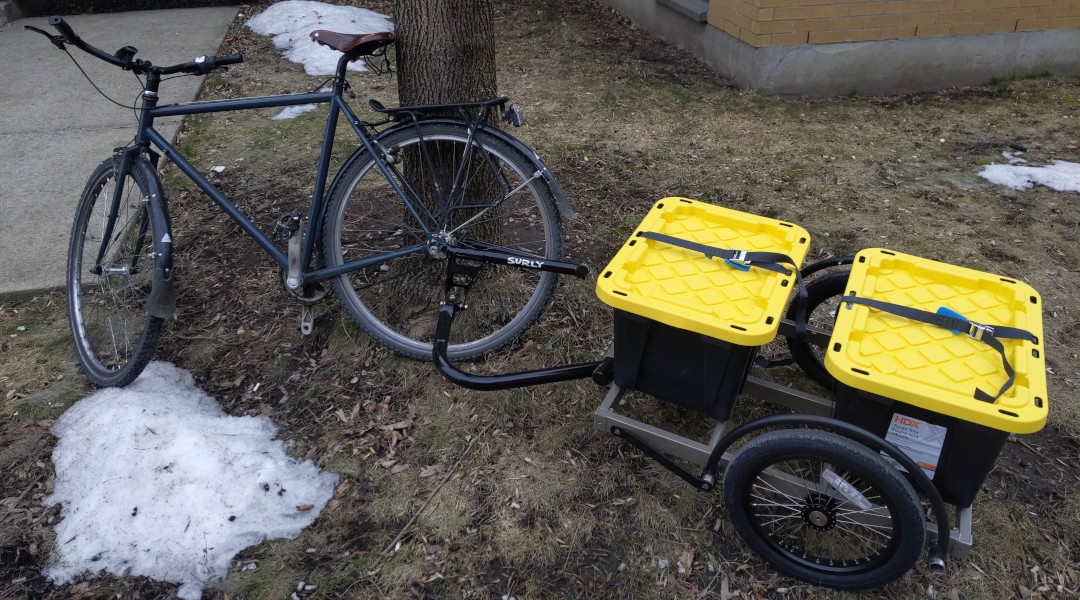 Since the goal for the trailer was to haul encumbering and heavy loads, I
decided to splurge and got a
 So far, I've used the trailer to go grocery shopping, buy bulk food and haul
dirt and mulch. To make things easier, I've purchased two
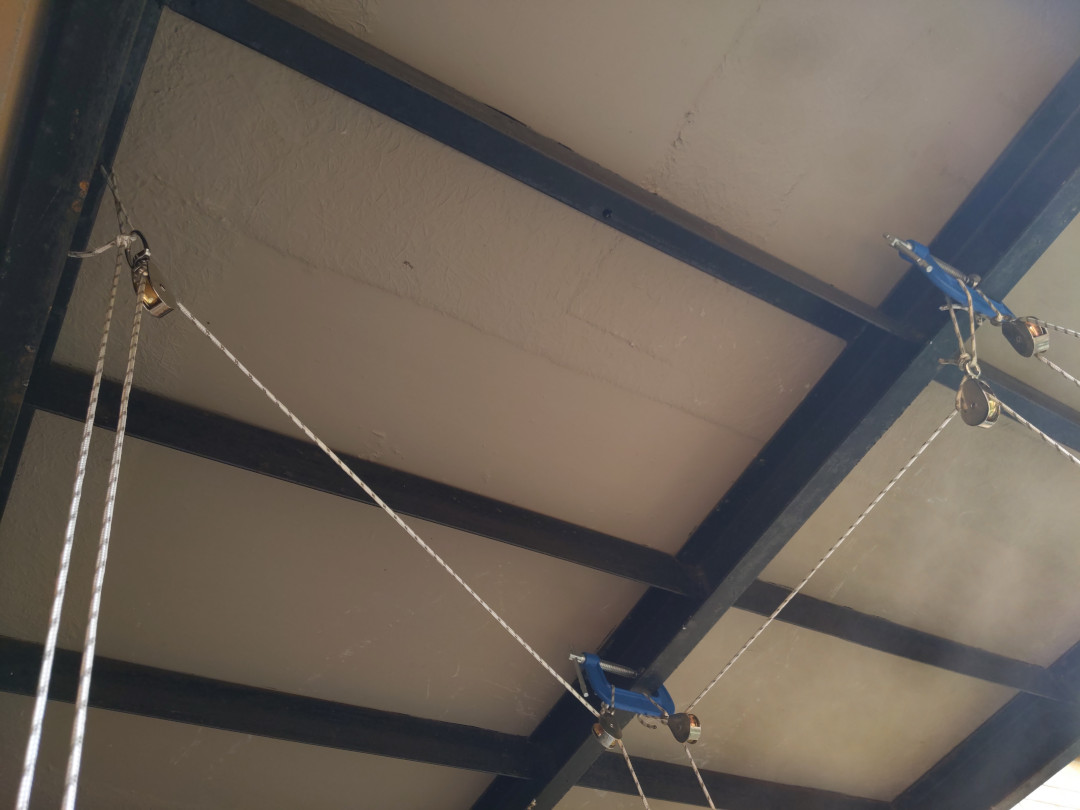 Although my housing cooperative has a (small) indoor bicycle parking space, my
partner uses our spot during the summer, which means I have to store the
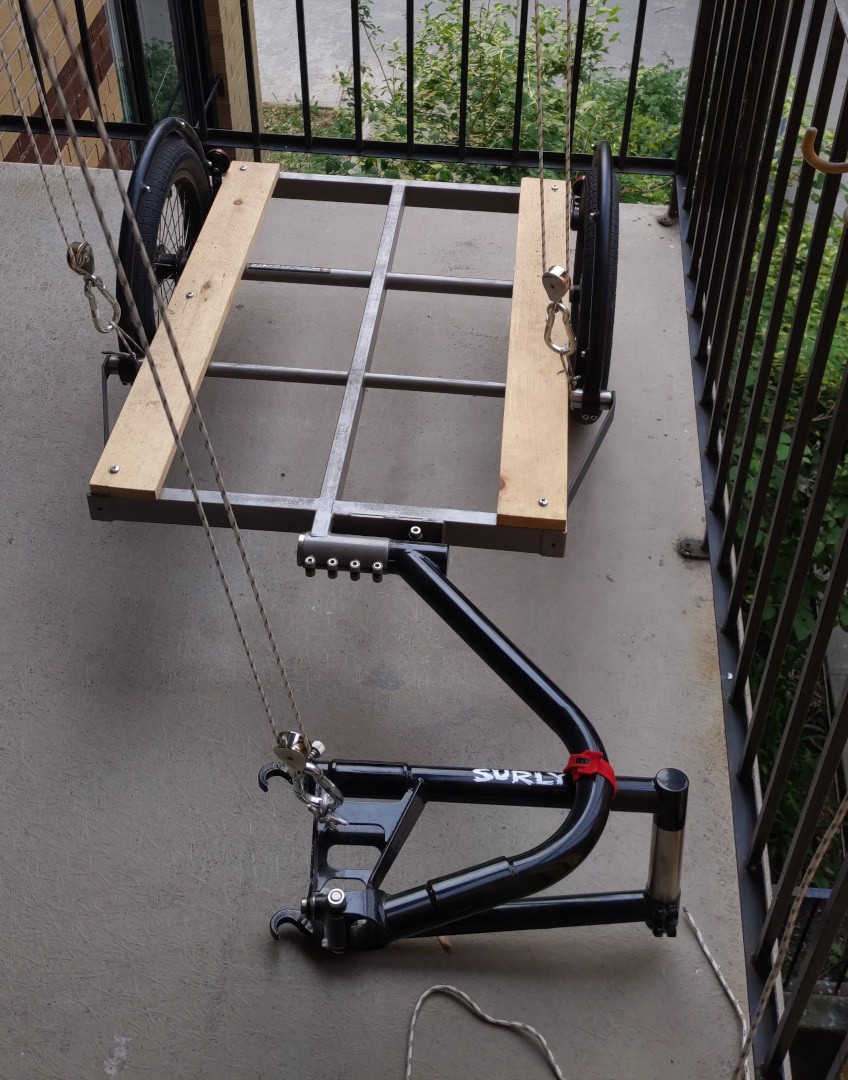
trailer on my balcony. To make things more manageable and free up some space, I
set up a system of pulleys to hoist the trailer up the air when it's not in
use.
I did go through a few iterations, but I'm pretty happy with the current 8
pulleys block and tackle mechanism I rigged.
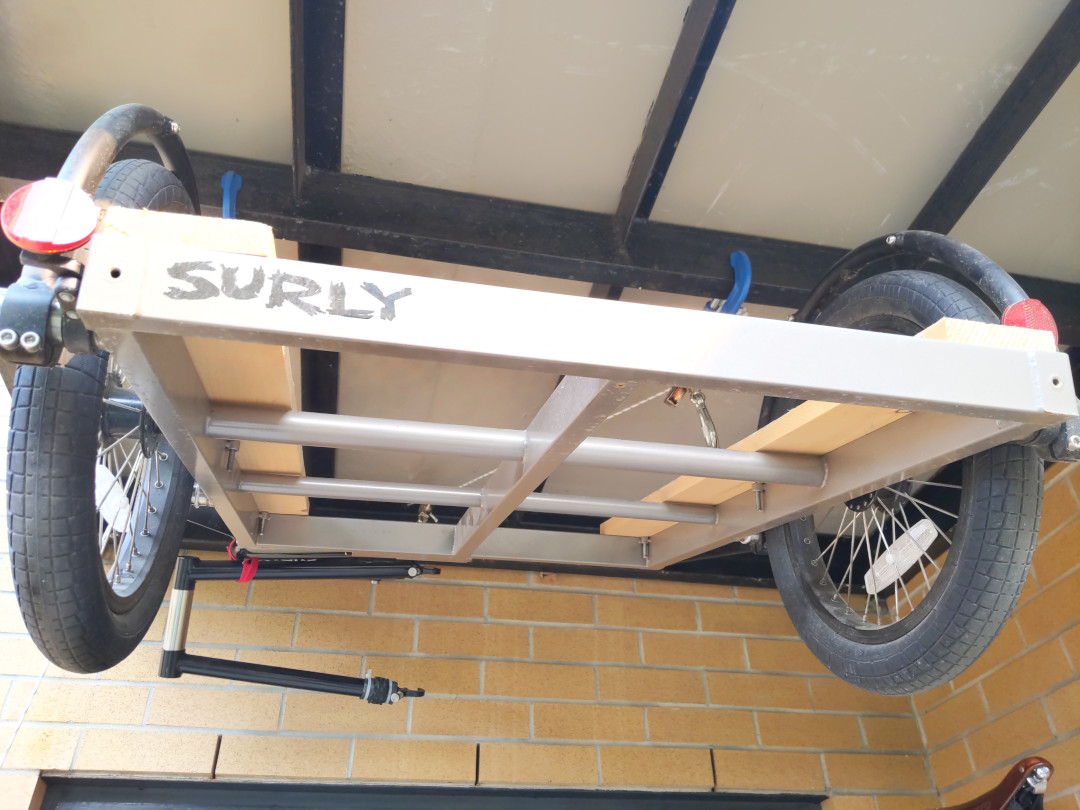 All and all, this trailer wasn't cheap, but I regret nothing. Knowing Surley's
reputation, it will last me many years and not having to drive a car to get
around always ends up being the cheaper solution.
 Uhm, salsa is not resolving: