Search Results: "bod"

9 April 2012

M nica Ram rez Arceda: From non-DD to DD

Two weeks ago I became a Debian Developer. I must say this made me very very happy! In fact, I still can't believe it But what makes me really happy is to continue collaborating in this great community. When you change your status from non-DD to DD, you must do some changes in your configurations. I've written a recipe about this called Non-DD to DD steps, maybe it can be useful for future incoming DDs. If someone detects an error, please tell me, I'll be glad of fixing it. Besides this, I don't want to finish this post without thanking publicly everybody that has given me a helping hand. First of all I want to thank ana, my tireless mentor and main sponsor, and mentors list as well as mentors IRC channel, for being always there. Also, I want to thank hauke, who uploaded my first little contribution and encouraged me a lot, francesca, with who I had the pleasure to work a little bit on past IRC trainig sessions, all people who have encouraged me (including greoga, rmayorga, asheesh, jordi, anibal and Debian Women Team), hyperair for helping me on packaging, lucas for clarifying my doubts about QA massive bugs filing, all members of OpenStreetMap Team for their help, lfaraone, my AM, and finally but not less important I thank all people I met in Debconf11 that make me find out that Debian is greater than I thought (agi, frequena, gunnar, vicho, tincho, sanvila, enrico and more!). I'm sure I'm forgetting someone yes, you! But I'm sure you'll forgive me, you know, memory is not my best quality ;-) Thanks!!!

Joey Hess: Stand by the grey stone when the thrush knocks

Today, map in hand, I explored the "long valley, narrower than the great dale in the South where the Gates of the river stood, and walled with lower spurs of the Mountain".
"The dangerous search on the western slopes for the secret door"
"It seemed as if darkness flowed out like a vapour from the hole in the mountain-side" "They spoke low and never called or sang, for danger brooded in every rock."
"It is almost dark so that its vastness can only be dimly guessed, but rising from the near side of the rocky floor there is a great glow. The glow of Smaug!"

8 April 2012

Ingo Juergensmann: Grub2 fails booting from second VG

I just got a new harddisk, because my old RAID of 3x 1 TB disks are getting filled and I'm running out of space. In the end I'll have replaced my old disks by 3x 4 TB disks. Currently the setup is as this:
Kategorie:

7 April 2012

Wouter Verhelst: New toy

A while back, I was thinking. Playing the flute or whistling on a bottle is the exact same technique; but, in my opinion, the sound that comes from a bottle has some interesting overtones, making for a nice sound. Since the material of which an instrument is made is in large part responsible for the overtones that it produces (apart from the technique used by the musician), I wondered if nobody had ever come up with the idea of making a flute in glass. Turns out that, of course, this has already happened. In fact, the modern concert flute wouldn't have been possible without one Claude Laurent, a Parisian instrument maker who received a patent for "a new [method of] making flutes from crystal"; part of his patent described a method of attaching the valves to the instrument. It was this method which was used by Theobald Boehm when he invented the fingering system that defines the modern concert flute. The price of an intact Laurent flute today is, of course, beyond my budget; and it doesn't look like there are any glass flutes being made that use the Boehm system. But that doesn't mean there aren't any glass flutes being made anymore; indeed, a short look around the Internet quickly turned up Hall Crystal Flutes, a family-owned business from Rochester in the US state of Washington. As the price was not too insane (49 USD for the instrument, plus almost the same amount for shipping it to Belgium), I ordered one of their piccolos in C. Last wednesday, a woman from the post office rang my doorbell, with a pakage containing the new instrument. Unfortunately, however, it had a customs tax of slightly more than what was in my wallet at the time, which meant I could only fetch it from the post office the next day. At least I could pay in plastic there. After having had it for a few days, I can make a few observations: I've been playing a few diddlies on it for the past few days, and it's been fun so far. We'll see where this leads us.

5 April 2012

Jon Dowland: Greg Bear Hull Zero Three

In (roughly) 2008 I read "Blood Music" my first Greg Bear novel and devoured it in a weekend, in only two or three reading sessions. That happens very rarely, and when it does I often wonder whether it's the quality of the writing or some combination of that and your personal moods and tastes at the time that is responsible. My next Bear was "Darwin's Radio" in mid-2010 which, whilst good, did not provoke the same feverish read. I might write short reviews for both at some point in the future, but right now I can't remember either well enough to do so. In the last few weeks I read "Hull Zero Three" which was quite a different beast. The novel first captured my attention due to the unusual way it was promoted: via a video, which was created using a modified Quake 2 engine. It wasn't a great video but the novelty made it interesting. The story begins with a first-person narrator waking up from a sort-of hyper sleep on a generation starship that has clearly had some serious problems. He has to run to escape danger before he has an opportunity to figure out exactly what has happened and what he is running from, or to. Something has gone horribly wrong on the ship: it's nowhere near where it should be going and nobody should be awake. The narrator's memory is fractured, fabricated and unreliable; the ship is hostile, and whilst it's mechanical, it cyclically changes and re-arranges it's hulls in an almost organic way. He is joined by a rotating cast of similarly confused refugees of varying shapes and sizes. Language and cultural barriers serve to further magnify the sense of alienation that you experience on behalf of the story teller. The troupe are persued through the corridors by a collection of lethally efficient killer "things", contrasting with the background by being organic in nature but mechanical in behaviour and appearance. The scale of the ship is necessarily massive, and Bear does an impressive job of capturing the awe you might feel when considering it. Three huge, cigar-shaped hulls, joined by "spars" to an enormous chunk of ice captured from the Oort cloud on exodus from the solar system. The ice serves as a mixture of "fuel" for the biological ship systems and as part of a shield system for the hulls from cosmic rays. However, in part due to the narrator's confusion, it was hard to follow the very abstract descriptions of the environment in the earlier stages of the story. I found myself re-reading passages to try and understand the comparisons being offered and scales presented. In common with the two earlier Bears I've read, 'body horror' features prominently in this story. It feels like a "Dead Space" or "Resident Evil" in space in a hard SF novel which seriously attempt to capture real speculative science. Like "Blood Music", I found myself compelled to read "Hull Zero Three" at every available opportunity. I finished it off in a very enjoyable reading session outdoors in the spring sunshine. It was an enjoyable read, well written but not beyond criticism, with some interesting takes on well-worn themes. Very reminiscent of the movie "Pandorum" (which was a surprisingly good movie).

4 April 2012

Pietro Abate: mancoosi tools in debian testing

Finally the dose3 libraries and tools landed in testing this weekend. We solved a couple of bugs already and it seems nobody complained too loudly. If you used the edos tools in the past you might be interested to check out our new tools in the package dose-extra. Actually @mancoosi we will be delighted to ear about you experience with our tools and how to make them better and more useful. Please drop me a line ! The next major release of dose will be multi-arch aware and provide performance improvements and other minor features. If you missed it, and you are now curious, I delivered a talk at fosdem regarding our tools: A big thanks to ralf of course for packaging everything !

2 April 2012

Christian Perrier: Just do it

Please, pretty please, just do it. However, don't forget: Debian localization material is spread in thousands of packages, with dozens of different VCS, hundreds of developers and hundreds of thousands of strings for up to seventy languages. And there are less than 5 people running all this. So, yeah, there are fancy "insert your favourite l10n tool of the day here" everywhere and we should rather be using them. But nobody prevents anybody to build something better than we we have now. Really, nothing. Do-ocracy, as we use to say. Just do it and, in the meantime, suffer with us with what we have.

Jamie McClelland: Posting to identi.ca via the command line

I set aside 15 minutes to find a tool that would allow me to easily post to my identi.ca account via the command line. I'm two hours in and I finally sent my first remote post. Hopefully nobody else will have to spend this much time! There are a lot of tools to help you interact with Twitter via the command line and identi.ca supports the twitter API, however, convincing these tools to use identi.ca was harder than I expected and is woefully under-documented. This hardship is largely self-inflicted since I chose to authenticate via oauth, however, it's not clear to me if identi.ca supports basic auth and if so for how much longer. In any event, oauth seems like a much preferable authetication approach because I don't have to store my identi.ca password in plain text. I decided to use tweepy since it's packaged for Debian and it's written in python. If you are not familiar with OAuth, it's worth reading up on. In short: tweepy has documentation on using setting up oauth, however, I found it hard to follow, especially since it goes back and forth between using it for a web app and using it for a desktop app. Since I'm interested in a desktop app (shell), the web app business was just clutter. I wrote the script below to initialize my app and retrieve the application key and secret. If you are writing a desktop app, this needs to be run once for each user of the app:
#!/usr/bin/python
""" 
This script should be used once to initialize your desktop/command line
application with a oauth access key and access secret. 
Your first step is to login, via the web, to your identi.ca account
and authorize your application. Click Edit next to your username
to edit your profile settings. Then click Connections on the left
side bar. Then, in the right sidebar, click 
"Register an OAuth client application".
When you are done, you will see a page listing your token and secret.
Fill in the consumer_token and consumer_secret variables below with those
values.
"""
""" Fill in these values with values provided in the identi.ca web app when you register your app! """
consumer_token = ""
consumer_secret = ""
import tweepy
host = 'identi.ca'
api_root = '/api/'
oauth_root = api_root + 'oauth/'
auth = tweepy.OAuthHandler(consumer_token, consumer_secret, 'oob')
auth.OAUTH_HOST = host
auth.OAUTH_ROOT = oauth_root
auth.secure = True
try:
  redirect_url = auth.get_authorization_url()
except tweepy.TweepError:
  print 'Error! Failed to get request token.'
  quit()
req_key = auth.request_token.key
req_secret = auth.request_token.secret
print "you don't need these values... just fyi..."
print "auth request key is: " + req_key
print "auth request secret is: " + req_secret
print "Go to this URL for verify code: " + redirect_url
print "enter the verify code from the URL above"
verifier = raw_input('Verify code: ')
auth = tweepy.OAuthHandler(consumer_token, consumer_secret, 'oob')
auth.set_request_token(req_key, req_secret)
auth.OAUTH_HOST = host
auth.OAUTH_ROOT = oauth_root
auth.secure = True
try:
  auth.get_access_token(verifier)
except tweepy.TweepError:
  print 'Error! Failed to get access token.'
print "Store these values in your application. You will re-use them"
print "auth access key is: " + auth.access_token.key 
print "auth access secret is: " + auth.access_token.secret 
print "done with initialization"
Once you have your key and secret, the following simpler application will post for you:
#!/usr/bin/python
import tweepy
post = "I microblog from bash"
consumer_token = ""
consumer_secret = ""
access_key = ""
access_secret = ""
host = 'identi.ca'
api_root = '/api/'
oauth_root = api_root + 'oauth/'
auth = tweepy.OAuthHandler(consumer_token, consumer_secret, 'oob')
auth.OAUTH_HOST = host 
auth.OAUTH_ROOT = oauth_root 
auth.secure = True 
auth.set_access_token(access_key, access_secret)
api = tweepy.API(auth, host = host, api_root = api_root)
api.update_status(post)

1 April 2012

Raphaël Hertzog: My Debian Activities in March 2012

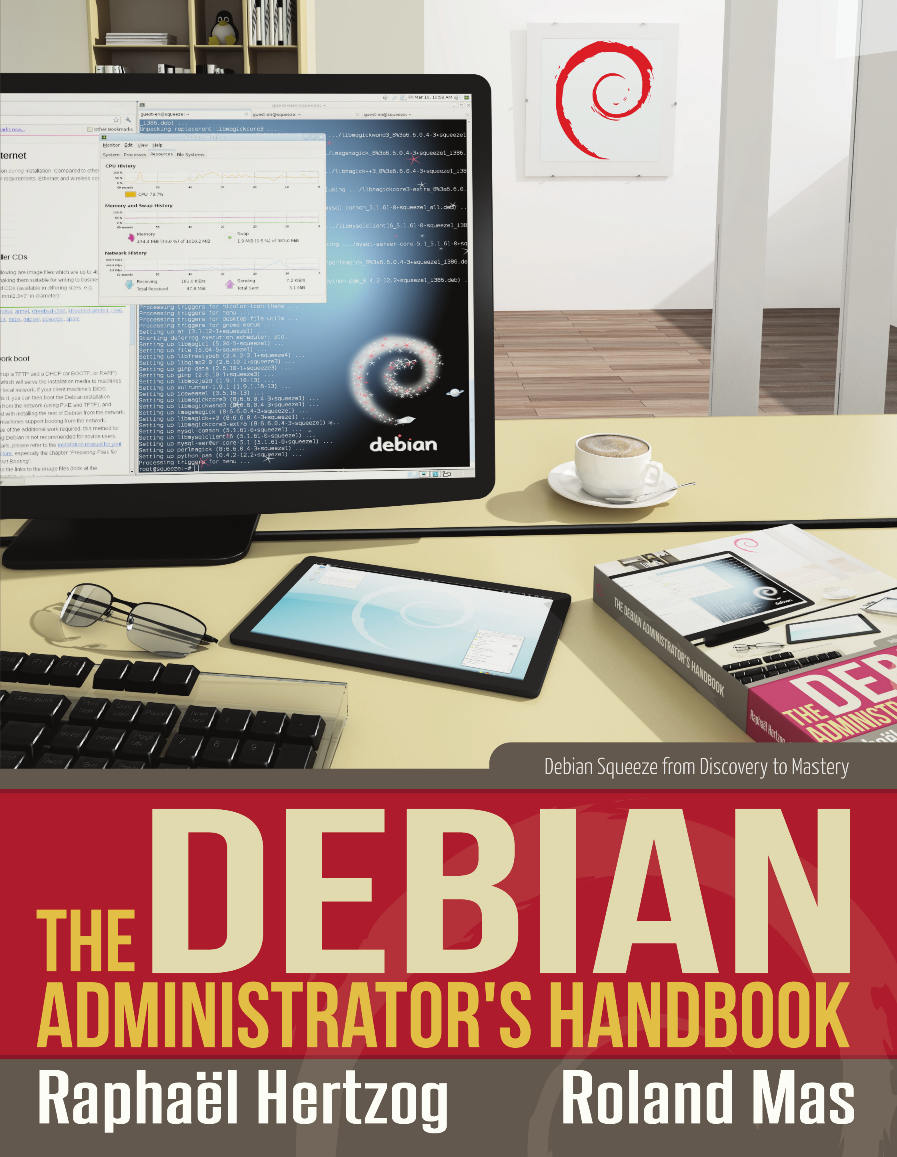
This is my monthly summary of my Debian related activities. If you re among the people who made a donation to support my work (227.83 , thanks everybody!), then you can learn how I spent your money. Otherwise it s just an interesting status update on my various projects. Dpkg Thanks to Guillem, dpkg with multiarch support is now available in Debian sid. The road has been bumpy, and it has again been delayed multiple times even after Guillem announced it on debian-devel-announce. Finally, the upload happened on March 19th. I did not appreciate his announce because it was not coordinated at all, and had I been involved from the start, we could have drafted it in a way that sounded less scary for people. In the end, I provided a script so that people can verify whether they were affected by one of the potential problems that Guillem pointed out. While real, most of them are rather unlikely for typical multiarch usage. Bernhard R. Link submitted a patch to add a new status command to dpkg-buildflags. This command would print all the information required to understand which flags are activated and why. It would typically be called during the build process by debian/rules to keep a trace of the build flags configuration. The goal is to help debugging and also to make it possible to extract that information automatically from build logs. I reviewed his patch and we made several iterations, it s mostly ready to be merged but there s one detail where Bernhard and I disagree and I solicited Guillem s opinion to try to take a decision. Unfortunately neither Guillem nor anyone else chimed in. On request of Alexander Wirt, I uploaded a new backport of dpkg where I dropped the DEB_HOST_MULTIARCH variable from dpkg-architecture to ensure multi-arch is never accidentally enabled in other backports. One last thing that I did not mention publicly at all yet, is that I contacted Lennart Poettering to suggest an improvement to the /etc/os-release file that he s trying to standardize across distributions. It occurred to me that this file could also replace our /etc/dpkg/origins/default file (and not only /etc/debian_version) provided that it could store ancestry information. After some discussions, he documented new official fields for that file (ID_LIKE, HOME_URL, SUPPORT_URL, BUG_REPORT_URL). Next step for me is to improve dpkg-vendor to support this file (as a fallback or as default, I don t know yet). Packaging I packaged quilt 0.60 (we re now down to 9 Debian-specific patches, from a whopping 26 in version 0.48!) and zim 0.55. In prevision of the next upstream version of Publican, I asked the Perl team to package a few Perl modules that Publican now requires. Less than two weeks after, all of them were in Debian Unstable. Congrats and many thanks to the Perl team (and Salvatore Bonaccorso in particular, which I happen to know because we were on the same plane during last Debconf!). On a side note, being the maintainer of nautilus-dropbox became progressively less fun over the last months, in particular because the upstream authors tried to override some of the (IMO correct) packaging decisions that I made and got in touch with Ubuntu community managers to try to have their way. Last but not least, I keep getting duplicates of a bug that is not in my package but in the official package and that Dropbox did not respond to my query. Book update The translation is finished and we re now reviewing the whole book. It takes a bit more time than expected because we re trying to harmonize the style and because it s difficult to coordinate the work of several volunteer reviewers. The book cover is now almost finalized (click on it to view it in higher definitions): We also made some progress on the interior design for the paperback. Unfortunately, I have nothing to show you yet. But it will be very nice and made with just a LaTeX stylesheet tailored for use with dblatex. The liberation fundraising slowed down with only 41 new supporters this month but it made a nice bump anyway thanks to a generous donation of 1000 EUR by Offensive security, the company behind Backtrack Linux. They will soon communicate on this, hopefully it will boost the operation. It would be really nice if we managed to raise the remaining 3000 EUR in the few weeks left until the official release of the book! The work on my book dominated the month and explains my relative inactivity on other fronts. I worked much more than usual, and my wife keeps telling me that I look tired and that I should go in bed earlier but I see the end of the tunnel: if everything goes well, the book should be released in a few weeks and I will be able to switch back to a saner lifestyle. Thanks See you next month for a new summary of my activities.

One comment Liked this article? Click here. My blog is Flattr-enabled.

Jamie McClelland: Property is Theft

I've recently been making my way through the Proudhon Reader, a collection of writings by Pierre-Joseph Proudhon recently published by AK Press. Proudhon, known as the father of Anarchism is most famous for his declaration: "Property is theft." The simple declaration is based on pages of explanation which, simplistically, can be boiled down to the idea that workers should all equally share in the fruits of their labor. While Proudhon's influence on Marx is hotly debated, this idea is fundamental to Marx's idea around the alienation of labor. If we are working to produce a product that is then owned by the proprietor, rather than the worker, we are alienated from our labor. Many May First/People Link members, such as Palante Tech, Openflows, Union Web Services, and Agaric Design are all committed to fighting this alienation by organizing as worker-run cooperatives. Nobody is the boss, all workers share in all profits. However, Proudhon got me thinking about free software shops that aren't worker-run cooperatives. If you are employed by a for-profit corporation as a worker and your only job is to write code that is released under a free software license, are you alienated from your labor in the Marxist sense? The fruits of your labor might be owned by your company, but they are freely licensed to the world (which, of course, includes you). There is still surplus value accrued to your company (if you do good work for your company, you will be contributing to their reputation from which they will profit). However, if you are primarily writing code, the vast majority of your labor is producing a product that you are fundamentally not alienated from. Proudhon, while sprinkling the word revolution throughout his writings, was notably not particularly revolutionary in his calls for action. He was reformist. Rather than calling for a direct confrontation with capitalism, he called for worker-run collectives to be formed throughout the world to make capitalism irrelevant. While many people point to corporate use of free software as an argument for why free software and capitalism are perfectly compatible, the truth may be more complicated. Fundamentally, and in a non-confrontational way, free software seems to undermine one of the basic tenants of capitalist: worker alienation. Now we just need to work on all the other ways corporate work places are alienating...

Russ Allbery: Review: Agile Project Management with Scrum

Review: Agile Project Management with Scrum, by Ken Schwaber
Publisher: Microsoft
Copyright: 2004
ISBN: 0-7356-1993-X
Format: Trade paperback
Pages: 153
Ken Schwaber is one of the two original developers of Scrum and one of the signatories to the Agile Manifesto. Agile Project Management with Scrum is an introduction to Scrum by him that feels aimed primarily at business people (project managers, executives, line managers) rather than at technical people. There's very little about agile software development in general; the emphasis is on business process, team organization, and how the Scrum process looks to the rest of the organization. After an introductory chapter laying out the basics of Scrum, the remainder of the book is primarily case studies. Schwaber presents some principle and then discuss an anonymized case study that illustrates the principle. Each major Scrum role (ScrumMaster, Product Owner, and Team Member) gets their own chapter, interspersed with chapters on planning, reporting, and scaling. Finally, there are some concluding appendices laying out the rules of Scrum in more detail, adding a brief (and very disappointing) discussion of fixed-term, fixed-price contracts, and providing some other supplemental information. This is only the second regular book that I've read about Scrum, but my reading has been a bit out of order. We've been using Scrum for various projects for about a year and a half, I've played both team member and product owner roles, and we've been thinking hard about how to integrate Scrum more into the way we do development. My impression of this book is that it's intended as more of an introduction for people who aren't yet comfortable with Scrum or who are still struggling to make the pieces fit together. I'm therefore possibly not the target audience. Much of this book is a rehash of things someone who has studied Scrum will already know. I'm of two minds about the case study presentation style of this book. On one hand, it does help to make the points Schwaber discusses more concrete, and it's difficult to talk about business process in any other way. They're also more interesting and engaging than Schwaber's straight rule descriptions. But I had difficulty digging into most of the ones here. They're very simple and a little shallow, and I had trouble applying many of them to practical situations I might be in. I would have liked somewhat more detailed stories with more analysis and possible alternatives within the situation, rather than simple illustrations of how Scrum solves the problem that Schwaber had just said it would solve. What I did like about this book is that it provides the background and theory of Scrum as empirical process control much more clearly than any material I'd previously read. Schwaber is good at explaining what empirical process control is and why it's a superior approach, and he gave me new vocabulary and basic concepts to use to talk about Scrum. I also liked the high-level look from a management perspective without getting into the details of story points and velocity estimation (Schwaber doesn't use them at all in this book, relying instead on traditional "days of work" estimates). Much of my previous experience with Scrum was tightly focused on its advantages for estimation and responsiveness to changes, and it's nice to see some of the other advantages of Scrum (developer job satisfaction, improved focus, incremental deployment) highlighted more. Another part of this book I appreciated was the discussion of sprint length. Schwaber doesn't go into the possible alternatives, largely assuming that a month is the best interval, but the discussion of the impact and implications of a month sprint length helped me see the advantages of longer sprints. (To date, we've been doing either one week or two week sprints.) I came away with the feeling that a hybrid model where longer sprints are used for business purposes and then subdivided into shorter sprints for developer coordination might be particularly effective, although that's not an idea that Schwaber presents. This is not a particularly compelling read, particularly if, like me, you're not a huge fan of genericized case studies. Schwaber's writing is clear, but wooden and occasionally awkward, and the book is often dry. But it talks about Scrum from a management angle instead of a developer angle, which is an additional perspective that I found valuable. Possibly worth taking a look if you want more detail about Scrum from a high-level management perspective, although I don't think you're missing a lot by not reading it. Rating: 6 out of 10

25 March 2012

Steve Kemp: So I have a new camera. Again.

Until recently I've had a Canon EOS 1000D, my starter-camera, and a Canon EOS 40D which is my real-camera. The 40D is older, but it probably counts as a "semi-pro" body, albeit an old mid-range one. From an image size point of view there isn't too much to tell them apart - both produce 10MP images. But from a hardware and ease of use sense the 40D has several key features which made it a compelling upgrade: Anyway both these cameras have been my friends for the past year or two, although I did buy a toy camera for those times when I didn't want to carry the DLSR around. I've made sure I only bought "posh" lens, including the fabulous and horrifically expensive 70-200 f/2.8 MK 2 lens (Just short of 2000) and I'd been wanting to use those on a full-frame camera. Now it is upgrade time once more and I've just bought the EOS 5D MK II - a full-frame camera which means I don't have to worry about crop-factors any more. So far I've only had it a couple of days but I'm in love. The output images are 21MP so I get far fewer to a (CF) card. But the detail is sublime. Future portraits and photos of people will be wonderful - although I hope they already are to a large degree! This upgrade was a hard choice. The 5D is a full-frame, but a little slow. (Faster than my 40D by a hairs-bredth) The alternative would have been a 7D which is fast, and wonderful, but still uses a cropped sensor. Given that I have fast lenses and don't do sports (often) the 5D seemed like the sanest approach. For my reference - my Canon serial numbers:
EOS 1000D1780312242
EOS 40D1230734041
EOS 5D MK II4131916951
ObQuote: "Courage is only required when facing that which you fear. " -Stargate: The Ark Of Truth

22 March 2012

Julien Danjou: xpyb 1.3 released

It took a while to get it out, but finally, 3 years after the latest release (1.2), the version of 1.3 of xpyb (the XCB Python bindngs) is out. This version has a lot of improvement, and major bug fixes (memory corruption and memory leak were tracked down and fixed). One amazing feature that is now shipped with that release, is my code to export the xpyb API to other Python modules, allowing to draw with Pycairo in Python using XCB. Here is an example of a Python program that draws a spiral in a window using xpyb and Pycairo. You need xpyb >= 1.3 and Pycairo >= 1.10 to make this works.
import cairo
import xcb
from xcb.xproto import *
WIDTH, HEIGHT = 600, 600
def draw_spiral(ctx, width, height):
    """Draw a spiral with lines!"""
    wd = .02 * width
    hd = .02 * height
    width -= 2
    height -= 2
    ctx.move_to (width + 1, 1-hd)
    for i in range(9):
    ctx.rel_line_to (0, height - hd * (2 * i - 1))
    ctx.rel_line_to (- (width - wd * (2 *i)), 0)
    ctx.rel_line_to (0, - (height - hd * (2*i)))
    ctx.rel_line_to (width - wd * (2 * i + 1), 0)
    ctx.set_source_rgb (0, 0, 1)
    ctx.stroke()
# Connect to the X server
conn = xcb.connect()
# Get the X server setup
setup = conn.get_setup()
# Generate X ID for our X "objects"
window = conn.generate_id()
pixmap = conn.generate_id()
gc = conn.generate_id()
# Create a new window
conn.core.CreateWindow(setup.roots[0].root_depth, window,
                       # Parent is the root window
                       setup.roots[0].root,
                       0, 0, WIDTH, HEIGHT, 0, WindowClass.InputOutput,
                       setup.roots[0].root_visual,
                       CW.BackPixel   CW.EventMask,
                       [ setup.roots[0].white_pixel, EventMask.ButtonPress   EventMask.EnterWindow   EventMask.LeaveWindow   EventMask.Exposure ])
# Create a pixmap: it will be used to draw with cairo
conn.core.CreatePixmap(setup.roots[0].root_depth, pixmap, setup.roots[0].root,
                       WIDTH, HEIGHT)
# We just need a GC to copy later the pixmap on the window, so create one
# very simple
conn.core.CreateGC(gc, setup.roots[0].root, GC.Foreground   GC.Background,
                   [ setup.roots[0].black_pixel, setup.roots[0].white_pixel ])
# Create a cairo surface
surface = cairo.XCBSurface (conn, pixmap,
                            setup.roots[0].allowed_depths[0].visuals[0], WIDTH, HEIGHT)
# Create a cairo context with that surface
ctx = cairo.Context(surface)
# Paint everything in white
ctx.set_source_rgb (1, 1, 1)
ctx.set_operator (cairo.OPERATOR_SOURCE)
ctx.paint()
# Draw our spiral
draw_spiral (ctx, WIDTH, HEIGHT)
# Map the window on the screen so it gets visible
conn.core.MapWindow(window)
# Flush all X requests to the X server
conn.flush()
while True:
    try:
        event = conn.wait_for_event()
    except xcb.ProtocolException, error:
        print "Protocol error %s received!" % error.__class__.__name__
        break
    except:
        break
    # ExposeEvent are received when we need to refresh the content of the
    # window, so we copy the content of the pixmap (where cairo drew) in the
    # window
    if isinstance(event, ExposeEvent):
        conn.core.CopyArea(pixmap, window, gc, 0, 0, 0, 0, WIDTH, HEIGHT)
    # You click, I quit.
    elif isinstance(event, ButtonPressEvent):
        break
    conn.flush()
Seeing the complexity it is to draw something simple with this technology, I somehow understand why nobody bothered to release or use the code during the last 3 years. But hey, now that it's out, you can build the next Python based desktop environment with bleeding edge technologies. :-)

Richard Hartmann: Svalbard

Svalbard The things you find when cleaning out a disk; preparing for re-installation of your laptop on a larger disk once the laptop comes back from repair... I thought I had posted this in early January, but apparently not. As it would be a shame to just throw this away, here goes: I am sitting in the Oslo airport, waiting for boarding back home to start. Seeing the sun after a week of darkness still feels strange. Inital trouble It's been a very interesting week, starting with our trip to Oslo in the other direction. We spent New Year's Eve in Oslo, timing our forced overnight stay before reaching Svalbard to coincide with something interesting. The close timing of our travel meant that there was exactly one flight to Oslo we could take. Never having heard of Air Baltic before and finding out that they are a discount airline, my gut feeling told me to be be wary. I refuse to fly with those airlines on principle, not wanting to support their business model while hurting airlines with decent treatment of customers. Unfortunately, I was forced to book with them in this case. As it turns out, my gut was right. More on that below. Our plane was late in landing and my luggage was lost. As it was New Year's Eve, the staff at Oslo airport understandably wanted to be home, not at work. Still, getting them to file a report was tedious and finding out days later that the report was incomplete was, well, not good. The express train from the airport to Oslo central station had closed early without any advance notice or local signs, presumably because of NYE. The gates were simply closed and that's that. We figured out how the bus system worked, got our tickets from a vending machine, saw the one bus to central station drive away, and proceeded to wait in the outside waiting area; at least we had a front spot in the queue. While we don't get cold easily, it was funny to see Norwegians in thin clothes stand around in the biting wind, apparently being comfortable. A young mother with a baby, who didn't anticipate being forced to wait outside at -15C, as opposed to just sitting down in a train, had no warm clothes for her son; something that was fixed by wrapping him in spare clothes from Ilona's luggage. After waiting for about thirty minutes for the next bus to appear, it parked twenty or thirty meters away from the designated parking spot. The rough queue disintegrated and if not for Ilona's leaving me with luggage and backpacks and storming off to fight the masses, said mother with baby and ourselves would have waited for another thirty minutes. More than hundred people were left stranded at the airport to celebrate there or on the bus. Meh. We hurried, by taxi, from central station to hotel to harbour and arrived about five minutes to twelve. NYE itself was nice. We stood on top of the opera house and watched a rather impressive show of fireworks through the thickening mists. Norwegian fireworks pack lot more punch than German ones; you actually feel your clothes shake when they go off. Getting to Longyearbyen The flight from Troms to Longyearbyen had free in-flight Wi-Fi and flying over the edge of satellite coverage demonstrated how far we were from everywhere else rather impressively. Arriving at Longyearbyen, I fixed the lost luggage claim with the help of an extremely nice woman working at the airport. She confirmed that Air Baltic is legally required to reimburse me after an arcane system based on a virtual IMF currency to the tune of about 1.500. That may sound like a lot, but seeing as I had most of my scuba gear with me, that's not even half of what my luggage was worth. I was forced to get by New Years with what I had on my body and went shopping the next day when I could buy at least a few things. I got by with spending about 180 by going for non-fitting bargain bin clothes, wanting to reduce impact on Air Baltic. Shortly after that, my luggage arrived, unannounced. Air Baltic refused to reimburse me even though they are legally required to, again the airport staff confirmed this. But unless I sue in the country of destination, Norway, I won't see any money. Long story short: Avoid Air Baltic if possible. They will break the law to cheat you out of money when they have a reasonable expectation of getting away with it. Update: Yep, seems they got away with it unless I take legal measures. You have been warned. Longyearbyen itself was very nice. We started off with a short, guided taxi tour around the city, seeing literally everything of it as there's not a lot of Longyearbyen to start with. Dogsledding Next day, as noted earlier, we went shopping and spent the "evening" with dogsledding which turned out to be tons of fun. We helped with harnessing the dogs which is somewhat cumbersome as the dogs are so eager to burn off their energy that they want to run all over the place, not being put into a harness and snapped onto the pull-line. Never having been dogsledding before I was a bit wary, but riding over not too rough terrain is almost trivial once you get the hang of it; listen to what the musher in front of you yells and emulate the same shouts with your own dogs. If the dogs become too fast, step onto the brake pad which simply drives spikes into the snow. If the dogs slow down while going uphill, skate with one foot to help them. That's it for speed. As the dogs are following the musher's sled anyway, steering the dogs was not a concern. Fun fact: The musher used a laser pointer to steer his dogs; simple, efficient, and presumably fun. We learned, by demonstration, that sledding dogs can eat snow, take a leak, and take a dump while running at full speed and pretty much all at the same time. The dogs are left either in cages or on long chains far away from the city as they tend to bark and howl a lot. We were surprised to learn that, even when there are seals left to hang dry as dog food nearby, there are no problems with bear attacks. Apparently even the extremely aggressive and hungry one year old males will not go near dogs. Still, while out in the ice and snow, our guide carefully flooded all crevices and cliff bases to root out female bears with young ones early. They hide their children from the wind and they will attack, dogs and all, if we get too close. That's why our musher carried rifle in his sled and flare gun on his body. Snowmobile The next "morning", we drove around by snowmobile. This turned out to be extremely boring as it was a curated trip with over half a dozen snowmobiles in our group; a stark contrast to our two-sled tour the day before. The last time I went snowmobiling, we raced each other up and down a two-star black (i.e. steep, bumpy, and curvy) ski slope, jumping several meters when racing over larger bumps and crossing streets, so riding single file at 30 km/h was... anticlimatic. Again, the guide had rifle and flare gun with him. We spent the afternoon and evening walking around the city. Ice bears, part I As the ice caves and the glacier were still closed, we decided to have another walk around the city. Having planned make it a quick tour, we lost track of time due to lack of sun and ended up walking around for seven hours. A note about that trip.. If you are alone with your wife, unarmed, climbing up a very steep and slippery mountainside over a sheet of ice with deep snow underneath and loose rocks in between, and then start shining around with your flashlight under the stilts of an abandoned mine that looks like in a horror movie, the correct answer to "What are you doing?" is never ever "Looking for ice bears". Even if it's the truth, this is not an acceptable answer. I crawled up the last part on all fours, camera and tripod in hand while Ilona stayed about two dozen meters below the mines' entrance, refusing to go another step towards the mine. As soon I made it up the creaky and shaky, for a lack of a better word, let's call it ladder, she forced me to come down again. Bleh, but I guess I deserved that. Armed photographer Next day, we got final confirmation that we would not be allowed to rent snowmobiles to explore the hinterland on our own and that other for some, and I quote, "crazy Russians", no one would even attempt to cross over to Barentsburg. Thus, we ended up renting a car for the ~20 kilometers of total road length. That turned out to be a great idea as it allowed us to get away from the light and take some very nice long exposures. It was then that I got a rental rifle, as well. There is a law against leaving the town unarmed and I was not about to test my luck too much. Turns out that, as part of Germany's WWII reparations, Norway received our all hand guns and as they still function perfectly when dirty and in cold climate which makes them still popular in Svalbard, today. The Karabiner 98 Kurz which I received is built incredibly well. It's somewhat scary inasmuch every detail is designed to make this weapon ready to fire. If you hurry or are inexperienced, you will end up with an unlocked and loaded rifle after putting in the bolt. Putting the safety in and not chambering a bullet takes conscious effort and knowledge of the weapon. This is in stark contrast to other weapons I had the chance to dissect, which all defaulted to being safe. Even other military weapons such as the AK74 and the M4A1 are inherently more secure, designed to be locked and safe. The Mauser K98... not so much. As an aside, they didn't bother to remove the Reichsadler and Swastika from the rifle, contending themselves with striking out the German registration number and stamping the rifle with a Norwegian one. I guess Norwegians don't really "care" about these signs as much as we Germans do. In a way, that's a good thing I guess, at least as long as it's an indication of indifference towards the sign, not one of forgetting or ignoring the underlying issues. Still, I was very glad to have rented the rifle. While Ilona tended to stay in the running car with heat and lights on, I went out and away from the car. Even when standing near a street, a medium snow storm will make you appreciate the four powerful arguments against being eaten by a random bear which are at the ready over your shoulder. We even went to the shooting range so I could get some practice. The procedure is very trusting, as is anything in Longyearbyen. After accessing the interior of one of the houses in a particular way which I won't specify here, you simply switch on the floodlights, put up the red flag, position a target and write your name into the guest book. Once you're done shooting, toss a few coins into the bowl next to the guest book, remove the targets and flag, turn off the lights, close the door and that's that. Unfortunately, the way in was under a few meters of snow so I couldn't get in any practice shots. Ice bears, part II Later, as I was standing on a wind-polished slate of ice taking pictures of the Seed Vault (located here), I heard an ice bear roar behind (i.e. to the north of) me. I consciously remember hearing the bear, I consciously remember facing the other way around, half-crouched, rifle raised in the direction of the roar. I also consciously remember smacking the safety off and chambering a bullet after having regained control of my body. I do not remember spinning around on a wind-polished slate of ice, so treacherous I hand to balance with my arms and didn't even lift my feet when walking over it, without losing balance or footing, nor do I remember crouching and raising the gun. Evolution really is amazing; no matter what primal chord that roar struck, it certainly saved a ton of people over the years. In my case, thankfully, there was no bear to be seen down the slope. There may be no sun or anything, but the snow reflects the starlight so you tend to see surprisingly far and as I was on on the mountainside and the roar came from down from the coast, and as I had my rifle, I decided to finish the photo session while keeping the slope in close view. In hindsight, I am still glad I decided to do that as the shots came out rather nice. Next day, we drove out to Mine 12, the farthest you can away from Longyearbyen. The dump truck transporting coal alternated between driving a full load of coal back to the city and being its own snowplow. One quick trip to get coal, one slow and empty trip to plow away snow, rinse, repeat. If not for that, our 4WD would never have made it all the way up to the mine. Neither snow storms in North America nor around the Alps prepared me for what people on Longyearbyen consider normal wind in their backyard. This is where the word wind-swept was invented. The main reason that Svalbard is inhabited at all, other than the Gulf Stream, is coal. We have been told that the coal up there is of extremely high quality and while I can't say much about that, I can say that it's hard as stone. This is nice as it does not smear when you get coal all over yourself. Just shake out your jacket and pants and you are good as new. On our way back, we met two locals who had just prepared the glacier and ice caves for tourists. Had I known that in advance, I would have tried to go with them to take pictures completely away from all artificial light. Oh well, can't have everything. Speaking of not being able to have everything, the outdoor hot tub in our hotel which integrated ice bar and BBQ grill was still under several meters of snow so we couldn't use that, either. Finally, the few divers who are in Longyearbyen didn't have time to take me onto a trip while I was there. As I already missed my opportunity to dive the Arctic circle when the one diver on Gr msey happened to be on the mainland and barely missing it by diving Str tan instead, this was kind of a bummer. On the plus side, this has given me a goal to pursue and achieve. Random notes For the rest of my notes, I will resort to a largely unsorted list of bullet points as there's just too much to talk about in prose. All in all, it was well worth it. PS: If you know anyone working with Google Maps, ask them to consider improving their coverage of the Arctic. This is a real pity. As is the rest of the Arctic and the fact that Google Earth cheats you out of the North and South Pole by stretching adjacent tiles into and over them.

21 March 2012

Axel Beckert: aptitude-gtk will likely vanish

As Christian already wrote, there s an Aptitude revival ongoing. We already saw this young team releasing aptitude 0.6.5 about 6 weeks ago, more commits have been made, and now we re heading towards an 0.6.6 release quickly. But this revival mostly covers the well-known and loved curses interface (TUI) of aptitude and not the seldomly installed GTK interface, which unfortunately never really took off: While aptitude itself (i.e. the curses and commandline interface) is installed on nearly 99% of all Debian installations which take part in Debian s Popularity Contest statistics, aptitude-gtk is only installed on 0.42% of all these installations. One reason is likely that aptitude-gtk still hasn t all the neat features of the curses interface. And another reason is probably that it s still quite buggy. Since nobody from the current Aptitude Team has the experience, leisure or time to resurrect (or even complete) aptitude-gtk, the plan is to stop building aptitude-gtk from the aptitude source package soon, i.e. to remove it from Debian for now. Like the even less finished Qt interface of aptitude, its code will stay in the VCS, but will be unmaintained unless someone steps up to continue aptitude-gtk (or aptitude-qt, or both), maybe even as its own source package. So if you like aptitude-gtk so much that you re still using it and want to continue using it, please think about contributing by joining the Aptitude Team and getting aptitude s GUI interface(s) back in shape. Another option would be to find a mentor so that resurrecting (one of) aptitude s GUI interfaces could become (again) a potential project at Debian s participation at Google s Summer of Code. Please direct any questions about aptitude-gtk or aptitude-qt to the Aptitude Development Mailing List. Or even better, join the discussion in this thread.

19 March 2012

Jan Wagner: Chemnitzer Linuxtage 2012

As announced 3 weeks ago, the Debian project was present at Chemnitzer Linuxtage. Several talks and workshops where held by people related to the Debian project. At the booth we had talks and discussions with exhibitors and visitors, unfortunately I didn t had much time to visit more than small parts of two lectures. Unfortunately (for the visitors) we didn t had any merchandising on board, while we received several requests. On Sunday Axel surprised us with some leftovers from fosdem of debian.ch merch. At the booth we had a demo machine running Babelbox and xpenguins, which attracted visitors very well. Booth Babelbox We received also more than one Just thank you by satisfied users. :) Four different talks and one workshop were held by Debian people, but they were not specific to the Debian. The workshop was about OpenStreetMap, lectures was about commandline helpers, grep everything, quality analyzing and team management in opensource projects and Conkeror and other keyboard based webbrowsers. Many thanks to Jan Dittberner, Andreas Tille, Christian Hoffmann, Florian Baumann, Christoph Egger, Axel Beckert, Adam Schmalhofer, Markus Schnalke, Sebastian Harl and Patrick Matth i for running the booth, answering a wide range of questions or just chatting with visitors . A special thank to TMT GmbH & Co. KG for providing the complete equipment and sponsoring it s transportation. At the end we have to send a big thank to the organizing team of the Chemnitzer Linuxtage. It was fun and a pleasure to find new friends and meet old ones of the Free Software community. A small sidenote was anybody aware that OpenSuSE Package search is using screenshots.debian.net?

18 March 2012

Jan Wagner: Is using Octopress a good idea?

Octopress seems to become more popular these days. As it looks great at a first view, I see two problems. Ruby 1.9.2 All documentations and howtos requires to install ruby 1.9.2 via rvm. Maybe anybody can tell me, why I could not just install the ruby1.9.1 package which is in fact 1.9.2.0? Comments Optopress doesn t support comments itself. I found 2 solutions for this problem. The most used is just to use Disqus, the other one to live without comments. I dislike the idea to embed external resources for privacy reasons and to rely on stuff I don t have under my own control. Is there any alternative solution beside disqus which isn t hosted offside?

Aurelien Jarno: 10 years ago

Date: Mon, 18 Mar 2002 18:22:10 +0000

From: James Troup <troup@samosa.debian.org>
To: Aurelien Jarno <aurelien@aurel32.net>
Cc: da-manager@debian.org
Subject: New Debian maintainer Aurelien Jarno [ This is a long (automatically-generated) mail, but it contains
important information, please read it all carefully. ] Dear Aurelien Jarno! An account has been created for you on developer-accessible machines with username aurel32 . The password for this account can be found encrypted with your PGP or GPG key and appended to this message. A list of machines available to Debian developers can be found at <URL:http://db.debian.org/machines.cgi>. Please take a minute now to familiarize yourself with the Debian Machine Usage Policy, available at <URL:http://www.debian.org/devel/dmup> You have been subscribed to the debian-private mailing list as <aurel32@debian.org>. Please respect the privacy of that list and don t forward mail from it elsewhere. E-mail to <aurel32@debian.org> will be forwarded to <aurelien@aurel32.net>. To change this, please see <URL:http://db.debian.org/forward.html> Also, please subscribe to debian-devel-announce, if you haven t done so already. We strongly suggest that you use your aurel32@debian.org address for the maintainer field in your packages, because that one will be valid as long as you are a Debian developer, even if you change jobs, leave university or change Internet Service providers. If you do so, please add that address to your PGP/GPG key(s) (using gpg edit-key YOUR USER ID ) and send it to the keyring server at keyring.debian.org with gpg keyserver keyring.debian.org send-keys YOUR USER ID . You can find more information useful to developers at <URL:http://www.debian.org/devel/> (in particular, see the subsection titled Debian Developer s reference ). We suggest that you subscribe to debian-mentors@lists.debian.org. This list is for new maintainers who seek help with initial packaging and other developer-related issues. Those who prefer one-on-one help can also post to the list, and an experienced developer may volunteer to help you. You can get online help on IRC, too, if you join the channel #debian-devel on irc.debian.org. Take a look at the support section on www.debian.org in order to find out more information. You should have read these documents before working on your packages. o The Debian Social Contract
<URL:http://www.debian.org/social_contract.html> o The Debian Policy Manual
<URL:http://www.debian.org/doc/debian-policy/> If you have some spare time and want to contribute it to Debian you may wish to take a look at the Work-Needing and Prospective Packages for Debian GNU/Linux also known as WNPP that can be found at <URL:http://www.debian.org/devel/wnpp/> If you plan to make a Debian package from a not yet packaged piece of software you *must* announce your intention on the debian-devel mailing list to make sure nobody else is working on them. The machine ftp-master.debian.org is our main archive server. Every uploaded package finds it s way there (except for Packages covered by US crypto laws which go to non-us.debian.org) eventually. master.debian.org is the home of our bug tracking system. Project web pages and CVS archives are hosted on klecker.debian.org (aka cvs/www.debian.org), klecker is also our general shell server. Web pages should be placed in public_html on klecker and refered to by http://people.debian.org/~aurel32 You should use ssh to log into the machines instead of regular telnet or rlogin. Our LDAP directory is able to share ssh RSA keys among machines, please see <URL:http://db.debian.org/doc-mail.html> Otherwise when you first login a ~/.ssh directory will be created with the appropriate permissions. Please be aware of the security implications of using RSA authentication and ssh agents. Finally, please take a minute to visit <URL:http://db.debian.org/>.
Login using the password information appended to this email, and update your personal information. The information is used to maintain your accounts on various Debian machines, and also to allow other developers and general users to find out more about you. Many of the fields are only visible to other registered Debian developers. This is also the only way to change your password. The passwd program does not yet work. Welcome to the project!
The Debian New Maintainer Team

17 March 2012

Kai Wasserb ch: The joy of building Wine in a non-multiarch environment

This is an updated and consolidated post for/of two previous blog entries. Before I continue, let me make it clear, that this post isn't intended to criticise anybody. It is meant as a instruction leaflet to go with my unofficial (source) package(s). The best idea, until all build dependencies of Wine have been made multiarch ready (we're almost there), is to create a base.tgz for pbuilder in which you make the required changes. So you don't have to remember applying them everytime (note, this is only needed for amd64 builds). After you created yourself a base.tgz for Wine, do the follwoing:
  1. Log into the chroot stored in your base.tgz for Wine: pbuilder --login --save-after-login --basetgz /path/to/your/wine.base.tgz
  2. Update the package list and installed packages with aptitude update && aptitude safe-upgrade unless you know, everything is updated.
  3. Install ia32-libs-dev and libjpeg-dev: aptitude install ia32-libs-dev libjpeg-dev
  4. Work around #638543:
    1. cd /usr/lib32
    2. rm libjpeg.so libjpeg.so.62* (you can also remove the libjpeg.a and libjpeg.la files)
    3. ln -s libjpeg.so.8 libjpeg.so
    4. cd /usr/include
    5. ln -s x86_64-linux-gnu/jconfig.h
  5. As we build build with GCC 4.5 (due to a problem with GCC 4.6, see WineHQ bug #22053 for more details) on amd64 (i386 isn't using GCC 4.5 anymore (since the 1.5.0-0.2 packages), because that resulted in linking errors), we hit #638418. To work around that, you need to create the symlink yourself. Execute ln -s x86_64-linux-gnu/asm asm in /usr/include.
  6. Exit the chroot, pbuilder should now update your base.tgz.
  7. Build the source package with pbuilder.
For i386 users this shouldn't be required. Not even the symlinking of the asm directory, as we don't use GCC 4.5 anylonger on i386 (due to various linking errors). Though that comes at the cost of potential issues with e.g. Steam.

15 March 2012

Erich Schubert: ELKI applying for GSoC 2012

I've submitted an organization application to the Google Summer of Code 2012 for ELKI - an open source data mining framework I'm working on.
ELKI
I hope I can get spots for 1-2 students to help implementing additional state of the art methods, to allow for even more broad comparisons. Acceptance notification will be tomorrow. I have no idea how high out chances are of getting accepted. We're open source, as part of the university we have a proven record of educating students (in fact, around two dozen have by now contributed to ELKI, although not all of this has been "released" yet). We're rather small compared to e.g. Gnome, Debian or Apache and just a few years old. But I believe we are trying to fill an important gap in the research and open source interaction: way too many algorithms get published in science, but are never made available as source code to test and compare. This is where we try to step in: make many largely overlooked methods available. Of course we also have k-means (who hasn't?), but there is much more than just k-means! And there are plenty of methods often cited in scientific literature, yet nobody seems to have a working implementation of them ...

While most people equal data mining to prediction and classification (both of which are actually more machine learning topics), ELKI is strong on cluster analysis and outlier detection as well as index structures. Plus, it is much more flexible than other frameworks. For example, we allow almost arbitrary combinations of algorithms and distance functions. So with our tool, you can easily test your own distance function by plugging it into various algorithms. Otherwise we could just have used Weka.
The other reason why we did not extend Weka (or used R) is that we actually wanted to not just implement some algorithms, but actually be able to study the effects of index structures on the algorithms. And in my opinion, this is actually the key difference between true data mining and ML, AI or "statistics". In ML and statistics, the key objective is the result quality. Which is often rather easy to measure, too. For "full" data mining, one also needs to consider all the issues of actually managing the data, indexing it to accelerate computations. Plus, the prime objective is to discover something new, that you did not know before.
Of course these things cannot be completely separated. You can of course discover patterns and rules in the data that will allow you to make good predictions. But data mining is not just prediction and classification!

The next release of ELKI, 0.5, will be released in early april. ELKI 0.4 is already available in Debian testing and Ubuntu. The next release has a focus on comparing clustering results, including an experimental visualization for clustering differences, which will be presented at the ICDE 2012 conference.
On the big to-do list is a lot of stuff. In particular, ELKI is currently mostly useful for research, as it is too difficult to use for the average business guy wanting to do data mining. You can think of it more as a prototyping system: try out what works for you, then implement that within your larger project in an integrated and optimized way. The other big thing that I'm unhappy with is the visualization speed. SVG is great for print export, but Batik can be really slow, and the XML-DOM-API isn't exactly "accessible" to students wanting to add new visualizations. Right now, it is all useful and okay for my kind of experiments, but it could be so much more if we could solve the speed (and memory) issues of the pure SVG based approach. I'd love to see something much faster here, but with a SVG export for editing and printing.

Next.

Previous.