Search Results: "tin"

5 March 2023

Reproducible Builds: Reproducible Builds in February 2023

Welcome to the February 2023 report from the Reproducible Builds project. As ever, if you are interested in contributing to our project, please visit the Contribute page on our website.

FOSDEM 2023 was held in Brussels on the 4th & 5th of February and featured a number of talks related to reproducibility. In particular, Akihiro Suda gave a talk titled Bit-for-bit reproducible builds with Dockerfile discussing deterministic timestamps and deterministic apt-get (original announcement). There was also an entire track of talks on Software Bill of Materials (SBOMs). SBOMs are an inventory for software with the intention of increasing the transparency of software components (the US National Telecommunications and Information Administration (NTIA) published a useful Myths vs. Facts document in 2021).
On our mailing list this month, Larry Doolittle was puzzled why the Debian verilator package was not reproducible [ ], but Chris Lamb pointed out that this was due to the use of Python s datetime.fromtimestamp over datetime.utcfromtimestamp [ ].
James Addison also was having issues with a Debian package: in this case, the alembic package. Chris Lamb was also able to identify the Sphinx documentation generator as the cause of the problem, and provided a potential patch that might fix it. This was later filed upstream [ ].
Anthony Harrison wrote to our list twice, first by introducing himself and their background and later to mention the increasing relevance of Software Bill of Materials (SBOMs):
As I am sure everyone is aware, there is a growing interest in [SBOMs] as a way of improving software security and resilience. In the last two years, the US through the Exec Order, the EU through the proposed Cyber Resilience Act (CRA) and this month the UK has issued a consultation paper looking at software security and SBOMs appear very prominently in each publication. [ ]

Tim Retout wrote a blog post discussing AlmaLinux in the context of CentOS, RHEL and supply-chain security in general [ ]:
Alma are generating and publishing Software Bill of Material (SBOM) files for every package; these are becoming a requirement for all software sold to the US federal government. What s more, they are sending these SBOMs to a third party (CodeNotary) who store them in some sort of Merkle tree system to make it difficult for people to tamper with later. This should theoretically allow end users of the distribution to verify the supply chain of the packages they have installed?

Debian

F-Droid & Android

diffoscope diffoscope is our in-depth and content-aware diff utility. Not only can it locate and diagnose reproducibility issues, it can provide human-readable diffs from many kinds of binary formats. This month, Chris Lamb released versions 235 and 236; Mattia Rizzolo later released version 237. Contributions include:
  • Chris Lamb:
    • Fix compatibility with PyPDF2 (re. issue #331) [ ][ ][ ].
    • Fix compatibility with ImageMagick version 7.1 [ ].
    • Require at least version 23.1.0 to run the Black source code tests [ ].
    • Update debian/tests/control after merging changes from others [ ].
    • Don t write test data during a test [ ].
    • Update copyright years [ ].
    • Merged a large number of changes from others.
  • Akihiro Suda edited the .gitlab-ci.yml configuration file to ensure that versioned tags are pushed to the container registry [ ].
  • Daniel Kahn Gillmor provided a way to migrate from PyPDF2 to pypdf (#1029741).
  • Efraim Flashner updated the tool metadata for isoinfo on GNU Guix [ ].
  • FC Stegerman added support for Android resources.arsc files [ ], improved a number of file-matching regular expressions [ ][ ] and added support for Android dexdump [ ]; they also fixed a test failure (#1031433) caused by Debian s black package having been updated to a newer version.
  • Mattia Rizzolo:
    • updated the release documentation [ ],
    • fixed a number of Flake8 errors [ ][ ],
    • updated the autopkgtest configuration to only install aapt and dexdump on architectures where they are available [ ], making sure that the latest diffoscope release is in a good fit for the upcoming Debian bookworm freeze.

reprotest Reprotest version 0.7.23 was uploaded to both PyPI and Debian unstable, including the following changes:
  • Holger Levsen improved a lot of documentation [ ][ ][ ], tidied the documentation as well [ ][ ], and experimented with a new --random-locale flag [ ].
  • Vagrant Cascadian adjusted reprotest to no longer randomise the build locale and use a UTF-8 supported locale instead [ ] (re. #925879, #1004950), and to also support passing --vary=locales.locale=LOCALE to specify the locale to vary [ ].
Separate to this, Vagrant Cascadian started a thread on our mailing list questioning the future development and direction of reprotest.

Upstream patches The Reproducible Builds project detects, dissects and attempts to fix as many currently-unreproducible packages as possible. We endeavour to send all of our patches upstream where appropriate. This month, we wrote a large number of such patches, including:

Testing framework The Reproducible Builds project operates a comprehensive testing framework (available at tests.reproducible-builds.org) in order to check packages and other artifacts for reproducibility. In February, the following changes were made by Holger Levsen:
  • Add three new OSUOSL nodes [ ][ ][ ] and decommission the osuosl174 node [ ].
  • Change the order of listed Debian architectures to show the 64-bit ones first [ ].
  • Reduce the frequency that the Debian package sets and dd-list HTML pages update [ ].
  • Sort Tested suite consistently (and Debian unstable first) [ ].
  • Update the Jenkins shell monitor script to only query disk statistics every 230min [ ] and improve the documentation [ ][ ].

Other development work disorderfs version 0.5.11-3 was uploaded by Holger Levsen, fixing a number of issues with the manual page [ ][ ][ ].
Bernhard M. Wiedemann published another monthly report about reproducibility within openSUSE.
If you are interested in contributing to the Reproducible Builds project, please visit the Contribute page on our website. You can get in touch with us via:

4 March 2023

Matt Brown: Retrospective: Feb 2023

February ended up being a very short work month as I made a last minute decision to travel to Adelaide for the first 2 weeks of the month to help my brother with some house renovations he was undertaking. I thought I might be able to keep up with some work and my writing goals in the evenings while I was there, but days of hard manual labour are such an unfamiliar routine for me that I didn t have any energy left to make good on that intention. The majority of my time and focus for the remaining one and half weeks of the month was catching up on the consulting work that I had pushed back while in Adelaide. So while it doesn t make for a thrilling first month to look back and report on, overall I m not unhappy with what I achieved given the time available. Next month, I hope to be able to report some more exciting progress on the product development front as well.

Monthly Scoring Rubric I m evaluating each goal using a 10 point scale based on execution velocity and risk level, rather than absolute success (which is what I will look at in the annual/mid-year review). If velocity is good and risk is low or well managed the score is high, if either the velocity is low, or risk is high then the score is low. E.g:
  • 10 - perfect execution with low-risk, on track for significantly overachieving the goal.
  • 7 - good execution with low or well managed risk, highly likely to achieve the goal.
  • 5 - execution and risk are OK, should achieve the goal if all goes well.
  • 3 - execution or risk have problems, goal is at risk.
  • 0 - stalled, with no obvious path to recovery or success.

Goals

Consulting - 6/10 Goal: Execute a series of successful consulting engagements, building a reputation for myself and leaving happy customers willing to provide testimonials that support a pipeline of future opportunities.
  • I have one active local engagement assisting a software team with migrating their application from a single to multi-region architecture.
  • Two promising international engagements which were close to starting both cancelled based on newly issued company policies freezing their staffing/outsourcing budgets due to the current economic climate.
I m happy with where this is at - I hit 90% of my target hours in February (taking into account 2 weeks off) and the feedback I m receiving is positive. The main risk is the future pipeline of engagements, particularly if the cancellations indicate a new pattern. I m not overly concerned yet, as all the opportunities to date have been from direct or referred contacts in my personal network, so there s plenty of potential to more actively solicit work to create a healthier pipeline.

Product Development - 3/10 Goal: Grow my product development skill set by taking several ideas to MVP stage with customer feedback received, and launch at least one product which generates revenue and has growth potential.
  • Accelerating electrification - I continued to keep up with industry news and added some interesting reports to my reading queue, but made no significant progress towards identifying a specific product opportunity.
  • Farm management SaaS - no activity or progress at all.
  • co2mon.nz - I put significant thought and planning into how to approach a second iteration of this product. I started writing and completed 80% of a post to communicate the revised business plan, but it s not ready for publication yet, and even if it was, the real work towards it would need to actually happen to score more points here.
I had high hopes to make at least some progress in all three areas in February, but it just didn t happen due to lack of time. The good news is that since the low score here is purely execution driven, there s no new risks or blockers that will hinder much better progress here in March.

Professional Network Development - 8/10 Goal: To build a professional relationship with at least 30 new people this year. This is off to a strong start, I made 4 brand new connections and re-established contact with 9 other existing people I d not talked to for a while. I ve found the conversations energising and challenging and I m looking forward to continuing to keep this up.

Writing - 2/10 Goal: To publish a high-quality piece of writing on this site at least once a week. Well off track as already noted. I am enjoying the writing process and I continue to find it useful in developing my thoughts and forcing me to challenge my assumptions, but coupling the writing process with the thinking/planning that is a prerequisite to get those benefits definitely makes my output a lot slower than I was expecting. The slower speed, combined with the obvious time constraints of this month are not a great doubly whammy to be starting with, but I think with some planning and preparation it should have been avoidable by having a backlog of pre-written content for use in weeks where I m on holiday or otherwise busy. It s worth noting that among all the useful feedback I received, this writing target was often called out as overly ambitious, or likely to be counterproductive to producing quality writing. The feedback makes sense - for now I m not planning to change the goal (I might at my 6-month review point), but I am going to be diligent about adhering to my quality standard, which in turn means I m choosing to accept missing a weekly post here and there and taking a lower score on the goal overall. I apologise if you ve been eagerly waiting for writing that never arrived over February!

Community - 5/10 Goal: To support the growth of my local technical community by volunteering my experience and knowledge with others through activities such as mentoring, conference talks and similar.
  • I was an invited participant of the monthly KiwiSRE meet-up which was discussing SRE team models, and in particular I was able to speak to my experiences as described in an old CRE blog post on this topic.
  • I joined the program committee for SREcon23 APAC which is scheduled for mid-June in Singapore. I also submitted two talk proposals of my own (not sharing the details for now, since the review process is intended to be blind) which I m hopeful might make the grade with my fellow PC members!

Feedback As always, I d love to hear from you if you have thoughts or feedback triggered by anything I ve written above. In particular, it would be useful to know whether you find this type of report interesting to read and/or what you d like to see added/removed or changed.

3 March 2023

Louis-Philippe V ronneau: Goodbye Bullseye report from the Montreal 2023 BSP

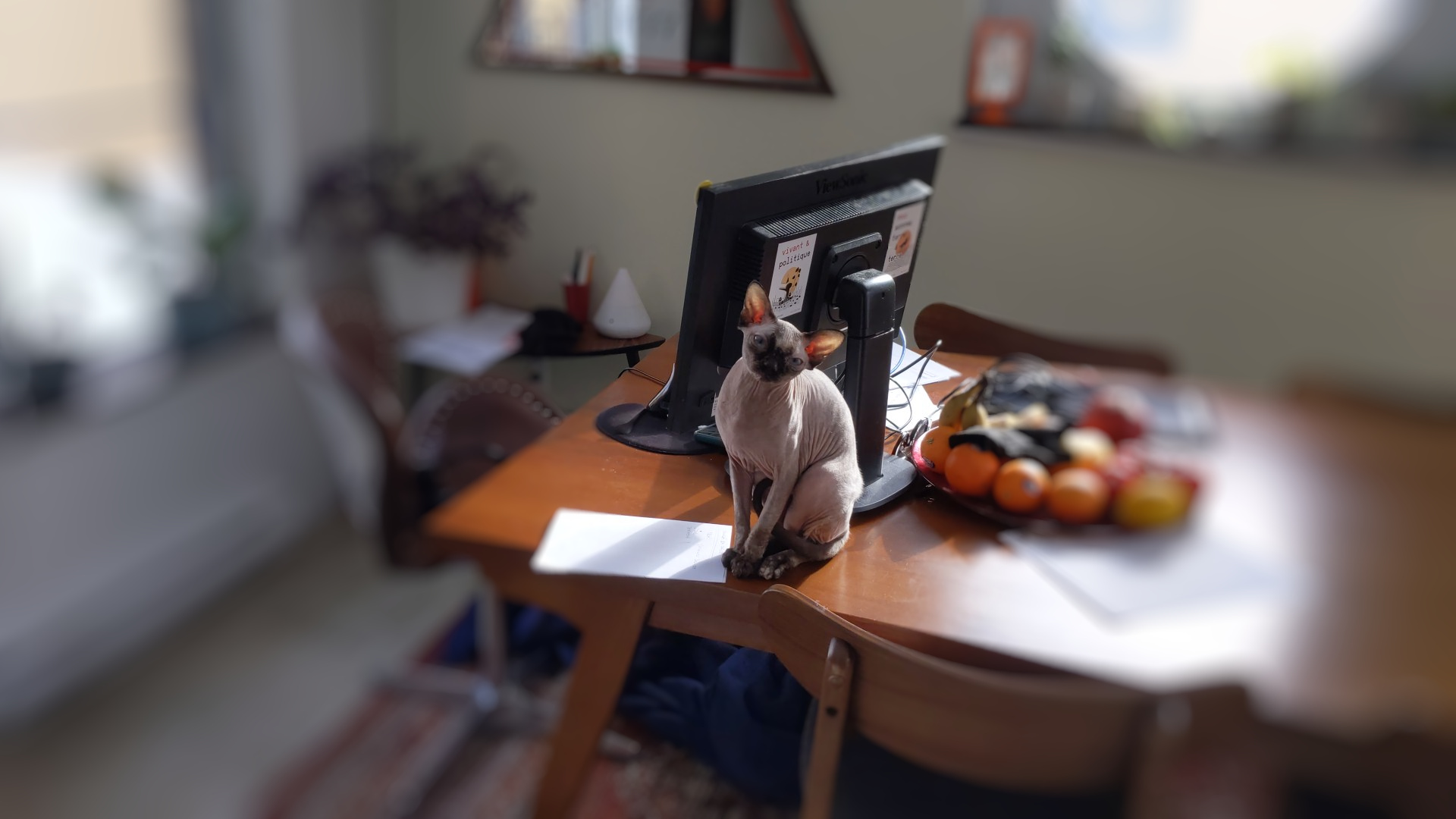
Hello World! I haven't really had time to blog here since the start of the semester, as I've been pretty busy at work1. All this to say, this report for the Bug Squashing Party we held in Montreal last weekend is a little late, sorry :) First of all, I'm pleased to announce our local community seems to be doing great and has recovered from the pandemic-induced lull. May COVID stay away from our bodies forever. This time around, a total of 9 people made it to what has become somewhat of a biennial tradition2. We worked on a grand total of 14 bugs and even managed to close some! It looks like I was too concentrated on bugs to take a picture of the event... To redeem myself, I hereby offer you a picture of a cute-but-hairless cat I met on Sunday morning: Picture of a curious sphinx cat on a table You should try to join an upcoming BSP or to organise one if you can. It's loads of fun and you'll be helping the project make the next release happen sooner! As always, thanks to Debian for granting us a budget for the food and to rent the venue. Goodbye Bullseye!

  1. Which I guess is a good thing, since it means I actually have work this semester :O
  2. See our previous BSPs in 2017, 2019 and 2021.

1 March 2023

Russ Allbery: Small book haul

I'm a bit behind on both free software maintenance and on writing reviews, what with one thing and another, but hopefully will have time to catch up next month. Meanwhile, publishing continues and books keep catching my eye. Blake Crouch (ed.) Forward (sff anthology)
Kate Elliott The Keeper's Six (sff)
Ruthanna Emrys A Half-Built Garden (sff)
R.F. Kuang Babel (sff)
Seanan McGuire The Unkindest Tide (sff)
Seanan McGuire A Killing Frost (sff)
Seanan McGuire When Sorrows Come (sff)
Seanan McGuire Be the Serpent (sff)
Terry Pratchett Thief of Time (sff)
Terry Pratchett The Last Hero (sff)
Terry Pratchett The Amazing Maurice and His Educated Rodents (sff)
Terry Pratchett Night Watch (sff)
Terry Pratchett The Wee Free Men (sff)
Terry Pratchett Monstrous Regiment (sff) I keep hearing amazing things about Babel, so it's very high on the list.

Reproducible Builds (diffoscope): diffoscope 238 released

The diffoscope maintainers are pleased to announce the release of diffoscope version 238. This version includes the following changes:
* autopkgtest: fix tool name in the skippable list.
You find out more by visiting the project homepage.

Debian XMPP Team: XMPP What's new in Debian 12 bookworm

On Tue 13 July 2021 there was a blog post of new XMPP related software releases which have been uploaded to Debian 11 (bullseye). Today, we will inform you about updates for the upcoming Debian release bookworm. A lot of new releases have been provided by the upstream projects. There were lot of changes to the XMPP clients like Dino, Gajim, Profanity, Poezio and others. Also the XMPP servers have been enhanced. Unfortunately, we can not provide a list of all the changes which have been done, but will try to highlight some of the changes and new features. BTW, feel free to join the Debian User Support on Jabber at xmpp:debian@conference.debian.org?join. You can find a list of 58 packages of the Debian XMPP team on the XMPP QA Page. Server Libs Others Happy chatting - keep in touch with your family and friends via Jabber / XMPP - XMPP is an open standard of the Internet Engineering Task Force (IETF) for instant messaging.

28 February 2023

Shirish Agarwal: Cutting off body parts and Lenovo

I would suggest that this blog post would be slightly unpleasant and I do wish that there was a way, a standardized way just like movies where you can put General, 14+, 16+, Adult and whatnot. so people could share without getting into trouble. I would suggest to consider this blog as for somewhat mature and perhaps disturbing.

Cutting off body parts From last couple of months or so we have been getting daily reports of either men or women killed and then being chopped into pieces and this is being normalized . During my growing up years, the only such case I remember was the 1995 Tandoor case and it jolted the conscience of the nation. But it seems lot of water has passe under the bridge. as no one seems to be shocked anymore  Also shocking are the number of heart attacks that young people are getting. Dunno the reason for either. Just saw this yesterday, The first thing to my mind was, at least she wasn t chopped. It was only latter I realized that the younger sister may have wanted to educate herself or have some other drreams, but because of some evil customs had to give hand in marriage. No outrage here for anything, not even child marriage :(. How have we become so insensitive. And it s mostly Hindus killing Hindus but still no outrage. We have been killing Muslims and Christians so that I guess is just par for the course :(. I wish I could say there is a solution but there seems to be not  Even Child abuse cases have been going up but sad to say even they are being normalised. It s only when a US agency or somebody who feels shocked, then we feel shocked otherwise we have become numb

AMD and Lenovo Lappies About couple of months ago I had made a blog post about lappies. Then Russel reached out to me on Twitter and we engaged. One thing lead to other and soon I saw on some other topic somewhere came across this
The above is a video presentation given by Mark Pearson. Sad to say it was not illuminating enough. Especially the whole boothole thing. I did see three blog posts to get some more insight. The security entry did also share some news. I also reached out to Mr. Pearson to know both the status and also to enquire if there are any new lappies without an OS that I can buy from Lenovo. Sadly, both these e-mails went unanswered. Maybe they went to spam or something else, have no clue. While other organizations did work on it, Debian was kinda side-lined. Hence the annoyance from the Debian Maintainers that the whole thing came from the left field. And this doesn t just effect Debian but all those downstream distributions that rely on Debian  . Now while it s almost a year since then and probably all has been fixed but there haven t been any instructions that I could find that tellls me if there is any new way or just the old way works. In any case, I do think bookworm release probably would have all the fixes needed. IIRC, we just entered soft freeze just couple of weeks back. I have to admit something though, I have never used secure-boot as it has been designed, partially because I always run testing, irrespective of whatever device I use. And AFAIK the whole idea of Secure Boot is to have few updates unlike Testing which is kinda a rolling release thing. While Secure Boot wants same bits, all underlying bits, in Testing it s hard to ensure that as the idea is to test new releases of software and see what works and what breaks till we send it to final release (something like Bookworm ). FWIW, currently bookworm and Testing is one and the same till Bookworm releases, and then Testing would have its own updates from the next hour/day after.

Russell Coker: Links February 2023

Vox has an insightful interview with the author of Slouching Towards Utopia: An Economic History of the Twentieth Century [1]. The main claim of that book is that The 140 years from 1870 to 2010 of the long twentieth century were, I strongly believe, the most consequential years of all humanity s centuries . A claim that seems well supported. PostMarketOS is an interesting OS for hardware designed for Android [2]. It is based on Alpine Linux, is small, and modular. If you want to change something just change that package not the entire image. Also an aim is to have as much commonality between devices as possible, all phones with the same CPU family can run the same packages apart from the kernel and maybe some utilities related to hardware. Abhijithpa blogged about getting started with pmOS, it seems easy to do [3]. Interesting article about gay samurai [4]. Regarding sex with men or women an elderly arbiter, after hearing the impassioned arguments of the two sides, counsels that the wisest course is to follow both paths in moderation, thereby helping to prevent overindulgence in either . Wow. The SCP project is an interesting collaborative SciFi/horror fiction project [5] based on an organisation that aims to Secure and Contain dangerous objects and beings and Protect the world from them. The series of stories about the Anti-Memetics Division [6] is a good place to start reading.

Utkarsh Gupta: FOSS Activites in February 2023

Here s my (forty-first) monthly but brief update about the activities I ve done in the F/L/OSS world.

Debian
This was my 50th month of actively contributing to Debian. I became a DM in late March 2019 and a DD on Christmas 19! \o/ There s a bunch of things I do, both, technical and non-technical. Here are the things I did this month:

Uploads

Others
  • Looked up some Release team documentation.
  • Sponsored php-font-lib and php-dompdf-svg-lib for William.
  • Granted DM rights for php-dompdf.
  • Mentoring for newcomers.
  • Reviewed micro bits for Nilesh, new uploads and changes.
  • Ruby sprints.
  • Bug work (on BTS and #debian-ruby) for rails and redmine.
  • Moderation of -project mailing list.
A huge thanks to Freexian for sponsoring my Debian work and Entrouvert for sponsoring the Redmine backports. :D

Ubuntu
This was my 25th month of actively contributing to Ubuntu. Now that I joined Canonical to work on Ubuntu full-time, there s a bunch of things I do! \o/ I mostly worked on different things, I guess. I was too lazy to maintain a list of things I worked on so there s no concrete list atm. Maybe I ll get back to this section later or will start to list stuff from the fall, as I was doing before. :D

Debian (E)LTS
Debian Long Term Support (LTS) is a project to extend the lifetime of all Debian stable releases to (at least) 5 years. Debian LTS is not handled by the Debian security team, but by a separate group of volunteers and companies interested in making it a success. And Debian Extended LTS (ELTS) is its sister project, extending support to the stretch and jessie release (+2 years after LTS support). This was my forty-first month as a Debian LTS and thirty-second month as a Debian ELTS paid contributor.
I worked for 24.25 hours for LTS and 28.50 hours for ELTS.

LTS CVE Fixes and Announcements:
  • Fixed CVE-2022-47016 for tmux and uploaded to buster via 2.8-3+deb10u1.
    But decided to not roll the DLA for the package as the CVE got rejected upstream.
  • Issued DLA 3359-1, fixing CVE-2019-13038 and CVE-2021-3639, for libapache2-mod-auth-mellon.
    For Debian 10 buster, these problems have been fixed in version 0.14.2-1+deb10u1.
  • Issued DLA 3360-1, fixing CVE-2021-30151 and CVE-2022-23837, for ruby-sidekiq.
    For Debian 10 buster, these problems have been fixed in version 5.2.3+dfsg-1+deb10u1.
  • Worked on ruby-rails-html-sanitize and added notes to the security-tracker.
    TL;DR: we need newer methods in ruby-loofah to make the patches for ruby-rails-html-sanitize backportable.
  • Started to look at other set of packages meanwhile.

ELTS CVE Fixes and Announcements:
  • Issued ELA 813-1, fixing CVE-2017-12618 and CVE-2022-25147, for apr-util.
    For Debian 8 jessie, these problems have been fixed in version 1.5.4-1+deb8u1.
    For Debian 9 stretch, these problems have been fixed in version 1.5.4-3+deb9u1.
  • Issued ELA 814-1, fixing CVE-2022-39286, for jupyter-core.
    For Debian 9 stretch, these problems have been fixed in version 4.2.1-1+deb9u1.
  • Issued ELA 815-1, fixing CVE-2022-44792 and CVE-2022-44793, for net-snmp.
    For Debian 8 jessie, these problems have been fixed in version 5.7.2.1+dfsg-1+deb8u6.
    For Debian 9 stretch, these problems have been fixed in version 5.7.3+dfsg-1.7+deb9u5.
  • Helped facilitate RabbitMQ s update queries by one of our customers.
  • Started to look at other set of packages meanwhile.

Other (E)LTS Work:
Until next time.
:wq for today.

Reproducible Builds (diffoscope): diffoscope 237 released

The diffoscope maintainers are pleased to announce the release of diffoscope version 237. This version includes the following changes:
* autopkgtest: only install aapt and dexdump on architectures where they are
  available. (Closes: #1031297)
* compartors/pdf:
  + Drop backward compatibility assignment.
  + Fix flake warnings, potentially reinstating PyPDF 1.x support (untested).
You find out more by visiting the project homepage.

27 February 2023

Daniel Lange: Getting gpg to import signatures again

The GnuPG (gpg) ecosystem has been played with a bit in 2019 by adding fake signatures en masse to well known keys. The main result is that the SKS Keyserver network based on the OCaml software of the same name is basically history. A few other keyservers have come up like Hagrid (Rust) and Hockeypuck (Go) but there seems to be no clear winner yet. In case you missed it in 2019, see my take on cleaning these polluted keys. Now the changed defaults in gpg to "mitigate" this issue are trickling down to even the conservative distributions. Debian Bullseye has self-sigs-only on gpg 2.2.27 and it looks like Debian Bookworm will get gpg 2.2.40. This would add import-clean but Daniel Kahn Gillmor patched it out. He argues correctly that this new default could delete data from good locally store pubkeys. This all ends in you getting some random combination of self-sigs-only and / or import-clean depending on which Linux distribution and version you happen to use. Better be explicit. I recommend to add:
# disable new gpg defaults
keyserver-options no-self-sigs-only
keyserver-options no-import-clean
to your ~/.gnupg/gpg.conf to make sure you can manage signatures yourself and receive them from keyservers or local imports as intended. In case you care: See info gnupg --index-search=keyserver-options for the fine documentation. Of course apt install info first to be able to read info pages. 'cause who still used them in 2023? Oh, wait...

Billy Warren: My take on IRCs - let's rest from Slack and Discord for a while.

I want to interest those that haven t used IRCs for a while through this article. This article generally leans toward the Debian Community but I hope it gives you some perspectives into IRCs and also interests you in joining the Debian Community as well. Most Generation Z developers I know have at least used slack, discord, discourse and so many other communication tools but so few have used IRCs so heavily and this could be because they find it boring and limited to what kind of content they can share and what community they are participating in. I got interested in using IRCs when I joined Debian and was able to navigate my way through using some online resources. While IRC may not be as popular as other communication tools like Slack or Discord, it remains a valuable tool for communication and collaboration within the open-source community. Its open-source nature and lightweight protocol make it a flexible and customizable tool that can be used in various settings. Internet Relay Chat (IRC) is a communication protocol that has been around since the late 1980s. Despite its age, it is still a popular tool for communication and collaboration, especially within the open-source community. It is mostly known to be used by people that work on boring projects or maintain legacy code (I can t state how true this is though). Interesting facts about IRC include that it was created by a Finnish developer named Jarkko Oikarinen, who wanted to create a communication tool that would allow him to chat with his friends in real-time (the FaceBook of those days). The first IRC network was called EFnet, and it quickly grew in popularity as more and more people began to use the protocol for communication and collaboration. IRC allows users to connect to servers and join channels (chat rooms) where they can communicate in real time with other users who have also joined the same channel. Many open-source projects use IRC channels for communication and collaboration among developers. The Debian project has a number of IRC channels that are used for communication and collaboration among developers and users. I have at least interacted with three of them which include;- To start using IRC, you will need to choose an IRC client, which is software that allows you to connect to IRC networks. Some popular IRC clients for Debian users include HexChat, irssi, and WeeChat. These clients are free and open source, and can be downloaded from the Debian repositories.Once you have chosen an IRC client, you can connect to an IRC network and start joining channels. Many open-source projects have their own IRC channels, where developers can discuss the project and collaborate in real time. One of the benefits of using IRC that I found out was that it is a lightweight protocol, which means that it can be used on a wide variety of devices, including desktop computers and smartphones. This makes it an ideal communication tool for developers who may be working on different devices and need to communicate with each other quickly and easily. IRC is still a valuable tool for communication and collaboration within the open-source community even if it is not given the same popularity as other communication tools. Like some of the good old legacy designs whose function never goes old, IRC is one of them.

26 February 2023

Russ Allbery: Review: An Informal History of the Hugos

Review: An Informal History of the Hugos, by Jo Walton
Publisher: Tor
Copyright: August 2018
ISBN: 1-4668-6573-3
Format: Kindle
Pages: 564
An Informal History of the Hugos is another collection of Jo Walton's Tor.com posts. As with What Makes This Book So Great, these are blog posts that are still available for free on-line. Unlike that collection, this series happened after Tor.com got better at tags, so it's much easier to find. Whether to buy it therefore depends on whether having it in convenient book form is worth it to you. Walton's previous collection was a somewhat random assortment of reviews of whatever book she felt like reviewing. As you may guess from the title, this one is more structured. She starts at the first year that the Hugo Awards were given out (1953) and discusses the winners for each year up through 2000. Nearly all of that discussion is about the best novel Hugo, a survey of other good books for that year, and, when other awards (Nebula, Locus, etc.) start up, comparing them to the winners and nominees of other awards. One of the goals of each discussion is to decide whether the Hugo nominees did a good job of capturing the best books of the year and the general feel of the genre at that time. There are a lot of pages in this book, but that's partly because there's a lot of filler. Each post includes all of the winners and (once a nomination system starts) nominees in every Hugo category. Walton offers an in-depth discussion of the novel in every year, and an in-depth discussion of the John W. Campbell Award for Best New Writer (technically not a Hugo but awarded with them and voted on in the same way) once those start. Everything else gets a few sentences at most, so it's mostly just lists, all of which you can readily find elsewhere if you cared. Personally, I would have omitted categories without commentary when this was edited into book form. Two other things are included in this book. Most helpfully, Walton's Tor.com reviews of novels in the shortlist are included after the discussion of that year. If you like Walton's reviews, this is great for all the reasons that What Makes This Book So Great was so much fun. Walton has a way of talking about books with infectious enthusiasm, brief but insightful technical analysis, and a great deal of genre context without belaboring any one point. They're concise and readable and never outlast my attention span, and I wish I could write reviews half as well. The other inclusion is a selection of the comments from the original blog posts. When these posts originally ran, they turned into a community discussion of the corresponding year of SF, and Tor included a selection of those comments in the book. Full disclosure: one of those comments is mine, about the way that cyberpunk latched on to some incorrect ideas of how computers work and made them genre conventions to such a degree that most cyberpunk takes place in a parallel universe with very different computer technology. (I suppose that technically makes me a published author to the tune of a couple of pages.) While I still largely agree with the comment, I blamed Neuromancer for this at the time, and embarrassingly discovered when re-reading it that I had been unfair. This is why one should never express opinions in public where someone might record them. Anyway, there is a general selection of comments from random people, but the vast majority of the comments are discussions of the year's short fiction by Rich Horton and Gardner Dozois. I understand why this was included; Walton doesn't talk about the short fiction, Dozois was a legendary SF short fiction editor and multiple Hugo winner, and both Horton and Dozois reviewed short fiction for Locus. But they don't attempt reviews. For nearly all stories under discussion, unless you recognized the title, you would have no idea even what sub-genre it was in. It's just a sequence of assertions about which title or author was better. Given that there are (in most years) three short fiction categories to the one novel category and both Horton and Dozois write about each category, I suspect there are more words in this book from Horton and Dozois than Walton. That's a problem when those comments turn into tedious catalogs. Reviewing short fiction, particularly short stories, is inherently difficult. I've tried to do a lot of that myself, and it's tricky to find something useful to say that doesn't spoil the story. And to be fair to Horton and Dozois, they weren't being paid to write reviews; they were just commenting on blog posts as part of a community conversation, and I doubt anyone thought this would turn into a book. But when read as a book, their inclusion in this form wasn't my favorite editorial decision. This is therefore a collection of Walton's commentary on the selections for best novel and best new writer alongside a whole lot of boring lists. In theory, the padding shouldn't matter; one can skip over it and just read Walton's parts, and that's still lots of material. But Walton's discussion of the best novels of the year also tends to turn into long lists of books with no commentary (particularly once the very-long Locus recommended list starts appearing), adding to the tedium. This collection requires a lot of skimming. I enjoyed this series of blog posts when they were first published, but even at the time I skimmed the short fiction comments. Gathered in book form with this light of editing, I think it was less successful. If you are curious about the history of science fiction awards and never read the original posts, you may enjoy this, but I would rather have read another collection of straight reviews. Rating: 6 out of 10

25 February 2023

Gregor Herrmann: demo video: dpt(1) in pkg-perl-tools

in the Debian Perl Group we are maintaining a lot of packages (around 4000 at the time of writing). this also means that we are spending some time on improving our tools which allow us to handle this amount of packages in a reasonable time. many of the tools are shipped in the pkg-perl-tools package since 2013, & lots of them are scripts which are called as subcommands of the dpt(1) wrapper script. in the last years I got the impression that not all team members are aware of all the useful tools, & that some more promotion might be called for. & last week I was in the mood for creating a short demo video to showcase how I use some dpt(1) subcommands when updating a package to a new upstream release. (even though I prefer text over videos myself :)) probably not a cinematographic masterpiece but as the feedback of a few viewers has been positive, I'm posting it here as well: (direct link as planets ignore iframes )

Petter Reinholdtsen: OpenSnitch available in Debian Sid and Bookworm

Thanks to the efforts of the OpenSnitch lead developer Gustavo I iguez Goya allowing me to sponsor the upload, the interactive application firewall OpenSnitch is now available in Debian Testing, soon to become the next stable release of Debian. This is a package which set up a network firewall on one or more machines, which is controlled by a graphical user interface that will ask the user if a program should be allowed to connect to the local network or the Internet. If some background daemon is trying to dial home, it can be blocked from doing so with a simple mouse click, or by default simply by not doing anything when the GUI question dialog pop up. A list of all programs discovered using the network is provided in the GUI, giving the user an overview of how the machine(s) programs use the network. OpenSnitch was uploaded for NEW processing about a month ago, and I had little hope of it getting accepted and shaping up in time for the package freeze, but the Debian ftpmasters proved to be amazingly quick at checking out the package and it was accepted into the archive about week after the first upload. It is now team maintained under the Go language team umbrella. A few fixes to the default setup is only in Sid, and should migrate to Testing/Bookworm in a week. During testing I ran into an issue with Minecraft server broadcasts disappearing, which was quickly resolved by the developer with a patch and a proposed configuration change. I've been told this was caused by the Debian packages default use if /proc/ information to track down kernel status, instead of the newer eBPF module that can be used. The reason is simply that upstream and I have failed to find a way to build the eBPF modules for OpenSnitch without a complete configured Linux kernel source tree, which as far as we can tell is unavailable as a build dependency in Debian. We tried unsuccessfully so far to use the kernel-headers package. It would be great if someone could provide some clues how to build eBPF modules on build daemons in Debian, possibly without the full kernel source. As usual, if you use Bitcoin and want to show your support of my activities, please send Bitcoin donations to my address 15oWEoG9dUPovwmUL9KWAnYRtNJEkP1u1b.

Holger Levsen: 20230225-Debian-Reunion-Hamburg-2023

Debian Reunion Hamburg 2023 from May 23 to 30 As in the last years there will be a Debian Reunion Hamburg 2023 event taking place at the same location as previous years, from May 23rd until the 30th (with the 29th being a public holiday in Germany and elsewhere). This is just a short announcement to get the word out, that this event will happen, so you can ponder and prepare attending. The wiki page has more information and some fine folks have even already registered! Announcements on the appropriate mailinglists will follow soon. And once again, a few things still need to be sorted out, eg a call for papers and a call for sponsors. Also this year I'd like to distribute the work on more shoulders, especially dealing with accomodation (there are 34 beds available on-site), accomodation payments and finances in general. If you want to help with any of that or have questions about the event, please reach out via #debconf-hamburg on irc.oftc.net or via the debconf-hamburg mailinglist. I'm very much looking forward to meet some of you once again and getting to know some others for the first time! Yay.

24 February 2023

Dirk Eddelbuettel: ttdo 0.0.9 on CRAN: Small Update

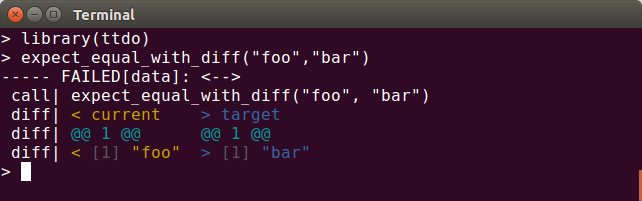
A new minor release of our ttdo package arrived on CRAN a few days ago. The ttdo package extends the excellent (and very minimal / zero depends) unit testing package tinytest by Mark van der Loo with the very clever and well-done diffobj package by Brodie Gaslam to give us test results with visual diffs (as shown in the screenshot below) which seemingly is so compelling an idea that it eventually got copied by another package which shall remain unnamed ttdo screenshot This release adds a versioned dependency on the just released tinytest version 1.4.1. As we extend tinytest (for use in the autograder we deploy within the lovely PrairieLearn framework) by consuming the tinytest code we have to update in sync. There were no other code changes in the package beside the usual maintenance of badges and continuous integration setup. As usual, the NEWS entry follows.

Changes in ttdo version 0.0.9 (2023-02-21)
  • Minor cleanup in README.md
  • Minor continuous integration update
  • Updated (versioned) depends on tinytest to 1.4.1

My CRANberries provides the usual summary of changes to the previous version. Please use the GitHub repo and its issues for any questions. If you like this or other open-source work I do, you can now sponsor me at GitHub.

This post by Dirk Eddelbuettel originated on his Thinking inside the box blog. Please report excessive re-aggregation in third-party for-profit settings.

Scarlett Gately Moore: Snowstorms, Kittens and Shattered dreams

Icy morning Witch Wells AzIcy morning Witch Wells Az
Long ago I applied for my dream job at a company I have wanted to wok for since its beginning and I wasn t ready technically. Fast forward to now, I am ready! A big thank you goes out to Blue Systems for that. So I go out and find the perfect role and start the application process. The process was months long, but was going very well, the interviews and I passed the technical with flying colors. I got to the end where the hiring lead told me he was submitting my offer I was so excited, so much so, I told my husband and parents I got the job! I know, I jinxed myself there. Soon I receive the There was a problem .. One obscure assessment called GIA came back not so good. I remember that day, we were in the middle of a long series of winter storms and I when I took the test, my kitten decided right then it was me time. I couldn t very well throw her out into the snowstorm, so I continued on the best I could. It is my fault, it clearly states to be distraction free. So I speak again to the hiring lead and we both feel with my experience and technical knowledge and abilities we can still move forward. I still had hope. After some time passes, I asked for an update and got the dreaded rejection. I am told it wasn t just the GIA, but that I am not a good overall fit for the company. In one fell swoop my dreams are dashed and final, for this and all roles within that company. I wasn t given a reason either. I am devastated, heart broken, and shocked. I get along with everyone, I exceed the technical requirements, and I work well in the community. Dream door closed. I will not let this get me down. I am moving on. I will find my place where I fit in . With that said, I no longer have the will, passion, or drive to work on snaps anymore. I will leave instructions with Jonathon as to what needs to be done to move forward. The good news is my core22 kde-neon extension was merged into upstream snapcraft, so whomever takes over will have a much easier time knocking them out. @kubuntu-council I will do whatever it takes to pay back the money for the hardware you provided me to do snaps, I am truly sorry about this. What does my future hold? I will still continue with my Debian efforts. In fact, I have ventured out from the KDE umbrella and joined the go-team. I am finalizing my packaging for https://github.com/charmbracelet/gum and it s dependencies: roff, mango, mango-kong. I had my first golang patch for a failing test and have submitted it upstream. I will upload these to experimental while the freeze is on. I will be moving all the libraries in the mycroft team to the python umbrella as they are useful for other things and mycroft is no more. During the holidays I was tinkering around with selenium UI testing and stumbled on some accessibility issues within KDE, so I think this is a good place for me to dive into for my KDE contributions. I have been approached to collaborate with OpenOS on a few things, time permitting I will see what I can do there. I have a possible gig to do some websites, while I move forward in my job hunt. I will not give up! I will find my place where I fit in . Meanwhile, I must ask for donations to get us by. Anything helps, thank you for your consideration. https://gofund.me/a9c36b87

23 February 2023

Steve Kemp: A quick hack for Emacs

As I've mentioned in the past I keep a work-log, or work-diary, recording my activities every day. I have a bunch of standard things that I record, but one thing that often ends up happening is that I make references to external bug trackers, be they Jira, Bugzilla, or something else. Today I hacked up a simple emacs minor-mode for converting these references to hyperlinks, automatically, via the use of regular expressions. Given this configuration:
(setq linkifier-patterns '(
          ("\\\<XXX-[0-9]+\\\>" "https://jira.example.com/browse/%s")
          ("\\\<BUG-[0-9]+\\\>" "https://bugzilla.example.com/show?id=%s")))
When the minor-mode is active the any literal text that matches the pattern, for example "XXX-1234", will suddenly become a clickable button that will open Jira, and BUG-1234 will become a clickable button that opens the appropriate bug in Bugzilla. There's no rewriting of the content, this is just a bit of magic that changes the display of the text (i.e. I'm using a button/text-property). Since I mostly write in org-mode I could have written my text like so:
[[jira:XXX-1234][XXX-1234]]
But that feels like an ugly thing to do, and that style of links wouldn't work outside org-files anyway. That said it's a useful approach if you're only using org-mode, and the setup is simple:
(add-to-list 'org-link-abbrev-alist
    '("jira" . "http://jira.example.com/browse/%s"))
Anyway, cute hack. Useful too.

Paul Tagliamonte: Announcing hz.tools

Interested in future updates? Follow me on mastodon at @paul@soylent.green. Posts about hz.tools will be tagged #hztools.

If you're on the Fediverse, I'd very much appreciate boosts on my announcement toot!
Ever since 2019, I ve been learning about how radios work, and trying to learn about using them the hard way by writing as much of the stack as is practical (for some value of practical) myself. I wrote my first Hello World in 2018, which was a simple FM radio player, which used librtlsdr to read in an IQ stream, did some filtering, and played the real valued audio stream via pulseaudio. Over 4 years this has slowly grown through persistence, lots of questions to too many friends to thank (although I will try), and the eternal patience of my wife hearing about radios nonstop for years into a number of Go repos that can do quite a bit, and support a handful of radios. I ve resisted making the repos public not out of embarrassment or a desire to keep secrets, but rather, an attempt to keep myself free of any maintenance obligations to users so that I could freely break my own API, add and remove API surface as I saw fit. The worst case was to have this project feel like work, and I can t imagine that will happen if I feel frustrated by PRs that are getting ahead of me solving problems I didn t yet know about, or bugs I didn t understand the fix for. As my rate of changes to the most central dependencies has slowed, i ve begun to entertain the idea of publishing them. After a bit of back and forth, I ve decided it s time to make a number of them public, and to start working on them in the open, as I ve built up a bit of knowledge in the space, and I and feel confident that the repo doesn t contain overt lies. That s not to say it doesn t contain lies, but those lies are likely hidden and lurking in the dark. Beware. That being said, it shouldn t be a surprise to say I ve not published everything yet for the same reasons as above. I plan to open repos as the rate of changes slows and I understand the problems the library solves well enough or if the project dead ends and I ve stopped learning.

Intention behind hz.tools It s my sincere hope that my repos help to make Software Defined Radio (SDR) code a bit easier to understand, and serves as an understandable framework to learn with. It s a large codebase, but one that is possible to sit down and understand because, well, it was written by a single person. Frankly, I m also not productive enough in my free time in the middle of the night and on weekends and holidays to create a codebase that s too large to understand, I hope! I remain wary of this project turning into work, so my goal is to be very upfront about my boundaries, and the limits of what classes of contributions i m interested in seeing. Here s some goals of open sourcing these repos:
  • I do want this library to be used to learn with. Please go through it all and use it to learn about radios and how software can control them!
  • I am interested in bugs if there s a problem you discover. Such bugs are likely a great chance for me to fix something I ve misunderstood or typoed.
  • I am interested in PRs fixing bugs you find. I may need a bit of a back and forth to fully understand the problem if I do not understand the bug and fix yet. I hope you may have some grace if it s taking a long time.
Here s a list of some anti-goals of open sourcing these repos.
  • I do not want this library to become a critical dependency of an important project, since I do not have the time to deal with the maintenance burden. Putting me in that position is going to make me very uncomfortable.
  • I am not interested in feature requests, the features have grown as I ve hit problems, I m not interested in building or maintaining features for features sake. The API surface should be exposed enough to allow others to experiment with such things out-of-tree.
  • I m not interested in clever code replacing clear code without a very compelling reason.
  • I use GNU/Linux (specifically Debian ), and from time-to-time I ve made sure that my code runs on OpenBSD too. Platforms beyond that will likely not be supported at the expense of either of those two. I ll take fixes for bugs that fix a problem on another platform, but not damage the code to work around issues / lack of features on other platforms (like Windows).

I m not saying all this to be a jerk, I do it to make sure I can continue on my journey to learn about how radios work without my full time job becoming maintaining a radio framework single-handedly for other people to use even if it means I need to close PRs or bugs without merging it or fixing the issue. With all that out of the way, I m very happy to announce that the repos are now public under github.com/hztools.

Should you use this? Probably not. The intent here is not to provide a general purpose Go SDR framework for everyone to build on, although I am keenly aware it looks and feels like it, since that what it is to me. This is a learning project, so for any use beyond joining me in learning should use something like GNU Radio or a similar framework that has a community behind it. In fact, I suspect most contributors ought to be contributing to GNU Radio, and not this project. If I can encourage people to do so, contribute to GNU Radio! Nothing makes me happier than seeing GNU Radio continue to be the go-to, and well supported. Consider donating to GNU Radio!

hz.tools/rf - Frequency types The hz.tools/rf library contains the abstract concept of frequency, and some very basic helpers to interact with frequency ranges (such as helpers to deal with frequency ranges, or frequency range math) as well as frequencies and some very basic conversions (to meters, etc) and parsers (to parse values like 10MHz). This ensures that all the hz.tools libraries have a shared understanding of Frequencies, a standard way of representing ranges of Frequencies, and the ability to handle the IO boundary with things like CLI arguments, JSON or YAML. The git repo can be found at github.com/hztools/go-rf, and is importable as hz.tools/rf.
 // Parse a frequency using hz.tools/rf.ParseHz, and print it to stdout.
 freq := rf.MustParseHz("-10kHz")
fmt.Printf("Frequency: %s\n", freq+rf.MHz)
// Prints: 'Frequency: 990kHz'

// Return the Intersection between two RF ranges, and print
 // it to stdout.
 r1 := rf.Range rf.KHz, rf.MHz 
r2 := rf.Range rf.Hz(10), rf.KHz * 100 
fmt.Printf("Range: %s\n", r1.Intersection(r2))
// Prints: Range: 1000Hz->100kHz
These can be used to represent tons of things - ranges can be used for things like the tunable range of an SDR, the bandpass of a filter or the frequencies that correspond to a bin of an FFT, while frequencies can be used for things such as frequency offsets or the tuned center frequency.

hz.tools/sdr - SDR I/O and IQ Types This is the big one. This library represents the majority of the shared types and bindings, and is likely the most useful place to look at when learning about the IO boundary between a program and an SDR. The git repo can be found at github.com/hztools/go-sdr, and is importable as hz.tools/sdr. This library is designed to look (and in some cases, mirror) the Go io idioms so that this library feels as idiomatic as it can, so that Go builtins interact with IQ in a way that s possible to reason about, and to avoid reinventing the wheel by designing new API surface. While some of the API looks (and is even called) the same thing as a similar function in io, the implementation is usually a lot more naive, and may have unexpected sharp edges such as concurrency issues or performance problems. The following IQ types are implemented using the sdr.Samples interface. The hz.tools/sdr package contains helpers for conversion between types, and some basic manipulation of IQ streams.
IQ Format hz.tools Name Underlying Go Type
Interleaved uint8 (rtl-sdr) sdr.SamplesU8 [][2]uint8
Interleaved int8 (hackrf, uhd) sdr.SamplesI8 [][2]int8
Interleaved int16 (pluto, uhd) sdr.SamplesI16 [][2]int16
Interleaved float32 (airspy, uhd) sdr.SamplesC64 []complex64
The following SDRs have implemented drivers in-tree.
SDR Format RX/TX State
rtl u8 RX Good
HackRF i8 RX/TX Good
PlutoSDR i16 RX/TX Good
rtl kerberos u8 RX Old
uhd i16/c64/i8 RX/TX Good
airspyhf c64 RX Exp
The following major packages and subpackages exist at the time of writing:
Import What is it?
hz.tools/sdr Core IQ types, supporting types and implementations that interact with the byte boundary
hz.tools/sdr/rtl sdr.Receiver implementation using librtlsdr.
hz.tools/sdr/rtl/kerberos Helpers to enable coherent RX using the Kerberos SDR.
hz.tools/sdr/rtl/e4k Helpers to interact with the E4000 RTL-SDR dongle.
hz.tools/sdr/fft Interfaces for performing an FFT, which are implemented by other packages.
hz.tools/sdr/rtltcp sdr.Receiver implementation for rtl_tcp servers.
hz.tools/sdr/pluto sdr.Transceiver implementation for the PlutoSDR using libiio.
hz.tools/sdr/uhd sdr.Transceiver implementation for UHD radios, specifically the B210 and B200mini
hz.tools/sdr/hackrf sdr.Transceiver implementation for the HackRF using libhackrf.
hz.tools/sdr/mock Mock SDR for testing purposes.
hz.tools/sdr/airspyhf sdr.Receiver implementation for the AirspyHF+ Discovery with libairspyhf.
hz.tools/sdr/internal/simd SIMD helpers for IQ operations, written in Go ASM. This isn t the best to learn from, and it contains pure go implemtnations alongside.
hz.tools/sdr/stream Common Reader/Writer helpers that operate on IQ streams.

hz.tools/fftw - hz.tools/sdr/fft implementation The hz.tools/fftw package contains bindings to libfftw3 to implement the hz.tools/sdr/fft.Planner type to transform between the time and frequency domain. The git repo can be found at github.com/hztools/go-fftw, and is importable as hz.tools/fftw. This is the default throughout most of my codebase, although that default is only expressed at the leaf package libraries should not be hardcoding the use of this library in favor of taking an fft.Planner, unless it s used as part of testing. There are a bunch of ways to do an FFT out there, things like clFFT or a pure-go FFT implementation could be plugged in depending on what s being solved for.

hz.tools/ fm,am - analog audio demodulation and modulation The hz.tools/fm and hz.tools/am packages contain demodulators for AM analog radio, and FM analog radio. This code is a bit old, so it has a lot of room for cleanup, but it ll do a very basic demodulation of IQ to audio. The git repos can be found at github.com/hztools/go-fm and github.com/hztools/go-am, and are importable as hz.tools/fm and hz.tools/am. As a bonus, the hz.tools/fm package also contains a modulator, which has been tested on the air and with some of my handheld radios. This code is a bit old, since the hz.tools/fm code is effectively the first IQ processing code I d ever written, but it still runs and I run it from time to time.
 // Basic sketch for playing FM radio using a reader stream from
 // an SDR or other IQ stream.

bandwidth := 150*rf.KHz
reader, err = stream.ConvertReader(reader, sdr.SampleFormatC64)
if err != nil  
...
 
demod, err := fm.Demodulate(reader, fm.DemodulatorConfig 
Deviation: bandwidth / 2,
Downsample: 8, // some value here depending on sample rate
 Planner: fftw.Plan,
 )
if err != nil  
...
 
speaker, err := pulseaudio.NewWriter(pulseaudio.Config 
Format: pulseaudio.SampleFormatFloat32NE,
Rate: demod.SampleRate(),
AppName: "rf",
StreamName: "fm",
Channels: 1,
SinkName: "",
 )
if err != nil  
...
 
buf := make([]float32, 1024*64)
for  
i, err := demod.Read(buf)
if err != nil  
...
 
if i == 0  
panic("...")
 
if err := speaker.Write(buf[:i]); err != nil  
...


hz.tools/rfcap - byte serialization for IQ data The hz.tools/rfcap package is the reference implementation of the rfcap spec , and is how I store IQ captures locally, and how I send them across a byte boundary. The git repo can be found at github.com/hztools/go-rfcap, and is importable as hz.tools/rfcap. If you re interested in storing IQ in a way others can use, the better approach is to use SigMF rfcap exists for cases like using UNIX pipes to move IQ around, through APIs, or when I send IQ data through an OS socket, to ensure the sample format (and other metadata) is communicated with it. rfcap has a number of limitations, for instance, it can not express a change in frequency or sample rate during the capture, since the header is fixed at the beginning of the file.

Next.

Previous.