Search Results: "tim"

20 October 2021

Russell Coker: Strange Apache Reload Issue

I recently had to renew the SSL certificate for my web server, nothing exciting about that but Certbot created a new directory for the key because I had removed some domains (moved to a different web server). This normally isn t a big deal, change the Apache configuration to the new file names and run the reload command. My monitoring system initially said that the SSL certificate wasn t going to expire in the near future so it looked fine. Then an hour later my monitoring system told me that the certificate was about to expire, apparently the old certificate came back! I viewed my site with my web browser and the new certificate was being used, it seemed strange. Then I did more tests with gnutls-cli which revealed that exactly half the connections got the new certificate and half got the old one. Because my web server isn t doing anything particularly demanding the mpm_event configuration only starts 2 servers, and even that may be excessive for what it does. So it seems that the Apache reload command had reloaded the configuration on one mpm_event server but not the other! Fortunately this was something that was easy to test and was something that was automatically tested. If the change that didn t get accepted was something small it would be a particularly insidious bug. I haven t yet tried to reproduce this. But if I get the time I ll do so and file a bug report.

19 October 2021

Raphaël Hertzog: Freexian s report about Debian Long Term Support, September 2021

A Debian LTS logo
Like each month, have a look at the work funded by Freexian s Debian LTS offering. Debian project funding Folks from the LTS team, along with members of the Debian Android Tools team and Phil Morrel, have proposed work on the Java build tool, gradle, which is currently blocked due to the need to build with a plugin not available in Debian. The LTS team reviewed the project submission and it has been approved. After approval we ve created a Request for Bids which is active now. You ll hear more about this through official Debian channels, but in the meantime, if you feel you can help with this project, please submit a bid. Thanks! This September, Freexian set aside 2550 EUR to fund Debian projects. We re looking forward to receive more projects from various Debian teams! Learn more about the rationale behind this initiative in this article. Debian LTS contributors In September, 15 contributors have been paid to work on Debian LTS, their reports are available: Evolution of the situation In September we released 30 DLAs. September was also the second month of Jeremiah coordinating LTS contributors. Also, we would like say that we are always looking for new contributors to LTS. Please contact Jeremiah if you are interested! The security tracker currently lists 33 packages with a known CVE and the dla-needed.txt file has 26 packages needing an update. Thanks to our sponsors Sponsors that joined recently are in bold.

18 October 2021

Dirk Eddelbuettel: dang 0.0.14: Several Updates

A new release of the dang package arrived at CRAN a couple of hours ago, exactly eight months after the previous release. The dang package regroups a few functions of mine that had no other home as for example lsos() from a StackOverflow question from 2009 (!!), the overbought/oversold price band plotter from an older blog post, the market monitor from the last release as well the checkCRANStatus() function recently tweeted about by Tim Taylor. This release regroups a few small edits to several functions, adds a sample function for character encoding reading and conversion using a library already used by R (hence look Ma, no new depends ), adds a weekday helper, and a sample usage (computing rolling min/max values) of a new simple vector class added to tidyCpp (and the function and class need to get another blog post or study ), and an experimental git sha1sum and date marker (as I am not the fan of autogenerated binaries from repos as opposed to marked released meaning: we may see different binary release with the same version number). The full NEWS entry follows.

Changes in version 0.0.14 (2021-10-17)
  • Updated continuous integration to run on Linux only.
  • Edited checkNonAscii.cpp for readability.
  • More robust title display in intradayMarketMonitor.R.
  • New C++-based function to read and convert encoding via the R-supplied iconv library, noted a potential variability.
  • New function wday returning day of the week as integer.
  • The signature to as.data.table was standardized.
  • A new function rollMinMax was added illustrating use of the NumVec class from tidyCpp.
  • The configure script can record the last commit date and sha1 to automate timestamping builds, but not activated in this release.
  • checkCRANStatus() now works correctly for single-package lookups (Jordan Mark Barbone in #4).

Courtesy of my CRANberries, there is a comparison to the previous release. For questions or comments use the issue tracker off the GitHub repo. If you like this or other open-source work I do, you can now sponsor me at GitHub.

This post by Dirk Eddelbuettel originated on his Thinking inside the box blog. Please report excessive re-aggregation in third-party for-profit settings.

13 October 2021

Dirk Eddelbuettel: GitHub Streak: Round Eight

Seven years ago I referenced the Seinfeld Streak used in an earlier post of regular updates to to the Rcpp Gallery:
This is sometimes called Jerry Seinfeld s secret to productivity: Just keep at it. Don t break the streak.
and then showed the first chart of GitHub streaking 366 days:
github activity october 2013 to october 2014github activity october 2013 to october 2014
And six years ago a first follow-up appeared in this post about 731 days:
github activity october 2014 to october 2015github activity october 2014 to october 2015
And five years ago we had a followup at 1096 days
github activity october 2015 to october 2016github activity october 2015 to october 2016
And four years ago we had another one marking 1461 days
github activity october 2016 to october 2017github activity october 2016 to october 2017
And three years ago another one for 1826 days
github activity october 2017 to october 2018github activity october 2017 to october 2018
And two year another one bringing it to 2191 days
github activity october 2018 to october 2019github activity october 2018 to october 2019
And last year another one bringing it to 2257 days
github activity october 2019 to october 2020github activity october 2019 to october 2020
And as today is October 12, here is the newest one from 2020 to 2021 with a new total of 2922 days:
github activity october 2020 to october 2021github activity october 2020 to october 2021
Again, special thanks go to Alessandro Pezz for the Chrome add-on GithubOriginalStreak.

This post by Dirk Eddelbuettel originated on his Thinking inside the box blog. Please report excessive re-aggregation in third-party for-profit settings.

Dirk Eddelbuettel: RcppQuantuccia 0.0.4 on CRAN: Updated Calendar

A new release of RcppQuantuccia arrived on CRAN earlier today. RcppQuantuccia brings the Quantuccia header-only subset / variant of QuantLib to R. At the current stage, it mostly offers date and calendaring functions. This release is the first in two years and brings a few internal updates (such as a swift to continuous integration to the trusted r-ci setup) along with a first update of the United States calendar. Which, just like RQuantLib, now knows about two new calendars LiborUpdate and FederalReserve. So now we can for example look for holidays during June of next year under the Federal Reserve calendar and see
> library(RcppQuantuccia)
> setCalendar("UnitedStates/FederalReserve")
> getHolidays(as.Date("2022-06-01"), as.Date("2022-06-30"))
[1] "2022-06-20"
> 
that Juneteenth 2022 will be observed on (Monday) June 20th. We should note that Quantuccia itself was a bit of a trial balloon and is not actively maintained so we may concentrate on these calendaring functions to keep them in sync with QuantLib. Being a header-only subset is good, and the removal of the (very !!) expensive (in terms of compiled library size) Sobol sequence-based RNG in release 0.0.3 was the right call. So time permitting, a leaner, meaner RcppQuantuccia with a calendaring focus may emerge. The complete list changes follows.

Changes in version 0.0.4 (2021-10-12)
  • Allow for 'Null' calendar without weekends or holidays
  • Switch CI use to r-ci
  • Updated UnitedStates calendar to current QuantLib calendar
  • Small updates to DESCRIPTION and README.md

Courtesy of CRANberries, there is also a diffstat report relative to the previous release. More information is on the RcppQuantuccia page. Issues and bugreports should go to the GitHub issue tracker. If you like this or other open-source work I do, you can now sponsor me at GitHub.

This post by Dirk Eddelbuettel originated on his Thinking inside the box blog. Please report excessive re-aggregation in third-party for-profit settings.

12 October 2021

Antonio Terceiro: Triaging Debian build failure logs with collab-qa-tools

The Ruby team is working now on transitioning to ruby 3.0. Even though most packages will work just fine, there is substantial amount of packages that require some work to adapt. We have been doing test rebuilds for a while during transitions, but usually triaged the problems manually. This time I decided to try collab-qa-tools, a set of scripts Lucas Nussbaum uses when he does archive-wide rebuilds. I'm really glad that I did, because those tols save a lot of time when processing a large number of build failures. In this post, I will go through how to triage a set of build logs using collab-qa-tools. I have some some improvements to the code. Given my last merge request is very new and was not merged yet, a few of the things I mention here may apply only to my own ruby3.0 branch. collab-qa-tools also contains a few tools do perform the builds in the cloud, but since we already had the builds done, I will not be mentioning that part and will write exclusively about the triaging tools. Installing collab-qa-tools The first step is to clone the git repository. Make sure you have the dependencies from debian/control installed (a few Ruby libraries). One of the patches I sent, and was already accepted, is the ability to run it without the need to install:
source /path/to/collab-qa-tools/activate.sh
This will add the tools to your $PATH. Preparation The first think you need to do is getting all your build logs in a directory. The tools assume .log file extension, and they can be named $ PACKAGE _*.log or just $ PACKAGE .log. Creating a TODO file
cqa-scanlogs   grep -v OK > todo
todo will contain one line for each log with a summary of the failure, if it's able to find one. collab-qa-tools has a large set of regular expressions for finding errors in the build logs It's a good idea to split the TODO file in multiple ones. This can easily be done with split(1), and can be used to delimit triaging sessions, and/or to split the triaging between multiple people. For example this will create todo into todo00, todo01, ..., each containing 30 lines:
split --lines=30 --numeric-suffixes todo todo
Triaging You can now do the triaging. Let's say we split the TODO files, and will start with todo01. The first step is calling cqa-fetchbugs (it does what it says on the tin):
cqa-fetchbugs --TODO=todo01
Then, cqa-annotate will guide you through the logs and allow you to report bugs:
cqa-annotate --TODO=todo01
I wrote myself a process.sh wrapper script for cqa-fetchbugs and cqa-annotate that looks like this:
#!/bin/sh
set -eu
for todo in $@; do
  # force downloading bugs
  awk ' print(".bugs." $1) ' "$ todo "   xargs rm -f
  cqa-fetchbugs --TODO="$ todo "
  cqa-annotate \
    --template=template.txt.jinja2 \
    --TODO="$ todo "
done
The --template option is a recent contribution of mine. This is a template for the bug reports you will be sending. It uses Liquid templates, which is very similar to Jinja2 for Python. You will notice that I am even pretending it is Jinja2 to trick vim into doing syntax highlighting for me. The template I'm using looks like this:
From:   fullname   <  email  >
To: submit@bugs.debian.org
Subject:   package  : FTBFS with ruby3.0:   summary  
Source:   package  
Version:   version   split:'+rebuild'   first  
Severity: serious
Justification: FTBFS
Tags: bookworm sid ftbfs
User: debian-ruby@lists.debian.org
Usertags: ruby3.0
Hi,
We are about to enable building against ruby3.0 on unstable. During a test
rebuild,   package   was found to fail to build in that situation.
To reproduce this locally, you need to install ruby-all-dev from experimental
on an unstable system or build chroot.
Relevant part (hopefully):
 % for line in extract % >   line  
 % endfor % 
The full build log is available at
https://people.debian.org/~kanashiro/ruby3.0/round2/builds/3/  package  /  filename   replace:".log",".build.txt"  
The cqa-annotate loop cqa-annotate will parse each log file, display an extract of what it found as possibly being the relevant part, and wait for your input:
######## ruby-cocaine_0.5.8-1.1+rebuild1633376733_amd64.log ########
--------- Error:
     Failure/Error: undef_method :exitstatus
     FrozenError:
       can't modify frozen object: pid 2351759 exit 0
     # ./spec/support/unsetting_exitstatus.rb:4:in  undef_method'
     # ./spec/support/unsetting_exitstatus.rb:4:in  singleton class'
     # ./spec/support/unsetting_exitstatus.rb:3:in  assuming_no_processes_have_been_run'
     # ./spec/cocaine/errors_spec.rb:55:in  block (2 levels) in <top (required)>'
Deprecation Warnings:
Using  should  from rspec-expectations' old  :should  syntax without explicitly enabling the syntax is deprecated. Use the new  :expect  syntax or explicitly enable  :should  with  config.expect_with(:rspec)    c  c.syntax = :should   instead. Called from /<<PKGBUILDDIR>>/spec/cocaine/command_line/runners/backticks_runner_spec.rb:19:in  block (2 levels) in <top (required)>'.
If you need more of the backtrace for any of these deprecations to
identify where to make the necessary changes, you can configure
 config.raise_errors_for_deprecations! , and it will turn the
deprecation warnings into errors, giving you the full backtrace.
1 deprecation warning total
Finished in 6.87 seconds (files took 2.68 seconds to load)
67 examples, 1 failure
Failed examples:
rspec ./spec/cocaine/errors_spec.rb:54 # When an error happens does not blow up if running the command errored before execution
/usr/bin/ruby3.0 -I/usr/share/rubygems-integration/all/gems/rspec-support-3.9.3/lib:/usr/share/rubygems-integration/all/gems/rspec-core-3.9.2/lib /usr/share/rubygems-integration/all/gems/rspec-core-3.9.2/exe/rspec --pattern ./spec/\*\*/\*_spec.rb --format documentation failed
ERROR: Test "ruby3.0" failed:
----------------
ERROR: Test "ruby3.0" failed:      Failure/Error: undef_method :exitstatus
----------------
package: ruby-cocaine
lines: 30
------------------------------------------------------------------------
s: skip
i: ignore this package permanently
r: report new bug
f: view full log
------------------------------------------------------------------------
Action [s i r f]:
You can then choose one of the options: When there are existing bugs in the package, cqa-annotate will list them among the options. If you choose a bug number, the TODO file will be annotated with that bug number and new runs of cqa-annotate will not ask about that package anymore. For example after I reported a bug for ruby-cocaine for the issue listed above, I aborted with a ctrl-c, and when I run my process.sh script again I then get this prompt:
----------------
ERROR: Test "ruby3.0" failed:      Failure/Error: undef_method :exitstatus
----------------
package: ruby-cocaine
lines: 30
------------------------------------------------------------------------
s: skip
i: ignore this package permanently
1: 996206 serious ruby-cocaine: FTBFS with ruby3.0: ERROR: Test "ruby3.0" failed:      Failure/Error: undef_method :exitstatus  
r: report new bug
f: view full log
------------------------------------------------------------------------
Action [s i 1 r f]:
Chosing 1 will annotate the TODO file with the bug number, and I'm done with this package. Only a few other hundreds to go.

9 October 2021

Thorsten Alteholz: My Debian Activities in September 2021

FTP master This month I accepted 224 and rejected 47 packages. This is almost thrice the rejects of last month. Please, be more careful and check your package twice before uploading. The overall number of packages that got accepted was 233. Debian LTS This was my eighty-seventh month that I did some work for the Debian LTS initiative, started by Raphael Hertzog at Freexian. This month my all in all workload has been 24.75h. During that time I did LTS and normal security uploads of: I also started to work on exiv2 and faad2. Last but not least I did some days of frontdesk duties. Debian ELTS This month was the thirty-ninth ELTS month. Unfortunately during my allocated time I could not process any upload. I worked on openssl, curl and squashfs-tools but for one reason or another the prepared packages didn t pass all tests. In order to avoid regressions, I postponed the uploads (meanwhile an ELA for curl was published ). Last but not least I did some days of frontdesk duties. Other stuff On my neverending golang challenge I again uploaded some packages either for NEW or as source upload. As Odyx took a break from all Debian activities, I volunteered to take care of the printing packages. Please be merciful when somethings breaks after I did an upload. My first printing upload was hplip

Ritesh Raj Sarraf: Lotus to Lily

The Lotus story so far My very first experience with water flowering plants was pretty good. I learnt a good deal of things; from setting up the pond, germinating the lotus seeds, setting up the right soil, witnessing the growth of the lotus plant, fish eco-system to take care of the pond. Overall, a lot of things learnt. But I couldn t succeed in getting the Lotus flower. A lot many reasons. The granite container developed some leakage, which I had to fix by emptying it, which might have caused some shock to the lotus. But more than that, in my understanding, the reason for not being able to flower the lotus, was the amount of sunlight. From what I have learned, these plants need a minimum of 6-8 hrs of sunlight to really give you with the flowering result, whereas the setup of my pond was on the ground with hardly 3-4 hrs of sun. And that too, with all the plants growing, resulted in indirect sunlight.

Lotus to Lily For my new setup, I chose a large oval container. And this one, I placed on my terrace, carefully choosing a spot where it d get 6-8 hrs of very bright sun on usual days. Other than that, the rest of the setup is pretty similar to my previous setup in the garden. Guppies, Solar Water Fountain etc.
Initial lily pond setup
The good thing about the terrace is that the setup gets ample amount of sun. You can see that in the picture above, with the amount of algae that has been formed. Something that is vital for the plant s ecosystem. I must thank my wonderful neighbor who kindly shared a sapling from their lily plant. They already had had success with flowering the lily. So I had high hopes to see the day come when I d be happy to write down my experience in this blog post. Though, a lot of patience is needed. I got the lily some time in January this year. And it blossomed now, in October. So, here s me sharing my happiness here, in particular order of how I documented the process.
Monday morning greeted with a blossomed lily
Lily Blossom Closeup
Beautiful water reflection

Dawn to Dusk The other thing that I learned in this whole lily episode is that the flower goes back to sleeping at dusk. And back to flowering again at dawn. There s so much to learn in the surrounding, only if you spare some time to the little things with mother nature.
Lily status at dusk
Lily status at dusk
Lily the next day
Lily the next day
Not sure how long this phenomenon is to last, but overall witnessing this whole process has been mesmerizing. This past week has been great.

8 October 2021

Chris Lamb: Reproducible Builds: Increasing the Integrity of Software Supply Chains (2021)

I didn't blog about it at the time, but a paper I co-authored with Stefano Zacchiroli was accepted by IEEE Software in April of this year. Titled Reproducible Builds: Increasing the Integrity of Software Supply Chains, the abstract of the paper is as follows:

Although it is possible to increase confidence in Free and Open Source Software (FOSS) by reviewing its source code, trusting code is not the same as trusting its executable counterparts. These are typically built and distributed by third-party vendors with severe security consequences if their supply chains are compromised. In this paper, we present reproducible builds, an approach that can determine whether generated binaries correspond with their original source code. We first define the problem and then provide insight into the challenges of making real-world software build in a "reproducible" manner that is, when every build generates bit-for-bit identical results. Through the experience of the Reproducible Builds project making the Debian Linux distribution reproducible, we also describe the affinity between reproducibility and quality assurance (QA).
The full text of the paper can be found in PDF format and should appear, with an alternative layout, within a forthcoming issue of the physical IEEE Software magazine.

6 October 2021

Reproducible Builds: Reproducible Builds in September 2021

The goal behind reproducible builds is to ensure that no deliberate flaws have been introduced during compilation processes via promising or mandating that identical results are always generated from a given source. This allowing multiple third-parties to come to an agreement on whether a build was compromised or not by a system of distributed consensus. In these reports we outline the most important things that have been happening in the world of reproducible builds in the past month:
First mentioned in our March 2021 report, Martin Heinz published two blog posts on sigstore, a project that endeavours to offer software signing as a public good, [the] software-signing equivalent to Let s Encrypt . The two posts, the first entitled Sigstore: A Solution to Software Supply Chain Security outlines more about the project and justifies its existence:
Software signing is not a new problem, so there must be some solution already, right? Yes, but signing software and maintaining keys is very difficult especially for non-security folks and UX of existing tools such as PGP leave much to be desired. That s why we need something like sigstore - an easy to use software/toolset for signing software artifacts.
The second post (titled Signing Software The Easy Way with Sigstore and Cosign) goes into some technical details of getting started.
There was an interesting thread in the /r/Signal subreddit that started from the observation that Signal s apk doesn t match with the source code:
Some time ago I checked Signal s reproducibility and it failed. I asked others to test in case I did something wrong, but nobody made any reports. Since then I tried to test the Google Play Store version of the apk against one I compiled myself, and that doesn t match either.

BitcoinBinary.org was announced this month, which aims to be a repository of Reproducible Build Proofs for Bitcoin Projects :
Most users are not capable of building from source code themselves, but we can at least get them able enough to check signatures and shasums. When reputable people who can tell everyone they were able to reproduce the project s build, others at least have a secondary source of validation.

Distribution work Fr d ric Pierret announced a new testing service at beta.tests.reproducible-builds.org, showing actual rebuilds of binaries distributed by both the Debian and Qubes distributions. In Debian specifically, however, 51 reviews of Debian packages were added, 31 were updated and 31 were removed this month to our database of classified issues. As part of this, Chris Lamb refreshed a number of notes, including the build_path_in_record_file_generated_by_pybuild_flit_plugin issue. Elsewhere in Debian, Roland Clobus posted his Fourth status update about reproducible live-build ISO images in Jenkins to our mailing list, which mentions (amongst other things) that:
  • All major configurations are still built regularly using live-build and bullseye.
  • All major configurations are reproducible now; Jenkins is green.
    • I ve worked around the issue for the Cinnamon image.
    • The patch was accepted and released within a few hours.
  • My main focus for the last month was on the live-build tool itself.
Related to this, there was continuing discussion on how to embed/encode the build metadata for the Debian live images which were being worked on by Roland Clobus.
Ariadne Conill published another detailed blog post related to various security initiatives within the Alpine Linux distribution. After summarising some conventional security work being done (eg. with sudo and the release of OpenSSH version 3.0), Ariadne included another section on reproducible builds: The main blocker [was] determining what to do about storing the build metadata so that a build environment can be recreated precisely . Finally, Bernhard M. Wiedemann posted his monthly reproducible builds status report.

Community news On our website this month, Bernhard M. Wiedemann fixed some broken links [ ] and Holger Levsen made a number of changes to the Who is Involved? page [ ][ ][ ]. On our mailing list, Magnus Ihse Bursie started a thread with the subject Reproducible builds on Java, which begins as follows:
I m working for Oracle in the Build Group for OpenJDK which is primary responsible for creating a built artifact of the OpenJDK source code. [ ] For the last few years, we have worked on a low-effort, background-style project to make the build of OpenJDK itself building reproducible. We ve come far, but there are still issues I d like to address. [ ]

diffoscope diffoscope is our in-depth and content-aware diff utility. Not only can it locate and diagnose reproducibility issues, it can provide human-readable diffs from many kinds of binary formats. This month, Chris Lamb prepared and uploaded versions 183, 184 and 185 as well as performed significant triaging of merge requests and other issues in addition to making the following changes:
  • New features:
    • Support a newer format version of the R language s .rds files. [ ]
    • Update tests for OCaml 4.12. [ ]
    • Add a missing format_class import. [ ]
  • Bug fixes:
    • Don t call close_archive when garbage collecting Archive instances, unless open_archive definitely returned successfully. This prevents, for example, an AttributeError where PGPContainer s cleanup routines were rightfully assuming that its temporary directory had actually been created. [ ]
    • Fix (and test) the comparison of R language s .rdb files after refactoring temporary directory handling. [ ]
    • Ensure that RPM archives exists in the Debian package description, regardless of whether python3-rpm is installed or not at build time. [ ]
  • Codebase improvements:
    • Use our assert_diff routine in tests/comparators/test_rdata.py. [ ]
    • Move diffoscope.versions to diffoscope.tests.utils.versions. [ ]
    • Reformat a number of modules with Black. [ ][ ]
However, the following changes were also made:
  • Mattia Rizzolo:
    • Fix an autopkgtest caused by the androguard module not being in the (expected) python3-androguard Debian package. [ ]
    • Appease a shellcheck warning in debian/tests/control.sh. [ ]
    • Ignore a warning from h5py in our tests that doesn t concern us. [ ]
    • Drop a trailing .1 from the Standards-Version field as it s required. [ ]
  • Zbigniew J drzejewski-Szmek:
    • Stop using the deprecated distutils.spawn.find_executable utility. [ ][ ][ ][ ][ ]
    • Adjust an LLVM-related test for LLVM version 13. [ ]
    • Update invocations of llvm-objdump. [ ]
    • Adjust a test with a one-byte text file for file version 5.40. [ ]
And, finally, Benjamin Peterson added a --diff-context option to control unified diff context size [ ] and Jean-Romain Garnier fixed the Macho comparator for architectures other than x86-64 [ ].

Upstream patches The Reproducible Builds project detects, dissects and attempts to fix as many currently-unreproducible packages as possible. We endeavour to send all of our patches upstream where appropriate. This month, we wrote a large number of such patches, including:

Testing framework The Reproducible Builds project runs a testing framework at tests.reproducible-builds.org, to check packages and other artifacts for reproducibility. This month, the following changes were made:
  • Holger Levsen:
    • Drop my package rebuilder prototype as it s not useful anymore. [ ]
    • Schedule old packages in Debian bookworm. [ ]
    • Stop scheduling packages for Debian buster. [ ][ ]
    • Don t include PostgreSQL debug output in package lists. [ ]
    • Detect Python library mismatches during build in the node health check. [ ]
    • Update a note on updating the FreeBSD system. [ ]
  • Mattia Rizzolo:
    • Silence a warning from Git. [ ]
    • Update a setting to reflect that Debian bookworm is the new testing. [ ]
    • Upgrade the PostgreSQL database to version 13. [ ]
  • Roland Clobus (Debian live image generation):
    • Workaround non-reproducible config files in the libxml-sax-perl package. [ ]
    • Use the new DNS for the snapshot service. [ ]
  • Vagrant Cascadian:
    • Also note that the armhf architecture also systematically varies by the kernel. [ ]

Contributing If you are interested in contributing to the Reproducible Builds project, please visit our Contribute page on our website. However, you can get in touch with us via:

4 October 2021

Paul Wise: FLOSS Activities September 2021

Focus This month I didn't have any particular focus. I just worked on issues in my info bubble.

Changes

Issues

Review

Administration
  • Debian BTS: reopened bugs closed by a spammer
  • Debian wiki: unblock IP addresses, approve accounts

Communication
  • Respond to queries from Debian users and contributors on the mailing lists and IRC

Sponsors The purple-discord/harmony/pyemd/librecaptcha/esprima-python work was sponsored by my employer. All other work was done on a volunteer basis.

3 October 2021

Ritesh Raj Sarraf: Human Society

In my past, I ve had experiences that have had me thinking. My experiences have been mostly in the South Asian Indian Sub-Continent, so may not be fair to generalize it.

Louis-Philippe V ronneau: ANC is not for me

Active noise cancellation (ANC) has been all the rage lately in the headphones and in-ear monitors market. It seems after Apple got heavily praised for their AirPods Pro, every somewhat serious electronics manufacturer released their own design incorporating this technology. The first headphones with ANC I remember trying on (in the early 2010s) were the Bose QuietComfort 15. Although the concept did work (they indeed cancelled some sounds), they weren't amazing and did a great job of convincing me ANC was some weird fad for people who flew often. The Sony WH-1000X M3 folded in their case As the years passed, chip size decreased, battery capacity improved and machine learning blossomed truly a perfect storm for the wireless ANC headphones market. I had mostly stayed a sceptic of this tech until recently a kind friend offered to let me try a pair of Sony WH-1000X M3. Having tested them thoroughly, I have to say I'm really tempted to buy them from him, as they truly are fantastic headphones1. They are very light, comfortable, work without a proprietary app and sound very good with the ANC on2 if a little bass-heavy for my taste3. The ANC itself is truly astounding and is leaps and bounds beyond what was available five years ago. It still isn't perfect and doesn't cancel ALL sounds, but transforms the low hum of the subway I find myself sitting in too often these days into a light *swoosh*. When you turn the ANC on, HVAC simply disappears. Most impressive to me is the way they completely cancel the dreaded sound of your footsteps resonating in your headphones when you walk with them. My old pair of Senheiser HD 280 Pro, with aftermarket sheepskin earpads I won't be keeping them though. Whilst I really like what Sony has achieved here, I've grown to understand ANC simply isn't for me. Some of the drawbacks of ANC somewhat bother me: the ear pressure it creates is tolerable, but is an additional energy drain over long periods of time and eventually gives me headaches. I've also found ANC accentuates the motion sickness I suffer from, probably because it messes up with some part of the inner ear balance system. Most of all, I found that it didn't provide noticeable improvements over good passive noise cancellation solutions, at least in terms of how high I have to turn the volume up to hear music or podcasts clearly. The human brain works in mysterious ways and it seems ANC cancelling a class of noises (low hums, constant noises, etc.) makes other noises so much more noticeable. People talking or bursty high pitched noises bothered me much more with ANC on than without. So for now, I'll keep using my trusty Senheiser HD 280 Pro4 at work and good in-ear monitors with Comply foam tips on the go.

  1. This blog post certainly doesn't aim to be a comprehensive review of these headphones. See Zeos' review if you want something more in-depth.
  2. As most ANC headphones, they don't sound as good when used passively through the 3.5mm port, but that's just a testament of how a great job Sony did of tuning the DSP.
  3. Easily fixed using an EQ.
  4. Retrofitted with aftermarket sheepskin earpads, they provide more than 32db of passive noise reduction.

1 October 2021

Russell Coker: Getting Started With Kali

Kali is a Debian based distribution aimed at penetration testing. I haven t felt a need to use it in the past because Debian has packages for all the scanning tools I regularly use, and all the rest are free software that can be obtained separately. But I recently decided to try it. Here s the URL to get Kali [1]. For a VM you can get VMWare or VirtualBox images, I chose VMWare as it s the most popular image format and also a much smaller download (2.7G vs 4G). For unknown reasons the torrent for it didn t work (might be a problem with my torrent client). The download link for it was extremely slow in Australia, so I downloaded it to a system in Germany and then copied it from there. I don t want to use either VMWare or VirtualBox because I find KVM/Qemu sufficient to do everything I want and they are in the Main section of Debian, so I needed to convert the image files. Some of the documentation on converting image formats to use with QEMU/KVM says to use a program called kvm-img which doesn t seem to exist, I used qemu-img from the qemu-utils package in Debian/Bullseye. The man page qemu-img(1) doesn t list the types of output format supported by the -O option and the examples returned by a web search show using -O qcow2 . It turns out that the following command will convert the image to raw format which is the format I prefer. I use BTRFS for storing all my VM images and that does all the copy-on-write I need.
qemu-img convert Kali-Linux-2021.3-vmware-amd64.vmdk ../kali
After converting it the file was 500M smaller than the VMWare files (10.2 vs 10.7G). Probably the Kali distribution file could be reduced in size by converting it to raw and then back to VMWare format. The Kali VMWare image is compressed with 7zip which has a good compression ratio, I waited almost 90 minutes for zstd to compress it with -19 and the result was 12% larger than the 7zip file. VMWare apparently likes to use an emulated SCSI controller, I spent some time trying to get that going in KVM. Apparently recent versions of QEMU changed the way this works and therefore older web pages aren t helpful. Also allegedly the SCSI emulation is buggy and unreliable (but I didn t manage to get it going so can t be sure). It turns out that the VM is configured to work with the virtio interface, the initramfs.conf has the configuration option MODULES=most which makes it boot on all common configurations (good work by the initramfs-tools maintainers). The image works well with the Spice display interface, so it doesn t capture my mouse, the window for the VM works the same way as other windows on my desktop and doesn t capture the mouse cursor. I don t know if this level of Spice integration is in Debian now, last time I tested it didn t work that way. I also downloaded Metasploitable [2] which is a VM image designed to be full of security flaws for testing the tools that are in Kali. Again it worked nicely after converting from VMWare to raw format. One thing to note about Metasploitable is that you must not make it available on the public Internet. My home network has NAT for IPv4 but all systems get public IPv6 addresses. It s usually nice that those things just work on VMs but not for this. So I added an iptables command to block IPv6 to /etc/rc.local. Conclusion Installing VMs for both these distributions was quite easy. Most of my time was spent downloading from a slow server, trying to get SCSI emulation working, working out how to convert image files, and testing different compression options. The time spent doing stuff once I knew what to do was very small. Kali has zsh as the default shell, it s quite nice. I ve been happy with bash for decades, but I might end up trying zsh out on other machines.

Reproducible Builds (diffoscope): diffoscope 186 released

The diffoscope maintainers are pleased to announce the release of diffoscope version 186. This version includes the following changes:
[ Chris Lamb ]
* Don't call close_archive when garbage-collecting Archive instances unless
  open_archive returned successfully. This prevents, amongst others, an
  AttributeError traceback due to PGPContainer's cleanup routines assuming
  that its temporary directory had been created.
  (Closes: reproducible-builds/diffoscope#276)
* Ensure that the string "RPM archives" exists in the package description,
  regardless of whether python3-rpm is installed or not at build time.
[ Jean-Romain Garnier ]
* Fix the LVM Macho comparator for non-x86-64 architectures.
You find out more by visiting the project homepage.

30 September 2021

Holger Levsen: 20210930-Debian-Reunion-Hamburg-2021

Debian Reunion Hamburg 2021 is almost over... The Debian Reunion Hamburg 2021 is almost over now, half the attendees have already left for Regensburg, while five remaining people are still busy here, though tonight there will be two concerts at the venue, plus some lovely food and more. Together with the day trip tomorrow (involving lots of water but hopefully not from above...) I don't expect much more work to be done, so that I feel comfortable publishing the following statistics now, even though I expect some more work will be done while travelling back or due to renewed energy from the event! So I might update these numbers later :-) Together we did: I think that's a pretty awesome and am very happy we did this event! Debian Reunion / MiniDebConf Hamburg 2022 - save the date, almost! Thus I think we should have another Debian event at Fux in 2022, and after checking suitable free dates with the venue I think what could work out is an event from Monday May 23rd until Sunday May 29th 2022. What do you think? For now these dates are preliminary. If you know any reasons why these dates could be less than optimal for such an event, please let me know. Assuming there's no feedback indicating this is a bad idea, the dates shall be finalized by November 1st 2021. Obviously assuming having physical events is still and again a thing! ;-)

29 September 2021

Ian Jackson: Rust for the Polyglot Programmer

Rust is definitely in the news. I'm definitely on the bandwagon. (To me it feels like I've been wanting something like Rust for many years.) There're a huge number of intro tutorials, and of course there's the Rust Book. A friend observed to me, though, that while there's a lot of "write your first simple Rust program" there's a dearth of material aimed at the programmer who already knows a dozen diverse languages, and is familiar with computer architecture, basic type theory, and so on. Or indeed, for the impatient and confident reader more generally. I thought I would have a go. Rust for the Polyglot Programmer is the result. Compared to much other information about Rust, Rust for the Polyglot Programmer is: After reading Rust for the Polyglot Programmer, you won't know everything you need to know to use Rust for any project, but should know where to find it. Thanks are due to Simon Tatham, Mark Wooding, Daniel Silverstone, and others, for encouragement, and helpful reviews including important corrections. Particular thanks to Mark Wooding for wrestling pandoc and LaTeX into producing a pretty good-looking PDF. Remaining errors are, of course, mine. Comments are welcome of course, via the Dreamwidth comments or Salsa issue or MR. (If you're making a contribution, please indicate your agreement with the Developer Certificate of Origin.)
edited 2021-09-29 16:58 UTC to fix Salsa link targe, and 17:01 and 17:21 to for minor grammar fixes


comment count unavailable comments

28 September 2021

Jonathan McDowell: Adding Zigbee to my home automation

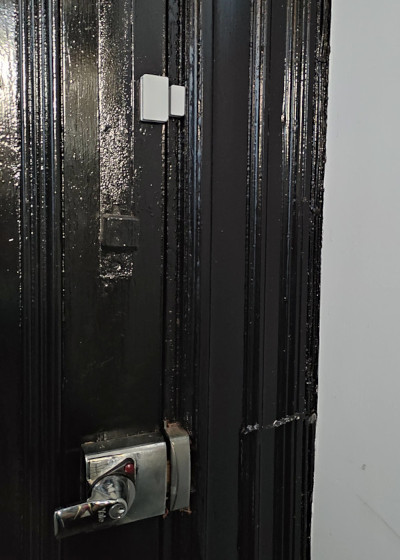
SonOff Zigbee Door Sensor My home automation setup has been fairly static recently; it does what we need and generally works fine. One area I think could be better is controlling it; we have access Home Assistant on our phones, and the Alexa downstairs can control things, but there are no smart assistants upstairs and sometimes it would be nice to just push a button to turn on the light rather than having to get my phone out. Thanks to the fact the UK generally doesn t have neutral wire in wall switches that means looking at something battery powered. Which means wifi based devices are a poor choice, and it s necessary to look at something lower power like Zigbee or Z-Wave. Zigbee seems like the better choice; it s a more open standard and there are generally more devices easily available from what I ve seen (e.g. Philips Hue and IKEA TR DFRI). So I bought a couple of Xiaomi Mi Smart Home Wireless Switches, and a CC2530 module and then ignored it for the best part of a year. Finally I got around to flashing the Z-Stack firmware that Koen Kanters kindly provides. (Insert rant about hardware manufacturers that require pay-for tool chains. The CC2530 is even worse because it s 8051 based, so SDCC should be able to compile for it, but the TI Zigbee libraries are only available in a format suitable for IAR s embedded workbench.) Flashing the CC2530 is a bit of faff. I ended up using the CCLib fork by Stephan Hadinger which supports the ESP8266. The nice thing about the CC2530 module is it has 2.54mm pitch pins so nice and easy to jumper up. It then needs a USB/serial dongle to connect it up to a suitable machine, where I ran Zigbee2MQTT. This scares me a bit, because it s a bunch of node.js pulling in a chunk of stuff off npm. On the flip side, it Just Works and I was able to pair the Xiaomi button with the device and see MQTT messages that I could then use with Home Assistant. So of course I tore down that setup and went and ordered a CC2531 (the variant with USB as part of the chip). The idea here was my test setup was upstairs with my laptop, and I wanted something hooked up in a more permanent fashion. Once the CC2531 arrived I got distracted writing support for the Desk Viking to support CCLib (and modified it a bit for Python3 and some speed ups). I flashed the dongle up with the Z-Stack Home 1.2 (default) firmware, and plugged it into the house server. At this point I more closely investigated what Home Assistant had to offer in terms of Zigbee integration. It turns out the ZHA integration has support for the ZNP protocol that the TI devices speak (I m reasonably sure it didn t when I first looked some time ago), so that seemed like a better option than adding the MQTT layer in the middle. I hit some complexity passing the dongle (which turns up as /dev/ttyACM0) through to the Home Assistant container. First I needed an override file in /etc/systemd/nspawn/hass.nspawn:
[Files]
Bind=/dev/ttyACM0:/dev/zigbee
[Network]
VirtualEthernet=true
(I m not clear why the VirtualEthernet needed to exist; without it networking broke entirely but I couldn t see why it worked with no override file.) A udev rule on the host to change the ownership of the device file so the root user and dialout group in the container could see it was also necessary, so into /etc/udev/rules.d/70-persistent-serial.rules went:
# Zigbee for HASS
SUBSYSTEM=="tty", ATTRS idVendor =="0451", ATTRS idProduct =="16a8", SYMLINK+="zigbee", \
	MODE="660", OWNER="1321926676", GROUP="1321926676"
In the container itself I had to switch PrivateDevices=true to PrivateDevices=false in the home-assistant.service file (which took me a while to figure out; yay for locking things down and then needing to use those locked down things). Finally I added the hass user to the dialout group. At that point I was able to go and add the integration with Home Assistant, and add the button as a new device. Excellent. I did find I needed a newer version of Home Assistant to get support for the button, however. I was still on 2021.1.5 due to upstream dropping support for Python 3.7 and not being prepared to upgrade to Debian 11 until it was actually released, so the version of zha-quirks didn t have the correct info. Upgrading to Home Assistant 2021.8.7 sorted that out. There was another slight problem. Range. Really I want to use the button upstairs. The server is downstairs, and most of my internal walls are brick. The solution turned out to be a TR DFRI socket, which replaced the existing ESP8266 wifi socket controlling the stair lights. That was close enough to the server to have a decent signal, and it acts as a Zigbee router so provides a strong enough signal for devices upstairs. The normal approach seems to be to have a lot of Zigbee light bulbs, but I have mostly kept overhead lights as uncontrolled - we don t use them day to day and it provides a nice fallback if the home automation has issues. Of course installing Zigbee for a single button would seem to be a bit pointless. So I ordered up a Sonoff door sensor to put on the front door (much smaller than expected - those white boxes on the door are it in the picture above). And I have a 4 gang wireless switch ordered to go on the landing wall upstairs. Now I ve got a Zigbee setup there are a few more things I m thinking of adding, where wifi isn t an option due to the need for battery operation (monitoring the external gas meter springs to mind). The CC2530 probably isn t suitable for my needs, as I ll need to write some custom code to handle the bits I want, but there do seem to be some ARM based devices which might well prove suitable

25 September 2021

Junichi Uekawa: Wrote a HTML ping-like something.

Wrote a HTML ping-like something. Uses fetch to fetch a page and measures time until 404 returns to js. Here's my http ping. The challenge was writing code to calculate standard deviation in multiple languages and making sure it matched, d'oh.

22 September 2021

Gunnar Wolf: New book out! Mecanismos de privacidad y anonimato en redes, una visi n transdisciplinaria

Three years ago, I organized a fun and most interesting colloquium at Facultad de Ingenier a, UNAM about privacy and anonymity online. I would have loved to share this earlier with the world, but The university s processes are quite slow (and, to be fair, I also took quite a bit of time to push things through). But today, I m finally happy to share the result of that work with all of you. We managed to get 11 of the talks in the colloquium as articles. The back-cover text reads (in Spanish):
We live in an era where human to human interactions are more and more often mediated by technology. This, of course, means everything leaves a digital trail, a trail that can follow and us relentlessly. Privacy is recognized, however, as a human right although one that is under growing threats. Anonymity is the best tool to secure it. Throughout history, clear steps have been taken legally, technically and technologically to defend it. Various studies point out this is not only a known issue for the network's users, but that a large majority has searched for alternatives to protect their communications' privacy. This book stems from a colloquium held by *Laboratorio de Investigaci n y Desarrollo de Software Libre* (LIDSOL) of Facultad de Ingenier a, UNAM, towards the end of 2018, where we invited experts from disciplines so far apart as law and systems development, psychology and economics, to contribute with their experiences to a transdisciplinary vision.
If this interests you, you can get the book at our institutional repository. Oh, and What about the birds? In Spanish (Mexican only?), we have a saying, hay p jaros en el alambre , meaning watch your words, as uninvited people might be listening, as birds resting over the wires over which phone calls used to be made (back in the day where wiretapping was that easy). I found the design proposed by our editor ingenious and very fitting for our topic!

Next.

Previous.