Search Results: "ina"

18 February 2021

Julian Andres Klode: APT 2.2 released

APT 2.2.0 marks the freeze of the 2.1 development series and the start of the 2.2 stable series. Let s have a look at what changed compared to 2.2. Many of you who run Debian testing or unstable, or Ubuntu groovy or hirsute will already have seen most of those changes.

New features
  • Various patterns related to dependencies, such as ?depends are now available (2.1.16)
  • The Protected field is now supported. It replaces the previous Important field and is like Essential, but only for installed packages (some minor more differences maybe in terms of ordering the installs).
  • The update command has gained an --error-on=any option that makes it error out on any failure, not just what it considers persistent ons.
  • The rred method can now be used as a standalone program to merge pdiff files
  • APT now implements phased updates. Phasing is used in Ubuntu to slow down and control the roll out of updates in the -updates pocket, but has previously only been available to desktop users using update-manager.

Other behavioral changes
  • The kernel autoremoval helper code has been rewritten from shell in C++ and now runs at run-time, rather than at kernel install time, in order to correctly protect the kernel that is running now, rather than the kernel that was running when we were installing the newest one. It also now protects only up to 3 kernels, instead of up to 4, as was originally intended, and was the case before 1.1 series. This avoids /boot partitions from running out of space, especially on Ubuntu which has boot partitions sized for the original spec.

Performance improvements
  • The cache is now hashed using XXH3 instead of Adler32 (or CRC32c on SSE4.2 platforms)
  • The hash table size has been increased

Bug fixes
  • * wildcards work normally again (since 2.1.0)
  • The cache file now includes all translation files in /var/lib/apt/lists, so multi-user systems with different locales correctly show translated descriptions now.
  • URLs are no longer dequoted on redirects only to be requoted again, fixing some redirects where servers did not expect different quoting.
  • Immediate configuration is now best-effort, and failure is no longer fatal.
  • various changes to solver marking leading to different/better results in some cases (since 2.1.0)
  • The lower level I/O bits of the HTTP method have been rewritten to hopefully improve stability
  • The HTTP method no longer infinitely retries downloads on some connection errors
  • The pkgnames command no longer accidentally includes source packages
  • Various fixes from fuzzing efforts by David

Security fixes
  • Out-of-bound reads in ar and tar implementations (CVE-2020-3810, 2.1.2)
  • Integer overflows in ar and tar (CVE-2020-27350, 2.1.13)
(all of which have been backported to all stable series, back all the way to 1.0.9.8.* series in jessie eLTS)

Incompatibilities
  • N/A - there were no breaking changes in apt 2.2 that we are aware of.

Deprecations
  • apt-key(1) is scheduled to be removed for Q2/2022, and several new warnings have been added. apt-key was made obsolete in version 0.7.25.1, released in January 2010, by /etc/apt/trusted.gpg.d becoming a supported place to drop additional keyring files, and was since then only intended for deleting keys in the legacy trusted.gpg keyring. Please manage files in trusted.gpg.d yourself; or place them in a different location such as /etc/apt/keyrings (or make up your own, there s no standard location) or /usr/share/keyrings, and use signed-by in the sources.list.d files. The legacy trusted.gpg keyring still works, but will also stop working eventually. Please make sure you have all your keys in trusted.gpg.d. Warnings might be added in the upcoming months when a signature could not be verified using just trusted.gpg.d. Future versions of APT might switch away from GPG.
  • As a reminder, regular expressions and wildcards other than * inside package names are deprecated (since 2.0). They are not available anymore in apt(8), and will be removed for safety reasons in apt-get in a later release.

Jonathan McDowell: Hacking and Bricking the EE Opsrey 2 Mini

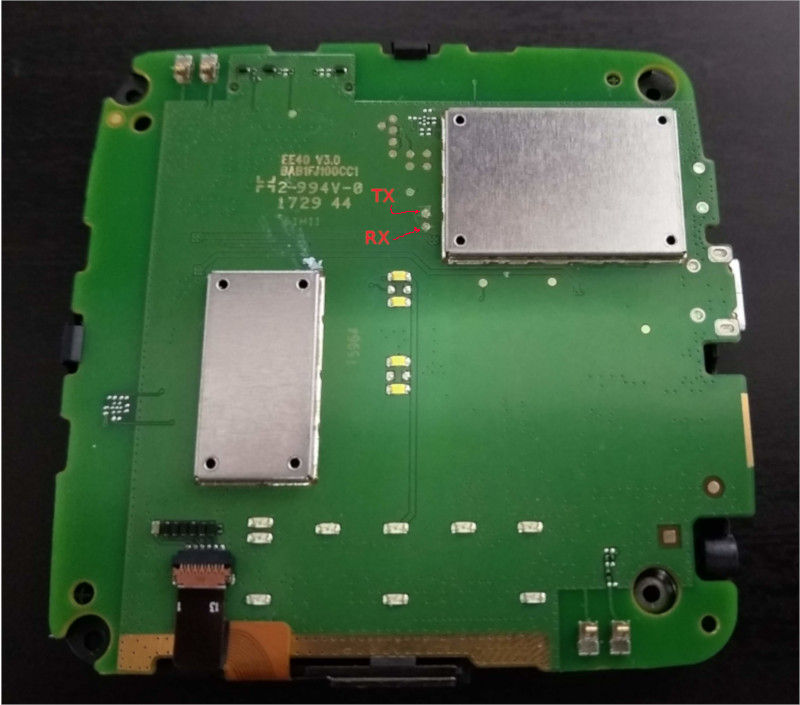
I ve mentioned in the past my twisted EE network setup from when I moved in to my current house. The 4GEE WiFi Mini (also known as the EE Osprey 2 Mini or the EE40VB, and actually a rebadged Alcatel Y853VB) has been sitting unused since then, so I figured I d see about trying to get a shell on it. TL;DR: Of course it s running Linux, there s a couple of test points internally which bring out the serial console, but after finding those and logging in I discovered it s running ADB on port 5555 quite happily available without authentication both via wifi and the USB port. So if you have physical or local network access, instant root shell. Well done, folks. And then I bricked it before I could do anything more interesting. There s a lack of information about this device out there - most of the links I can find are around removing the SIM lock - so I thought I d document the pieces I found just in case anyone else is trying to figure it out. It s based around a Qualcomm MDM9607 SoC, paired with 64M RAM and 256M NAND flash. Wifi is via an RTL8192ES. Kernel is 3.18.20. Busybox is v1.23.1. It s running dnsmasq but I didn t grab the version. Of course there s no source or offer of source provided. Taking it apart is fairly easy. There s a single screw to remove, just beside the SIM slot. The coloured rim can then be carefully pried away from the back, revealing the battery. There are then 4 screws in the corners which need removed in order to be able to lift out the actual PCB and gain access to the serial console test points. EE40VB PCB serial console test points My mistake was going poking around trying to figure out where the updates are downloaded from - I know I m running a slightly older release than what s current, and the device can do an automatic download + update. Top tip; don t run Jrdrecovery. It ll error on finding /cache/update.zip and wipe the main partition anyway. That ll leave you in a boot loop where the device boots the recovery partition which tries to install /cache/update.zip which of course still doesn t exist. So. Where next? First, I need to get the device into a state where I can actually do something other than watch it boot into recovery, fail to flash and reboot. Best guess at present is to try and get it to enter the Qualcomm EDL (Emergency Download) mode. That might be possible with a custom USB cable that grounds D+ on boot. Alternatively I need to probe some of the other test points on the PCB and see if grounding any of those helps enter EDL mode. I then need a suitable firehose OEM-signed programmer image. And then I need to actually get hold of a proper EE40VB firmware image, either via one of the OTA update files or possibly via an Alcatel ADSU image (though no idea how to get hold of one, other than by posting to a random GSM device forum and hoping for the kindness of strangers). More updates if/when I make progress
Qualcomm bootloader log
Format: Log Type - Time(microsec) - Message - Optional Info
Log Type: B - Since Boot(Power On Reset),  D - Delta,  S - Statistic
S - QC_IMAGE_VERSION_STRING=BOOT.BF.3.1.2-00053
S - IMAGE_VARIANT_STRING=LAATANAZA
S - OEM_IMAGE_VERSION_STRING=linux3
S - Boot Config, 0x000002e1
B -    105194 - SBL1, Start
D -     61885 - QSEE Image Loaded, Delta - (451964 Bytes)
D -     30286 - RPM Image Loaded, Delta - (151152 Bytes)
B -    459330 - Roger:boot_jrd_oem_main
B -    461526 - Welcome to key_check_poweron!!!
B -    466436 - REG0x00, rc=47
B -    469120 - REG0x01, rc=1f
B -    472018 - REG0x02, rc=1c
B -    474885 - REG0x03, rc=47
B -    477782 - REG0x04, rc=b2
B -    480558 - REG0x05, rc=
B -    483272 - REG0x06, rc=9e
B -    486139 - REG0x07, rc=
B -    488854 - REG0x08, rc=a4
B -    491721 - REG0x09, rc=80
B -    494130 - bq24295_probe: vflt/vsys/vprechg=0mV/0mV/0mV, tprechg/tfastchg=0Min/0Min, [0C, 0C]
B -    511546 - come to calculate vol and temperature!!
B -    511637 - ##############battery_core_convert_vntc: NTC_voltage=1785690
B -    517280 - battery_core_convert_vntc: <-44C, 1785690uV>, present=0
B -    529358 - bq24295_set_current_limit: setting=0mA, mode=-1, input/fastchg/prechg/termchg=-1mA/0mA/0mA/0mA
B -    534360 - bq24295_set_charge_current, rc=0,reg_val=0,i=0
B -    539636 - bq24295_enable_charge: setting=0, chg_enable=-1, otg_enable=0
B -    546072 - bq24295_enable_charging: enable_charging=0
B -    552172 - bq24295_set_current_limit: setting=0mA, mode=-1, input/fastchg/prechg/termchg=-1mA/0mA/0mA/0mA
B -    561566 - bq24295_set_charge_current, rc=0,reg_val=0,i=0
B -    567056 - bq24295_enable_charge: setting=0, chg_enable=0, otg_enable=0
B -    579286 - come to calculate vol and temperature!!
B -    579378 - ##############battery_core_convert_vntc: NTC_voltage=1785777
B -    585539 - battery_core_convert_vntc: <-44C, 1785777uV>, present=0
B -    597617 - charge_main: battery is plugout!!
B -    597678 - Welcome to pca955x_probe!!!
B -    601063 - pca955x_probe: PCA955X probed successfully!
D -     27511 - APPSBL Image Loaded, Delta - (179348 Bytes)
B -    633271 - QSEE Execution, Start
D -       213 - QSEE Execution, Delta
B -    638944 - >>>>>>>>>>>>>>>>>>>>>>>>>>>>>>>>>Start writting JRD RECOVERY BOOT
B -    650107 - >>>>>>>>>>>>>>>>>>>>>>>>>>>>>>>>>Start writting  RECOVERY BOOT
B -    653218 - >>>>>>>>>>>>>>>>>>>>>>>>>>>>>>>>>read_buf[0] == 0
B -    659044 - SBL1, End
D -    556137 - SBL1, Delta
S - Throughput, 2000 KB/s  (782884 Bytes,  278155 us)
S - DDR Frequency, 240 MHz
littlekernel aboot log
Android Bootloader - UART_DM Initialized!!!
[0] welcome to lk
[0] SCM call: 0x2000601 failed with :fffffffc
[0] Failed to initialize SCM
[10] platform_init()
[10] target_init()
[10] smem ptable found: ver: 4 len: 17
[10] ERROR: No devinfo partition found
[10] Neither 'config' nor 'frp' partition found
[30] voltage of NTC  is 1789872!
[30] voltage of BAT  is 3179553!
[30] usb present is 1!
[30] Loading (boot) image (4171776): start
[530] Loading (boot) image (4171776): done
[540] DTB Total entry: 25, DTB version: 3
[540] Using DTB entry 0x00000129/00010000/0x00000008/0 for device 0x00000129/00010000/0x00010008/0
[560] JRD_CHG_OFF_FEATURE!
[560] come to jrd_target_pause_for_battery_charge!
[570] power_on_status.hard_reset = 0x0
[570] power_on_status.smpl = 0x0
[570] power_on_status.rtc = 0x0
[580] power_on_status.dc_chg = 0x0
[580] power_on_status.usb_chg = 0x0
[580] power_on_status.pon1 = 0x1
[590] power_on_status.cblpwr = 0x0
[590] power_on_status.kpdpwr = 0x0
[590] power_on_status.bugflag = 0x0
[590] cmdline: noinitrd  rw console=ttyHSL0,115200,n8 androidboot.hardware=qcom ehci-hcd.park=3 msm_rtb.filter=0x37 lpm_levels.sleep_disabled=1  earlycon=msm_hsl_uart,0x78b3000  androidboot.serialno=7e6ba58c androidboot.baseband=msm rootfstype=ubifs rootflags=b
[620] Updating device tree: start
[720] Updating device tree: done
[720] booting linux @ 0x80008000, ramdisk @ 0x80008000 (0), tags/device tree @ 0x81e00000
Linux kernel console boot log
[    0.000000] Booting Linux on physical CPU 0x0
[    0.000000] Linux version 3.18.20 (linux3@linux3) (gcc version 4.9.2 (GCC) ) #1 PREEMPT Thu Aug 10 11:57:07 CST 2017
[    0.000000] CPU: ARMv7 Processor [410fc075] revision 5 (ARMv7), cr=10c53c7d
[    0.000000] CPU: PIPT / VIPT nonaliasing data cache, VIPT aliasing instruction cache
[    0.000000] Machine model: Qualcomm Technologies, Inc. MDM 9607 MTP
[    0.000000] Early serial console at I/O port 0x0 (options '')
[    0.000000] bootconsole [uart0] enabled
[    0.000000] Reserved memory: reserved region for node 'modem_adsp_region@0': base 0x82a00000, size 56 MiB
[    0.000000] Reserved memory: reserved region for node 'external_image_region@0': base 0x87c00000, size 4 MiB
[    0.000000] Removed memory: created DMA memory pool at 0x82a00000, size 56 MiB
[    0.000000] Reserved memory: initialized node modem_adsp_region@0, compatible id removed-dma-pool
[    0.000000] Removed memory: created DMA memory pool at 0x87c00000, size 4 MiB
[    0.000000] Reserved memory: initialized node external_image_region@0, compatible id removed-dma-pool
[    0.000000] cma: Reserved 4 MiB at 0x87800000
[    0.000000] Memory policy: Data cache writeback
[    0.000000] CPU: All CPU(s) started in SVC mode.
[    0.000000] Built 1 zonelists in Zone order, mobility grouping on.  Total pages: 17152
[    0.000000] Kernel command line: noinitrd  rw console=ttyHSL0,115200,n8 androidboot.hardware=qcom ehci-hcd.park=3 msm_rtb.filter=0x37 lpm_levels.sleep_disabled=1  earlycon=msm_hsl_uart,0x78b3000  androidboot.serialno=7e6ba58c androidboot.baseband=msm rootfstype=ubifs rootflags=bulk_read root=ubi0:rootfs ubi.mtd=16
[    0.000000] PID hash table entries: 512 (order: -1, 2048 bytes)
[    0.000000] Dentry cache hash table entries: 16384 (order: 4, 65536 bytes)
[    0.000000] Inode-cache hash table entries: 8192 (order: 3, 32768 bytes)
[    0.000000] Memory: 54792K/69632K available (5830K kernel code, 399K rwdata, 2228K rodata, 276K init, 830K bss, 14840K reserved)
[    0.000000] Virtual kernel memory layout:
[    0.000000]     vector  : 0xffff0000 - 0xffff1000   (   4 kB)
[    0.000000]     fixmap  : 0xffc00000 - 0xfff00000   (3072 kB)
[    0.000000]     vmalloc : 0xc8800000 - 0xff000000   ( 872 MB)
[    0.000000]     lowmem  : 0xc0000000 - 0xc8000000   ( 128 MB)
[    0.000000]     modules : 0xbf000000 - 0xc0000000   (  16 MB)
[    0.000000]       .text : 0xc0008000 - 0xc07e6c38   (8060 kB)
[    0.000000]       .init : 0xc07e7000 - 0xc082c000   ( 276 kB)
[    0.000000]       .data : 0xc082c000 - 0xc088fdc0   ( 400 kB)
[    0.000000]        .bss : 0xc088fe84 - 0xc095f798   ( 831 kB)
[    0.000000] SLUB: HWalign=64, Order=0-3, MinObjects=0, CPUs=1, Nodes=1
[    0.000000] Preemptible hierarchical RCU implementation.
[    0.000000] NR_IRQS:16 nr_irqs:16 16
[    0.000000] GIC CPU mask not found - kernel will fail to boot.
[    0.000000] GIC CPU mask not found - kernel will fail to boot.
[    0.000000] mpm_init_irq_domain(): Cannot find irq controller for qcom,gpio-parent
[    0.000000] MPM 1 irq mapping errored -517
[    0.000000] Architected mmio timer(s) running at 19.20MHz (virt).
[    0.000011] sched_clock: 56 bits at 19MHz, resolution 52ns, wraps every 3579139424256ns
[    0.007975] Switching to timer-based delay loop, resolution 52ns
[    0.013969] Switched to clocksource arch_mem_counter
[    0.019687] Console: colour dummy device 80x30
[    0.023344] Calibrating delay loop (skipped), value calculated using timer frequency.. 38.40 BogoMIPS (lpj=192000)
[    0.033666] pid_max: default: 32768 minimum: 301
[    0.038411] Mount-cache hash table entries: 1024 (order: 0, 4096 bytes)
[    0.044902] Mountpoint-cache hash table entries: 1024 (order: 0, 4096 bytes)
[    0.052445] CPU: Testing write buffer coherency: ok
[    0.057057] Setting up static identity map for 0x8058aac8 - 0x8058ab20
[    0.064242]
[    0.064242] **********************************************************
[    0.071251] **   NOTICE NOTICE NOTICE NOTICE NOTICE NOTICE NOTICE   **
[    0.077817] **                                                      **
[    0.084302] ** trace_printk() being used. Allocating extra memory.  **
[    0.090781] **                                                      **
[    0.097320] ** This means that this is a DEBUG kernel and it is     **
[    0.103802] ** unsafe for produciton use.                           **
[    0.110339] **                                                      **
[    0.116850] ** If you see this message and you are not debugging    **
[    0.123333] ** the kernel, report this immediately to your vendor!  **
[    0.129870] **                                                      **
[    0.136380] **   NOTICE NOTICE NOTICE NOTICE NOTICE NOTICE NOTICE   **
[    0.142865] **********************************************************
[    0.150225] MSM Memory Dump base table set up
[    0.153739] MSM Memory Dump apps data table set up
[    0.168125] VFP support v0.3: implementor 41 architecture 2 part 30 variant 7 rev 5
[    0.176332] pinctrl core: initialized pinctrl subsystem
[    0.180930] regulator-dummy: no parameters
[    0.215338] NET: Registered protocol family 16
[    0.220475] DMA: preallocated 256 KiB pool for atomic coherent allocations
[    0.284034] cpuidle: using governor ladder
[    0.314026] cpuidle: using governor menu
[    0.344024] cpuidle: using governor qcom
[    0.355452] msm_watchdog b017000.qcom,wdt: wdog absent resource not present
[    0.361656] msm_watchdog b017000.qcom,wdt: MSM Watchdog Initialized
[    0.371373] irq: no irq domain found for /soc/pinctrl@1000000 !
[    0.381268] spmi_pmic_arb 200f000.qcom,spmi: PMIC Arb Version-2 0x20010000
[    0.389733] platform 4080000.qcom,mss: assigned reserved memory node modem_adsp_region@0
[    0.397409] mem_acc_corner: 0 <--> 0 mV
[    0.401937] hw-breakpoint: found 5 (+1 reserved) breakpoint and 4 watchpoint registers.
[    0.408966] hw-breakpoint: maximum watchpoint size is 8 bytes.
[    0.416287] __of_mpm_init(): MPM driver mapping exists
[    0.420940] msm_rpm_glink_dt_parse: qcom,rpm-glink compatible not matches
[    0.427235] msm_rpm_dev_probe: APSS-RPM communication over SMD
[    0.432977] smd_open() before smd_init()
[    0.437544] msm_mpm_dev_probe(): Cannot get clk resource for XO: -517
[    0.445730] smd_channel_probe_now: allocation table not initialized
[    0.453100] mdm9607_s1: 1050 <--> 1350 mV at 1225 mV normal idle
[    0.458566] spm_regulator_probe: name=mdm9607_s1, range=LV, voltage=1225000 uV, mode=AUTO, step rate=4800 uV/us
[    0.468817] cpr_efuse_init: apc_corner: efuse_addr = 0x000a4000 (len=0x1000)
[    0.475353] cpr_read_fuse_revision: apc_corner: fuse revision = 2
[    0.481345] cpr_parse_speed_bin_fuse: apc_corner: [row: 37]: 0x79e8bd327e6ba58c, speed_bits = 4
[    0.490124] cpr_pvs_init: apc_corner: pvs voltage: [1050000 1100000 1275000] uV
[    0.497342] cpr_pvs_init: apc_corner: ceiling voltage: [1050000 1225000 1350000] uV
[    0.504979] cpr_pvs_init: apc_corner: floor voltage: [1050000 1050000 1150000] uV
[    0.513125] i2c-msm-v2 78b8000.i2c: probing driver i2c-msm-v2
[    0.518335] i2c-msm-v2 78b8000.i2c: error on clk_get(core_clk):-517
[    0.524478] i2c-msm-v2 78b8000.i2c: error probe() failed with err:-517
[    0.531111] i2c-msm-v2 78b7000.i2c: probing driver i2c-msm-v2
[    0.536788] i2c-msm-v2 78b7000.i2c: error on clk_get(core_clk):-517
[    0.542886] i2c-msm-v2 78b7000.i2c: error probe() failed with err:-517
[    0.549618] i2c-msm-v2 78b9000.i2c: probing driver i2c-msm-v2
[    0.555202] i2c-msm-v2 78b9000.i2c: error on clk_get(core_clk):-517
[    0.561374] i2c-msm-v2 78b9000.i2c: error probe() failed with err:-517
[    0.570613] msm-thermal soc:qcom,msm-thermal: msm_thermal:Failed reading node=/soc/qcom,msm-thermal, key=qcom,core-limit-temp. err=-22. KTM continues
[    0.583049] msm-thermal soc:qcom,msm-thermal: probe_therm_reset:Failed reading node=/soc/qcom,msm-thermal, key=qcom,therm-reset-temp err=-22. KTM continues
[    0.596926] msm_thermal:msm_thermal_dev_probe Failed reading node=/soc/qcom,msm-thermal, key=qcom,online-hotplug-core. err:-517
[    0.609370] sps:sps is ready.
[    0.613137] msm_rpm_glink_dt_parse: qcom,rpm-glink compatible not matches
[    0.619020] msm_rpm_dev_probe: APSS-RPM communication over SMD
[    0.625773] mdm9607_s2: 750 <--> 1275 mV at 750 mV normal idle
[    0.631584] mdm9607_s3_level: 0 <--> 0 mV at 0 mV normal idle
[    0.637085] mdm9607_s3_level_ao: 0 <--> 0 mV at 0 mV normal idle
[    0.643092] mdm9607_s3_floor_level: 0 <--> 0 mV at 0 mV normal idle
[    0.649512] mdm9607_s3_level_so: 0 <--> 0 mV at 0 mV normal idle
[    0.655750] mdm9607_s4: 1800 <--> 1950 mV at 1800 mV normal idle
[    0.661791] mdm9607_l1: 1250 mV normal idle
[    0.666090] mdm9607_l2: 1800 mV normal idle
[    0.670276] mdm9607_l3: 1800 mV normal idle
[    0.674541] mdm9607_l4: 3075 mV normal idle
[    0.678743] mdm9607_l5: 1700 <--> 3050 mV at 1700 mV normal idle
[    0.684904] mdm9607_l6: 1700 <--> 3050 mV at 1700 mV normal idle
[    0.690892] mdm9607_l7: 1700 <--> 1900 mV at 1700 mV normal idle
[    0.697036] mdm9607_l8: 1800 mV normal idle
[    0.701238] mdm9607_l9: 1200 <--> 1250 mV at 1200 mV normal idle
[    0.707367] mdm9607_l10: 1050 mV normal idle
[    0.711662] mdm9607_l11: 1800 mV normal idle
[    0.716089] mdm9607_l12_level: 0 <--> 0 mV at 0 mV normal idle
[    0.721717] mdm9607_l12_level_ao: 0 <--> 0 mV at 0 mV normal idle
[    0.727946] mdm9607_l12_level_so: 0 <--> 0 mV at 0 mV normal idle
[    0.734099] mdm9607_l12_floor_lebel: 0 <--> 0 mV at 0 mV normal idle
[    0.740706] mdm9607_l13: 1800 <--> 2850 mV at 2850 mV normal idle
[    0.746883] mdm9607_l14: 2650 <--> 3000 mV at 2650 mV normal idle
[    0.752515] msm_mpm_dev_probe(): Cannot get clk resource for XO: -517
[    0.759036] cpr_efuse_init: apc_corner: efuse_addr = 0x000a4000 (len=0x1000)
[    0.765807] cpr_read_fuse_revision: apc_corner: fuse revision = 2
[    0.771809] cpr_parse_speed_bin_fuse: apc_corner: [row: 37]: 0x79e8bd327e6ba58c, speed_bits = 4
[    0.780586] cpr_pvs_init: apc_corner: pvs voltage: [1050000 1100000 1275000] uV
[    0.787808] cpr_pvs_init: apc_corner: ceiling voltage: [1050000 1225000 1350000] uV
[    0.795443] cpr_pvs_init: apc_corner: floor voltage: [1050000 1050000 1150000] uV
[    0.803094] cpr_init_cpr_parameters: apc_corner: up threshold = 2, down threshold = 3
[    0.810752] cpr_init_cpr_parameters: apc_corner: CPR is enabled by default.
[    0.817687] cpr_init_cpr_efuse: apc_corner: [row:65] = 0x15000277277383
[    0.824272] cpr_init_cpr_efuse: apc_corner: CPR disable fuse = 0
[    0.830225] cpr_init_cpr_efuse: apc_corner: Corner[1]: ro_sel = 0, target quot = 631
[    0.837976] cpr_init_cpr_efuse: apc_corner: Corner[2]: ro_sel = 0, target quot = 631
[    0.845703] cpr_init_cpr_efuse: apc_corner: Corner[3]: ro_sel = 0, target quot = 899
[    0.853592] cpr_config: apc_corner: Timer count: 0x17700 (for 5000 us)
[    0.860426] apc_corner: 0 <--> 0 mV
[    0.864044] i2c-msm-v2 78b8000.i2c: probing driver i2c-msm-v2
[    0.869261] i2c-msm-v2 78b8000.i2c: error on clk_get(core_clk):-517
[    0.875492] i2c-msm-v2 78b8000.i2c: error probe() failed with err:-517
[    0.882225] i2c-msm-v2 78b7000.i2c: probing driver i2c-msm-v2
[    0.887775] i2c-msm-v2 78b7000.i2c: error on clk_get(core_clk):-517
[    0.893941] i2c-msm-v2 78b7000.i2c: error probe() failed with err:-517
[    0.900719] i2c-msm-v2 78b9000.i2c: probing driver i2c-msm-v2
[    0.906256] i2c-msm-v2 78b9000.i2c: error on clk_get(core_clk):-517
[    0.912430] i2c-msm-v2 78b9000.i2c: error probe() failed with err:-517
[    0.919472] msm-thermal soc:qcom,msm-thermal: msm_thermal:Failed reading node=/soc/qcom,msm-thermal, key=qcom,core-limit-temp. err=-22. KTM continues
[    0.932372] msm-thermal soc:qcom,msm-thermal: probe_therm_reset:Failed reading node=/soc/qcom,msm-thermal,
key=qcom,therm-reset-temp err=-22. KTM continues
[    0.946361] msm_thermal:get_kernel_cluster_info CPU0 topology not initialized.
[    0.953824] cpu cpu0: dev_pm_opp_get_opp_count: device OPP not found (-19)
[    0.960300] msm_thermal:get_cpu_freq_plan_len Error reading CPU0 freq table len. error:-19
[    0.968533] msm_thermal:vdd_restriction_reg_init Defer vdd rstr freq init.
[    0.975846] cpu cpu0: dev_pm_opp_get_opp_count: device OPP not found (-19)
[    0.982219] msm_thermal:get_cpu_freq_plan_len Error reading CPU0 freq table len. error:-19
[    0.991378] cpu cpu0: dev_pm_opp_get_opp_count: device OPP not found (-19)
[    0.997544] msm_thermal:get_cpu_freq_plan_len Error reading CPU0 freq table len. error:-19
[    1.013642] qcom,gcc-mdm9607 1800000.qcom,gcc: Registered GCC clocks
[    1.019451] clock-a7 b010008.qcom,clock-a7: Speed bin: 4 PVS Version: 0
[    1.025693] a7ssmux: set OPP pair(400000000 Hz: 1 uV) on cpu0
[    1.031314] a7ssmux: set OPP pair(1305600000 Hz: 7 uV) on cpu0
[    1.038805] i2c-msm-v2 78b8000.i2c: probing driver i2c-msm-v2
[    1.043587] AXI: msm_bus_scale_register_client(): msm_bus_scale_register_client: Bus driver not ready.
[    1.052935] i2c-msm-v2 78b8000.i2c: msm_bus_scale_register_client(mstr-id:86):0 (not a problem)
[    1.062006] irq: no irq domain found for /soc/wcd9xxx-irq !
[    1.069884] i2c-msm-v2 78b7000.i2c: probing driver i2c-msm-v2
[    1.074814] AXI: msm_bus_scale_register_client(): msm_bus_scale_register_client: Bus driver not ready.
[    1.083716] i2c-msm-v2 78b7000.i2c: msm_bus_scale_register_client(mstr-id:86):0 (not a problem)
[    1.093850] i2c-msm-v2 78b9000.i2c: probing driver i2c-msm-v2
[    1.098889] AXI: msm_bus_scale_register_client(): msm_bus_scale_register_client: Bus driver not ready.
[    1.107779] i2c-msm-v2 78b9000.i2c: msm_bus_scale_register_client(mstr-id:86):0 (not a problem)
[    1.167871] KPI: Bootloader start count = 24097
[    1.171364] KPI: Bootloader end count = 48481
[    1.175855] KPI: Bootloader display count = 3884474147
[    1.180825] KPI: Bootloader load kernel count = 16420
[    1.185905] KPI: Kernel MPM timestamp = 105728
[    1.190286] KPI: Kernel MPM Clock frequency = 32768
[    1.195209] socinfo_print: v0.10, id=297, ver=1.0, raw_id=72, raw_ver=0, hw_plat=8, hw_plat_ver=65536
[    1.195209]  accessory_chip=0, hw_plat_subtype=0, pmic_model=65539, pmic_die_revision=131074 foundry_id=0 serial_number=2120983948
[    1.216731] sdcard_ext_vreg: no parameters
[    1.220555] rome_vreg: no parameters
[    1.224133] emac_lan_vreg: no parameters
[    1.228177] usbcore: registered new interface driver usbfs
[    1.233156] usbcore: registered new interface driver hub
[    1.238578] usbcore: registered new device driver usb
[    1.244507] cpufreq: driver msm up and running
[    1.248425] ION heap system created
[    1.251895] msm_bus_fabric_init_driver
[    1.262563] qcom,qpnp-power-on qpnp-power-on-c7303800: PMIC@SID0 Power-on reason: Triggered from PON1 (secondary PMIC) and 'cold' boot
[    1.273747] qcom,qpnp-power-on qpnp-power-on-c7303800: PMIC@SID0: Power-off reason: Triggered from UVLO (Under Voltage Lock Out)
[    1.285430] input: qpnp_pon as /devices/virtual/input/input0
[    1.291246] PMIC@SID0: PM8019 v2.2 options: 3, 2, 2, 2
[    1.296706] Advanced Linux Sound Architecture Driver Initialized.
[    1.302493] Add group failed
[    1.305291] cfg80211: Calling CRDA to update world regulatory domain
[    1.311216] cfg80211: World regulatory domain updated:
[    1.317109] Switched to clocksource arch_mem_counter
[    1.334091] cfg80211:  DFS Master region: unset
[    1.337418] cfg80211:   (start_freq - end_freq @ bandwidth), (max_antenna_gain, max_eirp), (dfs_cac_time)
[    1.354087] cfg80211:   (2402000 KHz - 2472000 KHz @ 40000 KHz), (N/A, 2000 mBm), (N/A)
[    1.361055] cfg80211:   (2457000 KHz - 2482000 KHz @ 40000 KHz), (N/A, 2000 mBm), (N/A)
[    1.370545] NET: Registered protocol family 2
[    1.374082] cfg80211:   (2474000 KHz - 2494000 KHz @ 20000 KHz), (N/A, 2000 mBm), (N/A)
[    1.381851] cfg80211:   (5170000 KHz - 5250000 KHz @ 80000 KHz), (N/A, 2000 mBm), (N/A)
[    1.389876] cfg80211:   (5250000 KHz - 5330000 KHz @ 80000 KHz), (N/A, 2000 mBm), (N/A)
[    1.397857] cfg80211:   (5490000 KHz - 5710000 KHz @ 80000 KHz), (N/A, 2000 mBm), (N/A)
[    1.405841] cfg80211:   (5735000 KHz - 5835000 KHz @ 80000 KHz), (N/A, 2000 mBm), (N/A)
[    1.413795] cfg80211:   (57240000 KHz - 63720000 KHz @ 2160000 KHz), (N/A, 0 mBm), (N/A)
[    1.422355] TCP established hash table entries: 1024 (order: 0, 4096 bytes)
[    1.428921] TCP bind hash table entries: 1024 (order: 0, 4096 bytes)
[    1.435192] TCP: Hash tables configured (established 1024 bind 1024)
[    1.441528] TCP: reno registered
[    1.444738] UDP hash table entries: 256 (order: 0, 4096 bytes)
[    1.450521] UDP-Lite hash table entries: 256 (order: 0, 4096 bytes)
[    1.456950] NET: Registered protocol family 1
[    1.462779] futex hash table entries: 256 (order: -1, 3072 bytes)
[    1.474555] msgmni has been set to 115
[    1.478551] Block layer SCSI generic (bsg) driver version 0.4 loaded (major 251)
[    1.485041] io scheduler noop registered
[    1.488818] io scheduler deadline registered
[    1.493200] io scheduler cfq registered (default)
[    1.502142] msm_rpm_log_probe: OK
[    1.506717] msm_serial_hs module loaded
[    1.509803] msm_serial_hsl_probe: detected port #0 (ttyHSL0)
[    1.515324] AXI: get_pdata(): Error: Client name not found
[    1.520626] AXI: msm_bus_cl_get_pdata(): client has to provide missing entry for successful registration
[    1.530171] msm_serial_hsl_probe: Bus scaling is disabled                      [    1.074814] AXI: msm_bus_scale_register_client(): msm_bus_scale_register_client: Bus driver not ready.
[    1.083716] i2c-msm-v2 78b7000.i2c: msm_bus_scale_register_client(mstr-id:86):0 (not a problem)
[    1.093850] i2c-msm-v2 78b9000.i2c: probing driver i2c-msm-v2
[    1.098889] AXI: msm_bus_scale_register_client(): msm_bus_scale_register_client: Bus driver not ready.
[    1.107779] i2c-msm-v2 78b9000.i2c: msm_bus_scale_register_client(mstr-id:86):0 (not a problem)
[    1.167871] KPI: Bootloader start count = 24097
[    1.171364] KPI: Bootloader end count = 48481
[    1.175855] KPI: Bootloader display count = 3884474147
[    1.180825] KPI: Bootloader load kernel count = 16420
[    1.185905] KPI: Kernel MPM timestamp = 105728
[    1.190286] KPI: Kernel MPM Clock frequency = 32768
[    1.195209] socinfo_print: v0.10, id=297, ver=1.0, raw_id=72, raw_ver=0, hw_plat=8, hw_plat_ver=65536
[    1.195209]  accessory_chip=0, hw_plat_subtype=0, pmic_model=65539, pmic_die_revision=131074 foundry_id=0 serial_number=2120983948
[    1.216731] sdcard_ext_vreg: no parameters
[    1.220555] rome_vreg: no parameters
[    1.224133] emac_lan_vreg: no parameters
[    1.228177] usbcore: registered new interface driver usbfs
[    1.233156] usbcore: registered new interface driver hub
[    1.238578] usbcore: registered new device driver usb
[    1.244507] cpufreq: driver msm up and running
[    1.248425] ION heap system created
[    1.251895] msm_bus_fabric_init_driver
[    1.262563] qcom,qpnp-power-on qpnp-power-on-c7303800: PMIC@SID0 Power-on reason: Triggered from PON1 (secondary PMIC) and 'cold' boot
[    1.273747] qcom,qpnp-power-on qpnp-power-on-c7303800: PMIC@SID0: Power-off reason: Triggered from UVLO (Under Voltage Lock Out)
[    1.285430] input: qpnp_pon as /devices/virtual/input/input0
[    1.291246] PMIC@SID0: PM8019 v2.2 options: 3, 2, 2, 2
[    1.296706] Advanced Linux Sound Architecture Driver Initialized.
[    1.302493] Add group failed
[    1.305291] cfg80211: Calling CRDA to update world regulatory domain
[    1.311216] cfg80211: World regulatory domain updated:
[    1.317109] Switched to clocksource arch_mem_counter
[    1.334091] cfg80211:  DFS Master region: unset
[    1.337418] cfg80211:   (start_freq - end_freq @ bandwidth), (max_antenna_gain, max_eirp), (dfs_cac_time)
[    1.354087] cfg80211:   (2402000 KHz - 2472000 KHz @ 40000 KHz), (N/A, 2000 mBm), (N/A)
[    1.361055] cfg80211:   (2457000 KHz - 2482000 KHz @ 40000 KHz), (N/A, 2000 mBm), (N/A)
[    1.370545] NET: Registered protocol family 2
[    1.374082] cfg80211:   (2474000 KHz - 2494000 KHz @ 20000 KHz), (N/A, 2000 mBm), (N/A)
[    1.381851] cfg80211:   (5170000 KHz - 5250000 KHz @ 80000 KHz), (N/A, 2000 mBm), (N/A)
[    1.389876] cfg80211:   (5250000 KHz - 5330000 KHz @ 80000 KHz), (N/A, 2000 mBm), (N/A)
[    1.397857] cfg80211:   (5490000 KHz - 5710000 KHz @ 80000 KHz), (N/A, 2000 mBm), (N/A)
[    1.405841] cfg80211:   (5735000 KHz - 5835000 KHz @ 80000 KHz), (N/A, 2000 mBm), (N/A)
[    1.413795] cfg80211:   (57240000 KHz - 63720000 KHz @ 2160000 KHz), (N/A, 0 mBm), (N/A)
[    1.422355] TCP established hash table entries: 1024 (order: 0, 4096 bytes)
[    1.428921] TCP bind hash table entries: 1024 (order: 0, 4096 bytes)
[    1.435192] TCP: Hash tables configured (established 1024 bind 1024)
[    1.441528] TCP: reno registered
[    1.444738] UDP hash table entries: 256 (order: 0, 4096 bytes)
[    1.450521] UDP-Lite hash table entries: 256 (order: 0, 4096 bytes)
[    1.456950] NET: Registered protocol family 1
[    1.462779] futex hash table entries: 256 (order: -1, 3072 bytes)
[    1.474555] msgmni has been set to 115
[    1.478551] Block layer SCSI generic (bsg) driver version 0.4 loaded (major 251)
[    1.485041] io scheduler noop registered
[    1.488818] io scheduler deadline registered
[    1.493200] io scheduler cfq registered (default)
[    1.502142] msm_rpm_log_probe: OK
[    1.506717] msm_serial_hs module loaded
[    1.509803] msm_serial_hsl_probe: detected port #0 (ttyHSL0)
[    1.515324] AXI: get_pdata(): Error: Client name not found
[    1.520626] AXI: msm_bus_cl_get_pdata(): client has to provide missing entry for successful registration
[    1.530171] msm_serial_hsl_probe: Bus scaling is disabled
[    1.535696] 78b3000.serial: ttyHSL0 at MMIO 0x78b3000 (irq = 153, base_baud = 460800 [    1.544155] msm_hsl_console_setup: console setup on port #0
[    1.548727] console [ttyHSL0] enabled
[    1.548727] console [ttyHSL0] enabled
[    1.556014] bootconsole [uart0] disabled
[    1.556014] bootconsole [uart0] disabled
[    1.564212] msm_serial_hsl_init: driver initialized
[    1.578450] brd: module loaded
[    1.582920] loop: module loaded
[    1.589183] sps: BAM device 0x07984000 is not registered yet.
[    1.594234] sps:BAM 0x07984000 is registered.
[    1.598072] msm_nand_bam_init: msm_nand_bam_init: BAM device registered: bam_handle 0xc69f6400
[    1.607103] sps:BAM 0x07984000 (va:0xc89a0000) enabled: ver:0x18, number of pipes:7
[    1.616588] msm_nand_parse_smem_ptable: Parsing partition table info from SMEM
[    1.622805] msm_nand_parse_smem_ptable: SMEM partition table found: ver: 4 len: 17
[    1.630391] msm_nand_version_check: nand_major:1, nand_minor:5, qpic_major:1, qpic_minor:5
[    1.638642] msm_nand_scan: NAND Id: 0x1590aa98 Buswidth: 8Bits Density: 256 MByte
[    1.646069] msm_nand_scan: pagesize: 2048 Erasesize: 131072 oobsize: 128 (in Bytes)
[    1.653676] msm_nand_scan: BCH ECC: 8 Bit
[    1.657710] msm_nand_scan: CFG0: 0x290408c0,           CFG1: 0x0804715c
[    1.657710]             RAWCFG0: 0x2b8400c0,        RAWCFG1: 0x0005055d
[    1.657710]           ECCBUFCFG: 0x00000203,      ECCBCHCFG: 0x42040d10
[    1.657710]           RAWECCCFG: 0x42000d11, BAD BLOCK BYTE: 0x000001c5
[    1.684101] Creating 17 MTD partitions on "7980000.nand":
[    1.689447] 0x000000000000-0x000000140000 : "sbl"
[    1.694867] 0x000000140000-0x000000280000 : "mibib"
[    1.699560] 0x000000280000-0x000000e80000 : "efs2"
[    1.704408] 0x000000e80000-0x000000f40000 : "tz"
[    1.708934] 0x000000f40000-0x000000fa0000 : "rpm"
[    1.713625] 0x000000fa0000-0x000001000000 : "aboot"
[    1.718582] 0x000001000000-0x0000017e0000 : "boot"
[    1.723281] 0x0000017e0000-0x000002820000 : "scrub"
[    1.728174] 0x000002820000-0x000005020000 : "modem"
[    1.732968] 0x000005020000-0x000005420000 : "rfbackup"
[    1.738156] 0x000005420000-0x000005820000 : "oem"
[    1.742770] 0x000005820000-0x000005f00000 : "recovery"
[    1.747972] 0x000005f00000-0x000009100000 : "cache"
[    1.752787] 0x000009100000-0x000009a40000 : "recoveryfs"
[    1.758389] 0x000009a40000-0x00000aa40000 : "cdrom"
[    1.762967] 0x00000aa40000-0x00000ba40000 : "jrdresource"
[    1.768407] 0x00000ba40000-0x000010000000 : "system"
[    1.773239] msm_nand_probe: NANDc phys addr 0x7980000, BAM phys addr 0x7984000, BAM IRQ 164
[    1.781074] msm_nand_probe: Allocated DMA buffer at virt_addr 0xc7840000, phys_addr 0x87840000
[    1.791872] PPP generic driver version 2.4.2
[    1.801126] cnss_sdio 87a00000.qcom,cnss-sdio: CNSS SDIO Driver registered
[    1.807554] msm_otg 78d9000.usb: msm_otg probe
[    1.813333] msm_otg 78d9000.usb: OTG regs = c88f8000
[    1.820702] gbridge_init: gbridge_init successs.
[    1.826344] msm_otg 78d9000.usb: phy_reset: success
[    1.830294] qcom,qpnp-rtc qpnp-rtc-c7307000: rtc core: registered qpnp_rtc as rtc0
[    1.838474] i2c /dev entries driver
[    1.842459] unable to find DT imem DLOAD mode node
[    1.846588] unable to find DT imem EDLOAD mode node
[    1.851332] unable to find DT imem dload-type node
[    1.856921] bq24295-charger 4-006b: bq24295 probe enter
[    1.861161] qcom,iterm-ma = 128
[    1.864476] bq24295_otg_vreg: no parameters
[    1.868502] charger_core_register: Charger Core Version 5.0.0(Built at 20151202-21:36)!
[    1.877007] i2c-msm-v2 78b8000.i2c: msm_bus_scale_register_client(mstr-id:86):0x3 (ok)
[    1.885559] bq24295-charger 4-006b: bq24295_set_bhot_mode 3
[    1.890150] bq24295-charger 4-006b: power_good is 1,vbus_stat is 2
[    1.896588] bq24295-charger 4-006b: bq24295_set_thermal_threshold 100
[    1.902952] bq24295-charger 4-006b: bq24295_set_sys_min 3700
[    1.908639] bq24295-charger 4-006b: bq24295_set_max_target_voltage 4150
[    1.915223] bq24295-charger 4-006b: bq24295_set_recharge_threshold 300
[    1.922119] bq24295-charger 4-006b: bq24295_set_terminal_current_limit iterm_disabled=0, iterm_ma=128
[    1.930917] bq24295-charger 4-006b: bq24295_set_precharge_current_limit bdi->prech_cur=128
[    1.940038] bq24295-charger 4-006b: bq24295_set_safty_timer 0
[    1.945088] bq24295-charger 4-006b: bq24295_set_input_voltage_limit 4520
[    1.972949] sdhci: Secure Digital Host Controller Interface driver
[    1.978151] sdhci: Copyright(c) Pierre Ossman
[    1.982441] sdhci-pltfm: SDHCI platform and OF driver helper
[    1.989092] sdhci_msm 7824900.sdhci: sdhci_msm_probe: ICE device is not enabled
[    1.995473] sdhci_msm 7824900.sdhci: No vreg data found for vdd
[    2.001530] sdhci_msm 7824900.sdhci: sdhci_msm_pm_qos_parse_irq: error -22 reading irq cpu
[    2.009809] sdhci_msm 7824900.sdhci: sdhci_msm_pm_qos_parse: PM QoS voting for IRQ will be disabled
[    2.018600] sdhci_msm 7824900.sdhci: sdhci_msm_pm_qos_parse: PM QoS voting for cpu group will be disabled
[    2.030541] sdhci_msm 7824900.sdhci: sdhci_msm_probe: sdiowakeup_irq = 353
[    2.036867] sdhci_msm 7824900.sdhci: No vmmc regulator found
[    2.042027] sdhci_msm 7824900.sdhci: No vqmmc regulator found
[    2.048266] mmc0: SDHCI controller on 7824900.sdhci [7824900.sdhci] using 32-bit ADMA in legacy mode
[    2.080401] Welcome to pca955x_probe!!
[    2.084362] leds-pca955x 3-0020: leds-pca955x: Using pca9555 16-bit LED driver at slave address 0x20
[    2.095400] sdhci_msm 7824900.sdhci: card claims to support voltages below defined range
[    2.103125] i2c-msm-v2 78b7000.i2c: msm_bus_scale_register_client(mstr-id:86):0x5 (ok)
[    2.114183] msm_otg 78d9000.usb: Avail curr from USB = 1500
[    2.120251] come to USB_SDP_CHARGER!
[    2.123215] Welcome to sn3199_probe!
[    2.126718] leds-sn3199 5-0064: leds-sn3199: Using sn3199 9-bit LED driver at slave address 0x64
[    2.136511] sn3199->led_en_gpio=21
[    2.139143] i2c-msm-v2 78b9000.i2c: msm_bus_scale_register_client(mstr-id:86):0x6 (ok)
[    2.150207] usbcore: registered new interface driver usbhid
[    2.154864] usbhid: USB HID core driver
[    2.159825] sps:BAM 0x078c4000 is registered.
[    2.163573] bimc-bwmon 408000.qcom,cpu-bwmon: BW HWmon governor registered.
[    2.171080] devfreq soc:qcom,cpubw: Couldn't update frequency transition information.
[    2.178513] coresight-fuse a601c.fuse: QPDI fuse not specified
[    2.184242] coresight-fuse a601c.fuse: Fuse initialized
[    2.192407] coresight-csr 6001000.csr: CSR initialized
[    2.197263] coresight-tmc 6026000.tmc: Byte Counter feature enabled
[    2.203204] sps:BAM 0x06084000 is registered.
[    2.207301] coresight-tmc 6026000.tmc: TMC initialized
[    2.212681] coresight-tmc 6025000.tmc: TMC initialized
[    2.220071] nidnt boot config: 0
[    2.224563] mmc0: new ultra high speed SDR50 SDIO card at address 0001
[    2.231120] coresight-tpiu 6020000.tpiu: NIDnT on SDCARD only mode
[    2.236440] coresight-tpiu 6020000.tpiu: TPIU initialized
[    2.242808] coresight-replicator 6024000.replicator: REPLICATOR initialized
[    2.249372] coresight-stm 6002000.stm: STM initialized
[    2.255034] coresight-hwevent 606c000.hwevent: Hardware Event driver initialized
[    2.262312] Netfilter messages via NETLINK v0.30.
[    2.266306] nf_conntrack version 0.5.0 (920 buckets, 3680 max)
[    2.272312] ctnetlink v0.93: registering with nfnetlink.
[    2.277565] ip_set: protocol 6
[    2.280568] ip_tables: (C) 2000-2006 Netfilter Core Team
[    2.285723] arp_tables: (C) 2002 David S. Miller
[    2.290146] TCP: cubic registered
[    2.293915] NET: Registered protocol family 10
[    2.298740] ip6_tables: (C) 2000-2006 Netfilter Core Team
[    2.303407] sit: IPv6 over IPv4 tunneling driver
[    2.308481] NET: Registered protocol family 17
[    2.312340] bridge: automatic filtering via arp/ip/ip6tables has been deprecated. Update your scripts to load br_netfilter if you need this.
[    2.325094] Bridge firewalling registered
[    2.328930] Ebtables v2.0 registered
[    2.333260] NET: Registered protocol family 27
[    2.341362] battery_core_register: Battery Core Version 5.0.0(Built at 20151202-21:36)!
[    2.348466] pmu_battery_probe: vbat_channel=21, tbat_channel=17
[    2.420236] ubi0: attaching mtd16
[    2.723941] ubi0: scanning is finished
[    2.732997] ubi0: attached mtd16 (name "system", size 69 MiB)
[    2.737783] ubi0: PEB size: 131072 bytes (128 KiB), LEB size: 126976 bytes
[    2.744601] ubi0: min./max. I/O unit sizes: 2048/2048, sub-page size 2048
[    2.751333] ubi0: VID header offset: 2048 (aligned 2048), data offset: 4096
[    2.758540] ubi0: good PEBs: 556, bad PEBs: 2, corrupted PEBs: 0
[    2.764305] ubi0: user volume: 3, internal volumes: 1, max. volumes count: 128
[    2.771476] ubi0: max/mean erase counter: 192/64, WL threshold: 4096, image sequence number: 35657280
[    2.780708] ubi0: available PEBs: 0, total reserved PEBs: 556, PEBs reserved for bad PEB handling: 38
[    2.789921] ubi0: background thread "ubi_bgt0d" started, PID 96
[    2.796395] android_bind cdev: 0xC6583E80, name: ci13xxx_msm
[    2.801508] file system registered
[    2.804974] mbim_init: initialize 1 instances
[    2.809228] mbim_init: Initialized 1 ports
[    2.815074] rndis_qc_init: initialize rndis QC instance
[    2.819713] jrd device_desc.bcdDevice: [0x0242]
[    2.823779] android_bind scheduled usb start work: name: ci13xxx_msm
[    2.830230] android_usb gadget: android_usb ready
[    2.834845] msm_hsusb msm_hsusb: [ci13xxx_start] hw_ep_max = 32
[    2.840741] msm_hsusb msm_hsusb: CI13XXX_CONTROLLER_RESET_EVENT received
[    2.847433] msm_hsusb msm_hsusb: CI13XXX_CONTROLLER_UDC_STARTED_EVENT received
[    2.855851] input: gpio-keys as /devices/soc:gpio_keys/input/input1
[    2.861452] qcom,qpnp-rtc qpnp-rtc-c7307000: setting system clock to 1970-01-01 06:36:41 UTC (23801)
[    2.870315] open file error /usb_conf/usb_config.ini
[    2.876412] jrd_usb_start_work open file erro /usb_conf/usb_config.ini, retry_count:0
[    2.884324] parse_legacy_cluster_params(): Ignoring cluster params
[    2.889468] ------------[ cut here ]------------
[    2.894186] WARNING: CPU: 0 PID: 1 at /home/linux3/jrd/yanping.an/ee40/0810/MDM9607.LE.1.0-00130/apps_proc/oe-core/build/tmp-glibc/work-shared/mdm9607/kernel-source/drivers/cpuidle/lpm-levels-of.c:739 parse_cluster+0xb50/0xcb4()
[    2.914366] Modules linked in:
[    2.917339] CPU: 0 PID: 1 Comm: swapper Not tainted 3.18.20 #1
[    2.923171] [<c00132ac>] (unwind_backtrace) from [<c0011460>] (show_stack+0x10/0x14)
[    2.931092] [<c0011460>] (show_stack) from [<c001c6ac>] (warn_slowpath_common+0x68/0x88)
[    2.939175] [<c001c6ac>] (warn_slowpath_common) from [<c001c75c>] (warn_slowpath_null+0x18/0x20)
[    2.947895] [<c001c75c>] (warn_slowpath_null) from [<c034e180>] (parse_cluster+0xb50/0xcb4)
[    2.956189] [<c034e180>] (parse_cluster) from [<c034b6b4>] (lpm_probe+0xc/0x1d4)
[    2.963527] [<c034b6b4>] (lpm_probe) from [<c024857c>] (platform_drv_probe+0x30/0x7c)
[    2.971380] [<c024857c>] (platform_drv_probe) from [<c0246d54>] (driver_probe_device+0xb8/0x1e8)
[    2.980118] [<c0246d54>] (driver_probe_device) from [<c0246f30>] (__driver_attach+0x68/0x8c)
[    2.988467] [<c0246f30>] (__driver_attach) from [<c02455d0>] (bus_for_each_dev+0x6c/0x90)
[    2.996626] [<c02455d0>] (bus_for_each_dev) from [<c02465a4>] (bus_add_driver+0xe0/0x1c8)
[    3.004786] [<c02465a4>] (bus_add_driver) from [<c02477bc>] (driver_register+0x9c/0xe0)
[    3.012739] [<c02477bc>] (driver_register) from [<c080c3d8>] (lpm_levels_module_init+0x14/0x38)
[    3.021459] [<c080c3d8>] (lpm_levels_module_init) from [<c0008980>] (do_one_initcall+0xf8/0x1a0)
[    3.030217] [<c0008980>] (do_one_initcall) from [<c07e7d4c>] (kernel_init_freeable+0xf0/0x1b0)
[    3.038818] [<c07e7d4c>] (kernel_init_freeable) from [<c0582d48>] (kernel_init+0x8/0xe4)
[    3.046888] [<c0582d48>] (kernel_init) from [<c000dda0>] (ret_from_fork+0x14/0x34)
[    3.054432] ---[ end trace e9ec50b1ec4c8f73 ]---
[    3.059012] ------------[ cut here ]------------
[    3.063604] WARNING: CPU: 0 PID: 1 at /home/linux3/jrd/yanping.an/ee40/0810/MDM9607.LE.1.0-00130/apps_proc/oe-core/build/tmp-glibc/work-shared/mdm9607/kernel-source/drivers/cpuidle/lpm-levels-of.c:739 parse_cluster+0xb50/0xcb4()
[    3.083858] Modules linked in:
[    3.086870] CPU: 0 PID: 1 Comm: swapper Tainted: G        W      3.18.20 #1
[    3.093814] [<c00132ac>] (unwind_backtrace) from [<c0011460>] (show_stack+0x10/0x14)
[    3.101575] [<c0011460>] (show_stack) from [<c001c6ac>] (warn_slowpath_common+0x68/0x88)
[    3.109641] [<c001c6ac>] (warn_slowpath_common) from [<c001c75c>] (warn_slowpath_null+0x18/0x20)
[    3.118412] [<c001c75c>] (warn_slowpath_null) from [<c034e180>] (parse_cluster+0xb50/0xcb4)
[    3.126745] [<c034e180>] (parse_cluster) from [<c034b6b4>] (lpm_probe+0xc/0x1d4)
[    3.134126] [<c034b6b4>] (lpm_probe) from [<c024857c>] (platform_drv_probe+0x30/0x7c)
[    3.141906] [<c024857c>] (platform_drv_probe) from [<c0246d54>] (driver_probe_device+0xb8/0x1e8)
[    3.150702] [<c0246d54>] (driver_probe_device) from [<c0246f30>] (__driver_attach+0x68/0x8c)
[    3.159120] [<c0246f30>] (__driver_attach) from [<c02455d0>] (bus_for_each_dev+0x6c/0x90)
[    3.167285] [<c02455d0>] (bus_for_each_dev) from [<c02465a4>] (bus_add_driver+0xe0/0x1c8)
[    3.175444] [<c02465a4>] (bus_add_driver) from [<c02477bc>] (driver_register+0x9c/0xe0)
[    3.183398] [<c02477bc>] (driver_register) from [<c080c3d8>] (lpm_levels_module_init+0x14/0x38)
[    3.192107] [<c080c3d8>] (lpm_levels_module_init) from [<c0008980>] (do_one_initcall+0xf8/0x1a0)
[    3.200877] [<c0008980>] (do_one_initcall) from [<c07e7d4c>] (kernel_init_freeable+0xf0/0x1b0)
[    3.209475] [<c07e7d4c>] (kernel_init_freeable) from [<c0582d48>] (kernel_init+0x8/0xe4)
[    3.217542] [<c0582d48>] (kernel_init) from [<c000dda0>] (ret_from_fork+0x14/0x34)
[    3.225090] ---[ end trace e9ec50b1ec4c8f74 ]---
[    3.229667] /soc/qcom,lpm-levels/qcom,pm-cluster@0: No CPU phandle, assuming single cluster
[    3.239954] qcom,cc-debug-mdm9607 1800000.qcom,debug: Registered Debug Mux successfully
[    3.247619] emac_lan_vreg: disabling
[    3.250507] mem_acc_corner: disabling
[    3.254196] clock_late_init: Removing enables held for handed-off clocks
[    3.262690] ALSA device list:
[    3.264732]   No soundcard [    3.274083] UBIFS (ubi0:0): background thread "ubifs_bgt0_0" started, PID 102
[    3.305224] UBIFS (ubi0:0): recovery needed
[    3.466156] UBIFS (ubi0:0): recovery completed
[    3.469627] UBIFS (ubi0:0): UBIFS: mounted UBI device 0, volume 0, name "rootfs"
[    3.476987] UBIFS (ubi0:0): LEB size: 126976 bytes (124 KiB), min./max. I/O unit sizes: 2048 bytes/2048 bytes
[    3.486876] UBIFS (ubi0:0): FS size: 45838336 bytes (43 MiB, 361 LEBs), journal size 9023488 bytes (8 MiB, 72 LEBs)
[    3.497417] UBIFS (ubi0:0): reserved for root: 0 bytes (0 KiB)
[    3.503078] UBIFS (ubi0:0): media format: w4/r0 (latest is w4/r0), UUID 4DBB2F12-34EB-43B6-839B-3BA930765BAE, small LPT model
[    3.515582] VFS: Mounted root (ubifs filesystem) on device 0:12.
[    3.520940] Freeing unused kernel memory: 276K (c07e7000 - c082c000)
INIT: version 2.88 booting

Russ Allbery: Review: Solutions and Other Problems

Review: Solutions and Other Problems, by Allie Brosh
Publisher: Gallery Books
Copyright: September 2020
ISBN: 1-9821-5694-5
Format: Hardcover
Pages: 519
Solutions and Other Problems is the long-awaited second volume of Allie Brosh's work, after the amazing Hyperbole and a Half. The first collection was a mix of original material and pieces that first appeared on her blog. This is all new work, although one of the chapters is now on her blog as a teaser. As with all of Brosh's previous work, Solutions and Other Problems is mostly drawings (in her highly original, deceptively simple style) with a bit of prose in between. It's a similar mix of childhood stories, off-beat interpretations of day-to-day life, and deeper and more personal topics. But this is not the same type of book as Hyperbole and a Half, in a way that is hard to capture in a review. When this book was postponed and then temporarily withdrawn, I suspected that something had happened to Brosh. I was hoping that it was just the chaos of her first book publication, but, sadly, no. We find out about some of what happened in Solutions and Other Problems, in varying amounts of detail, and it's heart-wrenching. That by itself gives the book a more somber tone. But, beyond that, I think Solutions and Other Problems represents a shift in mood and intention. The closest I can come to it is to say that Hyperbole and a Half felt like Brosh using her own experiences as a way to tell funny stories, and this book feels like Brosh using funny stories to talk about her experiences. There are still childhood hijinks and animal stories mixed in, but even those felt more earnest, more sad, and less assured or conclusive. This is in no way a flaw, to be clear; just be aware that if you were expecting more work exactly like Hyperbole and a Half, this volume is more challenging and a bit more unsettling. This does not mean Brosh's trademark humor is gone. Chapter seventeen, "Loving-Kindness Exercise," is one of the funniest things I've ever read. "Neighbor Kid" captures my typical experience of interacting with children remarkably well. And there are, of course, more stories about not-very-bright pets, including a memorable chapter ("The Kangaroo Pig Gets Drunk") on just how baffling our lives must be to the animals around us. But this book is more serious, even when there's humor and absurdity layered on top, and anxiety felt like a constant companion. As with her previous book, many of the chapters are stories from Brosh's childhood. I have to admit this is not my favorite part of Brosh's work, and the stories in this book in particular felt a bit less funny and somewhat more uncomfortable and unsettling. This may be a very individual reaction; you can judge your own in advance by reading "Richard," the second chapter of the book, which Brosh posted to her blog. I think it's roughly typical of the childhood stories here. The capstone of Hyperbole and a Half was Brosh's fantastic two-part piece on depression, which succeeded in being hilarious and deeply insightful at the same time. I think the capstone of Solutions and Other Problems is the last chapter, "Friend," which is about being friends with yourself. For me, it was a good encapsulation of both the merits of this book and the difference in tone. It's less able to find obvious humor in a psychological struggle, but it's just as empathetic and insightful. The ending is more ambiguous and more conditional; the tone is more wistful. It felt more personal and more raw, and therefore a bit less generalized. Her piece on depression made me want to share it with everyone I knew; this piece made me want to give Brosh a virtual hug and tell her I'm glad she's alive and exists in the world. That about sums up my reaction to this book. I bought Solutions and Other Problems in hardcover because I think this sort of graphic work benefits from high-quality printing, and I was very happy with that decision. Gallery Books used heavy, glossy paper and very clear printing. More of the text is outside of the graphic panels than I remember from the previous book. I appreciated that; I thought it made the stories much easier to read. My one quibble is that Brosh does use fairly small lettering in some of the panels and the color choices and the scrawl she uses for stylistic reasons sometimes made that text difficult for me to read. In those few places, I would have appreciated the magnifying capabilities of reading on a tablet. I don't think this is as good as Hyperbole and a Half, but it is still very good and very worth reading. It's harder reading, though, and you'll need to brace yourself more than you did before. If you're new to Brosh, start with Hyperbole and a Half, or with the blog, but if you liked those, read this too. Rating: 8 out of 10

Dirk Eddelbuettel: dang 0.0.13: New intradayMarketMonitor

sp500 intraday monitor A new release of the dang package got to CRAN earlier today, a few months since the last relase. The dang package regroups a few functions of mine that had no other home as for example lsos() from a StackOverflow question from 2009 (!!) is one, this overbought/oversold price band plotter from an older blog post is another. This release adds one function I tweeted about one month ago. It takes a function Josh Ulrich originally tweeted about in November with a reference to this gist. I refactored this into a proper functions and polished a few edges: the data now properly rolls off after a fixed delay (of two days), should work with other symbols (though we both focused on ^GSPC as a free (!!) real-time SP500 index (albeit only during trading hours), properly gaps between trading days and more. You can simply invoke it via
dang::intradayMarketMonitor()
and a chart just like the one here will grow (though there is no state : if you stop it, or reboot, or the plot starts from scratch). The short NEWS entry follows.

Changes in version 0.0.13 (2021-02-17)
  • New function intradayMarketMonitor based on an earlier gist-posted snippet by Josh Ulrich.
  • The CI setup was generalized as a test for 'r-ci' and is used essentially unchanged with three different providers.

Courtesy of my CRANberries, there is a comparison to the previous release. For questions or comments use the issue tracker off the GitHub repo. If you like this or other open-source work I do, you can now sponsor me at GitHub.

This post by Dirk Eddelbuettel originated on his Thinking inside the box blog. Please report excessive re-aggregation in third-party for-profit settings.

17 February 2021

Louis-Philippe V ronneau: What are the incentive structures of Free Software?

When I started my Master's degree in January 2018, I was confident I would be done in a year and half. After all, I only had one year of classes and I figured 6 months to write a thesis would be plenty. Three years later, I'm finally done: the final version of my thesis was accepted on January 22nd 2021. My thesis, entitled What are the incentive structures of Free Software? An economic analysis of Free Software's specific development model, can be found here 1. If you care about such things, both the data and the final document can be built from source with the code in this git repository. Results and analysis My thesis is divided in four main sections:

  1. an introduction to FOSS
  2. a chapter discussing the incentive structures of Free Software (and arguing the so called Tragedy of the Commons isn't inevitable)
  3. a chapter trying to use empirical data to validate the theories presented in the previous chapter
  4. an annex on the various FOSS business models
If you're reading this blog post, chances are you'll find both section 1 and 4 a tad boring, as you might already be familiar with these concepts. Incentives So, why do people contribute to Free Software? Unsurprisingly, it's complicated. Many economists have studied this topic, but for some reason, most research happened in the early 2000s. Although papers don't all agree with each other and most importantly, about the variables' importance, the main incentives2 can be summarized by: Giving weights to these variables is not an easy thing: the FOSS ecosystem is highly heterogeneous and thus, people tend to write FOSS for different reasons. Moreover, incentives tend to shift with time as the ecosystem does. People writing Free Software in the 1990s probably did it for different reasons than people in 2021. These four variables can also be divided in two general categories: extrinsic and intrinsic incentives. Monetary gain expectancy is an extrinsic incentive (its value is delayed and mediated), whereas the three other ones are intrinsic (they have an immediate value by themselves). Empirical analysis Theory is nice, but it's even better when you can back it up with data. Sadly, most of the papers on the economic incentives of FOSS are either purely theoretical, or use sample sizes so small they could as well be. Using the data from the StackOverflow 2018 survey, I thus tried to see if I could somehow confirm my previous assumptions. With 129 questions and more than 100 000 respondents (which after statistical processing yields between 28 000 and 39 000 observations per variable of interest), the StackOverflow 2018 survey is a very large dataset compared to what economists are used to work with. Sadly, it wasn't entirely enough to come up with hard answers. There is a strong and significant correlation between writing Free Software and having a higher salary, but endogeneity problems3 made it hard to give a reliable estimate of how much money this would represent. Same goes for writing code has a hobby: it seems there is a strong and significant correlation, but the exact numbers I came up with cannot really be trusted. The results on community as an incentive to writing FOSS were the ones that surprised me the most. Although I expected the relation to be quite strong, the coefficients predicted were in fact quite small. I theorise this is partly due to only 8% of the respondents declaring they didn't feel like they belonged in the IT community. With such a high level of adherence, the margin for improvement has to be smaller. As for altruism, I wasn't able get any meaningful results. In my opinion this is mostly due to the fact there was no explicit survey question on this topic and I tried to make up for it by cobbling data together. Kinda anti-climatic, isn't it? I would've loved to come up with decisive conclusions on this topic, but if there's one thing I learned while writing this thesis, it is I don't know much after all.

  1. Note that the thesis is written in French.
  2. Of course, life is complex and so are people's motivations. One could come up with dozen more reasons why people contribute to Free Software. The "fun" of theoretical modelisation is trying to make complex things somewhat simpler.
  3. I'll spare you the details, but this means there is no way to know if this correlation is the result of a causal link between the two variables. There are ways to deal with this problem (using an instrumental variables model is a very popular one), but again, the survey didn't provide the proper instruments to do so. For example, it could very well be the correlation is due to omitted variables. If you are interested in this topic (and can read French), I talk about this issue in section 3.2.8.

16 February 2021

Vincent Fourmond: QSoas tips and tricks: permanently storing meta-data

It is one thing to acquire and process data, but the data themselves are most often useless without the context, the conditions in which the experiments were made. These additional informations can be called meta-data. In a previous post, we have already described how one can set meta-data to data that are already loaded, and how one can make use of them. QSoas is already able to figure out some meta-data in the case of electrochemical data, most notably in the case of files acquired by GPES, ECLab or CHI potentiostats. However, only a small number of constructors are supported as of now[1], and there are a number of experimental details that the software is never going to be able to figure out for you, such as the pH, the sample, what you were doing... The new version of QSoas provides a means to permanently store meta-data for experimental data files:
QSoas> record-meta pH 7 file.dat
This command uses record-meta to permanently store the information pH = 7 for the file file.dat. Any time QSoas loads the file again, either today or in one year, the meta-data will contain the value 7 for the field pH. Behind the scenes, QSoas creates a single small file, file.dat.qsm, in which the meta-data are stored (in the form of a JSON dictionnary). You can set the same meta-data to many files in one go, using wildcards (see load for more information). For instance, to set the pH=7 meta-data to all the .dat files in the current directory, you can use:
QSoas> record-meta pH 7 *.dat
You can only set one meta-data for each call to record-meta, but you can use it as many times as you like. Finally, you can use the /for-which option to load or browse to select only the files which have the meta you need:
QSoas> browse /for-which=$meta.pH<=7
This command browses the files in the current directory, showing only the ones that have a pH meta-data which is 7 or below.

[1] I'm always ready to implement the parsing of other file formats that could be useful for you. If you need parsing of special files, please contact me, sending the given files and the meta-data you'd expect to find in those. About QSoas QSoas is a powerful open source data analysis program that focuses on flexibility and powerful fitting capacities. It is released under the GNU General Public License. It is described in Fourmond, Anal. Chem., 2016, 88 (10), pp 5050 5052. Current version is 3.0. You can download its source code there (or clone from the GitHub repository) and compile it yourself, or buy precompiled versions for MacOS and Windows there.

Michael Prokop: How to properly use 3rd party Debian repository signing keys with apt

(Blogging this, since this is a recurring anti-pattern I noticed at several customers and often comes up during deployments of 3rd party repositories.) Update on 2021-02-19: clarified, that Signed-By requires apt >= 1.1, thanks Vincent Bernat Many upstream projects provide Debian repository instructions like this:
curl -fsSL https://example.com/stable/debian.gpg   sudo apt-key add -
Do not follow this, for different reasons, including:
  1. You do not see what you get before adding the GPG key to your global apt trust store
  2. You can t easily script this via your preferred configuration management (the apt-key manpage clearly discourages programmatic usage)
  3. The signing key is considered valid for all your enabled Debian repositories (instead of only a specific one)
  4. You need GnuPG (either gnupg2 or gnupg1) on your system for usage with apt-key
There s a much better approach to this: download the GPG key, make sure it s in the appropriate format, then use it via deb [signed-by=/usr/share/keyrings/ ] in your apt s sources list configuration. Note and FTR: the Signed-By feature is available starting with apt 1.1 (so apt in Debian jessie/8 and older does not support it). TL;DR: As an example, let s demonstrate this with the Tailscale Debian repository for buster.
Downloading the GPG file will give you an ascii-armored GPG file:
% curl -fsSL -o buster.gpg https://pkgs.tailscale.com/stable/debian/buster.gpg
% gpg --keyid-format long buster.gpg 
gpg: WARNING: no command supplied.  Trying to guess what you mean ...
pub   rsa4096/458CA832957F5868 2020-02-25 [SC]
      2596A99EAAB33821893C0A79458CA832957F5868
uid                           Tailscale Inc. (Package repository signing key) <info@tailscale.com>
sub   rsa4096/B1547A3DDAAF03C6 2020-02-25 [E]
% file buster.gpg
buster.gpg: PGP public key block Public-Key (old)
If you have apt version >= 1.4 available (Debian >=stretch/9 and Ubuntu >=bionic/18.04), you can use this file directly as follows:
% sudo mv buster.gpg /usr/share/keyrings/tailscale.asc
% cat /etc/apt/sources.list.d/tailscale.list
deb [signed-by=/usr/share/keyrings/tailscale.asc] https://pkgs.tailscale.com/stable/debian buster main
% sudo apt update
[...]
And you re done! Iff your apt version really is older than 1.4, you need to convert the ascii-armored GPG file into a GPG key public ring file (AKA binary OpenPGP format), either by just dearmor-ing it (if you don t care about checking ID + fingerprint):
% gpg --dearmor < buster.gpg > tailscale.gpg
or if you prefer to go via GPG, you can also use a temporary GPG home directory (if you don t care about going through your personal GPG setup):
% mkdir --mode=700 /tmp/gpg-tmpdir
% gpg --homedir /tmp/gpg-tmpdir --import ./buster.gpg
gpg: keybox '/tmp/gpg-tmpdir/pubring.kbx' created
gpg: /tmp/gpg-tmpdir/trustdb.gpg: trustdb created
gpg: key 458CA832957F5868: public key "Tailscale Inc. (Package repository signing key) <info@tailscale.com>" imported
gpg: Total number processed: 1
gpg:               imported: 1
% gpg --homedir /tmp/gpg-tmpdir --output tailscale.gpg  --export-options=export-minimal --export 0x458CA832957F5868
% rm -rf /tmp/gpg-tmpdir
The resulting GPG key public ring file should look like that:
% file tailscale.gpg 
tailscale.gpg: PGP/GPG key public ring (v4) created Tue Feb 25 04:51:20 2020 RSA (Encrypt or Sign) 4096 bits MPI=0xc00399b10bc12858...
% gpg tailscale.gpg 
gpg: WARNING: no command supplied.  Trying to guess what you mean ...
pub   rsa4096/458CA832957F5868 2020-02-25 [SC]
      2596A99EAAB33821893C0A79458CA832957F5868
uid                           Tailscale Inc. (Package repository signing key) <info@tailscale.com>
sub   rsa4096/B1547A3DDAAF03C6 2020-02-25 [E]
Then you can use this GPG file on your system as follows:
% sudo mv tailscale.gpg /usr/share/keyrings/tailscale.gpg
% cat /etc/apt/sources.list.d/tailscale.list
deb [signed-by=/usr/share/keyrings/tailscale.gpg] https://pkgs.tailscale.com/stable/debian buster main
% sudo apt update
[...]
Such a setup ensures:
  1. You can verify the GPG key file (ID + fingerprint)
  2. You can easily ship files via /usr/share/keyrings/ and refer to it in your deployment scripts, configuration management, (and can also easily update or get rid of them again!)
  3. The GPG key is valid only for the repositories with the corresponding [signed-by=/usr/share/keyrings/ ] entry
  4. You don t need to install GnuPG (neither gnupg2 nor gnupg1) on the system which is using the 3rd party Debian repository
Thanks: Guillem Jover for reviewing an early draft of this blog article.

15 February 2021

Rapha&#235;l Hertzog: Freexian s report about Debian Long Term Support, January 2020

A Debian LTS logo Like each month, have a look at the work funded by Freexian s Debian LTS offering. Debian project funding In January, we put aside 2175 EUR to fund Debian projects. As part of this Carles Pina i Estany started to work on better no-dsa support for the PTS which recently resulted in two merge requests which will hopefully be deployed soon. We re looking forward to receive more projects from various Debian teams! Learn more about the rationale behind this initiative in this article. Debian LTS contributors In January, 13 contributors have been paid to work on Debian LTS, their reports are available: Evolution of the situation In January we released 28 DLAs and held our first LTS team meeting for 2021 on IRC, with the next public IRC meeting coming up at the end of March. During that meeting Utkarsh shared that after he rolled out the python-certbot update (on December 8th 2020) the maintainer told him: I just checked with Let s Encrypt, and the stats show that you just saved 142,500 people from having their certificates start failing next month. I didn t know LTS was still that used!

Finally, we would like to welcome sipgate GmbH as a new silver sponsor. Also remember that we are constantly looking for new contributors. Please contact Holger if you are interested. The security tracker currently lists 43 packages with a known CVE and the dla-needed.txt file has 23 packages needing an update. Thanks to our sponsors Sponsors that joined recently are in bold.

14 February 2021

Chris Lamb: The Silence of the Lambs: 30 Years On

No doubt it was someone's idea of a joke to release Silence of the Lambs on Valentine's Day, thirty years ago today. Although it references Valentines at one point and hints at a deeper relationship between Starling and Lecter, it was clearly too tempting to jeopardise so many date nights. After all, how many couples were going to enjoy their ribeyes medium-rare after watching this? Given the muted success of Manhunter (1986), Silence of the Lambs was our first real introduction to Dr. Lecter. Indeed, many of the best scenes in this film are introductions: Starling's first encounter with Lecter is probably the best introduction in the whole of cinema, but our preceding introduction to the asylum's factotum carries a lot of cultural weight too, if only because the camera's measured pan around the environment before alighting on Barney has been emulated by so many first-person video games since.
We first see Buffalo Bill at the thirty-two minute mark. (Or, more tellingly, he sees us.) Delaying the viewer's introduction to the film's villain is the mark of a secure and confident screenplay, even if it was popularised by the budget-restricted Jaws (1975) which hides the eponymous shark for one hour and 21 minutes.
It is no mistake that the first thing we see of Starling do is, quite literally, pull herself up out of the unknown. With all of the focus on the Starling Lecter repartee, the viewer's first introduction to Starling is as underappreciated as she herself is to the FBI. Indeed, even before Starling tells Lecter her innermost dreams, we learn almost everything we need to about Starling in the first few minutes: we see her training on an obstacle course in the forest, the unused rope telling us that she is here entirely voluntarily. And we can surely guess why; the passing grade for a woman in the FBI is to top of the class, and Starling's not going to let an early February in Virginia get in the way of that. We need to wait a full three minutes before we get our first line of dialogue, and in just eight words ("Crawford wants to see you in his office...") we get our confirmation about the FBI too. With no other information other than he can send a messenger out into the cold, we can intuit that Crawford tends to get what Crawford wants. It's just plain "Crawford" too; everyone knows his actual title, his power, "his" office. The opening minutes also introduce us to the film's use of visual hierarchy. Our Hermes towers above Starling throughout the brief exchange (she must push herself even to stay within the camera's frame). Later, Starling always descends to meet her demons: to the asylum's basement to visit Lecter and down the stairs to meet Buffalo Bill. Conversely, she feels safe enough to reveal her innermost self to Lecter on the fifth floor of the courthouse. (Bong Joon-ho's Parasite (2019) uses elevation in an analogous way, although a little more subtly.)
The messenger turns to watch Starling run off to Crawford. Are his eyes involuntarily following the movement or he is impressed by Starling's gumption? Or, almost two decades after John Berger's male gaze, is he simply checking her out? The film, thankfully, leaves it to us.
Crawford is our next real introduction, and our glimpse into the film's sympathetic treatment of law enforcement. Note that the first thing that the head of the FBI's Behavioral Science Unit does is to lie to Starling about the reason to interview Lecter, despite it being coded as justified within the film's logic. We learn in the book that even Barney deceives Starling, recording her conversations with Lecter and selling her out to the press. (Buffalo Bill always lies to Starling, of course, but I think we can forgive him for that.) Crawford's quasi-compliment of "You grilled me pretty hard on the Bureau's civil rights record in the Hoover years..." then encourages the viewer to conclude that the FBI's has been a paragon of virtue since 1972... All this (as well as her stellar academic record, Crawford's wielding of Starling's fragile femininity at the funeral home and the cool reception she receives from a power-suited Senator Ruth Martin), Starling must be constantly asking herself what it must take for anyone to take her seriously. Indeed, it would be unsurprising if she takes unnecessary risks to make that happen.
The cold open of Hannibal (2001) makes for a worthy comparison. The audience remembers they loved the dialogue between Starling and Lecter, so it is clumsily mentioned. We remember Barney too, so he is shoehorned in as well. Lacking the confidence to introduce new signifiers to its universe, Red Dragon (2002) aside, the hollow, 'clip show' feel of Hannibal is a taste of the zero-calorie sequels to come in the next two decades.
The film is not perfect, and likely never was. Much has been written on the fairly transparent transphobia in Buffalo Bill's desire to wear a suit made out of women's skin, but the film then doubles down on its unflattering portrayal by trying to have it both ways. Starling tells the camera that "there's no correlation between transsexualism and violence," and Lecter (the film's psychoanalytic authority, remember) assures us that Buffalo Bill is "not a real transsexual" anyway. Yet despite those caveats, we are continually shown a TERFy cartoon of a man in a wig tucking his "precious" between his legs and an absurdly phallic gun. And, just we didn't quite get the message, a decent collection of Nazi memorabilia. The film's director repeated the novel's contention that Buffalo Bill is not actually transgender, but someone so damaged that they are seeking some kind of transformation. This, for a brief moment, almost sounds true, and the film's deranged depiction of what it might be like to be transgender combined with its ambivalence feels distinctly disingenuous to me, especially given that on an audience and Oscar-adjusted basis Silence of the Lambs may very well be the most transphobic film to come out of Hollywood. Still, I remain torn on the death of the author, especially when I discover that Jonathan Demme went on to direct Philadelphia (1993), likely the most positive film about homophobia and HIV.

Nevertheless, as an adaption of Thomas Harris' original novel, the movie is almost flawless. The screenplay excises red herrings and tuns down the volume on some secondary characters. Crucially for the format, it amplifies Lecter's genius by not revealing that he knew everything all along and cuts Buffalo Bill's origin story for good measure too good horror, after all, does not achieve its effect on the screen, but in the mind of the viewer. The added benefit of removing material from the original means that the film has time to slowly ratchet up the tension, and can remain patient and respectful of the viewer's intelligence throughout: it is, you could almost say, "Ready when you are, Sgt. Pembury". Otherwise, the film does not deviate too far from the original, taking the most liberty when it interleaves two narratives for the famous 'two doorbells' feint.
Dr. Lecter's upright stance when we meet him reminds me of the third act of Alfred Hitchcock's Notorious (1946), another picture freighted with meaningful stairs. Stanley Kubrick's The Killing (1956) began the now-shopworn trope of concealing a weapon in a flower box.
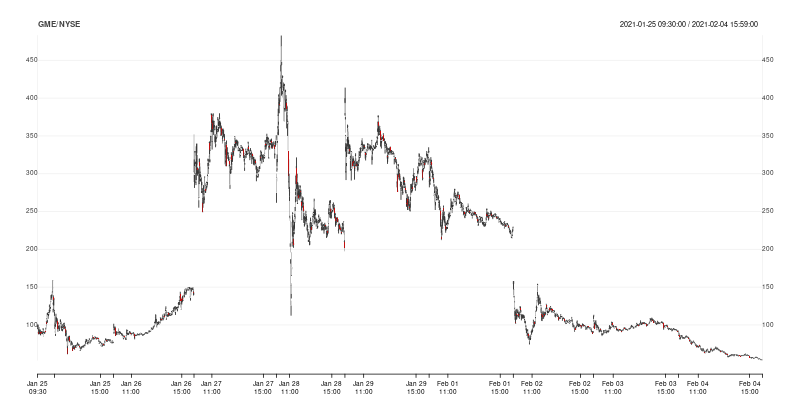
Two other points of deviation from the novel might be worthy of mention. In the book, a great deal is made of Dr. Lecter's penchant for Bach's Goldberg Variations, inducing a cultural resonance with other cinematic villains who have a taste for high art. It is also stressed in the book that it is the Canadian pianist Glenn Gould's recording too, although this is likely an attempt by Harris to demonstrate his own refined sensibilities Lecter would surely have prefered a more historically-informed performance on the harpsichord. Yet it is glaringly obvious that it isn't Gould playing in the film at all; Gould's hypercanonical 1955 recording is faster and focused, whilst his 1981 release is much slower and contemplative. No doubt tedious issues around rights prevented the use of either recording, but I like to imagine that Gould himself nixed the idea. The second change revolves around the film's most iconic quote. Deep underground, Dr. Lecter tries to spook Starling:
A census taker once tried to test me. I ate his liver with some fava beans and a nice Chianti.
The novel has this as "some fava beans and a big Amarone". No doubt the movie-going audience could not be trusted to know what an Amarone was, just as they were not to capable of recognising a philosopher. Nevertheless, substituting Chianti works better here as it cleverly foreshadows Tuscany (we discover that Lecter is living in Florence in the sequel), and it avoids the un-Lecterian tautology of 'big' Amarone's, I am reliably informed, are big-bodied wines. Like Buffalo Bill's victims. Yet that's not all. "The audience", according to TV Tropes:
... believe Lecter is merely confessing to one of his crimes. What most people would not know is that a common treatment for Lecter's "brand of crazy" is to use drugs of a class known as MAOIs (monoamine oxidase inhibitors). There are several things one must not eat when taking MAOIs, as they can case fatally low blood pressure, and as a physician and psychiatrist himself, Dr. Lecter would be well aware of this. These things include liver, fava beans, and red wine. In short, Lecter was telling Clarice that he was off his medication.
I could write more, but as they say, I'm having an old friend for dinner. The starling may be a common bird, but The Silence of the Lambs is that extremely rara avis indeed the film that's better than the book. Ta ta...

Fran ois Marier: Creating a Kodi media PC using a Raspberry Pi 4

Here's how I set up a media PC using Kodi (formerly XMBC) and a Raspberry Pi 4.

Hardware The hardware is fairly straightforward, but here's what I ended up getting: You'll probably want to add a remote control to that setup. I used an old Streamzap I had lying around.

Installing the OS on the SD-card Plug the SD card into a computer using a USB adapter. Download the imager and use it to install Raspbian on the SDcard. Then you can simply plug the SD card into the Pi and boot.

System configuration Using sudo raspi-config, I changed the following:
  • Set hostname (System Options)
  • Wait for network at boot (System Options): needed for NFS
  • Disable screen blanking (Display Options)
  • Enable ssh (Interface Options)
  • Configure locale, timezone and keyboard (Localisation Options)
  • Set WiFi country (Localisation Options)
Then I enabled automatic updates:
apt install unattended-upgrades anacron
echo 'Unattended-Upgrade::Origins-Pattern  
        "origin=Debian,codename=$ distro_codename ,label=Debian";
        "origin=Debian,codename=$ distro_codename ,label=Debian-Security";
        "origin=Raspbian,codename=$ distro_codename ,label=Raspbian";
        "origin=Raspberry Pi Foundation,codename=$ distro_codename ,label=Raspberry Pi Foundation";
 ;'   sudo tee /etc/apt/apt.conf.d/51unattended-upgrades-raspbian

Headless setup Should you need to do the setup without a monitor, you can enable ssh by inserting the SD card into a computer and then creating an empty file called ssh in the boot partition. Plug it into your router and boot it up. Check the IP that it received by looking at the active DHCP leases in your router's admin panel. Then login:
ssh -o PreferredAuthentications=password -o PubkeyAuthentication=no pi@192.168.1.xxx
using the default password of raspberry.

Hardening In order to secure the Pi, I followed most of the steps I usually take when setting up a new Linux server. I created a new user account for admin and ssh access:
adduser francois
addgroup sshuser
adduser francois sshuser
adduser francois sudo
and changed the pi user password to a random one:
pwgen -sy 32
sudo passwd pi
before removing its admin permissions:
deluser pi adm
deluser pi sudo
deluser pi dialout
deluser pi cdrom
deluser pi lpadmin
Finally, I enabled the Uncomplicated Firewall by installing its package:
apt install ufw
and only allowing ssh connections. After starting ufw using systemctl start ufw.service, you can check that it's configured as expected using ufw status. It should display the following:
Status: active
To                         Action      From
--                         ------      ----
22/tcp                     ALLOW       Anywhere
22/tcp (v6)                ALLOW       Anywhere (v6)

Installing Kodi Kodi is very straightforward to install since it's now part of the Raspbian repositories:
apt install kodi
To make it start at boot/login, while still being able to exit and use other apps if needed:
cp /etc/xdg/lxsession/LXDE-pi/autostart ~/.config/lxsession/LXDE-pi/
echo "@kodi" >> ~/.config/lxsession/LXDE-pi/autostart

Network File System In order to avoid having to have all media storage connected directly to the Pi via USB, I setup an NFS share over my local network. First, give static IP allocations to the server and the Pi in your DHCP server, then add it to the /etc/hosts file on your NFS server:
192.168.1.3    pi
Install the NFS server package:
apt instal nfs-kernel-server
Setup the directories to share in /etc/exports:
/pub/movies    pi(ro,insecure,all_squash,subtree_check)
/pub/tv_shows  pi(ro,insecure,all_squash,subtree_check)
Open the right ports on your firewall by putting this in /etc/network/iptables.up.rules:
-A INPUT -s 192.168.1.3 -p udp -j ACCEPT
-A INPUT -s 192.168.1.0/24 -p tcp --dport 111 -j ACCEPT
-A INPUT -s 192.168.1.0/24 -p udp --dport 111 -j ACCEPT
-A INPUT -s 192.168.1.0/24 -p udp --dport 123 -j ACCEPT
-A INPUT -s 192.168.1.0/24 -p tcp --dport 600:1124 -j ACCEPT
-A INPUT -s 192.168.1.0/24 -p udp --dport 600:1124 -j ACCEPT
-A INPUT -s 192.168.1.0/24 -p tcp --dport 2049 -j ACCEPT
-A INPUT -s 192.168.1.0/24 -p udp --dport 2049 -j ACCEPT
Finally, apply all of these changes:
iptables-apply
systemctl restart nfs-kernel-server.service
On the Pi, put the server's static IP in /etc/hosts:
192.168.1.2    fileserver
and this in /etc/fstab:
fileserver:/data/movies  /kodi/movies  nfs  ro,bg,hard,noatime,async,nolock  0  0
fileserver:/data/tv      /kodi/tv      nfs  ro,bg,hard,noatime,async,nolock  0  0
Then create the mount points and mount everything:
mkdir -p /kodi/movies
mkdir /kodi/tv
mount /kodi/movies
mount /kodi/tv

13 February 2021

Dirk Eddelbuettel: RcppFastFloat 0.0.2: New Function

The second release of RcppFastFloat is now on CRAN. The package wraps fastfloat, another nice library by Daniel Lemire who showed in a recent arXiv paper that one can convert character representations of numbers into floating point at rates at or exceeding one gigabyte per second. Thanks to Brendan, this release adds a helper function as.double2() modeled after the base R function but using, of course, the features from fast_float in RcppFastFloat. Release notes follow.

Changes in version 0.0.2 (2021-02-13)
  • New function as.double2() demonstrating fast_float (Brendan in #1)

Courtesy of my CRANberries, there is also a diffstat report for this release. If you like this or other open-source work I do, you can now sponsor me at GitHub.

This post by Dirk Eddelbuettel originated on his Thinking inside the box blog. Please report excessive re-aggregation in third-party for-profit settings.

12 February 2021

Dirk Eddelbuettel: RcppSimdJson 0.1.4 on CRAN: New Improvements

Brendan and I are happy to share that a new RcppSimdJson release 0.1.4 arrived on CRAN earlier today. RcppSimdJson wraps the fantastic and genuinely impressive simdjson library by Daniel Lemire and collaborators. Via very clever algorithmic engineering to obtain largely branch-free code, coupled with modern C++ and newer compiler instructions, it results in parsing gigabytes of JSON parsed per second which is quite mindboggling. The best-case performance is faster than CPU speed as use of parallel SIMD instructions and careful branch avoidance can lead to less than one cpu cycle per byte parsed; see the video of the talk by Daniel Lemire at QCon (also voted best talk). This version brings a new option to always return list types, tweaks to setting option in the the request and other small improvements. The NEWS entry follows.

Changes in version 0.1.4 (2021-02-12)
  • Support additional headers in fload (Dirk in #60).
  • Enable continuous integration via GitHub Actions using run.sh from r-ci repo (Dirk in #61, #62).
  • Add option to always return list to fparse()/fload() (Brendan in #65 closing #64).

Courtesy of my CRANberries, there is also a diffstat report for this release. For questions, suggestions, or issues please use the issue tracker at the GitHub repo. If you like this or other open-source work I do, you can now sponsor me at GitHub.

This post by Dirk Eddelbuettel originated on his Thinking inside the box blog. Please report excessive re-aggregation in third-party for-profit settings.

11 February 2021

Dirk Eddelbuettel: td 0.0.1 on CRAN: New Finance Data Package

Thrilled to announce that a new package of mine just made it to CRAN: the td package accesses the twelvedata API for financial data. Currently only the time_series REST access point is supported, but it is already supported with all meaningful options (we skipped only JSON or CSV which makes no sense here) so for example any resolution between 1 minute and 1 month can be requested for any stock, etf or currency symbol for a wide array of exchanges. Historical access is available too via (optional) start and end dates. We return either raw JSON or a data.frame or an xts object making it trivial to call high-end plotting functions on the data the project and repo pages show several examples. As just one example, here is GME during the follies. We simply request via
> gme <- time_series("GME", "1min",
+                    start_date="2021-01-25 09:30:00",
+                    end_date="2021-02-04 16:00:00", as="xts")
(where the API key is either in a user-local config file accessed via the new-ish R function tools::R_user_dir("td") pointing at this package s directory, or via an environment variable; either is accessed at package load or attachment) from which we can then plot via quantmod
> quantmod::chart_Series(gme, name=paste0(attr(gme, "symbol"), "/", attr(gme, "exchange")))
which shows how we also helpfully store metadata returned by twelvedata as extra attributes of the object. The chart is You will need an API key to have up to 800 daily accesses for free, higher-performance plans (including websocket access) are available for paying customers too. I have only used the free API so far myself. I plan to add quote and price support this weekend, and generalize the time series access to returning lists of objects as the API does in fact support multi-security access. As always, feedback is welcomed. Please post comments and suggestions at the GitHub repo. If you like this or other open-source work I do, you can now sponsor me at GitHub.

This post by Dirk Eddelbuettel originated on his Thinking inside the box blog. Please report excessive re-aggregation in third-party for-profit settings.

Julien Danjou: Debugging C code on macOS

Debugging C code on macOSI started to write C 25 years ago now, with many different tools over the year. As many open source developers, I spent most of my life working with the GNU tools out there.As I've been using an Apple computer over the last years, I had to adapt to this environment and learn the tricks of the trade. Here are some of my notes so a search engine can index them and I'll be able to find them later.

Debugger: lldbI was used to gdb for most of years doing C. I never managed to install gdb correctly on macOS as it needs certificates, authorization, you name it, to work properly.macOS provides a native debugger named lldb, which really looks like gdb to me it runs in a terminal with a prompt.I had to learn the few commands I mostly use, which are:
  • lldb -- myprogram -options to run the program with options
  • r to run the program
  • bt or bt N to get a backtrace of the latest N frames
  • f N to select frame N
  • p V to print some variable value or memory address
Those commands cover 99% of my use case with a debugger when writing C, so once I lost my old gdb habits, I was good to go.

Debugging Memory Overflows

On GNU/LinuxOne of my favorite tools when writing C has always been Electric Fence (and DUMA more recently). It's a library that overrides the standard memory manipulation function (e.g., malloc) and instantly makes the program crash when an out of memory error is produced, rather than corrupting the heap.Heap corruption issues are hard to debug without such tools as they can happen at any time and stay unnoticed for a while, crashing your program in a totally different location later.There's no need to compile your program with those libraries. By using the dynamic loader, you can preload them and overload the standard C library functions.
LD_PRELOAD=/usr/lib/libefence.so.0.0 my-program
Run my-program with Eletric Fence loaded on GNU/Linux
My gdb configuration has been sprinkle with my friends efence and duma, and I would activate them from gdb easily with this configuration in ~/.gdbinit:
define efence
        set environment EF_PROTECT_BELOW 0
        set environment EF_ALLOW_MALLOC_0 1
        set environment LD_PRELOAD /usr/lib/libefence.so.0.0
        echo Enabled Electric Fence\n
end
document efence
Enable memory allocation debugging through Electric Fence (efence(3)).
        See also nofence and underfence.
end
define underfence
        set environment EF_PROTECT_BELOW 1
        set environment EF_ALLOW_MALLOC_0 1
        set environment LD_PRELOAD /usr/lib/libefence.so.0.0
        echo Enabled Electric Fence for underflow detection\n
end
document underfence
Enable memory allocation debugging for underflows through Electric Fence
(efence(3)).
        See also nofence and efence.
end
define nofence
        unset environment LD_PRELOAD
        echo Disabled Electric Fence\n
end
document nofence
Disable memory allocation debugging through Electric Fence (efence(3)).
end
define duma
        set environment DUMA_PROTECT_BELOW 0
        set environment DYMA_ALLOW_MALLOC_0 1
        set environment LD_PRELOAD /usr/lib/libduma.so
        echo Enabled DUMA\n
end
document duma
Enable memory allocation debugging through DUMA (duma(3)).
        See also noduma and underduma.
end

On macOSI've been looking for equivalent features in macOS, and after many hours of research, I found out that this feature is shipped natively with libgmalloc. It works in the same way, and its features are documented by Apple.My ~/.lldbinit file now contains the following:
command alias gm _regexp-env DYLD_INSERT_LIBRARIES=/usr/lib/libgmalloc.dylib
This command alias allows enabling gmalloc by just typing gm at the lldb prompt and then run the program again to see if it crashes with gmalloc enabled.

Debugging CPythonIt's not a mystery that I spend a lot of time writing Python code that's the main reason I've been doing C lately.When playing with CPython, it can be useful to, e.g., dump the content of PyObject structs on the heap or get the Python backtrace.I've been using cpython-lldb for this with great success. It adds a few bells and whistles when debugging CPython or extensions inside lldb. For example, the alias py-bt is handy to get the Python traceback of your calls rather than a bunch of cryptic C frames.Now, you should be ready to debug your nasty issues and memory problems on macOS efficiently!

10 February 2021

Dirk Eddelbuettel: RcppSMC 0.2.3 on CRAN: Updated Snapshot

A new release 0.2.3 of the RcppSMC package arrived on CRAN earlier today. Once again it progressed as a very quick pretest-publish within minutes of submission thanks CRAN! RcppSMC provides Rcpp-based bindings to R for the Sequential Monte Carlo Template Classes (SMCTC) by Adam Johansen described in his JSS article. Sequential Monte Carlo is also referred to as Particle Filter in some contexts. This release somewhat belatedly merges a branch Leah had been working on and which we all realized is ready . We now have a good snapshot to base new work on, as maybe with the Google Summer of Code 2021.

Changes in RcppSMC version 0.2.3 (2021-02-10)
  • Addition of a Github Action CI runner (Dirk)
  • Switching to inheritance for the moveset rather than pointers to functions (Leah in #45).

Courtesy of my CRANberries, there is a diffstat report for this release. More information is on the RcppSMC page. Issues and bugreports should go to the GitHub issue tracker. If you like this or other open-source work I do, you can now sponsor me at GitHub.

This post by Dirk Eddelbuettel originated on his Thinking inside the box blog. Please report excessive re-aggregation in third-party for-profit settings.

Bastian Venthur: Installing Debian on a Thinkpad T14s

Recently, I got a new work laptop. I opted for Lenovo's Thinkpad T14s that comes with AMD's Ryzen 7 PRO 4750U Processor. Once everything is installed, it works like a charm: all hardware is supported and works out of the box with Debian. However, the tricky part is actually installing Debian onto that machine: The laptop lacks a standard Ethernet port and comes with Intel's Wi-Fi 6 AX200 module. So if you don't happen to have a docking station or an Ethernet adapter available during install, you'll have to install everything over WiFi. The WiFi module, however requires non-free firmware and this is where the fun starts. First, I downloaded an official netinst image and copied it onto a USB drive. Halfway through the installation, it complained that firmware for the WiFi module was missing, and I was stuck as I couldn't continue the installation without network access. Ok, then -- missing non-free firmware it is. The wiki suggests using an unofficial image instead, as it supposedly contains "all non-free firmware packages directly". So I tried an unofficial netinst image with non-free firmware. That also did not work, with the same error as above: the required firmware was missing. I checked the image later and actually couldn't find the non-free firmware either. Hum. In the end, I had to prepare a second USB drive with the firmware downloaded from here. I unpacked the firmware into /firmware on the second USB. The installer checks at some point during the installation for firmware installed on other removable media and (hopefully) finds it. In my case it did, and I finally could install everything. I'm quite happy with the laptop, but I have to admit how incredibly difficult it still is to install Debian on recent hardware. As a Debian Developer, I do understand Debian's position on non-free firmware, on the other hand however, a less technical person would probably have given up at some point and just installed some other Operating System.

Dirk Eddelbuettel: RcppArmadillo 0.10.2.1.0: New Upstream Release

armadillo image Armadillo is a powerful and expressive C++ template library for linear algebra aiming towards a good balance between speed and ease of use with a syntax deliberately close to a Matlab. RcppArmadillo integrates this library with the R environment and language and is widely used by (currently) 823 other packages on CRAN. This release brings us Armadillo 10.2 with a few updates as detailed below in the list of changes. Upstream release 10.2 was made a couple of days ago, but we need to balance new upstream updates with a responsible release cadence at CRAN. As we needed a maintenance release in early January, I opted to wait four weeks with this one which hence gets us 10.2.0 and 10.2.1 at once. As tweeted (with a follow-up) it had yet another very smooth passage at CRAN so we again appreciate the excellent work of the CRAN maintainers and say Thank You!. Anybody who desires more frequent updates show look at the RcppCore drat repo which provides more frequent interim updates. Here for example we also had 0.10.2.0.0 available for your testing pleasure. Also of note is that here is now a Python variant pyarma for those who might want enjoy Armadillo with Python. The full set of changes follows.

Changes in RcppArmadillo version 0.10.2.1.0 (2021-02-09)
  • Upgraded to Armadillo release 10.2.1 (Cicada Swarm)
    • faster handling of subcubes
    • added tgamma()
    • added .brief_print() for abridged printing of matrices & cubes
    • expanded forms of trimatu() and trimatl() with diagonal specification to handle sparse matrices
    • expanded eigs_sym() and eigs_gen() with optional shift-invert mode

Courtesy of my CRANberries, there is a diffstat report relative to previous release. More detailed information is on the RcppArmadillo page. Questions, comments etc should go to the rcpp-devel mailing list off the R-Forge page. If you like this or other open-source work I do, you can sponsor me at GitHub.

This post by Dirk Eddelbuettel originated on his Thinking inside the box blog. Please report excessive re-aggregation in third-party for-profit settings.

9 February 2021

Kees Cook: security things in Linux v5.8

Previously: v5.7 Linux v5.8 was released in August, 2020. Here s my summary of various security things that caught my attention: arm64 Branch Target Identification
Dave Martin added support for ARMv8.5 s Branch Target Instructions (BTI), which are enabled in userspace at execve() time, and all the time in the kernel (which required manually marking up a lot of non-C code, like assembly and JIT code). With this in place, Jump-Oriented Programming (JOP, where code gadgets are chained together with jumps and calls) is no longer available to the attacker. An attacker s code must make direct function calls. This basically reduces the usable code available to an attacker from every word in the kernel text to only function entries (or jump targets). This is a low granularity forward-edge Control Flow Integrity (CFI) feature, which is important (since it greatly reduces the potential targets that can be used in an attack) and cheap (implemented in hardware). It s a good first step to strong CFI, but (as we ve seen with things like CFG) it isn t usually strong enough to stop a motivated attacker. High granularity CFI (which uses a more specific branch-target characteristic, like function prototypes, to track expected call sites) is not yet a hardware supported feature, but the software version will be coming in the future by way of Clang s CFI implementation. arm64 Shadow Call Stack
Sami Tolvanen landed the kernel implementation of Clang s Shadow Call Stack (SCS), which protects the kernel against Return-Oriented Programming (ROP) attacks (where code gadgets are chained together with returns). This backward-edge CFI protection is implemented by keeping a second dedicated stack pointer register (x18) and keeping a copy of the return addresses stored in a separate shadow stack . In this way, manipulating the regular stack s return addresses will have no effect. (And since a copy of the return address continues to live in the regular stack, no changes are needed for back trace dumps, etc.) It s worth noting that unlike BTI (which is hardware based), this is a software defense that relies on the location of the Shadow Stack (i.e. the value of x18) staying secret, since the memory could be written to directly. Intel s hardware ROP defense (CET) uses a hardware shadow stack that isn t directly writable. ARM s hardware defense against ROP is PAC (which is actually designed as an arbitrary CFI defense it can be used for forward-edge too), but that depends on having ARMv8.3 hardware. The expectation is that SCS will be used until PAC is available. Kernel Concurrency Sanitizer infrastructure added
Marco Elver landed support for the Kernel Concurrency Sanitizer, which is a new debugging infrastructure to find data races in the kernel, via CONFIG_KCSAN. This immediately found real bugs, with some fixes having already landed too. For more details, see the KCSAN documentation. new capabilities
Alexey Budankov added CAP_PERFMON, which is designed to allow access to perf(). The idea is that this capability gives a process access to only read aspects of the running kernel and system. No longer will access be needed through the much more powerful abilities of CAP_SYS_ADMIN, which has many ways to change kernel internals. This allows for a split between controls over the confidentiality (read access via CAP_PERFMON) of the kernel vs control over integrity (write access via CAP_SYS_ADMIN). Alexei Starovoitov added CAP_BPF, which is designed to separate BPF access from the all-powerful CAP_SYS_ADMIN. It is designed to be used in combination with CAP_PERFMON for tracing-like activities and CAP_NET_ADMIN for networking-related activities. For things that could change kernel integrity (i.e. write access), CAP_SYS_ADMIN is still required. network random number generator improvements
Willy Tarreau made the network code s random number generator less predictable. This will further frustrate any attacker s attempts to recover the state of the RNG externally, which might lead to the ability to hijack network sessions (by correctly guessing packet states). fix various kernel address exposures to non-CAP_SYSLOG
I fixed several situations where kernel addresses were still being exposed to unprivileged (i.e. non-CAP_SYSLOG) users, though usually only through odd corner cases. After refactoring how capabilities were being checked for files in /sys and /proc, the kernel modules sections, kprobes, and BPF exposures got fixed. (Though in doing so, I briefly made things much worse before getting it properly fixed. Yikes!) RISCV W^X detection
Following up on his recent work to enable strict kernel memory protections on RISCV, Zong Li has now added support for CONFIG_DEBUG_WX as seen for other architectures. Any writable and executable memory regions in the kernel (which are lovely targets for attackers) will be loudly noted at boot so they can get corrected. execve() refactoring continues
Eric W. Biederman continued working on execve() refactoring, including getting rid of the frequently problematic recursion used to locate binary handlers. I used the opportunity to dust off some old binfmt_script regression tests and get them into the kernel selftests. multiple /proc instances
Alexey Gladkov modernized /proc internals and provided a way to have multiple /proc instances mounted in the same PID namespace. This allows for having multiple views of /proc, with different features enabled. (Including the newly added hidepid=4 and subset=pid mount options.) set_fs() removal continues
Christoph Hellwig, with Eric W. Biederman, Arnd Bergmann, and others, have been diligently working to entirely remove the kernel s set_fs() interface, which has long been a source of security flaws due to weird confusions about which address space the kernel thought it should be accessing. Beyond things like the lower-level per-architecture signal handling code, this has needed to touch various parts of the ELF loader, and networking code too. READ_IMPLIES_EXEC is no more for native 64-bit
The READ_IMPLIES_EXEC flag was a work-around for dealing with the addition of non-executable (NX) memory when x86_64 was introduced. It was designed as a way to mark a memory region as well, since we don t know if this memory region was expected to be executable, we must assume that if we need to read it, we need to be allowed to execute it too . It was designed mostly for stack memory (where trampoline code might live), but it would carry over into all mmap() allocations, which would mean sometimes exposing a large attack surface to an attacker looking to find executable memory. While normally this didn t cause problems on modern systems that correctly marked their ELF sections as NX, there were still some awkward corner-cases. I fixed this by splitting READ_IMPLIES_EXEC from the ELF PT_GNU_STACK marking on x86 and arm/arm64, and declaring that a native 64-bit process would never gain READ_IMPLIES_EXEC on x86_64 and arm64, which matches the behavior of other native 64-bit architectures that correctly didn t ever implement READ_IMPLIES_EXEC in the first place. array index bounds checking continues
As part of the ongoing work to use modern flexible arrays in the kernel, Gustavo A. R. Silva added the flex_array_size() helper (as a cousin to struct_size()). The zero/one-member into flex array conversions continue with over a hundred commits as we slowly get closer to being able to build with -Warray-bounds. scnprintf() replacement continues
Chen Zhou joined Takashi Iwai in continuing to replace potentially unsafe uses of sprintf() with scnprintf(). Fixing all of these will make sure the kernel avoids nasty buffer concatenation surprises. That s it for now! Let me know if there is anything else you think I should mention here. Next up: Linux v5.9.

2021, Kees Cook. This work is licensed under a Creative Commons Attribution-ShareAlike 4.0 License.
CC BY-SA 4.0

8 February 2021

Russ Allbery: Review: The Future of Another Timeline

Review: The Future of Another Timeline, by Annalee Newitz
Publisher: Tor
Copyright: September 2019
ISBN: 0-7653-9212-7
Format: Kindle
Pages: 350
Tess is a time traveler from 2022, a member of the semi-secret Daughters of Harriet who are, under the cover of an academic research project, attempting to modify the timeline to improve women's rights in the United States. Beth is a teenager in suburban Irvine in Alta California, with an abusive father, a tight-knit group of friends, and a love of feminist punk rock. The story opens with both of them at a Grape Ape concert in 1992. Beth is hanging out with her friends, and Tess is looking for signs of a conspiracy to alter the timeline to further restrict the rights of women. The Future of Another Timeline has a great science fiction premise. There are time machines buried in geologically-stable bedrock that have been there since before any current species evolved. The first was discovered by humans thousands of years before the start of the story. They can be controlled with vibrations in the rock and therefore don't need any modern technology to operate. Humanity has therefore lived with time travel for much of recorded history, albeit with a set of rules strictly imposed by these mysterious machines: individuals can only travel to their own time or earlier, and cannot carry any equipment with them. The timeline at the start of the book is already not ours, and it shifts further over the course of the plot. Time travel has a potentially devastating effect on the foundations of narrative, so most SF novels that let the genie of time travel out of the bottle immediately start trying to stuff it back in again. Newitz does not, which is a refreshing change. The past is not immutable, there is no scientific or magical force that prevents history from changing, and people do not manage to keep something with a history of thousands of years either secret or well-controlled. It's not a free-for-all: There is a Chronology Academy that sets some rules for time travelers, the Machines themselves have rules that prevent time travel from being too casual, and most countries have laws about what time travelers are allowed to do. But it's also not horribly difficult to travel in time, not horribly uncommon to come across someone from the future, and most of the rules are not strictly enforced. This does mean there are some things that one has to agree to not think about. (To take the most obvious example, the lack of government and military involvement in time travel is not believable, even given its constraints. One has to accept this as a story premise.) But it removes the claustrophobic rules-lawyering that's so common in time travel stories and lets Newitz tell a more interesting political story about the difficulty of achieving lasting social change. Unfortunately, this is also one of those science fiction novels that is much less interested in its premise and machinery than I was as a reader. The Machines are fascinating objects: ancient, mysterious, and as we learn more about them over the course of the story, rich with intriguing detail. After reading this summary, you're probably curious where they came from, what they can do, and how they work. So am I, after reading the book. The Future of Another Timeline is completely uninterested in that or any related question. About halfway through the book, a time traveler from the future demonstrates interfaces in the time machines that no one knew existed, the characters express some surprise, and then no one asks any meaningful questions for the rest of the book. At another point, the characters have the opportunity to see a Machine in something closer to its original form before aspects of its interface have eroded away. They learn just enough to solve their immediate plot problem and show no further curiosity. I found this immensely frustrating, in part due to the mixed signaling. Normally if an author is going to use a science fiction idea as pure plot device, they avoid spending much time on it, implicitly warning the reader that this isn't where the story is going. Newitz instead provides the little details and new revelations that normally signal that understanding these objects will be a key to the plot, and then shrugs and walks away, leaving every question unanswered. Given how many people enjoyed Rendezvous with Rama, this apparently doesn't bother other readers as much as it bothers me. If you are like me, though, be warned. But, fine, this is a character story built around a plot device rather than a technology story. That's a wholly valid mode of science fiction, and that part of the book has heft. It reminded me of the second-wave feminist science fiction of authors like Russ and Charnas, except updated to modern politics. The villains are a projection forward of the modern on-line misogynists (incels, specifically), but Newitz makes the unusual choice of not focusing on their motives or interior lives. They simply exist as a malevolent hostile force, much the way that women experience them today on-line. They have to be defeated, the characters of the book set out to defeat them, and this is done without melodrama, hand-wringing, or psychoanalysis. It's refreshingly straightforward and unambiguous, and it keeps the focus on the people trying to make the world a better place rather than on the redemption arc of some screaming asshole. The part I was less enamored of is that these are two of the least introspective first-person protagonists that I've seen in a book. Normally, first-person perspective is used to provide a rich internal monologue about external events, but both Tess and Beth tell their stories as mostly-dry sequences of facts. Sometimes this includes a bit of what they're feeling, but neither character delves much into the why or how. This improves somewhat towards the end of the book, but I found the first two-thirds of the story oddly flat and had a hard time generating much interest in or sympathy for the characters. There are good in-story reasons for both Tess and Beth to heavily suppress their emotions, so I will not argue this is unrealistic, but character stories work better for me with more of an emotional hook. Hand-in-hand with that is the problem that the ending didn't provide the catharsis that I was hoping for. Beth goes through absolute hell over the course of the book, and while that does reach a resolution that I know intellectually is the best type of resolution that her story can hope for, it felt wholly insufficient. Tess's story reaches a somewhat more satisfying conclusion, but one that reverses an earlier moral imperative in a way that I found overly sudden. And everything about this book is highly contingent and temporary in a way that is true to its theme and political statement but that left me feeling more weary than satisfied. That type of ending is a valid authorial choice, and to some extent my complaint is only that this wasn't the book for me at the time I read it. But I have read other books with similarly conditional endings and withdrawn characters that still carried me along with the force and power of the writing (Daughters of the North comes to mind). The Future of Another Timeline is not poorly written, but neither do I think it achieves that level of skill. The writing is a bit wooden, the flow of sentences is a touch cliched and predictable, and the characters are a bit thin. It's serviceable writing had there been something else (such as a setting-as-character exploration of the origins and purpose of the Machines) to grab my attention and pull me along. But if the weight of the story has to be born by the quality of the writing, I don't think it was quite up to the task. Overall, I think The Future of Another Timeline has a great premise that it treats with frustrating indifference, a satisfyingly different take on time travel with some obvious holes, some solid political ideas reminiscent of an earlier age of feminist SF, a refreshing unwillingness to center evil on its own terms, characters that took more than half the book to develop much depth, and a suitable but frustrating ending. I can see why other people liked it more than I did, but I can't recommend it. Content warning: Rape, graphic violence, child abuse, gaslighting, graphic medical procedure, suicide, extreme misogyny, and mutilation, and this is spread throughout the book, not concentrated in one scene. I'm not very squeamish about non-horror fiction and it was still rather a lot, so please read with care. Rating: 6 out of 10

7 February 2021

Enrico Zini: Language links

In English In Italiano

Next.

Previous.