Search Results: "zed"

5 August 2010

Benjamin Mako Hill: My August

I've got a pretty packed August. I just wrapped the Open and User Innovation Conference at MIT -- the academic conference on user and open innovation connected to my research. I organized the program and was MC for the 120+(!) talks and research updates on the program so it's a huge relief to see it come off successfully. On Thursday, August 5th (at 14:30 UTC) I'll be giving a talk on antifeatures at DebConf (the Annual Debian conference). It was accidentally listed as "Revealing Errors" until a few minutes ago -- sorry about that! It will be streamed live (details on the DC site) for those outside of New York City who might want to follow it. As soon as DebConf is done on August 8th, I'm going to head to Kor ula in Croatia to relax, read, and hopefully get a bit of research done, before I head off to Outlaws and Inlaws in Split on the 19th, a sort of piracy and (vs?) free software summit put on by mi2 connected to the recurring Nothing Will Happen where, from what I hear, quite a lot does. I'm going to have to leave Nothing Will Happen a little early to head to FrOSCon on the 21st where I'll be doing an antifeatures keynote again on the 22nd. I tend not to like to do the same talk too many times, or for more than a year, so this might be one of the last times I present on antifeatures in this form. After that, I'm going to head to Italy where I'll be between the 23rd and the 3rd of September. I'll fly and in and out of Rome and plan to spend some time in Rome, Tuscany, and Florence, but don't have a lot of set plans and might travel to Bologna or elsewhere. My schedule is pretty open. As always, I'm interested in meeting up for coffee or a drink with like-minded hackers, Wikipedians, researchers, activists, etc. If folks are interested in organizing talks or presentations, that sounds fun too. I'm keeping a brief description of my schedule updated alongside a bunch of ways to get in touch with me on my contact page. Don't hesitate to drop me a line!

4 August 2010

Jaldhar Vyas: Sita Sings the Blues

In the evening today (Tuesday), the Debconf organizers arranged for a screening of the Creative Commons licensed film "Sita Sings the Blues" by Nina Paley. I went to see it as I had missed it when it was first released among tales of trials and tribulation at the hands of copyright meanies. So first let me say yay Free Culture!, boo Intellectual Property! etc. etc. Now we have that out of the way... "Sita Sings the Blues" has two main narrative threads: The breakup of Ninas relationship with her boyfriend and the Ramayana particularly a story from the uttarakanda about how after Shri Rama returned from Lanka, Sita had to undergo the agnipravesha to prove her chastity and even after she passed that test was eventually banished to the forest. I had an adverse reaction to this film. In fact I stayed to the end to be polite but I left afterwards as soon as I could. I had almost a physical feeling of nausea and I was surprised by this. Since then I have been pondering why this is so. It's not that its blasphemous. Shri Rama is not just a "perfect man", he is God (an avatar of Vishnu Bhagavan as is briefly touched upon in the film) for millions of people so, well, yes it is blasphemous but its more Rowan Atkinson style rather than Norwegian Black Metal style blasphemy. One never gets the impression that the author hates Hinduism or Indian culture the opposite in fact. And in fact it is not uncommon in our culture to speak of Sita and Rama in this way. They are not remote authority figures but as familiar to us as our own friends and family and the Ramayana is not just about events that happened long ago it is relevant to our lives right now. Even the "good woman done wrong by big dumb male jerk" narrative is not unknown. (See the Uttararamacharita of Bhavabhuti for instance.) though I would suggest reducing the Ramayana this way is akin to treating the Hitchhikers Guide to the Galaxy as a book about towels. Even the milder criticism that it is not accurate is offbase because although the Sanskrit poem by Maharshi Valmiki is the canonical rendition of the Ramayana, there are other well-known versions. Not just in Sanskrit, the Hindi retelling by Sant Tulsidas called Ramacharitamanasa is more popular than Valmiki. Also speaking as someone who has preached Ramakatha "professionally" I can tell you that even the priests do not stick to the letter of the text. It is encouraged and expected that they will riff on the basic stories adding or removing details according to the needs and taste of the audience. And the device of the three narrators made me smile as this is exactly the kind of discussions that go on after hearing the Ramakatha. (I must say Paley picked a notably illiterate trio though.) One place where this fell flat was when they discussed the alleged discrepancy between Sita living simply in the forest and dropping a trail of jewellery on the way to Lanka. Although I can imagine someone at some point saying, "Do not question these stories" not at this point. Even the most retarded westernized Indian would know that removing ones ornaments is a sign of widowhood. A married woman would only do that in extremis certainly not just merely because she was a hermit. In a few cases some extra details might have helped the story. It was not explained that Ravana does not just have rakshasas in his command but he is one himself. (And he certainly wasn't a good guy until one day he got up and kidnapped Sita.) Shri Ramas brother Lakshamana accompanied the couple into the forest to Lanka and back but he only pops up (for no apparent reason) at the end. But look at me, I'm turning into one of those people who rant about Star Trek continuity errors or complain that the Romans in a gladiator movie have the wrong helmets for that time period etc. One has to cut a storyteller some slack and I entered the screening determined to be charitable. It's also not because I don't really see much connection between the two stories. Getting dumped by someone who simply loses interest in you hardly seems equivalent to being trapped by a moral code that doesn't allow for individuals feelings. Paley could have easily made "Princess Leia Sings the Blues" and it wouldn't have changed the significance much. But in India people make far more tenuous connections between the epics and events in their own life so one can hardly complain about that. Aesthetics are not the problem either. The first version of the Ramayana I ever read was the Amar Chitra Katha comicbook version which partly influenced the visual style of this film. (In fact you briefly see it in one scene when different editions of the Ramayana flash by.) Hindu popular culture is very gaudy. (See Ramanand Sagars '80s Ramayana Hindi TV serial, which was very reverential, insanely popular and tacky beyond belief.) The animation in this film is very good and quite artistic. "So Jaldhar", you might be asking if you've read this far, "what exactly is your problem with this film?" I have read the Valmiki Ramayana in Sanskrit with the commentaries from beginning to end. I've read other Ramayanas in Sanskrit, Gujarati, and English. I have read the comicbook, I've read anti-Ramayana polemics. When you learn Sanskrit in the traditional way the first lesson, in the declension of masculine gendered nouns ending in vowels is rAma.h rAmau rAmA.h ... I am well aware there are different emphases, different interpretations in various versions. Why can't I accept this as just another take on a story that has shown its fluidity over and over again? It's just...wrong on a subrational level. How can I put this? Imagine you are flipping through the TV channels and you see your grandparents amongst Lady Gaga's backup dancers. Or you came home one night to find everything that was on the floor meticulously glued to the ceiling. Over the course of my life (to hear my mother tell it my first exposure to the Ramayana was before I could speak.) I have developed a mental bond with this story a certain idea of how it should be. I think so has Nina Paley. And this is the problem. "Sita Sings the Blues" is Nina Paleys Ramayana not mine.

2 August 2010

John Goerzen: The Best Place of Ever

Jacob and Oliver have enjoyed our recent train trip, and our stay, from Kansas to New York City for Debconf. All told, that s a 40-hour trip, including the layover in Chicago. When we got on the train, in the middle of the night as usual, Jacob couldn t stop chattering about how great , fun , and exciting it is. He told us about all the lots of great things on the train, the fact that we were on a night train , and generally couldn t stop chattering. For an hour. At 3:30AM. This was a typical sight from Jacob: IMG_4284 It wasn t as relaxing as usual for Terah and me. Oliver is at the grabbing everything in sight stage. Which worked fine when Jacob was at the age, but with Jacob also along it was a bit more difficult to manage. I suspect that our next trip, when Oliver is a few months older, will go easier. A highlight for both boys, as usual, is the dining car. Oliver loves anything related to eating solid food it s still novel to him and Jacob loves anything relating to trains. What could go wrong? (Parents will probably identify the capability for two hyper-excited young boys to have plenty of things go wrong at a table in a restaurant here fortunately we didn t have anything go terribly wrong.) Oliver turned out to find the things outside the window to require intense concentration intense enough to stick out his tongue while he worked it all out. IMG_4296 And Jacob, of course, wanted to get the wrapper off his straw by himself. Which he can do, but takes a minute. IMG_4305 They also enjoyed the lounge car. IMG_4292 We were in a sleeper room on both trains. That was nice, and when we needed to go explore , we could. Jacob s favorite part of the trip was when I folded down the upper bunk during the day for him to play. I pointed out that it was like a train treehouse. His face sure lit up. He loved that he had his own window up there to look out of. He climbed up the ladder, and after awhile of playing, said, Dad, would you like to play with me up here? Of course I would it always makes me happy when he asks if I want to play with him. As I was playing with him, I asked him if he was having fun in his train treehouse. He gave me a sweet smile, and said, Dad, this is the best place of ever! IMG_4321 In Chicago, Jacob and I went outside and walked around. He enjoyed walking across the bridges over the canal by Union Station. I checked some work email when we got back, tried but failed to reach some local hams with my handheld, and then we got on the train for New York. The boys loved it too, and Jacob was very ready to be in New York when we got there. We got out at Penn Station which was, I think, pretty much what my mind had imagined of an underground station robbed of its former glory (especially having been in that part of Chicago Union Station). We found the connection to the 2 train uptown, bought some MetroCards for the subway, and got on. Jacob was very interested in the subway. He sat very, very still I thought he was scared but on asking him some questions, realized that he was just very interested and engrossed in it all. I had been trying out my HF antenna for my amateur radio setup a few days ago, and by some coincidence, kept making contact with people that grew up in New York. A guy from Fargo, ND a native of Brooklyn told me to make sure to get pretzels from a hot sauce vendor, Pastrami on rye or corned beef on rye from a Jewish deli (because they have the best meat), pizza from guys wearing red and white shirts, and don t be afraid of rats on the subway tracks, and that our boys will love to feed leftover bits of pretzels to pigeons and squirrels. He got so excited about NYC that he went on and on, saying, Man, you re making me hungry now. During times I m not at sessions at Debconf, we ve found some time to do some things as a family. We went to Grand Central Terminal, just to see it it is indeed still Grand. I knew there was a Jewish deli there, so I thought hey try out his advice. It was closed, and when I realized it was Saturday, I realized why. Oops. We hopped on another train to Brooklyn and checked out the New York Transit Museum, which is great and has a lot of exhibits about the history of the city s subway and bus systems. It s housed in a former subway station, and they have a lot of old subway cars down there dating back to 1905 most of which are open to go inside of. It s been nice to meet people at Debconf that I have only known via email or IRC. The organizers of this conference have done a fabulous job. I have every expectation that this will turn out to be the best conference I ve been to in at least 12 years this is my first Debconf. It doesn t skimp on the technical details, people are friendly, and there is a sense of common purpose. But just as important, while there is a set schedule, there is an easy way to add other ad-hoc sessions to the conference schedule. People can get together a group interested in a topic, and schedule an event about it for the next day very easily. I m quite impressed by that, and am looking forward to the virtualization discussion that grew out of a question to the mailing list. It was also neat to meet people that sort of knew our family from my blog posts. I had no idea that there were all that many people that actually read these things ;-) The Debconf kick-off was great. As I was walking across the campus of Columbia towards it, it was a nice temperature, with some light rain, and I heard bagpipes in the distance. Beautiful. And when I left after the evening sessions, I still heard bagpipes. So I went to check it out, and ran into Gabriella Coleman, one of the Debconf organizers and the person that gave the talk I just left on the way, with the same idea. The Columbia campus is beautiful and historic, and it is an excellent venue for the conference. New York is a great city and I m sure we ll be back. It is great to walk out of the hotel in the morning, buy a fresh peach or two from the street vendor 20 feet away, and then go buy a roll or two ($0.75 each) from the bakery down the street. I have been so missing rolls like that since we got back from Germany in March. These weren t quite like the German bakeries, but the closest I ve had to it. It is interesting to note how differently people from different places look at things. Terah has told several people how we live 6 miles from a town with 500 people in it, and people that stop to think about it realize how different it is from New York. It was a surprise to me to hear that some New Yorkers think of Columbia as country . It is beautifully landscaped, and feels different than the rest of the city. The numbers I ve seen suggest that a typical fall weekday has more people on the Columbia campus than in the entire county where we live. And that county is twice the size of New York City. That s not to say that there s anything wrong with New Yorkers thinking of it as country, any more than there is of me thinking of a town with 15,000 people as a pretty big town. It s a different perspective, and I enjoy different perspectives which is another thing I like about Debconf. There are so many people from all over the world there that different perspectives are inevitable.

Matt Zimmerman: DebConf 10: Day 1

This week, I am attending DebConf 10 at Columbia University in New York. The first day of DebConf is known as Debian Day. While most of DebConf is for the benefit of people involved in Debian itself, Debian Day is aimed at a wider audience, and invites the public to learn about, and interact with, the Debian project. These are the talks I attended. Debian Day Opening Plenary (Gabriella Coleman, Hans-Christoph Steiner) Hans-Christoph discussed Debian and free software from a big picture perspective: why software freedom matters, challenging the producer/consumer dichotomy, how the Debian ecosystem hangs together, and so on. Steps to adopting F/OSS in government (Andy Oram) Andy discussed FLOSS adoption in governments, drawing on examples from Peru, the city of Munich, the state of Massachusetts. He covered the reasons why this is valuable, the relationship between government transparency and software freedom, and practical advice for successful adoption and deployment. Pedagogical Freedom (panel, Jonah Bossewitch et al) The panelists discussed the use of technology in education, especially free software, some of the parallels between free software and education, and what these communities could learn from each other. This is a promising topic, though the perspectives seemed to be mostly from the education realm. There is much to be learned on both sides. Google Summer of Code 2010 at Debian (Obey Arthur Liu) This talk covered the student projects for this year s Summer of Code. Most of the students were in attendance, and presented their own work. They ranged from more specialized projects like the Hurd installer, to core infrastructure improvements like multi-arch in APT. Beyond Sharing: Open Source Design (Mushon Zer-Aviv) Mushon gave an excellent talk on open design. This is a subject I ve thought quite a bit about, and Asheesh validated many of my conclusions from a different angle. I ve added a new post to my todo list to go into more detail on this subject. Some points from his talk which resonated with me: How Government can Foster Freedom in Technology (Hon. Gale Brewer) Councillor Brewer paid a visit to DebConf to tell us about the work she is doing on the city council to promote better government through technology. Brewer seems to be a strong advocate of open data, saying essentially that all government data should be public. She summarized a bill to mandate that New York City government data be public, shared in raw form using open standards, and kept up to date. It sounded like a very strong move which would encourage third party innovation around the data. She also discussed the need for greater access to computers and Internet connectivity, particularly in educational settings, and a desire to to have all public hearings and meetings shared online. Why is GNU/Linux Like a Player Piano? (Jon Anderson Hall, Esq.) Jon is a very engaging speaker. He drew parallels between the development of player pianos, reproducing pianos, reed organs, pipe organs and free software. He even tied in Hedi Lamarr s work which led to spread spectrum wireless technology. To be quite honest, I did not find that these analogies taught me much about either free software or player pianos, but nonetheless, I couldn t help but take an interest in what he was saying and how he presented it. DebConf Opening Plenary (Gabriella Coleman) Biella and company explained all the ins and outs of the event: where to go, what to do (and not do), and most importantly, whom to thank for all of it. Now in its 11th year, DebConf is an impressively well-run conference. I m looking forward to the rest of the week!

30 July 2010

Michael Prokop: Event: System Administrator Appreciation Day 2010 in New York

On each last Friday of July the annual System Administrator Appreciation Day is taking place. Matt Simmons organized a SysAdmin Day Meetup to celebrate this event in New York. If you re in New York on 30th of July consider registering yourself (it s free and takes just a few seconds). If you are participant of the Debian Conference in New York and are already hacking at the DebCamp you might want to join our group of Debian people who plan to show up, currently consisting of Paul Wise, Lars Wirzenius, Thomas Lange and myself. If you plan to join please ping me so we can show up at the SysAdmin Day Meetup together.

29 July 2010

Stefano Zacchiroli: DebConf BoF HOWTO

Here at DebConf10 the schedule is starting to get really packed of events, which is great! About a half of those events are BoFs (in the IETF sense), i.e. discussion sessions among people interested in specific topics. (Other conferences use "BoF" to refer to impromptu, non-scheduled, and spontaneous events, while at DebConf we have traditionally submitted, reviewed, and scheduled BoFs in advance.) As most DebConf regulars, I've attended quite some BoFs in the past and I share with others the impression that the quality and usefulness for the project of BoFs varies substantially from BoF to BoF. That's why I'd like to share a BoF recipe, which comes from possibly the best organized BoF I've ever attended. As it happens with all good recipes (and with free software), I've took the liberty of customizing it a bit.
DebConf BoF HOWTO have a coordinator A good BoF should have a coordinator, which is usually (but not necessarily) the person who proposed the BoF in the first place. The role of the coordinator encompasses at least 2 tasks: preparing the BoF in advance (read below) and moderating the discussion to ensure everybody get a chance to participate. prepare in advance A good BoF is more than just getting together, vaguely knowing the BoF topic, and ... discuss. Mind you, it might work very well that way too, but the chances of having a successful BoF are much higher if attendees arrive prepared. That is quite simple to achieve. It just takes the BoF coordinator to prepare some working questions and/or detailed discussion topics, and advertise them as such. That way potential participants can make up their minds, recall experiences that they want to share, note down comments they want to bring into the discussion, etc. In my experience, the BoF time will then be used in a much more productive, exciting, and ultimately fun way. Most BoFs can also benefit from a few introductory slides on the BoF topic, to ensure all participants start from a common ground. The last slide could contain a brief recap of the working questions, so that the audience have them handy. don't be exclusive Debian is not a company and Debian contributors are not employees, therefore we cannot expect all relevant people to attend a specific BoF, just if they had to. As usual, the risk of cutting off community members who cannot attend should be mitigated as much as possible. To that end, minutes are just great; after the BoF, minutes should be posted where appropriate, and possibly uploaded to Penta as event attachments. ... but taking minutes is just boring and not everyone is good at that (for instance, yours truly used to suck at taking minutes, even if I'm trying to get better ...). If you have a trusted participant which is good at taking minutes, great, go for it! If you don't, use collaboration. During past DebConfs as well as at UDS this year, I've been shown a nice way of doing that. It takes a dedicated projector in the BoF room showing some real-time, collaborative editing facility (e.g. gobby). With such a setup, people usually just start taking minutes collaboratively, although explicitly inviting the audience to do that is a very good idea. Ideally, the room should have two projectors, one for supporting slides, another for collaborative minutes taking. In case there is only one, as it is usually the case for DebConf, it's probably better to use it for minutes and switch to them as soon as supporting slides are over.
gobby.debian.net for BoF minutes at DebConf10 For DebConf10, the DebConf team has setup a gobby (infinote) server at gobby.debian.net. Just do the following in order to be ready for collaborative minutes taking:
    # apt-get install gobby-0.5
    $ gobby-0.5 -c gobby.debian.net

(Note: you shouldn't use the non versioned gobby package as it uses a different protocol and doesn't support undo, which is quite risky; see Debian bug #590753 for more background.) As the naming convention for DebConf10 minutes, using document names that start with dc10- sounds sensible.
comments welcome! So, what do you think of the above suggestions? Do you have further best practices to share on BoF organization at DebConf? Leave a comment or mail me. In the end it would be nice to author a proper "DebConf BoF HOWTO" document for further reference. Thanks to Gregor for his feedback on early versions of this post.

Christian Perrier: First day at DebConf10

Yesterday late evening, Jean-Baptiste and I arrived in NYC after about a 16 hours trip. Amazingly, he mentioned to me that we entered a train in the station close to our home....and then never went outside until we exited the 1 line subway at 116th street on Broadway Ave.: It's indeed quite typical to notice that, these days, you can travel 1/4 of the planet, using 9 different trnsportation systems and never go outside. We made a quick appearance in the Hacklab yesterday, enough to say "hi" to a dozen of people around and mostlysee how things are organized. Then bed, which is probably the best way to avoid jetlag. This morning, I of course woke up quite early (Debian grandfathers, blah blah) and of course I went out running..:-) The initial plan was to do a short enough run in Central Park. However, I managed to get partly lost and, indeed, after entering the Park in the NW corner, I managed to read Columbus circle...in the SW corner after wandering around the large alleys. So, my only choice was then to come back through the westernmost part of the Park back to Columbia..and thus ended up with a 13km run (for running junkies, the pace was 5'31"/km (8'52"/mile for local runners). And now, I'm in the hacklab with JB (did I already say that I'm proud of this? Yes, dozens of times...OK...). And they're waiting for me to go to lunch....so, end of this blog post..:)

28 July 2010

Raphaël Hertzog: Do You Want a Free Debian Book? Read on.

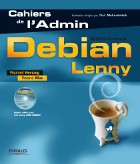
Cover of my French Debian BookWhile I have made good progress on many of my Debian goals for this year, it s not the case for the goal number #1: translating my Debian book into English. The picture on the left is the cover of the current French version based on Debian Lenny (450 pages). But the translation would be based on the next edition that we re currently preparing and it s based on Debian Squeeze of course! We have already translated the table of contents so that you can get an idea of what s in the book. Note that many parts of the book apply to Ubuntu as well. It s quite difficult for Roland and me to allocate several months of our life to such a huge task without any income in that period and without knowing if our book will sell enough to cover for the time invested. For those reasons, we re considering using a service like kickstarter.com or ulule.com or yooook.net to get this project funded. If you don t know those services, they allow you to present your project and to collect pledges so that you can safely complete your project. The money pledged is distributed only if the total amount pledged exceeds the minimal funding level (set by the project creator). Furthermore you can select nice rewards depending on the amount of money pledged. To make things even more exciting we are ready to publish the book under a DFSG-compatible license at the sole condition that we reach 25 000 of donations. That might look like a lot but in fact it s only 5 donated by 5000 persons and then everybody benefits! And for the authors, you have to remove ~10% of fees taken by the funding service (including card processing fees), 16.4% VAT, 9% social taxes and if you consider that the project represents a minimum of 6 months of work, that ends up to at most 2850 /month. We believe this to be reasonable. The next step for us is to pick the service to use and setup the fundraising. We need your input. Please answer a few questions by filling this form. In all cases, we will have those rewards and probably more: A few considerations about the various services: Kickstarter.com is a great service but it s restricted to US-residents so it s complicated for us to use that service since we re French (and live in France) and the supporters need to have an Amazon (payments) account. Ulule.com is open to anyone for project creation but uses a paypal API to deal with the pledge mechanism and thus imposes that all supporters have a paypal account. Is that requirement likely to scare you away? Yooook.net is specialized in liberation fundraising but the interface is not very polished, they don t offer (many) social features nor do they give a public listing of the projects hosted. The choice is difficult and thus we re seeking your feedback to make the right one, take a few minutes and answer our questions: click here to go to the form. Thank you for your help and please spread the word so that we get enough answers to have meaningful results. Update: it has been brought to my attention that kickstarter requires an Amazon (payments) account. I fixed my article and the form to document this. I have also been asked what license we re going to use. It s likely to be dual-licensed GPL2+ / CC-BY-SA 3.0. Flattr this Share/Bookmark 4 comments Support my work

Russ Allbery: Policy 3.9.1 and Lintian 2.4.3

It's been my intention to mention new Lintian and Debian Policy releases here as well, but I've not been doing very well with that (or with writing things here in general) for the last bit. But I'll see if I can change that up now. I wanted to get a new Policy release out before DebConf10 and got that out Sunday night. This doesn't have anything as dramatic as the Breaks/Conflicts or architecture wildcard changes in 3.9.0, but there are a lot of interesting improvements and updates. There's even more coming in the next release, which I'm hoping will include a long-overdue improvement to the summary of maintainer scripts. The Lintian release is mostly just adjustments for the new version of Policy, but I tried to take a quick pass through the open bugs and resolve as many as I could in a day as well. Major projects in Lintian are still on hold right now, since I just don't have enough time given the other things that I'm trying to do. The Policy changes of note are summarized in the upgrading checklist included in the debian-policy package and were all listed in the debian-devel-announce message.

Aigars Mahinovs: Debconf 10 arrival and first days

I had planned long for this Debconf and with the experience from the previous times I did all I could to reach one goal minimise stress. I think I got it right this time. First of all I got my company (Accenture) pay for the whole thing, so I did not have to worry about sponsorship queue (but instead I must gather and deliver them back some knowledge gained from the conference should be easy). I also managed to get a direct flight there is a weekly flight Tashkent-Riga-New York on Sundays and I got a ticket for that both ways. This took many hours off the travel time and reduced the stress a ton. Then I also did all the prudent travelling things: mostly reading the New York page on Wikitravel. This told me (among other things) what metro line to take to get the best view of the city. And for luggage I took a backpack (for the laptop and walking around) and a roller (for the clothes). I learned a lot from the Up in the air movie, it really teaches one how to take stress out of travel. This went very well in the beginning I took a bus to the airport early, checked in, breezed trough security and then waited and waited. The boarding only started half an hour after we were scheduled to depart. But I can not complain, because the flight attendant called my name (among a few others) just before boarding and changed my ticket I was bumped up to business class :) . It has been many years since I ve flown a regular (non-budget) airline and now first time ever in the business class! We got regular class meals, but at least we got to sit in the big chairs with lots of leg room. It was great! I bought a paper book (from Charles Stross) to read during the flight, because that is the only thing you can do during take-off and landing and I had some stuff to listen to in my iPhone. I tried sleeping and I think I managed to kill a couple hours that way too. It sure helped combat jet lag later on. When I arrived, I had my immigration and customs forms filled out. Latvia is on the USA Visa Waiver program, so I just had to fill out a form online prior to the trip to get a permission to enter USA. I only had one printout of the Waiver confirmation page and my airline took that before giving me a boarding pass, so I had no paper copy to give to the guy at the USA border, but he did not even ask for it he only took the two forms I filled out, scanned my passport, took my fingerprints (all fingers) and a photo. Then he gave me back the customs for (stamped) and I could go get my luggage. After that it was just a matter of walking trough customs and giving the customs official the pre-filled and stamped customs form. I was not stopped further. The AirTrain was a bit confusing you just get on the AirTrain and go where you need to go, you actually pay at the place where AirTrain connects to metro, so when you are coming from the airport you are actually paying ($5) when you are exiting the AirTrain system. There are plenty of AirTrain people that will give you an AirTrain ticked for $5 cash right there or you can use a machine to get it (where you can also pay with a card). The machines also take AmEx, but you must know the PIN code, if your don t know the PIN of you AmEx card (like I don t know the PIN of my corporate AmEx) you can only buy MetroCards at news stands, but there you will not find the unlimited ride tickets only 5 or 10 ride tickets are available. Next I screwed up a bit and thus got a bit lost in the New York metro system. The Wikitravel recommends to take the AirTrain to Jamaica station and from there take J or Z line into the city for the best views. I went to Jamaica and got into the first metro train that came on to the platform. Unfortunately, that was the E line train and it does not cross with J or Z lines after that, so I was stuck. To complicate the situation E line is under repair, so after a few stops the trains diverted to the F line and I had to scramble to figure out where to get out to get to the 1 line where Columbia University is. I ended up spending more than an hour in the metro, but I got there in the end. So I emerge from the 116th street metro station directly in front of the campus entrance gate and it starts raining. A thunderstorm swept across New York as soon as I stepped outside the metro station, so I took shelter a the side of the building. It kept raining. After a few minutes decided that I don t want to wait any more, so I put all my electronics into my backpack and went towards the dorm where my room was. The rain was warm, people around me were playing and running around in the wet grass, it was fun. The guard showed me where to go to check in. It was really simple sign here, here is you magnetic stripe key, have fun. And the room was just as spartan bed, desk, chair, closet, bathroom and a large fan under the window. The first night I did not know that I could actually turn that fan down, so I slept to the sound of full fan blasting, much like on the airplane. The dorm looks ancient it looks like it was build in the 60s and never changed since then. I mean, I ve lived in worse places, but people would at least change wall sockets or faucets or ceiling paint every other decade or so. The newest things here were the magnetic locks on the doors and a TV and a mini fridge in the hallway. After dropping my things I went off to the Mudd building across the campus to check in with people in the hacklab. It was just starting to take shape, but many great and familiar people were already there. It was like walking into a family home same warm welcome smiles and that great feel of belonging to the group. After I quick chat I went off downtown. The plan was that I left my old Canon 400D camera back at home and that I would buy a new Canon 550D here in New York on arrival. Unfortunately I underestimated the travel time on subway and by the time I got back downtown most shops where already closed. I got to checking out a Best Buy and was told there that they don t have 550D in stock. Next morning I went for a full scale search B&H Photo Video store, J&R Express, another BestBuy none of them had the Canon 550D (aka T2i) in stock in a body-only configuration. BestBuy had a few sets with the kit lens, but I did not want paying 100$ extra for something I already have. The last option was Adorama and I got lucky I nabbed the last 550D they had and it was body-only. Now I was back, with a camera in my hands and the Debconf10 could really begin!

24 July 2010

Andrew Pollock: [geek] Cleaning up from 20 years ago

I'm a terrible hoarder. I hang onto old stuff because I think it might be fun to have a look at again later, when I've got nothing to do. The problem is, I never have nothing to do, or when I do, I never think to go through the stuff I've hoarded. As time goes by, the technology becomes more and more obsolete to the point where it becomes impractical to look at it. Today's example: the 3.5" floppy disk. I've got a disk holder thingy with floppies in it dating back to the mid-nineties and earlier. Stuff from high school, which I thought might be a good for a giggle to look at again some time. In the spirit of recording stuff before I throw it out, I present the floppy disks I'm immediately tossing out.
MS-DOS 6.2 and 6.22
Ah the DOS days. I remember excitedly looking forward to new versions of MS-DOS to see what new features they brought. I remember DOS 5.0 being the revolutionary one. The dir command grew a ton of options.
XTreeGold
More from the DOS days, when file management was such a pain in the arse that there was a business model to do it better. ytree seems like a fairly good looking clone of it for Linux.
WinZip for Windows 95, Windows NT and Windows 3.1
Ha. I actually paid money for an official WinZip floppy disk.
Nissan Maxima Electronic Brochure
I'm amazed this fit on a floppy disk
Turbo Pascal 6.0
Excluding GW-BASIC, this was the first "real" language I dabbled in. I learned it in Information Processing & Technology in grades 11 and 12. I never got into the OO stuff that version 6.0 was particularly geared towards.
Where in the World is Carmen Sandiego?
Awesome educational game. I was first introduced to this on the Apple ][, and loved it. This deserves being resurrected for a console.
Captain Comic II
Good sequel to the original, but I never found a version that worked properly (I could never convince it to let me finish it)
HDM IV
Ah, Hard Disk Menu. A necessity from the DOS days when booting up to a C:\> prompt just really didn't cut it. I used to love customising this thing.
ARJ, LHA, PK-ZIP
Of course, you needed a bazillion different decompression programs back in the days of file trading. I guess things haven't changed much with Linux. There's gzip, bzip2, 7zip, etc.
Zeliard
I wasted so many hours playing this. The ending was so hard.
MicroSQL
This was some locally produced software from Brisbane, written in Turbo Pascal (I think). It was a good introduction to SQL, I used it in high school and my first stab at University.
DOOM and DOOM II
Classics. I don't seem to have media for it any more, but I also enjoyed playing Heretic and Hexen. Oooh, Hexen has been ported to Linux? Must check that out...
SimCity 2000
I wasn't a big fan of this game, but I liked the isometric view that 2000 had, compared to the previous version.

22 July 2010

Raphaël Hertzog: Quick news: dpkg, collab-maint, alioth and the future

Dpkg got rid of Perl Let s start with the interesting part and the great news: dpkg 1.15.8 (to be uploaded soon) will no longer need perl! After my changes to rewrite update-alternatives in C, Guillem recently pushed the rewrite of dpkg-divert/mksplit in C. Please test it out (binary package for i386 or .dsc). This is rather exciting news for those who would like to use dpkg in embedded contexts. And it s great to see this completed in time for Squeeze. In Squeeze+1, we might go one step further and merge cdebconf, the C replacement for debconf. I got rid of some recurring administrative tasks I have been administrating the Alioth server since its inception (see the announce I sent in 2003) but I m no longer enjoying the day-to-day administrative work that it represents. That s why I just retired from the team. We recently recruited Tollef Fog Heen so the number of admins is still the same (that said, Alioth could benefit from some more help, if you re a DD and interested, drop a mail to admin@alioth.debian.org or come to #alioth). Same goes for the collab-maint project. I have dealt with hundreds of requests to add new contributors to the project since it s the central repository where all Debian developers have write access and where they put the VCS for their packages that do not belong to a more specialized team. The new administrator that will approve the requests is Xavier Oswald and he s doing the work under the umbrella of the New Maintainer s Front Desk. The future I will continue to spend the same amount of time on Debian, the time freed will quickly be reallocated to other Debian and free software related projects. In fact, I even anticipated a bit by launching Flattr FOSS last week but that s a relatively simple project. :-) The other projects that will never all fit in the freed time: I want to spend more time working on dpkg. I do plan to blog more often too, but I m sure you ll notice that yourself soon. I would like to see my Debian book translated into English (another post coming on the topic sometimes soon). In my dreams, I could even start yet another software project, I have some ideas that I really would like to see implemented but I don t see how that could fit in this year s planning unless I can convince someone else to implement them! Maybe I should blog about them. Flattr this Share/Bookmark 5 comments Support my work

21 July 2010

Marco Túlio Gontijo e Silva: Immix on GHC Summer of Code weekly report #10

My project. This post assumes that the reader has read my last post. This weekly report is late, because I was too interested in the project to stop working on it to write. Next week it have to be earlier, since I m going to New York on Sunday, and will have to take a time from the project. First of all, I need to say that I thought all problems were gone in my last post, but I noticed after a lot of testing that there is a segfault (or memory corruption or etc) that happens about one of five times I ran the real/maillist benchmark. I tried a lot of combinations of parameters to the RTS (-C0 -A4k -i0 -DS and others) to make it behave deterministically, and it did, without segfaults. I could not reproduce the segfault deterministically, because all of these parameters made the segfault disappear. My old debugging technique, of printing a log to see where the program has went before the segfault happened, also is causing the segfault to disappear, so this one is being much harder to debug than the last ones. I m still looking at it. In a moment of this week I thought of pulling the latests patches from GHC, which created the need of rebuilding the whole system. I probably rebuilt with a different mk/build.mk, so I got some very distorted benchmark results when comparing before executions from before this build and after them. Because this distortion only made itself visible in a benchmark where I ve introduced some improvements which I was very positive about, I naively thought that the -46% results were actually real. After a reasonable disbelief of my mentor, I remembered the complete rebuild and thought that was the cause. I reran the pre-rebuild benchmarks, and got the updated results. This whole week I kept on benchmarking. At first I was using my usual system, but I noticed some very unexpected results, so I decided to run them in single-user mode, running nothing in parallel. In this condition, I belive the distortions are minimized. I organized my changes in sequential patches to the repository, to make it easier to measure. It takes a long time to run nofib, specially gc/gc_bench. While I organized the code, I notice the segfault was gone. I don t know still what was causing it, but I m not worrying very much, since it s gone. I m planning to write a bigger report next week with the complete results of the benchmarks.

17 July 2010

John Goerzen: KD0MJT

Wow tonight was thrilling. It s hard to explain why, but it s pretty exciting to have a radio setup that is all wrong in so many ways work well enough for me to sit in my kitchen in Kansas and talk to someone in Indianapolis using only two-way HF radios. I recently passed my technician and general amateur radio exams. I ve been talking to some very nice people locally on the 2m band, which permits local (say, 100-200mi radius) communication. It s been fun, but Kansas is sparsely populated enough that sometimes there just isn t any activity. At all. Earlier this week, my Yaesu FT-857D and two antennas arrived. I tried it first on VHF, and had a nice chat with Kent (KB0RWI) a few miles away. But tonight was the big experiment. I bought a 20m dipole antenna. This is basically a 30-foot-long wire, connected to a balun and a coax feed line in the middle. You re supposed to put it at least 30 feet off the ground, and away from trees, houses, etc. You re supposed to have a nice RF ground for your transmitter, power supply, antenna tuner, and all that stuff. You re not supposed to just run the coax under that (until today, annoying) small hole in the seal under the kitchen storm door. You re supposed to have to have the correct connectors on your coax, instead of soldering an RG-8 PL-259 onto some RG-8X because you re new at this and didn t realize that you need to buy an adapter. And, I m really pretty sure that you re not supposed to have an aggressive outdoor cat complete with a full set of claws and teeth attack the coax RG-8X cable as it s being pulled through the grass. Fail to do any of these things, and the thing might not work well, or might not work at all, or for people that use old equipment, might burn out your radio or something. So anyway I got out the ladder today, and I got the antenna maybe 10-15 feet in the air. I have three trees in a row with the perfect separation to hang each end and the center balun from. So while Jacob went around playing with water and trying out the ladder on occasion (with my help), I used some string to hang the antenna. In the trees, not far from them. Near the house. Not 30ft off the ground. I strung the feed line into the house, set up all my equipment on our kitchen table, flipped the switch. And nothing. Just the occasional familiar whine while tuning. I tried the 20m band, then the 40m, then even 15, 12, and 10. No activity anywhere. So what was wrong? I improvised some grounding extracted the ground conductor from an old strip of AC house wiring, shoved it into the ground, and grounded the tuner and transmitter. No difference. I unplugged the coax, and tested it with my multimeter. It tested out OK. I plugged it back in and wiggled the connector. Turns out the connector isn t in great shape, but it had been working. I tried transmitting. The tuner made a whole bunch of alarming-sounding clicking noises (sounded like a symphony of relays), indicated SWR over 3, and the ammeter on my power supply went a bit nuts. Later I realized that I just wasn t giving the tuner enough time to tune up; with a few more seconds, it tuned up just fine on every frequency. (So yes, it was supposed to do that.) And, it turns out, that all I needed to do was wait a little while longer to hear some signals. Pretty soon I was finding stuff all over the 40m band. I heard a discussion from Chicago, another from Oklahoma City, some apparent broadcasters from Africa. I decided I would try and transmit. I was hearing one side of a discussion very clearly and decided I would wait for an opportunity to try to contact that person. I heard his callsign, K9RM. I looked it up, and realized he was near Indianapolis, where I had lived for awhile. Eventually he invited a station trying to get in to participate. And: KD0MJT (I announced my callsign, as a request to join the conversation) He said he only made out the 0, but eventually we were talking quite well. It was a brief conversation, but interesting; the person he was talking to was in Portland, and couldn t hear me (and I could barely hear him, but not loud enough to make out). That with no phone lines, no Internet provider needed, etc. And with a rig that is far from being at peak efficiency. I had no idea what to expect tonight and was surprised that just tossing an antenna up in a tree let me talk to someone in Indiana. That s 650 miles away. I wonder what I ll be able to do once I get things done the right way. This hobby is going to be fun. Many thanks to Mike_W for equipment suggestions, Kent and Dan from Newton ARC for encouragement and coming out to the house to test things, Kent for being my first ham radio contact ever (on 2m while I was using an old 1981 radio), Chuck (K9RM) for taking a few minutes to be my first HF contact, and my dad for helping plan out exterior wall penetration methods that will eliminate this coax under the kitchen door and lack of grounding business. Jacob, by the way, still loves his radios and is starting to take an interest in mine. It wouldn t shock me at all of he s one of these kids that gets his technician license in the 2nd grade or something. I think he and I can do this together for a long time.

16 July 2010

Patrick Schoenfeld: Facebook aggressively advertising dubious features

Yesterday some confusion arised on my side when I saw a new facebook advertising campaign in my facebook account (yes, I am a member of facebook, although I'm aware of the privacy concerns). Basically it was saying that I should try the friends finder and that some of my friends (showing and naming me three of them) would have used it already.

Some background:
The friends finder feature of facebook is a feature that asks for the password of your e-mail account. It will then crawl through your emails to find contacts that might already be on facebook but not connected to you (in a facebook sense).

My first feeling was: Oh my god. How can it be that friends (and family) of mine are so naive? Especially since there were people included which I consider to be quiet clever. But honestly: Who would be so naive to give an unknown company direct unsupervised (you can't tell what they really do) access to your mail account? Would you give it to your friend? Your husband? Your father? I guess the answer will be "No" in the most cases and these people are most likely people you trust. Well, I know, you could state similar things for Googlemail who crawl your mails to show you personalized advertising. And in fact you are right. But if one decides to use gmail for your email hosting you have to trust them anyway. Like you have to trust anybody else you retain to host your mails (who could do the same but just don't tell you). But in this case its a third party, Facebook.

But if you now think that this becomes a rant against my friends: You are wrong. Over the day I found out that it basically shows up all my friends in a rotation. Every time I open the start page it randomly picks three people from my friend list and shows them to me, telling the same lie to me all over again.

So what do we have here? Facebook tries to advertise the most dubious feature they have in the most aggressive way one could imagine. By pretending wrong facts. Wouldn't that even be an element of crime in Germany ("Irref hrung" 5 UWG or maybe also 4 UWG, "unsachliche Beeinflussung")?

Facebook, you can do better.

Update: Stefano raised a good point. I didn't actually make clear that it has been verified that those people actually did not use the "feature":

1. I asked some of them. They said, they didn't use it and were in fact surprised that I asked.
2. Others told me they saw that ad stating that I used the feature. I definitely did not use this "feature".
3. Probably weak: IMHO its highly unlikely that all of my friends used that feature and at the point I've written this it had already shown my whole friend list.

14 July 2010

Mike Hommey: I/O patterns on ELF binary initialization

[ I meant to finish this article much earlier, but i had to leave it in a half-written draft state for quite some time due to other activities ] One particular issue that arises with big binary files is that of I/O patterns. It looks like it is not something under the usual scope for both ld.so and programs/libraries, but it can have a dramatic influence on startup times. My analysis is far from complete, would need to be improved by actually investigating ld.so code further, and so far has been limited to libxul.so built from mozilla-central, with the help of icegrind, on x86-64 linux. As I wrote recently, icegrind allows to track memory accesses within mmap()ed memory ranges. As ld.so does mmap() the program and library binaries, tracking the memory accesses within these mmap()s allows to get a better idea at I/O patterns when an ELF binary is initialized. I only focused on local accesses within a single given binary file (libxul.so) because the case of Firefox loading many files at startup is already being scrutinized, and because most of the non-Firefox files being read at Firefox startup (system and GNOME libraries) are most likely already in the page cache. I also focused on that because it was an interesting case that could be helpful to understand how big (and maybe less big) binaries may be affected by the toolchain (compiler, linker and dynamic linker) and possibly by some coding practices. For the record, what I did to get these results is to use icegrind and elflog, with further additions to the sections file with some output from objdump -h : I added sections that elflog wouldn t give (such as .plt, .hash, .dynsym, etc.), and even down to the entry level for the .rela.dyn section. The latter is particularly interesting because icegrind only outputs the first access for any given section. To see sequential accesses within that section, you need to split it in smaller pieces, which I did for .rela.dyn entries (each one being 24 bytes on x86-64). Uncommenting some parts of the icegrind code was also useful to track where some accesses were made from, code-wise. Now, the interesting data: One of the first accesses is a nullification of a few variables within the .bss section. The .bss section is usually an anonymous piece of memory, that is, a range of mmap()ed memory that is not backed by a file, and filled with zeroes by the kernel (I think it even does that lazily). It is used for e.g. variables that are initialized with zeroes in the code, and obviously, any code accessing these variables would be addressing at some offset of the .bss section. It means the section needs to start in memory at the offset it has been assigned by the linker at build time. This is actually where problems begin. When the .bss section offset as assigned by the linker doesn t align on a page (usually 4KB), the mmap()ed .bss can t be at that location, and really starts on the next page. The remainder is still mmap()ed from the binary file, and ld.so will itself fill that part. As the .bss section doesn t start on a page boundary, any write at this location will trigger the kernel reading the entire page. This means one of the first set of data being read from the file is the end of the section preceding .bss, and the beginning of the following one. Most likely, respectively the .data and .comment sections. While this probably doesn t matter much when the binary file is small, when it is big enough, reading in a non sequential manner will trigger hard disk seeks, and we all know how they can hurt performance. Although thankfully, cheap SSDs should be coming some day, in the meanwhile, we still need to cope with the bad performance. The interesting part is, the .bss section is really empty in the binary file, so its virtual memory address could be anywhere. Why the linker wouldn t align it at a page boundary without having to resort to a linker script is beyond me. The next accesses go back and forth between .dynamic, .gnu.hash, .dynstr, .gnu.version_r, .gnu.version and .dynsym. These are probably all related to symbol version resolution and DT_NEEDED library loading. While most of these sections are at the beginning of the file (not necessarily in the order they are read from), the .dynamic section is much nearer to the end, but way before .data, so that it won t even have been loaded as a by-product of the .bss section loading. After that, the .rela.dyn section is read, and for each relocation entry it contains, the relocations are being applied. Relocations is one of the mechanisms by which position independent code (PIC) is made possible. When a library is loaded in memory, it is not necessarily loaded at the same address every time. The code and data contained in the library thus need to cope with that constraint. Fortunately, while the base address where the library is mmap()ed in memory is not necessary constant, the offsets of the various sections are still as codified in the binary. The library code can thus directly access data at the right offset if it knows the base offset of the library (which is what is done on the x86 ABI), or if it knows where the current instruction is located (which is what is done on the x86-64 ABI). Static data (initialized in e.g. a const or a global variable, or, in C++ case, vtables), on the other hand, may contain pointers to other locations. This is where relocation enters the scene. The .rela.dyn section contains a set of rules describing where in the binary some pointers need to be adjusted depending on the base library offset (or some other information), and how they should be updated. ld.so thus reads all .rela.dyn entries, and applies each relocation, which means that while .rela.dyn is being read sequentially, reads and writes are also performed at various places of the binary, depending on the content of the .rela.dyn entries. This is where this gets ugly for Firefox: there are near 200000 such relocations. On x86-64 an entry is 24 bytes (12 on x86), and each of these is going to read/write a pointer (8 bytes on x86-64, 4 on x86) at some random (though mostly ordered) location. The whole .rela.dyn section not being read ahead, what actually happens is that it is read in small batches, with seeks and reads of other data at various locations in between. In libxul.so case, this spreads over .ctors, .data.rel.ro, .got, and .data. The relocation entries are somehow ordered by address to be rewritten, though they occasionally jump backwards. Some of these relocations also appear to be touching to .gnu.version, .dynsym and .dynstr, because their type involves a symbol resolution. Once .rela.dyn relocation have been dealt with comes .rela.plt s turn. The principle is the same for this section: entries describe what kind of relocation must be done where, and how the result must be calculated. The scope of this section, though, is apparently limited to .got.plt. But before explaining these relocations, I ll explain what happens with the PLT. The PLT (Procedure Linkage Table) is used when calling functions from external libraries. For example, in a Hello World example, the PLT would be used for calls to the puts function. The function making the call would in fact call the corresponding PLT location. The PLT itself, on x86 and x86-64, at least, consists of 3 instructions (I ll skip the gory details, especially for x86, where the caller needs to also set some register before calling the PLT). The first instruction is the only one to be called most of the time: it reads the final destination in the .got.plt section, and jumps there. That final destination, obviously, is not fixed in the library file, since it needs to be resolved by its symbol. This is why the two subsequent instructions exist : originally, the destination stored in the .got.plt section points back to the second instruction ; the first instruction will effectively be a nop (no operation), and the following instructions will be executed. They will jump into code responsible for symbol resolution, update of the .got.plt entry for the next call, and call of the real function. But pointing back to the second instruction is like the pointers in static data we saw above : it s not possible in position independent code. So, the .rela.plt relocations are actually filling the .got.plt section with these pointers back to the PLT. There are a tad more than 3000 such relocations. All these relocations should be going away when prelinking the binaries, but from my several experimentations, it looks like prelinking only avoids relative relocations, and not the others, while it technically could skip all of them. prelink even properly applies all the relocations in the binary, but executing the binary rewrites the same information at startup for all but relative relocations. That could well be a bug in either ld.so not skipping enough relocations or prelink not marking enough relocations to be skipped. I haven t dug deep enough in the code to know how prelinking works exactly. Anyways, prelinking is not a perfect solution, as it also breaks ASLR. Sure, prelink can randomize library locations, but it relies on the user or a cron job doing so at arbitrary times, but that s far from satisfying. An interesting thing to note, though, is that a good part of the relocations prelinking doesn t rid us of in libxul.so (more than 25000) are due to the __cxa_pure_virtual symbol, which is used for, well, pure virtual methods. In other words, virtual methods that don t have an implementation in a given class. The __cxa_pure_virtual function is set as method in the corresponding field(s) of the class VTABLE in the .data.rel.ro section. This function is provided by libstdc++, and as such, is dynamically linked. But this function is just a dummy function, doing nothing. Defining an empty __cxa_pure_virtual function to be included in libxul.so makes these relocations become relative, thus taken care of by prelinking. After all relocations occur, the library initialization itself can begin, and the content of the .init section is executed. That section, indirectly, executes all functions stored in the .ctors section. This includes static initializers, which are unfortunately called backwards, as Taras pointed out already. Each of these static initializers are also accessing various locations in the .data or .bss sections, which may or may not have already been loaded during the relocation phase. The execution of these initializers will also (obviously) read various pieces of the .text section (despite its name, it contains executable sections, i.e. functions code). The initialization of the library ends there, and no access should happen until a function from the library is called. In libxul.so case, XRE_main is first called, then many other functions, but that s another story. All that needs to be remembered about the startup process past this point is that the .text section will be read heavily, as well as the various data, got, plt and dynamic symbol sections, in a very scattered way. While most of these sections may have been retrieved in memory already, as a byproduct of the various initialization processes described above, some may have not, increasing even more the need to seek at all places in the binary file. Now the main problem with all these I/O patterns at startup, is that it seems the only way reorganizing the binary layout may have a visible impact is by considering all the above, and not only a part of it, because only addressing a part of it is very likely to only move part of the problem to a different layer. All in all, making sure the relevant sections of libxul.so are read by the kernel before ld.so enters the game is a good short-term solution to avoid many seeks at startup.

12 July 2010

Thorsten Glaser: On ASLR (Address Space Layout Randomisation)

I ve got some interesting results using r1.1 of an example test programme (r1.2 got cleaned up and more output) on various systems, regarding ASLR. The 1.1 revision tests everything mksh R40+ will use (except there will probably no larger than page sized allocations) for its LCG PRNG. On OpenBSD (MirBSD, rieBSD) malloc(3) uses in fact mmap(2), which is randomised. (Though -pie doesn t yet work as it s supposed to.) Some OSes are better than others but look for yourself. (Read on to continue, not part of the RSS for size reasons. This wlog entry may be updated with bumped date unperiodically.)

Matt Zimmerman: Read, listen, or comprehend: choose two

I have noticed that when I am reading, I cannot simultaneously understand spoken words. If someone speaks to me while I am reading, I can pay attention to their voice, or to the text, but not both. It s as if these two functions share the same cognitive facility, and this facility can only handle one task at a time. If someone is talking on the phone nearby, I find it very difficult to focus on reading (or writing). If I m having a conversation with someone about a document, I sometimes have to ask them to pause the conversation for a moment while I read. This phenomenon isn t unique to me. In Richard Feynman s What Do You Care what Other People Think?, there is a chapter entitled It s as Simple as One, Two, Three where he describes his experiments with keeping time in his head. He practiced counting at a steady rate while simultaneously performing various actions, such as running up and down the stairs, reading, writing, even counting objects. He discovered that he could do anything while counting to [himself] except talk out loud . What s interesting is that the pattern varies from person to person. Feynman shared his discovery with a group of people, one of whom (John Tukey) had a curiously different experience: while counting steadily, he could easily speak aloud, but could not read. Through experimenting and comparing their experiences, it seemed to them that they were using different cognitive processes to accomplish the task of counting time. Feynman was hearing the numbers in his head, while Tukey was seeing the numbers go by. Analogously, I ve met people who seem to be able to read and listen to speech at the same time. I attributed this to a similar cognitive effect: presumably some people speak the words to themselves, while others watch them. Feynman found that, although he could write and count at the same time, his counting would be interrupted when he had to stop and search for the right word. Perhaps he used a different mental faculty for that. Some people seem to be able to listen to more than one person talking at the same time, and I wonder if that s related. I was reminded of this years later, when I came across this video on speed reading. In it, the speaker explains that most people read by silently voicing words, which they can do at a rate of only 120-250 words per minute. However, people can learn to read visually instead, and thereby read much more quickly. He describes a training technique which involves reading while continuously voicing arbitrary sounds, like the vowels A-E-I-O-U. The interesting part, for me, was the possibility of learning. I realized that different people read in different ways, but hadn t thought much about whether one could change this. Having learned a cognitive skill, like reading or counting time, apparently one can re-learn it a different way. Visual reading would seem, at first glance, to be superior: not only is it faster, but I have to use my eyes to read anyway, so why tie up my listening facility as well? Perhaps I could use it for something else at the same time. So, I tried the simple technique in the video, and it had a definite effect. I could feel that I wasn t reading in the same way that I had been before. I didn t measure whether I was going any faster or slower, because I quickly noticed something more significant: my reading comprehension was completely shot. I couldn t remember what I had read, as the memory of it faded within seconds. Before reaching the end of a paragraph, I would forget the beginning. It was as if my ability to comprehend the meaning of the text was linked to my reading technique. I found this very unsettling, and it ruined my enjoyment of the book I was reading. I ll probably need to separate this practice from my pleasure reading in order to stick with it. Presumably, over time, my comprehension will improve. I m curious about what net effect this will have, though. Will I still comprehend it in the same way? Will it mean the same thing to me? Will I still feel the same way about it? The many levels of meaning are connected to our senses as well, and the same idea, depending on whether it was read or heard, may not have the same meaning to an individual. Even our tactile senses can influence our judgments and decisions. I also wonder whether, if I learn to read visually, I ll lose the ability to read any other way. When I retrained myself to type using a Dvorak keyboard layout, rather than QWERTY, I lost the ability to type on QWERTY at high speed. I think this has been a good tradeoff for me, but raises interesting questions about how my mind works: Why did this happen? What else changed in the process that might have been less obvious? Have you tried re-training yourself in this way? What kind of cognitive side effects did you notice, if any? If you lost something, do you still miss it? (As a sidenote, I am impressed by Feynman s exuberance and persistence in his personal experiments, as described in his books for laypeople. Although I consider myself a very curious person, I rarely invest that kind of physical and intellectual energy in first-hand experiments. I m much more likely to research what other people have done, and skim the surface of the subject.)

9 July 2010

Tim Retout: Toggle fullscreen in Emacs

Today I improved the function I was using to toggle full screen in GNU Emacs.
(defun toggle-fullscreen (&optional f)
  (interactive)
  (let ((current-value (frame-parameter nil 'fullscreen)))
       (set-frame-parameter nil 'fullscreen
                            (if (equal 'fullboth current-value)
                                (if (boundp 'old-fullscreen) old-fullscreen nil)
                                (progn (setq old-fullscreen current-value)
                                       'fullboth)))))
(global-set-key [f11] 'toggle-fullscreen)
The previous function would always restore the frame to "normal" state, even if Emacs was previously maximized. This one makes it behave more like, say, Epiphany or Totem. Apparently using GNOME Keyboard Shortcuts to set this to F11 globally would override custom behaviour from some programs. I've not found any examples of this, though. This would be easily extensible to disable the Emacs toolbar when fullscreen, for instance.

7 July 2010

Wouter Verhelst: Pauly site: redux

A few years ago, when I was still a member of the Jozef Pauly ensemble from Ekeren, at some point I took over maintaining their website. One of the things I did was converting it to drupal, mainly because that would allow other members of the ensemble to help maintaining it. Of course, such things do not happen automatically; and had I spent some more time on the project, it might've actually worked. But I didn't, so it didn't. Oh well. One of the main issues with the site as I set it up, was that I hadn't really done a very good job integrating everything. The standard drupal 5 theme looked pretty good, I thought. Slap on a few modules, and done. Unfortunately, I skipped a bit of testing, and as a result, the site didn't really function the way it should've. When this became apparent, I didn't have the time to properly fix it. During the last few years that I was a member of the ensemble, someone else stepped up to help maintain it. I told him that one of the things that I wanted to do was to upgrade the site to Drupal 6, so as to make i18n a bit easier. But some of the modules which weren't in drupal core made this somewhat harder than needed, and I didn't have the time to investigate in-depth what the issues were. In the end, I set up a secondary site on a different vhost on the same server that ran drupal6, and gave that guy admin rights there to help convert things to the new site. I planned to lead the effort to make things work; but when I came back not so much later, it turned out that he'd done a very good job already, and that it was probably a good idea to let him finish. This took much, much longer than expected; but eventually, he's finalized the setup, and it's now live (since a few weeks) on their official site. This site has content in both Dutch and English, though there is slightly more in the Dutch version: since they're doing a concert trip again this year, there's a blog for their families. Also, some people individually have decided to blog about the whole thing, too, which is... interesting. At any rate, I think the site looks very, very cool. Go check it out! I guess we may have to start thinking about doing an upgrade to Drupal 7 some time soon. But, hey.

Next.

Previous.