Search Results: "rra"

10 March 2007

Andrew Pollock: [life] Busted out the rollerblades

When I first moved to Canberra to work at Asia Online, I was staying at the Waldorf, and working in Braddon, so it was a really nice short skate to work. I think skating around after work in the summer time (with daylight saving) was one of the things that made Canberra really grow on me. I managed to destroy the (fairly cheap) blades in an incident in Commonwealth Park, and then lashed out on a more expensive pair of Bauer skates, which I subsequently hated. The original pair were simple, had a good hard shell, and three ski-strap style buckles, so they provided pretty good ankle support. The Bauers, on the other hand, had to be bought in a women's size because apparently my feet were too small for the men's sizes, were lace up, and had two Velcro straps that went around the top of the laces. I really made a terrible purchasing decision in getting them, because I found I could never get them tight enough around my ankles, and they were too tight around my toes, and were generally quite uncomfortable. Anyway, fast forward something like seven years to today, and I've been meaning to try skating to work to see how long it took. This morning, Sarah felt like some Vegemite, and I've got two bottles at work, and we seem to have run out at home. Sarah proposed that we cycle into work to get one of the bottles, and I thought this would be the perfect time to try out the skates again with no time constraints. So, I pulled them out, got to try out the new safety gear that I think Sarah got me for my birthday 2 years ago, and we headed off down the Stevens Creek trail. Things started out okay (as they always tended to do) but by the time we got to the La Avenida exit from the trail, I was feeling like a quick break to give my feet a breather, and I realised that the back left wheel had pretty much shredded itself. Seems the wheels don't have a fantastic shelf life. So Sarah cycled back home and got the car, and we aborted that adventure. I think rather than persisting with a pair of skates that I totally hate, I'll replace the wheels and give them away to Good Will, and look at getting a new pair that suck less. I think after waiting six or seven years between pairs is long enough get over the few hundred I spent on this pair. We're going to stay in San Francisco next Friday night after a party, so I think I'll go check out this store on Saturday. Hopefully I can make a better purchasing decision this time around.

9 March 2007

Edd Dumbill: My preview of the O'Reilly Emerging Technology Conference 2007

I was honoured to be on the ETech 07 programme committee. Alas, I can't get there this year due to the very enjoyable reason of recent parenthood. Nevertheless, here are some of the talks I'd earmarked to attend.
Creating Addictive User Experiences (Kathy Sierra)Is it possible to say too many good things about Kathy Sierra? Any project or product built with attention to her advice about empowering users gets a huge head start to popularity and success. I was fortunate enough to spend a day with Kathy last year on a training course, and it was great to see the passion and commitment from her writing runs through her as a person, even behind the scenes.Applied Web Heresies (Avi Bryant)I'd go to this one out of insatiable curiosity. I believe that web conventions enable rapid application design (c.f. REST in Rails) but here's an argument that not following them also reaps rewards. Attend this talk prepared for involvement. I've never met a Squeaker without attitude.
Making Offline Web Applications a Reality (Zimbra)A short product talk, but taking web apps offline is an area to watch. Even if you don't think offline is that important to you, many of the same principles apply to application mobility. Take that key app data off onto your phone, watch or memory stick.Collective Intelligence, Indeterminacy, and the Illusion of Control (Charles Armstrong)More user-facing stuff. How do you give a user of a large nondeterministic piece of social software the idea that they're in control? This is an important topic to me: note how many pieces of social software fall by the wayside right away. For some, it's lack of utility, but that's influenced too by the degree of engagement and control a user feels.
No Program Left Behind: Liberating TV from the Tyranny of the Ephemeral (Tom Loosemore)There is no good reason not to listen to Tom Loosemore. Especially when he feels strongly about something. The idea of this talk is a "vision of a cheap consumer device sitting under your TV that will capture, store, and share all TV, forever." The TV industry sure needs its visionaries.
Patterns: From Fabrics to Fabrication (Dale Dougherty)Dale was responsible for getting my XML career off the ground, and you can find him at work behind some of the smartest things O'Reilly's done over the years. Make magazine was one of those, and now he's moving on to Craft. Design patterns for, er, real designs.RFID Guardian: A Personal Platform for RFID Privacy Management (Melanie Rieback)
Jamming bad RFIDs. Having just taken delivery of an RFID-enabled passport, this is starting to come home to me.Super Ninja Privacy Techniques for Web App Developers (Marc Hedlund)Despite the cute title, lots of good stuff here. Expectnation is going to end up with a truck load of user registrations, and their privacy is important to me. I imagine there'll be some good debate in the Q&A session for this talk.JavaScript: It's Happening All Over Again! (James A. Duncan)I've recently got the JS bug, thanks to JQuery. It's actually a fun and malleable language to work in. I'd go to this talk looking for fellow travellers and hints, though I'm a bit skeptical about Zimki itself.

7 March 2007

Jordi Mallach: Cal otada and lunar eclipse in Picamoixons

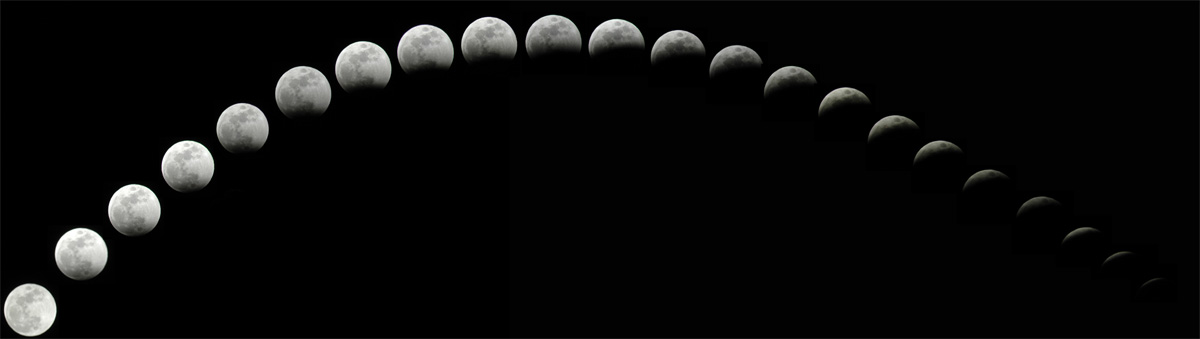
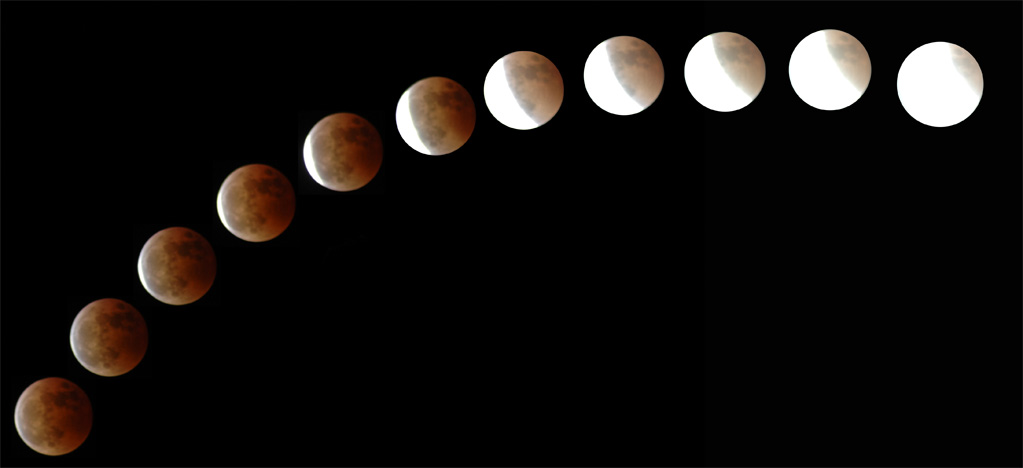
Last weekend I had great fun during my first cal otada with my Friends in Picamoixons, very near Valls in Tarragona. While it's already a tradition for my friends, this was the first time I went there, after having missed many other opportunities probably due to my overcommitment to triathlon training a few years ago. So on Friday we drove up North to Catalunya, and arrived quite late to Frago's house in the center of the town, where we slept in two packed rooms and the terrace after getting some beers in Dune. Early next morning we met Frago's friends and bought the necessary vegetables and wine for our great lunch, and soon after we were in the middle of some olive field outside Picamoixons, where we prepared a big fire and the cal ots. A cal ot is a special type of onion which grows in the area, which ends up being very long and thin. After cutting part of the green leaves, they are cooked over the flames, which carbonises the first few layers of the onion, but leaves the inner part ready for consumption. After this, you just need to pull from the inner leaves to get rid of the burnt stuff and eat the rest with a delicious and typical sauce for cal ots. So far, so good. What if your group of friends has extended the tradition, allowing for extra fun bits? In our cal otades, after you've peeled the cal ot, you keep the carbonised stuff. It's valuable ammo, which will soon be thrown at others' faces. Trying to remain clean is futile, you soon are covered by sauce and black stuff all over your head and clothes. This was real fun! After eating part of the group went up a mountain to visit an arab tower, which helped me not to get totally drunk before the night. When it got dark, we were all back to our positions around the fire, chatting and listening to varied music, while we waited for the lunar eclipse. The eclipse was impressive, seen from the country side, with absolutely no luminic contamination. My friend Jordi carefully prepared his camera to do a good photograph series of the event, and the results were impressive. When the eclipse was about to be full, it was great to see a miriad of stars appear in the sky, previously hidden by the perfect full moonlight. We were just too lucky that the weather fixed up just on time to have a completely clear sky.


The lunar eclipse, as seen from the Catalan countryside. Pics by Jordi Jover. Many were quite tired by 3 or so, so we started setting up tents and went to sleep by 4. Sunday was a slow day, dedicated to cleaning up our stuff and eating leftovers cooked on a new fire. We were back in Val ncia at 8PM or so and even after showering and cleaning my hair with shampoo, my head still smelled like smoke. Actually, I think it might still smell a tiny bit today. In short, a lovely weekend, which I hope to repeat next year. Too bad the lunar eclipse bit will be missing for quite a few more years. :)

3 March 2007

Julien Valroff: Sound output broken on my Dell Inspiron

I have recently noticed that the sound output of my (nearly) 3 months-old Dell Inspiron 1300 is broken. I am pretty sure it is something like a bad contact. As I use this laptop mainly as a media box, I cannot leave it in this state. I thus wrote to Dell Support team on Thursday evening, less than 5 days before the end of the 90 days warranty. They called me back yesterday morning to confirm they have received my request, and I received an e-mail yesterday afternoon asking me to do some further tests. I think I will have to sent the laptop back and wait for ages until it comes back. As it obviously runs Debian, I will also have to set up the original system back on it, which will oblige me to re-install the whole system after repair. Cheap is not always good.

Evan Prodromou: 11 Vent se CCXV

We had one of the biggest snows of the year today in Montreal. The storm, which happened overnight and was supposed to let up around noon, still hasn't stopped. It's a practical white-out outside -- big fluffy flakes everywhere. The radio said we had more than 40 cm of snow, which is just amazing. I headed over to La ka this afternoon for an interview with Steve Faguy of the Montreal Gazette. I was pretty worried about going out, but as usual I was pleasantly surprised when I was outside. Snowy weather is pretty gentle, and although I was cold and wet when I got to La ka, it wasn't all that bad. I had a good talk with Steve about Wikitravel, Montreal tech scene, and the French Revolutionary Calendar. I'm looking forward to seeing the article when it comes out. tags:

certifi.ca doing well I was glad to see a post about certifi.ca in the Solution Media Blog of Thomas Huhn. Thomas set up the extremely useful OpenID Directory, so his opinion is pretty valuable. I'm glad he's as enthused about certifi.ca as I am. tags:

Registration and privacy I think I have an account on every free OpenID service on the Web. I need lots of accounts for debugging purposes, and I also like to have an idea of what people are doing with the protocol. I checked out prooveme.com a few days ago. prooveme.com gives out OpenIDs with SSL cert authentication, like certifi.ca. It seems like an OK service, but I don't think they use SSL and certs the right way. I tested the prooveme ID on a couple of services, had a couple of errors, and that was that. So I was surprised to see this posting in the proovemeblog today:
  • certifi.ca is another site doing certificated OpenID. Evan, the creator of certifi.ca is a subscriber of ours. We'll obviously be pleased if he carries on using us!
Now, I've been in wikis long enough to know that you have to AssumeGoodFaith when people post things in public forums, so I'll take this comment as nothing more than clumsy but good-natured ribbing. Ha ha ha. But: I haven't publicly said that I'd tested out the prooveme server. I'm not particularly embarrassed about it, but I hadn't had any reason to mention it to anybody, either. So the only way the poster could know that I'd registered for their service was to check their database records for my registration information. Publishing users' registration info without their consent steps over an important privacy line for me and, I think, for a lot of people. I'm not sure making a joke really justifies that kind of privacy invasion. I don't feel fairly treated, here. I partly blame myself: after all, I submitted personally-identifying information (PII) into a Web form on a site without an explicit privacy policy. I've gotten so used to OpenID providers being experienced with security and privacy issues that I made assumptions that turned out not to be the case. I've taken the incident as a wake-up call to put a privacy policy on certifi.ca. I hope that will communicate to users what I consider acceptable use of their data. And I'll make sure to check carefully for privacy policies whenever creating a new account in the future. For clarity: if I have an account on a Web service, that is not any kind of endorsement of their service, and doesn't necessarily suggest that I use that service regularly (or at all). I'm going to see what I can do to get my account deleted from the prooveme servers to avoid any misunderstanding in the future. tags:

1 March 2007

Enrico Zini: dpl-platform-keywords

Representative keywords of DPL platforms The DPL platforms are too long and you could use a very, very short executive summary? No problem, I have the technology for it. After the results you can find the kit to build yourself an extractor in the comfort of your home. The results Acquiring the data
for i in 93sam aigarius ajt hertzog sho sjr stratus svenl wouter
do
    wget http://www.debian.org/vote/2007/platforms/$i
done
Tokenizing
#!/bin/sh
for file in "$@"
do
    lynx -dump -stdin < $file   tr -c '[a-zA-Z]' ' '   tr '[A-Z]' '[a-z]'   sed -e 's/ /\n/g'   sed -e '/^$/d' > $file.tok
done
Extracting the most representative keywords
#!/usr/bin/python
import sys, math
def read_tokens(file):
    "Read all the tokens from one file"
    return [ line[:-1] for line in open(file) ]
# Read all the "documents"
docs = [ read_tokens(file) for file in sys.argv[1:] ]
# Aggregate token counts
aggregated =  
for d in docs:
    for t in d:
        if t in aggregated:
            aggregated[t] += 1
        else:
            aggregated[t] = 1
def tfidf(doc, tok):
    "Compute TFIDF score of a token in a document"
    return doc.count(tok) * math.log(float(len(docs)) / aggregated[tok])
# Output the top 5 tokens by TFIDF for every document
for name, doc in zip(sys.argv[1:], docs):
    print name, sorted(set(doc), key=lambda tok: tfidf(doc, tok), reverse=True)[:5]
Errata Jacobo suggests to use lynx -dump -nolist or w3m -dump for a more tokenizer-friendly text expansion.

28 February 2007

David Welton: Ruby's Mysql interface

I just like open source too much to not be constantly bumping into things that I would love to improve or fix... I have way too much fun getting my hands dirty with something new. Today's adventure regards my need to stream large quantities of data from a ruby on rails installation, covered previously here: http://journal.dedasys.com/articles/2006/06/08/streaming-programmatically-generated-content-from-rails The current block is that ActiveRecord doesn't deal with a "stream" of results, but rather, fetches everything into one big, fat array and then deals with that. Luckily, I'm not the only person to have found this suboptimal: http://dev.rubyonrails.org/ticket/6921 However, as I comment there, to truly make things work, some low level coding is required. For mysql, since it doesn't seem to support cursors to the degree that something more standards-compliant like Postgresql does, the answer lies in the C library and language interfaces built on top of it: http://dev.mysql.com/doc/refman/5.0/en/mysql-use-result.html Unfortunately, Ruby's C API, or at least the versions that I downloaded, don't properly support fetching things one record at a time. It didn't take more than a few minutes to whip this up: http://dedasys.com/freesoftware/patches/mysql-ruby.patch (although there's a good possibility it could be improved...) However, according to this posting, the upstream maintainer may not be terribly responsive, and the project isn't really run as much of an open source project, with a public mailing list, bug tracker, version control, and so forth. Perhaps it's time to create that infrastructure?

27 February 2007

Enrico Zini: only-one-way

Python: "There's Only One Way To Do It"
import array
import numarray
import numeric
import numpy
They're all almost the same, but not quite. When google gives you an online piece of documentation, it's hard to say what it refers to. And different scientific modules use one or the other, more or less unpredictably. Maybe in the future numpy will replace them all. In the meantime, if I hear someone saying "There's Only One Way To Do It", I will spank their cheeks with a wet fish.

26 February 2007

Evan Prodromou: 7 Vent se CCXV

I'm excited to see that wikiHow now lets people log in with OpenID, and also provides identities to all wikiHow users. (I'm not sure what wikiHow project members are called -- my best guess is "wikiHowards", but I'm pretty sure that's not right.) wikiHow is a great company, and the people I know there -- Jack and Travis -- are personable and smart. I think wikiHow is a great example of a conscientious company participating well in Open Content and the wiki world; I think implementing OpenID is one example of their good wikizenship. One of the things I really wanted with implementing the MediaWiki OpenID extension was that we'd get really portable identity across wikis; that someone who'd established a reputation on Wikipedia could expect some respect for that reputation on Wikevent or Wikioutdoors or whatever. I think there's some danger to that model -- so many wikis today are implemented on wiki farms like Wikia or Pbwiki. I think some wiki farm companies see value in corraling their users into only using wikis on their servers, rather than in participating in the larger wikisphere. (You can occasionally even see this attitude in the Wikimedia community, although obviously that community is more self-governing and evolved about Free Culture and peer-to-peer processes.) That attitude is short-sighted, and wiki hosting companies that insist on maintaining identity silos are probably going to pay for it in the future. It's a competitive market; people have a lot of choice, and nobody wants to be fenced in. If there's been one lesson of Web 2.0, it's that openness is a competitive advantage. Good karma pays off in intense customer loyalty. And, yes, I'll stop using wiki-prefixed neologisms now. Sorry about that. Anyways, I'm really glad to hear that wikiHow is joining the OpenID network. I hope it continues to work well for them. tags:

Rands in Repose I continue to find it mind-boggling that this gay alien is also a well-known blogger about software. Yeah, I know, I know, Jerkcity guys: they're just cartoon characters. They're not people. But still. In ancient times, I did an interview with Rands for Pigdog Journal. I guess that's a long time ago, though. tags:

Not quite spongeworthy So, there was an article in Slate about Wikipedia biographies over the weekend about how saddy-sad it is when your biography is deleted from Wikipedia (and how writing an article about Wikipedia can save that biography quite well). I've seen a lot of such breast-beating in blogs and such lately. I think it's important for folks to remember that Wikipedia is an encyclopedia, not a wiki-about-everything. Some people, places, and things meet an encyclopedia's requirements for notability (see Wikipedia:Notability (people)); others don't. That's just the way it is. But just because your bio isn't on Wikipedia, doesn't mean you can't have an Open Content, wiki bio preserved for posterity. I've written about WikiBios before, but I have to insist that it's one of the most awe-inspiring projects I've seen: a biography for every human. Every human. That's all they do. Yeah, their sample text is a little bit trivial, but I think looking beyond that, you can see a pretty amazing possibility for a project. Maybe Timothy Noah and all the other people who are teetering on the edge of being spongeworthy for Wikipedia should take some time to build out their WikiBios page. Get friends, colleagues and family to contribute, and really build out a high-quality bio. If at some period in the future WP deigns to include them, then the bio is right there -- GFDL-licensed, no less. Anyways, here's Evan Prodromou's WikiBio. Feel free to fill it out. tags:

BarCampAustin While I'm thinking about BarCamps -- I'm a little nervous about my presentation at DemoCampMontreal1 -- I'm finding out that BarCampAustin is going to be the same week as South-by-Southwest Interactive 2007. Which, really, makes a lot of sense. I'm going to try to show up for Friday morning -- it'll be interesting to bounce back and forth between SxSW and a BarCamp. tags:

23 February 2007

Edd Dumbill: XTech 2007 schedule: behind the scenes

After a couple of months' hard work, I've posted the schedule for XTech 2007. And, though I say so myself, it looks good. XTech 2007 grid You can read more about the schedule itself over on the XTech web site, but I thought it would be interesting to explain how we got there. The people bit  After the call for participation, we wound up with 200 proposals in the system. From there, the target was to get down to 5 tutorials and 68 presentations. Each proposal contains an abstract of at most 500 words. I enlisted a small army of reviewers (69 in all) to help, and assigned four or five reviewers to each abstract. 829 reviews were assigned in all. The reviewers work blind, so they don't get to see who the proposer is.
After the review, I read every score and proposal, and created a shortlist of the best scoring proposals plus those that had spuriously low scores given their quality. From this shortlist the hard graft of preparing a draft schedule started. We had already decided in advance on our usual format: four parallel tracks of browsers, core tech, applications and open data. I then filled in the schedule, aiming to create themes for days, or at least for the 2-session blocks. The draft schedule and details of those shortlisted but who missed the cut were circulated among the committee. After some iteration and feedback the final schedule emerged. Picking tutorials was a little different, as this is done by myself and the committee directly. The constraints on choice are more commercially-oriented. Experience has shown we need mainstream topics that people will be happy to pay for. Even so, each year we try to include one emerging topic. Last year, it was Rails. This year, it's OpenStreetMap.
Choices made, I then notified the speakers, awaited their confirmation, and reached the point where we could publish the schedule. The mechanics of it all A glib reading of the above would make it all sound quite simple. And this year I'm pleased to report that it was a lot simpler than previous years. We have been able to use Expectnation from beginning to end, which has streamlined a lot of the work.  Expectnation's my super startup that's taking up the time that XTech and fatherhood don't! I'm about to tell you why it's wonderful, so please forgive a little pride.
Gathering the proposals was easy once the CFP had been set up inside Expectnation. I set up three calls: one for presentations, one for tutorials, and a secret one that the public doesn't get to see. (We always need a secret one for people who have very good reasons why they didn't make the public deadlines.) Request response The review phase Recruiting reviewers was done by Expectnation's request system. This lets me send a request to a large number of people simultaneously, and collect their responses via the web app. (Previously, this had involved email, spreadsheets and wasted time.) The chart you see to the right shows the breakdown of the response to this request. If a reviewer said 'yes', they added a note to say which types of proposal they would review, and signed up for an account in the system. I then passed through every paper assigning four or five appropriate reviewers. A quick search each time allowed me to look for the right reviewers, and ensure no one reviewer got overloaded with work. Once reviewers were assigned, I headed over to the Mailroom department. Expectnation has a large number of configurable mailing targets, one of which is "reviewers with work to do". I emailed each reviewer with details of how to get on with the reviewing. Every reviewer then logged into Expectnation, saw the proposals they needed to review, and used the interface to efficiently score the proposals. One big lesson here is that it needs to be very efficient if you want to get the best reviewers, who are often the busiest. Another wizzy graph enabled me to keep track of the reviews, and the mailroom let me send out a reminder to those reviewers who hadn't finished their work yet, when the time for the close of reviewing drew near. Picking the papers Gridding out XTech 2007 Expectnation lets me sort and filter proposals pretty flexibly, so I went through the papers for each track in turn, ordered by their review score. Anything scored 3 or higher (4 is best, 1 is worst) was almost certain to be shortlisted. I read all the reviews and the abstract, and moderated any score that was unusually low (for some reason, reviewers rarely overrate proposals!) The next step was to set up the empty grid, shown in the top half of the diagram to the right. Here I added the empty time slots to the rooms we had, and assigned putative tracks to each of the rooms (they can be swapped around later if needed.) After that, the scheduling can start, shown in the second half of the picture to the right. Each empty slot can be assigned a paper from the shortlist for the relevant topic. That way it's easy to "paint on" talks into each room and quickly get a sense for the overall flow of the conference. Once it was time to finalize matters, I mass-marked all the scheduled papers as accepted, which automatically sent a notification to the presenters, using the same request system as for reviewers. When a speaker confirms, their proposal status changes and they appear in the final public grid. From there, I am able to use the mailroom again to inform speakers of the information they need to know. Additionally, speakers can log into the system at any time to see when they've been scheduled to speak.
Gridding out the conference in Expectnation is probably the biggest timesaver of all. Previously this involved a lot of sketching on paper or a spreadsheet, and a lot of manual work notifying people, and then more work creating the timetable to go on the web site. Now, both the grid and a full web of abstracts and speaker details are generated automatically. What next? As you can probably tell, I'm rather excited about both XTech 2007 and also about the work we're doing with Expectnation. What's next for XTech is the process of publicising the conference among attendees, recruiting session moderators, and also the writing of papers by the presenters. As the conference draws nearer, the attendee-level interactive features of Expectnation will kick in, allowing personal scheduling and rating of sessions. What's next for Expectnation is that we're ramping up to our 1.0 launch. We're working with a handful of early adopter customers right now, and are always interested in new use cases. As we get nearer the end of the first tranche of engineering work, we're going to gear up the publicity effort and start explaining to the world why we're special. As usual, I'd love to hear questions, feedback and suggestions.

Holger Levsen: debian-community.org

I wanted to write a much longer blogpost about debian-community.org before FOSDEM, where I'll have a opportunity to present the idea in some greater detail anyway. But as we are about to leave from the Debian-Edu gathering in Soissons, I guess my time will not allow it.

So I will not waste much time to describe here, what debian-community.org is about, you can read about most of the ideas on the webpage already anyway. I have quite some more ideas and concrete plans, which I will reveal in Brussels and after that on the site itself.

And for those, who cannot make it to FOSDEM (or just to my presentation, which is at the end of the schedule) the DebConf videoteam will also (try to) record the talks in the Debian room at FOSDEM - we'll see if that will work :-)

Besides being aware since some time that Debian has developers and users and (officially) nothing in between, there were two talks at LCA2007 which inspired me to start debian-community.org: the talk by Jono Bacon about the ubuntu community and the keynote from Kathy Sierra about passionate users. I suggest you watch both, they both are very insightful. If you are really low on time, I really suggest to find some. And if you can't, watch Kathy's :-)

But personally I think both are a must see. They changed my way of thinking about Debian, the OS, the project and the community. Thanks Kathy and Jono!

Oh, last but definitly not least: please join the #irc-channel, the list (both linked on the website) and get involved. Especially if you want to help to shape your local(ized) debian community!

21 February 2007

Benjamin Mako Hill: Trademark Violation and Greater Evils

Biella Coleman recently mentioned counterfeit drugs in a blog post:
A pirated movie carries little consequence, except for that the movie industry may lose some cash flow. A fake Rolex purchased on the bustling streets of NYC saves you a lot of money (and robs you of a warranty). But counterfeit drugs, the consequences and stakes are at a whole other, more serious, order of things.
Biella's intentions in drawing the analogy are harmless -- people really do lose their lives because of fake drugs while rock-off movies and Rolexes are relatively harmless. However, her aside reminds me of the much less harmless, fair, and honest analogies drawn by Pat Choate in Hot Property who used examples like counterfeit drugs and dishonestly labeled aircraft parts to support a high protectionist position on IP. Because of the arguments made by people like Choate, I believe that there is a subtle danger in the type of analogy that Biella draws that I think we should try to guard against in the future. The danger lies in the fact that these comparisons tend to conflate at least two very different kinds of illegal activity. Trademark violations are illegal. So it selling drugs without approval from regulatory bodies. So is manslaughter and murder -- both terms used in the Times article Biella links to to describe the actions of drug counterfeiters. Laws in most countries already prohibit all of these things and offer increasingly harsh punishments for each action. In fact, selling unlicensed drugs and killing people is much more illegal than violating trademark and making knockoffs. And it should be. When someone commit IP violations in the process of committing much worse crimes, we should focus on highlighting, condemning, and punishing the much worse crime, not the IP violation which in comparison is almost inconsequential. The punishment for counterfeiting drugs may only be a slap on the wrist and that's probably an appropriate punishment for the counterfeiting component of the crime. The other worse crimes that the counterfeiter is also committing should be punished much more harshly. If, as the Dr. Reggi quoted in the Times article complains, "counterfeiting a medicine can be [only] a misdemeanor," we need stronger laws against selling unregulated drugs -- not stronger IP laws. If we confuse and compare bootleg movies and knock-off Rolexes with fake malaria or AIDS drugs, we're likely to come to the opposite conclusion. Our reactions to such situations should be, "People are killing people with fake drugs! We need stronger laws against killing people in these ways." They should not be "People are killing people with fake drugs! Interesting to note that they are also violating trademark laws like other counterfeiters." The former reaction will frame the discussion in a way that lets us treat the bad components of the crime more harshly and will not help IP high protectionists argue for stronger IP through a disingenuous process of guilt by association.

Erich Schubert: Dojo WTF?

From Dojo Toolkit (a very powerful AJAX toolkit), but should probably go to The Daily WTF...
_getAdjustedDay: function(/*Date*/dateObj)
  //summary: used to adjust date.getDay() values to the new values based on the current first day of the week value
  var days = [0,1,2,3,4,5,6];
  if(this.weekStartsOn>0) 
    for(var i=0;i<this.weekStartsOn;i++) 
      days.unshift(days.pop());
     
   
  return days[dateObj.getDay()]; // Number: 0..6 where 0=Sunday
 
That code is inefficient and stupid on so many levels. For example the if statement... you might be aware that 0 < 0 is false. Yep. I'd prefer something along the lines of
  return (dateObj.getDay() - this.weekStartsOn) % 7;
No arrays were abused during the making of this function. I always thought PHP programmers were the worst, but apparently some JavaScript "coderz" are up to par.

Evan Prodromou: 2 Vent se CCXV

I booked our flights to Austin for South by Southwest on Air Canada last night. We'd originally planned to drive down from Montreal for a nice weeklong roadtrip, then meander along the Gulf Coast out to Miami for our flight to Puerto Rico for the Wikitravel Get-together in mid-April. It would have been a nice trip away from Montreal's gross springtime. But we ended up buying a house, which means we've got to be back in Montreal for April 1st for closing and signing papers and taking possession of the house. Which means we're flying down to Austin and Puerto Rico separately. We're going to take an extra week on the Gulf Coast (Texas). As a last-minute add-on, Maj decided to go to IAsummit 2007 in Las Vegas. So we're swinging through there at the end of March, on our way home. tags:

Speaking of the house We did our walk-through with the inspector on Monday, which was really great. The current owner, Gilles, was there, and we got to talk a bit. His English is only slightly better than my French, so it was good to switch back and forth. He and his son have lived in the house for years, but he's going to move in with his girlfriend and her three kids, so they need a bigger house. He started the animation studio at Ubisoft nine years ago, so he's got a fun job. The inspector was great -- he really got into the cracks and crevices. And he kept telling us how well the house had been kept up, and what good shape it's in for a house of its age. (Current estimates are that the house is about 100 years old, but nobody knows for sure.) We also put a ladder up on the back terrace so we could go out on the roof, which was just amazing. The neighborhood has mostly small houses, so we have a great view up there. I'm looking forward to building a roof deck this summer. We also just got our financing finalized yesterday. Which means, I guess, that we're really doing this thing. Woohoo! tags:

OpenID bounties What's going on with the OpenID bounties for Open Source implementations that were announced last year at OSCON? As someone who's written one of the main implementations (the OpenID extension for MediaWiki), I'd love to see a bounty paid to the Wikimedia Foundation for that work. The bounty program has some unreasonable requirements, the most onerous of which is that the extension has to ship with the core code. MediaWiki ships without requiring third-party libraries, so the OpenID support has to run as an extension. But I'd still like to see the spirit of the bounty offers followed through, with a bounty given for the MW extension. tags:

Gunnar Wolf: Back from [VAC]?

On January 13, I sent a mail to debian-private saying I'd be on a semi-vacation until around February 10 - And yes, for over a month I've basically not touched my packaging, and for around three months my general profile in Debian has been really low. I sent this message because the Institute I work at moved, and I got the task of taking care of everything related with electrons flows carrying information (namely, voice and data networks).
It's not that I'm really-really-back now - Work is still too absorbing, users still come too often to me expecting me to solve their problems. I can often try to do so on the data network, but I'm far from even having access to the voice equipment (I've done my hardest effort not to get such access, because that'd instantly turn me into the phone operator for life). However, for the first time in many weeks, today I had some quiet time, I catched up with some mailing lists, and... Well, I expect to work on my QA page.
Boy, team-maintainership rules! pkg-perl friends, thanks for saving me from the creepy bugs sometimes too often. I expect to pick up work I haven't even looked at since I committed to doing so with the pkg-ruby-extras team as well, specifically, getting mongrel in shape and into Debian, despite our deep differences with its author. This will make Rails roll smoother and faster in Debian. And of course, there is Debconf. After last year's burnout, I think I recovered - I'm not a core organizator anymore, but I'm back to work my way to Edimburgh ;-)
As for my local activities (Mexican Free Software conferences, meetings and people): Partly because so I decided and partly because so it happened, I've been off the hook with the local community since before Debconf 6. Before, because I was too busy to think about anything besides it, and after, because I was burnt out and somewhat bitter at several facts. I've been to few regional or local conferences, also because I knew that between last October and today I'd be too tied up at work. But last week we had both CONSOL and BarCamp Mexico. Somehow I managed to be at both (well, at CONSOL I was only enough time to do my two talks, for which I miraculously managed to get prepared, and BarCamp was during the weekend). Both were very positive for me, and I'm willing again to find some time to devote to promoting and developing Free Software in our country.
Oh! One more note: Thanks to Sergio Mendoza for pushing me and for co-discussing on the subject, we are getting small but tangible results pointing to a Debian-UNAM project. Not much to see yet, besides having received the domain authority, which for now just means a nicer name for Nisamox, Mexico's main (and only long-running) full Debian mirror.

20 February 2007

Biella Coleman: Counterfeit drugs

A pirated movie carries little consequence, except for that the movie industry may lose some cash flow. A fake Rolex purchased on the bustling streets of NYC saves you a lot of money (and robs you of a warranty). But counterfeit drugs, the consequences and stakes are at a whole other, more serious, order of things.

Enrico Zini: maskedarray-performance

Performance of numpy masked arrays This is the code:
import time, numpy, MA
start = time.clock()
a = numpy.ones(1000000)
cur = time.clock()
print "numpy create", cur - start
start = cur
for i in xrange(1000000):
    a[i] = i
cur = time.clock()
print "numpy fill", cur - start
start = cur
a = MA.array(numpy.empty(1000000), mask=1)
cur = time.clock()
print "MA create", cur - start
start = cur
for i in xrange(1000000):
    a[i] = i
cur = time.clock()
print "MA fill", cur - start
start = cur
This is the output:
numpy create 0.01
numpy fill 0.39
MA create 0.15
MA fill 17.06
/me cries

15 February 2007

Biella Coleman: I cite, you cite, I rant

Since there are few topics about academic etiquette than get me as excited as the norms of citations, I was quite fascinated by Joseph Reagle’s blog entry on the topic, a discussion that spanned a summary of Helen Nissenbaums’ work on the subject to his own wrangling with how he should recognize others who have independently reached similar conclusions as his own. Citations fascinate me because they are one of the few tangible inscriptions that reveal just how much of our work is indebted to others; it is stimergic (and if you don’t know what that is, read Joe’s entry as his moral wrangling over citations had to do with this term, his use of it and the discovery that someone else came up with it also). Despite the fact that all disciplines use them, we use them slightly distinctly. Lawyers use them in lawyerly-like ways: they cite the crap out of everything (it is kinda annoying but kinda helpful) and this makes total sense: they are covering their asses (lawyers know how to do this well), they are following the logic of their own practice as case law is quite citational, and well, law professors usually have one if not two research assistants, and this I am sure helps them in covering their citational bases. Another big difference in practices of citations is between a conventions that includes the name of the person you are citing in the body of the text and those that stuff all that data in a footnote. I can’t stand the later convention, not only because it is a pain in the neck to have to go back to the footnote JUST to see who the heck the author is citing but I think the credit should be right there, springing off the page so that the politics of collaborative recognition are, well, very evident (and I do understand that if you are citing a buttload of folks, that sometimes it is just better to do that in footnotes and sometimes with history they are citing way to may folks to really do it effectively in the body of the text). Joe raises some fundamentally thorny questions of who and how do we cite given that we may come up with an idea with the power of our own little brains, only to find out (gasp) that others, past and present and very unknown others, say something similar. On the whole, I tend to try to make clear, as Joe did in the example he provided, where I am totally taking the idea from someone to apply to another idea of mine and where I have an independently crafted idea and I am citing others so as to support my own position, which usually only strengthens my own argument. And what I find is that just because a cohort of folks may be working on similar topic (open souce, hackers), since we do so from our own perspectives and methods, most of the research will be original, though not as much as we tend to perform to our superiors. Also I sometimes find myself with an idea, which I consider as my own, but where I am so in need of a citation because it is an idea that seems at an intuitive level to be right on but it is hard to truly substantiate with the data I have (I am in that position right now and am desperate to find someone who says what I say and thus have a means to support what otherwise seems like a lofty idea…) And in fact, one thing that bothers me about citations is that we don’t seem to take seriously that the date of publication may not just tell us when something was published but help us gauge if something can become “dated.” What I mean is that when (and I guess if) I publish my book on hackers and Debian, it will not be a reflection not of some timeless aspects of hacking but firmly based out of the time period (roughly 10 years give or take 3 or 4) that I was either researching and writing about the topic. And while you can and should cite folks who wrote stuff in the past because that stuff still matters (a lot of what Steven Levy says for example still holds water) a lot changes. And yet I can’t stand how folks then cite someone as wrong when in fact all that went wrong is that time does what it does best: MOVE FORWARD and social phenomenon change along with the passing of new moons. This is not as likely to happen in the hard sciences but sure as heck happens with anything in the so-called human realm (which is why it bothers me that the social sciences and humanities model our citational and journal practices so similarly to the hard sciences, when it seems there are enough differences to warrant more differences than there are but that is a whole other topic). So now I try to note where my analysis diverges because the context so radically changed and really leave critique for those things I can safely and fairly disagree with on its own terms.
Finally, Nissenbaum’s article seems so interesting (I have not yet read it but now will) because it confronts how our practices of citations may or may not (or should) change in the face of a proliferation of access to work due to electronic media (she flags: wildcat publisher, grey literature, preprints). But I have found that, at least in anthropology journals, and especially in the anthropology of science, technology, and medicine, authors are mostly citing other anthropologists, as if a whole scholarship on a topic was non-existent, which seems more odd today when it has gotten easier to mine and find this stuff. They only cite “non-anthro others” when these folks are so standard, it would look horrible not to do so, but there is not a move to branch out, which I find a real shame and why I sometimes get really down on disciplinary journals (and why I am quite content to be joining an interdisciplinary department). And to be clear, I don’t fault individual authors, it seems that this is the unstated expectation and if that is what is going to get you in a journal, and that is what gets you tenure brownine-points, then you do as everyone else does. And that brings me to the final point which is the problem with standards in citational practices. So for example in the field of science studies, everyone must and usually does cite Bruno Latour. And as Chris Kelty reminded us, there is *very* good reason to. But I find what happens is that once a person is flagged and gets cited ad nauseum (which is mostly a decent but not full proof baramoter for judging good work), it become self-perpetuating reality/cycle because everyone else is doing it and it seems weird if you don’t (and I have sometimes seen some articles just awkwardly cite famous people in their discipline when it made little sense to do because, I think of this phenomenon). So all of a sudden, it becomes all Microsoft-Windows like: you cite, they cite, and it becomes “standard” who you cite and you can’t seem to escape the default. But alas, there is always an escape hatch, because one of the gems in academia is discovering that one theorist or book relate x to y and z topic that for some reason everyone else overlooked (because they were busy citing Latour,) to bathe some topic in a wholly new light and then a whole group of folks become unfashionable and the cycle begins, yet again…. The solution? If we only had a couple of research assistants like the lawyers, well maybe we could branch out a little and cover our bases a little..

Jordi Mallach: Tunisia

Last month, Bel n and I managed to secure our trip to Tunisia on the very last moment. So, planning trips on the very last moment isn't nothing new around this place, but we made a big effort to take things to the limit. I can't remember why exactly, but on January 31 we were *so* close to fucking everything up before it started, when we packed our stuff just a pair of hours before having to leave to the train station. My luggage was prepared in a rush, so while I think I took everything I thought I'd need, I didn't really select my clothes too much. The idea was to have our suitcases mostly empty to bring back stuff from the markets: smoking cachimbas, lamps, leather stuff, etc. At that time I didn't know that would end up being a great strategy. Anyway, like 9 minutes before the train's departure we were stuck in Nuevo Centro without a taxi and at that point I really had lost hope about being on time. For some reason, there were no taxis in the area, when it's normally a place where there's tons of them. Suddenly one appeared, we rushed in and I asked the taxi driver to please fly to the station. Happily, we got an incredible green wave around the avenues, he drove us at like 80 Km/h and we even had to wait for a few minutes at the station. In Barcelona, we prepared our small New Year's Eve dinner with my cousin Laia and Marc, and while the plan was to go to sleep pretty early to be in good shape to go to the airport next morning, the bottles of wine and cava emptied quite fast, and around 4:30 we were quite drunk when we decided it was enough. When some annoying sound woke us up next morning, it was really late, so we again rushed out to the empty streets of Barcelona, sneaked into a regional train, without knowing it was the only way to get in time in El Prat airport, and after some initial confusion trying to find the travel's agency desk in the wrong terminal, we managed to check into our flight, being the very last to do so. With all the rush, I couldn't get some clothes from my suitcase transfered into my hand luggage, which I really wanted to do after my nice lost luggage experience during Debconf 5 in Helsinki. Anyway, chances are small that your luggage gets lost, right? But of course, Murphy is always vigilant, and this was a great opportunity to fuck me up. After a short but horrible (due to our really bad hangover) to Tunis/Carthage airport, we were in the long security/passport check. When Bel n picked up her bag and mine didn't appear, I tried to tell myself hey, it'll appear, no worries! . After 15 minutes, the stupid suitcase was nowhere to be found. Apparently, another two pieces of luggage had the same luck, which made us contact a group of four Uruguayans who were missing one of them. Nothing too terrible; it'll surely come on tomorrow's flight. After reclaiming our lost luggage, we went out to the parking where a bus was waiting for us, and on the way there, the six of us nearly fell into the first Tunisian scam, involving a dude selling jasmine flowers at 2 each. The bus took us down to Jasmine Hammamet, the most touristic place in Tunisia. Valencians might have an easy imagining the atrocity of the area by picturing what twice Marina d'Or plus Benidorm including Terra M tica would look like. Kilometres and kilometres of a disgusting Who can build the most horrible giant hotel right next to the beach contest. So it was pretty clear we had to spend as little time as possible in the area. We soon learned about how transport works in Tunisia. The cheapest is to use the public busses and the luagge collective taxis, we soon found out. Our first morning there, our guide Rejeb, working for Iberojet and Solplan touroperators, gave a talk where he advised us against travelling alone, specially around the South, while he offered organised trips around the country for every day of the week. Although we expected this danger! speech, we decided to book the two day trip to the South and Great South of the country, basically because it was the best way to see many places in a short time, even if it meant having limited time in each destination. We wandered around Jasmine Hammamet and discovered Carthage Land, sort of a Disneyland set in the age of Anibal and Carthage's empire, which was inside a newly built medina complex. This was a really bad place to practice the art of haggling, as the place was so desert, merchants really tried hard to get you buy something. Again, we were close to fucking up after our first negotiation, but we finally decided we weren't so interested. Lucky, we later found out the price was outrageous. Sadly, we spent way too much time in that tourist trap, and we found it was too late to go to the real Hammamet town to see a real medina and real stuff, so we had a long walk around the immense beach until sunset. On Wednesday, we did organise a bit with the Uruguayans and some others we had met: Mar a and Santi Kuchi Kuchy , Cristina and Pedro and an Argentinian family, and managed to hire a van driver to drive us all over the North. For quite a good price, we were taken to a few ruin sites in Carthago, now mostly a residential area, and it was really impressive. While the condition of many of the remainings is not optimal, it was exciting to see things which had been built by Phoenicians and Romans 2,000 years ago. I really enjoyed the remainings of the Antonine thermal baths of the city. It had been a huge building right next to the sea; one of the standing columns helps figuring out how big it had been. Right next to this site, the Presidential Palace dominated the whole gulf. Military places are treated zealously in Tunisia, and it is against the law to take pictures of any bit of it, not even a barbwire of the fence. The Palace had a great Tunisian flag waving over it, and many signs advised you against taking pictures in that direction. I couldn't resist.


The ruins of the Roman Antonine Baths After Carthage, we went to Sidi Bou Said, a small touristic town, which had the peculiarity and beauty of having all windows and doors painted in a beautiful light blue colour. Our last stop for the day was in Tunis, where we visited the most amazing medina of the whole week. Unlike the new medina in Jasmine Hammamet, this one was literally packed with people going up and down the maze of very narrow streets. Every few metres you'd come across a new, attractive smell coming from the few salons de th or spice, leather or perfume shops. Here we finally started developing our haggling skills, and managed to get a few items for reasonable amounts.


Streets of Sidi Bou Said Back at our hotel, everyone tried to get a quick dinner and go early to bed, as next morning we were taking a bus for our trip around the South. There was time to call yet another time to the Airport, to find out that one of the luggage pieces had been found. While there was no news about my suitcase, we shared a taxi to the airport to pick the found suitcase, and see if mine was actually there by any chance. Unluckily, it wasn't, so I wouldn't have any clothes for the desert visit. Some people in the group were kind enough to lend me some t-shirts and pants. For my underwear, I actually resorted to using some of Bel n's (no kidding, it was way too sexy :P), while mine dried up after some manual washing. The alarm clock went off at 5:15 or so, and soon after we were ready in the hall with our small bags. When the bus was ready to pick us up, the guide said we weren't allowed in, as we weren't on the list. WTF? We were nearly the first ones to book and pay for it! So he finally let us in, for a short while, until he realised there was no space for everyone, so he demanded that we got off. Of course, we didn't, and a long and very disgusting argument started between the guide, us and a few people who had seen us pay for our trip, and were trying to support us. To make a long story short, we ended up stepping down when I noticed the bus driver calling the police, and after Rejeb, our guide, told us the other bus would be waiting for us at the travel agency if we quickly took a taxi there. We of course knew that was a fantasy to get the bus moving, but dealing with the police at 6:30AM wasn't on my list of activities for the day, so we finally gave up to let the rest of the people get in time to their visits, as they were very tightly scheduled to make everything fit in two days. Nobody was waiting for us at the travel agency, but we were promised our money back, which did happen in the evening; our plans for Thursday and Friday were a bit broken though, and the rest of the morning was spent looking for alternatives. When we had managed to book a new trip in a different agency for Saturday, we took the bus to Nabeul, the capital of the province, well known for their medina specialised in pottery. In Nabeul, we lived a tourist trap which I found to be quite original. Not having walked 3 metres into the city walls, some young dude stops us and tells us that he knows us, as he works in the restaurant of our hotel . I totally didn't remember his face at all, but why not? So he quickly tells us Nabeul has good carpet workshops, and her sister is working in one which is regulated by the Government, and you can only visit two days a week. Coincidentally, Thursday is one of them! So he literally grabs us by the arm and takes us to one of the streets perpendicular to the main market street, and we enter a carpet shop. To the right, his sister probably being like 45 years older, is knitting a nice carpet on the loom. And a few seconds after, we're taken upstairs, where a Teletienda show starts before us. Without being asked if we want to buy a carpet, some other dude starts to unroll carpets and more carpets before us, talking in some very basic Spanish. While we're offered jasmine tea, which is really nice, Ali the brother quickly excuses himself and vanishes, leaving us with the salesman, which continues unrolling more and more before us, now helped by someone else. When 10 minutes later we convince them that we won't buy any carpet, he asks a donative for his young employee, who has unrolled and will now roll back a zillion carpets. Back in the hotel, we have dinner with a pair of Catalans from our flight, and when we tell us about the carpet place, they tell us they went over the same story like one hour before us! On Friday, we got some advice on other places to visit, and decided to go up to Cape Bon and visit Kerkuan, the only important remainings of a Punic city which, when conquered by the Romans, was destroyed to the grounds, but not rebuilt on top (they were busy with Carthage). Romans did an excellent job when destroying cities, and the result is a site which still lets you see perfectly how a small town (around 1,500) looked like 2,000 years ago.


Ruins of a Kerkuan neighbourhood, with their red bathrooms nearly intact To reach Kerkuan we had taken the bus up to Nabeul and then our first luagge to Kelibia, where we took a taxi (after no less than half an hour arguing in French with the taxi driver to settle on a rate for a ride to Kerkuan and then to the tip of the Cape in El Haouaria. Luagges are undoubtedly the best way to travel medium distances for very little money, while getting mixed with locals. During our ride up North, we chatted with a nursing student from Kelibia who was going back to her town for the weekend. She was really open, like most of the people we found in Tunisia, and we ended up exchanging our post addresses; we still need to send her a postcard from Val ncia soonish. This area wasn't so touristic, so the roads, while totally acceptable, weren't as good as the highway from Tunis to Sfax we were used to. We had seen some bits of the local driving skills , but the luagge driver performed some of the most extreme overtakings I've ever seen. These happened every three of four minutes, so after a while I was actually amused about what was going on. We would overtake two lorries on one go when there was absolutely no visibility; if things went too far, people would just slow down to let the overtaker get back into his lane on time, and those coming ahead would just use their headlamps to make them know it was just a bit too close. The taxi driver, annoyed at us, took us to Kerkuan but didn't wait for us; he immediately left, leaving us without any transportation in the middle of nowhere. After a visit at the site, we walked around 2.5 kilometres back to the main road, where we decided it was too late and risky to continue the journey up to El Haouaria, so we waited on the road gutter for a taxi. The first one which stopped was, to our surprise, the same bastard who left us one hour before, who stopped, laughing at us a little. Luckily some other taxi came by in the correct direction, and soon forgot about that man. After a taxi, luagge and bus ride, we were back in Hammamet, and the desert group had already got back from the two day trip. We were asked over and over what happened, what did we do, etc. People who hadn't talked to us before would come over and see; we were really surprised about the warm welcome we had. After dinner, we improvised a customes party, and many people managed to dress up in Tunisian/arabic fashions using bed sheets and so on. We had to wake up at 5AM next morning, but didn't go to bed until 2AM. Nothing could go wrong this time. We had our tickets, we had confirmed we would be going on Sunday the night before, so at 6:15, our new guide came in, and came straight towards me. He said something in German, and after I told him I spoke absolutely no German, he said huh, well you know the bus is full of Germans, and my indications will be in German? . Pretty incredible, but again a fuckup by the agency. My ticket said, clearly: Sahara safari. Bus + 4x4. (ALL). Turns out ALL meant Allemand, not everything included , although we had requested English pretty clearly. This was quite a minor problem though, after having no clothes for a whole week and having been left behind two days before. I think we were really lucky getting that German group, though. We were only 16 people on the minibus, making the stops a lot faster than the normal ones, where 55 persons need to get out and in of the bus. We had our own Routard guide for Tunisia, so we could read about the places we were about to visit before getting ther. Also, I surprisingly knew much of what our guide was talking about, just missing the details he talked about oil production in Tunisia compared to Spain's, among other topics . When the landscape was becoming drier and drier, Bel n and I spotted something dark far away ahead in the completely straight road. As it became bigger, I started thinking it might be the #1 place to visit for me in Tunisia: El Djem's impressive Roman amphitheatre. When we got off the bus, I was totally excited. Before me, the walls of an incredibly well preserved, huge Roman building; in fact, the best Roman ruins in the whole continent. El Djem's amphitheatre was the third biggest of the Roman empire with 35,000 seats, only surpased by Rome's and Capua's. It remained mostly intact until the 17th century, when some of its stones were used to build the city and some of the treasures taken to the Great Mosque of Kairouan, but when it took more damage was during two consequent wars, when the Turks didn't have many problems to blow part of the wall away using cannons to end up a siege of the city.


The Roman amphitheatre of El Djem The underground tunnels are intact, and it's difficult to not have flashes of Gladiator while walking under the arena's trapdoors. Sadly, there was little time to spend there, and we had to continue the journey after just 45 minutes. I would have spent half of the day there. From here, the landscape truly started to get drier and more desertic. The south of Tunisia is a giant olive field, until you reach the Great South, where it's dry enough that the only thing that grows in the land are rocks. Hours later we arrived in Matm ta, the very famous troglodyte village of small holes in the ground. Although I was curious about being there, watching how organised and massive tourism has destroyed these Berber's ways of life dissapointed me greatly. Our guide stopped the bus in one of the pits, which was decorated with white and light blue. In the first room, an old woman was grinding something in a small, stone mill. The dwellers of the few pits still used by their original inhabitants now make a living by letting people into their homes and getting dinar as a payment for taking photographs. What the woman was doing was just a bit of theatre, part of the show. After this first room, we got into the middle of the pit, which had a series of other passages to some rooms, some of which were simply open so we could get in and have a look. I felt a little bit like violating someone's privacy, and wondered how much the house had changed in the last years.


Inside a troglodyte underground house in Matm ta After our visit, we continued up the mountains of Matm ta, and after going by a giant "WELCOME TO MATMATA" sign drawn in white in the middle of a mountain, Hollywood style (!), we stopped for a brief photo-stop (sic). Indeed, the view was quite impressive, and is universally famous as one of the filming spots of Tatoonie scenes in Star Wars: A New Hope. Speaking of famous places, a few minutes later we stopped at the top of one of the hills, were we'd have lunch in the Hotel Sidi Driss, a place of pilgrimage for Star Wars fans, as it was the troglodyte pit which served as the Skywalker's home. The place is full of references to the film saga, and one of the open pits is full of set pieces stuck into the walls. We were served couscous, which wasn't bad, but was cooked and served in the most genuine fast-food fashion. Everyone there gets couscous to eat, apparently, and it's the same in many other touristic places in the area.


Matm ta's lunar landscape From here, our journey headed straight West, in the middle of the rocky desert, until after some time, you could start to see lines of palm tree branches planted here and there, a sign that rocks would soon disappear, being replaced by sand and dunes. As when we were approaching El Djem, at some point a huge, dark spot appeared on the horizon. Douz, probably named after some 12th French batallion which stayed there, is a small town in the very limit of the Sahara desert, built right next to a huge oasis, exclusively dedicated to palm tree plantations, making dates production a big source of income, along with, of course tourism. The travel agencies use Douz as the starting point for several-day trips into the desert, camel rides and stuff like this. Our guide offered us getting a camel and carriage ride in Tozeus for 20 dinar, but Bel n and I declined. He didn't seem to be too happy about it, and had no problem commenting this in German and Arab with the driver (Spanisch and Spanien were clear to me). We learned that the agency (or the guide) makes around 3 Dinar for everyone who contracts the camel rides, after speaking to one native young kid who worked in the camel place. While our German trip mates got dressed in berber fashion, we opted to walk into the desert and play around in the sand on our own. I discovered a few desert insects which were unlike anything I've seen anywhere, and their diminute trails were all over the dunes. Looking West, the view was astonishing, with only thousands of kilometres of yellow dunes ahead us.


The evening sun over the dunes After they came back, we were taken to our hotel, which was really impressive. After leaving our stuff in our room, we headed back to the desert, which was like 300 metres away, to see the sunset over the Great Dune . There's a street which literally serves as the frontier between the rocky ground and the sand desert. From there, you could see many lines of palm tree branches, which are planted by locals in a futile attempt to stop the inexorable advance of the desert. Women in Douz and other towns in the desert limit spend their days sweeping the entrances to their homes, as sand gets in really fast. A small village next to Douz even had to be abandoned and rebuilt in some other place, with the old one being finally devoured by the dunes. When it got dark, we still had some time to kill before dinner, and we discovered a hammam in our hotel. I got in, and saw there was a bored young man inside. He informed us about the prices, and after some short deliberation, we realised we'd spent half of the camel money in some Arab relaxation; while I got a really cool massage, Bel n enjoyed a Turkish bath. I spoke to the guy for a while, and he said not that many people used that hammam. He actually handed the list of services since 2002, which easily fitted in one piece of paper. People don't know what they are missing; he explained that most of the hotel's clients just showed no interest in the baths. I wonder how Fins or Norwegians would react, given their sauna culture. The dinner and breakfast in that hotel was absolutely awesome, and I actually ate too much to have an easy sleep. Next morning we had to be ready at 5:30. That's pushing my limits. The bus started crossing the Chott Jerid when it was still quite dark. The chotts are dry, salt lakes in the middle of the desert, which during some seasons do get some water, sometimes from the underground. The Chott Jerid is the biggest of the three chotts in the area, and the views are fantastic. It's like a giant, totally flat muddy sea which reflects light creating dangerous mirages of oasis-like dark patterns. Before the construction of the recent road that links Douz and Tozeur, crossing the chott was so risky that many people died in the attempt. We had the unique opportunity to see the sun rise over the salty horizon.


Sunrise at the Chott Jerid Again, on our way to Tozeur, we were offered a carriage ride for ten dinar, and again we declined. The guide then asked us if we had no money or what. So in Tozeur we basically wanted to walk around the oasis fields, and ended up talking most of the time with some old man who sold drums and desert roses. On a 4x4, we went up North to Chebika, a really cool town with a small oasis of thermal water, which I guess was around 40 C. The short walk to the wall where the oasis surfaced was packed with children who insistently begged for money or offered necklaces and other items. It was difficult to make them understand you didn't want anything. We then went up the mountain behind Chebika through a road which had its own piece of history. It seems that during WWII, Rommel suffered an Allied siege in Chebika, with a range of mountains behind their backs. The Allies gave him one month to surrender, and he took his time to answer. During that time, he ordered his engineers to design and build a road which would let them escape Chebika through the steep mountains, and they managed. When the ultimatum expired, the Allies apparently found out Chebika had been abandoned by the Germans, including tanks and most of their equipment. So, on the way up, a few kilometres away from the Algerian border, there was another typical visit to the biggest oasis waterfall in Tunisia, which was several metres high.


The oasis at Chebika Our Sahara trip would soon end, and after lunch we headed Northeast on our way to Hammamet. On our way back, we stopped in Kairouan, one of the key Islam pilgrimace spots, with the Great Mosque as the biggest attraction. Unluckily, as we arrived after lunch, we didn't had a chance to see it. Apparently it is really impressive. We haggled a bit for a pair of babouches and a small leather couch in the medina. We came back to our hotel around 7, and found most of the people around the hall. After the obligatory update on how it went, we went to bed as we were exhausted, and of course we had to get up really early to head to the airport. The airport was at that early time of the morning a total chaos, and while people stood in the checkin lines, I tried to find out what was going on with my still lost luggage. I went back to the lost luggage window, which would be closed for 5 more minutes. When they finally opened, they told me once again they had no clue about what was going on with my luggage. I finally understood they had no clue: my tracking number wasn't in their database. I asked them if I could have a look at the unreclaimed luggage storage room. They kindly opened a small door for me, and invited me to go inside and have a look. The view was gross: hundreds of lost bags all over the place. As I was in a bit of a hurry (I actually had to get back to Barcelona), I asked him where to find the bags of one week ago, and he nearly bursted into laugher. Okay, I had to look all over the place, scanning every piece of luggage in an attempt to spot mine. There were bags of absolutely every type in there. In one of the corridors, I sensed a disgusting smell, and figured out some poor guy may have food or something in one of their lost bags, which was rotting in that horrible room. So wrong: soon after I found myself nearly stepping on a puddle of shit, as if someone had literally dumped it right there. Oh my... luckily my search was nearly over and unsuccessful, and I got back to Barcelona with the hope of finding my bag in El Prat. After looking in their two storage rooms I realised I'd probably not see the luggage again, which is a real pain in the ass. A few hours of train later we were back in Val ncia, with a feeling of having spent 3 or 4 weeks in Tunisia, not just 8 days. Really a great place to visit, not only for their cultural treasures, both current and ancient, but for the openness of their people. I hope I'll be back at some point!
Next.

Previous.