Search Results: "az"

13 June 2011

Joachim Breitner: 401 page family book published

Over the course of the last five years, some relatives of me and I have been working on a family book which lists all descendants of my grandgrandgrandgrandfather Isaak Riehm, born 1799, and his wife Charlotte. My task was everything related to maintaining the data, running the infrastructure and generating the final book. In the end, we have collected biographical details, often with the person s live story, of 703 descendants, 285 partners and 416 parents-in-law. Together with an extensive preface the book now has a respectable size of 401 pages, includes 144 pictures and maps and over 200 copies have been printed and sold through the family.
The book cover
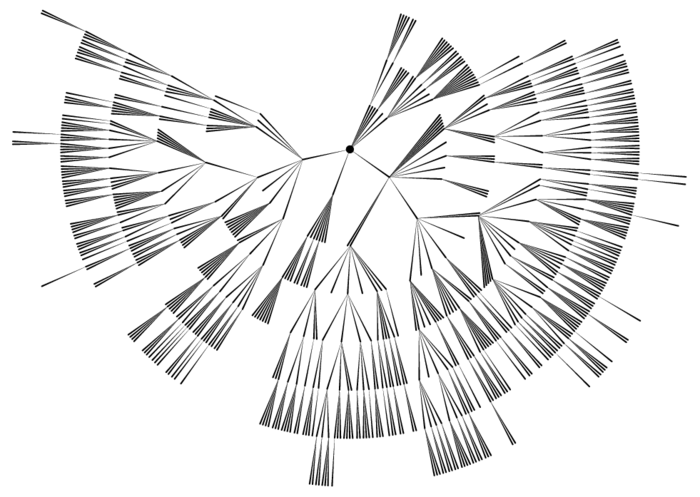
Although I do not think that the details of the lives of my family is very interesting for the general public, or even suitable for general release, I do want to show the fruit of our work. Therefore, I have created a stripped-down on-line version that only covers the first four generations. I bundled the book body with the cover and the end sheets into one complete PDF file (caution, large: 54MB, and of course in German). Some nifty embellishments of the book that I especially like are the abstract looking descendant fan in the front-end and back-end sheets, the separating bars between the persons which indicate the livespan of that person between 1799 and 2011 and the maps of the birth places and Isaak s travel destinations in the preface. Now to the technical details: Naturally, I used only Free Software in the genesis of the work (The cover is an exception, as it was not created by me). The most important is definitely gramps, a free genealogy system that held all our data. It is written in python and extensible with plug-ins, so I was able to create a custom report that takes the data relevant for us, filters for people who have agreed to appear in the book, and then generate LaTeX code that typesets the book, ready to be printed. I learned a great deal of LaTeX for this project, which uses over 30 different packages and required me to create a font of my own (which, as a side product, lead to a publication in the Linux-Magazin). For the maps I found the Generic Mapping Tools (GMT) and the freely available data for that of great use. I still had to manually collect the coordinates for all the places I wanted to show up in the map. Here, I relied mostly on Wikipedia. The fan which appears in the end sheets is laid out using a Haskell program (naturally, I have to use Haskell somewhere).
The front-end sheet
Of course, generating the book is only one side of the story; first, the data has to be collected and edited. For that, I wrote a plug-in to gramps that creates forms for each person. These forms contain the current known data and are used to correct and extend our knowledge. One variant of the form, created using LaTeX, was printed and mailed by snail-mail around the country and beyond, for those who are not reachable by mail. The other variant is an HTML form, hosted on a password-protected web site. Changes to that form cause the server to send an e-mail with a description of the changes (and only the changes, not the fields that are left untouched) to the mailing list of our team. There, the changes can be reviewed, e.g. for spelling and stylistic issues, and finally I copy n pasted them into gramps. These parts are implemented in python as well. Since genealogical data is never complete or up-to-date, I have set up a password-protected mediawiki based web site for the book where we collect corrections and additions to the data in the book. We have never anticipated that it would be so much work and that it would take us so long to finish this project, but we pulled it through and we are very happy with the result. Also, the reception has been very good and it was definitely a success. At this point I d like to express my gratitude to the hundreds of Free Software developers out there whose code we used and without whom it would not have been possible publish the book in the current form at all! Update: Due to some requests, I am making the code that I wrote available. You can download the tarball. Note that the code is a big mess and will not be usable right away. I guess if you can get the code to run and actually adjust to your needs, then you can as well write it yourself. Nevertheless it might be useful as inspiration or reference.

12 June 2011

Christian Perrier: Developers per country (June 2011) - 3rd take

See comments at the end about this 3rd version This is time again for yet another bubulle game: counting the number of developers per country. I already published such analysis in 2010 and 2009. So, here we are with the June 2011 version, sorted by the ratio of *active* developers per million population for each country.
Act: number of active developers
Dev: total number of developers
A/M: number of active devels per million pop.
D/M: number of devels per million pop.
2009: rank in 2009
2010: rank in 2010
June 2011: rank now
Code Name Population Act Dev Dev Act/Million Dev/Million 2009 2010 June 2011
fi Finland 5374781 21 31 3,91 5,77 1 1 1
ch Switzerland 7866500 21 26 2,67 3,31 2 2 2
mq Martinique 397730 1 1 2,51 2,51

3
no Norway 4964500 12 15 2,42 3,02 5 4 4
nz New Zealand 4393500 10 15 2,28 3,41 4 3 5
ie Ireland 4470700 10 13 2,24 2,91 13 9 6
se Sweden 9354462 19 35 2,03 3,74 3 6 7
lu Luxemburg 511840 1 1 1,95 1,95 8 5 8
de Germany 81802000 155 221 1,89 2,7 7 7 9
at Austria 8404252 15 25 1,78 2,97 6 8 10
fr France 63136180 91 119 1,44 1,88 12 12 11
au Australia 22632213 31 57 1,37 2,52 9 10 12
be Belgium 11007020 15 17 1,36 1,54 10 11 13
uk United-Kingdom 62008048 67 106 1,08 1,71 14 14 14
nl Netherlands 16674600 18 37 1,08 2,22 11 13 15
dk Denmark 5564219 6 10 1,08 1,8 17 17 16
ca Canada 34480000 27 57 0,78 1,65 15 15 17
hr Croatia 4429078 3 3 0,68 0,68 20 18 18
es Spain 46030109 31 51 0,67 1,11 16 16 19
lt Lithuania 3225346 2 2 0,62 0,62 28 19 20
cz Czech Rep 10540748 6 6 0,57 0,57 21 20 21
it Italy 60605053 33 47 0,54 0,78 23 22 22
bg Bulgaria 7351254 4 4 0,54 0,54 25 23 23
il Israel 7602400 4 6 0,53 0,79 24 24 24
us USA 308745538 162 364 0,52 1,18 19 21 25
hu Hungary 9979000 5 11 0,5 1,1 18 25 26
lv Latvia 2245357 1 1 0,45 0,45 26 26 27
uy Uruguay 3494382 1 2 0,29 0,57 22 27 28
jp Japan 127960000 33 46 0,26 0,36 30 28 29
pl Poland 38186860 9 13 0,24 0,34 29 29 30
cr Costa Rica 4253897 1 1 0,24 0,24 31 30 31
pt Portugal 10647763 2 4 0,19 0,38 27 32 32
sk Slovakia 5429763 1 1 0,18 0,18 32 31 33
gr Greece 11305118 2 3 0,18 0,27 33 38 34
ar Argentina 40091359 7 9 0,17 0,22 34 33 35
sv El Salvador 6134000 1 1 0,16 0,16

36
tw Taiwan 23061689 3 3 0,13 0,13 37 34 37
br Brazil 190732694 20 21 0,1 0,11 36 35 38
by Belarus 9648533 1 1 0,1 0,1 35 36 39
mg Madagascar 20653556 2 2 0,1 0,1 44 37 40
cu Cuba 11239363 1 1 0,09 0,09
38 41
kr South Korea 48758000 4 6 0,08 0,12 39 39 42
ec Ecuador 14790608 1 1 0,07 0,07
40 43
cl Chile 17224200 1 2 0,06 0,12 42 41 44
ro Romania 21466174 1 2 0,05 0,09 45 43 45
co Colombia 45925397 2 3 0,04 0,07 41 44 46
ru Russia 142905200 6 7 0,04 0,05 43 42 47
za South Africa 49991300 2 9 0,04 0,18 38 48 48
my Malaysia 27565821 1 1 0,04 0,04

49
ve Venezuela 29105632 1 1 0,03 0,03 40 45 50
pe Peru 29496000 1 1 0,03 0,03 46 46 51
tr Turkey 73722988 2 2 0,03 0,03 47 47 52
mx Mexico 112322757 2 2 0,02 0,02 49 49 53
th Thailand 63878267 1 2 0,02 0,03 50 50 54
eg Egypt 80085862 1 3 0,01 0,04 51 51 55
in India 1210193422 8 8 0,01 0,01 52 52 56
cn China 1339724852 7 11 0,01 0,01 53 53 57
ua Ukraine 45888000 0 0 0 0 48 53 58


896 1450 61,79%


A few interesting facts: v2 comment: This is the second version of this blog post. I have been pointed that the population I was using for "Ireland" is indeed the population of the entire island, so Republic of Ireland (Eire) plus Northern Ireland (Ulster). We may guess that people listing "IE" as their country are citizens of the Republic of Ireland, so the population to use is that of this part of the island. As a consequence, Ireland is bumped up to 6th rank instead of 9th. v3 comment: Doh. Since I'm doing this survey, I was always adding people using "sv" as country to Sweden. This is a quite common mistake and it was happening in the past. But now, there is only ONE developer who uses "sv" as country, this is Rene Mayorga and he definitely lives in El Salvador, not Sweden. As a consequence, Sweden lost one developer (but keeps its rank) and El Salvador now appears at rank 36. It is not a "new" country as Rene is DD for quite some time.

11 June 2011

Dirk Eddelbuettel: United Sounds of America: New York

Last night was the kick-off concert in a series the Chicago Symphony has been preparing (and pushing) for the last little while: United Sounds of America: A Journey through Musical Roots. Five concerts featuring New York (last night), Chicago/Route 66 (tonight), New Orleans (tomorrow), Detroit (next Friday) and Austin (next Saturday). The New York evening was organized by pianist Bill Charlap (wikipedia) who also headlined and MC-ed the first set. Covering the birth of Jazz until early post-war bebop in chronological fashion, it was a pretty decent jazz set with a very nice band featuring Kenny Washington (dr), Peter Washington (b), Jeremy Pelt (tp), Jimmy Greene (ts) and Ken Peplowski (cl) --- and local favourite Kurt Elling (wikipedia) who was simply outstanding with the classic songbook material. Having seen him live once before a few years ago, I happened to listen a lot to Elling of late, following the random find of this stream from a live concert in February as well as his two most recent records, the Grammy-winning Dedicated to You (which retakes the wonderful Coltrane/Hartman album from 1963) and the simply amazing very recent The Gate (which you should go and buy right now). And I was not disappointed. He has a great four-octave-spanning baritone voice and great stage presence. The second set was dedicated to post-war folk and singer/songwriter material and organized by Suzanne Vega. That was neat too, if somewhat different in format and more like your standard (rock-ish) concert. Vega brought her own band featuring Gerry Leonard (g), Mike Visceglia (b), Graham Hawthorne (dr) along with guest appearances by Tom Paxton (g, vocals) and Richard Julian (g, vocals). Somehow Vega seems a little trapped in her own success in the 1980s and rehashed a lot of old hits. Nothing wrong that per se as it is good material (more on that below). Only during three encores did she provide new material which was ... excellent. So maybe some rebalancing towards new stuff was neat. Also nice was the additiona of four string players from the Chicago Symphony which had joined the band for a Simon and Garfunkel's song The Boxer. Oh, and of course seeing Vega perform Tom's Diner was nice, especially in such a fast and rocking version, even enhanced by the those strings. Just a few months ago I had gone over the passage from the original a-capella version of Tom's Diner to the various beat-box remixes which were then remixed by Vega in various live performances (e.g. videos of a capella, rockish, another rockish and beatboxish versions). Good fun, and it is nice to see she is playing along and enjoying it as well. All told, a really nice iniative by the CSO. If you're in Chicagoland, go and see some of the remaining shows.

Christian Perrier: Developers per country (June 2011) - 2nd take

See comment at the end about this 2nd version This is time again for yet another bubulle game: counting the number of developers per country. I already published such analysis in 2010 and 2009. So, here we are with the June 2011 version, sorted by the ratio of *active* developers per million population for each country.
Act: number of active developers
Dev: total number of developers
A/M: number of active devels per million pop.
D/M: number of devels per million pop.
2009: rank in 2009
2010: rank in 2010
June 2011: rank now
Code Name Population Act Dev Dev Act/Million Dev/Million 2009 2010 June 2011
fi Finland 5374781 21 31 3,91 5,77 1 1 1 1
ch Switzerland 7866500 21 26 2,67 3,31 2 2 2 2
mq Martinique 397730 1 1 2,51 2,51

3 3
no Norway 4964500 12 15 2,42 3,02 5 4 4 4
nz New Zealand 4393500 10 15 2,28 3,41 4 3 5 5
ie Ireland 4470700 10 13 2,24 2,91 13 9 6 6
se Sweden 9354462 20 36 2,14 3,85 3 6 7 7
lu Luxemburg 511840 1 1 1,95 1,95 8 5 8 8
de Germany 81802000 155 221 1,89 2,7 7 7 9 9
at Austria 8404252 15 25 1,78 2,97 6 8 10 10
fr France 63136180 91 119 1,44 1,88 12 12 11 11
au Australia 22632213 31 57 1,37 2,52 9 10 12 12
be Belgium 11007020 15 17 1,36 1,54 10 11 13 13
uk United-Kingdom 62008048 67 106 1,08 1,71 14 14 14 14
nl Netherlands 16674600 18 37 1,08 2,22 11 13 15 15
dk Denmark 5564219 6 10 1,08 1,8 17 17 16 16
ca Canada 34480000 27 57 0,78 1,65 15 15 17 17
hr Croatia 4429078 3 3 0,68 0,68 20 18 18 18
es Spain 46030109 31 51 0,67 1,11 16 16 19 19
lt Lithuania 3225346 2 2 0,62 0,62 28 19 20 20
cz Czech Rep 10540748 6 6 0,57 0,57 21 20 21 21
it Italy 60605053 33 47 0,54 0,78 23 22 22 22
bg Bulgaria 7351254 4 4 0,54 0,54 25 23 23 23
il Israel 7602400 4 6 0,53 0,79 24 24 24 24
us USA 308745538 162 364 0,52 1,18 19 21 25 25
hu Hungary 9979000 5 11 0,5 1,1 18 25 26 26
lv Latvia 2245357 1 1 0,45 0,45 26 26 27 27
uy Uruguay 3494382 1 2 0,29 0,57 22 27 28 28
jp Japan 127960000 33 46 0,26 0,36 30 28 29 29
pl Poland 38186860 9 13 0,24 0,34 29 29 30 30
cr Costa Rica 4253897 1 1 0,24 0,24 31 30 31 31
pt Portugal 10647763 2 4 0,19 0,38 27 32 32 32
sk Slovakia 5429763 1 1 0,18 0,18 32 31 33 33
gr Greece 11305118 2 3 0,18 0,27 33 38 34 34
ar Argentina 40091359 7 9 0,17 0,22 34 33 35 35
tw Taiwan 23061689 3 3 0,13 0,13 37 34 36 36
br Brazil 190732694 20 21 0,1 0,11 36 35 37 37
by Belarus 9648533 1 1 0,1 0,1 35 36 38 38
mg Madagascar 20653556 2 2 0,1 0,1 44 37 39 39
cu Cuba 11239363 1 1 0,09 0,09
38 40 40
kr South Korea 48758000 4 6 0,08 0,12 39 39 41 41
ec Ecuador 14790608 1 1 0,07 0,07
40 42 42
cl Chile 17224200 1 2 0,06 0,12 42 41 43 43
ro Romania 21466174 1 2 0,05 0,09 45 43 44 44
co Colombia 45925397 2 3 0,04 0,07 41 44 45 45
ru Russia 142905200 6 7 0,04 0,05 43 42 46 46
za South Africa 49991300 2 9 0,04 0,18 38 48 47 47
my Malaysia 27565821 1 1 0,04 0,04

48 48
ve Venezuela 29105632 1 1 0,03 0,03 40 45 49 49
pe Peru 29496000 1 1 0,03 0,03 46 46 50 50
tr Turkey 73722988 2 2 0,03 0,03 47 47 51 51
mx Mexico 112322757 2 2 0,02 0,02 49 49 52 52
th Thailand 63878267 1 2 0,02 0,03 50 50 53 53
eg Egypt 80085862 1 3 0,01 0,04 51 51 54 54
in India 1210193422 8 8 0,01 0,01 52 52 55 55
cn China 1339724852 7 11 0,01 0,01 53 53 56 56
ua Ukraine 45888000 0 0 0 0 48 53 57 57


896 1450 61,79%


A few interesting facts: This is the second version of this blog post. I have been pointed that the population I was using for "Ireland" is indeed the population of the entire island, so Republic of Ireland (Eire) plus Northern Ireland (Ulster). We may guess that people listing "IE" as their country are citizens of the Republic of Ireland, so the population to use is that of this part of the island. As a consequence, Ireland is bumped up to 6th rank instead of 9th.

Christian Perrier: Developers per country (June 2011)

This is time again for yet another bubulle game: counting the number of developers per country. I already published such analysis in 2010 and 2009. So, here we are with the June 2011 version, sorted by the ratio of *active* developers per million population for each country.
Act: number of active developers
Dev: total number of developers
A/M: number of active devels per million pop.
D/M: number of devels per million pop.
2009: rank in 2009
2010: rank in 2010
June 2011: rank now
Code Name Population Act Dev Dev Act/Million Dev/Million 2009 2010 June 2011
fi Finland 5374781 21 31 3,91 5,77 1 1 1
ch Switzerland 7866500 21 26 2,67 3,31 2 2 2
mq Martinique 397730 1 1 2,51 2,51

3
no Norway 4964500 12 15 2,42 3,02 5 4 4
nz New Zealand 4393500 10 15 2,28 3,41 4 3 5
se Sweden 9354462 20 36 2,14 3,85 3 6 6
lu Luxemburg 511840 1 1 1,95 1,95 8 5 7
de Germany 81802000 155 221 1,89 2,7 7 7 8
at Austria 8404252 15 25 1,78 2,97 6 8 9
ie Ireland 6197100 10 13 1,61 2,1 13 9 10
fr France 63136180 91 119 1,44 1,88 12 12 11
au Australia 22632213 31 57 1,37 2,52 9 10 12
be Belgium 11007020 15 17 1,36 1,54 10 11 13
uk United-Kingdom 62008048 67 106 1,08 1,71 14 14 14
nl Netherlands 16674600 18 37 1,08 2,22 11 13 15
dk Denmark 5564219 6 10 1,08 1,8 17 17 16
ca Canada 34480000 27 57 0,78 1,65 15 15 17
hr Croatia 4429078 3 3 0,68 0,68 20 18 18
es Spain 46030109 31 51 0,67 1,11 16 16 19
lt Lithuania 3225346 2 2 0,62 0,62 28 19 20
cz Czech Rep 10540748 6 6 0,57 0,57 21 20 21
it Italy 60605053 33 47 0,54 0,78 23 22 22
bg Bulgaria 7351254 4 4 0,54 0,54 25 23 23
il Israel 7602400 4 6 0,53 0,79 24 24 24
us USA 308745538 162 364 0,52 1,18 19 21 25
hu Hungary 9979000 5 11 0,5 1,1 18 25 26
lv Latvia 2245357 1 1 0,45 0,45 26 26 27
uy Uruguay 3494382 1 2 0,29 0,57 22 27 28
jp Japan 127960000 33 46 0,26 0,36 30 28 29
pl Poland 38186860 9 13 0,24 0,34 29 29 30
cr Costa Rica 4253897 1 1 0,24 0,24 31 30 31
pt Portugal 10647763 2 4 0,19 0,38 27 32 32
sk Slovakia 5429763 1 1 0,18 0,18 32 31 33
gr Greece 11305118 2 3 0,18 0,27 33 38 34
ar Argentina 40091359 7 9 0,17 0,22 34 33 35
tw Taiwan 23061689 3 3 0,13 0,13 37 34 36
br Brazil 190732694 20 21 0,1 0,11 36 35 37
by Belarus 9648533 1 1 0,1 0,1 35 36 38
mg Madagascar 20653556 2 2 0,1 0,1 44 37 39
cu Cuba 11239363 1 1 0,09 0,09
38 40
kr South Korea 48758000 4 6 0,08 0,12 39 39 41
ec Ecuador 14790608 1 1 0,07 0,07
40 42
cl Chile 17224200 1 2 0,06 0,12 42 41 43
ro Romania 21466174 1 2 0,05 0,09 45 43 44
co Colombia 45925397 2 3 0,04 0,07 41 44 45
ru Russia 142905200 6 7 0,04 0,05 43 42 46
za South Africa 49991300 2 9 0,04 0,18 38 48 47
my Malaysia 27565821 1 1 0,04 0,04

48
ve Venezuela 29105632 1 1 0,03 0,03 40 45 49
pe Peru 29496000 1 1 0,03 0,03 46 46 50
tr Turkey 73722988 2 2 0,03 0,03 47 47 51
mx Mexico 112322757 2 2 0,02 0,02 49 49 52
th Thailand 63878267 1 2 0,02 0,03 50 50 53
eg Egypt 80085862 1 3 0,01 0,04 51 51 54
in India 1210193422 8 8 0,01 0,01 52 52 55
cn China 1339724852 7 11 0,01 0,01 53 53 56
ua Ukraine 45888000 0 0 0 0 48 53 57


896 1450 61,79%


A few interesting facts:

10 June 2011

Gunnar Wolf: Reading revolutions: Online digital text and implications for reading in academe A (very informal) review

It's been a long time since I last took some time to read First Monday A great online publication, if you are not familiar with it, that I would categorize (and no, I'm not probably well-informed in it to be authoritative) as dealing with social, psychological aspects of the cultural shifts the online world has brought upon us (often dealing with topics related to Free Software communities, the reason I first met the publication). Firstmonday is an Open Access champion from early on. It follows an approachable but academic format (this means, it is peer-reviewed, its articles give extensive lists of references, and the articles are not the short reads we have got used to finding on the net, but, quoting from their audience profile, English is not the first language of many First Monday readers; A large percentage of First Monday readers are not a part of academia; Cultures, educational backgrounds, and fields of study vary greatly among First Monday readers.) This means, it's at least a great publication for me to follow :) Anyway After a long time not following it, I have just read Reading revolutions: Online digital text and implications for reading in academe, by Barry W. Cull; First Monday, Volume 16, Number 6 - 6 June 2011 Nice, interesting read. As I was planning on telling about the article to a couple of friends more into the subjects than myself, I'll comment+quote some bits on it. Before going any further: The article makes several references to Maryanne Wolf. No relation to her I'm not lulling my (two? are you both still reading?) readers towards her work ;-) The article talks about the differences social, even dips into some physiological aspects that the activity of reading is sustaining due to the shift from an activity done mainly from books (or other similar printed material) to the computer screen. Of course, we all know from our own experience many of the basic traits Shorter attention spans, a different reading pattern (skimming instead of reading; browsing through several related items instead of in-depth reading a single text as a knowledge unit). The article begins with an overview of reading and humankind. Cull quotes Maryanne Wolf's phrase, despite the fact that it took our ancestors about 2,000 years to develop an alphabetic code, children are regularly expected to crack this code in about 2,000 days . An interesting point I never thaught of is the start of reading as a purely mental activity, detaching reason from verbalization, ~1200 years ago:
Interestingly, these early scribes first did their work by reading out loud to themselves. Not until the ninth century did monastic regulations begin requiring silent reading. By the thirteenth century the practice of men reading silently and alone became commonplace. This shift to silent reading was a profound change, one that Darnton suggested involved a greater mental adjustment than the shift to printed text
. One last important point in this older history, that I'm quoting because I know I'll need the reference later on for one of my texts is about reading as a social activity Yes, also related to the quietness I just mentioned:
Interestingly, with the democratization of the printed text, there was a return to reading aloud. Reading was a solitary silent process only for the educated elite who could afford to buy books. For the rest of the population, as Darnton pointed out, reading was a social activity which took place in workshops, barns, and taverns [and] while children played, women sewed, and men repaired tools.
After this introduction (obviously one of the most interesting parts to me), Cull gives numbers showing how reading is evolving (in the USA and Canada), and quotes some prediction on how the future will end up adapting. Of course, I live in a place with a very different society, so I cannot comment much. Then he confronts some studies regarding specifically leisure reading, as it is a much more trustable factor than just literacy (in a world as highly literate as ours is, many people only read when they have to and have never or very seldom experienced the pleasure of reading just for the sake of it), bringing into the discussion the Internet (and computers in general) usage patterns. I found also very interesting the next section, regarding the pattern changes many libraries are facing now, specially academic/research-oriented libraries:
For several millennia, right up until just two decades ago, the central role of a library was to collect and house physical texts: from clay tablets, to scrolls, to printed books (Battles, 2003; Manguel, 2006). While printed text remains essential to most academic libraries, today s libraries have also become a core conduit via which researchers access scholarly texts online. Just within the last few years, Canadian academic libraries, in a situation similar to libraries throughout the Western world, have reached an interesting tipping point librarians now spend the majority of their collections budgets on electronic instead of printed texts.
( )
Libraries are convinced that digital text, now in its infancy, is likely to have a long future. Not only do they purchase electronic texts, but most academic libraries have also become publishers of electronic texts, whether they are digitizing large portions of their book holdings, or focusing on scanning a relatively small number of archival documents from their unique special collections.
And yes, doing some work with our Institute's library, I can confirm this trend. About e-books: I have got quite into that topic since the Kindle won my heart (and my money!) half a year ago. The little device completly changed my reading habits, I have read lots more since I carry it. And yes, I have never considered a full tablet-like device The article talks long about the difference, about the disadvantage that multitasking means to the human brain (oh, do I suffer from it!) I liked this snippet, quoting Steve Jobs a couple of years ago, regarding an Apple e-book reader question:
When Apple was rumoured to be working on an e book reader a few years ago, CEO Steve Jobs expressed his lack of interest: It doesn t matter how good or bad the product is, the fact is that people don t read anymore, he reportedly said, continuing by stating that 40 percent of the people in the U.S. read one book or less last year. The whole conception is flawed at the top because people don t read anymore (Markoff, 2008). Nicholas Carr (2010) has summed up Apple s involvement in the tablet phenomenon this way: Jobs is no dummy. As a text delivery system, the iPad is perfectly suited to readers who don t read anymore .
The issue for me is, I do enjoy reading, but I am an information addict. I know that if I have parallel information flows, my attention will surely dilute between them. Of course, as I read this article on-screen, it was hard for me to take the needed discipline not to be distracted by IMs or IRC highlights during the whole reading (which was also as an excercise for myself ;-) ). I am surprised to see this on student preferences (and even more surprised to see this data comes from my university):
In a study of students at the Universidad Nacional Aut noma de M xico (UNAM), the majority of students preferred print, and 63 percent reported that they could bear reading a document on a computer screen for no more than one hour (Ram rez Leyva, 2003). When it comes to course textbooks, a marked student preference for paper over e books has recently been found (Woody, 2010).
As we approach the end, it talks about another important topics I have often tried (and often failed) to communicate to my users: That of paratext, the meaning of the different texts, covers, items, layouts, etc. that are not part of the text itself but do shape the way we face it. To some of us, this seems obvious. To others, it is so hard to understand It closes with two more topics I will refer to. One is the permanent connectivity. All the time, more people are connected virtually all of their waking time. This affects not only learning habits but priorities. Will this near constant access to information interfere with students desire to comprehend and remember information, necessary to the educational process of turning it into knowledge? Author and university business school lecturer Don Tapscott recently suggested that students might not have to stress about the details those you can check Finally, regarding the continuity and ellaboration found in texts that are each time more common He quotes Maryanne Wolf:
I am worried about kids who are immersed in digital culture. They will get to college and they will have been Twittering so much that they won t have the patience to read those really long cognitively convoluted and complex sentences. They may not have developed those rich networks which are required in order to read at a high level of sophistication. The effort is what we are going to lose. They are becoming not so much a lazy reader, but an atrophied reader
As you can see, not only this post is meant to tell my couple-of-interested-friends to read the article, but it's mainly meant as a mental placeholder for myself. I will be surely refering to some of these items.

9 June 2011

Gerfried Fuchs: Reinhard Mey

This is a very special person. He is a very well known songwriter, at least in German language countries because he sings in German. He was that special kind of person with his lyrics when I was still a kid, and is still around continuing to write his songs in his very own special way. This person is Reinhard Mey, and if you understand German and have missed him so far, you have missed a lot. The songs that I present to you are special in the way that they are all contained in the special compilation titled Mein Apfelb umchen. The dedication he wrote for the album is also very special:

Ich glaube, Kinder zu haben ist das aufregendste Abenteuer, das wir erleben k nnen. Es ist der schwerste Beruf und die gr te Herausforderung, die ich mir denken kann, und die gl cklichste Erfahrung zugleich. Ich bin dankbar daf r! Dies sind die Lieder, die ich bis heute daf r geschrieben habe. Mein Anteil aus dem Erl s dieser Schallplatte gebe ich der Hilfe f r krebskranke Kinder.
Rough translation: I believe that having kids is the most exciting adventure that we can undergo. It is the hardest job and the biggest challenge that I can think of, and at the same time the happiest experience. I'm thankful for it! These are the songs that I wrote up to today for it. My part of the revenues of this record go to Help for children with cancer. So here are the songs: Enjoy! And if you feel like it, support these kind of special people.

/music permanent link Comments: 2 Flattr this

Matthew Garrett: IPv6 routers

I have a WRT-54G. I've had it for some years. It's run a bunch of different firmware variants over that time, but they've all had something in common. There's no way to configure IPv6 without editing text files, installing packages and punching yourself in the face repeatedly. Adam blogged about doing so today, and I suspect he may be in need of some reconstructive surgery now.

I spent yesterday looking at disassembled ACPI tables and working out the sequence of commands the firmware was sending to the hard drive. I'm planning on spending tomorrow writing x86 assembler to parse EFI memory maps. I spend a lot of time caring about stupidly awkward implementation details worked out from staring at binary dumps. The last thing I want to do is have to spend more than three minutes working out how to get IPv6 working on my home network because that cuts into the time I can spend drinking to forget.

Thankfully this is the future and punching yourself in the face is now an optional extra rather than bundled. Recent versions of Tomato USB (ie, newer than actually released) have a nice web UI for this. I registered with Tunnelbroker.net, got a tunnel, copied the prefix and endpoint addresses into the UI, hit save and ever since then NetworkManager has given me a routable IPv6 address. It's like the future.

Because I'm lazy I ended up getting an unofficial build from here. The std built doesn't seem to include IPv6, so I grabbed the miniipv6 one. The cheat-sheet for identifying builds is here. And I didn't edit a single text file. Excellent.

( Comments Comment on this)

8 June 2011

Lars Wirzenius: Test driven distribution development

Disclaimer: There is a huge discussion going on right now in the debian-devel mailing list, about different ways to rearrange how Debian development happens, and maybe to provide a Debian users with an additional release. This blog entry is not a comment on that discussion, which I am ignoring. The discussion did, however, prompt a dent about "test driven development". That prompted a short exchange of thoughts with Tom Marble, and this blog post is a cleaned up version of my part in that discussion.
Currently Debian development happens roughly like this: all packages are uploaded to a part of the Debian archive called unstable. Once they've been in use for a while without serious problems, they get automatically copied into another part called testing. Every year or two, testing is frozen and any remaining problems are fixed, after which all of testing gets copied into yet another part of the archive called stable, and that's the actual release. There is a little bit of automatic testing, but only a little. Almost all testing is done by people, by them using unstable or testing on their usual computers. If they have problems, they report them. Contrast this with development using Test Driven Development, or TDD, and other modern development methodologies. Here's a rough summary of what I do when I write (much) of my software. In addition, I measure coverage to make sure all parts of the code gets tested. I usually aim for 100% coverage, except for those parts that very hard or quite pointless to test. (That's easier to achieve than you'd think, but that's the topic of another blog post.) This all sounds like a lot of bureaucratic nonsense, but what I get out of this is this: once all tests pass, I have a strong confidence that the software works. As soon as I've added all the features I want to have for a release, I can push a button to push it out. (Well, actually there's a little bit more to it.) This does mean I never have bugs in my software. Of course I do. However, there's a lot fewer of them. In fact, there's so few of them, after tests pass, that I would almost be happy to make an automatic release after every successful run of "make check". Another aspect of the way I do development is distributed version control. The relevant feature is powerful branching and merging. Most things I develop happen in short-lived single-purpose branches: whenever I start work on a feature or bugfix, I create a branch for it. (Unless I'm feeling particularly lazy, which happens more often than you'd think.) When I've finished the feature, or fixed the bug, I merge the branch back into the trunk branch. This way, the trunk is always in releaseable state. It might not have all the features I want for the next release, but the features that are there, do work. The branch probably has bugs, but if I've written tests that are good enough, I know the software works well enough. Or that's the idea. Sometimes things go wrong. Then I write more tests and the next time goes better. (It doesn't have to be perfect, as long as it gets better every time.) See the contrast between automatic tests with good coverage, and the Debian style of relying on user feedback? There's no need to wait for user feedback with automatic tests. This speeds up development, makes releasing easier, but most importantly takes away any reason to fear making changes, even big changes. Automatic tests and good test coverage are easy achieve in small projects. For a system as huge as Debian, good test coverage is quite hard to achieve. The thing about automatic tests, though, is that even a little bit of it is helpful, and after you have a few tests, it gets easier to add more. The first test is the hardest to get done, since you need to set up all the infrastructure for it. Debian does do a bit of automatic testing already. (See lintian, piuparts, autopkgtest, edos, etc.) I don't want to belittle that, but I think we could do better. Here's what I would love to see: Since full test coverage is going to be impossible for Debian, some subset should be targeted. Perhaps something like this would suffice to start with: These tests would not guarantee that a set of changes would not break Debian, but they would give a high confidence that at least basic stuff would still work after the changes. Now, obviously implementing all of this I'm dreaming of (it is just past midnight, after all) is going to be impossible. There's way too much work to do, there's not enough tools for writing tests, and it would require too much computing power to run, and so on and so forth. But it's late, and I've had a bad day, and I might as well dream of something nice. Anyway, anyone interested in these things should perhaps help drive DEP8.

5 June 2011

Dirk Eddelbuettel: Charles Lloyd and Zakir Hussain

Wonderful concert on Friday evening at Symphony Center: Charles Lloyd (Wikipedia; ts, flute, vocals) was in town with both his quartet and trio. The first part of the set was performed with Zakir Hussain (Wikipedia; tabla, vocals) and up-and-coming drummer Eric Harland (Wikipedia; drums). For the second half, Lloyd and Harland were joined by Jason Moran (Wikipedia; piano) -- who happens to also be a 2010 MacArthur Fellow -- and Larry Grenadier (Wikipedia; bass) before Hussain returned for the final piece and encores. It was evident how much joy Charles Lloyd still gets from performing live at his somewhat advanced age of 73. Surrounded by some extraordinary musicians, and clearly enjoying himself on stage. Great evening with wonderful jazz music from somewhere in between modern post-whatever, free, bop and hard bop, world music and everything else in between. I regret not having seen him earlier in life. Very much recommended.

Jurij Smakov: Dear Lenovo ...

Let me explain something to you: jacking up prices for your laptops by 10% on June 1st and simultaneously declaring an "incredible, 5-days only, 10% off sale on all Thinkpads" on your website is not how your sell more laptops. That's how you make your potential customers recognize that they are probably better off looking elsewhere for their next laptop. Specifically, I'm talking about an Intel-based Thinkpad Edge 11 with 4GB RAM, which was listed at 663 EUR on lenovo.ie before June 1st, but is now, during the "promotion", is listed at 736 EUR. Notably, even after the discount, it still works out to be more expensive than what Amazon UK has to offer, at 552 GBP for the same laptop (NVY5EUK).

Joey Hess: announcing olduse.net

As I write this, it's the morning of June 5th, 1981. A few people scattered across the US are waking up, going in to work, sitting down at their terminal with a coffee, and reading Usenet. Usenet is only getting a trickle of posts each day -- it's still in that period where it's easy to read every message posted to it. Many things lie in Usenet's future. It's still running A-News, which doesn't even have a real From header yet. Later this year it will switch over to B-News, and volume will begin to increase. In 1987 there will be The great renaming. And of course in 1994, the first spam will be posted to Usenet. But that's all a long way off, here in 1981. Right now, they're talking about 500 mb disk drives that only cost $38000. And rms is inciting flames about nuclear proliferation. And Postel is publishing an RFC for the new Mail Transfer Protocol. Good morning, Usenet. Who knows what will come next in this fledgeling electronic communications medium! a ten year real-time historical exhibit This morning, I'm announcing a new site: Olduse.net It's Usenet, updated in real time as it was thirty years ago. Planned to be available for the next ten years, unless I run out of inodes (again). If you missed it the first time around, this is your chance to follow Usenet's flowering. made possible by 141 magtape usenet archive
PS: You can post to olduse.net, but it won't show up for at least 30 years. :)

4 June 2011

Christian Perrier: [life] [running] April/May update

My last update about running activities is dated back to Paris Marathon (April 10th). Time for a new update, then. After a very busy end March-early April, with that crazy succession of 55km Ecotrail and 42km Paris marathon with only two weeks between both, I needed a kind of "break". Moreover, I had another goal set with the 35m trail race named "Trail des Cerfs", on May 15th, in my neighbourhood. So, end of April was a little bit quieter. Still, one week after Paris marathon, I completed a very hard trail run in Seine Valley: only 18km, but about 600-700m positive slope. That was indeed a good moutain-style run (yes, in Seine valley....) and a good way to check that I recovered quite well. Later on, I slowed down a little with even a Sunday (24th) where I *didn't run at all*..:-).. Just a few short uns during the week and a short Saturday run. Well, that was indeed Easter Sunday and Monday is a holiday in France, so I ran an half-marathon on 25th...:-)...on a loop where I already have some references, the fastest being 1h46. This time it was 1h52'...but, well, that was two weeks after a marathon... Still, a small pain at the back of my ankle decided me to stop running long distances until May 15th. So, I only did short trainings up to no more than 12km, even during my stay in Germany for SambaXP. As a consequence, I was very well for the 35km (600m positive slope) Trail des Cerfs, which I completed in 3h31', 168th out of 328 runners. More interestingly, I completed it in negative split with a much faster second half, ending up at about 12km/h. For seomthing that (given the slope and the nature of the paths) is comparable to a marathon, that's very promising. The rest of May was spent quietly with a standard training and progressively resuming longer distances. I originally planned to do my spring solo marathon on May 28th in Versailles Castle park, but I stopped at km28 and completed the distance two days after with a 14km run..:-)... Stopping was wiser as I was feeling that the last loop would have been a great pain. That was indeed the first time I give up on a marathon. I prefer this to happen for a non official race, after all! June will not see any "big goal". I might be running one race somewhere in my neighbourhood but the point will mostly be accumulating kilometers before summer. Summer (which includes DebConf that makes training a little bit more hectic) will not see any race, probably (unless I find one in banja Luka!) but more some specific preparation for Berlin marathon. Here, the "safe" target for me is, first, breaking my record. I'm probably not ready for 3h30 and even 3h35 might be difficult. It seems that I'm now reaching a barrier where progress becomes harder. Before Berlin, I'll run the Bois d'Arcy half-marathon, two weeks before. Last year, I managed to set a very good mark, there, with 1h37. Not sure that i'll try to break this only two weeks before Berlin. After Berlin? We'll see, but my last big goal of the year will be the 67km "Le Puy-Firminy" night race, in November (no web site, this is indeed a "small" local race). Yet another adventure beyond marathon distances, in the unknown...

3 June 2011

Guillaume Mazoyer: Status report Jigsaw num. 1 for GSoC 2011

code.pngThe beginning of this Google Summer of Code has been busy and pretty cool. Not a lot of code was produced but I did learn a lot of things.

During this GSoC I will work on the next generation JDK. This means that I will (and I already have) compile the JDK. That s pretty awesome but it requires a lot of power. That s why Tom Marble created me an account on his 8 CPUs machine to help me.
Since I m probably going to sign some packages, I created a new GPG key with a 4096 RSA strength.
My old key was:

pub 1024D/F144A319 2008-10-18

And the new key is:

pub 4096R/EE2BBBC7 2011-05-03

I cross signed my keys using this great tutorial.

I read some documentation about Jigsaw and watched Tom s talk at DebConf 10.
I have spent a little more than a week to understand the current OpenJDK packaging to be able to rebuild it. I have learnt from where do the sources come from. The current packaging is a little hard to understand. There are sources that come from IcedTea, OpenJDK, and more.

After being able to rebuild the OpenJDK 6 package, I have downloaded the source of the OpenJDK 8 and Jigsaw. I used the Mercurial forest to get the sources.

For OpenJDK 8:
hg clone http://hg.openjdk.java.net/jdk8/jdk8 jdk8
cd jdk8 && sh get_sources.sh

For Jigsaw:
hg clone http://hg.openjdk.java.net/jigsaw/jigsaw jigsaw
cd jigsaw && sh get_sources.sh

I have managed to build the sources of OpenJDK 8 and Jigsaw using the same steps:
cd jigsaw
. jigbuild
. jdk/make/jdk_generic_profile.sh
export ALLOW_DOWNLOADS=true
make sanity
make all

Jigsaw specific:
make modules-sanity
make modules

Each build took several minutes. But they were successful. Tom helped me a lot to build OpenJDK 8 and Jigsaw by giving me a solution. For example, after getting the Mercurial forest, there were still missing source files and the build failed. Tom told me that I needed to export a environement variable: ALLOW_DOWNLOADS=true.
After building Jigsaw, I was able to see that the version string is not legal in Debian and that is a real problem.
I have written some simple Hello World examples to compile and run with Jigsaw. To modularize a program, it needs to contain a module-info.java files. This file includes the modules needed to run the program and the main class to run. For a classic hello world, the module-info.java files looks like:

module test.hello @ 1
requires jdk.base @ 7-ea;
class test.hello.Main;


Tom gave me some packages to build: jtharness and jtreg. I succesfully built jtharness using CDBS and its Ant helper but I ll have to repackage it to use javahelper instead of CDBS. I still didn t try to build jtreg because it requires jtharness.

My next plan is to get jtharness and jtreg packaged with javahelper soon and understand what modules does what in Jigsaw. Understaning modules will help me to write some more complex examples. I hope to start working on Jigsaw a little more soon (when I my internship will end [next week]).

2 June 2011

Erich Schubert: Managing user configuration files

Dear Lazyweb,
How do you manage your user configuration files? I have around four home directories I frequently use. They are sufficiently well enough in sync, but I have been considering to actually use some file management to synchronize them better. I'm talking about files such as shell config, ssh config, .vimrc etc.
I had some discussions about this before, and the consensus had been that some version control system probably is best. Git seemed to be a good candidate; I remember having read about things like this a dozen years ago when CVS was still common and Subversion was new.
So dear lazyweb, what are your experiences with managing your user configuration? What setup would you recommend?
Update: See vcs-home for various related links and at least five different ways of doing this. mr, a multi-repository VCS wrapper seems particularly well at this.

Joachim Breitner: Satire on Gender Issues at IIT Bombay

IIT Bombay, like most likely most Indian educational instituates, has some rules and regulations about the interaction between boys and girls that, at least to the uninitiated eye of a foreigner who was brought up in a liberal society, seem arbitrary and archaic. At IIT Bombay, for example, there may be no visits in hostels by students of the other gender (yes, there are separate boys and girls hostels) between 10pm and 7am, and during the day any such visit has to be registered at the reception security guard. And when there was need for more room for girls and they reassigned one wing of a boys hostel to the adjacent girls hostel, they closed the connection by bricking it and split the lawn by a fence. With barbed wire on top. I took this as a theme for a satirical inspection of these policies which comes to the conclusion that IIT Bombay is a very progressive institute that puts these rules in place as affirmative action towards same-gender relationships. After some discussion with the editors the text got actually published in the institutes bi-monthly newspaper Raintree , unfortunately only now, two weeks after I left India. You can read the text on the bottom of page 8 in the 6MB PDF file. I cannot predict how it will be received, but at least Utkarsh Raut, who illustrated the text, clearly got the message right. Thanks for the nice and very fitting drawing!

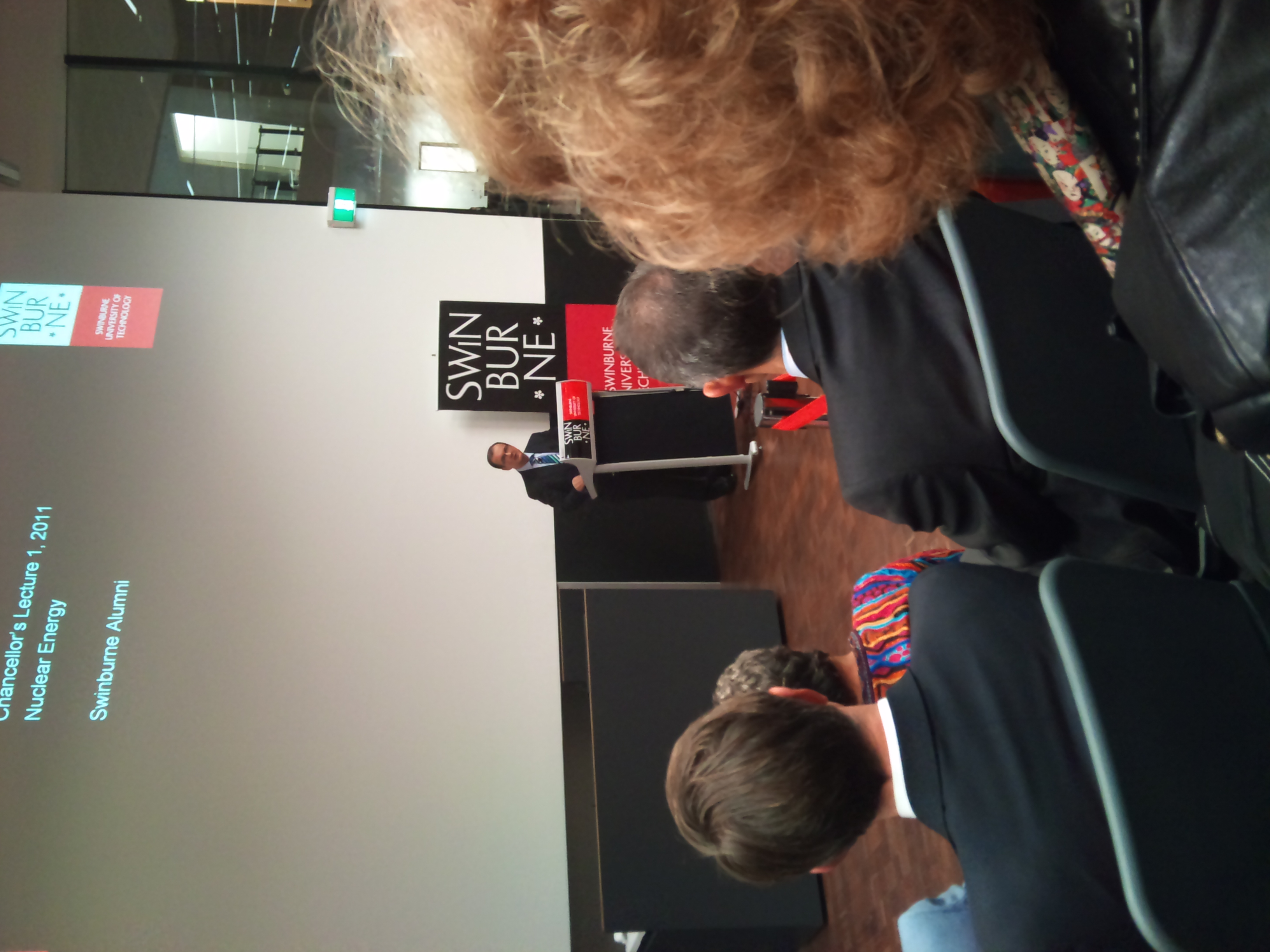
Russell Coker: Ziggy s Lecture about Nuclear Power

The Event Dr Ziggy Switkowski giving his lecture I just attended a lecture by Dr Ziggy Switkowski (see the above picture) on the topic of nuclear power, for a long time Ziggy has been the most prominent advocate of nuclear power in Australia, so naturally the talk was pro-nuclear. The lecture was free for alumni of Swinburne University and introduced by Swinburne s Chancellor who described Ziggy as a friend. Before the lecture started I handed out flyers for Beyond Zero Emissions [1] with a plan for zero carbon use in Australia by 2020. That was more difficult than handing out Greens polling cards on election day. The people who attended were there for a purpose and they could see the free food and wine on offer inside the building so getting them to stop and take a brochure wasn t easy. There were also people from Friends of the Earth [2] and some other anti-nuclear organisations giving out brochures. specter of nuclear contamination There were also some anti-nuclear protesters dressed as Uranium miners and the specter of nuclear contamination, they made for an interesting picture (which is amazingly good for a phone camera 20 minutes after sunset), but got in the way when I was handing out brochures. There were a few university security people at the door trying to keep the opposition away who were a bit annoying. There was also one policeman in attendance who was quite friendly, he asked whether there was a competition between the different groups as there is when handing out how-to-vote cards on election day. 15 minutes before the lecture was due to start I quit handing out the brochures and went inside for free food and drink (food always tastes better when the other team pays the bill). The Lecture I felt that Ziggy did a poor job of advocating nuclear power. There were a number of gaping flaws in his argument, but I have to commend him for his honesty in his appraisal of how hard it would be to develop a nuclear industry in Australia. Most nuclear advocates are a lot more optimistic about the process of building nuclear power plants and training all the people to run them. I will write a post tomorrow rebutting some of Ziggy s arguments. After the Lecture Immediately after the lecture the vice-chancellor stated that 500 people registered which made it the best attended such lecture that they have held. I don t know how many of the 500 attended, but I did notice that about 1/4 of the seats in the lecture hall were empty. It s rather sad that they can t get more people to such lectures, is TED.com stealing the audience? When I got out of the building I started handing out brochures to people as they left. I noticed that they were a lot friendlier than they were on the way in. I believe that people who left the lecture had greater interest in renewable energy because Ziggy just failed to make a good case for nuclear power. I expect that anyone who hadn t already made up their mind would immediately want to research the alternatives after watching Ziggy s lecture.

1 June 2011

Vincent Bernat: GNOME Power Manager without GNOME desktop

When I installed my new laptop, I decided to switch from sleepd to GNOME Power Manager (GPM). The rationale behind this decision was to get screen dimming for free while keeping other features because GPM uses UPower which uses pm-suspend and pm-powersave behind the scene. This means that it is easy to execute scripts on suspend or when the AC is unplugged by putting them in /etc/pm. I don t use a full GNOME desktop. My desktop is running FVWM which is just a window manager. However, I already use some parts of the GNOME environment:

What s working It happens that most of the features just do not work. However, suspend when closing the lid works fine. The icon in the systray works fine too (but there is a small bug). The screen dimming feature on idle also works (but there are annoying bugs with it). The visual feedback when pressing brightness keys works too.

What s not working It seems that I am not the only one to have problem with GPM: there are currently 115 bugs opened in the Debian BTS. If you want to get some debug output from gnome-power-manager, run it with --verbose flag. --debug flag does nothing (and supersedes --verbose).

Nothing happens when pressing the power button I have configured GPM to ask me what to do when I press the power button. But when I press the button, nothing happens. Looking at the source, here is the snippet of code that is executed:
1
2
3
4
5
6
7
if (policy == GPM_ACTION_POLICY_INTERACTIVE)  
    GpmSession *session;
    egg_debug ("logout, reason: %s", reason);
    session = gpm_session_new ();
    gpm_session_logout (session);
    g_object_unref (session);
 
In fact, this is not GPM that will ask you the question, but GNOME session manager because GPM triggers logout. If you don t run a full GNOME session, nothing will happen. My workaround is just to set the action to Suspend .

Does not sleep when idle GPM is configured to go to sleep after 2 hours on AC or 30 minutes on battery. This does not work for me because idle detection is delegated to external programs. There are four variables used by GPM to determine if we are idle:
  • session_idle which is the idle hint from ConsoleKit,
  • idle_inhibited which is set when another program asks to disable idle detection (a video player which does not want the screen to be dimmed),
  • suspend_inhibited which means a program do not want we going to sleep (a music player for example)
  • x_idle which tells if X is idle or not (someone is moving the mouse or typing on the keyboard).
To allow GPM to suspend when we are idle, x_idle and session_idle must be true while suspend_inhibited and idle_inhibited must be false. For screen dimming purpose, you just need to have x_idle set to true and idle_inhibited set to false. Currently, only GNOME Screensaver seems to tell ConsoleKit if the session is idle or not. XScreenSaver does not contain anything about this. I am using xautolock with xlock and I am pretty sure they won t tell GPM if I am idle. You can use dbus-send to circumvent this problem:
 1
 2
 3
 4
 5
 6
 7
 8
 9
10
11
$ dbus-send --system --dest=org.freedesktop.ConsoleKit \
>   --type=method_call --print-reply --reply-timeout=2000 \
>   /org/freedesktop/ConsoleKit/Manager \
>   org.freedesktop.ConsoleKit.Manager.GetCurrentSession
method return sender=:1.6 -> dest=:1.106 reply_serial=2
   object path "/org/freedesktop/ConsoleKit/Session1"
$ dbus-send --system --dest=org.freedesktop.ConsoleKit \
>   --type=method_call --print-reply --reply-timeout=2000 \
>   /org/freedesktop/ConsoleKit/Session1 \
>   org.freedesktop.ConsoleKit.Session.SetIdleHint boolean:true          
method return sender=:1.6 -> dest=:1.108 reply_serial=2
While I understand what is the rationale behind those choices (no code duplicate and allowing external programs to hinder power management), it lacks some fallback in case you don t use GNOME Screensaver (which is the key component here). I first though this was bug #594706 but this is not the case. I have opened (and closed) bug #628755. UPDATED: Jump to the conclusion for an updated solution for this problem.

Brightness is not restored to the previous value after idle When GPM undims the screen, it does not restore the previous value. It seems to be bug #617310 which is marked as fixed in upstream. I did not investigate it.

Wrong number of batteries reported I only have one battery but after one suspend/resume cycle, GPM thinks I have two. Maybe this is a bug of UPower. Maybe this is bug #606434. I did not investigate it. Maybe there is an happy interaction with bug #456280.

Inability to set configure actions when the UPS runs out of battery This is bug #390602. In addition to laptop batteries, UPower also supports UPS. In this case, GPM displays a special icon to tell if the UPS is fully charged. However, there is no possibility to execute special actions when the UPS is unplugged, like hibernate after 10 minutes or something like this. This seems to be a problem with the interface because looking with gconftool-2, we can spot variables like low_ups or critical_ups which allow to set actions when the UPS is almost out of battery. Moreover, the UPS icon only displays after one suspend/resume cycle but I am too lazy to report and debug this issue. Since, the icon disappear if I restart GPM, I am confident that the bug is in GPM.

Conclusion The conclusion is that GPM is not really that buggy but it really needs to be run in a full-blown GNOME desktop. The main problem is not really GPM. New technologies like UPower and ConsoleKit get pushed by freedesktop.org initiative, they get implemented by GNOME (and, I suppose, KDE) because they have tons of people following the appropriate mailing lists and any alternative just gets crushed by all those unpublicized changes. UPDATED: I got several helpful comments about this problem. There are two possible solutions:
  1. Use xfce4-power-manager. It handles brightness control in a better way and don t need an external program to tell when the current session is idle. It still needs a session manager to ask what to do when using the power button. The drawback to this solution is that you start to pull another desktop environment into your environment. You had some parts of GNOME and now you have some parts of XFCE. This solution was proposed by Sylvain Collilieux.
  2. Use gnome-session, gnome-screensaver and keep gnome-power-manager. As pointed by Julien Valroff, gnome-screensaver needs gnome-session to detect idleness. However, gnome-session starts a whole GNOME desktop. Again, there are two solutions. The first one is to replace gnome-session by something lighter implementing the bare minimum to make gnome-screensaver happy. Another suggestion is to configure gnome-session to start your favorite environment.
I start mine from ~/.xsession and here is what I have added at the top of it:
 1
 2
 3
 4
 5
 6
 7
 8
 9
10
11
12
13
14
15
16
17
# If not done, restart ourself with gnome-session
if [ -z "$SESSION_MANAGER" ]; then
    [ -d ~/.config/autostart ]   mkdir ~/.config/autostart
    rm -f ~/.config/autostart/*
    cat <<EOF > ~/.config/autostart/xsession.desktop
[Desktop Entry]
Name=Xsession
Comment=Start .xsession
Exec=$(readlink -f $0)
Type=Application
X-GNOME-Autostart-enabled=true
EOF
    exec gnome-session --autostart=$HOME/.config/autostart
fi
# Otherwise, keep starting stuff
# [...]
exec fvwm-crystal

31 May 2011

Vincent Sanders: Can you just...

I should have learned by now, no sentence that starts "Can you just" ever ends well. In my experience it means someone else has misunderstood the problem at hand. Then we proceed to the part of the project where (according to my lovely wife) I end up using my condescending voice.

I work through what I have been asked for and eventually, if it goes well you end up defining what the actual, real job needs to be done is. And almost envitably the "Can you just" has become a major job.

Most of us I fear recognise this "pattern" from our working lives with software. Well I am glad to report this pattern exists in real, physical world too.

Last week we took a trip to my parents in law, two thoroughly nice people (I lucked out, no evil mother in law here). I had been asked before I went "Can you just fix the garage door, it sticks". So I took along some basic tools expecting to lubricate a hinge or something.

Turns out it was the garage back door (for humans to get in and out) and...well there were bigger issues. The door frame was rotten and the door had pulled it away from the wall. So a new door frame you say? ah, well, yes

At some point in the past someone had fitted a double glazed window and had, kinda removed the lintle above the door and window! Yes there were several courses of brick masonry wall resting on top of a upvc window frame. The door frame had provided some support till it rotted and fell apart.

The window was under a huge strain and was actually 5cm shorter at one end than the other. The brickwork was no longer mortared and could better be described as a pile of bricks held together with caulking.

Vincent fitting the latch to the new door frame
So my bank holiday weekend was spent removing those bricks, making good, building a frame from 44x97mm planed timber bolted into the walls and covering it with weatherboard. OK it is not masonry but on the other hand it will not be falling on anyone's head any-time soon.

And before anyone comments, yes that frame is true, the spirit level says so. Alas that window frame is very, very wonky indeed and the wall it is sitting on is 4cm out too, so It looks a bit off.

Possibly not my best work but you can hang a couple of hundred kilos from the frame and it not budge so I think its solid enough for this purpose.

Providing my father in law keeps treating it with the wood preserver every couple of years it will not go rotten either and should last a long time.

30 May 2011

John Goerzen: War and Peace

I doubt I have ever read a book that had as significant an impact on me, and my act of reading it had on others, as this one. Conversations like this were frequent: Someone, upon seeing me reading my Kindle, would ask what I am reading. War and Peace. Oh. . . uhm, wow. Yeah, it s great. I m reading it for fun. Uhm, OK then, see you later. . . It seems to be so revered, and also so loathed, that I had to read it. At 1400 pages, it took me 8 months to finish, though I read several other entire books in that time. I feel rather unequal to the task of expressing how this book impacted me, let alone a review of it. And nonetheless, I also feel I would be remiss if I let it go past saying nothing. I was struck by so many things as I read War and Peace. Some of them I won t mention here and hope to turn into their own blog posts. Of the others, I felt I gained some sense of how the nobility and serfs in Russia (and, to a certain extent, Europe) thought about life, their position, and how things ran. Being a modern Kansan, this thought process was not familiar to me, and though I head read about it in history texts before, felt far more informed having read it in Tolstoy s novel. Although much of the novel centers around Napoleon s invasion of Russia in 1812, the work as a whole spans nearly two decades of time. Tolstoy s characters aren t static; they change over time. Some, yes, die; others go through hardships and triumphs that change them to their core. It evoked a feeling of nostalgia in me at times for the younger, childlike Natasha who was so full of simple delight in life. But then, a thousand pages later, the older Pierre finally was able to find simple delight in life too. Sometimes I have missed on the simple joy of being, and Jacob or Oliver or Terah remind me of that. Today Oliver and I read a book together, one that we read often, and we discovered an illustration of a tiny worm we had never noticed before. And the worm had a red hat ( hat is one of Oliver s favorite words right now.) The happy laughter as he pointed at the tiny hat, saying hat over and over, reminds me that sometimes children know how to live better than adults. Jacob later asked me how my day was, and I told him how I read a book on my Kindle, where I sat, and how I even read it lying down on the couch for a bit. At that he too laughed. As with some other wonderful, engrossing books, I was sad to reach the end of this one. I felt as if I was leaving a conversation early; fictional characters, yes, but their story wasn t over. And really, that was part of Tolstoy s point: things don t happen in isolation, and stories don t have clearly-defined start and end points. The novel touched on politics, religion, philosophy, free will, and just about every topic imaginable. It is, really, unfair to call it a just a novel. Here are some random quotes from the book, which I highlighted:
his heart was now overflowing with love, and by loving people without cause he discovered indubitable causes for loving them. How often we sin, how much we deceive, and all for what? All will end in death, all! A pleasant humming and whistling of bullets were often heard. Looking into Napoleon s eyes Prince Andrew thought of the insignificance of greatness, the unimportance of life which no one could understand, and the still greater unimportance of death, the meaning of which no one alive could understand or explain. If there is a God and future life, there is truth and good, and man s highest happiness consists in striving to attain them. We must live, we must love, and we must believe that we live not only today on this scrap of earth, but have lived and shall live forever, there, in the Whole, said Pierre, and he pointed to the sky. Prince Andrew stood leaning on the railing of the raft listening to Pierre, and he gazed with his eyes fixed on the red reflection of the sun gleaming on the blue waters. There was perfect stillness. Pierre became silent. The raft had long since stopped and only the waves of the current beat softly against it below. Prince Andrew felt as if the sound of the waves kept up a refrain to Pierre s words, whispering: It is true, believe it. He sighed, and glanced with a radiant, childlike, tender look at Pierre s face, flushed and rapturous, but yet shy before his superior friend. In Natasha Prince Andrew was conscious of a strange world completely alien to him and brimful of joys unknown to him, a different world, that in the Otradnoe avenue and at the window that moonlight night had already begun to disconcert him. Now this world disconcerted him no longer and was no longer alien to him, but he himself having entered it found in it a new enjoyment. All the kings, except the Chinese, wear military uniforms, and he who kills most people receives the highest rewards. But what is war? What is needed for success in warfare? What are the habits of the military? The aim of war is murder; the methods of war are spying, treachery, and their encouragement, the ruin of a country s inhabitants, robbing them or stealing to provision the army, and fraud and falsehood termed military craft. The habits of the military class are the absence of freedom, that is, discipline, idleness, ignorance, cruelty, debauchery, and drunkenness. And in spite of all this it is the highest class, respected by everyone. From the moment Pierre had witnessed those terrible murders committed by men who did not wish to commit them, it was as if the mainspring of his life, on which everything depended and which made everything appear alive, had suddenly been wrenched out and everything had collapsed into a heap of meaningless rubbish. Though he did not acknowledge it to himself, his faith in the right ordering of the universe, in humanity, in his own soul, and in God, had been destroyed. He had experienced this before, but never so strongly as now. When similar doubts had assailed him before, they had been the result of his own wrongdoing, and at the bottom of his heart he had felt that relief from his despair and from those doubts was to be found within himself. But now he felt that the universe had crumbled before his eyes and only meaningless ruins remained, and this not by any fault of his own. He felt that it was not in his power to regain faith in the meaning of life. When Princess Mary began to cry, he understood that she was crying at the thought that little Nicholas would be left without a father. With a great effort he tried to return to life and to see things from their point of view. Yes, to them it must seem sad! he thought. But how simple it is. The fowls of the air sow not, neither do they reap, yet your Father feedeth them, he said to himself and wished to say to Princess Mary; but no, they will take it their own way, they won t understand! They can t understand that all those feelings they prize so all our feelings, all those ideas that seem so important to us, are unnecessary. We cannot understand one another, and he remained silent. Love hinders death. Love is life. All, everything that I understand, I understand only because I love. Everything is, everything exists, only because I love. Everything is united by it alone. Love is God, and to die means that I, a particle of love, shall return to the general and eternal source. These thoughts seemed to him comforting. People speak of misfortunes and sufferings, remarked Pierre, but if at this moment I were asked: Would you rather be what you were before you were taken prisoner, or go through all this again? then for heaven s sake let me again have captivity and horseflesh! We imagine that when we are thrown out of our usual ruts all is lost, but it is only then that what is new and good begins. While there is life there is happiness. There is much, much before us. I say this to you, he added, turning to Natasha. During that twenty-year period an immense number of fields were left untilled, houses were burned, trade changed its direction, millions of men migrated, were impoverished, or were enriched, and millions of Christian men professing the law of love of their fellows slew one another. What does all this mean? Why did it happen? What made those people burn houses and slay their fellow men? What were the causes of these events? What force made men act so? These are the instinctive, plain, and most legitimate questions humanity asks itself when it encounters the monuments and tradition of that period.

Next.

Previous.