Search Results: "zed"

25 August 2010

Rog rio Brito: Cleaning MP3 files that were concatenated

MJ Ray has said that he needs occasionally to concatenate MP3 files and he wants those files to be free of junk in their middle. There are some nice things to say about this problem: Related to this second point, the MPEG standards have a guideline that, if some data is not known by a decoder, for resilience purposes, it should be ignored. This obviously allows some newer features to be
implemented in a backwards-compatible manner and is nice. In other words, decoders should just skip those data and be done with it. Also regarding the second point, apparently, some versions of popular music players/manipulators have problems with unsynchronized data. There are many tools that one can use for removing unwanted, unsynchronized data from an MP3 file. For instance, you can use mp3diags, which is already conveniently packaged in Debian s repository. It is a recommended program for those purposes, indeed. There is another tool that serves that purpose as a side effect: mp3packer. Its purpose is, naively speaking, to losslessly shuffle the data inside an MP3 file so that it can be stored with fewer bits (saving more space for portable players, for instance). In the process of regenerating a new MP3 file, it discards some junk data and solves the original problem. Despite not being part of our repository yet, it is already packaged and
even a RFP bug exists.

Christian Perrier: [life nolife] Debconf 10 was...

...awesome. OK, I'm writing this while I'm still in USA, but there are so many things to say about these weeks that I can't write them in only one blog post. And, still, this one will be quite long as it will talk about hacking, running and sightseeing...:) Let's start about hacking: after all, this is the first reason for being there in US, isn't it? I cam to DebConf with a very long TODO list and, for the first time in seven DebConfs, I'm pretty happy with what I achieved from it: As one can see, a lot of planned work happened while I still could maintain the usual flow of recurrent work with localization (Smith reviews, l10n NMUs). Some asked me why I didn't propose l10n sessions this year. Indeed, I wasn't feeling I could sustain animating them and I had no clear idea about which topic I could bring to be discussed. Last year, these sessions slightly killed my free time and I wanted to keep some this year for "impromptu" things. I didn't attend many talks, sorry for the speakers. The most I attended were during Debian Day, which I found highlyinteresting and motivating, just like Eben Moglen's talk. Marga's talk was also one I wanted to attend, though I regreted that things went mostly out of control during the talk (too many comments from the audience to allow Marga pushing her important points). As usual, I invested a big part of my time in "social" activities, the most proeminent being of course the Cheese and Wine party, which turned ut to be a great success. The help of my son Jean-Baptiste and the tremendous support of Michelle Lynn Hall helped a lot, though I still regret that we screwed about accessibility. I also ran a lot..:-)..that may be counted as social activities as I organized several group runs. The one I'm proud of has been participating to a local race, namely the Van Cortland Track Club Summer Series of cross-country running, in Bronx. We went there with no less than 10 DebConf participants and 1 kilt (hey, Luca!). All of us completed the race (that had 170 runners for 5 kilometers) and No l K the even finished 17th scratch and 2nd in his age/gender category. Besides that, we had a great run/sightseeing to Georges Washington Bridge (that links New Jersey and Harlem and offers an unusual view of Manhattan "from behind"). All this with a 17km run. We also ran several times in Central Park, and No l and me happened to go to Coney Island for the Day Trip by doing half of the trip by running (all around Manhattan and over the Broolyn Bridge), for about 20km. Then we "showered" in the Atlantic Ocean....:). At the end of DebConf, I think that I had my record broken with 112km run in 10 days and only one day *without* running. What about sightseeing? Well, this blog post is too long and we reach the end of Interstate-90, close to Albany, so that will be for an upcoming blog post. Aug 25th update: back home, so now I can publish this blog post...

24 August 2010

Gunnar Wolf: Thinking about how human-machine interaction is categorized

During DebConf, I managed to squeeze out of the middle of everything for long enough to write a column, a short article for a participation I have every three months, for Mexican Software Gur magazine. All in all, I liked the resulting text The current number's main topic is alternative user interfaces. I find it sometimes hard to define what Software Gur 's audience is Probably, project leaders in software development; not the actual developers, but people who actually understand about coding... but care more about The Big Picture, Processes, Architecture Engineering and Buzzword Compliance. It is an interesting magazine, all in all, but with a focus and viewpoint I often feel myself not precisely comfortable with. So, if this trimester's topic was alternative user interfaces, I decided to write on the history and future of the man-machine interface (Spanish only) (version in the magazine's site). My viewpoint comes from the fact that I do not believe we are in a state of so great, innovative changes that everybody is trumpeting, and I'd rather get others to really think on whether user interfaces have gone different in the last decades. Yes, there are many changes, but in form rather than essence. Anyway, I shared this text with some friends. Some days later, when I was back in Mexico, Pooka/Alejandro Miranda lent me a very interesting book: Hacer clic: Hacia Una Sociosemiotica De Las Interacciones Digitales (Do click: Towards a Socio-semiotics of Digital Interaction (Cibercultura)), by Carlos Scolari. I am not yet even halfway through it, but I am enjoying it This book speaks, so far, about the meanings of interfaces, and of the history of interfaces themselves, even forgetting that nowadays we (mostly) refer to interfaces as what we have between the man and the machine. Hacer click (book cover) Sadly, I cannot find this book in English, as it is very well worth a read. But if the topic sounds interesting and you can understand the language, don't hesitate and pick up the book. It gives an interesting insight on the topic, for a group of people (us techies) used to looking at things in a much more human-cognitive-process-oriented way. [update] I found this nice overview of the "Hacer clic" book, written as a presentation for the book. It explains precisely the part I am currently reading - The four metafora for interaction: Conversational, instrumental, superficial and spatial.

23 August 2010

Richard Darst: What is the DebConf team?

Now that I've mentioned the general timeline of a DebConf, let's talk about the "global team", "local team", and decision processes.Who is the "global team"? Basically, it is the active people on the debconf-team IRC channel and mailing list. Anyone can contribute, but we know who is who. Those with the most moral authority tend to be those who have organized a past DebConf or been involved for many years, and their opinions always have a high weight. Many of them are still around.So then how are decisions made? It's a combination of consensus-based and "whoever want to, do it". We discuss ideas based on what experienced people have seen work/not work, what new people want to try, and perhaps most importantly, who can make it happen. (this is where you fit in). There aren't necessarily leaders picked beforehand, instead leaders develop themselves. Overall, this is similar to any other team in Debian.There aren't formal gatekeepers who can veto anything, but if someone sees a problem, they should speak up and get critical mass of people to fix things. Those who hold the money (SPI, FFIS, the DPL) of course will monitor our processes and would intervene if someone started going off course.Typical global team tasks are fundraising, travel sponsorship selection, talks, registration.The local team starts out as the winning bid team. They started out figuring out local logistics for their venue, and up until arrival, they are the ones who are handling the local tasks (venue, food, accommodation, entertainment, day trip, Debian Day outreach). They should keep the global team updated on their status and what they are arranging, so that the experienced ones on the global team can give feedback. Global people will, of course, get involved here where they see fit and can help.The local team shouldn't exist in isolation though, anyone local is highly encouraged to get involved in "global team" tasks. The more coordination and bi-directional help we have, the better.It isn't the job of the local team to put on all of DebConf themselves. They aren't selected and left with free reign, they should integrate with and understand the history of DebConf, and then work on whatever improvements they want, whether they are local or global.
So in short, there are the names "global team" and "local team", but really, it's all one big Debian team. Those who are interested work and make things happen through a consensus-driven process. Things aren't always perfect: we have conflict, disorganization, leadership turn-over, lack of volunteers, lack of time, all the usual things that happen in volunteer organizations. I think most people want to work towards this ideal, and we hope that this series of posts will help us to improve. Most importantly, when you see something you'd like to work on, you can get involved.Tags: debconf

21 August 2010

Guido G nther: Handling privileges with PolicyKit

I got tired of having to authenticate as root to change printer settings like paper size or printout mode via a GUI. Since system-config-printer uses PolicyKit things like allow myself to change printer settings when logged into the system should be possible without having to mess with cupsd.conf or sudo, are they? Which printer related actions are governed by PolicyKit:
pkaction   grep printer
shows about the following if you have cups-pk-helper installed. The later is used by system-config-printer to interface with PolicyKit:
org.opensuse.cupspkhelper.mechanism.printer-enable
org.opensuse.cupspkhelper.mechanism.printer-local-edit
org.opensuse.cupspkhelper.mechanism.printer-remote-edit
org.opensuse.cupspkhelper.mechanism.printer-set-default
org.opensuse.cupspkhelper.mechanism.printeraddremove
So org.opensuse.cupspkhelper.mechanism.printer-local-edit seems to be what I'm looking for. Let's change the policy for this action:
cat <<EOF >/etc/polkit-1/localauthority/50-local.d/99-local.pkla 
[EditPrinters]
Identity=unix-user:foo
Action=org.opensuse.cupspkhelper.mechanism.printer-local-edit
ResultAny=no
ResultInactive=no
ResultActive=yes
EOF
This allows user foo to perform the action org.opensuse.cupspkhelper.mechanism.printer-local-edit if the user is logged into a local interactive session. The pklocalauthority(8) manpage has all the details. PolicyKit will pick up the configuration file changes on the fly. Lets see if this worked by getting the process id of the running system-config-printer and checking via pkcheck if the process is authorized to use that action:
PID=$(ps a   awk '/[p]ython .*system-config-printer/   print $1  ')
pkcheck --action-id org.opensuse.cupspkhelper.mechanism.printer-local-edit --process $PID
echo $?
If pkcheck returns with a zero return value everything is fine and user foo won't need any password to modify local printer settings from now on. Check the output of pkaction(1) to list more actions that can be setup this way. Flattr this

20 August 2010

Richard Darst: Timeline of a DebConf

A DebConf doesn't just happen in a few months. It's not even a year, it's closer to two or two and a half. I've only been through two cycles, and I think this process has happened for the last three or four DebConfs. This post will talk about a "brief" summary of the general DebConf timeline, with elaboration on all the bits later. This post describes the preparation of DebConfN in year 20XX.
At DebConfN-2 (mid 20XX-2), there is a talk where interested groups can describe their location and how it would be suitable for a DebConf. This consists of a short presentation and discussion, but not many details by this point. No decision is made here.Throughout late 20XX-2, teams develop their bid as best they can. The last two years there has been a nominal deadline of December 31 20XX-2 for submitting a bid, but like all DebConf deadlines it's more for guidance than a real deadline. There are various checklists and templates to provide guidance here, which I'll describe later.Early 20XX-1 brings a lot of work to finalize bids, and then the actual selection process. There is a burst of mailing list traffic where people ask questions and help each other refine their bids. There are several meetings where bid teams give their status and people can ask questions. In February or March, there is a selection meeting.After the decision meeting, there is a big round of cheers but people soon refocus on DebConf N-1 since it is more urgent. Ideally, most of the people involved in DebConfN help with DebConfN-1 both because DebConfN-1 needs help, but also to learn how to make DebConfN go well. The DebConfN local team keeps working in the background doing whatever is needed to prepare for their conference.At DebConfN-1, there is a talk where the DebConfN team presents their progress to the DebConf attendees and tries to build support.Late 20XX-1 brings the end of the previous conference and time for N's localteam to really start getting stuff done. Throughout the last part of the year, we try to work out enough details for registration to begin: final conference dates, locations, accommodation, etc.Registration opens in early 20XX. The exact dates for opening/sponsorship deadline/reconfirmation/etc all depend on how early in the year the conference will be. There are nominal deadlines published, but they usually slip. With our limited volunteer base, it's hard to make things go according to schedule, but things always work out.Around this time, the fundraising team really starts working hard. Also, the travel sponsorship team needs to meet to decide who gets funded. The talks team needs to issue a call for events, read, and select them. The video team needs to make sure that they will be ready for the DebCamp setup period. There are many more things I'm forgetting, too.In the months before arrival, it becomes kind of crazy from a local perspective. There are many things to get organized before people arrive, mainly focusing on food, accommodation, and venue space logistics.Once DebCamp starts, things get even more complicated, but we have a flood of experienced DebConfers from around the world come in, and they all know a bit and can help out. DebCamp is effectively the DebConf preparation week to the organizers. DebCamp becomes DebConf, and much bigger, once all attendees arrive.Eventually, people leave and everyone goes home. This doesn't mean local stuff is over - I'm still engaged in DebConf10 wrap-up, making sure everyone gets paid and everything is returned.Mid to late 20XX brings a brief period of rest for most people.There is one last thing to do, though: the DebConf final report. This describes the events of DebConf, and is very useful for getting sponsors. It is also a valuable reference for future years looking back on the lessons learned. You can browse past final reports in our archive . Because everyone is tired, this too frequently gets pushed off until early 20XX+1, when DebConfN+1's fundraising team needs it. A frantic rush finishes up the missing pieces and it's done.
So, there you have it: a rough outline of the timeline of a DebConf. It extends from mid 20XX-2 to early 20XX+1, more than two and a half years. This post nowhere near describes all the details that go into DebConf, almost any of the paragraphs above could be made it's own post. Stay tuned for them.Tags: debconf, debian

David Welton: Moving data around your code - different approaches

I was thinking about this the other day, and I realized I can't particularly think of a label to attach to this concept. Anyone out there got a name for this? This could be due to my lack of formal computer science training, so I thought I'd ask, at the risk of looking stupid (I'm having an off day, so that's a very real possibility). If you have a series of functions, say: a(x), which in turn calls b(x), which calls c(x), and so on, and you end up with a faily long call chain, out to say m(x), and you subsequently decide that m(x) needs an additional piece of information that is contained in a local variable in the body of the a(x) function - how do you get it to m(x) ? It seems the answers are basically either 1) add the parameter to all the functions and everything that calls them, or 2) use some kind of composite type to stash the one or more values in.
It seems that this is a reasonable common thing to have to do, so it must have a name. How well does your language handle that kind of refactoring?

19 August 2010

Eddy Petri&#537;or: OpenLDAP and Active Directory - authentication issues

At some point I had to debug an issue with some code I worked on in the past. It was using OpenLDAP to connect to an Active Directory server to get some information. At some point I got a report that the authentication failed with an ugly error.


Username is stored. Authenticating as domain\user.
Enter password:
ldap_search_ext: Operations error (1)
additional info: 00000000: LdapErr: DSID-0C090627, comment: In order to perform this operation a successful bind must be completed on the connection., data 0, vece

I looked for the meaning of that error and after some staring at different possible explanations, I ended up on a page dealing with some python-ldap code. My code was in C, but it was clear it was the underlying library issuing the error message, so I looked at what it said:
Normally, this error indicates that you're attempting to bind anonymously, which Active Directory (sensibly) doesn't allow by default. We were supplying credentials to bind, though, and changing the base DN on the search to a sub-OU was all that was necessary to get the search to work. It turns out that python-ldap was binding anonymously, so the error was only sort of a red herring.
This was really strange because the authentication was actually done, as it was obvious from the messages and the traffic (analyzed with wireshark). Later in that post there were some hints that indicated that parts of the data might be stored on another server and the suggested fix was to instruct the library not to try chase referrals.
ldap.set_option(ldap.OPT_REFERRALS, 0)
I tried to see what was going on with our server using a ldapsearch command and at the end of the output there were some referrals specified.

[..]
# search reference
# refldap://ForestDnsZones.domeniu.ro/DC=ForestDnsZones,DC=domeniu,DC=ro

# search reference
# refldap://DomainDnsZones.domeniu.ro/DC=DomainDnsZones,DC=domeniu,DC=ro

# search reference
# refldap://domeniu.ro/CN=Configuration,DC=domeniu,DC=ro

# search result

# numResponses: 5
# numEntries: 1
# numReferences: 3
Bingo! So, after looking at the man page, I added this bit of code:

+ /* do not chase referrals */
+ if (ldap_set_option (ld,LDAP_OPT_REFERRALS,LDAP_OPT_OFF)!=LDAP_SUCCESS)
+ ldap_perror(ld,"ldap_set_option");
+ return NULL;
+
+

And then it worked. I hope this helps others that might be in the same situation as I was.

18 August 2010

Jonathan Wiltshire: Home, James

Since I didn t actually come home from Debconf, but instead took a further week s holiday and lazed around by the beach, I haven t sat down to write anything about it yet. Most importantly, I should say thank you to Joey Hess, Steve McIntyre and Stefano Zacchiroli for arranging the Debconf Newbies programme, without which I would have been stuck at work watching the videos again (though this does have the advantage of seeing three talks at once). Every year I am astounded at the generosity of certain companies who sponsor the conference, since I ve experienced for myself the difficulty of trying to put a corporate price on free software even more so to specifically sponsor newbies, who by definition probably aren t as active in ways that interest sponsors than more established developers. Right up to the day I flew I was nervous (as in any social situation) at meeting so many new people in one go, on my own, and long way from home after all, it s not really easy to back out and go home after that But in fact, everybody I met was warm and friendly, and very supportive in all sorts of ways. I got to see and hear many talks; in the first two days alone: And of course social events, like Cheese and Wine, Keysigning (handy for putting faces to names), many nights in the third hacklab, a day trip to Coney Island, a privileged viewing of the most nerdy organ in the world, and a trip up the Empire State building: The campus was ideally suited to such a conference, and apart from the mugginess we had excellent weather. I discovered that I rather enjoy watching baseball and that one should repeat the application of sunblock after paddling. But what I enjoyed most of all was being in the same area as so many eminent Debian people, and being so inspired by them to be even more involved technically and socially. I hope to see you all again soon!
Comments<script type="text/javascript"> var flattr_wp_ver = '0.9.11'; var flattr_uid = '32970'; var flattr_url = 'http://www.jwiltshire.org.uk/content'; var flattr_lng = 'en_GB'; var flattr_cat = 'text'; var flattr_tag = 'blog,wordpress,rss,feed'; var flattr_btn = 'large'; var flattr_tle = 'jwiltshire.org.uk'; var flattr_dsc = 'The public face of jwiltshire'; </script> <script src="http://api.flattr.com/button/load.js?v=0.2" type="text/javascript"></script> flattr this!

Gunnar Wolf: Planet Plagiarism

Online translators are not hot news anymore. Not by a long, long shot. Still, today I wanted to get a couple of words in Latin. And was amazed that Google's translation service does not (yet?) offer Latin as an option, so I turned to Translation Guide's free online translators. And, as it always happens, I thought, hmmm... and what about the random ramblings on my site? So on I went to Gunnar Lupus alio domus. Of course, several funny things popped up, many of which I don't think are proper Latin, but still, among lotsa' nonsense, I found that Planet Debian gets translated to Plagiarius Debian Which possibly explains why many people have complained about other unauthorized planetoids plagarizing their posts!

Margarita Manterola: Debian Appreciation Day Recap

It's been a couple of very interesting days. The thank.debian.net site was quite a success, and a lot of credit is due to Valessio's awesome balloons. Even though I didn't do much marketing about it, the site was linked on Slashdot, LWN, Ubuntu's and Debian's website, Planet, the BTS, and quite a number of blogs. We received almost 3000 thank you messages, from all over the world. Even though the site was in English, many people felt inspired to leave their thank you messages in their languages, if you browse over the site, you'll find messages in Turkish, Chinese, Russian and many other languages. On that matter, I was particularly amazed at this message in persian, which displays properly even inside mutt. Not too surprising, one of the things that people most value of Debian is the package management. The apt team got a lot of thank you messages, and many of the ones directed to the whole community also mention apt and upgrades as something very valuable I find it very interesting that many of the messages, came from Ubuntu users, stating that even though they use Ubuntu, they really value the work done by Debian. A number of posts also mention sidux, knoppix and mint among the many derivatives. Many people stated the many years that they use Debian, some of them have just started, some have been using Debian for quite a while.
I was happily surprised by a number of posts that included a thank you message to "guys/gals" or "guys and girls". And the image used in the "hackergotchi" of this message really brightened my day. Finally, I'm sorry that some people were annoyed by the thank you messages. For next year, we can try to do something a bit different and hopefully not annoy those who were annoyed this time. I do think that once in a while it's nice to be able to receive some of that much love that the users have for Debian and we rarely get to know about.

17 August 2010

Russ Allbery: Policy and time management

After reading Do It Tomorrow, I was inspired to try some of the techniques that Mark Forster proposes. I commented in the review about the closed list system, which I'm still mostly using with some success. But I also started playing with the initiative slot. In his system, the initiative slot is first thing in the morning each (eligible) morning, which is used for a special project that you want to make forward progress on. There are several criteria for choosing a task for the initiative slot. One of the strongest is dealing with a backlog. Since I'd been feeling guilty about the backlog of Debian Policy work that had built up, that seemed like a good choice. I picked up Debian Policy backlog clearing as my initiative starting at the beginning of June after the AFS and Kerberos Best Practices Workshop, with a goal of getting the open bug count below 100. This has been very instructive, both from a time management perspective and from a Debian Policy perspective. Here are a few things that I learned on the Policy side: Things I learned on the time management side: I stopped using the initiative slot while travelling and haven't gotten back into the hang of regular time management since I've gotten back. I haven't yet decided whether to leave Policy work in the initiative slot for right now but change the goal, or whether to swap it out for something else. I'd like to keep momentum, but I'd also like to start using that slot for other things. Still pondering.

16 August 2010

John Goerzen: Debconf10

Debconf10 ended a week ago, and I m only now finding some time to write about it. Funny how it works that way sometimes. Anyhow, the summary of Debconf has to be: this is one amazing conference. Despite being involved with Debian for years, this was my first Debconf. I often go to one conference a year that my employer sends me to. In the past, it s often been OSCon, which was very good, but Debconf was much better than that even. For those of you considering Debconf11 next year, perhaps this post will help you make your decision. First of all, as might be expected from a technical conference, Debconf was of course informative. I particularly appreciated the enterprise track, which was very relevant to me. Unlike many other conferences, Debconf has some rooms specifically set aside for BoFs. With a day or two warning, you can get your event in one of those rooms on the official schedule. That exact thing happened with a virtualization BoF I thought the topic was interesting, given the recent shifts in various virtualization options. So I emailed the conference mailing list, and we got an event on the schedule a short while later and had a fairly large group turn out to discuss it. The hallway track conversations struck up with others in hallways or hacklabs also was better at Debconf than other conferences. Partly that may be because, although there were fewer people at Debconf, they very much tended to be technical people whose interests aligned with my own. Partly it s probably also because the keysigning party, which went throughout the conference, encouraged meeting random people. That was a great success, by the way. So Debconf succeeded at informing, which is perhaps why many people go to these things. But it also inspired, especially Eben Moglen s lecture. Who would have thought I d come away from a conference enthused about the very real potential we have to alter the dynamics of some of the largest companies in the world today by using Free Software to it s greatest potential? And, of course, I had fun at Debconf. Meeting new people or, more commonly, finally meeting in person people I d known for years was great. I got a real sense of the tremendously positive aspect of Debian s community, which I must admit I have sometimes overlooked during certain mailing list discussions. This was a community of people, not just a bunch of folks attending a random conference for a week, and that point underlined a lot of things that happened. Of course, it wasn t 100% perfect, and it won t ever be. But still, my thanks to everyone that organized, volunteered, and attended Debconf. I m now wishing I d been to more of them, and hope to attend next year s.

13 August 2010

Biella Coleman: Rare Sharing of Data Leads to Progress on Alzheimer s

Finally. Let s hope other scientists follow in their footsteps and make rare a marker of the past:
No one would own the data. No one could submit patent applications, though private companies would ultimately profit from any drugs or imaging tests developed as a result of the effort. It was unbelievable, said Dr. John Q. Trojanowski, an Alzheimer s researcher at the University of Pennsylvania. It s not science the way most of us have practiced it in our careers. But we all realized that we would never get biomarkers unless all of us parked our egos and intellectual-property noses outside the door and agreed that all of our data would be public immediately.

11 August 2010

Joerg Jaspert: Flight "fun"

I am currently sitting somewhere around Gate A2 at Singapore Airport, waiting for my connection flight. Not my original planned one. Not the one I got first rebooked to I was in Taiwan the last 3 weeks, having had about the best time ever. The plan for the flight back was pretty simple. Today, that is Tuesday 10th August, I take the Singapore Airlines flight from Taipei to Singapore, leaving Taipei at 1810h, arrival Singapore 22:35h. I wait a little time and then board the flight from Singapore to Frankfurt, leaving at 23:50h and touchdown in Frankfurt at 06:30h. So far so easy. So far not working at all. The flight from Taipei had technical problems (they later said problems with the computer of the engines ) and was delayed by a bit more than an hour. Not enough time to get the connection flight. So the ground staff in Taipei arranged a flight for me leaving Singapore at 13:50h the next day, Hotel and Taxi and such things to be organized by Singapore ground staff. Fine fine, so over to Singapore. Got here at 23:35h, left airplane at 23:45h. Definitely not working for the original connection, so the rebooking sounded good, When I left the airplane there was ground staff waiting for me, with the information that they got another reschedule done for me. I am now supposed to fly via Zurich, getting another connection from there to Frankfurt. So over to the transfer desk to get them to handle my luggage and actually get me a usable seat. Fine fine, all worked. Leaving the transfer desk, heading over to the gate (boarding meant to start at 00:10h, so not much time left), I have the pleasure to listen to an announcement: The flight to Zurich is delayed by approximately 2 hours. Oh fun, the planned connection flight in Zurich leaves about 2 hours after the planned arrival of this flight. Back to the transfer desk, asking whats up. Simple solution, I m supposed to fly to Zurich and contact the transfer desk there, it will deal with it. Lets see what happens and if I ever get back home. :) Nice side detail - I am now supposedly getting onto an A380. Lets see if this thing is really as great as they always say. Update: Now I am home. When we started in Singapore the Flight captain announced we have good weather helping us and will end up with being only 40 minutes late in Z rich. Wellwell, I think he just used up much more gas than usual, flying faster, but whatever, it worked out, 40 minutes late it was. (I cant believe always seeing 70mph of head wind being good ). So then I had to wait at that airport. And I must say: It sucks. Taipei airport - free wifi, just some funny redirections in browser before it works. Singapore - contact a staff member of the airport, get a code, works for 6 hours, fine. Z rich - the suckers want me to pay. A lot. Useless crapshit. Way to expensive. Bad service there. The next flight then finally got me to my flights destination, Frankfurt. Had to walk through half the airport to get to the luggage, but there it actually came out first. So fine. Train home after a short visit at my work was easy, and I think I will fall asleep soonish. Ohmy. Wish I would have stayed in Taipei

10 August 2010

Gunnar Wolf: Back home, back from DebConf And, hopefully, cleaner than ever!

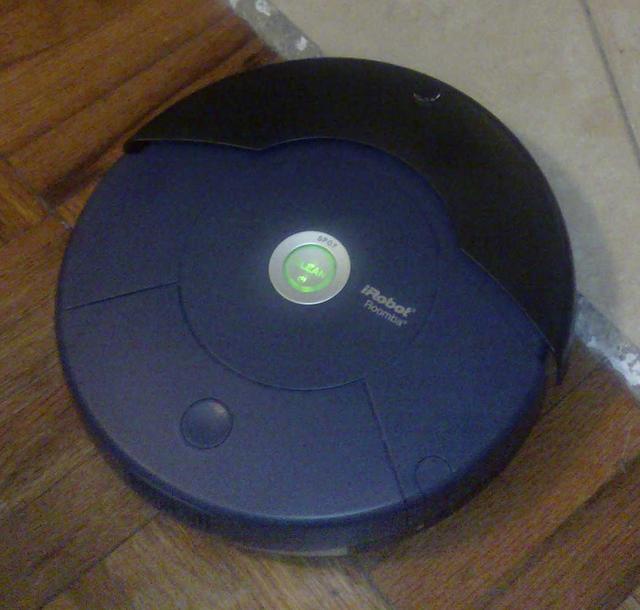
So, DebConf time is over once again. The two weeks worth of fifty weeks waiting are left behind once again, and it's back to get back to normal. DebConf was great Yes, it always is, and that's what we are all saying, but hey - Seriously! Being in the same building than 300 crazed developers is always fun, and it's always better than last year's fun. A good highlight this year is that, given the number of Free Software and Free Culture groups that exist in USA's north-eastern coast, we had the opportunity to join a large crowd which has never been part of DebConf. Also, I must agree that the USA bid for DebConf was aiming to attract as many Debian people (developers, maintainers, or just happy users) which had not yet been to a DebConf before as possible. And it was a great success! I finally met several people I have long read in the mailing lists, in blogs or in IRC. A much higher proportion than usual, I'd venture to say. Another interesting phenomenon /methinks is that this year's DebCamp started much more staffed than usual: I arrived on the first day, Sunday 25, and there were ~40 people there already; I don't have the actual numbers, but we quickly grew, and the number started to stabilize past mid-week, only to (sharply) rise in the weekend, in time for DebianDay and DebConf start. Great time! But, they say, nobody can go to the USA without buying some sweet toys, right? Well, being the proud owner of six very hairy cats, I have thought into entering the looming and weaving industry... But cat hair, while abundant, I have heard is untreadable... Maybe due to the indisciplined, natural and independent personality of the cats (catonality should I say?)... So I had two choices: Clean up my home quite often, or live in a literally hairy mess. Enter choice #3: The Roomba! I had been waiting to buy this thing for several years, as they refuse to send to Mexico or charge Mexican cards. So, I walked across Manhattan and got my very own robot cleaner! For my further surprise, although I have not yet tried it (I don't even have a suitable cable yet), I found this: Yay, the Roomba is actually hackable (via a 7 pin miniDIN serial port)! Wikipedia says that:
Roomba comes with a Mini-DIN TTL serial interface, which is incompatible with standard PC/Mac serial ports and cables, both electrically and physically. However, third-party adapters are available to access the Roomba's computer via Bluetooth, USB, or RS-232 (PC/Mac serial). New, 500-series, and 410/420 series Roombas upgraded with the OSMO hacker device allow the user to monitor Roomba's many sensors and modify its behavior. The Roomba Open Interface (formerly "Roomba Serial Command Interface") API allows programmers and roboticists to create their own enhancements to Roomba. ( )
My first impressions? Well, the Roomba lazily charged its battery throughout the day today, and was hungry and ready when I arrived home. It is a but louder than what I expected, and of course my cats were not thrilled by the presence of a eighth animated and apparently sentient being at home. Their initial reaction was of course to be verrry alert of the thing. Twelve eyes were constantly pointing at the Roomba while mine alternated between them. As they measured the thing's speed and (I guess) inferred its movement patterns, they started escaping upstairs A flat, round thing with no legs to be seen will not likely be able to climb the stairs. And they were completely right. At first, only Chupchic remained downstairs. After a bit, I went up to show them the Roomba didn't jump on us to eat our brains, and after a bit, Santa and Macusa joined. The Roomba roombed for maybe 90 minutes (this space is large, and decided it was enough... And slowly, the rest of them started coming down. I would not say Roomba's cleaning is perfect, of course. Its room discovery algorithm is funny, and it even seems it's based on the mere chance of covering most (never all) of the space it has to clean. I had, of course, not fully studied it (after a single run, how could I?). It does make a honestly good attempt at cleaning under coaches, chairs and tables. It collected a fair amount of dust (on a house that seemed quite clean to me, I cannot imagine what would happen on a messy one). I have not yet played with the virtual walls (infrared transmitters which limit rooms as if a door was closed), but given the size of this house (and that I don't want it to clean around the cats' designated bathroom area), I guess I will end up using them regularly. During DebConf, I heard one bad (stupid useless noisy thing) and two very good (it has radically changed my life) comments on the Roomba. I hope to shift the balance towards 3/4 and not towards 2/2! Anyways... Thanks to each and every one of you. DebConf is great. Always great. Always a success. I cannot even thank specific teams. Debian Rules, and DebConf Rocks!

Dirk Eddelbuettel: RQuantLib 0.3.4

A fresh release of RQuantLib is now on CRAN and in Debian. RQuantLib combines (some of) the quantitative analytics of QuantLib with the R statistical computing environment and language. This follows the 0.3.3 release from last week and has again a number of internal changes. All uses of objects from external namespaces are now explicit as I removed the remaining using namespace QuantLib;. This makes things a little more verbose, but should be much clearer to read, especially for those not yet up to speed on whether a given object comes from any one of the Boost, QuantLib or Rcpp namespaces. We also generalized an older three-dimensional plotting function used for option surfaces -- which had already been used in the demo() code -- and improved the code underlying this: arrays of option prices and analytics given two input vectors are now computed at the C++ level for a nice little gain in efficiency. This also illustrates the possible improvements from working with the new Rcpp API that is now used throughout the package, Full changelog details, examples and more details about this package are at my RQuantLib page.

6 August 2010

Thomas Koch: Free Software in companies

At work we currently have a discussion: I'd like to develop some components as Free Software. My bosses like the idea, but the client goes nuts only thinking about it.
So as part of the discussion I thought to collect those companies who actively advertise their Free Software. I know about the big ones, but it would be even more interesting to get a list of succesful small companies that share at least part of their inhouse projects. On the other hand it would not be too interesting to list full Free Software companies like Red Hat.
It would also be fine to share this list in some wiki (FSFE?) when it grows larger. For some companies I also list very popular projects from my point of view. big companies
  • Adobe
  • Facebook: Cassandra, Thrift, Scribe, HipHop for PHP, ...
  • Yahoo: YUI, Design Pattern Library, YSlow, Hadoop, ZooKeeper
  • Twitter
  • Google: Chromium Browser, Google Summer of Code, Android, Google Web Toolkit (GWT), Protocol Buffers - data interchange format, Java Collections Library, unladen-swallow - faster implementation of Python, ...
  • IBM: Developerworks (Tutorials), Eclipse, International Components for Unicode (ICU)
middle sized companies small companies

Update: Need to add Danga (Gearman), Liip.ch with Okapi, Flux CMS, Jackalope

5 August 2010

Matt Zimmerman: DebConf 10: Day 3

How We Can Be the Silver Lining of the Cloud (Eben Moglen) Eben s talk was on the same topic as his Internet Society talk in February, which I had downloaded and watched some time ago. He challenges the free software community to develop the software to power the freedom box , a small, efficient and inexpensive personal server. Such a system would put users more in control of their online lives, give them better protection for it under the law, and provide a platform for many new federated services. It sounds like a very interesting project, which I d like to write more about. Statistical Machine Learning Analysis of Debian Mailing Lists (Hanna Wallach) Hanna is bringing together her interests in machine learning and free software by using machine learning techniques to analyze of publicly available data from free software communities. In doing so, she hopes to develop tools for studying the patterns of collaboration, innovation and other behavior in these communities. Her methodology uses statistical topic models, which infer the topic of a document based on the occurrence of topical words, to group Debian mailing list posts by topic. Her example analyzed posts from the debian-project and debian-women mailing lists, inferring a set of topics and categorizing all of the posts according to which topic(s) were represented in them. Using this data, she could plot over time the frequency of discussion of each topic, which revealed interesting patterns. The audience quickly zoned in on practical applications for things like flamewar and troll detection. Debian Derivatives BoF (Matt Zimmerman) I organized this discussion session to share perspectives on Debian derivatives, in particular how we can improve cooperation between derivatives and Debian itself. The room was a bit hard to find, so attendance was relatively small, but this turned out to be a plus. With a smaller group, we were able to get acquainted with each other, and everyone participated. Unsurprisingly, there were many more representatives from Ubuntu than other derivatives, and I was concerned that Ubuntu would dominate the discussion. It did, but I tried to draw out perspectives from other derivatives where possible. On the whole, the tone was positive and constructive. This may be due in part to people self-selecting for the BoF, but I think there is a lot of genuine goodwill between Debian and Ubuntu. Stefano Zacchiroli took notes in Gobby during the session, which I expect he will post somewhere public when he has a chance.

Next.

Previous.