There s a pattern that comes up from time to time in the release management of free software projects.
To allow for big, disruptive changes, a new development branch is created. Most of the developers focus moves to the development branch. However at the same time, the users focus stays on the stable branch.
As a result:
Before the 2.6 series, there was a stable branch (2.4) where only relatively minor and safe changes were merged, and an unstable branch (2.5), where bigger changes and cleanups were allowed. Both of these branches had been maintained by the same set of people, led by Torvalds. This meant that users would always have a well-tested 2.4 version with the latest security and bug fixes to use, though they would have to wait for the features which went into the 2.5 branch. The downside of this was that the stable kernel ended up so far behind that it no longer supported recent hardware and lacked needed features. In the late 2.5 kernel series, some maintainers elected to try backporting of their changes to the stable kernel series, which resulted in bugs being introduced into the 2.4 kernel series. The 2.5 branch was then eventually declared stable and renamed to 2.6. But instead of opening an unstable 2.7 branch, the kernel developers decided to continue putting major changes into the 2.6 branch, which would then be released at a pace faster than 2.4.x but slower than 2.5.x. This had the desirable effect of making new features more quickly available and getting more testing of the new code, which was added in smaller batches and easier to test. Then, in the Ruby community. In 2007, Ruby 1.8.6 was the stable version of Ruby. Ruby 1.9.0 was released on 2007-12-26, without being declared stable, as a snapshot from Ruby s trunk branch, and most of the development s attention moved to 1.9.x. On 2009-01-31, Ruby 1.9.1 was the first release of the 1.9 branch to be declared stable. But at the same time, the disruptive changes introduced in Ruby 1.9 made users stay with Ruby 1.8, as many libraries (gems) remained incompatible with Ruby 1.9.x. Debian provided packages for both branches of Ruby in Squeeze (2011) but only changed the default to 1.9 in 2012 (in a stable release with Wheezy 2013). Finally, in the Python community. Similarly to what happened with Ruby 1.9, Python 3.0 was released in December 2008. Releases from the 3.x branch have been shipped in Debian Squeeze (3.1), Wheezy (3.2), Jessie (3.4). But the python command still points to 2.7 (I don t think that there are plans to make it point to 3.x, making python 3.x essentially a different language), and there are talks about really getting rid of Python 2.7 in Buster (Stretch+1, Jessie+2). In retrospect, and looking at what those projects have been doing in recent years, it is probably a better idea to break early, break often, and fix a constant stream of breakages, on a regular basis, even if that means temporarily exposing breakage to users, and spending more time seeking strategies to limit the damage caused by introducing breakage. What also changed since the time those branches were introduced is the increased popularity of automated testing and continuous integration, which makes it easier to measure breakage caused by disruptive changes. Distributions are in a good position to help here, by being able to provide early feedback to upstream projects about potentially disruptive changes. And distributions also have good motivations to help here, because it is usually not a great solution to ship two incompatible branches of the same project. (I wonder if there are other occurrences of the same pattern?) Update: There s a discussion about this post on HN
I recently needed to get access to a DataEase database; the person I helped
was the legitimate owner of the data, but had forgotten the password,
as the database was largely from 1996. There are various companies
around the world that seem to do this, or something similar (like give
you an API), for a usually unspecified fee; they all have very 90s homepages
and in general seem like they have gone out of business a long time ago.
And I wasn't prepared to wait.
For those of you who don't know DataEase, it's a sort-of relational database
for DOS that had its heyday in the late 80s and early 90s (being sort of
the cheap cousin of dBase); this is before SQL gained traction as the
standard query language, before real multiuser database access, and before
variable-width field storage.
It is also before reasonable encryption. Let's see what we can do.
DataEase has a system where tables are mapped through the data dictionary,
which is a table on its own. (Sidenote: MySQL pre-8.0 still does not have
this.) This is the file RDRRTAAA.DBM; I don't really know what RDRR stands
for, but T is the database letter in case you wanted more than one database
in the same directory, and AAA, AAB, AAC etc. is a counter so that a table
grows to be too big for one file. (There's also .DBA files for structure of
non-system tables, and then some extra stuff for indexes.)
DBM files are pretty much the classical, fixed-length 80s-style database
files; each row has some flags (I believe these are for e.g. row is
deleted ) and then just the rows in fixed format right after each other.
For instance, here's one I created as part of testing (just the first few
lines of the hexdump are shown):
00000000: 0e 00 01 74 65 73 74 62 61 73 65 00 00 00 00 00 ...testbase..... 00000010: 00 00 00 00 00 00 00 73 46 cc 29 37 00 09 00 00 .......sF.)7.... 00000020: 00 00 00 00 00 43 3a 52 44 52 52 54 41 41 41 2e .....C:RDRRTAAA. 00000030: 44 42 4d 00 00 01 00 0e 00 52 45 50 4f 52 54 20 DBM......REPORT 00000040: 44 49 52 45 43 54 4f 52 59 00 00 00 00 00 1c bd DIRECTORY....... 00000050: d4 1a 27 00 00 00 00 00 00 00 00 00 43 3a 52 45 ..'.........C:RE 00000060: 50 4f 54 41 41 41 2e 44 42 4d 00 00 01 00 0e 00 POTAAA.DBM...... 00000070: 52 65 6c 61 74 69 6f 6e 73 68 69 70 73 00 00 00 Relationships...Even without going in-depth, we can see the structure here; there's testbase which maps to C:RDRRTAA.DBM (the RDRR itself), there's a table called REPORT DIRECTORY that maps to C:REPOTAAA.DBM, and then more stuff after that, and so on. However, other tables are not so easily read, because you can ask DataEase to encrypt a table. Let's look at such an encrypted table, like the Users table (containing usernames, passwords not password hashes and some extra information like access level), which is always encrypted:
00000000: 0c 01 9f ed 94 f7 ed 34 ba 88 9f 78 21 92 7b 34 .......4...x!. 4 00000010: ba 88 0f d9 94 05 1e 34 ba 88 a0 78 21 92 7b 34 .......4...x!. 4 00000020: e2 88 9f 78 21 92 7b 34 ba 88 9f 78 21 92 7b 34 ...x!. 4...x!. 4 00000030: ba 88 9f 78 21 92 7b 34 ba 88 9f 78 21 92 7b ...x!. 4...x!.Clearly, this isn't very good encryption; it uses a very short, repetitive key of eight bytes (64 bits). (The data is mostly zero padding, which makes it much easier to spot this.) In fact, in actual data tables, only five of these bytes are set to a non-zero value, which means we have a 40-bit key; export controls? My first assumption here was of course XOR, but through some experimentation, it turned out what you need is actually 8-bit subtraction (with wraparound). The key used is derived from both a database key and a per-table key, both stored in the RDRR; again, if you disassemble, I'm sure you can find the key derivation function, but that's annoying, too. Note, by the way, that this precludes making an attack by just copying tables between databases, since the database key is different. So let's do a plaintext attack. If you assume the plaintext of the bottom row is all padding, that's your key and here's what you end up with:
00000000: 52 79 00 75 73 65 72 00 00 00 00 00 00 00 00 00 Ry.user......... 00000010: 00 00 70 61 73 73 a3 00 00 00 01 00 00 00 00 00 ..pass.......... 00000020: 28 00 00 00 00 00 00 00 00 00 00 00 00 00 00 00 (............... 00000030: 00 00 00 00 00 00 00 00 ........Not bad, eh? Actually the first byte of the key here is wrong as far as I know, but it didn't interfere with the fields, so we have what we need to log in. (At that point, we've won, because DataEase will helpfully decrypt everything transparent for us.) However, there's a twist; if the password is longer than four characters, the entire decryption of the Users table changes. Of course, we could run our plaintext attack against every data table and pick out the information by decoding the structure, but again; annoying. So let's see what it looks like if we choose passs instead:
00000000: 0e 01 9f 7a ae 9e 21 f5 08 63 07 6d a3 a1 17 5d ...z..!..c.m...] 00000010: 70 cb df 36 7e 7c 91 c5 d8 33 d8 3d 73 71 e7 2d p..6~ ...3.=sq.- 00000020: 7b 9b 3f a5 db d9 4f 95 a8 03 a7 0d 43 41 b7 fd .?...O.....CA.. 00000030: 10 6b 0f 75 ab a9 1f 65 78 d3 77 dd 13 11 87 .k.u...ex.w....Distinctly more confusing. At this point, of course, we know at which byte positions the username and password start, so if we wanted to, we could just try setting the start byte of the password to every possible byte in turn until we hit 0x00 (DataEase truncates fields at the first zero byte), which would allow us to get in with an empty password. However, I didn't know the username either, and trying two bytes would mean 65536 tries, and I wasn't up for automating macros through DOSBox. So an active attack wasn't too tempting. However, we can look at the last hex byte (where we know the plaintext is 0); it goes 0x5d, 0x2d, 0xfd... and some other bytes go 0x08, 0xd8, 0xa8, 0x78, and so on. So clearly there's an obfuscation here where we have a per-line offset that decreases with 0x30 per line. (Actually, the increase/decrease per line seems to be derived from the key somehow, too.) If we remove that, we end up with:
00000000: 0e 01 9f 7a ae 9e 21 f5 08 63 07 6d a3 a1 17 5d ...z..!..c.m...] 00000010: a0 fb 0f 66 ae ac c1 f5 08 63 08 6d a3 a1 17 5d ...f.....c.m...] 00000020: db fb 9f 05 3b 39 af f5 08 63 07 6d a3 a1 17 5d ....;9...c.m...] 00000030: a0 fb 9f 05 3b 39 af f5 08 63 07 6d a3 a1 17 ....;9...c.m...Well, OK, this wasn't much more complicated; our fixed key is now 16 bytes long instead of 8 bytes long, but apart from that, we can do exactly the same plaintext attack. (Also, it seems to change per-record now, but we don't see it here, since we've only added one user.) Again, assume the last line is supposed to be all 0x00 and thus use that as a key (plus the last byte from the previous line), and we get:
00000000: 6e 06 00 75 73 65 72 00 00 00 00 00 00 00 00 00 n..user......... 00000010: 00 00 70 61 73 73 12 00 00 00 01 00 00 00 00 00 ..pass.......... 00000020: 3b 00 00 00 00 00 00 00 00 00 00 00 00 00 00 00 ;............... 00000030: 00 00 00 00 00 00 00 00 00 00 00 00 00 00 00 ...............Well, OK, it wasn't perfect; we got pass\x12 instead of passs , so we messed up somehow. I don't know exactly why the fifth character gets messed up like this; actually, it cost me half an hour of trying because the password looked very real but the database wouldn't let me in, but eventually, we just guessed at what the missing letter was supposed to be. So there you have it; practical small-scale cryptanalysis of DOS-era homegrown encryption. Nothing advanced, but the user was happy about getting the data back after a few hours of work. :-)
it's amazing how many new bugs appear; luckily in the Debian Perl Group
we're not too bad at fixing them as well. here's the list of my
contributions over the last weeks:
| Translator: | Henning Koch |
| Publisher: | Washington Square |
| Copyright: | 2012, 2014 |
| Printing: | May 2015 |
| ISBN: | 1-4767-3802-5 |
| Format: | Trade paperback |
| Pages: | 337 |
| Translator: | Henning Koch |
| Publisher: | Washington Square |
| Copyright: | 2012, 2014 |
| Printing: | May 2015 |
| ISBN: | 1-4767-3802-5 |
| Format: | Trade paperback |
| Pages: | 337 |

Swacch Bharat Indian Railways Copyright: Indian Express
To add to the above, it is still cheaper than air travel, although that is changing a bit as Indian Railways seeks to modernize Railways and make it into world-class bullet trains.
Indian Railways has a long, rich culture and some of the most interesting nuggets you learn over time adds to the fascination of the Railways. For instance I m sharing this letter which I read first in book and then saw in the New Delhi Railway Museum. The letter I am sharing below was written by a certain Shri Okhil Chandra Sen to the Sahibganj Railway Office in year 1909, almost 38 years before India became independent.
I am arrive by passenger train Ahmedpur station and my belly is too much swelling with jackfruit. I am therefore went to privy. Just I doing the nuisance that guard making whistle blow for train to go off and I am running with lotah in one hand and dhoti in the next when I am fall over and expose all my shocking to man and female women on plateform. I am got leaved at Ahmedpur station.
This too much bad, if passenger go to make dung that dam guard not wait train five minutes for him. I am therefore pray your honour to make big fine on that guard for public sake. Otherwise I am making big report! to papers.
If it were not for Mr. Okhil Chandra Sen we would still be running with water bottle (improvement) and jeans/shorts/whatever (again improvement) while the possibility of falling over would always be omnipresent in a hurry. Now we do have toilets and some of the better trains even have Bio-toilets which should make things better as well.(/NSFW)
For the plane bit, most of my flights have been domestic flying. Some of my most memorable flights is when flying from Mumbai on a clear sky overlooking the Queen s necklace, loving it and landing in Bangalore during mist or rain or both. Delhi is also good as airports go but nothing much adventurous about it. It was only with the experience of my first international flight, I realized the same feeling again, nervousness and sense of adventure as you meet new people. Nowadays every week I do try and broaden my horizon by seeking and learning a bit about International Travel.

Copyright: National Geographic Magazine

Photo Courtesy Changi International Airport, Singapore
is_bool function in the test library,
which compares a boolean value to a desired value. This doesn't add any
functionality over ok, but sometimes code reads more clearly
(particularly when testing for an expected false value).
Of note mostly to me, this is the first release with the documentation
generated by DocKnot.
You can get the latest version from the
C TAP Harness distribution page.
While I try to minimize Politics and Economics as much as I can on this blog, it sometimes surfaces. It is possible that some people may benefit or at least be aware.
A bit of background is necessary before I jump into the intricacies of the Maharashtra Real Estate Rules and Regulation Draft Rules 2016 (RERA) .
Since ever, but more prominently since 2007/8 potential homeowners from across the country have been suffering at the hands of the builder/promoter for number of years. While it would be wrong to paint all the Real Estate Developers and Builders as cheats (we as in all tenants and homeowners hope there are good ones out there) many Real Estate Builders and promoters have cheated homeowners of their hard-earned money. This has also lessened the secondary (resale) market and tenants like me have to fight over morsels as supply is tight.
There were two broad ways in which the cheating is/was done
a. Take deposits and run away i.e. fly by night operators Here the only option for a homeowner is to file an FIR (First Information Report) and hope the culprits are caught. 99% of the time the builder/promoter goes somewhere abroad and the potential home buyers/home-owners are left holding the can. This is usually done by small real estate promoters and builders.
b. The big boys would take all or most money of the project, may register or not register the flat in your name, either build a quarter or half-finished building and then make excuses. There are some who do not even build. The money given is used by the builder/developer either for his own needs or using that money in some high-profile project which is expensive and may have huge returns. They know that home-owners can t do anything, at the most go to the court which will take more than a decade or two during which time the developer would have interest-free income and do whatever he wants to do.
One of the bigger stories which came up this year was when the Indian Cricket Captain, M.S. Dhoni (cricket is a religion in India, and the cricketers gods for millions of Indians) had to end his brand engagement and ambassadorship from Amrapali Housing Group. Apparently, his wife Sakshi was on the Board of directors at Amrapali Housing and had to resign
The Government knew of such issues and had been working since last few years. Under the present Government, a Model Agreement and a Model Real Estate Rules and Regulation Bill was passed on 31st March and came into force on 1st May 2016.
India, similar to the U.S. and U.K. follows a federal structure. While I have shared this before, most of the laws in India fall in either of three lists, Central List, Concurrent Lists and State Lists. Housing for instance, is a state subject so any laws concerning housing has to be made by the state legislature.
Having a statutory requirement to put the bill in 6 months from 1st of May, the Government of Maharashtra chose to put the draft rules in public domain on 12th December 2016, about 10 days ago and there were efforts to let it remain low-key so people do not object as we are still in the throes of demonetisation. By law they should have given 30 days for people to raise objections and give suggestions.
The State Government too could have easily asked an extension and as both the State and the Centre are of the same Political Party they would have easily got it.
With that, below is the e-mail I sent to suggesstionsonrera@maharashtra.gov.in
Sub Some suggestions for RERA biggest suggestion, need to give more time study the implications for house-owners.
Respected Sir/Madame,
I will be publishing the below mail as a public letter on my blog as well.
I am writing as a citizen, a voter, a potential home owner, currently a tenant . If houses supply is not in time, it is us, the tenants who have the most to lose as we have to fight over whatever is in the market. I do also hope to be a home buyer at some point in time so these rules would affect me also somewhere in the hazy future.
I came to know through the media that Maharashtra Govt. recently introduced draft rules for RERA Real Estate (Regulation and Development) Act, 2016 . I hope to impress upon you that these proposed Rules and Regulations need to be thoroughly revised and new draft rules shared with the public at large with proper announcement in all newspapers and proper time ( more than a month ) to study and give replies on the said matter.
My suggestions and complaints are as under
a. The first complaint and suggestion is that the date between the draft regulations and suggestions being invited by members of public is and was too little 12 December 2016 23 December 2016 (only 11 days) for almost 90 pages of Government rules and regulations which needs multiple rounds of re-reading to understand the implications of the draft rules .
Add to that unlike the Central Building Legislation, Model Agreement which was prepared by Centre and also given wide publicity, the Maharashtra Govt. didn t do any such publicity to bring it to the
Since the past few weeks I have been researching and working on creating a white label version of Lumicall with my mentors Daniel, Juliana and Bruno.
Lumicall is a free and convenient app for making encrypted phone calls from Android. It uses the SIP protocol to interoperate with other apps and corporate telephone systems. Think of any app that you use to call others using an SIP ID.
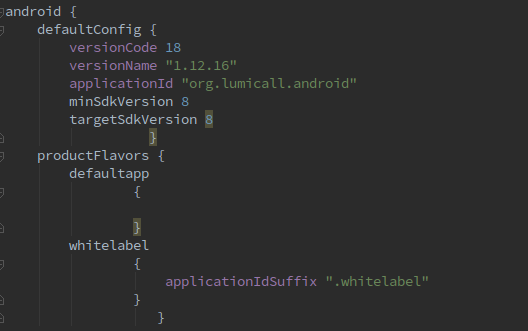
What does it mean to make a white label version of Lumicall?
Note: You have to define at least two flavors to be able to build multiple variants.
What we did at the Debian Edu / Skolelinux gathering in November 2016 in Oslo
From November 25 to 27 some people met in the hackerspace bitraf in downtown Oslo. On Saturday and Sunday we met in the morning and hacked and translated all day until we went for dinners in the evening. Despite the short time I think we managed to get a lot done and had good fun, so I'm hoping we'll have another gathering in 2017!
Debian Edu / Skolelinux is currently in better shape regarding the upcoming Debian release than we ever have been, which is pretty awesome. Today, on December 21st, all our changes are in Stretch, except for debian-edu-artwork.git, which awaits a desktop-base upload to unstable the only thing missing is being able to install Debian Edu using our profiles from official media releasing Debian Edu Stretch on the same day as Debian Stretch would be a huge success though!
These are the notes taken in a pad (thanks riseup!) during the meeting:
Phil Hands worked on


Whilst there is an in-depth report forthcoming, the Guix project have already released their own report.
Media coverage
dak to preserve .buildinfo files on the local ftp-master filesystem. This is a temporary measure to prevent some "historical" data loss; the files are currently being silently discarded.% isenkram-lookup bluez cheese ethtool fprintd fprintd-demo gkrellm-thinkbat hdapsd libpam-fprintd pidgin-blinklight thinkfan tlp tp-smapi-dkms tp-smapi-source tpb %It can also list the firware package providing firmware requested by the load kernel modules, which in my case is an empty list because I have all the firmware my machine need:
% /usr/sbin/isenkram-autoinstall-firmware -l info: did not find any firmware files requested by loaded kernel modules. exiting %The last few days I had a look at several of the around 250 packages in Debian with udev rules. These seem like good candidates to install when a given hardware dongle is inserted, and I found several that should be proposed by isenkram. I have not had time to check all of them, but am happy to report that now there are 97 packages packages mapped to hardware by Isenkram. 11 of these packages provide hardware mapping using AppStream, while the rest are listed in the modaliases file provided in isenkram. These are the packages with hardware mappings at the moment. The marked packages are also announcing their hardware support using AppStream, for everyone to use: air-quality-sensor, alsa-firmware-loaders, argyll, array-info, avarice, avrdude, b43-fwcutter, bit-babbler, bluez, bluez-firmware, brltty, broadcom-sta-dkms, calibre, cgminer, cheese, colord, colorhug-client, dahdi-firmware-nonfree, dahdi-linux, dfu-util, dolphin-emu, ekeyd, ethtool, firmware-ipw2x00, fprintd, fprintd-demo, galileo, gkrellm-thinkbat, gphoto2, gpsbabel, gpsbabel-gui, gpsman, gpstrans, gqrx-sdr, gr-fcdproplus, gr-osmosdr, gtkpod, hackrf, hdapsd, hdmi2usb-udev, hpijs-ppds, hplip, ipw3945-source, ipw3945d, kde-config-tablet, kinect-audio-setup, libnxt, libpam-fprintd, lomoco, madwimax, minidisc-utils, mkgmap, msi-keyboard, mtkbabel, nbc, nqc, nut-hal-drivers, ola, open-vm-toolbox, open-vm-tools, openambit, pcgminer, pcmciautils, pcscd, pidgin-blinklight, printer-driver-splix, pymissile, python-nxt, qlandkartegt, qlandkartegt-garmin, rosegarden, rt2x00-source, sispmctl, soapysdr-module-hackrf, solaar, squeak-plugins-scratch, sunxi-tools, t2n, thinkfan, thinkfinger-tools, tlp, tp-smapi-dkms, tp-smapi-source, tpb, tucnak, uhd-host, usbmuxd, viking, virtualbox-ose-guest-x11, w1retap, xawtv, xserver-xorg-input-vmmouse, xserver-xorg-input-wacom, xserver-xorg-video-qxl, xserver-xorg-video-vmware, yubikey-personalization and zd1211-firmware If you know of other packages, please let me know with a wishlist bug report against the isenkram-cli package, and ask the package maintainer to add AppStream metadata according to the guidelines to provide the information for everyone. In time, I hope to get rid of the isenkram specific hardware mapping and depend exclusively on AppStream. Note, the AppStream metadata for broadcom-sta-dkms is matching too much hardware, and suggest that the package with with any ethernet card. See bug #838735 for the details. I hope the maintainer find time to address it soon. In the mean time I provide an override in isenkram.
We are about to upgrade one of our GlusterFS-based storage systems at work.
Fortunately, I was worrying about the upgrade procedure for the Debian
packages not being tested by the maintainers. It turns out I was right.
Simply upgrading the packages without manual intervention will apparently
render your GlusterFS server unusable.
storage1:~# gluster
gluster> peer status
Number of Peers: 1
Hostname: storage2
Uuid: 2d22cc13-2252-4cf1-bfe9-3d27fa2fbc29
State: Peer in Cluster (Connected)
gluster> volume create data storage1:/srv/data storage2:/srv/data
...
gluster> volume start data
...
gluster> volume info
Volume Name: data
Type: Distribute
Volume ID: e2bd5767-4b33-4e57-9320-91ca76f52d56
Status: Started
Number of Bricks: 2
Transport-type: tcp
Bricks:
Brick1: storage1:/srv/data
Brick2: storage2:/srv/data
gluster> volume stop data
storage1:~# cd /var/lib/glusterd && cp -r /etc/glusterd/* .
storage1:~# vol=data
storage1:~# volid=$(grep volume-id /var/lib/glusterd/vols/$vol/info cut -d= -f2 sed 's/-//g')
storage1:~# setfattr -n trusted.glusterfs.volume-id -v 0x$volid /srv/data
storage1:~# service glusterfs-server stop
storage1:~# glusterd --xlator-option *.upgrade=on -N
storage1:~# service glusterfs-server start
storage1:~# gluster
gluster> volume start data
client:~# mount -t glusterfs storage1:/data /mnt
This article might be perceived as a blatant ripoff of this
Linux kernel document, but, on the contrary, it s intended
as add-on, showing how to do a subtree merge (the multi-project
merge strategy that s actually doable in a heterogenous group of
developers, as opposed to subprojects, which many just can t wrap
their heads around) with contemporary git ( stupid content tracker ).
Furthermore, the commands are reformatted to be easier to copy/paste.
To summarise: you re on the top level of a checkout of the project into which the other project (Bproject) is to be merged. We wish to merge the top level of Bproject s master branch as (newly created) subdirectory dir-B under the current project s top level.
$ git remote add --no-tags -f Bproject /path/to/B/.git $ git merge -s ours --allow-unrelated-histories --no-commit Bproject/master $ git read-tree -u --prefix=dir-B/ Bproject/master $ git commit -m 'Merge B project as our subdirectory dir-B' Later updates are easy: $ git pull -s subtree Bproject master
(mind the trailing slash after dir-B/ on the read-tree command!) Besides reformatting, the use of --allow-unrelated-histories recently became necessary. --no-tags is also usually what you want, because tags are not namespaced like branches.
Another command you might find relevant is how to clean up orphaned remote branches:
$ for x in $(git remote); do git remote prune "$x"; done
This command locally deletes all remote branches (those named origin/foo ) that have been deleted on the remote side. Update: Natureshadow wishes you to know that there is such a command as git subtree which can do similar things to the subtree merge strategy explained above, and several more related things. It does, however, need the pr fix on every subsequent pull.
release branch between 0.4.0rc and 0.4.0rc2 (more precisely, in the range 0335aa1432bdb0a8b5bdbefa98f7c2cd95fc72d2^..0.4.0rc2^), and used git cinnabar download and run on Mac or Windows, please run git cinnabar download again with this version and then ensure your mercurial clones have not been corrupted by case-sensitivity issues by running git cinnabar fsck --manifests. If they contain sha1 mismatches, please reclone.git cinnabar download commandgpg2 --gen-key --batch gen-key-script
or
gpg2 --expert --full-gen-key --batch gen-key-script
The command-fd and command-file options also allow you to bypass the interactive prompt:
echo "uid 1\nprimary\nsave\n" gpg2 --command-fd 0 --status-fd 2 --edit-key 'Joe Tester'
Newer versions of gpg2 simplify the creation of primary/subkeys and editing of keys with one liners such as:
gpg2 --quick-gen-key 'User Name <user@example.com>' rsa4096 sign 3y
gpg2 --quick-addkey <fingerprint> rsa2048 encrypt 1y
gpg2 --quick-adduid <fingerprint> <primary-uid> <new-uid>
Aside from making life easier for command line users, gpg 2.1.x also supports ECC keys and creates a revocation certificates by default.
deb http://packages.arctica-project.org/ubuntu jessie,stretch,sid maindeb http://packages.arctica-project.org/ubuntu trusty,xenial main wget -qO - http://packages.arctica-project.org/archive.key sudo apt-key add -
The nx-libs software project brings to you the binary packages nxproxy (client-side component) and nxagent (nx-X11 server, server-side component).
Ubuntu developers, please note: we have added nightly builds for Ubuntu latest to our build server. This has been Ubuntu 16.10 so far, but we will soon drop 16.10 support in nightly builds and add 17.04 support.
References
Next.