Search Results: "ag"

6 December 2007

Erich Schubert: Fight against surveillance

The german government (that is the CDU CSU and SPD partys) passed a law that would require communication providers to keep connection data for half a year. This data retention includes phone calls, emails and internet connection data such as IP addresses.This law was passed as a "preventive" step against terrorism, mostly. Which is such an hilariously bad argumentation, actually.This is a serious step towards total surveillance, and is considered to be unconstitutional by many. Amongst others, it seriously undermines Confidentiality protection for e.g. priests, lawyers, doctors and journalists. Apart from opening the doors for total surveillance, of course and not having any desireable effect when it comes to preventing crimes, especially terrorism. Over 20.000 people already have already signed a complaint of unconstitutionality to be handed in at the Federal Constitutional Court in germany. This would then be the biggest complaint of unconstitutionality in the (short) history of the Federal republic of Germany. (1300 people complained 1983 against the census, which led to privacy protection becoming considered a key role of the german constitution)Right now, the law is waiting to be signed by the German state president (and we hope that he might refuse to sign it). Once it has take effect, the complaint can be handed in.Web page with further information.If you are a German resident, please join the 20.000+ others who have already signed a mandate for the complaint of unconstitutionality. Deadline is December 24th.It's our freedom we're fighting for!

Russell Coker: Planet Debian Piracy

The site http://maxfeed.ath.cx/ is copying the entire Planet Debian feed for the purpose of splogging. I’ve sent one DMCA take-down notice for one of my pages (hopefully they will go through and remove all pages that were illegally copied from my feed). Other people who have non-commercial use licenses for their blog feeds may want to do the same. Would it be possible to have the entire Debian feed licensed in such a way such that one person could request that the Planet Debian feed not be used for such things?

Norbert Tretkowski: MySQL 5.0.51 released

That's the good news. The bad news is, it's still affected by CVE-2007-5925, which allows remote authenticated users to cause a denial of service (database crash). J rg Br he wrote on the packagers mailinglist that's because the sources for 5.0.51 were cloned before the fix got in. I don't know exactly how their release model works, but looks like it needs to be improved.

To make it even worse, bug #32125 which has a patch for the problem, was set to private a few days ago. Because we already have the patch in our MySQL packages since exactly three weeks, it's available in our subversion repository.

Sam Hocevar: Bits from India

Incredible !ndia As Christian already stated, we are currently in this lovely city with friendly people whom we French people have great trouble understanding, totally insane traffic and colourful taxis you find nowhere else, and dangerously spicy food. And no, it s not Mexico City. My first talk at FOSS.IN/2007 in Bangalore, India (Giving back to the community: how does Debian perform?) was an attempt at explaining to upstream developers what Debian did with their software, and where to proactively find information about the changes we do, the bugs that are reported, etc. I did this talk because Bangalore has this incredible ratio of software developers per square kilometer, while at the same time we have so few Indian DDs despite the 1.12 billion inhabitants. So I expected to find people doing much development but not necessarily familiar with Debian. With Christian s two other talks about translation works in Debian and how to contribute to Debian, we did quite a thorough coverage of Debian for a novice audience. My second talk, in the main conference track, will be on Saturday and will be an even more general presentation of Debian. Of course, my slides are not ready yet, what did you expect? Debian business cards There has been great interest in my Debian business cards, so I m providing their SVG source (to be loaded and printed in Inkscape, for they make extensive use of the blur effect which is an Inkscape extension) for anyone interested. They use the Sexsmith and Sans Condensed Uralic fonts, available in Debian packages ttf-larabie-straight and ttf-uralic. Sam s Debian business card Sam s Debian business card (back) Sam s Debian business card (sample) I don t know enough about SVG scripting and object cloning, so to do the text shadow you will have to edit the same object twice. Sorry about that. Here are the files: background image (PNG), generic DD front (SVG), custom DPL front (SVG), back (SVG). The background image was cropped from Ayo s Debian Expo wallpaper. The rest of the design should be considered public domain. Just a note about the different languages I ve been using at the back: I know I could have used more fancy languages with beautiful glyphs to show how truly universal our system is, but I did not know which to choose. So I just put the languages I personally vaguely understood.

Steve Kemp: You can't hide the knives

After recently intending to drop the Planet Debian search and recieving complaints that it was/is still useful it looks like there is a good solution. The code will be made live and official upon the planet debian in the near future. The DSA team promptly installed the SQLite3 package for me, and I've ported the code to work with it. Once Apache us updated to allow me to execute CGI scripts it'll be moved over, and I'll export the current data to the new database. In other news I'm going to file an ITP bug against asql as I find myself using it more and more...

Gunnar Wolf: Digging into Drupal

As of late, I've shifted quite dramatically my sysadmining/development activities. On the development front, although Perl is still my mother tongue and I maintain many systems I wrote with it (and my main involvement in Debian is through the pkg-perl group, of course), I've been largely switching over to Ruby - both under the Rails framework and doing standalone stuff.But somehthing that's new to me (well, relatively - it has been observed I have been playing with the idea in and out for some more time) is entering this maze of twisty little passages, all alike called Drupal. What can I say? I'm quite surprised by it. It is such a reach CMS, and so twistable for almost-anything, that it still defeats me.I've been asked (ordered? pushed?) to propose a complete plan to replace my Institute's current static-and-butt-ugly-HTML site with something dynamic and manageable, so, of course, this last week has been an intensive Drupal crash-course for me.Drupal itself is quite complex, yes, and I thought I had it mostly mastered for the trivial tasks. But then, I started looking for some I-thought-quite-simple extra thingies - And I started discovering its user-contributed modules. I've been having quite a bit of fun with them, and as I hate messing up my clean and nice installation, I've even set up a Drupal5 modules APT repository for Etch, where I'm putting the modules as I process them.As I'm really not into PHP, and I still lack enough of the Drupal framework understanding to really step forward and become responsable for them, I'm not yet even suggesting packaging them for Debian - but a time might come where I upload them as well ;-)BTW, in case somebody is wandering about this Jaws-to-Drupal scripty I mentioned that other time: It basically works for blog entries (as you can see in my test site - barring some trivial latin1-UTF discrepancies). I have not yet migrated because I'm also trying to migrate my Phoo photo galleries to Acidfree albums... And it's quite a more challenging task than just migrating blog+comments. But soon, I hope - I have a bit more time than in the last weeks to be able to play with it. Anyway, here it is as it is.

Anthony Towns: Asus eeePC

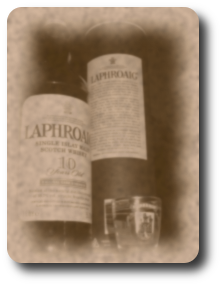
Okay, so any excuse to bring out the Laphroaig is fine by me, but the cute little eeePC is better than most. That it’s cute and popular is all very well, but what really makes my day is this is the first device I’ve seen that both doesn’t hide the fact it’s running Linux, and is available in maintstream stores in Australia. A random review from the Sydney Morning Herald:
You also don’t get Windows. Asus has adopted the free Linux operating system that’s been slowly yet steadily growing in popularity over the past decade. This keeps the cost down and makes better use of its relatively modest hardware, which would creak under the weight of Windows. It does mean not being able to use your favourite Windows software but, fortunately, the Eee PC comes with dozens of programs, including the familiar Firefox web browser and Skype for online phone calls.
That came out on the day the eeePC was released in Australia. Three days later, they did a followup:
Taiwan computer maker Asus might have underestimated the local demand for its diminutive Eee PC, as the $499 laptop is now virtually sold out in Australia.
From that, there’s a brief take on who’s actually buying them:
“We’ve had customers coming in buying two or three units for the family - the mix of customer has been probably novices more than the tech types,” he said.
It’s really good to see that Linux is getting credit in pretty much all those stories, no matter how mainstream. Xandros is pretty rarely mentioned, and I don’t think I’ve seen Debian mentioned yet. But even without the credit, it’s still pretty cool that with the eeePC and Dell’s trysting with Ubuntu, the real in-roads to pre-installed consumer Linux these days are building on Debian. I’d always expected that Red Hat or SuSE or someone with more commercial muscle would get through that door first (they’ve certainly had box sets more readily available!), but apparently elitist, freedom obsessed, techno-geekery actually works better, somehow. At least when there’s a company to put a smiley face in front of it all :) The other interesting thing about choosing Xandros, is that it presumably means the eeePC is covered by Microsoft’s patent protection scheme – which means no baseless threats against eeePC users from Microsoft, but also that Microsoft’s probably getting a cut of whatever Xandros receives from each eeePC sale. Whether you think that’s a problem or not, the result is probably going to be that it’s the thin edge of the wedge: it’s removed Microsoft from blocking a Linux preinstall on consumer hardware, which means we can see that regular people like Linux systems enough that they sell out in days. And that means Linux systems are a fact of life, and if Microsoft try to stop them by making it difficult for you to sell Windows systems, well, that’ll just make it difficult to sell Windows systems – which is another win for Linux. And once you get to the point where the argument for paying off Microsoft doesn’t rely on keeping your OEM deal for Windows, but is just a matter of whether their patents are actually valid… Oh, also nice from the promoting free software angle, is that the first thing you see if you decide to visit Asus’s eeePC site to check the gizmo is the news item:
2007.11.27 ASUSTek is committed to meet the requirements of the GNU General…
Add the fact that an eeePC running a Debian-derivative has access to all the software in the Debian repositories for no cost, and the new government’s planned rebates and investments in IT probably mean that parents can get close to a full refund, and you’re getting pretty close to a choice of spending nothing and getting a popular, reasonably functional and very portable laptop with all the software you could ever want, that just happens to be running Linux, or paying an extra few hundred or thousand dollars to get a Windows laptop, and then probably pirating whatever software you end up needing. In any event, to my mind, that makes 2007 the year of the Linux on the desktop: everything from here is just a simple matter of quantity. What’s next?

Evan Prodromou: 15 Frimaire CCXVI

My friend Hugh McGuire just launched a new Web site: earideas. It's a curated collection of the best podcasts on the Web -- kind of an interesting choice. Hugh's best known for the Librivox project -- a collaborative effort of thousands to make public-domain audio books freely available on the Web. He's also the leader of datalibre.ca and the co-founder of Collectik, the social sharing site for podcast enthusiasts. All of which is to say that he's a massive-collaboration kind of guy. So why the curated collection? Says Hugh, "It s built specifically so that you don t have to do anything much more than you do when you turn on a radio." In other words, they're finding the best stuff for you. I think the site makes a nice complement to Collectik. In any event: the gang at earideas has asked for lists of people's top 5 favorite podcasts. I'm still not very much into the podcasting thing; I don't have a portable digital music player, and I haven't found listening to music on my laptop or desktop really useful. But I do listen some of the time, so I figure I could give my suggestions.
  1. Linuxcast by the personable and telegenic Don Marti. Great coverage of software and society in the Free world.
  2. FLOSS Weekly. The "weekly" part is a bit of a stretch, but this is a very good interview show about Free/Libre/Open Source Software. I miss Chris DiBona as host, but Randall Schwartz is no slouch, either.
  3. Destinyland. Destiny is perhaps one of the greatest pop culture researchers alive today. This very occasional podcast is just like having Destiny corner you at a party and talk for 90 minutes about the suspicious circumstances of Alfalfa's death. It's fascinating.
  4. CBC Radio 3 Podcast. Yeah, it may make me terribly unhip, but I like Radio 3.
  5. Radio Open Source. I want to hate this show for capitalizing on the name "open source" without actually providing any open content or talking about Free Software. But it's one of the best shows on the Web.
All right, that's my five. Good luck, Hugh and the rest of the gang at earideas.com. tags:

Million-dollar idea So, I use a Logitech Trackman Marble for my desktop computer -- sometimes called the one true pointing device. I think it's awesome, and I've had it for maybe 10 years. The only downside is that every 6-8 weeks I have to pop off the cover and clean out all the finger oils, dust, hand hair and cookie crumbs that have amalgamated to a greasy, fuzzy crud inside. It may be one of the most disgusting things I do regularly -- and remember, I have a 2-year-old, so that's saying something. Anyways, here's my idea for a device, free for you to use. It's a self-cleaning trackball (or mouse). Just like a self-cleaning oven, every few weeks you'd click a special button on the device and it would heat itself to 800 F for about 90 minutes until the dang thing is just glowing white-hot and it vaporizes any crud that may be inside. Then, you can go about your business with a smooth, clean mouse (or trackball) again. Viola! I think the idea would work for keyboards, too, but I really rarely clean my keyboard. Filthy keyboards seem to work fine most of the time, and when they don't work well you can just throw them away and get a new one. But there's no accounting for taste and anyways people may want to buy a matching set of self-cleaning keyboard and mouse rather than just one or the other on its own. You, reader, can use this awesome million-dollar idea on your own, free of charge. Enjoy! tags:

Philipp Kern: Travelling in 2008

So I just booked train tickets to Z rich to attend the Debian Bug Squashing Party on January 12-13, 2008. This will be my first BSP and yay, I will meet fellow DDs (and NMs). The only occasion where that happened by now was LinuxTag 2005, when I attended the Debian Day as a freshly accepted Developer (and got an exemption from school for it). I also attended CeBIT back then but felt strange when visiting the booth, although my AM was present, so I quickly left again. I hope to change this the coming year: so I will go to FOSDEM in Bruxelles on February 23-24, thanks to Sven Krohlas, an Amarok fellow, for organising the trip. Maybe I could also attend DebConf 8 if there are some travel funds available for me. We will see, I really look forward to it. Perfect occasions to get more involved, to boost my English and to meet some people I only know from IRC and mail.

Christian Perrier: I'm Indian-da

I think that all Debian developers (including the brand new ones) will be delighted to learn that we not only have 4 indian DD's now, but we have an Indian DPL, at least according to his own words after a few beers. The first two days at FOSS.in have been quite busy. Sam's first talk ("Giving back to the community, how does Debian perform") was really interesting with ideas about a possible place where various distributions' patches to software could be collected and made available to upstream authors. I then had two talks in a row, which I feared a little but went pretty well. The first one was a brand new for me ("Contributing to Debian for dummies"). I tried to enforce the idea that contributing to Debian might be fun and opened to everybody, not only deep hard-core hackers (I funnily took my friend Andrew McMillan as example for hard-core hackers....). To make the talk less boring, I did choose to illustrate the various ideas I was explaining with photos taken from the various Debian-related events I attended last years. So, many of my Debian friends will recognize themselves on my talk slides. I hope you people won't mind being taken as examples (I should maybe have asked your authorization before....in case some of you want to sue me for using your public image). The other talk I has was a quite standard i18n talk. As I don't like doing the same talk over and over, I changed that one slightly to make it more suitable for the local audience, putting focus on localization for languages of India (even doing some of the "famous" bubulle-style maps especially for India). In case you aren't bored with that one, here's the link to slides. The next day features some other projects days. I will put focus on talks from the Indlinux project day. Indlinux is indeed an amazingly active project and the small room was entrely packed with people attending quite technical talks about Indic computing, Text-to-Speech, Indic languages spellchecking and such really specific topics. I also attended a very promozing talk by Dimitri Glezios, in the Fedora project day room, talking about Transifex, a very promising localisation material collecting platform with the interesting ability to be able to push translations back to thei respective upstreams, avoiding one of the major drawbacks of tools such as Rosetta. I'll have to come back on that one. Now for the Main Confeence days....that will be busy, too, for sure ! And I didn't even mention the awful Mozilla party we had yesterday night. Some people will remember that one.

Jose Luis Rivas Contreras: New xscreensaver package

There's a new xscreensaver version already in Debian, 5.04-1 is in ftp-master waiting to be mirrored in the rest of the archives, thanks to damog :-). In other things a CVE was fixed and new hacks were added.

5 December 2007

Steve Kemp: I'll be the only person in the nursin' home flirting

After mentioning the xml-resume-library package I was reminded that the English translation has been out of date for over a year. With permission from the maintainer I've made a new upload which fixes this, and a couple of other bugs. On a different topic it seems that many Debian-related websites are having their designs tweaked. I'm not redesigning mine, but I'd love other people to have a go. Here's hoping.

Miguel Gea: Vim (2)

I've been using vim for long time. Last weeks I've been improving my configuration, and now I have:

* Integration with quilt
* Navigate into deb files
* It shows C functions prototypes
* auto-completion of C structures
* auto-completion of known strings
* Project management
* syntax correction
* translate documents with apertium
* doxygen function auto-comment
* extended shell scripts support (snippets insertion, syntax correction, parameters control...)
* highlight current line
* show unified diff for local file changes

And now: I must to program in java. I don't like it, and the worst is that the better I found to program in java is Eclipse. It's powerful but it needs a lot of processor, memory...

Recently I've discovered eclim, a vim plugin that integrates Eclipse on it!!! The only "problem" I found on it is that it need eclipse 3.3 and in Debian we only have 3.2. I've downloaded and old eclim version (1.2.3) and it seems to work nice in Debian.

Sune Vuorela: Debian developer. Yay.

There seems to be some kind of tradition for publically telling when one finally gets a debian account. It was apparantly my turn late last night. Unfortunately my internet was gone at that time, so no possibility to see for myself. But now net is back and time to celebrate. It seems to be a tradition to thank all sorts of people, so I guess I need to follow that tradition as well. Thanks everybody who helped me on the way. Including but not limited to the big group of regular sponsors, one time sponsors and NMU sponsors that have put my work in the archive. (and that also covers my application manager - he sponsored the second or third attempt to NMU a *urgh* yada-using package). Time to try break stuff.

Romain Francoise: Note to self #233

To avoid having ugly fonts on a brand new Debian install:(In related news, installing Debian on the Dell XPS M1330 is totally boring, because everything just works. Even the remote control.)

Evan Prodromou: 14 Frimaire CCXVI

One thing that's been interesting me lately is RSS. Yeah, I know, not exactly cutting-edge technology, but the format -- in its three different forms -- has become the default for machine-to-machine transfer of serial information on the Web. So RSS really represents our individual or collective presence on the Web spread across time, space, and theme. I'm particularly interested in RSS because I'm working on themed portals like Keiki. It's one of our goals to pull in the parenting part of a person's personality spread on other parts of the Web, so you don't have to re-enter it in Keiki if you don't want to. It's a fun problem to be solving. But as I was playing with the format, I realized that I'm spread pretty far across the Web, myself. I make most of my contributions to this blog, but I'm also part of other communities and a user of other services. What if I used some software like Planet to pull together the disparate threads of me into one place? So that's what I did. I ended up using a tool called Gregarius instead of Planet, mostly because I originally intended to install it on Godaddy's hosting service, which doesn't support cron jobs, which Planet needs. Once I realized how ad-infested GD's "free" hosting service is, though, I moved all my sites off of it, and back to Antipater. And my personal aggregator is there, too. It was interesting to pull in the accounts I've listed on About Me and see which ones produced RSS feeds. Some I expected (my Flickr feed, my del.icio.us feed) and others I didn't (my Upcoming feed surprised me). I was also surprised by sites that didn't produce a feed. I really expected something from Pownce and Tribe.net), but I couldn't get them to cough up a feed. Most disappointing was Facebook, which has a really nice mini-feed of my activity there that doesn't seem to translate into an RSS feed in any possible way. But otherwise things went very quick. I found Gregarius really easy to work with, although its inability to pull tag (metadata) and categories out of RSS streams. There's an autotagger plugin, but I haven't gotten it to catch any tags yet. Oh, and the OPML output was horrible -- I think it might generate HTML that looks like raw OPML -- totally useless. In any event, if you feel like cyberstalking me or just seeing what I'm doing around the rest of the Web, keep an eye on evanprodromou.info. There's even a handy aggregated RSS feed... just in case you want it. tags:

Holger Levsen: what is going on in Venezuela

Obviously I don't know, but I guess that this article is much closer to the truth than most of the news sites and magazines.

Wouter Verhelst: Something is broken

Something recently broke with the setup on my laptop. Symptoms: when I switch from one application to another, suddenly nothing gets updated anymore. I can move my mouse around; but apart from that, the screen shows no updates. Judging by the sound of the fan, it would appear that something or other is looping at that point, too. So far this has only happened when switching from one GTK+ application to another, but I haven't had enough of them to be sure it really is GTK+-related. For reference, I'm using the best window manager out there, using the nv X.Org driver, and for now I've seen the lockups when switching between Liferea, Firefox, and Pidgin. Of course, having a system lock up completely makes it rather hard to debug, especially if you're on the road and don't have a second system handy; but any hints as to what's causing this would be most welcome. Otherwise, I guess I'll have to "hope" to encounter this when I can actually debug it...

David Welton: Hecl Java Integration

Yesterday, I took the Java integration I'd been building into the Hecl Android port, and moved it into its own directory, so now it's built in to the command line/j2se (non JavaME) version of Hecl for people to experiment with. Here's a slightly modified version of my posting on the subject: I created a java/ subdirectory with an org.hecl.java package that does a few things. The core of the system is in JavaCmd and Reflection. The first creates commands out of Java classes. It utilizes, obviously, the reflection stuff in Reflection. Both are, at the moment, sort of hacky and tentative, but work. For instance, I checked in this bit of test suite today:
test java-2  
   java java.util.Hashtable ht
   set hasht [ht -new  ]
   $hasht put foo "bar"
   $hasht get foo
   bar 
The 'java' command takes a class, and string, and creates a new Hecl command 'ht' that is tied to the Hashtable class. ht -new (could have been -new [list]) is how we call the constructor. After this, $hasht points to a Hashtable, and we can utilize its methods. Up to a point, at least - there have to be mappings in Reflection to deal correctly with types. For instance, there isn't a mapping for Enumeration right now, so calling the .keys() method wouldn't do the right thing. There are some more bits and pieces of magic: There are some open issues with the ongoing work:

Michal Čihař: Downtime 15 hours

Finally happened the thing which I expected to happen since I left to Japan. My server (currently being few thousands kilometers away) crashed and exactly followed Murphy's law to break in time when it would caused largest possible downtime. Anyway it's now back and I hope all services are correctly running. And no, I have no idea what caused power led to blink and make the computer unresponsive for anything except plugging it out of power and then pugging it back. Hopefully it will not repeat, at least not until I'll be back in Prague :-).

Next.

Previous.