Search Results: "zed"

10 September 2010

Bernd Zeimetz: refactoring the guruplug server plus

As mentioned in my last blog post the GuruPlug Server Plus needs some major refactoring before it can be used. Not doing so will make you end up with a fried brick. There are various stories in the forums about cooling it properly, so you might want to have a look first instead of following mine blindly. And of course - whatever you do - it is your fault when you end up with a brick, not mine!.

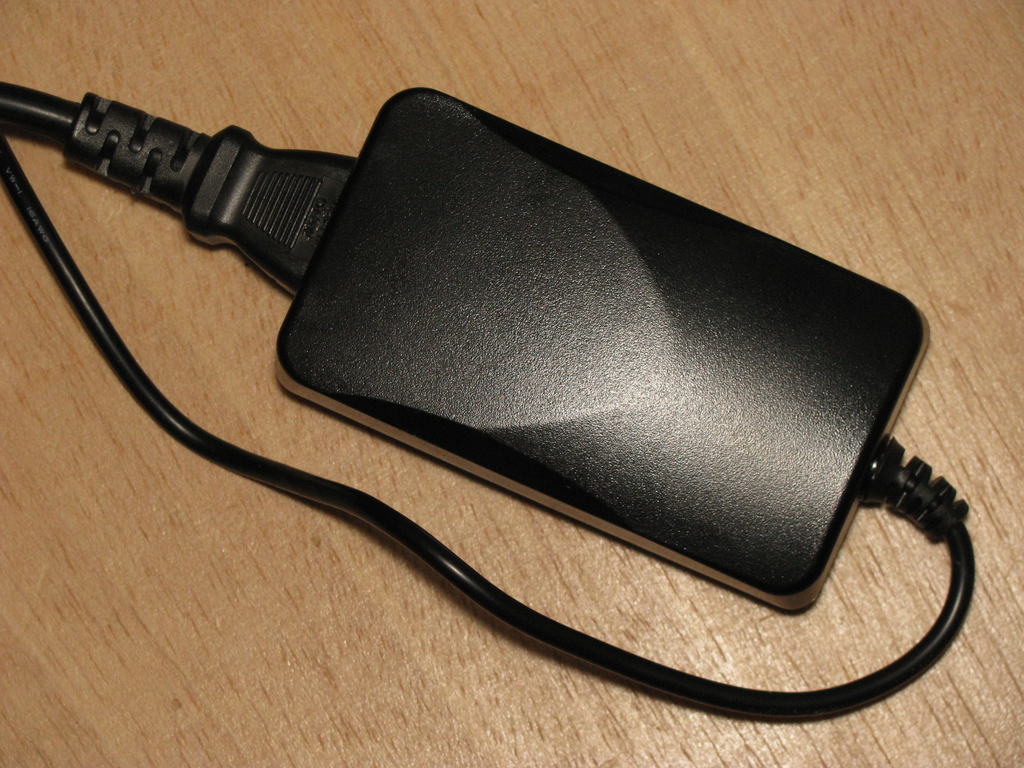
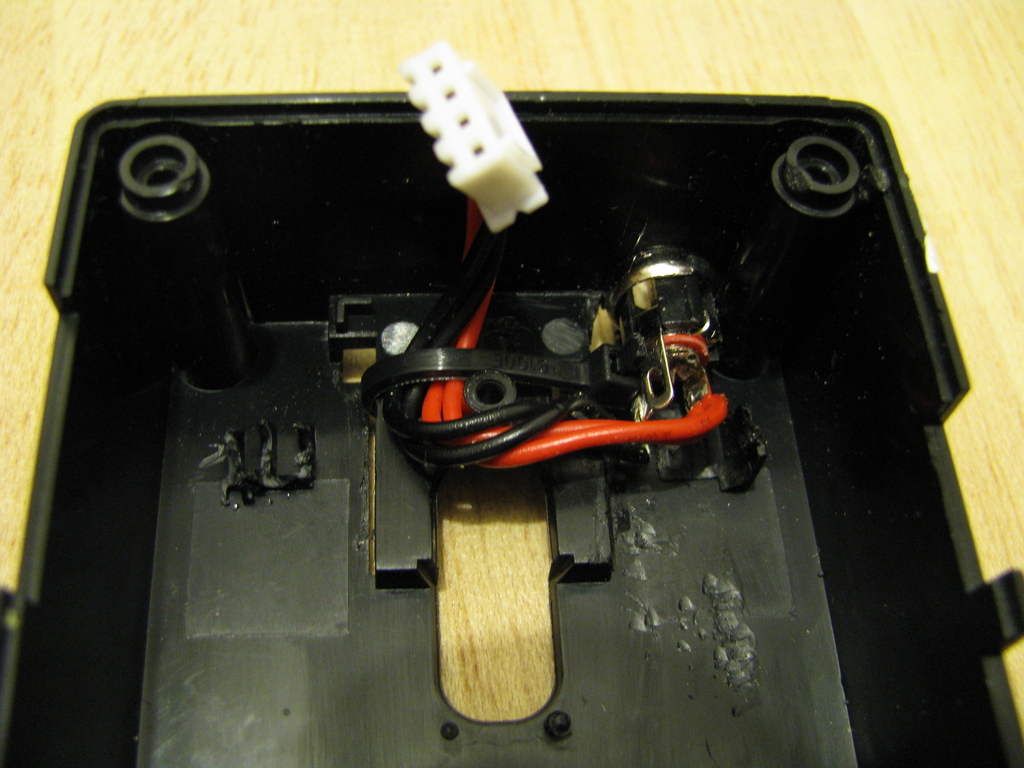
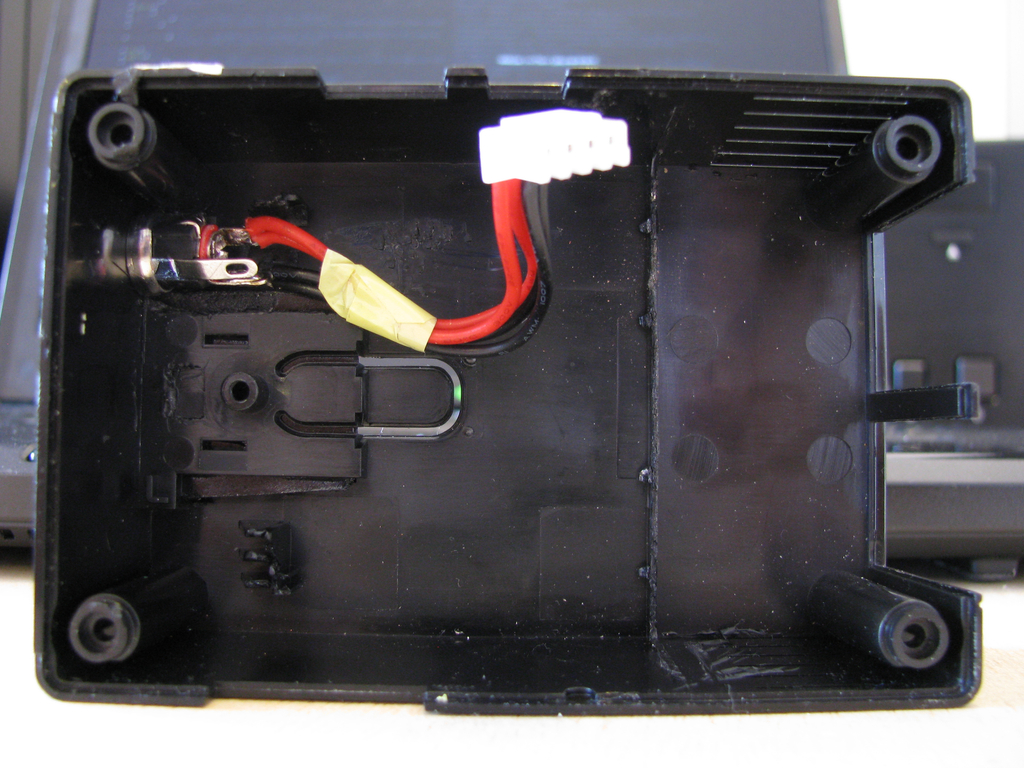
Replacing the power supply As I would never ever trust the PSU (see my last blog post for the gory details) and some additional free space in the case is necessary, it is time to rip it out. As replacement I've ordered an external 5V/20W PSU. To connect it to the plug I've drilled a hole into the case and added a proper connector after soldering the original cable from the old PSU to it. Make sure to add some retainer to stop the cable from touching the CPU/memory heat sinks later. GuruPlug Server Plus PSU replacement GuruPlug Server Plus PSU cabling

Proper heatsinks One of the biggest problems in the original GuruPlug design is the heat spreading and collecting piece of alloy, which probably makes things even worse than better. After some discussion in #debian-devel the idea came up, that the board should be able to run fine without a heatsink - at least when idling. That is the case, indeed. So let's get rid of that piece of alloy, together with the holders and springs. Unfortunately heat things are necessary to handle some work load. To mount them make sure you get some good thermal glue as you don't want to insulate the chips from their heat sinks. I've used Arctic Silver II thermal glue - not cheap, but working well. Make sure to clean the heat sinks and chips properly with alcohol (2-Propanol is my favourite for that), so there is no fat and dust left. When you use the glue be careful to read the documentation properly and make sure you apply only as much as necessary - a thin coating is enough. After applying the glue and mounting the heat sink you need a clamp to put some pressure on it while the glue dries.

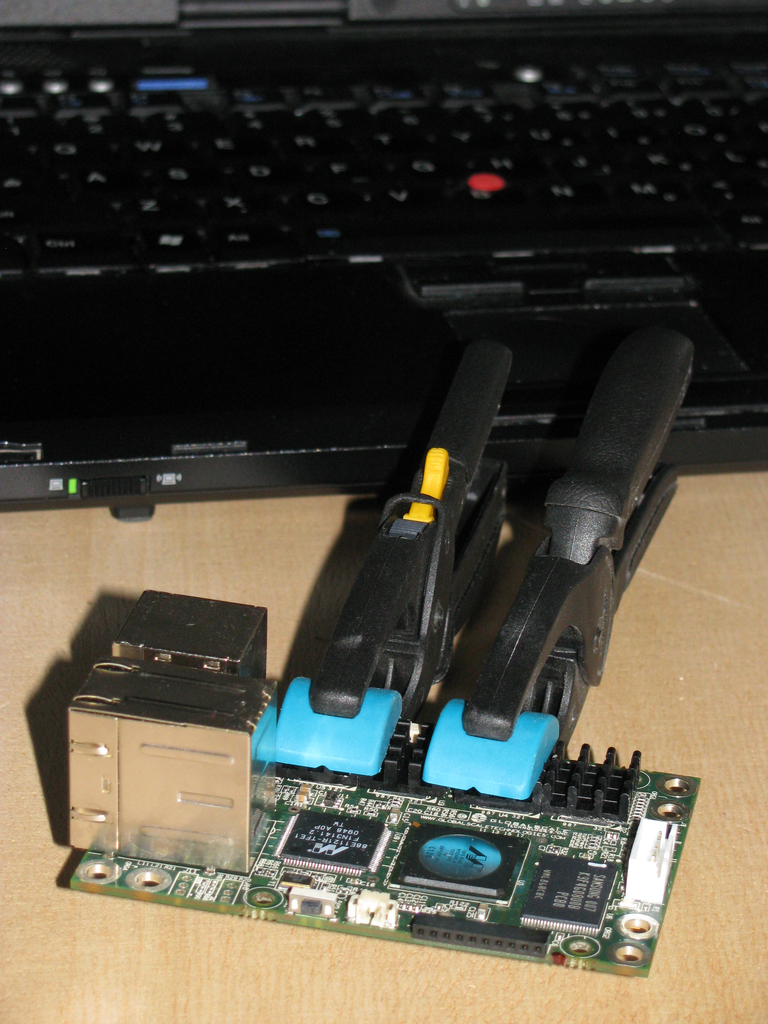
Heat sinks for the memory As there is a lot of space around the memory chips, I've got some 14x14x6mm heat sinks. Luckily there are only small parts on the other side of the board, so it was not hard to attach clamps to ensure the glue is able to dry properly. In case largish amounts of glue are squeezing out between heat sink and chip you probably want to start from scratch and clean everything (quickly!) with alcohol again. GuruPlug Server Plus memory heat sink clamping

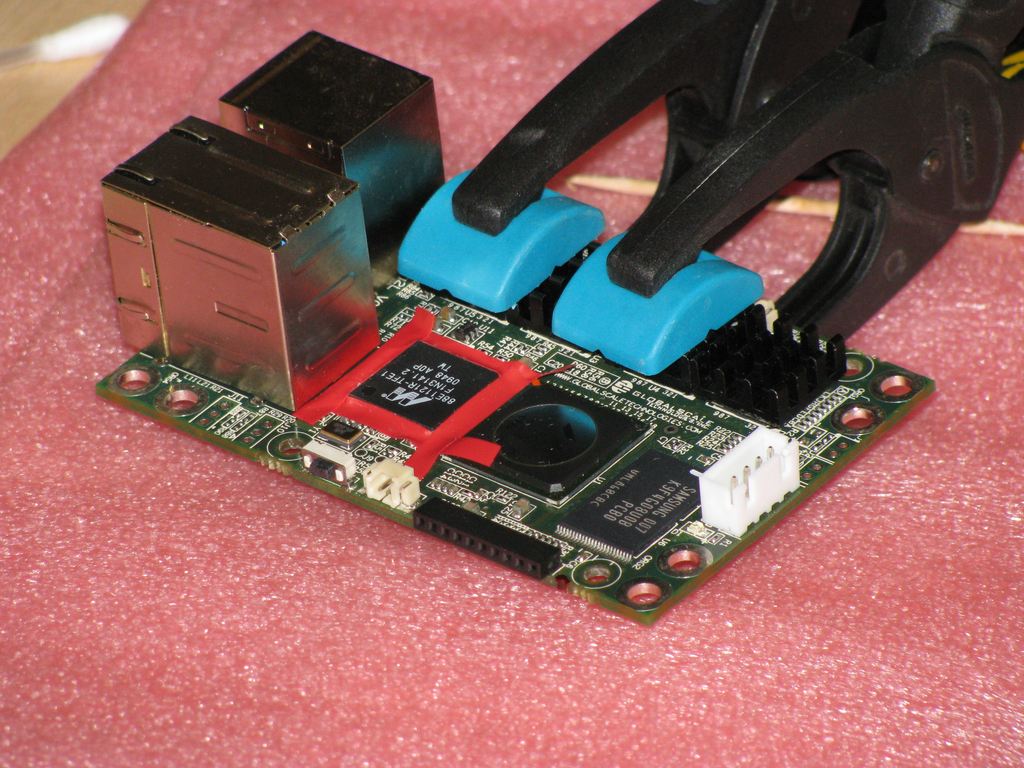
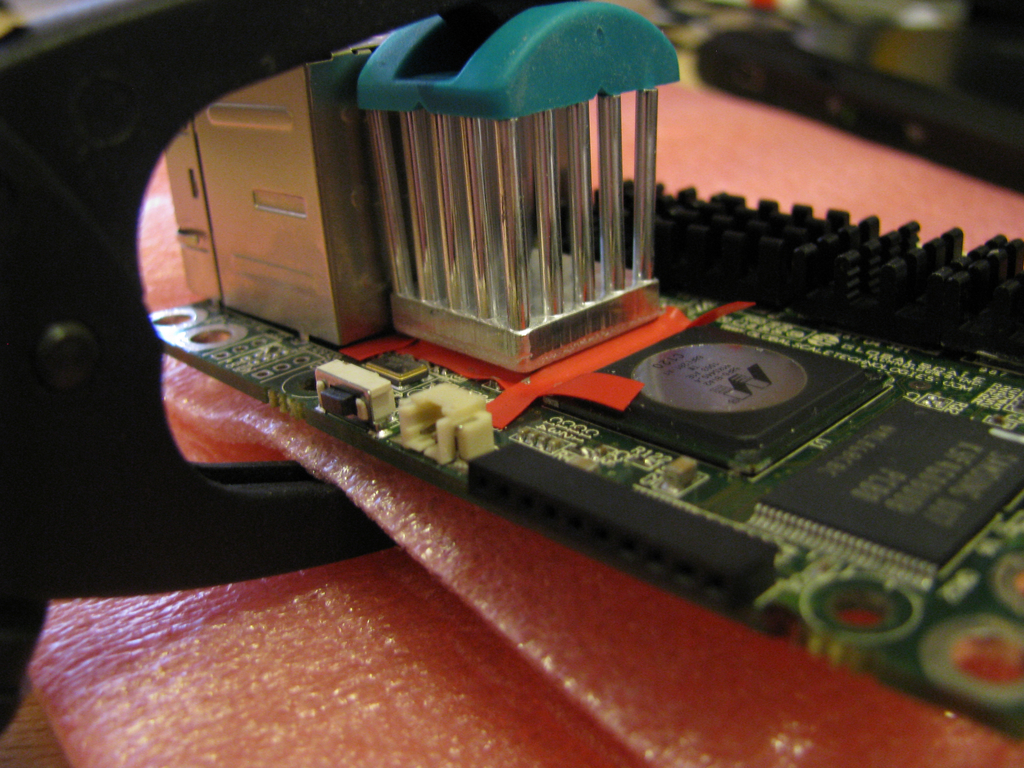
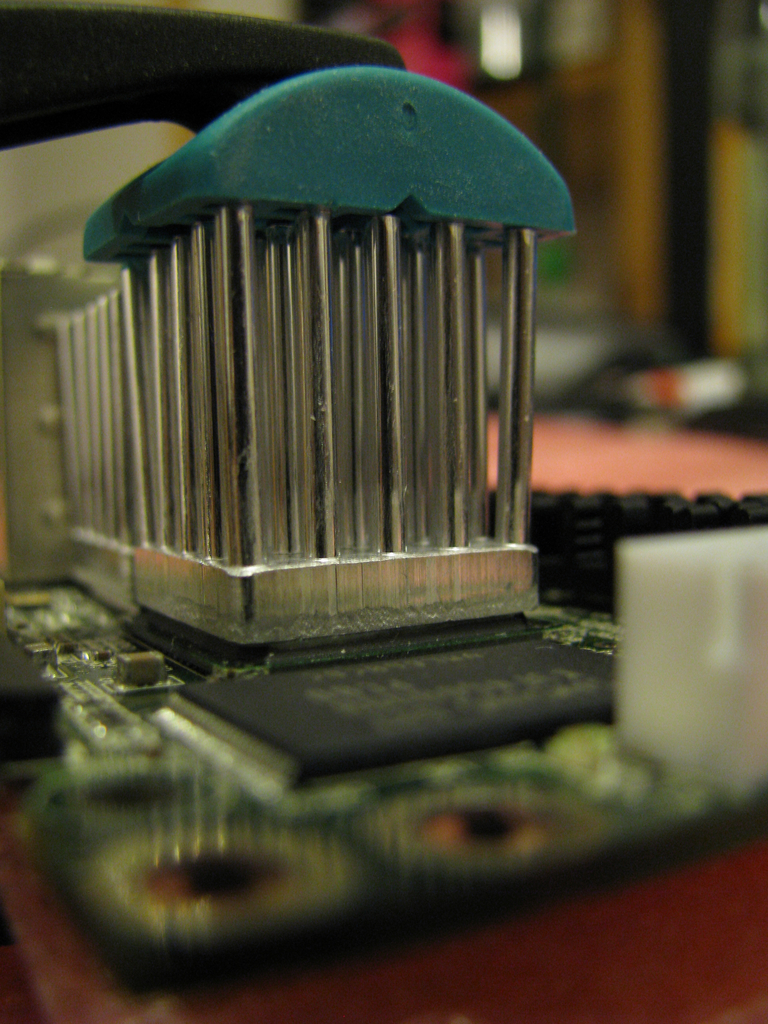
Gigabit Ethernet PHY and CPU heatsinks PHY and CPU need proper heatsinks as they're becoming pretty hot under load. Due to space limitations I had to stick with a 17x17x20mm heat sink for the PHY. I've tried to get a largish heat sink with BGA mount for the CPU, but I was not able to find one in short time and without ordering 1000 of them. So I've got another one of the 17x17x20mm model for the CPU. Later I found two other heat sinks which might fit on the GuruPlug's CPU: Malico 19x19x25mm or a Advanced Thermal Solutions Maxigrip. But for now the smaller one will have to do the job, also I'm scared to removed it without destroying the CPU. To mount the heat sink on the PHY a bit of preparation is necessary to ensure that the glue doesn't result in short cuts on the IC's pins. The arctic silver documentation recommends to use silicone on the pins to stop the glue. As I neither had the proper silicone nor did I want to make such a mess, I've decided to get a sticky insulating tape and some tooth picks to mount it properly on the IC pins. Make sure to do a proper job here! With good clamps you can work on the PHY while the memory heat sink glue is still drying. GuruPlug Server Plus - preparing the PHY The other problem on this side of the board is that some higher parts are mounted on the lower side of the board, so make sure to get some foam to protect them from your clamps. Except of the size of the heat sinks there is no real difference to the small ones: add glue, mount the heat sink and fix it with a clamp. GuruPlug Server Plus - mounting the PHY heatsink Before the glue dries completely make sure you remove the duct tape strips again. Be careful not to wipe any excess glue onto the IC pins. If you manage to do so you might want to remove and clean everything properly. So just be careful and everything should be fine. GuruPlug Server Plus - mounting the PHY heatsink 3 Mounting the heat sink on the CPU is easier as the CPU is a nice BGA package. No need to protect pins an there are none. GuruPlug Server Plus - mounting the CPU heatsink

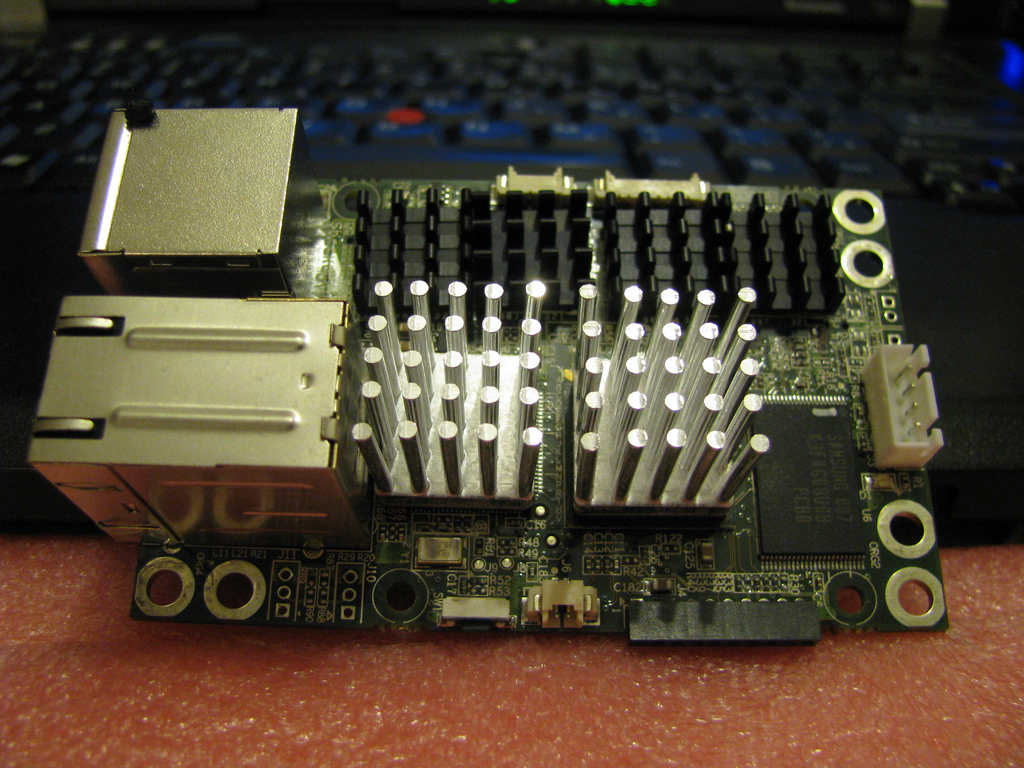
Finished As you're able to see on the photo I did not the very perfect job, but fine enough to work properly. GuruPlug Server Plus - heatsinks

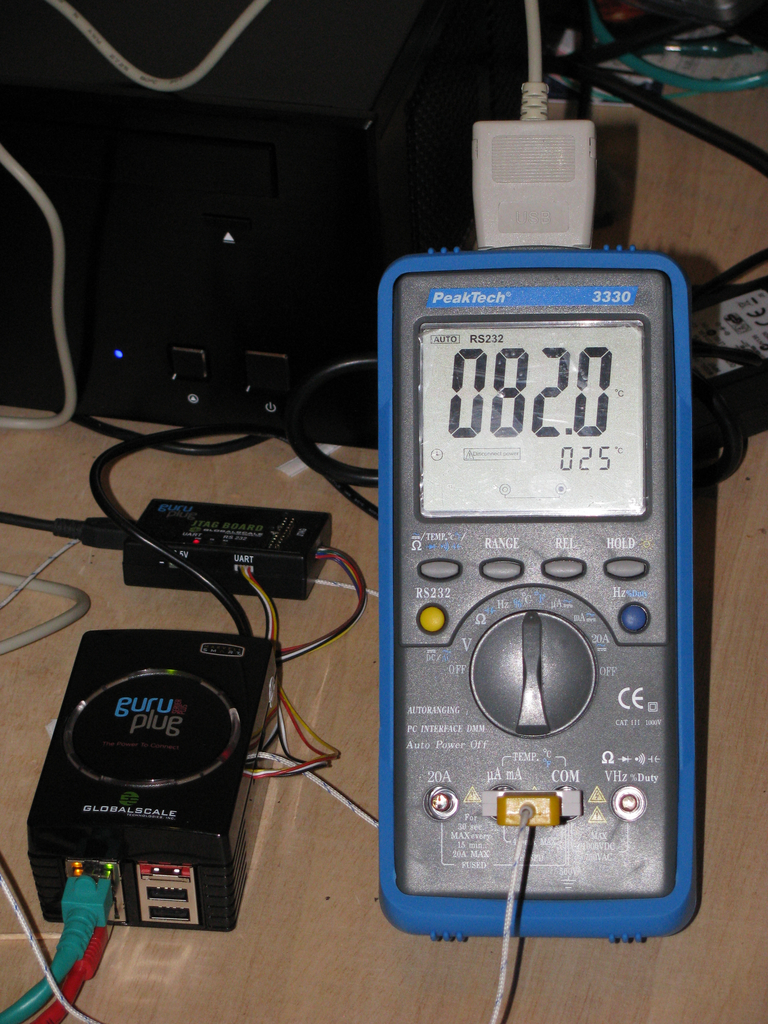
First tests with the new heatsinks Some tests with stress and some heavy network traffic showed quickly that the heat sinks are working well! But not well enough to be able to mount them into the original closed case (how the hell was this supposed to work before!?). Without any air to breath the temperature on the CPU heat sink went up to 85 deg C quickly. So on the CPU's die are > 100 deg C, which is at least close to the max allowed temperature. GuruPlug Server Plus - still too hot

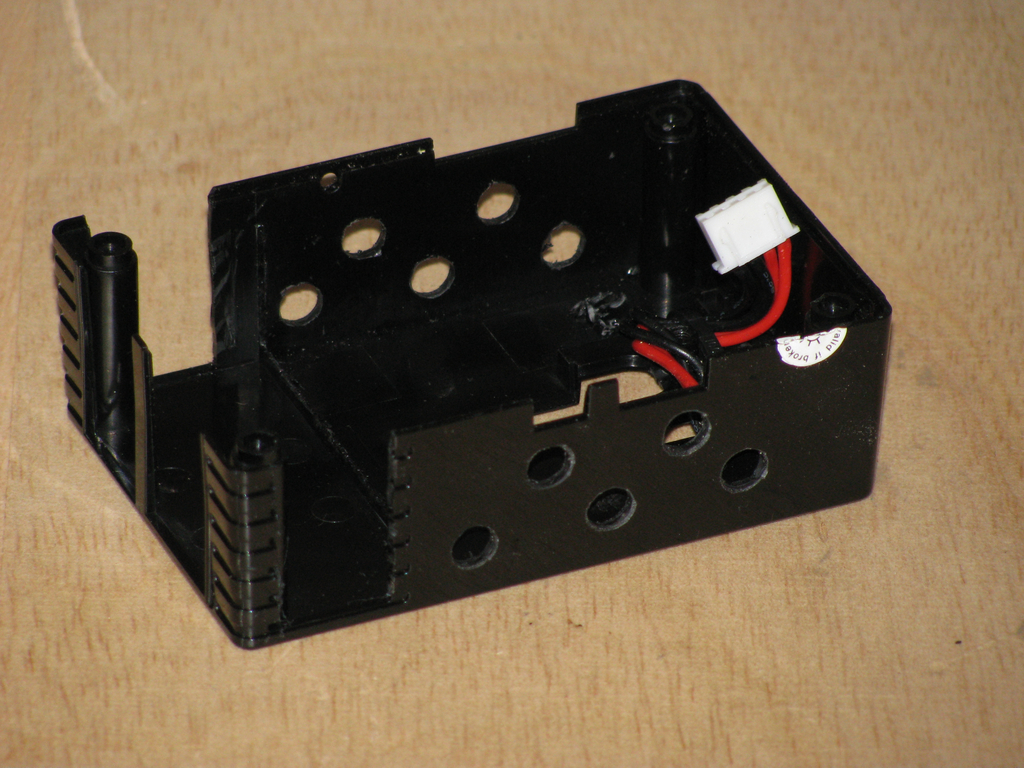
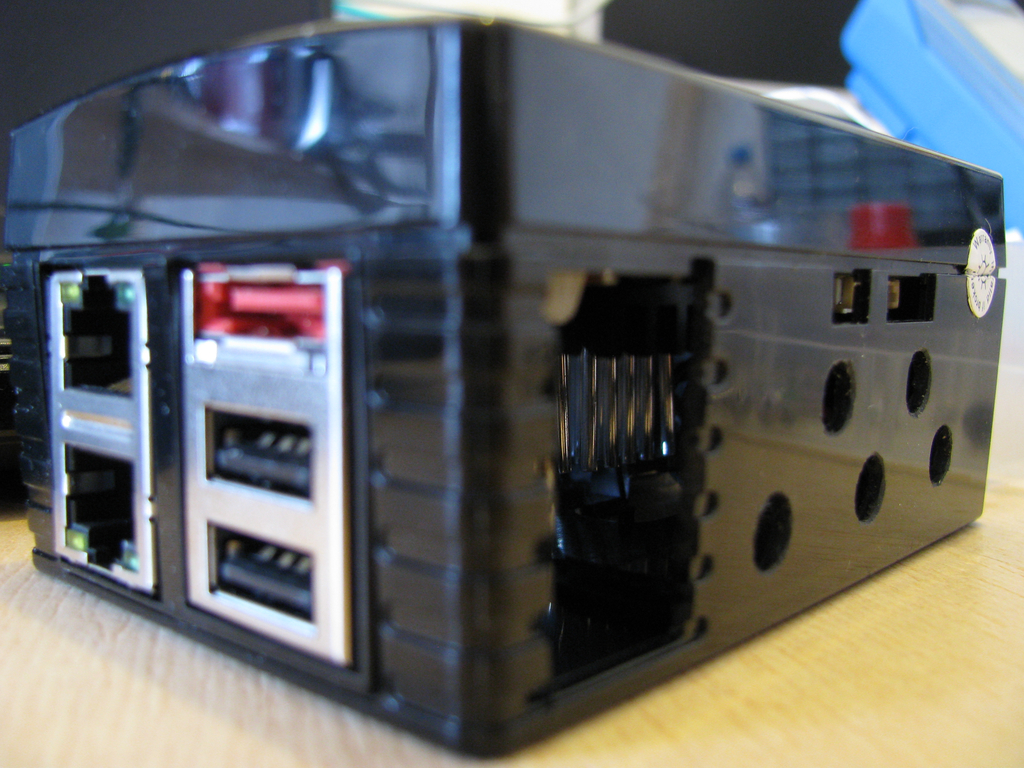
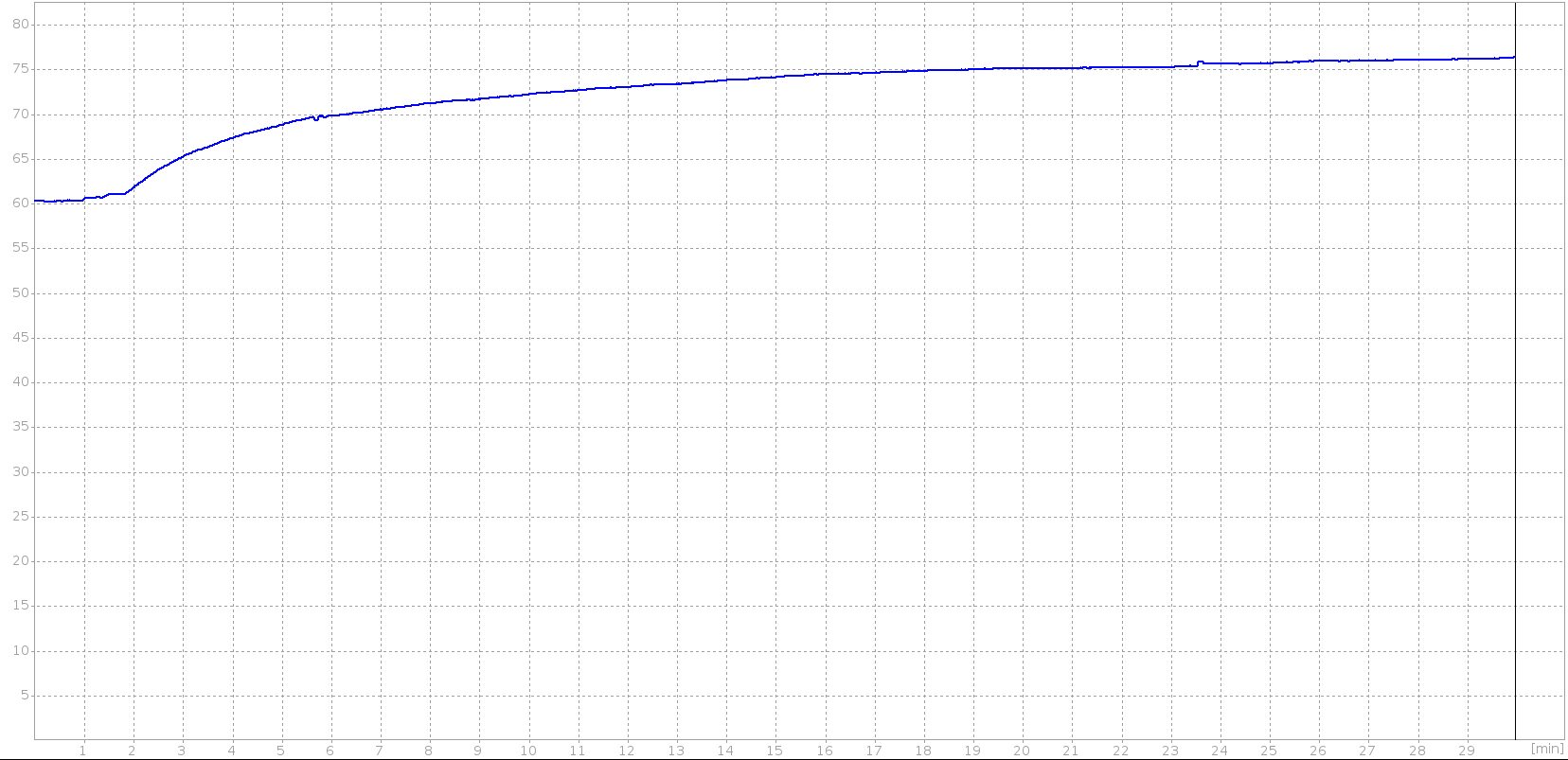
Adding air holes Obviously some additional air holes are necessary. After meeting my drill and cutter, the original case looks a bit like a piece of cheese now. GuruPlug Server Plus - case with air holes 1 GuruPlug Server Plus - case with air holes 2 Some more tests show that the temperature sticks around 76 deg C under heavy load now. That is still pretty hot, especially when the temperature in the room becomes hotter in summer. As I'm not going to run a lot of traffic trough it (my cable connection is limited to 20 MBit/s anyway), I guess it will work. Below is a graph I've recorded with my multimeter and qtdmm. It shows that the temperature rises to ~76 deg C and stays there. GuruPlug Server Plus - temperature curve Not sure if I could introuce some more load, the CPU had a load of 6 running stress. Network traffic was around 2x100MBit/s again. I could imagine with 2xGBit the CPU and PHY would become much hotter (no idea if it would be able to handle it at all, though). The PHY was usually a bit cooler than the CPU, so I didn't spend time to measure the temperature properly.

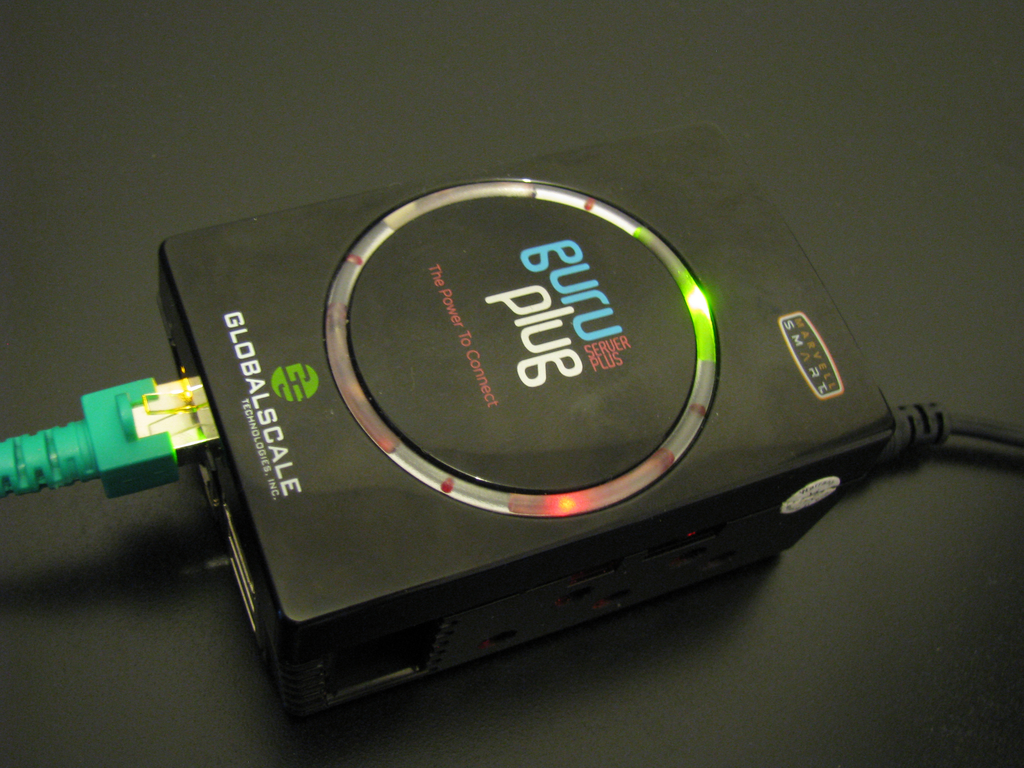
Conclusion My opinion is still the the original design of the plug is an insane QA and design failure. There is no way that it could ever work as shipped originally. If I'd have to design a new case for it, it should have a single insulated compartment for a PSU to ensure that no contact with high voltage is possible. The case around all other parts should be made of alloy with a lot of air holes. So the case could be used as heat sink (properly done, not with these insulating duct tape strips) and at the same time allow air circulation and a nice view on the LEDs on the board. Of course the case would be much more expensive than, but I'm sure it would work properly and would be worth the money. And if done peoperly, it would look much better than this blinking plastic thing. I could imagine it would sell well! So at the end I'm wondering what GlobalScale Technologies will do. I doubt it will be possible to create the 'professional upgrade kit' as they had announced before. Replacing all units is the only proper way. We'll see what happens. At least my GuruPlug is working well now and it will be used as replacement for my OpenWRT router soon. WiFi is not working, but that will be handled by my media center anyway. GuruPlug Server Plus - running plug

Joey Hess: sunny day

I'm back in town. After approximatly 4 full days of use, the first battery bank dropped to 9 volts, my cutoff point for safe use. Which turned out to be below the safe use point of my laptop power adapter, which burnt out while I was busy listening to music and adding power-saving caching stuff to my mpd setup. Irony not appreciated, world. I decided to come back while the other bank is still relatively full.
my modest PV array
Hurrying downtown to grab lunch in between work on Branchable, I noticed it was a beautiful sunny day, and I realized that this makes such days even better, because besides enjoying them, I know I'll be enjoying the yield on chilly nights sometime later. Well, in theory. Actually, the very antique charge controller in the house was dead and bypassed, so I removed it. I called its manufacturer wondering if it could be refurbished, but they suggested it belonged in a museum. So I've ordered a new controller, a Xantrex C-35. Until that comes, pretty days like today will charge, or possibly over-charge the batteries, which will then drain back out at night.

Lior Kaplan: Hebrew translation and Bidi issues in Openoffice 3.3 (beta)

In the last few years the Israeli government founded some work on openoffice.org by Tk Open Systems Ltd. During the years, the work has resulted with an Israeli version , released after the official release and includes a lot of patches to improve support for Bidi and Hebrew specifically. Although most patches were submitted to the hamburg , a lot of them weren t used and are still waiting for inclusion. The funding the that projects stopped a year ago (9/2009), and the last release of the Israeli version is 3.1.1. Since then we had a quiet period in which 3.2 and 3.2.1 were released. While still enjoying the fruits of the projects in these version, it seems that it s time for the community to take over, as we lost hopes for yet another funds from the government. In may Netanel and I started talking about taking over the Hebrew translation, and in June we got Hebrew added to the openoffice.org pootle server. We started with about 80%, and got to 86% in time to get to the list of languages getting a language pack built for. This was a first achievement as Hebrew didn t have a language pack since early on the 2.x versions. I believe that working as part of the openoffice.org l10n group and with openoffice.org release schedule will only benefit for the Hebrew translation process. We used the language pack to test the translation and improve it. We also were able to get to 89% with the help of more volunteers.I believe it s now much more consistent than before. In the process with manually checked Writer thoroughly, while Calc and Impress got less attention due to the time frame. But we fixed some major translation issues in all of the three components. While testing the translation we also started to report Bidi issues we saw in 3.3 beta, hoping they will be fixed for the final release. For example, the main openoffice.org screen on windows has is getting repainted wrongly when moving the mouse over the options (text, spreadsheet..). This looks very badly as this is the main screen! See issue #97556 for details
Openoffice.org main screen in RTL UI

In RTL UI the main screen doesn't get repaited properly.

In addition to report new issues, we also started to keep track of the already opened issues regarding Bidi and Hebrew. I m following the issue system for a few years now, but seeing the list of issues organized in the wiki gave me a better orientation in the problems we have. E.g. finding some related or similar issues and mention each other in the comments, when someone goes to first one, he could also fixed the other as the problem is similar and probably comes from the same code. Organizing also the already closed bugs in 3.x, gave me a some kind of a changelog for the Bidi and Hebrew related issues. In that manner, version 3.1 was a very good for Bidi, thanks for a lot of efforts and work with the Bidi meta issue #79434. The wiki page is in Hebrew, but looks quite OK with Google translate (see here). Hoping to have 3.4 a major release (Bidi wise), I ve opened issue #114236 as another meta issue for Bidi related issues. I ve kept Hebrew specific issues out, as to get it more general and also relevant for Bidi users in other languages. Any help of those issues will be more than welcome (starting with votes and ending with patches).
Filed under: i18n & l10n, Israeli Community, Openoffice.org

9 September 2010

Cyril Brulebois: SD: Bugzilla gets history support

(Disclaimer: Possibly one of my longest post ever, you may want to scroll to the bottom and only look at the pictures.) So, what s new in SD since last week? Fetching everything From http://bugs.freedesktop.org/, it was possible to download all the bugs I reported there (that means 2 ), but trying to download those reported by Julien led to a crash without any trace. Dichotomy FTW, I came up with a bunch of bugs which would lead to the same result, which confirmed that the amount of bugs processed at once wasn t the issue. Playing around with strace, it appeared that exchanges with the remote server were apparently fine, so an issue on the client-side SOAP machinery got suspected. So let s enable tracing:
use SOAP::Lite +trace => 'all';
Tada! The issue was indeed local: malformed XML got received, leading to a die call issued from the XML-RPC layer. Thankfully, one can set up a fault handler, which I used to display the range of bug IDs which triggered that bug, so that people can look into it and determine what to add to the blacklist until the underlying issue s been investigated (presumably, bugzilla s at fault). Speeding things up With that blacklisting of buggy bugs, one can then try to move to other queries, dealing with more bugs. Some examples follow:
reporter=kibi@d.o
product=xorg&component=Driver/VMWare
product=xorg&component=Driver/nouveau
product=xorg&component=Server/general
product=xorg&component=Driver/intel
Moving from 2 bugs to 10-100 bugs (Julien s or VMWare s) was OK. But then moving to several hundreds of bugs (Driver/nouveau = 500+ bugs) led to noticeable performance issues. Not to mention what happened when one reaches several thousands of bugs (Driver/intel = 2500+ bugs). Indeed, even with network exchanges cached into a local file, processing data was taking up to several dozens of minutes. I knew about Perl s -d:DProf, which helps figuring out where time is spent, but was pointed to -d:NYTProf (and its accompanying tool, nytprofhtml). Some hotspots got noticed: Things got better, but not good enough. There are several Prophet (the engine under the hood) backends, so one can play with:
PROPHET_REPLICA_TYPE=sqlite   # the default for SD
PROPHET_REPLICA_TYPE=prophet
Switching to prophet was a big win, but still not good enough. Indeed, many tiny files are written, and most of the time is spent in I/O. Although I m nothing like a performance guru, I guessed that running on an average laptop, with ext3 and its default commit interval of 5 seconds might not be helping, so I gave a quick try to -o remount,commit=60, and that seemed to help. Even though there are probably other tricks to find in that area (which hopefully won t require root privileges ), there s already a patch which landed in prophet s master branch, replacing File::Spec->catfile with an optimized version: that function alone was eating 10% of runtime In the sqlite case, disabling the auto-commit feature helped reducing the I/O load, but a proper patch is still lacking for now (running into locked database issues, or into missing tables after having created them isn t fun, so I postponed debugging that). Since performance issues looked like they could be solved eventually, I switched back to implementing missing features. Handling more than comments Currently 3 types of stuff are currently fetched from the bugzilla server: (Yes, that means that attachments are totally ignored for now.) Until now, only bug comments were considered. The first comment was used to determine a pseudo-title (using its first line), the reporter, and the creation date. This approach was chosen to try and get a basic sync working quickly, so as to get: Now, the algorithm is the following: from the bug status, determine a set of properties of interest; then walk the history backwards, and update the properties incrementally until the (presumed) initial state is reached. Then create the ticket using this initial state . Adding the incremental property changes to that initial ticket makes it possible to represent the bug s life as a list of Prophet::ChangeSet objects. That s where the fun begins, since properties in the bug status may not match properties in the bug history, so one needs to establish property correspondence. Also, some properties can be multivalued for added fun. I believe that s where most of the time is going to be spent while developing a new replica type in SD: once one knows how to get a hand on needed info on the remote server, the main question is what to do with it. For now, I decided to ignore many fields to make it possible to do a big sync like Server/general, property support will be improved later on. Screenshots Instead of pasting lengthy terminal excerpt, let s use some screenshots instead (sorry, I m not sure how to present such things in an accessible way, suggestions welcome). Cloning Julien s bugs, listing all open tickets, listing all tickets, searching using a regular expression: Cloning, listing, searching Displaying bug 42 (that s the local ID): Displaying Now, let s start the embedded web server through sd server --port 1234 and point the browser there. List of RESOLVED bugs: List of RESOLVED bugs Status and comments for bug 42: Status and comments for bug 42 History for bug 42: History for bug 42 Compared to the original bugzilla page: Same bug on FreeDesktop.org Next time Some items which need work: Flattr this!

Christian Perrier: Care about samba in squeeze?

If you do care about having good samba packages in squeeze, you can help. If you're in a hurry and don't want to read the blah-blah, just skip to the end of this story and read the last paragraph. Thanks to the confidence of the release team, we (samba packagers) have been "authorized" to upload samba 3.5.4 in unstable, thus targeting having that version in squeeze. Up to July, we were indeed targeting 3.4.8 for squeeze, on the assumption that, as usual, samba upstream releases need some maturation before being strong guarantee that no regression happens. In July we were ready to move and finally upload in unstable the 3.5 packages we kept in experimental until then. The final decision was to be taken during DebConf10. It was roughly taken with Steve Langasek, but....I couldn't upload immediately (most people know that working on major packages during DebConf is a dream)...and had holidays afteer. In the meantime, the freeze happened so we got theoretically screwed... Still, I could manage to convince the release team that long term support for samba 3.5 will certainly be better than 3.4...and that functionality in that version (particularly several Win7-related fixes and a much improved code for printing support) and we got a notice "please upload to unstable and come back to us in a few weeks". That happened, finally. So, now, we need YOU, samba users and admins, to test these packages. Merging our packaging branches was hard (thanks, Steve Langasek, for your help) and glitches are always possible. So, please TEST these packages by installing samba, winbind, libsmbclient and friends from unstable....and report bugs, preferrably the release critical ones....

Raphaël Hertzog: Can Debian achieve world domination without being on Facebook?

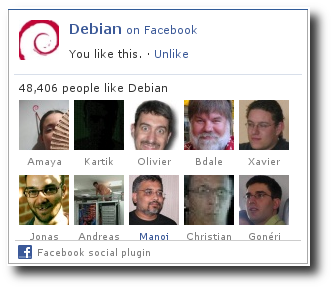
Debian Developers who like Debian on FacebookFacebook is not very popular among free software hackers. When I announced my Facebook page on identi.ca (see here) I got a few replies suggesting it was odd for me to use Facebook. Indeed there are many good reasons why Facebook should be avoided: it is a centralized and proprietary service that is not very privacy-friendly. But the truth is that lots of people are using it (even Debian developers, can you recognize them on the picture?) and some are using their Facebook news feed as their main source of news. You might wonder how many persons that represents, so here are the figures: the Debian Facebook page has 48,361 fans and the Ubuntu one has 247,932 fans. That s right, an announce put on the Debian facebook page would reach more persons than the most popular announce list that Debian is currently running (debian-announce@lists.debian.org has about 29,000 subscribers). Unfortunately that Debian Facebook page is empty and I don t even know who the administrator is. The Ubuntu page on the contrary is properly configured to relay news from The Fridge and Jono Bacon is posting some custom updates from time to time. Debian contributors regularly mention world domination as the ultimate goal of the universal operating system (I even feature this in my blog header banner! :-) ). But working towards world domination means in my opinion that we should communicate our ideals of freedom to as many people as possible, even if they are using a service that we don t want to promote. The Debian social contract acknowledges that some users have to use non-free software and we provide the non-free section for them. In the same spirit, I believe we must have a presence on Facebook. That does not mean that we endorse Facebook, and we should surely promote Joindiaspora once it s usable. But in the mean time we should reach out to Facebook users and allow them to follow us with the platform of their choice. That s the choice I recently made when I decided to setup a public facebook page featuring my free software work, my blog and my book. So if you are a Facebook user, click here to visit my page and click on Like if you want to follow this blog in your Facebook news feed. I also share interesting Debian or Ubuntu related articles that I discover while reading my RSS subscriptions. Below are the usual facebook widgets for the 3 pages quoted in this article (they might not show up if you read this article through an RSS feed):
<iframe allowtransparency="true" frameborder="0" scrolling="no" src="http://www.facebook.com/plugins/likebox.php?id=103161013077063&amp;width=292&amp;connections=0&amp;stream=false&amp;header=false&amp;height=62" style="border:none; overflow:hidden; width:292px; height:62px;"></iframe>
<iframe allowtransparency="true" frameborder="0" scrolling="no" src="http://www.facebook.com/plugins/likebox.php?id=9801962186&amp;width=292&amp;connections=0&amp;stream=false&amp;header=false&amp;height=62" style="border:none; overflow:hidden; width:292px; height:62px;"></iframe>
<iframe allowtransparency="true" frameborder="0" scrolling="no" src="http://www.facebook.com/plugins/likebox.php?id=6723083591&amp;width=292&amp;connections=0&amp;stream=false&amp;header=false&amp;height=62" style="border:none; overflow:hidden; width:292px; height:62px;"></iframe> Flattr this Share/Bookmark 14 comments Support my work

Matthew Garrett: Things

The last few months have been busier than I expected, resulting in various failures to get stuff done. The good news is that things are a little more relaxed now and I'm gradually catching up, but if you've emailed me and I haven't replied then you should probably do so again.

A couple of updates - the source code for the Augen Android tablets I wrote about still hasn't been released, but the vendor does seem to be doing their best. Their supplier seems to be refusing to hand over the source code (they were given a tarball that was supposed to be it, but in fact just turned out to be the various GPLed bits of Android) and they're obviously stuck between a rock and a hard place. The obvious observation is that they should have done due diligence before starting to ship these things, but given that they're out in the wild and they're trying to improve things it seems reasonable to carry on working to try to obtain the source rather than insisting that kmart stop selling them.

Fusion Garage, on the other hand, are still failing to provide source and seem entirely unconcerned about it - they've failed to respond to any of my emails since the first. Augen aren't providing source because they can't, while Fusion Garage aren't providing source because they won't. Irked by this, I've decided to try Don Marti's suggestion and file a case with US Customs. I'll admit that I have absolutely no idea how seriously these cases get taken, and so I've no great expectation of any sort of interesting outcome. But even so, if you're in the US and try to buy a Joojoo then there's a chance that it'll be seized by US customs on the way in.

8 September 2010

Giuseppe Iuculano: chromium-browser removed from testing

Ok, this happened, chromium-browser was removed from testing and will not be included in Debian squeeze. Some days ago (before the hard freeze) I contacted the release team and asked about a possible inclusion of Chromium 6 in squeeze. The main reason of this request is that in April there was at least one major refactoring of the SVG code (webkit). The internal webkit copy is too outdated in chromium 5, and backporting any future SVG security patches (and unfortunately the story says they are frequent) is very hard. I got no answer, and after one week of silence and the hard freeze announcement, I realized that chromium 5 is not supportable and decided to upload chromium 6 in unstable (It was already in experimental). I asked the Release Team to unblock chromium-browser 6.0.472.53~r57914-3 or remove chromium-browser 5.0.375.127~r55887-1 from testing. Well, after one hour they removed chromium-browser from testing. I failed, my efforts to get chromium in Squeeze were in vain. Debian failed, a modern and much appreciated web browser will not be included in our next stable release. Related posts:
  1. Why would you prefer chromium-browser in sid over google-chrome
  2. Chromium ready for unstable

John Goerzen: Stories of Amateur Radio

It was back in July that I got my amateur radio license, and I haven t written much about it since. It s about time I do. I ve been really enjoying it. I am now wishing I hadn t put off getting into it for so many years. It s a lot of fun and promises to be a lot of fun for a long time. Why? I am frequently asked, What can you do with amateur radio? Yes, you can talk to people all around the world, but of course you can do that with the Internet. Talking to people all around the world can be done with no infrastructure in between, so that s a pretty neat feature, but not compelling to everyone. I have realized that the question is poorly-framed. I had asked that question myself for a long time and only recently realized that I was asking the wrong question. I think the better question would be, What makes amateur radio fun and a good way to spend your time? One thing I ve discovered is that the amateur radio community has an amazing sense of community. Hams, almost universally, seem to love helping out each other, whatever the task may be: setting up antennas, learning how to operate a radio, even fixing a flat tire. I ve seen this directly, and heard about it from others, time and time again. There s an excellent article out there by Nate Bargmann called Why I consider Amateur Radio an asset in my life that makes for good reading. There is a lot of fun in amateur radio. It was quite exciting the first time I talked to someone out of state, realizing that the piece of wire in my trees, and 100W of transmitter power, were all it took to get a message 700 miles away. And even more exciting when I talked to a person in Kazakhstan the same way. No satellites, no phone lines, no undersea cables just my antenna, his, and radio waves. Then there s the fun in talking to somewhat random people. It s not completely random, as I m only talking to people that have passed a test there are about a million of us in the USA. (And for the long-distance HF communication, a more rigorous exam is required, so the number is probably less than that.) But when I call CQ an invitation for anyone listening to reply I never know who will reply. I ve talked to a retired Canadian museum curator, a Mississippi farmer, a resident of Long Island, Russians participating in a contest, two Hawaiians participating in a different contest, and the list goes on. Some of these have been brief contacts lasting only seconds, while others have been conversations that stretch on towards an hour. I liken amateur radio to buying my first iPod. I had never owned a portable MP3 player. I had always figured, why bother? How often am I away from a computer or a CD player? But once I got one, I realized how nice it was. It was convenient to just store my entire library on there and not have to try to sync it across multiple devices. It was convenient to not have to carry CDs with me in the car, and to listen to music at places I hadn t tried to before. The same sort of thing applied to getting a Kindle, and to amateur radio. I didn t realize how much fun it would be until I tried. Some Memorable Moments Towards the end of showing you some things that have been exciting, here are a few memorable moments from my ham radio experience so far. Saturday night was one. I was tuning around listening to anybody to talk to. I heard some people calling CQ in heavy accents. I eventually realized that the All-Asia contest was going on, and figured out how to participate. I made my first voice-mode contact with people on a different continent and it was with Kazakhstan! Within a few minutes, I also talked with three stations in Russia. I had not expected that. I ve made contact with several stations in the Indianapolis area, where I used to live. It was particularly fun to talk to W9IMS, located at the Indianapolis Motor Speedway, which operates around race times only. Again I discovered that station simply by tuning around on the band. I took a 5W handheld radio with me to New York City during my trip there for Debconf. It was a lot of fun to talk to random New Yorkers while visiting, and they were all very interested in my impression of the city, what I ve done so far, and what they thought I ought to do. Some offered specific tips (such as which train from Manhattan to Brooklyn offers a good view while elevated). A local ham, W0BH, gave me some basic training on how to operate during amateur radio contests. During these contests, hams try to make contact with as many other hams in as many places as they can. I didn t think this sounded like a lot of fun. Until I tried it. It was indeed a lot of fun, and interesting being occasionally that rare Kansas station that a bunch of people are trying to talk to at once. One evening, we lost power. I tried calling the electric company, but there was no answer over there for some reason. We re out in the country, and there are no neighbors visible that can inform us whether it s a big problem that the power company probably knows about, or whether it s localized to us. So after wondering what to do for a minute, I thought I d get on the radio and ask. (We own a backup generator for these situations.) Almost right away I heard from a person driving in his pickup. He told me he saw a widespread outage, and heard on his police scanner about other towns that were down for the same reason. I wouldn t have known otherwise.

7 September 2010

John Goerzen: Labor Day with Jacob and Oliver

Yesterday started out with Jacob and me going to a men/boys breakfast organized by my great uncle and some others. He s in his 80s and this is probably his last year doing this. It was out in the woods by the Little Arkansas River. They cooked up bacon, sausage, and eggs and it was a fun time. Jacob enjoyed throwing sticks in the river and sitting on some logs. Terah, meanwhile, went to Wichita with Oliver. So it was just Jacob and me when we got home. Jacob spent two hours playing rivers with me. A few weeks ago, he and I set this up outside. I found an old length of pipe on our property (my dad thinks it used to carry water from a well) and some cement blocks. I set it up on the blocks so that one end is higher than the other, and the lower end empties out at the top of a small dirt pile. Then I brought a water hose over to it, turned on the water at a very slow speed, and put the hose in the pipe. The result is a small stream of water coming out at the dirt pile. After it runs just a little while, the dirt is soft enough that you can dig out little channels, or rivers , with your fingers or a stick. Jacob enjoyed this the first time he played, but yesterday he really enjoyed it. We had a fork in the river, and he informed me that he would sit on his bank and I would sit on mine. He also wanted to give river food to his river (the fork closest to him). River food was loose dirt that he d pick up and sprinkle over the water, and watch it get carried on down. I spotted some random bug in the area once, and that bug got food too. I think Jacob and the bug disagreed about whether this was particularly helpful. Jacob enjoyed playing other games with the pipe. I had showed him that we could send things through the pipe, so he would take out the hose, stuff some dirt in one end, and then make sure I was watching to see if it came out the other end. He sometimes made a fountain by setting the hose on top of the cement blocks and watching the water drip down from level to level. Then later in the day, I introduced him to Tuxpaint. This is a painting program aimed at children. I had told him I had a painting game to show him a few days ago, but because he made some bad behavior choices, he had lost access to my computer for a few days. Anyhow, we tried it yesterday and wow he loved it. There was constant laughter and excitement. I first showed him how to select colors for the paintbrush. He quickly figured out how to make lines, change colors, and change brushes. Tuxpaint has sound effects for just about everything, which he loved too. Then we explored the interface together and I showed him the stamps feature, which lets you paste pre-made pictures into a drawing. Tuxpaint comes with dozens of these, on kid-friendly themes such as animals, cars, fire trucks, signs, etc. This he loved even more. Terah and Oliver got home about this time, and Oliver and Jacob both sat on my lap for a time, both laughing loudly each time Jacob discovered something new to paste into his picture. Of course, then Oliver tried to eat my keyboard and smash my monitor, but there you go.

Benjamin Mako Hill: Selectricity Source

After a semi-recent thread on debian-devel, I poked around and realized that I'd never actually gotten around to formally announcing the release of source code for Selectricity, a piece of web-based election software designed to allow for preferential decision-making and to provide "election machinery for the masses." Selectricity is useful for a range of decisions but it targets all those quick little decisions that we might want to decide preferentially but where running a vote would be overkill. Things were delayed through a drawn out set of negotiations with the MIT Technology Licensing Office over how to release the code under a free software license of my choosing. I was swamped when things finally came through. Over time, I managed to forget that I never did a formal announcement, never setup a mailing list, and never did all those things that I have tried to teach other people in the Free Software Project Management HOWTO. Code just sort of appeared on my website under the GNU Affero General Public License. It was until the debian-devel thread that I remembered I'd never made a formal announcement. Sorry about that! The git repository has been online and accessible through searches for more than a year now. Most folks who wanted the code seem to have been able to find it there. Indeed, a number of people have set up their own instances and a few have submitted patches to the code! But more visibility for the source means more empowered users, more visibility for free software, and more developers. So I've shipped all the code into a project in Gitorious (its like GitHub, except free), announced things on the Selectricity Blog, changed the Selectricity footer of to include a prominent link to the source. I've also created a mailing list. The Gitorious project page includes a wiki. I also want to mention this all here because the attention of the current development team seems mostly to have moved on to other projects. The current team seems able to keep the hosted version up and running, and even gets around to little improvements now and then, but there's definitely room for new life and new leadership. There are some nearly-complete and "complete minus further testing" features in the development tree that might provide low hanging fruit for folks interested in elections and decision-making who might want to get involved in Selectricity development. If you're interested and know (or want to learn) Rails, feel free to check out the code, introduce yourself on the list or contact team@selectricity.org to coordinate.

Biella Coleman: Ireland

This summer of 2010 has been memorable. It started with a difficult period following the hospitalization and death of my mother, a series of very intense and equally memorable conferences catapulting me out of my funk and ending with a trip to Ireland, perhaps one of my most pleasant trips ever. I have always wanted to go there, as I have some good Irish friends and I was also quite attracted to the place due to its history, so when the opportunity came for me to go, I did not hesitate to book my ticket. I was not left disappointed in any way, shape or form, although since I barely experienced the gray, misty, and rainy weather Irish is famous for, my experience may admittedly be a bit skewed. These are some of things I did and some of my fragmented thoughts about Ireland and some photos, proof that the weather was UnIrish Ireland and The Irish: Well I can t as no one can speak of The Irish as if they were some unitary group but I did learn a lot about Irish history and managed hang out with a number Irish folks (even a family) and one thing that seems to mark Ireland as distinct, what makes it stand out from the rest of its Western European brothers and sisters, is the pervasive sense of history bleeding into the ambiance, perhaps because it is so tragic. The short version of the history, if you don t know it, is that the Irish, especially the Catholics, got repeatedly screwed by the British monarchs/rulers/planters/government/ for nearly a thousand years, the last five hundred of those being particularly harsh and ugly, a cycle of slight gains crushed by various forms of tyranny and violence at least until part of the country achieved independence (Northern Ireland is a bit of a different story). I may have gone a bit out of my way to learn about Irish history, more than I have done for any other place, but this historical consciousness seemed to be inescapable, precipitating into all sorts of conversations and places. To take one example, I went to see Gaelic Football, one of the two beloved national sports (the other being hurling), and the minute you learn anything about this sport, you learn that it is intimately bound with the Irish fight for independence and nationalism. The Irish are also very warm, kind, and outgoing. They also seem to curse an awful lot as well, so much so cursing is a bit of a national pastime, which yes, I (f*cking) loved as I tend to have a bit of a foul mouth myself, curbed I will admit, in recent years and in the classroom. It crept up in a lot of places but was most pronounced during the All Ireland Semi-Final Gaelic football game when the ladies (not lads, mind you) behind me were constantly yelling at the referee, hurling the c-word (rhymes with trunk) whenever they made a call they disagreed with. EASA/Maynooth.: I went to Ireland to attend the largest Anthropological meetings in Europe, and in specific an all day panel on digital anthropology, which seemed like a great opportunity given we are a a bit of a minority. The conference was impressively large with roughly 1200 attendees (can you believe there are that many anthropologists?), smoothly run, and the all-day panel on digital media was quite lively and I got to meet some really interesting folks. I was a tad sad to find out Maynooth is the only university in Ireland with an Anthropology department (for crying shame lads!!!) but at least it is located in a darn stunning university: the old quarters of the campus are strikingly beautiful. Anonymous: I have done some work on Anonymous and well when I found out there was going to be a raid/protest at the Church of Scientology (a pretty dismal, and run down church), I got in contact with Irish anon to let them know I was coming. Although someone first decapitated me (at least in character with their norms, right?), when I showed up in person, they were not only civil but really quite hospitable (greeting me with one of my favorite songs). Overall it was a great day. I was reminded of important differences among Anons (Irish Anon s take their anonymity pretty seriously, the New York Anons do not) and also good to experience the social life and metabolism of a protest, especially one attended by folks who have lost family to the church. Dublin: Since I stayed with my friend and his family in Dublin, this is where I spent most of my time. I was able to hook up with various friends, including one from graduate school who just got back from years of fieldwork in Rwanda and hearing about his experiences and stunning but stunningly sad project made me feel like mine in comparison was Child s Play (in fact, it really was). I got to see the Debian crew (many who work at Google) and I finally paid a visit to the office, which was exactly how I imagined it to be (good and abundant food, good lighting, lots of toys and bikes, lots of Star Wars posters.. Yep, it could have been in Silicon Valley). But I was surprised at the young age of the marketing and sales folks who were hanging in their lounge when I ran into them. In fact when I saw them I thought like I was looking at my freshman class or something! It was great to see the Debian folks (though no one I met was actually Irish), as well, one of my favorite things to do whenever I visit a foreign city. I walked my heart out in the city getting a blister in a shoe that I thought was blister proof and while not as picturesque as some other European cities, it has a ton of character and no shortage of Guinness and pubs (no surprise there). My favorite places/things were: The National Library (great exhibit on Yeats, but make sure to use the multi-media as that is where all the information is stuffed), St. Stephen s Park (overflowing with chubby ducks and lovely flowers), the prison Kilmainham Gaol (would not advise a visit if you are feeling in any way down, there is some heavy shit you learn during the tour), the simple stained glass that seemed pretty common, and finally the Long Room in Trinity Church, which you enter after the Book of Kells (I realized just how much I adore books when I visited this old library stuffed from floor to ceiling with old old old books). The West Coast: I did not think I was going to head out west but after hurricane Earl started its burst along the eastern Seaboard and I was able to change my ticket for free so I stayed a few more days. I went to the Burren and the Cliffs of Moher both totally stunning, really majestic. As is often the case with these type of these natural wonders, I am often left elated and awed but such strikingly wondrous places also seem to subsequently spur a more melancholic state of mind and heart. Friends, Family, and Dogs: While in Dublin I stayed with my friend A. and his extremely hospitable family, which included, a brother, a father, and three Irish mutts, one of which, Buster (pitt bull/lab mix), pretty much stole my heart. Buster s true love, is food, so much so he almost poised himself to death a little while back snorting down something he shouldn t have costing the family a pretty penny to save him. My friend no longer lives there but came from Berlin and it was a real treat to not only spend days layered upon each other with a friend (it has been an awful long since I have done that outside of conferences) but also meet his family. You learn a lot about your friends that way and in this case, there is some serious and I mean serious intellectual jousting that happens, sometimes bordering on warfare but generally it plays out in more contained, civil and fascinating fashion. Now I understand why my friend is armed with seemingly endless knowledge: it was needed for purposes of defense at home. So in essence, a great, great trip and a fantastic way to end a memorable summer and transition into what I hope will be a bit of a monkish (I call it monk mode) period for this academic year. I am (so so so) fortunate enough to have a fellowship at the Institute for Advanced Study and am going to try my darnest to take advantage of the fact I am not teaching (Hell Yes!) and hide away and accomplish all that I have set out to do.

3 September 2010

Alastair McKinstry: Building a statically-linked program

I'm currently working on a Fortran program at work: a post-processing tool that takes climate data, in NetCDF format, and outputs in CMOR2 format (a NetCDF variant with climate conventions). So, it links against netcdf and cmor. Now in HPC and climate in particular, codes are typically linked statically: partially for robustness, but mostly for speed (more on which later). So, I'd like to link this statically, as I have tens of terabytes of data to process. Now, mostly I've been linking using pkg-config:
  gfortran -o nemo-rewriter nemo-rewriter.f90  pkg-config --libs --cflags nemo cmor 
pkg-config assembles the libraries. For dynamic libraries, the netcdf and cmor libraries are themselves linked to dependencies. But in the static case, all dependencies need to be on the link line, which is more complex. Never mind, it should be possible with:
  gfortran -static -o nemo-rewriter nemo-rewriter.f90  pkg-config --static --libs --cflags nemo cmor 
This should work by assembling all the required static libraries, via pkg-config dependencies. Unfortunately not every package has a .pc file, and so this fails: As of version 4.1 NetCDF allows a URL instead of a file to read, and hence depends on curl to retrieve the file. Curl has no pkg-config .pc file describing its libraries, and it fails. Never mind, lets assemble the static libraries by hand. Debian provides static versions of libraries in the -dev packages. Can I assemble a statically-linked program ? For this I need: Now here it gets interesting. To handle secure communications and authentication, curl has some complex dependencies. It has two versions. Pick the gnutls one for example: I may have missed some out, having stopped because there is no static implementation of Kerberos on Debian. But still, the idea that a simple little fortran proggie will statically link in four database libraries is silly. It appears to be no longer possible to simply statically link a program in Debian, and definitely not via pkg-config, because so many dependencies do not yet have configuration files. Tags , , ,

1 September 2010

Gunnar Wolf: Cycling, cycling everywhere!

I have been wanting to post for several days already, at least since this last Sunday. I have repeatedly bragged about taking part in the Ciclot n: The last Sunday every month, the city's government closes to automotive transit a ~33Km circuit, for cyclists to enjoy. And by cyclists, I mean people from all expertise ranges Well, the very elite bikers will not take part of such a massive thing, but there are people pedalling a couple of blocks, people taking their small kids to drive a bit, and I recognized an amazingly large proportion of people doing the whole route. Well, this last Sunday one lap was not enough for me I did two laps, ~65Km. (oh, and just for keeping the complaint current: After all, SportsTracker did release a version of thier software for the N95... But it requires Flash for using the webpage at all. I have several pointers at other applications... but am time-starved right now to start reviewing :-/ ) Anyway, I decided to do this double ciclot n in order to train for next week. If you are anywhere near Mexico City, you are invited - this is meant to be a large group ride, and looks very fun! Doble Marat n Ciclista Urbano del Bicentenario We are two weeks away from the 200 year conmemoration of the beginning of the Independence War in Mexico. A group of cyclists came up with the idea to organize a Double Marathon to celebrate! 84Km of biking in Mexico City: For some reason, the distance numbers in that map were made... in miles :-P Anyway, the planned route will be:
  1. Jardin de los periodistas ilustres (Delegaci n Venustiano Carranza)
  2. Aeropuerto Internacional de la Ciudad de M xico
  3. Circuito Bicentenario ( antes circuito interior )
  4. Monumento a La Raza - Hospital La Raza
  5. R o San Joaquin
  6. Viaducto Bicentenario ( carril confinado sin interrumpir la circulacion )
  7. Torres de Sat lite 50 aniversario
  8. Presidencia municipal de Tlalnepantla
  9. Presidencia municipal de Naucalpan
  10. Anillo Periferico Sur
  11. Secretar a de la Defensa
  12. Bosque de Chapultepec 1 y 2 secci n
  13. Segundo Piso del Distrito Federal
  14. Ciudad Universitaria patrimonio cultural de la humanidad
  15. Insurgentes Sur
  16. Miguel ngel de Quevedo
  17. Calzada de Tlapan
  18. Z calo centro historico del distrito federal
  19. Calle 16 de septiembre fin del recorrido
It looks very fun. Besides, although it is not that flat, it is one of the flattest long distance routes you will ever have. The toughest part will be IMO the Northern part of Circuito Bicentenario and possibly some bits of Perif rico towards Naucalpan. Then, a long flat stretch, with one long but not steep way up in Segundo Piso (near Las Flores), and a little stretch towards Ciudad Universitaria. Other than that, it looks very doable if you are in a moderately decent condition. And taking part in such a thing is very very worthy! As a final note... This same Sunday, it has been somewhat publicized the first D a Nacional de la Bicicleta (Bycicling National Day) will be held all over the country, kickstarting the National Cycling Crusade. Sounds nice, right? Even impressive? Yeah, but... If you look at the published information (in the page I just linked), you will see several cities are opening cyclist circuits. For one day only, which means, it does not build awareness among the population on how easy, how convenient and how fun it is to use the bicycle as means of transportation. And not only that The cyclist routes clearly make a point that cycling is a good way, at most, to have fun... But not a general habit we should all embrace. Lets see, as an example, the distances offered (only for the cities quoting route length): ...And so it goes. As you can see, several very important cities (i.e. Monterrey, Chilpancingo, Cuernavaca) put only a 2km route. 2Km by bike is... Nothing. 2Km is done at a leisurely pace in less than 15 minutes (I often sustain 20Km/h, which would mean 2Km in 6 minutes). And, in this short sample (the linked page has the information for several other states, but the pattern holds), most states are only making this in the largest city or two, completely forgetting the bulk of their territories. In my opinion, this "effort" was done backwardsly, and ends up delivering the exact opposite message to what should be done.

30 August 2010

Mart&iacute;n Ferrari: Some LaTeX stuff

The last few weeks I have been using LaTex a lot, to write the final report for my master's course. During that period I found a couple of LaTeX goodies that might be interesting to share: the memoir class, gnuplot integration, and some stuff to help preparing cover pages. The memoir class is a kind of all-in-one package. It is meant to be used in place of the book and report classes, but it can also replace simpler environments, such as article. It provides many ready-to-use templates, and loads of commands to easily customize them. It seems to be specially tailored for dead-tree publication, dedicating an entire chapter in the manual to page layout. It also aims at removing the usual cruft you have to add into any medium sized project, it is macro-compatible with: abstract, appendix, array, booktabs, ccaption, chngcntr, chngpage, dcolumn, delarray, enumerate, epigraph, framed, ifmtarg, ifpdf, index, makeidx, moreverb, needspace, newfile, nextpage, parskip, patchcmd, setspace, shortvrb, showidx, tabularx, titleref , titling, tocbibind, tocloft, verbatim, and verse. Furthermore, it provides functionality equivalent to the following packages: crop, fancyhdr, geometry, sidecap, subfigure, titlesec. In the end, you have a project that only needs a couple of packages, and a few customisation commands, which is nice and also eases distribution. Other nice thing I have found is that there is not one, but many ways of merging gnuplot graphs into your text while having LaTeX typeset all the labels. There is some LaTeX packages aimed at this, but I have more success using a special gnuplot terminal. Again, there is more than one option: eepic, epslatex, latex, lua, mp, pslatex, pstex, pstricks, texdraw, and tpic. While I could not try them all, I tried a few and the easiest and prettiest was epslatex. This terminal creates two files: a EPS file, as would have been created with the usual postscript terminal, except that it does not contain any text; and a LaTeX snippet meant to be included with \input foo . Finally, I could generate graphs that match the rest of the document! To end this post, a couple of things about creating the dreaded cover page. First, a suggestion: don't fret too much about finding a ready-made template, once you understood the basics of how to insert arbitrary spaces around text, it is quite easy to roll your own cover! Having said that, the memoir manual has some sample cover pages that can be useful to use as a base, and there is another really useful resource I have found: titlepages.pdf, a collection of 40 sample title pages with source code for you to choose. Tags: Planet Debian, Planet Lugfi, latex

29 August 2010

Luca Bruno: Too many gurus spoil the plug

Being a rather patient and peaceful guy, I acknowledge that perfection is a difficult goal and I rarely rant publicly about troubles I ve stumbled upon.
Today however, I feel I have to wholeheartedly agree with Bernd about Guruplug: it has been a waste of money. I received mine in May, with the order placed and payed in February. First thing noticed is the issue with the power supply: I really think they forgot QA testing on these machines, as my PSU (and many others, just skim through the official forum) blew up just an hour after power-up. I wasn t lucky enough to admire over-heating and internal (mis-)cooling, as it went immediately through GlobalScale sales department for a RMA under warranty. And then I waited for GlobalScale, for an actually working unit. And still I am, it s almost September now. Patiently waiting (hoping, I d say) for some answers. I m not sure who to blame here, Marvell, GlobalScale or both, for this issues with regards to QA, design and sales. But I m quite sure the final result has been already perfectly described: a major fail.

Bernd Zeimetz: the guruplug server plus - major design and qa fail

As a lot of people are coming to my blog to read the installing instructions for Debian on the GuruPlug Server Plus, I shall not hide my opinion about it: It is a major design and QA fail. Don't waste your money on it.

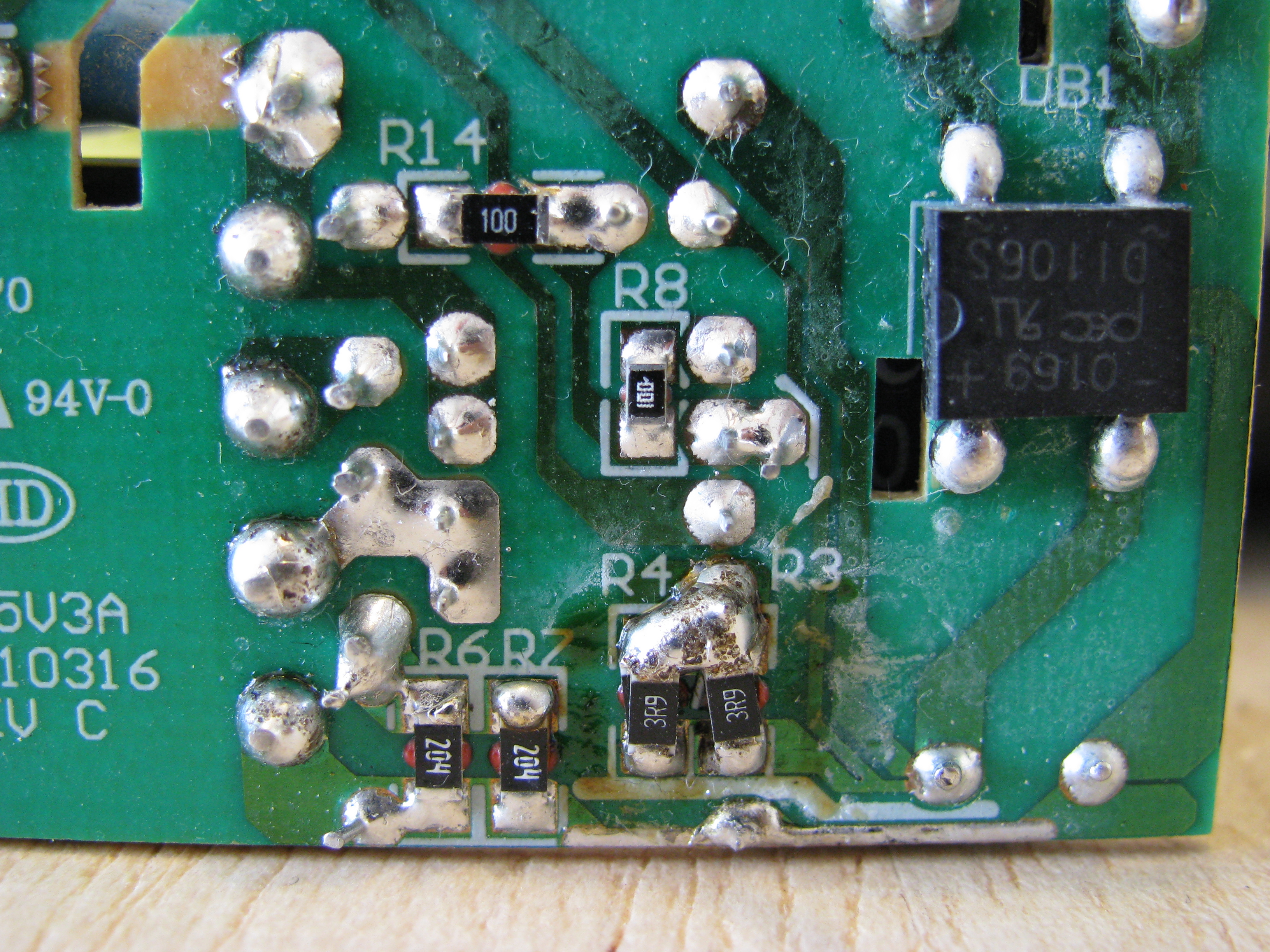
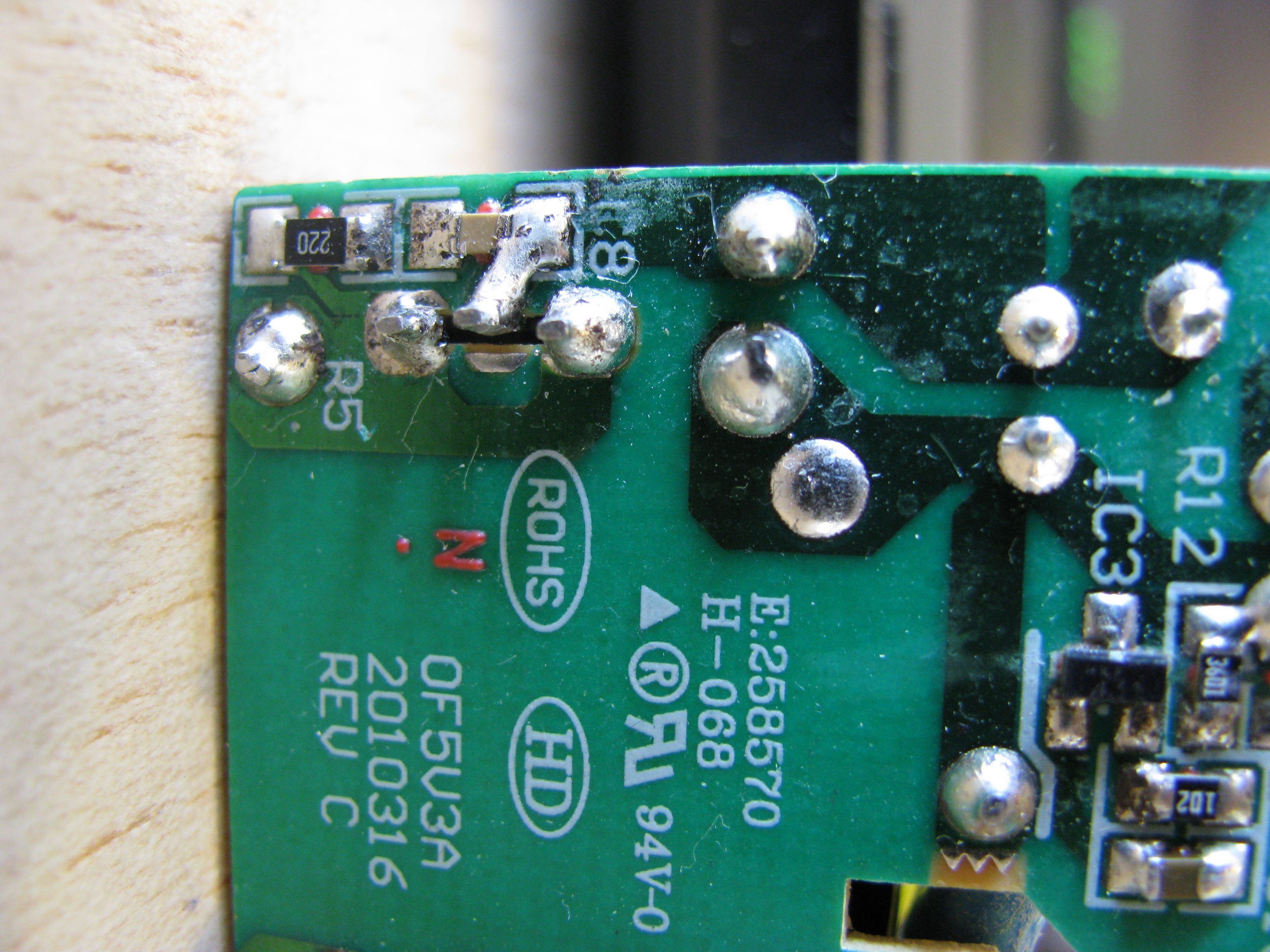
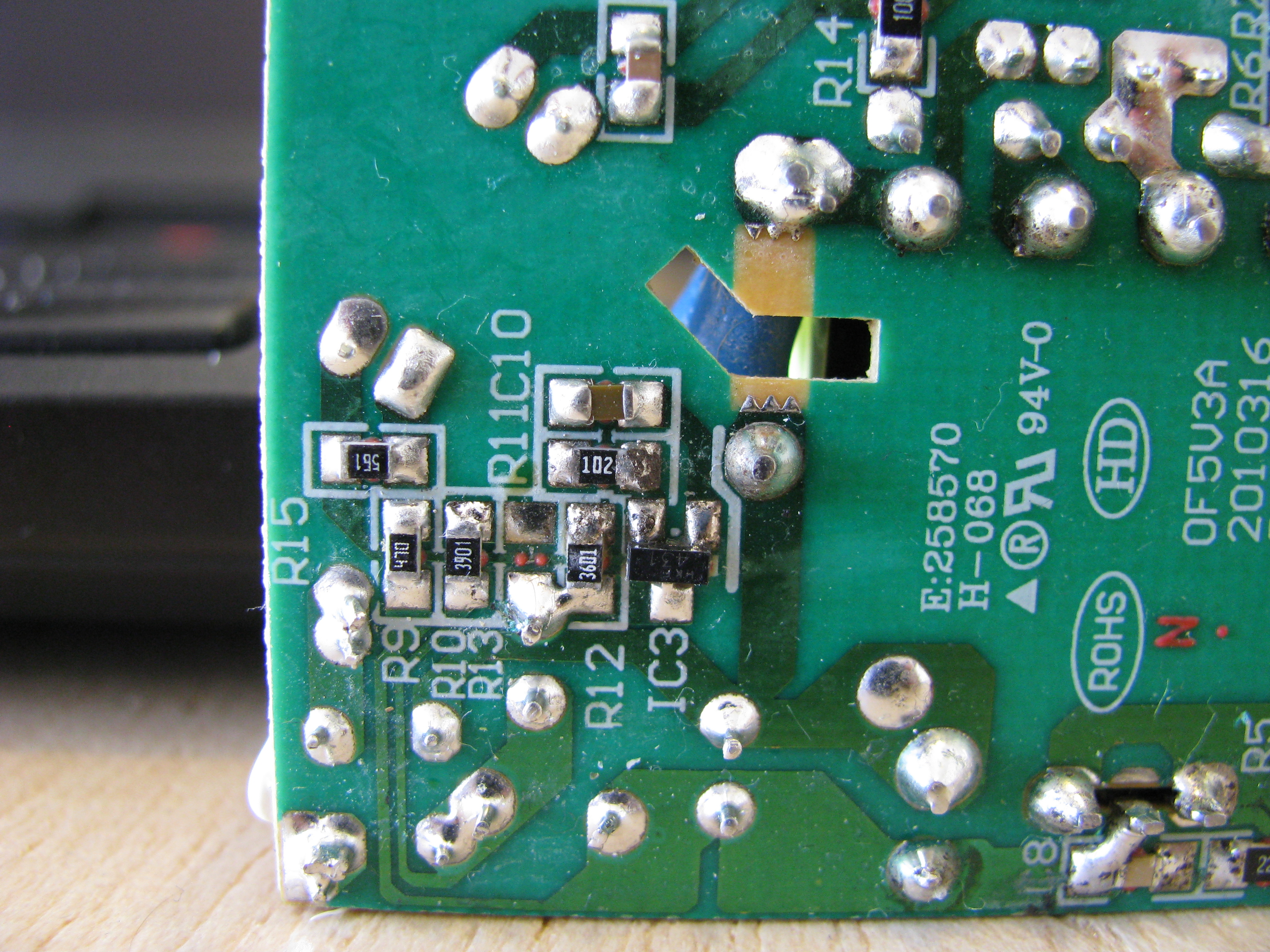
The power supply Although I've ordered the Guruplug pretty early with the promise, that I'd have it in April, it arrived at the end of May due to QA issues with the power supply. While I appreciate that they didn't deliver broken power supplies, I would have preferred not to receive one which was "fixed" by somebody who uses the soldering iron like an axe. Here are some macro photos to show the gory details: GuruPlug Server Plus PSU 1 GuruPlug Server Plus PSU 2 GuruPlug Server Plus PSU 3

Software issues The version of UBoot which shipped with the device was only able to boot from NAND and network. Booting from USB failed and ext2 support was missing, too. Didn't have a look if the community came up with a fixed UBoot version yet, but in my opinion a piece of hardware for >100 EUR should not have such flaws.

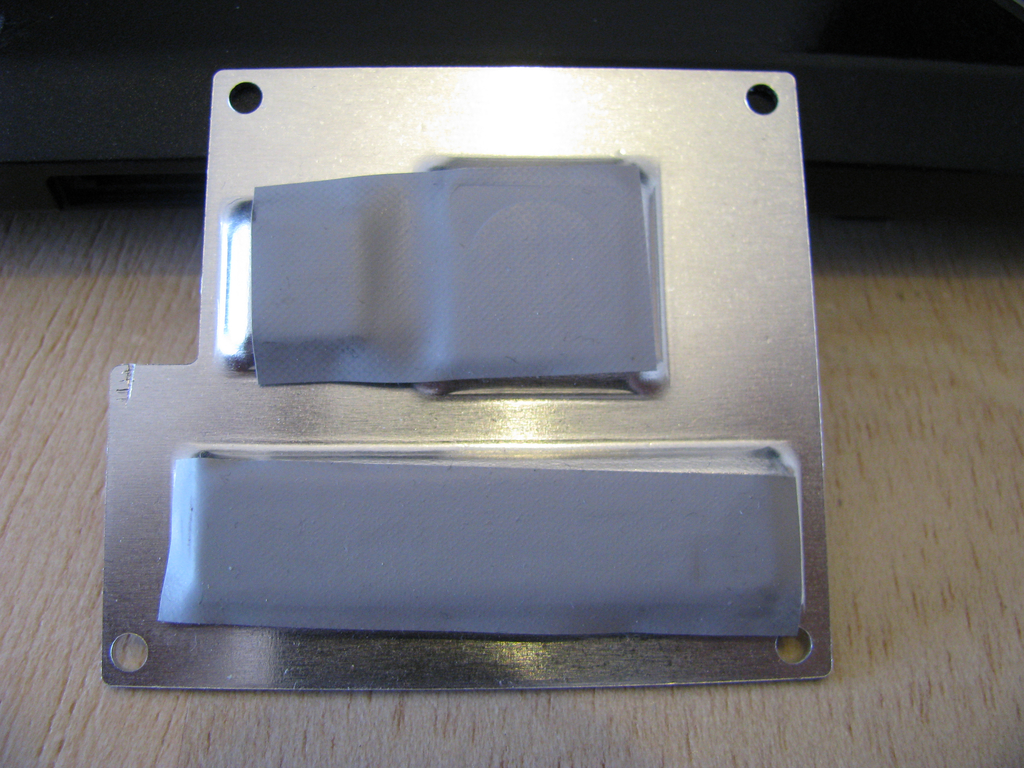
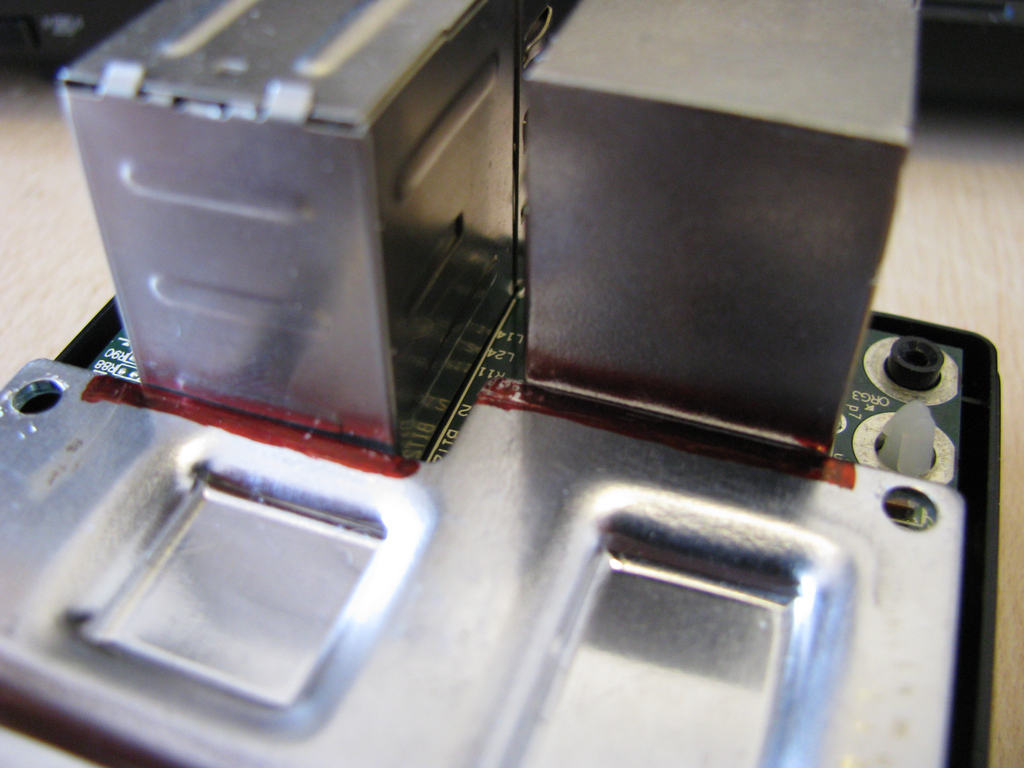
Thermal issues Using the Guruplug with more than one 100 MBit/s connection is just not possible, as it would toast itself to death. For the details have a look at this discussion in the NewIT forum, it links to a lot of interesting photos and postings. This issue is a major design and QA failure. Even without knowing what the datasheets say, it is easy to imagine that a thin piece of alloy is not the proper way to cool a CPU and network chip. Especially not when it is mounted with cheapish pads instead of a proper paste. GuruPlug Server Plus Cooling 1 As it seems the plan was to send the heat to the shielding of the network/USB/eSata ports (the area is marked red as my first plan was to remove that part of the alloy and reuse the heat-spreader), a strong indication for that is that this is the only area with holes for air circulation. I could imagine that it was not possible to have these holes next to the PSU, which was mounted above the heat-spreader, to avoid electrical shocks. GuruPlug Server Plus Cooling 2 As there was no other opening for the heat to leave the case, even the microSD card became pretty hot - I've measured temperatures around 60 deg. C next to the card - while CPU and 100MB/s network were idling. The official information from GlobalScale Technologies is that only 10/100MBit/s should be used as workaround to avoid overheating until a "Professional Upgrade Kit" is released. As mentioned here the upgrade kit announcement was removed silently from GST's website. To be honest, this doesn't make me wonder. There is no way to fix the Guruplug with an external fan or any other external magic as the only way to fix it is to cool the CPU and networking chip properly. There are various workarounds for the cooling issues posted to the forums. I've decided to rip out the power supply and heat spreader out of the case and get a nice external PSU. The new connector is mounted, ready to supply the GuruPlug's board with power. GuruPlug Server Plus power connector Currently I'm waiting for the new heat sinks and glue to arrive. Then I'll give it a try to mount eveything in the small case again, probably with some additional air holes. As soon as I have a workign solution, I'll blog about it again.

Bernd Zeimetz: the guruplug server plug - major design and qa fail

As a lot of people are coming to my blog to read the installing instructions for Debian on the GuruPlug Server Plus, I shall not hide my opinion about the Guruplug Server Plus: It is a major design and QA fail. Don't waste your money on it.

The power supply Although I've ordered the Guruplug pretty early with the promise, that I'd have it in April, it arrived at the end of March due to QA issues with the power supply. While I appreciate that they didn't deliver broken power supplies, I would have preferred not to receive one which was "fixed" by somebody who uses the soldering iron like an axe. Here are some macro photos to show the gory details: GuruPlug Server Plus PSU 1 GuruPlug Server Plus PSU 2 GuruPlug Server Plus PSU 3

Software issues The version of UBoot which shipped with the device was only able to boot from NAND and network. Booting from USB failed and ext2 support was missing, too. Didn't have a look if the community came up with a fixed UBoot version yet, but in my opinion a piece of hardware for >100 EUR should not have such flaws.

Thermal issues Using the Guruplug with more than one 100 MBit/s connection is just not possible, as it would toast itself to death. For the details have a look at this discussion in the NewIT forum, it links to a lot of interesting photos and postings. This issue is a major design and QA failure. Even without knowing what the datasheets say, it is easy to imagine that a thin piece of alloy is not the proper way to cool a CPU and network chip. Especially not when it is mounted with cheapish pads instead of a proper paste. GuruPlug Server Plus Cooling 1 As it seems the plan was to send the heat to the shielding of the network/USB/eSata ports (the area is marked red as my first plan was to remove that part of the alloy and reuse the heat-spreader), a strong indication for that is that this is the only area with holes for air circulation. I could imagine that it was not possible to have these holes next to the PSU, which was mounted above the heat-spreader, to avoid electrical shocks. GuruPlug Server Plus Cooling 2 As there was no other opening for the heat to leave the case, even the microSD card became pretty hot - I've measured temperatures around 60 deg. C next to the card - while CPU and 100MB/s network were idling. The official information from GlobalScale Technologies is that only 10/100MBit/s should be used as workaround to avoid overheating until a "Professional Upgrade Kit" is released. As mentioned here the upgrade kit announcement was removed silently from GST's website. To be honest, this doesn't make me wonder. There is no way to fix the Guruplug with an external fan or any other external magic as the only way to fix it is to cool the CPU and networking chip properly. There are various workarounds for the cooling issues posted to the forums. I've decided to rip out the power supply and heat spreader out of the case and get a nice external PSU. The new connector is mounted, ready to supply the GuruPlug's board with power. GuruPlug Server Plus power connector Currently I'm waiting for the new heat sinks and glue to arrive. Then I'll give it a try to mount eveything in the small case again, probably with some additional air holes. As soon as I have a workign solution, I'll blog about it again.

26 August 2010

Benjamin Mako Hill: Italian Travel Update

Due to a variety of people and places we want to see, Mika and I have regrouped around a more ambitious travel schedule in Italy for the next week or so. Our new plan is: I know we'll have an organized LUG meeting in Siena. The rest of the period is a little more open. As always, if other free software, wikimedian, or like-minded folks are around and would like to meet up in any of those places, don't hesitate to get in contact. In related news, inspired by Florence and by Mika's domo-kun purse, I made a duomo-kun today. /copyrighteous/images/duomo-kun-small.png

25 August 2010

Matt Zimmerman: DebConf 10: Last day and retrospective

DebConf continued until Saturday, but Friday the 6th was my last day as I left New York that evening. I m a bit late in getting this summary written up. Making Debian Rule, Again (Margarita Manterola) Marga took a bold look at the challenges facing Debian today. She says that Debian is perceived to be less innovative, out of date, difficult to use, and shrinking as a community. She called out Ubuntu as the elephant in the room , which is taking away from Debian. She insists that she is not opposed to Ubuntu, but that nonetheless Ubuntu is to some extent displacing Debian as a focal point for newcomers (both users and contributors). Marga points out that Debian s work is still meaningful, because many users still prefer Debian, and it is perceived to be of higher quality, as well as being the essential basis for derivatives like Ubuntu. She conducted a survey (about 40 respondents) to ask what Debian s problems are, and grouped them into categories like motivation and communication (tied for the #1 spot), visibility (#3, meaning public awareness and perception of Debian) and so on. She went on to make some suggestions about how to address these problems. On the topic of communication, she proposed changing Debian culture by: This stimulated a lot of discussion, and most of the remaining time was taken up by comments from the audience. The video has been published, and offers a lot of insight into how Debian developers perceive each other and the project. She also made suggestions for the problems of visibility and motivation. These are crucial issues for Debian devotees to be considering, and I applaud Marga for her fortitude in drawing attention to them. This session was one of the highlights of this DebConf, and catalyzed a lot of discussion of vital issues in Debian. Following her talk, there was a further discussion in the hallway which included many of the people who commented during the session, mostly about how to deal with problematic behavior in Debian. Although I agreed with much of what was said, I found it a bit painful to watch, because (ironically) this discussion displayed several of the characteristic people problems that Debian seems to have: These same patterns are easily observed on Debian mailing lists for the past 10+ years. I exhibited them myself when I was active on these lists. This kind of cultural norm, once established, is difficult to intentionally change. It requires a fairly radical approach, which will inevitably mean coping with loss. In the case of a community, this can mean losing volunteer contributors cannot let go of this norm, and that is an emotionally difficult experience. However, it is nonetheless necessary to move forward, and I think that Debian as a community is capable of moving beyond it. Juxtaposition Given my history with both Debian and Ubuntu, I couldn t help but take a comparative view of some of this. These problems are not new to Debian, and indeed they inspired many of the key decisions we made when founding the Ubuntu project in 2004. We particularly wanted to foster a culture which was supportive, encouraging and welcoming to potential contributors, something Debian has struggled with. Ubuntu has been, quite deliberately, an experiment in finding solutions to problems such as these. We ve learned a lot from this experiment, and I ve always hoped that this would help to find solutions for Debian as well. Unfortunately, I don t think Debian has benefited from these Ubuntu experiments as much as we might have hoped. A common example of this is the Ubuntu Code of Conduct. The idea of a project code of conduct predates Ubuntu, of course, but we did help to popularize it within the free software community, and this is now a common (and successful) practice used by many free software projects. The idea of behavioral standards for Debian has been raised in various forms for years now, but never seems to get traction. Hearing people talk about it at DebConf, it sometimes seemed almost as if the idea was dismissed out of hand because it was too closely associated with Ubuntu. I learned from Marga s talk that Enrico Zini drafted a set of Debian Community Guidelines over four years ago in 2006. It is perhaps a bit longand structured, but is basically excellent. Enrico has done a great job of compiling best practices for participating in an open community project. However, his document seems to be purely informational, without any official standing in the Debian project, and Debian community leaders have hesitated to make it something more. Perhaps Ubuntu leaders (myself included) could have done more to nurture these ideas in Debian. At least in my experience, though, I found that my affiliation with Ubuntu almost immediately labeled me an outsider in Debian, even when I was still active as a developer, and this made it very difficult to make such proposals. Perhaps this is because Debian is proud of its independence, and does not want to be unduly influenced by external forces. Perhaps the initial growing pains of the Debian/Ubuntu relationship got in the way. Nonetheless, I think that Debian could be stronger by learning from Ubuntu, just as Ubuntu has learned so much from Debian. Closing thoughts I enjoyed this DebConf very much. This was the first DebConf to be hosted in the US, and there were many familiar faces that I hadn t seen in some time. Columbia University offered an excellent location, and the presentation content was thought-provoking. There seemed to be a positive attitude toward Ubuntu, which was very good to see. Although there is always more work to do, it feels like we re making progress in improving cooperation between Debian and Ubuntu. I was a bit sad to leave, but was fortunate enough to meet up with Debian folk during my subsequent stay in the Boston area as well. It felt good to reconnect with this circle of friends again, and I hope to see you again soon. Looking forward to next year s DebConf in Bosnia

Next.

Previous.