Nick Pettigrew was an anti-social behavior officer for council housing for
over a decade. This book is a diary of one year in the life of that job.
According to the author, the dates, names, and some of the identifying
details have been changed but not exaggerated. While it's hard to verify
that, and I'm sure a few of the stories have been tweaked to make better
narratives, it has a messiness and chaos of half-resolved drama mixed with
mundane office tedium that makes it ring true.
The subject matter requires some explanation for US readers.
Council housing is the UK's version of what the US would call public
housing or "the projects," although it's a far larger percentage of the
housing stock in the UK than it is in the US. These are buildings built
by the government and run by local governments or non-profits to provide
housing to working class and poor people at reduced cost compared to the
private market. As in the US, new council housing construction has
dropped off dramatically; as in the US, a bunch of it has been privatized,
although in the UK the Right to Buy law at least sells the housing to the
people living in it, as opposed to slumlords.
The 1998 UK Crime and Disorder Act collects under anti-social behavior a
bunch of low-grade irritations that in the US would fall under public
nuisance laws, noise ordinances, and other vague misdemeanors like
"creating a public disturbance": essentially, all the irritating and
obnoxious things that people subject their neighbors to, but which fall
short of obvious criminal behavior like theft or assault. As Pettigrew
puts it:
"I just don't want to hear the word 'cunt' shouted repeatedly at 3am
every night any more. I don't think that's unreasonable."
That law required the organizations managing council estates to have a
procedure to deal with anti-social behavior, and thus the job of an
anti-social behavior officer was created.
In the US, these sorts of problems are dealt with by the local police,
which is a little like trying to get rid of a raccoon by running it over
with a balky, thirty-year-old car. The best outcome is that the raccoon
gets freaked out by your efforts to get the car to start and leaves. The
worst outcome is that you accidentally run over your neighbor's kid while
aiming for the raccoon. Either way, neither you nor the car nor your
neighbors are going to be happy about the process.
An anti-social behavior officer is someone with some authority to do
things like install cameras, tell people who don't live somewhere that
they need to stop coming there, and start eviction proceedings, but who
doesn't carry guns, can't arrest people, and enforces those rules when
necessary via court proceedings or calling the police. In other words,
it's one of the types of alternative responders whose job is to solve
problems rather than stop crimes that we've been talking about in the
United States. And although Pettigrew is quite grumpy and cynical about
his job (for very understandable reasons explained in this book), my
takeaway from another country with even worse problems is that the system
sort of works. It's underfunded and poorly managed and nebulous and
sometimes very sad, but it also achieves some of what it sets out to do,
and you can see the outlines of a better system beneath it.
My favorite thing about this book is that it forces the reader to grapple
with the actual job in all its messiness, rather than our ideals of what
we want the job to be. For example, if you're going to hire a bunch of
people to do this job, you need some way to figure out whether they're any
good at it, but it's not obvious how to measure success.
One infuriating KPI we're measured on is the final question a resident
is asked once their case is closed: "Are you happy with the outcome of
your case?" Because unless you evict the problem neighbor within a
fortnight, erect a security wall around the complainant's house
manned by armed guards, and bake them a cake, the answer will almost
certainly be no.
Pettigrew has a background in comedy so he's sarcastically funny rather
than strident or didactic, which for me was just the tone I needed to
enjoy reading this enough to think deeply about it.
The thing that most surprised me, even though it probably shouldn't, was
just how many of the problems Pettigrew had to deal with stemmed from
drugs. My guess is that a good 75% of the issues he described were a
direct result of someone dealing drugs, growing drugs, stealing things to
buy drugs, throwing parties with druggie friends, doing bizarre and
dangerous things because they were on drugs, not taking care of their
property because they were too busy doing drugs, or letting their property
be taken over by other people doing or selling drugs. It's just
never-ending. The case load is clearly made worse by chronic
understaffing and underfunding, and spending more money on giving people
more assistance is part of any reasonable solution, but so is reducing the
demand. If the pattern of complaints in the US is at all similar (and I
bet it is), it's no wonder that the police perceive drugs as central to
their job.
Pettigrew talks about this at some length in the epilogue, and I think one
of his conclusions is worth quoting here:
Years of interacting with class A drug users has shown me that they
really don't want to be out hustling to make enough money for their
next score of diluted heroin. They want to sit at home, take drugs
and when those drugs wear off, take some more. You may view this as a
wasted life, and you may well be right, but here's the thing: they are
going to do this anyway, whether we decide to criminalize them or not.
If, after a lengthy period of honest, mature drug education across the
country via schools, further education, government advertising and so
on, class A drugs were made legally available on prescription to
adults via pharmacies, the vast majority of users would pick up their
prescriptions, go home, take their drugs and leave everyone else
alone. They couldn't be arsed to break into your car if they didn't
have to.
The decriminalization argument is a lot larger than the space of this book
review, so I won't get into it further, except to say that if you think
that conclusion sounds unreasonable or dangerous or destructive to
society, consider reading this book. One of the things that becomes
obvious from Pettigrew's diary of incidents is that most people just want
to feel safe, and a truly stunning amount of crime and anti-social
behavior that makes them feel not safe is a direct or indirect result of
people trying to get drugs or to get money to get drugs.
The other pattern that's obvious from this book (and obvious from most
writing by anyone involved in the justice system) is that the system
doesn't really work.
The best way to describe going to court is that it's like paying a
visit to a run-down hospital where nobody gets better.
Some of that is because it's not set up to solve problems, and a lot of
that is because solving problems is a lot more expensive than we want to
admit and we don't want to pony up the resources.
I'm probably making this book sound hopelessly depressing, but it's not.
It's angry and cynical, but it's also very funny (particularly if you like
sarcasm), extremely quotable, insightful, and deeply empathetic. There
are people trying their best to help other people despite a system that
doesn't reward them for doing so, and surprisingly often they manage to do
so. The path to helping more people isn't even that difficult to find.
The epilogue of this book is full of solid and straightforward ideas that
don't require some novel insight into humanity, just a bunch of hard work.
And, while reading about the work of helping people and being exasperated
by people, you'll also get to laugh at the bits of office nonsense that
are universal.
The old form for monthly one-to-ones used to have two questions
"What did you do over the last month?" and "What do you plan to do in
the next month?" and my line manager at the time seemed unimpressed
when I answered "my job" to both.
I loved this book. It was one of my favorite random finds of the year,
and, at least judging from how difficult it is to find in Amazon search
results, it's not gotten enough attention in the United States. Highly
recommended.
Rating: 9 out of 10
There are a lot of rain clouds in life these days. May we all remember that days like this one are behind us and also ahead of us.
Every storm runs out of rain.
That was the start of a series of photos from my collection & quotes I shared with friends during the initial lockdown in spring. I ll be sharing some here.
And here we all are, still dealing with this and it s more severe in a lot of ways. One of my colleagues won t be able to see his parents this Christmas for the first time in over 40 years.
But this storm will run out rain.
And look how the scene changed, in just a few minutes. This is coming!
Recently, I needed to package a Rust crate libslirp for a Apertis, a Debian derivative. libslirp is used by the newly release UML backend of debos, our Debian image build tool. Unfortunately, this crate hasn t yet been properly packaged for Debian proper, so I could not simply pull the packaging from Debian. Even worse, its build dependencies haven t all been packaged yet. Most importantly, I have only uploaded zbus to Debian today, and at that time none of its dependencies were in Debian either.
Another issue with this were that each crate is packaged for Debian as a separate package, making the process a bit more tricky since I d need to import all of the crates into Apertis separately. Doing that takes time and is further complicated by the CI loop we re using which requires the full build process to complete for a package before a pipeline a dependent package can run.
Having all that considered, I took a shortcut: I vendored all the build dependencies with the package itself, and here s how.
I started with debcargo-conf, where the not-yet-complete packaging lives. With debcargo, I generated the source package as if I were to upload to Debian. Since I ll be vendoring the dependencies, I have removed most of the Rust dependencies and replaced them with those extra dependencies needed by those crates.
So, I replaced this:
I wanted to keep the delta to the future Debian package at a bare minimum, so I kept the original dh-cargo build process, only making sure the vendored dependencies are found in the right place. The cleanest approach in my view was to use the fact that the 3.0 (quilt) source format allows multiple original tarballs: the main tarball would be the same orig tarball as in Debian, and an extra tarball would contain the vendored code. When we sync with Debian, the extra tarball would be dropped, just as the adjustments to the debian/rules.
To generate the vendor tarball, I added this to the rules file:
include /usr/share/dpkg/pkg-info.mkvendor:
-[ -d vendor ]&& rm -rf vendor
rm -rf Cargo.lock
cargo vendor
tar Jcf ../$(DEB_SOURCE)_$(DEB_VERSION_UPSTREAM).orig-vendor.tar.xz vendor/
.PHONY:vendor
This target, being run manually and not as part of the build process, download the latest dependencies satisfying the requirements in Cargo.toml and rolls them into a vendor tarball.
Now, to make dh-cargo use the vendored code, we need to link it into the right place. dh-cargo creates a Cargo registry tree in a subdirectly under debian/ where it symlinks crates from the Rust development packages. This extra code makes sure the vendored dependencies are available there too:
override_dh_auto_configure:
dh_auto_configure $@for d in vendor/* ;\do\[ -L debian/cargo_registry/$$(basename $$d)]&& rm debian/cargo_registry/$$(basename $$d);\
ln -rs $$d debian/cargo_registry ;\done
An important thing here is that if the build happens on a non-clean system, dh-cargo may have symlinked a system crate already installed so we need to remove that symlink and replace it by ours. We build packages in clean chroots, so this is not that important, otherwise for reproducibility reasons it would be better to create the registry directory from scratch.
The final package can be found at the Apertis GitLab.
As announced recently I prepared a monitoring-plugins 2.3 package for experimental. If there is enough positive feedback until 12th January 2021, I intend to upload this into unstable targeted for Debian Bullseye.
Fifteen years have passed since I started my career in IT which is quite some time. I've been playing with computers for 25 years now, which makes me quite knowledgeable about the field, for sure.However, while I was fully prepared to bargain with computers, I was not prepared to do so with humans. The whole career management thing was unknown to me. I had no useful skills to navigate within the enterprise organization. I had to learn the ropes the hard way, failing along the way. It hurt.Almost ten years ago, I had the chance to meet a new colleague Alexis Monville. Alexis was a team facilitator, and I started to work with him on many non-technical levels. He taught me a lot about agility and team organization. Working on this set of new skills changed how I envisioned my work and how I fit into the company.Alexis MonvilleI worked on those aspects of my job because I decided to be in charge of my career rather than keeping things boring. That was one of the best decisions I ever made. Growing the social aspect of my profession allowed me to develop and find aspiring jobs and missions.Getting to that point takes a lot of time and effort, and it's pretty hard to do it alone. My friend Alexis wrote an excellent book titled I am a Software Engineer and I am in Charge. I'm proud to have been the first reviewer the book before it was released a few weeks ago.Many developers out there are stuck in a place where they are not excited by their colleagues' work and whose managers do not appropriately recognize their achievement. It would be best for them if they did something about that.The book!This book is an excellent piece for engineers who wants to break the cycle of frustration. It covers many situations I encountered across my professional life those last years, giving good insights into how to solve them.To paraphrase Alexis, the answers to your career management problems are not on StackOverflow they're not technical issues. However, you can still solve them with the right tools. That's where I am a Software Engineer and I am in Charge shines. It gives you leads, solutions, and exercise to get out of this kind of situation. It helps increase your impact and satisfaction at work.I love this book, and I wish I had access to it years ago. Developing technical leadership is not easy and requires a mindset shift. Having a way to bootstrap yourself with this is a luxury.If you're a software engineer at the beginning of your career or struggling with your current professional situation, I profoundly recommend reading this book! You'll get a fast track on your career, for sure.
TL;DR: CPS-conversion and defunctionalization can help you to come up with a constant-stack algorithm.
Update: Turns out I inadvertedly plagiarized the talk The Best Refactoring You ve Never Heard Of by James Koppel. Please consider this a form of sincere flattery.
The starting point
Today, I ll take you on a another little walk through the land of program transformations. Let s begin with a simple binary tree, with value of unknown type in the leaves, as well as the canonical map function:
dataT a =L a B (T a) (T a)
map1 :: (a -> b) ->T a ->T b
map1 f (L x) =L (f x)
map1 f (B t1 t2) =B (map1 f t1) (map1 f t2)
As you can see, this map function is using the program stack as it traverses the tree. Our goal is now to come up with a map function that does not use the stack!
Why? Good question! In Haskell, there wouldn t be a strong need for this, as the Haskell stack is allocated on the heap, just like your normal data, so there is plenty of stack space. But in other languages or environments, the stack space may have a hard limit, and it may be advised to not use unbounded stack space.
That aside, it s a fun exercise, and that s sufficient reason for me.
(In the following, I assume that tail-calls, i.e. those where a function end with another function call, but without modifying its result, do not actually use stack space. Once all recursive function calls are tail calls, the code is equivalent to an imperative loop, as we will see.)
Think?
We could now just stare at the problem (rather the code), and try to come up with a solution directly. We d probably think ok, as I go through the tree, I have to remember all the nodes above me so I need a list of those nodes and for each of these nodes, I also need to remember whether I am currently processing the left child, and yet have to look at the right one, or whether I am done with the left child so what do I have to remember about the current node ?
ah, my brain spins already. Maybe eventually I figure it out, but why think when we can derive the solution? So let s start with above map1, and rewrite it, in several, mechanical, steps into a stack-less, tail-recursive solution.
Go!
Before we set out, let me rewrite the map function using a local go helper, as follows:
map2 :: forall a b. (a -> b) ->T a ->T b
map2 f t = go t
where go ::T a ->T b
go (L x) =L (f x)
go (B t1 t2) =B (go t1) (go t2)
This transformation (effectively the static argument transformation ) has the nice advantage that we do not have to pass f around all the time, and that when we copy the function, I only have to change the top-level name, but not the names of the inner functions.
Also, I find it more aesthetically pleasing.
CPS
A blunt, effective tool to turn code that is not yet using tail-calls into code that only uses tail-calls is use continuation-passing style. If we have a function of type -> t, we turn it into a function of type -> (t -> r) -> r, where r is the type of the result we want at the very end. This means the function now receives an extra argument, often named k for continuation, and instead of returning some x, the function calls k x.
We can apply this to our go function. Here, both t and r happen to be T b; the type of finished trees:
map3 :: forall a b. (a -> b) -> T a -> T b
map3 f t = go t (\r -> r)
  where
    go :: T a -> (T b -> T b) -> T b
    go (L x) k  = k (L (f x))
    go (B t1 t2) k  = go t1 (\r1 -> go t2 (\r2 -> k (B r1 r2)))
Note that when initially call go, we pass the identity function (\r -> r) as the initial continuation.
Alas, suddenly all function calls are in tail position, and this codes does not use stack space! Technically, we are done, although it is not quite satisfying; all these lambdas floating around obscure the meaning of the code, are maybe a bit slow to execute, and also, we didn t really learn much yet. This is certainly not the code we would have writing after thinking hard .
Defunctionalization
So let s continue rewriting the code to something prettier, simpler. Something that does not use lambdas like this.
Again, there is a mechanical technique that can help it. It likely won't make the code prettier, but it will get rid of the lambdas, so let s do that an clean up later.
The technique is called defunctionalization (because it replaces functional values by plain data values), and can be seen as a form of refinement.
Note that we pass around vales of type (T b -> T b), but we certainly don t mean the full type (T b -> T b). Instead, only very specific values of that type occur in our program, So let us replace (T b -> T b) with a data type that contains representatives of just the values we actually use.
We find at all values of type (T b -> T b). These are:
(\r -> r)
(\r1 -> go t2 (\r2 -> k (B r1 r2)))
(\r2 -> k (B r1 r2))
We create a datatype with one constructor for each of these:
dataK=IK1K2
(This is not complete yet.)
We introduce an interpretation function that turns a K back into a (T b -> T b):
eval ::K-> (T b ->T b)
eval = (*TBD*)
In the function go, instead of taking a parameter of type (T b -> T b), we take a K. And when we actually use the continuation, we have to turn the K back to the function using eval:
go ::T a ->K a b ->T b
go (L x) k = eval k (L (f x))
go (B t1 t2) k = go t1 K1
We also do this to the code fragments identified in the first step; these become:
(\r -> r)
(\r1 -> go t2 K2)
(\r2 -> eval k (B r1 r2))
Now we complete the eval function: For each constructor, we simply map it to the corresponding lambda from step 1:
eval ::K-> (T b ->T b)
eval I= (\r -> r)
eval K1= (\r1 -> go t2 K2)
eval K2= (\r2 -> eval k (B r1 r2))
This doesn t quite work yet: We have variables on the right hand side that are not bound (t2, r1, k). So let s add them to the constructors K1 and K2 as needed. This also changes the type K itself; it now needs to take type parameters.
This leads us to the following code:
dataK a b
=IK1 (T a) (K a b)
K2 (T b) (K a b)
map4 :: forall a b. (a -> b) ->T a ->T b
map4 f t = go t Iwhere go ::T a ->K a b ->T b
go (L x) k = eval k (L (f x))
go (B t1 t2) k = go t1 (K1 t2 k)
eval ::K a b -> (T b ->T b)
eval I= (\r -> r)
eval (K1 t2 k) = (\r1 -> go t2 (K2 r1 k))
eval (K2 r1 k) = (\r2 -> eval k (B r1 r2))
Not really cleaner or prettier, but everything is still tail-recursive, and we are now working with plain data.
We like lists
To clean it up a little bit, we can notice that the K data type really is just a list of values, where the values are either T a or T b. We do not need a custom data type for this! Instead of our K, we can just use the following, built from standard data types:
type K' a b = [Either (T a) (T b)]
Now I replace I with [], K1 t2 k with Left t2 : k and K2 r1 k with Right r1 : k. I also, very suggestively, rename go to down and eval to up:
map5 :: forall a b. (a -> b) ->T a ->T b
map5 f t = down t []
where down ::T a ->K' a b ->T b
down (L x) k = up k (L (f x))
down (B t1 t2) k = down t1 (Left t2 : k)
up ::K' a b ->T b ->T b
up [] r = r
up (Left t2 : k) r1 = down t2 (Right r1 : k)
up (Right r1 : k) r2 = up k (B r1 r2)
At this point, the code suddenly makes more sense again. In fact, I can try to verbalize it:
As we traverse the tree, we have to remember for all parent nodes, whether there is still something Left to do when we come back to it (so we remember a T a), or if we are done with that (so we have a T b). This is the list K' a b.
We begin to go down the left of the tree (noting that the right siblings are still left to do), until we hit a leaf. We transform the leaf, and then go up.
If we go up and hit the root, we are done. Else, if we go up and there is something Left to do, we remember the subtree that we just processed (as that is already in the Right form), and go down the other subtree. But if we go up and there is nothing Left to do, we put the two subtrees together and continue going up.
Quite neat!
The imperative loop
At this point we could stop: the code is pretty, makes sense, and has the properties we want. But let s turn the dial a bit further and try to make it an imperative loop.
We know that if we have a single tail-recursive function, then that s equivalent to a loop, with the function s parameter turning into mutable variables. But we have two functions!
It turns out that if you have two functions a -> r and b -> r that have the same return type (which they necessarily have here, since we CPS-converted them further up), then those two functions are equivalent to a single function taking a or b , i.e. Either a b -> r. This really nothing else than the high-school level algebra rule of rarb = ra + b.
So (after reordering the arguments of down to put T b first) we can rewrite the code as
map6 :: forall a b. (a -> b) ->T a ->T b
map6 f t = go (Left t) []
where go ::Either (T a) (T b) ->K' a b ->T b
go (Left (L x)) k = go (Right (L (f x))) k
go (Left (B t1 t2)) k = go (Left t1) (Left t2 : k)
go (Right r) [] = r
go (Right r1) (Left t2 : k) = go (Left t2) (Right r1 : k)
go (Right r2) (Right r1 : k) = go (Right (B r1 r2)) k
Do you see the loop yet? If not, maybe it helps to compare it with the following equivalent imperative looking pseudo-code:
mapLoop :: forall a b. (a -> b) -> T a -> T b
mapLoop f t
  var node = Left t;
  var parents = [];
  while (true)
    switch (node)
      Left (L x) -> node := Right (L (f x))
      Left (B t1 t2) -> node := Left t1; parents.push(Left t2)
      Right r1 ->
        if (parents.len() == 0)
          return r1;
          else
          switch (parents.pop())
            Left t2  -> node := Left t2; parents.push(Right r1);
            Right r2 -> node := Right (B r1 r2)
Conclusion
I find it enlightening to see how apparently very different approaches to a problem (recursive, lazy functions and imperative loops) are connected by a series of rather mechanical transformations. When refactoring code, it is helpful to see if one can conceptualize the refactoring as one of those mechanical steps (refinement, type equivalences, defunctionalization, cps conversion etc.)
If you liked this post, you might enjoy my talk The many faces of isOrderedTree, which I have presented at MuniHac 2019 and Haskell Love 2020.
A long journey has come to nice finish. 9 month ago I switched to KDE/Plasma, and started to package newer versions of it than available in Debian. Since then I have packaged every single version of Plasma, the KDE frameworks, and KDE Apps and made them available for Debian/unstable and Debian/testing via the OBS build server.
Today, finally, I have uploaded Frameworks 5.77 and Plasma 5.20.4 to unstable, the end of a long story. Despite some initial disagreements with the Debian Qt/KDE Team, we found a modus vivendi, and since some months now I am member of the team and working together with the rest to get an uptodate KDE/Plasma system into Debian/bullseye. Thanks to everyone involved!
The last weeks we have also worked on updating many of the KDE/Apps packages to the latest release 20.12.0, which means that as of now, Debian/unstable contains the most recent versions of KDE Frameworks, KDE Plasma, and of most KDE Apps.
Thanks goes to all the team members, in particular to (in alphabetic order) Aur lien, Patrick, Pino, Sandro, and Scarlett for their work, and to all the testers and bug reporters.
The current status is also more or less what we plan to get into Debian/Bullseye. An update to Frameworks 5.78 and Plasma 5.20.5 is still possible, but not decided by now.
Concerning my OBS packages: they are mostly superseeded by now, and all but the KDE Apps package can be removed from the apt sources. The only remaining archive of interest is
deb https://download.opensuse.org/repositories/home:/npreining:/debian-kde:/apps2012/Debian_Unstable/ ./
and the same with Testing instead of Unstable for Debian/testing.
For those adventurous, there is also the digikam-beta repository
That s it. Have a nice Christmas, if you celebrate it, and a good start into a hopefully better 2021!
Enjoy.
I recently took part in an interview with Vladimir Bejdo, an intern at the Software Freedom Conservancy, in order to talk about the Reproducible Builds project, my own participation in software freedom, the importance of reproducibility in software development and to have a brief discussion on the issues facing free software as a whole:
VB: To start off with, it might be useful to first ask you this how would you relate the importance of reproducibility to a user who is non-technical?
CL: I sometimes use the analogy of the food supply chain to quickly relate our work to non-technical audiences. The multiple stages of how our food reaches our plates today (such as seeding, harvesting, picking, transportation, packaging, etc.) can loosely translate to how software actually ends up on our computers, particularly in the way that if any of the steps in the multi-stage food supply chain has an issue then it quickly becomes a serious problem.
For example, even if we could guarantee that only the most wholesome apples were picked in our orchards, if they became tainted on the way to the supermarket it will be a real problem for us at the end of the day. We may not even be able to even tell by simply inspecting our Pink Ladies or Honeycrisps, and washing them thoroughly under the tap may not be enough either.
In an ideal world, we would be able to personally inspect the provenance of our food at all of the stages of manufacturing and transportation. But at some point, we must place our trust in the process and in brands, as well as various regulatory bodies to ensure that potential problems in our food are minimized, possibly even paying a time/effort premium by growing our own or buying direct from local markets in order to minimize the number of steps, etc.
However, when we use free software we can do better: Reproducible builds are a set of software development practices, ideas and tools that create an independently-verifiable path all the way from the original source code to what actually runs on our machines. Reproducible builds can reveal the injection of back-doors introduced by the hacking of developers own computers, build servers and package repositories, and also expose where volunteers or companies have been coerced into making changes via blackmail, court order, and so on.
With reproducible builds, there is no longer any need to trust any particular source of authority. In the same way that, say, a Mr Smith might check that his calculator is giving him the right answer to 2+2=4 by asking enough of his friends to check theirs too, users and developers of a reproducible build can verify the software they are using by creating a collective consensus instead.
The latest docker 20.10.x release unlocks the buildx subcommands
which allow for some sugar, like building something in a container
and dumping the result to your local directory in one command.
Dockerfile
FROM docker-registry.mycorp.com/debian-node:lts as builder
USER service
COPY . /opt/service
RUN cd /opt/service; npm install; npm run build
FROM scratch as dist
COPY --from=builder /opt/service/dist /
Here we build a page, copy the result with all assets from the /opt/service/dist
directory to an empty image and dump it into the local pages directory.
Hail is a gunrunner, an outlaw and criminal, someone who knows how to
survive violence and navigate by personal loyalty. That world knows her
as Cressen Stone. What her colleagues don't know is that she's also an
Imperial Princess. Hailimi Mercedes Jaya Bristol left that world twenty
years earlier in secret pursuit of her father's killer and had no
intention of returning. But her sisters are dead, her mother's health is
failing, and two Imperial Trackers have been sent to bring her back to her
rightful position as heir.
I'm going to warn up-front that the first half of this novel was rough to
the point of being unreadable. Wagers tries much too hard to establish
Hail as a reluctant heroine torn between her dislike of royal protocols
and her grief and anger at the death of her sisters. The result is
excessively melodramatic and, to be frank, badly written. There are a lot
of passages like this:
His words slammed into me, burning like the ten thousand volts of a
Solarian Conglomerate police Taser.
(no, there's no significance to the Solarian Conglomerate here), or, just
three paragraphs later:
The air rushed out of my lungs. Added grief for a niece I'd never
known. One more log on the pyre set to burn my freedom to ashes. The
hope I'd had of getting out of this mess was lost in that instant, and
I couldn't do anything but stare at Emmory in abject shock.
Given how much air rushes out of Hail's lungs and how often she's struck
down with guilt or grief, it's hard to believe she doesn't have brain
damage.
Worse, Hail spends a great deal of the first third of the book whining,
which given that the book is written in first person gets old very
quickly. Every emotion is overwritten and overstressed as Hail rails
against obvious narrative inescapability. It's blatantly telegraphed from
the first few pages that Hail is going to drop into the imperial palace
like a profane invasion force and shake everything up, but the reader has
to endure far too long of Hail being dramatically self-pitying about the
plot. I almost gave up on this book in irritation (and probably should
have).
And then it sort of grew on me, because the other thing Wagers is doing
(also not subtly) is a story trope for which I have a particular
weakness: The fish out of water who nonetheless turns out to be the person
everyone needs because she's systematically and deliberately kind and
thoughtful while not taking any shit. Hail left Pashati young and
inexperienced, with a strained relationship with her mother and a habit of
letting her temper interfere with her ability to negotiate palace
politics. She still has the temper, but age, experience, and confidence
mean that she's decisive and confident in a way she never was before. The
second half of this book is about Hail building her power base and winning
loyalty by being loyal and decent. It's still not great writing, but
there's something there I enjoyed reading.
Wagers's setting is intriguing, although it makes me a bit nervous. The
Indranan Empire was settled by colonists of primarily Indian background.
The court trappings, mythology, and gods referenced in Behind the
Throne are Hindu-derived, and I suspect (although didn't confirm) that
the funeral arrangements are as well. Formal wear (and casual wear) for
women is a sari. There's a direct reference to the goddess Lakshimi (not
Lakshmi, which Wikipedia seems to indicate is the correct spelling,
although transliteration is always an adventure).
I was happy to see this, since there are more than enough SF novels out
there that seem to assume only western countries go into space. But I'm
never sure whether the author did enough research or has enough personal
knowledge to pull off the references correctly, and I personally wouldn't
know the difference.
The Indranan Empire is also matriarchal, and here Wagers goes for an
inversion of sexism that puts men in roughly the position women were in
the 1970s. They can, in theory, do most jobs, but there are many things
they're expected not to do, there are some explicit gender lines in power
structures, and the role of men in society is a point of political
conflict. It's skillfully injected as social background, with a
believable pattern of societal prejudice that doesn't necessarily apply to
specific men in specific situations. I liked that Wagers did this without
giving the Empire itself any feminine-coded characteristics. All admirals
are women because the characters believe women are obviously better
military leaders, not because of some claptrap about nurturing or caring
or some other female-coded reason from our society.
That said, this gender role inversion didn't feel that significant to the
story. The obvious "sexism is bad, see what it would be like if men were
subject to it" message ran parallel to the main plot and never felt that
insightful to me. I'm therefore not sure it was successful or worth the
injection of sexism into the reading experience, although it certainly is
different from the normal fare of space empires.
I can't recommend Behind the Throne because a lot of it just isn't
very good. But I still kind of want to because I sincerely enjoyed the
last third of the book, despite some lingering melodrama. Watching Hail
succeed by being a decent, trustworthy, loyal, and intelligent person is
satisfying, once she finally stops whining. The destination is probably
not worth the journey, but now that I've finished the first book, I'm
tempted to grab the second.
Followed by After the Crown.
Rating: 6 out of 10
Another note to myself before I forget about this nifty usage
of socat again.
I was looking for something to mock a serial device, similar to
a microcontroller which usually ends up as /dev/ttyACM0 and might
output some text. What I found is a very helpful post on
stackoverflow
showing an example utilizing socat.
$ socat -d -d pty,rawer pty,rawer
2020/12/20 21:37:53 socat[29130] N PTY is /dev/pts/8
2020/12/20 21:37:53 socat[29130] N PTY is /dev/pts/11
2020/12/20 21:37:53 socat[29130] N starting data transfer loop with FDs [5,5] and [7,7]
Write whatever you need to the second pty, here /dev/pts/11, e.g.
$ i=0; while :; do echo "foo: $ i " > /dev/pts/11; let i++; sleep 5; done
Now you can listen with whatever you like, e.g. some tool you work on, on the fist pty,
here /dev/pts/8. For demonstration purpose just use cat:
$ cat /dev/pts/8
foo: 0
foo: 1
socat is an awesome tool, looking through the manpage you need some knowledge about
sockets, but it's incredibly vesatile.
The people who are pro-Government and in this case pro-Corporate do not have any success stories that they can share. Hence, most of the time the arguments are that the other are bad. For e.g. quite a few people argue that we don t need farmers, we can just order from restaurant. They have completely disassociated the idea that even then you need farmers as unless the farmers put the seed in, till the soil and wait for the rains or have irrigation you won t get ripe vegetables which then has to be taken out, and somehow sold to the wholesaler from where it comes to the restaurant and then to your plate. Sadly, even the farm-to-fork infographics are so depressingly sad, you want to look away. If you see the infographic you see it is just not non-veg but also vegetarian food grains which go under lot of questionable practices. Even, with such scenarios that is done by corporations our people want to go ahead. I will share stories from other countries which tell how they are doing more.
The Soldier-Farmer
Another sad part of these protests have been soldiers who have been returning their medals. The ones who oppose have the gall to say they should return the cash rewards they got. So just like farmers, seems soldiers also do not need money to survive. They are supposed to live only on air and water. This is after the present Govt. has reduced their pensions after retirement and that too without any discussion
GOI pensions to ex-servicemen
Now I nor anybody else would have minded if these conditions were shared going forward rather than doing it retrospectively. People who usually go to the army are not in it for money but for the adventure and glory they bring. But they do also have a family and have a family responsibility. In most other countries, the soldier and his families are well-looked after. If you know that even after you die, the Government would look after your family, you will do your best. Unfortunately, many veterans in India themselves are asked to help by many war widows as the widows don t get family pensions. The proposal naturally has left many miffed. In fact many of the veterans who used to advise people to join the armed forces now advise young people to pursue civilian life and careers. This is when Indian Army has been ironically having shortage of officers from well over a decade and stresses felt by Army personnel also known for a long time.
Even under this nationalistic Government, if it cannot take care of its soldiers, then forget about others.
India Defence Spending vis-a-vis other countries.
Now it is nobody s argument that India needs to improve its tooth-to-tail ratio but this is the wrong way to go about it. I would probably talk about that some other time as that totally needs its whole place.
Even OROP, which was the mandate of this Government hasn t had been done in full as there are quite a few cases in the Supreme Court. Almost all the cases have been heard and only decisions have to be given which the SC for whatever reason doesn t want to give. They just keep changing the date of the hearing. Nowadays, in many suits/cases, the SC asks for fresh hearings even though all the old records are there. This is a newish phenomena which is being observed in SC. Why is it being done? Your guess is as good as mine. One thing for sure has changed, the SC which used to be citizen-focussed or enabler of human rights and used to be held as a beacon for judicial activism has changed but these are other topics which need their own space.
Update 16/12/2020 The SC recommends setting up a committee to discuss farmer issues. And this is nothing new. This is called death by committee. When there is already so much literature on the subject, including the works done by Swaminathan Commission. There has been 6 reports which do look at farmer issues in a holistic manner. This is the Supreme Court giving an escape route to GOI. They also have abstained from having a whole session citing Covid. This is when the ruling Govt. is putting a massive 1000 crore on a new building on which the SC has put on hold. And even then the GOI went ahead and did a Bhoomi-Pujan (traditional ceremony when making a new construction from scratch.)
Naturally due to the double whammy of both the pension reforms and now the laws to make corporate farming more aggressive has left a deep impact on the soldier-farmer that the state does not think or feel for him.
Even the United States farm-aid eloquently describes how corporate farming has made independent farmers suffer. You read that, and it seems it is as the state of our farmers here in India. Even their average land-holding has dropped a bit. I have shared about the state of farmers in India, in twoblog posts previously. And it is not just farm owners who have had it bad, even farm workers in U.S. The issue may look to be about the pandemic but goes far deeper.
The Israeli Model
The Israelis have always used collective farming and do have a large share in farming there. The old model called Kibbutz is what made Israelis self-sufficient in food and water and actually are world-leaders where they export their services to other nations on the same thing.
France
Just like many other countries, France also seems to have favored farmer co-operatives. Almost 75% of all farmers are in co-operatives.
Italy
The country world-famous for its wines and cheese are made by its co-operatives. In fact co-ops are the buzzword it seems in Italy, more so in Northern Italy.
Asian economies
Even Asian economies, especially East Asian economies by and large have been turning to co-operatives.
Brazil
Now Brazil is almost 40% more than India. In fact, in most of the indices, Brazil beats India handsomely. So one would be forgiven to think that Brazil must have corporate farming. But nothing could be further from the truth. The only downer is that they have high crime in some areas. Otherwise, they are in many ways better than India. In fact, I was surprised a few years ago to learn about Mercsour. I would have to admit though I learned much about Brazil when Debian was holding a debconf about a year back. Otherwise, I had known about the country for number of years but apart from its carnival and samba, hadn t known much about it. I did come to know that most of Latin America also loves spices as much as Indians do. They show that love by using hot sauces. I do one day wanna try one of their sauces to see what makes it tick. I do know they like to barbecuevegetables as much as barbecuing non-veg food. This is going a bit OT but then that s the foodie in me Conclusion
I could have shared more countries which have chosen the co-operative way rather than corporate farming and that is simply because they know what is best for their people and what is best even politically. The new farm laws are neither grounded in farmer s welfare nor anything else. The Govt. has been trying to undermine the farmers for years together. In fact, Madhya Pradesh has openly said that they will not allow farmers from other states to sell in their state. Although, even before these laws there was nothing to restrict the farmer from selling his produce anywhere in the country. Angering the farmers is not good politics as was found sometime back but guessing some lessons need to be re-learned.
One comment though, on social media I have seen many people especially youngsters having no real understanding of what inflation is all about. For e.g. if you ask them how come we are having a sort of record inflation in a technical recession (there has been a contraction, actually) and you see them putting themselves into bigger and bigger ditches. This does explain in part why the BJP wins in elections. If you do more rhetoric, which BJP is good as, rather than educating people than you are bound to win. You don t need plans, you don t need a vision, just rhetoric will do. What more evidence is needed when the economy is and was in a worse shape even before the pandemic and BJP won. I would probably write about that as that again needs lot of background and understanding as well as related terms.
Like many other people, I first became aware of Anne Helen Petersen's
journalism when her Buzzfeed article
"How Millennials Became the Burnout Generation" went viral. Can't
Even is the much-awaited (at least by me) book-length expansion of that
thesis: The United States is, as a society, burning out, and that burnout
is falling on millennials the hardest. We're not recognizing the symptoms
because we think burnout looks like something dramatic and flashy. But
for most people burnout looks less like a nervous breakdown and more like
constant background anxiety and lack of energy.
Laura, who lives in Chicago and works as a special ed teacher, never
wants to see her friends, or date, or cook she's so tired, she just
wants to melt into the couch. "But then I can't focus on what I'm
watching, and end up unfocused again, and not completely relaxing,"
she explained. "Here I am telling you I don't even relax right! I
feel bad about feeling bad! But by the time I have leisure time, I
just want to be alone!"
Petersen explores this idea across childhood, education, work, family, and
parenting, but the core of her thesis is the precise opposite of the
pervasive myth that millennials are entitled and lazy (a persistent
generational critique that Petersen points out was also leveled at their
Baby Boomer parents in the 1960s and 1970s). Millennials aren't slackers;
they're workaholics from childhood, for whom everything has become a
hustle and a second (or third or fourth) job. The struggle with
"adulting" is a symptom of the burnout on the other side of exhaustion,
the mental failures that happen when you've forced yourself to keep going
on empty so many times that it's left lingering damage.
Petersen is a synthesizing writer who draws together the threads of other
books rather than going deep on a novel concept, so if you've been reading
about work, psychology, stress, and productivity, many of the ideas here
will be familiar. But she's been reading the same authors that I've been
reading (Tressie McMillan Cottom,
Emily Guendelsberger, Brigid Schulte, and even Cal Newport), and
this was the book that helped me pull those analyses together into a
coherent picture.
That picture starts with the shift of risk in the 1970s and 1980s from
previously stable corporations with long-lasting jobs and retirement
pensions onto individual employees. The corresponding rise in precarity
and therefore fear led to a concerted effort to re-establish a feeling of
control. Baby Boomers doubled down on personal responsibility and
personal capability, replacing unstructured childhood for their kids with
planned activities and academic achievement. That generation, in turn,
internalized the need for constant improvement, constant grading, and
constant achievement, accepting an implied bargain that if they worked
very hard, got good grades, got into good schools, and got a good degree,
it would pay off in a good life and financial security.
They were betrayed. The payoff never happened; many millennials graduated
into the Great Recession and the worst economy since World War II. In
response, millennials doubled down on the only path to success they were
taught. They took on more debt, got more education, moved back in with
their parents to cut expenses, and tried even harder.
Even after watching our parents get shut out, fall from, or simply
struggle anxiously to maintain the American Dream, we didn't reject
it. We tried to work harder, and better, more efficiently, with more
credentials, to achieve it.
Once one has this framework in mind, it's startling how pervasive the
"just try harder" message is and how deeply we've internalized it. It is
at the center of the time management literature: Getting Things Done focuses almost entirely on individual
efficiency. Later time management work has become more aware of the
importance of pruning the to-do list and doing fewer things, but addresses
that through techniques for individual prioritization.
Cal Newport is more aware than most that
constant busyness and multitasking interacts poorly with the human brain,
and has taken a few tentative steps towards treating the problem as
systemic rather than individual, but his focus is still primarily on
individual choices. Even when tackling a problem that is clearly
societal, such as the monetization of fear and outrage on social media,
the solutions are all individual: recognize that those platforms are bad
for you, make an individual determination that your attention is being
exploited, and quit social media through your personal force of will.
And this isn't just productivity systems. Most of public discussion of
environmentalism in the United States is about personal energy
consumption, your individual carbon footprint, household recycling, and
whether you personally should eat meat. Discussions of monopoly and
monopsony become debates over whether you personally should buy from
Amazon. Concerns about personal privacy turn into advocacy for using an
ad blocker or shaming people for using Google products. Articles about
the growth of right-wing extremism become exhortations to take
responsibility for the right-wing extremist in your life and argue them
out of their beliefs over the dinner table. Every major systemic issue
facing society becomes yet another personal obligation, another place we
are failing as individuals, something else that requires trying harder,
learning more, caring more, doing more.
This advice is well-meaning (mostly; sometimes it is an intentional and
cynical diversion), and can even be effective with specific problems. But
it's also a trap. If you're feeling miserable, you just haven't found the
right combination of time-block scheduling, kanban, and bullet journaling
yet. If you're upset at corporate greed and the destruction of the
environment, the change starts with you and your household. The solution
is in your personal hands; you just have try a little harder, work a
little harder, make better decisions, and spend money more ethically
(generally by buying more expensive products). And therefore, when we're
already burned out, every topic becomes another failure, increasing our
already excessive guilt and anxiety.
Believing that we're in control, even when we're not, does have
psychological value. That's part of what makes it such a beguiling trap.
While drafting this review, I listened to Ezra Klein's interview with
Robert Sapolsky on poverty and stress, and one of the points he made is
that, when mildly or moderately bad things happen, believing you have
control is empowering. It lets you recast the setback as a larger
disaster that you were able to prevent and avoid a sense of futility. But
when something major goes wrong, believing you have control is actively
harmful to your mental health. The tragedy is now also a personal
failure, leading to guilt and internal recrimination on top of the effects
of the tragedy itself. This is why often the most comforting thing we can
say to someone else after a personal disaster is "there's nothing you
could have done."
Believing we can improve our lives if we just try a little harder does
work, until it doesn't. And because it does work for smaller things, it's
hard to abandon; in the short term, believing we're at the mercy of forces
outside our control feels even worse. So we double down on
self-improvement, giving ourselves even more things to attempt to do and
thus burning out even more.
Petersen is having none of this, and her anger is both satisfying and
clarifying.
In writing that article, and this book, I haven't cured anyone's
burnout, including my own. But one thing did become incredibly clear.
This isn't a personal problem. It's a societal one and it will not
be cured by productivity apps, or a bullet journal, or face mask skin
treatments, or overnight fucking oats. We gravitate toward those
personal cures because they seem tenable, and promise that our lives
can be recentered, and regrounded, with just a bit more discipline, a
new app, a better email organization strategy, or a new approach to
meal planning. But these are all merely Band-Aids on an open wound.
They might temporarily stop the bleeding, but when they fall off, and
we fail at our new-found discipline, we just feel worse.
Structurally, Can't Even is half summaries of other books and
essays put into this overall structure and half short profiles and quotes
from millennials that illustrate her point. This is Petersen's typical
journalistic style if you're familiar with her other work. It gains a lot
from the voices of individuals, but it can also feel like argument from
anecdote. If there's a epistemic flaw in this book, it's that Petersen
defends her arguments more with examples than with scientific study. I've
read enough of the other books she cites, many of which do go into the
underlying studies and statistics, to know that her argument is
well-grounded, but I think Can't Even works better as a roadmap and
synthesis than as a primary source of convincing data.
The other flaw that I'll mention is that although Petersen tries very hard
to incorporate poorer and non-white millennials, I don't think the effort
was successful, and I'm not sure it was possible within the structure
of this book. She frequently makes a statement that's accurate and
insightful for millennials from white, middle-class families, acknowledges
that it doesn't entirely apply to, for example, racial minorities, and
then moves on without truly reconciling those two perspectives. I think
this is a deep structural problem: One's experience of American life
is very different depending on race and class, and the phenomenon that
Petersen is speaking to is to an extent specific to those social classes
who had a more comfortable and relaxing life and are losing it.
One way to see the story of the modern economy is that white people are
becoming as precarious as everyone else already was, and are reacting by
making the lives of non-white people yet more miserable. Petersen is
accurately pointing to significant changes in relationships with
employers, productivity, family, and the ideology of individualism, but
experiencing that as a change is more applicable to white people than
non-white people. That means there are, in a way, two books here: one
about the slow collapse of the white middle class into constant burnout,
and a different book about the much longer-standing burnout of being
non-white in the United States and our systemic failure to address the
causes of it. Petersen tries to gesture at the second book, but she's not
the person to write it and those two books cannot comfortably live between
the same covers. The gestures therefore feel awkward and forced, and
while the discomfort itself serves some purpose, it lacks the insight that
Petersen brings to the rest of the book.
Those critiques aside, I found Can't Even immensely clarifying.
It's the first book that explained to me in a way I understood what's so
demoralizing and harmful about Instagram and its allure of cosplaying as a
successful person. It helped me understand how productivity and
individual political choices fit into a system that emphasizes individual
action as an excuse to not address collective problems. And it also gave
me a strange form of hope, because if something can't go on forever, it
will, at some point, stop.
Millennials have been denigrated and mischaracterized, blamed for
struggling in situations that set us up to fail. But if we have the
endurance and aptitude and wherewithal to work ourselves this deeply
into the ground, we also have the strength to fight. We have little
savings and less stability. Our anger is barely contained. We're a
pile of ashes smoldering, a bad memory of our best selves.
Underestimate us at your peril: We have so little left to lose.
Nothing will change without individual people making different decisions
and taking different actions than they are today. But we have gone much
too far down the path of individual, atomized actions that may produce
feelings of personal virtue but that are a path to ineffectiveness and
burnout when faced with systemic problems. We need to make different
choices, yes, but choices towards solidarity and movement politics rather
than personal optimization.
There is a backlash coming. If we let it ground itself in personal
grievance, it could turn ugly and take a racist and nationalist direction.
But that's not, by in large, what millennials have done, and that makes me
optimistic. If we embrace the energy of that backlash and help shape it
to be more inclusive, just, and fair, we can rediscover the effectiveness
of collective solutions for collective problems.
Rating: 8 out of 10
A new release 0.3.3.9.1 of RcppEigen arrived on CRAN today (and just went to Debian too) bringing support for Eigen 3.3.9 to R. Eigen is a C++ template library for linear algebra: matrices, vectors, numerical solvers, and related algorithms.
The release started with a gentle nudge from the Stan team to package Eigen 3.3.8. And once I got around to it and sat down, Eigen 3.3.9 had just been released the previous day. The freshly prepared release 0.3.3.9.0 was then announced on Twitter (and the rcpp-devel mailing list) along with a request for testing alongside the usual extended reverse dependency checking we do (just like CRAN asks us to). And it turns out that Eigen 3.3.9 required an update to StanHeaders, a CRAN package that is itself quite widely used. This took a couple of days and its round of testing, but Ben Goodrich shipped it to CRAN last night, so we were able to ship RcppEigen in turn today.
So this release once again bring few required changes to Eigen (see this directory for details). As we said for the previous three releases:
One additional and recent change was the accomodation of a recent CRAN Policy change to not allow gcc or clang to mess with diagnostic messages. A word of caution: this may make your compilation of packages using RcppEigen very noisy so consider adding -Wno-ignored-attributes to the compiler flags added in your ~/.R/Makevars.
I actually find this requirement rather annoying. Eigen is then only usable if you set, say,
as g++ options in ~/.R/Makevars. But CRAN makes the rules. Maybe if a few of us gently and politely nudge them they may relent one day. One can only hope.
The complete NEWS file entry follows.
Changes in RcppEigen version 0.3.3.9.1 (2020-12-17)
I have a secret: risotto doesn't have to involve standing over a pot,
stirring for 30 minutes. There is a better way.
I've made risotto using the "stir 5ever" method and frankly this one is half
the work and just as good. I took inspiration from Kenji
Lopez-Alt, who describes how you can make risotto with only a few
minutes of stirring at the end! Yes, this is a secret too good to keep to
myself.
The linked recipe is too rich for a weeknight dinner, at least for my tastes,
so I've included my typical modifications below, which omits the heavy cream. I
usually make mushroom risotto, because all the ingredients are long-lived
pantry ingredients, which means I can make this on a whim without having to
grocery shop!
Mushroom risotto
Serves 3 as a main course. Active time: 25m. Total time: 45m.
Ingredients:
1oz (28g) dried mushrooms, such as porcini (or morels!)
3 cups chicken or vegetable stock
1 cups short-grained rice (I use arborio)
cup white wine
2 tbsp olive oil
2 tbsp unsalted butter
4 cloves garlic, minced
1 small onion, small diced
3oz (85g) grated Parmesan cheese
herbs for garnish (optional)
Recipe:
Leave mushrooms to rehydrate in 1 cup of hot water for at least 10 minutes.
Set a wide saucepan (about 3.5qts) or skillet on medium heat.
Mix stock and wine for a total of 4 cups. You can used homemade stock (the
best), boxed, or reconstitute from bouillon (my usual). If you use bouillon,
I find you get the best flavour if you use a mix, so I tend to use half
"no-chicken" and half "organic chicken" of the Better than Bouillon brand.
Let this cool if you used boiling water; you don't want it to be too hot.
Mix the rice and stock in a large bowl, agitating it to release the starch.
Reserve stock and set the rice in a strainer to drain.
Small dice an onion. Add olive oil and butter to the pan, and then add
the onion. Cook the onion until it's translucent, but don't brown it.
Increase the heat to high and add the rice to the pan to toast until it
becomes a little bit brown, stirring occasionally, about 3-4 minutes. Set a
timer so it doesn't burn
Meanwhile, drain the mushrooms, making sure you reserve the broth. Chop
mushrooms and mince the garlic. Once the rice is toasted, add mushrooms and
garlic and stir.
Stir the reserved stock. Add all of the mushroom liquid and all but 1 cup of
the starchy stock to the pan. Bring to a boil.
Once it has reached a boil, cover, reduce to the lowest heat, and allow the
rice to simmer undisturbed for 10 minutes. In the meantime, you can grate
the cheese.
After 10 minutes, stir the rice once, shake the pan to ensure it is level,
and return to the heat for 10 more minutes. Sit back, relax, and bask in the
very little stirring you are doing.
At this point, the rice should be nearly cooked. Give it a stir, and add
the remaining cup of broth. Stir until fully incorporated, turn the heat up
to high, and cook until the risotto reaches your preferred consistency. I
like mine rather thick.
Once the rice is fully cooked, turn off the heat and stir in the grated
cheese a bit at a time, reserving some for garnish. Taste, and season with
salt and pepper.
Garnish with the grated cheese, and perhaps some herbs. Serve and enjoy!
Variations
No mushrooms: Okay, okay, you hate mushrooms! Sorry! You can leave them
out. Don't bother with the mushrooms, and add broth to make up for the lost
liquid.
Mushroom lover: Alternatively, if you love mushrooms and you have fresh
ones available, use &frac13 to a pound (150-225g) chopped fresh
mushrooms instead of dried. Add them at the same time you add the onions to
ensure all the liquid cooks off.
Milanese, with stuff: One of my favourite variations on this dish is a
version with shrimp, asparagus, and saffron. Leave the mushrooms out, increase
the wine to or even 1 cup (seafood likes a little extra acidity),
ensure you have a total of 5 cups of broth, and add a few strands of saffron.
Chop asparagus and shrimp, season with salt and pepper, saut them with some
butter or olive oil in a separate pan so they don't overcook, and fold them in
at the very end, after you've added the cheese.
I MUST SUFFER: This was too easy? Want to stir more??? Fine, have it your
$*!#ing way.
I'm sure you can be creative and come up with something on your own...
This time of year, a lot of people are thinking of buying gadgets and phones as gifts. But there are a lot of tech companies that have unethical practices, from terrible working conditions in their factories to spying on their users. Here are some buying guides to help you find gadgets that are fun and not creepy.
The Free Software Foundation s Ethical Tech Giving Guide is a fantastic resource from what s probably the pickiest organization out there when it comes to tech. Not only do they highlight good devices, they also explain why and why you should, for instance, avoid the iPhone (their history of silencing political activists and spying on users).
The FSF also has a Guide to DRM-Free Living talks about books, video, audio, and software that respects your freedom by letting you make your own backups, move it to other devices, and continue to use your purchases even if you have no Internet or the company you bought them from goes bankrupt. This is a fantastic and HUGE resource; there are hundreds of organizations out there that provide content in a way that respects your rights and many of them do it for free, legally, as well.
PrivacyTools has a fantastic series of guides on everything from email providers to operating systems, as well as links to a number of other guides.
The DeGoogle wiki on Reddit (as well as the sidebar) has a lot of fantastic alternatives to things like Chromebooks, Chrome, Gmail, etc.
Related resources
Here are some resources for education (what the issues are) and information about what companies and products to avoid.
In addition to the FSF s other fantastic resources above, they also have a list of proprietary malware. It lists things, practices, and companies to avoid, and talks about the reasons why. Their addictions page is particularly good and relevant to my recent post on the problems of the attention economy.
The Surveillance Self-Defense site from the Electronic Frontier Foundation is a fantastic introduction into how corporate surveillance works and how to defend against it.
Use with a grain of salt:
Mozilla, the people behind Firefox, have a site called Privacy Not Included that rates products by how creepy they are. They focus more narrowly on privacy than the more expansive set of freedoms the FSF considers (privacy is one of a number of things the FSF looks at), and in some cases I would say Mozilla is too generous (eg, with the Amazon Kindle, a number of their data points are just incorrect.)
Despite having worked on a numberofARMplatforms I ve never actually had an ARM based development box at home. I have a Raspberry Pi B Classic (the original 256MB rev 0002 variant) a coworker gave me some years ago, but it s not what you d choose for a build machine and generally gets used as a self contained TFTP/console server for hooking up to devices under test. Mostly I ve been able to do kernel development with the cross compilers already built as part of Debian, and either use pre-built images or Debian directly when I need userland pieces. At a previous job I had a Marvell MACCHIATObin available to me, which works out as a nice platform - quad core A72 @ 2GHz with 16GB RAM, proper SATA and a PCIe slot. However they re still a bit pricey for a casual home machine. I really like the look of the HoneyComb LX2 - 16 A72 cores, up to 64GB RAM - but it s even more expensive.
So when I saw the existence of the 8GB Raspberry Pi 4 I was interested. Firstly, the Pi 4 is a proper 64 bit device (my existing Pi B is ARMv6 which means it needs to run Raspbian instead of native Debian armhf), capable of running an upstream kernel and unmodified Debian userspace. Secondly the Pi 4 has a USB 3 controller sitting on a PCIe bus rather than just the limited SoC USB 2 controller. It s not SATA, but it s still a fairly decent method of attaching some storage that s faster/more reliable than an SD card. Finally 8GB RAM is starting to get to a decent amount - for a headless build box 4GB is probably generally enough, but I wanted some headroom.
The Pi comes as a bare board, so I needed a case. Ideally I wanted something self contained that could take the Pi, provide a USB/SATA adaptor and take the drive too. I came across the pre-order for the DeskPi Pro, decided it was the sort of thing I was after, and ordered one towards the end of September. It finally arrived at the start of December, at which point I got round to ordering a Pi 4 from CPC.
Total cost ~ 120 for the case + Pi.
The Bad
First, let s get the bad parts out of the way.
I managed to break a USB port on the Desk Pi. It has a pair of forward facing ports, I plugged my wireless keyboard dongle into it and when trying to remove it the solid spacer bit in the socket broke off. I ve never had this happen to me before and I ve been using USB devices for 20 years, so I m putting the blame on a shoddy socket.
The first drive I tried was an old Crucial M500 mSATA device. I have an adaptor that makes it look like a normal 2.5 drive so I used that. Unfortunately it resulted in a boot loop; the Pi would boot its initial firmware, try to talk to the drive and then reboot before even loading Linux. The DeskPi Pro comes with an m2 adaptor and I had a spare m2 drive, so I tried that and it all worked fine. This might just be power issues, but it was an unfortunate experience especially after the USB port had broken off.
(Given I ended up using an M.2 drive another case option would have been the Argon ONE M.2, which is a bit more compact.)
The Annoying
The case is a little snug; I was worried I was going to damage things as I slid it in. Additionally the construction process is a little involved. There s a good set of instructions, but there are a lot of pieces and screws involved. This includes a couple of FFC cables to join things up. I think this is because they ve attempted to make a compact case rather than allowing a little extra room, and it does have the advantage that once assembled it feels robust without anything loose in it.
I hate the need for an external USB3 dongle to bridge from the Pi to the USB/SATA adaptor. All the cases I ve seen with an internal drive bay have to do this, because the USB3 isn t brought out internally by the Pi, but it just looks ugly to me. It s hidden at the back, but meh.
Fan control is via a USB/serial device, which is fine, but it attaches to the USB C power port which defaults to being a USB peripheral. Raspbian based kernels support device tree overlays which allows easy reconfiguration to host mode, but for a Debian based system I ended up rolling my own dtb file. I changed
#include "bcm283x-rpi-usb-peripheral.dtsi"
to
#include "bcm283x-rpi-usb-host.dtsi"
in arch/arm/boot/dts/bcm2711-rpi-4-b.dts and then I did:
and the resulting bcm2711-rpi-4-b.dtb file replaced the one in /boot/firmware. This isn t a necessary step if you don t want to use the cooling fan in the case, or the front USB ports, and it s not really anyone s fault, but it was an annoying extra step to have to figure out.
The DeskPi came with a microSD card that was supposed to have RaspiOS already on it. It didn t, it was blank. In my case that was fine, because I wanted to use Debian, but it was a minor niggle.
The Good
I used Gunnar s pre-built Pi Debian image and it Just Worked; I dd d it to the microSD as instructed and the Pi 4 came up with working wifi, video and USB enabling me to get it configured for my network. I did an apt upgrade and got updated to the Buster 10.7 release, as well as the latest 5.9 backport kernel, and everything came back without effort after a reboot. It s lovely to be able to run Debian on this device without having to futz around with self-compiled kernels.
The DeskPi makes a lot of effort to route things externally. The SD slot is brought out to the front, making it easy to fiddle with the card contents without having to open the case to replace it. All the important ports are brought out to the back either through orientation of the Pi, or extenders in the case. That means the built in Pi USB ports, the HDMI sockets (conveniently converted to full size internally), an audio jack and a USB-C power port. The aforementioned USB3 dongle for the bridge to the drive is the only external thing that s annoying.
Thermally things seem good too. I haven t done a full torture test yet, but with the fan off the system is sitting at about 40 C while fairly idle. Some loops in bash that push load up to above 2 get the temperature up to 46 C or so, and turning the fan on brings it down to 40 C again. It s audible, but quieter than my laptop and not annoying.
I liked the way the case came with everything I needed other than the Pi 4 and a suitable disk drive. There was an included PSU (a proper USB-C PD device, UK plug), the heatsink/fan is there, the USB/SATA converter is there and even an SD card is provided (though that s just because I had a pre-order).
Speaking of the SD, I only needed it for initial setup. Recent Pi 4 bootloaders are capable of booting directly from USB mass storage devices. So I upgraded using the RPi EEPROM Recovery image (which just needs extracted to the SD FAT partition, no need for anything complicated - boot with it and the screen goes all green and you know it s ok), then created a FAT partition at the start of the drive for the kernel / bootloader config and a regular EXT4 partition for root. Copies everything over, updated paths, took out the SD and it all just works happily.
Summary
My main complaint is the broken USB port, which feels like the result of a cheap connector. For a front facing port expected to see more use than the rear ports I think there s a reasonable expectation of robustness. However I m an early adopter and maybe future runs will be better.
Other than that I m pretty happy. The case is exactly the sort of thing I wanted; I was looking for something that would turn the Pi into a box that can sit on my desk on the network and that I don t have to worry about knocking wires out of or lots of cables hooking bits up. Everything being included made it very convenient to get up and running. I still haven t poked the Pi that hard, but first impressions are looking good for it being a trouble free ARM64 dev box in the corner, until I can justify a HoneyComb.
In a recent post, I wrote about how the attention economy in use at big social networks hurts you.
In this post, I m going to suggest what to do about it.
Mastodon and the Fediverse
When you use email, you can send a message from an account at Google to one at Yahoo, Microsoft, or any of millions of businesses and organizations running their own mail server. Unlike, say, Facebook, email isn t a single service, but rather a whole bunch of independent systems that can communicate (or federate) with each other.
The Fediverse is similar, and the most advanced Fediverse client is Mastodon.
Mastodon:
Lets you easily migrate your account from one Mastodon instance to another, similar to how you can migrate a phone number from one carrier to another
Lets you communicate with users across the Fediverse (other Mastodon instances, and those running other software too)
Supports very high-quality conversations through sensible moderation controls
It s easy to get started! Head over to joinmastodon.org and click Get Started . Pick a community don t worry, this isn t a hugely consequential decision, as you can always move or change later. You can browse activity from across the Fediverse, or just on your local community, so if you find a community with similar interests, it can be a neat way to find others to follow.
If you re looking for more details, mastodon.help has a nice guide.
Defeating the Attention Economy
So, why does Mastodon make a difference?
First of all, you get to pick your host (and even software). With Twitter, you pretty much are using Twitter (yes, I know of things like Hootsuite, but for the vast majority of people, it s twitter.com only). With Mastodon, you have choice. Pick the host that runs the software and has the kind of moderation you like.
Secondly, Mastodon is not for profit. There is no money to be made in keeping you on the site. Almost all Mastodon instances are ad-free. And Mastodon s completely open protocols make it easy to go elsewhere if you like.
It s Not Just Mastodon!
There are plenty of other programs in the Fediverse. And, this is really key, they all interact with each other. You can share photos in Pixelfed (sort of like a federated Instagram) and see them and comment in Mastodon! Some things to point out:
And there are many others.
This blog, for instance, runs WordPress and uses an ActivityPub connector; comments from the Fediverse integrate here.
Find me in the Fediverse
You can look me up: just type in @jgoerzen@floss.social in the search box of any Mastodon instance and click Follow. You can also follow this blog at @jgoerzen@changelog.complete.org.
Time flies, I'm still busy, but I'll give a talk at Tokyo Debian Meeting online about "Make legacy .deb package modern (live demo)" Why live demo? Because I'm busy and don't have a time to prepare docs for it... ;-)
Today, hal-flash package was removed from Debian unstable.
hal-flash is wrapper library for HAL which is not used nowadays.
At that time, HAL was required because Adobe Primetime DRM uses libadobecp, but HAL was already replaced to udev or udisks.
So we need emulation layer for HAL. hal-flash was it for such a purpose.
(At least, hal-flash is required to play hulu.jp movies which uses AdobeDRM)
hal-flash package was already orphaned years ago, and removed from unstable now.
O: hal-flash -- Compatibility library to allow playback of Flash DRM content
Thanks hal-flash package!


 As

 Fifteen years have passed since I started my career in IT which is quite some time. I've been playing with computers for 25 years now, which makes me quite knowledgeable about the field, for sure.However, while I was fully prepared to bargain with computers, I was not prepared to do so with humans. The whole career management thing was unknown to me. I had no useful skills to navigate within the enterprise organization. I had to learn the ropes the hard way, failing along the way. It hurt.Almost ten years ago, I had the chance to meet a new colleague Alexis Monville. Alexis was a team facilitator, and I started to work with him on many non-technical levels. He taught me a lot about agility and team organization. Working on this set of new skills changed how I envisioned my work and how I fit into the company.
 Alexis Monville
 The book!

 TL;DR: CPS-conversion and defunctionalization can help you to come up with a constant-stack algorithm.
Update: Turns out I inadvertedly plagiarized the talk
 A long journey has come to nice finish.
 The last weeks we have also worked on updating many of the KDE/Apps packages to the latest release 20.12.0, which means that as of now, Debian/unstable contains the most recent versions of KDE Frameworks, KDE Plasma, and of most KDE Apps.
Thanks goes to all the team members, in particular to (in alphabetic order) Aur lien, Patrick, Pino, Sandro, and Scarlett for their work, and to all the testers and bug reporters.
The current status is also more or less what we plan to get into Debian/Bullseye. An update to Frameworks 5.78 and Plasma 5.20.5 is still possible, but not decided by now.
Concerning my OBS packages: they are mostly superseeded by now, and all but the KDE Apps package can be removed from the apt sources. The only remaining archive of interest is
 I recently took part in an interview with Vladimir Bejdo, an intern at the
 The people who are pro-Government and in this case pro-Corporate do not have any success stories that they can share. Hence, most of the time the arguments are that the other are bad. For e.g. quite a few people argue that we don t need farmers, we can just order from restaurant. They have completely disassociated the idea that even then you need farmers as unless the farmers put the seed in, till the soil and wait for the rains or have irrigation you won t get ripe vegetables which then has to be taken out, and somehow sold to the wholesaler from where it comes to the restaurant and then to your plate. Sadly, even the farm-to-fork infographics are so depressingly

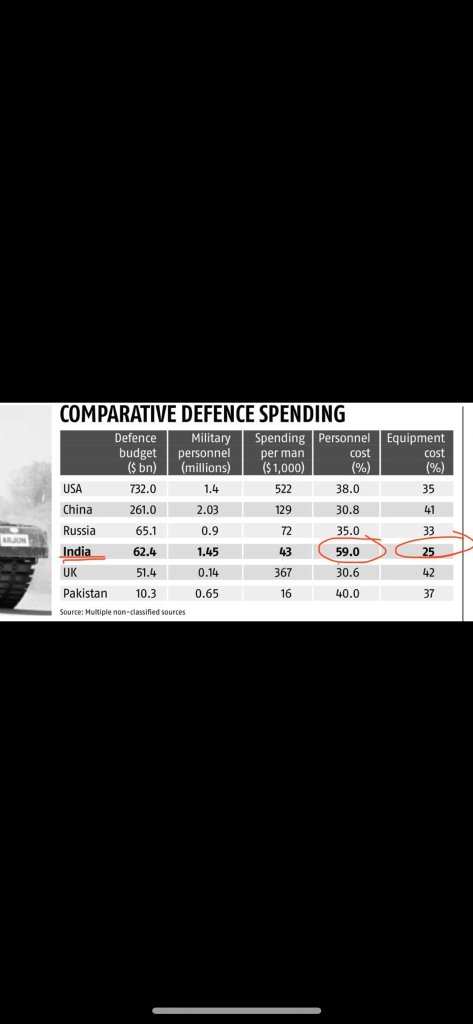

 A new release 0.3.3.9.1 of

 Despite having worked on a
 I managed to break a USB port on the Desk Pi. It has a pair of forward facing ports, I plugged my wireless keyboard dongle into it and when trying to remove it the solid spacer bit in the socket broke off. I ve never had this happen to me before and I ve been using USB devices for 20 years, so I m putting the blame on a shoddy socket.
The first drive I tried was an old Crucial M500 mSATA device. I have an adaptor that makes it look like a normal 2.5 drive so I used that. Unfortunately it resulted in a boot loop; the Pi would boot its initial firmware, try to talk to the drive and then reboot before even loading Linux. The DeskPi Pro comes with an m2 adaptor and I had a spare m2 drive, so I tried that and it all worked fine. This might just be power issues, but it was an unfortunate experience especially after the USB port had broken off.
(Given I ended up using an M.2 drive another case option would have been the
 The case is a little snug; I was worried I was going to damage things as I slid it in. Additionally the construction process is a little involved. There s a good set of instructions, but there are a lot of pieces and screws involved. This includes a couple of
 I hate the need for an external USB3 dongle to bridge from the Pi to the USB/SATA adaptor. All the cases I ve seen with an internal drive bay have to do this, because the USB3 isn t brought out internally by the Pi, but it just looks ugly to me. It s hidden at the back, but meh.
Fan control is via a USB/serial device, which is fine, but it attaches to the USB C power port which defaults to being a USB peripheral. Raspbian based kernels support device tree overlays which allows easy reconfiguration to host mode, but for a Debian based system I ended up rolling my own dtb file. I changed
 Today, hal-