Search Results: "sten"

24 February 2009

Bernd Zeimetz: why you should use gpsd over gypsy

While working on the Debian packages of navit I stumbled upon gypsy, as the libgypsy is used by navit to listen to notifications about location changes via D-Bus. As maintainer of the gpsd package I started to wonder what the opinion of the gpsd developers about gypsy is - especially after reading that "Gypsy was designed to fix the numerous design flaws found in GPSD". Well, here is their answer, which I support fully. I'm blogging about it as I think it is important to know about this details if you plan to do something useful with a gps device, for example on mobile phones like the OpenMoko Freerunner. gpsd works very well on embedded devices, and if there's a feature missing just contact the developers. They're very responsive and like to implement useful features, if they can get a spec to do so (and even better, the hardware to test it). So I'm really wondering if it wouldn't make sense to replace the minimal NMEA/UBX implementation in the FSO Framework Daemon by gpsd, even if that means to compile code instead of writing Python code, which is much faster for rapid prototyping, of course.

20 February 2009

Biella Coleman: FVL at NYU

As an die hard anthropologist, I never thought I would cavort so much with legal types. But given the nature of my project, it is pretty much impossible to avoid. Thankfully, the legal crowd dealing with digital issues, is pretty entertaining, interesting, and fun to listen to. And probably one of my favorite legal thinkers is coming to NYU to give a talk this coming Monday. If you are into this sort of thing and have not heard FVL speak, do make the time to join.

17 February 2009

Adrian von Bidder: Bowflex machine

After dropping all (pretense at) regular exercise after leaving high/grammar/secondary school (the german word is Gymnasium) and doing more or less nothing for more than 10 years, I've taken up weight training (after a not very successful attempt at volleyball; I like the sport but the team fell apart) two years ago. Since I actually managed to work out regularly (twice a week) in the first year, and since membership in a gym is not cheap, and since I moved and thus had to find a different solution anyway, I decided to buy a Bowflex Sport home gym. I can't compare it to other home equipment, and it apparently it has been discontinued by Nautilus, but nonetheless, a few thoughts: The conclusion first: Would I buy it again? No. Was it a waste of money? No, it's not that bad. In detail: Closing remarks: I'll probably keep it for quite a while. I've thought about spending much less money and just getting a bench and a few weights, but I really like to have a lat tower. Overall I can do what I want to do with the exception of cardio workouts. The other angle is that there is quite a bit of bad press around about the founder of Nautilus, Arhur Jones. I can't comment on how trustworthy these articles are, and I can't comment on Nautilus' business practices today (Mr. Jones seems to be dead), so take this with a large pinch of salt before making a buying decision based on moral/ethical standards.

15 February 2009

Ben Hutchings: Going to PyCon

I'm going to PyCon 2009: Chicago Carl Karsten of the PyCon organisers recruited three of us from the DebConf video team to lead and train the video team at PyCon.

Mike Hommey: Testing small upgrades with namespaces and unionfs

If you are following this blog, you probably remember per-process namespaces. Today, I m going to tell you how I did use them in the process of preparing this server to be upgraded to Lenny. I must say I was not using the most recent stuff on this server, and this is why I needed such preparation. First, this server is still running with php4. And well, the following line in the apt-get dist-upgrade output got my full attention (emphasis mine):
The following packages will be REMOVED:
cacti libapache2-mod-php4 libarchive-tar-perl libcurl3-openssl-dev
libgssapi2 libpci2 librpm4 libssp0 linux-kernel-headers modutils php4-mysql
While this server is not important enough not to be broken for a couple hours, I do like to test procedures that could help on servers that are. The first thing I needed to do on this server was obviously to upgrade php. But we all know how php applications are not fully compatible with all versions of php, so I also needed to test the upgrade was not breaking anything. On a server you don t care much about, you can just upgrade, test if all is okay, and be done with it. Obviously, if all is not okay, your visitors will see it, and you may also have a bad time downgrading. Another way to perform the upgrade is to have a similarly installed server on the side, test and validate the upgrade there, and replicate the upgrade on the production server if everything is fine. However, that does require additional resources, and possibly to setup them if they don t already exist. A cheaper way to do the above is to do it on the production server, both in-place and on the side (you ll see what I mean), using unionfs and per-process namespaces. Full containers could be used instead of per-process namespaces (such as openvz, vserver or lxc), but they still require much more setup, especially when you don t use them in the first place. Chroots could work just as well as per-process namespaces, but one of the ideas here is to expose the per-process namespaces feature, and allow for improvement of this procedure with pid and network namespaces, which are not available in Etch (where I m starting from), but are in Lenny. Unionfs allows to merge several directories into a single one, accessing some read-only, and others read-write. Installing unionfs is as easy as running the following command:
apt-get install unionfs-modules- uname -r
I won t describe all the kinds of setups that are possible with unionfs, but only one typical use case, which is what we will be using here:
# mkdir /tmp/root-cow
# mount -t unionfs -o dirs=/tmp/root-cow:/=ro none /mnt
The first thing we do here is to create an empty directory. Next, we merge it with the root filesystem (/), that we will keep read-only (meaning unionfs won t allow itself to write there), and mount the merged filesystem under /mnt. none could just be anything, as there is no device to be mounted. The result, in /mnt, is just something that looks like the root filesystem:
# ls /
bin boot dev etc home initrd lib media mnt opt proc root sbin srv sys tmp usr var
# ls /mnt
bin boot dev etc home initrd lib media mnt opt proc root sbin srv sys tmp usr var
But creating or modifying a file will do so in /tmp/root-cow:
# echo a > /mnt/a
# cat /a
cat: /a: No such file or directory
# cat /tmp/root-cow/a
a
# echo foo.com > /mnt/etc/mailname
# cat /etc/mailname
glandium.org
# cat /tmp/root-cow/etc/mailname
foo.com
# find /tmp/root-cow
/tmp/root-cow
/tmp/root-cow/etc
/tmp/root-cow/etc/mailname
/tmp/root-cow/a
Keep in mind that it doesn t include submounts, though:
# ls /var
backups cache lib local lock log mail opt run spool tmp www
# ls /mnt/var
This means we ll have to also mount /var, /proc, /dev, and /sys. That s enough testing for now, and we ll first do some cleanup before going after the real job:
# umount /mnt
# rm -rf /tmp/root-cow
Using the newns utility from my first post on per-process namespaces, let s create a new namespace to keep our testing private, and populate it with the necessary mount points:
# newns
# umount /tmp
# mount -t tmpfs tmpfs /tmp
# mkdir /tmp/root-cow /tmp/var-cow
# mount -t unionfs -o dirs=/tmp/root-cow:/=ro none /mnt
# mount -t unionfs -o dirs=/tmp/var-cow:/var=ro none /mnt/var
# cd /mnt
# pivot_root . mnt
# mount --move /mnt/proc /proc
# mount --move /mnt/sys /sys
# mount --move /mnt/lib/init/rw /lib/init/rw
# mount --move /mnt/tmp /tmp
# mount --move /mnt/dev /dev
The second and third statements are useful to avoid sharing /tmp with the main namespace, which means the directories we create in the fourth statement won t be visible in /tmp outside this namespace. The fifth and sixth statements put the union filesystems in place. As my system only has a separate /var filesystem (no /usr, and I don t care about /home here), I only need to setup these two. Feel free to add more union filesystems as necessary. The pivot_root call allows to switch to the unionfs ed root: everything under /mnt (/mnt and /mnt/var in our case) will be remounted under /, while what was under / is remounter under /mnt under the new root.
This means, in our case, that we have / and /var as union filesystems, while the old / and /var are respectively in /mnt and /mnt/var. It also means /dev, /proc, /sys and other filesystems are remounted as /mnt/dev, /mnt/proc, /mnt/sys, etc., which is why we next mount --move all of them to a better place in our namespace. Once all this setup is done, we are ready to do our php upgrade test. As Etch doesn t have support for neither PID namespaces nor network namespaces, we ll still have some conflicts with the main namespace for TCP port binding and process handling, so we need to be a little careful:
# rm /var/run/apache2.pid
# echo Listen 8080 > /etc/apache2/ports.conf
With these changes, we can now safely start apache2 in this namespace, at the same time the main apache2 runs in the main namespace:
# /etc/init.d/apache2 start
Now, there are actually 2 problems showing up in apache in this setup. The first one is that displaying static files doesn t work. At all. It appears unionfs doesn t support sendfile(). Which is fine. But apache doesn t check for sendfile() s error cases and doesn t fallback to a working solution when sendfile() doesn t work. So we have to manually disable it:
# echo EnableSendfile off > /etc/apache2/conf.d/sendfile.conf
The second one is that access to the mysql socket doesn t work properly under the unionfs. I didn t want to investigate further, so I only worked around the issue by forcing to use the socket outside the unionfs:
# mount --bind /mnt/var/run/mysqld /var/run/mysqld
Finally, we can test and validate our php upgrade:
# apt-get install php5-mysql php5-cli php5-snmp libapache2-mod-php5
# /etc/init.d/apache2 restart
# apt-get remove --purge php4-common
Note that installing libapache2-mod-php5 will remove libapache2-mod-php4, and apache2 gets restarted, taking into account this change. But the php modules (php5-mysql and php5-snmp) install is only going to happen after that, and no apache2 restart is triggered then, which leaves a half working php setup
Also note that the cacti setup in etch supposes php4 is installed, using a IfModule statement against mod_php4.c and none for mod_php5.c, which means a part of its setup doesn t work out of the box (most notably, the DirectoryIndex). Once all is validated, all we need to do is to stop apache2 and exit from the namespace. The union filesystems and temporary filesystems are then automagically cleaned-up and the namespace disappears as well as all modifications we just did, since all processes using the namespace ended. We are now free to upgrade on the production server, as we know all the side effects. I ll now be able to upgrade to Lenny without php getting removed.

David Pashley: MySQL silently truncating your data: Update

After my entry yesterday about MySQL truncating data, several people have pointed out that MySQL 4.1 or later gives you a warning. Yes, this is true. You can even see it in the example I gave:
Query OK, 1 row affected, 1 warning (0.00 sec)
I ignored mentioning this, but perhaps should have said something about it. I reason I didn't mention it was because I didn't feel that a warning really helped anyone. Developers have enough problems remembering to check for errors, let along remembering to check in case there was a warning as well. Plus, they'd then have to work out if the warning was something serious or something they could ignore. There's also the question of how well the language bindings present this information. Take for example, PHP. The mysqli extension gained support for checking for warnings in PHP5 and gives the following code as an example of getting warnings:
mysqli_query($link, $query);
if (mysqli_warning_count($link))  
   if ($result = mysqli_query($link, "SHOW WARNINGS"))  
      $row = mysqli_fetch_row($result);
      printf("%s (%d): %s\n", $row[0], $row[1], $row[2]);
      mysqli_free_result($result);
    
 
Hardly concise code. As of 5.1.0, there is also mysqli_get_warnings(), but is undocumented beyond noting its existence. The MySQL extension does not support getting warning information. The PDO wrapper doesn't provide any way to get this information. In perl, DBD::mysql has a mysql_warning_count() function, but presumably would have to call "SHOW WARNINGS" like in the PHP example. Seems Python's MYSQLdb module will raise an exception on warnings in certain cases. Mostly using the Cursor object. In java, you can set the jdbcCompliantTruncation connection parameter to make the driver throw java.sql.DataTruncation exceptions, as per the JDBC spec, which makes you wonder why this isn't set by default. Unfortunately this setting is usually outside the programmer's control. There is also the java.sql.Statement.getWarnings(), but once again, you need to check this after every statement. Not sure if ORM tools like Hibernate check this or not. So, yes MySQL does give you a warning, but in practice is useless.
Read Comments (0)

12 February 2009

Evan Prodromou: 24 Pluvi se CCXVII

I was listening to Tech Nation today on the treadmill -- the episode from Jan 13 2009 with Darrell Rhea of Cheskin Added Value. He made a great point: that when people give money to charity, they feel good about themselves. But when they pay their taxes, they feel really bad -- even though their taxes go for schools, hospitals, fire departments, and other important societal services. And that made me think about a few things. One reason for this discrepancy is probably a feeling of control. When I make a charitable donation, I choose the charity. With taxes, I don't have much of a choice where the money goes. Well, I kind of do, but it's a really circuitous level of control: I vote for representatives who express certain values (pro-education, anti-waste) during the election cycle and hopefully defend those values when the time comes to make a budget. That's a pretty loose connection. So I had an idea: what if, when you're paying your taxes, you got to specify a suggested earmarks for using your dollars? You could pick from a list of (say) 20-30 high-level programs (like "Education", "Health care", "Foreign aid") and make some allocations. "20% education, 10% education, 10% defense, 2% foreign aid, the rest for whatever." Entirely voluntary, no obligation on the part of taxpayers. Obviously these would be different for different levels of government -- cities might have "Police", "Parks", "Roads" as their programs. The tax agencies could publish the numbers on these mini-budgets, and citizens could compare what they collectively set up as priorities versus what their representatives actually allocate money for. Sure, there'll be some natural discrepancies -- no one is going to like allocations for boring stuff like servicing debt or administrative costs. And there are some costs involved, although I think they'd be pretty low if you're already collecting tax return forms and generating statistics. And there'd be lots of people who'd write-in their pet projects ("100% UFO research") which would skew things significantly. But I think the general idea would be really helpful. People would see tax time as a time to use their voice, and politicians would have a clear idea what people want their money spent on, and in what amount. Most of all, it's closing the loop on paying taxes and making budgets, and I think that's a good thing for democracy. tags:

9 February 2009

Amaya Rodrigo: listening to "Ends - Everlast" on Blip

2

Amaya Rodrigo: listening to "sexual healing (live) - ben harper" on Blip

1

MJ Ray: Setting up and sustaining a global FOSS-based business (Ian Lynch)

Another Monday, start of the working week and I m thinking about business again. Ian Lynch of The Learning Machine is a smart cookie who I ve collaborated with before. He leads a free-software-based business which is very different from TTLLP s cooperative model and he gave a talk about it to Manchester Free Software. Here are the headlines:-
Building a FOSS Business
  • No fees from licenses
  • Services allied to FOSS
  • Something everyone needs
  • Low cost to produce
  • Low cost to distribute
  • Encourage FOSS take up
  • Increase the number of FOSS contributors
  • Make money to support FOSS development
Background theory and research
  • Clay Christensen and the theory of disruptive innovation
  • The innovators dilemma
  • Seeing What is Next
Business Growth
  • 3 horizons of business growth
  • Horizon 1 current profitable business
  • Horizon 2 business with clear potential
  • Horizon 3 possibilities currently being explored
  • Pipeline for growth
Tipping points
  • Critical mass
  • Viral effects
The ideal product
  • Something everyone needs
  • Something that costs nothing to make
  • Something that costs nothing to distribute
  • Something that has increasing value the more that is bought.
The INGOTs
  • International Grades Open Technologies
  • Market disruption
  • Lower barriers to entry
  • Target those currently not in the market
  • Provide products that are good enough
  • Improve and add features over time
Primary Schools - KS3
  • No-one targets primary schools
  • Very little certification in KS3
  • Use specialist schools community plans
  • Upsell from primary to secondary
  • KS3 add value at with less work for teachers
Developing world
  • Enable developing countries into the qualifications market
  • Target those making the transition to FOSS
  • Ally to netbook/smartphone internet access to lower costs
  • Use UK Awarding Body status for credibility.
The above points are under a Creative Commons cc-by-sa license and the original report was at Manchester Free Software. Sometimes FSUK-Manchester produce videos of talks, but I ve not seen this one yet. Watch their page for details. What can Ian s business analysis teach us about free software businesses? What interesting questions does it leave open? Have you had anything to do with the INGOTs? I ve not worked in education for a while, so I d love to hear tales from the chalkface about them.

8 February 2009

Biella Coleman: People of the screen

Geeks are creatures of the screen. Many, I have found, are also great lovers of books. I have peered into the homes and apartment of many and books usually adorn the walls and the tables. The exist in abundance. Though I am more or less paid to read for a living but these days, I don t seem to the time to do extra reading and I often mourn the fact that I spend so much time getting scraps of stories and information from the net as opposed to delving into a great book, over the course of weeks and weeks (and as opposed to reading, often hurriedly but totally intensely, for class).
I do manage to get in some good articles and last night, I pushed through the heaviness of sleepiness to read a pretty interesting article People of the Screen by Christine Rosen. Though a bit too alarmist for my taste, I enjoyed reading it, largely because it was written well and also brought some interesting questions and points to the table about the transition from a print culture to a digital one. One point, that I was not surprised to read, is the most avid of screen users (programmers, the digerati), are also avid readers. But among the less (economically) privileged, who have different educational relationships to books and who also may not have the time to read, reading in the traditional sense, is may soon be a more or less historical fact. What I also enjoyed reading about and contemplating are the different material properties of the screen vs print book and the ways in which these affordances might create a different user/intellectual (almost existential, the author would argue) experience. For example, she argues that the emotional relationship to treeware books are more profound, or that reading a long novel (vs playing a video game) is about submitting your will at least for a while to the narrative and the story. I don t agree with all of her assessments but I certainly agree that there are phenomenological differences between reading words on sheets of paper and the pages of a compact book, and then reading from the blue hue of a screen, often sitting upright, and whose text, at least for me, does not seem quite alive as it is when imprinted on bounded paper. But I don t think this necessarily has anything to do with some inherent properties of the screen. For example, writing on the screen does nothing but enliven text for me. When it comes to writing, I cannot imagine doing it any way but via the screen and the keyboard. I can play around with some words and erase with impunity. I can move around a whole paragraph here and there, split it into two or three and as such it feels dynamic and quite alive. I am sure I have lost, or there is something to lose, by not going straight from brain to pen but I never did all that much serious writing without the keyboard and so perhaps there was nothing to lose, no bodily transitional for me to undergo, and thus nothing to really mourn. So, I suspect many readers of this blog are voracious writers and readers, on screen and off screen. Do you, can you read novels on the screen? If you love the printed book, why? Are you concerned about the loss of this medium? Or is there nothing to really worry about since technologists will eventually create a new digital medium that will surpass, in terms of a good user experience, the printed book?

6 February 2009

Biella Coleman: Viral Power

So I know, I know. There are a lot of annoying memes circulating on the net/facebook/[pick your spot] and well, sometimes the best thing to do is stop the damn thing by ignoring its existence. But I have to say, I have completely, totally and absolutely have loved reading the 25 things notes on facebook. It just provides a window into the extraordinary character that emerges from the collection of mundane events/likes/pleasures that make up people s lives. Reading them took me back to elementary school when and where I was an avid slam-booker. I have very fond of collecting and reading the tidbits of thoughts and information people left behind in my notebook. What also struck me about these recent 25 thingie notes is how odd or not as interesting, I think, it would be to have them recited to you over coffee or at dinner. Now I could be wrong here but I think the list-like quality would just not fly in a conversational context. A few facts with more embellishment would work but a whole string of thoughts would just sound flat and out of place. A reminder that format does matter for engendering certain types of knowledge. So here is my list.. 1. I looked like a boy for the first three years of my life (but a cute one, I think).
2. I love dogs so much that I often think that if I had a criminal streak, I would be a dog nabber.
3. I would routinely bring home dogs from the street when I was a kid. Many of them ended up dead after being hit by cars (they liked to return to the street and this only happened to 2 of them).
4. My favorite concert was Jimmy Cliff in a parking lot. There was lots of rain and lots of weed.
5. I like have a penchant for tall men. My mom claims it was because I lacked a strong father figure in my early childhood years. Who knows if that is the case.
6. I knew the instant that I took an anthropology class I wanted to be an anthropologist. I guess I made it happen (and it was one of the few moments of clarity in life).
7. I started the first environmental club in my high school and my car was called the recycle-mobile because there were always cans in the back seat.
8. I love the ocean; swimming, snorkeling, diving, sailing, and just watching it, though the cold ocean is not always by cup of tea.
9. I had terrible insomnia for a year and slept for a good chunk of it on a couch. I like the snuggle feeling I got from sleeping against a back.
10. I am very indecisive person. It is annoying as i tend to worry a lot about whether I made the right decision.
11. I was a shy kid and barely talked until meeting my best friend in kindergarten, Yael
12. I also failed the psychological test to get into school but my mom managed to get me in anyway.
13. I often wonder if I would have been a nun if I had lived prior to 1900s to escape various domestic obligations. I think it might have been fun to be a nun.. Fun to be a nun also has a nice ring to it.

14. I am currently struggling with an Etsy addiction and the UPS delivery guy asked if delivering packages would be a daily occurrence.. I just find all the stuff amazing and it brings me back to my artist days when I used to paint and spend a heck of a lot of time in the darkroom.
15. I have recurrent issues with nausea and have been hospitalized for it a few times. It is gut wrenching and really uncomfortable when it happens.
16. When I left NYC in 1997 I thought i would never come back. I am here now and quite happy.
17. I was obsessed with Ultimate Frisbee for many man years. I played more than I studied and finally gave up as it was ruining (or perhaps ruined?) my neck. I still miss it.
18. I LOVE tostones and would eat them everyday if they were not, you know, so bad for you.
19. I have been using IRC for 7 years and consider some of my best friends to come from there.
20. Some folks have asked how I became interested in politics and I am pretty sure it was Doonesbury.
21. When I was like 4 we went to some fair and I swore that I almost got flung off some rickety ride but this could be totally wrong. It was really frightening.
22. The coldest night of my life was spent in Los Nevados, Venezuela and the scariest car ride I ever took was leaving Los Nevados in a jeep and something that resembled a road.
23. A few sucker fish once tried to stick on me while I was doing a decompression stop after a dive. My dive buddy smacked the fish, which had devil faces, with the regulator, saving me from what would have been a really sort of sucky situation.
24. I am trying to learn how to surf and am really sorry that I did not do so when a teenager since I don t exactly have the time to really learn.
25. Since I am not sure how to end, I will do so with a :-)

28 January 2009

MJ Ray: World Economic Forum 2009 in Davos

The World Economic Forum opens today (28 Jan) and runs until the weekend. This year most of the high-power planning sessions and feel-good corporate social responsibility whitewash has been replaced by sessions such as What Happened to the Global Economy? (Er, it broke because you bet more money than existed in the world?) There s a report from France24 and a programme of sessions. Like WEF in previous years, selected sessions are broadcast on SFinfo in German and Original Languages (often English) on Hotbird at 13east. Additionally, this year, there are webcasts (maybe the podcast version will play on free software) but it seems that none of the computing sessions are up for broadcast. Economics rules the airwaves for 2009. My main reason for posting here is to boggle at the WEF myspace competition. Isn t Myspace about the least appropriate of the big social networks for an economics forum? I suspect some payment or benefits from the network that Rupert Murdoch s company bought. There s also @davos which seems to be talking much more than listening seems appropriate for WEF, no?

25 January 2009

Roland Mas: GForge is now FusionForge

Executive summary To avoid confusion with the proprietary versions of GForge (known as GForge Advanced Server, GForge Express Edition and GForge Community Edition), the free/libre/opensource codebase will from now on be separately maintained under the name FusionForge by the main developers of the free GForge 4.x codebase. Since this is mostly a renaming, the migration path for existing users will be smooth. Longer version, with details After the initial forking from the Sourceforge codebase, the development of GForge has long been hosted, and many enhancements directly developed, by the GForge Group (GForge, LLC), with regular contributions from outsiders. The results of these evolutions were public and free, subject to the GNU GPL. In parallel, the GForge Group wrote a proprietary re-implementation of GForge, which it sold under the name "GForge Advanced Server", or "GForge AS" for short. This re-implementation added some features for "the enterprise", but was not contributed wholesale to the GForge codebase under a free license. Although some of the features were contributed to the public, the GForge Group concentrated its efforts on its (proprietary software) business model, with more versions appearing, such as "GForge Express Edition" and more recently "GForge Community Edition". As a result, it became increasingly harder for the public to know which version was which without doing extensive research (indeed, some users mistakenly installed one version instead of the other). A consequence was that the free software codebase suffered from a loss in visibility, which lowered its momentum to the point that there haven't been any moderately important releases since the (currently stable) 4.5.x series was announced in late 2005. So, in order to clarify things, avoid further confusion, and regain some of the lost momentum, it was decided by a group of leading contributors that the free software version of the GForge codebase would from now on be developed under the FusionForge name, and its development would be hosted on FusionForge.org. So is this a fork? Well, we don't know yet. It could arguably be called one, since we're taking the code and running away with it under a new name. However, we believe it's not a fork unless both roads continue their own way (more of a oddly-shaped bend). What happens to the GForge codebase developed by the GForge Group at gforge.org remains to be seen, although for the sake of our users we will backport security fixes to the gforge.org Subversion repository (at least for the 4.5.x series and the unreleased 4.6 and 4.7 pre-series) for some time. The bulk of the development will move on to FusionForge and the repositories at FusionForge.org, though, and users are encouraged to migrate at their own pace. Since we're basically continuing the evolution rather than starting from scratch, the migration path should be rather smooth. So why the FusionForge name? Because there were actually lots of locally-patched versions of GForge (and Sourceforge), and we felt it was a waste of resources that should be fixed. It seems many people and organisations took these codebases at some point in time and evolved them for their own needs. Sadly, many of the changes were not contributed back or even published, so lots of efforts were duplicated. Fortunately, many of the people managing these locally-patched forges are now realising that "out-of-tree" patches and features require quite some manpower to maintain. Some formal inter-project discussion is already taking place, and we hope to achieve actual merging of most of the interesting features that have been developed here and there into a common base that can be reused locally with minimal changes. We'd like to "un-fork" as much as possible. We also expect that, by using standard components and tools, we'll facilitate the work of potential contributors, thereby reducing the risk of a new era of fragmentation. And who are we anyway? We're Christian Bayle, Roland Mas and Alain Peyrat, long-time contributors to GForge and responsible for over 95% of the commits over the past two years, as well as a few relative newcomers. Christian and Roland have been maintaining the Debian packaging since the "Debian-SF" era, and Alain has been focusing on code quality. The three of us have, for various reasons, a vested interest in maintaining a lively codebase in a healthy ecosystem. What are our plans? Our short-term goals, as currently planned, include: Longer term goals are less well defined, but we're thinking about the following: Some of these items should be facilitated by our switch to a distributed version control system and a new coordinated workflow. Also, the Debian i18n team has been kind enough to offer to host our translation effort on their Pootle server, which means translators will have a much easier time doing their job. We hope to hear from users and contributors alike in the near future. For more information, we can be reached via our fusionforge-general mailing-list (see our lists), which is also suitable for general discussions. We can also be found on IRC (#fusionforge on the Freenode network).

22 January 2009

Y Giridhar Appaji Nag: The Mozart of Madras

I have been listening to music from the Laya project since a few days. It is a set of CDs I picked up from an interesting hippie-ish place called Psybabas on Castle street. Actually, one rarely gets to listen to such sounds. Ideas of similar music can be found scattered in the movies from the early 90s; Hai la sa reminds me of ETilOni sEpalanTa from donga donga. My favorite track though is LA ilAha ill-Allah which sounds very fresh and different from how one would expect it to be.

On a related noted, ETilOni sEpalanTa was composed by A. R. Rahman. I have great respect for the gentleman and recently H pointed me to an article in Tehelka titled The Mystic Master. While a lot has been written about him recently, mostly in the backdrop of The Golden Globe that he won, this article dwells on the person unlike probably anybody did before. Must read.

19 January 2009

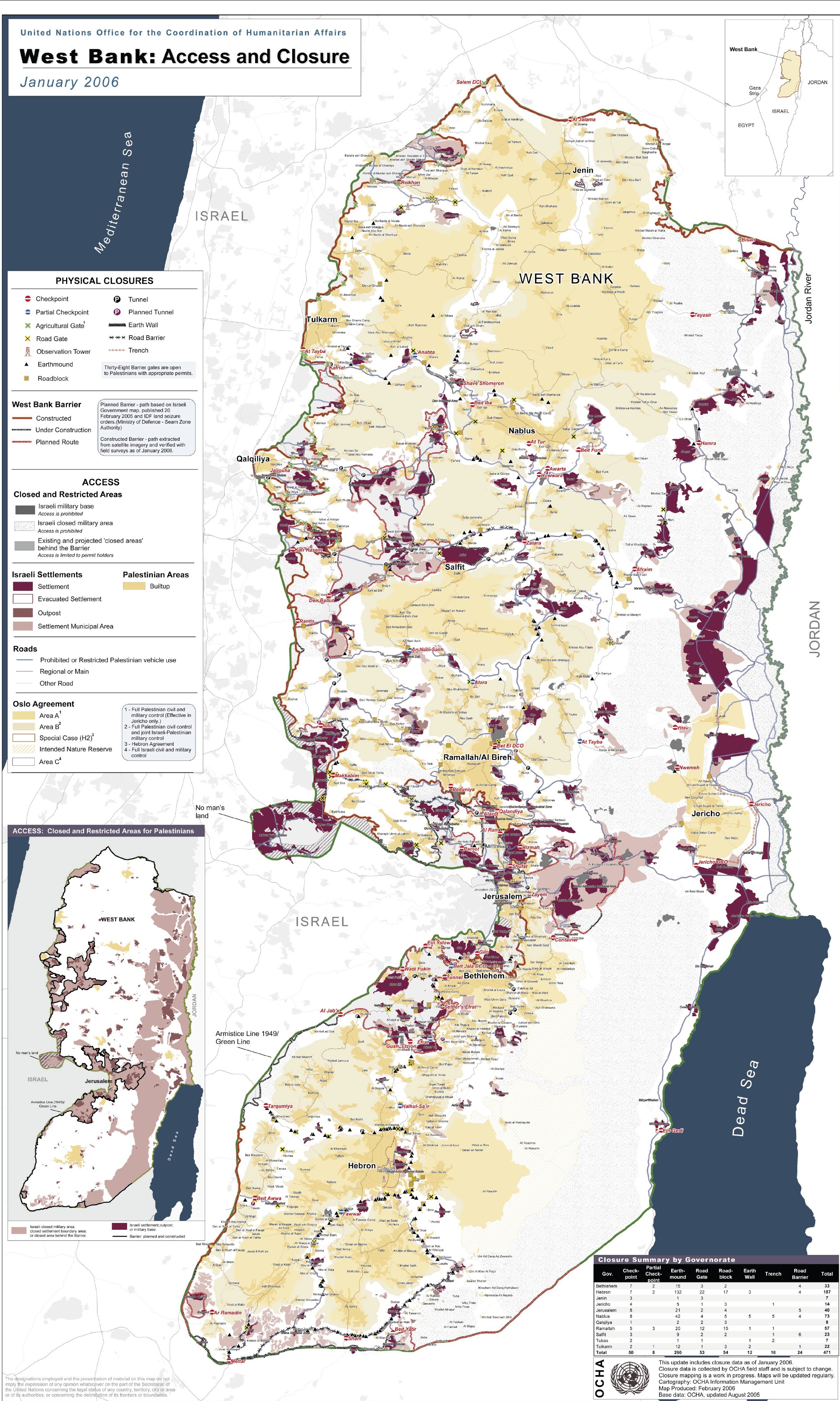
Gunnar Wolf: About the recent events and possible outcomes in Israel and Palestine

Several friends, from different groups and backgrounds and with different points of view regarding the current war in Israel (and regarding the Arab-Israeli conflict in general) have asked me for an explanation on what is happening there, what is (my view of) the real conflict, its causes... and any possible answers. And yet I am quite far from being an authority, I do want to write something about it. Be prepared, as this post is quite long.
And yet, after writing frankly a lot more than what I expected... It is by far not enough. I have still much more to add, but I have to say "stop" at some point. So, here you have it: My points of view, as well as some explanation on why are we standing where we currently are.
I am writing this based just on my personal experiencie and, of course, my personal point of view. Furthermore, I wrote a good part of this text while riding a bus, with no network access, so I am offering very few references - In any case, it will allow me to make much more progress. References always take as much time as the text itself! About me Why am I writing this? Why do people ask for my opinion? I must start by explaining who I am, so the rest of this makes sense. I am a Mexican Jew. That means, I was born in a Jewish (albeit secular) family, and grew up in an environment with general Jewish culture. My direct family (say, my parents and brother, and to a lesser degree my closest cousins) are not at all religious, I'd even venture to say most of us are complete atheists. Yet, besides the cultural belonging (which is a mixture of a Eastern European culture with lots of Idish words and dishes and general humor), my family has a strong national identification - In other words, I grew up in a fully Zionist environment, which traces back to Poland.
My grandmother was member of Hashomer Hatzair in Poland, since the early years of its existence, late 1910s and early 1920s. What is it? To make it short, a Zionist Socialist, Kibbutzian youth movement. It has many similarities (and somewhat stems indirectly from) the Scouts many of you will be familiar with, but -obviously- has a way lengthier agenda. And, yes, nowadays I feel it is somewhat out of reach with the current state of the world - It was founded in 1913, and only slightly adjusted its principles since then.
I will talk more about Hashomer later on.
My grandmother arrived in the late 1920s to Mexico, for familiar and economic reasons, but still dreamt about living in Israel for a long time. As they grew up, first my uncle joined Hashomer in Mexico in the late 1940s, when it still pursued a very much Soviet-style ideals for Israel (one of the core points that changed during the 1950s); both my father and my mother joined in the late 1950s (in fact, that's where they met). My cousins and myself were very active in the 1980s and 1990s.
The Iszaevich family has something very unusual, I'd say, engraved in our genes. We live very deeply our ideologies. That's the only explanation I can find to the way we all have led our lives. I won't go into the other family members' details, but just into mine: I was fully convinced of all we taught to our younger members and what we discussed among ourselves. I am among the very few people who really learnt Hebrew at my school, and that was only because I really cared - I know some people that just after 12 years of pseudo-learning could maybe utter a few phrases.
After finishing high school I went with my Hashomer group, together with people my age from other similar-minded Mexican Zionist youth groups, to live and learn for a year in Israel, on what is usually known as shnat hajshar - A year to get ready. To get ready to what? But of course, to come and give back go the younger groups of the movement, and finally go back to Israel and settle there definitively. I came back to Mexico, and after one year I did the only thing that was logical: I became an Israeli and went to live to a kibutz - Zikim, a beautiful place just between Ashkelon and Gaza, very near the sea shore. It was a beautiful period in my life, and I really enjoyed it - But it didn't last for very long - I quickly grew to hate the Israeli society at large. A society full of rage, of hatred. Not just between Arabs and Israelis, as many would think from the outside, but between religious and seculars. And between immigrants and locals. And between leftists and rightists (in several dimensions, as it is one of the countries where you can most easily be a economic leftist while being a political rightist - a complex society it is). A society full of disrespect and intolerance. A very hypocritical society. And one of the things that most shocked me: I wanted to live in a society of proud of its existence, that's what I had learnt Israel was - But Israelis aspire and dream of being anything else (and mostly US-Americans) in a way that made me sick, more than anything I had previously seen in Mexico.
I loved the life at the Kibutz, and I loved being an agricultor, doing hard work every day and literally getting the fruit of it. However, I cannot live isolated to a 300-people universe - At least once a week you have to go to the city if you don't want to become insane. And I could not stand the sick Israeli society.
Anyway, to make things short: After six months as an Israeli, I came back to Mexico. I went through a long period of finding myself, as I could not uphold anymore my Hashomer ideology (if I am not going to live by it, how can I continue teaching it?). Many people do anyway, but for the first months, where my Hashomer work was basically all of my life, I felt really uncomfortable. So, in short, I severed all of my relations to the Jewish community, and even denied for a long time my Jewishness until I found a (I think) better balance.
Today I am at peace. But anyway, I wanted to talk about myself in the critical period that marked me in this regard: The 1990s. Enough, lets get down to business. Zionism 1870-1920 Many people argue that the Jews invaded the Palestinians homeland - And yes, nowadays I cannot counter this. But we cannot judge what happened then based on what we see now.
Modern Zionism started around the 1870s. The Jewish history is full of pogroms and persecution, in different countries all over Europe - And a group of young people decided the only solution was to build a place to call their own. And yes, this was full of idealism and in no small part the foolishness of youth. For several centuries and up to 1920, all of current Middle East were provinces of the Ottoman Empire. Before Zionism began, the population of today-Israel was very sparse, not more than 400,000 people - up to 5% of them Jewish, around 10% Christian Arabs, and the remainder, Muslim Arabs. Of course, the low population was mostly because the country was mostly hostile - A desert in the South, mostly swamps in the North, and some minor towns mostly in the hills. It was a mostly forgotten province, away from the central Turkish rule, and there had been no frictions with the local population. It was a nice place to go, thinking -again- as a fool youngster, or as an idealist. They said, lets take a folk without a land to a land without a folk.
The number of accomplishing Zionists (this is, people who actually went to Israel instead of just talking about doing so) was not high during the first decades. But towards the 1890s, it gained critical mass. The political Zionist movement was born, with Theodor Herzl as a leader, and they started pushing -politically- for different governments to concede a territory to Jews. They went to the Turks, and didn't really get much echo. Went to other colonial powers of the time, and got unfeasible promises with no real backing (i.e. Birobidjan in Eastern Russia, Uganda in Africa)... And, as it happens in strongly ideologized movements, the movement started splitting into different groups with slightly different positions.
And no, I am not talking about the People Front for the Liberation of Judea and the People Judean Liberation Front, but I very well could. Sometimes the differences are as ridiculous as that. But hey, I take that most of my readers are acquinted with the Free Software issues, right? Think BSD vs. GPL vs. OpenSource. To give a broad idea - Only in Mexico City, with a very small Jewish community (~30,000 people), in the mid-1990s we had over 10 such movements, with 50-150 youngsters attending each. And even though some were local, and even though some very important ideologies are not represented in this country, they are all different enough to exist as separate entities. British Mandate The Ottoman empire was divided after the first World War. Its possesions in Europe became independent states, while in Asia (and Africa, if you take the semi-independent Egypt and part of Sudan into account) they were taken over as colonies or protectorates by France and the UK - Evidently, attempting to secure a long-term dominion over the area. In some aspects, they failed. In some aspects, they were (and still are) tremendously successful. The division of people by setting arbitrary boundaries has led to countries sustainable only by force and a harsh rule (such as Iraq, Lebanon and Syria), or doomed to poverty (and thus submission) due to lack of natural resources (as Jordan). Focusing on Israel/Palestine, the UK entered the area by making mutually incompatible promises to arabs and Jews - i.e. the Hussein-McMahon letters and the Balfour declaration, both ambiguous enough to lead to... Well, today. The UK rule was disastrous to the region, both in giving (and taking away) power from all sorts of puppet regimes, and swiftly going away as soon as things started looking too complicated. Yes, typical colonialism.
So, while up to the 1920s there was no real animosity between Arabs and Jews (as i.e. the Faisal-Weizmann agreement shows), during the next decades the seeds of hatred started growing, from both sides.
Many people still quote the 1947 partition plan as the direct antecedent towards Israel's real existence - That was not the first partition plan that existed. Ten years earlier, the Peel commision suggested a similar partition involving forceful population transfer. And many people see the separation of Transjordan (now Jordan) from Palestine in 1922 as a first partition. It is understandable that both partition plans (much more the 1947 than the 1937 one) were accepted by Zionists: Going from having nothing to having something (and against all odds in the environment they lived) is acceptable.
From the Zionist side, two main groups rejected the partitions: The right-wing and religious groups, insisting that the whole of the Mandate should become Israel, and the left-wing groups, which advocated for a single, bi-national state, with equal rights for all of its population. Go over and read this last link, as it was quite interesting (to me at least) to see how this solution has kept existing and regarded by (relatively) many people, and has many interesting links. 1948 onwards: Where did the refugees come from? The November 1947 partition didn't exactly translate to a planned, smooth Israeli independence - It led to six months of revolts (basically, a civil war). By mid May, the UK government and troops abandoned the territory, and one day later, Israel declared its independence. And, of course, all neighbouring countries (and Iraq) sent their troops to invade Israel. The war lasted for over six months (cease-fire was signed in January 1949). There was an intense Arab campaign indicating the armies would enter Israel and devastate it, leaving no stone in place, indicating Arab population to temporarily leave the Jewish-destined areas. The war, they said, would not take more than a couple of months, and they would be able to go back home.
Only that... When the war ended, the results were far from what the Arab governments expected. Not only Israel continued to exist, but it conquered important territories.
Of course, the Israelis were not innocent from said exodus: During the 1947-1948 civil war, and the independence war, some of the existing so-called self-defense forces (some of them were really defensive, while some were quite aggressive, even terrorist) attacked Arab villages in strategic or predominantly Jewish areas to prompt them to leave - yes, what we today call ethnic cleansing.
I had (in my head) the number of 650,000 Arabs (from a total of slightly over a million) fleeing to neighbouring countries. Wikipedia states that it is somewhere between 367,000 and 950,000. A similar number of Jews were expelled from Arab countries, many of which arrived to settle at Israel (and many others went elsewhere - For instance, a good part of the Mexican Jewish community is from Syrian origins - Many of them fleed in those years). Israel didn't accept back the (relatively few) Arabs that requested to resettle, as they were seen as hostile population - but neither did the countries that "temporarily" accepted the Palestinians accepted them as citizens. The Palestinian refugee camps today, mainly in in Lebanon, Syria, and the occupied territories held by Israel have terrible living conditions, and its population -despite living there for over 60 years- have no civil rights at all. Note that I'm omitting Jordan here, although it has several camps as well, as their situation is way better.
The Arab population that didn't leave did receive full Israeli citizenship. No, their living standards are not up to level with the average Israeli. The country and the society do have a sensible degree of racism and segregation. But the situation is nowhere as terrible as it is in the camps.
The areas which were originally to become Palestinian and were not conquered by Israel -this is, current-day West Bank and Gaza- bacame respectively Jordan and Egyptian territory. While Jordan did fully extend its soverignty covering the West Bank, Egypt didn't - Gaza is, since 1949, occupied military territory. Gaza, among the most densely populated areas in the world, has had their inhabitants under military rule ever since. When Israel returned the Sinai after signing the peace treaty with President Sadat, Egypt didn't accept Gaza back - And that's where today's greatest problem is born.
Now, Israel conquered those territories in 1967, along with the very sparsely populated Sinai and Golan. For the first ten years, the territories were basically only administered (yes, under a military rule). In 1977, with the first right-wing Israeli government, an extensive settlement policy began (and led partly to today's seemingly unsolvable situation). In 1980-1982, Israel withdrew from the Sinai. In 1981, Israel claimed full soverignty over the whole of Jerusalem and the Golan. In 1993, the "Oslo Agreement" was signed between Israel and the PLO, and it seemed we were heading towards a bright future. I lived in Israel between 1994 and 1996 - Yes, the most hope-filled period in the country's life.
Since 1996, I have tried to keep up to date with the country's evolution. All in all, even if I won't live there again, it is a country I learnt to love, a society I have long studied (even if in the end I did include many references, I wrote most of this text just off the top of my head, with the data I remember - so it might have several big errata). And yes, I keep the political stand I had 12 years ago: The only solution is to dialogue, to treat the current enemies -and not only their governments- with respect, recognizing their dignity and right to life, to self-determination. Only then we will change the status quo. How not to fight hatred Since 1993, the dream of peaceful coexistence seems to have faded. What we saw during the past three weeks, along to what we saw in Lebanon in 2006, is plainly a gross mistake if the goal is to achieve good, lasting peace.
Try to imagine how could life in Gaza be, even in the total absence of Israeli attacks. Just to set some numbers first: The Gaza strip hosts almost 1.5 million people on 360 km . When I lived in Israel, I was constantly surprised at how small a country it is - Israel tops at 550Km North to South, 150Km east to West (it is amazing, almost wherever you stand, except in the middle of the Negev, you can see the country's borders. Yes, I recognize as the border the so-called Green Line); over half of the territory is a desert, and it hosts seven million inhabitants. And it is hard to imagine how that country can be economically viable.
I do not find it feasible to imagine Gaza and the West Bank integrating a single country, and not only because they are separated by ~40Km, but because they are so sociologically different. People in the West Bank, yes, live opressed under military rule and subject to a much more constant, more visible apartheid-like state (as the territory is truly sprinkled with Jewish outposts which many Israelis refuse to recognize as their own, but still, which have incredibly higher living standards). The best land has been taken away from them, yes, but they have some space between cities to have some farming, to communicate, to... Breathe. Besides, West Bank inhabitants -even those in refugee camps- have much better living standards than anybody in Gaza. It is still an overpopulated area, but not nearly as much as Gaza.
Gazan population have been driven towards extremism. And yes, there was a civil war between Palestinian factions, as the world views between both populations are completely different - However hostile a Jenin inhabitant can be towards Israel, he does not lead the life -if it can so be called- you see at Khan Yunis.
But back to Gaza... What Israel is doing (and not only during this military operation terror campaign is wrong, from any rational point of view. Israel wants Hamas to become weaker? Then don't drive the population into supporting them!
Palestinians started giving over 50% of their support to Fatah (ex-PLO), and under 20% to Hamas. That was less than 15 years ago. However, Fatah has shown to be corrupt and inefficient at building infrastructure and improving life conditions, ineffective at negotiating a permanent agreement which secures dignity and sustainability to their people. Hamas stands as a religious, righteous organization. There are no serious corruption charges against any Hamas leaders. Hamas is clearly still at war - They didn't subscribe any peace agreement so far, and their stated #1 goal is to build a Muslim State in the whole of Israel. And the Hamas movement -like Hizbollah in Lebanon- has built quite a bit of infrastructure in the areas they control - Mainly housing. Yes, housing where they mix their own offices, many will accuse, getting human shields for free. But still, they are benefactors to a dehumanized, pauperized population.
I find it obvious that, if living conditions were at a basic level in the region, support of Hamas would decrease. Even more, of course, if they improved due to Israeli support. Israel controls this territory, so it is responsible for the well-being of its population, like it or not. And Gaza is simply too small and low on resources to survive by itself.
I was a bit surprised to find mention -although very brief- of a three state solution - And yes, this is close to what I would expect as a viable outcome. It is clear that Israel will not ever grant full citizenship to the Palestinians, as they would -euphemistically speaking- challenge the Jewish character of the State. Dropping the euphemism, Israel relies on apartheid in order not to become an Arab majority country. I might have some numbers wrong, but AFAIK, there are ~7 million Israelis, 20% of which are Arab citizens (which means, 1.4 million Arabs and probably 5 million Jews, with many other minor denominations for the difference), and ~4 million Palestinians live in the territories. Today, the country is already predominantly Arab, or at least is close to being so. So, Israel should permanently, formally disengage from all of the occupied territories. And in order to ensure violence stops, start a comprehensive, unconditional, long-term aid program. Start with giving them autonomy to regain their sea, as the Gaza port has long been closed. Allow the airport to operate again. Instead of bombing tunnels in the Egypt-Gaza borders, allow Gaza to trade with Egypt - Perhaps even to integrate territorialy, if the conditions are met. Treat their people with respect, and help them ease the terrible situation they have lived for so many decades - and then, undoubtely, terror will stop.
The West Bank? Possibly it could become a Palestinian state by itself. Possibly, it could integrate back to Jordan. That would be up to Jordans and Palestinians to decide. Of course, Jordan has already a large segment of its population defining itself as Palestinians, which counts both for and against. So, I won't venture into this supposition.
But anyway - Back to what prompted me to write this text -yes, a very or maybe even too long text - I hope somebody even takes the time to read it!- is to explain what is my point of view on the current situation, and why.
Today, a cease-fire was announced, after 23 days of murder and destruction. I sadly do not hold very high hopes for it to be lasting, much the less to be enough, to lead to what they call a de-escalation of the conflict. The most I can currently do is to voice my opinion, and hope that mine is just one more voice pointing to a sane solution, to a permanent, dignifying way out, for all people involved. Every people has the right for survival and for safety. We cannot deny this to any others. And certainly, we cannot expect anybody not to fight for their right to live.

Next.

Previous.