Search Results: "bab"

12 June 2013

Wouter Verhelst: KTC Boom

The previous time I posted about playing a tournament, I finished with "My next match probably won't be as good. Oh well." That turned out to be quite the understatement; last saturday, I wasn't feeling very well, which impacted my play. Additionally, the opponent had a fairly unique playing style that I didn't know how to respond to, while he read my play perfectly and did everything he needed to do to make me lose. The result was fairly terrible; I lost with a double bagel. Ah well, live and learn, I suppose.

11 June 2013

Steve Kemp: Migrations and changes

So I'd previously talked about migrating machines. From having one virtual machine running "mail" + "web" + "stuff" I've now got three hosts:
ssh.steve.org.uk
This is supposed to be used solely for shell access, email reading, IRC. Sadly it still hosts one website, the web interface to my Mercurial repositories. This can't be moved without moving the repositories which is a step too far. Although I don't particularly want people browsing my code/changes I do want them to be able to clone them. If I could get anonymous-SSH checkouts working, sanely, then I'd be happy, but I don't see how to do that.
skx-web
This hosts all my websites except for two. The two that are excluded are my mercurial repositories, which still lives on ssh.steve.org.uk, and my blogspam service.
blogspam
This runs my blogspam.net service. I wish I could retired this, since it uses cruftly XML::RPC. I'd rather see a RESTful application sending/receiving JSON. Sadly I can't kill it without annoying a lot of people. So it must remain.
I chose to add the blogspam guest, because that service does really take over an IP, and it just seemed simplest to move it to one machine. As a quick hack both http://repository.steve.org.uk & http://blogspam.net/ run under Apache. Although the other websites run under their own UID with thttpd + my proxy. Now time to change the subject entirely. I've recently joined gym. Which isn't as horrible as I thought it might be, though as a matter of policy I refuse to go on any of those fancy running/jogging machines. The first three weeks I just alternated between the cycling machines and the rowing machines. Initially ten minutes on each, then twenty, then thirty. Now I'm being all brave and adventurous, using new machines and pieces of equipment. Writing this I've got a dull ache in both my arms, after doing seated-dips with 100Lbs. So I guess I'm starting to make progress. No specific goals in mind, but I've been paying slightly more attention to my diet over the past month and I think if I'm a "little fitter" and have "slightly nicer arms" then I'll be happy enough. I've no desire to go all anal and count calories, or give up chocolate and beer. So it is almost hard to explain why I'm going, but .. it is fun, and watching the numbers change is fun too. I'll probably post more about this in the future.

Daniel Pocock: Interrupt-free computing

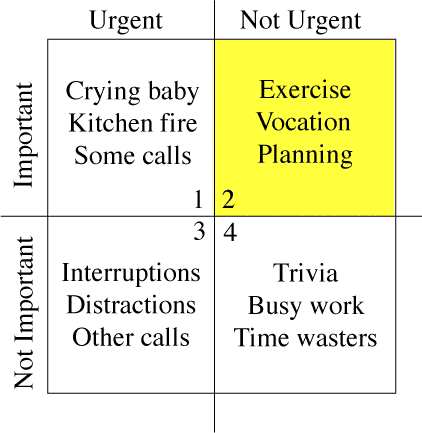
On debian-devel, there has been a discussion about the security issues of "spontaneously" appearing popups demanding the root password to make immediate security updates. There is a much more general issue related to this: computing without interruptions. Most of us have probably seen some friend or acquaintance with a (usually non-Linux) PC that is constantly beeping and flashing with chat notifications, new email popups, Adobe update this, Java update that, etc. In one recent case I came across somebody who had experienced a dramatic drop in his productivity as a consequence - giving him a laptop with a freshly installed copy of Linux made a dramatic difference to his work. I can already hear people insisting that security trumps everything (which isn't an original argument either) and that popups can't be avoided. A search on the web for "computing without interruptions" reveals users have a particular distaste for these things appearing while watching a video. Websites responding to that complaint fill the search results. With many types of interactive real-time content (video, WebRTC phone/video calls and so on) deployed within browsers, it is even more important for UI designers to contemplate when it is not appropriate to interrupt a user and to do everything possible to avoid interrupting the user. Preparing for disaster On the other hand, just ignoring security updates and not telling the user their disk is filling until 0 bytes remain available could only shift the problem down the road (from constant annoyance to periodic crisis). That said, sometimes you can still fill the disk very suddenly (especially with fast SSDs) and rather than relying on popups to keep users away from the precipice, applications (particularly the core desktop and daemon processes) could be tested more regularly to ensure they remain resilient in full disk situations. Managing information overload Popups are just part of a wider problem of information overload. There are emails too: some applications, such as Drupal, will send daily or weekly emails to a user if their system is not up to date. For many virtual-hosted sites, this starts to resemble a small flood. There is a flaw in this design: applications are competing for attention by sending more and more emails and popups or making them more annoying (e.g. the security updates in Debian 6 were ignorable popups in the top right-hand corner of the screen, Debian 7's Gnome Classic mode displays a big password prompt in the middle of the screen). The solution would be to develop a mechanism for unifying, de-duplicating and then prioritising these information/event flows. Some fault alerting systems already do this for their own events - these are niche solutions that aren't always applicable to the average PC-owner, although the principles are well tested. Some email organisation tools have similar features, but only for email. I'm not currently aware of any solution that synthesizes such an experience for all possible information sources. Setting priorities One well-read work on this subject in the business world is The 7 Habits of Highly Effective People (Stephen R. Covey, 1989). Of particular interest for the problem at hand is the priority matrix (borrowed from the Eisenhower Method): The left column, Urgent items, typically must be executed by a certain date (e.g. buying a gift before a birthday or installing a new SSL certificate before the old one expires). A security update or Acrobat reader update does not have this same characteristic. Under this model:
Urgent Non-urgent
Important Replace SSL certificate
Buy birthday gift
Security update
Run backup job
Not important Register for conference before deadline for free gift Non-security update for Acrobat reader
Covey even released an Outlook plugin, Plan Plus to help people organise their tasks (and their lives) using his methodology. Unfortunately it is closed-source software with a terrible set of ratings on Amazon - this review from a customer stands out: "My take is that Franklin does not consider robust software nor customer support to be either Urgent or Important." Could this be replicated more successfully with an open-source plugin for Mozilla Lightning or a similar productivity tool, and could the concept be extended across the range of data sources, including email, calendar items, system notifications and more to provide a unified approach to both the computing platform and general productivity (real-life) time management? Would this help solve the same problem in a more effective manner? In other words, would such an effort to help users integrate the demands of technology with the other demands of life make them more likely to keep their systems up to date? The wider community experience Going beyond the desktop/user experience, could this model be extended to automatically integrate external tasks, such as handling bug reports, moderating mailing lists and other slightly tedious things that have to be given regular attention to keep the free-software world moving along smoothly? Managing down-time For people who work in computing, there is almost no down-time any more. Even when on holiday, checking in for a flight might involve navigating through a buggy wifi access control system and an annoying set of advertisements from your low-cost airline as you try to print a boarding pass. These things often trigger thoughts about similar issues on client projects. Glancing at your email to find the booking number could awaken thoughts of a whole lot of projects you had tried to put out of your mind for a week. This is another area where excessive popups and emails can only compound the problem. Who really wants to download and install security updates while on holiday using an intermittent wifi connection? Managing all these events through a common mechanism may also finally make it possible to have an "ordinary user" experience with your PC. In practice, this might mean being able to view information/events through a time-of-day filter or "holiday mode" - and only on demand. A worthy design goal? Would any free software operating system make it a design goal to give their users a 100% interrupt-free experience? Of course there would still be things like chat notifications - but those would only be possible when a user has signed-in to a chat application. The distinction for the interrupt-free experience would only need to apply to default system behavior and not to every application.

10 June 2013

Petter Reinholdtsen: Third alpha release of Debian Edu / Skolelinux based on Debian Wheezy

The third wheezy based alpha release of Debian Edu was wrapped up today. This is the release announcement: New features for Debian Edu 7.0.0 alpha2 released 2013-06-10 This is the release notes for for Debian Edu / Skolelinux 7.0.0 edu alpha2, based on Debian with codename "Wheezy". About Debian Edu and Skolelinux Debian Edu, also known as Skolelinux, is a Linux distribution based on Debian providing an out-of-the box environment of a completely configured school network. Immediately after installation a school server running all services needed for a school network is set up just waiting for users and machines being added via GOsa , a comfortable Web-UI. A netbooting environment is prepared using PXE, so after initial installation of the main server from CD, DVD or USB stick all other machines can be installed via the network. The provided school server provides LDAP database and Kerberos authentication service, centralized home directories, DHCP server, web proxy and many other services. The desktop contains more than 60 educational software packages and more are available from the Debian archive, and schools can choose between KDE, Gnome, LXDE and Xfce desktop environment. This is the third test release based on Debian Wheezy. Basically this is an updated and slightly improved version compared to the Squeeze release. Software updates Other changes Known issues Where to get it To download the multiarch netinstall CD release you can use The MD5SUM of this image is: 27bbcace407743382f3c42c08dbe8178
The SHA1SUM of this image is: e35f7d7908566cd3075375b3721fa10ee420d419 How to report bugs http://wiki.debian.org/DebianEdu/HowTo/ReportBugs

8 June 2013

Thorsten Glaser: Waypoint Statistics

mirabilos  found waypoints I ve finally gotten around to listing all Waypoints (Geocaches, Opencaches, Closedcaches, Earthcaches, Terracaches including Locationless, Navicaches, etc.) I ve found a box, enjoyful, educating, a good place to hide one myself, etc. and putting up a list and, of course, generate my own statpic.

I ll put them up for the other project members, too (already made a picture for gecko2@ but bsiegert@ still needs one; we also need to collect offline lists of found, owned and attended waypoints) A bit of background story: I decided, years ago, to have an offline list of cache finds in case something would happen. Just, I had found way too many already, so this was a huge bit of work. Oh well I of course procrastinated, and then something did happen (Opencaching wanting to force a Restricted Commons licence; me disagreeing and suggesting a change; some trigger-happy person immediately deleting my account without waiting for the discussion or the decision period to end; weeks of forum discussions; Opencaching allowing dual-licencing; them telling me they can t restore my data probably never heard of databa sorry, MySQL backups). And I still didn t have the list. Now I do; recreated even the OC information from what was still accessible and with help from one OC supporter ( mic@ , thanks); merged caches that are co-listed on several platforms, etc. (still need to put in the FTF/STF/TTF/4TF/LTF and voting/favourites information) and a statpic, all in Open Source and Open Data, in cvs(1) with mksh(1) and a frontend for libgd2 I admit, but we had been using that for the MirWebsite for a while already. I suggest every geocacher keep an offline or local record of all their finds (and hides and attended logs) for things like this, in case some platform decides to let s say, put your data into the cloud where it is? I don t know .

4 June 2013

Keith Packard: dri3 extension

Completing the DRI3 Extension This week marks a pretty significant milestone for the glorious DRI3000 future. The first of the two new extensions is complete and running both full Gnome and KDE desktops. DRI3 Extension Overview The DRI3 extension provides facilities for building direct rendering libraries to work with the X window system. DRI3 provides three basic mechanisms:
  1. Open a DRM device.
  2. Share kernel objects associated with X pixmaps. The direct rendering client may allocate kernel objects itself and ask the X server to construct a pixmap referencing them, or the client may take an existing X pixmap and discover the underlying kernel object for it.
  3. Synchronize access to the kernel objects. Within the X server, Sync Fences are used to serialize access to objects. These Sync Fences are exposed via file descriptors which the underlying driver can use to implement synchronization. The current Intel DRM driver passes a shared page containing a Linux Futex.
Opening the DRM Device Ideally, the DRM application would be able to just open the graphics device and start drawing, sending the resulting buffers to the X server for display. There s work going on to make this possible, but the current situation has the X server in charge of blessing the file descriptors used by DRM clients. DRI2 does this by having the DRM client fetch a magic cookie from the kernel and pass that to the X server. The cookie is then passed to the kernel which matches it up with the DRM client and turns on rendering access for that application. For DRI3, things are much simpler the DRM client asks the X server to pass back a file descriptor for the device. The X server opens the device, does the magic cookie dance all by itself (at least for now), and then passes the file descriptor back to the application.
 
    DRI3Open
    drawable: DRAWABLE
    driverType: DRI3DRIVER
    provider: PROVIDER
       
    nfd: CARD8
    driver: STRING
    device: FD
 
    Errors: Drawable, Value, Match
    This requests that the X server open the direct rendering
    device associated with drawable, driverType and RandR
    provider. The provider must support SourceOutput or SourceOffload.
    The direct rendering library used to implement the specified
    'driverType' is returned in 'driver'. The file
    descriptor for the device is returned in 'device'. 'nfd' will
    be set to one (this is strictly a convenience for XCB which
    otherwise would need request-specific information about how
    many file descriptors were associated with this reply).
Sharing Kernel Pixel Buffers An explicit non-goal of DRI3 is support for sharing buffers that don t map directly to regular X pixmaps. So, GL ancillary buffers like depth and stencil just don t apply here. The shared buffers in DRI3 are regular X pixmaps in the X server. This provides a few obvious benefits over the DRI2 scheme: In the kernel, the buffers are referenced by DMA-BUF handles, which provides a nice driver-independent mechanism.
  1. Lifetimes are easily managed. Without being associated with a separate drawable, it s easy to know when to free the Pixmap.
  2. Regular X requests apply directly. For instance, copying between buffers can use the core CopyArea request.
To create back- and fake-front- buffers for Windows, the application creates a kernel buffer, associates a DMA-BUF file descriptor with that and then sends the fd to the X server with a pixmap ID to create the associated pixmap. Doing it in this direction avoids a round trip.
 
    DRI3PixmapFromBuffer
    pixmap: PIXMAP
    drawable: DRAWABLE
    size: CARD32
    width, height, stride: CARD16
    depth, bpp: CARD8
    buffer: FD
 
    Errors: Alloc, Drawable, IDChoice, Value, Match
    Creates a pixmap for the direct rendering object associated
    with 'buffer'. Changes to pixmap will be visible in that
    direct rendered object and changes to the direct rendered
    object will be visible in the pixmap.
    'size' specifies the total size of the buffer bytes. 'width',
    'height' describe the geometry (in pixels) of the underlying
    buffer. 'stride' specifies the number of bytes per scanline in
    the buffer. The pixels within the buffer may not be arranged
    in a simple linear fashion, but 'size' will be at least
    'height' * 'stride'.
    Precisely how any additional information about the buffer is
    shared is outside the scope of this extension.
    If buffer cannot be used with the screen associated with
    drawable, a Match error is returned.
    If depth or bpp are not supported by the screen, a Value error
    is returned.
To provide for texture-from-pixmap, the application takes the pixmap ID and passes that to the X server which returns the a file descriptor for a DMA-BUF which is associated with the underlying kernel buffer.
 
    DRI3BufferFromPixmap
    pixmap: PIXMAP
       
    depth: CARD8
    size: CARD32
    width, height, stride: CARD16
    depth, bpp: CARD8
    buffer: FD
 
    Errors: Pixmap, Match
    Pass back a direct rendering object associated with
    pixmap. Changes to pixmap will be visible in that
    direct rendered object and changes to the direct rendered
    object will be visible in the pixmap.
    'size' specifies the total size of the buffer bytes. 'width',
    'height' describe the geometry (in pixels) of the underlying
    buffer. 'stride' specifies the number of bytes per scanline in
    the buffer. The pixels within the buffer may not be arranged
    in a simple linear fashion, but 'size' will be at least
    'height' * 'stride'.
    Precisely how any additional information about the buffer is
    shared is outside the scope of this extension.
    If buffer cannot be used with the screen associated with
    drawable, a Match error is returned.
Tracking Window Size Changes When Eric Anholt and I first started discussing DRI3, we hoped to avoid needing to learn about the window size from the X server. The thought was that the union of all of the viewports specified by the application would form the bounds of the drawing area. When the window size changed, we expected the application would change the viewport. Alas, this simple plan isn t sufficient here a few GL functions are not limited to the viewport. So, we need to track the actual window size and monitor changes to it. DRI2 does this by delivering invalidate events to the application whenever the current buffer isn t valid; the application discovers that this event has been delivered and goes to as the X server for the new buffers. There are a couple of problems with this approach:
  1. Any outstanding DRM rendering requests will still draw to the old buffers.
  2. The Invalidate events must be captured before the application sees the related ConfigureNotify event so that the GL library can react appropriately.
The first problem is pretty intractable within DRI2 the application has no way of knowing whether a frame that it has drawn was delivered to the correct buffer as the underlying buffer object can change at any time. DRI3 fixes this by having the application in control of buffer management; it can easily copy data from the previous back buffer to the new back buffer synchronized to its own direct rendering. The second problem was solved in DRI2 by using the existing Xlib event hooks; the GL library directly implements the Xlib side of the DRI2 extension and captures the InvalidateBuffers events within that code, delivering those to the driver code. The problem with this solution is that Xlib holds the Display structure mutex across this whole mess, and Mesa must be very careful not to make any Xlib calls during the invalidate call. For DRI3, I considered placing the geometry data in a shared memory buffer, but my future plans for the Present extension led me to want an X event instead (more about the Present extension in a future posting). An X ConfigureNotify event is sufficient for the current requirements to track window sizes accurately. However, there s no easy way for the GL library to ensure that ConfigureNotify events will be delivered to the application other application code may (and probably will) adjust the window event mask for its own uses. I considered adding the necessary event mask tracking code within XCB, but again, knowing that the Present extension would probably need additional information anyhow, decided to create a new event instead. Using an event requires that XCB provide some mechanism to capture those events, keep them from the regular X event stream, and deliver them to the GL library. A further requirement is that the GL library be absolutely assured of receiving notification about these events before the regular event processing within the application will see a core ConfigureNotify event. The method I came up with for XCB is fairly specific to my requirements. The events are always XGE events, and are tagged with a special event context ID , an XID allocated for this purpose. The combination of the extension op-code, the event type and this event context ID are used to split off these events to custom event queues using the following APIs:
/**
 * @brief Listen for a special event
 */
xcb_special_event_t *xcb_register_for_special_event(xcb_connection_t *c,
                                                    uint8_t extension,
                                                    uint16_t evtype,
                                                    uint32_t eid,
                                                    uint32_t *stamp);
This creates a special event queue which will contain only events matching the specified extension/type/event-id triplet.
/**
 * @brief Returns the next event from a special queue
 */
xcb_generic_event_t *xcb_check_for_special_event(xcb_connection_t *c,
                                                 xcb_special_event_t *se);
This pulls an event from a special event queue. These events will not appear in the regular X event queue and so applications will never see them. There s one more piece of magic here the stamp value passed to xcbregisterforspecialevent. This pointer refers to a location in memory which will be incremented every time an event is placed in the special event queue. The application can cheaply monitor this memory location for changes and known when to check the queue for events. Within GL, the value used is the existing dri2 stamp value. That is checked at the top of the rendering operation; if it has changed, the drawing buffers will be re-acquired. Part of the buffer acquisition process is a check for special events related to the window. For now, I ve placed these events in the DRI3 extension. However, they will move to the Present extension once that is working.
 
    DRI3SelectInput
    eventContext: DRI3EVENTID
    window: WINDOW
    eventMask: SETofDRI3EVENT
 
    Errors: Window, Value, Match, IDchoice
    Selects the set of DRI3 events to be delivered for the
    specified window and event context. DRI3SelectInput can
    create, modify or delete event contexts. An event context is
    associated with a specific window; using an existing event
    context with a different window generates a Match error.
    If eventContext specifies an existing event context, then if
    eventMask is empty, DRI3SelectInput deletes the specified
    context, otherwise the specified event context is changed to
    select a different set of events.
    If eventContext is an unused XID, then if eventMask is empty
    no operation is performed. Otherwise, a new event context is
    created selecting the specified events.
The events themselves look a lot like a configure notify event:
 
    DRI3ConfigureNotify
    type: CARD8         XGE event type (35)
    extension: CARD8        DRI3 extension request number
    length: CARD16          2
    evtype: CARD16          DRI3_ConfigureNotify
    eventID: DRI3EVENTID
    window: WINDOW
    x: INT16
    y: INT16
    width: CARD16
    height: CARD16
    off_x: INT16
    off_y: INT16
    pixmap_width: CARD16
    pixmap_height: CARD16
    pixmap_flags: CARD32
 
    'x' and 'y' are the parent-relative location of 'window'.
Note that there are a couple of odd additional fields offx, offy, pixmapwidth, pixmapheight and pixmap_flags are all place-holders for what I expect to end up in the Present extension. For now, in DRI3, they should be ignored. Synchronization The DRM application needs to know when various X requests related to its buffers have finished. In particular, when performing a buffer swap, the client wants to know when that completes, and be able to block until it has. DRI2 does this by having the application make a synchronous request from the X server to get the names of the new back buffer for drawing the next frame. This has two problems:
  1. The synchronous round trip to the X server isn t free. Other running applications may cause fairly arbitrary delays in getting the reply back from the X server.
  2. Synchronizing with the X server doesn t ensure that GPU operations are necessarily serialized between the application and the X server.
What we want is a serialization guarantee between the X server and the DRM application that operates at the GPU level. I ve written a couple of times (dri3k first steps and Shared Memory Fences) about using X Sync extension Fences (created by James Jones and Aaron Plattner) for this synchronization and wanted to get a bit more specific here. With the X server, a Sync extension Fence is essentially driver-specific, allowing the hardware design to control how the actual synchronization is performed. DRI3 creates a way to share the underlying operating system object by passing a file descriptor from application to the X server which somehow references that device object. Both sides of the protocol need to tacitly agree on what it means.
 
    DRI3FenceFromFD
    drawable: DRAWABLE
    fence: FENCE
    initially-triggered: BOOL
    fd: FD
 
    Errors: IDchoice, Drawable
    Creates a Sync extension Fence that provides the regular Sync
    extension semantics along with a file descriptor that provides
    a device-specific mechanism to manipulate the fence directly.
    Details about the mechanism used with this file descriptor are
    outside the scope of the DRI3 extension.
For the current GEM kernel interface, because all GPU access is serialized at the kernel API, it s sufficient to serialize access to the kernel itself to ensure operations are serialized on the GPU. So, for GEM, I m using a shared memory futex for the DRI3 synchronization primitive. That does not mean that all GPUs will share this same mechanism. Eliminate the kernel serialization guarantee and some more GPU-centric design will be required. What about Swap Buffers? None of the above stuff actually gets bits onto the screen. For now, the GL implementation is simply taking the X pixmap and copying it to the window at SwapBuffers time. This is sufficient to run applications, but doesn t provide for all of the fancy swap options, like limiting to frame rate or optimizing full-screen swaps. I ve decided to relegate all of that functionality to the as-yet-unspecified Present extension. Because the whole goal of DRI3 was to get direct rendered application contents into X pixmaps, the Present extension will operate on those X objects directly. This means it will also be usable with non-DRM applications that use simple X pixmap based double buffering, a class which includes most existing non-GL based Gtk+ and Qt applications. So, I get to reduce the size of the DRI3 extension while providing additional functionality for non direct-rendered applications. Current Status As I said above, all of the above functionality is running on my systems and has booted both complete KDE and Gnome sessions. There have been some recent DMA-BUF related fixes in the kernel, so you ll need to run the latest 3.9.x stable release or a 3.10 release candidate. Here s references to all of the appropriate git repositories: DRI3 protocol and spec:
git://people.freedesktop.org/~keithp/dri3proto      master
XCB protocol
git://people.freedesktop.org/~keithp/xcb/proto.git  dri3
XCB library
git://people.freedesktop.org/~keithp/xcb/libxcb.git dri3
xshmfence library:
git://people.freedesktop.org/~keithp/libxshmfence.git   master
X server:
git://people.freedesktop.org/~keithp/xserver.git    dri3
Mesa:
git://people.freedesktop.org/~keithp/mesa.git       dri3
Next Steps Now it s time to go write the Present extension and get that working. I ll start coding and should have another posting here next week.

Hideki Yamane: upsteram-downstream eco-cycle

happy: get report via BTS (thanks!)

unhappy: silently updated as "u1" or something with just "Merge from Debian unstable. Remaining changes:" changelog.

If their changes are valuable for users, surely I want to include it, however, should I dig into downstream to check every update for all packages? (but I can't...)

I don't want to just blame them, probably something is necessary for them motivated to report/share it with upstream (including Debian), but I cannot find it now...

Petter Reinholdtsen: Debian Edu interview: C dric Boutillier

It has been a while since my last English Debian Edu and Skolelinux interview last November. But the developers and translators are still pulling along to get the Wheezy based release out the door, and this time I managed to get an interview from one of the French translators in the project, C dric Boutillier. Who are you, and how do you spend your days? I am 34 year old. I live near Paris, France. I am an assistant professor in probability theory. I spend my daytime teaching mathematics at the university and doing fundamental research in probability in connexion with combinatorics and statistical physics. I have been involved in the Debian project for a couple of years and became Debian Developer a few months ago. I am working on Ruby packaging, publicity and translation. How did you get in contact with the Skolelinux / Debian Edu project? I came to the Debian Edu project after a call for translation of the Debian Edu manual for the release of Debian Edu Squeeze. Since then, I have been working on updating the French translation of the manual. I had the opportunity to make an installation of Debian Edu in a virtual machine when I was preparing localised version of some screen shots for the manual. I was amazed to see it worked out of the box and how comprehensive the list of software installed by default was. What amazed me was the complete network infrastructure directly ready to use, which can and the nice administration interface provided by GOsa . What pleased me also was the fact that among the software installed by default, there were many "traditional" educative software to learn languages, to count, to program... but also software to develop creativity and artistic skills with music (Ardour, Audacity) and movies/animation (I was especially thinking of Stopmotion). I am following the development of Debian Edu and am hanging out on #debian-edu. Unfortunately, I don't much time to get more involved in this beautiful project. What do you see as the advantages of Skolelinux / Debian Edu? For me, the main advantages of Skolelinux/Debian Edu are its community of experts and its precise documentation, as well as the fact that it provides a solution ready to use. I would add also the fact that it is based on the rock solid Debian distribution, which ensures stability and provides a huge collection of educational free software. What do you see as the disadvantages of Skolelinux / Debian Edu? Maybe the lack of manpower to do lobbying on the project. Sometimes, people who need to take decisions concerning IT do not have all the elements to evaluate properly free software solutions. The fact that support by a company may be difficult to find is probably a problem if the school does not have IT personnel. One can find support from a company by looking at the wiki dokumentation, where some countries already have a number of companies providing support for Debian Edu, like Germany or Norway. This list is easy to find readily from the manual. However, for other countries, like France, the list is empty. I guess that consultants proposing support for Debian would be able to provide some support for Debian Edu as well. Which free software do you use daily? I am using the KDE Plasma Desktop. But the pieces of software I use most runs in a terminal: Mutt and OfflineIMAP for emails, latex for scientific documents, mpd for music. VIM is my editor of choice. I am also using the mathematical software Scilab and Sage (built from source as not completely packaged for Debian, yet). Do you have any suggestions for teachers interested in using the free software in Debian to teach mathematics and statistics? I do not have any "nice" recommendations for statistics. At our university, we use both R and Scilab to teach statistics and probabilistic simulations. For geometry, there are nice programs: I like also cantor, which provides a uniform interface to SciLab, Sage, Octave, etc... Which strategy do you believe is the right one to use to get schools to use free software? My suggestions would be to

3 June 2013

John Goerzen: Two boys, shrimp, and stars

I recently made a routine analysis of my kitchen. (Of course I make a routine analysis of my kitchen; don t you?) In it, I discovered these items, still usable, but approaching that magic throw it out date: So, I thought, what can I make that would use all of these? And I realized I had some shrimp in the freezer, so: a shrimp boil! I tossed it all, plus some various seasonings and a few other veggies, into the Dutch oven, and boiled. Jacob and Oliver watched the activity with interest. Well, except for the potato-peeling part. For that, they went and played with their toy school buses. But the rest was good. They carefully observed me adding some spices, some vegetables, the shrimp, and watched it all simmer. Then it was time to eat. Excitement! Of course, it did take a few minutes to boil, so Jacob got down his whiteboard while Oliver looked on. They enjoyed learning how to peel the shell from the shrimp and devoured their food. And another night recently, Jacob unexpectedly showed up in the kitchen at 10PM. He said he was thirsty, so I got him some water. He asked, Dad, did you make ice cream? Earlier that day, I had prepared ice cream with Oliver, but it was a kind that had to be cooked (lemon with pureed strawberries and peaches) and it wasn t cool enough to finish before their bedtime. I did let them help add the ice and salt to the ice cream freezer just before they went to bed. So I told Jacob that yes, the ice cream was done. He stood there, tiredly, considering, with this oh he ll never say yes to ice cream at 10PM look on his face. So I said, would you like one bite right now? The look of delight on his face was amazing; a broad smile, a twinkle in his eyes, and a clap. So I got out the big bowl of ice cream and scooped up one big spoonful. He loved it. Then I said, should we go look at the stars? I carried Jacob outside to the porch. We stood there, looking up. I used to do this with him periodically, but it had been about a year. So he was thrilled. It was a partially overcast night, but there were still some stars visible. He had no idea there were some stars missing. To him, it was amazing and wonderful and infinite. Oh dad, there are way too many stars to count! He stayed there, arms around my neck, for a minute or two, then was ready to go back inside. I set him down, gave him a hug, said Goodnight, Jacob. And off he trotted, back upstairs, wearing a contented smile, and he fell asleep almost immediately. All it takes to delight children is a bit a shrimp or some stars. And those things delight me, too.

30 May 2013

Steve Kemp: First binary release of lumail

Give me a few days and I'll stop writing about Lumail, but tomorrow I intend to make the first stable source & binary release. From that point onwards you'll not need to track the github repository to getu pdates. The website has had an overhaul in advance of the release, but could still benefit from a logo. As usual I've written the website using my templer static-site generator. I hacked up a couple of plugins to make it easy to generate the pages of Lua primitive documentation, and handle cross-links suitably. (The source is available for reference.) The first binary release of the mail-client is obviously something of a big deal. I've been using the client daily for the past week or so, as a read-only mail-viewer. But now that the compose() and reply() primitives are present it is usable "for real". Having real scripting present is also allowing me to do interesting things, which are kinda/sorta demonstrated on the examples page. Now its a case of fixing up a couple of display-related glitches, and implementing things that are both missing and desirable. Happily the list of missing things is actually surprisingly small. I think the biggest outstanding issue is that the defaults are Steve-friendly, for example the colour-setup should probably be configurable. Beyond the personal-defaults I think the next biggest issue is the lack of threading support. Messages are displayed in oldest->newest order. Always. The other omission is that it is impossible to tag-things, in the mutt-sense, so you can't reply to two messages at once. That's a design decision I might have to revisit. The balance of course is that you can open multiple folders at once, and that rocks! Happy days.

Mike Hommey:

Today, May the 30th, was my last day as a Mozilla employee. In a couple weeks, my wife, my cat and I will be on board of a flight heading about ten thousand kilometers east, and most of our stuff will be in some container on a boat. We re moving to Japan. As adventurous as this may sound, I m not venturing into unknown territory. My wife is Japanese, and I ve lived there for close to 15 months. A long time ago, arguably. I m not actually leaving Mozilla. I ll be back as a contractor, hopefully around the 25th of June. So as far as my fellow coworkers are concerned, I ll be going on a long-ish vacation and changing timezone (but I ll probably be around in the meanwhile on irc or bugmail, with high latency). Jump-starting in a different country is not something really easy to pull off, and working for Mozilla as a remotee has been a key element in being able to do so. Although I ve made it clear when I joined Mozilla that this would eventually happen, I m thankful I can now actually do it.

29 May 2013

Russell Coker: Nexus 4

My wife has had a LG Nexus 4 for about 4 months now so it s time for me to review it and compare it to my Samsung Galaxy S3. A Sealed Case The first thing to note about the Nexus 4 is that it doesn t support changing a battery or using micro-SD storage. The advantage of these design choices is that it allows reduced weight and greater strength compared to what the phone might otherwise be. Such choices would also allow the phone to be slightly cheaper which is a massive advantage, it s worth noting that the Nexus 4 is significantly cheaper than any other device I can buy with comparable specs. My wife s phone has 8G of storage (not RAM thanks Robin) and cost $369 at the start of the year while the current price is $349 for the 8G version and $399 for the 16G version. Of course one down-side of this is that if you need 16G of storage then you need to spend an extra $50 on the 16G phone instead of buying a phone with 8G of storage and inserting a 16GB micro-SD card which costs $19 from OfficeWorks. Also there s no option of using a 32G SD card (which costs less than $50) or a 64G SD card. Battery etc The battery on the Nexus 4 isn t nearly big enough, when playing Ingress it lasts about half as long as my Galaxy S3, about 90 minutes to fully discharge. If it was possible to buy a bigger battery from a company like Mugan Power then the lack of battery capacity wouldn t be such a problem. But as it s impossible to buy a bigger battery (unless you are willing to do some soldering) the only option is an external battery. I was unable to find a Nexus 4 case which includes a battery (which is probably because the Nexus 4 is a lot less common than the Galaxy S3) so my wife had to buy an external battery. If you are serious about playing Ingress with a Nexus 4 then you will end up with a battery in your pocket and cable going to your phone from the battery, this is a real annoyance. While being a cheap fast phone with a clear screen makes it well suited to Ingress the issue of having a cable permanently attached is a real down-side. One significant feature of the Nexus 4 is that it supports wireless charging. I have no immediate plans to use that feature and the wireless charger isn t even on sale in Australia. But if the USB connector was to break then I could buy a wireless charger from the US and keep using the phone, while for every other phone I own a broken connector would render the phone entirely useless. Screen Brightness I have problems with my Galaxy S3 not being bright enough at midday when on auto brightness. I have problems with my wife s Nexus 4 being too bright in most situations other than use at midday. Sometimes at night it s painfully bright. The brightness of the display probably contributes to the excessive battery use. I don t know whether all Nexus 4 devices are like this or whether there is some variance. In any case it would be nice if the automatic screen brightness could be tuned so I could make it brighter on my phone and less bright on my wife s. According to AndroSensor my Galaxy S3 thinks that the ambient light in my computer room is 28 lux while my wife s Nexus 4 claims it s 4 lux. So I guess that part of the problem is the accuracy of the light sensors in the phones. On-Screen Buttons I am a big fan of hardware buttons. Hardware buttons work reliably when your fingers are damp and can be used by feel at night. My first Android phone the Sony-Ericsson Xperia X10 had three hardware buttons for settings, home, and back as well as buttons for power, changing volume, and taking a photo which I found very convenient. My Galaxy S3 has hardware buttons for power, home, and volume control. I think that Android phones should have more hardware buttons not less. Unfortunately it seems that Google and the phone manufacturers disagree with me and the trend is towards less buttons. Now the Nexus 4 only has hardware buttons for power, and volume control. One significant advantage of the Galaxy S3 over the Nexus 4 is that the S3 s settings and back buttons while not implemented in hardware are outside the usable screen area. So the 4.8 1280*720 display is all for application data while the buttons for home, settings, and back on the Nexus 4 take up space on the screen so only a subset of the 4.7 1280*768 is usable by applications. While according to specs the Nexus 4 has a screen almost as big as the Galaxy S3 and a slightly higher resolution in practice it has an obviously smaller screen with fewer usable pixels. Also one of the changes related to having the buttons on-screen means that the settings button is often in the top right corner which I find annoying. I didn t like that aspect of the GUI the first time I used a tablet running Android 3.0 and I still don t like it now. GPS My wife s Nexus 4 seems to be much less accurate than my Galaxy S3 for GPS. I don t know how much of this is due to phone design and how much is due to random factors in manufacturing. I presume that a large portion of it is due to random manufacturing issues because other people aren t complaining about it. Maybe she just got unlucky with an inaccurate phone. Shape and Appearance One feature that I really like in the Samsung Galaxy S is that it has a significant ridge surrounding the screen. If you place a Galaxy S face-down on a desk that makes it a lot less likely to get a scratch on the screen. The LG U990 Viewty also had a similar ridge. Of course the gel case I have bought for every Android phone has solved this problem, but it would really be nice to have a phone that I consider usable without needing to buy such a case. The Nexus 4 has a screen that curves at the edges which if anything makes the problem worse than merely lacking a ridge around the edge. On the up-side the Nexus 4 looks and feels nice before you use it. The back of the Nexus 4 sparkles, that s nice but when you buy a gel case (which doesn t seem to be optional with modern design trends) you don t get to see it. The Nexus 4 is a very attractive package, it s really a pity that they didn t design it to be usable without a gel case. Conclusion Kogan is currently selling the Galaxy S3 with 16G of storage for $429. When comparing that to the 16G version of the Nexus 4 at $399 that means there s a price of $30 to get a SD socket, the option of replacing a battery, one more hardware button, and more screen space. So when comparing the Google offers for the Nexus 4 with the Kogan offer on the Galaxy S3 or the Galaxy Note which also has 16G of storage and sells for $429 the Google offer doesn t seem appealing to me. The Nexus 4 is still a good phone and is working well for my wife, but she doesn t need as much storage as I do. Also when she got her phone the Galaxy S3 was much more expensive than it is now. Also Kogan offer the 16G version of the Nexus 4 for $389 which makes it more appealing when compared to the Galaxy S3. It s surprising that they can beat Google on price. Generally I recommend the Nexus 4 without hesitation to anyone who wants a very capable phone for less than $400 and doesn t need a lot of storage. If you need more storage then the Galaxy S3 is more appealing. Also if you need to use a phone a lot then a Galaxy S3 with a power case works well in situations where the Nexus 4 performs poorly.

Russ Allbery: Review: The Making of the Indebted Man

Review: The Making of the Indebted Man, by Maurizio Lazzarato
Translator: Joshua David Jordan
Publisher: Semiotext(e)
Copyright: 2011, 2012
Printing: 2012
ISBN: 1-58435-115-2
Format: Trade paperback
Pages: 199
This is a continuation of my effort to catch up on Marxist thought while pondering workplace governance, this time following the recommendations of a friend after a related conversation (about pension systems and basic income guarantee in a Usenet group Usenet isn't dead yet). As opposed to Democracy at Work, which is a popularization, The Making of the Indebted Man has more of the density of a scholarly text. The version I'm reading is also in translation, which I suspect makes it even harder going in places. The basic thesis, though, is clear: debt is far more central to the way that we construct not only economic systems but social systems and even internal models of our own nature than is often realized. We prefer to think of societies as structured around mutual exchange, but in practice they're more often constructed around concepts of debt and credit that have been fully internalized and used to construct a moral code for a responsible debtor. And this is not a neutral construction; rather, it is a key support mechanism of capitalism and of the financial and economic status quo, used (both intentionally and accidentally) to reduce uncertainty and to support exploitation and economic domination. This is one of those perspectives that didn't occur to me prior to reading this book but which is startlingly obvious in retrospect. Once Lazzarato starts pointing it out, the prevelance and universality of debt as a basic structure of social and economic life is striking. The creditor and debtor concept extends not just to obvious examples, such as consumer credit or mortgages, but also to education (via student loans), law enforcement ("pay one's debt to society"), employment (most employers, particularly during economic downturns, have successfully inverted the natural direction of the creditor relationship and have made employees feel in debt to the employer for having a job), and social services (unemployment and welfare benefits come with significant, if often unstated, debt-like requirements). Debt is also the great leveller. It now cuts across race, gender, and social class. Apart from a small handful of extremely rich individuals and corporations, Lazzarato claims, convincingly, that nearly everyone is enmeshed to some extent in a network of debt, or at least in in attitudes and moral pressures of a debtor. Nor is this a static situation. The role of debt in our social lives seems to be constantly increasing. The past fifteen years in particular have seen drastic increases in debt during a debt-funded economic boom combined with debt-funded asset bubbles. Even after the financial collapse, much of that growth of debt persists. Lazzarato, probably in part because he's Italian, focuses on national debt (more on that in a moment); as an American, I'd identify student loan debt as a more compelling example in the United States. Other countries probably have their own examples. For a system to be this widespread, it must serve some social purpose. Lazzarato sees it as an instrument of control. Debt has been very effectively built up as a moral obligation, and (unlike a society of mutual support) it's a very one-sided moral obligation that strongly favors existing power. The debtor is held to a tight moral standard of repayment of debts, and is morally condemned by all of society, including their peers, for a failure to repay. But there is little or no corresponding moral pressure on the creditor: perhaps a half-hearted dislike of high interest rates or occasional pressure to not change previously agreed terms, but nothing like the moral pressure applied to the debtor. To be a creditor is to have an agreed-upon, one-sided right to dictate to the debtor the terms on which they must conduct a portion of their life, and the larger the debt, the larger the portion. The debtor is expected to realign their life, at least in part, around paying off the debt, including choice of profession, decisions about when to quit a job, about how to prioritize personal spending, and so forth. This is all so automatic and so deeply ingrained that, even while writing this, I'm nodding along and thinking "well, of course." Lazzarato offers an opportunity to take a step back and think about the implications, particularly of the deeply one-sided web of obligations this creates. A Marxist analysis adds another level of consideration. One of the basic questions of Marxist thought is why workers put up with exploitation by capitalists. In a Marxist analysis, workers provide the productive output of society, which is then redirected and controlled by a relatively small capitalists. The workers massively outnumber the capitalists. Why would they be content for this situation to continue? Marx, of course, thought they wouldn't be, that the periodic crises of capitalism would eventually result in a socialist revolution by the workers. But by and large this hasn't happened. Why? Lazzarato offers debt as a partial explanation. The profits redirected by capitalists are returned to workers to some extent, but as debt rather than payment. This allows workers to participate to some extent in the growth of societal wealth from constantly increasing productivity, while simultaneously entangling workers in a system of moral control. Company stores, starvation wages, and other confiscatory practices are clear mechanisms of external control that provoke directed outrage. Debt is something that the debtor has nominally agreed to (however much the situation is manipulated to make that agreement almost inevitable), and to which attaches a deep tradition of moral responsibility. The worker has respected grounds on which to object to inequitable treatment; the debtor is wholly responsible for repayment, and is rarely considered to have grounds to complain about the debt. Most of the historical attempts to balance those scales, such as laws and religious rules against usury or the historical Jewish rule of Jubilee, have fallen by the wayside. This is a rather extended summary of what I got out of the book. I'm doing that in part because the book itself is somewhat heavy going. Lazzarato makes extensive use of specialized terms (often not defined) and fills the book with references to other works without much in the way of useful summary. It's the sort of book where, if you're not already well-versed in the field, you may need to just keep reading through some passages to find a point of reference that makes the argument retroactively make sense. I had a particular difficulty with "subjectivation," a term that Wikipedia tells me is from the writings of Michel Foucault (a major source for this book), which Lazzarato uses extensively but never adequately defines. Some external research indicates that this is a very difficult term to define, which explains why I was never quite comfortable with my understanding. I think Lazzarato is using it to get at the process of internalization of the morality of debt and the way that a debt society forces individuals into a mode of economic individualism in which many of their personal choices are bent towards making themselves better (more reliable, more trustworthy) debtors. But I'm not completely sure. There are also places in which I think Lazzarato takes his argument too far, although one of those, I think, reflects a difference in national economic status. He makes quite a lot of national debt in this book, placing it in the universal position of the overarching debt that turns every citizen into a debtor even if they've avoided other debts. This is possibly true in countries whose national debts are held in other currencies, or in countries like Italy that are part of the Euro (which, if one is not Germany or France, amounts to much the same thing). It's a dubious assertion for countries like the UK, Japan, or the United States, where the national debt is held in their own free-floating currency and is largely owed domestically, and partly plays into some frustratingly incorrect political rhetoric. One of the key dynamics of debt, namely the extreme power imbalance between debtor and creditor, is missing in countries with sovereign debt in their own currency, since those countries can always (if they're willing to pay the inflation price) simply print money to pay off national debt. Creditors know this, and therefore interest rates are much lower, the amount of leverage the creditor has is quite limited, and the sorts of debt crises seen in Italy and elsewhere in the Euro periphery are not seen. Lazzarato is understandably writing from the Italian perspective, but I think he weakens his argument by lumping national debt so completely into the same category as the other types of exploitative debt he discusses. The principle does feel universal to me, but the best examples of debt vary by country, so one has to be careful about generalizing specific examples. Another place where I simply disagree with his conclusions is around some of the more dramatic presentations of subjectivation. Lazzarato talks, at one point, about how debt reduces debtors to mechanical components, and uses as an example an ATM machine, which he portrays as uniquely dehumanizing through the mechanical process that someone has to follow to withdraw money. There may be some point here about the dehumanization of debt and its subsumption into the foundation of day-to-day social interaction, but he lost me entirely with the unwarranted technophobia of the specific example. The idea that machines and automation make us less human is an old argument that's orthogonal to the thrust of his argument. It reminded me of old contentions that human relationships made on-line aren't real, which is nonsense. Overall, this is a fascinating and insightful discussion hampered by a difficult and sometimes overly elliptical presentation, a bit too much drama and grand theorizing, and a few poor choices of examples. I found the basic idea extremely valuable, but the amount of work required to extract it occasionally irritating. (This could be partly due to the limits of translation, but I suspect most of the difficulty was present in the original.) I'm not sure that I would recommend the book, but I definitely recommend considering the underlying ideas. Debt now works alongside the employment relationship as a primary means of reinforcing economic and social control and hierarchy. This is likely via accidental development rather than any grand plan, but it's now being actively exploited by the creditors of society, large corporations most notably. Viewed in that light, the explosive growth of student loan debt in the United States is particularly frightening. After Lazzarato's extensive examination of the distortive effects of permanent debt, not just on economics and society but on our own conceptions of our selves and our duties and roles in life, the idea of trapping a generation in debt from the moment of their financial independence is deeply troubling, even nauseating. Rating: 6 out of 10

28 May 2013

Matthew Garrett: Secure Boot isn't the only problem facing Linux on Windows 8 hardware

There's now no shortage of Linux distributions that support Secure Boot out of the box, so that's a mostly solved problem. But even if your distribution supports it entirely you still need to boot your install media in the first place.

Hardware initialisation is a slightly odd thing. There's no specification that describes the state ancillary hardware has to be in after firmware OS handover, so the OS effectively has to reinitialise it again. This means that certain bits of hardware end up being initialised twice, and that's slow in some cases. The most obvious is probably USB, which has various timeouts as you wait for hardware to settle. Full USB support in the firmware probably adds a couple of seconds to boot time, and it's arguably wasted because the OS then has to do the same thing (but, thankfully, can at least do other things at the same time). So, looking for USB boot media takes time, and since the overwhelmingly common case is that users don't want to boot off USB, it's time that's almost always wasted.

One of the requirements for Windows 8 certified hardware is that it must complete firmware initialisation within a specific amount of time, something that Microsoft refer to as "Fast Boot". Meeting these requirements effectively makes it impossible to initialise USB, and it's likely that certain other things will also be skipped. If you've got a USB keyboard then this obviously means that your keyboard won't work until the OS starts, but even i8042 setup takes time and so some laptops with traditional PS/2-style keyboards may not set it up. That means the system will ignore the keyboard no matter how much you hammer it at boot, and the firmware will boot whichever OS it finds.

For a newly purchased device, that's going to be Windows 8. It's not too much of a problem with a fully installed Windows 8, since you can hold down shift while clicking the reboot icon and get a menu that lets you reboot into the firmware menu. Windows sets a flag in a UEFI variable and reboots the system, the firmware sees that flag and does full hardware initialisation and then drops you into the setup environment. It takes slightly longer to get into the firmware, but that's countered by the time you save every time you don't want to get into the firmware on boot.

So what's the problem? Well, the Windows 8 setup environment doesn't offer that reboot icon. Turn on a brand new Windows 8 system and you have two choices - agree to the Windows 8 license, or power the machine off. The only way to get into the firmware menu is to either agree to the Windows 8 license or to disassemble the machine enough that you can unplug the hard drive[1] and force the system to fall back to offering the boot menu.

I understand the commercial considerations that result in it ranging from being difficult to impossible to buy new hardware without Windows pre-installed, but up until now it was still straightforward to install an alternative OS without agreeing to the Windows license. Now, installing alternative operating systems on many new systems will require you to give up certain rights even if you want nothing other than to reach the system firmware menu.

I'm firmly of the opinion that there are benefits to Secure Boot. I'm also in favour of setups like Fast Boot. But I don't believe that anyone should be forced to agree to a EULA purely in order to be able to boot their own choice of OS on a system that they've already purchased.

[1] Which is a significant and probably warranty-voiding exercise on many systems, and that's assuming that it's not an SSD soldered to the motherboard

comment count unavailable comments

Russell Coker: Links May 2013

Cameron Russell (who works as an underwear model) gave an interesting TED talk about beauty [1]. Ben Goldacre gave an interesting and energetic TED talk about bad science in medicine [2]. A lot of the material is aimed at non-experts, so this is a good talk to forward to your less scientific friends. Lev wrote a useful description of how to disable JavaScript from one site without disabling it from all sites which was inspired by Snopes [3]. This may be useful some time. Russ Allbery wrote an interesting post about work and success titled The Why? of Work [4]. Russ makes lots of good points and I m not going to summarise them (read the article, it s worth it). There is one point I disagree with, he says You are probably not going to change the world . The fact is that I ve observed Russ changing the world, he doesn t appear to have done anything that will get him an entry in a history book but he s done a lot of good work in Debian (a project that IS changing the world) and his insightful blog posts and comments on mailing lists influence many people. I believe that most people should think of changing the world as a group project where they are likely to be one of thousands or millions who are involved, then you can be part of changing the world every day. James Morrison wrote an insightful blog post about what he calls Penance driven development [5]. The basic concept of doing something good to make up for something you did which has a bad result (even if the bad result was inadvertent) is probably something that most people do to some extent, but formalising it in the context of software development work is a cencept I haven t seen described before. A 9yo boy named Caine created his own games arcade out of cardboard, when the filmmaker Nirvan Mullick saw it he created a short movie about it and promoted a flash mob event to play games at the arcade [6]. They also created the Imagination Foundation to encourage kids to create things from cardboard [7]. Tanguy Ortolo describes how to use the UDF filesystem instead of FAT for USB devices [8]. This allows you to create files larger than 2G while still allowing the device to be used on Windows systems. I ll keep using BTRFS for most of my USB sticks though. Bruce Schneier gave an informative TED talk about security models [9]. Probably most people who read my blog already have a good knowledge of most of the topics he covers. I think that the best use of this video is to educate less technical people you know. Blaine Harden gave an informative and disturbing TED talk about the concentration camps in North Korea [10]. At the end he points out the difficult task of helping people recover from their totalitarian government that will follow the fall of North Korea. Bruce Schneier has an interesting blog post about the use of a motherboard BMC controller (IPMI and similar) to compromise a server [11]. Also some business class desktop systems and laptops have similar functionality. Russ Allbery wrote an insightful article about the failures of consensus decision-making [12]. He compares the Wikipedia and Debian methods so his article is also informative for people who are interested in learning about those projects. The TED blog has a useful reference article with 10 places anyone can learn to code [13]. Racialicious has an interesting article about the people who take offense when it s pointed out that they have offended someone else [14]. Nick Selby wrote an interesting article criticising the Symantic response to the NYT getting hacked and also criticises anti-viru software in general [15]. He raises the point that most of us already know, anti-virus software doesn t do much good. Securing Windows networks is a losing game. Joshua Brindle wrote an interesting blog post about security on mobile phones and the attempts to use hypervisors for separating data of different levels [16]. He gives lots of useful background information about how to design and implement phone based systems.

Andrew Pollock: [life] Running, a year later

So it's been about a year since I started running. In that time, I've gone from just being able to run 5K, to comfortably doing 10K in just under an hour. In that same time, my weight has gone from 77.5 kg to around 69 kg. The thing that started all of this off was the 5K Packard Summer Scamper, and next month I'm going to run in my first 14K fun run, the City2South. I thought I'd have a go at fund raising too, so if you'd like to make a donation, here's my page. I'm raising money for the Heart Foundation. I've constantly surprised myself with my progress. Just the last time I went for a run, I managed to set personal records on 1 km, 1 mile, 5 km and 10 km, which really blew me away. Once upon a time, I had this crazy idea to try and get into the Queensland Police Service, and one of the fitness requirements for applying was you had to be able to run 2.4 km in under 12 minutes, and I remember training away on the treadmill at the gym and only just scraping in under that time on a treadmill. Then I tried it on a running track, and I have these vague memories of it being a total slog. That was probably 10 years or more ago now. Now I could do that easily. I've got quite a nice 10 km running course in my local neighbourhood, so I'm thinking now that I'm comfortably running 10 km on this course, I should try and go for a half-marathon distance, so one of these weekends I'll just try running the same course twice plus a little bit more, just to see if I have it in me. Then maybe I'll consider entering a half-marathon, just for shits and giggles. I'll probably do it after I run 14 km, which will be the longest distance I've run to date. I only learned about the City2South run yesterday. The run that I've been planning on doing since returning to Brisbane is the Bridge to Brisbane. It looks like they've just opened up entries for it now, so I guess I should go sign up for it too.

Russ Allbery: Review: Advanced Perl Programming

Review: Advanced Perl Programming, by Sriram Srinivasan
Publisher: O'Reilly
Copyright: August 1997
ISBN: 1-56592-220-4
Format: Trade paperback
Pages: 392
The problem with buying lots of books is that one frequently doesn't read them soon after purchase. And while nearly all fiction and most non-fiction doesn't have a time limit, technical books are more of a problem. As you might have guessed from the publication date and subject matter of this book, it's one I waited too long to read. I picked up Advanced Perl Programming not too long after it was first published in 1997. I bought it primarily for the chapters on XS programming, since I was just starting to develop and help maintain code that built Perl interfaces for C libraries. And then it sat on my bookshelf in the office, and then at home, until it was 16 years old. That's problematic for a general Perl programming guide; it's particularly troublesome for a book that dives deep into internals. That said, I still got some interesting information from it. Advanced Perl Programming is something of a grab bag of different and largely unrelated topics. It starts with a data structures overview (which is mostly about references), covers typeglobs and the Perl symbol table, briefly discusses closures, and then dives deeper into eval. That's followed by an overview of modules and object-oriented programming in Perl. The general Perl topics close with a solid (if outdated) discussion of tied objects and a somewhat rambling and remarkably general discussion of persistance. Srinivasan then covers some recommended module APIs for networking and graphics (Tk, specifically) while working through some complex examples, takes a deeper dive into eval and code generation, and concludes with three chapters on XS and embedded Perl interpreters. This is all solid material, but a lot of it is at least partly obsolete. The chapters on modules and object-oriented programming fare the worst; you'll find much better guides to those topics elsewhere. Data structures also fare poorly, partly because Srinivasan is still happy to use symbolic references, now considered bad style due to lack of compile-time checking. (That does mean, though, that this is one of the best introductions to symbolic references that you'll find, since few other Perl programmers discuss them.) But the rest of the book is fairly solid, if limited by age. If I'd read it when I first started with XS, it would have indeed helped. Advanced Perl Programming contains a succinct and clear overview of Perl internals and data representation (assuming, of course, it's not changed drastically, but I didn't notice any significant issues from what I know of internals from quite a lot of XS programming), particularly when combined with the earlier chapter on typeglobs and the symbol table. It is interesting, though, to see how much accepted Perl style has changed. Srinivasan is quite fond of eval with a scalar argument to construct code at runtime, something that most current authors recommend against when it can be avoided. The loss of static syntax checking means the technique is often hard to debug and can cause surprising runtime errors. Several of the more advanced tricks in this book are built on that framework, including a moderately interesting templating system that he constructs from scratch in this book. The examples here are also missing the focus on use strict, warnings, and avoiding special variables and unusual constructs that you see in more recent Perl books. This is a very thoughtful book, with several structural techniques that I appreciated and would like to see more technical writers use. One is the comparisons to the approaches of other languages at the end of most chapters. It puts Perl's approach in a broader context and encourages thought about alternative ways to view a particular feature and implementation tradeoffs in Perl's choices. Another is the careful discussion of design approaches and possibilities during the construction of larger examples. I think there's a tendency in technical books to spend a lot of time developing the best possible implementation of something and then show that completed example. Even with a detailed analysis of its construction, this can be less useful than a broader discussion of possible approaches, including dead ends. The problem, of course, is that 16 years is a long time, even for a relatively mature programming language, and Perl has changed. There are significant improvements not only to the standard library but to Perl core functionality that have happened since this book was written. The chapter on tying, which is otherwise excellent, is badly out of date on what functionality and methods are available and is no longer a reliable guide to using that feature except for simple cases. Similar problems plague the chapter on persistence, which develops the concept from basics that most programmers reading an advanced book no longer need, and which has been rendered mostly obsolete by further developments in the Perl module ecosystem. I think the best parts of this book, the ones that cover material that I think is still relatively accurate and that are not well-covered by other resources, are the chapters on typeglobs and on XS. The typeglob discussion is both clear and informative, covering material and techniques that are used in a few core Perl modules and that I've never seen adequately addressed elsewhere. I'd subsequently picked up XS and Perl embedding the hard way: lots of trial and error and reading difficult POD documentation. I wish I'd read this book earlier, since Srinivasan does a great job of basic orientation. He doesn't go far enough for me (the book I probably wanted was Extending and Embedding Perl by Jenness and Cozens, published five years later), but I would have been up and running with basic XS much faster by starting here. If this were 1997, or even 2000, I would probably recommend this book, albeit with a few caveats. Higher Order Perl is the place you should go for discussion of closures, rather than here (although of course it didn't exist then). I wasn't fond of string eval even in 1997, and I still think it produces code that, while efficient and quite powerful, is horribly difficult to understand. And the introduction to modules is adequate but not compelling; most other introductions to object-oriented programming and module construction in Perl are better. But even discarding those chapters (and the mostly unnecessary Tk reference), there's a lot of great material here that would have been quite helpful in 2000. Unfortunately, this is not the sort of technical book that ages well, and while I did pick up some useful background knowledge and a much better understanding of typeglobs, I mostly read this book because I wanted to salvage some knowledge from a book that sat for far too long on my shelves. There's really no reason to buy it today. If you run across it in a library, there are a few chapters that are still worth reading, but by and large if you know enough Perl to know where to be careful of landmines due to changes in Perl since the book was written, you also know enough Perl to not really need this book. Rating: 5 out of 10

Russ Allbery: Collected haul

I've been slow lately in writing these up (and, for that matter, in doing most other things related to reading; things have been rather busy lately). This is a bunch of here-and-there purchases over the last few months, including Powell's Indiespensible shipments. Sandra Barret Face of the Enemy (sff)
Anne Bishop Written in Red (sff)
Lois McMaster Bujold Captain Vorpatril's Alliance (sff)
Cary Caffrey The Girls from Alcyone (sff)
Jenni Fagan The Panopticon (mainstream)
Niels Ferguson, et al. Cryptography Engineering (non-fiction)
Jen Kirchner The Fourth Channel (sff)
Anothony Marra A Constellation of Vital Phenomena (mainstream)
Steve McConnell Code Complete (non-fiction)
Seanan McGuire Velveteen vs. The Junior Super-Patriots (sff)
Patrick Nielsen Hayden, et al. (ed.) Some of the Best from Tor.com: 2012 (sff anthology)
Lisa O'Donnell The Death of Bees (mainstream)
Susan Palwich Flying in Place (sff)
Kim Stanley Robinson 2312 (sff)
John Scalzi Redshirts (sff)
Ian Tregillis Bitter Seeds (sff)
Leon Trotsky The History of the Russian Revolution (non-fiction)
Simon Van Booy The Illusion of Separateness (mainstream)
Chris Anne Wolfe Shadows of Aggar (sff)
Barbara Ann Wright The Pyramid Waltz (sff) That's a lot of stuff. It includes a couple of non-fiction O'Reilly books from sales, a few months of Powell's Indiespensible subscriptions, a variety of books I picked up after a discussion of good lesbian fiction on Tor.com (romance without the obnoxious gender tropes, or at least as many of them), and the rest of the Hugo nominees for the year. I got a ton of reading done earlier this month. I wish I could say the same thing about reviews, but I only wrote a few. That's something that I want to try to catch up on soon, so there will probably be a flurry of those posted soon. I've already read Blackout and Redshirts of this year's nominees (a review of the latter is coming), so at least I'm not too far behind on the reading. Throne of the Crescent Moon is in progress now.

23 May 2013

Ian Wienand: Stuck keyboard with Fedora 17 under VirtualBox

For a while now, I've been plagued with this ridiculous problem of the keyboard becoming "stuck" in my Fedora 17 VM running under VirtualBox. Keys would stop working until you held them down for several seconds, making typing close to impossible. Of course, my first thought was to blame VirtualBox, since it has a lot to do with the keyboard. I found out some interesting things, like you can send scan-codes directly to virtual-machines with something like
$ VBoxManage controlvm UUID keyboardputscancode aa
(get the UUID via VBoxManage list vms; figuring out scan-codes is left to the reader!). I noticed the problem primarily happening while emacs was in the foreground, meaning I was working on code or an email ... my theory was when I typed too fast some race got hit and put the keyboard into a weird state that a reboot fixed. Well it turns out the problem is almost the exact opposite. Luckily, today I noticed "slow keys enabled" warning that sprung-up and went away quickly just before the keyboard stopped. Once I saw that the game was up; turns out this is a well-known bug that is easily fixed with xkbset -sl. It happens because I was typing too slowly; holding down the shift-key while I thought about something probably. Hopefully this saves someone else a few hours!

21 May 2013

Erich Schubert: Google Hangouts drops XMPP support

Update: today I've been receiving XMPP messages in the Google+ variant of Hangouts. Looks as if it currently is back (at least while you are logged in via XMPP - havn't tried without pidgin at the same time yet). Let's just hope that XMPP federation will continue to be supported on the long run.
It's been all over the internet, so you probably heard it already: Google Hangouts no longer receives messages from XMPP users. Before, you could easily chat with "federated" users from other Jabber servers.
While of course the various open-source people are not amused -- for me, most of my contacts disappeared, so I then uninstalled Hangouts to get back Google Talk (apparently this works if Talk was preinstalled in your phones firmware) -- this bears some larger risks for Google:
  • Reputation: Google used to have the reputation of being open. XMPP support was open, the current "Hangups" protocol is not. This continuing trend of abandoning open standards and moving to "walled garden" solutions will likely harm the companies reputation in the open source community
  • Legal risk of an antitrust action: Before, other competitors could interface with Google using an indepentend and widely accepted standard. An example is United Internet in Germany, which operates for example the Web.de and GMX platforms, mail.com, the 1&1 internet provider. By effectively locking out its competitors - without an obvious technical reason, as XMPP was working fine just before, and apparently continues to be used at Google for example in AppEngine - bears a high risk of running into an antitrust action in Europe. If I were 1&1, I would try to get my lawyers started... or if I were Microsoft, who apparently just wanted to add XMPP messaging to Hotmail?
  • Users: Google+ is not that big yet. Especially in Germany. Since 90% of my contacts were XMPP contacts, where am I likely going to move to: Hangouts or another XMPP server? Or back to Skype? I still use Skype for more Voice calls than Google (which I used like twice), because there are some people that prefer Skype. One of these calls probably was not using the Google plugin, but an open source phone. Because with XMPP and Jingle, my regular chat client would interoperate. An in fact, the reason I started using Google Talk the first place was because it would interoperate with other networks, too, and I assumed they would be good at operating a Jabber server.
In my opinion, Google needs to quickly restore a functioning XMPP bridge. It is okay if they offer add-on functionality only for Hangout users (XMPP was always designed to allow for add-on functionality); it is also okay if they propose an entirely new open protocol to migrate to on the long run, if they can show good reasons such as scalability issues. But the way they approached the Hangup rollout looks like a big #fail to me.
Oh, and there are other issues, too. For example Linus Torvalds complains about the fonts being screwed up (not hinted properly) in the new Google+, others complain about broken presence indicators (but then you might as well just send an email, if you can't tell whether the recepient will be able to receive and answer right away), but using Hangouts will apparently also (for now -- rumor has it that Voice will also be replaced by Hangups entirely) lose you Google Voice support. The only thing that seems to give positive press are the easter eggs...
All in all, I'm not surprised to see over 20% of users giving the lowest rating in the Google Play Store, and less than 45% giving the highest rating - for a Google product, this must be really low.

Next.

Previous.