Search Results: "az"

21 July 2011

Raphaël Hertzog: People behind Debian: Martin Michlmayr, former Debian Project Leader

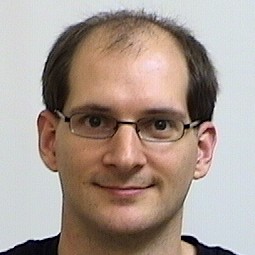
Martin Michlmayr is a Debian developer since 2000 and I share quite a few things with him, starting with his age and involvement in the quality assurance team. He managed to be elected Debian Project Leader in 2003 and 2004. He s no longer as active as he used to be but his input is always very valuable and he continues to do very interesting things in particular concerning the support of NAS devices. Read on for the details. Raphael: Who are you? Martin: I m Martin Michlmayr. I m 32, originally from Austria, and currently living in the UK. I ve contributed to various free software projects over the years but Debian is without doubt the one I m most passionate about. I joined Debian in 2000 when I was a student. I worked on Debian more or less full time for a few years while I was pretending to study. Later I started a PhD to do research about quality and management aspects of volunteer free software projects. I investigated the release process in several free software projects, in particular looking at time-based releases. After finishing my PhD in 2007, I joined Hewlett-Packard. I m part of HP s Open Source Program Office and work on various free software and open source activities, both internally and within the community. Raphael: How did you start contributing to Debian? Martin: I first used Debian in the days of 0.93R6, some time around the end of 1995. The 0.93R6 release was still based on a.out but I needed an ELF-based system for some application, so I moved to Slackware. I then quickly moved to Red Hat Linux where I stayed for several years. I rediscovered Debian in 2000 and quickly decided to join the project. I cannot recall how I rediscovered Debian but when I did, it was clear to me that Debian was the ideal project for me: I could identify with its philosophy, I liked the volunteer nature of the project, and I found the size and diversity of Debian interesting since a large project offers a lot of different challenges and opportunities. I remember how many new things there were to learn and back then the documentation and other resources for new contributors were nowhere as good as they are today. My application manager, Julian Gilbey, was a great help he was incredibly friendly and passionate about Debian. I also remember meeting up with Peter Palfrader (weasel) for key signing when we were both in the New Maintainer queue. I was incredibly lucky with my New Maintainer process and soon became an official Debian Developer. Because there was a shortage of application managers, my first major contribution in Debian was to become an application manager myself and help other people join the project. Debian is a large project with a long history and a rich culture, so new contributors should expect that it will take some time to become familiar with everything. Fortunately, there are many resources, such as documentation and the debian-mentors list, for new contributors. Another great way to become familiar with the way things are done in Debian is to subscribe to various Debian mailing lists and ideally to read some mailing list archives. It s also a great idea to attend the Debian Conference or other conferences since meeting people in real life is a great way to integrate. I remember attending Debian Conference 1 in Bordeaux where I gave my first public talk. Finally, new contributors should find an area where they can make a unique contribution. Most people in Debian maintain packages but there are so many other ways to contribute. For example, most of my contributions were not technical but were about coordination and other organizational activities. Raphael: What s your biggest achievement within Debian? Martin: I m particularly proud of a number of achievements: Raphael: Speaking about NAS devices: what exactly are you doing on this topic and how can people help? Martin: There are plenty of instructions on the Internet to install Linux distributions on NAS or various embedded devices by connecting a serial console and then typing in hundreds of commands. What I found is that such instructions significantly limit the user base because they are way too complicated for most users. There are just too many steps that can go wrong. So instead, in Debian, we provide a solution that just works: usually, you download a firmware image for your NAS device from Debian and when you upgrade you get the Debian installer. You connect to the installer via SSH and perform a normal installation. The installer knows about the device and will prepare everything for you automatically for example, it knows if the device has requirements for the partition layout and it will install the kernel where the device expects to find it; unfortunately, NAS devices are not like PCs, so the requirements are different for almost every device and therefore you need special code to support a new device. Finally, there are detailed installation guides and we provide help on our mailing lists. There are a number of technical areas for improvement. The installation could be made even easier, and it would be nice to support new platforms and devices. A bigger problem is that while we ve implemented a great solution for NAS devices, we haven t really extended this work to support other classes of devices. For example, tablets and mobile phones are getting incredibly popular and we don t have a compelling solution for such devices, mostly because of the lack of an appropriate GUI. Raphael: What are your plans for Debian Wheezy? Martin: I ve recently been asked by Stefano Zacchiroli, our current Debian Project Leader, to coordinate the care-taking of Debian finances. Debian, as a volunteer project, relies on donations and in-kind gifts (e.g. hardware) to maintain its infrastructure and to support various development efforts, such as funding sprints and other developer gatherings. Debian s money and other assets are held by affiliate organizations around the world. My responsibility will be to keep track of money and other assets (e.g. hardware and trademarks), work with the DPL to establish procedures related to the use of Debian s assets, and make sure that the procedures are followed. Finally, we want to publish public statements so our donors know how we use their donations to further improve Debian. I just started working on this and this will be my main activity in Debian in the coming months. Raphael: Speaking of money, I plan to run a fundraising to get the Debian book I wrote with Roland Mas translated (cf. http://debian-handbook.info). Is this something Debian should support? Martin: First of all, I should make it clear that I don t decide how Debian spends its money. This is up to the DPL to decide together with the project at a whole. I ll just make sure that procedures are followed and expenses tracked and reported properly. Having said that, in my opinion, it s unlikely that Debian as a project will fund this effort. It would be inconsistent with the position of the project not to fund work directly (only some related expenses, such as travel costs to allow Debian teams to organize face-to-face meetings). Whether Debian should support the fundraising effort by helping to promote it is another question and that s probably not as clear cut. It looks like a worthwhile effort, but on the other hand it would be unfair for authors of other Debian books for Debian to put its weight behind one and there are many other efforts that are worth promoting if you promote one, where do you stop? So while it sounds worthwhile, it s probably better for Debian to stay out of it. But somehow related to this, I sometimes worry about the fact that there are so few paid opportunities around Debian. If you contribute to the Linux kernel for a while, you have an excellent chance to get hired by someone and to work on the kernel full time. The kernel may be an extreme example but there are a lot of projects that have more paid opportunities than Debian, e.g. Mono, GNOME, OpenOffice/LibreOffice and KDE. Obviously, there are some Debian Developers who can spend some time on Debian as part of their job. I know that some Canonical employees contribute to Debian, that support companies like credativ improve Debian as part of their work, and that system administrators fix bugs or package new software as they deploy Debian. But I think this is a minority of contributors and even they don t work full time on Debian. Instead what I see is that a lot of people leave university, get a job and then no longer have time for Debian or people start a family and no longer have time. I can take myself as an example since I don t have nearly as much time as I did in the past when I was a student. I guess there are different ways to deal with this problem one would be to create more paid opportunities around Debian outside the project, another one might be to make it easier for new volunteers to join the project. I don t have the answers to these questions but it s something I wonder about, and I also wonder whether pure volunteer projects can still keep up with projects with a lot of full time contributors. Raphael: What motivates you to continue to contribute year after year? Martin: Debian is a great project with a great mission, goals and people. I contribute to make Debian a better solution and to promote the free software philosophy. Finally, the community around Debian provides a lot of motivation. It s amazing how much I ve learned about other cultures because of my involvement in Debian and how many friends I ve made over the years all around the world. Raphael: Do you have wishes for Debian Wheezy? Martin: Not really. I m pretty happy with the way things are going at the moment. We have made a lot of organizational changes in the last few years from which the project has greatly benefited. I m particularly pleased about the plans to adopt a time-based freeze. Raphael: Is there someone in Debian that you admire for their contributions? Martin: There are many people I admire greatly. I d like to mention Joey Hess because he s a great example to follow. He doesn t get involved in politics, is easy to work with and does great technical work. In fact, he has made not one but several contributions that have completely changed Debian (debconf, debhelper, and debian-installer). Furthermore, Debian has a lot of contributors who have done great work over the years but who are not very vocal about it. People like Colin Watson or Peter Palfrader. Debian has many unique contributors and the list of people I admire is much longer than the few people I just mentioned.
Thank you to Martin for the time spent answering my questions. I hope you enjoyed reading his answers as I did. He raised some interesting questions. Subscribe to my newsletter to get my monthly summary of the Debian/Ubuntu news and to not miss further interviews. You can also follow along on Identi.ca, Twitter and Facebook.

No comment Liked this article? Click here. My blog is Flattr-enabled.

20 July 2011

Andrew Pollock: [life/americania] 4th of July in the Grand Canyon

Our adventurous friends Eric and Katie had invited us to join them on a hike in the Grand Canyon over the 4th of July weekend. As this struck us as something we'd never have considered doing otherwise, we thought we'd accept their kind offer. We're so glad we did. It was quite a bit of traveling just to get there. We flew out of San Jose on Thursday night, got into Las Vegas, rented a car, and then drove to Peach Springs, Arizona, where we stayed the night. We didn't get in at the Grand Canyon Caverns Inn until around midnight, and we had to get up again for a 5:00am departure (I think we actually got away by more like 5:30am), to drive to the Hualapai Hilltop, where the trail head was. Zoe handled all of this very well. She didn't end up falling asleep in the car until about 10:30pm I think, and dealt with the transfer out of the car at midnight very well and went back to sleep. The drive to the Hualapai Hilltop, along Indian Road 18, took about an hour. We had to dodge a bit of livestock on the road. The road itself was sealed and of good quality. We remarked on the way back out that as soon as you left the Havasupai Reservation and entered the Hualapai Reservation that there was a distinct degradation in the quality of the road. We parked at the Hilltop, and got ourselves organised, and commenced our descent by about 7:10am. The first 1.5 miles was very steep. There were a bunch of switchbacks and there was a fair few people coming up the other way already. There were also a few mule trains coming in the opposite direction that we had to dodge. The mule trains have right of way, so we had to stop and get out of the way to let them pass. Zoe thought they were pretty cool because they invariably had a few dogs with them as well, and she thinks dogs are awesome. The remaining 6.5 miles (it was an 8 mile/13 kilometre hike in total) were fairly easy. There was a lot of variety in terrain. Rocks, sand, dirt. It wasn't all in the sun, which was made it more comfortable. Heat wise, I think it was in the high 30's Celsius, with pretty much no humidity, so it didn't feel too uncomfortable. Towards the end, as we got near the water, there was a distinct change in the canyon. There was more greenery, and we started hearing insects and seeing bird life. When we first saw the water, it was hard not to just jump in, it looked so inviting. The total hiking time was about 4 hours 45 minutes, which included a reasonable stop to give Zoe some breakfast. We arrived in the village at around midday. Unfortunately the lodge wasn't ready for check ins until 1pm, so we had to twiddle our thumbs for a little bit. Zoe handled the hike incredibly well. We used a Macpac Possum child carrier that Nigel had passed down to us, and she didn't complain the whole time. She even took a nap in it. We were very relieved that it wasn't a problem for her. Sarah carried her, and I carried everything else. (I'm so glad I didn't see the photo of how I looked until well afterwards). In hindsight we probably brought too much stuff, but we didn't really know what to expect down there, so we'd rather have too much than too little. The village completely exceeded my expectations. I had this (silly) mental picture of it being just the lodge and not much else, but somewhere between 450 and 700 people live in the village. It had two general-type stores, a cafe that was pretty much like a fast food/takeaway place, an elementary school, and some sort of basic medical clinic. There was also a small general purpose community centre of some sort. The main store had pretty much everything you'd need in the food department. The cafe frequently ran out of various different things, but you weren't going to go hungry. For the remainder of Friday, we just stayed put in the village and let Zoe stretch her legs. Eric and Katie and their kids explored the first set of falls down from the village, unofficially named Rock Falls. On Saturday, we all hiked down to Havasu Falls. We met a couple of other families (amusingly both from the Bay Area) along the way, so we had some interesting conversations. I have no idea how long the hike was. Havasu Falls was impressive. Quite tall and narrow at the top, and quite loud. Zoe was impressed. We took her for a bit of a swim in the pools in the bottom. We had lunch there, and then Zoe and Sarah stayed there (Zoe took a nap in the KinderKot (also courtesy of Nigel) in the shade by the falls, and I took the Macpac with a water bladder in it to refill it at the spring in the campground, which was further down stream, and to check out Mooney Falls with Eric and Katie (and their kids), which was further downstream again from the campground. Mooney Falls was pretty insane. A lot taller than Havasu Falls, and a lot more treacherous to get to the bottom of. Parts of it were vertical. Chains and rickety ladders were involved. Caves were involved. I'm so glad I didn't have Zoe in the Macpac, because on multiple occasions, the top of it got bashed into rocks, so without having Sarah with me also to act as a guide, there's no way I could have safely descended with Zoe in the backpack. My favourite photo illustrating how crazy this was is this one that I took of Eric and Katie. This photo highlights some of the craziness involved to get down. I pretty much got to the bottom, had a quick look around and left Eric and Katie to it, because I figured Zoe would have woken up by now, and was probably bored. Turned out I had all of the sunscreen with me as well. So I climbed back up, and trekked back to the campground, refilled at the spring, and headed back up to Havasu Falls. After we reunited, we then hiked back up to the village, which to be honest, was the hardest bit of hiking we did. I was carrying Zoe in the Macpac, and it was hot, and it was mostly loose sand all the way. We were very glad to get back to the village. Zoe started showing signs of coming down with a cold and a cough, so we decided to cut short our stay in the village and leave on Sunday instead of Monday. We'd been tossing up between getting a helicopter or horses out. We ended up opting for the helicopter after learning that the horses still took about 3.5 hours, and you basically had no control over the animal. We were dubious as to how Zoe would go being bounced around on the back of a horse for that long. The helicopter ride also took all of about 5 minutes. The tribal members get first dibs on the helicopter, and there had been a death in the village, and I think a lot of people had come to the village for the viewing (the casket itself was flown out earlier on Sunday morning for a burial out of the village), so I suspect there was a higher number of tribal passengers than usual. We didn't get out until 2pm. Again, Zoe was incredibly good. She just hung out with us while we waiting for a flight out. There were plenty of dogs for her to be entertained by, and some other kids. She also took a pretty decent nap. So we finally got out, and got back to our car, and then the heavens opened. It absolutely poured down with rain. Sarah was keen to check out Hoover Dam, so we decided to stay near Boulder City in Nevada, and got a suite in the Hacienda Hotel and Casino for cheap. The next day was the Monday public holiday for Independence Day, and we were tossing up whether or not to take Zoe to a doctor to get her checked to see if she had bronchitis (we've been a bit gun-shy about bronchitis since the time she came down with it when we were in Australia). She ended up falling asleep in the car while we were hunting around for an Urgent Care facility that was open, so we decided to let her sleep and drove to Las Vegas. After she woke up, we took her to see the flamingos at Flamingo and the lions at MGM Grand. Zoe absolutely loved all the lights, sights and sounds of Las Vegas. In the afternoon, we took her to a doctor, and got the "first child, huh?" from the doctor (she didn't have bronchitis). After that, we went and briefly checked out Hoover Dam (just walked half way across the bridge in front of it and walked across the dam itself). The following day, we packed up and spent the morning on the Las Vegas strip again. This time we went to the Venetian (Zoe thought the gondolas were pretty cool) and then we flew out in the afternoon. So it was a lovely little family vacation. We ended up spending about as much time in Las Vegas as we did in the Grand Canyon, but that was okay. I'd really like to go back to Supai again, but I'm not sure if the stars will align themselves appropriately. If we did, knowing what I know now, I'd take a lot less food and put all of the luggage on a horse, and just hike in with the minimum of stuff. I'd probably be game to hike out as well if the bulk of the luggage was on a horse. Photos from the trip are here.

Aigars Mahinovs: Paris preDebConf11

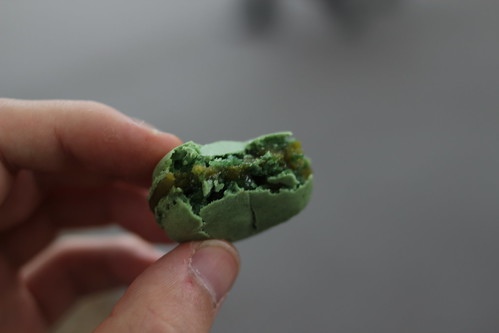
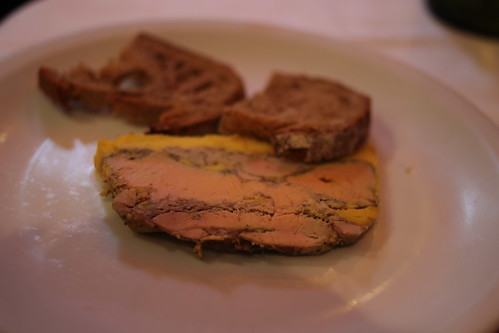
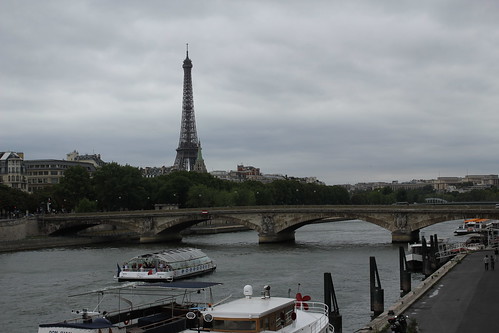
Before arriving to DebConf11, I arranged my flights so that I had a day and a night in Paris as I have not been there before. So after checking out of my work apartment in Tampere, going to work there with all the things from that apartment, then flying back to Riga, going to a midnight screening of the last Potter movie and finally getting back home around 2am, I quickly checked that I have everything needed for the conference and went off to sleep only to wake up at 8am again, pack everything (into a single carry-on bag, after a year of experience travelling by air weekly and watching Up in the Air twice) and be off to the plain to Paris. The CDG airport is quite huge, even compared to something like JFK it feels bigger and more concrete. And yet so dark and lacking interesting features that the only photo I got from it was this IMG_4710 I then used the B line train to get to my hotel(9.1 ), drop my stuff there and another metro ticket (1.7 ) to go to Arc de Triomphe (M tro Charles de Gaulle-Etoile), went up there and walked the length of the Champs-Elys es right up to the Louvre. Then I walked to the river, crossed it to a small island to see the Notre Dame and then went back following the other bank of the river Seine seing both some more normal non-touristy streets of central Paris and also some other magnificent buildings, like Les Invalides and ending up at the Eifel tower. It was a rather easy walk that was only spoiled by some rain in the end so I did not get to take some night photos of the Eiffel tower as I wanted. But the experience still was breathtaking. The scale of the buildings was impressive. The pervasive gold-gilded decorations do expand on the splendour and the same time the full access to all the previously-royal places brings them down to people. The city looks well built and the planning mostly makes sense, especially if you are on foot. Car drivers might have a different opinion about it considering the maze of roads and traffic circles and underpasses I saw in central Paris. It is often said that Riga is a mini-Paris. Mostly, that is said in Riga. But walking the back streets of Paris I can see where that comes from the architecture, the street design, the small cafes and some cobblestone roads and some historical buildings with a few modern building thrown into the mix, and a tower too. Visually Riga does look like Paris a lot, but for the feeling, I still think that Riga feels more like Berlin with its mix of eastern and western Europe. I had one incident when some girl in front of Louvre started to ask me to sign something, gesturing to show that she was mute, it looked like a donation racket, but I did not get to find it out in detail as a swift security guard appeared and started running for the girl, who immediately took off running along with several friends. I guess the guards know them very well. On a more positive note, in one of many confetterie shops I noticed the macaron sweets that my friend advertised loudly some time ago, so I decided to buy and try some. They cost 7 for a box of 6. The taste was very, very sweet. Basically it tastes like froffed up and then frozen sugar made into cookie form with a cream layer between two cookies. IMG_4806 So basically it is like an Oreo cookie, but much, much, much more tender, airy and sweet. The two of the 6 cookies were partly crushed while I tenderly carried them for 5 minutes in their box while searching for a place to sit down and eat them. IMG_4815 After that I also had a proper dinner in a restaurant that was not too near the touristy paths, but still it was a bit lacking. The starter was quite nice I mean it is hard to screw up cutting off a piece of foie gras (basically a piece of liver paste with a layer of extra geese fat), but the main dish was disappointing I ordered a medium rare steak. First of all it came with a side of fries, that in itself was an insult to Paris, baked potatoes would have fit much better with this dish. And despite the main part of the steak being very nicely done to medium rare, the cut was done badly and the edges of the steak had sinew that was too chewy to eat or even cut normally. Other interesting things I liked about Paris:
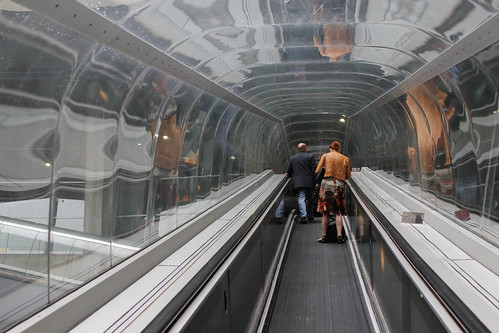
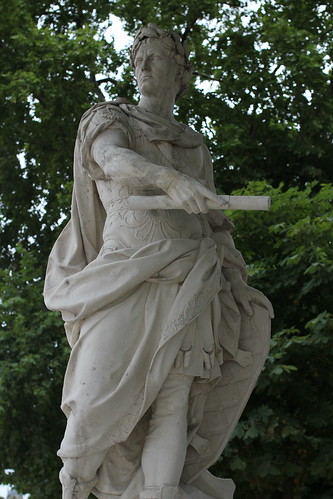
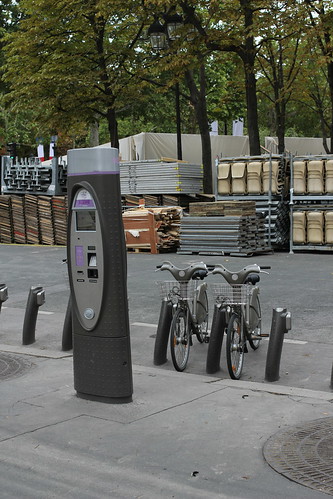
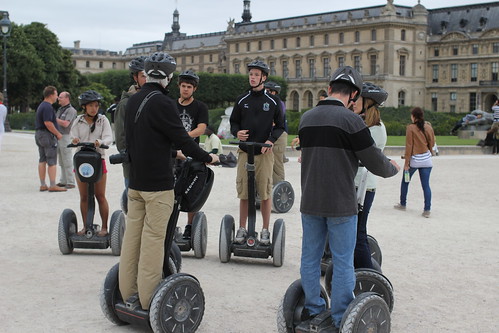
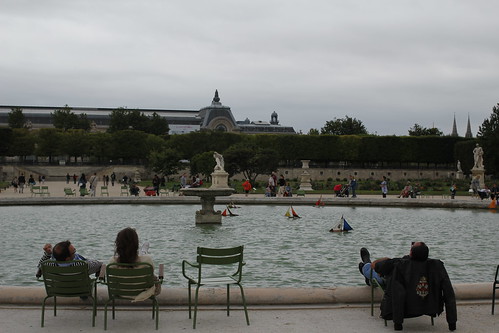
* high street shops of fashion labels and car manufacturers, that showed off the concept cars and also sold small branded accessories, such as Mercedes Benz key chains IMG_4723 * Statues some made of stone, some of iron, some covered in gold, everywhere and made with great quality IMG_4768 * Bicycle rentals, I mostly saw the locals using them IMG_4754 * Segway tourists IMG_4773 * And countless classic postcard shots of very recognizable architecture IMG_4738 The Eiffel tower was immensely impressive. It towers over everything around, especially because there simply is nothing high enough around it. It would not have been so impressive in the middle of New York, for example. The age and openness of the construction makes you really feel the massiveness of this marvel of functional architecture. But in the end Paris also looks like a great city to just kick back and relax in IMG_4770 P.S. I am amazed that when I put a link to a Flickr image (such as http://www.flickr.com/photos/aigarius/5950187165/in/set-72157627230456160 in a separate paragraph in my WordPress article text, something along the way translates them into proper linked images with a reasonable size. Progress is amazing.

19 July 2011

John Goerzen: Trains and Birthdays

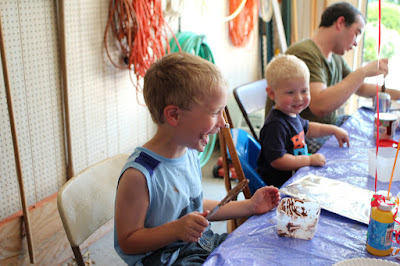
This weekend, the boys got what they ve been waiting for: another trip on Amtrak. For the last week or so, Jacob has had a morning ritual. He ll look at the calendar, figure out what today is, figure out when we ll get on the train, and then figure out how many days it will be. As the number gets lower, the excitement gets higher, of course. Friday morning, we woke the boys at 2:30AM to get to the train station. The only Amtrak trains through our area are middle of the night departures. Jacob is normally hard to wake up, but when I tell him that I m waking him up to go to the train station, he wakes up faster than I ve ever seen him before. It takes about 3 seconds for him to process that in his groggy state, and then he sits up straight, throws off the covers, and is instantly ready to go. Both boys were excited even in the station waiting room. Oliver has been on an Amtrak train before, but it s been awhile and he probably doesn t remember it. He constantly talked about it, jabbering as much as his vocabulary lets him. Once we were on the train, Terah and I would have liked to get some more sleep. The boys, on the other hand, were now wide awake, and didn t fall back asleep until about 5:30. That means Terah and I didn t, either. Here s what it usually looks like: When it came time for breakfast, we went to the dining car as usual. Jacob had already been telling us for days what he would eat for breakfast on the train: I always have French toast on the train, dad. And so he did. A few minutes later, I heard the waitress telling other people they were out of French toast, so I was glad I didn t have to disappoint Jacob over that! But it was Oliver that really came alive on this trip. I don t think I ve ever seen him so excited. It was almost constant. He happily talked about anything he could see or touch. But he also listened to other conversations, and would frequently pick out one word from a sentence and try to say it. He does that at home too, but not nearly so often as on the train. Both boys wanted to go exploring a lot my word for taking them for a walk in the train and seeing what they might find. We walked up and down the train several times, Jacob excited over opening the doors between the cars, and Oliver excited just to be there. Oliver s excitement kept him from sleeping well. He did eventually get a short nap, but that wasn t quite enough to avert a couple of tantrums later in the day. The reason for the trip was the 80th birthday party for Terah s grandpa. And it so happened that Oliver s 2nd birthday would be over the same time. So, Saturday morning, we all went for breakfast at Das Dutchman Essenhaus, one of the favorite local restaurants in northern Indiana. After that, it was over to a relative s place for some birthday festivities. The children got mini cakes to decorate as rail cars. There was frosting and all sorts of toppings. Great fun was had by all, and it was wise that this activity took place in a garage rather than indoors. Yes, that is a marshmallow stuck to Jacob s nose. Then in the evening, it was off to another relative s place for some more family time. Jacob had a great time all day, and was in high spirits. He asked me to sit by him at dinner, and started one of the longest conversations I ve had with him in some time. We just talked about the things that happened in the day, but it was nice when I told him, I like sitting by you, Jacob, and he said, Dad, me too! The big highlight for the day happened in the evening. We were gathered around a fire with a guitar to do some singing. Jacob was happily perched in his lawn chair, but got very excited when he saw some lightweight airplanes flying overhead. These kept flying at some distance, and he kept pointing them out to us. But that wasn t even the most exciting part. That came when the fireflies came out. Jacob ran around, catching them in his hands, and excitedly showing them to whatever person happened to be closest. He was laughing with joy for such a long time. At one point, someone asked him if the bugs were tickling his hands. He said, evidentally just realizing it, Oh yes, they ARE tickling my hands! He was one very happy boy. Sunday I had to leave to get back home, while Terah and the boys will return a couple of days later. Although I do sort of look forward to a train trip that I can relax without having to manage two young boys, I do miss them already and will be happy to have everyone back home in a few days. (This post written during the trip and posted a week later after arriving home)

18 July 2011

John Goerzen: Pooh, Books, and Dads

If I think back to fond memories of being with my dad during my childhood, there s one thing that always comes back first. It s those late summer evenings outside. Dad often had outdoor projects going on of some sort. I d go out there hanging around, maybe chatting, maybe playing with cats, or maybe doing something of my own. Dad often had an old AM radio sitting around and would be listening to a baseball game while working. As it got darker, lights would come on, and the bugs would start flying near them. Sometimes dad would be working just inside the barn, and the bugs would start flying in there, while some light poured out the big front door. There s something about that scratchy AM signal, the evening slowly getting darker, the slow pace of the baseball game, and just being around dad and a peripheral part of whatever he was doing that stirs a wonderfully fond recollection in me. I don t remember the specifics of any one of those times, nor do I really remember how often it happened, but it does stick with me. We ve had a routine in our house, starting early enough that neither of our boys know anything different, where right before bed, I read a book and sing a song to each of them individually. Last November, I was looking for some books to challenge Jacob a little more than what we had been reading. I found The Complete Winnie the Pooh used for $4 on Amazon. This contains the original A. A. Milne stories, not the Disney series. It had a few line drawings, but there were many pages without any. It s 352 pages and written in a rather dated form of British English. So for all these reasons, I wasn t sure if Jacob would like it. But it was $4 so I bought it. And Jacob was hooked. Each evening, we start bedtime with looking at the map of the 100-acre forest, just inside the cover. He gets to pick out 4 things for me to describe, and then we turn to our story. We usually read somewhere between 2 and 5 pages at bedtime, depending on how well he got ready without wasting time. And then we sing. A. A. Milne has his Pooh character make up songs throughout the book. They are printed with words only, no tune, so I make up a tune for them as we go. Jacob has taken to requesting these songs for his bedtime song as well. Jacob always gets to choose his bedtime story, and sometimes he chooses a different one but about 75% of the time, it s been Pooh. A few weeks ago, he started noticing that we were almost to the end. He got very concerned, asking what we d do next. I suggested a different book, which he didn t like. Then I pointed out that we could restart the Pooh stories from the beginning, which was exciting for him. Last night, we finished the book. The very last story was an interesting one, suggesting Christopher Robin growing up and no longer having imaginary adventures with the animals, but making Pooh promise to always be there for him. I don t think Jacob caught onto that meaning, though. When we finished it, we had this conversation: Jacob: Dad, is that the end? Me: Yes. Jacob, getting a big smile: Yay! So can we start back at the beginning tomorrow? Me: Sure! Jacob then gave a clap, shouted Yay! again, and was a very happy boy. Sometimes I wonder what our boys will remember in 25 years of their fun times with me. I don t know if Jacob will remember all the days reading about the animals in the 100-acre wood when he was 4, or maybe he ll remember watching train and combine videos, or playing radio hide-and-seek, or maybe something entirely different. But I have no doubt that I will remember sitting on the couch in his room, holding him on my lap, and reading a 350-page book to a loving 4-year-old. As Pooh aptly put it, Sometimes, the smallest things take up the most room in your heart.

Benjamin Mako Hill: Quiet Room

At the Copenhagen airport, Mika and I found the quiet room. It was a soft, well lit, room designed for prayer and reflection. During the hour I was in it, the only other visitor was a child cracking open the doorway to peer in. The room had a guest book with hundreds of messages left by other travelers over the last couple years. People praised the airport administrators for providing the room, made suggestions, and complained about the room, the airport, and the country's shortcomings. They talked about themselves, their travels, their happiness and unhappiness with departing or returning home, and their thoughts about the world. I spend a lot of time in airports but only rarely speak to my fellow travelers. It's amazing how little I know about the thousands of people waiting in line with me, sitting near me on the plane, and sharing in the long, lonely, and often stressful experience of moving between countries and continents. The guest book provided a rare window into these people in what is normally the anonymous and depersonalized non-place of airports. In the quiet room, I could -- for the first time -- hear some of these fellow travelers speak.

Wouter Verhelst: About the beard...

I'm someone who sometimes has a beard, and sometimes doesn't. Today, I'm someone with a fairly long beard, although it's not (yet?) one of the likes of andrew or maddog. I don't think it looks very well on me, but you can blame the government (or lack thereof) in Belgium. How?! What?! Yes, the government. A while back, a movie critic working for the RTL (a Francophone Belgian TV station) decided to keep his beard until the Belgian government took the oath of office. He was quickly joined by an actor, and then by a Flemish radio presenter (dutch, with pictures). And then by a whole bunch of people. I didn't join them, initially. But after a while, when my beard was starting to get long again, people started asking me, 'is that for the government?' And initially I said no. But people kept asking. Since it seemed like a good excuse for not having shaven that long, after a while I just decided to say 'yes' for the heck of it. And now, after having said so for quite a while, I've kindof grown to the idea. Which, I guess, means that if the impossible happens, and someone back home manages to form a government that will take the oath while I'm still in Bosnia and Herzegovina, I'll have to go out and buy some razor equipment. But I don't expect that to happen. Today, exactly 400 days after the previous election (yes, it's really been that long), it still doesn't look as if there's going to be an agreement on anything. I wish there was something positive or funny that I could report on in this whole thing, but it doesn't look like it. Sigh.

Benjamin Mako Hill: Die Technikmafia

Marcus Rohwetter has recently published a very detailed article about Antifeatures in the German monthly magazine Zeit Wissen. Although I've only read the article through automatic translation -- unfortunately, I don't read German -- I'm hugely honored that Rohwetter has taken the time to engage with the idea so deeply and to help translate the argument for a much broader community than the free software community I come from and am best able to speak to. A lot of what I've been trying to do in the last year or so is to figure out how to speak more effectively about the politics of technology control to audiences of non-technologists. Indeed, that's the whole point of the antifeatures concept. I deeply appreciate the help of Rohwetter, and others, in that project.

15 July 2011

Alexander Reichle-Schmehl: About Debian, The Hurd and Linux or in short: Yes, we will still have a Linux kernel

A lot of online magazines are currently reporting about Debian, its port to the Hurd kernel and plans for the next release. However, there seem to be quite some misunderstandings. One online magazine took the cake by titling Debian 7.0 Wheezy: Erste Pl ne f r Hurd statt Linux-Kernel (rough translation: Debian 7.0 Wheezy: First plans for Hurd instead of Linux kernel), and a colleague already asked me, if we are really going to drop the Linux kernel. So let's clarify one thing: The Debian Project does not plan to drop its port to the Linux kernel (nor its two ports to the FreeBSD kernel for what it's worth). Apparently it all started with a short status report and if you read it, you'll just read that some people are trying and planing to get Debian 7 (aka wheezy) to be released with an additional port to the Hurd. It is not yet clear if they will achieve their goal, nor did anyone ever mention anything about replacing the Linux or the FreeBSD kernel. So, calm down, nothing changed, just someone talking about the possibility of adding yet another port to the next release. Please note the adding.

Jon Dowland: puppet packages

Puppet lets you install packages on your system, like this:
package   'foo': ensure => installed  
You can also ask it to make sure that the package is kept up-to-date:
package   'foo': ensure => latest  
What does "latest" mean? How does this interact with a mixed repository sources.list on Debian? It turns out that both ensure => installed and ensure => latest honour pinning. For example: if you have a stable system; sid in your sources.list and pinning set up; either of the above will install stable's version of foo. I think ensure => latest is less useful than it might initially appear. If you install a package foo and use ensure => latest, but foo depends on packages bar and baz, it will only ensure that foo is up-to-date, not bar or baz. Similarly any other packages that you have not installed with puppet will not be kept up-to-date unless you name them explicitly. If you want to automatically take all updates from your distributor, you need to use another mechanism to do so.

Guillaume Mazoyer: Travel to DebConf 11

internet.pngMy flights tickets are booked so I guess:

DC11_banner.png
I m really happy to go to Banja Luka. This will be my first DebConf and not my last I hope. I ll be there to meet incredible people that make Debian what it is but I will also give a talk with Tom Marble and Sylvestre Ledru about my Google Summer of Code project at Debian. This talk should be the 2011-07-30 at 15:00:00.

13 July 2011

Tiago Bortoletto Vaz: i can haz hotel

DC11 hotel picture source

Jaldhar Vyas: A Dance With Dragons (No Spoilers)

Somehow, even though I'd know about it for the longest time, I had never get around to reading George R.R. Martins A Song of Ice and Fire series until I heard about the Game of Thrones HBO series. Then I thought I had better hurry up and read the books as TV adaptations tend to be inferior. (I must say HBO did a pretty good job though.) I was instantly hooked and finished all four books in a week. Today the long-awaited fifth installment called A Dance with Dragons and I immediately got myself a copy. (Nowadays I mostly do my recreational reading with the Kindle app on my Android smartphone.) As before, I'm spellbound. I'm already about 25% through it and loving it. What I love about Martin is that he really gets how traditional, "pagan", "feudal" societies work. Take religion for instance. A lot of Sci-Fi/Fantasy authors if they deal with the subject at all usually give a cartoon version of polytheism that owes more to Christian canards and Dungeons & Dragons than any existing human religion. But in Westeros, one can be simultaneously devout, amoral, superstitious, and cynical in a way that makes a lot of sense to me as a Hindu. Or class. Being a peasant in Martins' world is horrible. Your life is completely at the mercy of Lords and Ladies and can end in an instant. But the upper class despite its wealth and power is trapped in its own way too. They must constantly protect their status from jealous competitors and a reversal of political or military fortune can destroy an ancient noble family just as suddenly as a bad harvest can destroy a family of farmers. Like the other books in the series, this one has a huge cast of characters whose stories weave in and out with each chapter told mainly from one characters viewpoint. This is a tactic which I for one found helpful to keep my attention from flagging but it means you can't really enjoy it unless you've read the previous volumes in order first. I definitely think it's worth the effort though.

12 July 2011

John Goerzen: First Look at Google Plus

Seems like everybody s writing Google+ reviews these days, but most of the ones I ve found seem to be fluff pieces. I haven t used it long, but have some initial impressions to share. First, an analogy. Facebook reminds me of the sleazy guy selling stuff from his car down the street. They do things like change privacy defaults when they think it s good for Facebook, rather than good for you. Google+ reminds me of an Apple product. It s beautiful, easy to learn, but locks everything down and is lacking some critical features. So here goes with the details. The good I think that this can be best summed up by: it s not Facebook. Facebook has, perhaps, set an incredibly low bar but still, this holds. Facebook is the only website I can ever remember using that changes things so much, so often, and so completely that I keep having this feeling of not knowing how to do things. Try maintaining a Facebook page or two and you ll especially feel my pain then. But even the basics: how many times have I accidentally posted a partial comment because I pressed Enter to start a new paragraph (that has only been the button used for that for, hmm, let s see now, decades), and instead it posted the comment. Principle of least surprise, anyone? Google+ has a simple and, on the surface anyway, intuitive interface. However, it does get muddy; more on that below. I m going to spend a lot more space on the bad below, but don t let that diminish my excitement about having a viable alternative to Facebook. I am keen to get rid of that monster. The Bad I ll start of this section with the fact that Google+ is a tightly-controlled walled garden. There is no way to take a copy of your status updates, comments, etc. and back them up with your own devices. If your Google account goes away, so do all your updates about your kids first words. Facebook does have this feature these days. It has broken half the time, but it exists, works, and I use it. Twitter doesn t have the feature built in, but its API makes it pretty easy; you could easily use my twidge program to do this, for instance. But whatever you put in G+ stays in G+. There is no autoposting it to twitter or Facebook, no backups, nothing. I m disappointed in that, given Google s prior attitude about openness to individual data ownership. (Update 7/12/2011: There is a way to get a backup, which I hadn t noticed; see comments below.) Almost as bad, there s also no way to get data in. So I now have identi.ca, twitter, Facebook, and now also G+ accounts. When I post an item in identi.ca, it autoposts to twitter, and then it autoposts from twitter to Facebook. Handy one place to notify people of my public activities. My uploads to Flickr and blog posts also auto-post to Facebook, so people I m friends with there get a picture of what I m doing outside of Facebook without me manually having to link it in. Not so with G+. There is no way to even add an RSS feed for my blog to auto-post to G+ as there is with Facebook. If you use G+, the only way to get stuff into it is with a keyboard. Poor integration with other Google apps is also an issue. G+ is nowhere near Google s first social app. They also have Blogger, Google Reader, Buzz, Gmail, etc. So here s the rub. These aren t integrated well, and when they have tried to integrate them, they ve done an exceedingly poor job of it. As an example: Buzz is a twitter-like service for posting updates. Very similar to what G+ does, right? Well, the best you can do is link your Buzz account to a separate tab on your profile. You can t even have your Buzz updates flow straight into G+, from what I can see. You have a separate list of followers in Buzz from G+. Reader is even worse; it has a sharing feature, but it s not G+ aware, so it goes to a reader inbox. But what takes the cake is the integration with Gmail Contacts. Sounds easy? Not entirely. When you add someone to G+, apparently it sometimes links the record with their entry in Contacts. And the help gives you the handy warning that when you remove them from G+, you have the option of removing them from Contacts, which could impact what you see on a mobile device. It is unclear what happens when it doesn t link the record, or how it decides which record to link (some people have more than one person in a family sharing phone numbers and email addresses, for instance.) One very nice feature of G+ is you can add email addresses, even if they aren t G+ members. Then when you post updates to the circle you ve added them to, G+ offers to send them an email with an update. Very handy. Except the undocumented part is that if you select Your circles (meaning all your circles), rather than individually ticking the box by each circle, they don t get the email. And they also don t get it if you set it Public. You have to select their specific circle, which is a significant difference from how people with G+ accounts are treated. And that s just an example. There are a ton of things that work one way 95% of the time, but have non-obvious exceptions. Some of these exceptions are documented in the help, and some aren t. I m still confused about the integration with Picasa. G+ help says that you can upload unlimited numbers of photos for free (though they will be downscaled at a certain point). Picasa has definite storage limits. But G+ uploads are showing up in Picasa. Do I really get free storage by uploading to the same place via a different tool? Very odd. And finally, a gripe about web standards. I ve been using Firefox/Iceweasel 3.5, which came out in Debian squeeze and is still supported there. It is also pretty darn new by corporate IT standards. And Google Plus refuses to let me log in with it, saying it s incompatible. Perhaps it can t do some fancy animation, but then again I don t really care. Seems Google has forgotten the old RFC adage: be liberal in what you accept and conservative in what you generate. If you can detect that my browser won t animate something right, then you could give me a stripped-down version of the page rather than an error message.

Gunnar Wolf: Free Software must migrate to become Free Culture

Cineast and Free Culture activist Nina Paley wrote some days ago a rantifesto on why the FSF has a double standard: Why are the Freedoms guaranteed for Free Software not guaranteed for Free Culture?, by not following its own very strict rules on software when it comes to culture as a whole. Her post was widely circulated, and got (at least) one reply by fellow Debian Developer Wouter Verhelst, largely agreeing with her, and an anti-rantifesto by Joe Brockmeier Which was promptly answered again by Wouter with a very fun and inspired post, written from the right angle: From the viewpoint of a person who is both a programmer and a musician, and understands the concepts at hand. I'd love to write a longer, better thought post But I'm tired and frankly stressed by many things, so I am just echoing their very interesting discussion to other people who might want to read it. I have been thinking and writing bits on that subject over the last couple of months. An example of that was the talk I gave at the Senate ~6 weeks ago. Following that talk, I wrote a short article for Revista Z calo (a widely circulated magazine mainly dealing with Mexican politics and social issues) called simply Software libre, cultura libre (full text available, but in Spanish only You can try reading an automated translation if it suits you). I wrote the article, mind you, with very limited time, and I'll be the first to recognize the prose was quite poor this time :( Anyway My point is that our nature is to share culture, to build it in a collaborative fashion, and having the Internet as a practically zero-cost, zero loss medium with which we can interchange our creativity with other like-minded people will naturally boost creativity. Free Software emerged before other Free Culture groups just because programmers had privileged access to Internet in the 80s and early 90s; as network access and digital creation tools have got to more people, it's just natural for all kinds of free culture to grow. Software is just a form of knowledge. Code is just a notation for a certain kind of ideas, just as the mathematical or musical notations. I believe (and hope) it's just unavoidable for us all to eventually switch to a mainly free cultural creation system.

11 July 2011

Thorsten Glaser: [Update] Hilfe gesucht: Mitarbeiter berwachung

Deutsche Version dieses Postings read the English Version instead Der Leiter der Abteilung Systemadministration einer Firma, welche in diesem Artikel ungenannt bleiben soll, wo der Zufall es will, da ich f r sie arbeite, m chte uns Mitarbeiter dazu zwingen, das Feature der persistenten Historie (also einen niedergeschriebenen Verlauf der abgesetzten Befehle) der Shell (Kommandozeile) auf allen Systemen zu benutzen. Nun hat die mksh dies vern nftigerweise, w hrend immer noch verf gbar, standardm ig aus Gr nden der Privatsph re deaktiviert, und ich finde, dies sollte sich nicht ndern. Es kann ja nicht sein, da man mir beim Arbeiten ber die Schulter guckt; was kommt als n chstes, Video berwachung der B ros? (Seine Argumentation l uft darauf hinaus, da er nachvollziehen/verstehen kann, wie ich (ha! ich! nicht die anderen, nein, ich!) ein Problem das letzte Mal gel st habe; es ist aber nichts anderes als rekonstru eren zu k nnen, wer wann was eingetippt/gemacht hat. Naja, Argumentationen sind eh relativ, andere jagen Flugzeuge in ihre eigenen Verteidigungsministerien, welche gerade zuf llig umgebaut werden ) Ich habe dies nat rlich in die F hrungsetage eskaliert, und unser Gesch ftsf hrer versteht meine Bedenken und m chte nun ein Gespr ch anraunen, um eine L sung zu finden. Die meisten meiner Kollegen im Bereich Systemadministration denken leider nichtmals dr ber nach, obschon ich in anderen Bereichen Gleichgesinnte gefunden habe. Einen Betriebsrat haben wir auch gro er Fehler, ich wei nicht (aber ich s e eh nicht drin, ich hasse Politik jeder Art). Dies l t mich in dringender Not, Argumente wider diese Total berwachung aller (insbesondere auf der Kommandozeile arbeitenden also besonders mich) Kollegen zu finden, idealerweise solche, die durch deutsches Recht gest tzt sind. Wenn ihr solche habt, bitte mailt die schnell an meine eMail-Adresse, welche da nicht junk@mirbsd.org lautet, sondern mit einem tg vor dem Klammeraffen (dies dient der Abwehr unerw nschter Werbemails). Vielen Dank bereits im Voraus! Update 12.07.2011: Wir haben geredet, und wie viele kommentierten keine L sung auf rechtlicher Ebene gefunden, sondern stattdessen, nachdem wir festgestellt hatten, da mir dieses Problem sehr am Herzen liegt, nach anderen L sungen f r das eigentliche Ziel des Chefadmins gesucht; dies z hlt als ein Entgegenkommen auf Seiten der Firma. Ich habe zugestimmt, meine L sungen in kleine Skripte zu verpacken und ins VCS zu committen f r das Herausfinden, wann was auf einem Server ge ndert wurde, im Fehlerfall, denken wir uns gerade ohnehin was aus. Danke an alle, die kommentiert haben!

3 July 2011

Benjamin Drung: libkibi 0.1 released

The first version of libkibi is released. This library is designed for formatting sizes in bytes for display. The user can configure a preferred prefix style. Packages for Debian unstable and Ubuntu 11.04 (maverick) are uploaded. It contains a README for developers and a byteprefix man page for users, which can be read with man 5 byteprefix once installed. Thanks to Stefano Rivera for writing the man page! For a demonstration how this library used by an application can look like, read my previous post.

Raphaël Hertzog: My Debian activities in June 2011

This is my monthly summary of my Debian related activities. If you re among the people who made a donation to support my work (195 , thanks everybody!), then you can learn how I spent your money. Otherwise it s just an interesting status update on my various projects. Dropbox for Debian This is not free software but Dropbox is very popular and they did only provide an Ubuntu package that did not work on Debian. So I created an official package. I have been in touch with Dropbox developers and they have been very helpful. They ll shortly release a signature mechanism (with GPG) so that we can further improve the package by verifying the origin of the downloaded binaries. SAT Britney At the start of the month, I continued my work on the britney reimplementation (the software that creates testing out of unstable) but I quickly stalled it because the release managers asked the feedback of Stefano Zacchiroli and Ralf Treinen (who have extensive knowledge on the topic with their research work on Mancoosi) and I did not want to invest further work in case they would identify a major flow the feedback came only very late this month and while it was somewhat negative, I still think it s worth pursuing the effort for a bit longer. Converted ftplib to multiarch While dpkg still doesn t support multiarch (no news from Guillem and no visible sign of progress :-( ), unstable got all the remaining bits allowing us to convert libraries to multiarch (see the announce). As soon as the required libc6 landed in unstable, I looked into converting the only library package that I maintain. I had no major problem but I still identified 2 issues in Lintian (filed as #630164 and quickly fixed by Niels Thykier). build-arch / build-indep support For the 42th time in the last 10 years, the idea of using build-arch/build-indep targets in the rules file has surfaced again. I had already decided some time ago that I would accept a patch implementing a new field Build-Features to enable dpkg-buildpackage to use those targets and this time Bill Allombert completed such a patch so I merged it. The technical committee also decided that it would take a final decision on this topic (see #629385). Roger Leigh provided useful input by doing an archive-wide rebuild with the various solutions suggested. Given that the majority would like to make the target mandatory at some point in the future, I provided the dpkg patch for my preferred solution. We would use auto-detection as a temporary measure until all packages have been converted to have the targets. The technical committee has not yet taken any decision even though the discussion stalled since the 12th of June. But that s usual with that body. I m sure it will be solved during Debconf. ;-) Misc dpkg work Hamster applet update Hamster-applet is a GNOME application which did not have a 3.0 release, but it had a development release (2.91.x). I checked out whether it was possible to package this version for experimental and have the applet work with the GNOME fallback mode. Apparently not, the code was not yet updated to be compatible with the newer panel. Instead I uploaded the latest stable version (2.32.1) to unstable. It has some nice improvements in the standalone version (and the name of the executable changed). For usage with GNOME 3, I have created a custom shortcut to start it quickly (with gconf-editor set /apps/metacity/global_keybindings/run_command_1 to <Mod4>t and /apps/metacity/keybinding_commands/command_1 to hamster-time-tracker because the GNOME 3 control panel does not seem to work to set custom keybindings currently). Translated my professional website into English While I m grateful for all the people who are supporting my work, I m still far from my goal to have one third of my time funded through donations and sales of products on this blog. So I decided to also bring more visibility to my company and in particular to its Debian-related service offering. It was only available in French up to now so I translated it and expanded it a bit. My support page on this blog now also links to my company s website. If your company needs help to create Debian packages, or needs Debian technical support by email, you just found the right partner. :-) BTW, I have discounted prices for individuals and non-profits who would like to benefit from my help to create Debian packages. The Debian Administrator s Handbook This is the title of the upcoming translation of my book. The project now has a dedicated website: debian-handbook.info. You can subscribe to its RSS feed to keep up with the latest news. The full table of contents is online along with a FAQ. I m actively looking for partners to help me promote the fundraising once it goes live. If you can reach a large set of readers interested by a good Debian book, get in touch with me to join the affiliate program. Thanks See you next month for a new summary of my activities.

No comment Liked this article? Click here. My blog is Flattr-enabled.

Rog rio Brito: Installing Meego on the N900

My last cellphone was a dumb phone. I seem to remember that it was called something like Samsung Voicer. It didn't have those hip things like SIM cards. OK. Fast forward to December of 2010, and after a long hiatus, I decided to get a new phone. It was this shiny Nokia N900. The biggest thing that made me want this one was that some people at DebConf 10 were praising it for having a Debian-like distribution in it, and that it worked very well. I saw that Phil Hands was enthusiastically talking about the bargain of getting one in New York and that it would have cost him many pounds in the UK and, so, he was happy with it. Ot vio Salvador also got one in NY and during one of the nights of that DebConf with him, Tiago Vaz, Daniel Baumann, and Chris Lamb, I asked him to call my parents here in Brazil and he let me use his N900. I had more time with it and played a little bit with the command line, opened the stock media player and played a beautiful trailer of 9 (2009 film), leaving me a very good impression. I bought one, and, indeed, it is a very good machine that can even make phone calls. The ability to run Linux on it (even if it contains some non-free pieces of software) was decisive in me getting it. It runs this distribution called Maemo 5 which is loosely based on Debian. But now, Maemo is not the "cool thing" to run, regarding Linux on these portable devices. Meego is. But with the advent of many Internet forums has brought many people writing some long, convoluted howto documents for things that would be better done as, say, providing a script or, better yet, preparing a package. In the case of getting Meego running on the N900, only three things are required:
  1. Install uboot-pr13 while in Maemo.
  2. Uncompress the MeeGo 1.2 Community Edition for Nokia N900 image to a SD card.
  3. Turn the phone off, plug in the SD card, and PUT THE BACK COVER on the phone.
The last bit of the third step is crucial, as, otherwise, the SD card won't be detected and you will get kernel panics with the device trying to mount the root filesystem from a device that is not there. As an aside, the official documentation tells us one should uncompress the available pre-made images and write them with dd to the device. In my experience, it is completely unnecessary to use it and, in fact, it is so 6 times slower than using a simple shell redirection. That is, instead of:
bzip2 -d < mg-handset-armv7nhl-n900-whateverwhatever-mmcblk0p.raw.bz2   dd bs=4096 of=/dev/mmcblk0
you can get better results with the simpler:
bzip2 -d < mg-handset-armv7nhl-n900-whateverwhatever-mmcblk0p.raw.bz2 > /dev/mmcblk0
I actually used lbzip2 instead of bzip2, but that shouldn't matter. The use of the small block size for the dd command is probably the culprit, but I don't see the need to write the uncompressed data in chunks this small. If there is a problem, I would love to be informed of that. As trying it with uboot and a SD card doesn't mess with your "safe" Maemo installation, this is a good way to play with the successor of Maemo. Perhaps, if we give good feedback to the project, we can influence the direction that it is taking. It will surely be nice to learn about this new "consumer-oriented" distribution.

Gunnar Wolf: DebConf13 at home? Why not?

We are few weeks away from the start of DebConf11. Excitement runs high in Debian-land. The two most worthy weeks of the year, every year, loom close. Our Bosnian friends have done a great job of finding and defending an amazing proposal, and are now facing the hard work and permanent adrenaline levels of being in charge of the closest I have seen to a herd of (well-behaved but wild and untamable) cats. I have organized DebConf in my country. It was hellish, but at the same time, it's one of my most cherished experiences. And I'm sure the same will be said by the leaders of each successive bid It is one of the most rewarding experiences you can imagine. Next year, DebConf will be held in tropical Managua, Nicaragua. But, where will we meet in 2013? Well, that depends on you, my dear reader! Do you want to work your ass off for Debian and have utter fun? Do you want to show and share your country with this huge family of developers? Start thinking about pushing for a DebConf13 bid! Do you have to be at Banja Luka to propose your bid? No. You can proxy via somebody I'd suggest to do it via somebody who knows the location you are suggesting, but basically, choose a friend that you trust that trusts you. Of course, you can participate in the presentation session via IRC. Do you have to be a Debian Developer to propose a bid? No. For DebConf9, none of the C ceres guys was a DD; for DebConf10, some of the people most involved from the local New Yorkers were not DDs. For DC11, none of our dear and overworked hosts in Bosnia are DDs. And for DC12, the Nicaraguan crew is also made from people interested in getting closer to the Debian project, but not DDs. Do you have to decide now? No. This is just a call for a first presentation, but the decision regarding DC13 will be taken probably around March 2012. However, giving a nice presentation at DebConf helps a lot, gives you visibility, and will get the ball rolling. Is there a geographical bias? Slight. So far, and since the second DebConf, we have kept the tradition not to repeat continents on two successive DebConfs. This is not a hard condition, however! What do you need to start thinking about? Go visit our prospective location checklist at http://wiki.debconf.org/wiki/LocationCheckList. You can also look at what other teams have historically presented. Finally, I just learnt about the existence of http://wiki.debconf.org/wiki/DebConf13 Register there, even if you are just in the early phases of finding data. We will be holding a DebConf13 bids presentation session, most probably (the schedule is close to being presented officially!) on 30-07-2011, at 17:00.

Next.

Previous.