Search Results: "ads"

12 November 2021

Jonathan Dowland: Frictionless external backups with systemd

Here's a description of how my monthly external backups are managed at a technical level. I didn't realise I hadn't written this all down anywhere yet. What
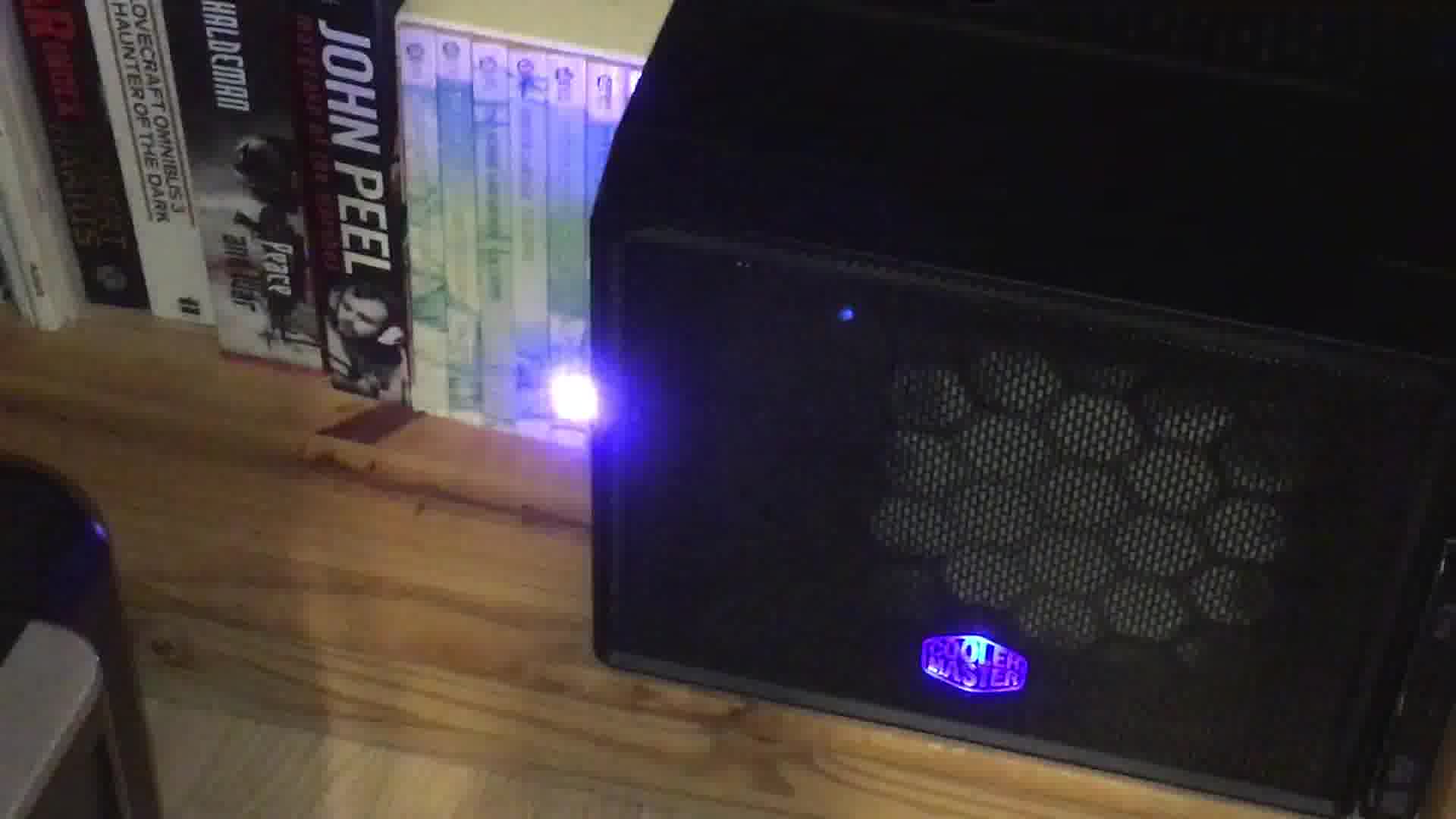
blinkenlights! blinkenlights!
I plug in one of two (prepared) external hard drives into my headless NAS. The NAS contains my primary data backup. A job automatically decrypts the encrypted filesystem on the drive, mounts it and synchronises the copy of my backup data on the drive from that on the NAS. Whilst this is going on, the blinkstick LED on the NAS switches to a colour to signal "in progress". When it's done, the light changes to green to signal "done" and I can remove it. If something goes wrong, it turns red and I get mail. Why I want a third-strand, off-site backup of my and my family's data in case of a disaster in our house. For it to be useful it has to be regular, so I needed to remove as much of the friction of performing the backup as possible. I use two drives alternately so that I don't have all my eggs in one basket in the window when I bring one of them home and perform the backup. How As much as possible I lean on systemd and its ability to trigger actions based on events.
  1. External drive is plugged in. systemd instantiates a corresponding device unit, named dev-disk-by\x2duuid-aaaaaaaa\x2daaaa\x2daaaa\x2daaaa\x2daaaaaaaaaaaa.device, where aaaa is the UUID of a partition on the device
  2. The backup job is a systemd service which has a WantedBy relationship on the device unit, so when the device appears, systemd starts the backup service.
  3. The backup service has Requires and After relationships on systemd-cryptsetup@extbackup.service, a service created by systemd's cryptsetup generator on start-up (but slightly customised, see below). The encrypted device is therefore unlocked.
  4. The backup service defines multiple start and stop commands with ExecStart and ExecStop. These are used to:
    1. set the blinkstick to the working colour (blue-ish)
    2. mount the now-decrypted filesystem
    3. get a lock on the backup repository (so nothing else writes to it) and synchronise the files
    4. unmount the filesystem
    5. set the blinkstick to the success colour (green)
  5. Finally, the systemd-cryptsetup@extbackup.service unit realises it is not required any more. It has been customised with StopWhenUnneeded=true1, so the encrypted filesystem is closed, ready for the drive to be removed.
  6. I notice the LED colour is green, remove the drive, and take it to its off-site home.
If anything goes wrong, all my custom systemd units have, as a matter of course,
OnFailure=status-email-user@%n.service blinkstick-fail.service
Preparing a new backup disk This is mostly just a standard dm-crypt/cryptsetup/LUKS encrypted device, on top of a standard partition on the underlying disk, with a normal filesystem sitting on top: Basically, the most common way to encrypt a drive in Linux. See places like the cryptsetup docs for how to set something like that up. The key things here are The backup service Here's the backup service unit definition in its entirety:
 [Unit]
 OnFailure=status-email-user@%n.service blinkstick-fail.service
 Requires=systemd-cryptsetup@extbackup.service backup.mount
 After=systemd-cryptsetup@extbackup.service backup.mount
 [Service]
 Type=oneshot
 ExecStart=/usr/local/bin/blinkstick --index 1 --limit 10 --set-color 33c280
 ExecStart=/bin/mount /extbackup
 ExecStart=/home/jon/bin/phobos-backup-monthly
 ExecStop=/bin/umount /extbackup
 ExecStop=/usr/local/bin/blinkstick --index 1 --limit 10 --set-color green
 [Install]
 WantedBy=dev-disk-by\x2duuid-aaaaaaaa\x2daaaa\x2daaaa\x2daaaa\x2daaaaaaaaaaaa.device
The dashes in the UUID in WantedBy= need to be encoded as \x2d and then the slashes from the path bit as dashes. Using dashes to encode slashes is possibly the single most frustrating systemd design decision. Issues Sadly (as detailed in Blinkenlights, part 2) there are 2 some frustrating limitations with trying to handle the mount (and unmount) of the filesystem in systemd-land, so instead, it's done using the traditional mount, umount and fstab. If you can point out any improvements to this approach, please let me know!

  1. I customized mine a while ago by copying the generated service file to a static file, but nowadays I think you could do systemd edit systemd-cryptsetup@extbackup.service to add the StopWhenUnneeded to an override file and not need the rest.
  2. or at least were. It's been a while since I revisited this part.

Adnan Hodzic: wp-k8s: WordPress on privately hosted Kubernetes cluster (Raspberry Pi 4 + Synology)

Blog post you re reading right now is privately hosted on Raspberry PI 4 Kubernetes cluster with its data coming from NFS share and MariaDB on... The post wp-k8s: WordPress on privately hosted Kubernetes cluster (Raspberry Pi 4 + Synology) appeared first on FoolControl: Phear the penguin.

10 November 2021

Jonathan Dowland: LEGO Princess Castle-books

The set The set
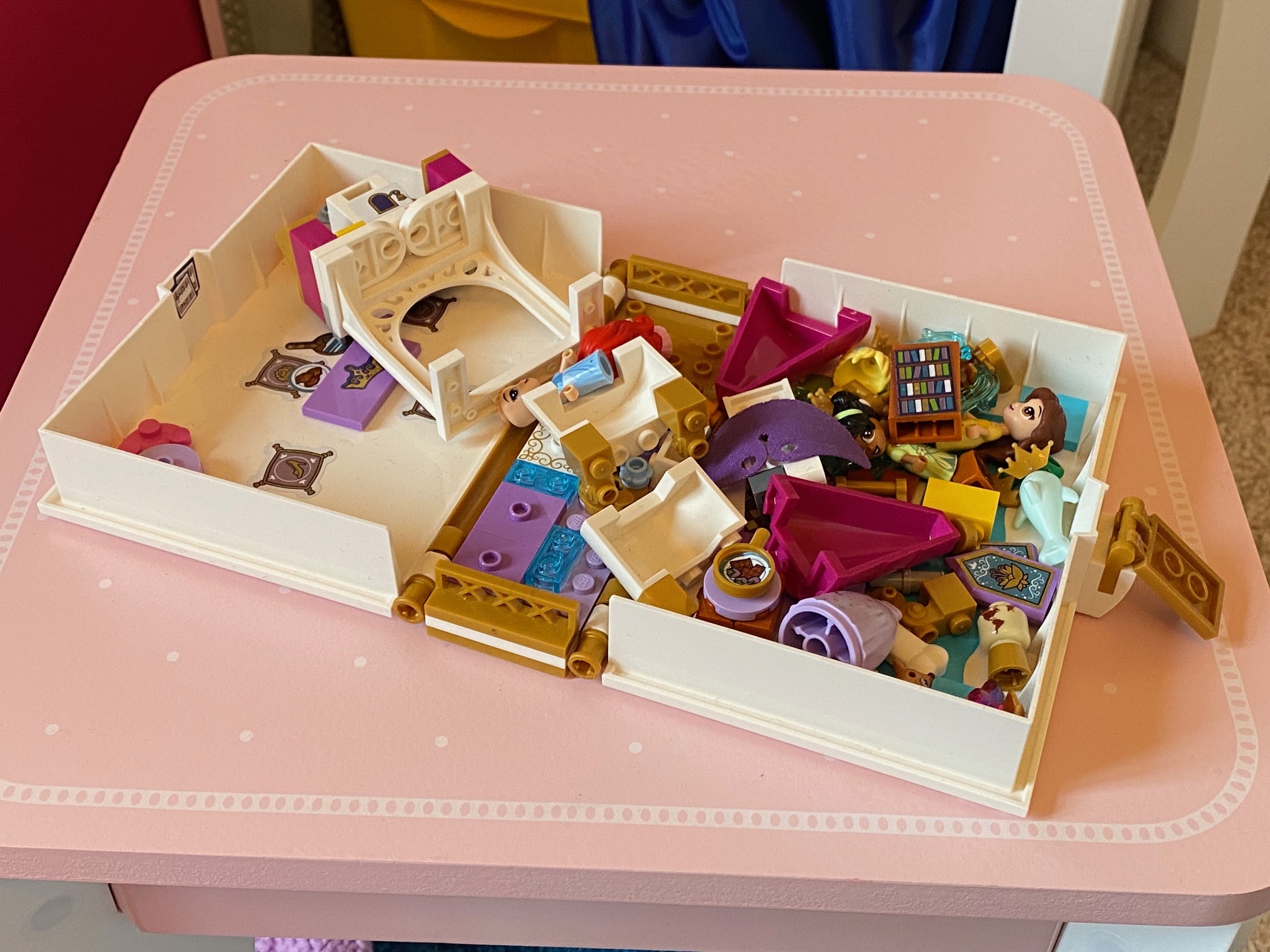
My eldest daughter and I visited a LEGO shop recently and I wanted to buy her a gift. The catch was that we were going to be flying on an airplane the next day, so I wanted to find something with the lowest risk of losing parts on the plane. We settled on Ariel, Belle, Cinderella and Tiana's Storybook Adventures which had a number of things going for it: It was reasonably priced at under 20, for the size of the set; it included four human minifigs (albeit in a sub-minifig size, some kind of munchkin size, but that did not seem to matter) and an assortment of animal accompaniments; but mostly, it folded up into a self-contained mock fairytail "book", and opened up into an enclosed "tray" play area, minimising the risk of losses on the flight.
The set in its resting state The set in its resting state
Lego have done a few of these styles of sets, all Disney princess themed, and it looks like they have a few more on their product roadmap. The newer ones incorporate a locking mechanism with a cute Lego key. I love the concept and think it should be extended to other themes/properties. I can imagine a Lego Star Wars-themed version with a little Death Star trench in the middle, or even an original IP like Classic Space, or Medieval.
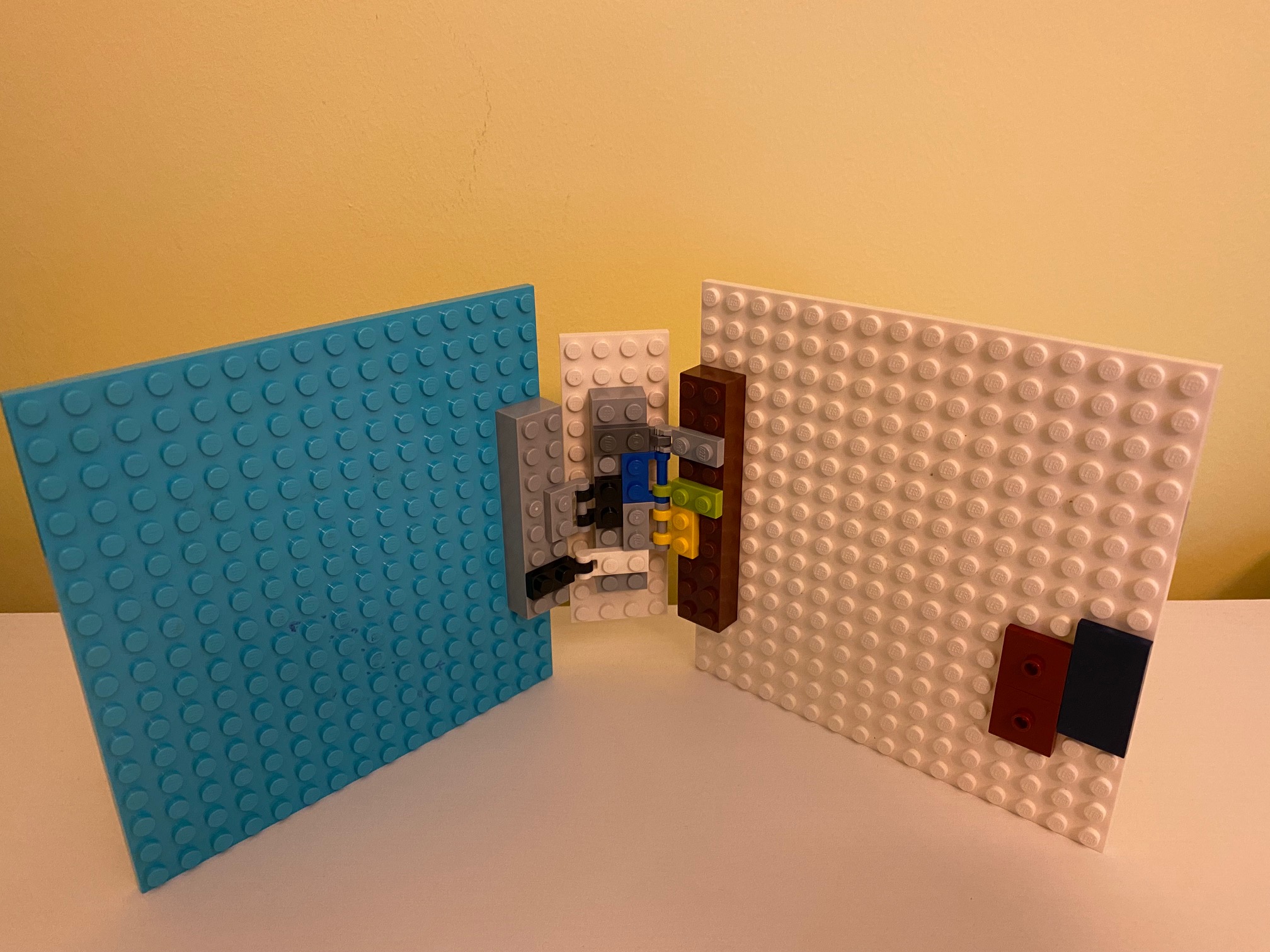
Exploring a DIY Lego book frame Exploring a DIY Lego book frame
I really liked the Book device which reminded me of hollow books as a child. The cover and spine pieces are bespoke Lego bricks made for purpose, but I thought you could create something similar with generic parts. Holly and I had a go at the concept with what bricks we had to hand. It's definitely viable (and you could do a lot better with a wider selection of bricks / more skilled builders) and it will be fun to pick something to try and build on the spine.

Neil Williams: LetsEncrypt with Apache, Gunicorn and Debian Bullseye

This took me far too long to identify and debug, so I'm going to write it up here for my own reference and to possibly help others.
Background Upgrading an old codebase from Python2 on Buster to Python3 ready for Bullseye and from Django1 to Django2 (prepared for Django3). Everything is fine at this stage - the Django test server is happy with HTTP and it gives enough support to do the actual code changes to get to Python3. All well and good so far. The main purpose of this particular code was to support payments, so a chunk of the testing cannot be done without HTTPS, which is where things got awkward. This particular service needs HTTPS using LetsEncrypt and Apache2. To support Django, I typically use Gunicorn. All of this works with HTTP. Moving to HTTPS was easy to test using the default-ssl virtual host that comes with Apache2 in Debian. It's a static page and it worked well with https. The problems all start when trying to use this known-working HTTPS config with the other Apache virtual host to add support for the gunicorn proxy.
Apache reverse proxy AH00898 Error during SSL Handshake with remote server
Investigating Now that I know why this happened, it's easier to see what was happening. At the time, I was swamped in a plethora of options and permutations between the Django HTTPS options and the Apache VirtualHost SSL and proxy commands. Going through all of those took up huge amounts of time, all in the wrong area. In previous configurations using packages in Buster, gunicorn could simply run on http://localhost:8000 and Apache would proxy that as https. In versions in Bullseye, this no longer works and it is that handover from https in Apache to http in the proxy is where it is failing. Apache is using HTTPS because the LetsEncrypt certificates, created using dehydrated, are specified in the VirtualHost configuration. To fix the handshake error, the proxy server needs to know about the certificates created by dehydrated as well.
Gunicorn needs the certificates The clue is in the gunicorn help:
--keyfile FILE        SSL key file [None]
--certfile FILE       SSL certificate file [None]
The final part of the puzzle is that the certificates created by dehydrated are in a private location:
drwx------ 2 root root /var/lib/dehydrated/certs/
To test gunicorn, this will mean using sudo but that's just a step towards running gunicorn as a systemd service (when access to the certs will not be a problem). Starting gunicorn using these options shows the proxy now being available at https://localhost:8000 which is a subtle but very important change.
Environment=LOGLEVEL=DEBUG WORKERS=4 LOGFILE=/var/log/gunicorn/site.log
ExecStart=/usr/bin/gunicorn3 site.wsgi --log-level $LOGLEVEL --log-file $LOGFILE --workers $WORKERS \
--certfile /var/lib/dehydrated/certs/site/cert.pem \
--keyfile /var/lib/dehydrated/certs/site/privkey.pem
The specified locations are symbolic links created by dehydrated to cope with regular updates of the certificates using cron.

Craig Small: Changing Grafana Legends

I m not sure if I just can search Google properly, or this really is just not written down much, but I have had problems with Grafana Legends (I would call them the series labels). The issue is that Grafana queries Prometheus for a time series and you want to display multiple lines, but the time-series labels you get are just not quite right. A simple example is you might be using the black-box exporter to monitor an external TCP port and you would just like the port number separate to display. The default output would look like this:
probe_duration_seconds instance="example.net:5222",job="blackbox",module="xmpp_banner"  = 0.01
probe_duration_seconds instance="example.net:5269",job="blackbox",module="xmpp_banner"  = 0.01
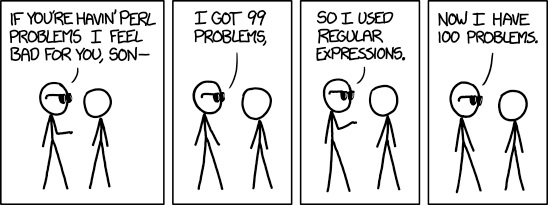
I can graph the number of seconds that it takes to probe the 5222 and 5269 TCP ports, but my graph legend is going to have the hostname, making it cluttered. I just want the legend to be the port numbers on Grafana. The answer is to use a Prometheus function called label_replace that takes an existing label, applies a regular expression, then puts the result into another label. That s right, regular expressions, and if you get them wrong then the label just doesn t appear.
Perl REGEX Problems courtesy of XKCD
The label_replace documentation is a bit terse, and in my opinion, the order of parameters is messed up, but after a few goes I had what I needed:
label_replace(probe_duration_seconds module="xmpp_banner" , "port", "$1", "instance", ".*:(.*)")
probe_duration_seconds instance="example.net:5222",job="blackbox",module="xmpp_banner",port="5222" 	0.001
probe_duration_seconds instance="example.net:5269",job="blackbox",module="xmpp_banner",port="5269" 	0.002
The response now has a new label (or field if you like) called port. So what is this function to our data coming from probe_duration_seconds? The function format is: label_replace(value, dst_label, replacement, src_label, regex) So the function does the following:
  1. Evaluate value, which is generally some sort of query such as probe_duration_seconds
  2. Find the required source label src_label, in this example is instance, in this case the values are example.net:5222 and example.net:5269
  3. Apply regular expression regex, for us its .*:(.*) That says skip everying before : then capture/store everything past : . The brackets mean copy what is after the colon and put it in match #1
  4. Make a new label specified in dst_label, for us this is port
  5. Whatever is in replacement goes into dst_label. For this example it is $1 which means match #1 in our regular expression in the label called port.
In short, the function captures everything after the colon in the instance label and puts that into a new label called port. It does this for each value that is returned into the first parameter. This means I can use the port in my Grafana graph Legend and it will show 5222 or 5269 respectively. I have made the Legend TCP port to give the below result, but I could have used port in Grafana Legend and made the result TCP $1 in the label_replace function to get the same result.
Grafana console showing the use of the label_replace function

Junichi Uekawa: Made a graph for furusato nozei limits.

Made a graph for furusato nozei limits. I wanted a prettier graph for soumusho page. and made one with plot.ly. However I realized that the input is taxable income after deductions, which is not readily available, and those tables that make you input the number of family members make sense.

9 November 2021

Benjamin Mako Hill: The Hidden Costs of Requiring Accounts

Should online communities require people to create accounts before participating? This question has been a source of disagreement among people who start or manage online communities for decades. Requiring accounts makes some sense since users contributing without accounts are a common source of vandalism, harassment, and low quality content. In theory, creating an account can deter these kinds of attacks while still making it pretty quick and easy for newcomers to join. Also, an account requirement seems unlikely to affect contributors who already have accounts and are typically the source of most valuable contributions. Creating accounts might even help community members build deeper relationships and commitments to the group in ways that lead them to stick around longer and contribute more.
In a new paper published in Communication Research, I worked with Aaron Shaw provide an answer. We analyze data from natural experiments that occurred when 136 wikis on Fandom.com started requiring user accounts. Although we find strong evidence that the account requirements deterred low quality contributions, this came at a substantial (and usually hidden) cost: a much larger decrease in high quality contributions. Surprisingly, the cost includes lost contributions from community members who had accounts already, but whose activity appears to have been catalyzed by the (often low quality) contributions from those without accounts.
A version of this post was first posted on the Community Data Science blog. The full citation for the paper is: Hill, Benjamin Mako, and Aaron Shaw. 2020. The Hidden Costs of Requiring Accounts: Quasi-Experimental Evidence from Peer Production. Communication Research, 48 (6): 771 95. https://doi.org/10.1177/0093650220910345. If you do not have access to the paywalled journal, please check out this pre-print or get in touch with us. We have also released replication materials for the paper, including all the data and code used to conduct the analysis and compile the paper itself.

Joachim Breitner: How to audit an Internet Computer canister

I was recently called upon by Origyn to audit the source code of some of their Internet Computer canisters ( canisters are services or smart contracts on the Internet Computer), which were written in the Motoko programming language. Both the application model of the Internet Computer as well as Motoko bring with them their own particular pitfalls and possible sources for bugs. So given that I was involved in the creation of both, they reached out to me. In the course of that audit work I collected a list of things to watch out for, and general advice around them. Origyn generously allowed me to share that list here, in the hope that it will be helpful to the wider community.

Inter-canister calls The Internet Computer system provides inter-canister communication that follows the actor model: Inter-canister calls are implemented via two asynchronous messages, one to initiate the call, and one to return the response. Canisters process messages atomically (and roll back upon certain error conditions), but not complete calls. This makes programming with inter-canister calls error-prone. Possible common sources for bugs, vulnerabilities or simply unexpected behavior are:
  • Reading global state before issuing an inter-canister call, and assuming it to still hold when the call comes back.
  • Changing global state before issuing an inter-canister call, changing it again in the response handler, but assuming nothing else changes the state in between (reentrancy).
  • Changing global state before issuing an inter-canister call, and not handling failures correctly, e.g. when the code handling the callback rolls backs.
If you find such pattern in your code, you should analyze if a malicious party can trigger them, and assess the severity that effect These issues apply to all canisters, and are not Motoko-specific.

Rollbacks Even in the absence of inter-canister calls the behavior of rollbacks can be surprising. In particular, rejecting (i.e. throw) does not rollback state changes done before, while trapping (e.g. Debug.trap, assert , out of cycle conditions) does. Therefore, one should check all public update call entry points for unwanted state changes or unwanted rollbacks. In particular, look for methods (or rather, messages, i.e. the code between commit points) where a state change is followed by a throw. This issues apply to all canisters, and are not Motoko-specific, although other CDKs may not turn exceptions into rejects (which don t roll back).

Talking to malicious canisters Talking to untrustworthy canisters can be risky, for the following (likely incomplete) reasons:
  • The other canister can withhold a response. Although the bidirectional messaging paradigm of the Internet Computer was designed to guarantee a response eventually, the other party can busy-loop for as long as they are willing to pay for before responding. Worse, there are ways to deadlock a canister.
  • The other canister can respond with invalidly encoded Candid. This will cause a Motoko-implemented canister to trap in the reply handler, with no easy way to recover. Other CDKs may give you better ways to handle invalid Candid, but even then you will have to worry about Candid cycle bombs that will cause your reply handler to trap.
Many canisters do not even do inter-canister calls, or only call other trustwothy canisters. For the others, the impact of this needs to be carefully assessed.

Canister upgrade: overview For most services it is crucial that canisters can be upgraded reliably. This can be broken down into the following aspects:
  1. Can the canister be upgraded at all?
  2. Will the canister upgrade retain all data?
  3. Can the canister be upgraded promptly?
  4. Is three a recovery plan for when upgrading is not possible?

Canister upgradeability A canister that traps, for whatever reason, in its canister_preupgrade system method is no longer upgradeable. This is a major risk. The canister_preupgrade method of a Motoko canister consists of the developer-written code in any system func preupgrade() block, followed by the system-generated code that serializes the content of any stable var into a binary format, and then copies that to stable memory. Since the Motoko-internal serialization code will first serialize into a scratch space in the main heap, and then copy that to stable memory, canisters with more than 2GB of live data will likely be unupgradeable. But this is unlikely the first limit: The system imposes an instruction limit on upgrading a canister (spanning both canister_preupgrade and canister_postupgrade). This limit is a subnet configuration value, and sepearate (and likely higher) than the normal per-message limit, and not easily determined. If the canister s live data becomes too large to be serialized within this limit, the canister becomes non-upgradeable. This risk cannot be eliminated completely, as long as Motoko and Stable Variables are used. It can be mitigated by appropriate load testing: Install a canister, fill it up with live data, and exercise the upgrade. If this succeeds with a live data set exceeding the expected amount of data by a margin, this risk is probably acceptable. Bonus points for adding functionality that will prevent the canister s live data to increase above a certain size. If this testing is to be done on a local replica, extra care needs to be taken to make sure the local replica actually performs instruction counting and has the same resource limits as the production subnet. An alternative mitigation is to avoid canister_pre_upgrade as much as possible. This means no use of stable var (or restricted to small, fixed-size configuration data). All other data could be
  • mirrored off the canister (possibly off chain), and manually re-hydrated after an upgrade.
  • stored in stable memory manually, during each update call, using the ExperimentalStableMemory API. While this matches what high-assurance Rust canisters (e.g. the Internet Identity) do, This requires manual binary encoding of the data, and is marked experimental, so I cannot recommend this at the moment.
  • not put into a Motoko canister until Motoko has a scalable solution for stable variable (for example keeping them in stable memory permanently, with smart caching in main memory, and thus obliterating the need for pre-upgrade code.)

Data retention on upgrades Obviously, all live data ought to be retained during upgrades. Motoko automatically ensures this for stable var data. But often canisters want to work with their data in a different format (e.g. in objects that are not shared and thus cannot be put in stable vars, such as HashMap or Buffer objects), and thus may follow following idiom:
stable var fooStable =  ;
var foo = fooFromStable(fooStable);
system func preupgrade()   fooStable := fooToStable(foo);  )
system func postupgrade()   fooStable := (empty);  )
In this case, it is important to check that
  • All non-stable global vars, or global lets with mutable values, have a stable companion.
  • The assignments to foo and fooStable are not forgotten.
  • The fooToStable and fooFromStable form bijections.
An example would be HashMaps stored as arrays via Iter.toArray( .entries()) and HashMap.fromIter( .vals()). It is worth pointiong out that a code view will only look at a single version of the code, but cannot check whether code changes will preserve data on upgrade. This can easily go wrong if the names and types of stable variables are changed in incompatible way. The upgrade may fail loudly in this cases, but in bad cases, the upgrade may even succeed, losing data along the way. This risk needs to be mitigated by thorough testing, and possibly backups (see below).

Prompt upgrades Motoko and Rust canisters cannot be safely upgraded when they are still waiting for responses to inter-canister calls (the callback would eventually reach the new instance, and because of infelicities of the IC s System API, could possibly call arbitrary internal functions). Therefore, the canister needs to be stopped before upgrading, and started again. If the inter-canister calls take a long time, this mean that upgrading may take a long time, which may be undesirable. Again, this risk is reduced if all calls are made to trustworthy canisters, and elevated when possibly untrustworthy canisters are called, directly or indirectly.

Backup and recovery Because of the above risk around upgrades it is advisable to have a disaster recovery strategy. This could involve off-chain backups of all relevant data, so that it is possible to reinstall (not upgrade) the canister and re-upload all data. Note that reinstall has the same issue as upgrade described above in prompt upgrades : It ought to be stopped first to be safe. Note that the instruction limit for messages, as well as the message size limit, limit the amount of data returned. If the canister needs to hold more data than that, the backup query method might have to return chunks or deltas, with all the extra complexity that entails, e.g. state changes between downloading chunks. If large data load testing is performed (as Irecommend anyways to test upgradeability), one can test whether the backup query method works within the resource limits.

Time is not strictly monotonic The timestamps for current time that the Internet Computer provides to its canisters is guaranteed to be monotonic, but not strictly monotonic. It can return the same values, even in the same messages, as long as they are processed in the same block. It should therefore not be used to detect happens-before relations. Instead of using and comparing time stamps to check whether Y has been performed after X happened last, introduce an explicit var y_done : Bool state, which is set to False by X and then to True by Y. When things become more complex, it will be easier to model that state via an enumeration with speaking tag names, and update this state machine along the way. Another solution to this problem is to introduce a var v : Nat counter that you bump in every update method, and after each await. Now v is your canister s state counter, and can be used like a timestamp in many ways. While we are talking about time: The system time (typically) changes across an await. So if you do let now = Time.now() and then await, the value in now may no longer be what you want.

Wrapping arithmetic The Nat64 data type, and the other fixed-width numeric types provide opt-in wrapping arithmetic (e.g. +%, fromIntWrap). Unless explicitly required by the current application, this should be avoided, as usually a too large or negatie value is a serious, unrecoverable logic error, and trapping is the best one can do.

Cycle balance drain attacks Because of the IC s canister pays model, all canisters are prone to DoS attacks by draining their cycle balance, and this risk needs to be taken into account. The most elementary mitigation strategy is to monitor the cycle balance of canisters and keep it far from the (configurable) freezing threshold. On the raw IC-level, further mitigation strategies are possible:
  • If all update calls are authenticated, perform this authentication as quickly as possible, possibly before decoding the caller s argument. This way, a cycle drain attack by an unauthenticated attacker is less effective (but still possible).
  • Additionally, implementing the canister_inspect_message system method allows the above checks to be performed before the message even is accepted by the Internet Computer. But it does not defend against inter-canister messages and is therefore not a complete solution.
  • If an attack from an authenticated user (e.g. a stakeholder) is to be expected, the above methods are not effective, and an effective defense might require relatively involved additional program logic (e.g. per-caller statistics) to detect such an attack, and react (e.g. rate-limiting).
  • Such defenses are pointless if there is only a single method where they do not apply (e.g. an unauthenticated user registration method). If the application is inherently attackable this way, it is not worth the bother to raise defenses for other methods.
Related: A justification why the Internet Identity does not use canister_inspect_message) A motoko-implemented canister currently cannot perform most of these defenses: Argument decoding happens unconditionally before any user code that may reject a message based on the caller, and canister_inspect_message is not supported. Furthermore, Candid decoding is not very cycle defensive, and one should assume that it is possible to construct Candid messages that require many instructions to decode, even for simple argument type signatures. The conclusion for the audited canisters is to rely on monitoring to keep the cycle blance up, even during an attack, if the expense can be born, and maybe pray for IC-level DoS protections to kick in.

Large data attacks Another DoS attack vector exists if public methods allow untrustworthy users to send data of unlimited size that is persisted in the canister memory. Because of the translation of async-await code into multiple message handlers, this applies not only to data that is obviously stored in global state, but also local data that is live across an await point. The effectiveness of such attacks is limited by the Internet Computer s message size limit, which is in the order of a few megabytes, but many of those also add up. The problem becomes much worse if a method has an argument type that allows a Candid space bomb: It is possible to encode very large vectors with all values null in Candid, so if any method has an argument of type [Null] or [?t], a small message will expand to a large value in the Motoko heap. Other types to watch out:
  • Nat and Int: This is an unbounded natural number, and thus can be arbitrarily large. The Motoko representation will however not be much larger than the Candid encoding (so this does not qualify as a space bomb).
It is still advisable to check if the number is reasonable in size before storing it or doing an await. For example, when it denotes an index in an array, throw early if it exceeds the size of the array; if it denotes a token amount to transfer, check it against the available balance, if it denotes time, check it against reasonable bounds.
  • Principal: A Principal is effectively a Blob. The Interface specification says that principals are at most 29 bytes in length, but the Motoko Candid decoder does not check that currently (fixed in the next version of Motoko). Until then, a Principal passed as an argument can be large (the principal in msg.caller is system-provided and thus safe). If you cannot wait for the fix to reach you, manually check the size of the princial (via Principal.toBlob) before doing the await.

Shadowing of msg or caller Don t use the same name for the message context of the enclosing actor and the methods of the canister: It is dangerous to write shared(msg) actor, because now msg is in scope across all public methods. As long as these also use public shared(msg) func , and thus shadow the outer msg, it is correct, but it if one accidentially omits or mis-types the msg, no compiler error would occur, but suddenly msg.caller would now be the original controller, likely defeating an important authorization step. Instead, write shared(init_msg) actor or shared( caller = controller ) actor to avoid using msg.

Conclusion If you write a serious canister, whether in Motoko or not, it is worth to go through the code and watch out for these patterns. Or better, have someone else review your code, as it may be hard to spot issues in your own code. Unfortunately, such a list is never complete, and there are surely more ways to screw up your code in addition to all the non-IC-specific ways in which code can be wrong. Still, things get done out there, so best of luck!

6 November 2021

Evgeni Golov: I just want to run this one Python script

So I couldn't sleep the other night, and my brain wanted to think about odd problems Ever had a script that's compatible with both, Python 2 and 3, but you didn't want to bother the user to know which interpreter to call? Maybe because the script is often used in environments where only one Python is available (as either /usr/bin/python OR /usr/bin/python3) and users just expect things to work? And it's only that one script file, no package, no additional wrapper script, nothing. Yes, this is a rather odd scenario. And yes, using Python doesn't make it easier, but trust me, you wouldn't want to implement the same in bash. Nothing that you will read from here on should ever be actually implemented, it will summon dragons and kill kittens. But it was a fun midnight thought, and I like to share nightmares! The nice thing about Python is it supports docstrings, essentially strings you can put inside your code which are kind of comments, but without being hidden inside commnent blocks. These are often used for documentation that you can reach using Python's help() function. (Did I mention I love help()?) Bash on the other hand, does not support docstrings. Even better, it doesn't give a damn whether you quote commands or not. You can call "ls" and you'll get your directory listing the same way as with ls. Now, nobody would under normal circumstances quote ls. Parameters to it, sure, those can contain special characters, but ls?! Another nice thing about Python: it doesn't do any weird string interpolation by default (ssssh, f-strings are cool, but not default). So "$(ls)" is exactly that, a string containing a Dollar sign, an open parenthesis, the characters "l" and "s" and a closing parenthesis. Bash, well, Bash will run ls, right? If you don't yet know where this is going, you have a clean mind, enjoy it while it lasts! So another thing that Bash has is exec: "replace[s] the shell without creating a new process". That means that if you write exec python in your script, the process will be replaced with Python, and when the Python process ends, your script ends, as Bash isn't running anymore. Well, technically, your script ended the moment exec was called, as at that point there was no more Bash process to execute the script further. Using exec is a pretty common technique if you want to setup the environment for a program and then call it, without Bash hanging around any longer as it's not needed. So we could have a script like this:
#!/bin/bash
exec python myscript.py "$@"
Here "$@" essentially means "pass all parameters that were passed to this Bash script to the Python call" (see parameter expansion). We could also write it like this:
#!/bin/bash
"exec" "python" "myscript.py" "$@"
As far as Bash is concerned, this is the same script. But it just became valid Python, as for Python those are just docstrings. So, given this is a valid Bash script and a valid Python script now, can we make it do something useful in the Python part? Sure!
#!/bin/bash
"exec" "python" "myscript.py" "$@"
print("lol")
If we call this using Bash, it never gets further than the exec line, and when called using Python it will print lol as that's the only effective Python statement in that file. Okay, but what if this script would be called myscript.py? Exactly, calling it with Python would print lol and calling it with Bash would end up printing lol too (because it gets re-executed with Python). We can even make it name-agnostic, as Bash knows the name of the script we called:
#!/bin/bash
"exec" "python" "$0" "$@"
print("lol")
But this is still calling python, and it could be python3 on the target (or even something worse, but we're not writing a Halloween story here!). Enter another Bash command: command (SCNR!), especially "The -v option causes a single word indicating the command or file name used to invoke command to be displayed". It will also exit non-zero if the command is not found, so we can do things like $(command -v python3 command -v python) to find a Python on the system.
#!/bin/bash
"exec" "$(command -v python3   command -v python)" "$0" "$@"
print("lol")
Not well readable, huh? Variables help!
#!/bin/bash
__PYTHON="$(command -v python3   command -v python)"
"exec" "$ __PYTHON " "$0" "$@"
print("lol")
For Python the variable assignment is just a var with a weird string, for Bash it gets executed and we store the result. Nice! Now we have a Bash header that will find a working Python and then re-execute itself using said Python, allowing us to use some proper scripting language. If you're worried that $0 won't point at the right file, just wrap it with some readlink -f .

Reproducible Builds: Reproducible Builds in October 2021

Welcome to the October 2021 report from the Reproducible Builds project!
This month Samanta Navarro posted to the oss-security security mailing on a novel category of exploit in the .tar archive format, where a single .tar file contains different contents depending on the tar utility being used. Naturally, this has consequences for reproducible builds as Samanta goes onto reply:

Arch Linux uses libarchive (bsdtar) in its build environment. The default tar program installed is GNU tar. It is possible to create a source distribution which leads to different files seen by the build environment than compared to a careful reviewer and other Linux distributions.
Samanta notes that addressing the tar utilities themselves will not be a sufficient fix:
I have submitted bug reports and patches to some projects but eventually I had to conclude that the problem itself cannot be fixed by these implementations alone. The best choice for these tools would be to only allow archives which are fully compatible to standards but this in turn would render a lot of archives broken.
Reproducible builds, with its twin ideas of reaching consensus on the build outputs as well as precisely recording and describing the build environment, would help address this problem at a higher level.
Codethink announced that they had achieved ISO-26262 ASIL D Tool Certification, a way of determining specific safety standards for software. Codethink used open source tooling to achieve this, but they also leverage:
Reproducibility, repeatability and traceability of builds, drawing heavily on best-practices championed by the Reproducible Builds project.

Elsewhere on the internet, according to a comment on Hacker News, Microsoft are now comparing NPM Javascript packages with their original source repositories:
I got a PR in my repository a few days ago leading back to a team trying to make it easier for packages to be reproducible from source.

Lastly, Martin Monperrus started an interesting thread on our mailing list about Github, specifically that their autogenerated release tarballs are not deterministic . The thread generated a significant number of replies that are worth reading.

Events and presentations

Community news On our mailing list this month:
There were quite a few changes to the Reproducible Builds website and documentation this month as well, including Feng Chai updating some links on our publications page [ ] and marco updated our project metadata around the Bitcoin Core building guide [ ].
Lastly, we ran another productive meeting on IRC during October. A full set of notes from the meeting is available to view.

Distribution work Qubes was heavily featured in the latest edition of Linux Weekly News, and a significant section was dedicated to discussing reproducibility. For example, it was mentioned that the Qubes project has been working on incorporating reproducible builds into its continuous integration (CI) infrastructure . But the LWN article goes on to describe that:
The current goal is to be able to build the Qubes OS Debian templates solely from packages that can be built reproducibly. Templates in Qubes OS are VM images that can be used to start an application qube quickly based on the template. The qube will have read-only access to the root filesystem of the template, so that the same root filesystem can be shared with multiple application qubes. There are official templates for several variants of both Fedora and Debian, as well as community maintained templates for several other distributions.
You can view the whole article on LWN, and Fr d ric also published a lengthy summary about their work on reproducible builds in Qubes as well for those wishing to learn more.
In Debian this month, 133 reviews of Debian packages were added, 81 were updated and 24 were removed this month, adding to Debian s ever-growing knowledge about identified issues. A number of issues were categorised and added by Chris Lamb and Vagrant Cascadian too [ ][ ][ ]. In addition, work on alternative snapshot service has made progress by Fr d ric Pierret and Holger Levsen this month, including moving from the existing host (snapshot.notset.fr) to snapshot.reproducible-builds.org (more info) thanks to OSUOSL for the machine and hosting and Debian for the disks.
Finally, Bernhard M. Wiedemann posted his monthly reproducible builds status report.

diffoscope diffoscope is our in-depth and content-aware diff utility. Not only can it locate and diagnose reproducibility issues, it can provide human-readable diffs from many kinds of binary formats. This month, Chris Lamb made the following changes, including preparing and uploading versions 186, 187, 188 and 189 to Debian
  • New features:
    • Add support for Python Sphinx inventory files (usually named objects.inv on-disk). [ ]
    • Add support for comparing .pyc files. Thanks to Sergei Trofimovich for the inspiration. [ ]
    • Try some alternative suffixes (e.g. .py) to support distributions that strip or retain them. [ ][ ]
  • Bug fixes:
    • Fix Python decompilation tests under Python 3.10+ [ ] and for Python 3.7 [ ].
    • Don t raise a traceback if we cannot unmarshal Python bytecode. This is in order to support Python 3.7 failing to load .pyc files generated with newer versions of Python. [ ]
    • Skip Python bytecode testing where we do not have an expected diff. [ ]
  • Codebase improvements:
    • Use our file_version_is_lt utility instead of accepting both versions of uImage expected diff. [ ]
    • Split out a custom call to assert_diff for a .startswith equivalent. [ ]
    • Use skipif instead of manual conditionals in some tests. [ ]
In addition, Jelle van der Waa added external tool references for Arch Linux for ocamlobjinfo, openssl and ffmpeg [ ][ ][ ] and added Arch Linux as a Continuous Integration (CI) test target. [ ] and Vagrant Cascadian updated the testsuite to skip Python bytecode comparisons when file(1) is older than 5.39. [ ] as well as added external tool references for the Guix distribution for dumppdf and ppudump. [ ][ ]. Vagrant Cascadian also updated the diffoscope package in GNU Guix [ ][ ]. Lastly, Guangyuan Yang updated the FreeBSD package name on the website [ ], Mattia Rizzolo made a change to override a new Lintian warning due to the new test files [ ], Roland Clobus added support to detect and log if the GNU_BUILD_ID field in an ELF binary been modified [ ], Sandro J ckel updated a number of helpful links on the website [ ] and Sergei Trofimovich made the uImage test output support file() version 5.41 [ ].

reprotest reprotest is the Reproducible Build s project end-user tool to build same source code twice in widely differing environments, checking the binaries produced by the builds for any differences. This month, reprotest version 0.7.18 was uploaded to Debian unstable by Holger Levsen, which also included a change by Holger to clarify that Python 3.9 is used nowadays [ ], but it also included two changes by Vasyl Gello to implement realistic CPU architecture shuffling [ ] and to log the selected variations when the verbosity is configured at a sufficiently high level [ ]. Finally, Vagrant Cascadian updated reprotest to version 0.7.18 in GNU Guix.

Upstream patches The Reproducible Builds project detects, dissects and attempts to fix unreproducible packages. We try to send all of our patches upstream where appropriate. We authored a large number of such patches this month, including:

Testing framework The Reproducible Builds project runs a testing framework at tests.reproducible-builds.org, to check packages and other artifacts for reproducibility. This month, the following changes were made:
  • Holger Levsen:
    • Debian-related changes:
      • Incorporate a fix from bremner into builtin-pho related to binary-NMUs. [ ]
      • Keep bullseye environments around longer, in an attempt to fix a Jenkins issue. [ ]
      • Improve the documentation of buildinfos.debian.net. [ ]
      • Improve documentation for the builtin-pho setup. [ ][ ]
    • OpenWrt-related changes:
      • Also use -j1 for better debugging. [ ]
      • Document that that Python 3.x is now used. [ ]
      • Enable further debugging for the toolchain build. [ ]
    • New snapshot.reproducible-builds.org service:
      • Actually add new node. [ ][ ]
      • Install xfsprogs on snapshot.reproducible-builds.org. [ ]
      • Create account for fpierret on new node. [ ]
      • Run node_health_check job on new node too. [ ]
  • Mattia Rizzolo:
    • Debian-related changes:
      • Handle schroot errors when invoking diffoscope instead of masking them. [ ][ ]
      • Declare and define some variables separately to avoid masking the subshell return code. [ ]
      • Fix variable name. [ ]
      • Improve log reporting. [ ]
      • Execute apt-get update with the -q argument to get more decent logs. [ ]
      • Set the Debian HTTP mirror and proxy for snapshot.reproducible-builds.org. [ ]
      • Install the libarchive-tools package (instead of bsdtar) when updating Jenkins nodes. [ ]
    • Be stricter about errors when starting the node agent [ ] and don t overwrite NODE_NAME so that we can expect Jenkins to properly set for us [ ].
    • Explicitly warn if the NODE_NAME is not a fully-qualified domain name (FQDN). [ ]
    • Document whether a node runs in the future. [ ]
    • Disable postgresql_autodoc as it not available in bullseye. [ ]
    • Don t be so eager when deleting schroot internals, call to schroot -e to terminate the schroots instead. [ ]
    • Only consider schroot underlays for deletion that are over a month old. [ ][ ]
    • Only try to unmount /proc if it s actually mounted. [ ]
    • Move the db_backup task to its own Jenkins job. [ ]
Lastly, Vasyl Gello added usage information to the reproducible_build.sh script [ ].

Contributing If you are interested in contributing to the Reproducible Builds project, please visit our Contribute page on our website. However, you can get in touch with us via:

Jaldhar Vyas: Sal Mubarak 2078!

Diwali Fireworks Wishing everyone in Debian good health and prosperity in the Gujarati New Year Vikram Samvat 2078 called Pramadi.

5 November 2021

Jonathan Dowland: 25 things I would like to 3D print

Last year I started collecting ideas of things I would like to 3D print one day, on Twitter. Twitter is fundamentally ephemeral, so I'll collect it here instead. I got up to 14 items on Twitter, and now I'm up to 25. I don't own a 3D printer, but I have access to one at the work office. Perhaps this list is my subconcious trying to convince me to buy one. What am I missing? What else should I be thinking of printing? Let me know!
  1. Some kind of 45 leaning prong to dry bottles and flasks on
  2. A tea tray and coasters
  3. a replacement prop arm/foot for my computer keyboard (something like this but for the Lenovo Ultranav)
  4. some attempted representation of Borges Library of Babel, a la @jwz The Library of Babel, again
  5. an exploration of the geometry of Susanna Clarke s Piranesi
  6. further iterations of my castle
  7. Small tins to keep loose-leaf tea in
  8. Who am I kidding, bound to be a map from DOOM. E1M1 perhaps, or something more regular (MAP07? E2M8?) See also this amazing print of Quake 3: Arena's "Camping Grounds"
  9. replacement bits for kids toy sets, e.g. a bolt with long shank from Early Learning Centre Build It Deluxe Set, without all 4 of which you can't build much of anything
  10. A stand for a decorative Christmas bauble (kid's hand print on it) A roll of cellotape works pretty well in the mean time
  11. DIY bits-and-bobs sorter/storage (nuts and bolts etc)
  12. A space ship from Elite/Frontier. Probably a Cobra mk3 or maybe a Viper mk2. In a glow-in-the-dark PLA which i d overpaint with gunmetal except for the fuselage
  13. A watch stand/holder/storage thing Except it would look nicer in wood (And I m more inclined to get rid of all but one watch instead)
  14. Little tabbed 7 dividers for vinyl records, with A-Z cut into the tabs 12 ones might be a stretch (something like this)
  15. A low-profile custom trackpoint cover like the ones by SaotoTech (e.g.)
  16. A vinyl record. (Not sure that any 3D printer I would have access to would have the necessary resolution. I haven't done any research yet.)
  17. A free-standing inclined vinyl record display stand (e.g.)
  18. A "Settlers of Catan" set. I've got the travel edition which is great but it would be nicer to have a larger-sized set. There are some things I really like about the travel set that the full-size set lacks; so designing and printing a larger set myself could incorporate them. Also I don't feel inclined to buy the full-size set for 50 or so to end up with essentially the same game I already bought. No doubt I'd spent at least that much in PLA.
  19. Little kids trinkets. Pacman ghosts, that sort-of thing. Whatever my daughters come up with next.
  20. Lego storage/sorters.
  21. Some kind of lenticular picture. Perhaps a gift or Christmas card combined in one.
  22. A bracket to install a Gotek drive in my Amiga 500 (e.g.). I've managed without but the fit isn't great.
  23. An attempt at using the 3D printer for 2D drawing. I would never get the same kind of quality results you can get from a proper plotter, but still Take a look at some proper plotter art!
  24. Garden decorations. I like the idea of porous geometric shapes that you can plant mosses or ferns into, but also things which might be taken over and "used" by nature in ways I hadn't thought of.
  25. Floor plans / 3D plans of my house (including variations if I remodelled)

Jonathan Dowland: Mastodon again

I've been an occasional Mastodon user for (apparently) four years. I experimented with running my own instance for a while before giving that up, then I shopped around for an interesting little instance and settled on one, which was lovely until the maintainer decided (quite reasonably) it wasn't worth the trouble any more and turned it off. So I'm in need of a new instance! The first account I had was @Jmtd@mastodon.cloud, but that instance was too busy for my liking. I'd like to find something with small but vibrant local traffic, ideally matching to my interests. In fact one of the problems with my last instance1 was it was too quiet, and the local timeline was mostly empty. So something between "empty" and "overwhelmingly busy" as mastodon.cloud is, or was. Recommendations welcome! I'd set @jmtd@mastodon.cloud to forward to my instance for most of the last four years. I've turned that off now, so I am (at least temporarily) back to that instance. That's got me thinking: perhaps it's less onerous to run a local instance that only forwards, and to use that as a sort-of "permalink", allowing me to migrate from real instance-to-instance when required, but giving me a Mastodon "perma-link". Something to look at. (It's also worth considering that you should back up the list of accounts you are following off whichever instance you are on. I'm starting again with almost a clean slate.)

  1. I'm deliberately omitting the name of my last instance to give the former maintainer a break.

4 November 2021

Mike Gabriel: Call for Translations: Ayatana Indicators 0.9.x Release Series

We (Robert Tari, the UBports developers team, myself) are very close to releasing Ayatana Indicators 0.9.x. The work on Ayatana Indicators is currently nearly completed funded by the UBports Foundation and over the past half year, many many changes, improvements and clean-ups have been added to the code. Ayatana Indicators 0.9.x will be the first release series to be in the development tree of Ubuntu Touch 20.04 (which is currently under very heavy development). Ayatana Indicators 0.9.x will also be used in various other desktop environments available in upcoming Ubuntu 22.04 LTS, such as Ubuntu MATE, Xubuntu, (optionally in) Ubuntu Budgie (please correct my wording, if you know better), (send me a note, if I forgot your desktop env), etc. So, to all Ubuntu Touch, Ubuntu MATE, Xubuntu, etc. users. If you not already are a translator of Ayatana Indicators and you are good in English and fluent in at least one other language, please consider helping out with translating or improving translations of Ayatana Indicators. The translation work needs to be done on Hosted Weblate [1], please sign up for an account (if you haven't done so, yet) and chime in. Thanks so much for your contributions! light+love
Mike https://hosted.weblate.org/projects/ayatana-indicators/

Russell Coker: USB Microphones

The Situation I bought myself some USB microphones over ebay, I couldn t see any with USB type A connectors (the original USB connectors) and bought ones with USB-C connectors. I thought it would be good to have microphones that could work with recent mobile phones and with PCs, because surely it wouldn t be difficult to get an adaptor. I tested one of the microphones, it worked well on a phone. I bought a pair of adaptors for USB A ports on a PC or laptop to USB-C (here s the link to where I bought them). I used one of the adaptors with a USB-C HDMI device which gave the following line from lsusb, I didn t try using a HDMI monitor on my laptop, having the device recognised was enough.
Bus 003 Device 002: ID 2109:0100 VIA Labs, Inc. USB 2.0 BILLBOARD
I tried connecting a USB-C microphone and Linux didn t recognise the existence of a USB device, I tried that on a PC and a laptop on multiple ports. I wondered whether the description of the VIA BILLBOARD device as USB 2.0 was relevant to my problem. According to Big Mess O Wires USB-C has separate wires for USB 3.1 and USB 2 [1]. So someone could make a device that converts USB-A to USB-C with only USB-2 wires in place. I tested the USB-A to USB-C adaptor with the HDMI device in a USB SuperSpeed (IE 3.x) port and it still identified as USB 2.0. I suspect that the USB-C HDMI device is using all the high speed wires for DisplayPort data (with a conversion to HDMI) and therefore looks like a USB 2.0 device. The Problem I want to install a microphone in my workstation for long Zoom training sessions (7 hours in a day) that otherwise require me to use multiple Android devices as I don t have a device that will do 7 hours of Zoom without running out of battery. A new workstation with USB-C is unreasonably expensive. A PCIe USB-C card would give me the port at the back of the machine, I can t have the back of the machine near the microphone because it s too noisy. If I could have a USB-C hub with reasonable length cables (the 1M cables typical for USB 2.0 hubs would be fine) connected to a USB-C port at the back of my workstation that would work. But there seems to be a great lack of USB-C hubs. NewBeDev has an informative post about the lack of USB-C hubs that have multiple USB-C ports [2]. There also seems to be a lack of USB-C hubs with cables longer than 20cm. The Solution I ended up ordering a Sades Wand gaming headset [3], that has over-ear headphones and an attached microphone which connects to the computer via USB 2.0. I gave the URL for the sades.com.au web site for reference but you will get a significantly better price by buying on ebay ($39+postage vs about $30 including postage). I guess I won t be using my new USB-C microphones for a while.

3 November 2021

Benjamin Mako Hill: Q&A about doing a PhD with my research group

Ever considered doing research about online communities, free culture/software, and peer production full time? It s PhD admission season and my research group the Community Data Science Collective is doing an open-to-anyone Q&A about PhD admissions this Friday November 5th. We ve got room in the session and its not too late to sign up to join us! The session will be a good opportunity to hear from and talk to faculty recruiting students to our various programs at the University of Washington, Purdue, and Northwestern and to talk with current and previous students in the group. I am hoping to admit at least one new PhD advisee to the Department of Communication at UW this year (maybe more) and am currently co-advising (and/or have previously co-advised) students in UW s Allen School of Computer Science & Engineering, Department of Human-Centered Design & Engineering, and Information School. One thing to keep in mind is that my primary/home department Communication has a deadline for PhD applications of November 15th this year. The registration deadline for the Q&A session is listed as today but we ll do what we can to sneak you in even if you register late. That said, please do register ASAP so we can get you the link to the session!

Dirk Eddelbuettel: RDieHarder 0.2.2 on CRAN: Simpler Build, Fixes

An updated version 0.2.2 of the random-number generator tester RDieHarder (based on the DieHarder suite developed / maintained by Robert Brown with contributions by David Bauer and myself) is now on CRAN. I should dub this the due to Brian Ripley release. He sent me a detailed five-point email a few days ago which detailed a change I could not have tested ( no access ), a change I would not have known ( somewhat obscure C language bit-level manipulation ), a change I had missed (how my build setup failed for M1mac), another advanced C level fix, and one more simple fix I actually knew. Speechless. The man (I presume) does not sleep and is just so generous with his time and expertise. So based on the input I rejigged the package over the weekend and made two more (substantial) changes. First, extending on what 0.2.0 brought, I will no longer attempt to use an external libdieharder library (or build one on the fly) that was issue one. Now we just declare all C files as dependents of the package shared library, and things are simpler and more consistent. Sadly, that also implies everything is in the package so I had to edit out a metric ton of stdout or exit() reference with the appropriate R C API hooks to appease the CRAN Policy deities. Win some, loose some. But the package is now simpler, and cleaner, and should be in good standing. (Or so one hopes. Earlier today, and within hours of it hitting CRAN, I got an issue ticket from a motivated user about yet another ( mostly harmless in the Douglas Adams sense) compiler warning Good now too.) Thanks to CRANberries, you can also look at the most recent diff. If you like this or other open-source work I do, you can now sponsor me at GitHub.

This post by Dirk Eddelbuettel originated on his Thinking inside the box blog. Please report excessive re-aggregation in third-party for-profit settings.

2 November 2021

Ben Hutchings: Debian LTS work, October 2021

In October I was assigned 1.25 hours of work by Freexian's Debian LTS initiative and carried over 28.75 hours from earlier months. I worked 14.75 hours and will carry over the remainder. I updated the linux-4.19 package to merge in the changes in buster release 10.11, uploaded that and issued DLA-2785-1. I continued work on an update to the linux (4.9) package, but did not make an upload this month.

1 November 2021

Russell Coker: Talking to Criminals

I think most people and everyone who reads my blog is familiar with the phone support scams that are common nowadays. There s the we are Microsoft support and have found a problem with your PC , the we are from your ISP and want to warn you that your Internet access will be cut off , and the here s the bill for something expensive and we need you to confirm whether you want to pay . Most people hang up when scammers call them and don t call them back. But I like to talk to them. I review the quality of their criminal enterprise and tell them that I expect better quality criminals to call me. I ask them if they are proud to be criminals and if their parents would be proud of them. I ask them if they are paid well to be a criminal. Usually they just hang up and on one occasion the criminal told me to get lost before hanging up. Today I got a spam message telling me to phone +61-2-8006-7237 about an invoice for Norton Software Enhancer and Firewall Defender if I wanted to dispute it. It was interesting that they had an invoice number in the email which they asked me for when I called, at the time I didn t think to make up an invoice number with the same format to determine if they were actually looking it up, in retrospect I should have used a random 9 digit number to determine if they had a database for this. On the first call they just hung up on me. The second call they told me you won t save anyone before hanging up. The third call I got on to a friendly and talkative guy who told me that he was making good money being a criminal. I asked if he was in India or Australia (both guys had accents from the Indian subcontinent), he said he was in Pakistan. He said that he made good money by Pakistani standards as $1 Australian is over 100 Pakistani Rupees. He asked me if I d like to work for him, I said that I make good money doing legal things, he said that if I have so much money I could send him some. ;) He also offered to take me on a tour of Islamabad if I visited, this could have been a genuine offer to have a friendly meeting with someone from the opposite site of computer security or an attempt at kidnap for ransom. He didn t address my question about whether the local authorities would be interested in his work, presumably he thinks that a combination of local authorities not caring much and the difficulty of tracking international crime makes him safe. It was an interesting conversation, I encourage everyone to chat to such criminals. They are right that you won t save anyone. But you can have some fun and occasionally learn some interesting things.

Thorsten Alteholz: My Debian Activities in October 2021

FTP master This month I accepted 341 and rejected 46 packages. The rejection is as high as last month. I hope everybody is aware that pressing just one key when accepting a package is much faster than writing an explanation why a package has to be rejected. Anyway, the overall number of packages that got accepted was 355. Debian LTS This was my eighty-eighth month that I did some work for the Debian LTS initiative, started by Raphael Hertzog at Freexian. This month my all in all workload has been 28.5h. During that time I did LTS and normal security uploads of: I also continued to work on exiv2. Last but not least I did some days of frontdesk duties. Debian ELTS This month was the fortieth ELTS month. During my allocated time I uploaded: Last but not least I did some days of frontdesk duties. Debian Printing I improved packaging or fixed bugs or uploaded a new version of: Last but not least I looked at some old bugs and checked whether they could be closed. Debian Astro Though being a silent member of Debian Astro for a long time, I am now going to be more active now. Most of the time I will be focused on packages for telescope control, but of course I won t stay away from other topics. So I uploaded: If you know of other missing packages, don t hesitate to tell me! Other stuff On my neverending golang challenge I again uploaded some packages either for NEW or as source upload. I uploaded new upstream versions of: I improved packaging or fixed bugs of:

Next.

Previous.