Search Results: "ag"

24 December 2007

Steve Kemp: I saw momma kissing santa claus

Well I've been in Devon for the past week, and will remain here for another week. During that time I've averaged about ten minutes of online time a day! So far things are going well, but it will be wierd spending time with another family over Christmas. Still I've been vaguely productive. I've released a new version of chronicle - which has the CGI support for leaving comments upon my entries. (TODO: Reinstate some previous comments for Martin Krafft) One thing I'd not anticipated was the amount of spam I'd start recieving. The peak so far was 40+ comments a day, all with random URLs. I deleted them manually for the first day - but now I've written a shell script or two to classify comments via the spamfilter I use for handling email. I'm not 100% sure I should have done that. I suspect that over time I will find better results if I actually have a distinct "blog spam" and "blog ham" corpus - rather than risk confusion over "email" and "blog" texts to classify. Still I shall wait and see. The only thing that I think I want to do now is add a bit more fine control over the comment process, so the choice is not just between comments being globally on, or globally off. A nice middle-ground where I could say "Comments enabled for entries posted within the past two weeks or so". Anyway thats my quota for today. Now I have to walk the family dog ..

Adam Rosi-Kessel: Jason s Lesson s Learned About the Legal Academy and Getting In

Pelican has decided to abandon his efforts to scale the walls of the legal academy and proposes this simple eight-step program for others who would follow in his footsteps:
  1. Don t do interdisciplinary work. The legal academy doesn t know what to make of it unless it is economics.
  2. Don t go to a school without a law review or grades. I did and it was a huge problem.
  3. Get on law review, clerk, write.
  4. Check the faculty listings at most law schools. Go to the most often listed schools: Harvard, Yale, etc. It does matter as law faculty select their own, usually. I was told by a faculty member as a 1L expressing interest in the academy that I should transfer immediately to Harvard if possible. I didn t.
  5. If you think you want to be a legal academic, look at what is on the FAR form in your first or second year. Orient your academic career to produce a good looking FAR.
  6. Remarkably, the legal academy does not care about your ability to raise research money or bring in grants.
  7. Don t publish in interdisciplinary journals. Publish only in law reviews writing only dense and impenetrable texts.
  8. Demonstrated impact of your work in policy or law is not relevant.
This critique could be extended broadly to much of the academy (not just law schools). I had once thought I might like to teach law, but now I can only really see myself as a clinician. Two contradictory academic trends: Technorati Tags: , , , , , , , ,

Thomas Girard: dwarves uploaded

We've just uploaded Dwarves. It is a set of tools that use DWARF information inserted in ELF binaries compiled with debugging symbols. See this paper for details on this set. Included in the package: Until the package reaches unstable, you can grab them from here.

Christian Perrier: Still running after 100%

Some may remember that French translations of po-debconf templates happened to be 100% complete back in March. This happened only after a very long process of NMU'ing packages that are loosely maintained. Many other translations did benefit from that effort and the overall status is impressive What puzzles me is that we're now down to 97% because some packages changed existing templates or introduced new ones. Which is fine of course as this is most often meant to improve the quality of user interaction. However, I *really* wonder why the maintainers who are so quick to change templates are much much less fast to introduce translation updates. From the reports I have, French, Czech, German and Portuguese translations should be 100% if all bugs were fixed the very same day. So, really, *why* are there so many packages below? The table gives all packages for which French is not complete, along with the translation status ("bts" meaning that the update is sitting in the BTS for XXX days). The same table could be built for several other languages, I'm afraid.
                    ______________________
 __________________ _____po-debconf______ 
 ______name________ __%__ ____details____ 
 ampache                      0/0/2       podebconf(bts, 72 days)
 aolserver4                   0t0f0u      
 apt-listchanges    95%       23/1/0      podebconf(lcfc, 3 days)
 arcboot            50%       1/0/1       podebconf(bts, 28 days)
 axyl               66%       12/2/4      podebconf(bts, 109 days)
 axyl-lucene        80%       4/1/0       podebconf(bts, 119 days)
 davfs2                       0/9/8       podebconf(bts, 182 days)
 docbookwiki                  0/0/15      podebconf(bts, 113 days)
 dtc-xen            84%       22/4/0      podebconf(bts, 233 days)
 etckeeper                    0/0/5       podebconf(bts, 6 days)
 firebird2.0        93%       14/1/0      podebconf(bts, 9 days)
 gcl                50%       2/2/0       podebconf(rfr, 1 days)
 gclcvs             50%       2/2/0       podebconf(bts, 4 days)
 interchange        71%      46/4/14      podebconf(bts, 111 days)
 ipplan             42%       9/11/1      podebconf(lcfc, 6 days)
 jspwiki            51%      15/14/0      podebconf(bts, 9 days)
 kdesudo                      0/0/2       podebconf(taf, 1 days)
 libpam-mount                 0/0/4       podebconf(rev, 8 days)
 lirc               15%      8/28/15      podebconf(bts, 78 days)
 mimedefang         50%       1/1/0       podebconf(rev, 7 days)
 mksh               50%       2/0/2       podebconf(hold, 200 days)
 norwegian          28%       2/2/3       podebconf(bts, 154 days)
 nut                66%       4/2/0       podebconf(bts, 102 days)
 openssl            50%       4/0/4       podebconf(bts, 39 days)
 pam                          0/0/8       podebconf(bts, 77 days)
 pcd2html           50%       1/0/1       podebconf(rev, 9 days)
 pimppa                       0/0/31      podebconf(bts, 115 days)
 playmidi           83%       5/1/0       podebconf(bts, 18 days)
 postfix            93%       58/3/1      podebconf(done, 2 days)
 proofgeneral                 0/0/4       podebconf(bts, 29 days)
 radiusd-livingsto            0/0/3       podebconf(bts, 204 days)
 rkhunter           66%       4/0/2       podebconf(bts, 9 days)
 roxen4             97%       40/1/0      podebconf(rfr, 1 days)
 shorewall-common   87%       7/1/0       podebconf(rfr, 1 days)
 slim               75%       3/1/0       podebconf(bts, 211 days)
 tcp-wrappers       25%       1/3/0       podebconf(bts, 143 days)
 tipcutils                    0/0/17      podebconf(bts, 152 days)
 uw-imap            42%       8/2/9       podebconf(bts, 114 days)
 whereami           66%       2/1/0       podebconf(bts, 48 days)
 wvdial                       0/0/13      
 yiff               80%       4/1/0       podebconf(bts, 2 days)
 zekr-quran-transl            0/0/12      podebconf(bts, 48 days)
 zephyr             66%       2/1/0       podebconf(bts, 1 days)
 __________________ _____ _______________ 
 TOTAL (fr)         97%    9796/99/181    
 __________________ _____ _______________ 
So, do you want to make a Christmas gift to Debian translators and you have a package above? Please upload a translation update...:-)

Erich Schubert: Training my AI

Some time ago I've been working on an AI to classify web pages. I've spidered (and classified!) about half a million web pages I'm using for training.This totals to about 40.000 categories and 100.000 useful tokens. I need 8 bytes of storage - two float values - for each combination, which is a matrix of about 27 Gigabytes. I'm using mmap to map my data files into memory for convenient access. On a 64 bit system, I can keep them mmapped all the time.This results in the following funny top output:
  PID USER      PR  NI  VIRT  RES  SHR S %CPU %MEM    TIME+  COMMAND
12443 erich     26  10 27.7g 309m  21m R  8.5 32.8  86:01.98 train
So according to top, the process is using 27 GB of virtual memory. That is the data files, actually. The 300 MB resident memory is the training data it's processing. At this point, all my data has been converted to 32-bit integers, so this is already condensed down a bit.It's also obvious that ext3 supports sparse files - running "du" on my database directory currently gives 1.5 GB (it just has started filling the matrix), adding the "apparent size" switch gives 29G.I hope that when the training run has finally completed (ETA is a couple of days), the AI will actually be able to classify webpages somewhat reliably. :-) You can think of it like a huge bayesian spam filter. Except that I've added some boosting that should improve results, some computational improvements for speed and scaled it up to 40.000 categories instead of just "spam".Other uses I'm planning for the AI is automatic email filtering into multiple folders (best to be employed on Google GMail, where an email can have multiple labels, not just one folder), automatic document classification for document and knowledge management systems, etc. pp.[Update: I havn't yet decided if or when I'll release the code as GPL. Right now, the code could require some cleanups. And I'm considering to start a business around this datamining and classification stuff, so I might want to keep it closed for some time at least. The business will most likely be around integrating the code though, so a public release might well be possible.]

Jeff Bailey: Cleaning up

I just threw out a 720k floppy disk this evening. While I don't know for this one in particular, but I remember that the old 5 1/4" Single sided, single density floppies used to have a lifetime warranty. I remember wondering at the ripe of age of 6 or whatever I was whether or not bringing the thing in and saying "It's dead" would get them to tell me that clearly the lifetime had passed.

Especially now - Who knows what happened to Memorex? (Wikipedia tells me it got bought and that they still sell media) I'm sure their customer service department would love to get a call about an SSSD floppy being dead. I probably have one in one of these boxes, I'm such a packrat.

Christian Perrier: Moon-Mars, again

Waking up this morning at 06:00 and walking outside enjoying the Moon-Mars conjunction in the western sky was....great (and cold!). And watching Mars with binoculars and seeing it turning from a single dot to a small circle is definitely the best way to get a rough idea of the universe's depth. Try it!

23 December 2007

Bastian Venthur: Merry Christmas everyone!

Since it’s already that time of the year again, merry Christmas everyone! I hope you’re able to spend the holidays with the ones you love and enjoy a merry, merry Christmas! Have fun everyone! BTW: Am I the only one who really hates this freakin’ “Last Christmas”-song by WHAM!? Why the heck do the radio stations here in Germany have to have this crap on A-rotation every end of the year? This year I really tried to avoid this song by not hearing radio or watching music television. But I made a major mistake: I went to the Christmas fair… guess what the first song was, I heard when I arrived? Thank god there was enough mulled wine around to ease my pain :) NP: Thomas D - Liebeslied

Adam Rosi-Kessel: Media for Kids


One great thing about kids — especially kids who have not been overexposed to TV media — is how easily entertained they are. We recently showed Esther some Looney Tunes cartoons from the 1940’s (on a real TV, no less!) and she couldn’t stop laughing. It is refreshing to see someone spellbound by animated content that didn’t require a rendering farm to create. I’m sure she’ll be jaded soon enough, but we’re trying to drag it out as long as possible by providing only very occasional small doses. This piece on the end of reading as a cultural activity is chock full of interesting statistics. This excerpt, in particular, is relevant here:
In August, scientists at the University of Washington revealed that babies aged between eight and sixteen months know on average six to eight fewer words for every hour of baby DVDs and videos they watch daily. A 2005 study in Northern California found that a television in the bedroom lowered the standardized-test scores of third graders. And the conflict continues throughout a child s development. In 2001, after analyzing data on more than a million students around the world, the researcher Micha Razel found little room for doubt that television worsened performance in reading, science, and math. The relationship wasn t a straight line but an inverted check mark : a small amount of television seemed to benefit children; more hurt. For nine-year-olds, the optimum was two hours a day; for seventeen-year-olds, half an hour. Razel guessed that the younger children were watching educational shows, and, indeed, researchers have shown that a five-year-old boy who watches Sesame Street is likely to have higher grades even in high school. Razel noted, however, that fifty-five per cent of students were exceeding their optimal viewing time by three hours a day, thereby lowering their academic achievement by roughly one grade level.
It certainly doesn’t surprise me that television–even educational TV–is generally not good for kids. The “inverted check mark” bit was a surprise, though. Who would guess that two hours a day is optimal for the nine-year-old brain? On a related note, Kiddie Records Weekly (recommended by about.com here) is an astonishingly extensive source of free children’s books in MP3 format. It’s also an excellent example of the increasing relevance of bittorent in enabling wide economical distribution of legitimate content. The content is primarily (exclusively?) digitized vinyl records from the 1930’s and 1940’s. Fortunately, Alice in Wonderland gets no worse with age. To complete the nostalgia circuit, who can forget “loaf of bread, a container of milk, and a stick of butter” (via sketchelement, quite a while ago): These are good times to be a kid. Or maybe just to be a parent. Technorati Tags: , , , , , ,

Erich Schubert: Proper way of embedding spamtraps?

I'm considering to embed some spamtraps (i.e. email adresses that will feed all their incoming email to the spam filter) into some web pages.However, I want to prevent people from accidentially using these links or even just seeing them. So using "display: none" seems appropriate. But Google is known to punish websites 'hiding' content from users but not from robots.Some sites say, Google will just ignore the parts that are within "display: hidden", others say it will punish the site altogether.Maybe the adsense control comments will help
<!-- google_ad_section_start(weight=ignore) -->
but it wouldn't really make sense. It's meant for adsense only.Or the page could become a bit more hackish and use javascript to kill the unwanted content. Any experiences with the proper way of hiding spamtrap email links like this:
<a href="mailto:aaaaaaa-never-email-this-address@domain.tld"
>Unwanted Emails only<:/a>

Christian Perrier: Moon-Mars occultation

Full moon is bright in the skies today and tomorrow. Moreover, it will share the skies with Mars, reaching its opposition point. So, for everybody around, just go outside a few hours after sunset and enjoy. Tomorrow (Dec. 24th), some will even enjoy an occultation with the Moon passing in front of Mars. See this page for occultation details and locations. In short: state of Washington, USA, British Columbia (CA) and other parts of Western Canada, Greenland, Scotland, Germany, Czech Republik, Hungary, Serbia, Greece, Turkey, Lebanon, Israel. Then some parts of Armenia, Iran, Uzbekistan, Russia (Siberia) and Aleoutians.

Martin-&#201;ric Racine: Valga - Valka : 1 linn, 2 riiki - 1 pils ta, 2 valstis

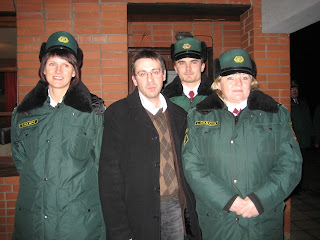
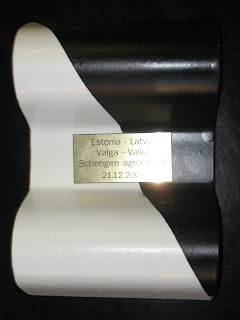
Thursday evening, I joined the inhabitants of the twin town of Valga-Valka, sitting smack on the Estonian-Latvian border, to celebrate their entry into the Schengen treaty. Ever since I first crossed the border there on a roadtrip from Tallinn to Fallingbostel, in year 2001, I knew I would have to return and, sure enough, I briefly passed through during last summer with an Estonian friend, on our way to an acquaintance's birthday party. Still, that told me nothing of the town's life and left me wanting for more. Upon hearing that year 2004 EU accession countries would join Schengen in December 2007, I immediately promised myself to show up and join the crowd. As it turns out, I missed Aleks Tapin of the All About Latvia blog by very little, having I caught his last-minute e-mail the next afternoon. Aleks blogged a great article depicting the Latvian side of life and providing some background info on the town, if you're curious. I arrived late-evening on Thursday via the Tallinn-Viljandi-Valga bus and checked into my hotel, then proceeded to checkpoint Valga II around 23:30, with the intention of grabbing a drink on the Latvian side and returning just before midnight for the celebrations. Hardly anyone was in sight, except for Latvian officer abana who was completing the inspection of a Russian car with three noisy passengers. Upon presenting her with my passport, officer abana cheerfully lead me to the office and slid my passport through a slot to officer Bukss, who was visibly surprised to have any tourist show up on the last day of his job to get their passport stamped. Upon explaining to him the reasons for my presence, he pointed me to a nearby bar where I could have a drink, visibly amused by the situation. I spent the next few minutes in a local casino in the company of three hilarious Latvian truck drivers, Zintars and Aivars, two Latvians with limited English language skills and Yuri, an ethnic Russian living in Ireland who was born stateless on the Latvian side of the town and who later acquired Estonian citizenship by claiming ancestral land on the Estonian side. Upon returning to the border, just minutes before midnight, I found myself in the middle of a huge crowd of villagers, police officers, border guards and politicians from both countries - barely getting noticed by anyone. I handed my passport to an Estonian border guard who emotionally commented to a civilian friend of his nearby that, "Wow! That was the last one!", handing me my passport back just as the midnight bells rang and the mayor of the Estonian side started his speech amidst pyrotechnics lining the road. I then had a chance to chat with the Estonian mayor, who promptly handed me a bilingual certificate, signed by the mayors of both towns, attesting that I was the first to cross the open border, while introducing me to his two young daughters with whom he was about to take a stroll on the Latvian side. The next morning, an even bigger and more symbolic event took place: the demolition of the fence that had been cutting the S prus/Rai a street in half. You can see a picture of what the street looked like before on Aleks' blog article [edit: or on Jens-Olaf's blog article]. After the fence was removed, it instead looked like this: The crowd then proceeded to checkpoint Valga III, where a stage had been setup for the politicians to make their speeches. An interesting fact is that, because of the way the border was drawn, along a creek leading to Pedeli river, an Estonian main road was technically on the Latvian border and thus aptly named "Raja" (border) street. The Estonian mayor commented in his speech that the the brand new supermarket standing behind us was also technically on borderland and could not have possibly been built earlier, weren't it for the Schengen treaty matter-of-factedly eliminating borders between participating EU countries. The speeches were closed by a youth group whose choreography featured six break-dancing boys, dressed as Estonian and Latvian border guards and as border posts. The choreography ended with the teenage border guards carrying away the human posts on their shoulders, just as a choir of young girls replaced them with songs in either languages. Before catching my bus back to Tallinn, I dropped by the Valga tourist info, only to face a nervous-looking Kapo officer in plain clothes. Upon mumbling something about the tourist info and wanting to grab maps, I noticed that a press conference was taking place behind. As he finally let me pass to the tourist info side of the building, a familiar voice said to me, "Hey! Weren't you at our place last summer with Martin Ranna?" Yup, the wife of the acquaintance whose birthday party I had attended last summer is working there and greeted with me refreshments and munchies she had cooked in prevision for the presidential visit! As was my luck, she had one of the commemorative plaques that had been given to the politicians at Valga III on hand: I was glad to see the town becoming one again, even though it is ethnically divided. There are already signs of people on both sides learning one another's languages and shopping on either side of town, not to mention plans of merging the municipal bus operations of the Estonian and Latvian halves of the town, so I'm sure that they'll get there in due course. For me, Schengen brought a much more practical and quite welcome change: the end of messy border crossing stamps that were rapidly filling my almost new passport, every time I visited the head office of our company in Tallinn. While Estonian border guards mostly stamp passports in an orderly fashion, being careful to fit exactly 8 stamps in a single page and to put entry and exit stamps side-by-side, Finnish border guards apparently are incapable of doing so, instead systematically wasting pages by either stamping sloppily in a way that makes it impossible for more than 4 stamps to appear on a given page or by flipping to a brand new page, every time I had to cross the border. In case anyone ever wondered why I'm currently representing Estonian interests abroad, despite living in Finland, this example is one of the many reasons: Finnish authorities routinely display arrogant carelessness towards the population and doubly so towards immigrants. It amounts to an accumulation of idiocy that has costly consequences on people's lives. For some, it's about being denied the public institutions' support when they need it the most and their life forever going downhill thereafter. For me, it has been about countless missed opportunities (jobs, love affairs, travel plans), plus very costly passport and residence permit renewals. Given this, I simply don't see myself ever representing Finnish interests ever again. Faith no more. Besides, the Estonians are fun and easy-going people. Siski ma m tlen, kas ma peaksen n d Eestisse kolima v i?


Guido Trotter: Switching to Gentoo

…no, just kidding! But I almost feel like it, after spending the last few days backporting gtk+2.0 (and the relative dependencies) from sid to etch, in order to build the newest xchat… and now I could tackle gimp… :D (ok, maybe I should just switch my laptop to lenny or sid… but for now running etch plus a few backports has worked fine… we’ll just have to see how many is “a few”). BTW should I upload all this to bpo (now or when the packages hit lenny)? On one side it might be nice… On the other, it’s definitely *a lot* of packages and dependencies… Maybe it’s slightly out of their scope…

Thomas Girard: omniORBpy 3.1 uploaded

omniORBpy 3.1 was just uploaded. Thanks a lot to Floris for his work on getting omniORBpy up-to-date! Since some packages were renamed, the upload will require NEW processing. In the meantime you can grab these packages here.

Wouter Verhelst: They managed!

It took them half a year, but the Belgian federal politicians finally managed to come up with some form of government. I can't say I'm impressed. Well. In a way I am impressed. After trying for 6 months, Leterme still failed to produce some form of government. Since the situation was becoming quite dire, the King gave Verhofstadt the initiative, who then promptly produced a government in only two weeks. Granted, Verhofstadt's mission was not as hard as Leterme's. Verhofstadt was told to form a government only to handle the most urgent matters, and which will be disbanded at Easter; Leterme was asked to form a government to last for four years, which is how long a Belgian federal government usually holds office. And yes, Leterme's mission has most likely been one of the hardest one in the history of Belgian formation talks. But even if all that is true, I'm baffled at the fact that the intention now still is to make Leterme the prime minister at or around Easter. In my opinion, he's had his chance and blew it. Then again, maybe I'm biased. I've never liked Leterme; and when his party CD&V decided to ally themselves with a separatist party, I decided to gracefully extend my antipathy to his entire party.

Adeodato Sim : The Notebook, my precious

So it’s time for movie recommendations again. This one time, beware, a love story, touchingly told: The Notebook.

Russell Coker: Contract Pay Rates

In a comment on my post about Bad Project Management [1] Don Marti [2] says “the more money you charge, the less of your time people waste, and the more seriously they take you” and “you can affect the client more, whether you’re peddling idiocy or wisdom“. That’s a nice theory, however I don’t recall seeing an example of it anywhere that I have worked. There are two broad categories of employers, large and small. Large companies have HR departments etc who decide on rough pay scales. Once the budget is approved (by senior management and HR) for someone’s contract fees or salary the amount of money seems to be of little concern to the line manager. They have a group of N people reporting to them who are all paid by money that comes from some mysterious place (with no direct connection to the quality or quantity of work done) and therefore the amount of money paid is not very relevant. Often team-leaders don’t even know how much the people who report to them are being paid! Note that this applies to people who have a similar job title, if I am paid twice as much as another sys-admin in a corporate environment I don’t expect to get more attention, but someone who has a more senior job title (or in the case of the UK has been to a more prestigious school or has a better accent) may get more attention. Small companies are rarely in a position to be silly in this way. This doesn’t mean that the most highly paid person gets the most attention, it’s more a matter of making a logical case. Most of the small companies I have worked for have been run in a sensible manner, and my ideas have often received more attention than those of others because I have had a better technical background than my colleagues. However in some cases my suggestions have received less attention because I was receiving a higher pay rate. The reason is that I was being paid a rate that the company could not afford in the long-term and therefore the people who would work there in future years would have to maintain the systems in question which meant that their ability to do such maintenance was often considered to be more important than my ideas about the best way to design the system. I have worked for a small company that had no financial pressure to do sensible things (they had some sweet deals going with major corporations which essentially gave them money for nothing). They had chaotic management which they could get away with because there were no immediate consequences for doing silly things (such as not forcing their clients to have a method of backing up servers that they installed). I can’t claim that Don’s advice in this regard never applies, but my observations of situations where it didn’t apply lead me to believe that it’s applicable to some situations in limited areas and is not a general rule. Don also refers to “a high number that you would quote to a client you didn’t want in order to get them to go away“. This is an issue that causes a lot of disagreement. One consultant I respect advises people to never make such quotes, if you don’t want a job then say that you are not available - one reason is that if a position is so bad that you want the potential client to go away then you don’t want to be tempted to reconsider if they agree to pay you a silly amount of money, another is that it may be considered ethically wrong to make an offer is not genuine. Another consultant I respect claims that his greatest career success was when he turned up to an interview in casual clothes, explained to the potential client that he would never wear a suit and demanded an excessive amount of money. The client agreed to such terms and he then went on to charge other clients similar amounts of money and continued to refuse to wear a suit. I won’t claim that it’s wrong to demand excessive amounts of money to make an unwanted potential client go away and I will not rule out the possibility of doing so at some future time. But I think it should be noted that the practice is controversial and not referred to as something that anyone might do. It is something that I don’t recall doing at any previous time in my career (so I haven’t done it in a formal manner at least - I may have done so at the informal discussion phase and forgotten). Please note that I encourage you to read my previous post with Don’s comment in it’s original context to avoid any risk of misinterpretation. The purpose of this post is not to disagree with Don (I agree with him almost all of the time) but to disagree with some very commonly held beliefs which Don represented in his comment.

Christian Perrier: News from D-I i18n

Some more important things happened this week for Debian Installer i18n: All this work is meant to give some more push to D-I localization effort that paced for some time last months while I focused my attention on some other areas. It seems to show that things never work without someone to care about them, apparently..:-)...so, existing translators, watch out, I'm back on D-I i18n and will kick your asses if you don't keep your translations up to date..:-)

Benjamin Mako Hill: Computing in the Cloud

On January 15th, I'm going to be giving a talk on a panel at the Computing in the Cloud conference held by Ed Felton's Center for Information Technology Policy at Princeton University. The conference description says:
Computing in the cloud is one name for services that run in a Web browser and store information in a provider s data center ranging from adaptations of familiar tools such as email and personal finance to new offerings such as virtual worlds and social networks. This workshop will bring together experts from computer science, law, politics and industry to explore the social and policy implications of this trend.
I'm going to talk about the AGPL 3.0, why it's important that we put effort into figuring out what freedom for different technologies means, and what the components of freedom for web services might be. Registration is free and bags you a name-tag and lunch. Worth noting perhaps, the conference is sponsored by Microsoft.

Christoph Berg: Datamining

I'm just digging through OFTC's nickserv database to do some cleaning. We have a bit over 20k nicknames in the database on 18k accounts which means about 10% of registered nicks are linked to other master nicks. By the power of sql, here's some statistics on the domain names of the email addresses our users:
com  9144
net  2241
org  1778
de   1016
uk    392
nl    288
fr    223
edu   217
au    203
it    193
br    190
ru    174
ca    165
se     88
dk     74
at     70
fi     62
cx     59
info   58
gmail.com             3997
hotmail.com           1405
yahoo.com              843
gmx.de                 221
gmx.net                201
web.de                 156
debian.org             148
free.fr                 94
aol.com                 90
msn.com                 73
comcast.net             72
gentoo.org              71
mail.ru                 65
xs4all.nl               59
linuxmail.org           58
verizon.net             57
yahoo.co.uk             54
yahoo.com.br            45
googlemail.com          45
student.uq.edu.au       44
sbcglobal.net           36
earthlink.net           33
users.sourceforge.net   32
The numbers could use some aggregation as some providers use zillions of TLDs (yahoo, gmx). My personal favorite in there is root@localhorst :-)

Next.

Previous.